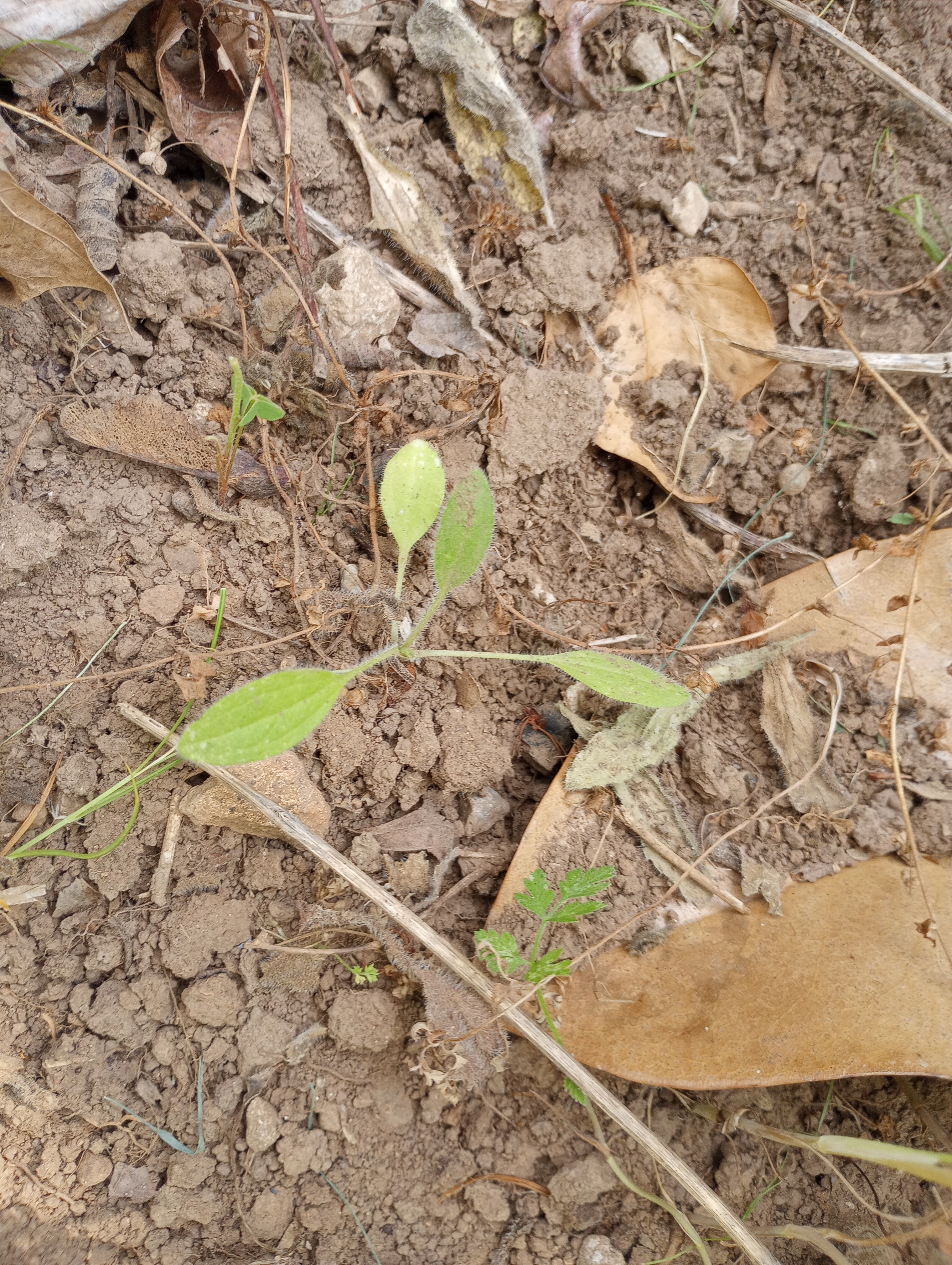

The yard is full of treasures and wonders. Today a great discovery was made. Last year, in the summer with my first gardening experiments, I really didn’t know what I was doing. I scattered all kinds of seeds, and some of them came up, and many of them didn’t. I planted some too. I had successes, many successes, and failures, and it was all an experiment. Well, one thing I realized later, as I actually started to learn about gardening, is that some seeds need a period of cold stratification. This is pretty fundamental knowledge, that is written on every packet more or less, and it means that the seeds will need to undergo a period of cold, and generally, moist, conditions (winter), before they will germinate. If they don’t have that, you won’t get the little sproutlings you so desire.
Last year, I realized much later, when learning about cold stratification, that that was probably why many of my seeds didn’t germinate. And I Googled them, some of the seeds I had planted, and some of them did need this. One of these plants was Black-eyed Susan. I can’t even remember everything else I scattered, but I remember that another one that I didn’t see any sprouts of was Smooth Blue Aster. (Another was Purple Coneflower. These two apparently don’t need cold stratification but the germination is greatly improved by it.) Well, I figured that I should keep an eye out for these this spring, as they might come up now. And I better try not to pull them.
Now, I had this in my mind, but I’ll tell you that my front yard, receiving full sun and by the street, it has been totally subsumed by all manner of things. Wild carrot in particular has performed exceptionally well, and interestingly, has boomed after the mass of Persian speedwell, Purple Deadnettle, and other early spring bloomers. I have plenty of Broadleaf plantain, and then by the house, where there has been more shade, common blue violet, and then, very interestingly, a mystery plant has popped up in great numbers. If I have IDed it correctly, this mystery plant is Goldenrod, and that would be an incredibly great thing, because Goldenrod is considered a top native plant, major pollinator powerhouse. I have some Goldenrod seeds actually sitting in the fridge right now, undergoing their cold stratification that I had been putting off for way too long. One of the great things about letting the weeds grow, you will get some winners. You get mostly invasive things that you don’t want, of all kinds, so many different kinds of invasive, literally weeds from around the world, popping up, but you can get some winners. I am trying to think of the winners that I’ve had, actually… Not many. Common blue violet, Broadleaf plantain, at least that is edible. In the front yard with the sun, not so many winners, mostly fast-growing invasive plants that tolerate disturbed soils, difficult growing conditions. Hopefully the patch really is Goldenrod. It will break my heart if it isn’t Goldenrod.
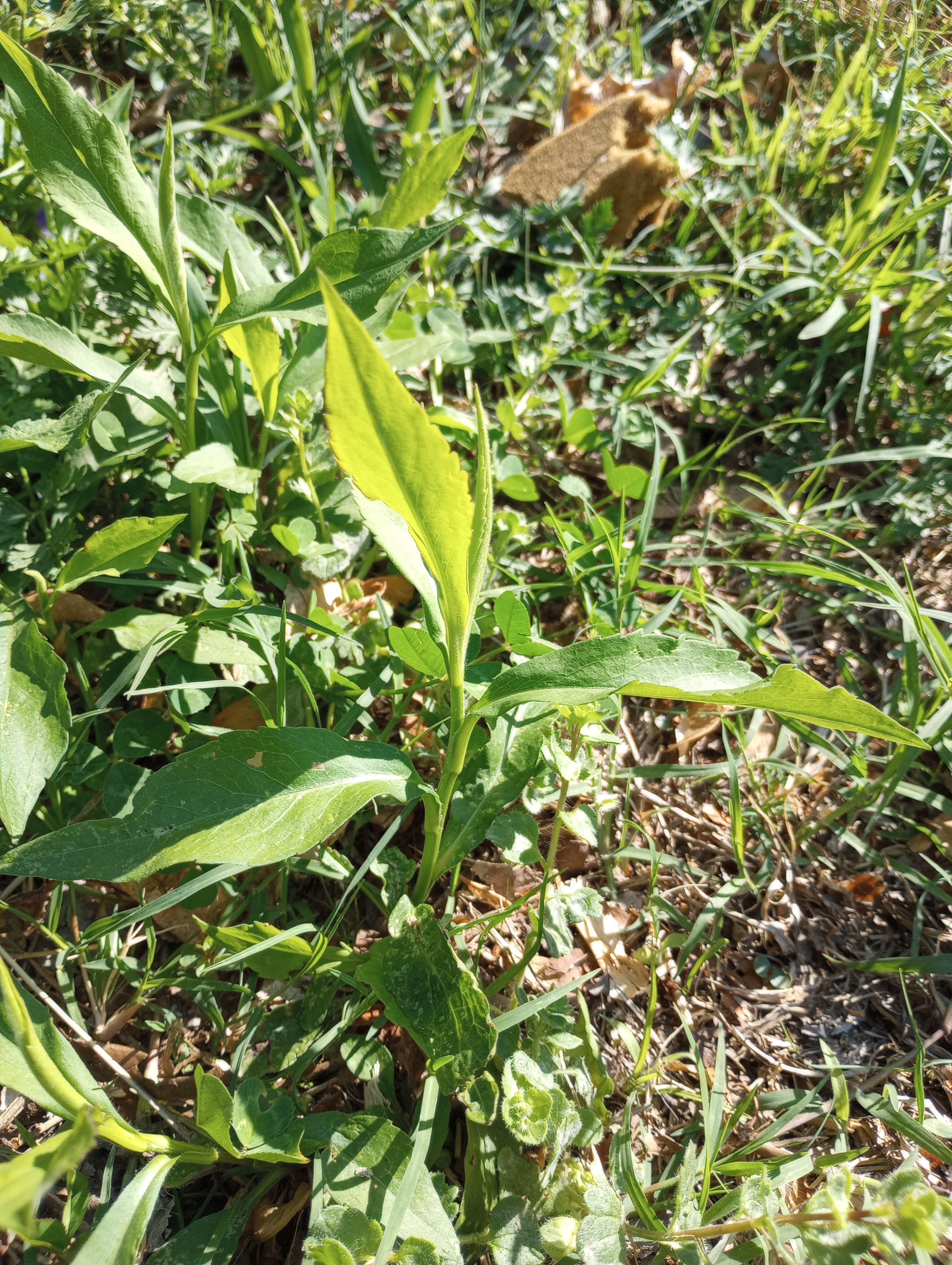
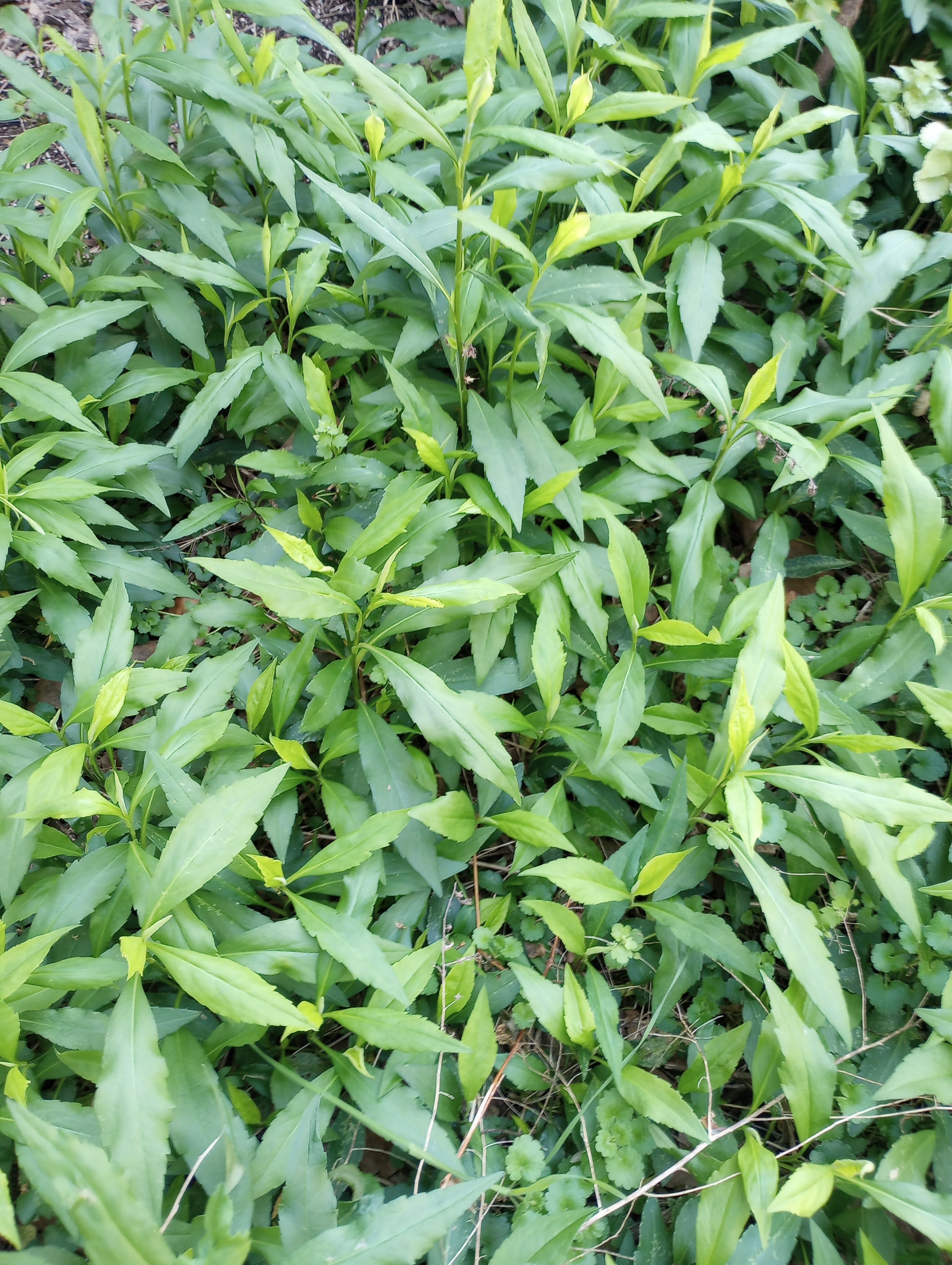
Now, today, I was continuing my work of plucking up all the wild carrot in the yard, which at first was intimidating, but actually isn’t that bad. All you need to do, you need to go right to the base of the plant, where the taproot is, the carrot part, grip firmly, give it a twist, and it comes right out. It comes up with minimal damage to the soil too, which is nice. That just makes it easier. In this patch of wild carrot, it is also generally the only thing you have to pull out, so it’s been easy to clear it out. Much easier than grass or something with nebulous roots. In that way it is a decent cover crop.
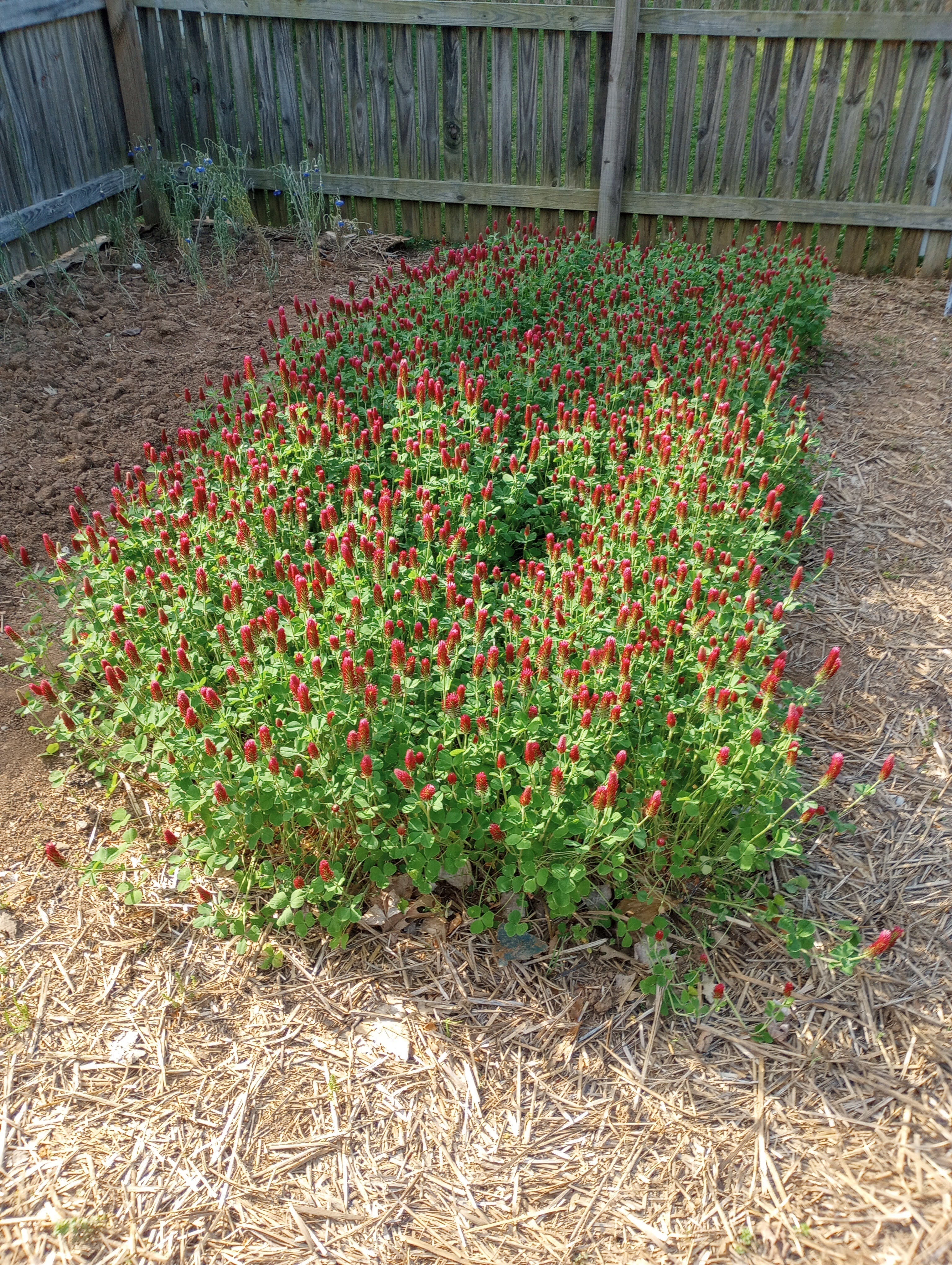
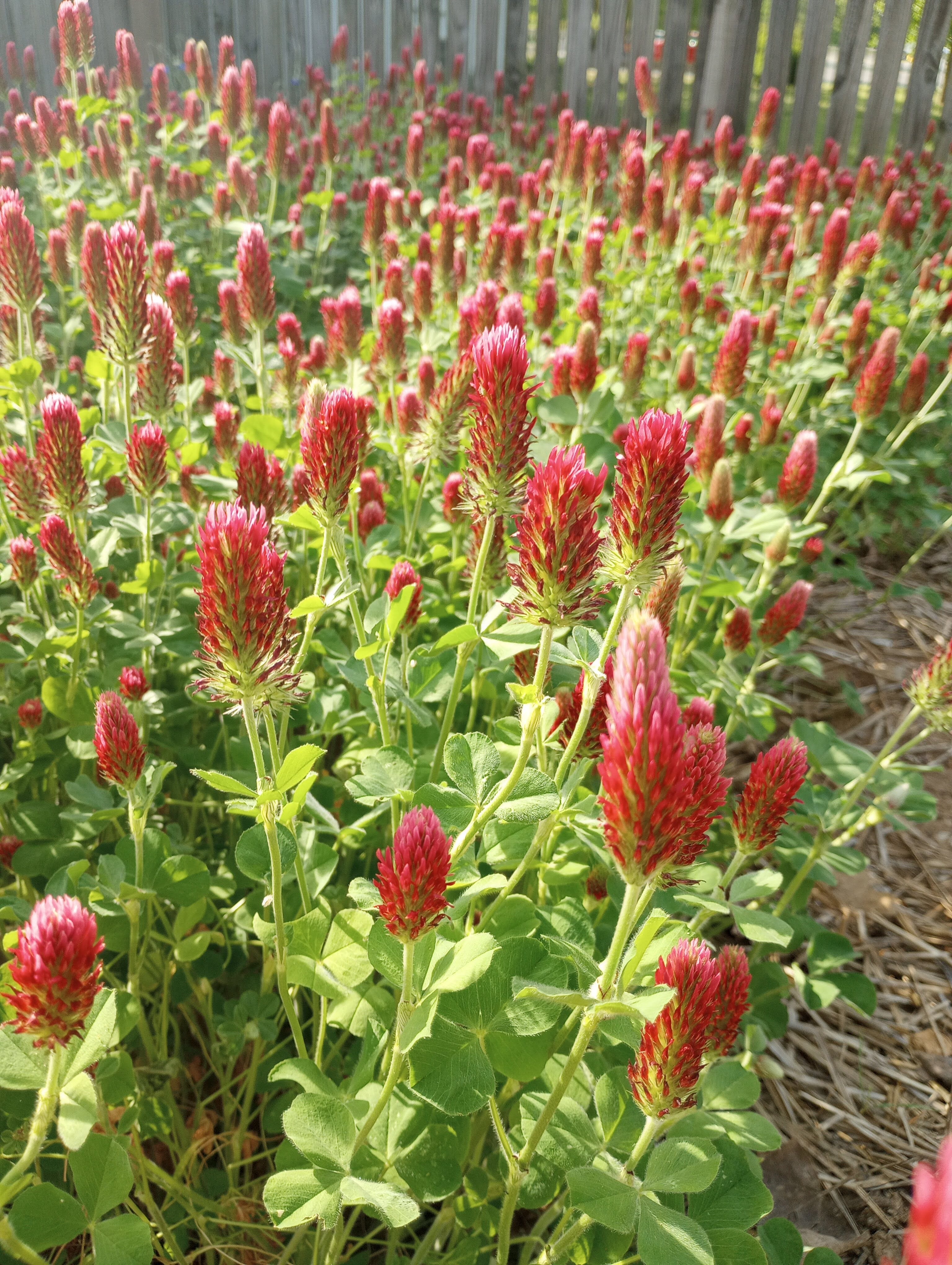
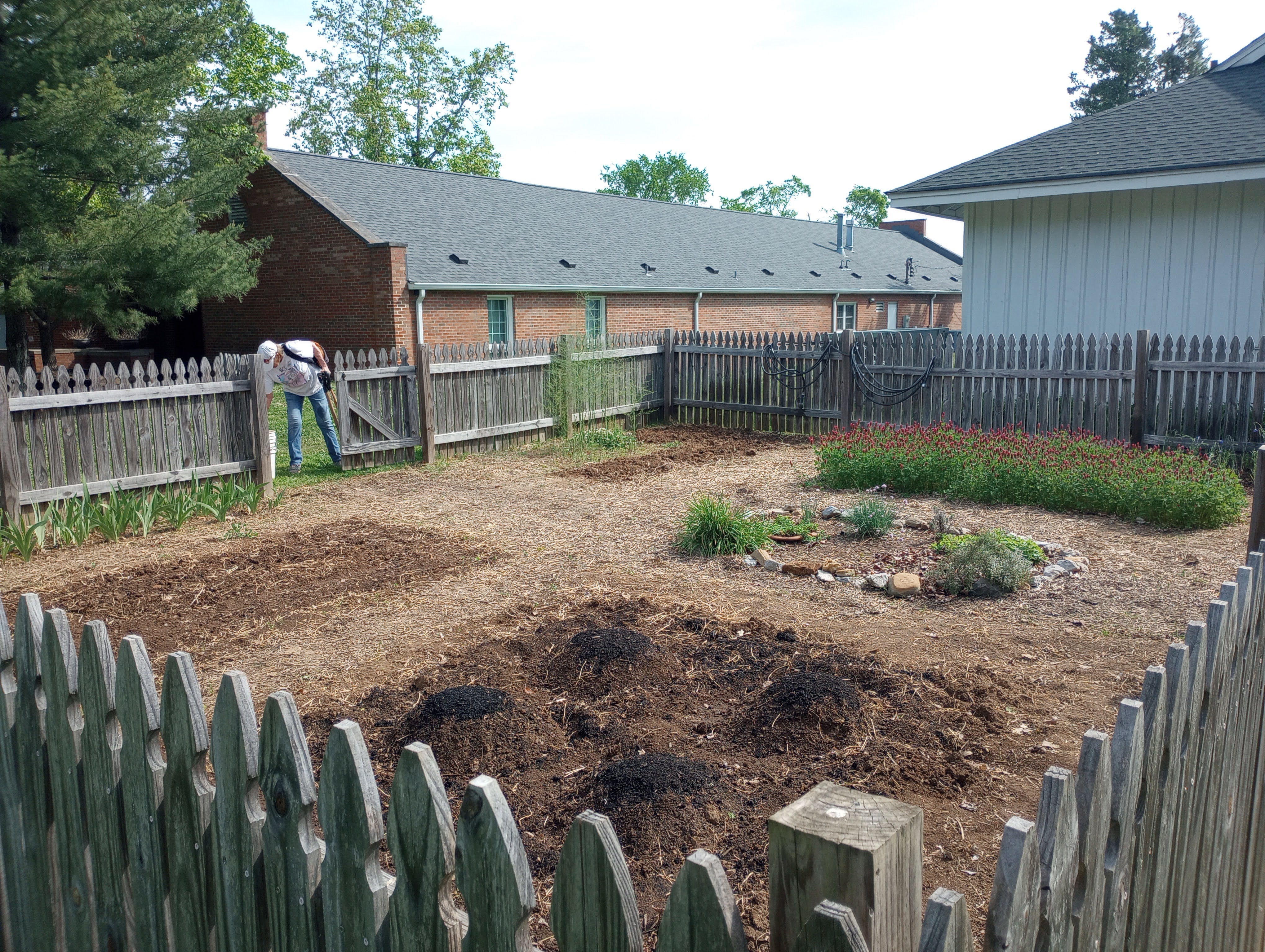
I understand the power of a cover crop now, as well. At the TN Ag Center Heirloom garden, they’ve got some Crimson Clover as a cover crop, and that is a big winner with the people, because it has very attractive red flowers, that the bees love, and it keeps your soil covered through the winter. It’s a legume, which are used for fixing nitrogen, meaning that it will add usable nitrogen to the soil (it will convert nitrogen from an organic to inorganic form that plants can use), and you can plant it in the fall and have it grown through the dormant season and in the early spring. Having something over the ground during this period will protect the soil from eroding, keep weeds away, and then, if it’s a nitrogen-fixer, add some nitrogen to the soil. This would all be great for my front lawn, and I basically have had a cover crop on the ground this whole time. That’s what all these weeds have been doing. Crimson clover would be better though, and would give me a very beautiful wave of red in the spring.
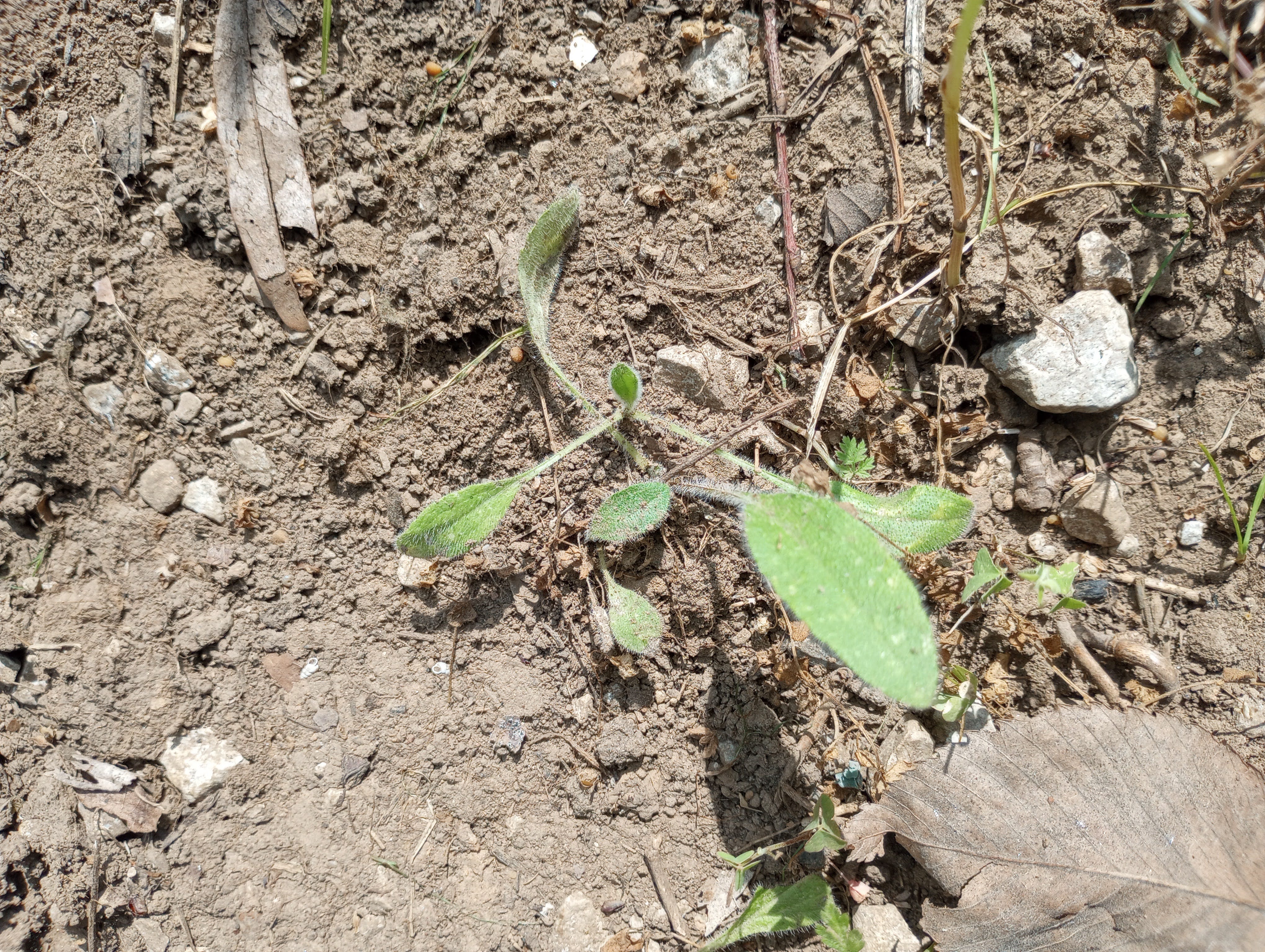
Now, the main point here in this writing was today’s discovery. As I continued to pull up my wild carrot cover crop (not a nitrogen fixer), and investigate the many treasures in the wild growing front lawn, which is continually full of many amazing discoveries, changing daily, I noticed something. A few of these somethings, small, furry, soft, blue-green, down beneath these carrots.
In my yard, that has traditionally described common mullein, which we don’t want. I just ripped out some massive specimens that had been growing since last fall. That has been the only blue-greenish fuzzy thing in this lawn, but something about these fuzzy guys made me think they might be different. I knew that Black-eyed Susans looked somewhat similar when they were sprouts, because last year I thought that the common mullein might have been Black-eyed Susan, and I was disappointed. Well, cutting right to it, I’ve got some little Black-eyed Susan sprouts in the yard now. About five, and one of them, if it is a Black-eyed Susan too, is significantly more mature. Although that makes me suspicious, because, why would that one be so far ahead of the others? That’s suspicious.
It can be hard to tell what something is just from photos, and I thoroughly investigated, but just before writing this, I found a great video showing the BES sprouts, and I recognized it immediately. There was no mistaking them. That’s what I found in my yard this morning.
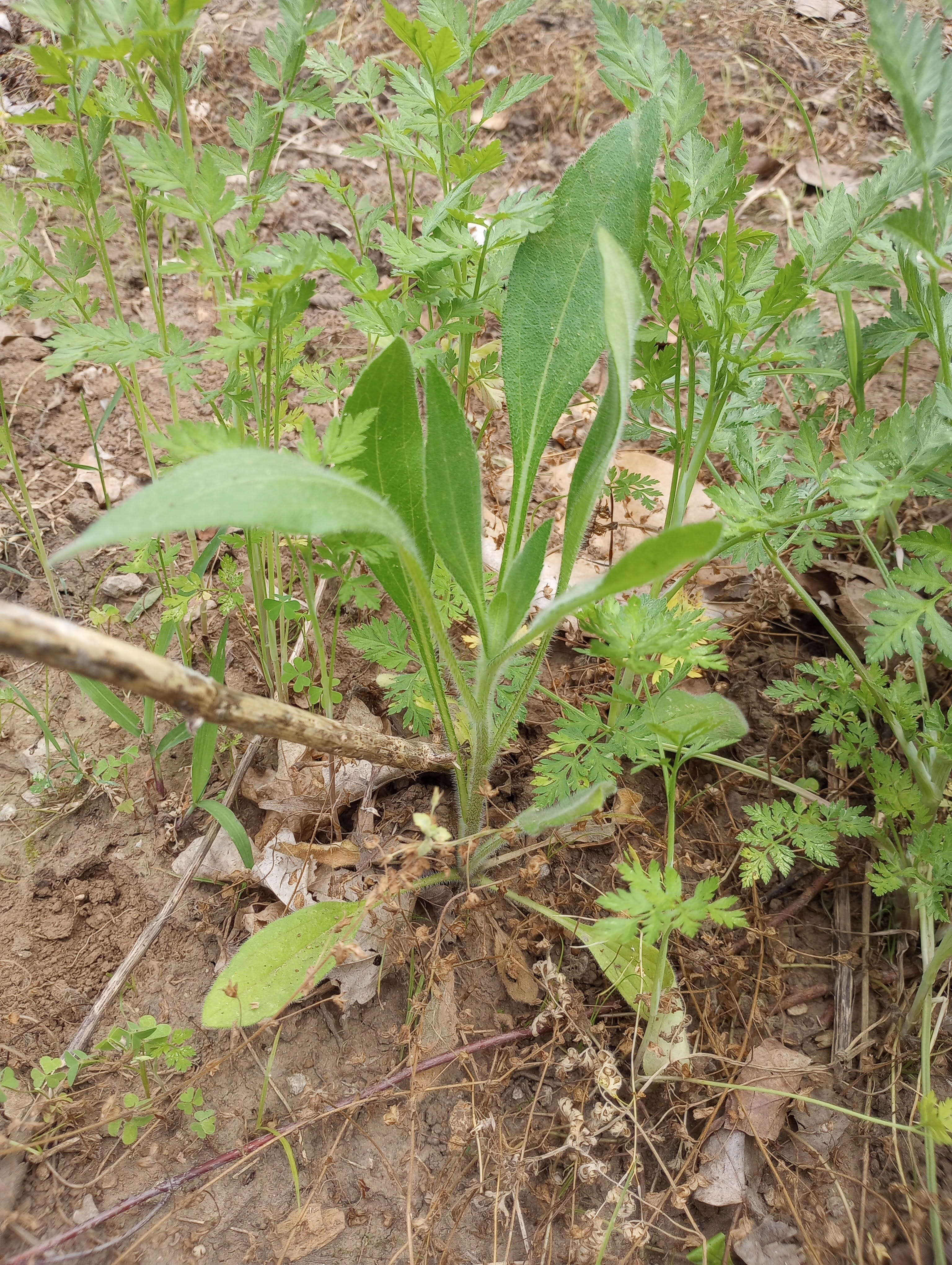
What is amazing to me is that they were able to grow underneath and amidst all that competition. But they must have their tricks, because in the field, you pretty much always are trying to get established within competition. There was enough sunlight getting down to them to get them going. And, they have really just started to make their growth, as the cosmos have as well. My cosmos reseeded themselves, and I have had about five or so sprouts pop up in the last few days. After I had cleared that region of non-desirables, they are easy to spot. And I had a hunch that that’s what they were, which was confirmed when I went to the Heirloom garden today, and saw hundreds of cosmos sprouts popping up there. Kay told me that they had cosmos around, not in the garden but nearby, and they had prolifically reseeded. She said they would let some grow and then transplant them.
This is an interesting thing, that you have perennials and annuals, and the perennials are the same plant coming back year after year, but the annuals are often functioning as perennials in a way because they are prolific re-seeders. Meaning once they get going and go to seed, you probably won’t have to plant seed again to have more. And sometimes maybe they are re-seeding even too much. I’ve heard some plants, such as boxelder (which is a maple) being described as “aggressive seeders”. Our man Paul, one of the guys running the Ellington Arboretum, he said he didn’t want to have a boxelder in the arboretum. I don’t know if we’ll call cosmos that but it did succeed in reseeding in my yard. Probably not aggressively.
I am very happy to have some Black-eyed Susans, as this is a highly desirable native pollinator plant, and beautiful. The joys of gardening, and nature in general, are all the surprises. The Susans are growing, the seeds worked after all, almost a year after I scattered them. And, I was just looking up images of the Smooth Blue Aster sprouts, and I might have some of those in the yard too, fairly well-advanced now. There are still many mystery plants.
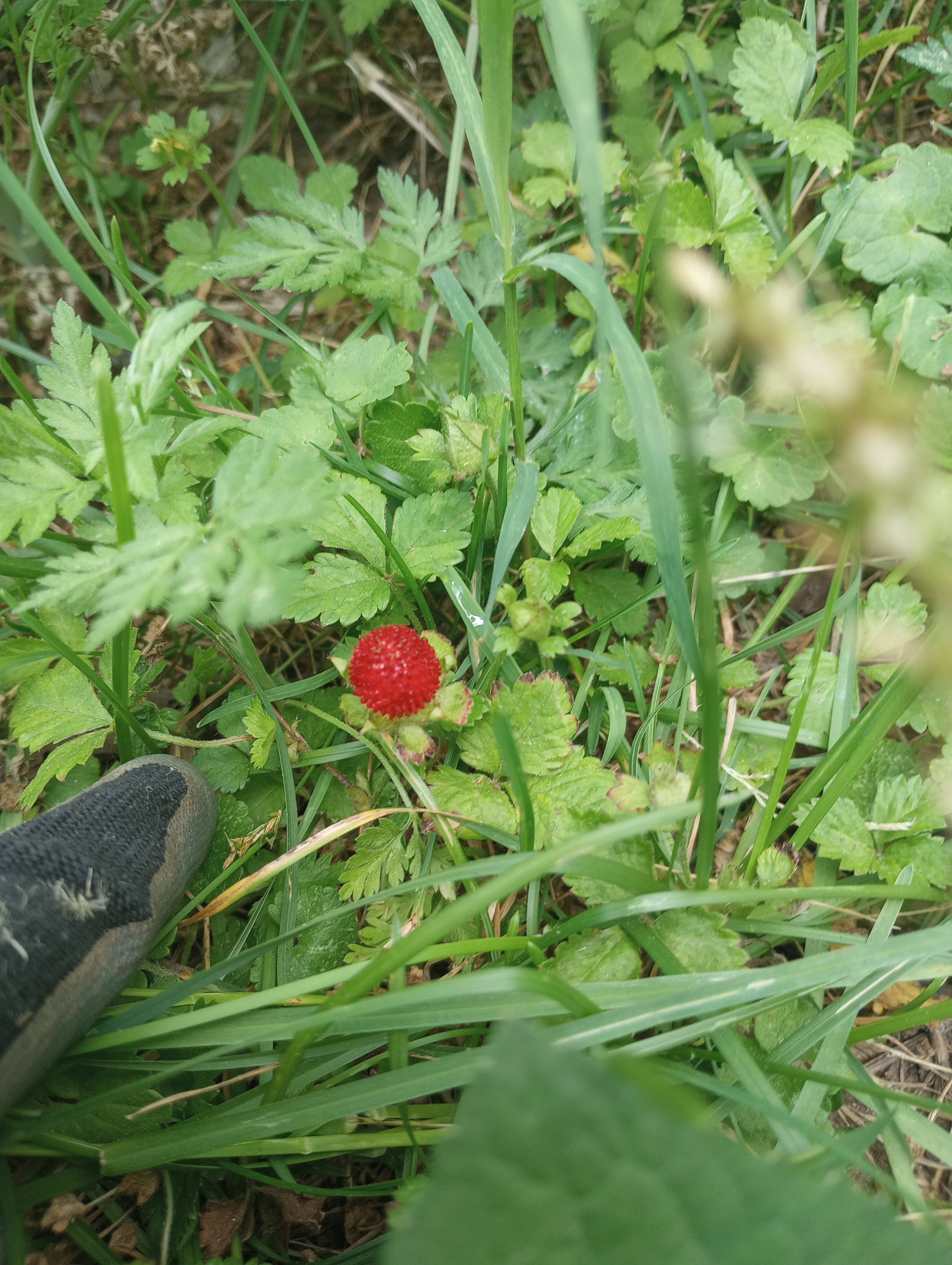
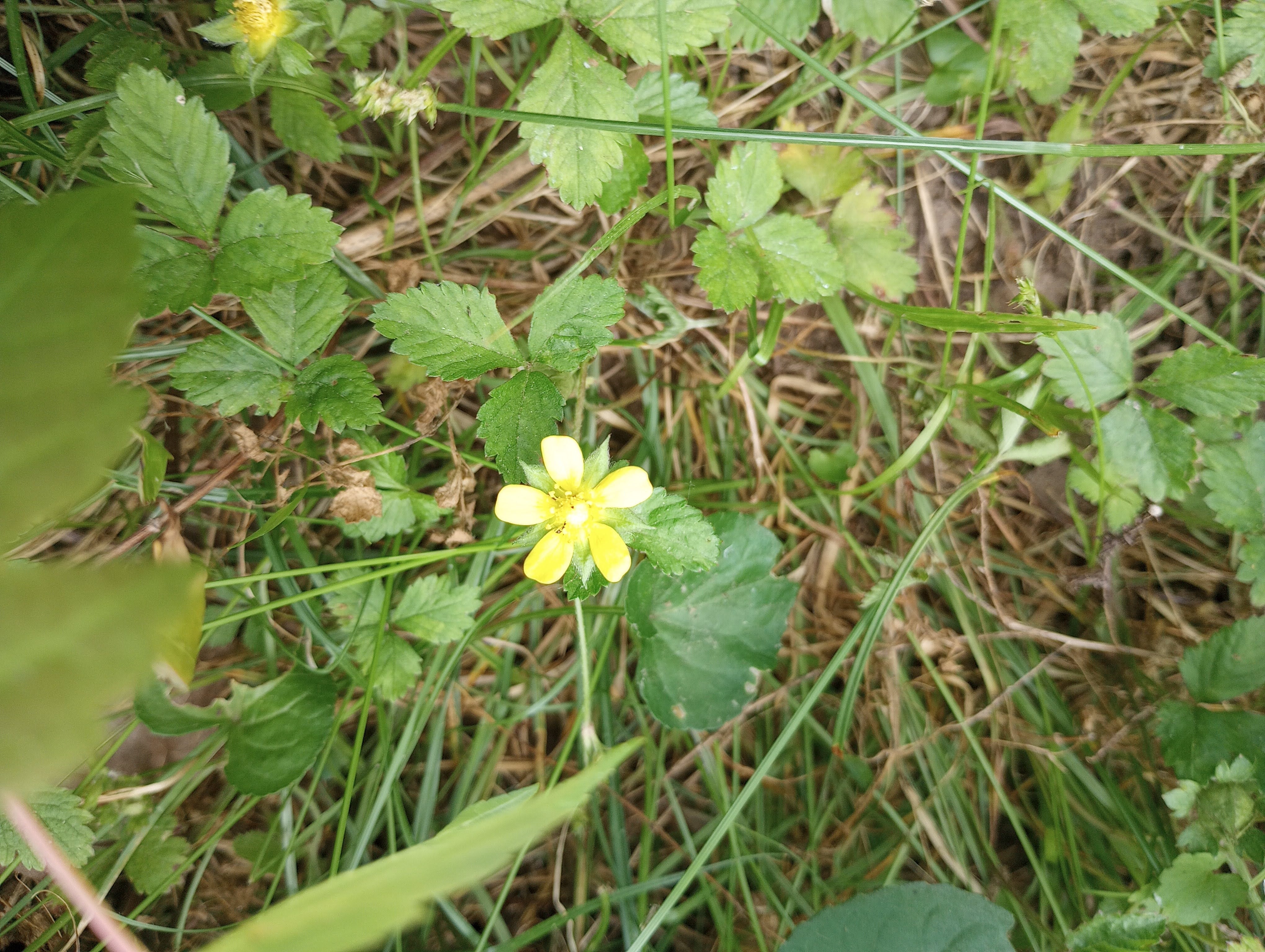
I’ve noticed in my examinations of the yard, some small red berries. Today, I also spied an interesting little yellow flower. It’s false strawberry/mock/Indian strawberry, Potentilla indica. Yet another common invasive here, that has found a good home in my disturbed yard, from Asia. All internet searches say that the fruit is “bland”. I’ll try one.
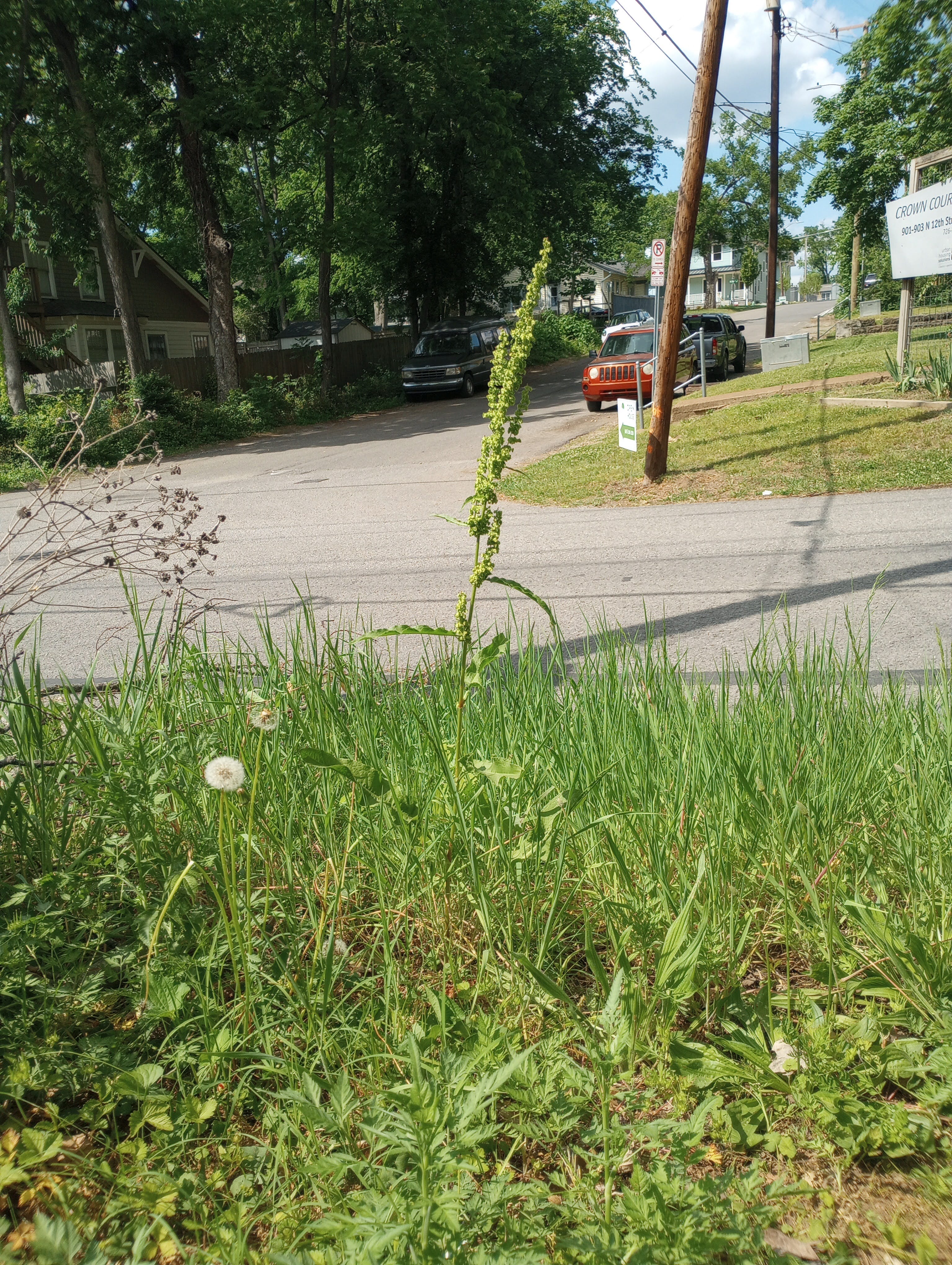
There was also an interesting plant that I haven’t seen before, I’ve let it grow, waiting to see what will happen. It’s now protruding far above the surrounding grass, and has an interesting flowering, structure on the stalk. I’m not even sure what’s happening with this thing. I IDed it today, and it is another invasive, of course (it’s all I expect). Slightly poisonous, from Africa/Eurasia, Curly Dock. Rumex crispus.
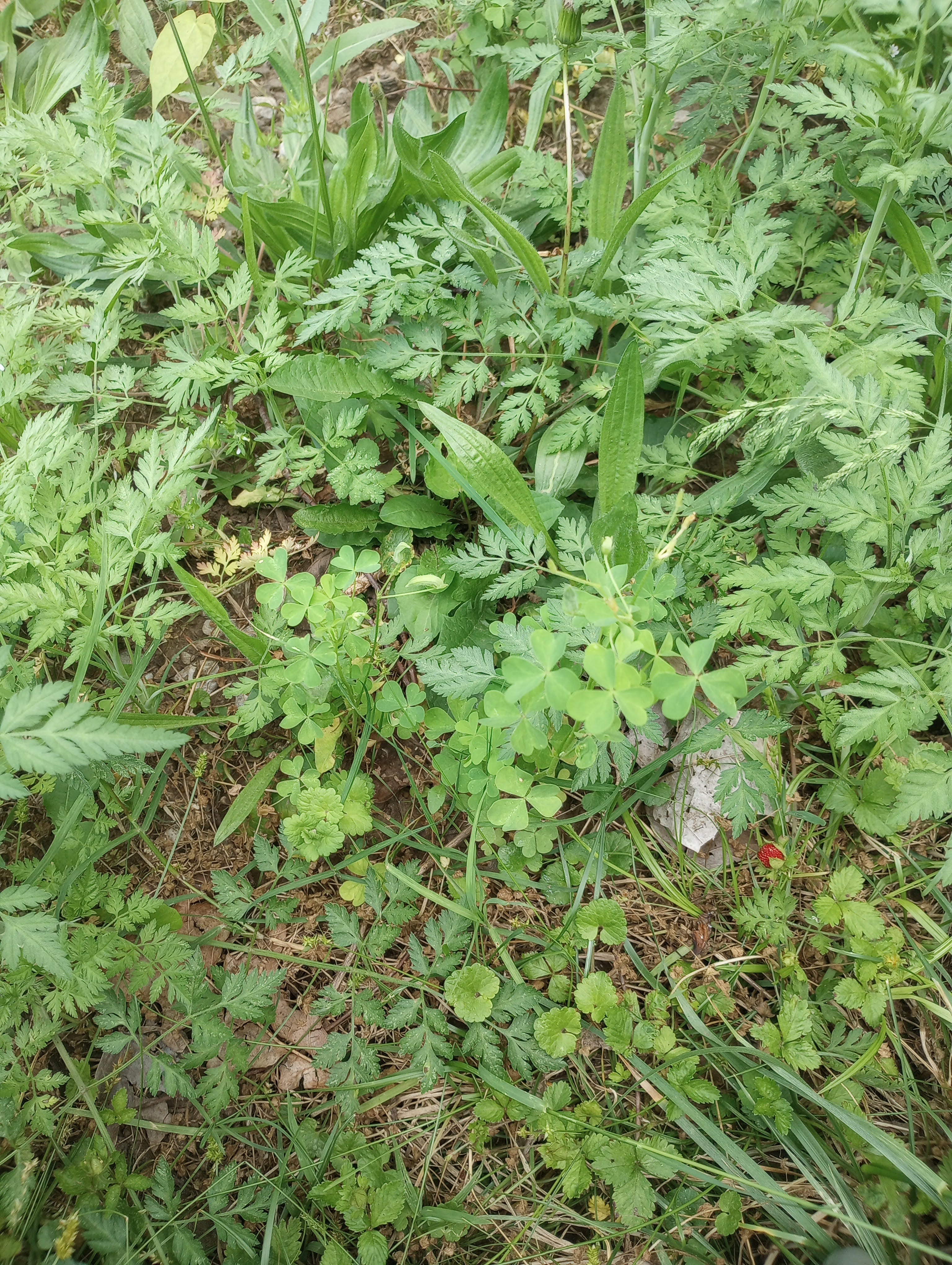
There actually was a new native in the yard, I’ve discovered, and I’ve left them in the yard. I thought it was clover, but when I looked it up, I found what we had was a yellow wood sorrel. Common yellow woodsorrel, Oxalis stricta. “Commonly mistaken for clover” says the internet. I don’t know why it isn’t clover, but it is tall, like the Crimson Clover. And a little mystery has been laid to rest here, that I have been wondering about, because I’ve been seeing all this clover with yellow flowers, and I thought, clover has yellow flowers, and I didn’t notice that before. Then, another clover has made its debut, those spherical white tufts, which is White Dutch Clover (and is invasive), and I thought, well I guess there are two kinds of clover. Now I know what was putting out these little yellows flowers, although I wonder why it isn’t considered a clover.
I am definitely establishing a niche as a “weeds” guy. When we were doing our tour of the arboretum, the Master Gardeners, and we were in our group, I was able to tell the group about cleavers, Galium aparine, a native plant, actually a really cool plant. Funky shape, bendy, velcro stems, extremely tiny flowers, edible. I was proud of my cleavers knowledge. I said that it was edible, and that I had been eating it, and my man William, a retired engineer, manager from Texas, he said, “Okay. And, why…?” I was really stumped by that. He said, “I mean, is it particularly good for you or something?” And I really didn’t have a good response for him. Honestly, he stumped me. The truth is that I have just been so excited to eat something that is growing wildly in the yard. It was hard to explain that right then. The thrill of eating my wildly-growing cleavers. I did get him to try a leaf. I ate a whole stem, it was a particularly bitter plant, which I knew was going to be bad for his first experience eating them, and also made me a little worried that they had been sprayed with something (although I am 99% sure that the guys running the arboretum wouldn’t be doing that, but you never know). He nibbled on a leaf, and immediately went, “Ugh!” and spit it out. “No thanks,” he said. “I’ll stick to lettuce.”

