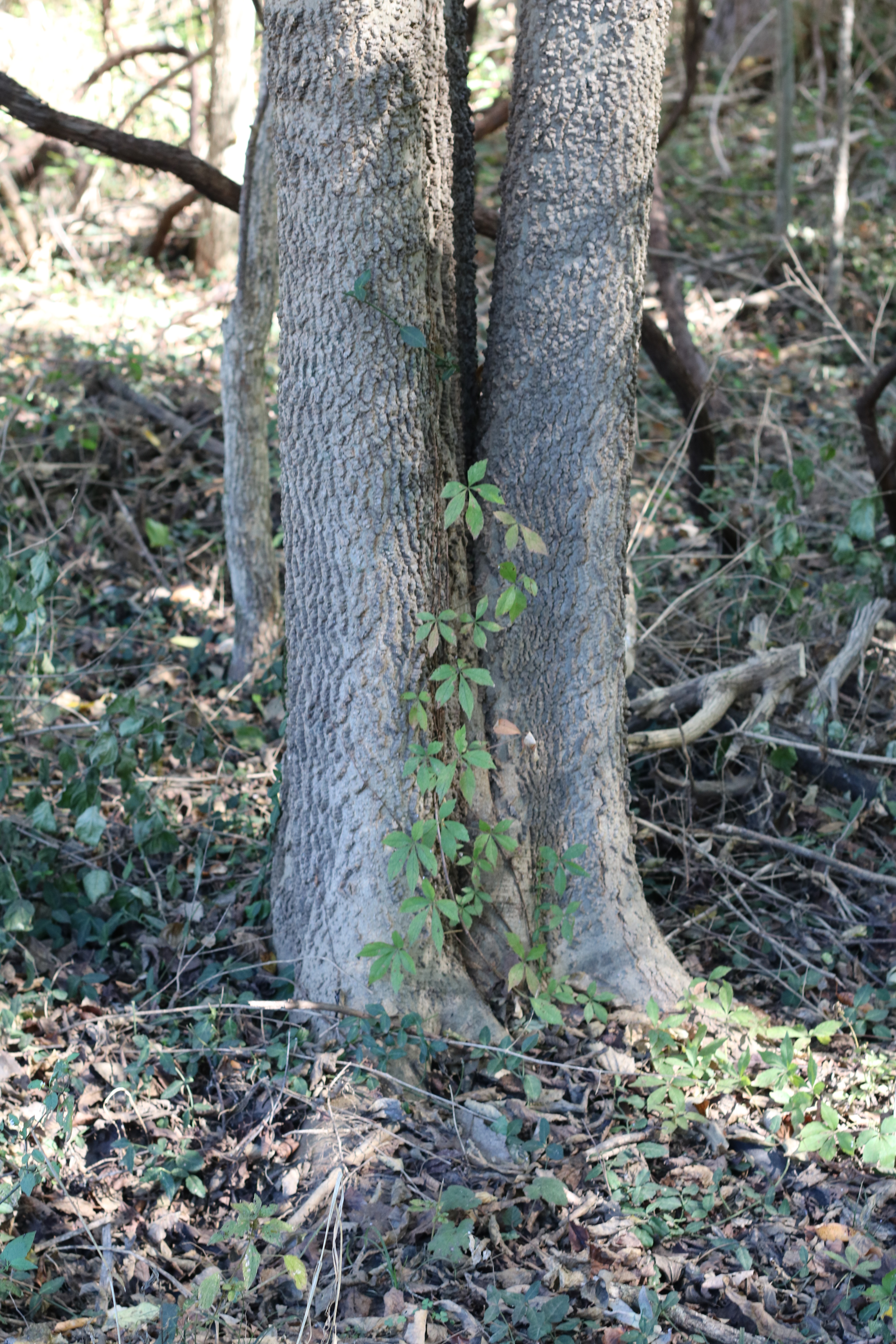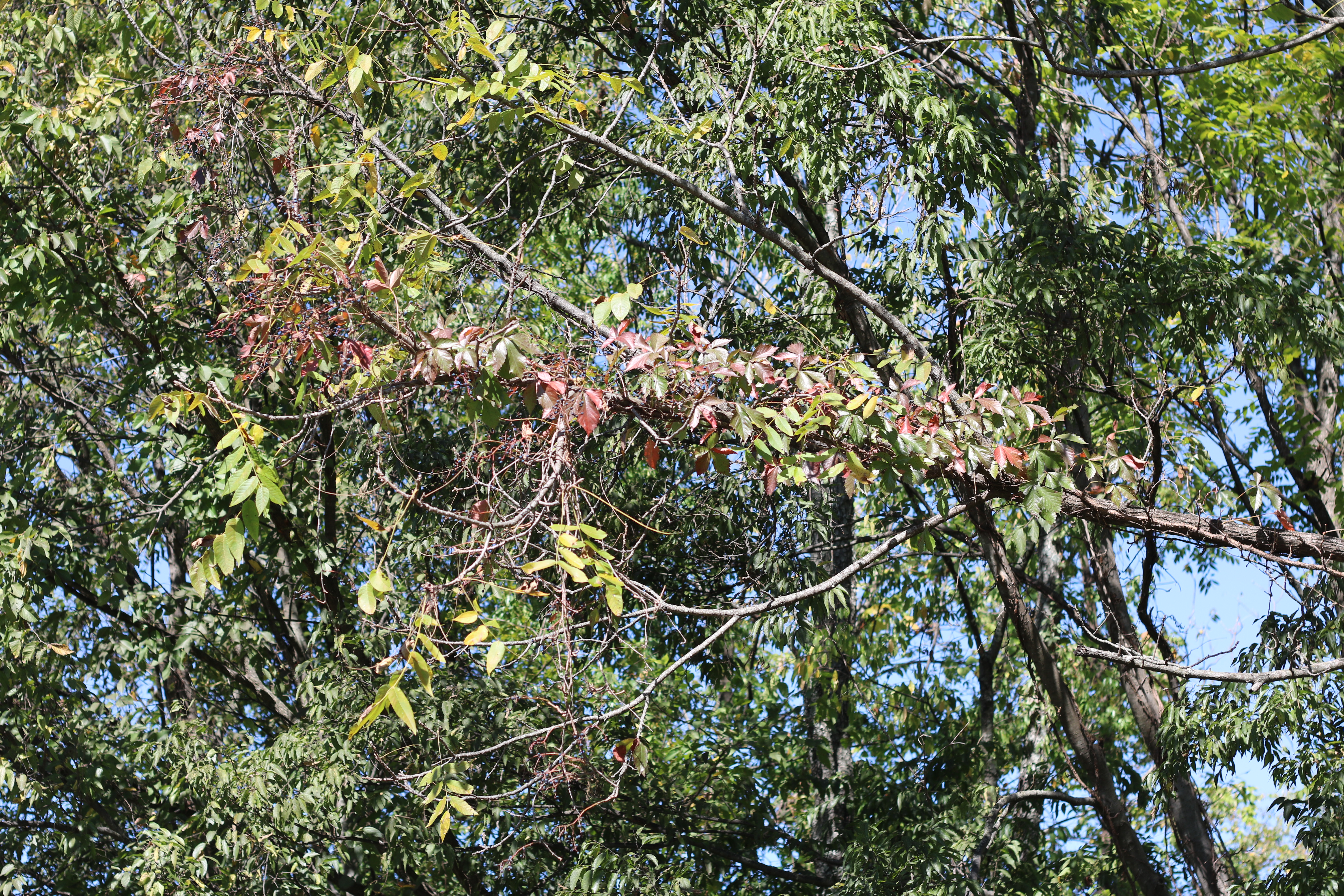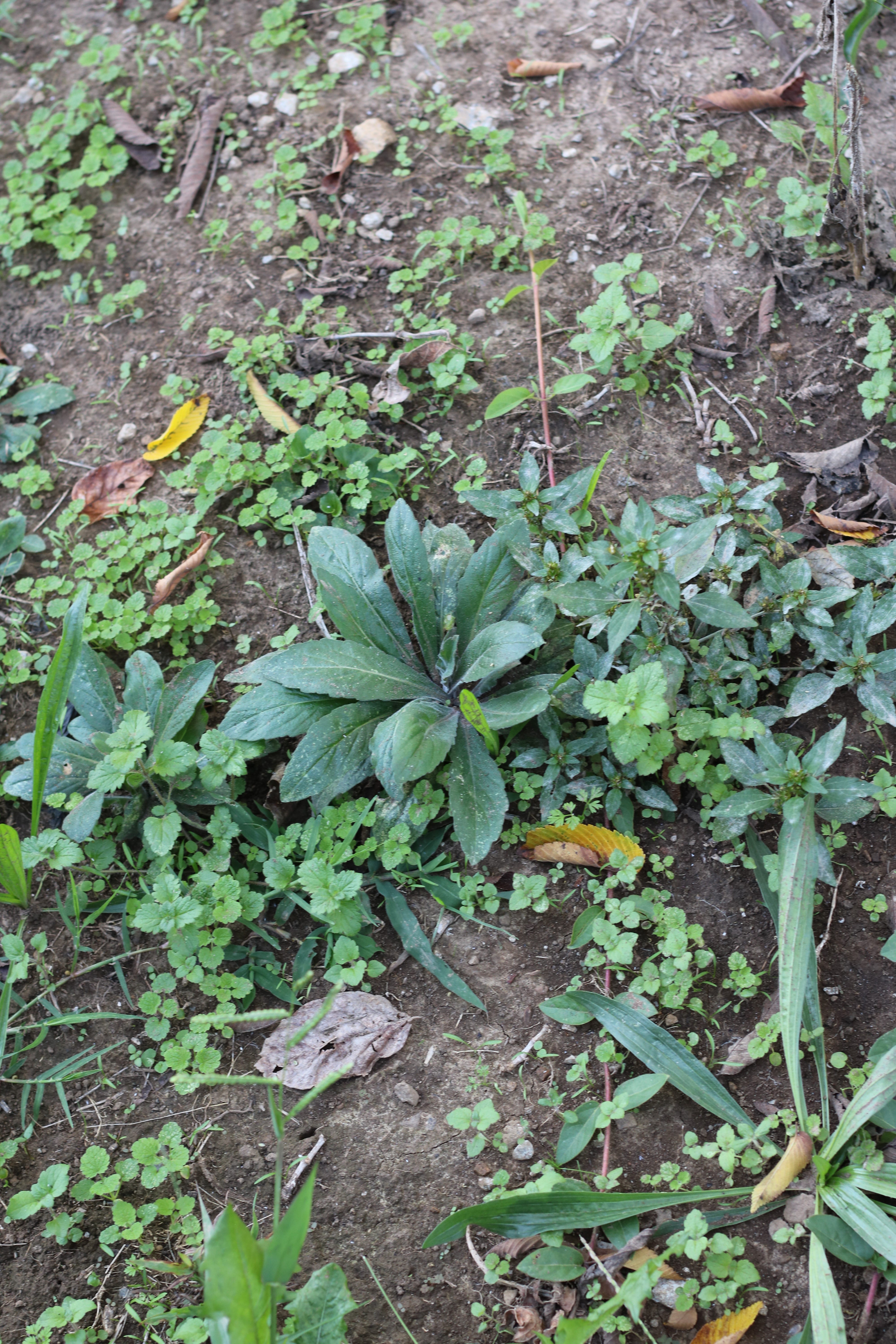
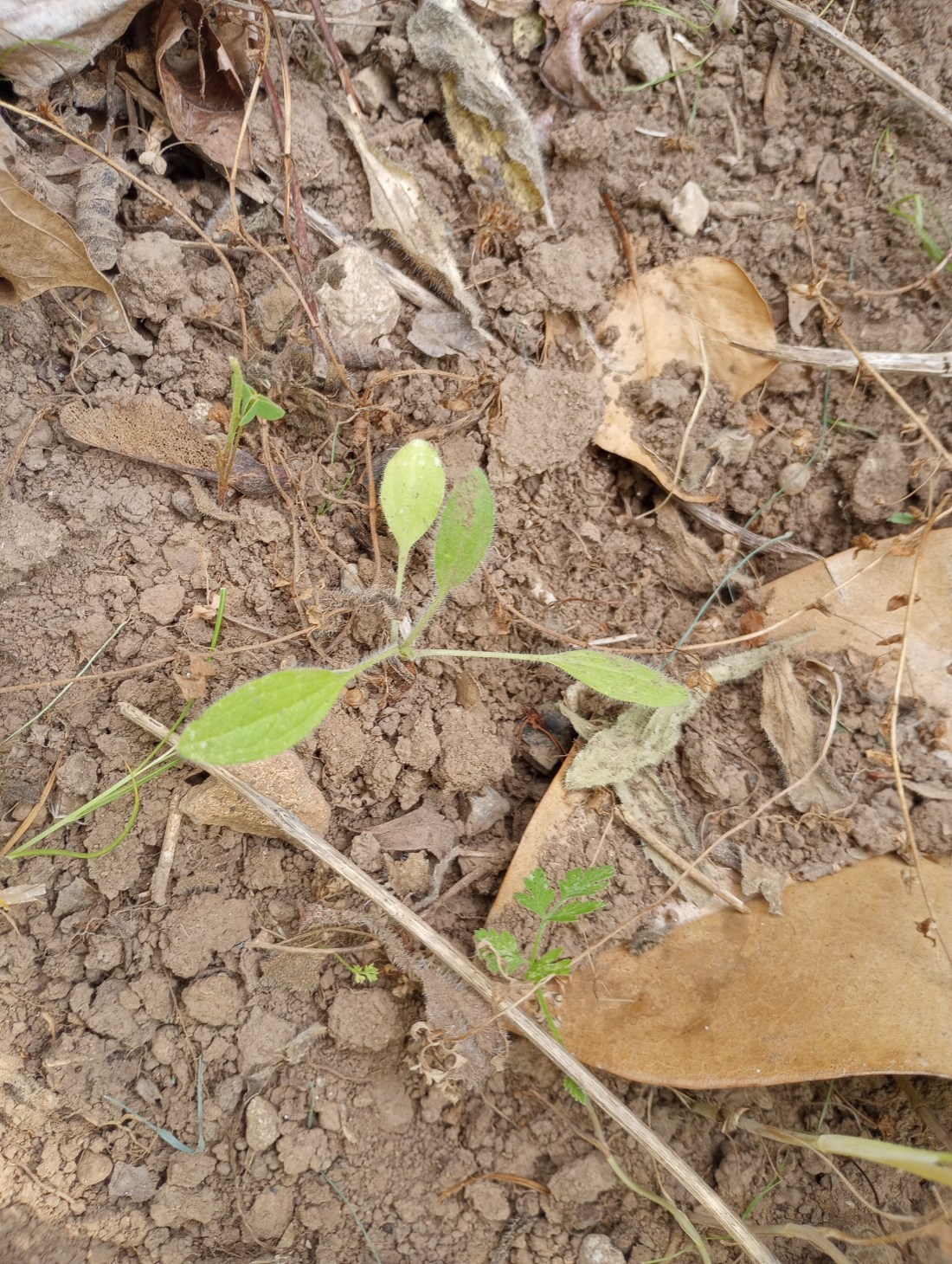
April 13, 2026: Plant Talk (Osage Orange, Poison Ivy, etc.)

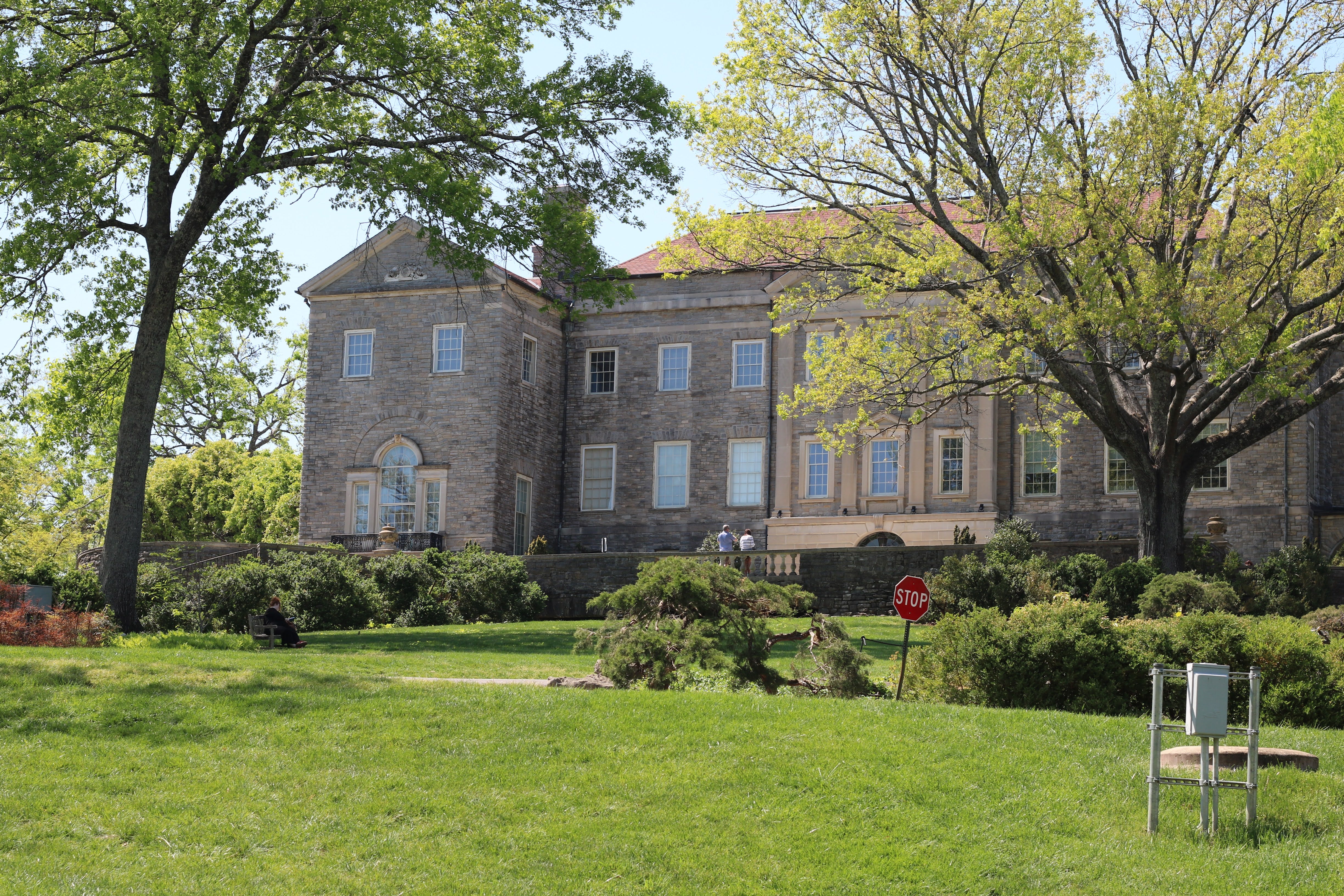
The Cheekwood mansion
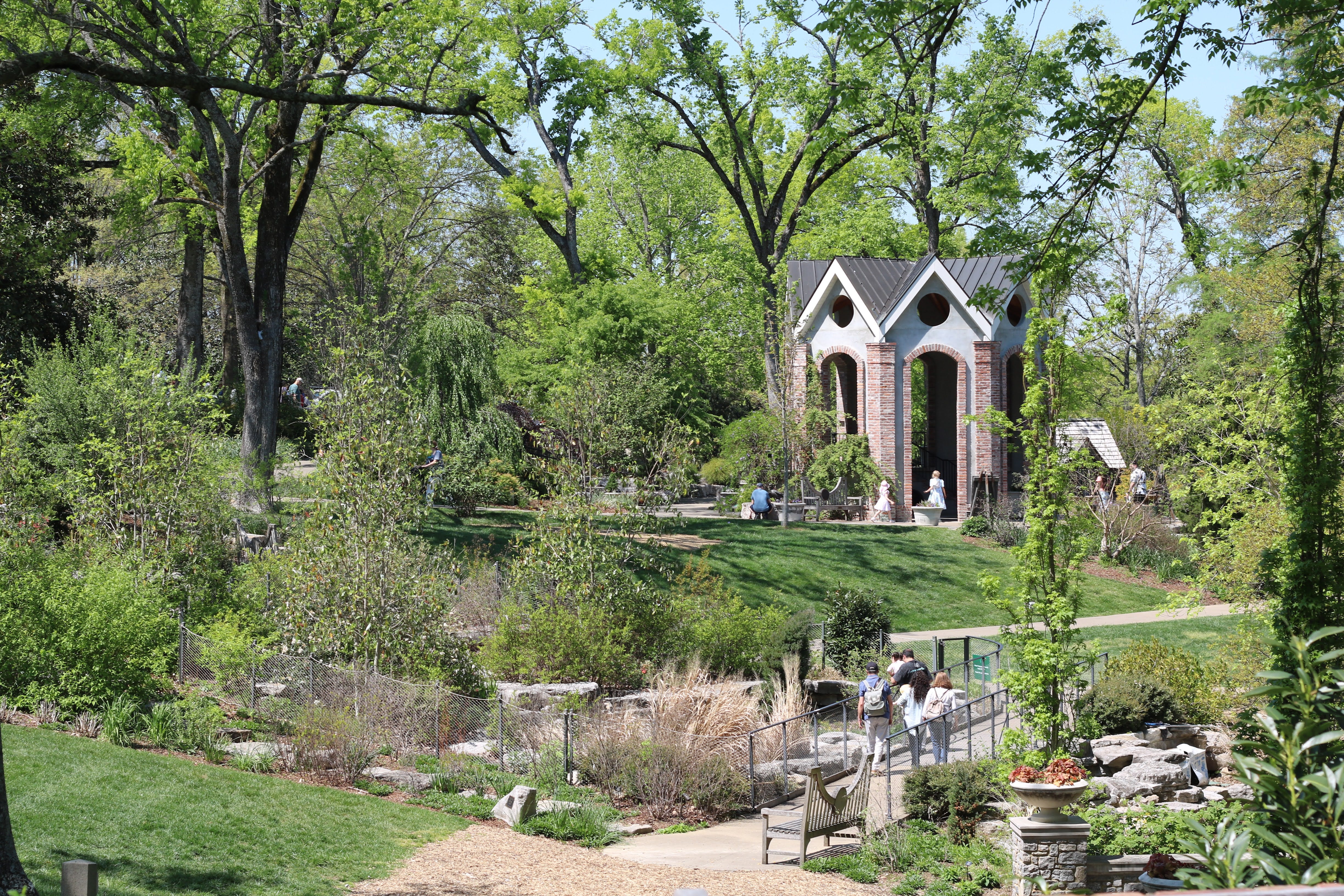
A Cheekwood scene

Overhearing random snippets of conversation:


At the cafe, two guys catching up

Guy: “What have I been doing or how have I been?”

Other guy: “I guess both.”


At Cheekwood, three unassuming old ladies talking in the garden

Lady: “He killed his dad… then he decapitated him…”

(I was walking right by and I said, “Oh my God!” Don’t think they heard me.)


I remember I was running at Shelby sometime last year and I overheard a young white guy talking about Islamic radio, heresy, it was the most incredible thing I probably could have ever overheard, in a four second period of running by someone. Similar to these three old ladies talking about the murder and decapitation of a father. And that’s the only snippet you get. Amazing to hear.

These days my brain is full of about, 80%, plants and Japanese. The amount of either one fluctuates on the day, but in total, 80 if not 90% of my brain is occupied with thinking related to either of these things. I spend my not thinking time doing yoga, climbing, and doing the Brad Pitt Fight Club workout, and now, manning the various positions of customer service at Cheekwood, including the phones, gatehouse, ticketing booth, and managing the line.

Working at a botanical garden is amazing for learning about plants. Between that, and the master gardener program, I’m accumulating so much knowledge, and getting so many ideas, and it is really more than I can write about. There is so much to know, so much to talk about, and you can just keep going deeper.

Recently, I am really interested in trees. That has been the next frontier. And the trees are amazing. They look similar, but when you start taking a closer look, they have their distinctive characteristics. The bark is a major teller, and then, the leaves. The shape of the tree, the size, and then, fruits, flowers, seeds, berries, nuts. You can start to get an idea of what’s around. In our small yard we have three hackberries, a young black walnut, a boxelder maple, and a sugar maple, and then many young tree saplings trying to make their way in the world.

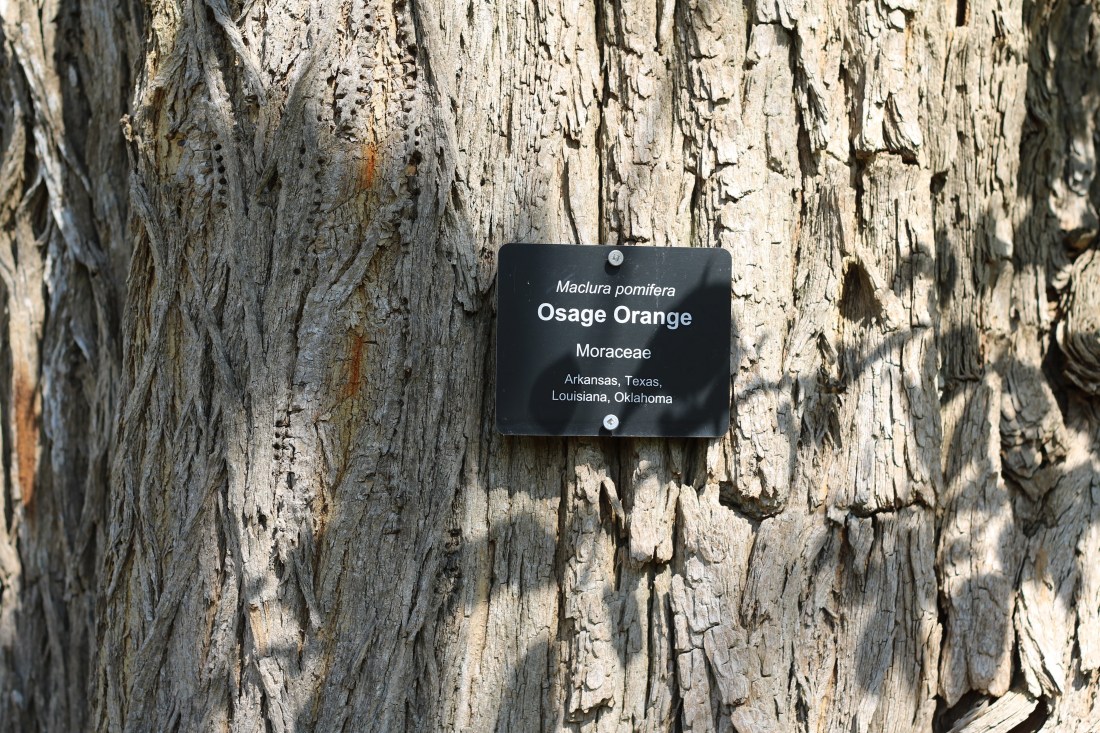
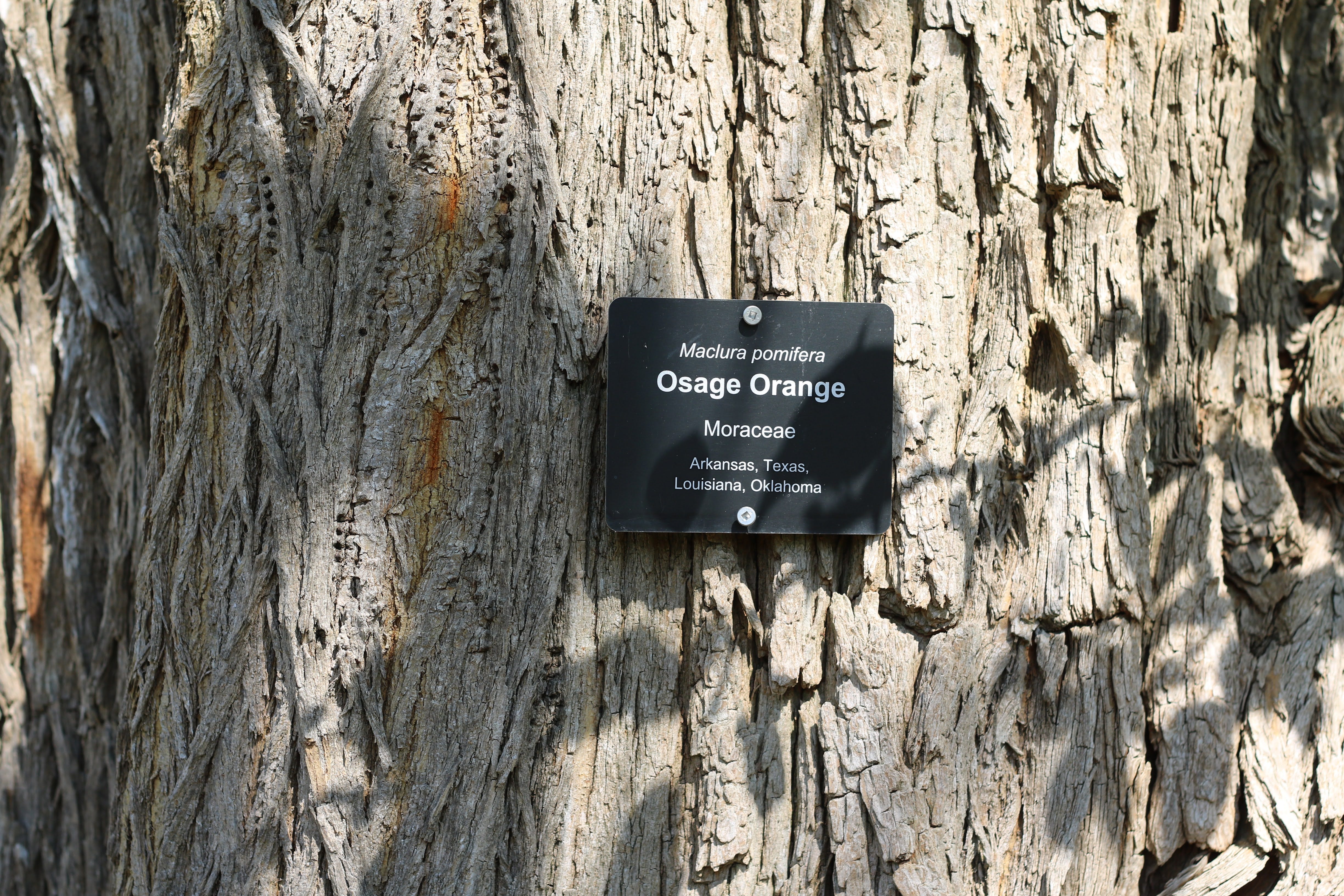
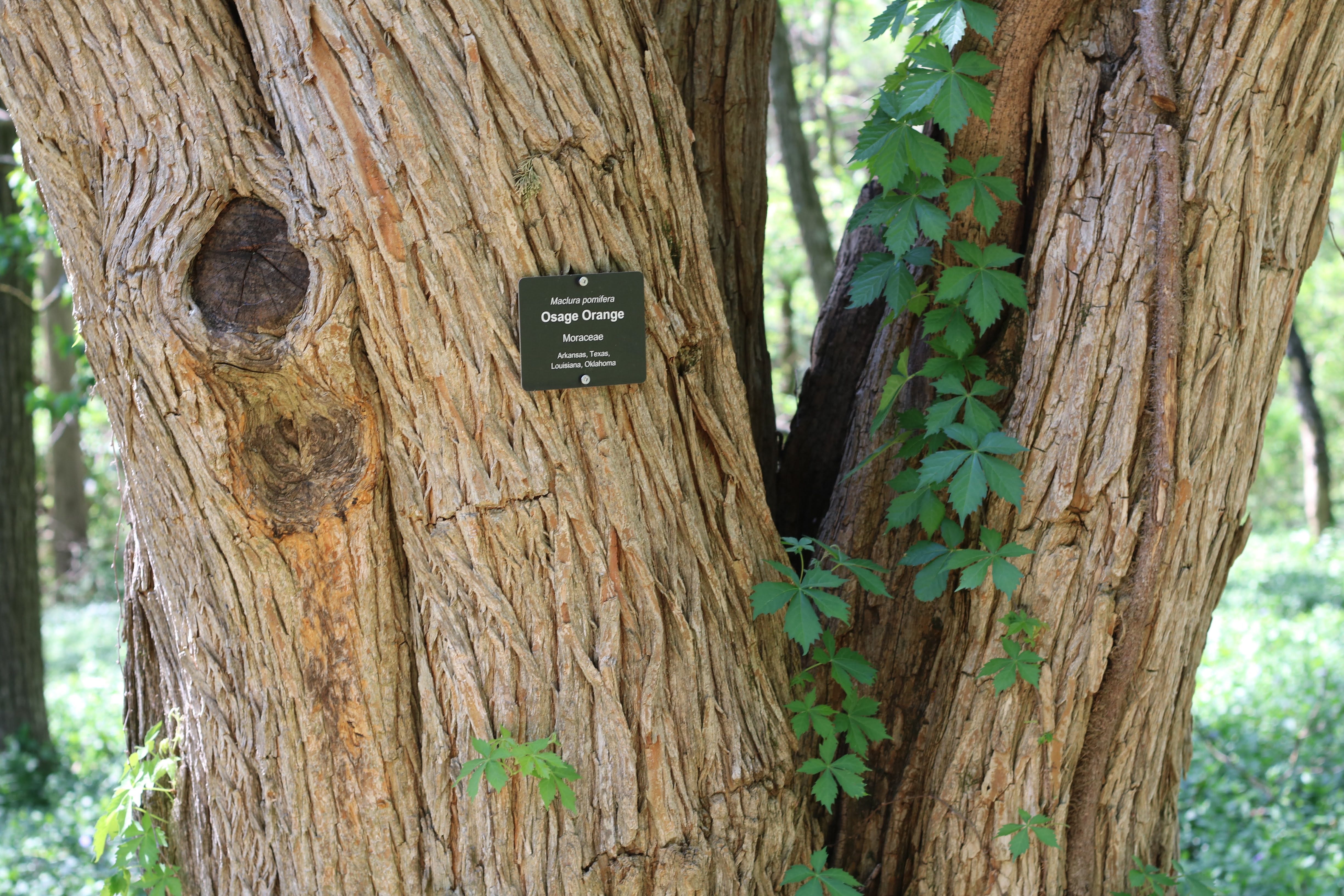
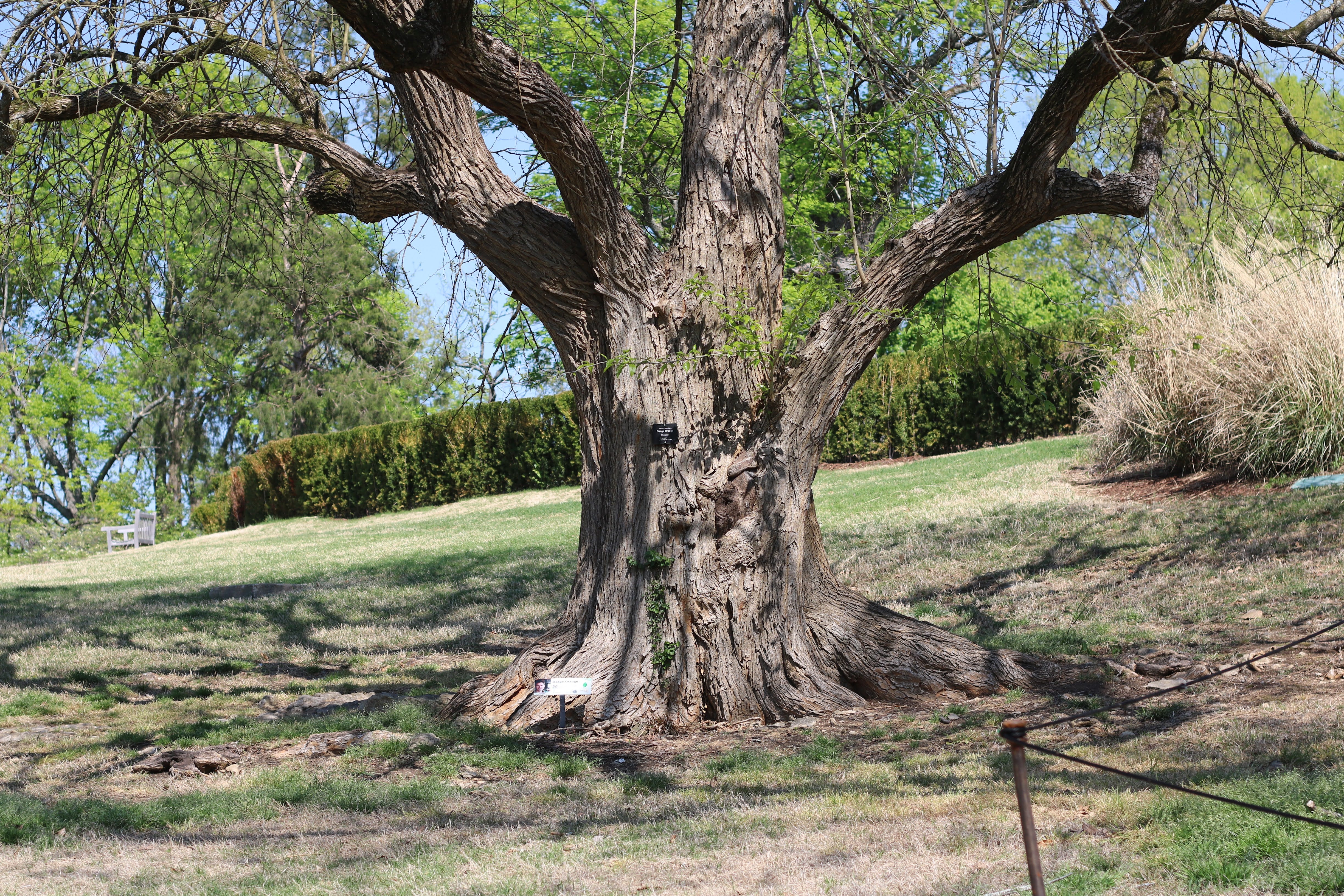
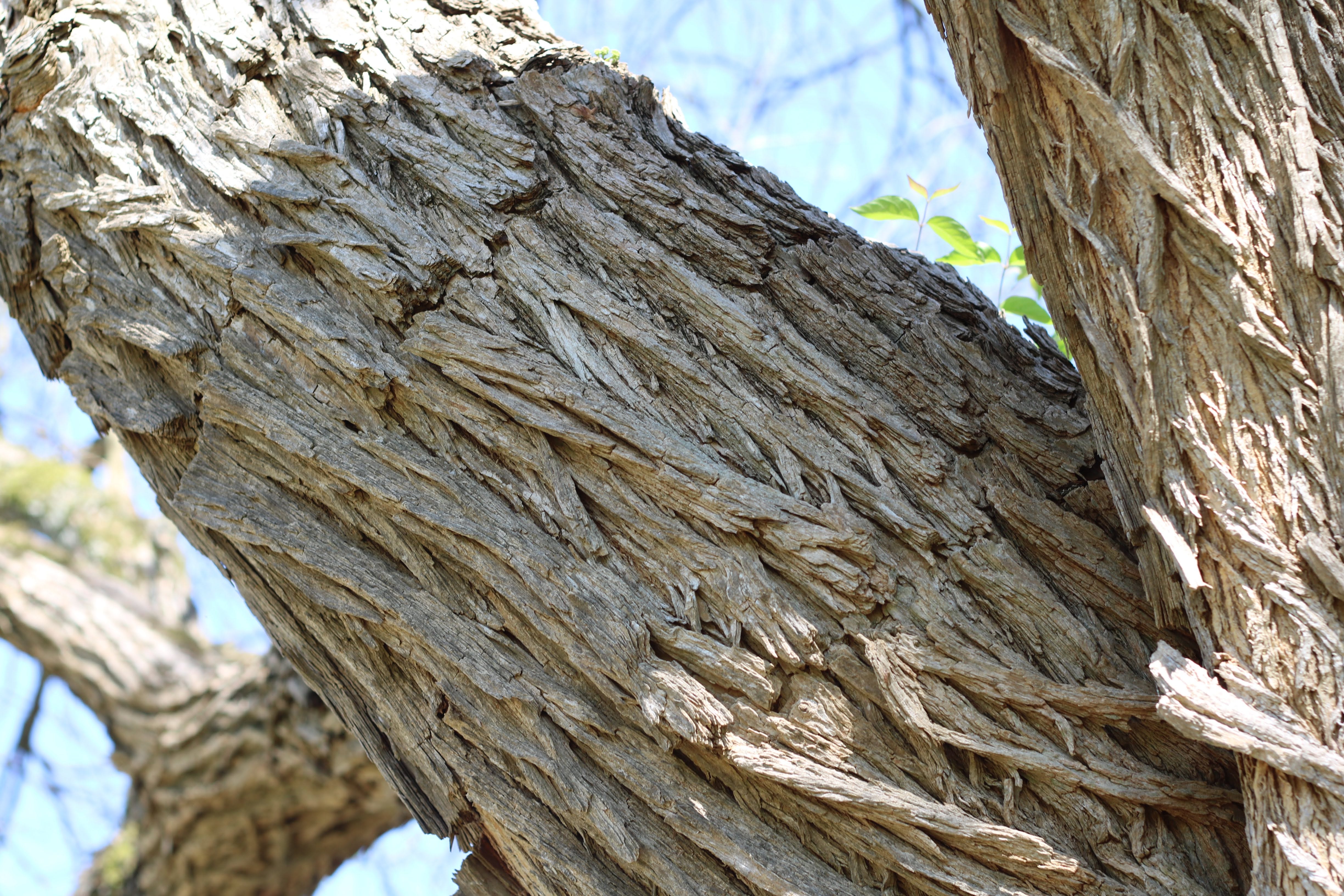
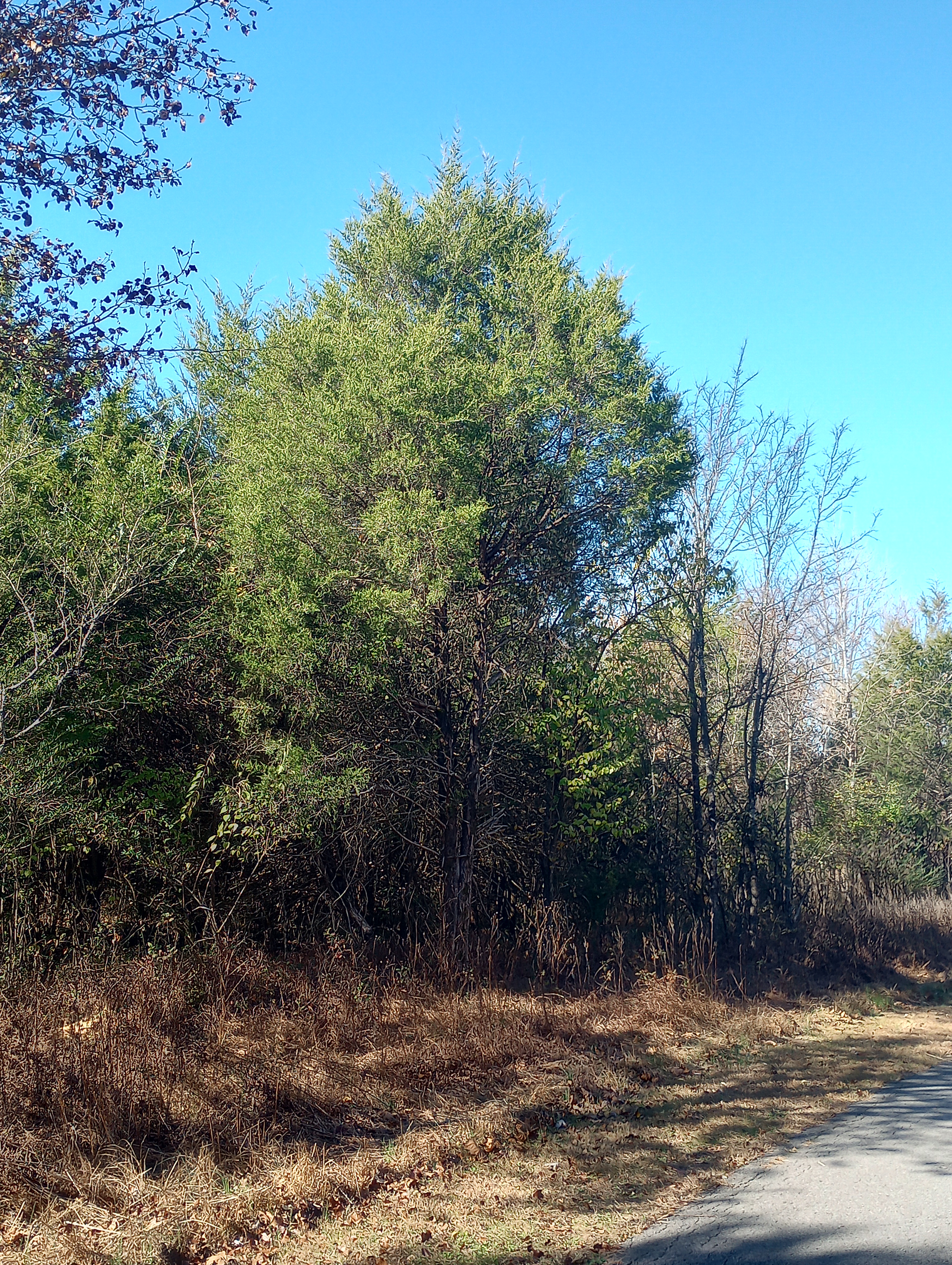
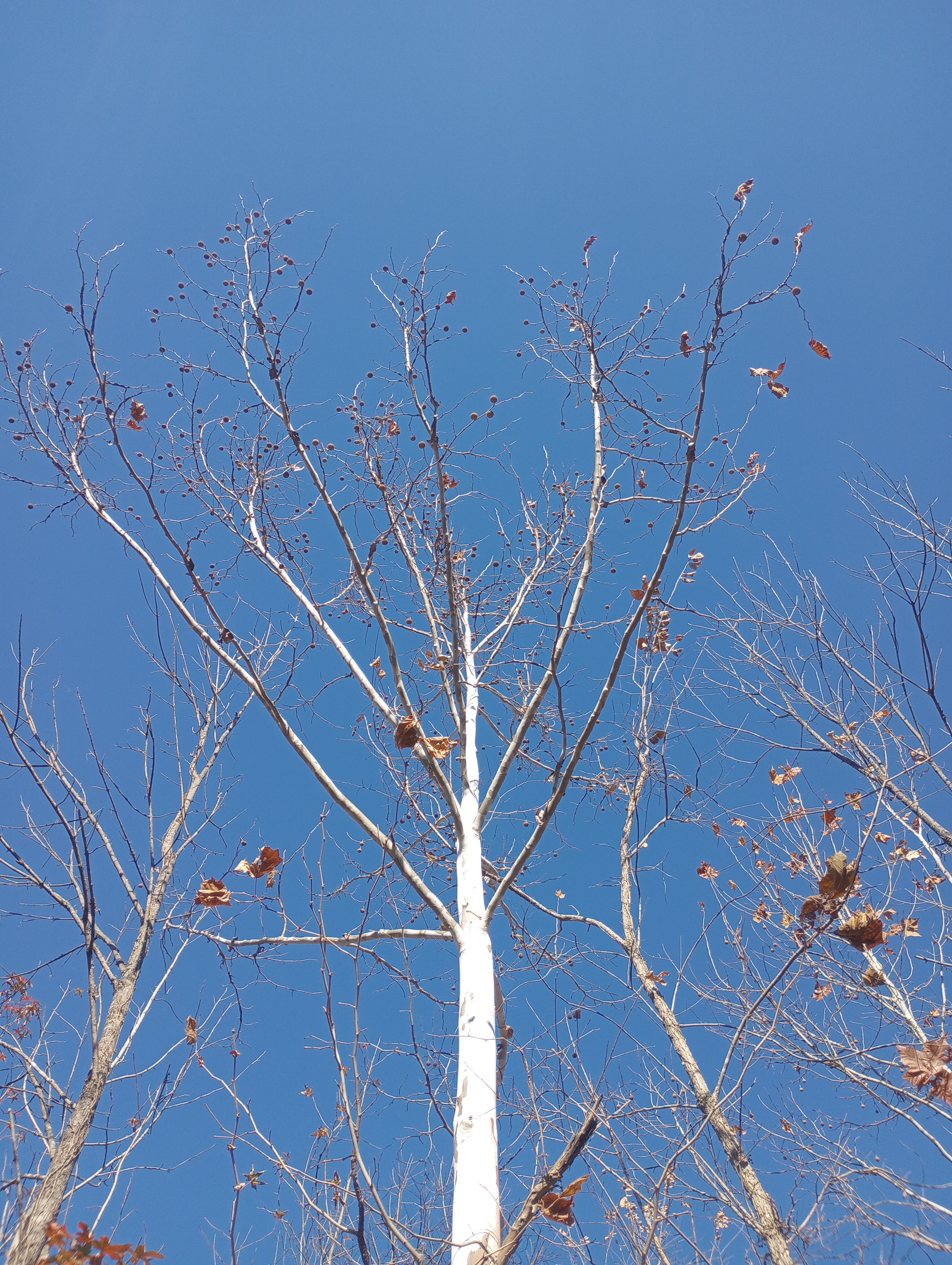
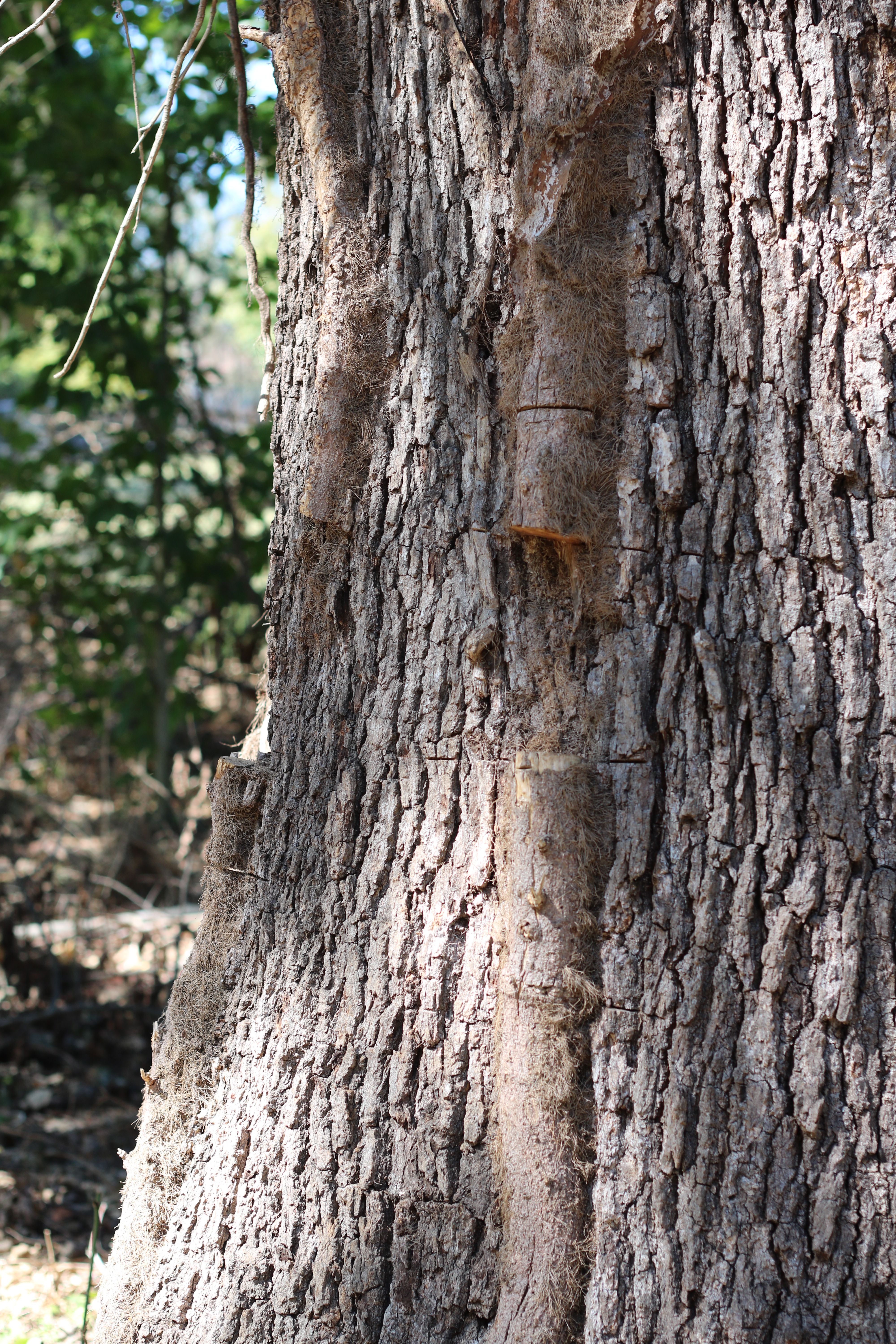
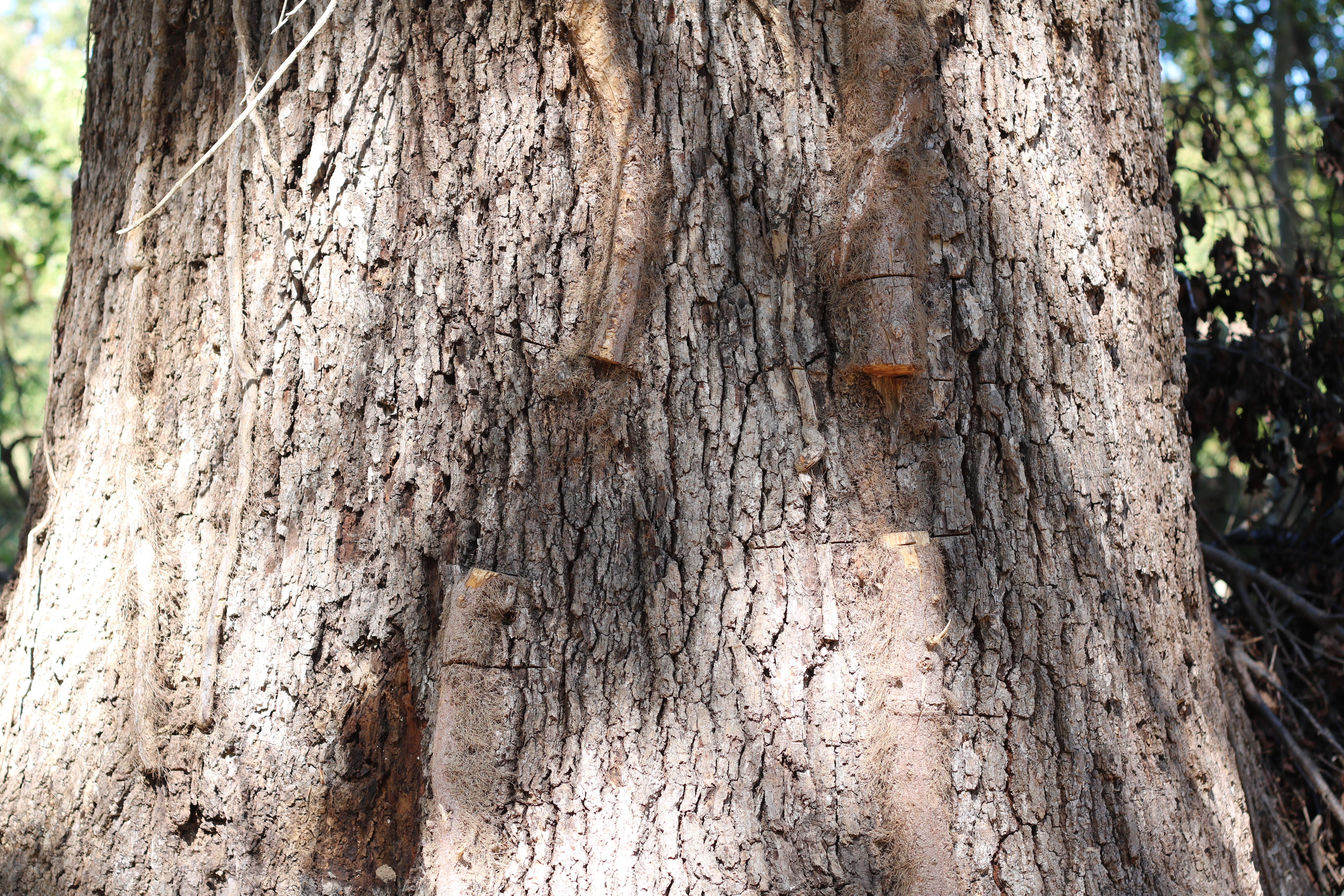
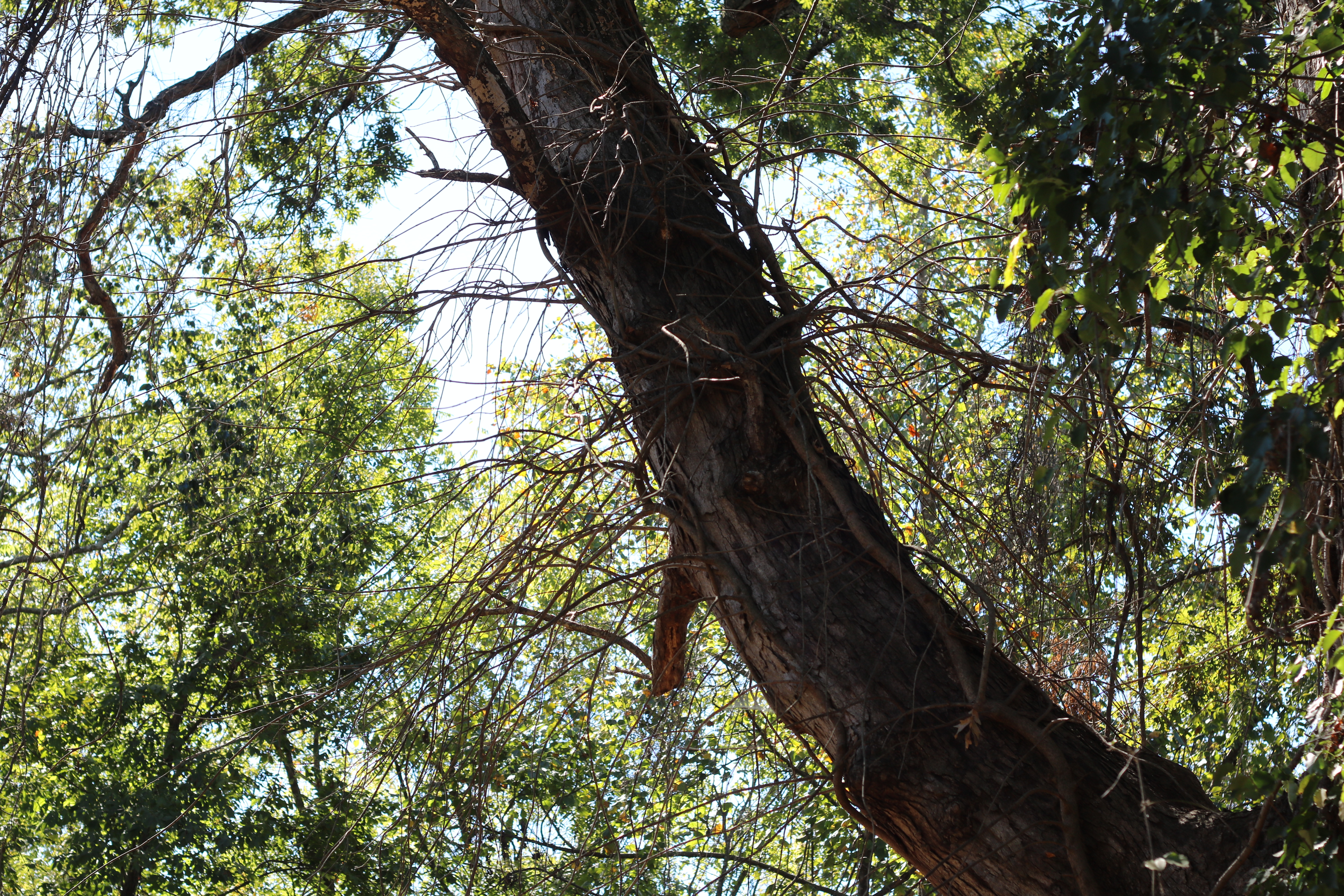
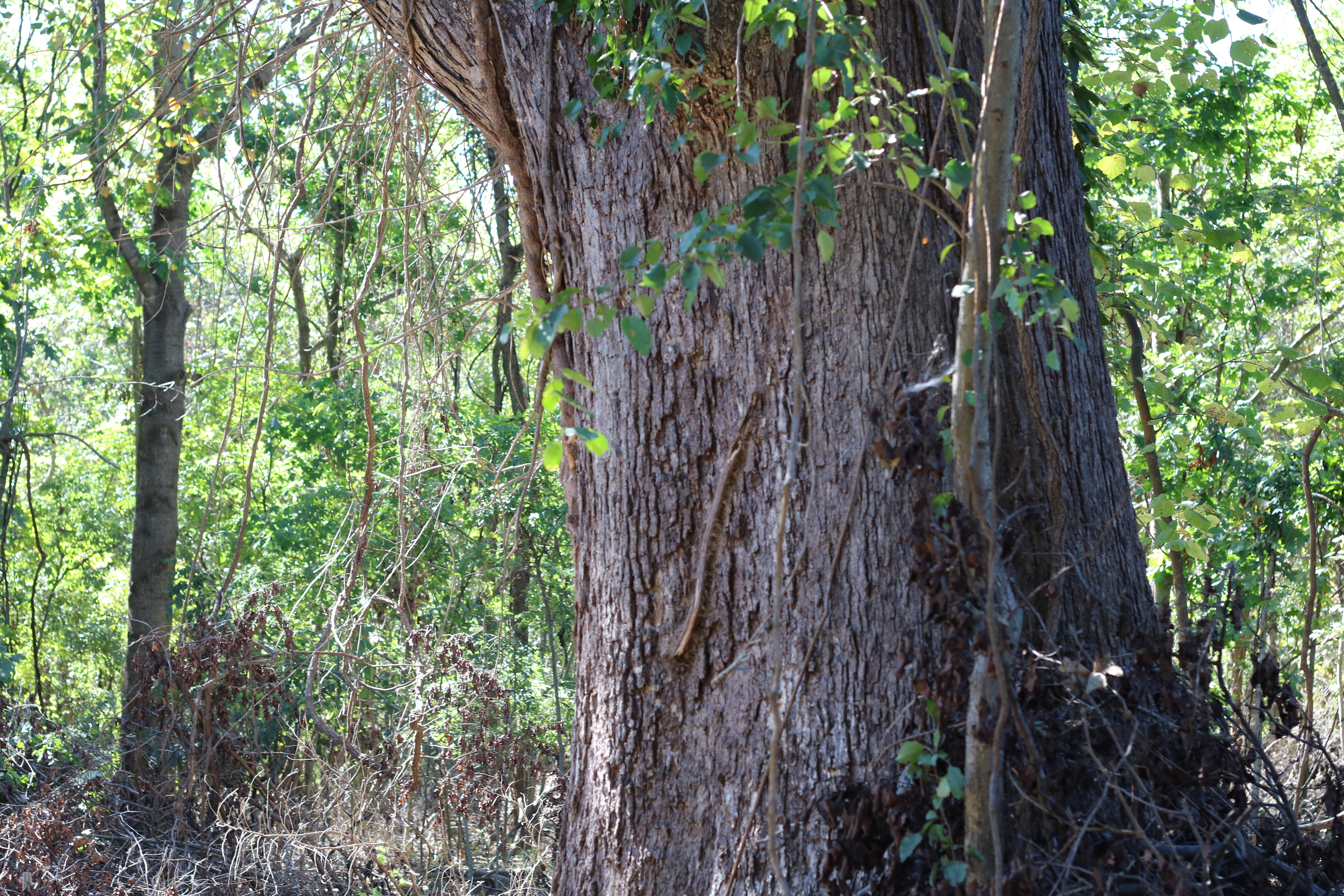
I would say right now, my favorites are, Chinese Fringetree, Shagbark Hickory, Eastern Red Cedar, and Willow Oak. Osage Orange has amazing bark, and I want to see the leaves.

Osage Orange at Cheekwood #1
Osage Orange at Cheekwood #2
Big ol Osage Orange
Osage Orange bark

They’re not out yet. It feels like we are deep into the season already, the growth has been vigorous, some things growing for a month or more, and yet, some of these mega-trees, the oaks mainly(?), they haven’t even put their leaves out yet, or they are just starting to. That’s really interesting. They are on a different timetable. And perhaps they are protecting themselves from frost. They are wary. They look like they might be dead, when everything else around them is proliferating, green, but you know they’re just not ready yet. They are not in any rush.

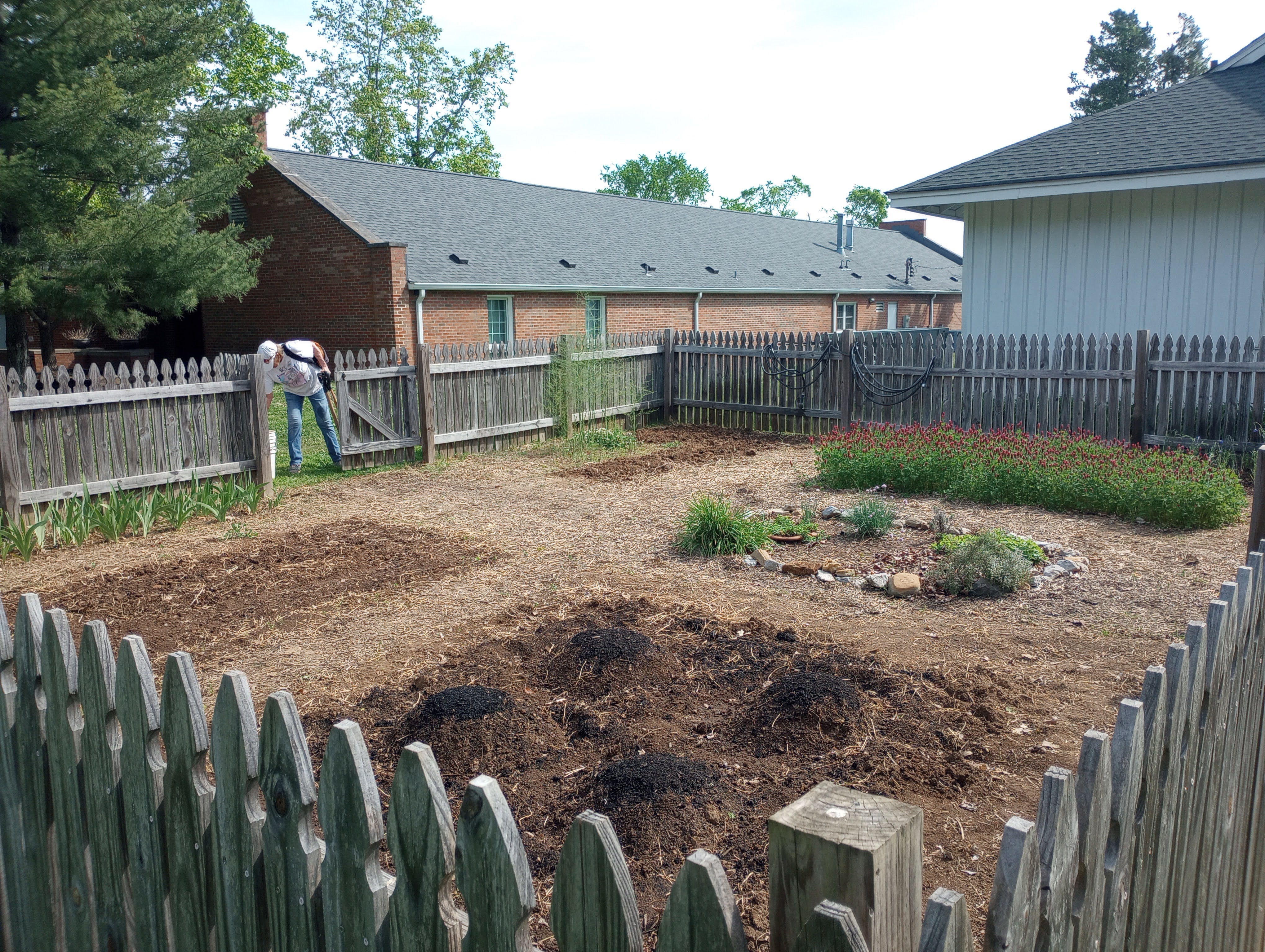
I was waiting for the last frost to pass, and as of April 9th or something, there was a 70% chance of the last frost having already happened, and so I’ve known it’s time for me to get started. It’s hard work, getting into the ground, clearing the way for and getting these seeds in the ground. And I did about 1/3 of that work this morning, ripping and tearing up the weeds with my gloved hands. Smosh’s dad was here, he pulled up in his truck, and he was watching me work, I was telling him that I was getting my garden started. And he said, “You know you can save yourself a lot of time and effort if you get yourself a tiller and just till this all up.” He also said I should dig down about a foot and put in a mix of sand and topsoil. He is pretty much right, and that’s what you should do, or could do, for the fastest, easiest results. But, and I told him, I’m looking to do it more holistically. And I think that is where the ecologist part of me is taking over. I am really just cultivating this space, I realized. I now know almost everything that is in the yard, and it lives or dies mostly by my hand. But, I am not trying to start from scratch, and I’m not trying to execute a master vision. I’m working with what we’ve got, and studying it. And it’s amazing how much development, and how much biodiversity we have on this small, urban plot of land. It’s probably just a 1/4 of an acre, but it has two major microclimates, even probably three, which are: the front yard, rocky, sandy-clay soil that gets full, intense sun for most of the year, and is right by the road. And then, in the back, shaded, deeper shade in two corner pockets, or dappled light, and the soil is richer, and moister back there. And you can see that very different things grow in the front and the back. And then, along the fence separating our properties, that’s another section in itself.

I pulled up a lot of the wintercreeper groundcover in the back, last year, I pulled up pounds and pounds and pounds of it and I still haven’t gotten it all. But what has filled that spot now, primarily, is common blue violet, which is proliferating rapidly and expanding its territory every day, and cleavers, gallium aparine. The common blue violet has bloomed, full bloom has passed but it is still blooming, and it has covered the ground with purple, little purple stars. The cleavers are really funky plants, and turns out they are edible, as many of these plants actually are, broadleaf plantain, dandelion, purple deadnettle, and the cleavers. I’ve been eating it, and it’s funny because I’ve grown some lettuce and spinach in pots, and I have barely been eating them and just letting them go, because I’ve been eating the cleavers for my veggies instead. Free vegetables, that I didn’t plant, just let my space go, with intentional curation, seeing what happens, and learning about these plants. And then the yard is full of food. For the bugs, the pollinators, but also, for me. Because there’s more Gallium aparine than I can eat, back there.

Walk into the backyard, harvest your wild plants, pick them and eat them fresh, and pay nothing, don’t have to go to the store, don’t have to put anything in your fridge, don’t have to buy anything wrapped in plastic. That is an amazing feeling. It really is.

If I had known the purple deadnettle was edible, I would have had so much to eat. But I didn’t know that until they had been around for two months (thank you to Melanie for educating me), and had already flowered and were now mostly covered in powdery mildew, so I wasn’t going to try and eat those. Apparently they are a superfood.

So far, with edible wild plants, I’ve only known about the broadleaf plantain. That one is great, I mean they’re all basically the same. They’re all plants that can you eat. At least cleavers and plantain were both like that. I wonder if I just haven’t even thought about eating these other plants because they don’t look like anything that we do eat. Cleavers does not look like a veggie you would buy at the store. Neither does purple deadnettle. And I suppose we think of weeds as being non-edible, and farmed crops as being edible. But, turns out, at least in my yard, this spring at least half of it has been edible. And not only edible, but the internet is saying, wonderful to eat.

This time around with preparing my garden, I didn’t even want to use a shovel. As an experiment, I am just pulling up what I can, by hand, which is mostly purple deadnettle that has already flowered and passed, and Persian speedwell that has also already flowered, and then some sizeable broadleaf plantains, and some common mullein. And when I pull it up, this morning, I saw so many things down there, the soil is teeming with life. Spiders, roly polys, worms, grubs, something huge, possibly a caterpillar (it looked like one), snails, many, many snails, and slugs, and all kinds of milipedes and centipedes. These guys are living down here, in this space, and doing their work, and that’s important. That’s a good sign to see. You want to have some amount of organic matter in the soil, generally. And you want to have nitrogen fixation. So I’m trying to leave this soil and these creatures alone as much as possible. I pulled up the huge rootball of the plaintain weed, and I saw grubs, worms, beetles, all down in that ball and around it, and I shook them out and put them back in the soil, leaving as much dirt and as much undisturbed as possible.

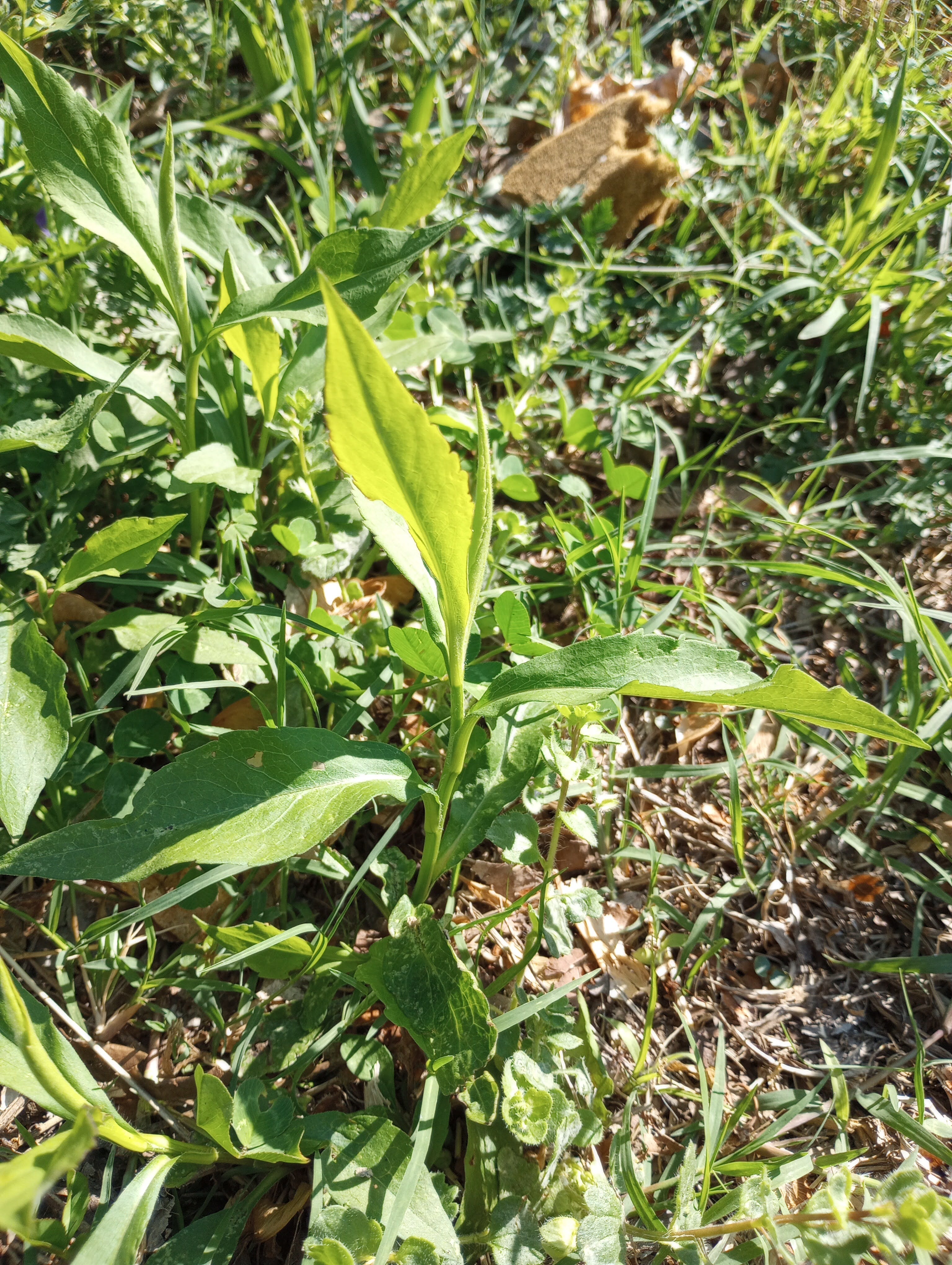
The weeds, Persian speedwell, the plaintain, and the deadnettle has been my cover crop. Maybe not the best cover crop, but it has protected the soil while I’ve been waiting to plant what I want to plant, which are mostly native wildflowers. I’ve got lanceleaf coreopsis, wild bergamot, mammoth sunflowers, narrow-leaved sunflower, and goldenrod. But it seems that I already will have some, perhaps a ton of goldenrod, because it has volunteered, meaning that it is growing naturally, wildly, in the yard. It seems to have shown up in great numbers in the yard. Hopefully I’ve IDed it correctly and it really is goldenrod, because I really wanted to grow that, and it looks like, fingers crossed, I’ll have it and I didn’t even have to plant the seeds. You’ll have an advantage with those plants, anything that showed up naturally, because you know that the spot it’s growing in works.

Patch of goldenrod??? In neighbor’s yard on other side of fence

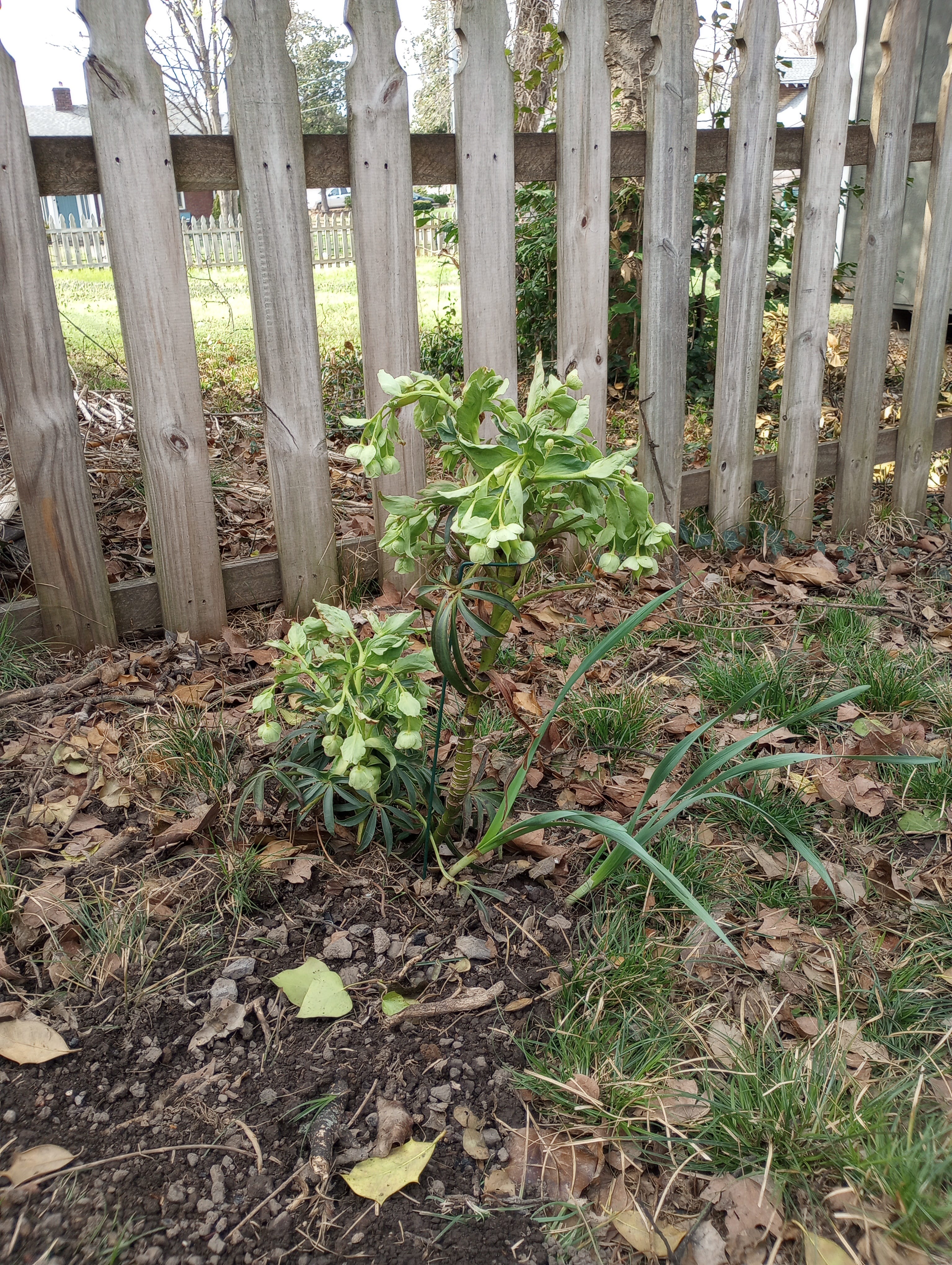
Both of my transplants, the mountain mint I was given, and the stinking hellebore have failed. The hellebore is still alive, but drastically crippled, 90% of it died and I had to cut it away, and only one small stem is left. I really probably have to move it. It didn’t like where I put it at all, and the only thing I can think of is that somehow, that soil has been too moist. I wouldn’t have thought that soil is too moist, but it is. It has retained moisture even a week, two weeks without rain, even with getting plenty of sunlight. I think that the hellebore doesn’t like that. And for the mountain mint, I have no idea what went wrong, but it died as fast as it could have possibly died. It was gone in like, a week. These are tragic stories, but it’s how you learn.

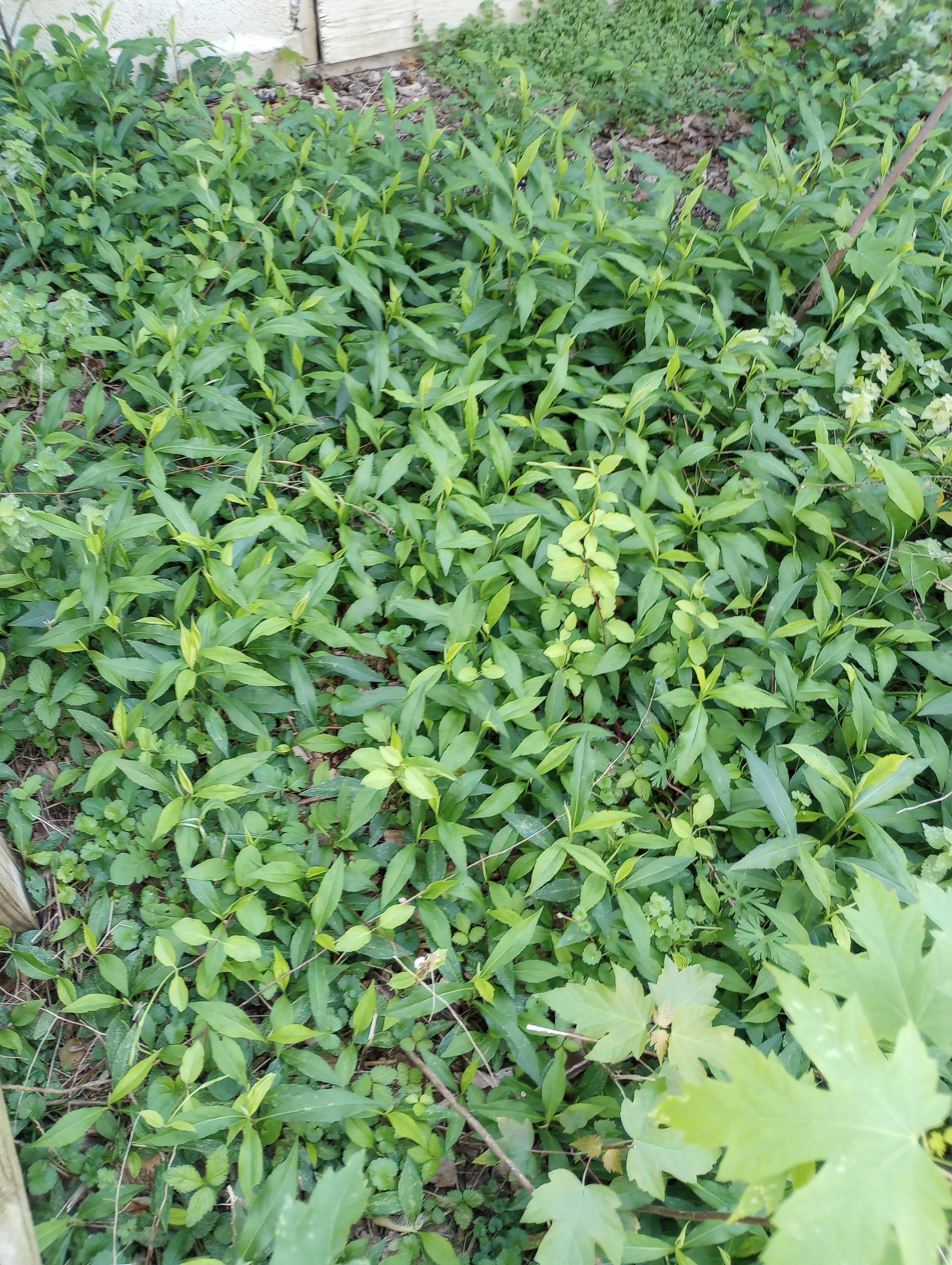
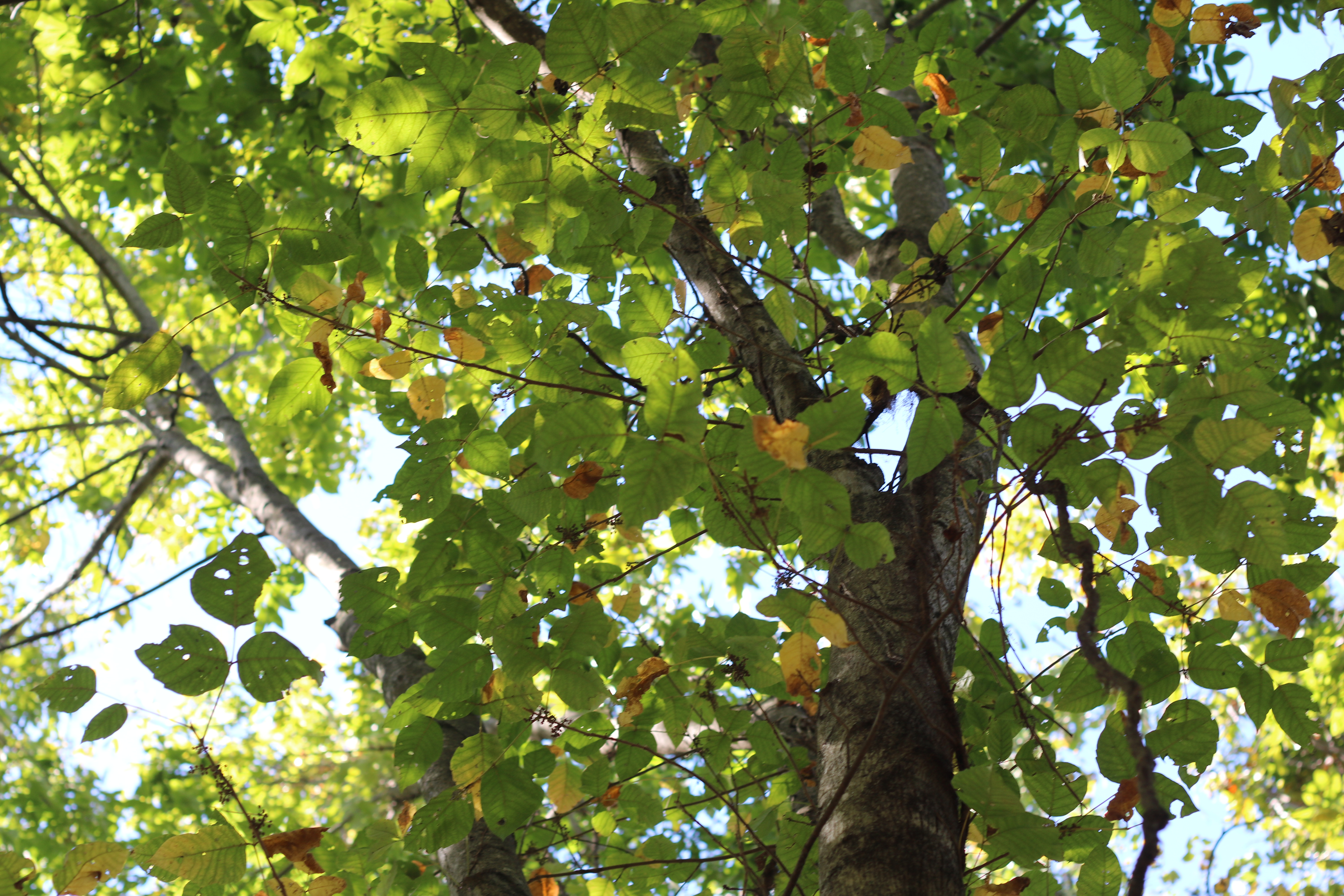
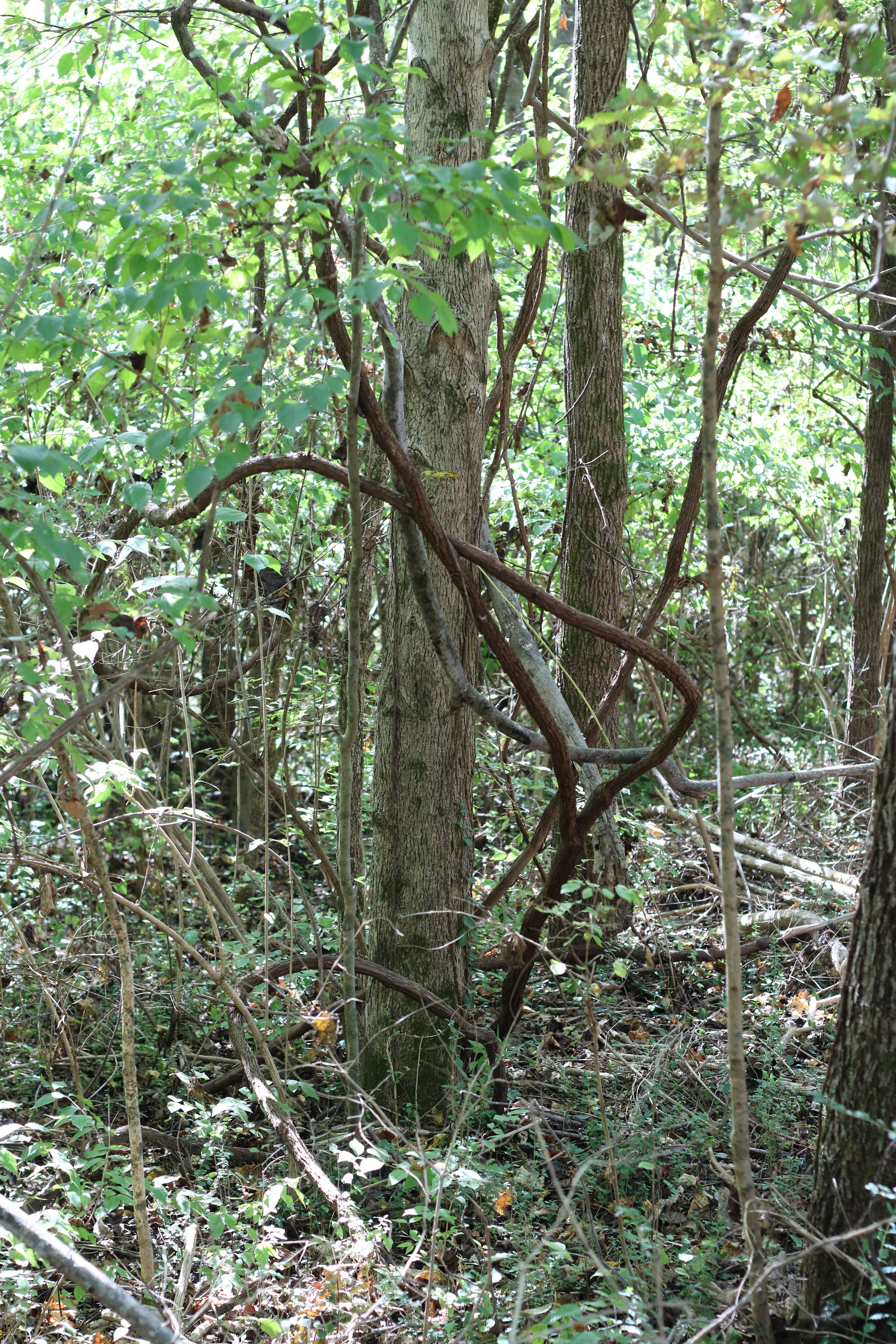
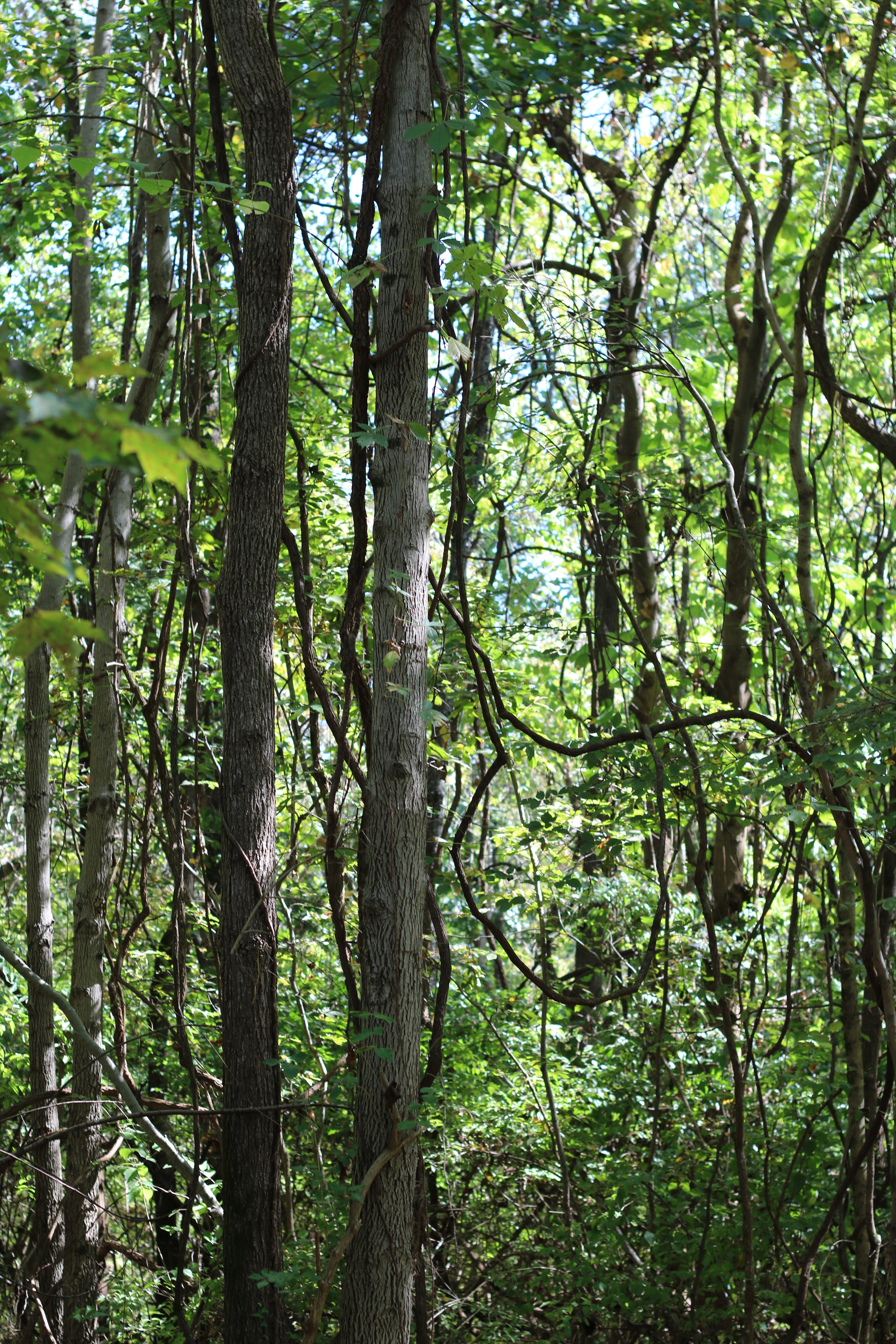
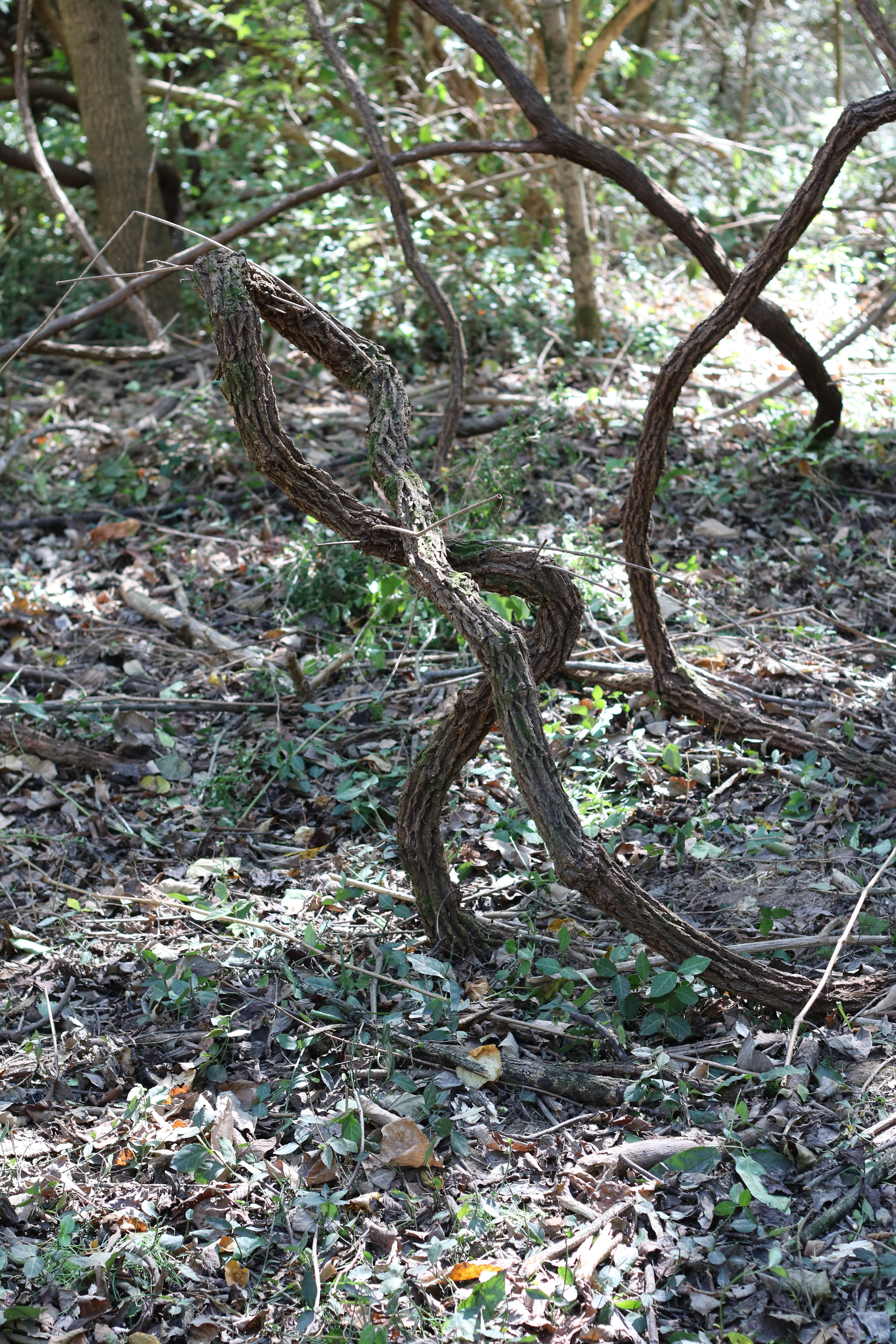
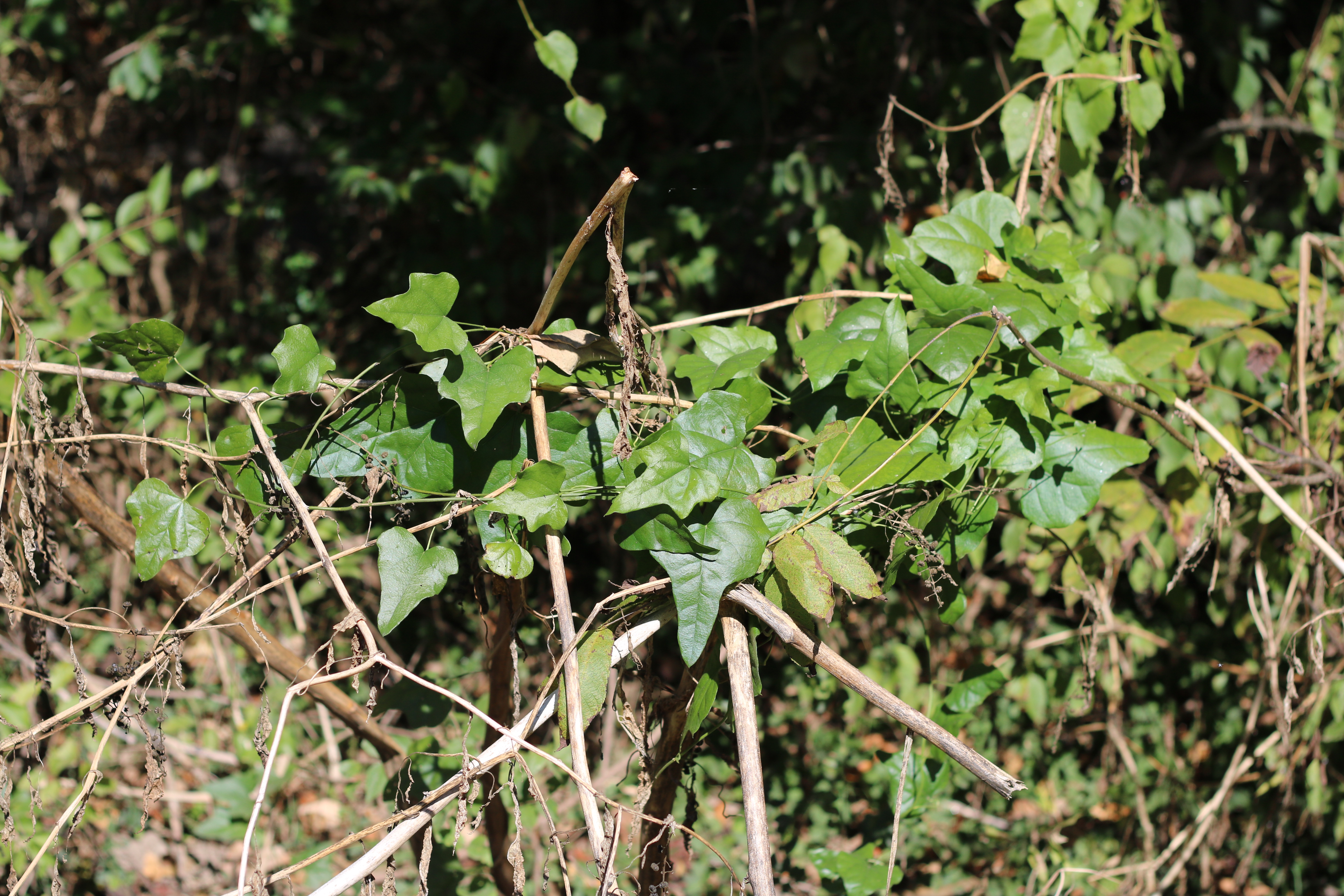
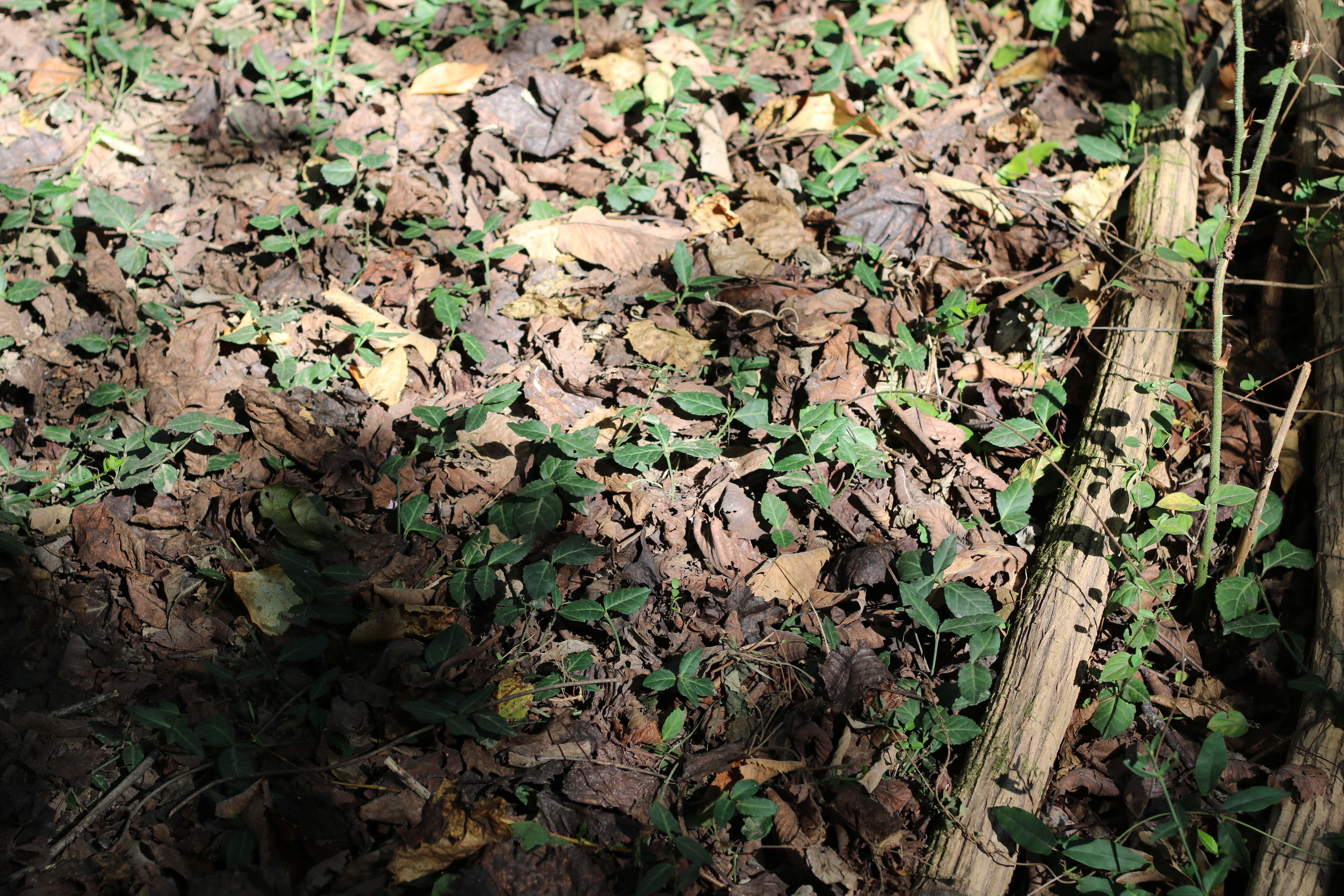
Today and in the recent few days, poison ivy has my attention. Poison ivy has made a debut in the yard, we now have a thriving poison ivy vine. The leaves are enormous, or they can be. The leaves of three can be hard to pick out, especially on the ground, because there are some other three-leaves things like the young maples, but on the tree, it’s pretty obvious. The leaves are huge, that makes it easy to spot. But, poison ivy is native, and has berries that the wildlife like, and also, I am so sick and disgusted by English ivy and Wintercreeping engulfing every tree, that when I see a native vine, still, any native vine, I get a thrill. I am so excited and feel a great feeling, to see these native vines. That’s really true. And we’ve had Virginia creeper, and now we have more, the Virginia creeper is thriving, and a little bit of Honeyvine milkweed, and then we may have some Crossvine now, in the yard. I really hope so, but if we do have it they are young. But right now, we’ve got a huge poison ivy popping up, and honestly, I am really happy about that. It’s weird, having a new love for a hated and notorious plant.

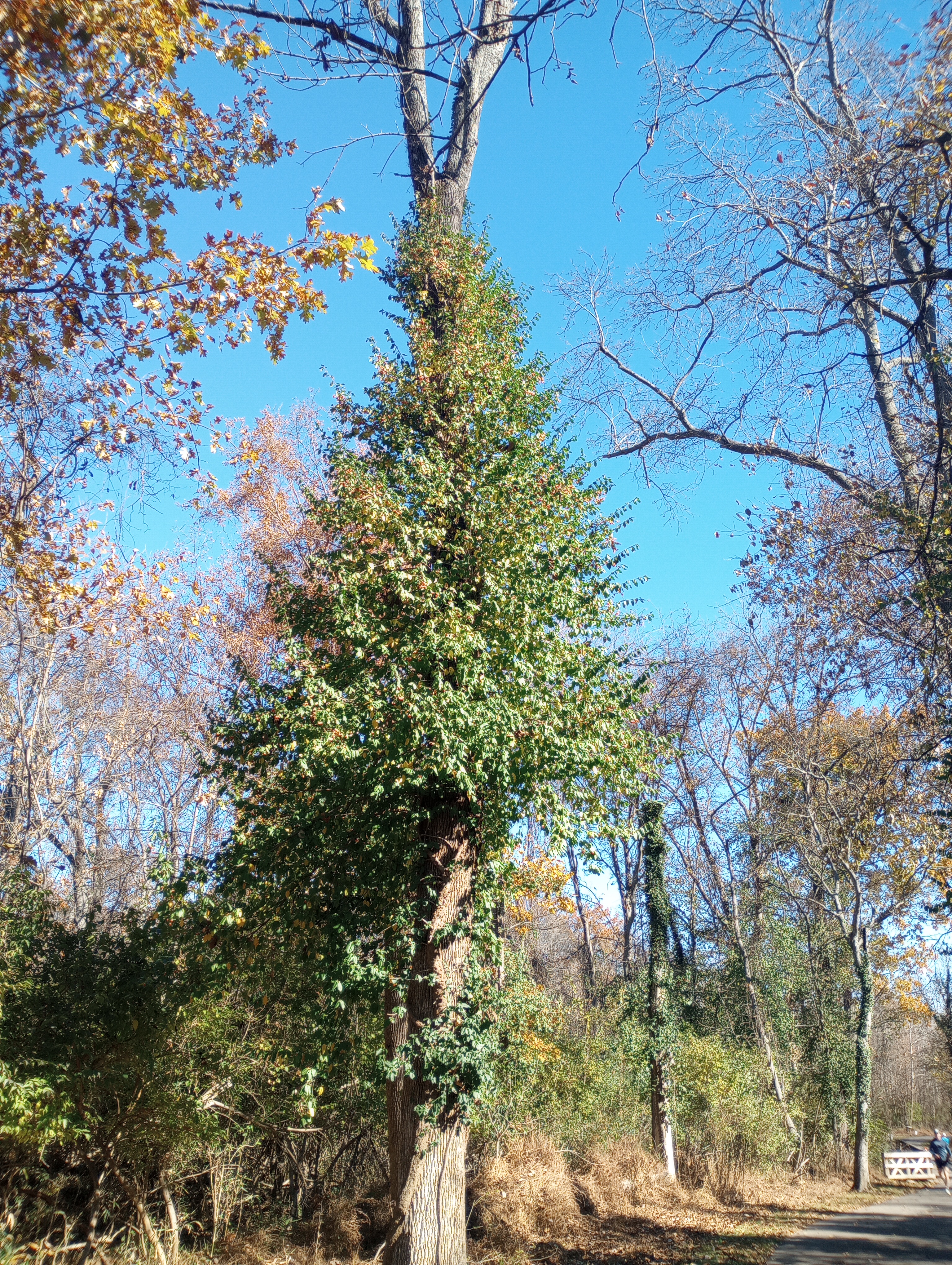
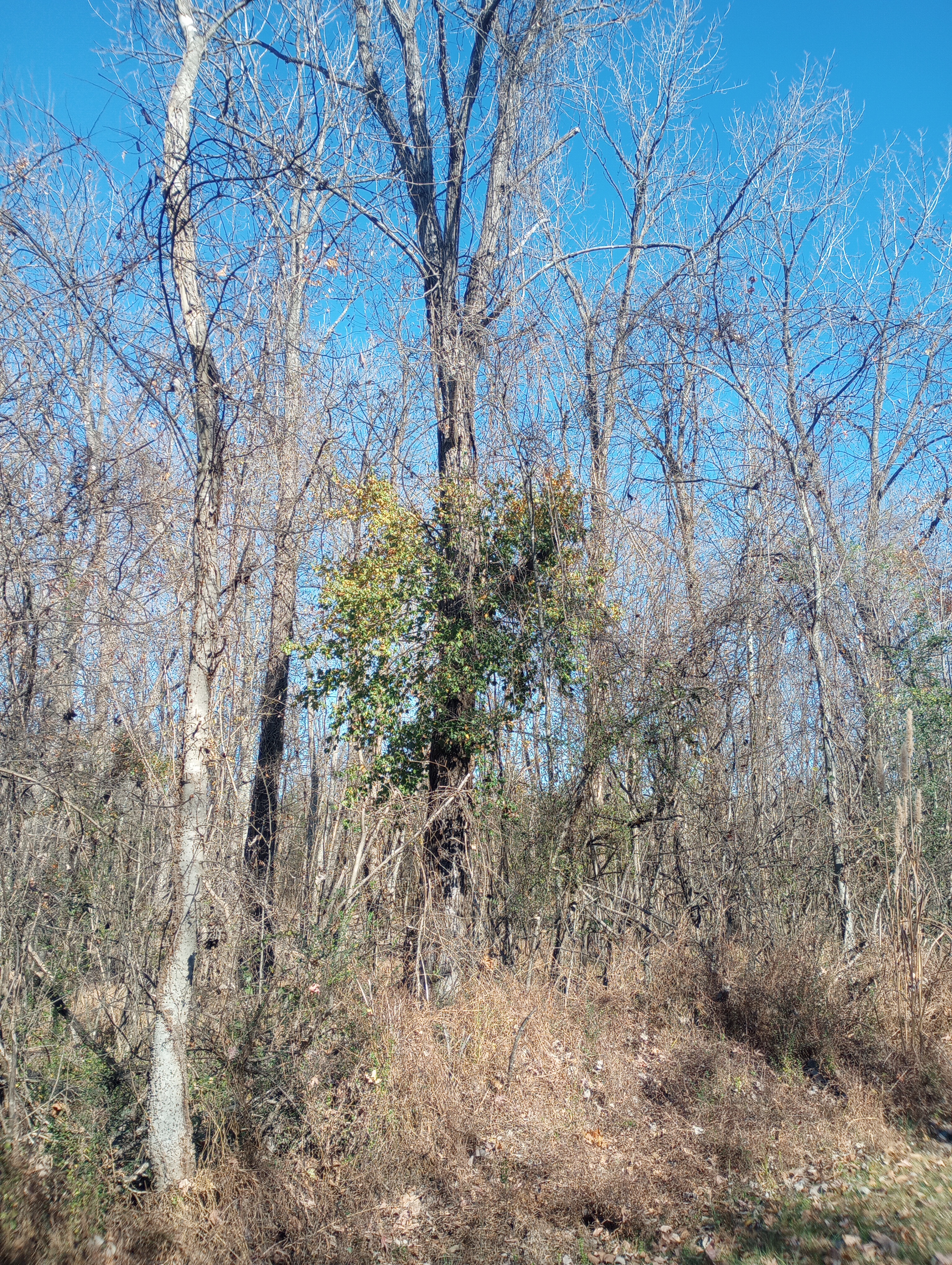
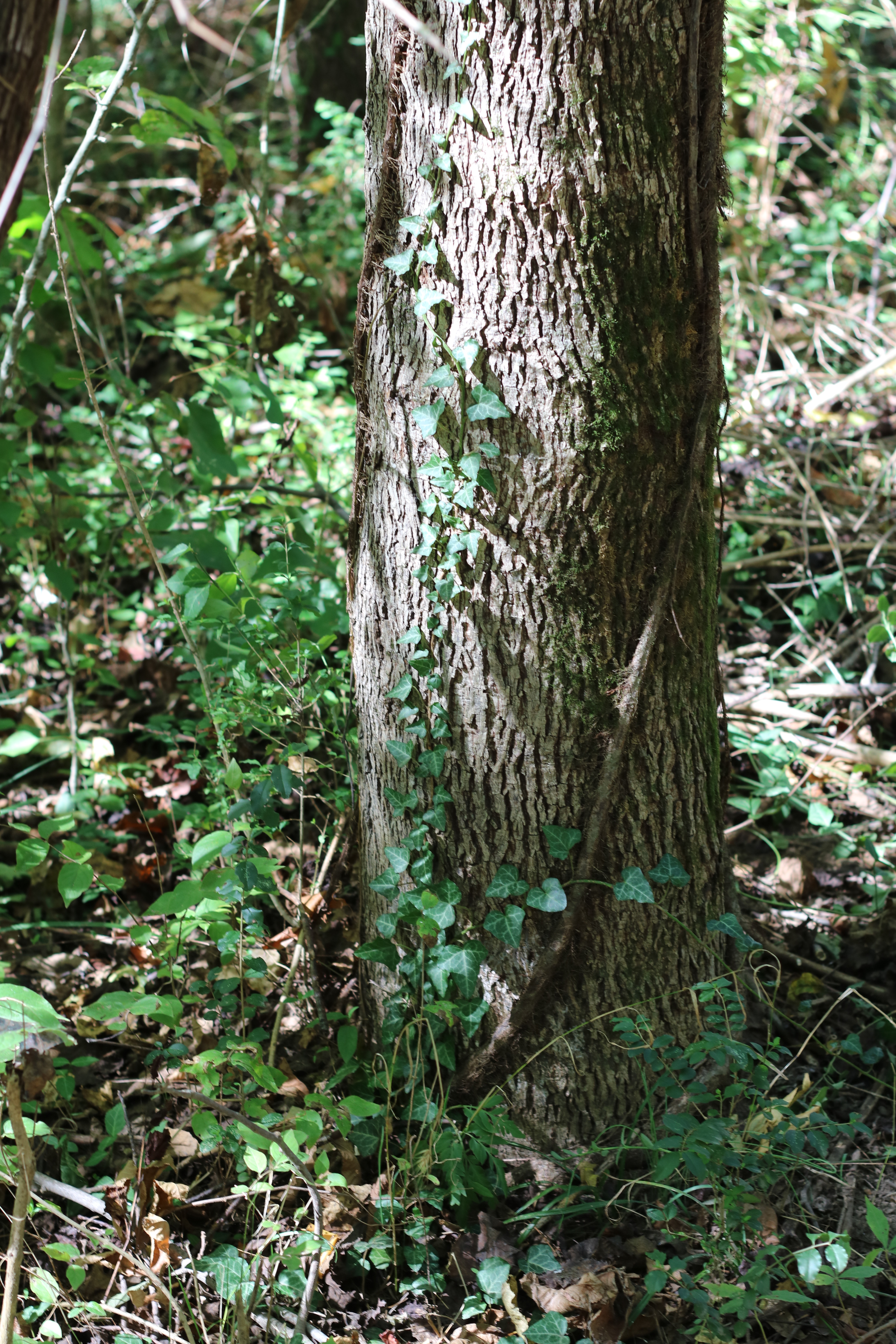
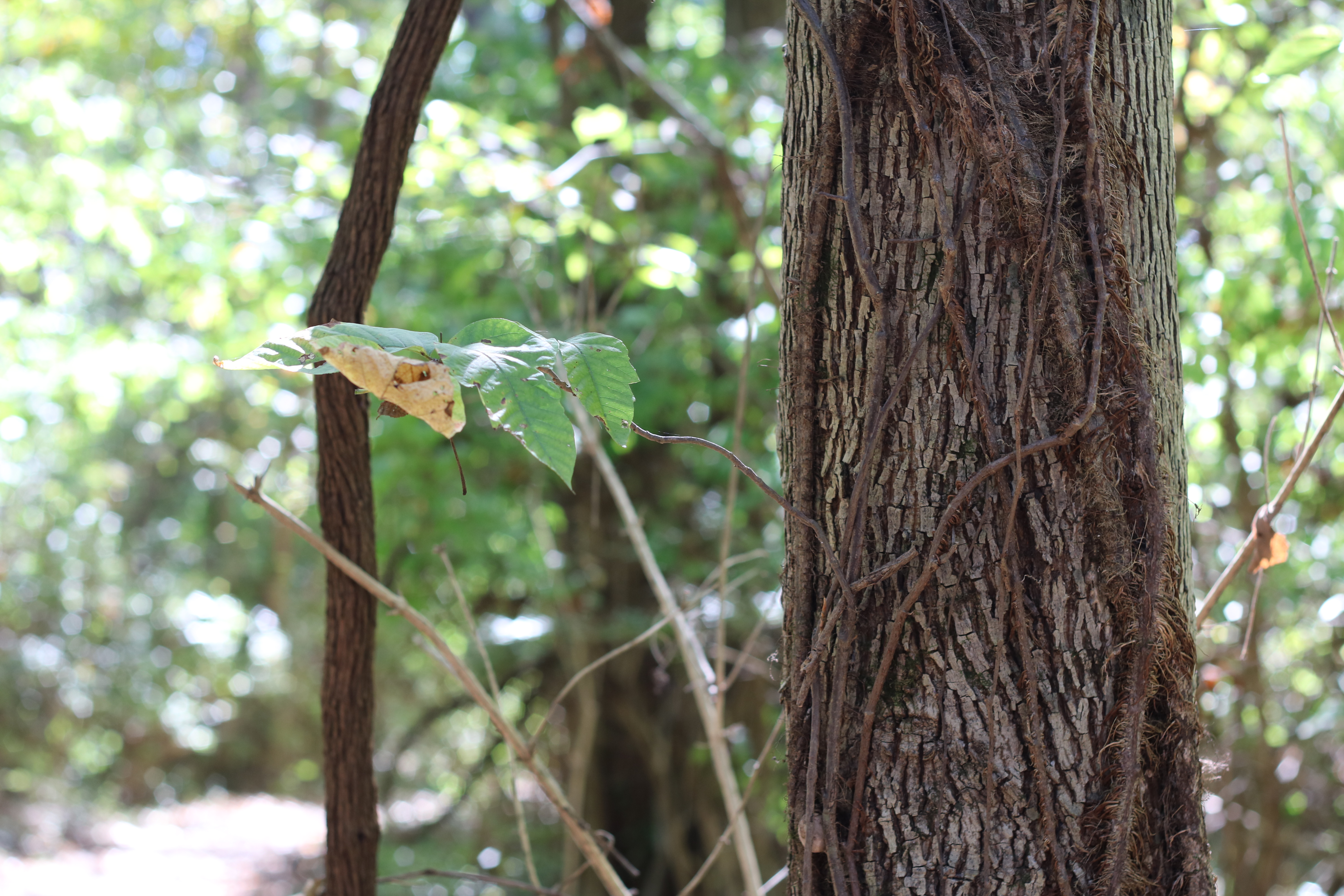
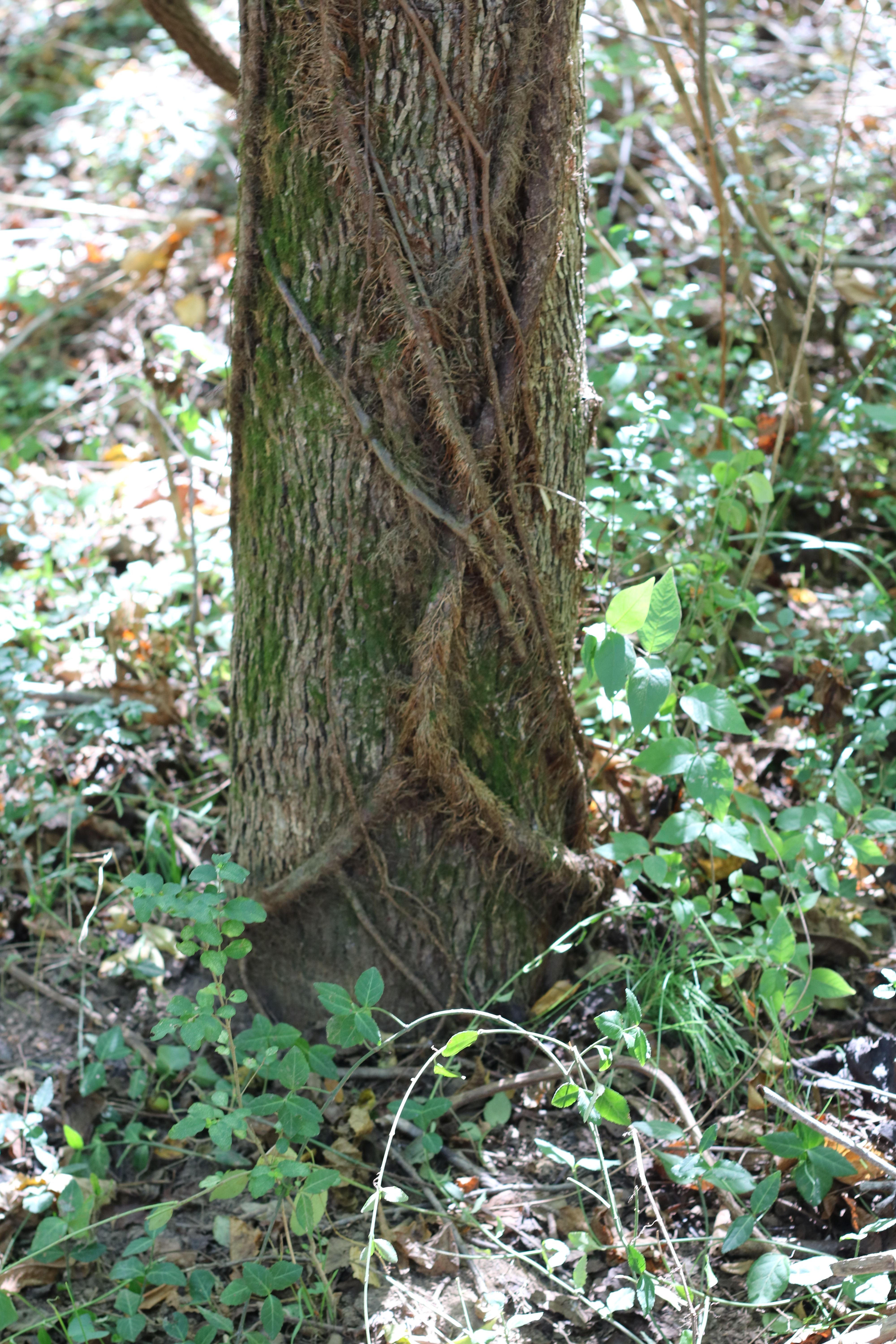
When I walked to the cafe today, I passed through the alley that has an enormous tree (not sure what kind, maybe an oak), and is covered up to the very top with massive English ivy cover, but as I approached I noticed, those giant leaves, something else on the tree, and I walked up and saw, poison ivy. This tree also has a huge, thriving poison ivy on it, and it was mingled in and over the top of that English ivy, and that was great to see. Poison ivy actually branches and can have some sizeable branches.

The poison ivy that we have on our property now, it is also taking the place of the wintercreeper that I killed last year. Out with an invasive, in with a native. That is curation of the space.

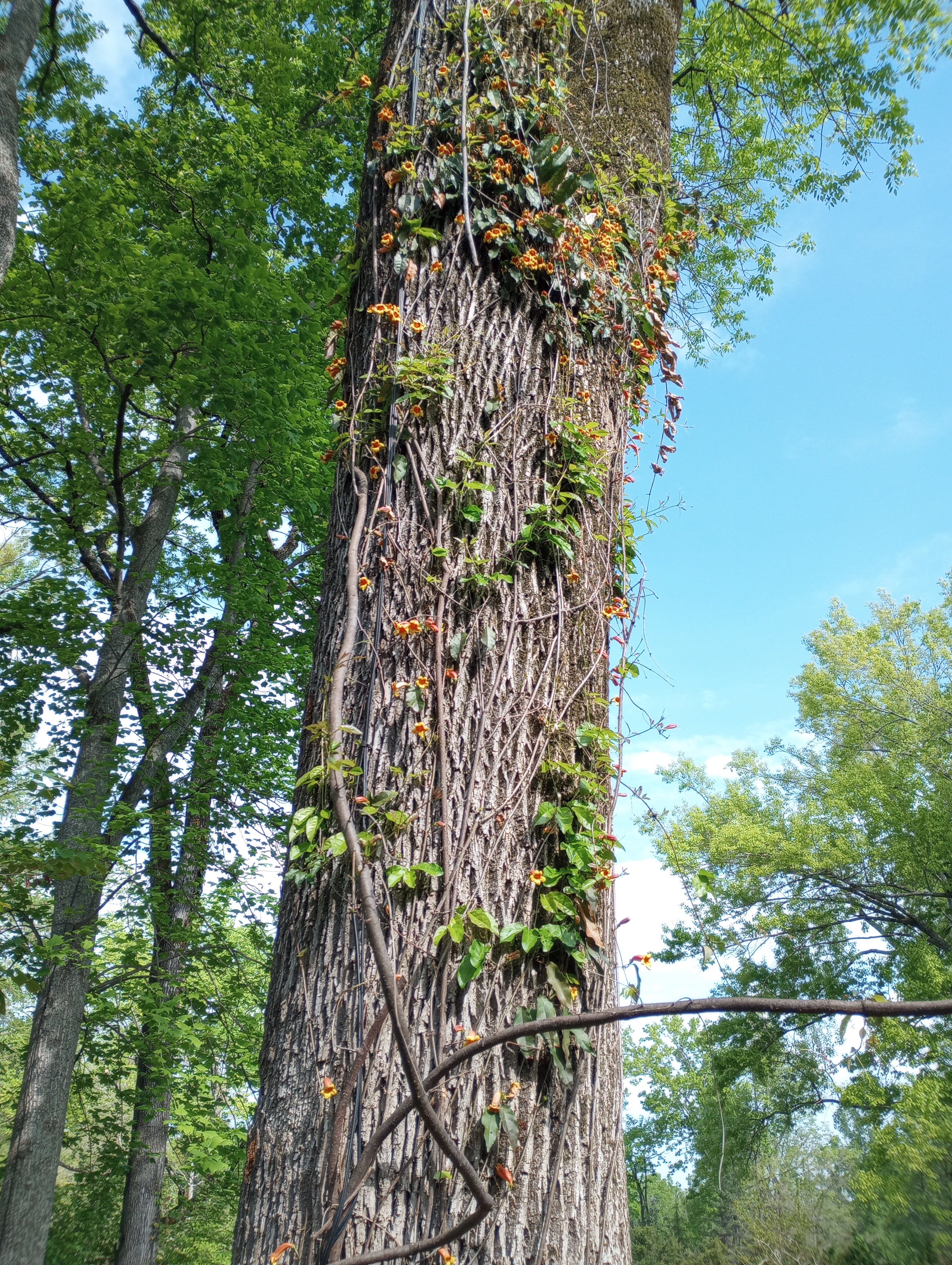
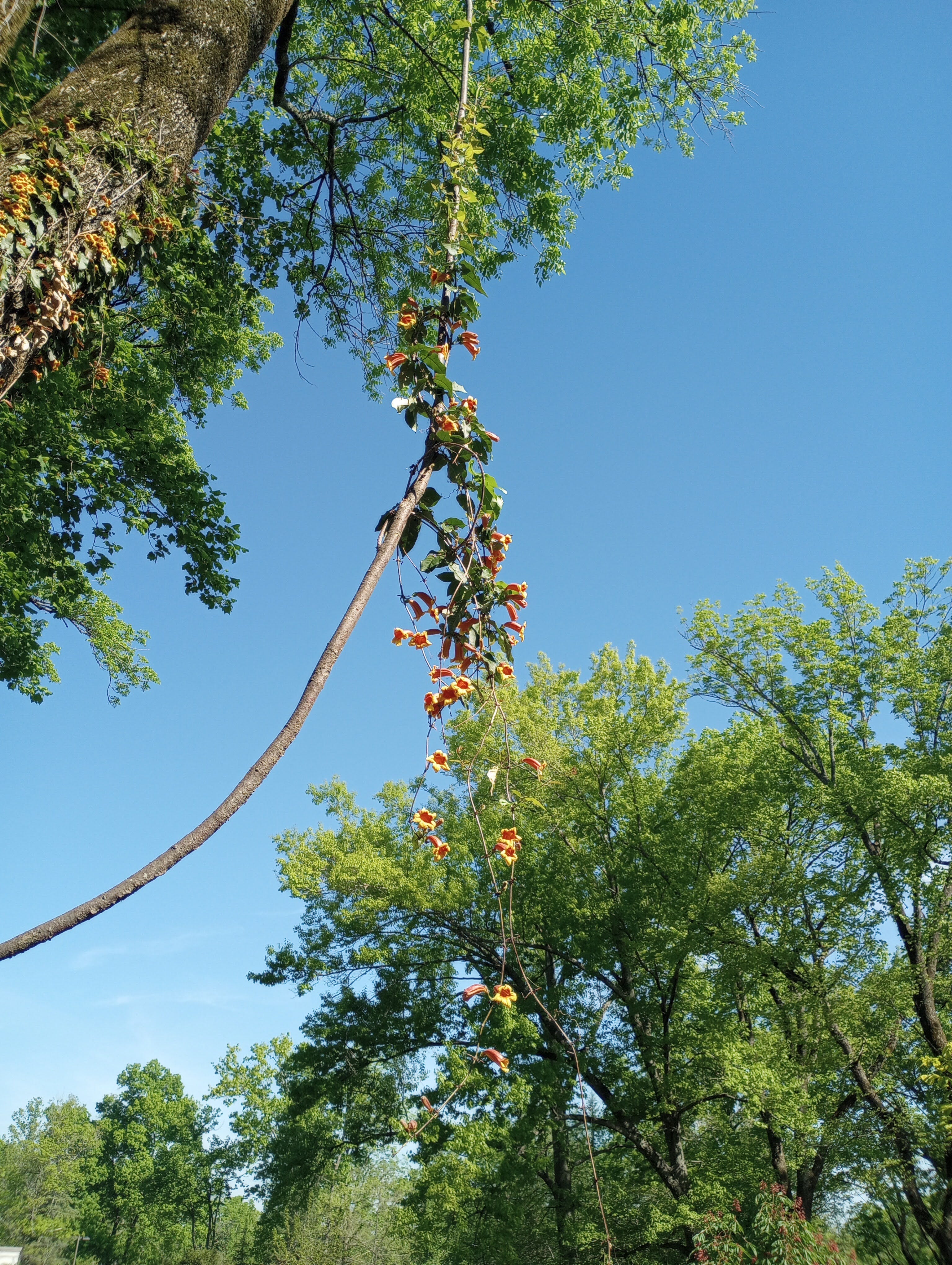
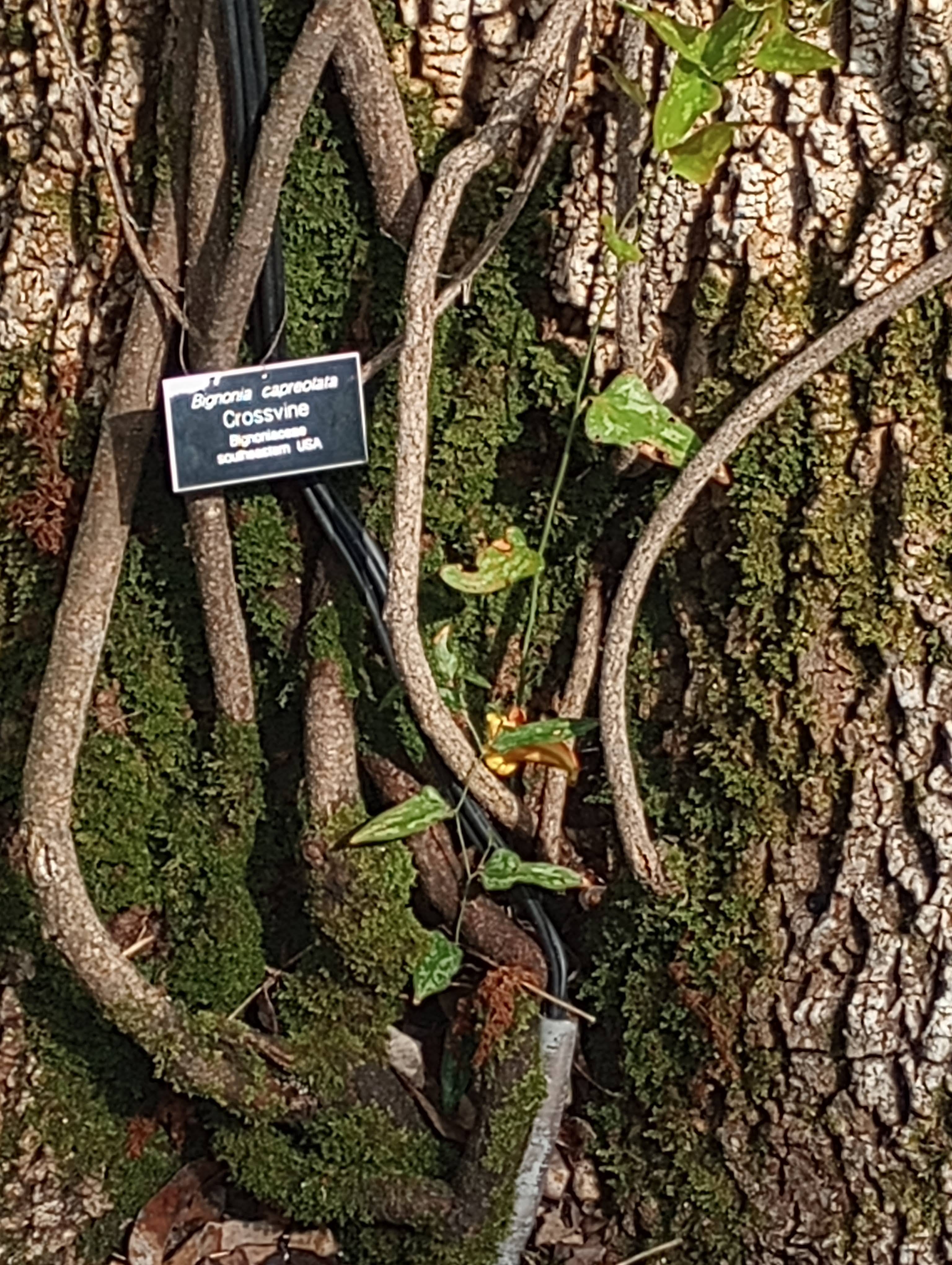
There is a crossvine (a native) at Cheekwood that is blooming right now, and it is spectacular to see. A large crossvine on a big old tree. It looks like something you would see in South America, it has a tropical vibe to it, which is totally awesome.

Crossvine at Cheekwood #1
Crossvine at Cheekwood #2
Crossvine (Bignonia capreolata) at Cheekwood #3

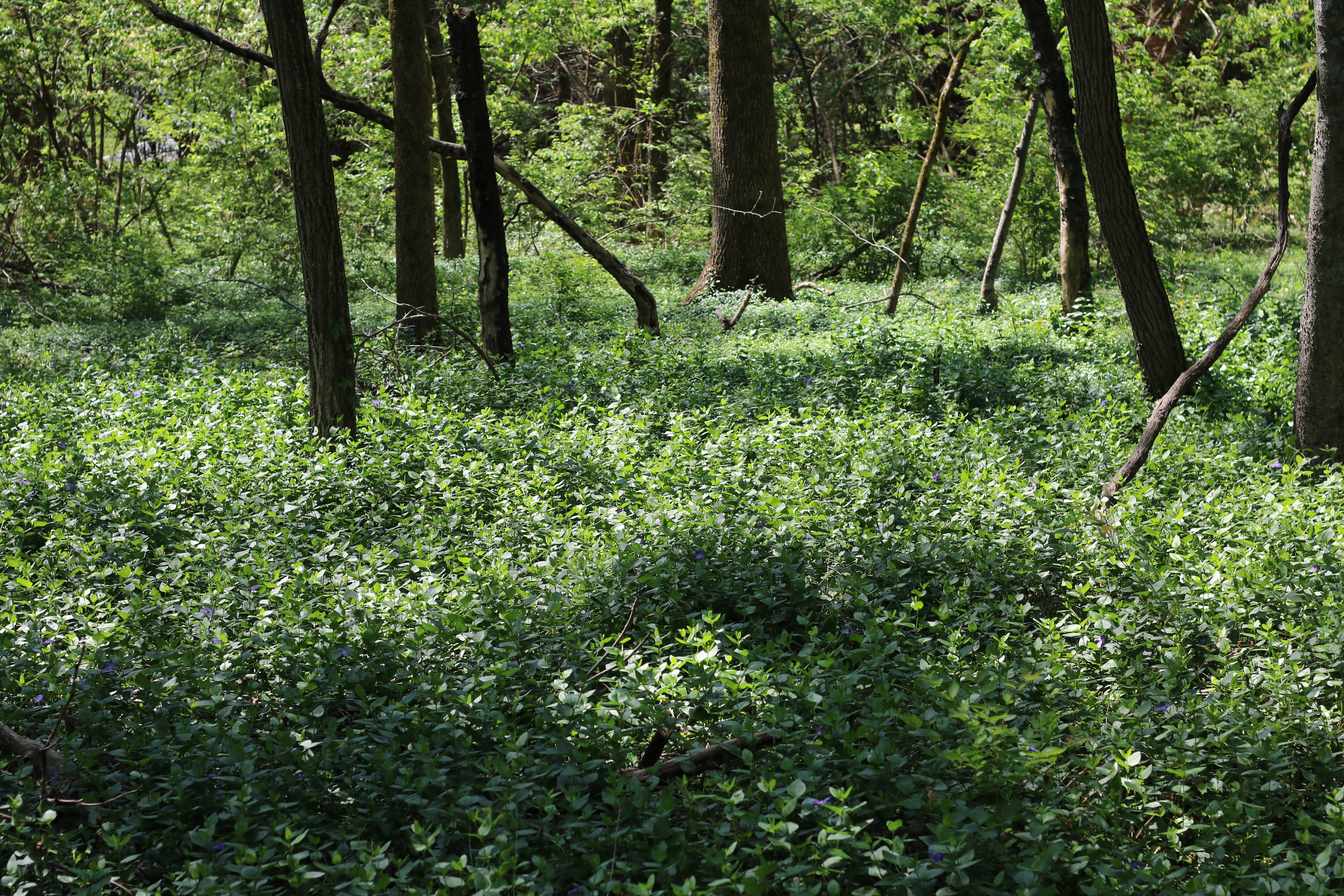
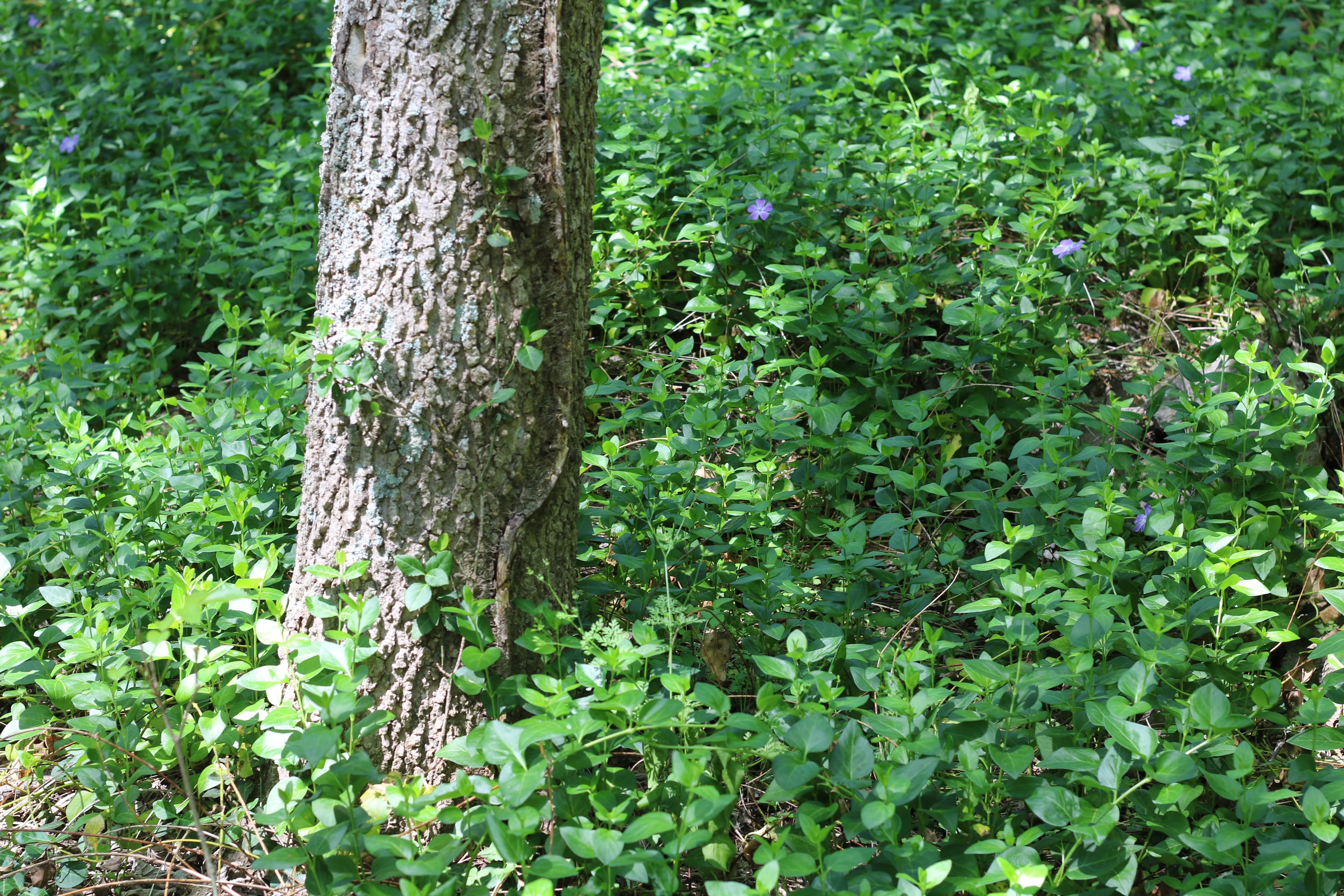
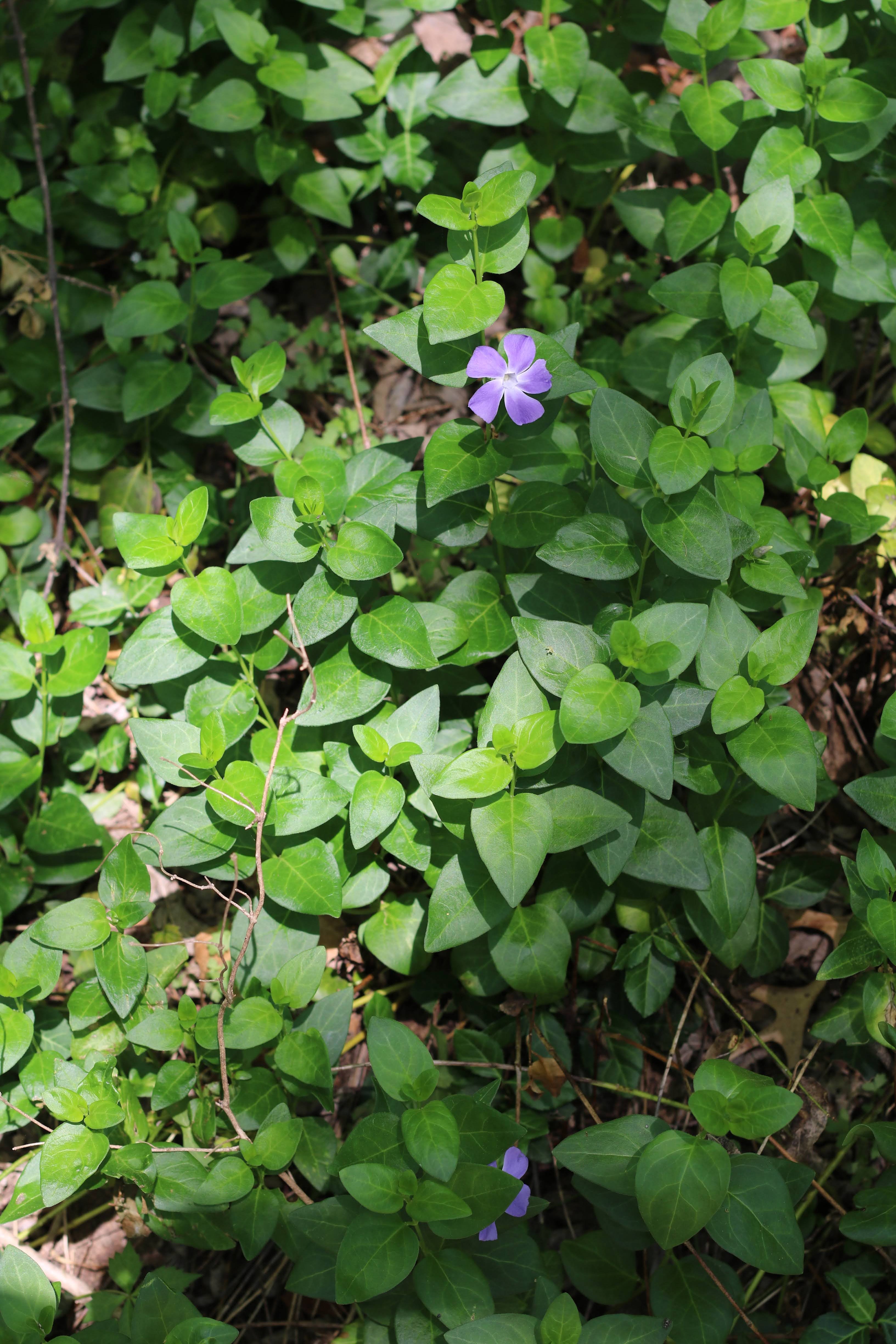
Talking about invasives, Periwinkle is one that we have around here, and they have huge mats of it at Cheekwood, in the forest perimeters. On the forest trail, I saw it, just forming a thick, dense mass, and blocking out anything else. That is bad business. This is why they say the invasive species are bad for biodiversity, as nothing else is growing on this forest floor. It is totally smothered by this periwinke. The entire forest floor in the below photo is just a mass of periwinkle, monoculture.

Periwinkle mass at Cheekwood
More periwinkle mass at Cheekwood
Periwinkle flower

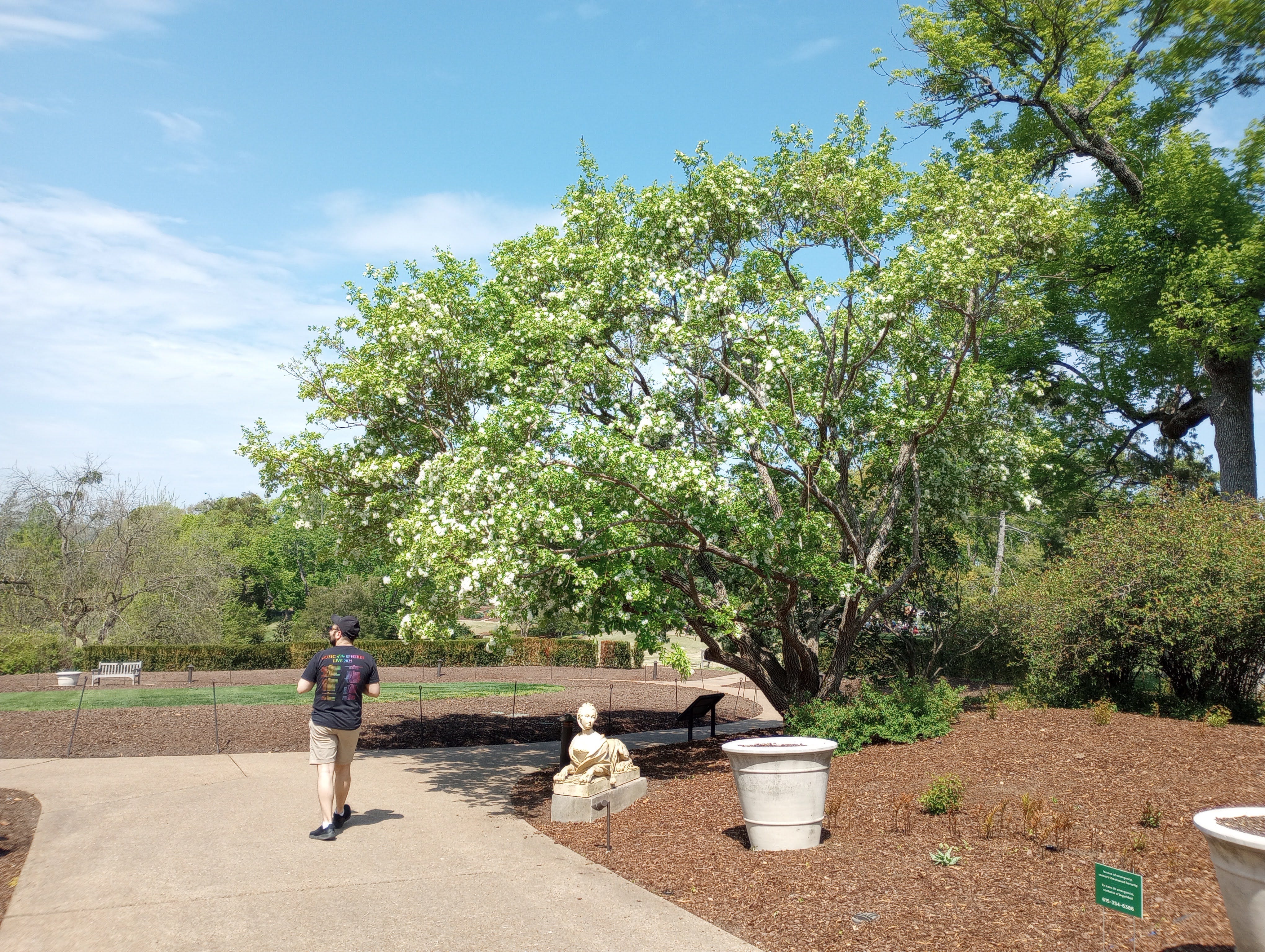
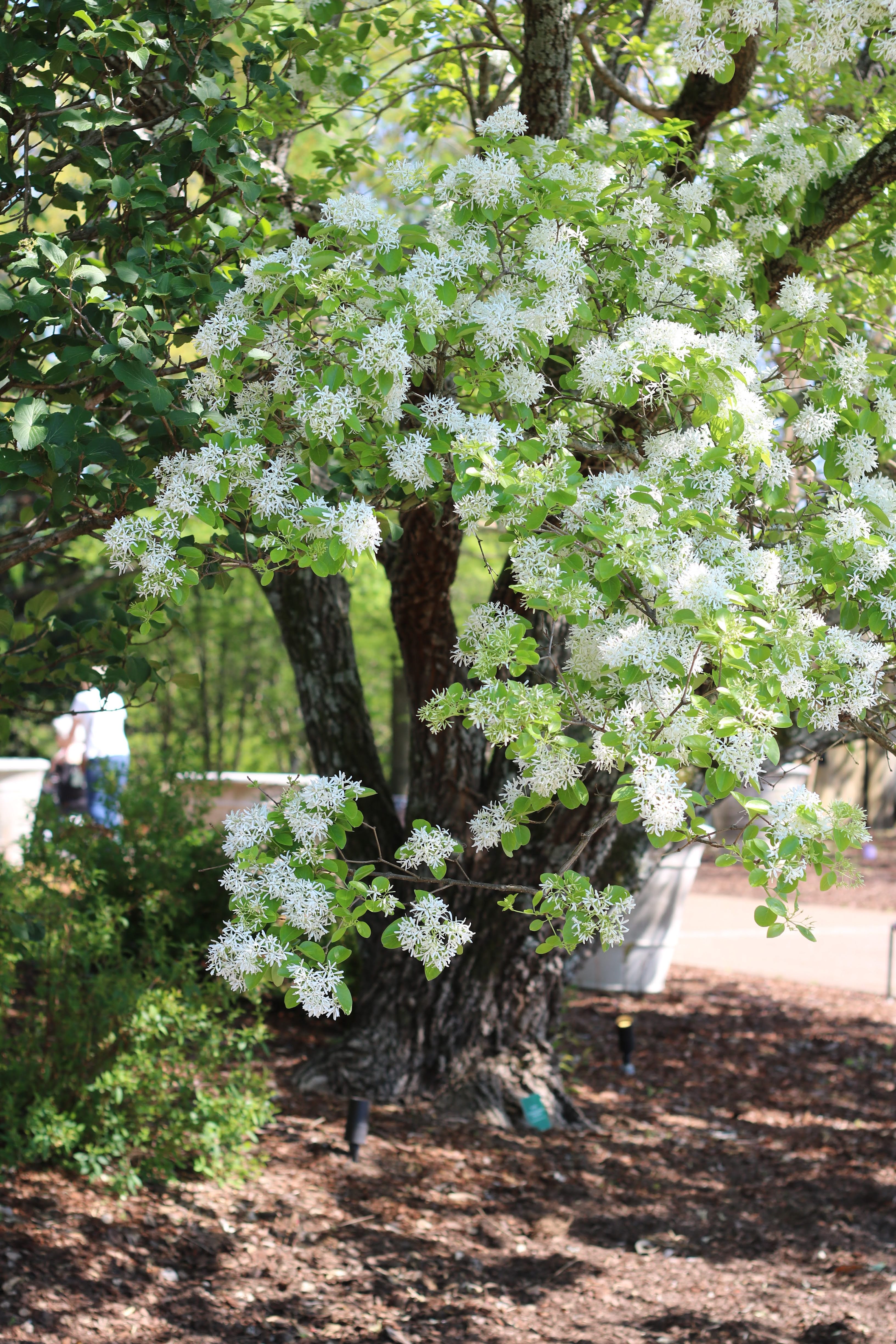
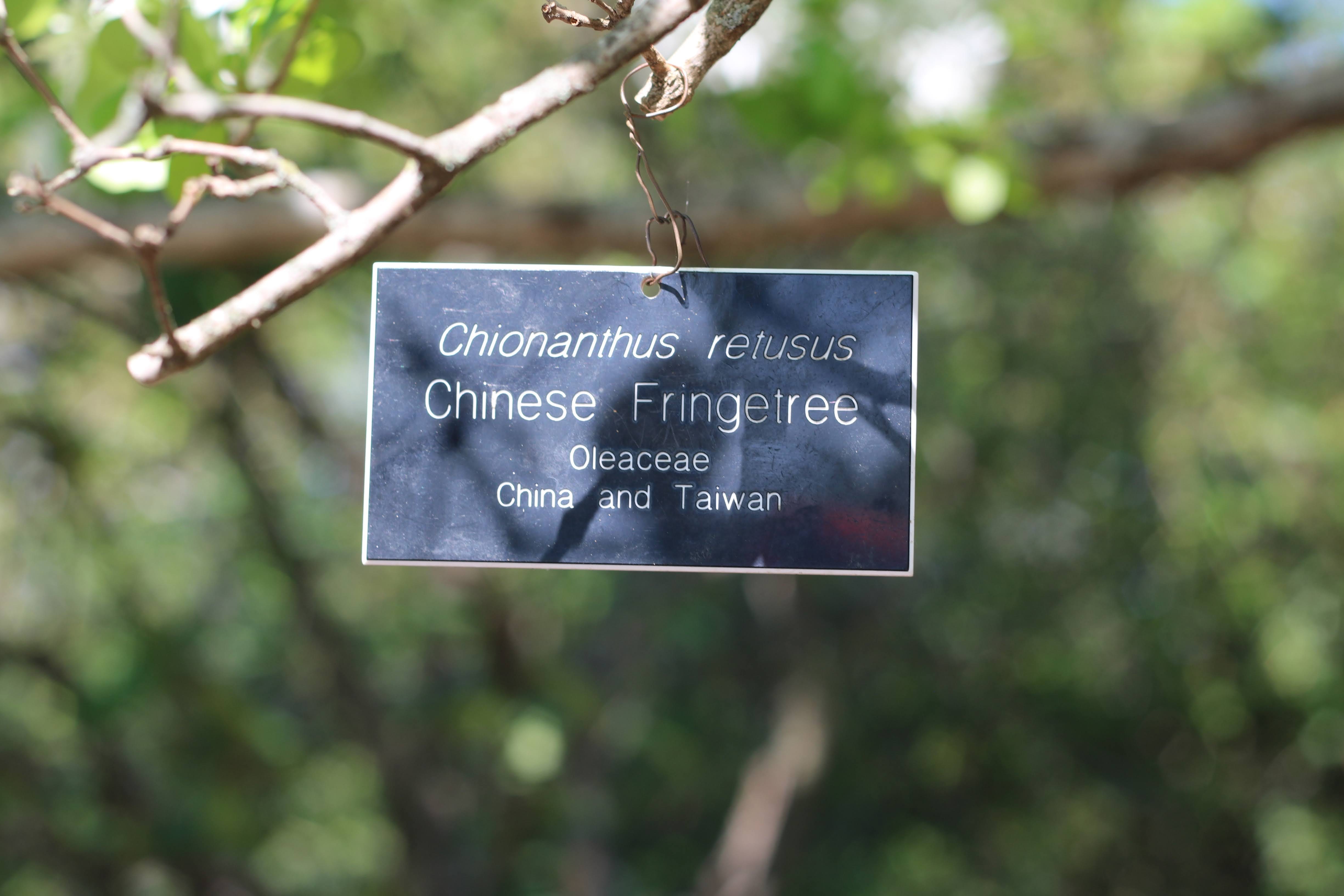
The Chinese Fringetrees have been blooming at Cheekwood, and are really beautiful.

Chinese Fringetree at Cheekwood
Chinese Fringetree flowers
Chionanthus retusus

Some photos from the yard:

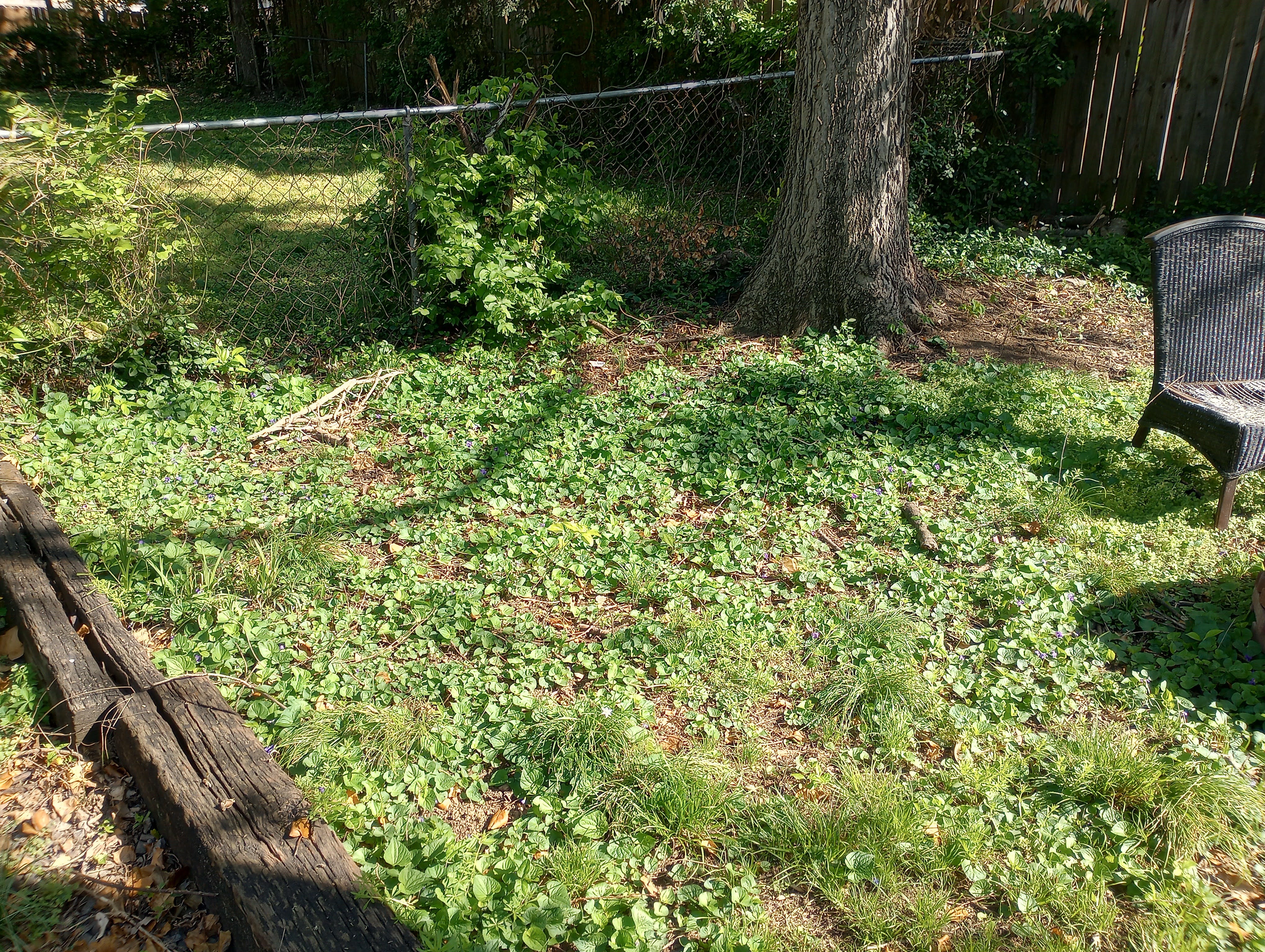
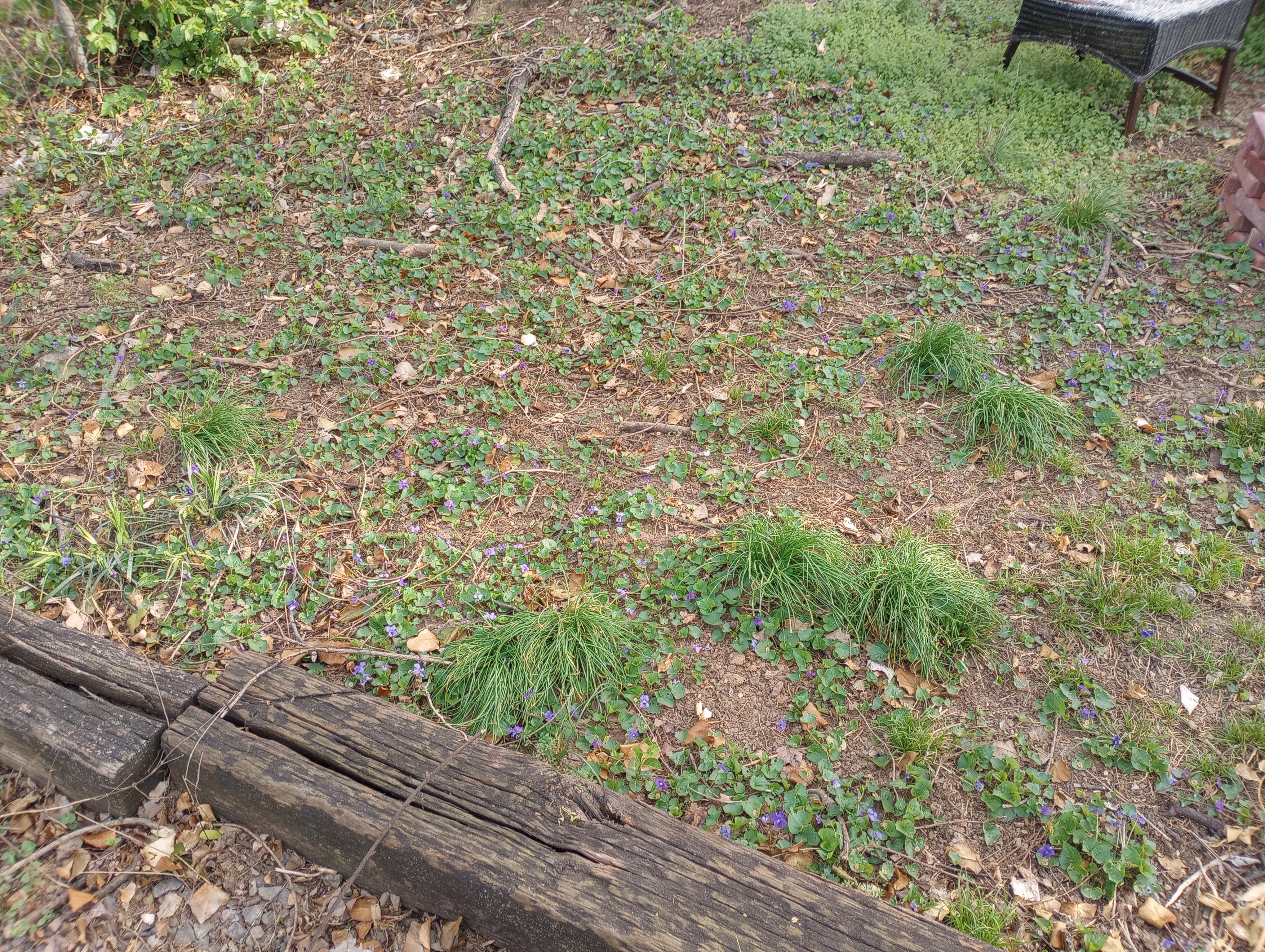
Large patch of common blue violet (native)
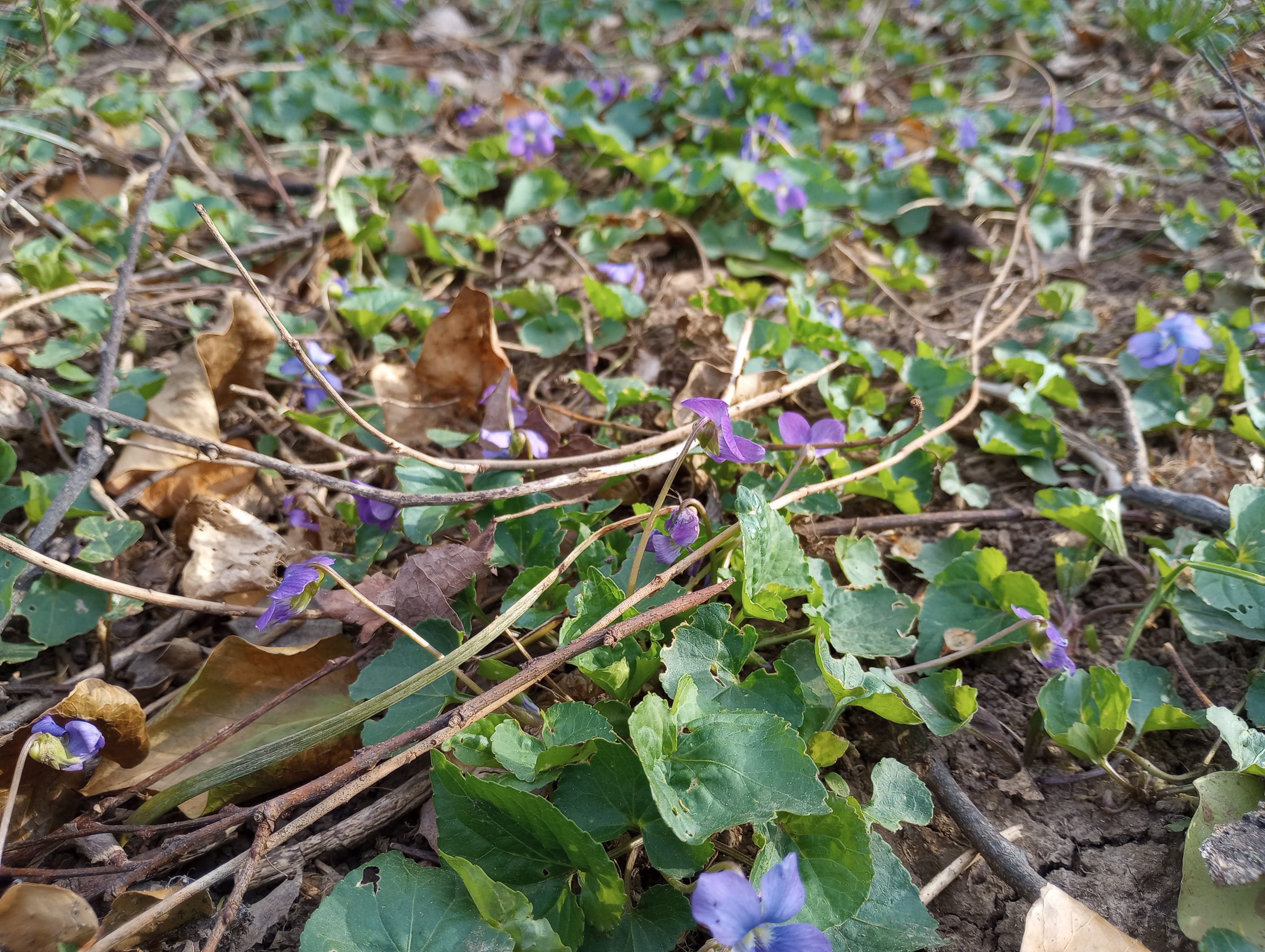
Common blue violet flowers
Goldenrod???
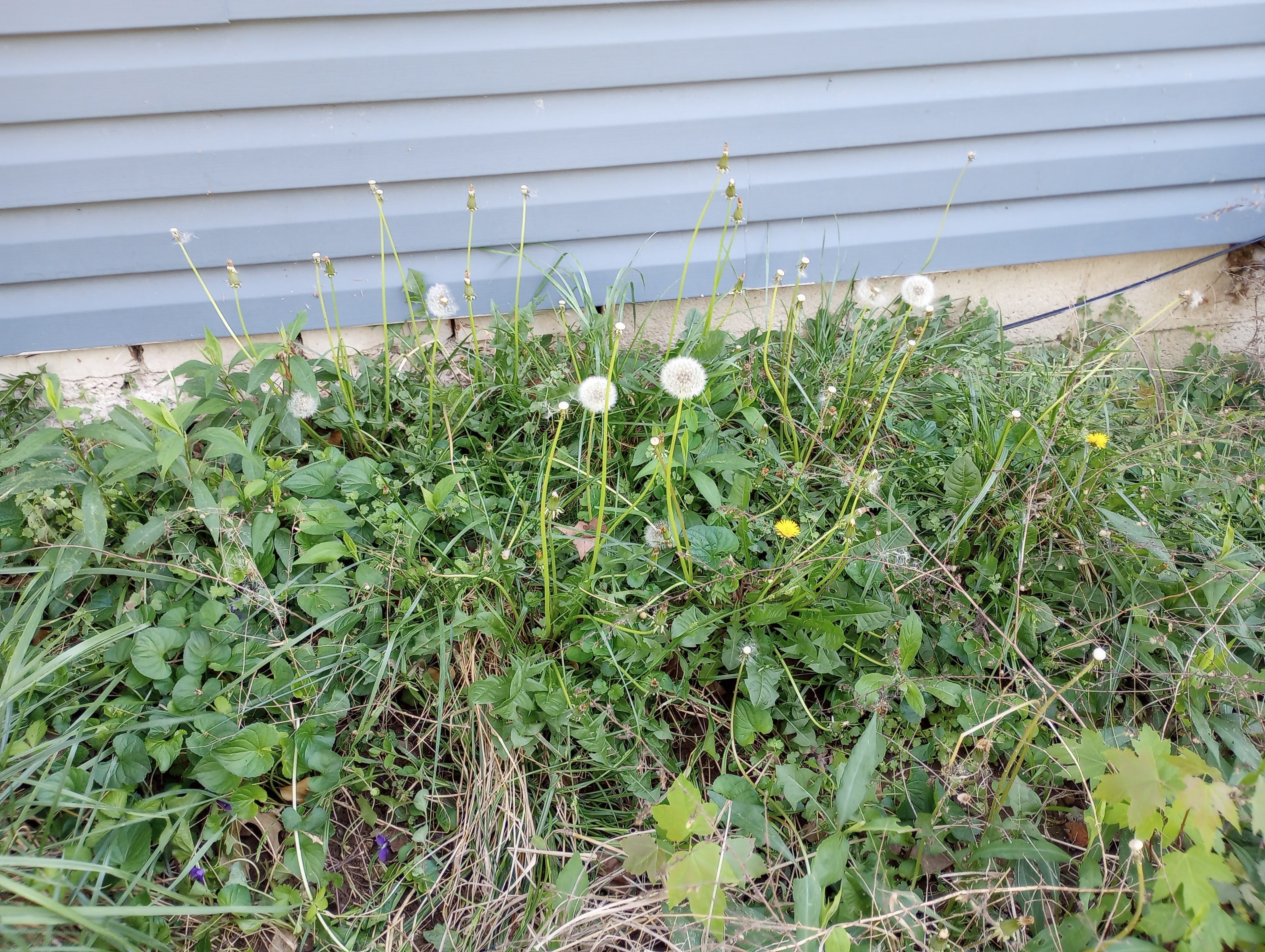
Dandelion patch (which actually aren’t native to North America, just Googled)
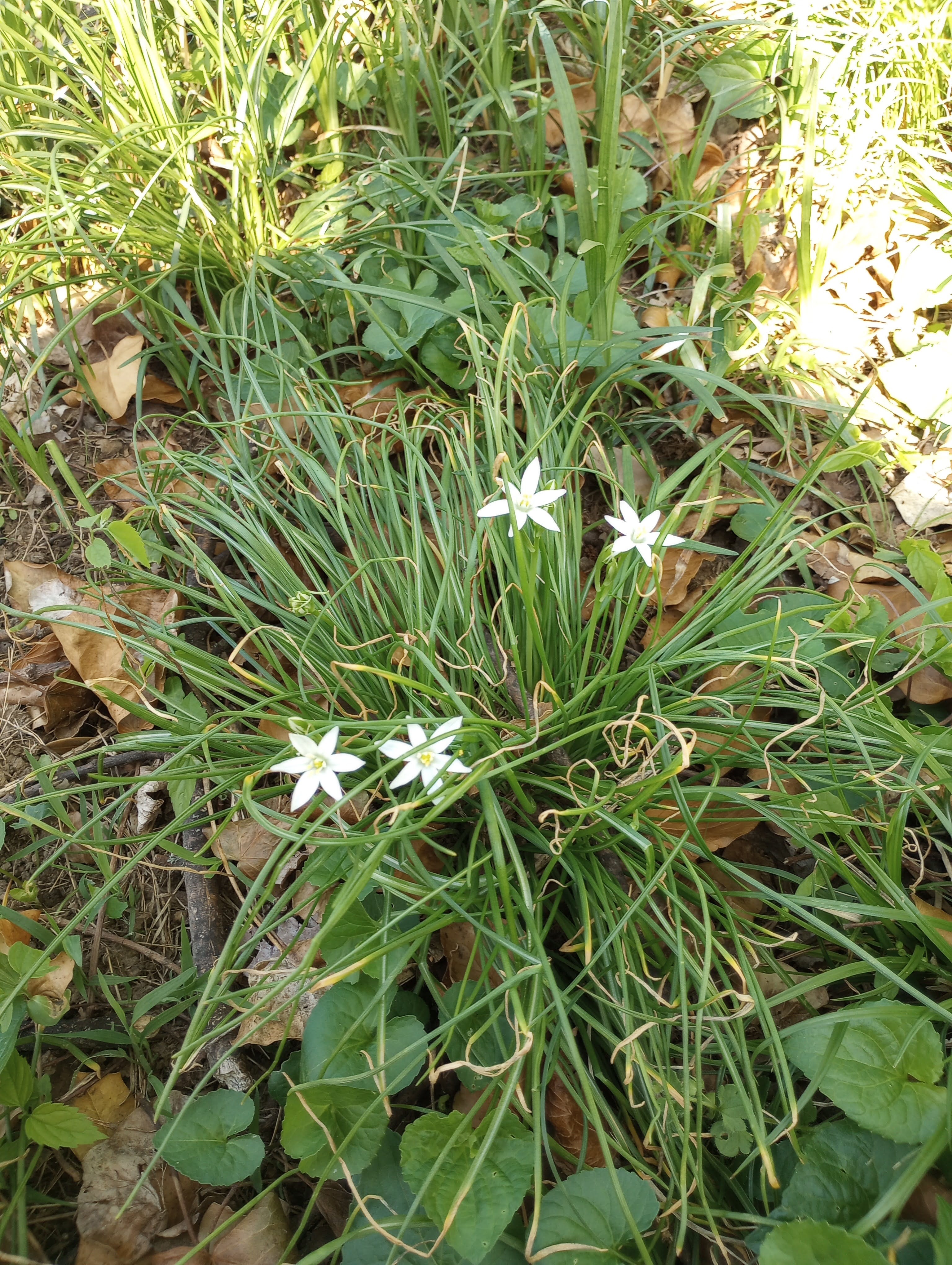
These green tufts are Star of Bethlehem (invasive), they’re blooming now
Star of Bethlehem (invasive, I should remove it)
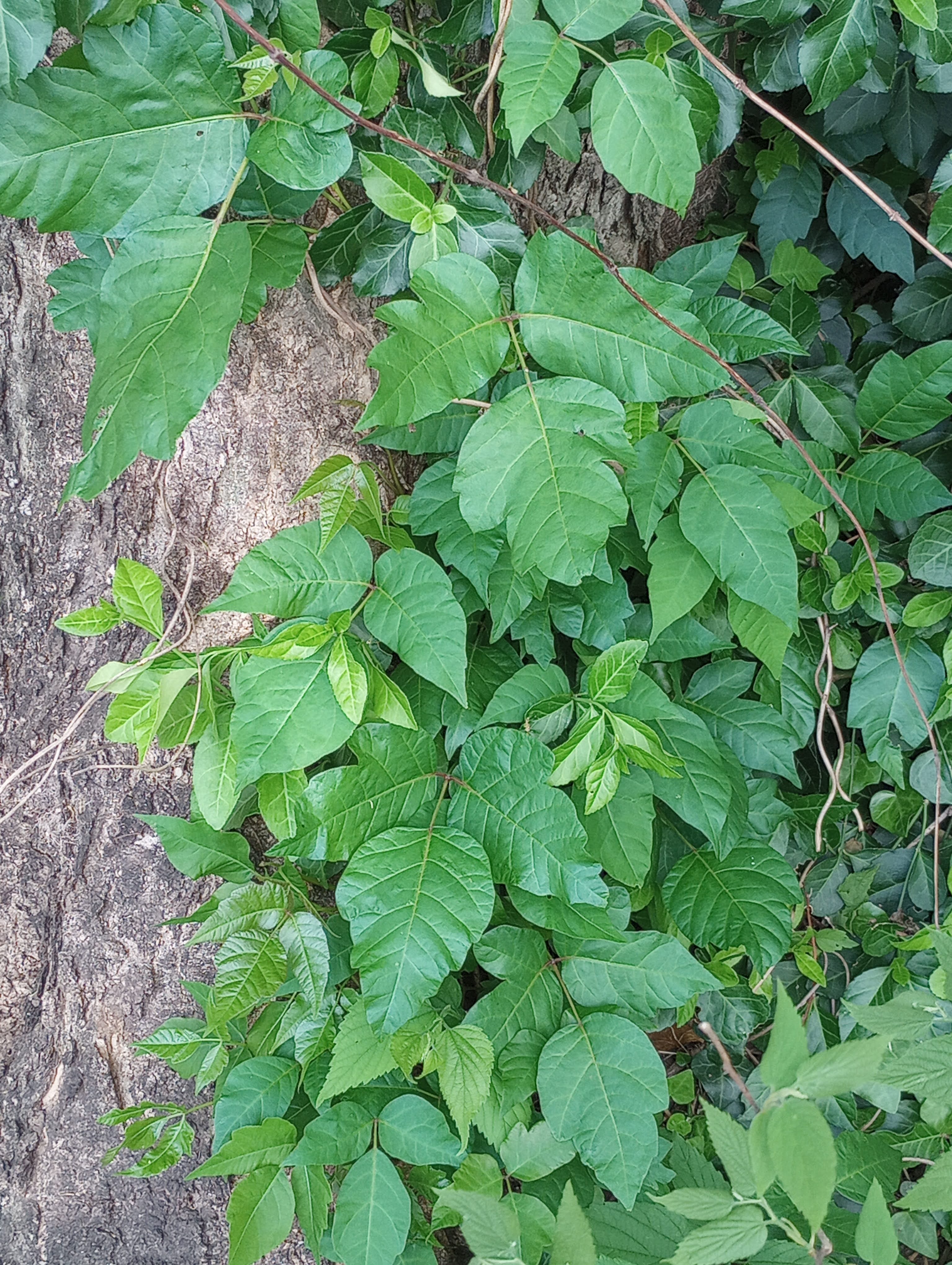
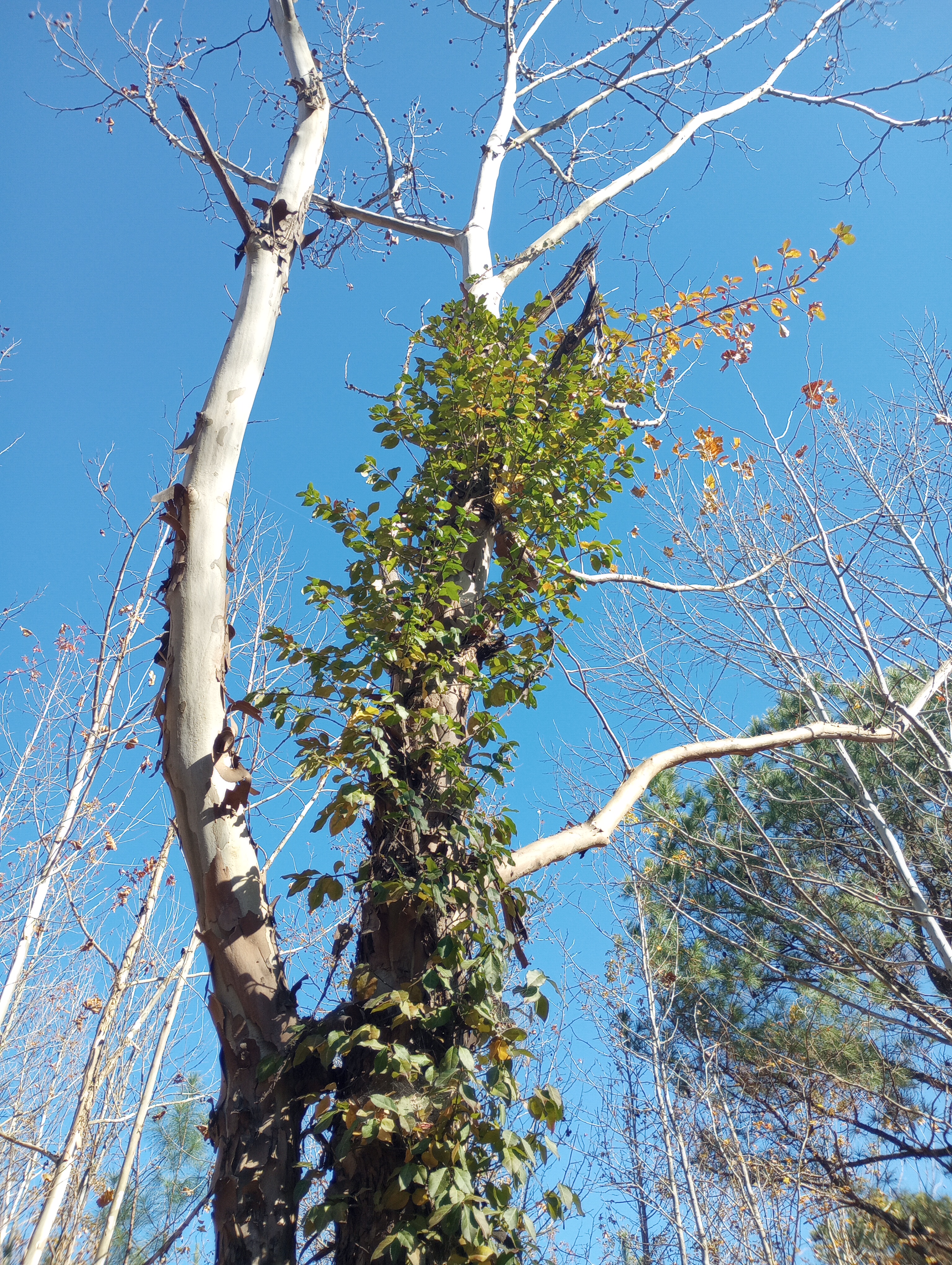
Poison Ivy in the yard (the big leaves, three leaves)
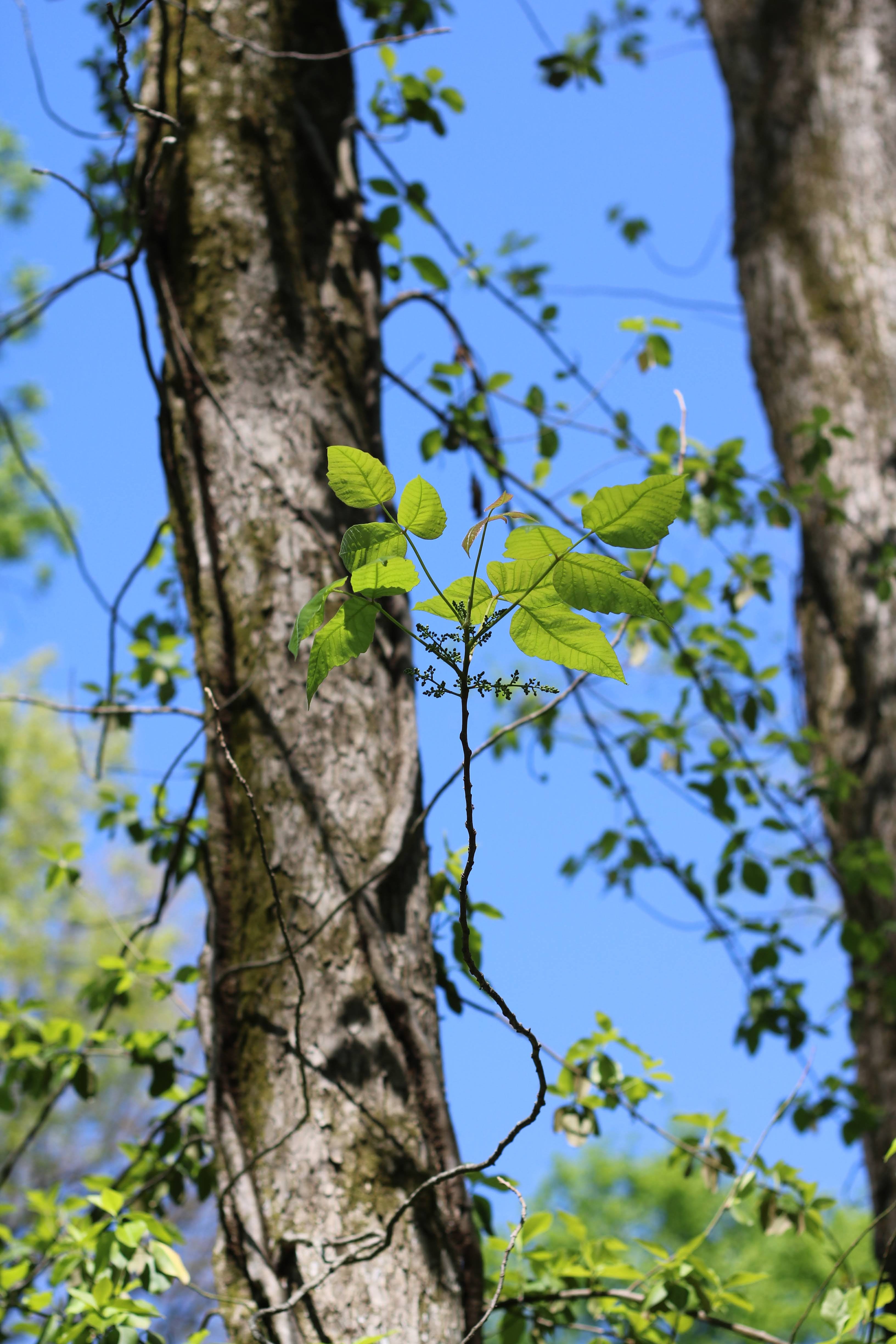
Poison ivy at Cheekwood
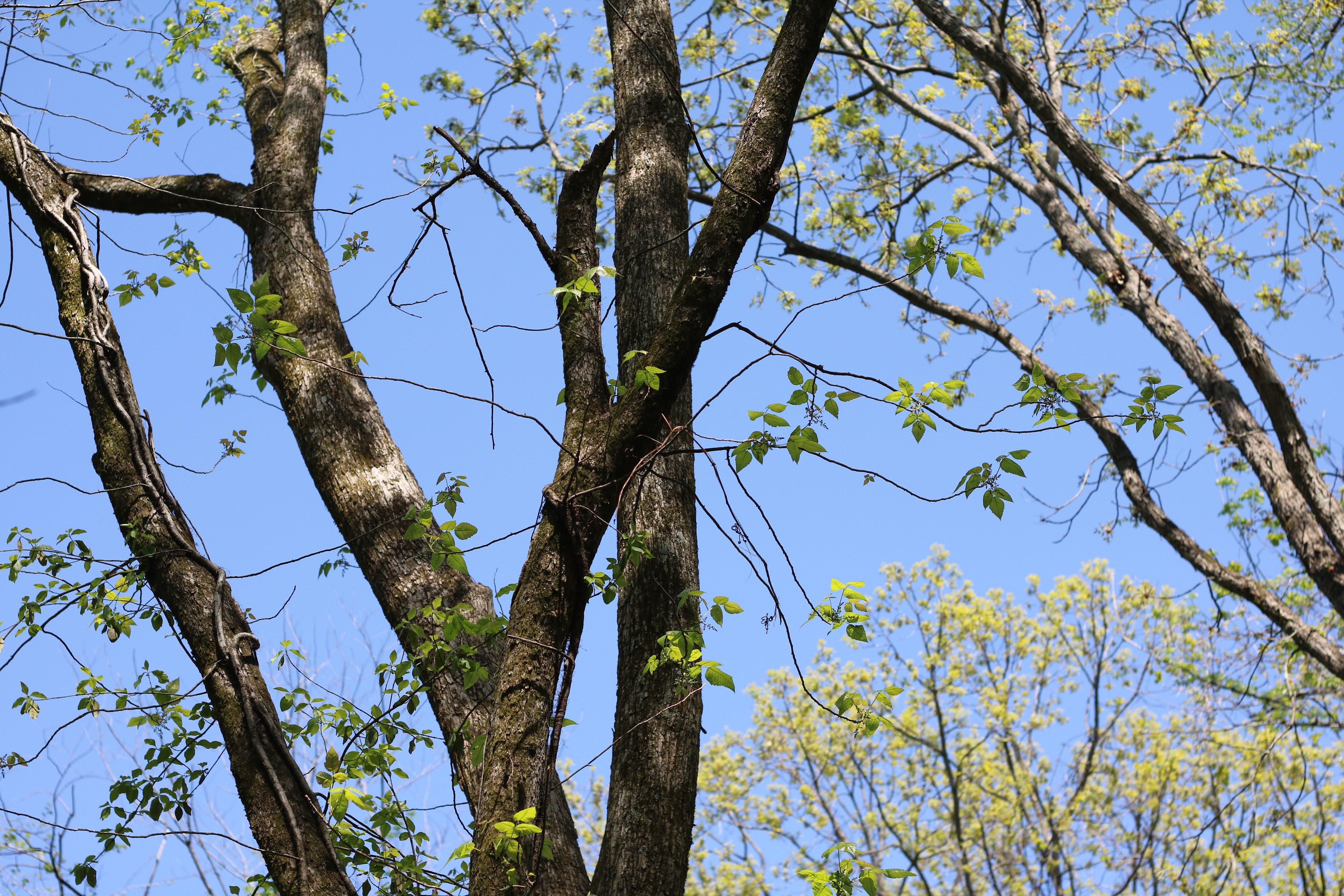
Poison ivy (all these three leaf clusters)
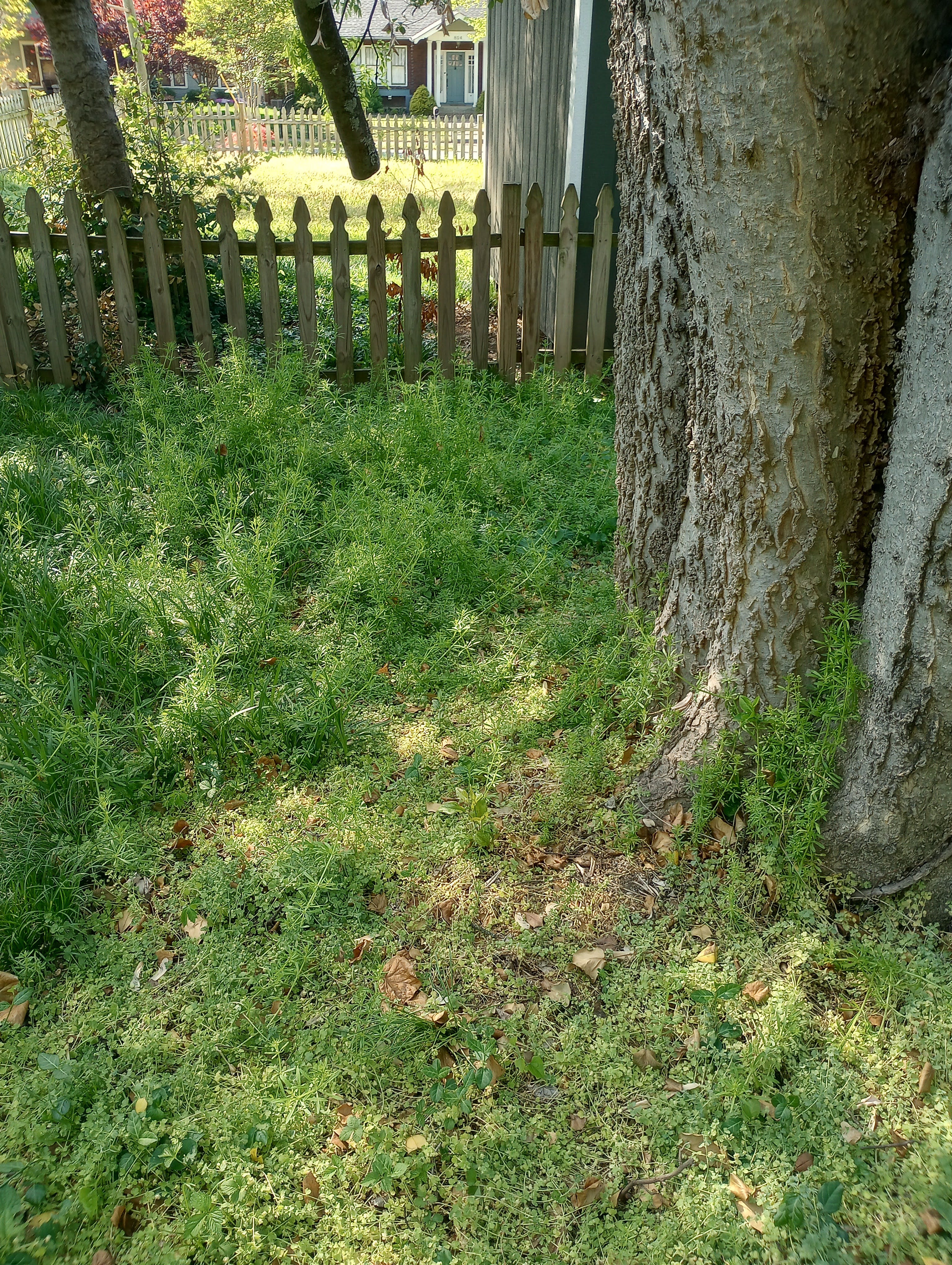
Cleavers in the yard (native), free delicious food

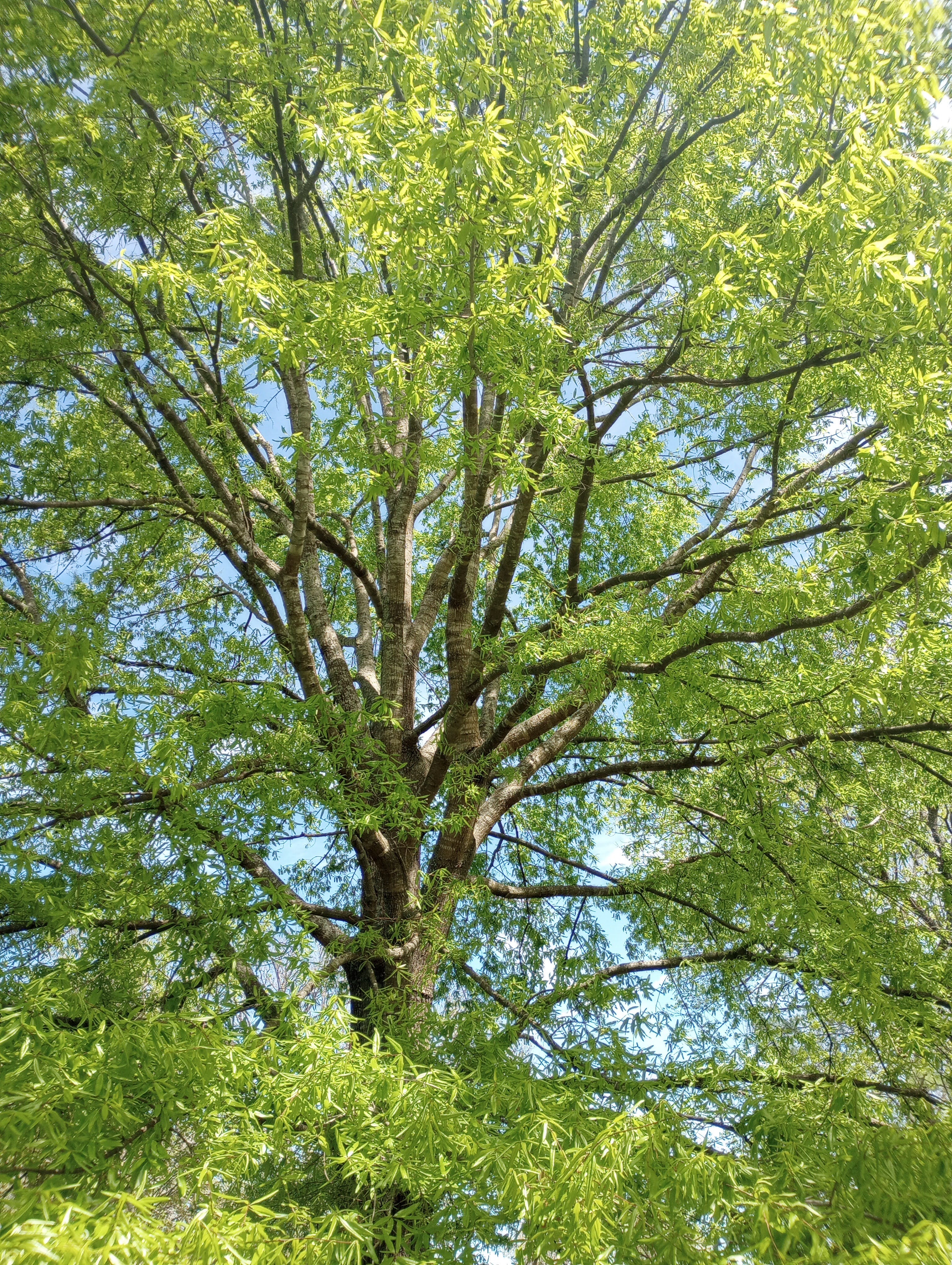
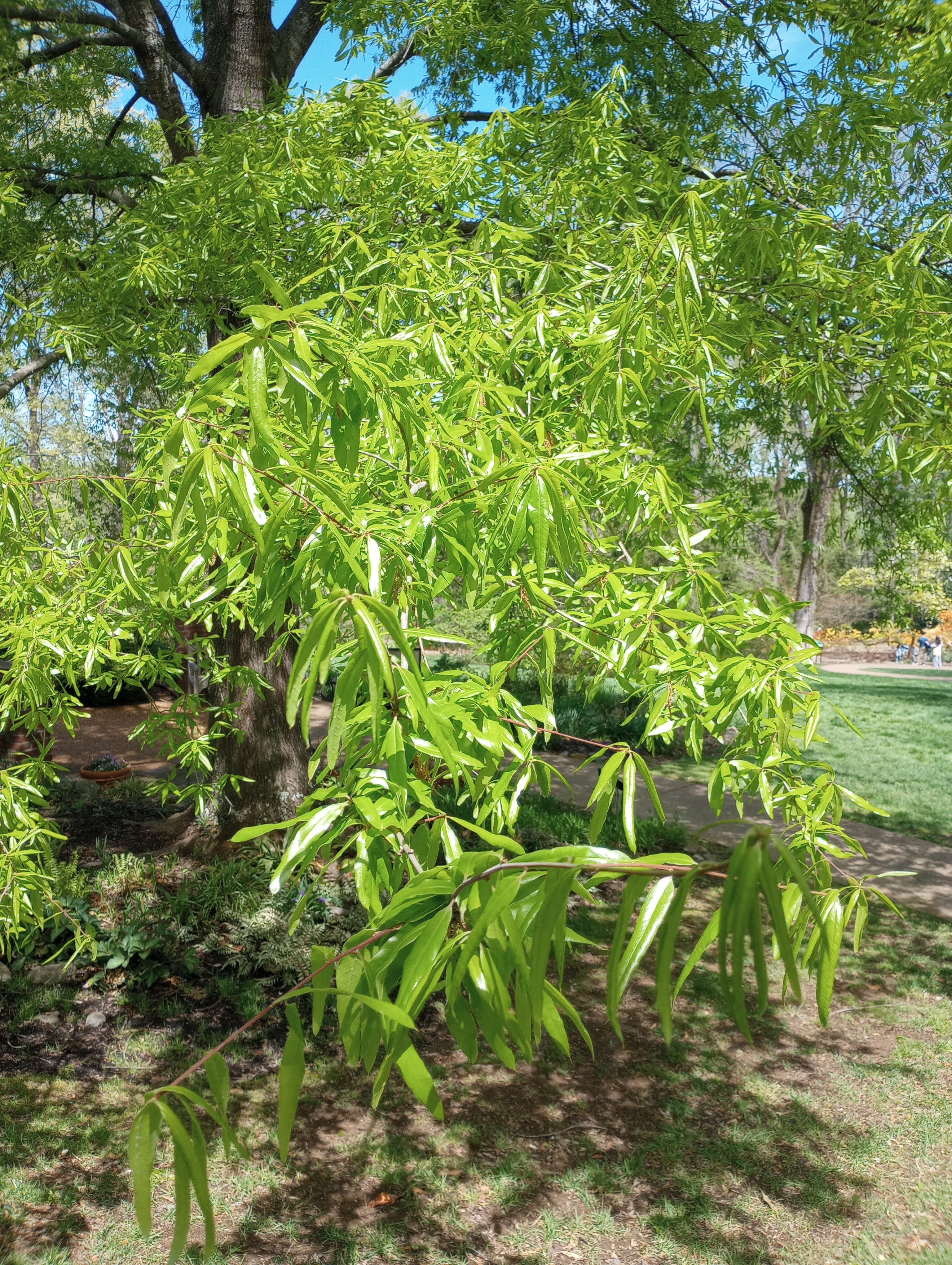
The Willow Oak and Shagbark Hickory are both amazing to me. They have a bark-leaf combo that is just really stunning. There is a huge willow oak on the street that leads to Ugly Mugs, I just noticed when walking yesterday. And today, I spotted a Shagbark Hickory in a neighbor’s yard. It looks like there is a Shellbark Hickory, and that is a different species that looks pretty similar to Shagbark Hickory, so it might be one of those. Hackberries and sugarberries are also apparently quite similar, and I wonder if in our yard we truly have hackberries or sugarberries. I need to confirm that.

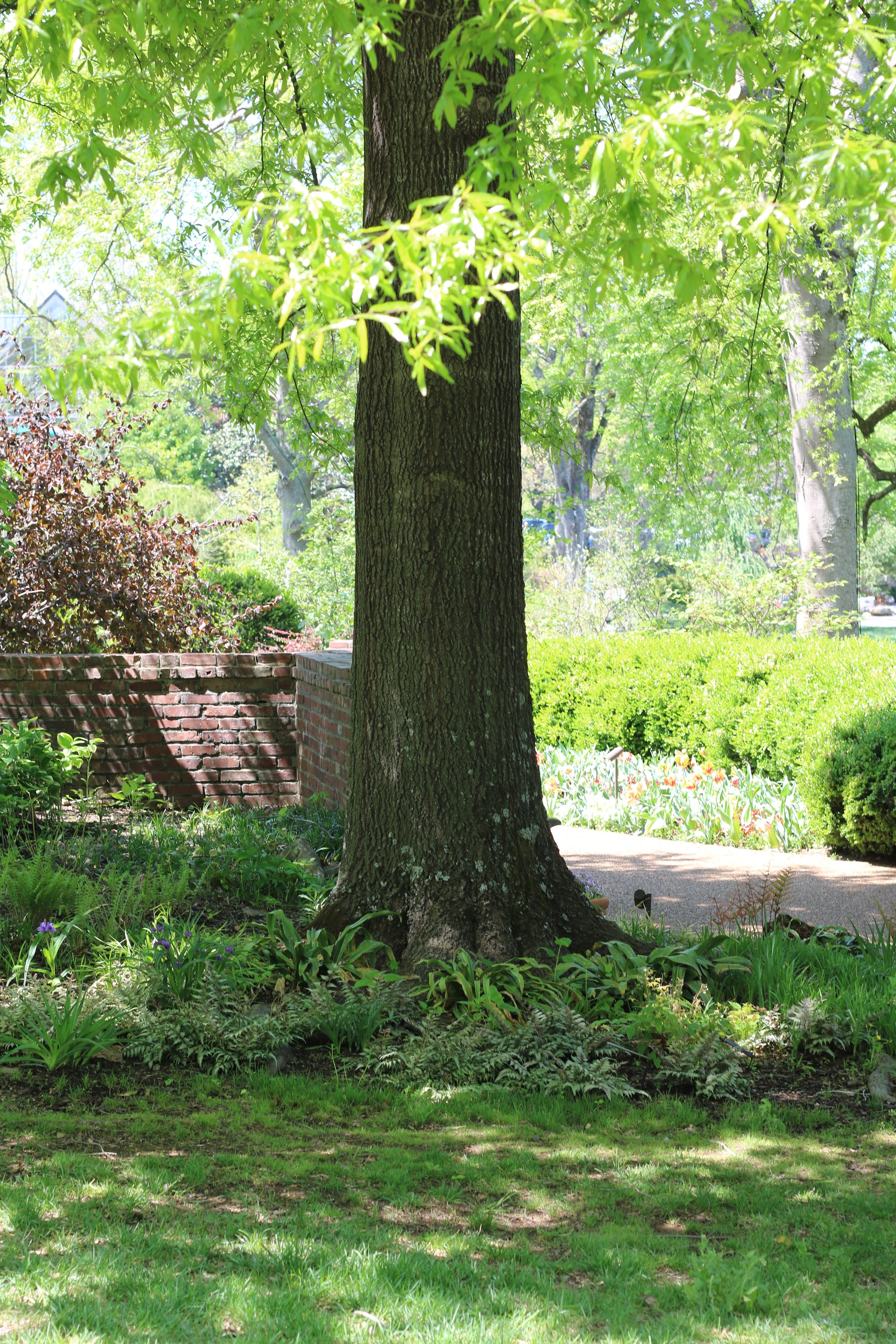
Here are some willow oaks at Cheekwood:

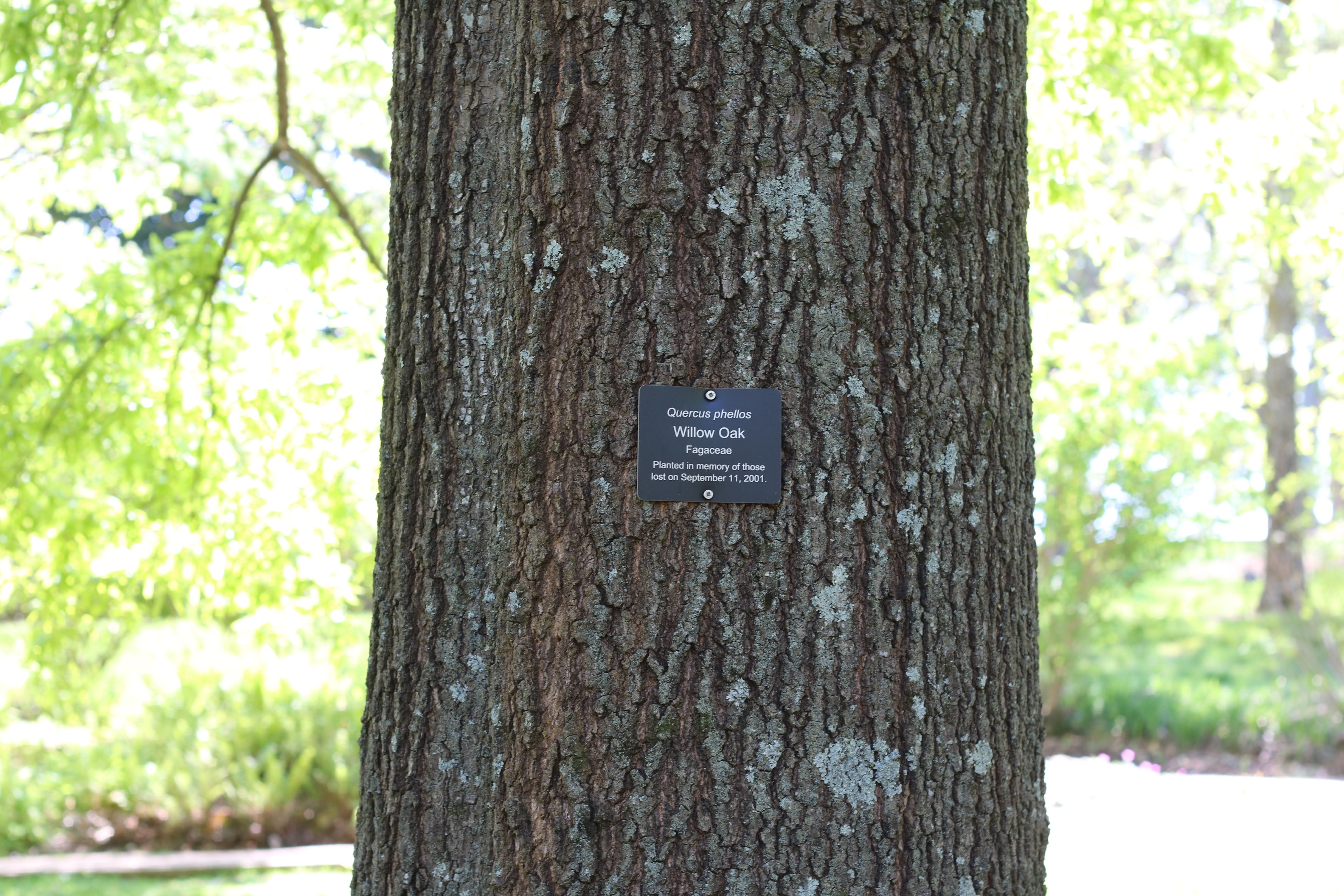
Quercus phellos
Willow oak trunk
Amazing foliage
Willow oak leaves

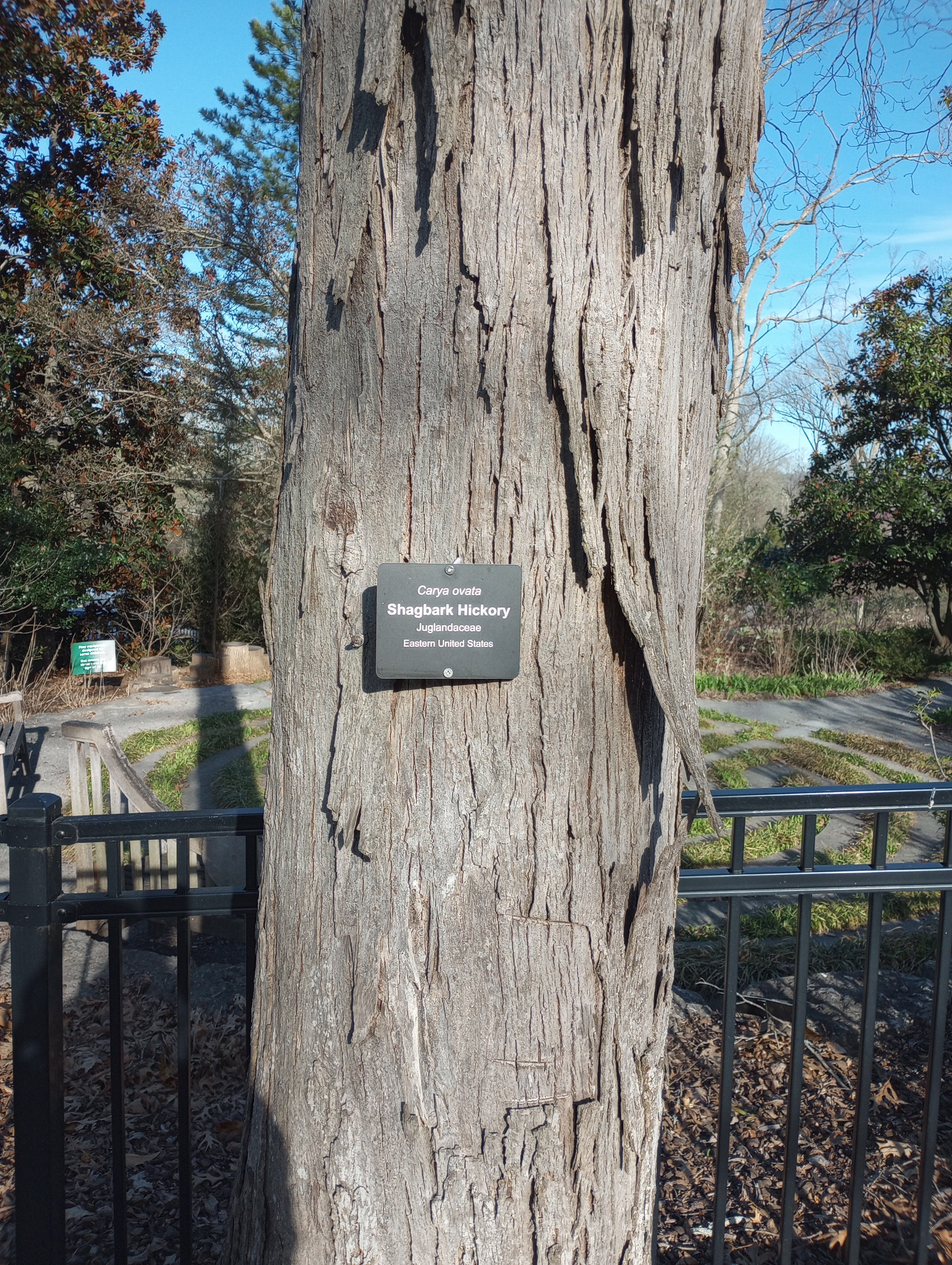
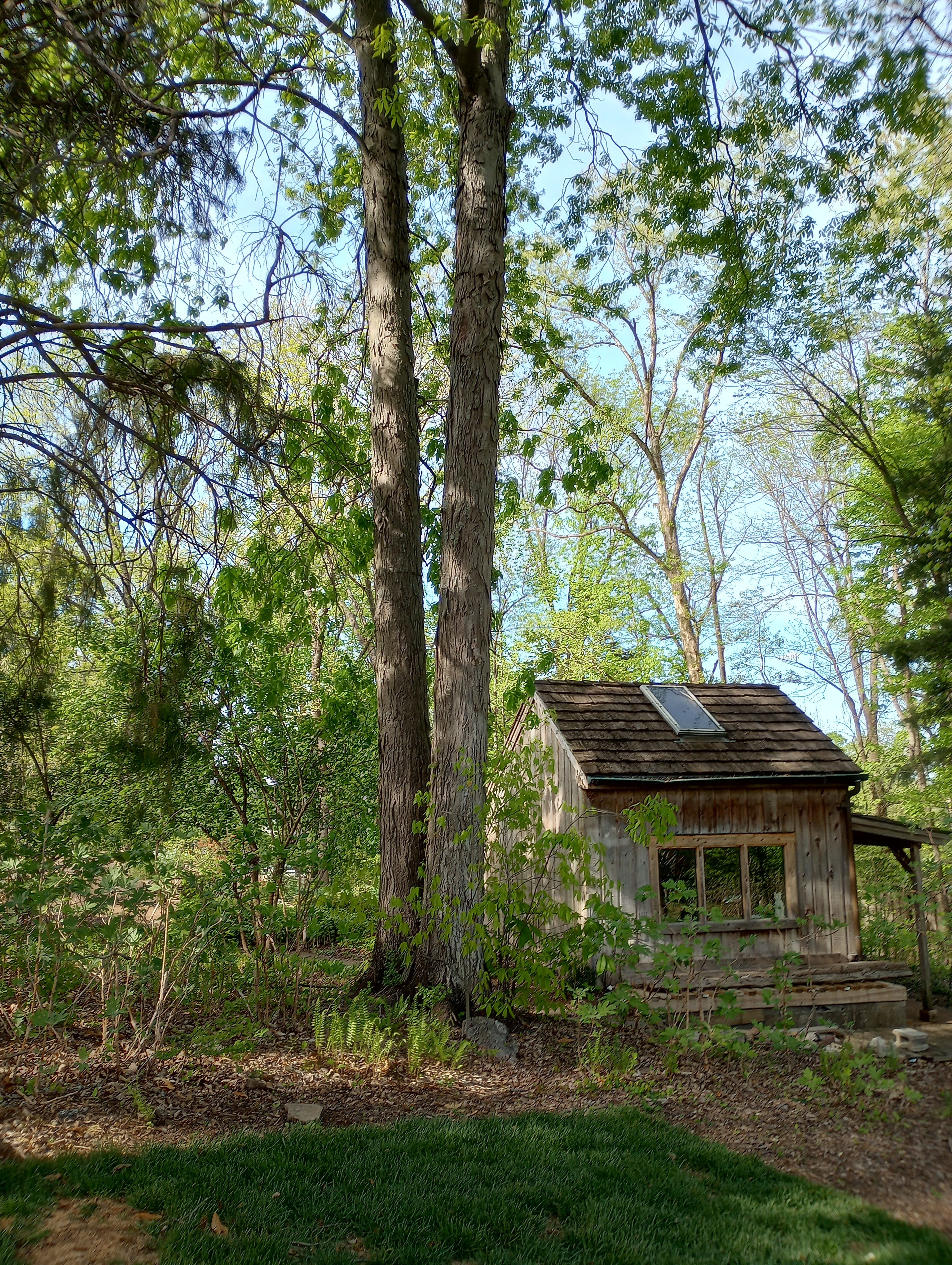
And the Shagbark Hickory (Juglandaceae, what an incredible word):

Shagbark Hickory, with the shaggy bark
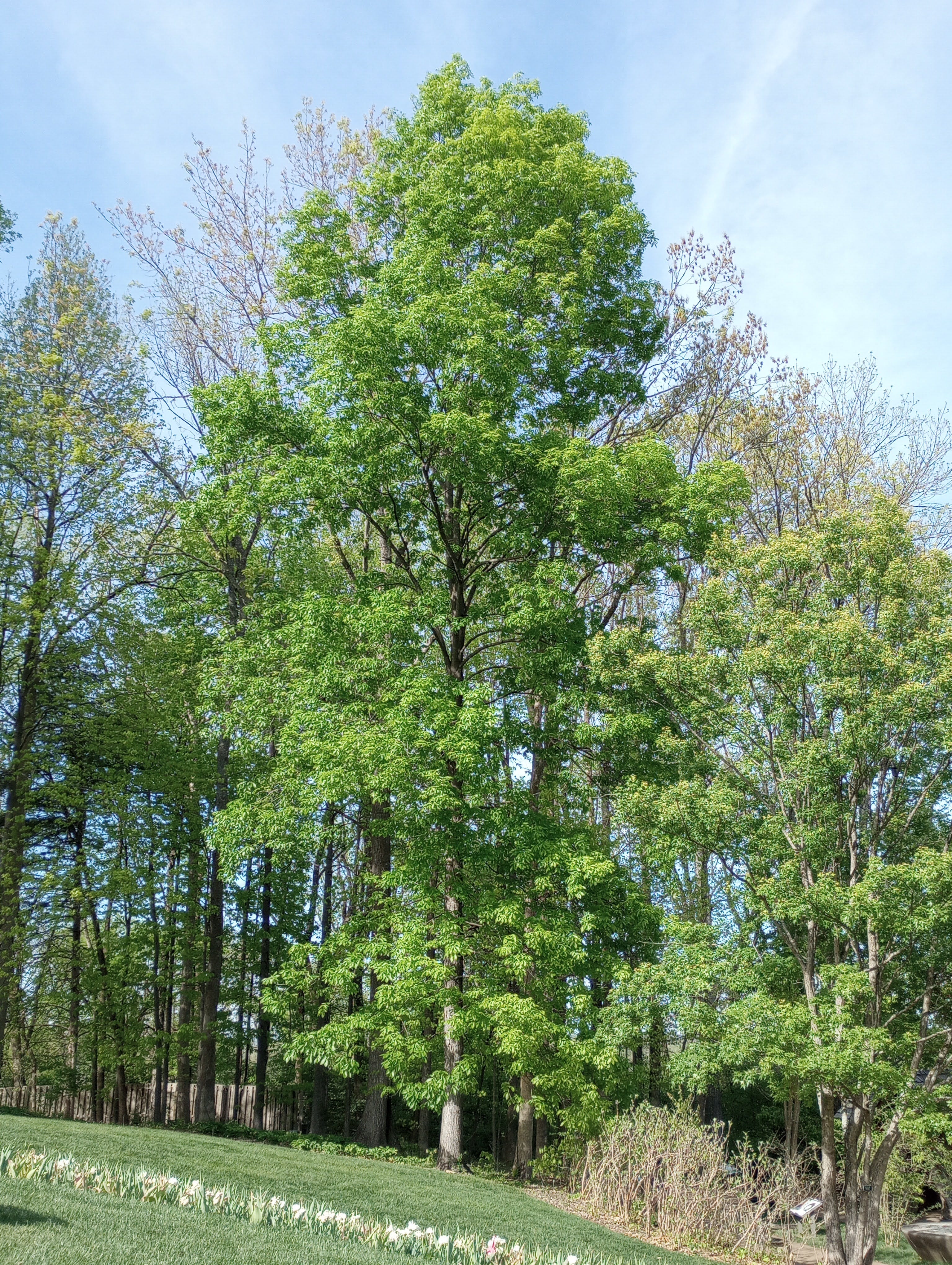
Shagbark hickory at Cheekwood
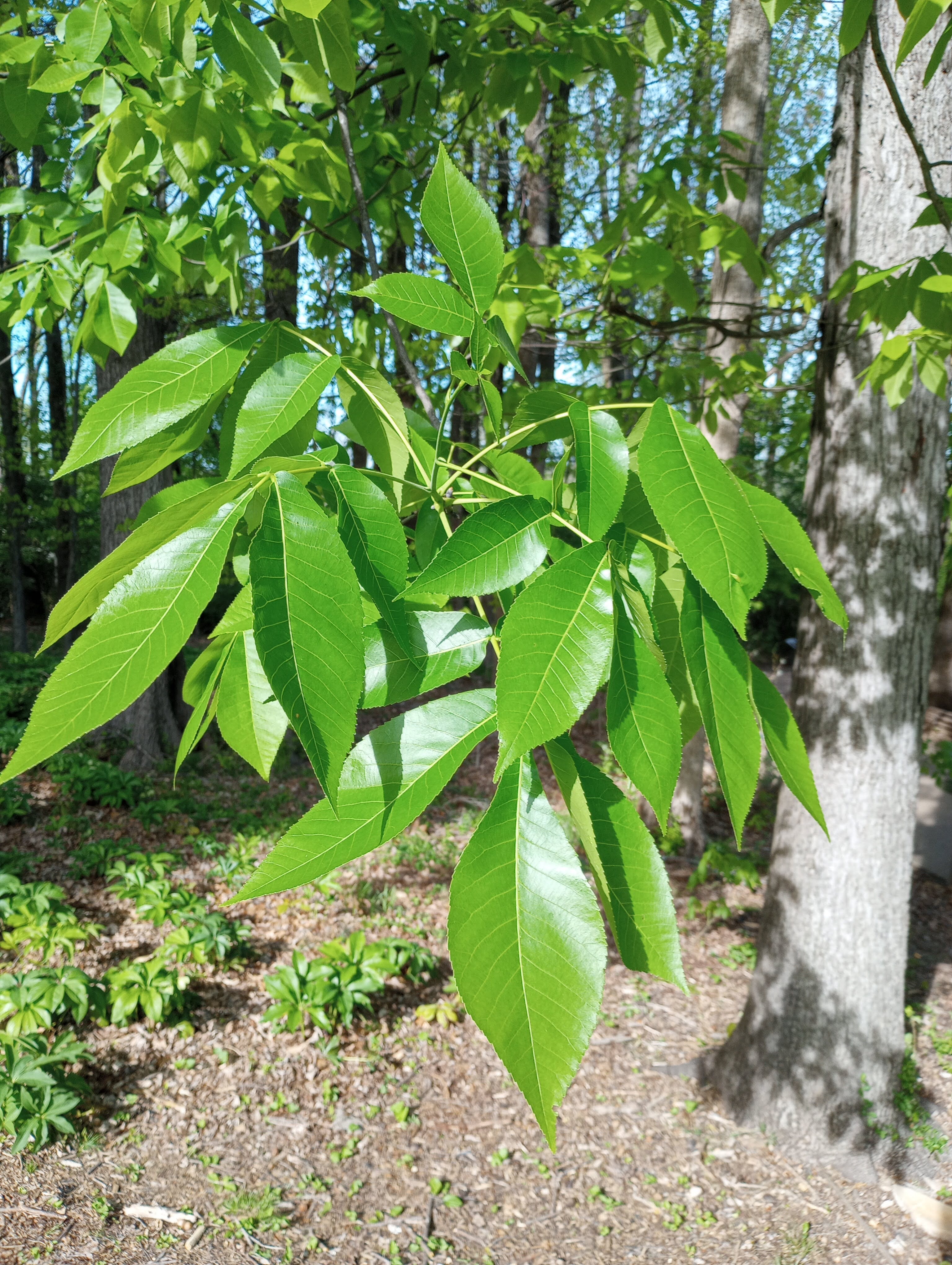
Shagbark hickory leaves
Big ol Shagbark Hickory at Cheekwood

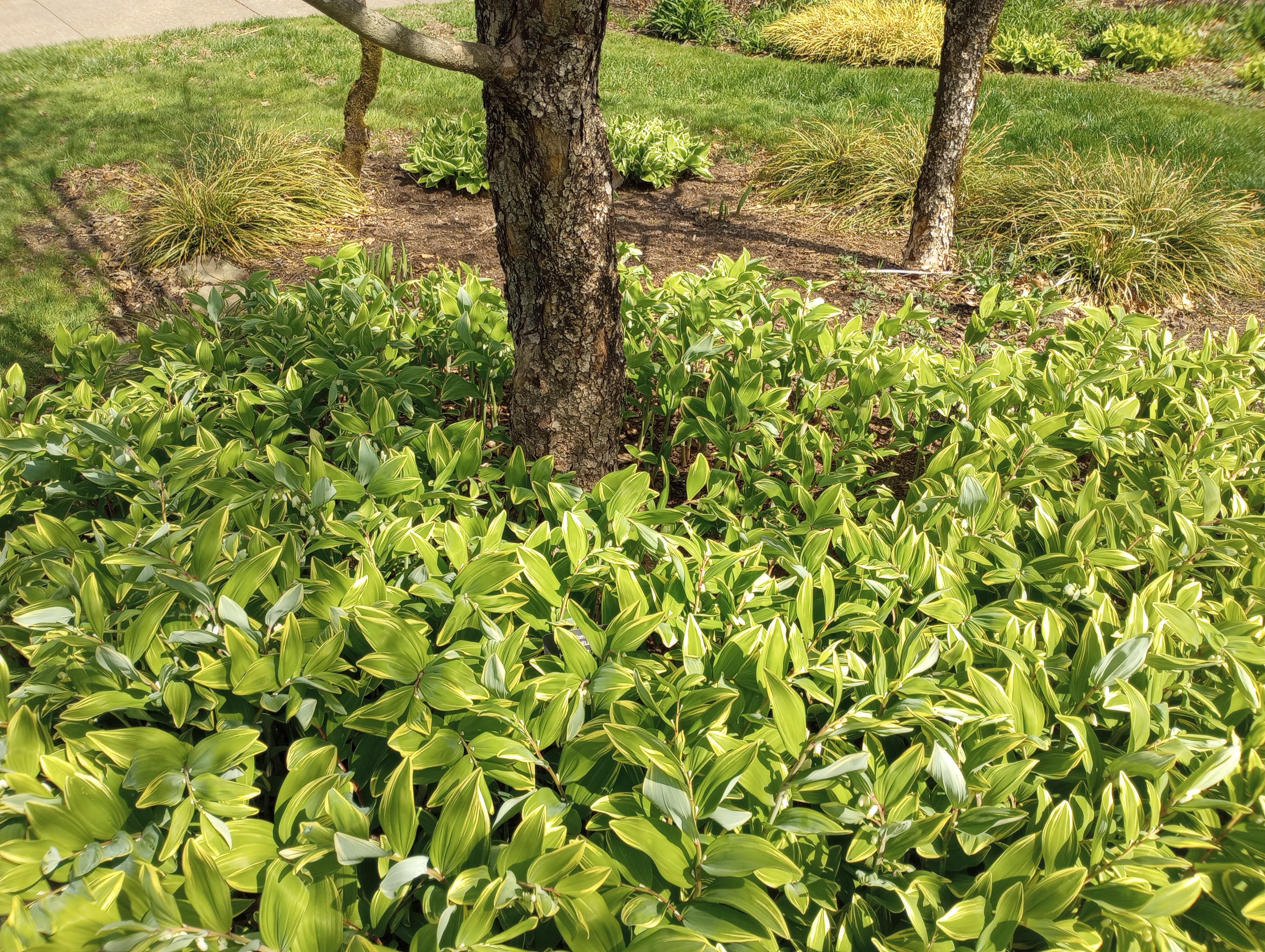
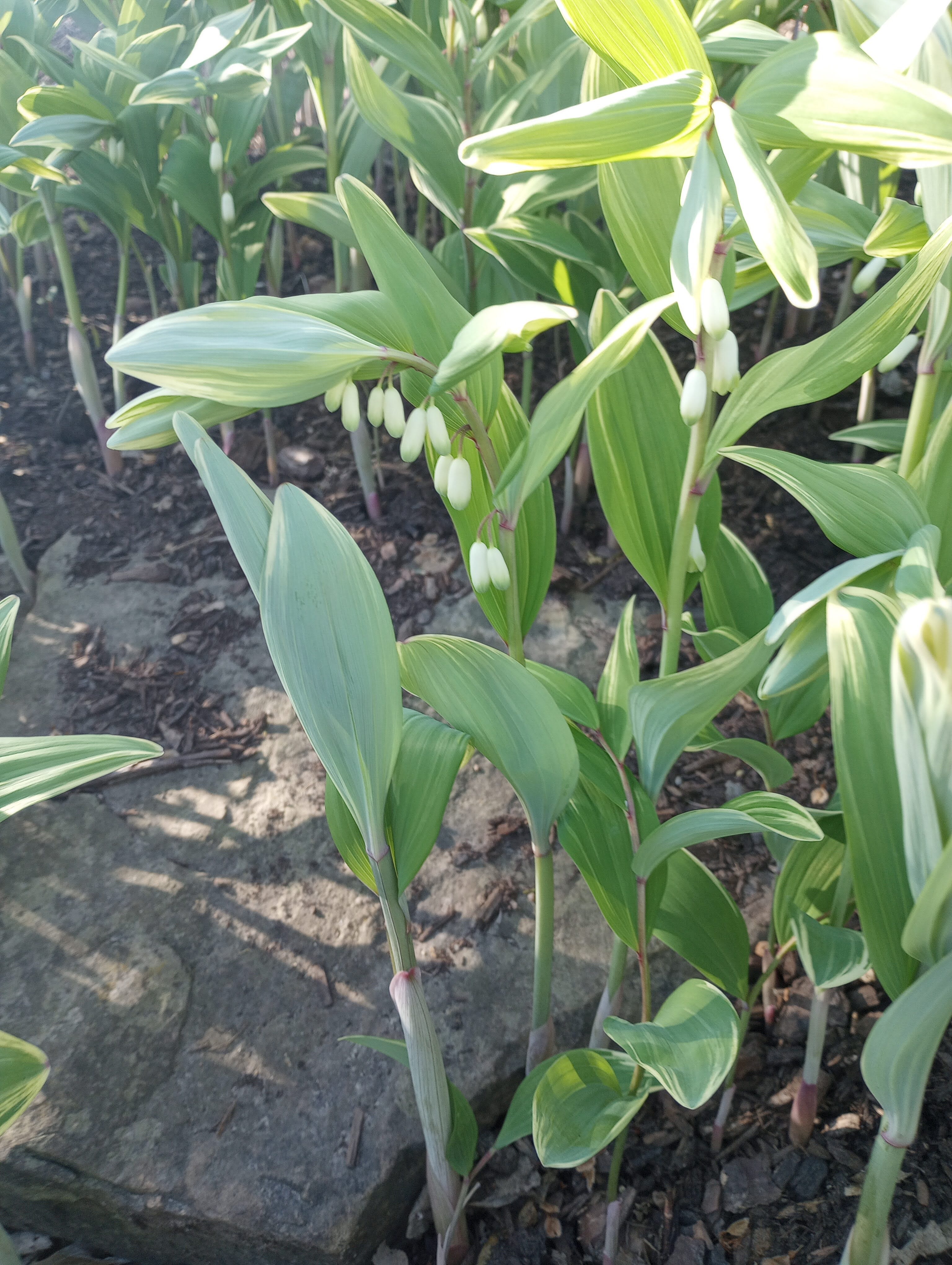
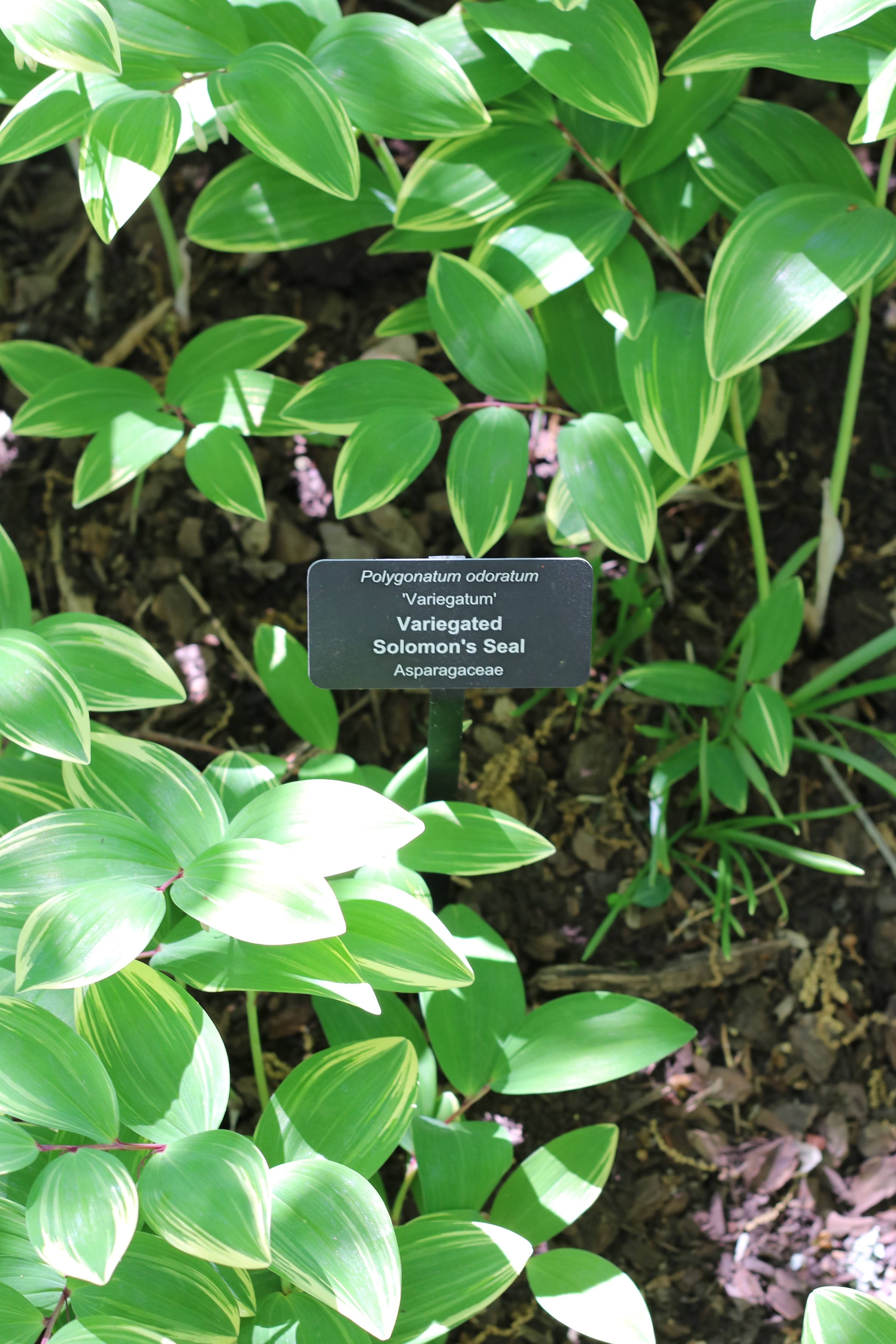
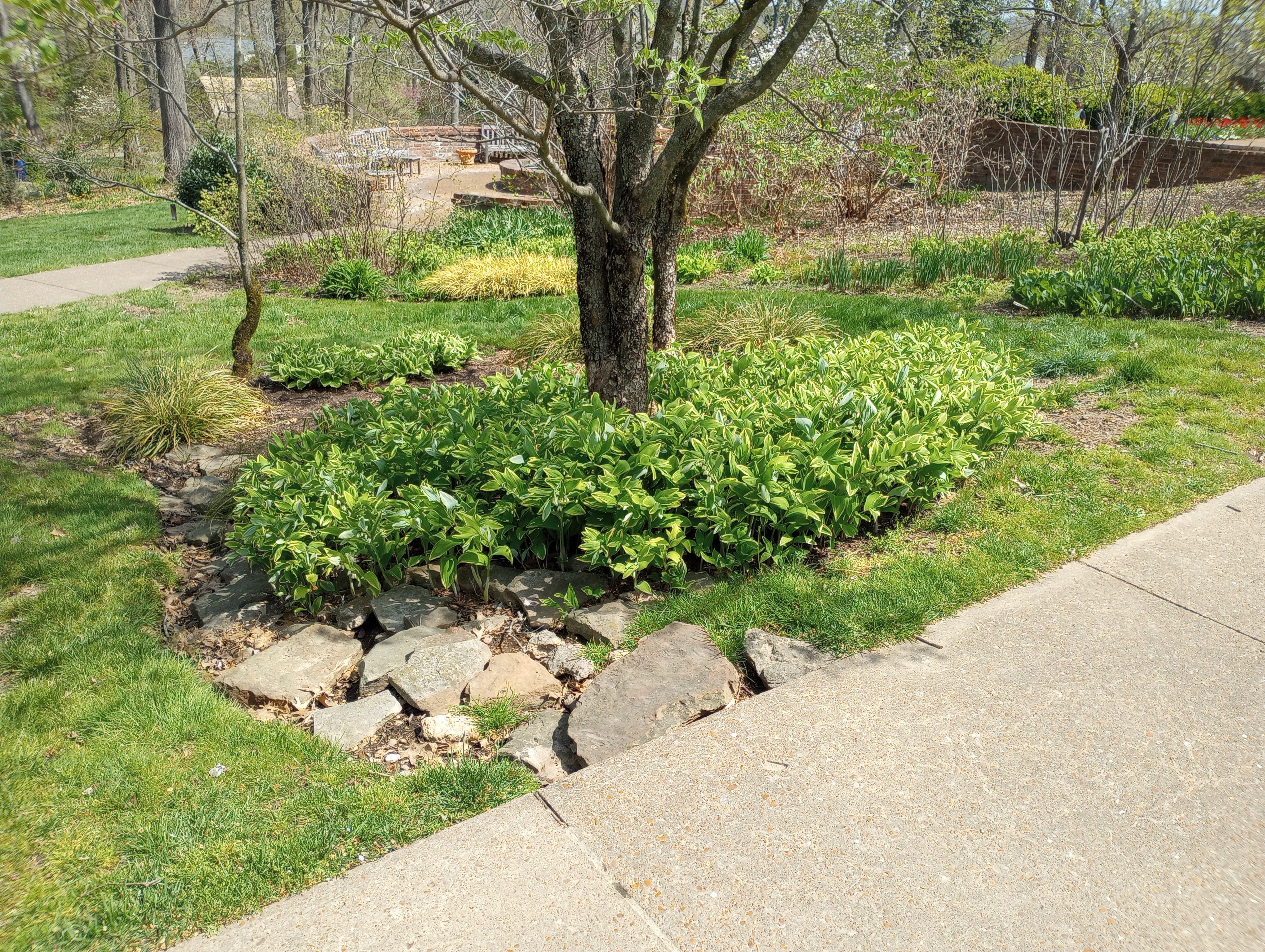
I’m learning more about the cool native plants, and we have so, so many. Witch hazel, American Smoketree, Dwarf yaupon holly, and many natives hollies, vines, trees… One native that I’ve seen at Cheekwood that is really attractive and would be great in gardens is this Solomon’s Seal. I love the way this looks. A beautiful shade plant to hang out in the corners and under the trees.

Solomon’s Seal
Patch of variegated Solomon’s Seal
Patch of Solomon’s Seal
Solomon’s Seal flowers (not quite open yet)

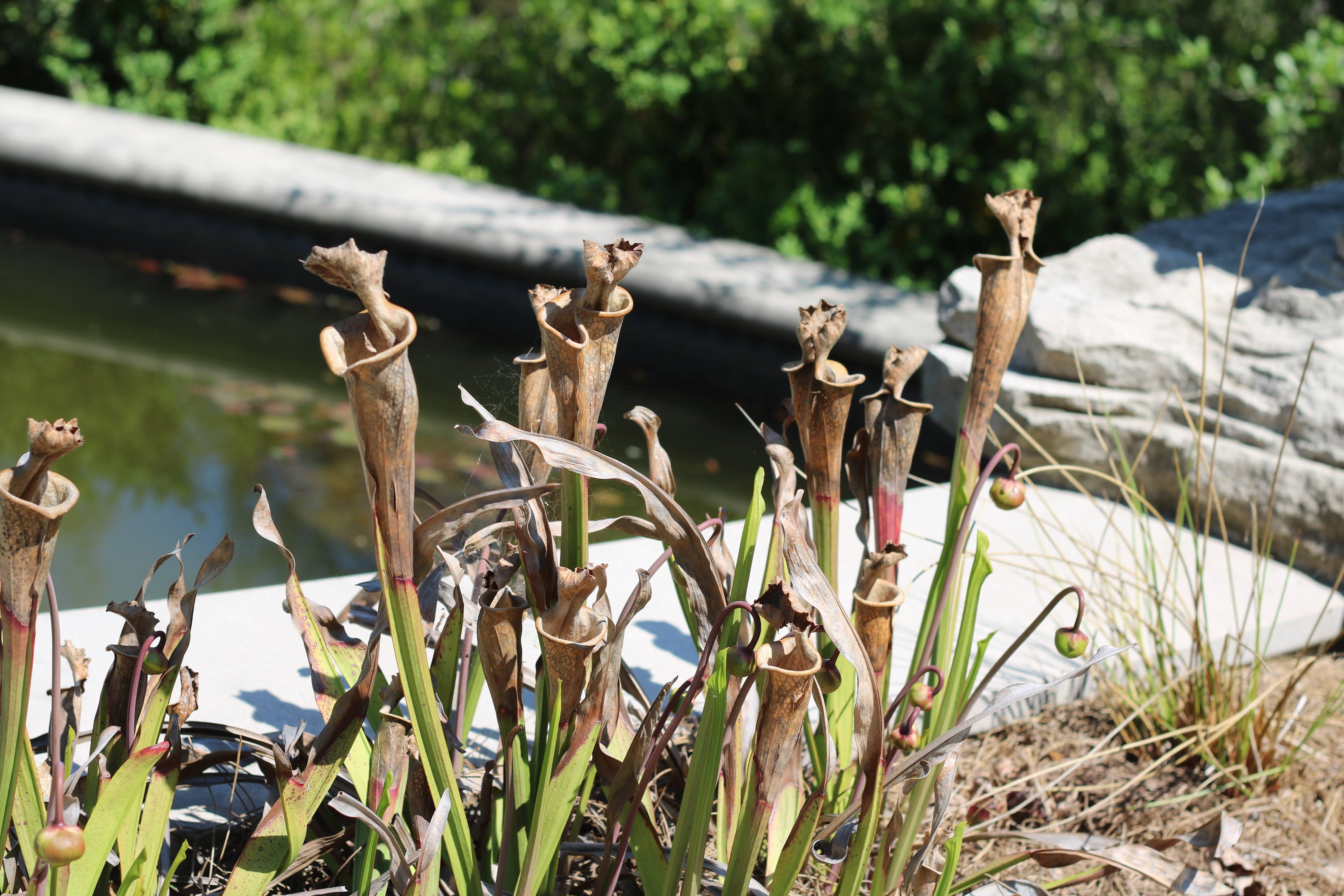
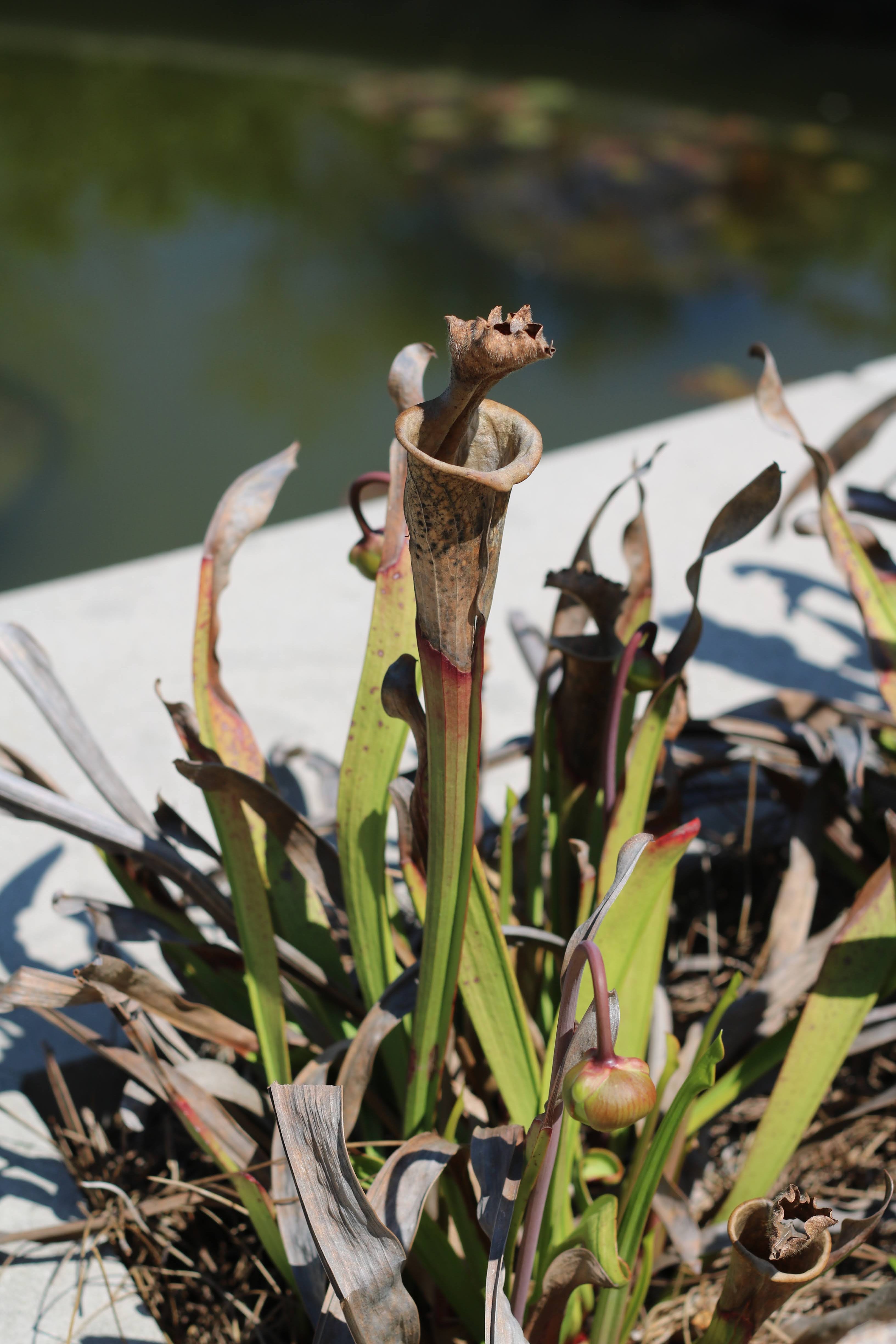
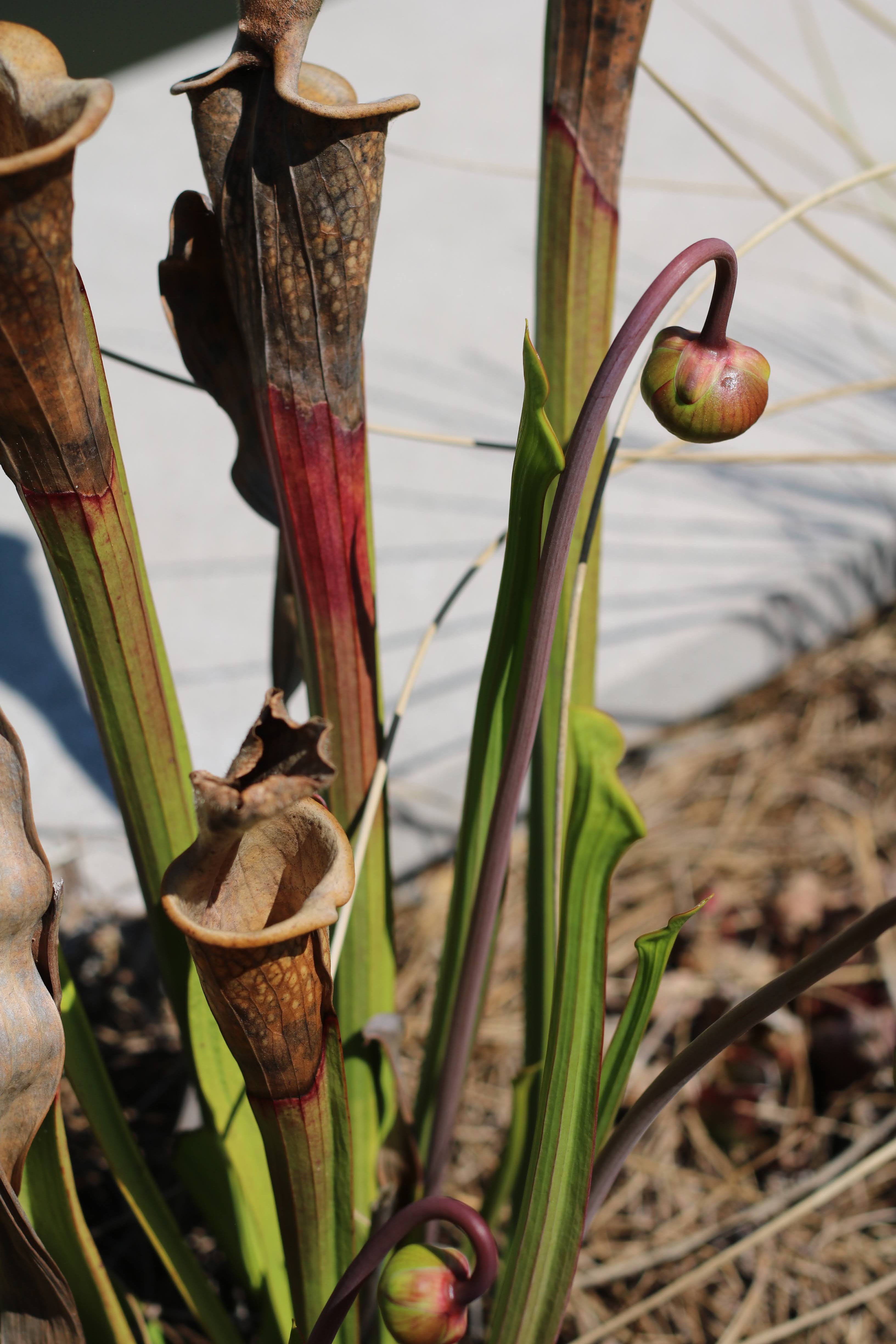
They have pitcher plants at Cheekwood. I was very surprised to see that. Did you know that we have native pitcher plants in North America? The genus is Sarracenia. I thought they were only tropical, in South America or Asia, but we have a native genus, here in North America. And then, a crazy fact: Where do you think Venus flytraps are from? Venus flytraps are native to North and South Carolina, exclusively. Such a beloved and amazing plant, and there is only one species, and it is from a small region, here in America. I had no idea. That makes me feel something for it, some pride. Even though they seem tropical (and there are tropical pitcher plants), they are not, and they need to go dormant in the winter. They need cold temperatures. These pitcher plants at Cheekwood seem to still be waking up.

Cheekwood pitcher plant
Pitcher plant
I wonder what will happen with this bulb
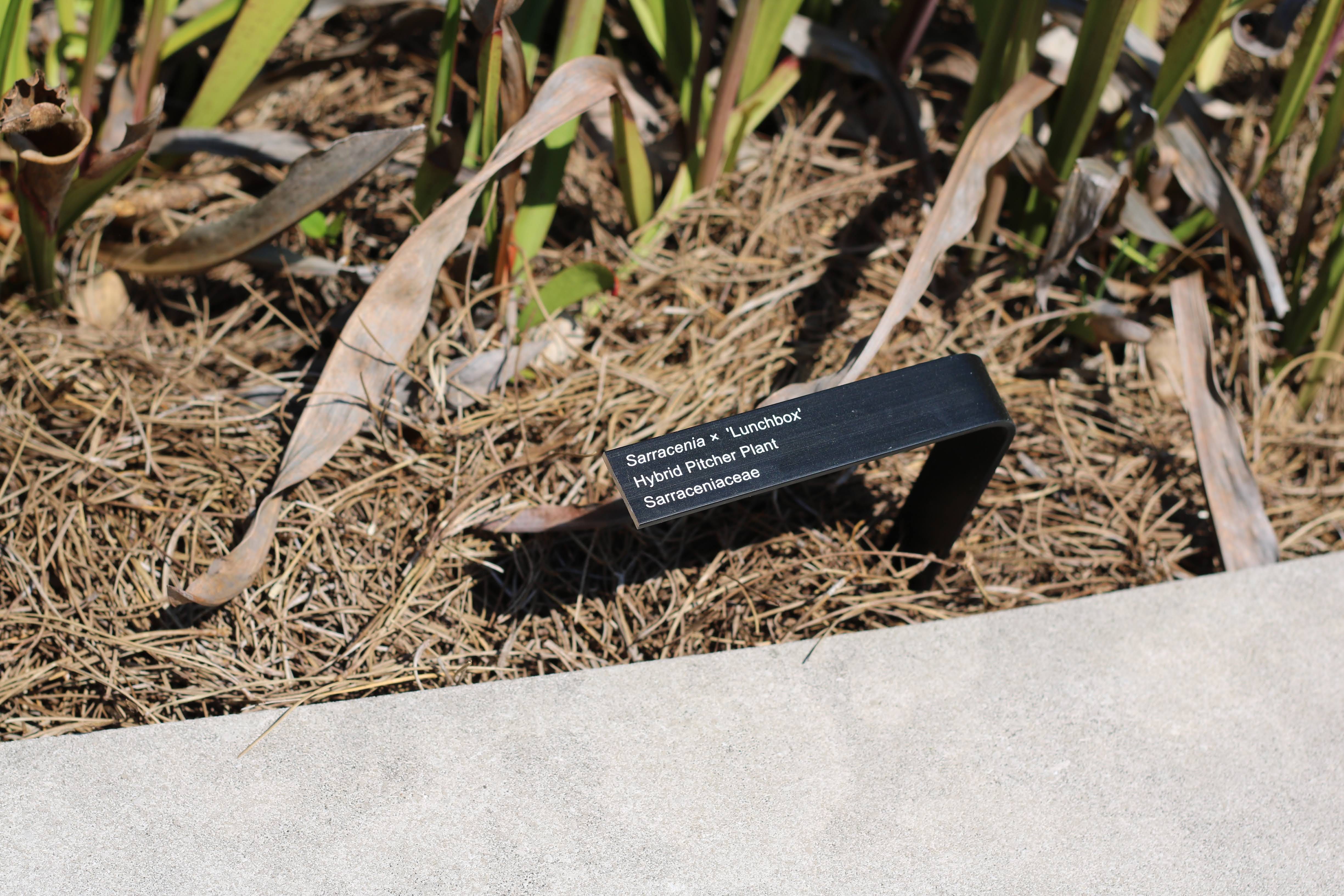
Sarraceniaceae, the pitcher family

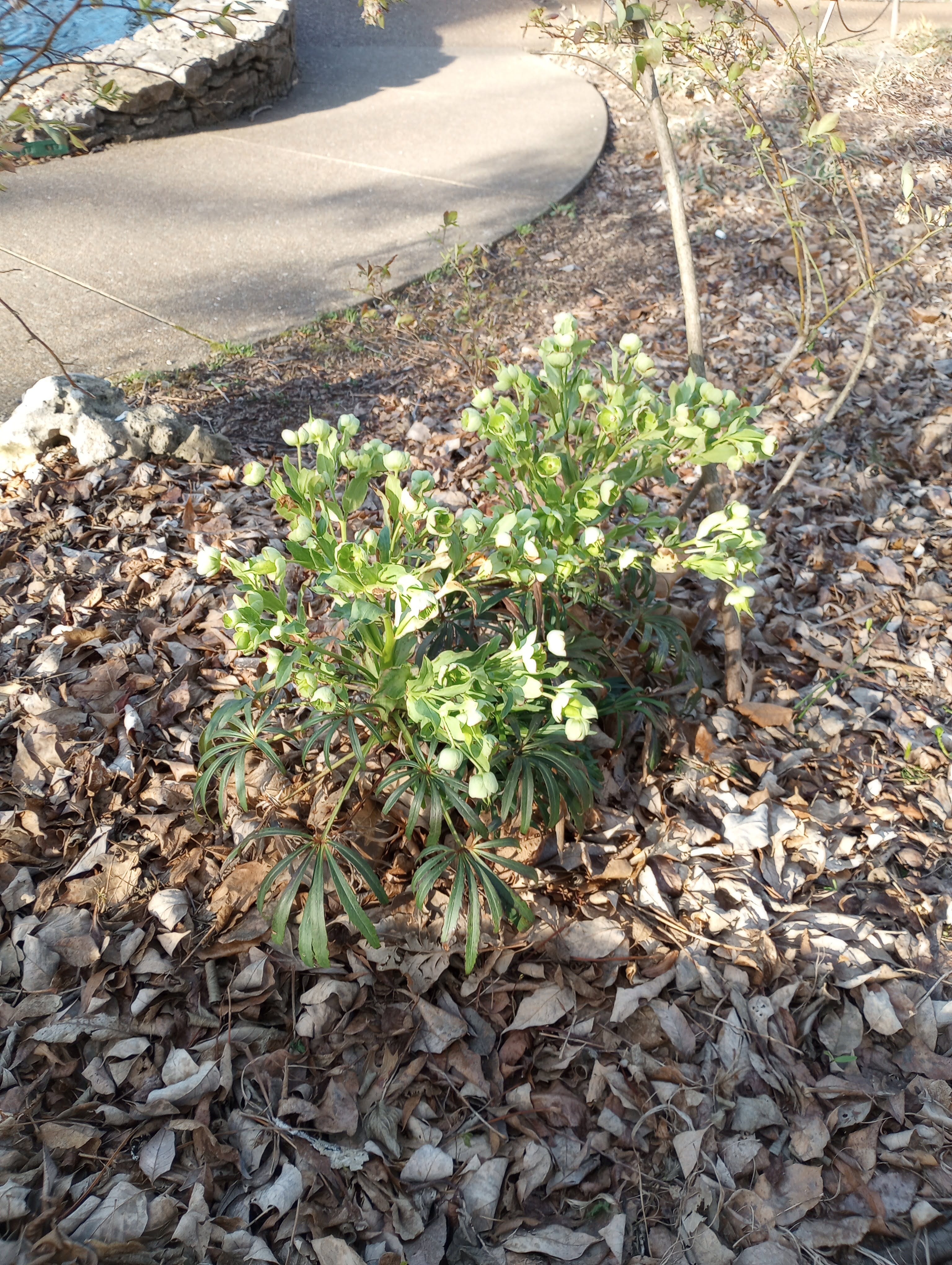
Stinking Hellebore

My very own Stinking hellebore, Helleborus foetidus

These days, Stinking Hellebore has my full attention. The above photo is my very own Stinking Hellebore, gifted to me by an incredible, comedian woman, named Donna Jo. Yes, the name truly is “Stinking Hellebore”. That’s what the people are calling this funky green beauty.

Donna Jo is a Master Gardener, the second Vice President, as in, the second of the two Vice Presidents, of the TN Extension Master Gardener program. Donna Jo held a public, group shaming of all individuals present at one of our meetings, who did not have their nametags, which they have stressed are very important. It was my third week of not having my nametag, three in a row, I was conscious of it, and Donna Jo, when she graced us with her presence, at the meeting, she had everyone who did not have their nametags raise their hands, and then she did a public shaming, and had everyone, on the count of 3, say, “Shame on you!” This public shaming was effective, and I have not forgotten my nametag since.

Donna Jo, in the same meeting, held another public shaming, I think purely because she really wanted to have another one, the earlier one was not enough, and she said, “Raise your hands if you were the bug killer in your family!”, and several hands went up, and she had us say, again, on the count of three, “Shame on you!” Our fearless leader Amy Dunlap had returned from her earlier absence, and was witnessing Donna Jo’s public shaming ritual with some horror and bewilderment, and she said, the most perfect line, “What are you doing??” We all cracked up at that.

Donna Jo could not help but be funny, can’t help but be funny at all times. You can see it, it was obvious from the beginning, that this is a real character here. We all knew it. Well, at my first volunteering event at the Nashville City Cemetary, where I learned what a hellebore even was, and cleaned up the beds, pulling the weeds, doing some pruning of the irises, I popped over to the bed with Donna Jo and Margarita, and at some point, she said, “What are you doing after this?” I said, “I’ve got yoga at 2 pm.” So, she said she had lilies if I wanted them, and I did. I am at the point where I will take almost anything I’m given, because I have space in the yard, and a willingness to give it a go. So, we cut out a little early, which was great honestly, I was hungry and getting a little bored (2 hours of weeding already), and so I followed Donna Jo across town to her house. I had heard great things about her garden, she had showed me some photos at our Master Gardener meeting, when I was asking her about some plants, and she gives a tour of her garden for the program, which is highly attended. I did not expect to get over to her garden so soon, that’s for sure, but you never know how things will go.

Donna Jo’s garden is a small paradise, and I have no photos of it, not right now, but it is a domestic botanical garden. You can immediately tell that hundreds if not thousands of hours, significant amounts of love and care have gone into the cultivation of her landscape. Tens, 30 or 40 forsythias that were in bloom, lining the driveway, forming a grove in the back, and large beds of daffodils, lilies, irises, daisies, etc., and then hellebores, and all kinds of other things that I don’t know the names for. She was giving me some of these lilies, to divide them, keep the garden bed from overflowing and being too cluttered, and she gave me plenty. I was then checking everything else out, as we walked around, asking her about things, and there was a really interesting plant, and I said, “What’s this one?” And she told me it was a “Stinking hellebore”. Except, she was 100% calling them “hellebora”, I’m almost positive. Well, I thought that was an incredible name for such a beautiful plant, and she said that they don’t even stink. Right now, with the flowers, it smells wonderful. Very pleasant and fragrant. So, not sure about the stinking part. But, after all the lilies, she had dug me up ten or fifteen, big ones, healthy, huge tubers, and I was admiring the Stinking Hellebore, and she said, “Want one? I’ll give you one.” And I was like, no way Donna, I can’t just take one of your amazing Stinking Hellebore. She insisted.
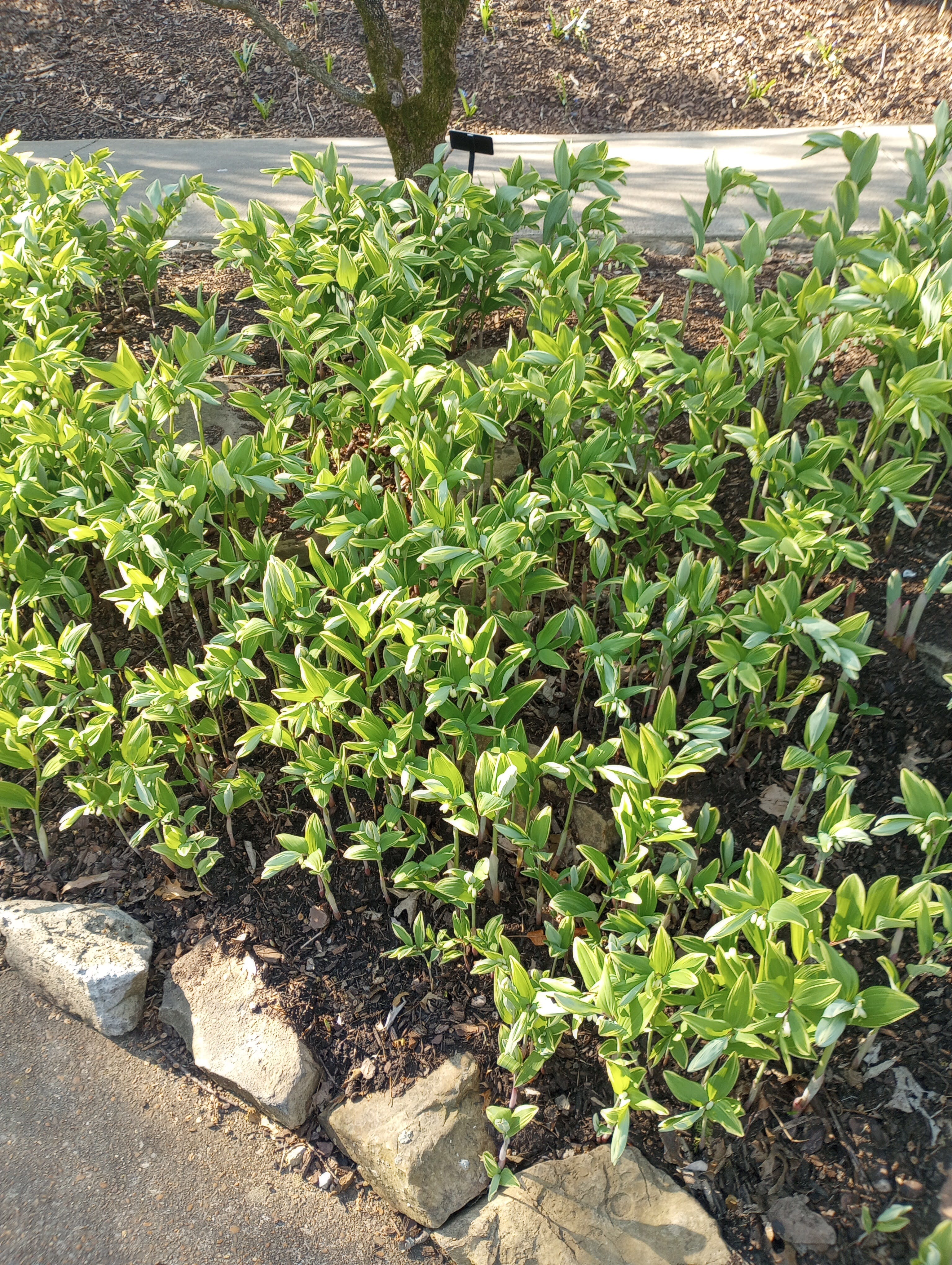
She initially was going to give me a really well-developed, large, beautiful Stinking Hellebore, but I was really unwilling to take such a wonderful specimen, that was clearly doing so well, and looked so great. It felt like too much. She ended up finding me a smaller one, still quite large, but it was mixed in with several, and so she dug that up and it was mine. I’ll tell you that I felt like I had gotten a puppy, I still feel that way, and I was extremely careful with this new baby of mine, all the way home, and I planted it immediately. I sent Donna Jo the photos, so proud, of the Stinking Hellebore in its new home.

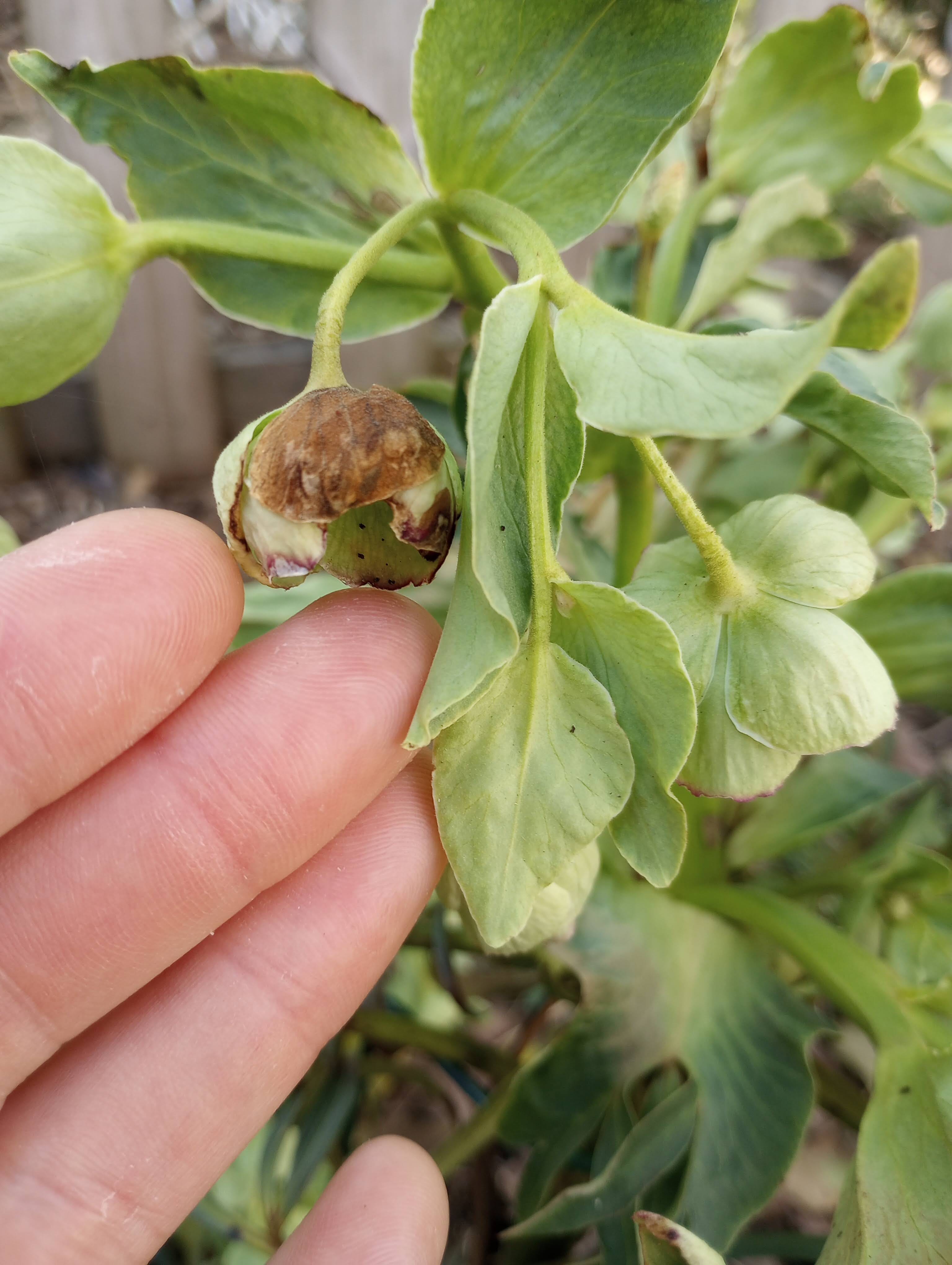
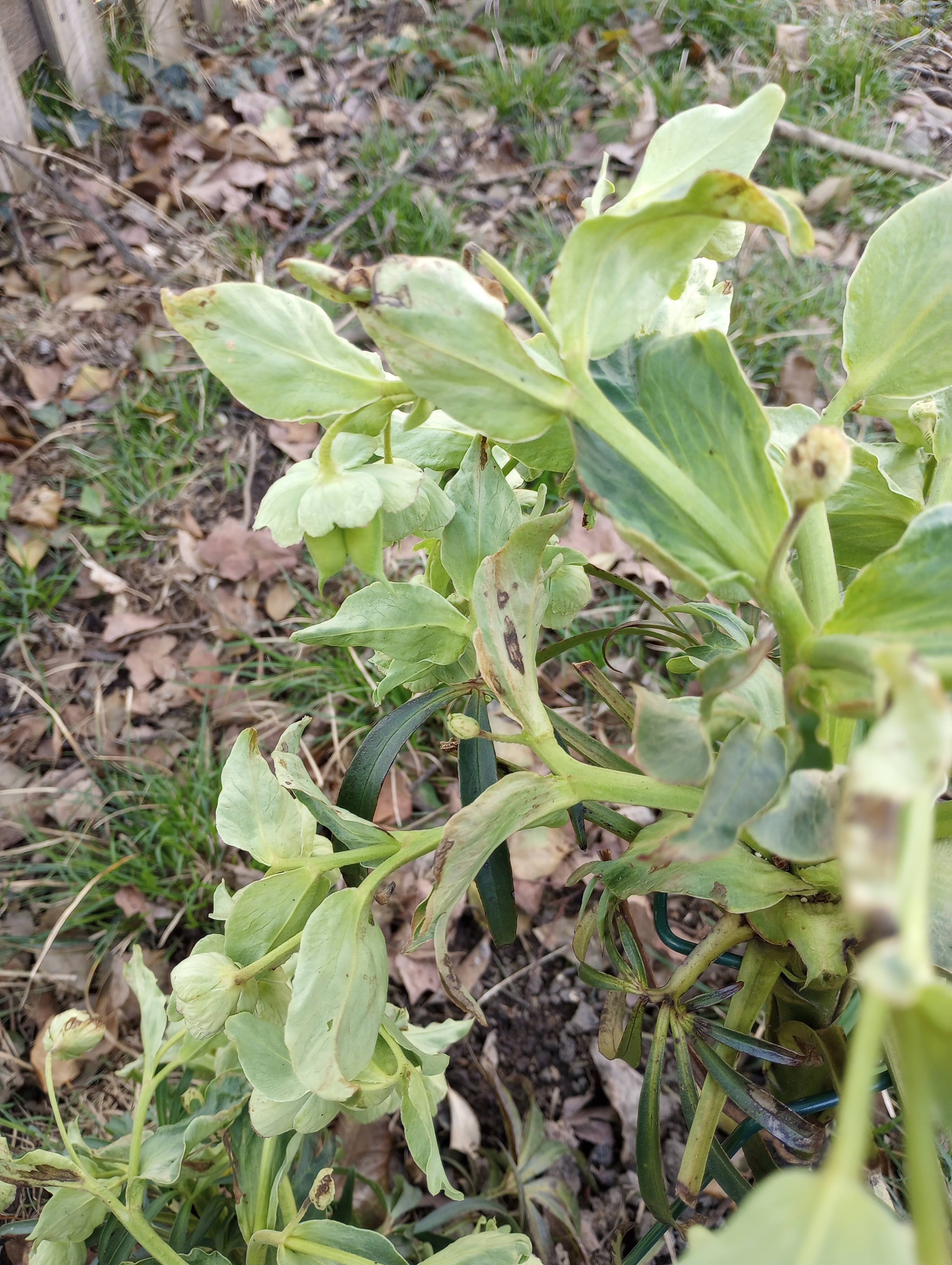
Now, I have monitored the Stinking Hellebore, my baby, carefully, and for at least a week, several days after the planting, it was looking fine and dandy. However, about four days ago, I noticed some browning. One of the flowers was brown and curling up. That was the first sign, and I spotted some browning, splotching on other leaves. That was concerning, and the next day, two days later, a little more advanced. Today I checked, and it looks like the browning hasn’t increased any since then. That’s good. I assume that this is simply “transplant shock” (I’m not sure if that’s a term exactly but I think it is), as the plant has just teleported into a new environment, new soil type, different amounts of sunlight, and the roots have to resettle and adapt to the move. I haven’t overwatered, although the soil might still be a little wet for it. It has rained a bit, and that soil there has stayed moist. It doesn’t get intense sun all day, but sun until about 1 or 2 pm. That could matter, but right now my diagnosis is simply that it’s having some stress from the move.

Some browning
General splotching and browning on leaves and flowers

You may know that I am concerned with the invasive plant problem, and am certainly not wanting to propagate any invasive species, and plant natives, mostly. Well, already I’ve had my first test, the first real test of my principles. Because, I immediately researched my new Stinking Hellebore baby, and discovered some concerning things—native to Eurasia, and in some places (TN not yet one, but I think North Carolina was on the list), hellebores are considered invasive. This means that I now may be propagating and caring for an invasive plant. Yes, me. What can I do? This is how principles are tested. You say, no nepotism. And then your nephew is trying to get a job. What do you do? You get what I’m saying.

Well, as we can see, I did plant it. I had to. Donna Jo gave it to me. That’s my excuse, I guess. Is this one plant likely to be the demise of native plant life in Tennessee? No, no… and I have done so much good work in removing invasives off of my property. So, if we look at the scales of justice, or whatever, surely they are balanced in my favor, regarding my ecological footprint… I can have a Stinking Hellebore, right? It’s a slippery slope, I suppose. It’s easy when they aren’t pretty, but then someone wants to give you a pretty one, one that’s caught your fancy, and oh boy, what do you do now?

Donna Jo had a beautiful vine, ground cover, called periwinkle, that’s flowering right now, and is very attractive. I had heard of that, and thought, at the time I thought it was native, and thought that it could do part of what wintercreeper is commonly doing right now, being an attractive, green ground cover. However, sadly, not-native, and considered invasive. That made me sad.

On a side note, wintercreeper is really an amazing plant. It can literally become a shrub, form itself upwards and become a dense bush, standing alone. You see it in that form all over in the neighborhood. So, wintercreeper can be literally just a mass of ground cover, or it can be snaking up a tree and forming a large canopy on the trunk of a tree, or it can wind itself up and become a dense shrub. I don’t know how they get it to do that, if it is another cultivar or what. But, that’s pretty amazing, to be so modular as a plant.


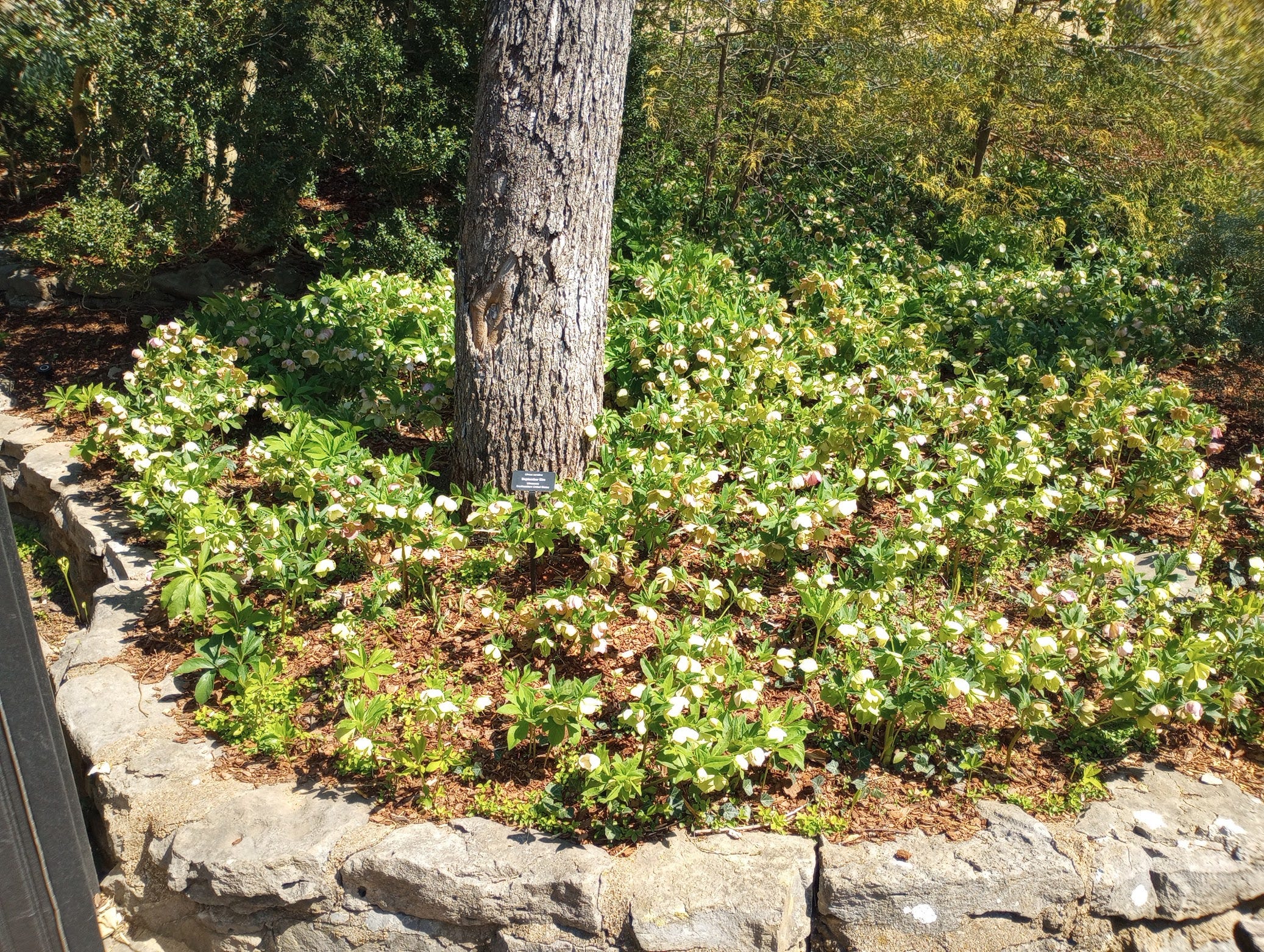
Now that hellebores are on my radar, again, I know I have said this many times, but it really is so true—once you learn about a plant, you start seeing it everywhere. That’s just how it goes. Because, I swear to god I have never seen a hellebore in my life, not once in my 30 years, and now I suddenly see hellebores everywhere I go. All over, but really, that means at Cheekwood, which is a botanical garden after all, and then today, at Vanderbilt, on the campus. At Cheekwood they have tons and tons of hellebores right now. They look healthy and are blooming well.

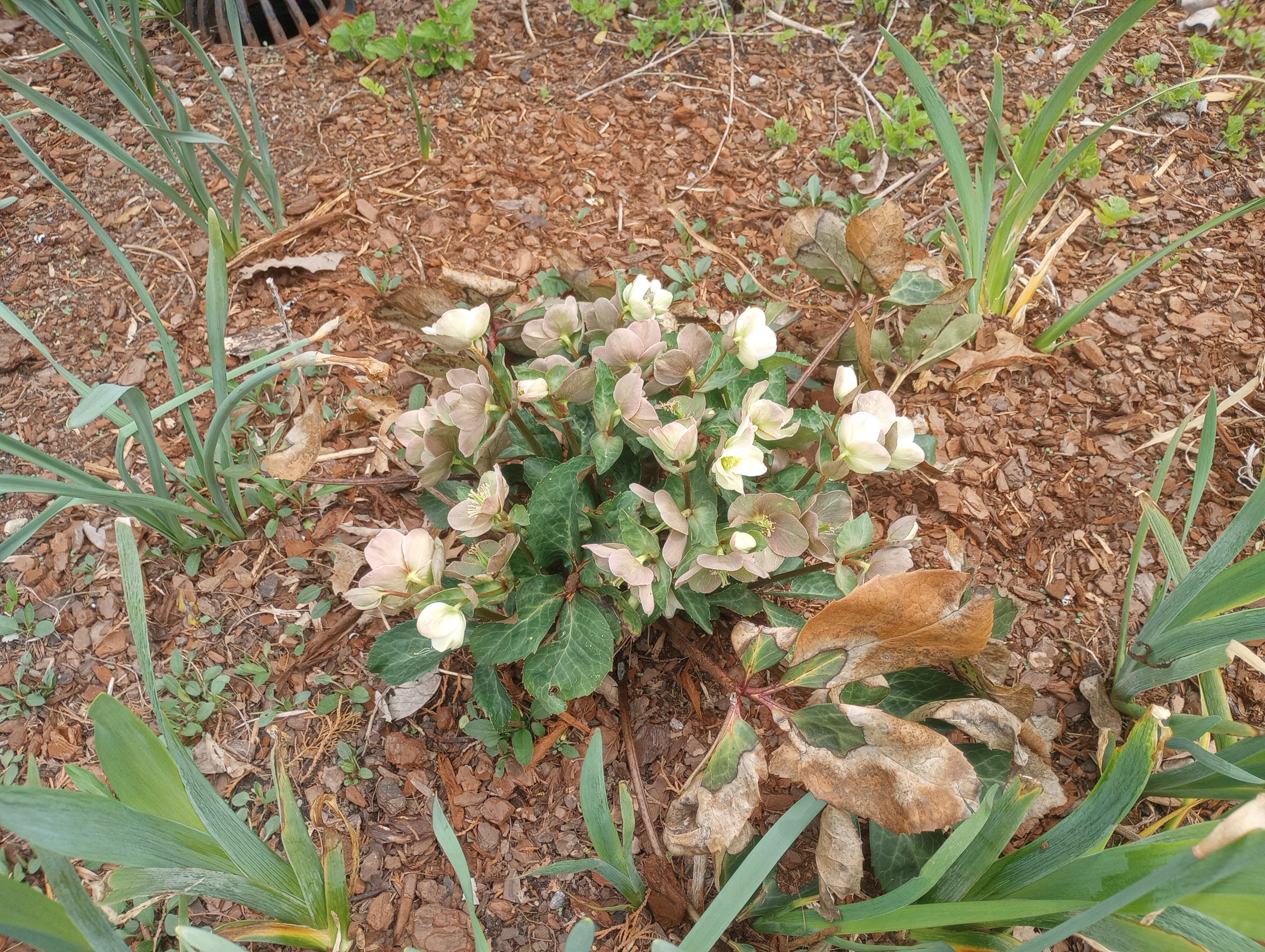
When I went to Vanderbilt today, strolling around the campus, there was a large bed of hellebores, not the Stinking, but the other kind, and they were not looking so good. Armed with my newfound gardening knowledge, I am inspecting all plants, and assessing their conditions, taking notes. These hellebores were stressed, not doing as well as the Cheekwood hellebores. Why? They were wilted, starting to wither. That’s what drought-stress looks like, I thought, and then looking at the soil, it was dry, with visible cracks. This garden bed was between a sidewalk and building too, if that matters, which it probably does, raising the temperature of the bed, and reflecting light. It seemed to me like they needed water.

Who’s the gardener? Excuse me, who’s responsible for these beds??? Give them hellebores some water!!

Huge hellebore bed under a September Elm at Cheekwood
Cheekwood Stinking Hellebore
Hellebore of the purpler variety, I think not Stinking Hellebore but another kind

Spring Is Here In Tennessee!!!!! (March 4th)

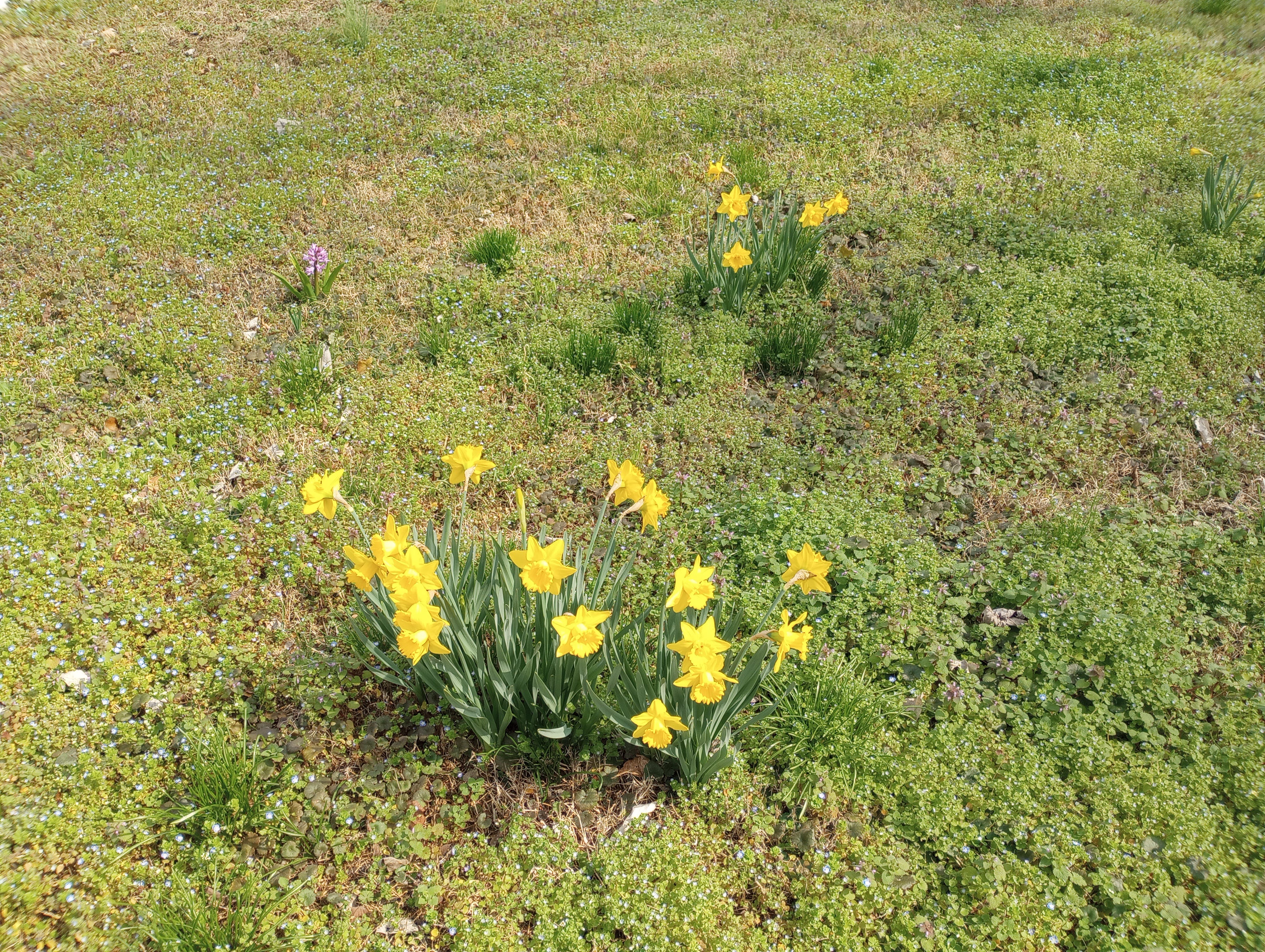
Daffodils
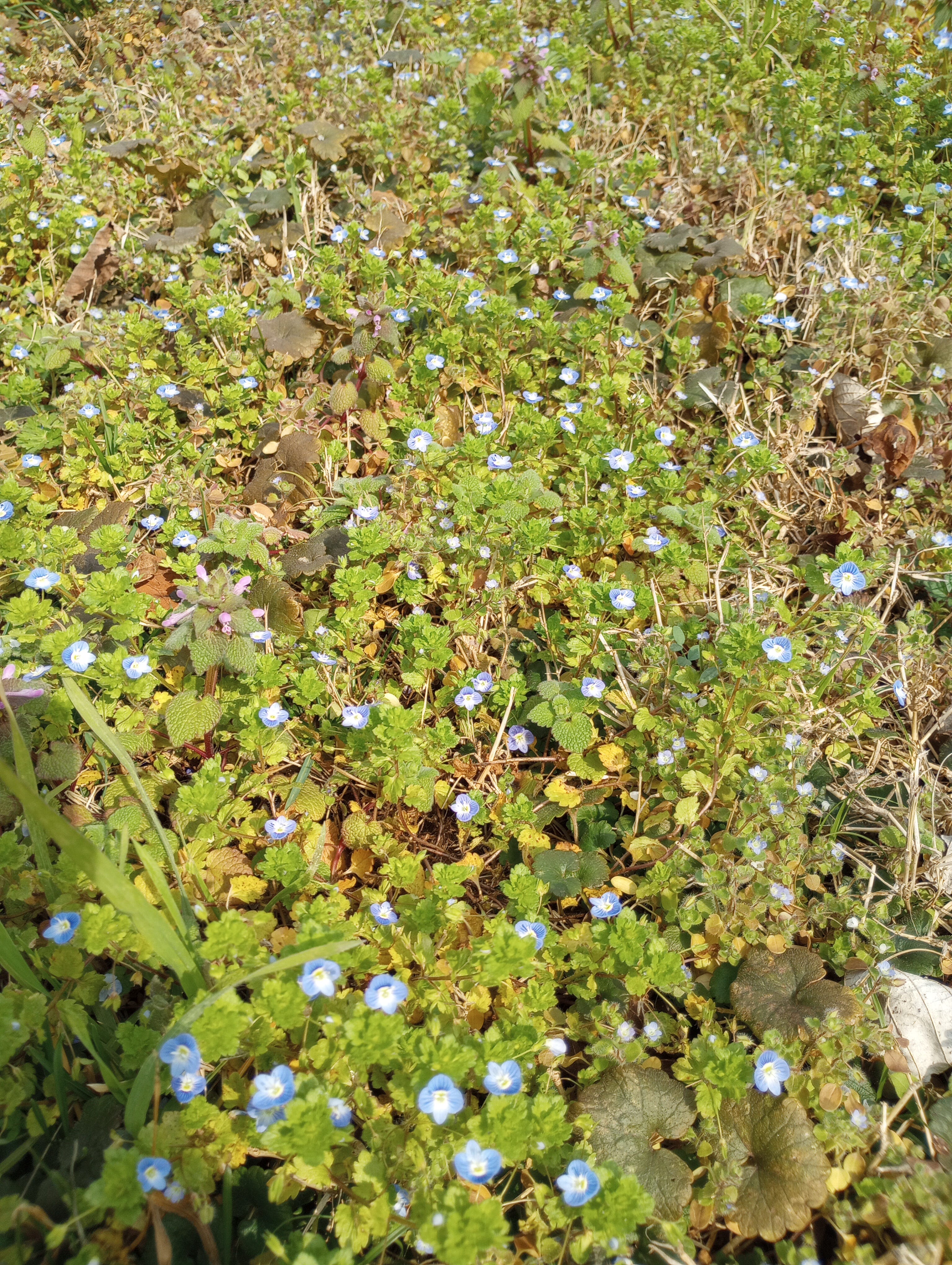
Persian speedwell and purple dead-nettle
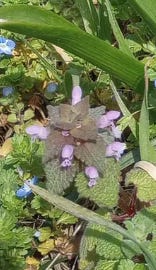
Purple dead-nettle
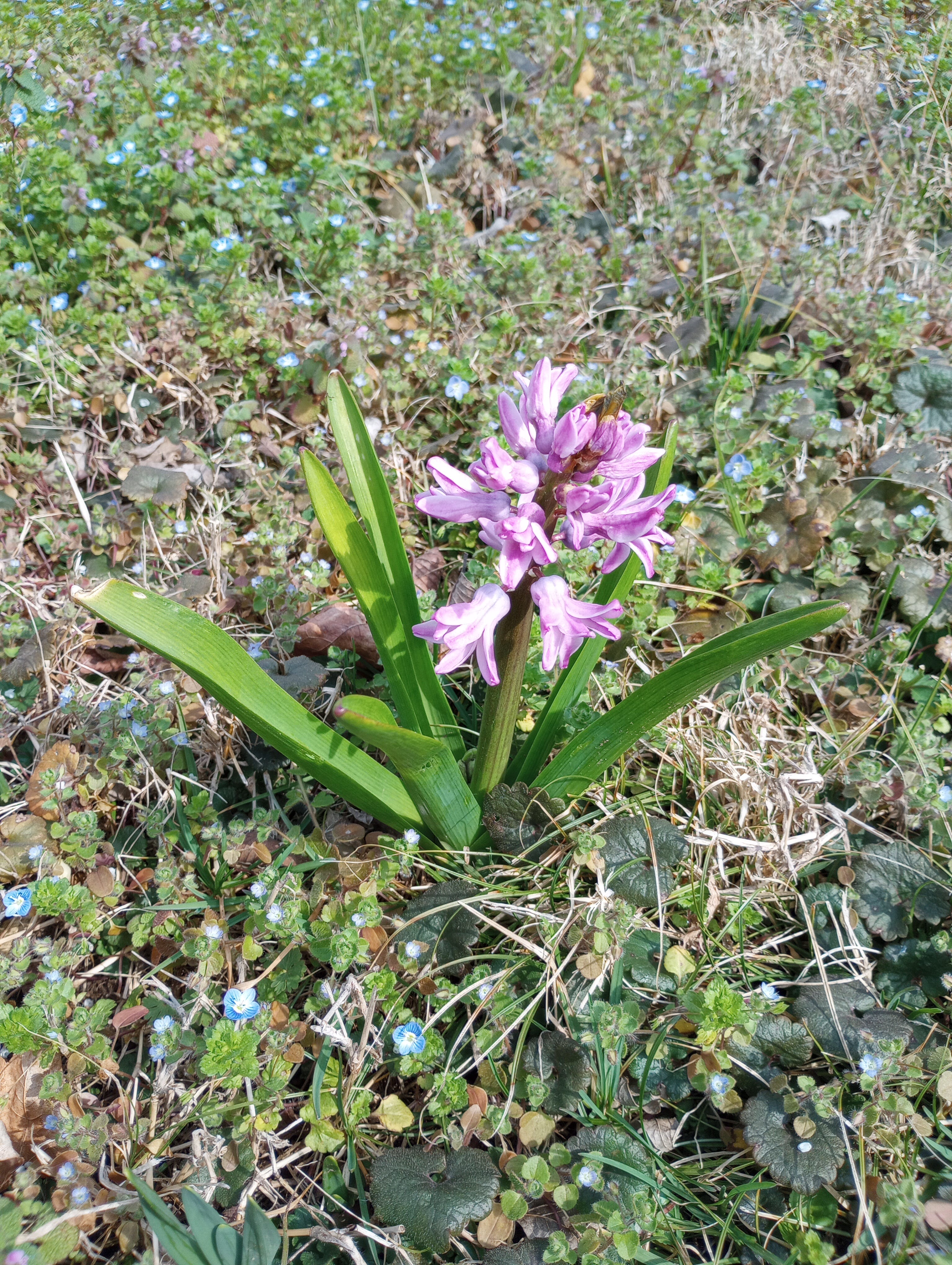
Hyacinth
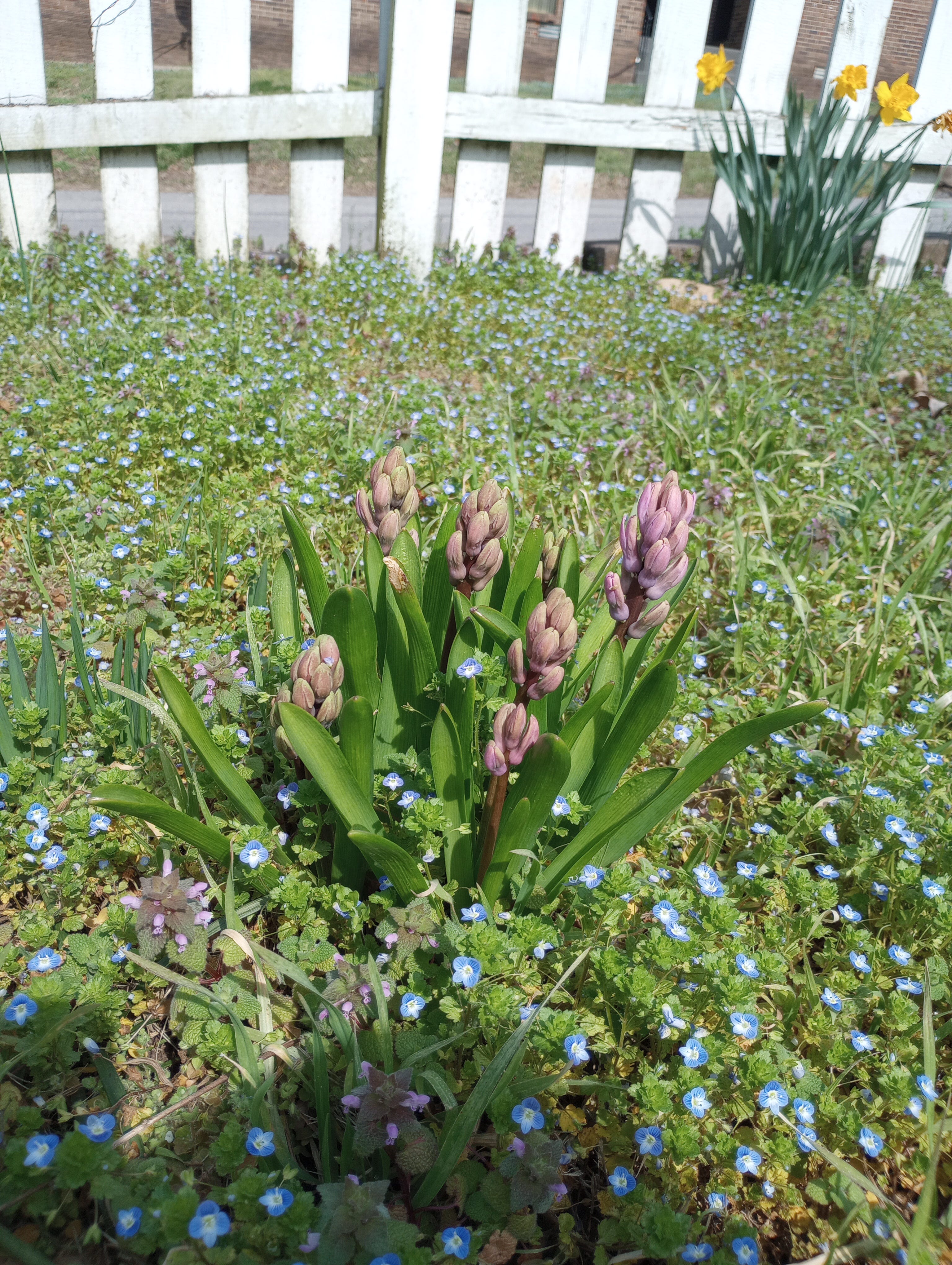
Hyacinth buds
Note the wall of invasive species along the back fence (mostly wintercreeper and bush honeysuckle)

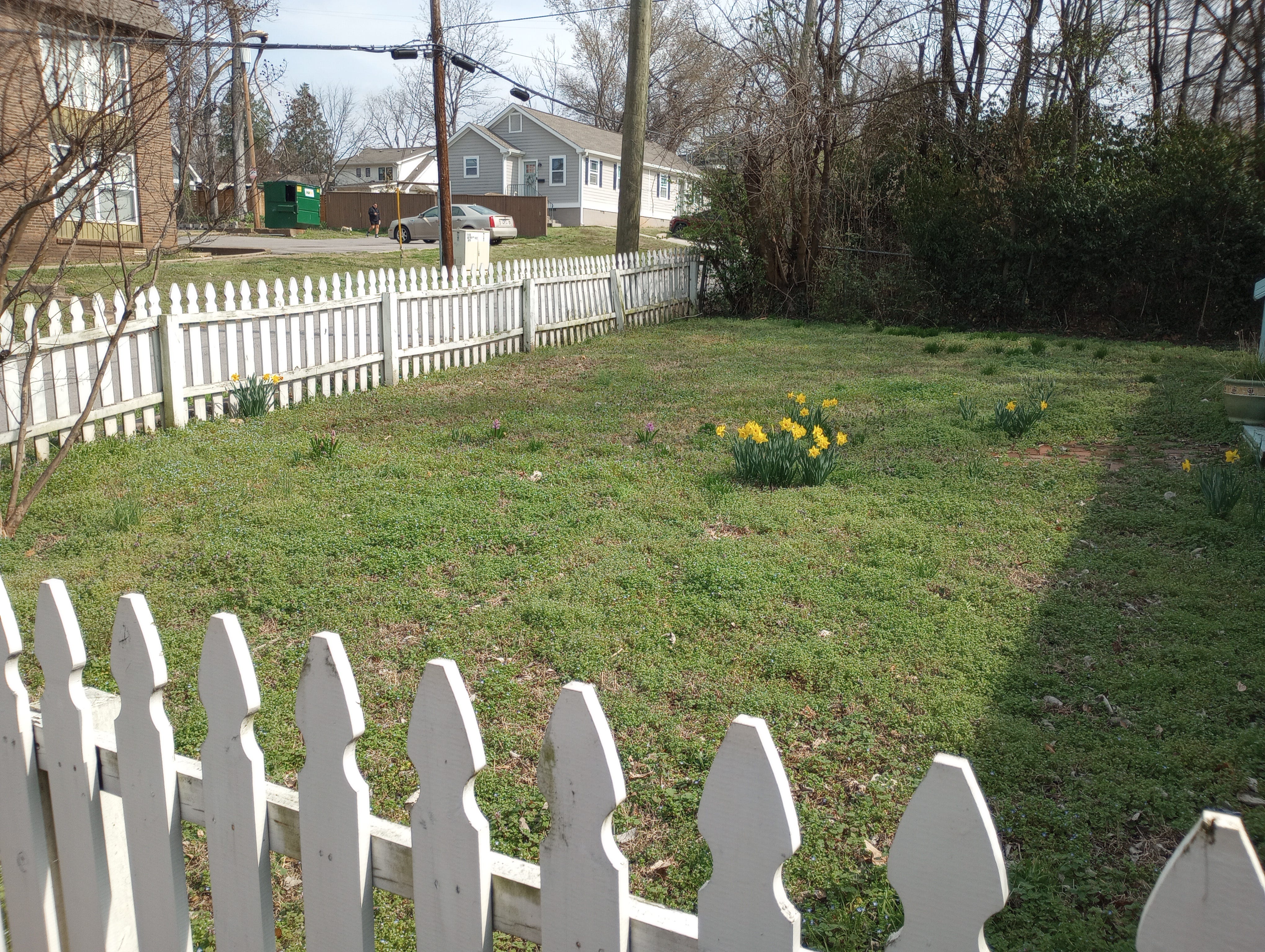
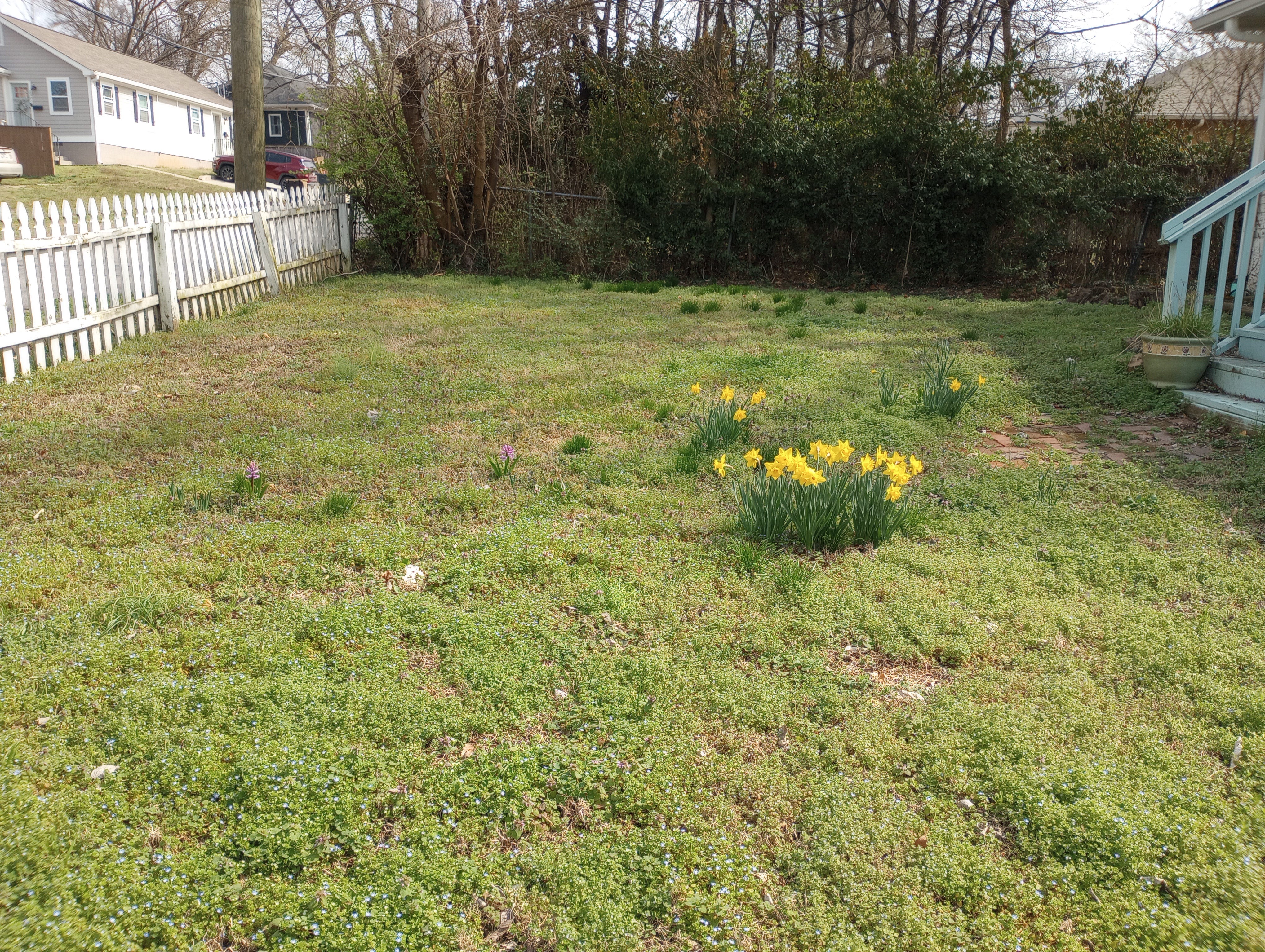
Daffodils all over the neighborhood have popped out. Flowers of all kinds are making their debut, of all shapes and sizes. If I were more knowledgeable about the names of these plants and flowers I would list them all for you… I’m getting there. It’s only March 4th, but spring is happening. The weather is warm, the days are longer, and now the bugs are out.

Interesting that some of these plants, they would flower as soon as the weather got warm, even in the middle of February, and then they would just tuck their flowers closed when it got cold again. They can turn them on and off, basically. There is a plant outside of Ugly Mugs right now that does that, with small yellow flowers run all along the stems, and the Persian speedwell does the same thing.

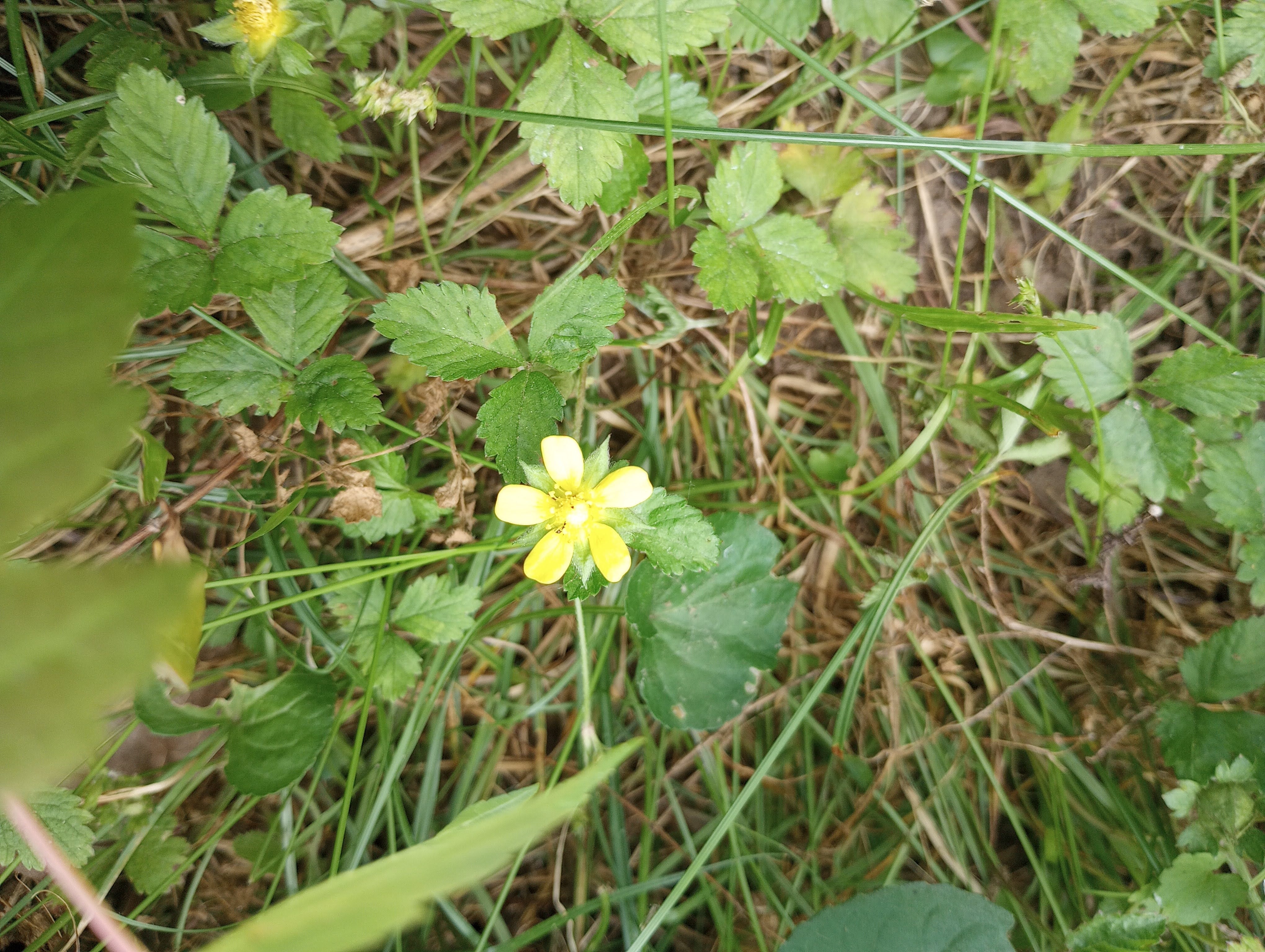
The neighbor’s yard (currently unoccupied as of about a week ago) is absolutely booming. From a distance it may not look like much is happening, but on closer inspection you will see. When I walked over to inspect and take some photos of these daffodils (which are blooming all over town right now), I was surprised to see that the entire yard was in bloom. There are the daffodils, and then there is some of this purple hyacinth (which I just IDed using Google, and I also just learned what all these yellow flowers were – daffodils – yesterday). But the entire ground is covered in a mat of these little blue flowers, which are Persian speedwell plants. There is also a slightly taller, conical plant that has purple flowers, mixed in with the Persian speedwell. This is purple dead-nettle, Lamium purpureum. Both of these plants are native to Europe and Asia, but they are obviously well established here. In this yard, and in mine as well (in the front, which gets full sun) they dominate the ground cover. They may be non-native (invasive? probably so), but surely there is nothing that can be done about them now. Well, to their credit they are at least feeding the pollinators.

With all this blooming, come the bugs. The bugs are here, in full force. And flitting across this veritable meadow (for some reason when thinking about writing this piece, I had a strong urge to use the word veritable, which is strange because I have thought of veritable as cheesy and basically a useless word) were the flies, and the bees, the hornets, and everybody else. For them, this small, unassuming patch of land is a treasure trove and feast.

This is the difference between a turf lawn and a lawn with flowering plants — clover, deadnettle, speedwell. Such as what we have here. This is a great lawn, and it probably wouldn’t need to be mowed, because these plants won’t get that tall. I have a fear that it will be mowed, unfortunately — I have seen this yard mowed before, when it was in a similar state, and they mowed down the flowers, which were at that time the Mirabilis jalapa, the Marvel of Peru. There is some grass mixed in here, but not much, and it will probably just tuft-up.

That’s what happened in the back of our lawn, which handled free growth very well. The front yard got much wilder, and was full of all kinds of invasive plants, and especially a large mass of something invasive popped up in the front (I THINK it was garlic mustard).


The earth is waking up again. (Here in Tennessee.) About a week or two ago (late February) we had a couple of days that were very warm, 60+ degrees, and it brought many of the spring plants into bloom. I thought, if a frost comes, they will be punished – and lo and behold a frost came the very next day. There were two nights of frost immediately after this warm spell, and the plants were punished. I saw all of the flowers, wilted, burned, or, what some of these plants can do, withdrawn. And I felt like they had been tricked, and was sad for them, but guess what? These flowers are hardier than that. Warm weather is here again, and they have rebounded. I wonder how much of an impact that frost did have. They probably wouldn’t tolerate much snow and ice, but if you’re willing to bloom this early in the year, you must have some built-in resistance to the cold. If you don’t, you’d be in trouble.

There is a beautiful tree in bloom right now, possibly a dogwood? that is completely covered in pink/purple blooms, like a Japanese sakura (cherry tree), and swarming with bees. I need to get a picture of that for you.


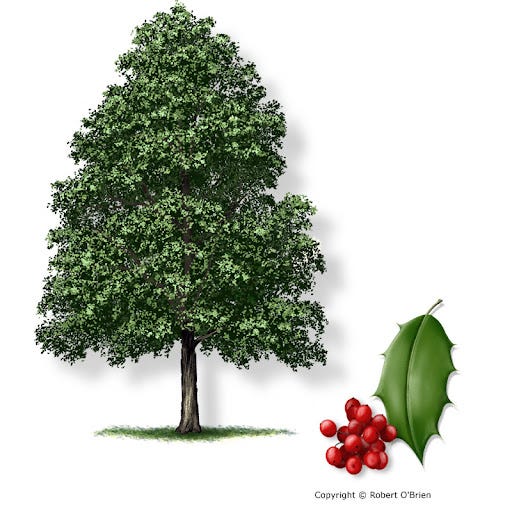
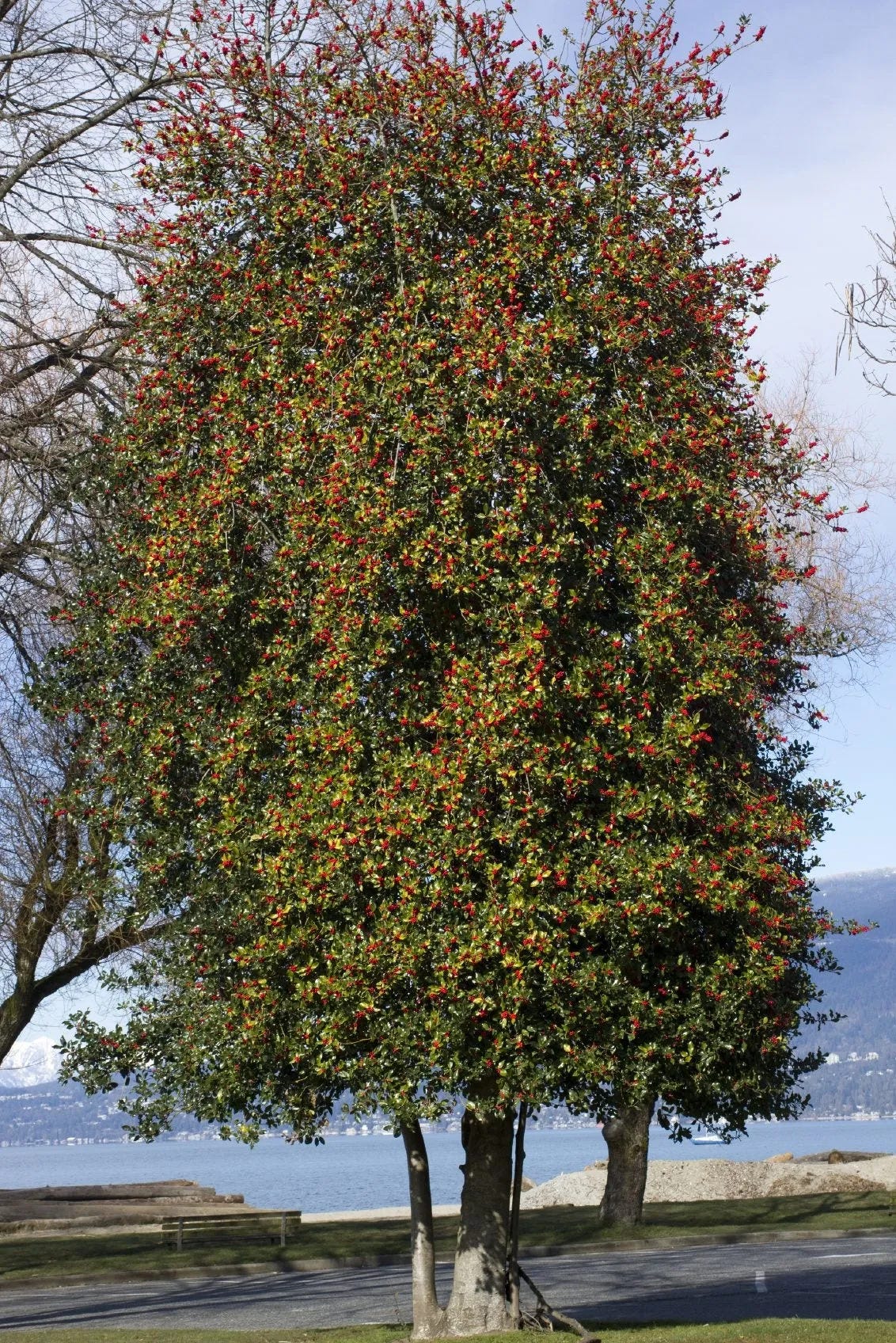
There’s one tree that I’ve been noticing this winter, that’s standing out when everything else has lost the leaves. It’s an evergreen, with spiky leaves, and a cone-shape. It’s a pretty tree, and I’ve been noticing it everywhere now, it’s common in the neighborhood. Once you start to spot something, you see it everywhere. Our duplex neighbor has one in the yard, right in the back (I can see it from my bedroom window) and I finally tried to ID it, and I think I’ve got it. American holly, Ilex opaca. What an awesome tree. It’s unique as an evergreen tree that doesn’t have needles, at least around here.

American holly
American holly

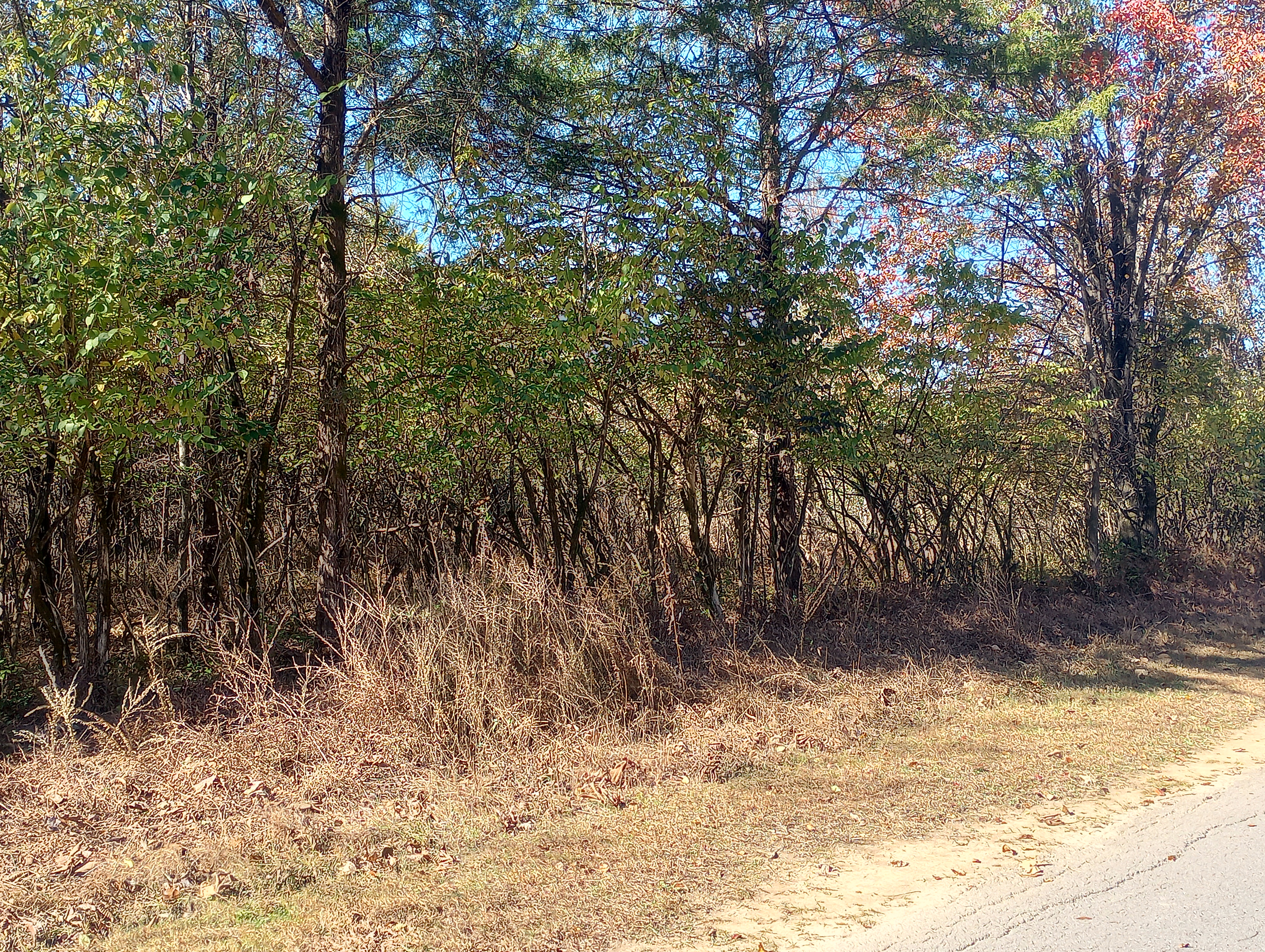
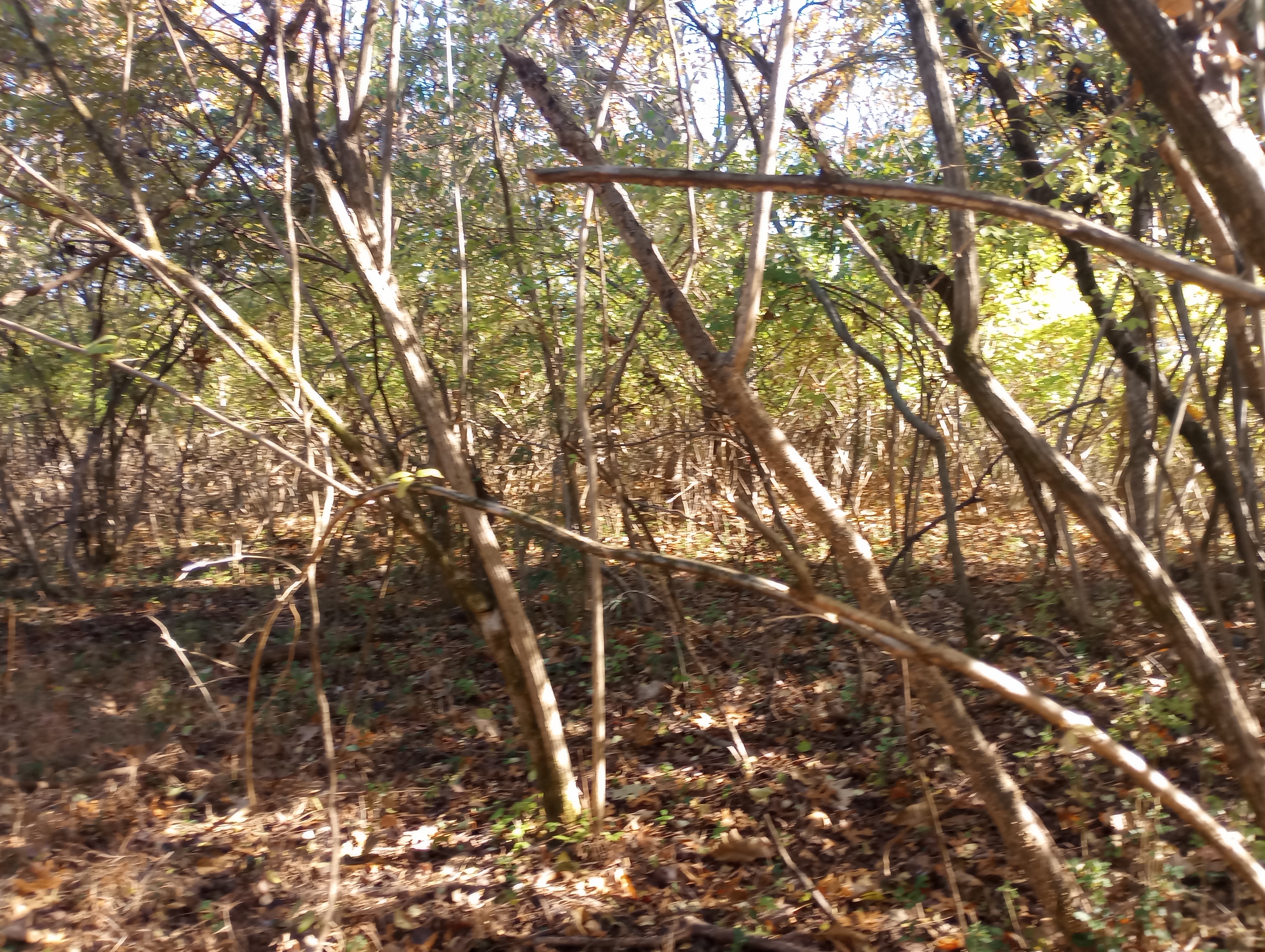
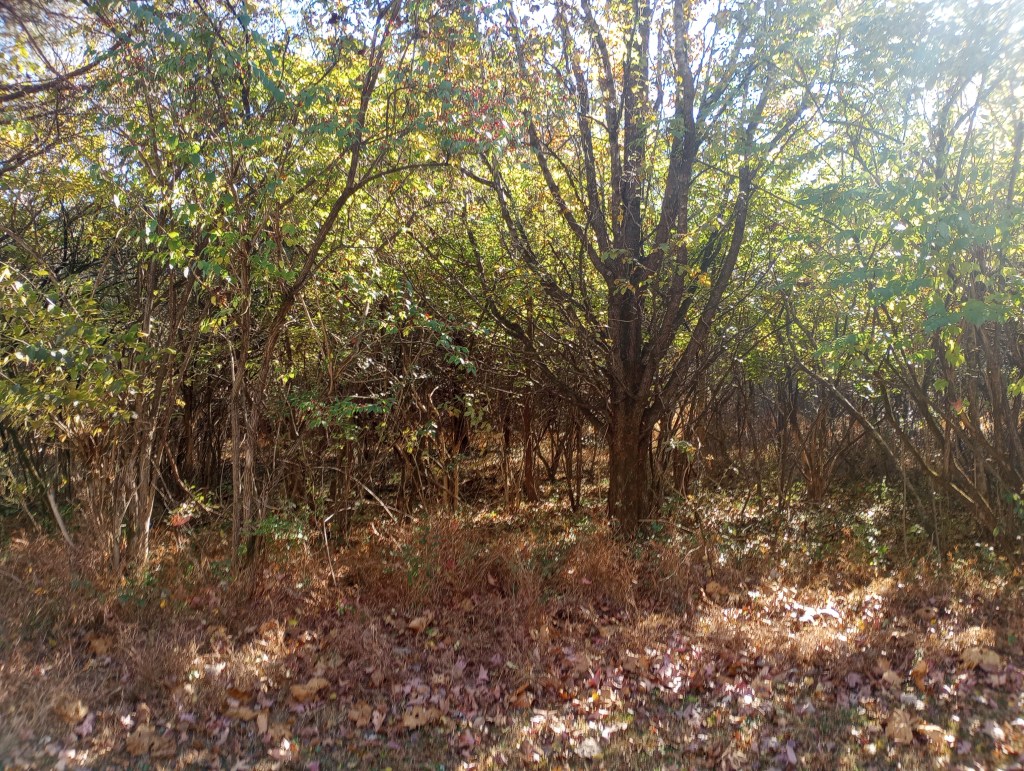
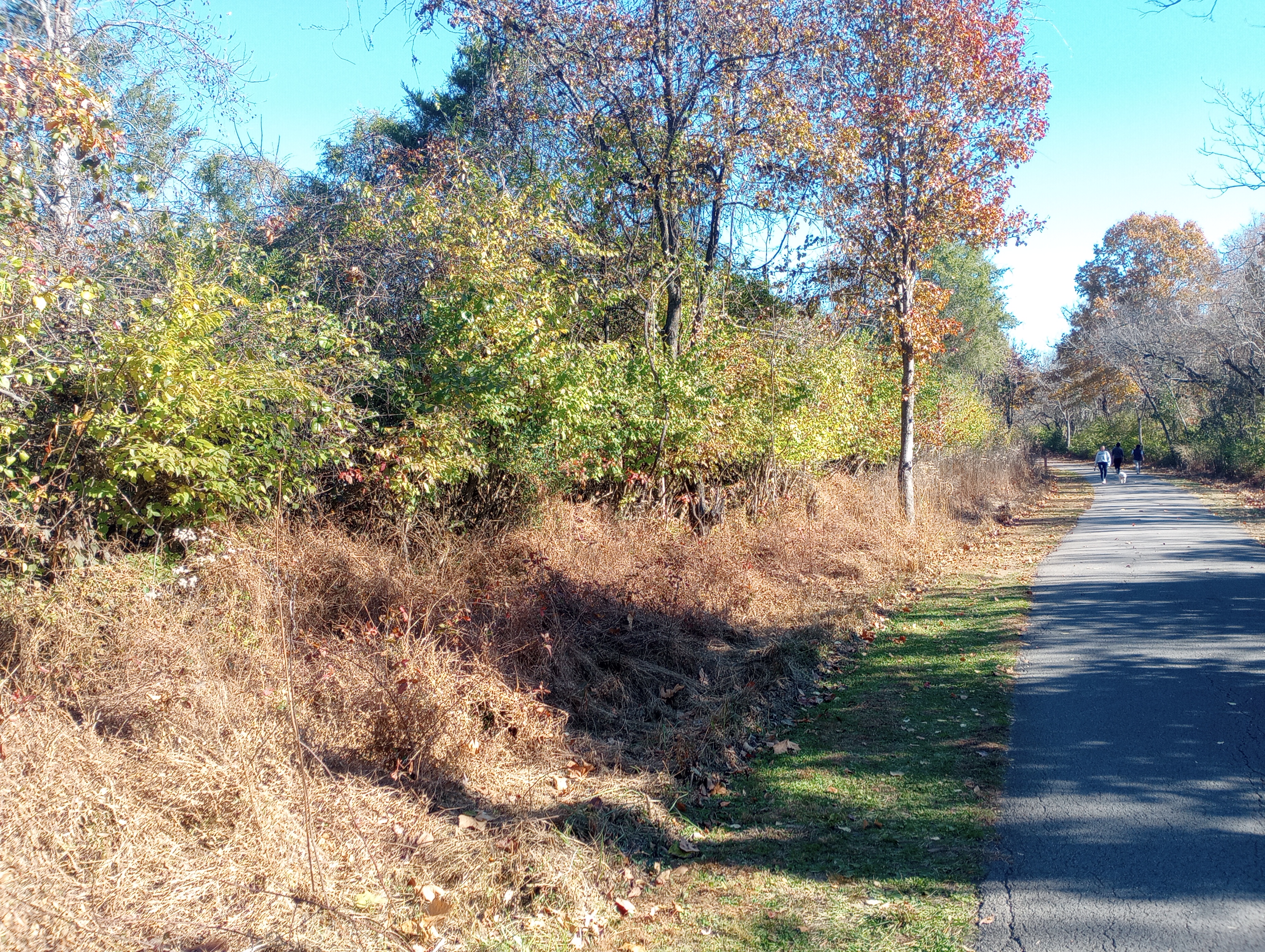
The bush honeysuckle is the first woody plant to really start its growth. It is ahead of the curve, and has been sending forth fresh green leaves for probably two weeks now, when most other woody plants are still dormant. It’s ahead of the game, ahead of the curve. A terrible, horrible invasive. Along the highway, driving back from my Master Gardener class, I saw it—just a long stretch, a wall of bush honeysuckle, exclusively, growing, expanding out of the rock. A nightmare sight.

Along the highways, in the neighborhoods, at the park, massive groves, long walls, all bush honeysuckle. And then, it seems that about one in five trees in the neighborhood is infected with either wintercreeper or English ivy. Some of them are smothered with both (like the trees in our yard). These invasive vines really stand out right now because of most things being dormant. The dark green is striking. You can clearly see the extent of their spread.

Stormwater Management (Rain Garden!)

I have started the Tennessee Extension Master Gardener program. Somehow, they let me, mainly based off of my pure passion, love and desire. Not via my experience. But I’ll tell you what – my brain wants to know every little bit of this information, and finds it fascinating. I am just eating it all up. Who knew? This obsession continues.

They are wonderful people. I feel like, we all feel like, (37 of us), we are in a room full of people who want to talk exhaustively about the same things that we want to talk about. This is an amazing thing, when someone, rather than hitting a limit, is even one-upping you in what they know and how much they can talk about the thing. The thing being, a white strain of cosmos, using peppers as a natural barrier to keep critters out of the garden, growing a pineapple plant, methods of composting, etc. etc. etc.

Our most recent lesson has been about stewardship, which is a term that is mostly interchangeable with sustainability, and specifically, all about water. I’m just going to share a little bit of what I learned here, because I have thought it was very interesting.


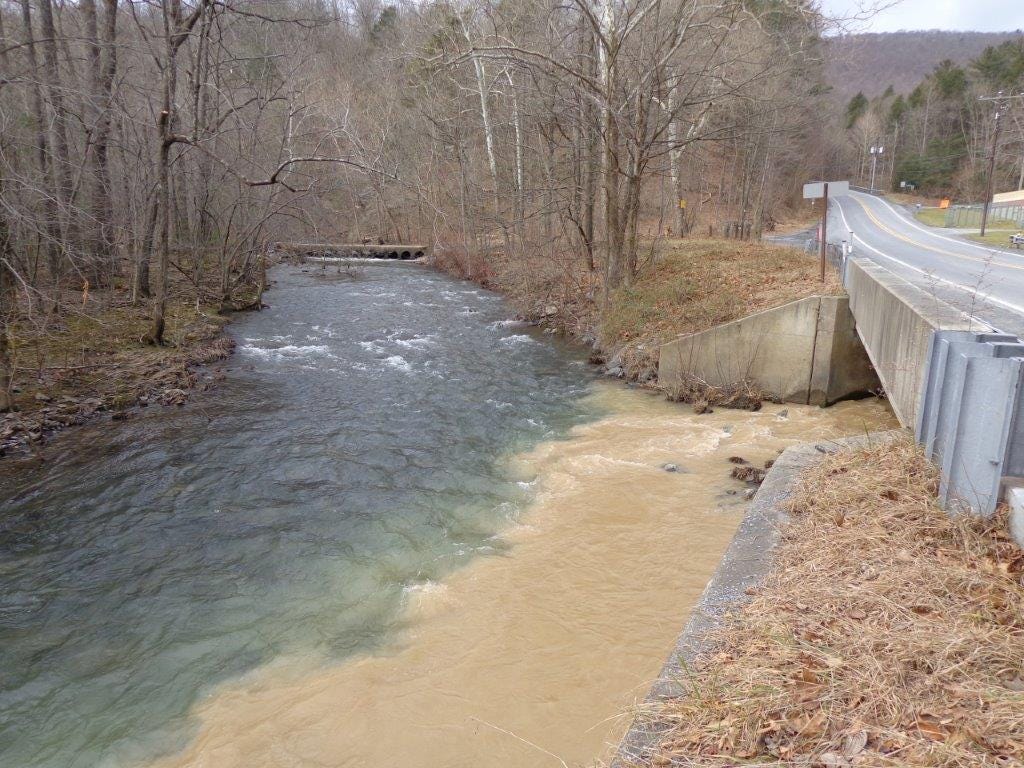
The number one source of pollution in our waterways (in TN, at least), is sediment. It’s just dirt. Isn’t that surprising? It mainly comes from human development that results in bare dirt exposure and erosion. Removing trees, or creating impermeable surfaces that rapidly funnel water into the watersheds (creeks, streams, rivers, lakes). This leads to large amounts of sediment ending up in the water, and this is bad for a number of reasons, such as darkening the water, which can cause issues for the fish and result in higher temperatures in the water, and more heavy metals/chemicals in the water, as these better stick to sediment particles.

The below photo is clearly showing the effects of sediment pollution. (The brown in the water is sediment.) This is happening on a large scale and is the #1 source of watershed pollution.

Erosion and Sediment Pollution | Wayne County, PA
Example of sediment pollution of waterways

90% of watershed pollution comes from nonpoint sources, meaning, no specific pollution source. Pollution that is accumulated from all over and ends up in the creek or river, as opposed to being directly dumped into the waterway by a specific pipe or factory. Pollution that comes from our yards, from construction sites, from parking lots, would all be pollution from non-point sources.

The second largest source of pollution, almost as much as sediment, is pathogens. That is, for example, E. coli. The Lower Cumberland (Cheatham Reservior), that is our largest watershed (the river that runs through Nashville), is considered impaired because the E. coli levels are too high. (It is also considered impaired because of high levels of PCBs, a highly toxic, durable, man-made chemical, accumulated in fish tissues.)

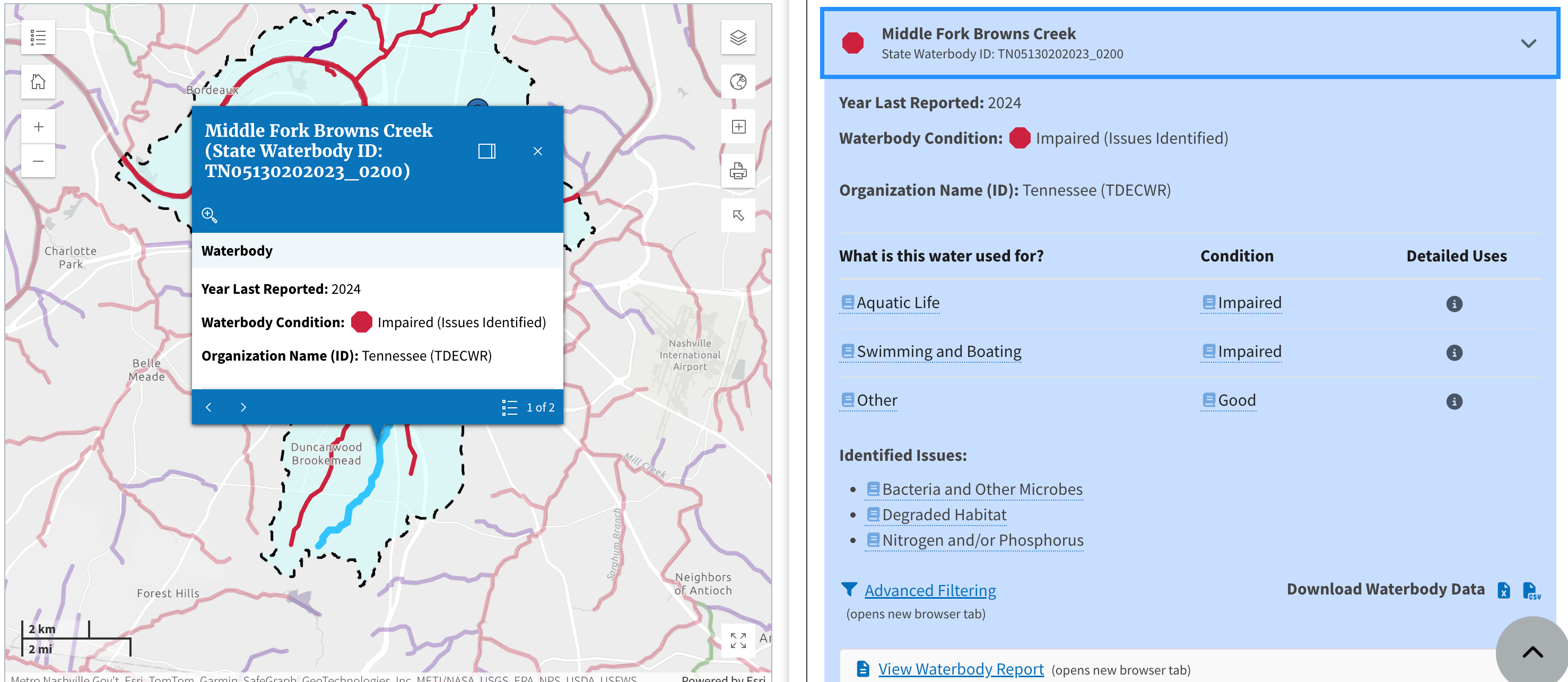
The below image is from an EPA website that tracks the health of watersheds: https://mywaterway.epa.gov/ (You can use this to see what your nearest watersheds are, and what their conditions are.)

An impaired watershed is a body of water that does not meet established state water quality standards and fails to support designated use. And there are about 4,000 miles of impaired streams and rivers in Tennessee.

The Middle Fork of Browns Creek, a large creek that runs off of the Cumberland River, is impaired for a similar reason, having high levels of pathogens, but is also considered impaired because the habitat is too degraded (due to human development activies), and because the levels of nitrogen and/or phosphorus are too high (due to fertilizer runoff).

One of the “possible sources” of E. coli pollution for the Cheatham Reservoir is “Combined Sewer Overflows”. That would be from the amount of water flowing through the system overloading the system, and so resulting in overflow. And this is common, and happening because human development is generally not accounting enough for managing and slowing the flow of water to the watersheds. Impermeable surfaces (concrete, asphalt) are major drivers of this, but a house would be contributing as well, by funneling all the water off of the roof and into the stormwater system, as most buildings probably do.

Runoff also carries fertilizers, which are the third largest source of watershed pollution in the state of TN.

So what can we do to protect our waterways? There are many things.

  1. Plant buffer plants, to protect habitat along the shores of creeks and waterways. They will act as buffers, slowing water that flows into the creek as runoff, and protecting the bank from erosion, which contributes to sediment pollution in the water. (They also provide important habitat for wildlife).
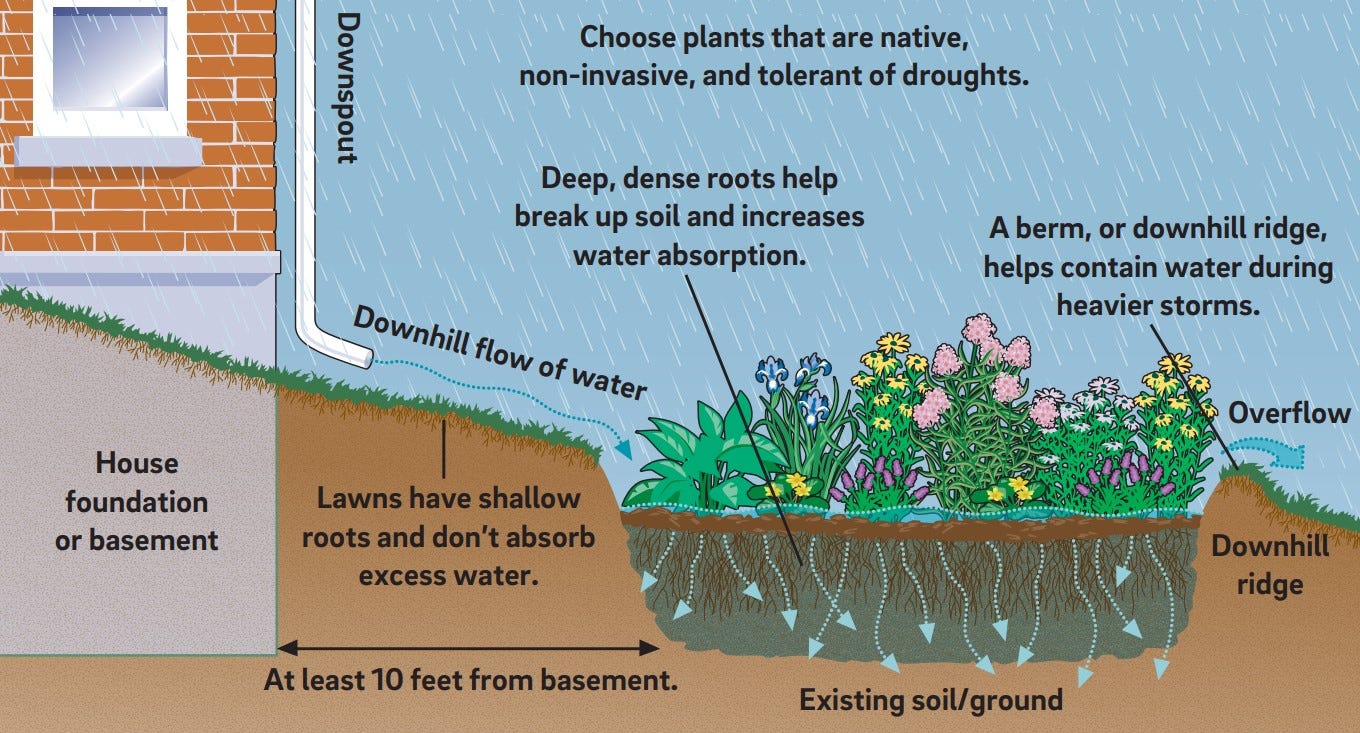
  2. Have a rain garden. Put plants that tolerate wet conditions in places where water accumulates. Source water (runoff from your roof, water from the downspouts, water running through the street curb) into a dedicated zone full of plants that can make use of that water, absorbing and filtering it.
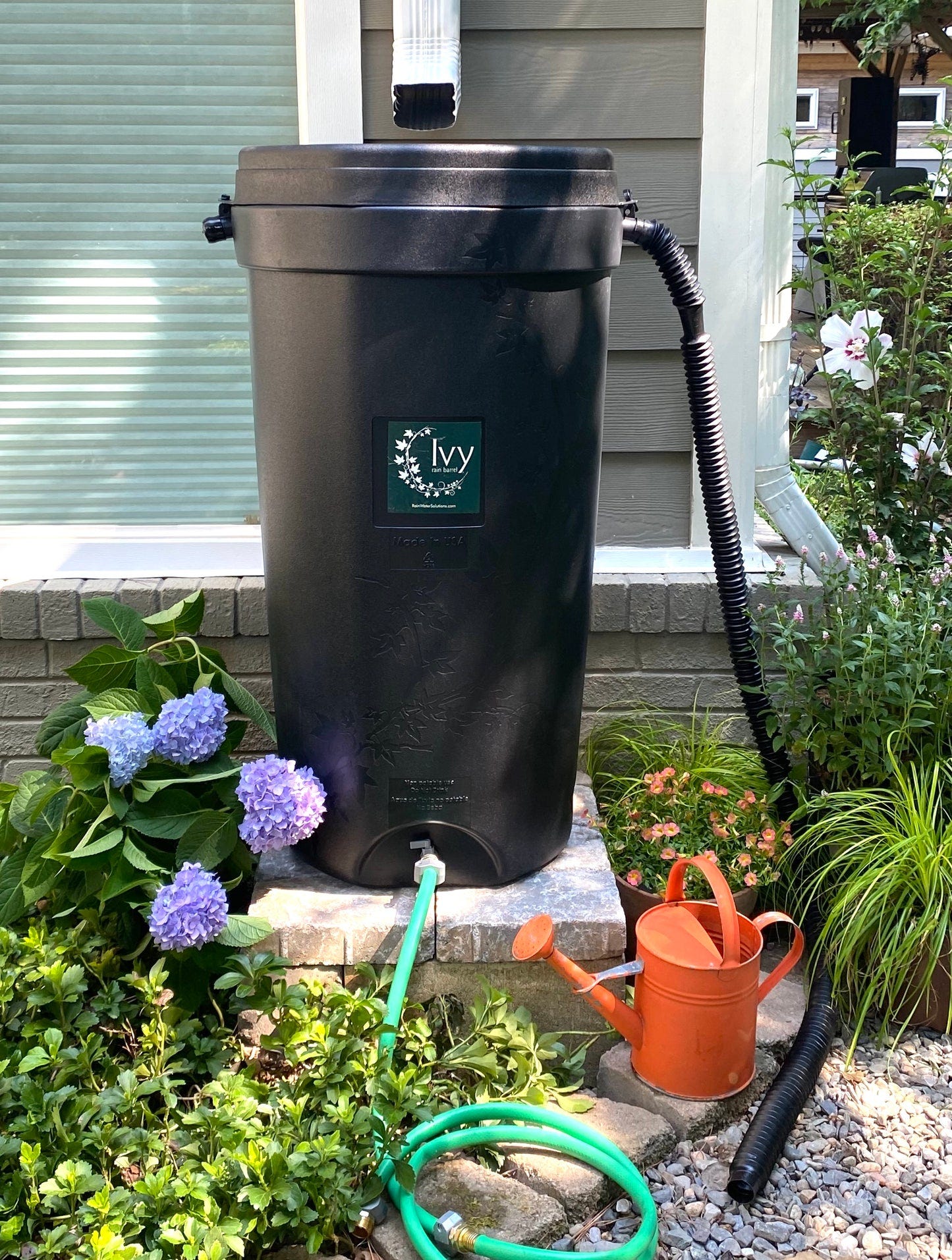
  3. Rain barrels. Capture rainwater instead of letting it flow as runoff, and then use it as a resource, for watering.
  4. Permeable surfaces. Gravel instead of concrete, etc.
  5. Protect bare soil. Bare soil easy washes away in rain and contributes to sediment pollution. Covering the soil with mulch (and/or plants) will increase absorption and greatly decrease sediment runoff.
  6. Use less fertilizer.

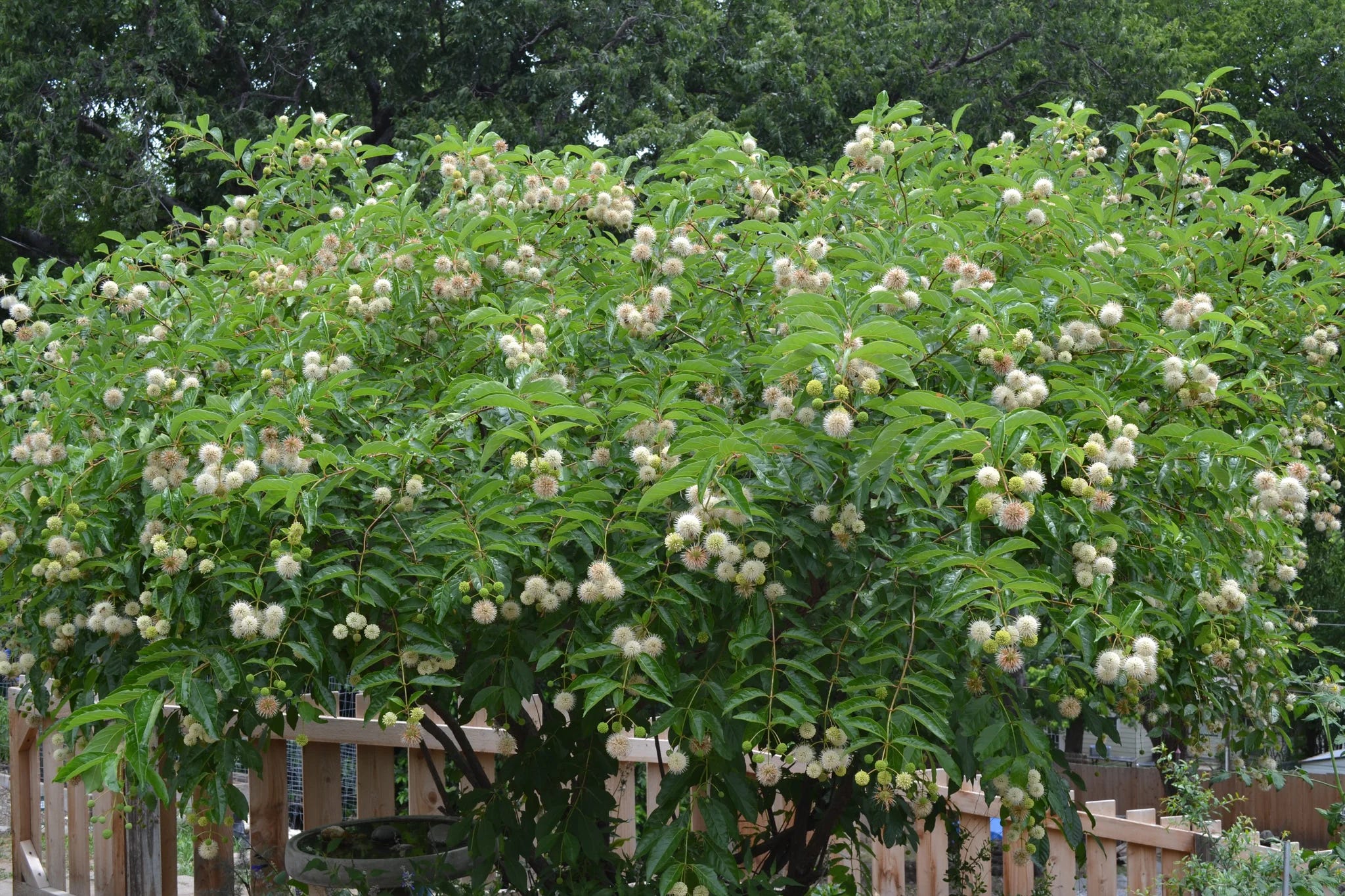
I have really wanted to plant a Buttonbush, and have been enamored with this plant since discovering it at Shelby Bottoms. I thought my yard wouldn’t be able to tolerate one (or at least, it wouldn’t thrive), because we currently don’t have wetland conditions. But it seems that all you need to do to make a rain garden, and create some wet conditions, where the soil stays wetter for longer, is to dig a small depression, and source your runoff into this area (say, from your downspouts). That is your rain garden. And so, by channeling the water into a dedicated place where it can be stored, you can plant plants there that thrive in these conditions. It seems that this is the concept, and I am very interested in trying to create a rain garden, for one, to capture to the stormwater and decrease the load on the water systems, but two, because it will mean I could plant some plants that otherwise I couldn’t have in the yard.

Buttonbush – iconic TN native!!!
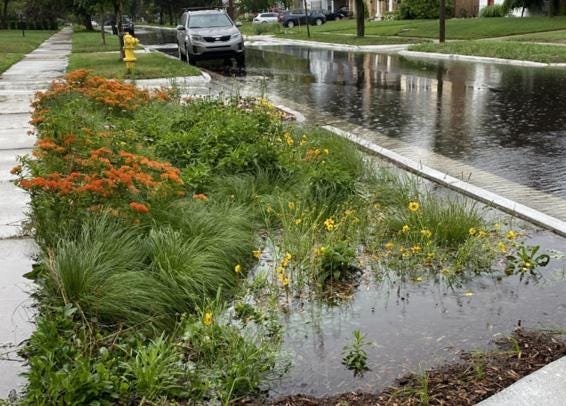
A rain garden – designed to hold runoff water
Rain Gardens – Green Stormwater Infrastructure
Rain garden

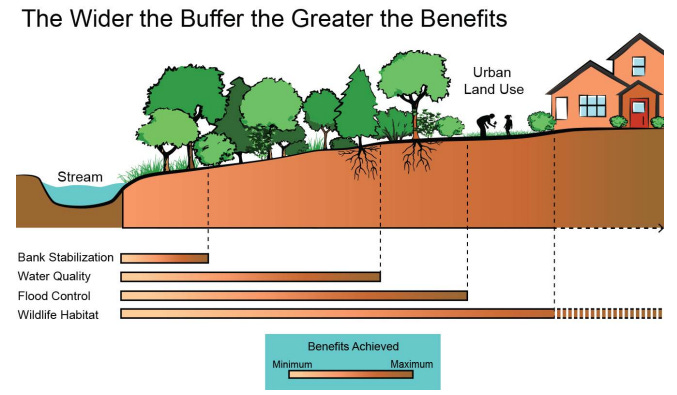
The below image is demonstrating the value of a buffer, between a stream/watershed and urban land use. It will help with erosion control, flood control, improve water quality, and of course, will be good for wildlife. As our expert stormwater management scientist said in the lecture, “any amount of buffer is better than no buffer.”
Plant buffer to protect waterway
City of Chattanooga
A rain barrel, to capture runoff water

Fall 2025: Shelby Park Ecology Report With Lots Of Photos

First of all, I have to tell you this.

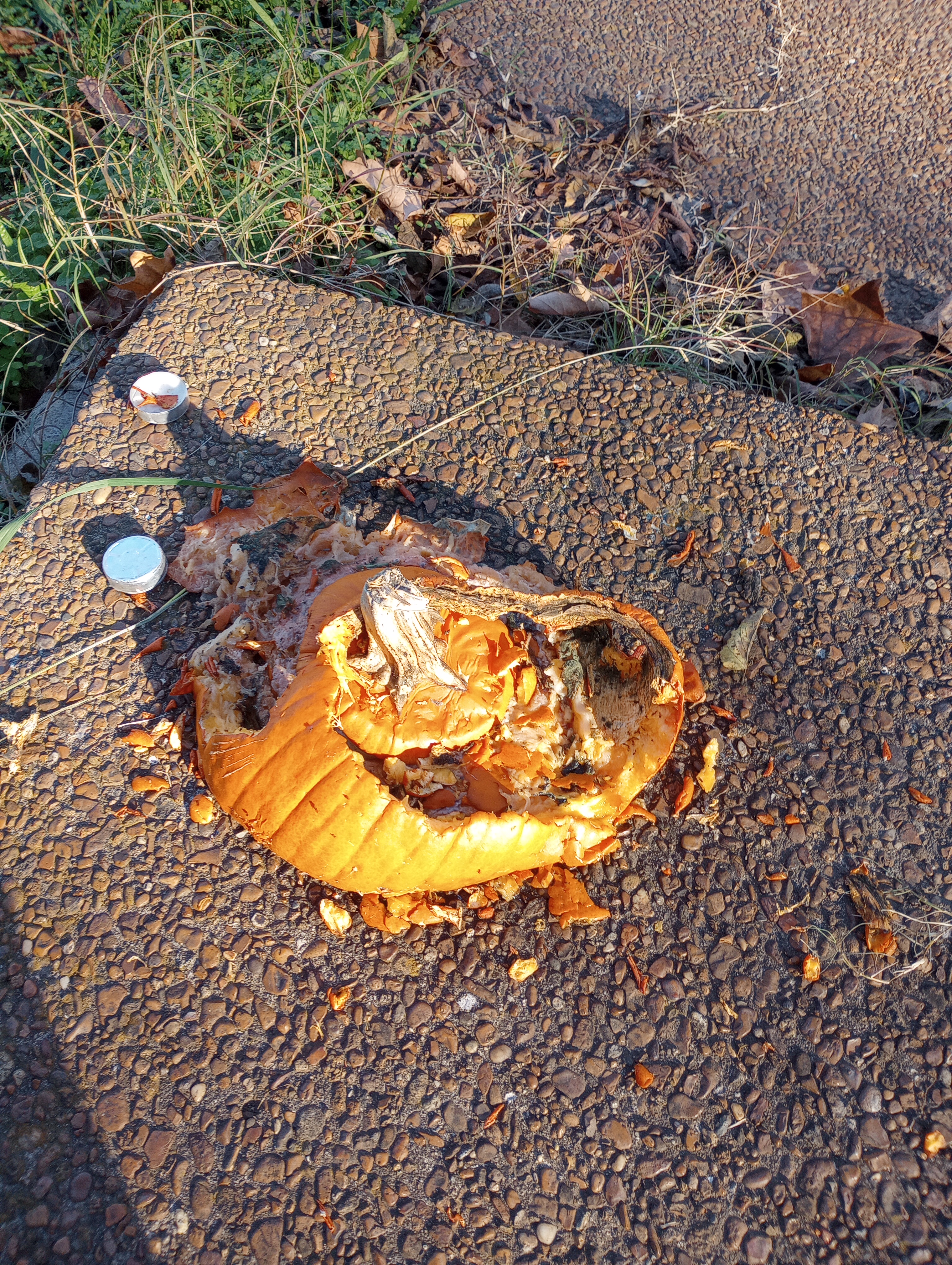
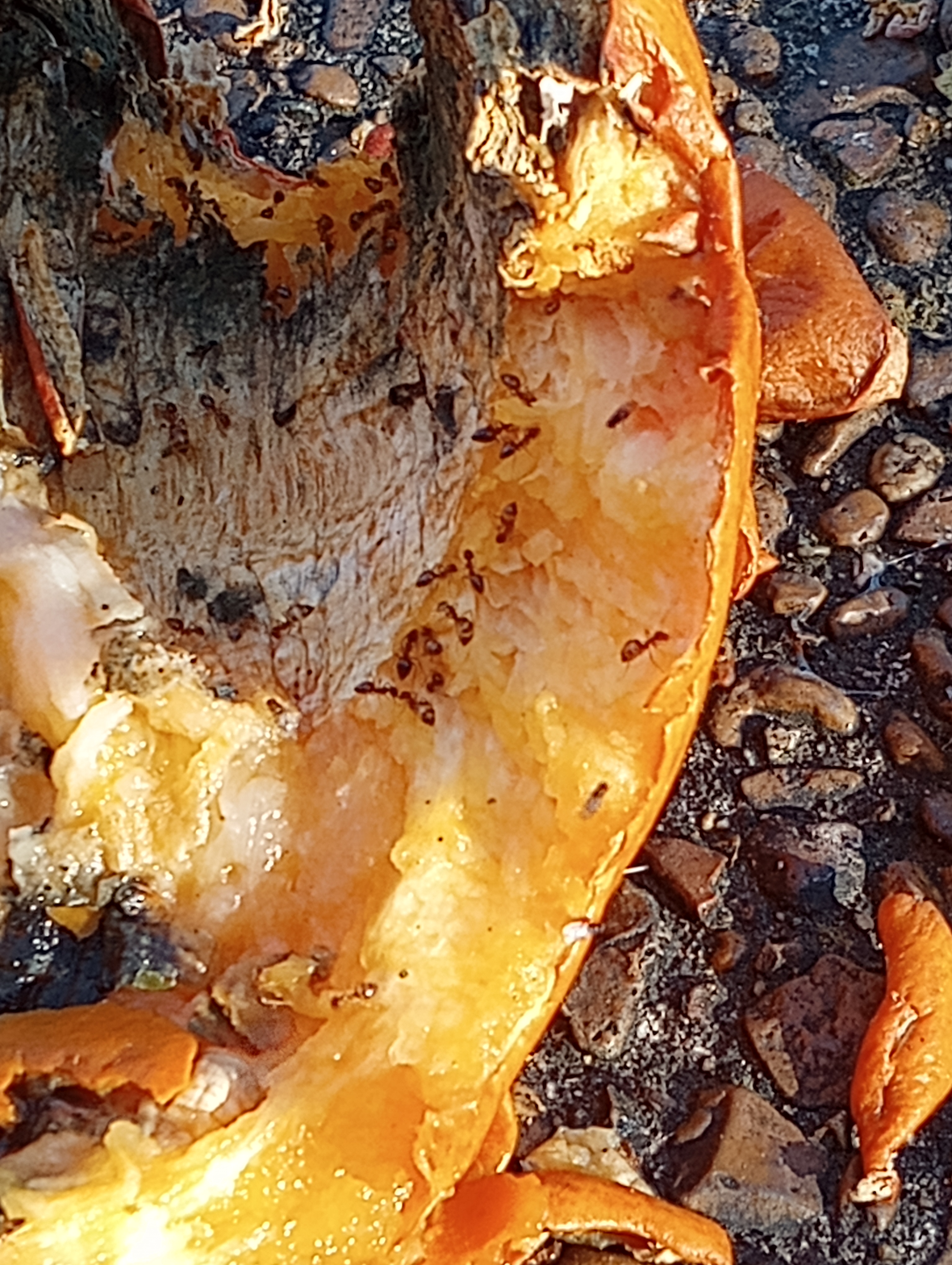
There’s a pumpkin left over from Halloween that has been decomposing on my concrete runaway. It’s amazing to watch the rate of decomposition daily. There are many forces at work, many organisms that are taking advantage of the wonderful bounty of resources that this enormous pumpkin provides. The ants are here in droves, but there are flies, beetles, probably squirrels, who knows what else, working hard to consume this pumpkin.

I was watching the ants feast on it, and the thought struck me that they are inside of the most enormous food house ever. It would be like if my entire house were edible, and I were sitting inside of it and eating it, and hanging out. That’s what they’ve got, with this pumpkin. That’s pretty amazing when you think about it.

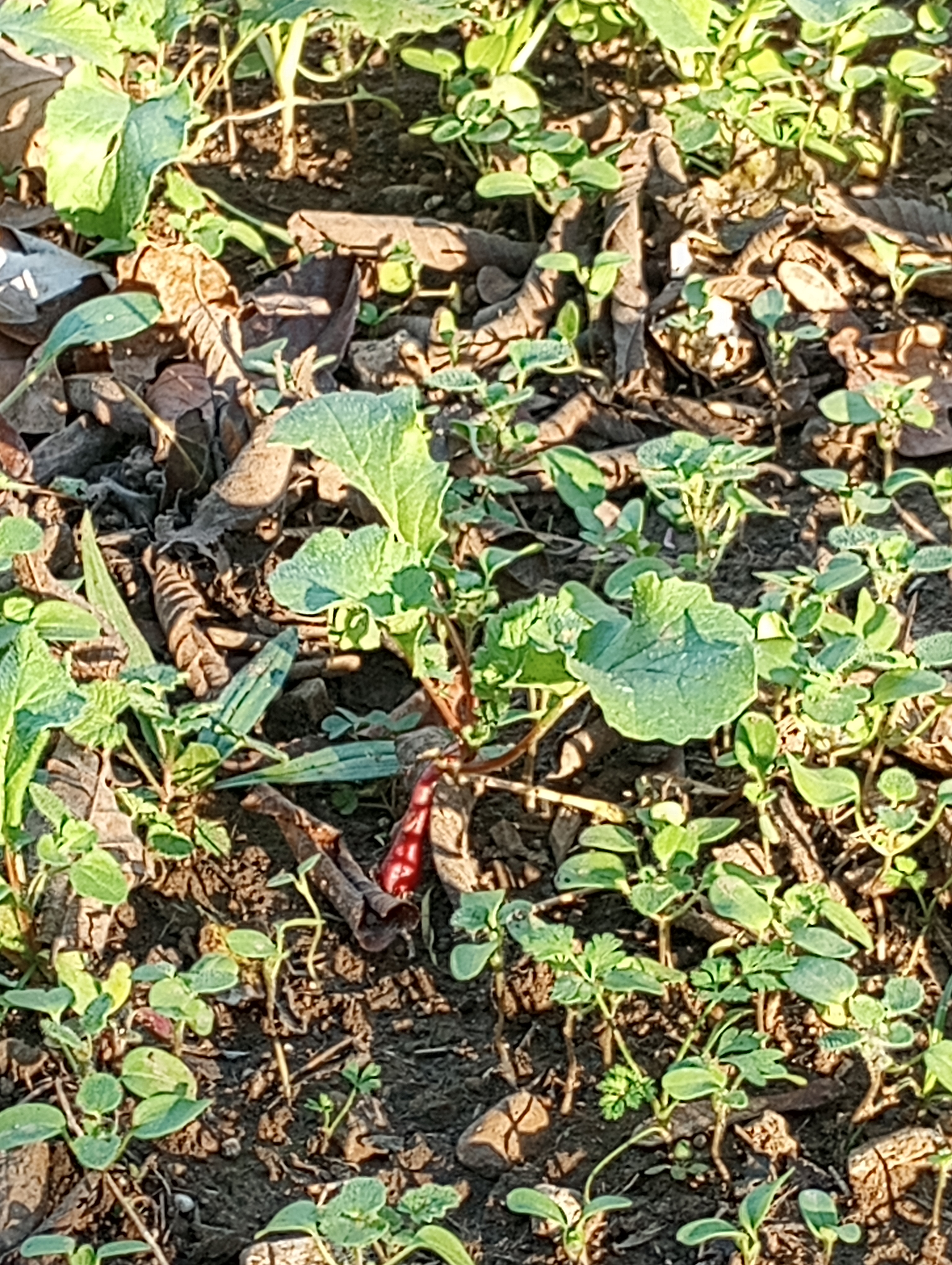
You also need to know that three days ago I ate the first ever vegetable that I have grown myself, which was some of this bok choy. Today I ate the second ever vegetable I grew myself, which was the radish. Neither of these vegetables, none of the bok choy or radish are that impressive. I looked of photos of bok choy plants, and mine look like nothing compared to what I see on the internet. My radishes are not even spherical, they are just semi-thick stems of red. Well, I never watered them, they may not have gotten as much sunlight as they needed, and who knows about the conditions of the soil, but I’ll tell ya what. They sure do taste good.

Wintercreeper

Hideous mass of wintercreeper
Showing the size, engulfing the entire tree

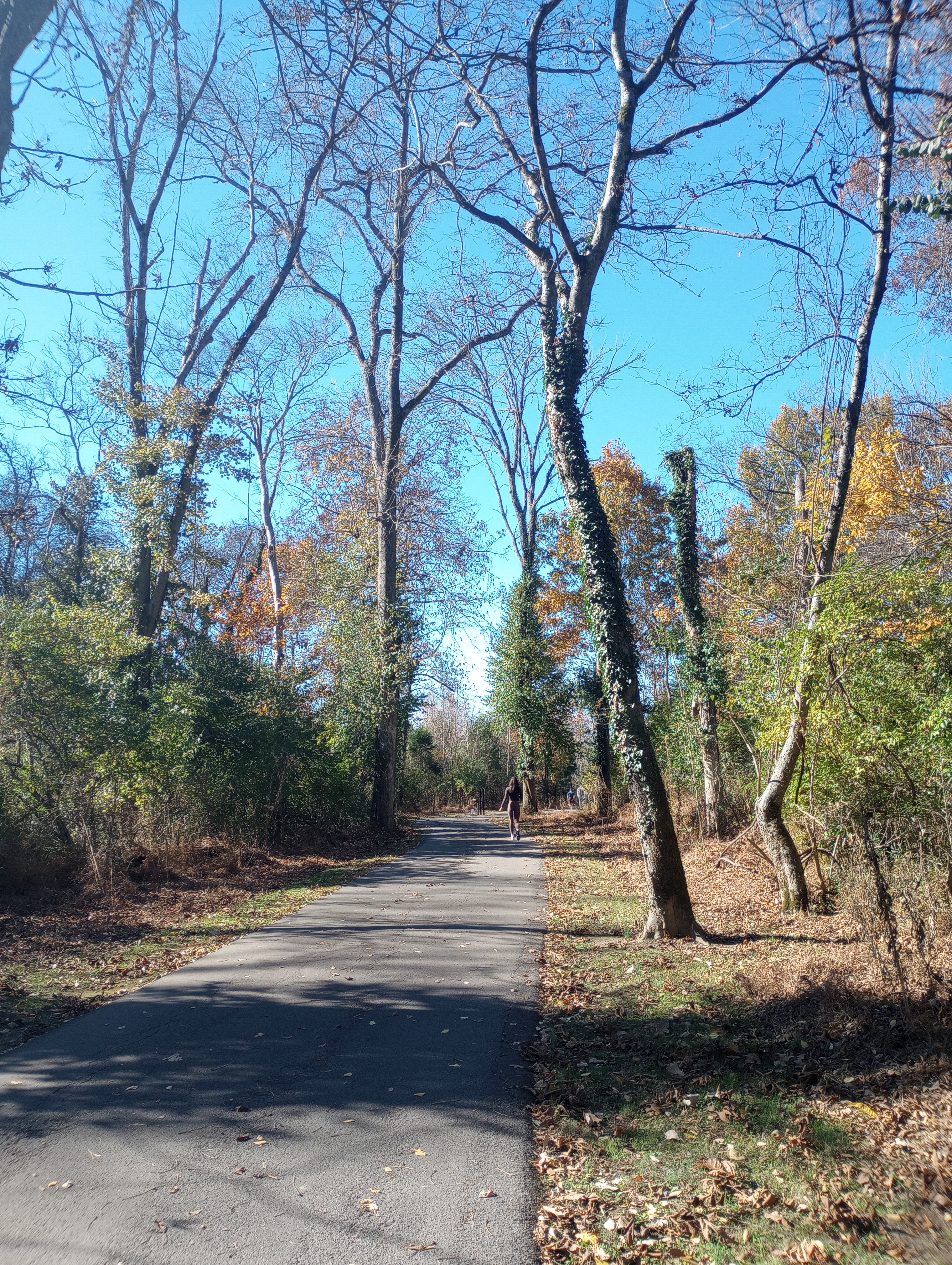
Unfortunately friends, the wintercreeper is everywhere. This is a terrible nightmare. I couldn’t stop myself from photographing so many instances of it. In the gallery below, every photo contains wintercreeper vines. So many trees plagued by these insidious vines. The wintercreeper is out of control, but so are many of the invasives. Bush honeysuckle and privet, you will see. In the below photo, it is so clear what these invasives are doing to the forest. You see that everything else in this photo is brown, has lost its leaves, but not the winter creeper. No, the wintercreeper stays green, as so many of these invasives do, and so right now, they are so obvious. And they really are ruining the nice fall aesthetic that we would otherwise have here.

I took about 20 photos. I could have taken a hundred. These are fine examples. They

Wintercreeper ruining the vibes
How many invasives can you spot here? Wintercreeper, bush honeysuckle, English ivy all present in this photo
This dark green wave in center is all wintercreeper, huge mass
Wintercreeper fruiting with berries
Wintercreeper climbing this nice birch tree
This tree is totally smothered in wintercreeper
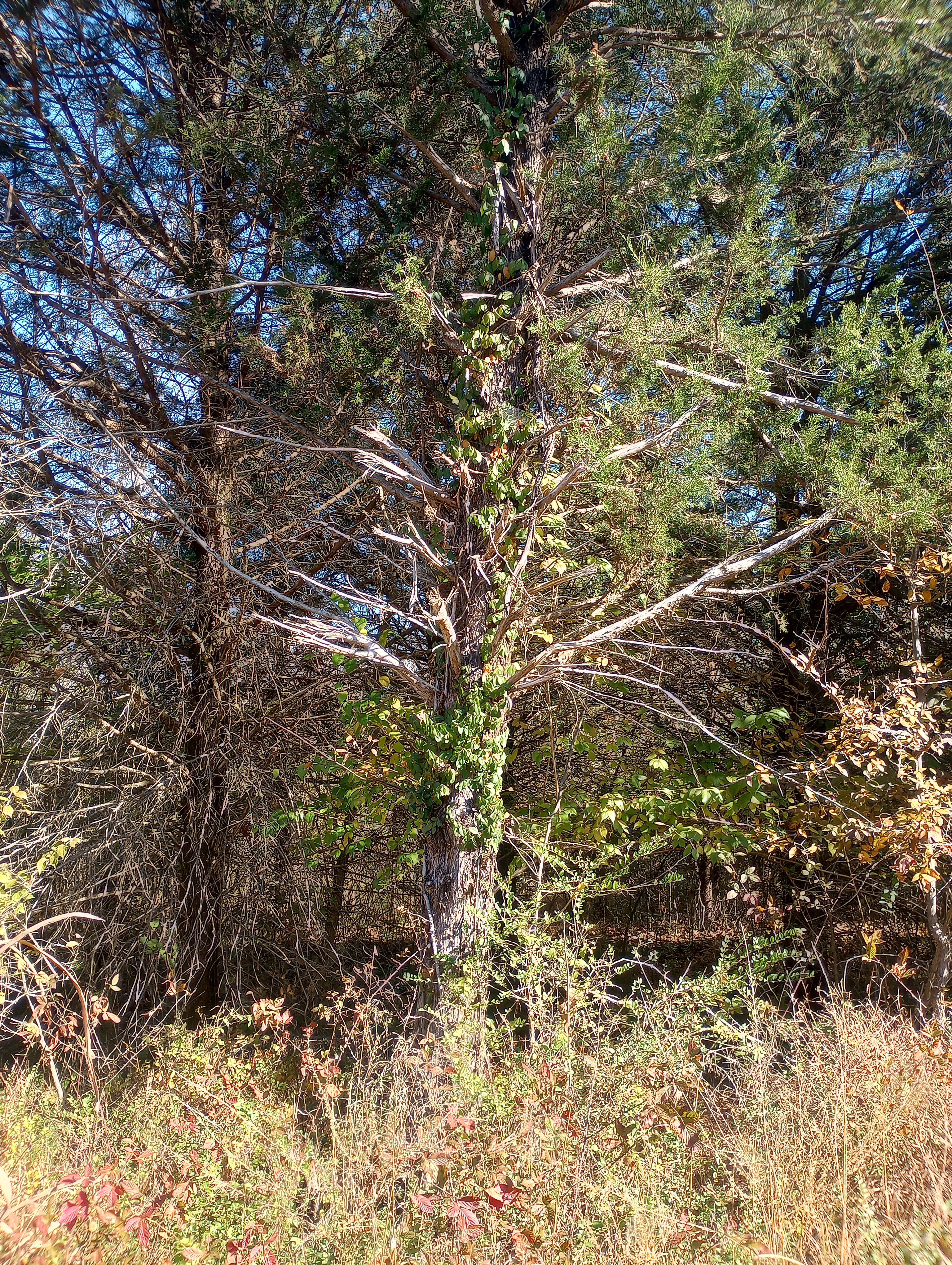
Wintercreeper climbing this evergreen tree

English Ivy

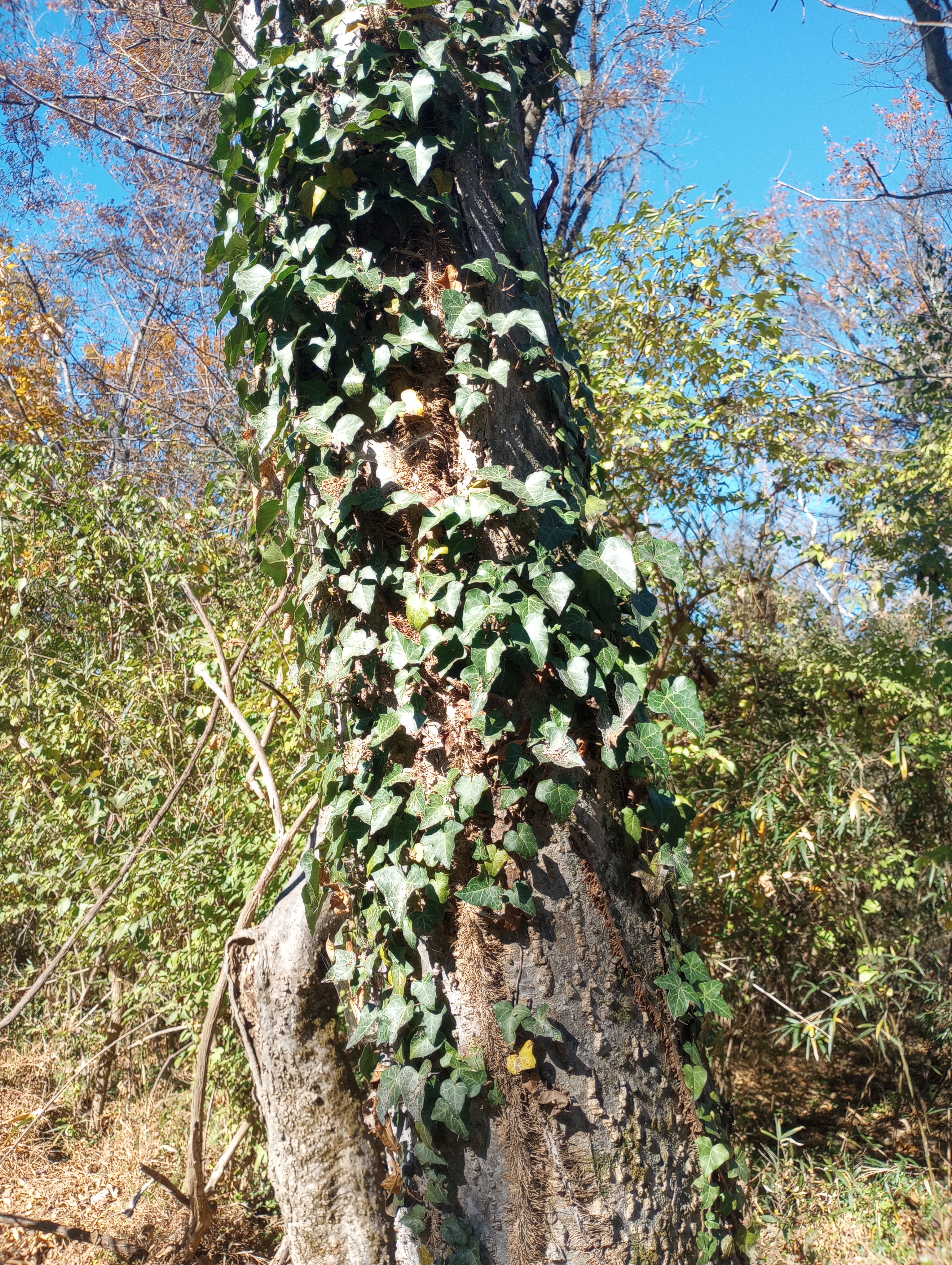
As you may know, Wintercreeper is not the only invasive vine that is causing problems. English ivy is another. Both of these escape cultivation and run loose in the wild, now. I saw plenty of it at Shelby.

English ivy on trunk
See the green on the trunk?
English ivy

Japanese honeysuckle

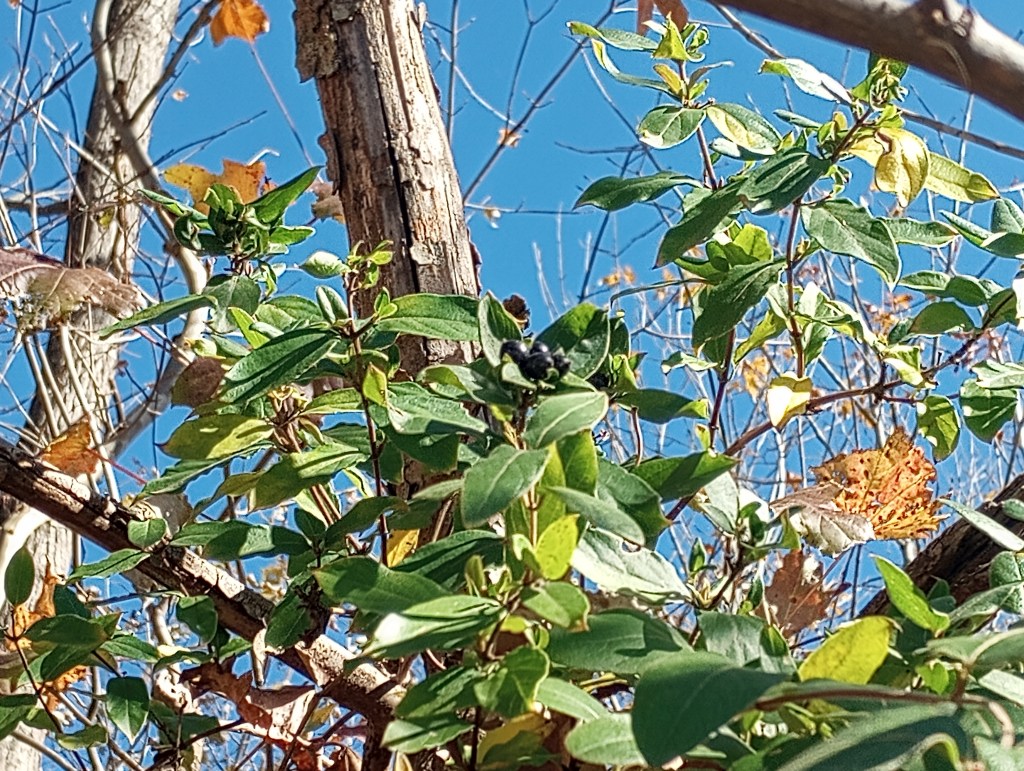
Another invasive vine, Japanese honeysuckle. I saw one that had fruits. I haven’t seen the fruit yet. Note that this is also totally, stark green, when the native plants are pretty much all losing their leaves, turning colors (except the evergreen trees).

Japanese honeysuckle in a tree
J. honeysuckle fruits

A Nightmare Image

This is a nightmare image

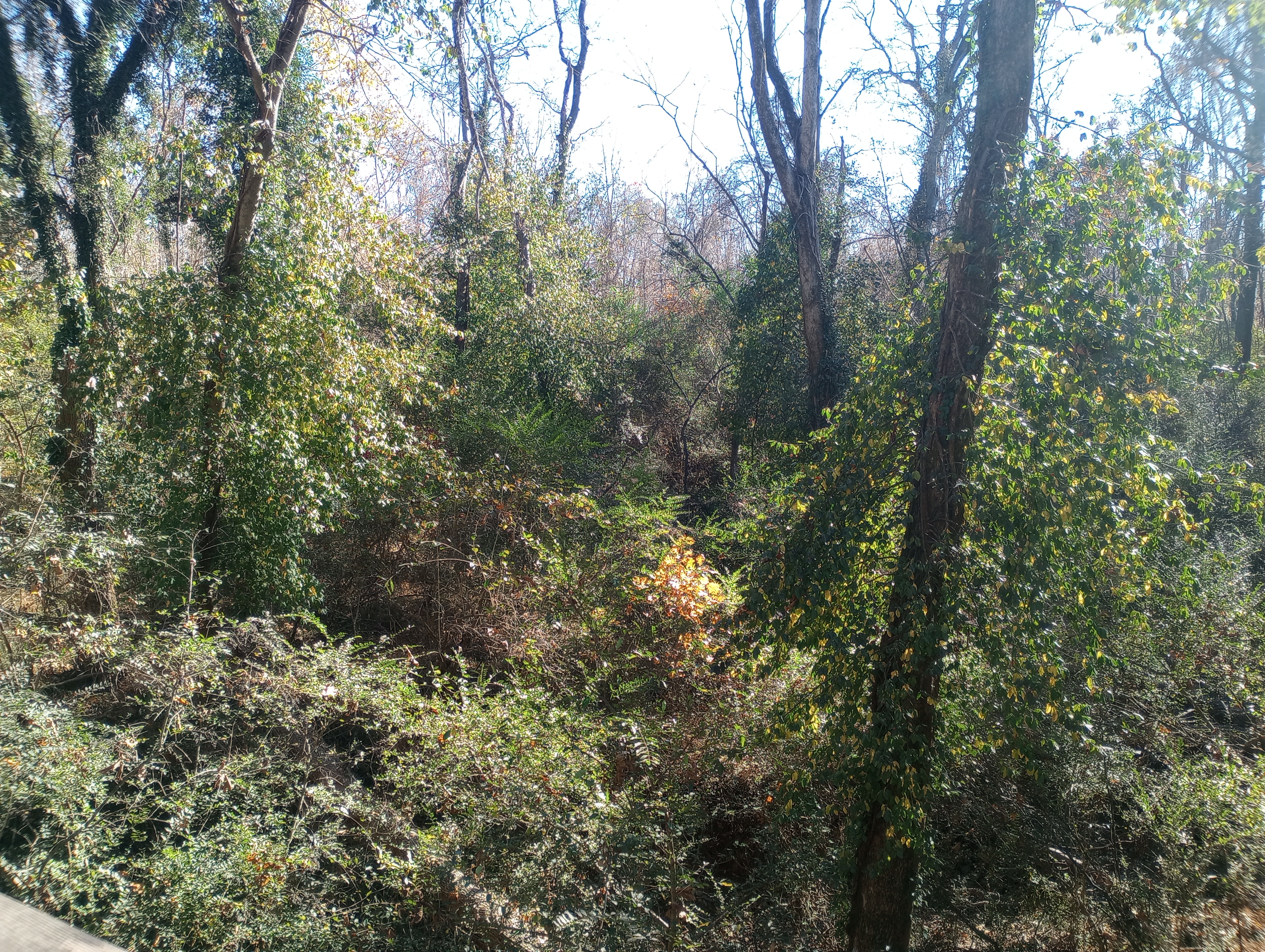
This is a nightmare image, of course. What do we see here? On the 16th of November. A green jungle mess. Why is it green? Why is it choked? Everything in this photo is invasive.

Can you ID the wintercreeper on the trees? On almost every tree trunk there is wintercreeper. On the one all the way to the left, English ivy. Down below, the forest floor is covered, choked with Chinese privet and Bush honeysuckle. And so, in the worst places, in a worst case scenario, this is what the park looks like.

Below is what it’s supposed to look like, right now. (Just pretend the green isn’t there because that’s wintercreeper.) If you see any green, it should be evergreen trees.

This is what it’s supposed to look like (except the green, imagine that’s not there (invasives))

Much of the park is in a bad state, and probably thousands of hours of manpower are needed, to deal with it all. The below photo is showing what is a common sight as you walk the trails, which are these groves of bush honeysuckle. There are simply massive groves of bush honeysuckle, hundreds and hundreds of stems, thousands of pounds of biomass.

Bush Honeysuckle / Chinese Privet

Bush honeysuckle grove
Bush honeysuckle grove (all of it)
Bush honeysuckle. So many
Thick grove of Bush honeysuckle
All of this green wall is bush honeysuckle or Chinese privet
Green wall of bush honeysuckle and Chinese privet

Right now, if you walk along the trail here in the above photo, you should be able to see the river from the trail. You would be able to, but you can only get a glimpse of it here and there, because there is a wall of thick invasive mess blocking your view. The space is filled with honeysuckle, privet, and wintercreeper.

All of this green is Chinese privet and bush honeysuckle

Below is a photo of the largest privet I saw on my walk today. Must be one of the largest in the park. They can become mid-sized trees.

Large Chinese privet in center

Privet will soon be dominating a new area of the forest. This part is currently clear, but right now the floor is covered with, entirely covered with young Chinese privets. Hundreds of them. In the below photo you can see. Anything green you see on the ground in this photo, all of those hints of green, all of those are young Chinese privets. All of them.

Field of young Chinese privet plants

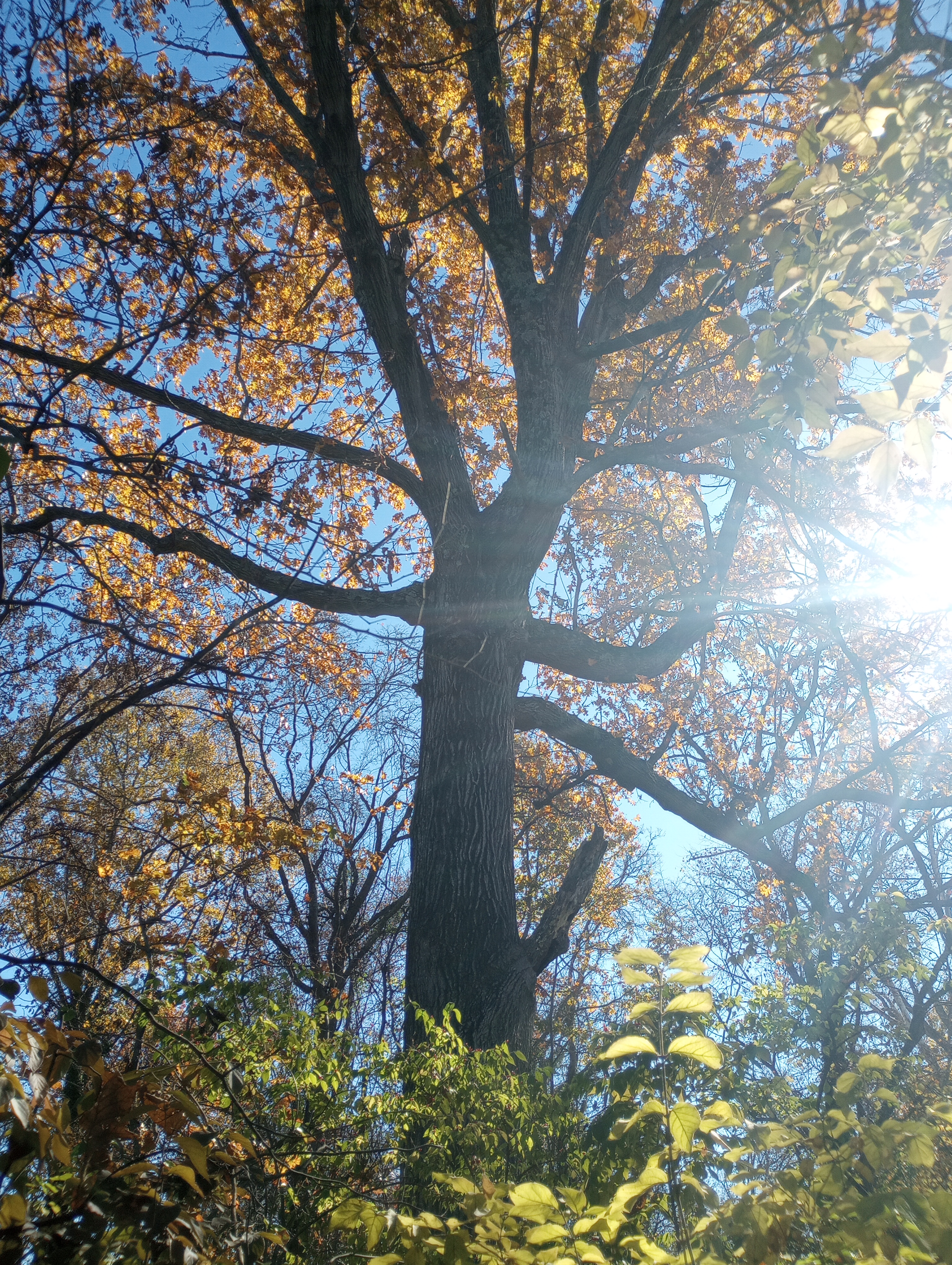
Northern Red Oak

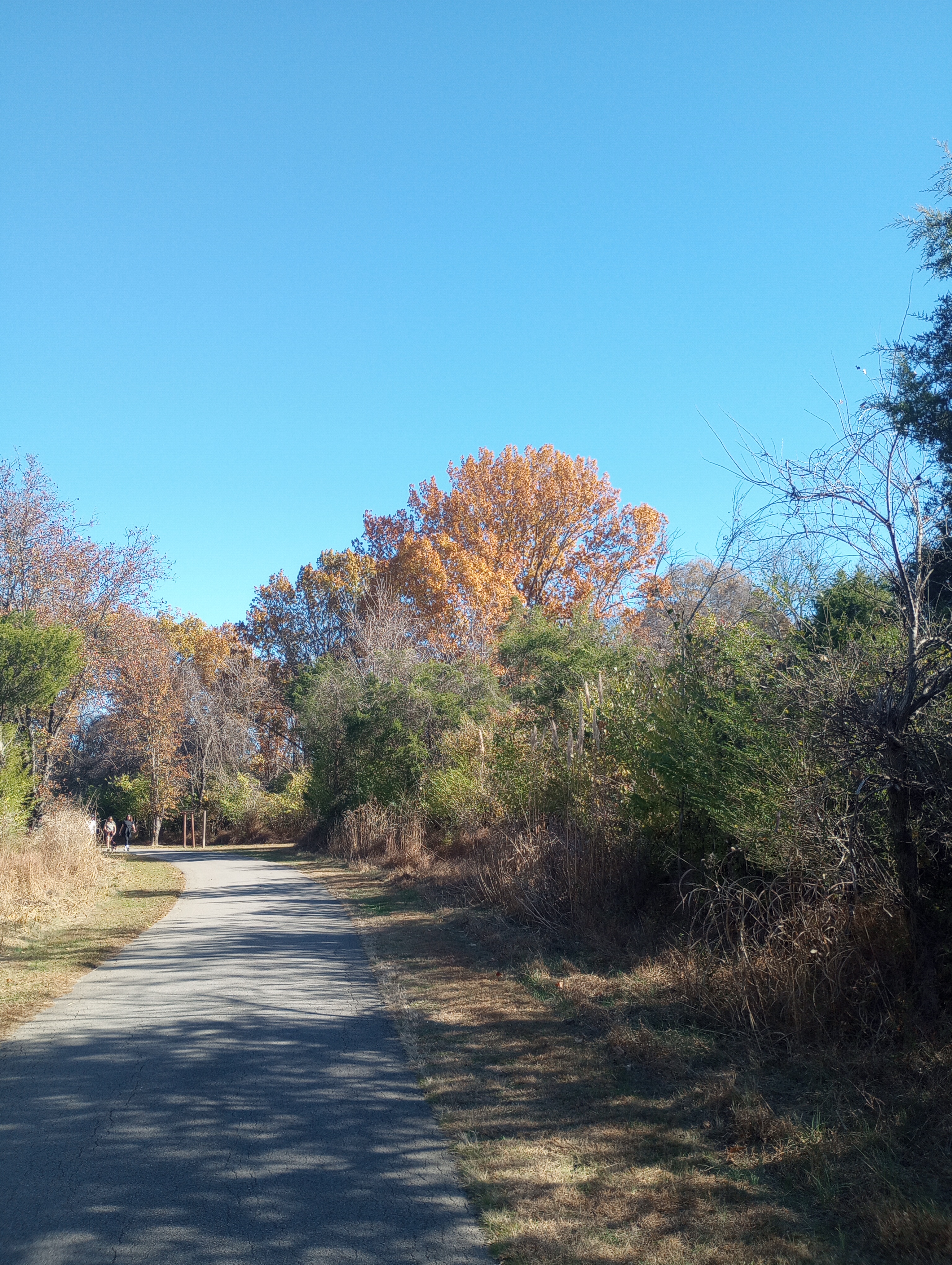
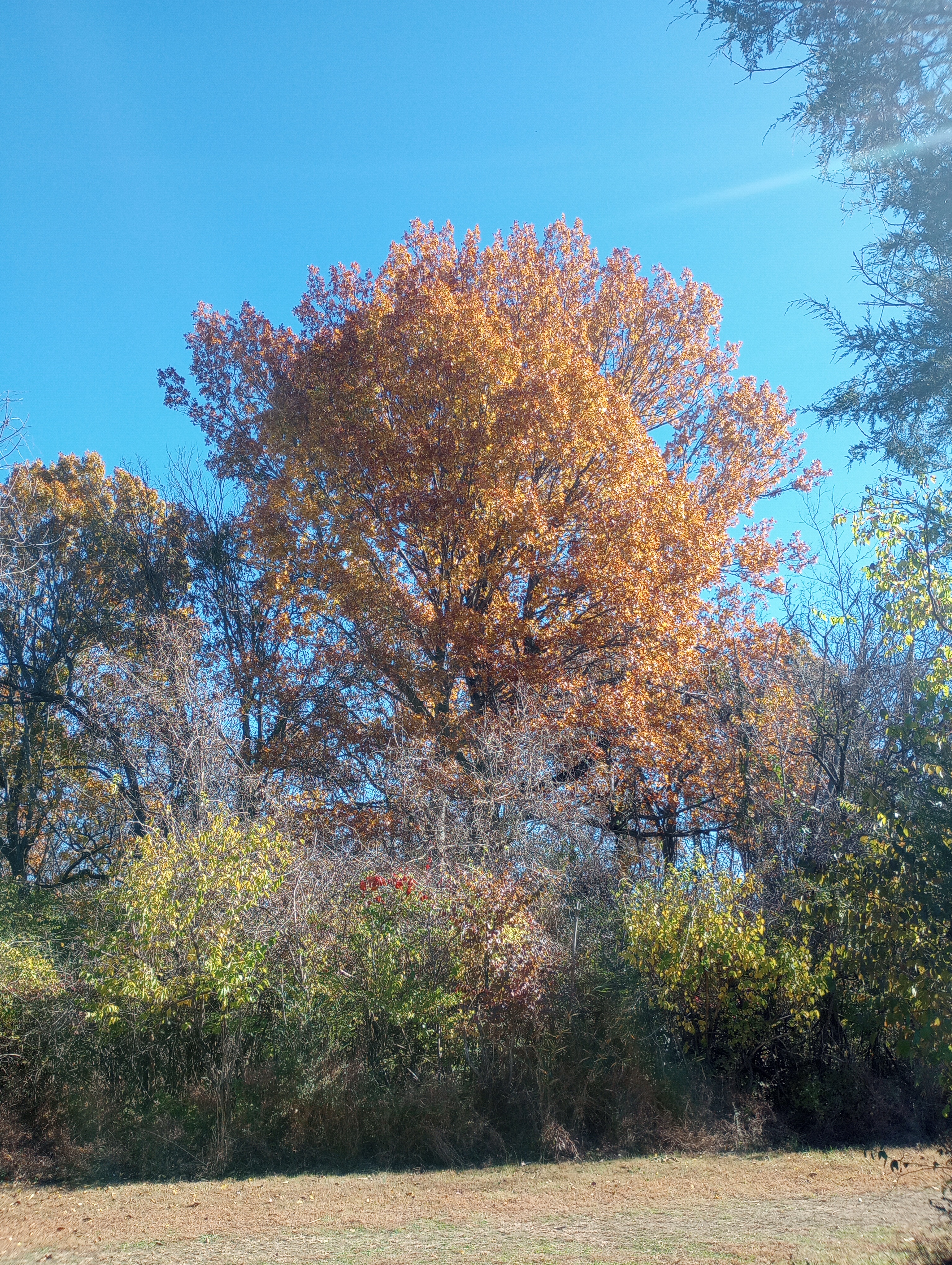
As I walked the trails, I was looking for things that were not invasive too. Especially right now, it’s a good time to appreciate the trees. The last invasive species pull I did with CD Paddock, she gave us a little of some of the largest and oldest trees in the park, and that has inspired me to look for some impressive trees myself, and appreciate the non-invasive plants even more. Especially, our native trees. So, I was walking along the path and I spied off in the distance, one particularly massive orange tree, as you can see in the photo below. I snapped this as soon as I saw it. And I decided to investigate.

What is this massive orange tree?
Getting closer…
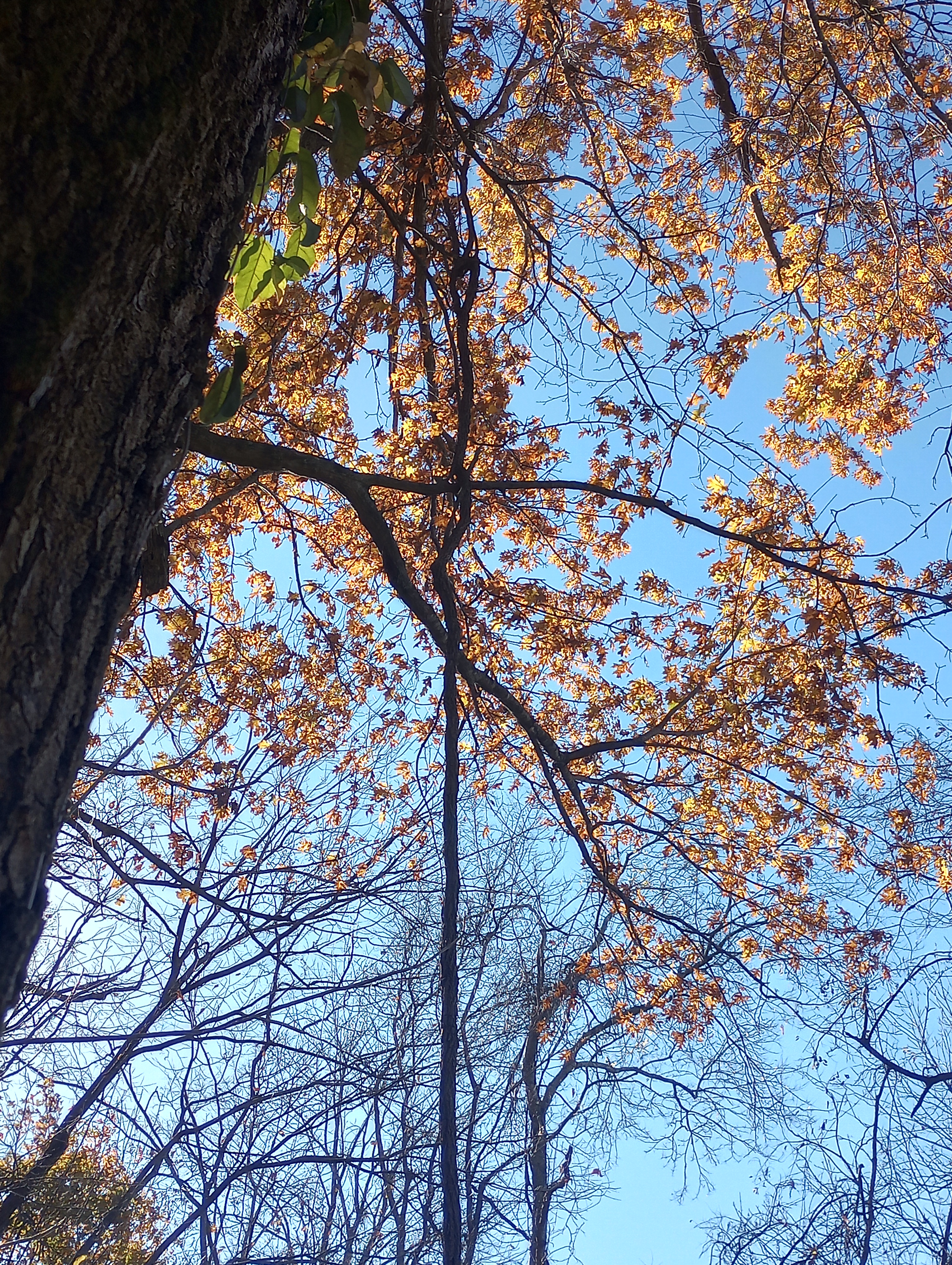
Glorious tree
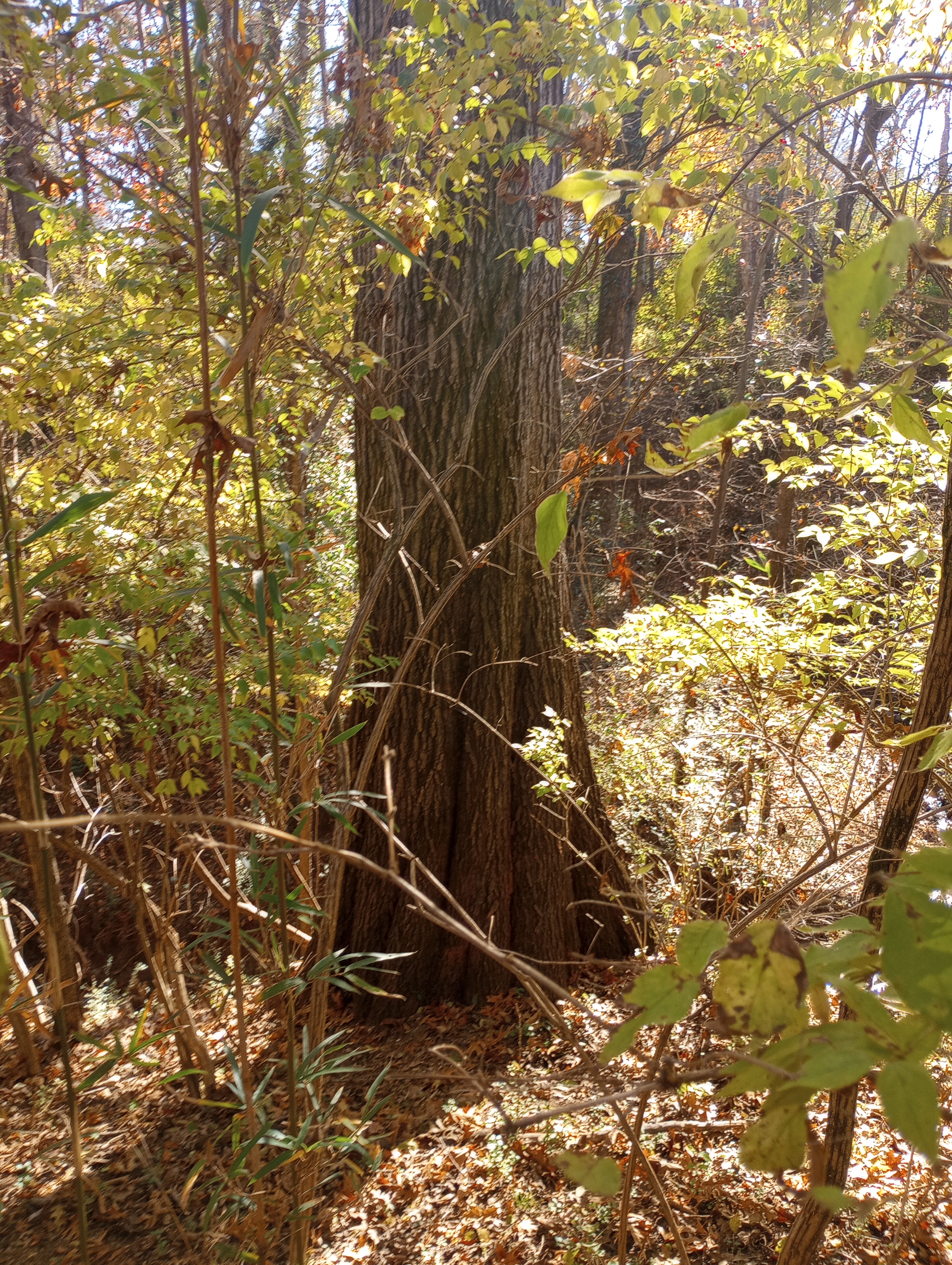
Trunk discovery (note the bush honeysuckle all around)
Northern Red Oak!!!!

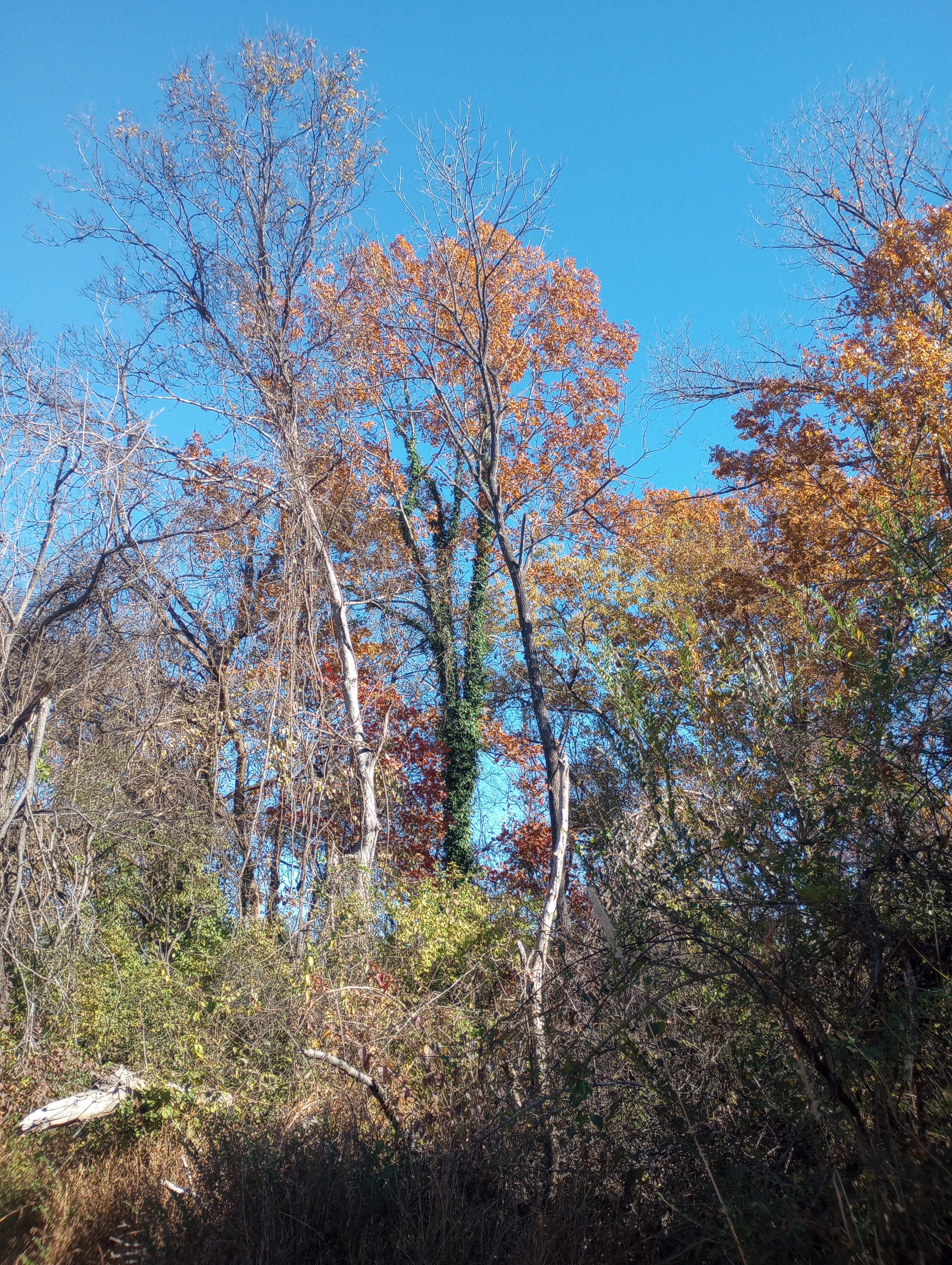
I had to fight my way through a bush honeysuckle grove to get here, but I made it. What a beautiful tree. Internet tells me it is a northern red oak. Amazing tree. Hanging off of it, all the way down to the ground, was one of those huge muscadine vines. Those are so crazy.

Muscadine vine (the straight, vertical line in the center of photo)

Other Trees

One of the tallest trees here
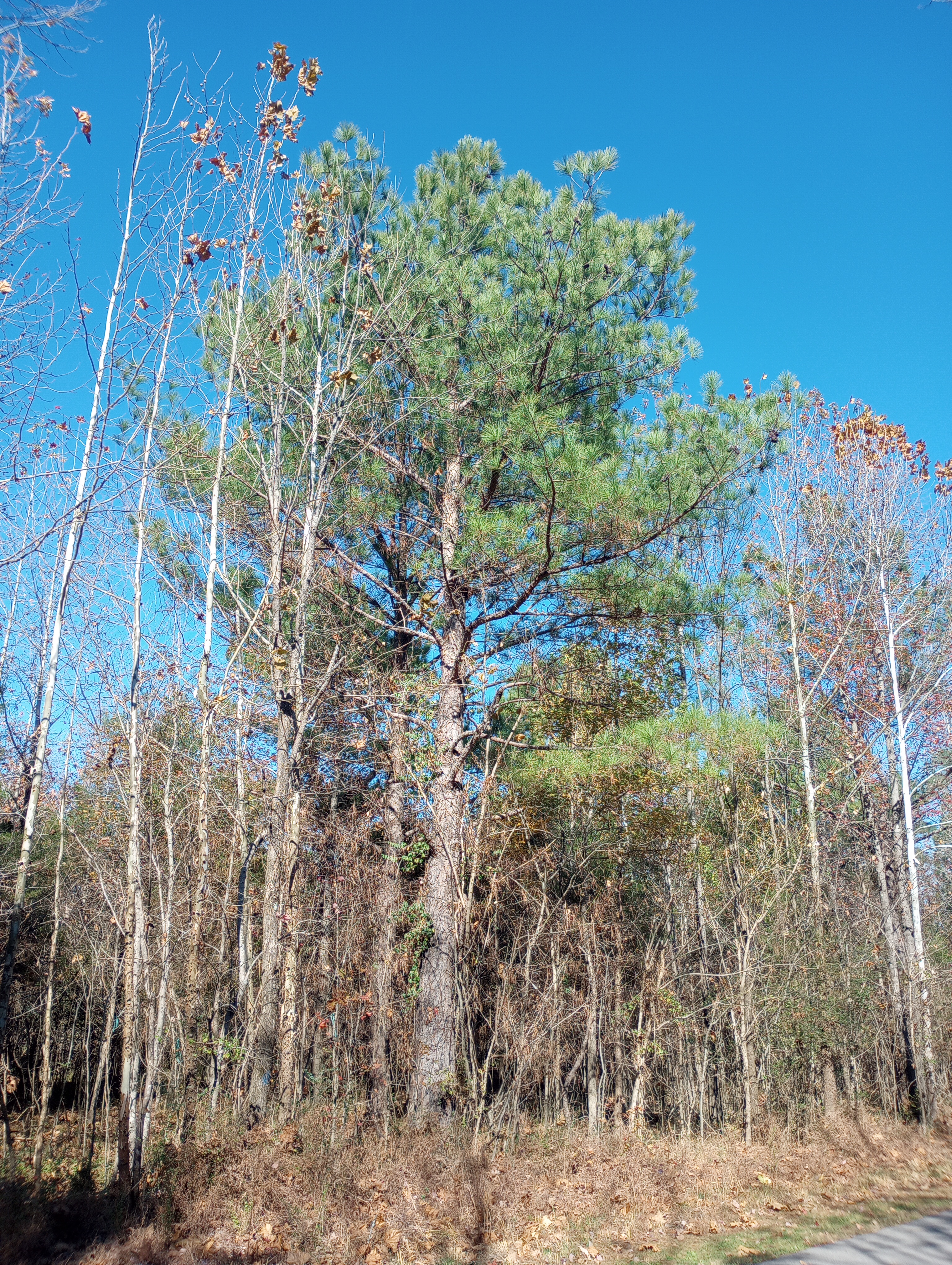
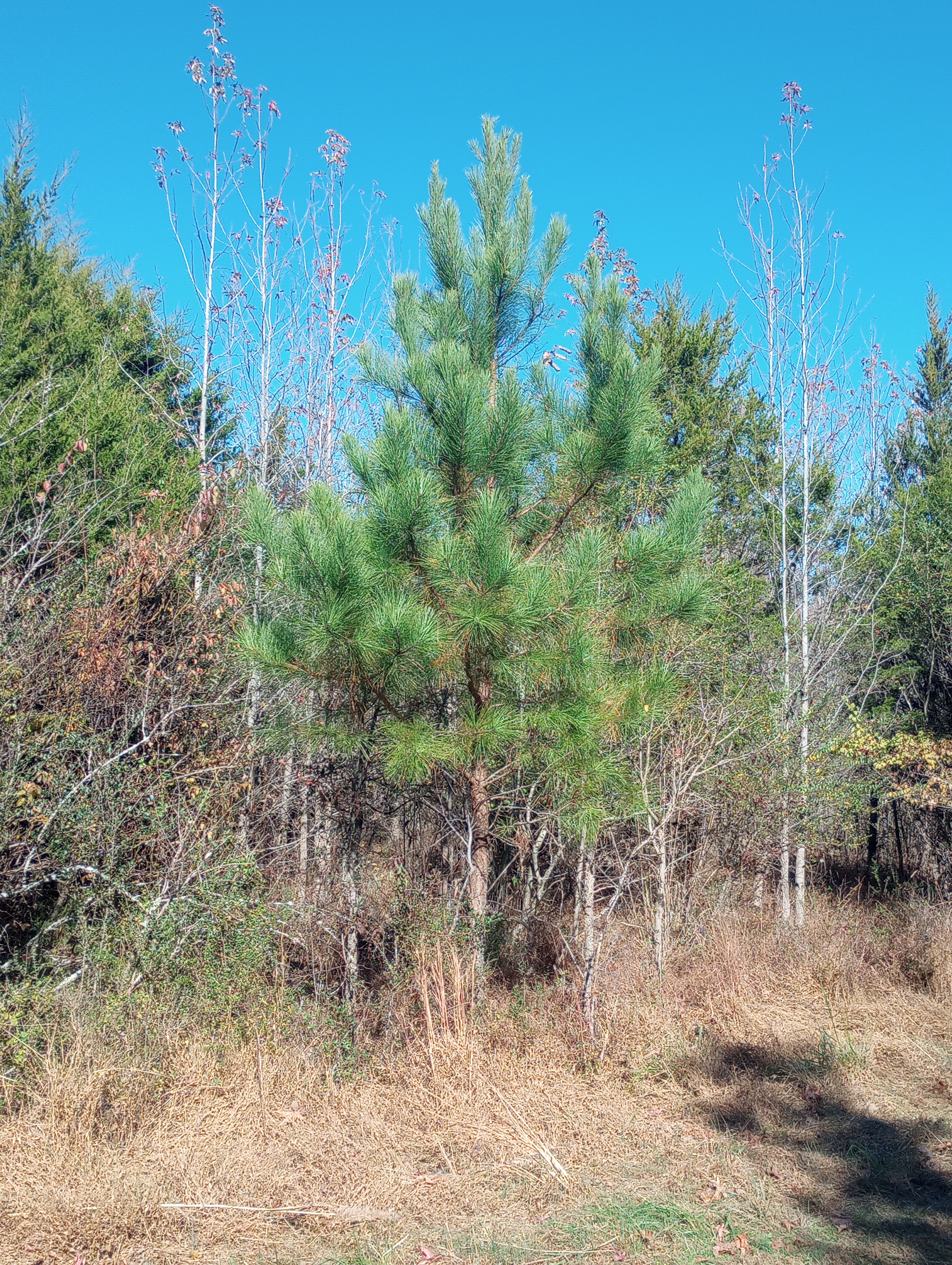
Loblolly pine?
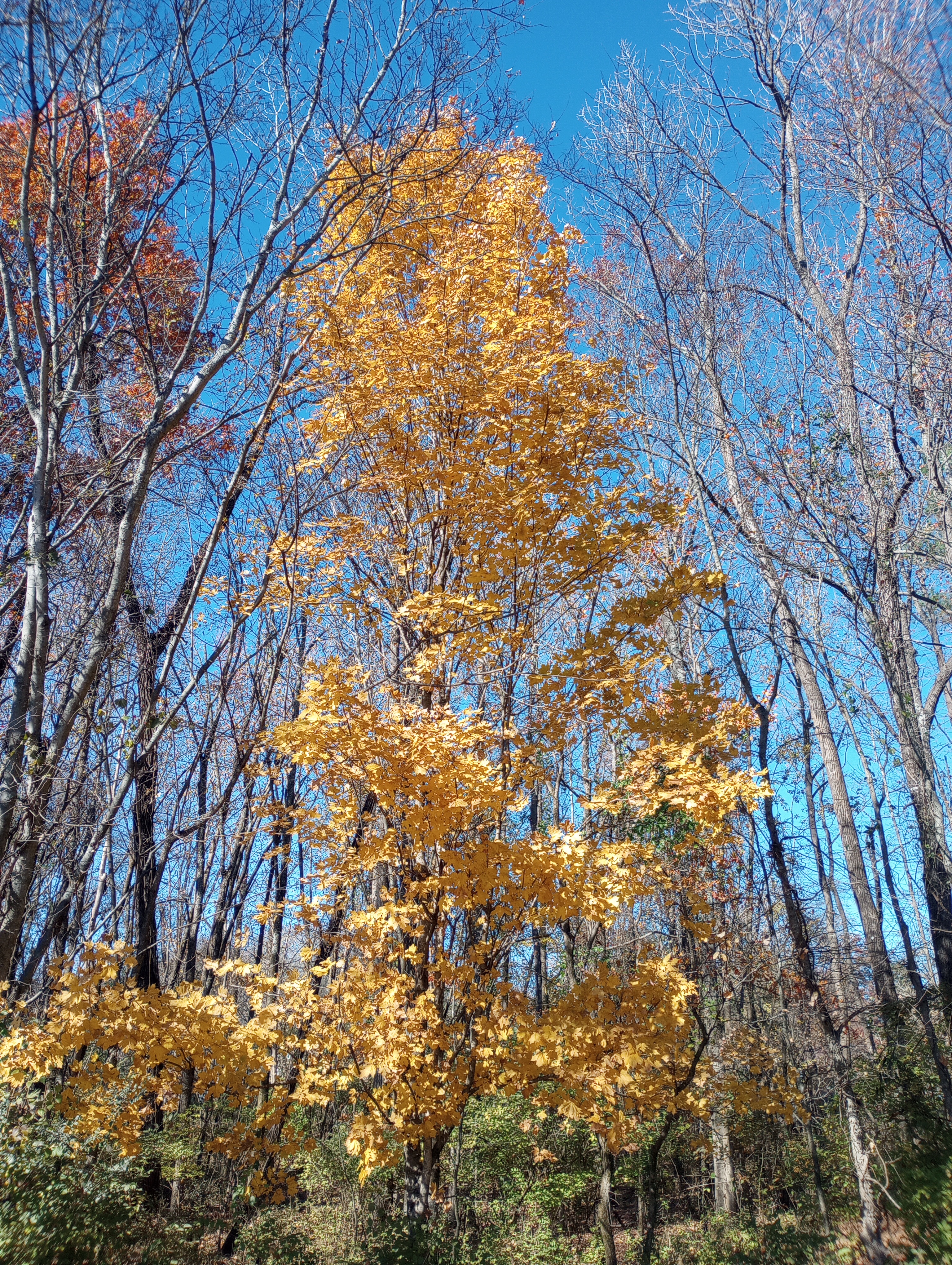
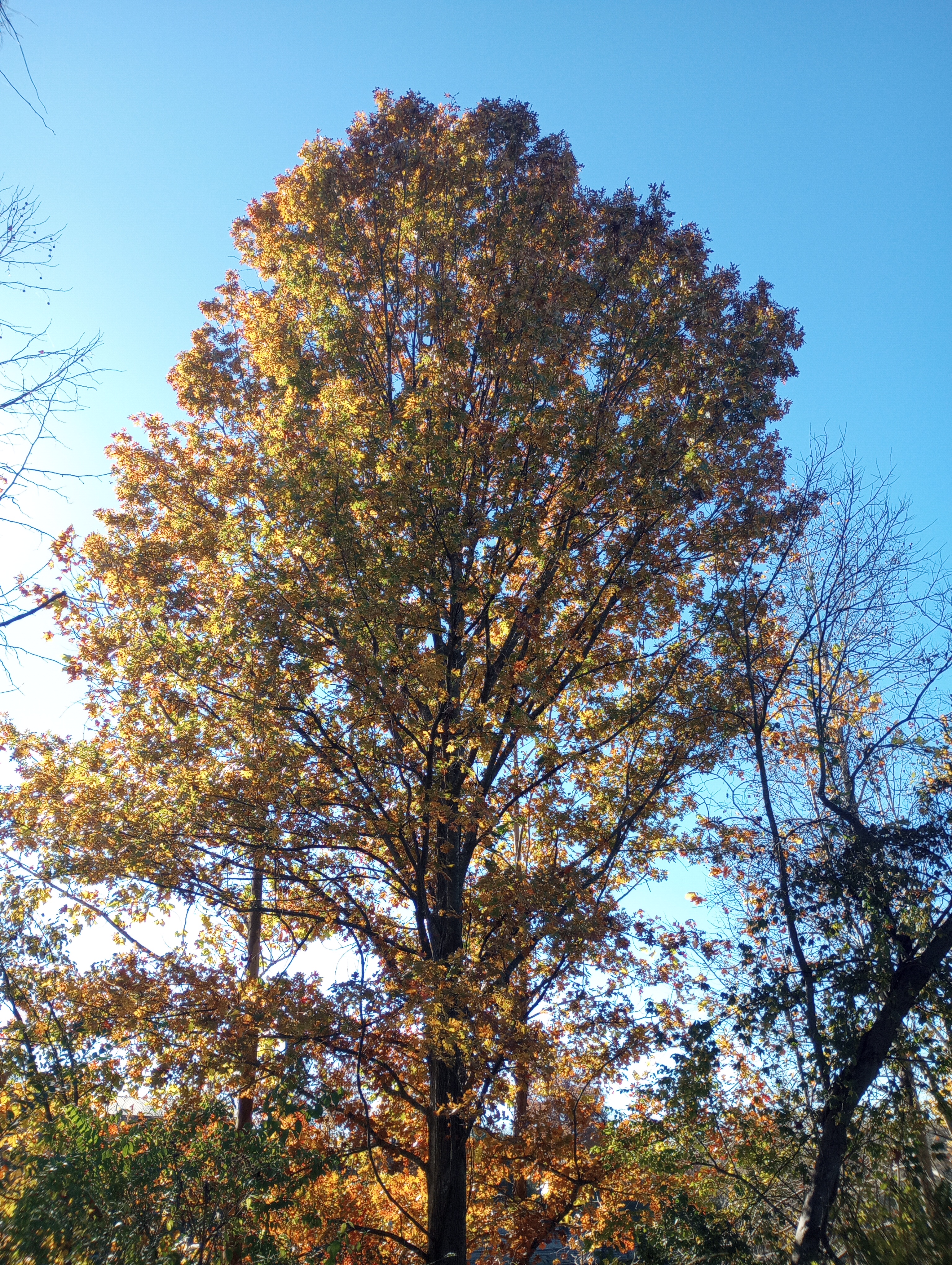
Majestic fall beauty
Christmas ornament ball tree
Christmas ornaments???

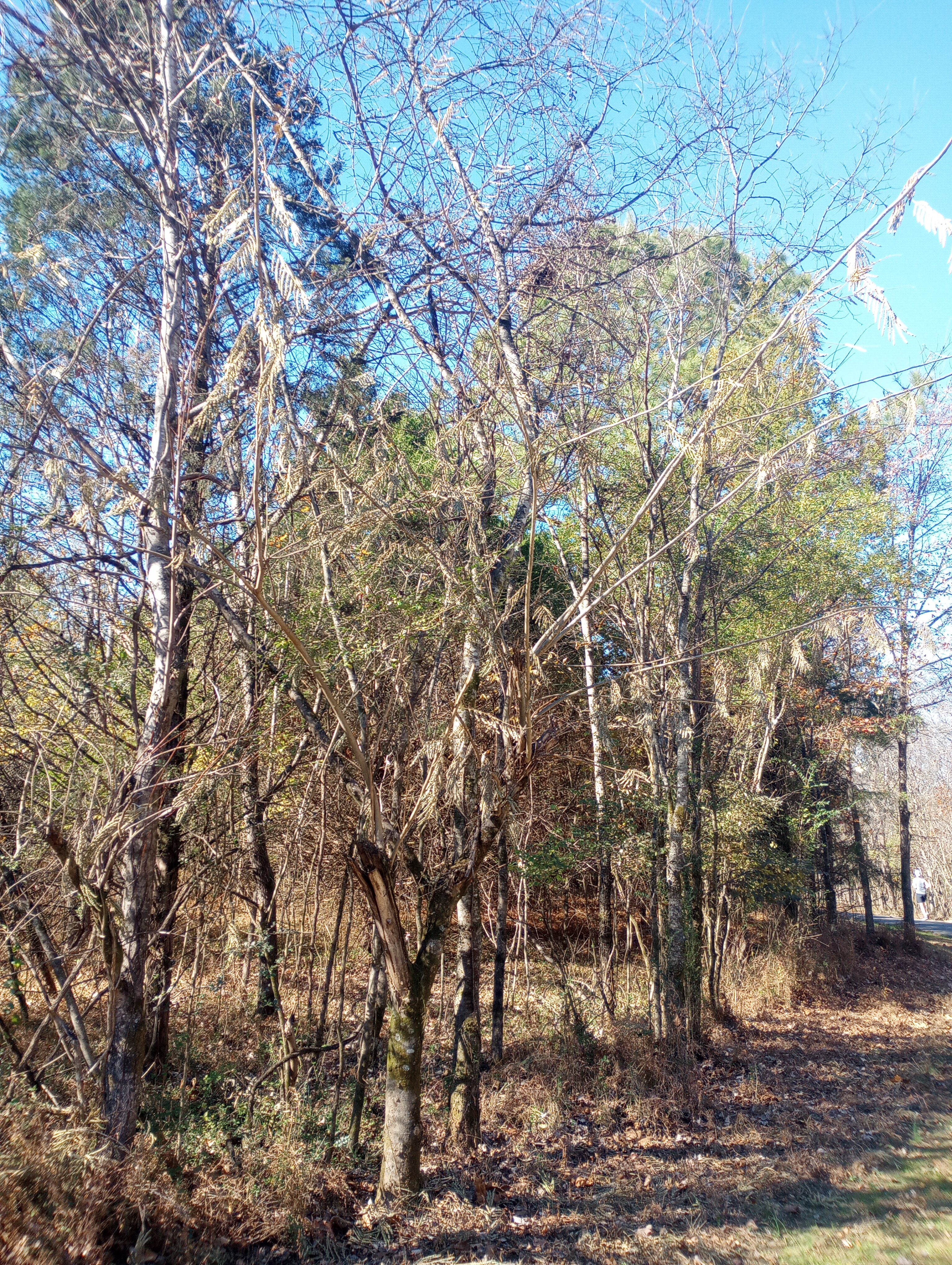
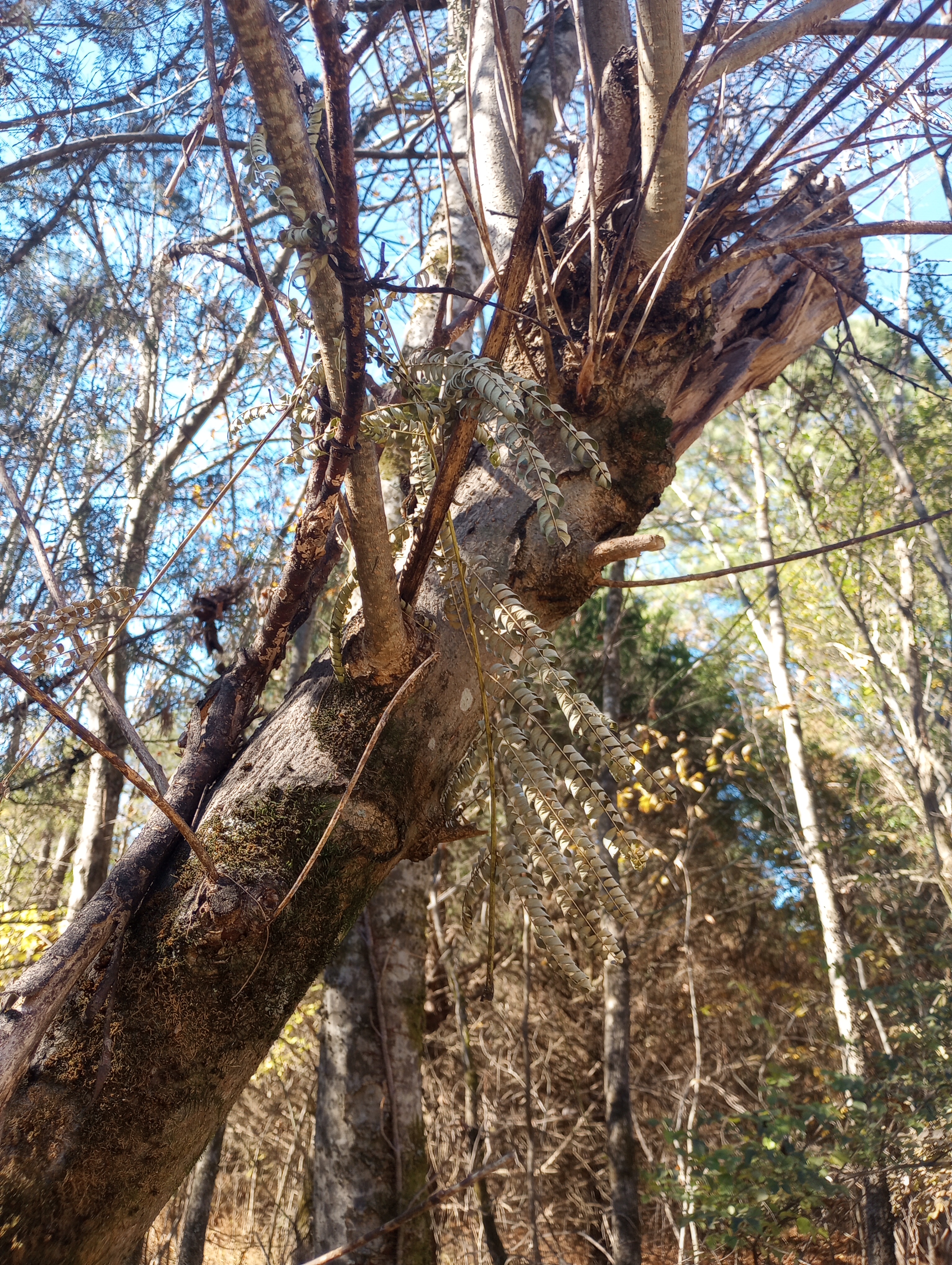
Mystery Tree

My main purpose for going to the park today, and especially for bringing my camera (all taken with my Moto G phone camera), was actually just to investigate a mystery tree. That’s all I had really intended to do. I had seen it, only one, and it had strange, fern-like leaves. I have been thinking about it, and I want to know what it is. Well, I found the one I had seen before, and then further along my long walk I found ONE more. So they are quite uncommon in the park, but they’re there.

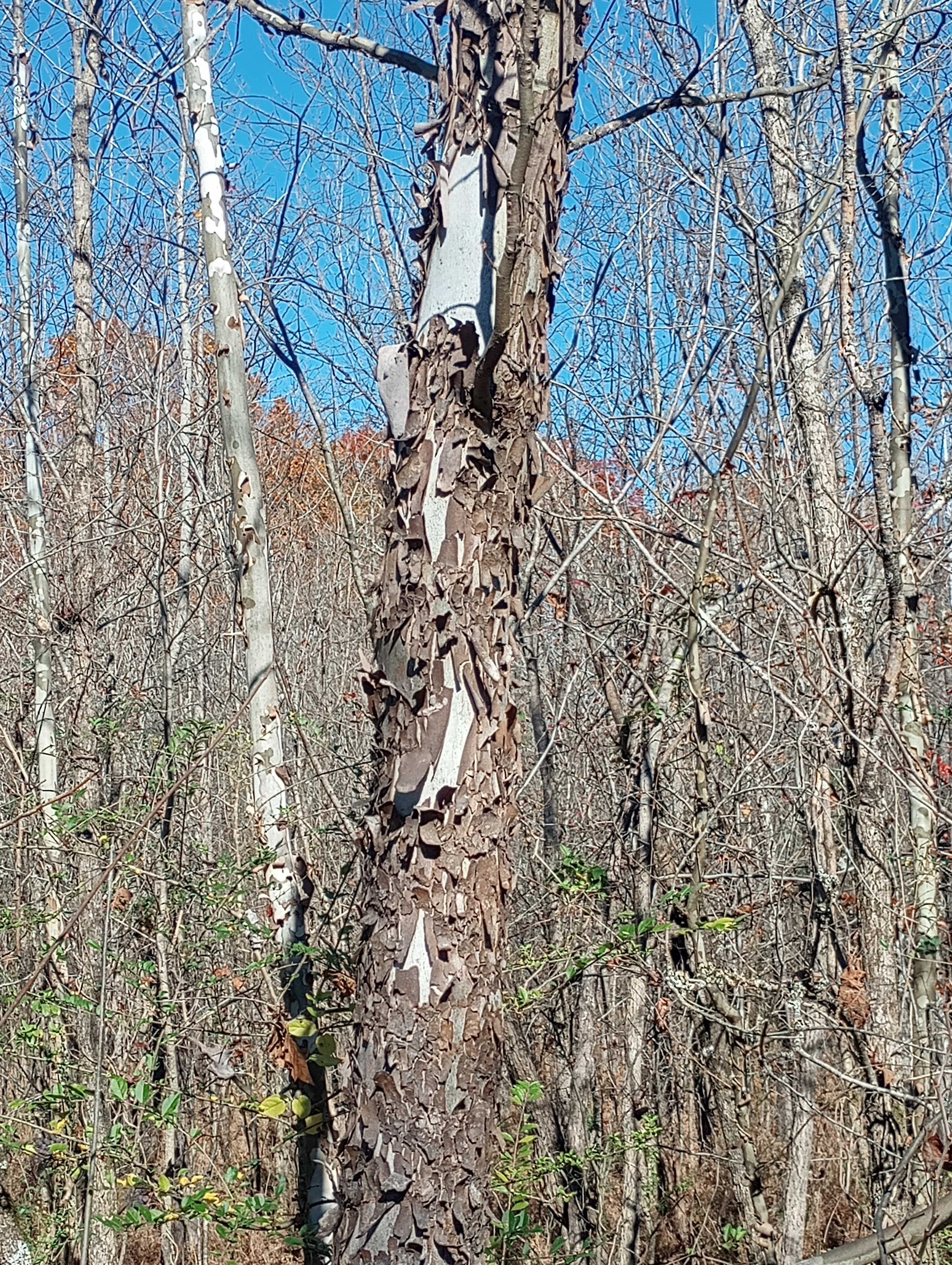
Here is the tree, which is losing its leaves as well. What is this rare mystery tree?

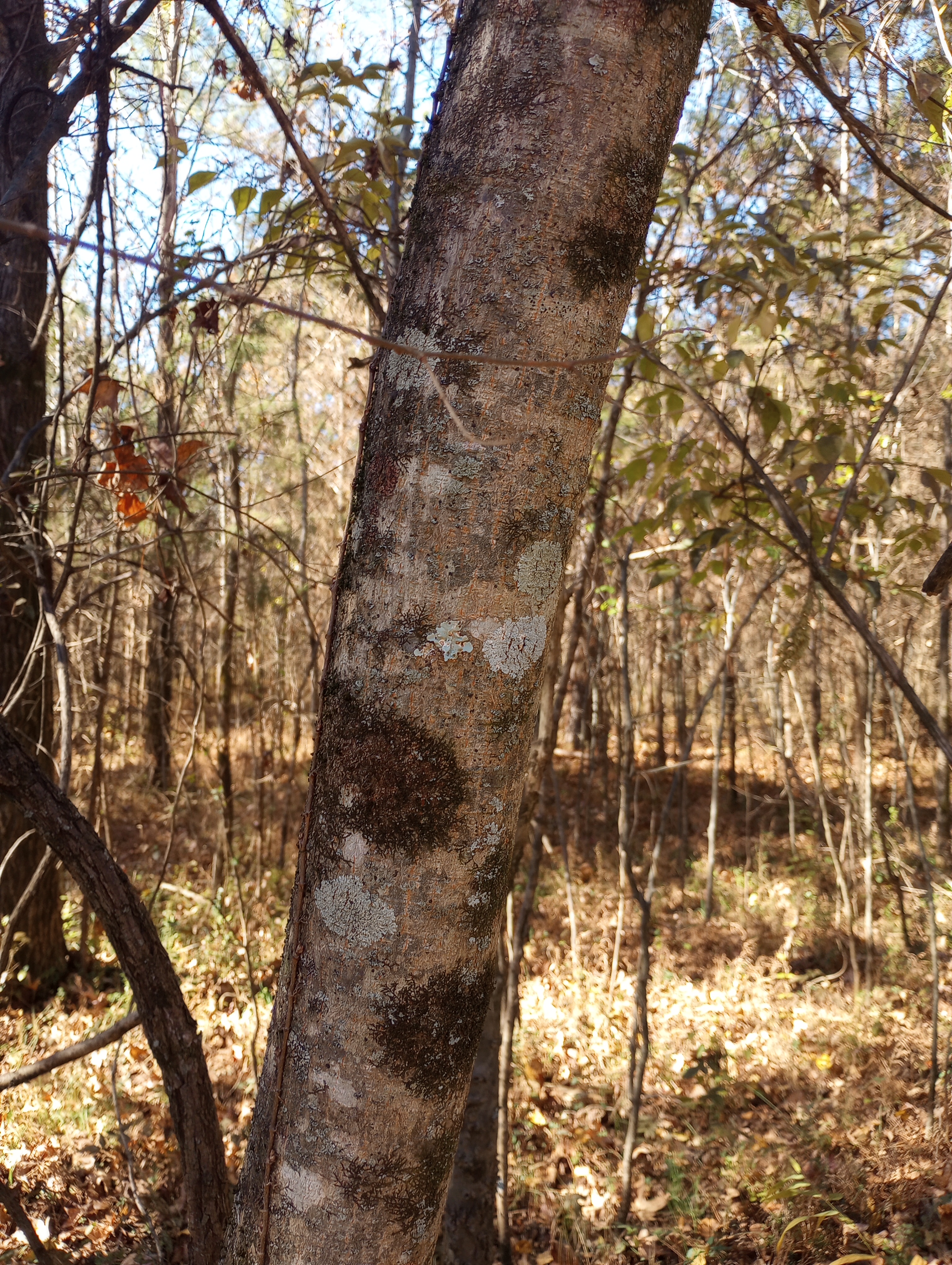
Mystery tree trunk

Various Other Scenes

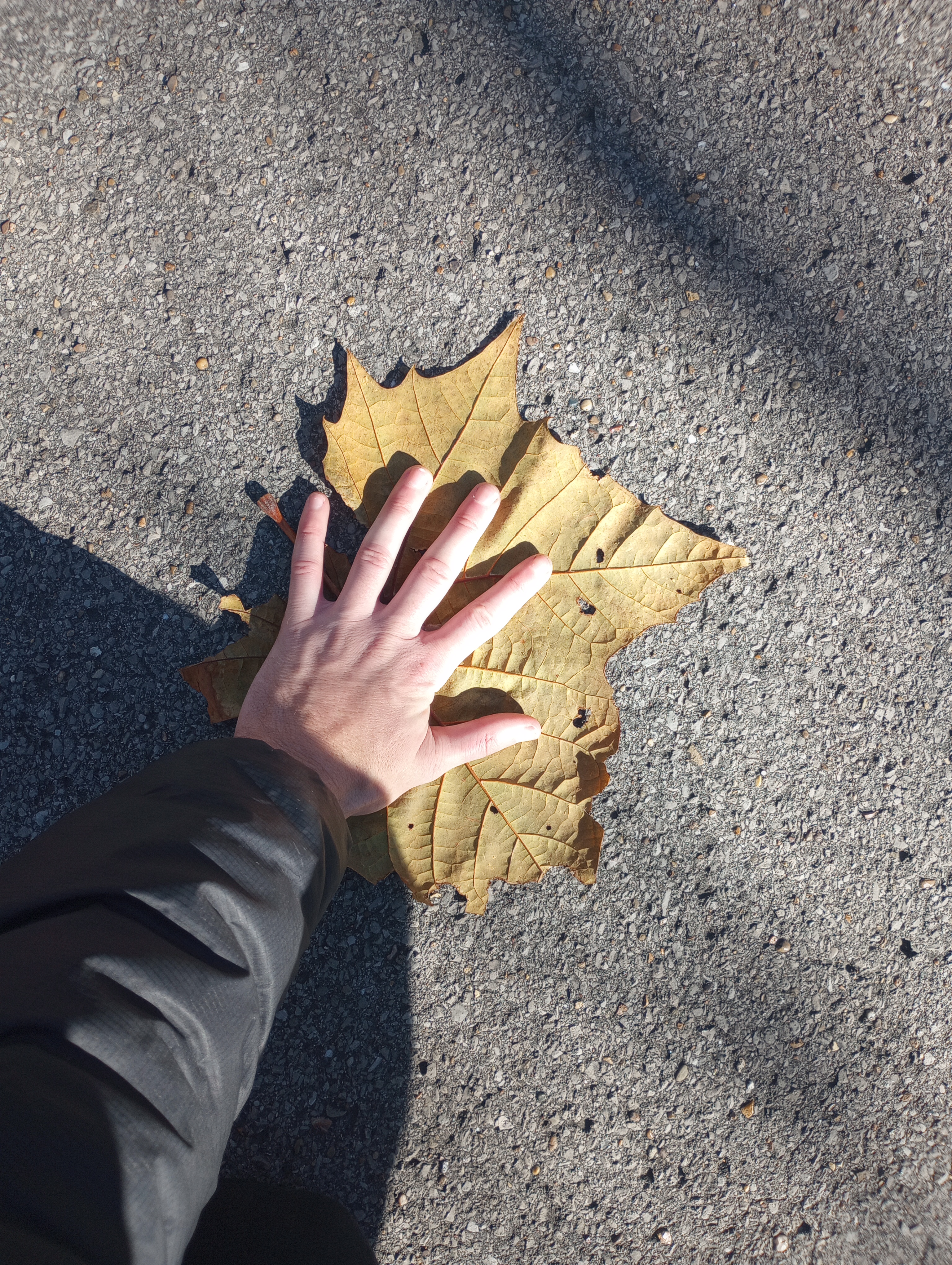
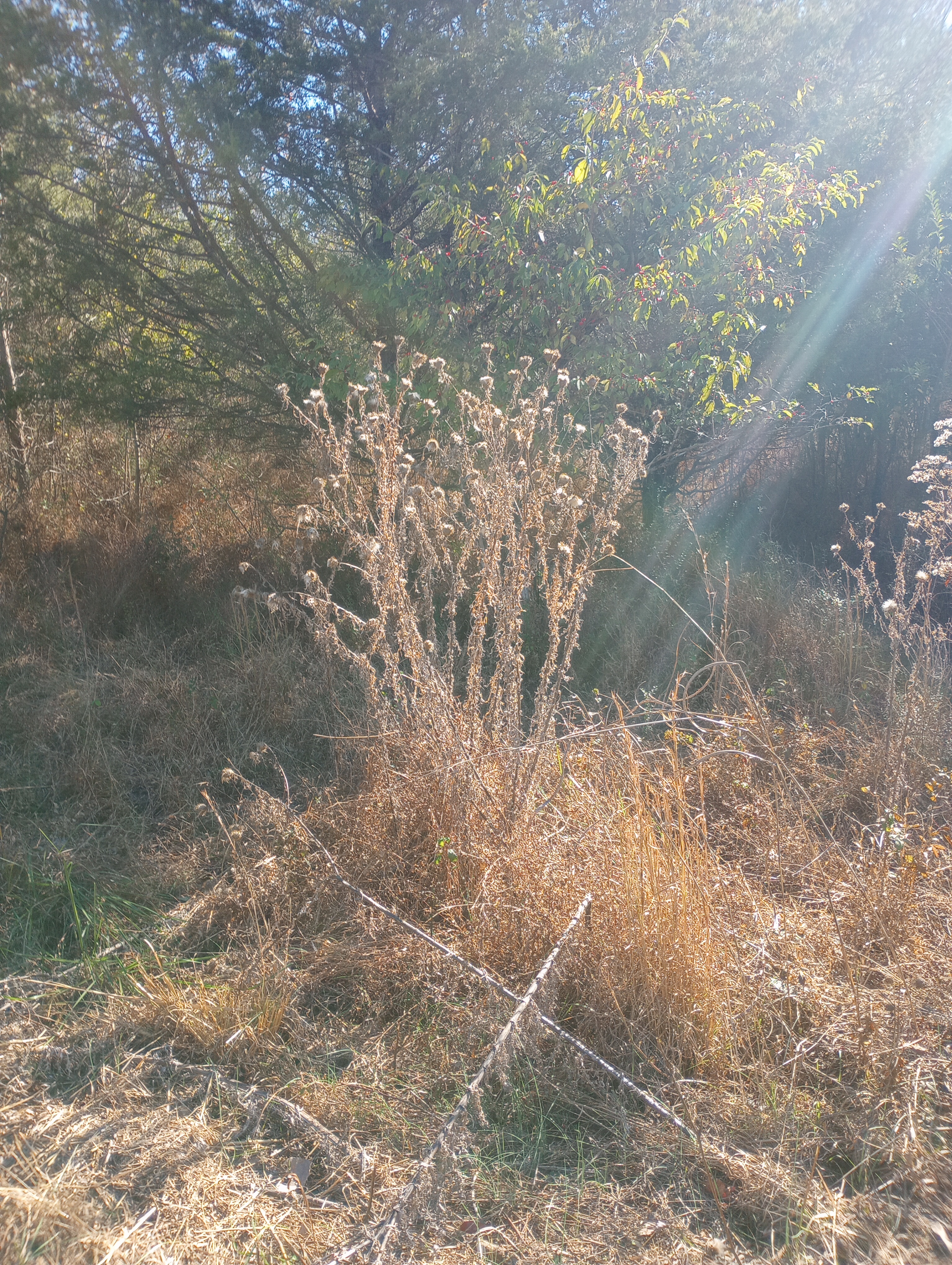
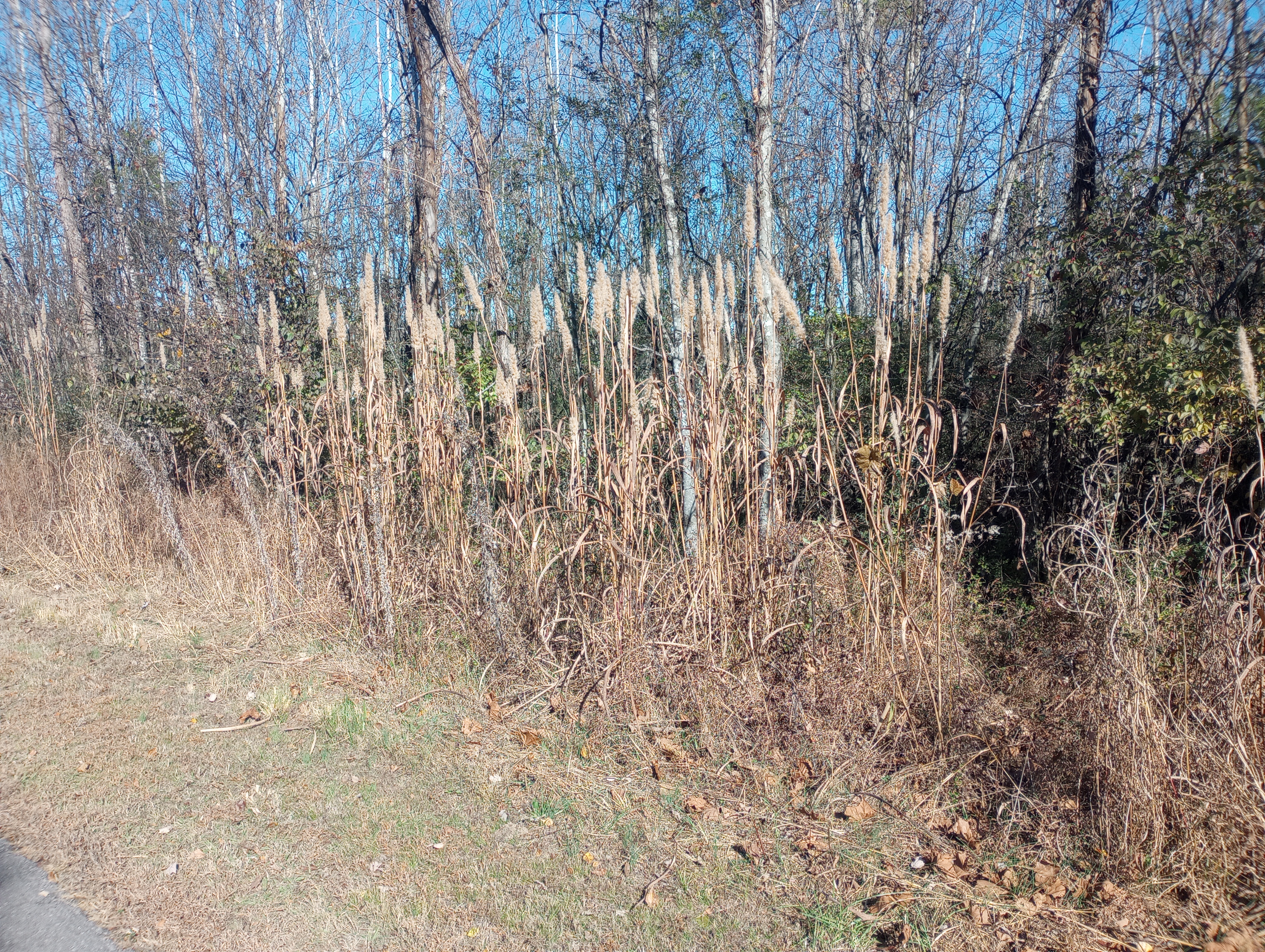
Other sights included massive leaf larger than my hand, the husks and seeds of flowers like tall thistle, coreopsis and whatever else, cattails (I think that’s what they are?), a patch of northern sea oats, and a stag. The stag ran out right in front of me. Not uncommon to see but it was a good looking one, pretty large, and had a solid pair of antlers. That’s the closest I’ve been to one I think. The fen/marsh area is particularly striking right now. Looking very bleak and desolate.

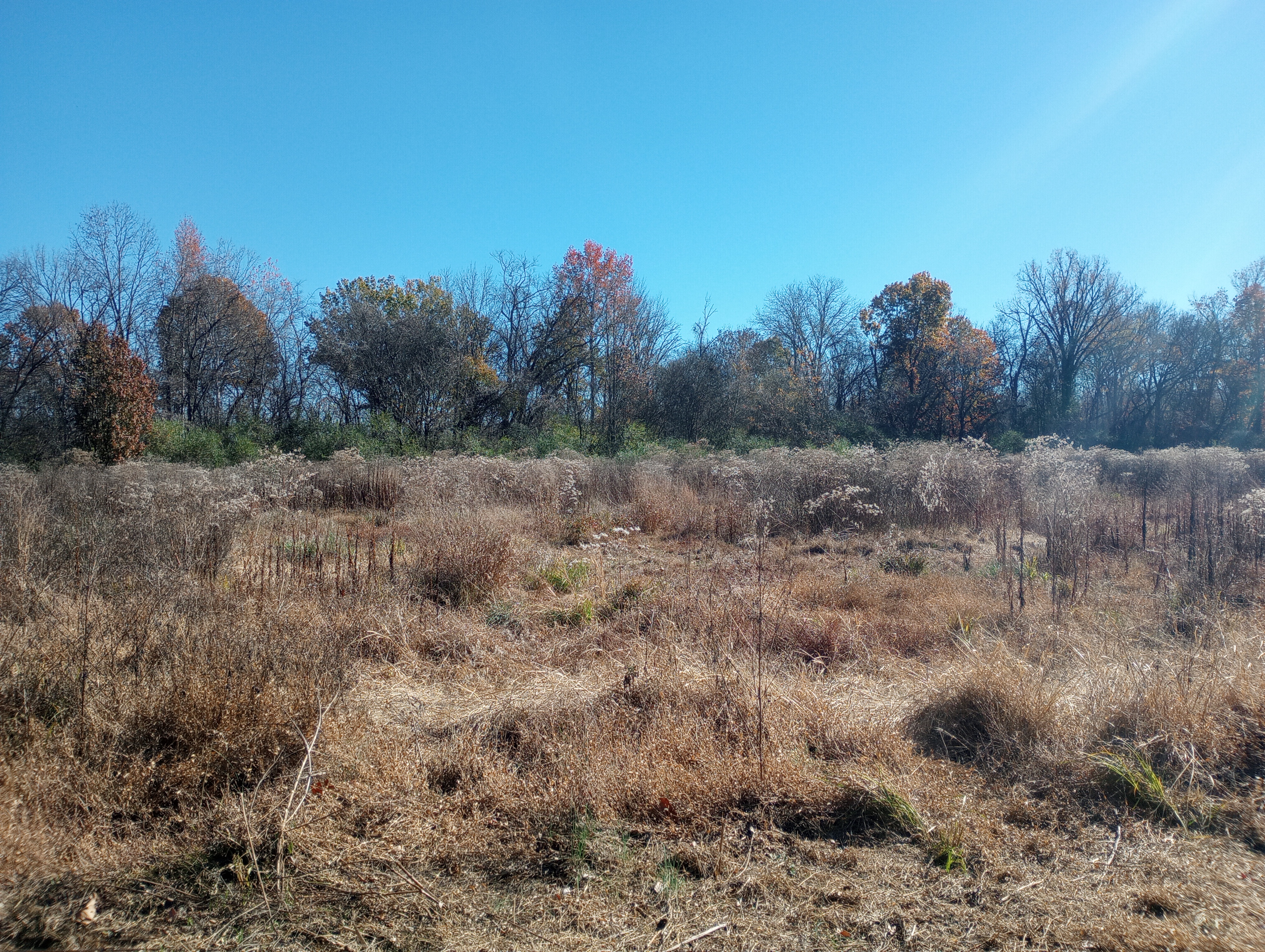
They have cleared the wildflower area. Did they burn it? This must be investigated. It’s completely cleared. They may do that every year, to prevent the trees from taking hold. I would have gone and investigated on this trip but I had done enough. And that can be investigated any time, really. But it’s amazing to see that that field had been so packed and chock full of life, thousands and thousands of coreopsis blooms, birds, bugs, bunnies, and deer, and is now totally leveled, for the season.

Shelby Trip (Oct. 15) – A Lotta Vines

[Note: The photos in the email are compressed and aren’t as sharp. If you want to see the photos in higher quality, read the post on my actual blog site.]

Three days ago now I went to Shelby for my first invasive removal session of the season. We’ve just started up again as the winter approaches. This is prime time for removing these Bush honeysuckles and Chinese privets, as they keep their green leaves and are easy to identify. It’s also not as hot and a lot of growth has died back. I haven’t been in the forest for awhile and with my newfound knowledge, I was able to immediately spy wintercreeper, Japanese honeysuckle, and eventually English ivy on trees and on the ground. Unfortunately, the wintercreeper was everywhere, almost ubiquitously covering the ground, if privet or honeysuckle weren’t taking up the space already. And often, privet and wintercreeper were working together to smother the forest floor.

I used to think, subconsciously really, that there was a clear delineation between “nature” and “human world”. Between nature and civilization, I guess. And that there were places that we would go to, and those were the nature places, and then we would return to the non-nature, the constructed, civilized, human habitat. I think that now I feel much more that we are truly in nature all of the time, whether there is almost no “nature” remaining (in a totally constructed city), or we are in the suburbs, whereever we are. Even in a city, nature is there. Pigeons, insects, plants, growing in cracks and crevices. We are always in nature, whether we really realize it or feel it or not.
I think the flip-side of this is that our “nature” is also not perfectly separate from our civilization, and our activities bleed into these nature spaces as well. The forest at Shelby park once seemed to me to be a bastion of nature haven, a place to get away, unaffected and isolated from the hubbub and artificialness of human society. But, now that I realize it is so covered in plants that we have brought with us, and it is so affected by our behaviors, it is not really a removed place anymore. It is an affected and disturbed habitat.

Our properties are the same. We have a neighborhood, we have our roads, and our downtown, but all of this was built on top of and in an ecosystem, and that ecosystem is still here, albeit heavily affected and disturbed.

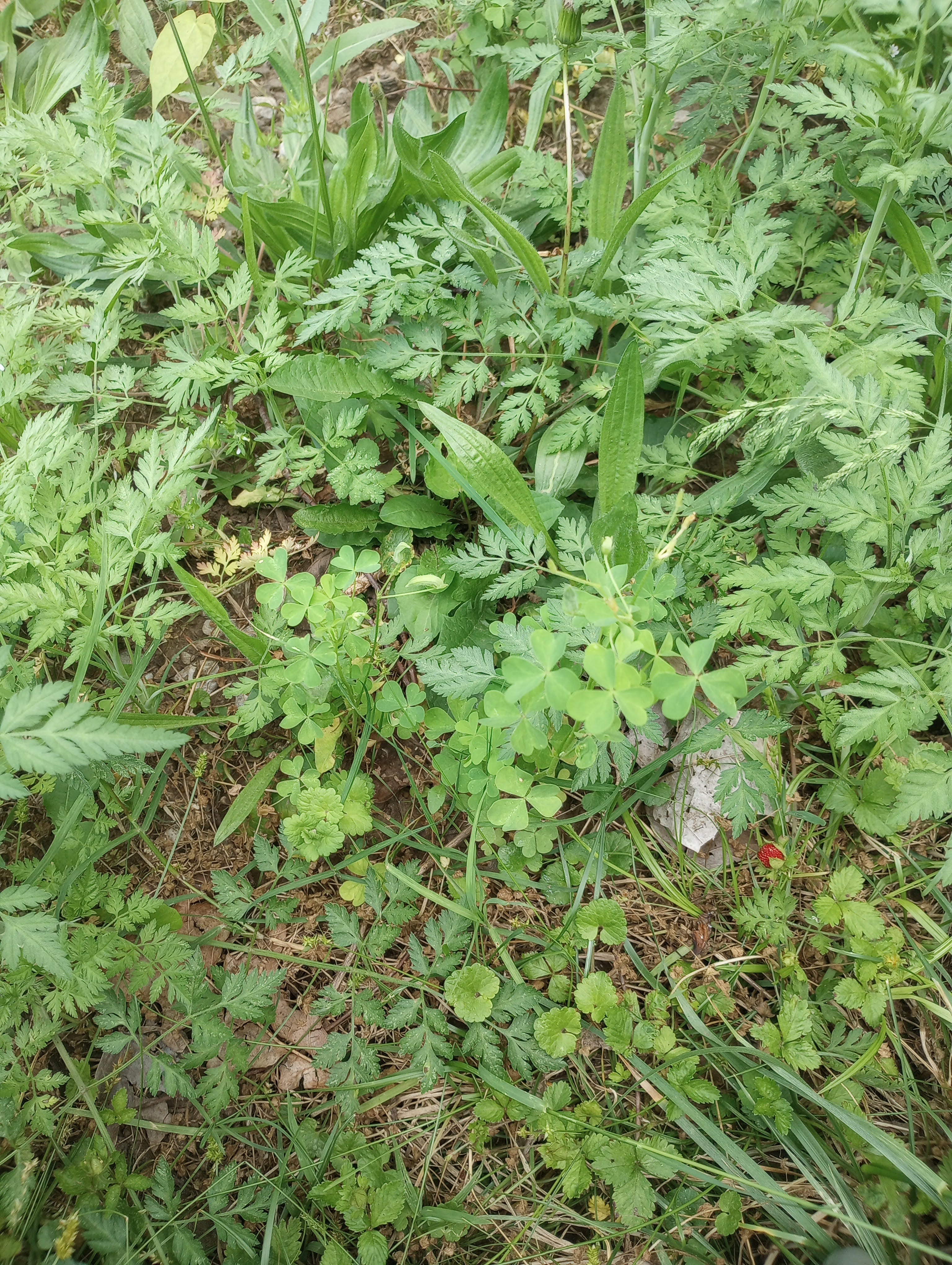
I have started foraging. I feel that this is a major evolution, a milestone in my naturalistic journey. The plantain weed is edible, I think I mentioned that, (what the caterpillars were eating), that was sprouting up in my yard and is all over the neighborhood. And not only is it edible, it’s so good for you that it has an article on Healthline (popular internet health site). I was so bored at the climbing gym the other day that I finally picked some and tried it out. There was plenty of plantain weed in the patch of grass outside of the gym, and I plucked it, washed it in the bathroom, and ate it raw. It was pretty good, although some of the leaves were really astringent (bitter and dry). Then, that evening when I got home, I plucked it out of my garden, boiled it up, and ate it that way. It was much better, and almost exactly like eating spinach, with a hint of arugula flavor. Parker had asked if I was going to make a tea, and so that inspired me to also save the water and drink it. That was great too, like a weak green tea.

It was really hitting me then, that I was getting a fresh vegetable, free, harvested myself, and that was growing wildly in my yard. I have a whole patch of it, it all just popped up, and once the caterpillars were done farming it, it’s grown freely and there’s tons of it for me to harvest. For the last four days I’ve gone out there and plucked some, and thrown it in with my pasta. Free veggies, and the only thing I had to do was know that I could eat them. That crucial piece of knowledge.

Walking home yesterday, I noticed some berries on vines hanging over the neighbor’s fence, and they looked like grapes. I went home, searched it up online, and made sure it wasn’t any kind of poisonous lookalike, examined the seeds, and decided that they were grapes, and I ate some. They were sweet and delicious, much like blueberries. Were those wild, or had they planted them? I wonder. They’re just hanging over the fence by the road, intermingled with Chinese privet and other random plants. I wonder what the vine looks like on the other side of the fence. I know we do have wild grapes around here, called Muscadines.

Walnuts and acorns are also falling abundantly right now. On the same walk, I had stopped to pick up some walnuts that were all over the road. There were two older neighbors talking to each other in their driveways across the street, and I heard the one guy say, “Those are walnuts,” to his neighbor (they must have been watching me), and his neighbor said, “Those are walnuts???” Yep, they’re walnuts, and if you know how to prepare them, you can have free local walnuts, to eat and enjoy, bounty of the earth. Walnuts are pricey, too.

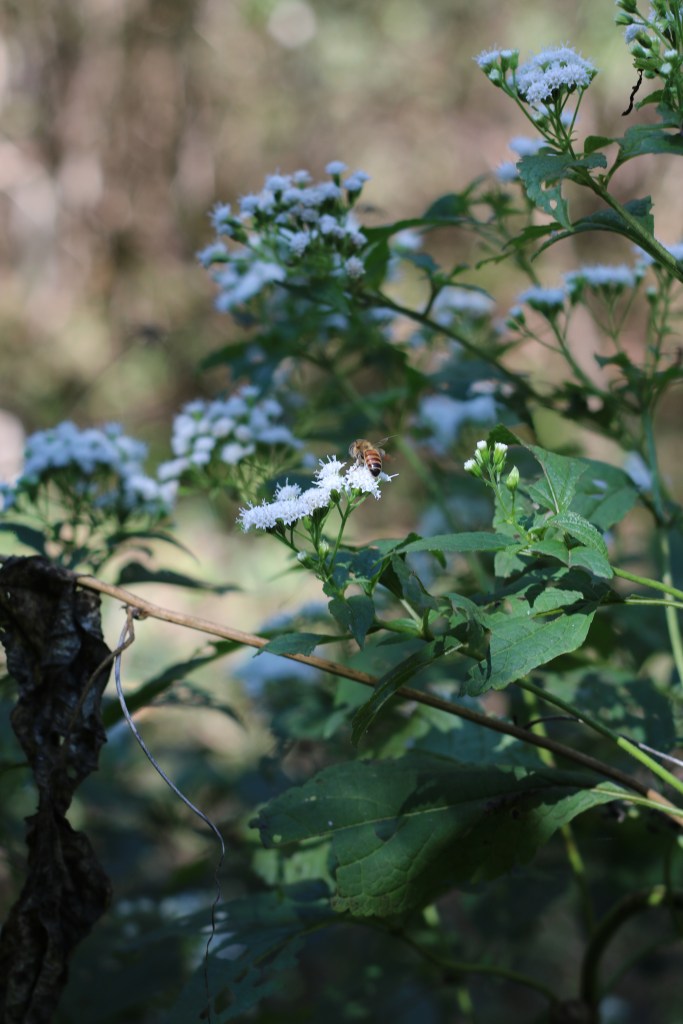
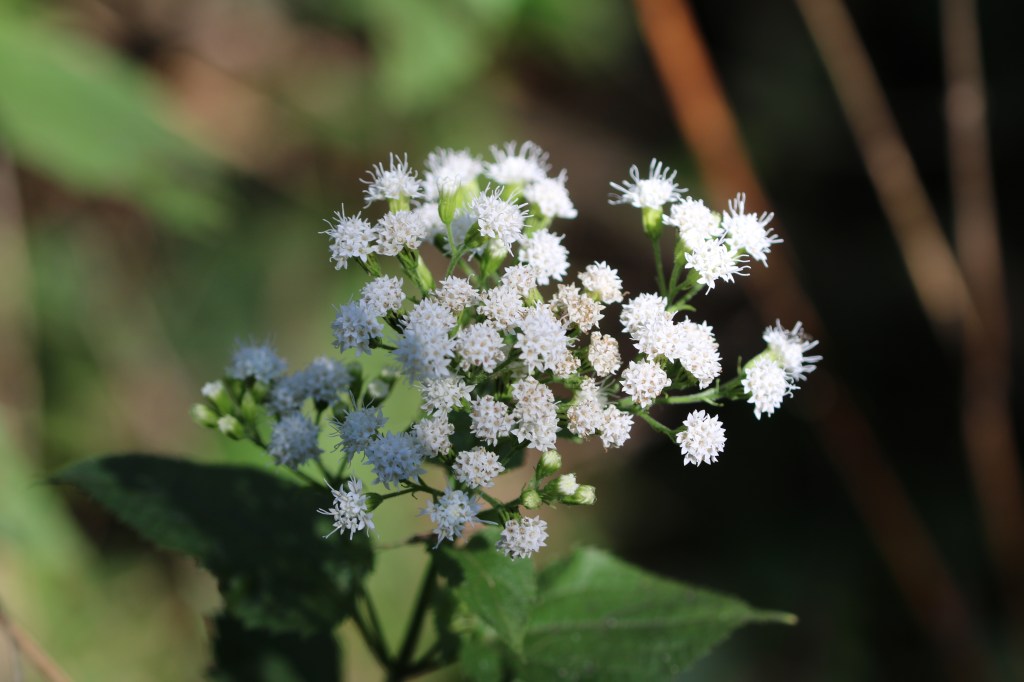
I spied many interesting things during our Shelby park volunteer session, and so yesterday I went back and did some photography. Lots of vines, some local wildflowers, and one interesting plant, the snakeroot (Ageratina sp.). One of the volunteers, Will, he pointed out this large patch of white flowering plant, that had popped in an area of the forest that we had cleared previously. Sunlight could now get through, and this snakeroot had taken hold of the space. Cool plant, and apparently killed thousands of settlers when they were getting started here in America, as nobody knew that it was toxic. It has secondary toxicity, where the toxins of the plant saturate the milk and meat of animals. Wikipedia says that Abraham Lincoln’s mom may have died from snakeroot poisoning. When I was reading that, I thought, “I bet the Native Americans knew”, and then the article said that the person who figured out it was toxic learned it from a Native American. So the story goes.

Garden Updates

Marigold flower
More marigold flowers incoming
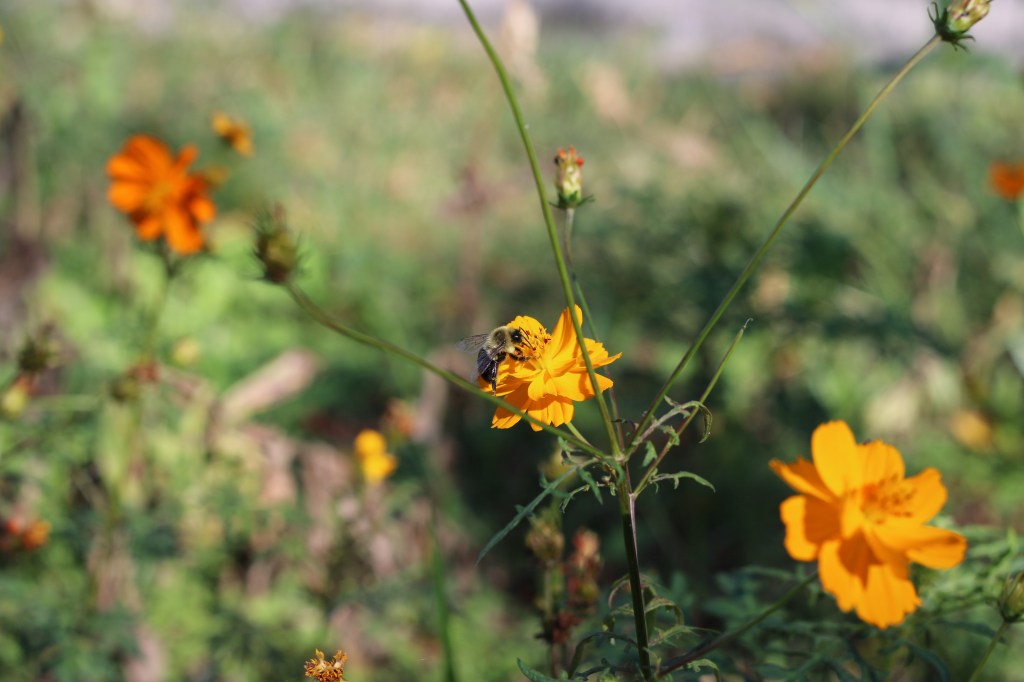
Almost always a bee on the cosmos
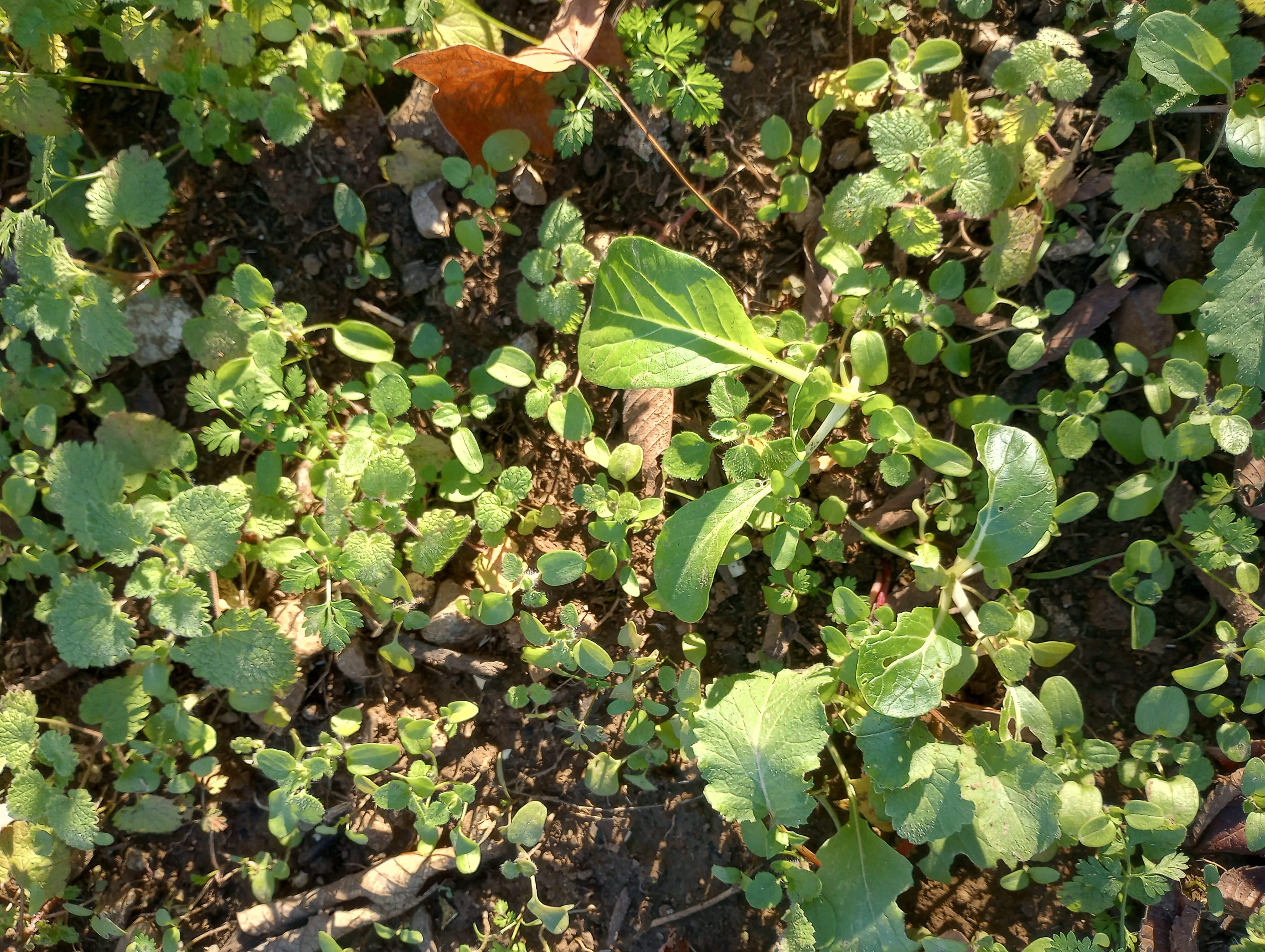
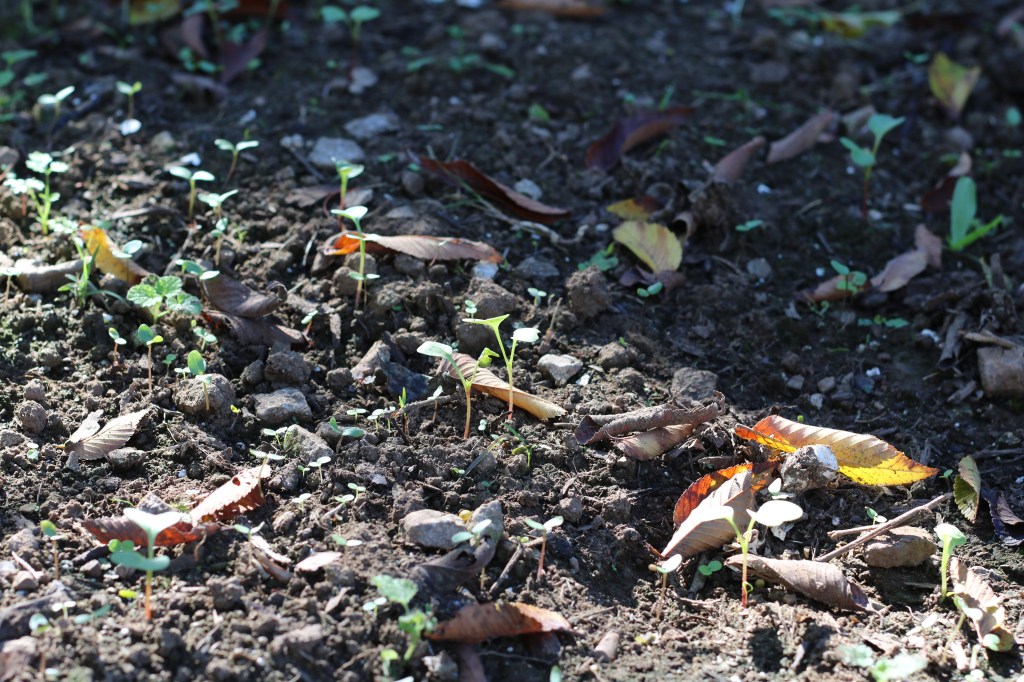
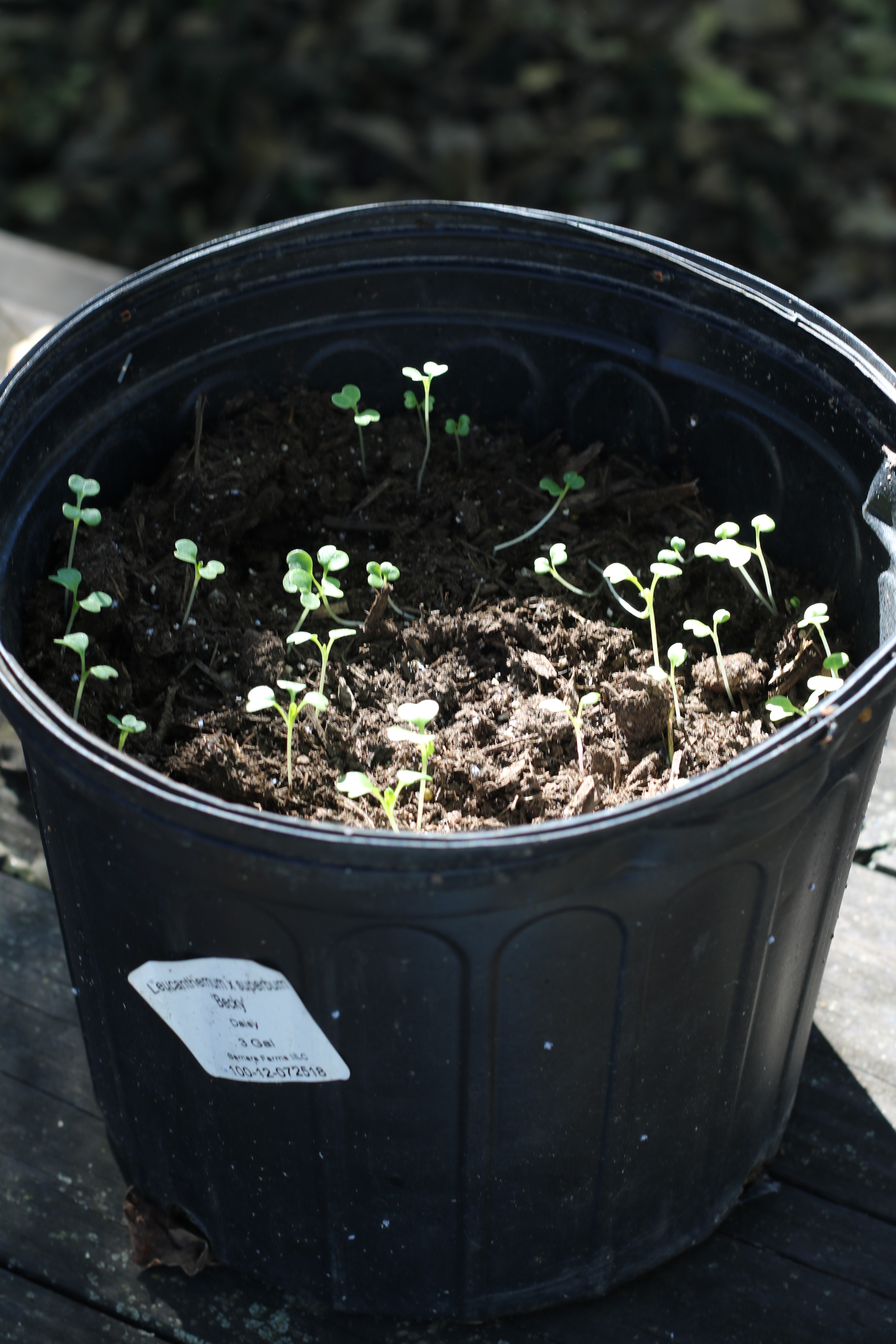
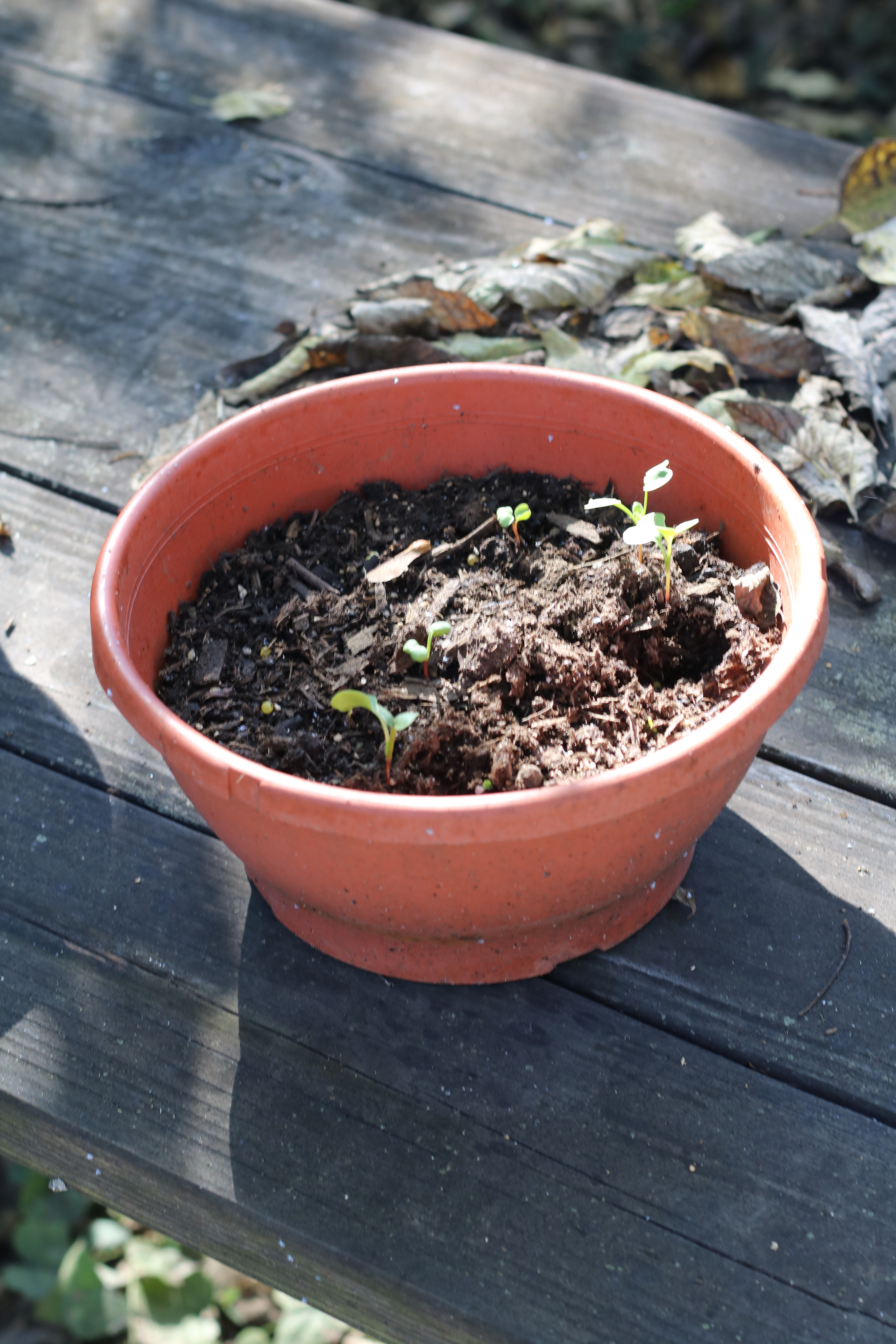
Large sprouts in the center are radish sprouts
Bok Choy sprouts
Radish sprouts

Sightings From Oct. 15 Shelby Trip

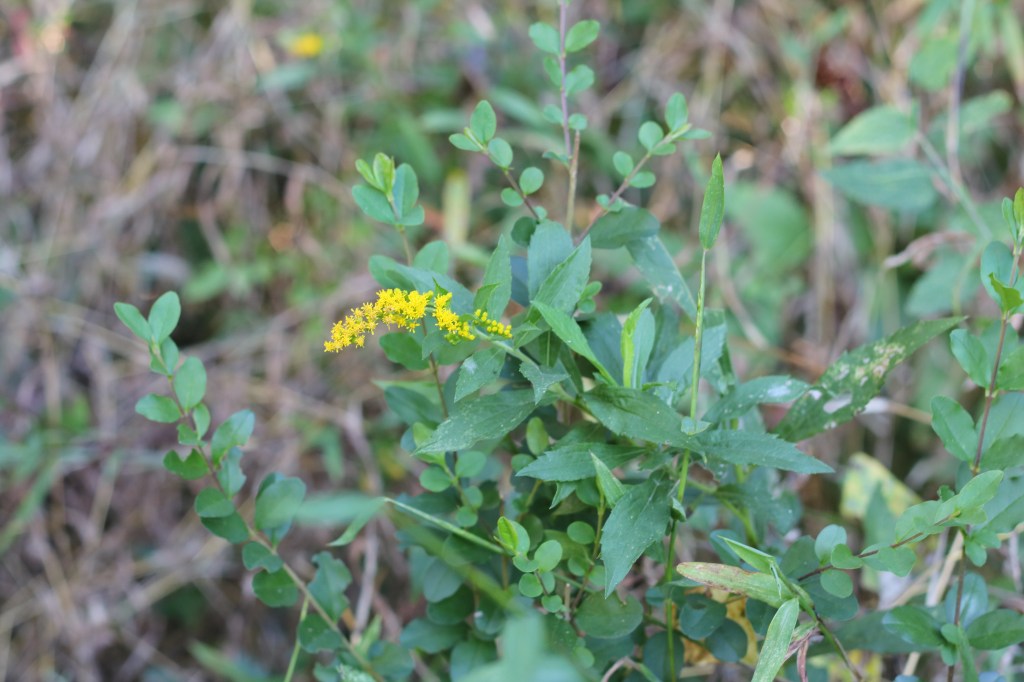
Goldenrod (Solidago sp.) [TN native]

Some kind of goldenrod
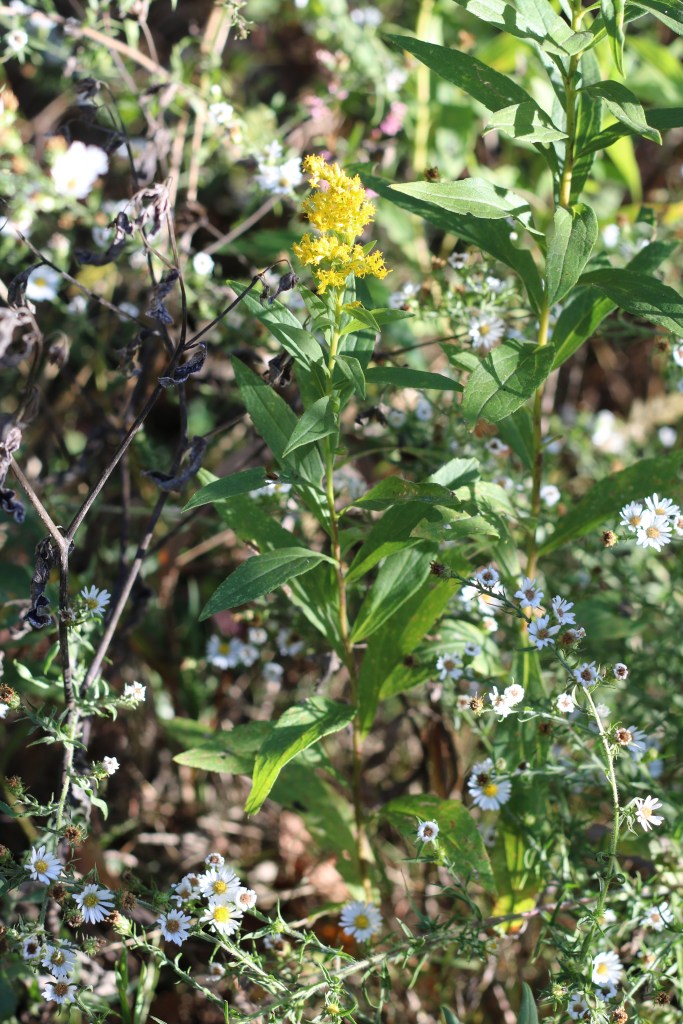
Goldenrod surrounded by frost aster

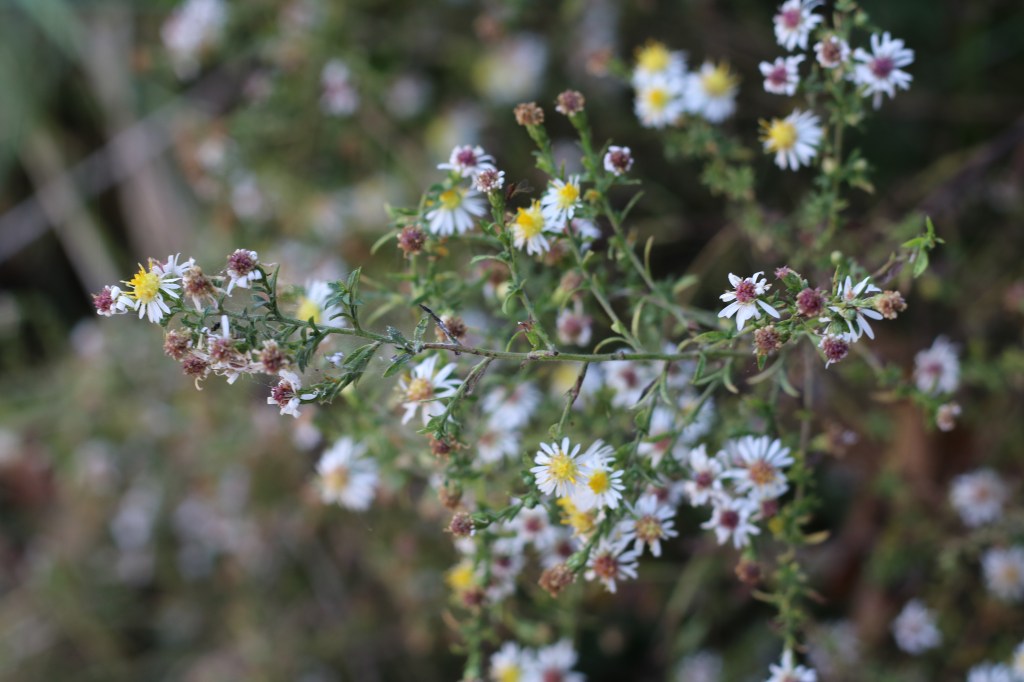
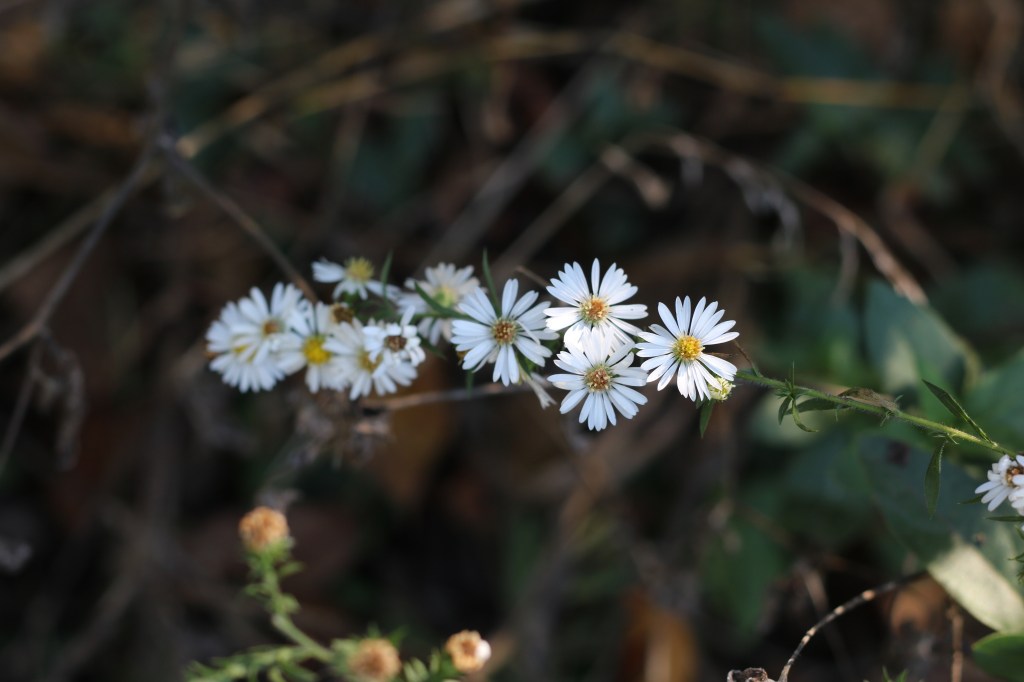
Frost aster/White heath aster (Symphyotrichum pilosum) [TN native]

My 1st kind of frost aster
My other frost aster – different species / variety?
Frost aster AKA White heath aster at Shelby Park
Frost aster AKA White heath aster

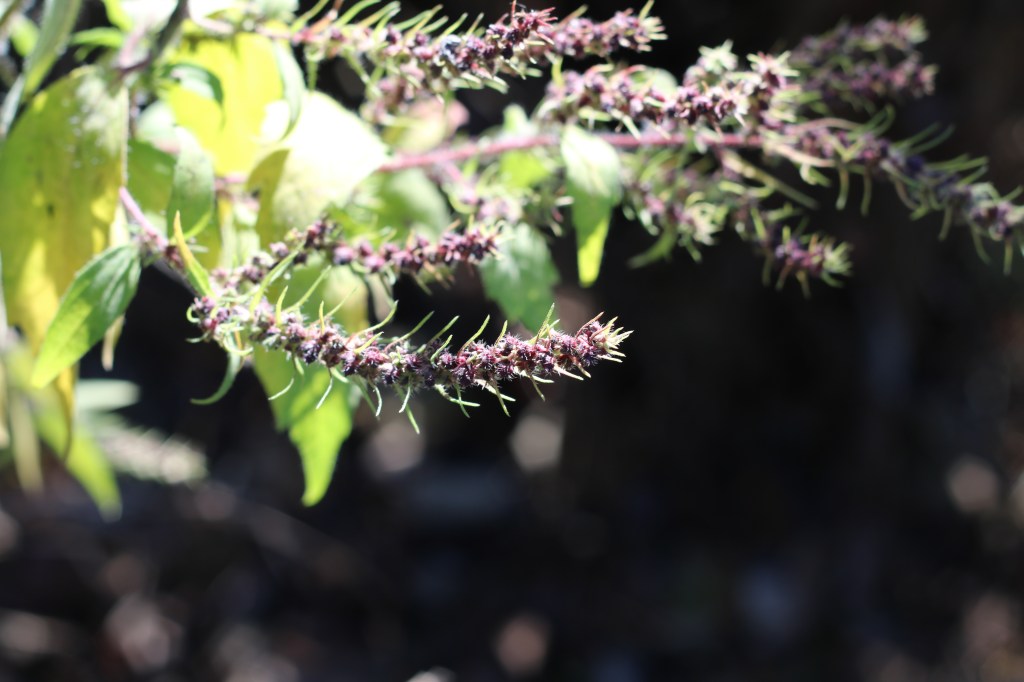
Sumpweed???? (Iva annua) [TN native]

Sumpweed?

Frostweed (Verbesina virginica) [TN native]

Frostweed flowers
Frostweed plant

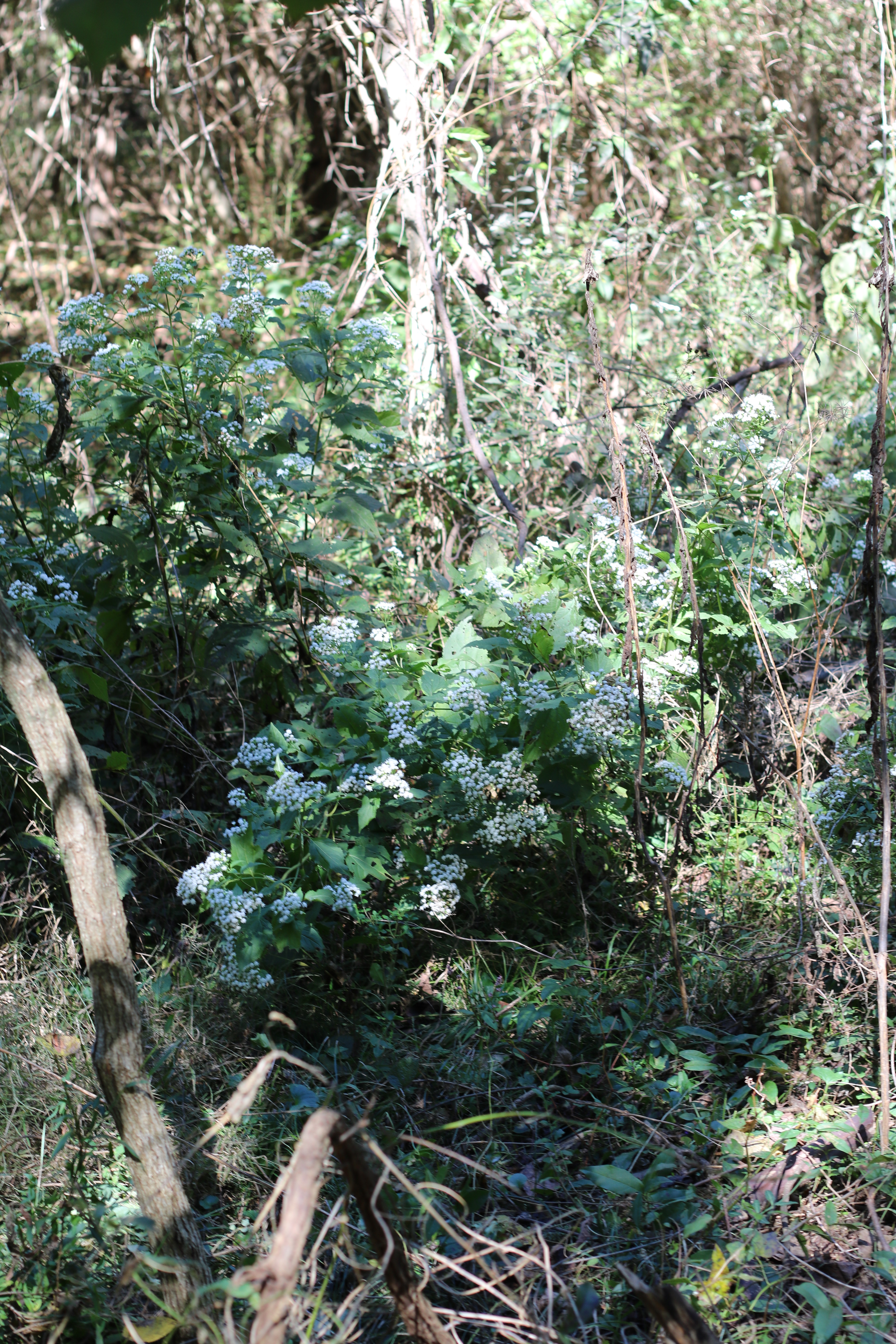
Snakeroot (Ageratina altissima) [TN native]

Patch of Snakeroot
Snakeroot #2
Snakeroot #3
Snakeroot #4
Snakeroot #5
W/ little ladybug

Japanese honeysuckle [TN invasive]

Dreaded Japanese honeysuckle

Crossvine (Bigonia capreolata) [TN native]

Crossvine #1
Crossvine #2
Crossvine #3

Question Mark butterfly (Polygonia interrogationis) [TN native]

Question Mark #1
Question Mark #2

English ivy (Hedera helix) [TN invasive]

English ivy climbing
English ivy on ground

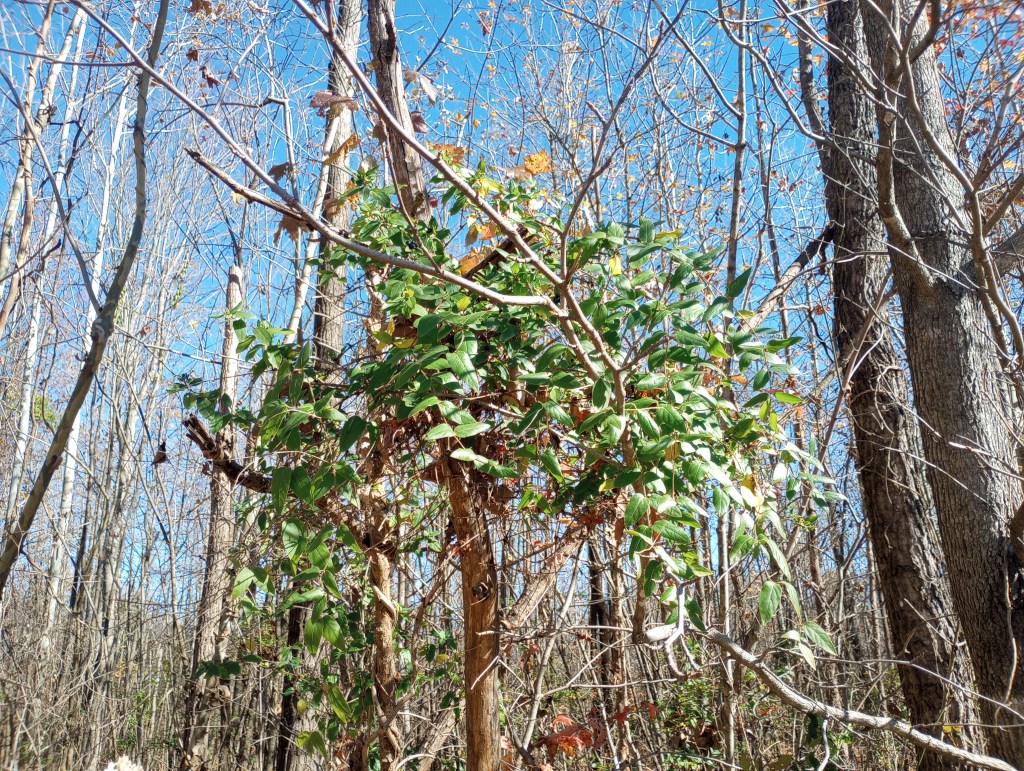
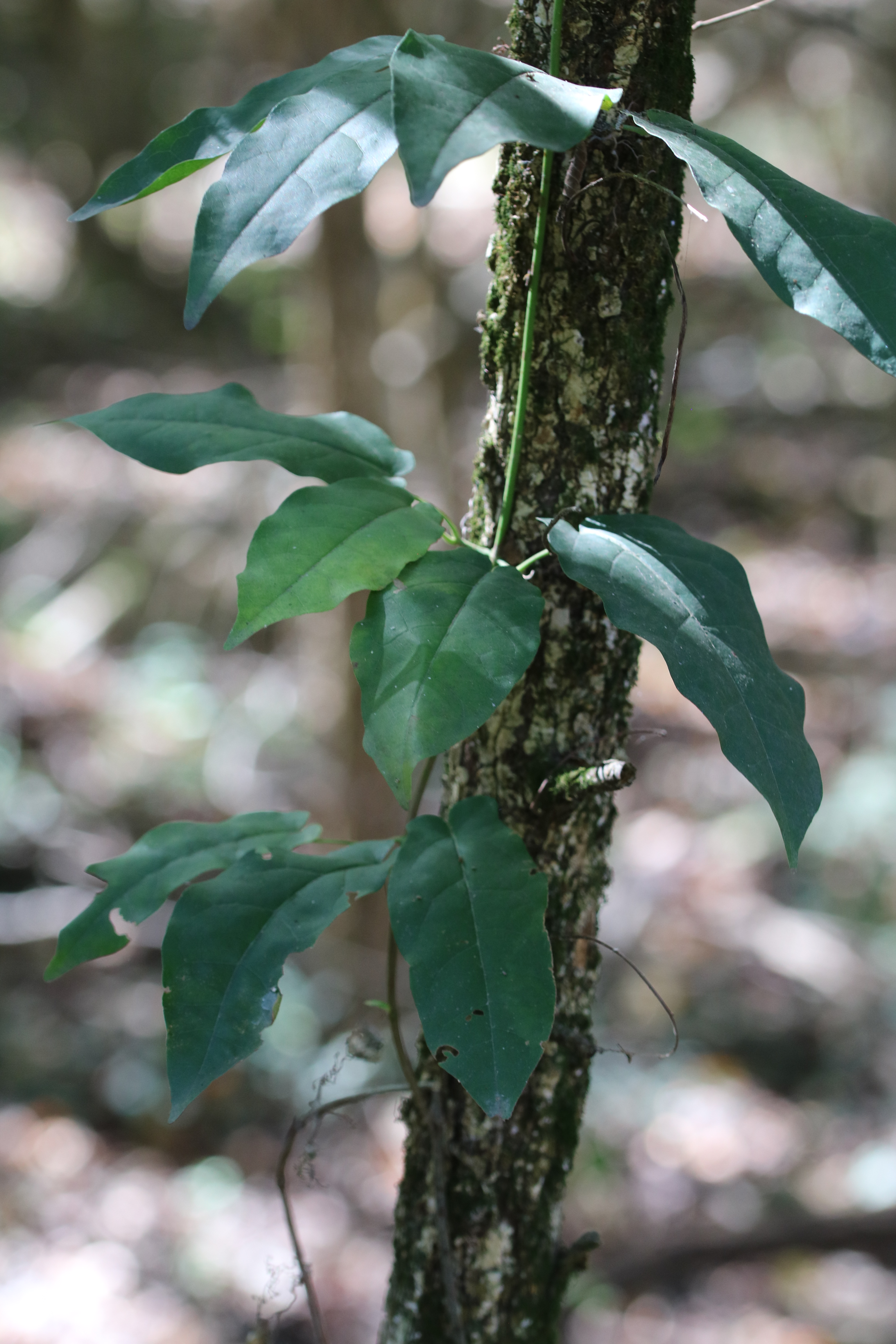
Poison ivy? (Toxicodendron) [native]

Poison ivy? #1
Poison ivy? #2
Poison ivy? #3
Poison ivy vines possibly
Poison ivy? #4
Poison ivy? #5
The actual tree the vines were on

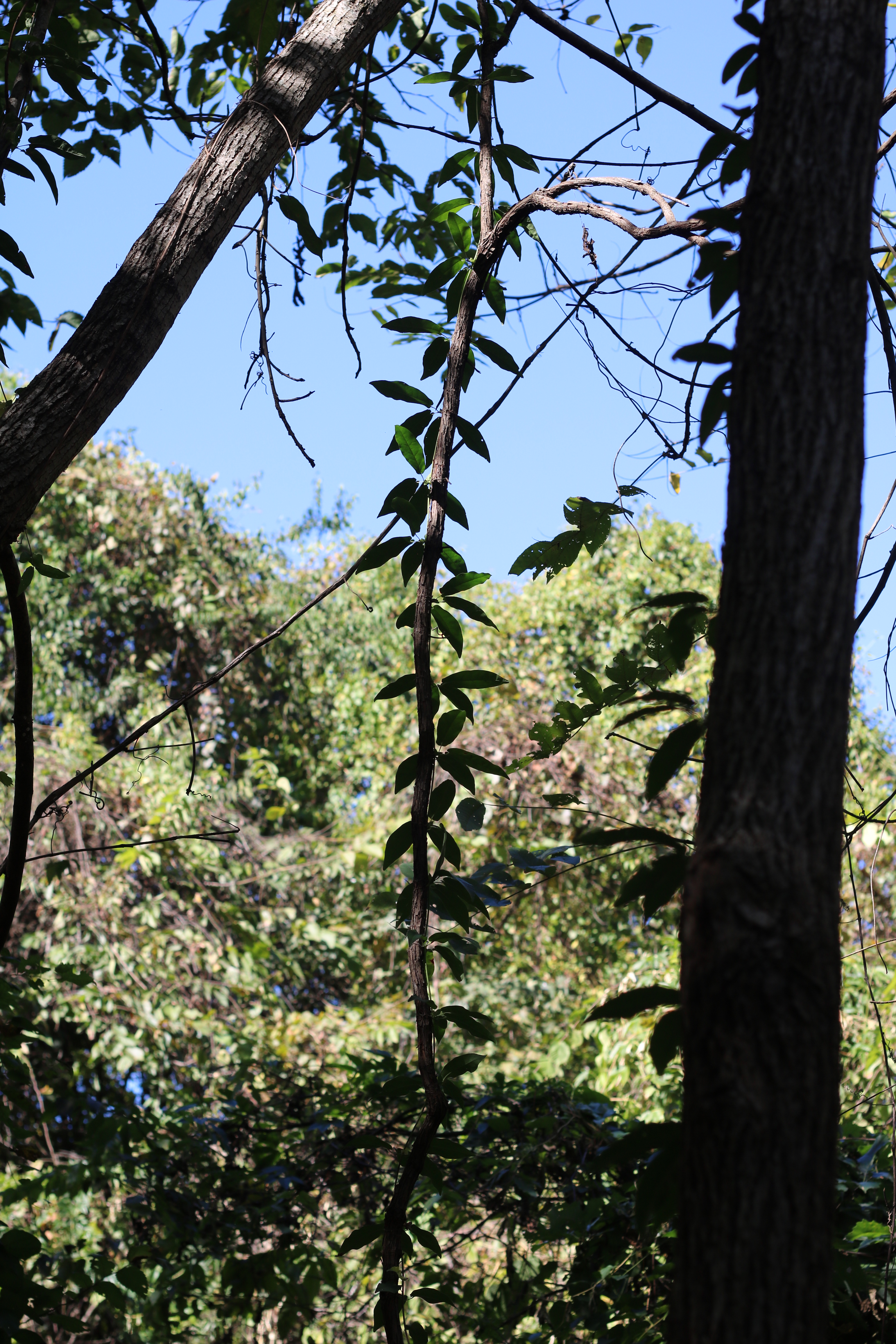
Muscadine (Grape) Vines

Muscadine #1
Muscadine #2
Muscadine #3
Muscadine #4
Muscadine #5

Carolina Snailseed (Cocculus carolinus) [TN native]

C. snailseed #1
C. snailseed #2

Wintercreeper/Fortune’s spindle (Euonymus fortunei) [TN invasive]

Mostly wintercreeper on the ground, some Carolina snailseed and J. honeysuckle
Wintercreeper covering ground
Wintercreeper beginning to climb
Someone has cut wintercreeper vines off the oak
Cut vines
Wintercreeper skeleton branches
All these branches are the dead wintercreeper branches
Extremely massive oak

Bush honeysuckle [TN invasive]

Juvenile bush honeysuckle
Area cleared of invasives
Bush honeysuckle trunks
Cleared of invasives
No more honeysuckle
“Chipmunk condo”, pile of destroyed invasive plant debris (mostly bush honeysuckle and Chinese privet)

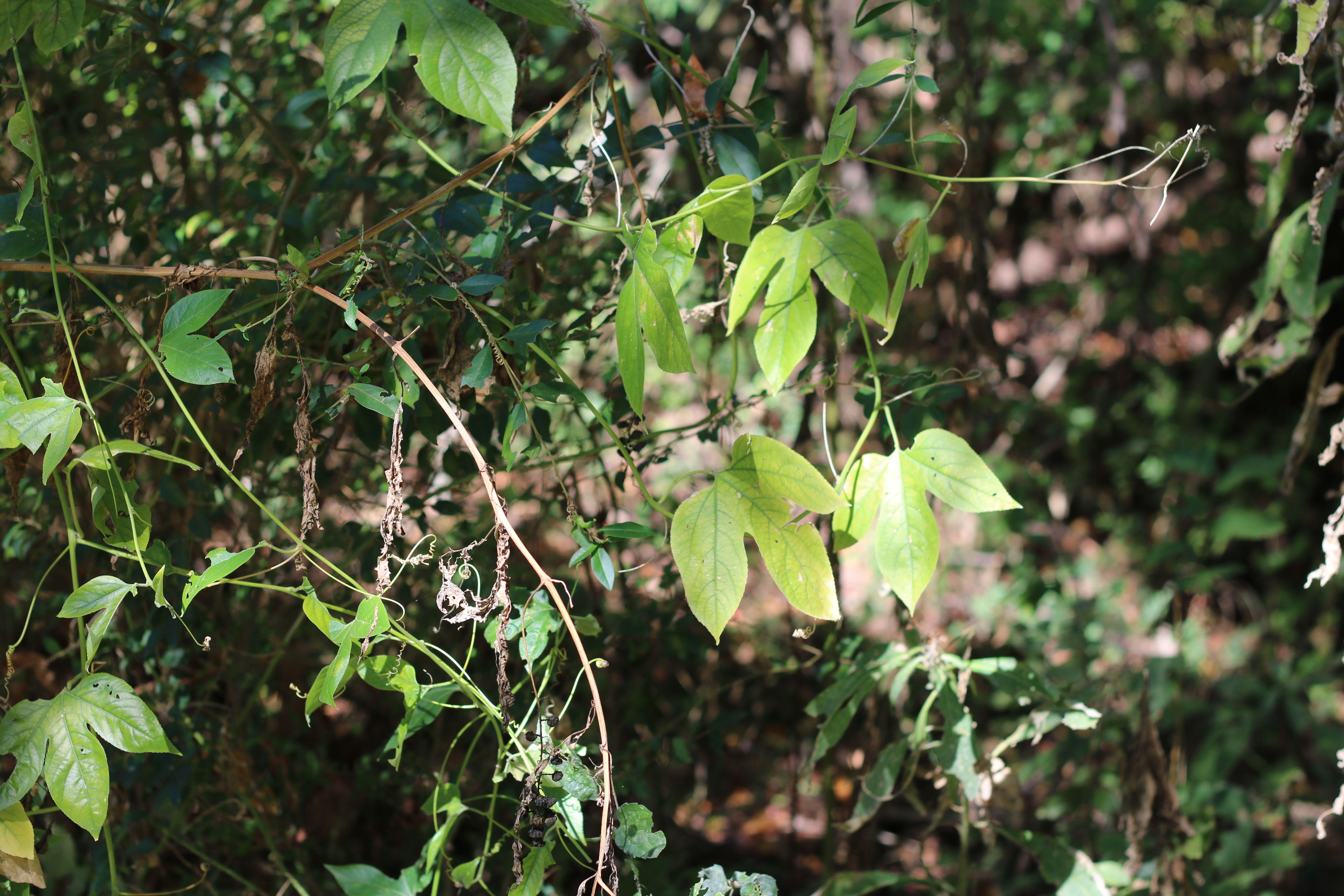
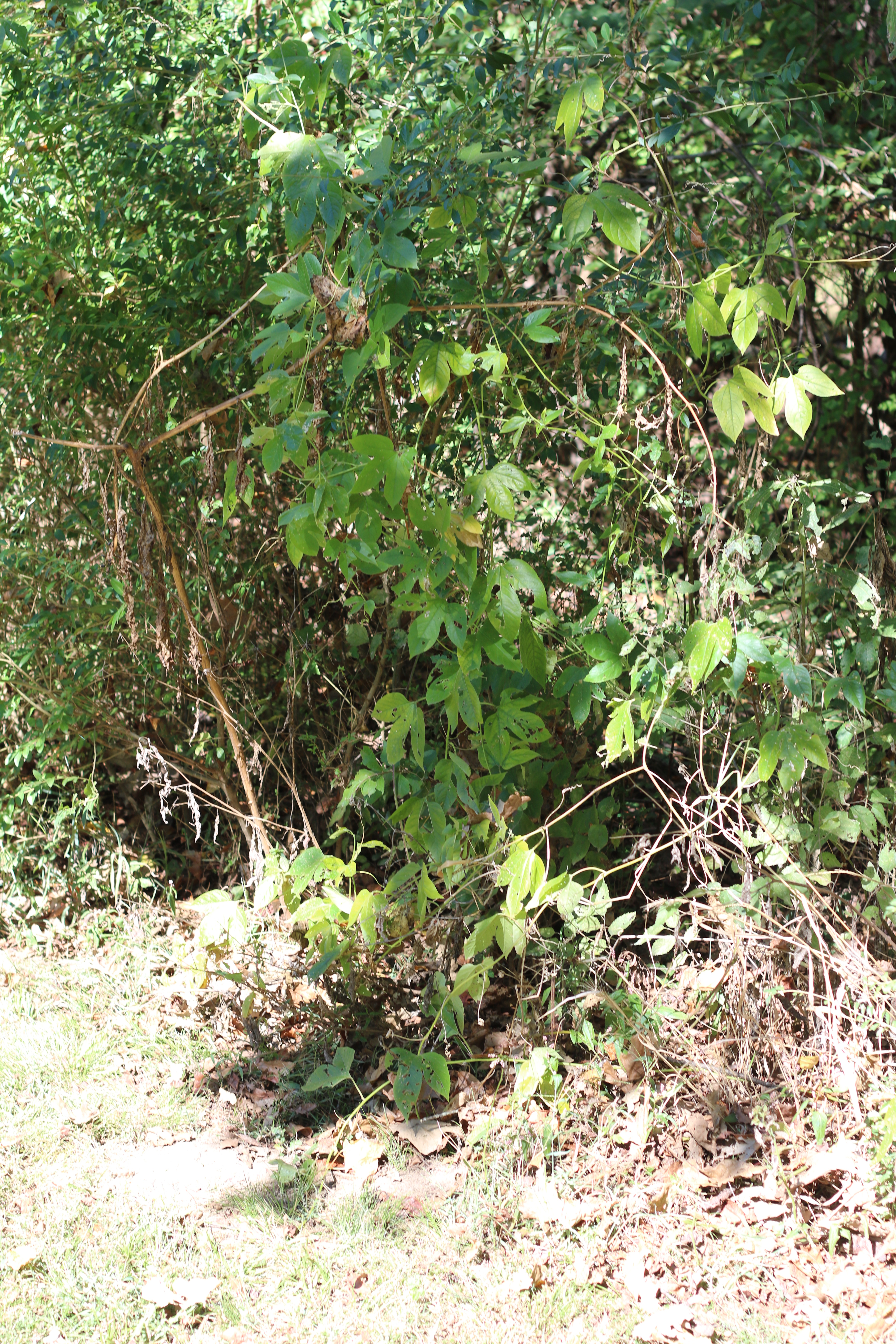
Passionflower (Maypop) [TN native]

Passionflower #1
Passionflower #2
Passionflower #3

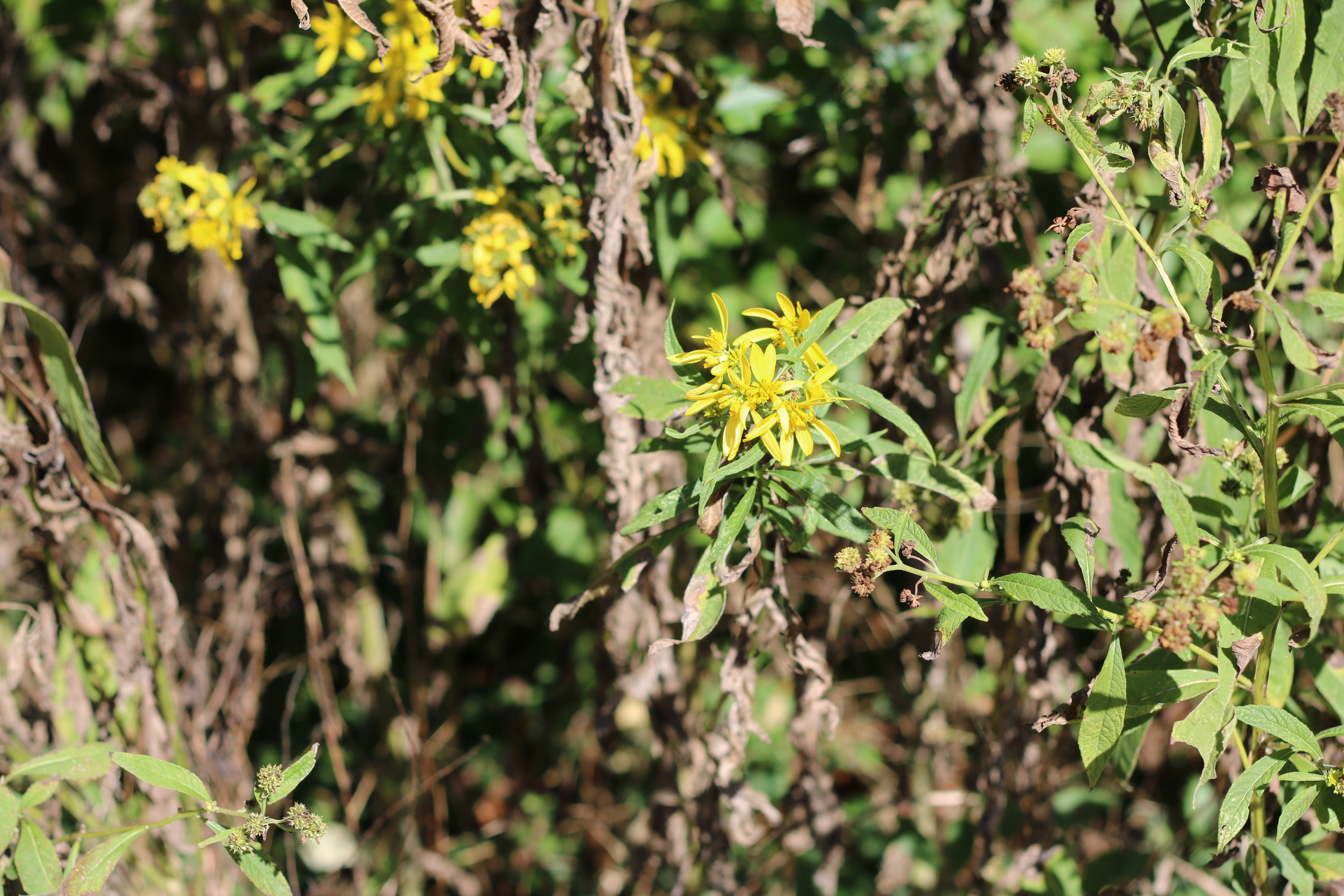
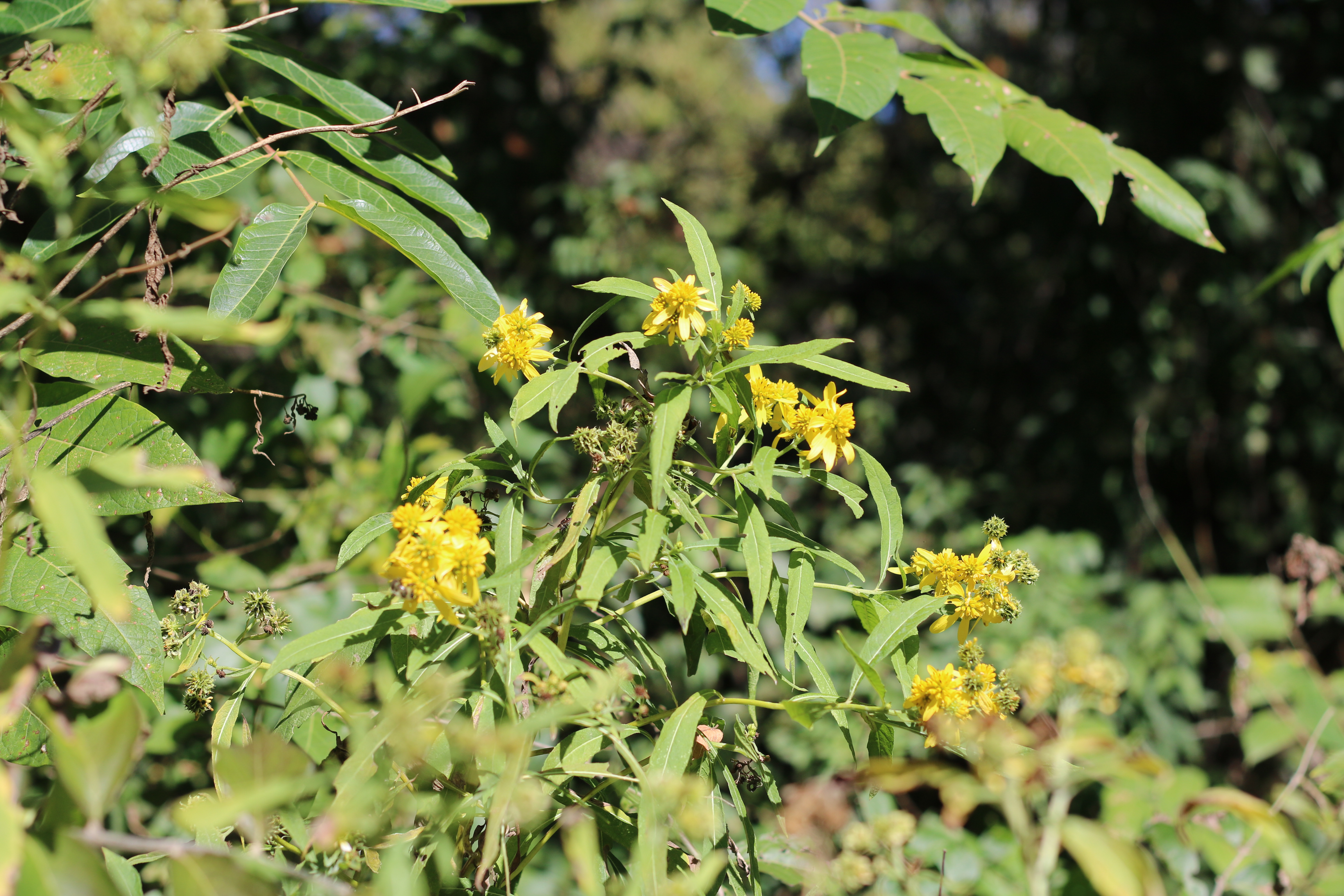
Wingstem/Yellow ironweed (Verbesina alternifolia)

Wingstem, Verbesina alternifolia
Wingstem is also called Yellow Ironweed

Virginia creeper (Parthenocissus quinquefolia)

Virginia creeper climbing
V. Creeper turning red for fall
V. Creeper

Stages of Ladybug // Garden Photography

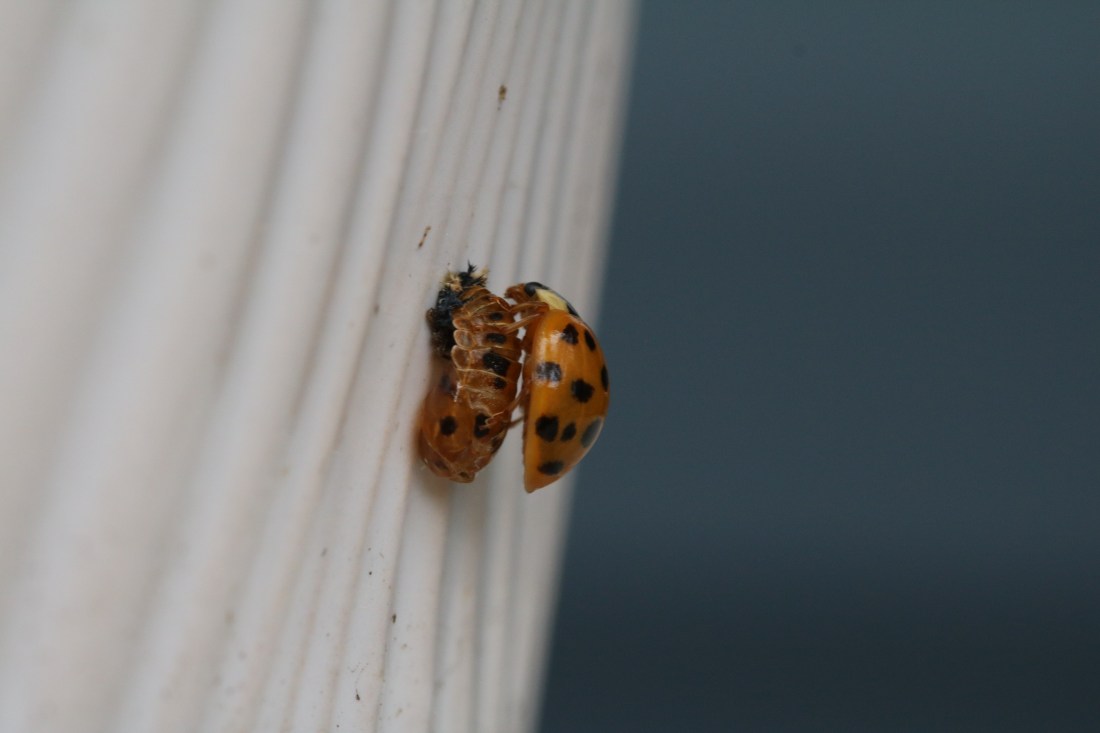
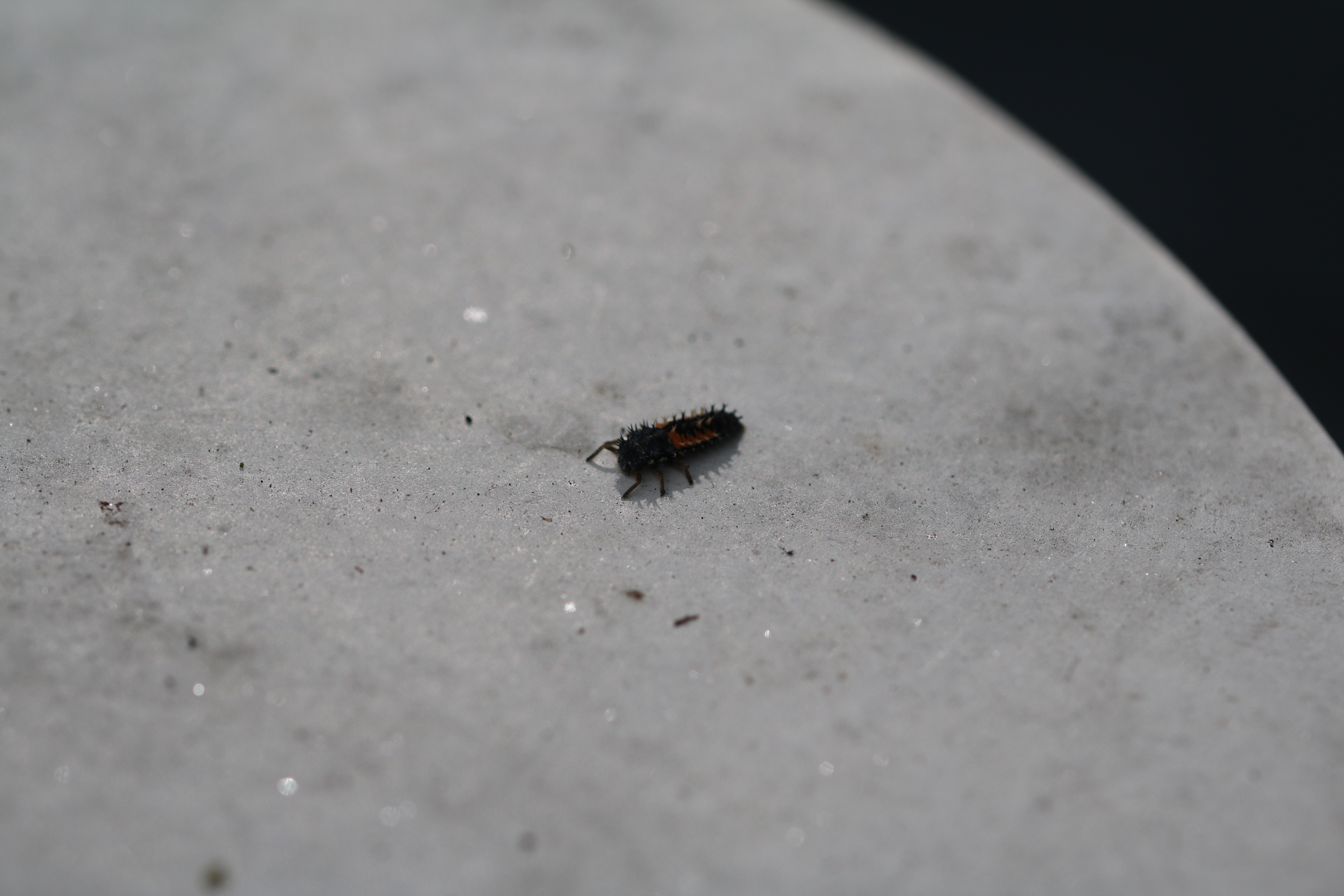
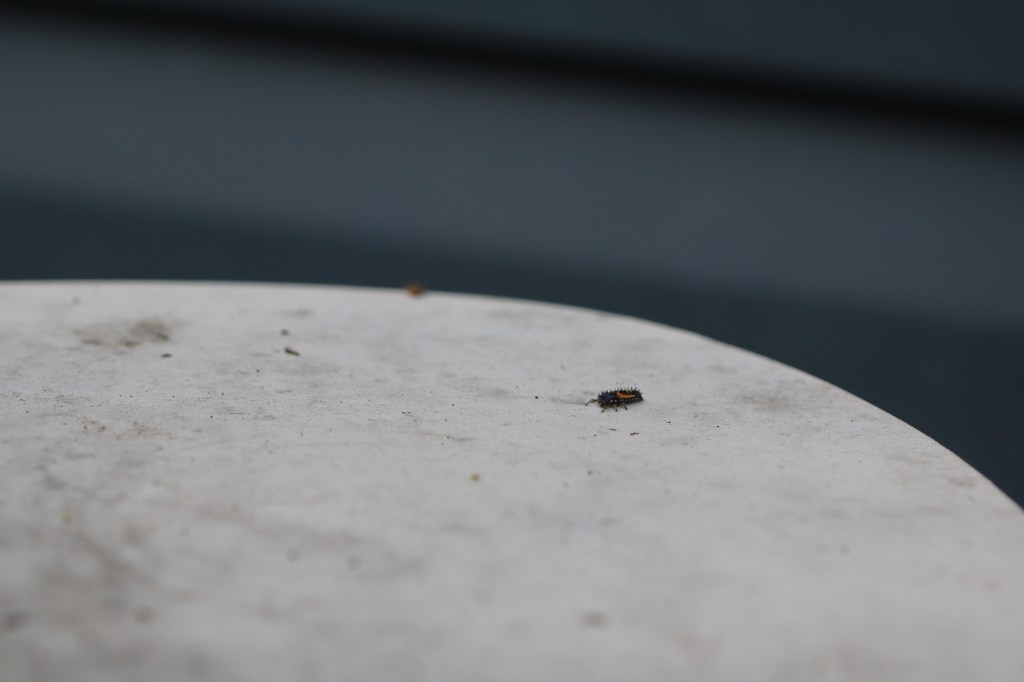
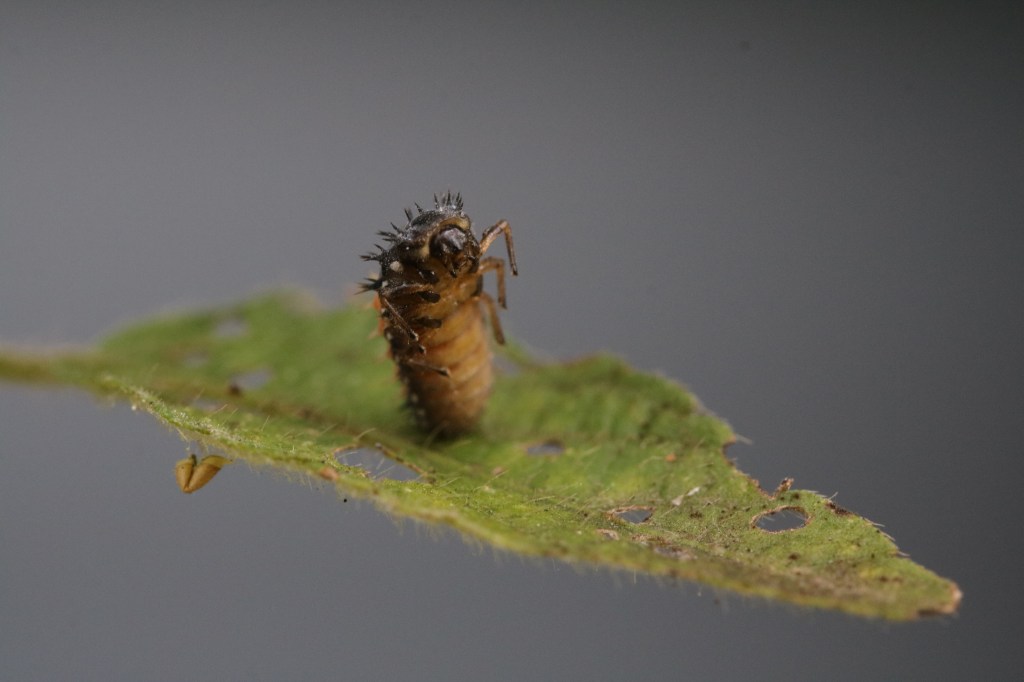
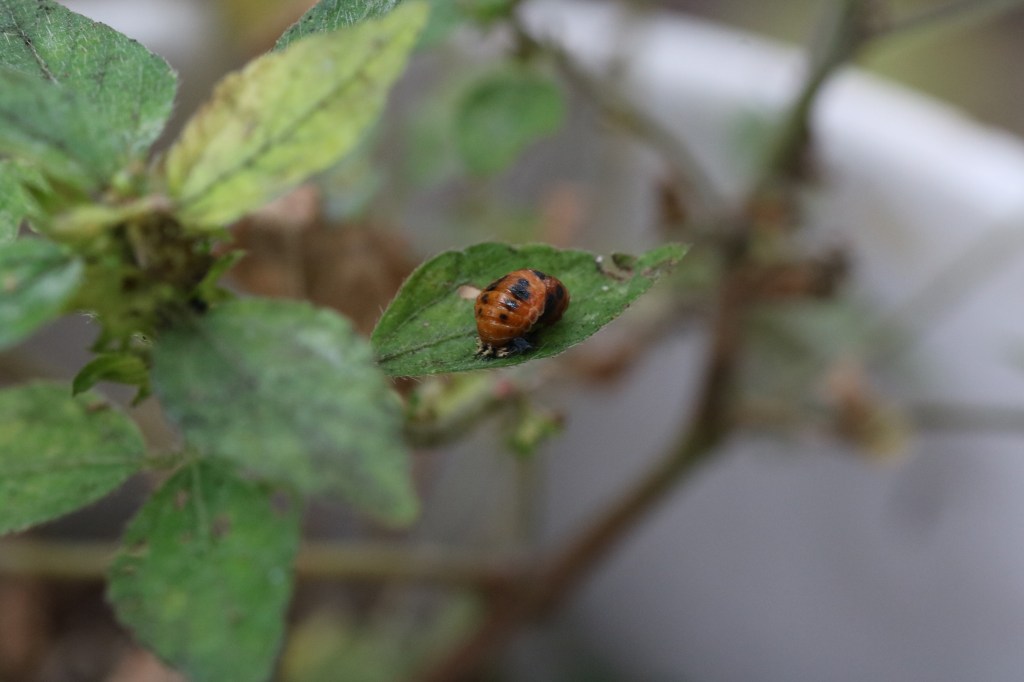
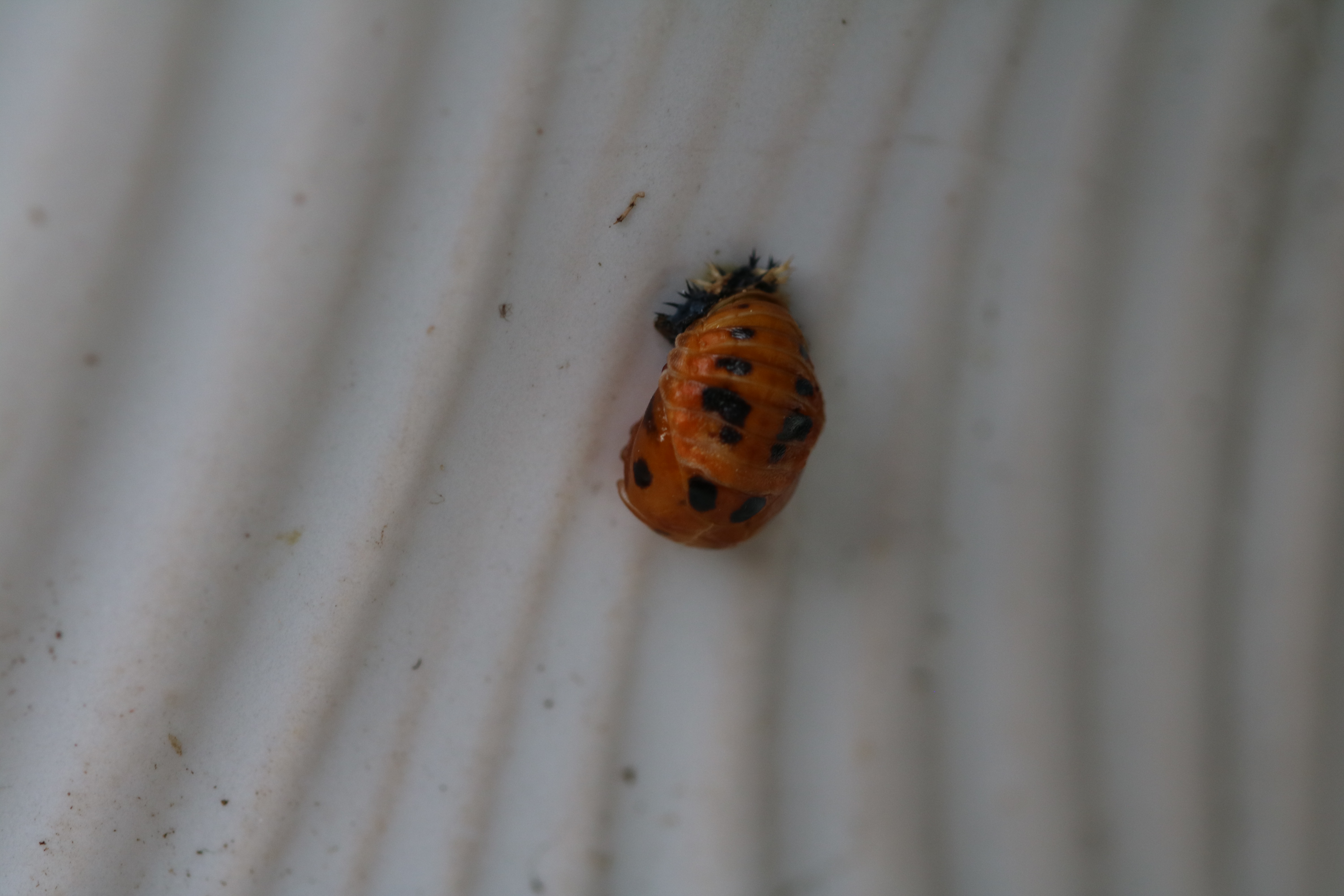
There are a lot of ladybug larvae out and about right now here in early October (Oct. 8th). They’re all over the yard, making their tiny metamorphoses on my front door, my plants, the vines, my car. I was wondering why they would undergo their metamorphosis now, as winter is right around the corner (although we still have 2 months before then, and that is plenty of time to do stuff in the bug world). I read that ladybugs can live for several years and that they stay alive through the winter by hibernating. I had no idea about that.

I told my discerning sister that I had some photos of ladybugs and she said, “Are you sure they aren’t Chinese ladybeetles?” I wasn’t sure. And just now, looking at some photos of the Chinese ladybeetles, or, Asian lady beetle, Harmonia axyridis, they certainly look similar. The internet says that the Asian lady beetle is now in some parts of the US the most common ladybug around, and so these photos probably are of the Asian lady beetle.

There is no difference between a lady beetle and ladybug, they are all in the same family, Coccinellidae, which is a family in the order Coleoptera (the beetles). According to Wikipedia, “Entomologists use the names ladybird beetles or lady beetles to avoid confusion with true bugs.”

(The true bugs are the Hemipterans, another order.) I like saying ladybug, though, personally.

Larval stage #1
Larval stage #2
Larval stage #3
Preparing to undergo metamorphosis
Preparing for metamorphosis #2
Preparing for metamorphosis #3
Pupal stage #1
Pupal stage #2
Pupal stage #3
Final Form #1
Final Form #2
Final Form #3
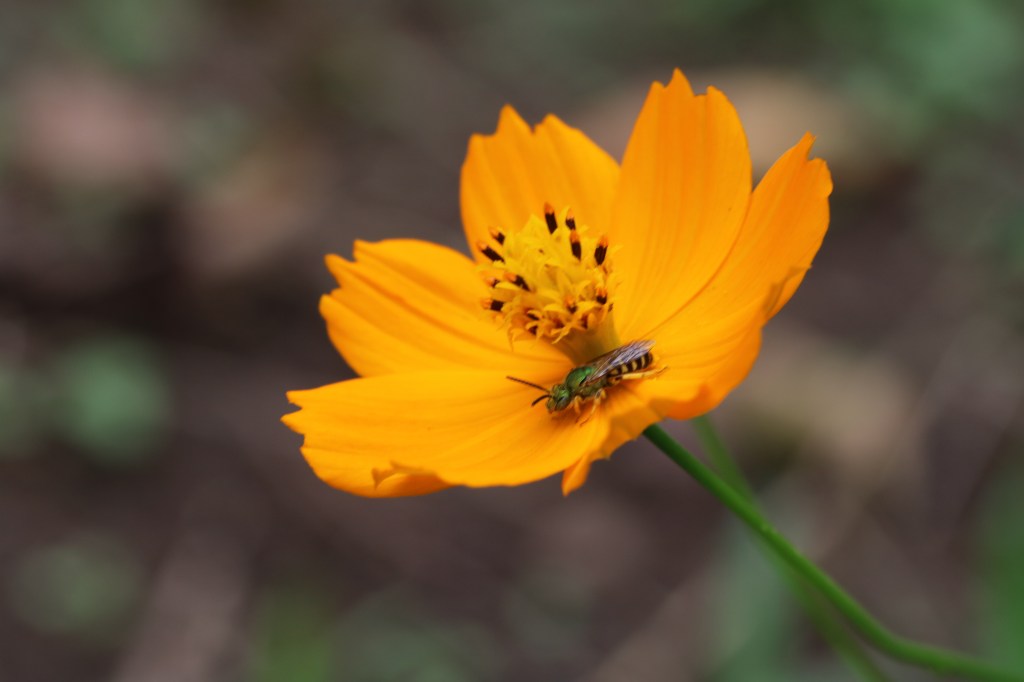
Cosmos with bee #1
Cosmos with bee #2
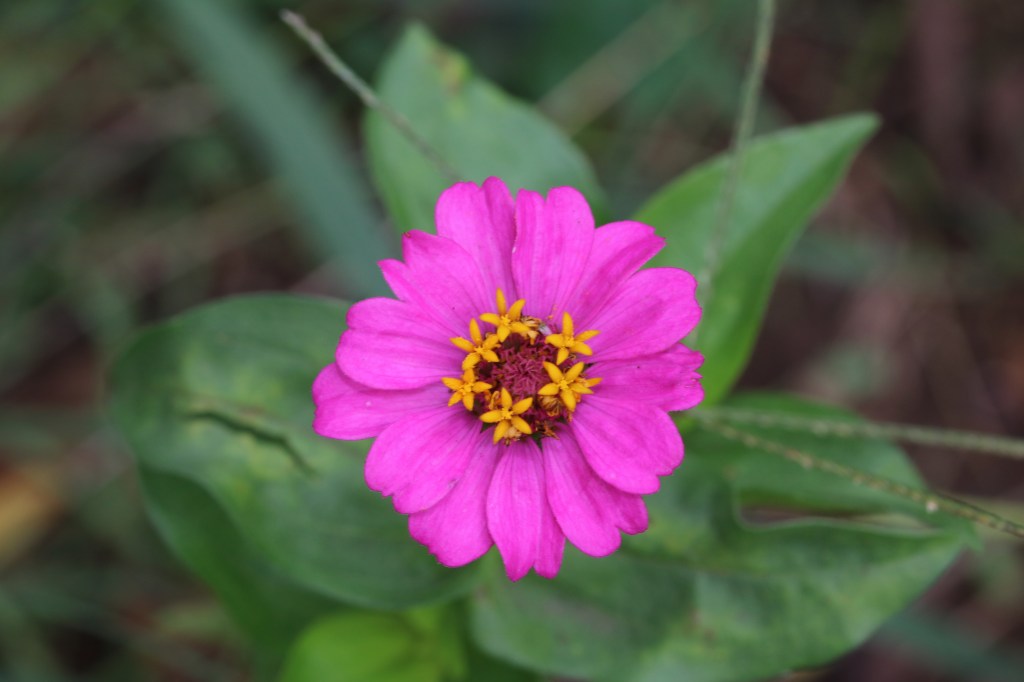
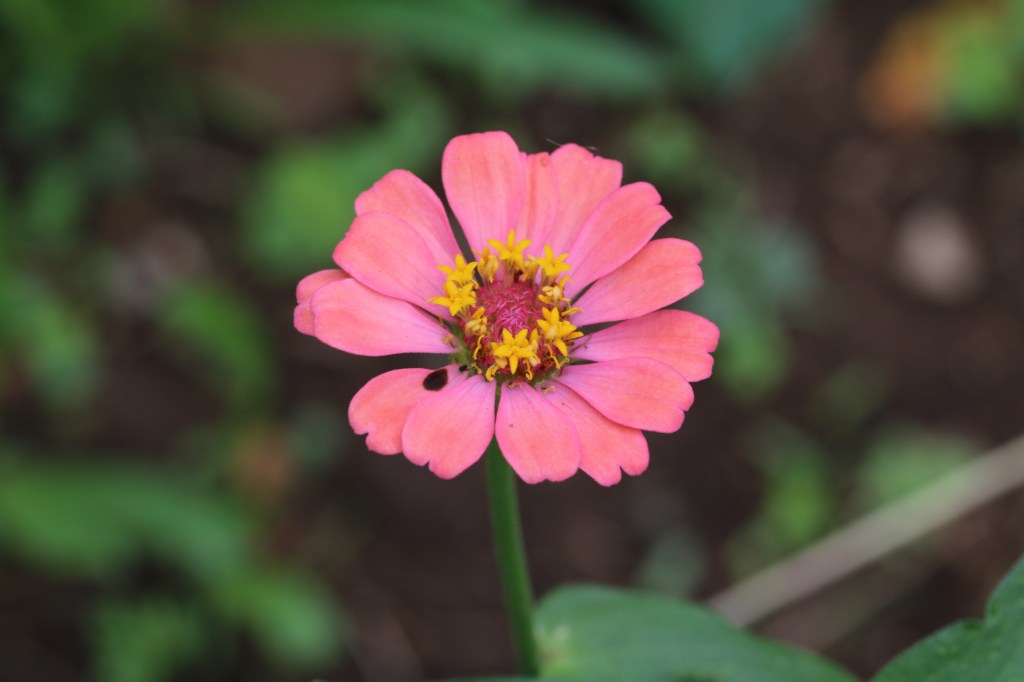
Zinnia #1
Zinnia #2
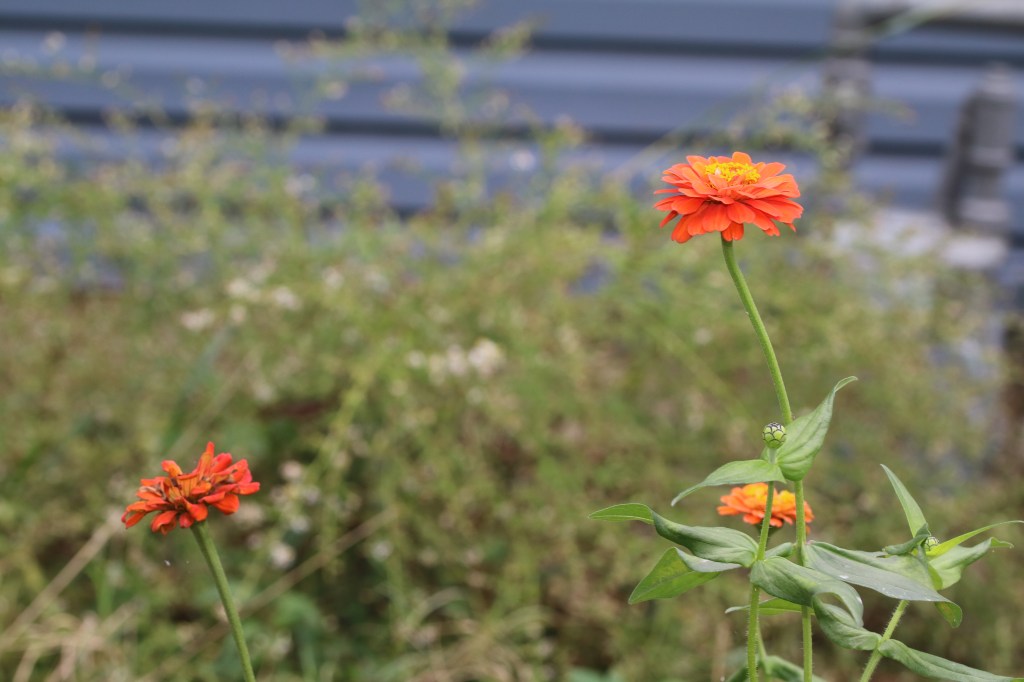
Zinnia #3 (orange!!)
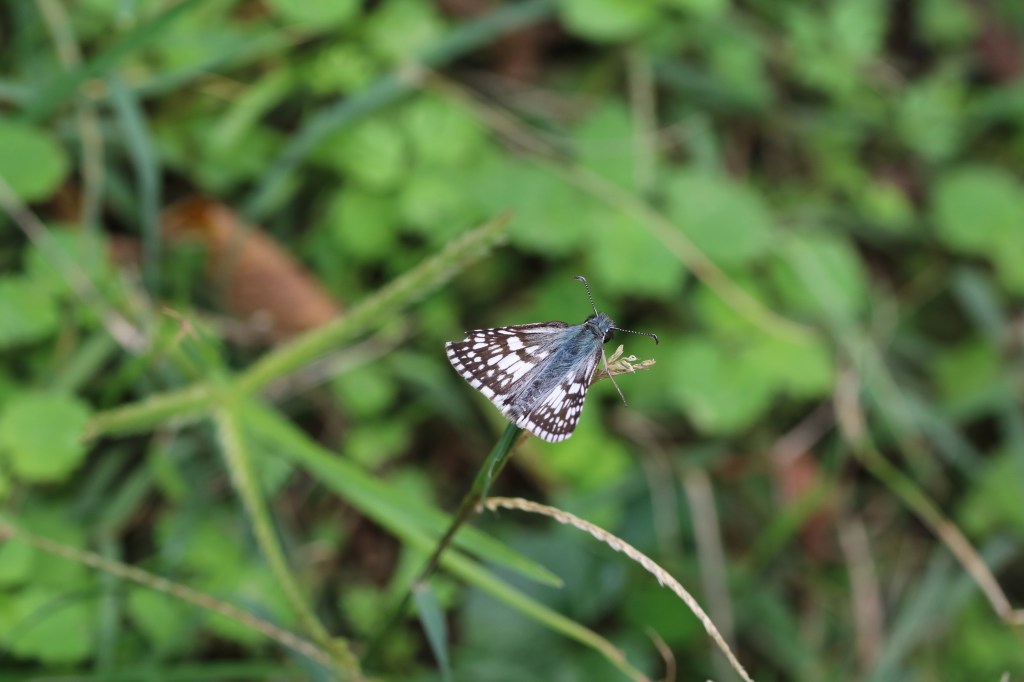
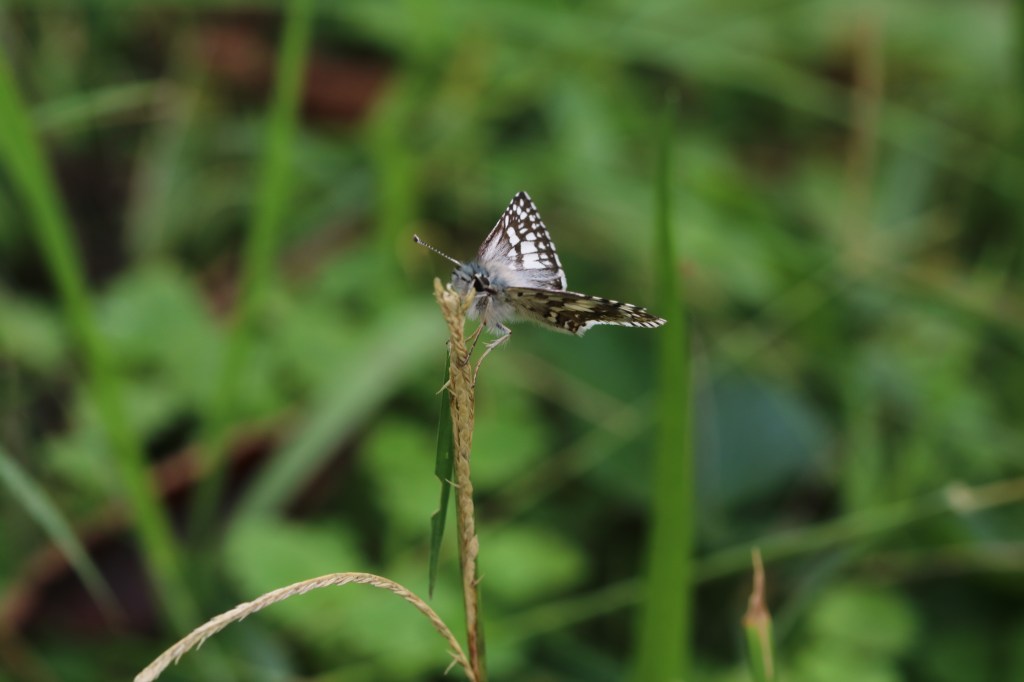
Common Checkered-Skipper
Common Checkered-Skipper #2
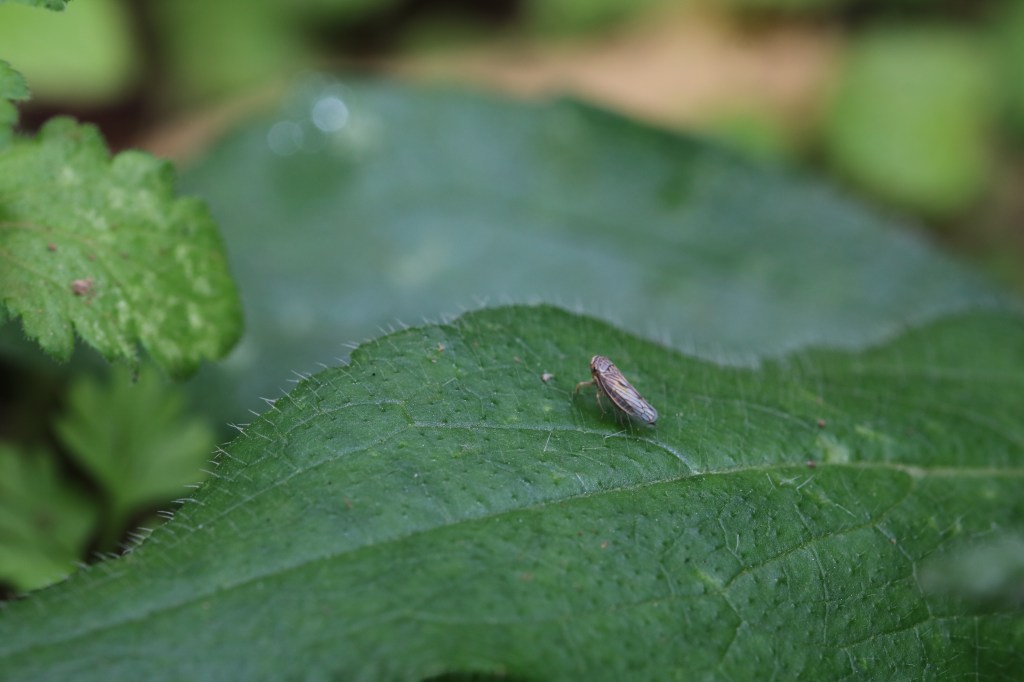
Leafhopper (a true bug)

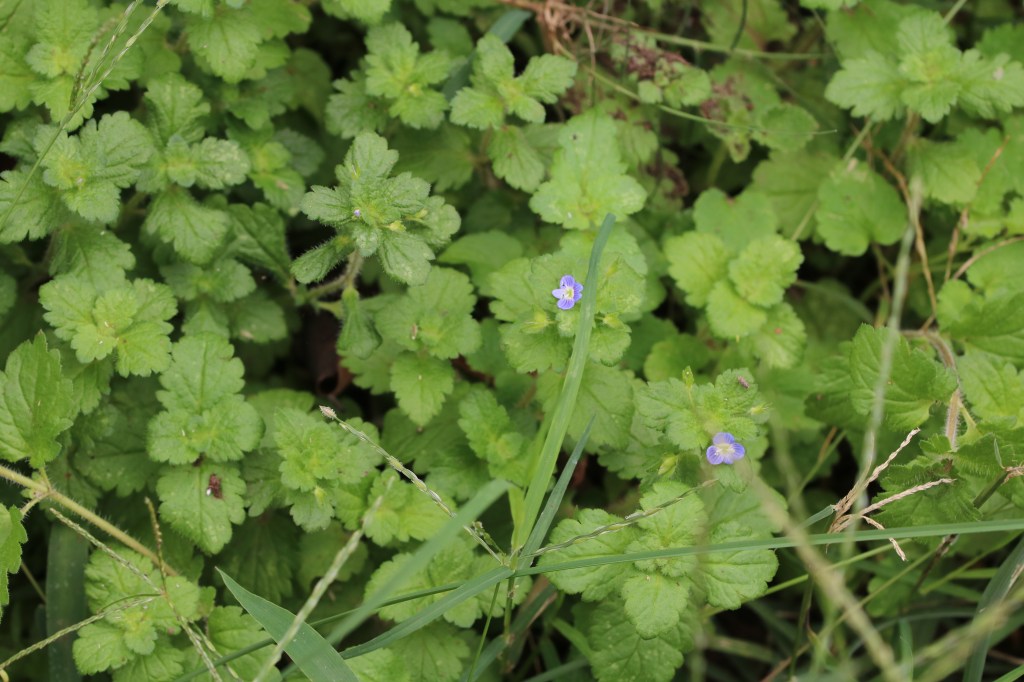
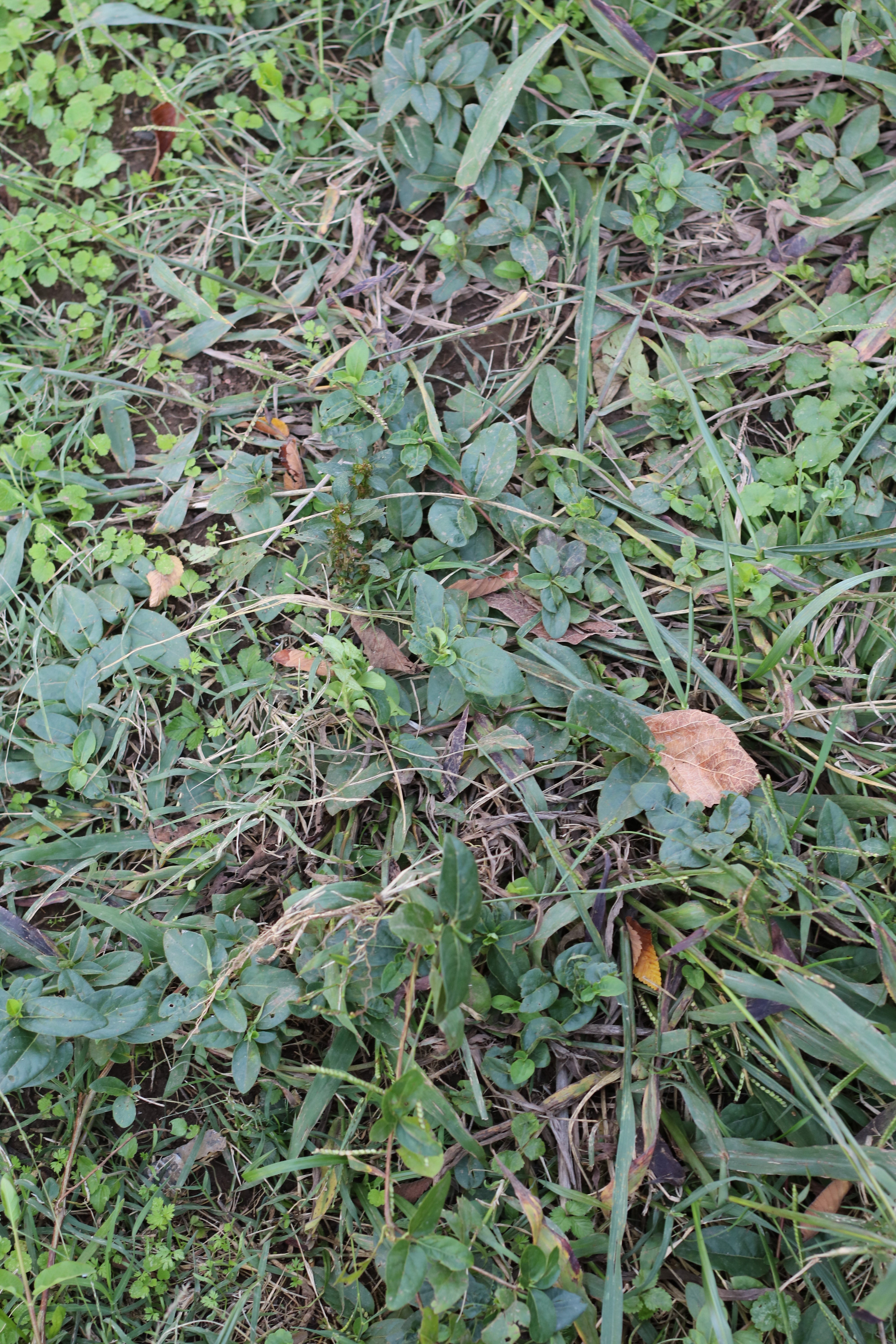
This Persian speedwell has been one of the main plants to dominate the bare dirt of my garden. I’ve just let it go and cover the ground. In the below picture you can also see the Three-seeded mercury, the taller, larger dark green plants. It recently put up some flowers, extremely tiny flowers. They must be some of the tiniest flowers you can find.

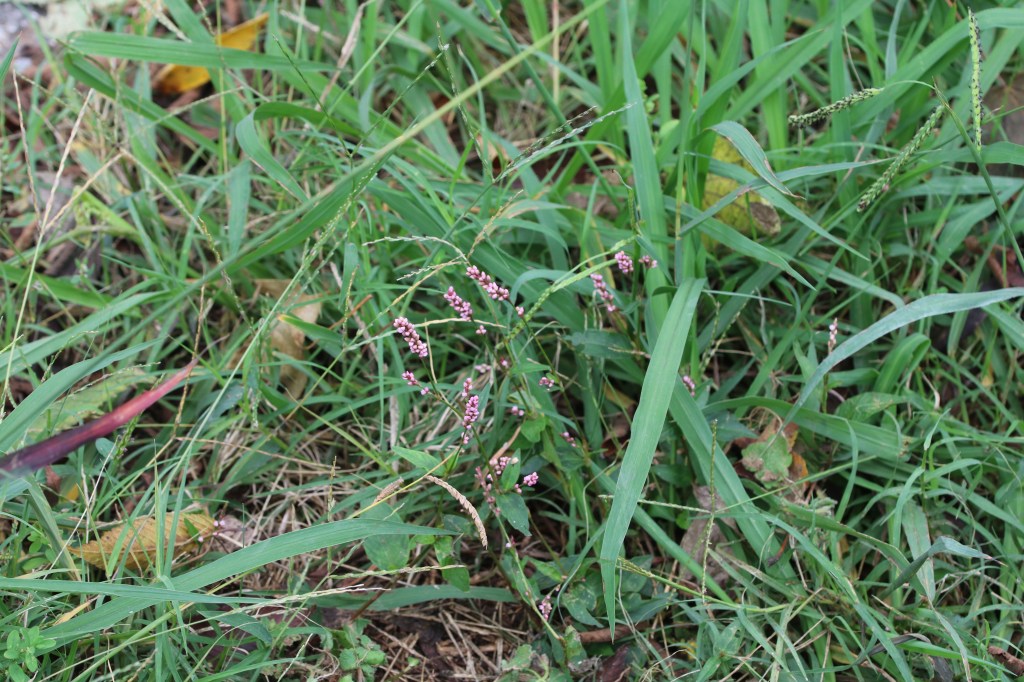
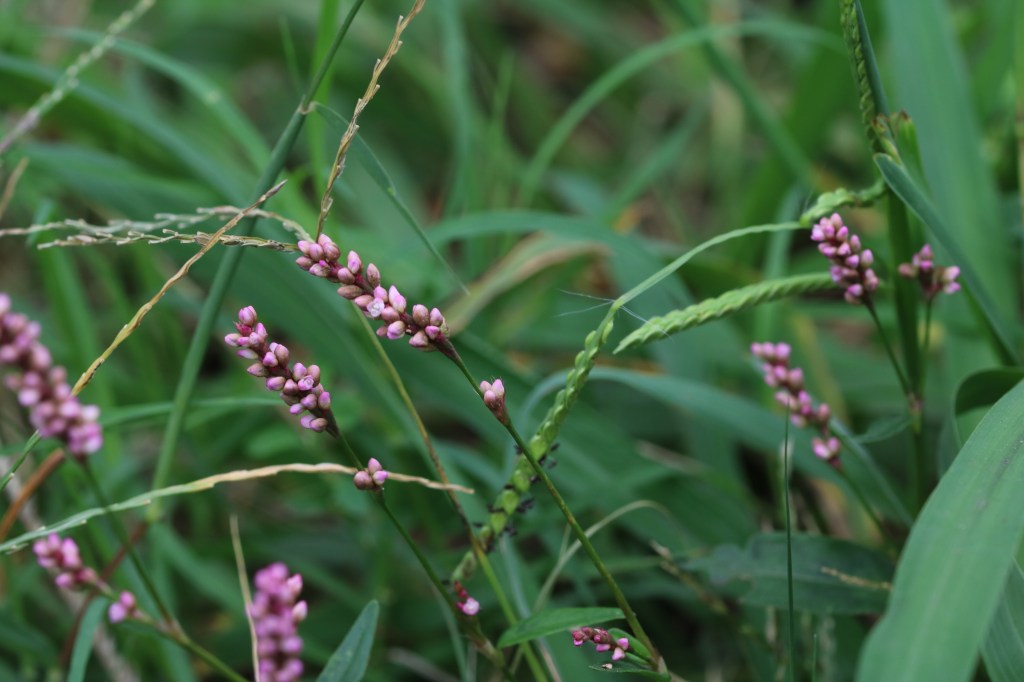
I’ve been seeing this Smartweed pop up, which has some interesting flowers/seeds. Are those pink things tiny little flower buds? Apparently the Smartweeds are edible. We’ll have to try some. (We as in me and whoever else I can get to eat it.)

Mostly Veronica persica, Persian Speedwell
Veronica persica flower
Versonica persica #2
Some kind of Smartweed
Smartweed

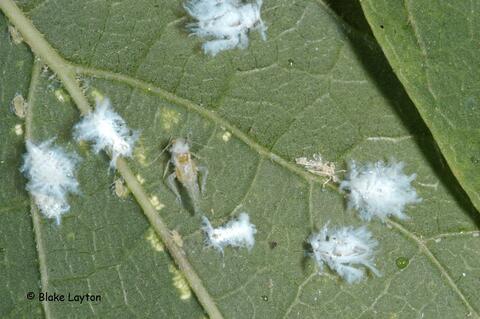
We also have crazy amounts of a fluffy white bug flying around and covering everything with sticky sap. Those are wooly aphids, and probably an invasive kind (from Asia), the Wooly hackberry aphid. According to the internet if you live in the Southeastern US, that’s probably what you’re seeing right now. And I have I think five hackberries in my yard, and a lotttttt of wooly aphids, so it would make sense.

Wooly hackberry aphid

Cosmos Are Popping Off [Garden Post]

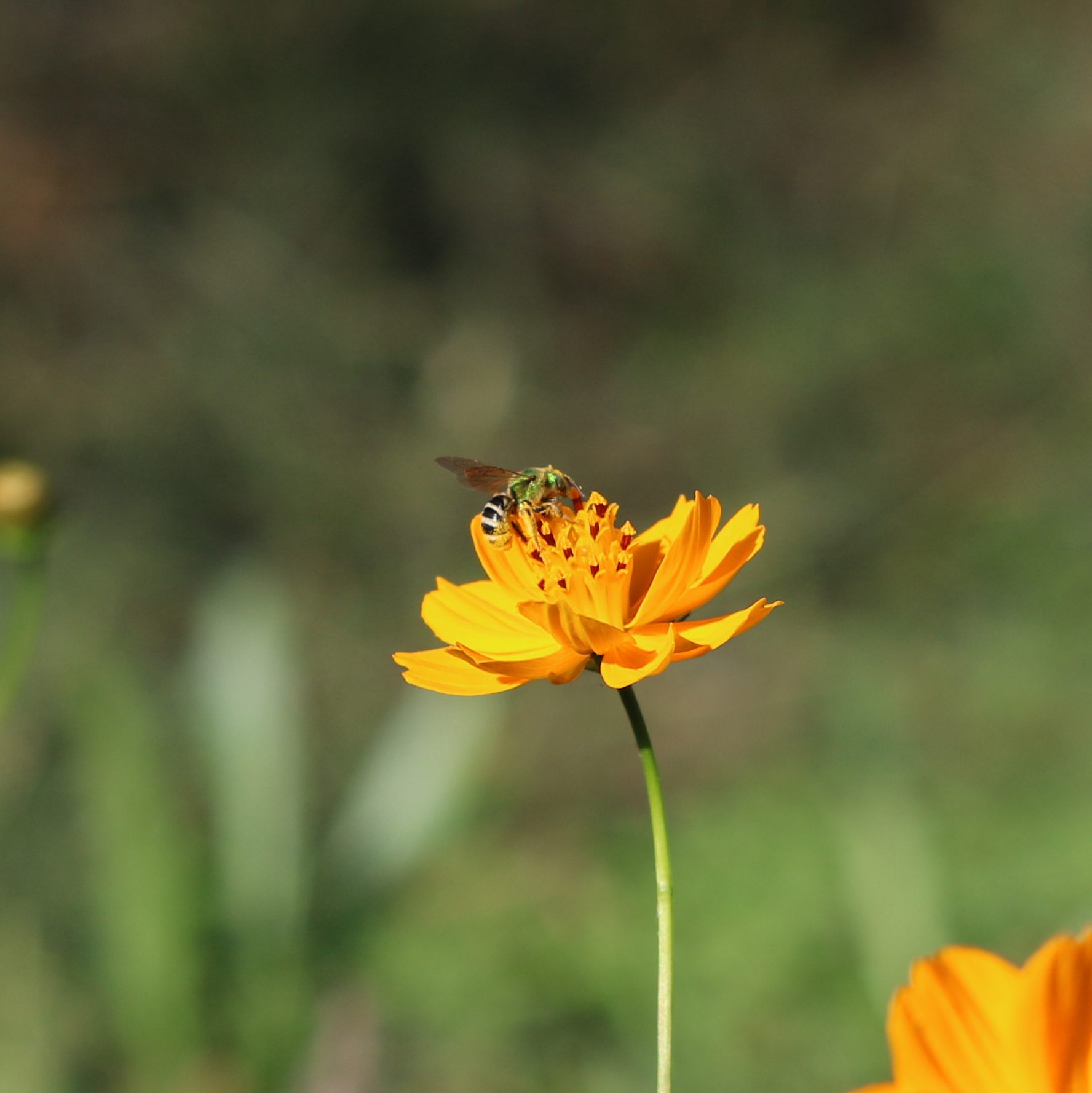
The cosmos are popping off now. They add an amazing pop of color to the landscape. It’s actually shocking how much pop they add. Right now things are looking generally brown and crispy, a bit dull, and/or just green. These cosmos are breaking through.

The first one was yellow, and all the rest have been a light yellow-orange. I wonder what’s going to happen to all these flowers with the first frost, which is supposed to be around Oct. 15th.

Cosmos!!!
Bee like cosmos
Yellow cosmos
Look at that pop

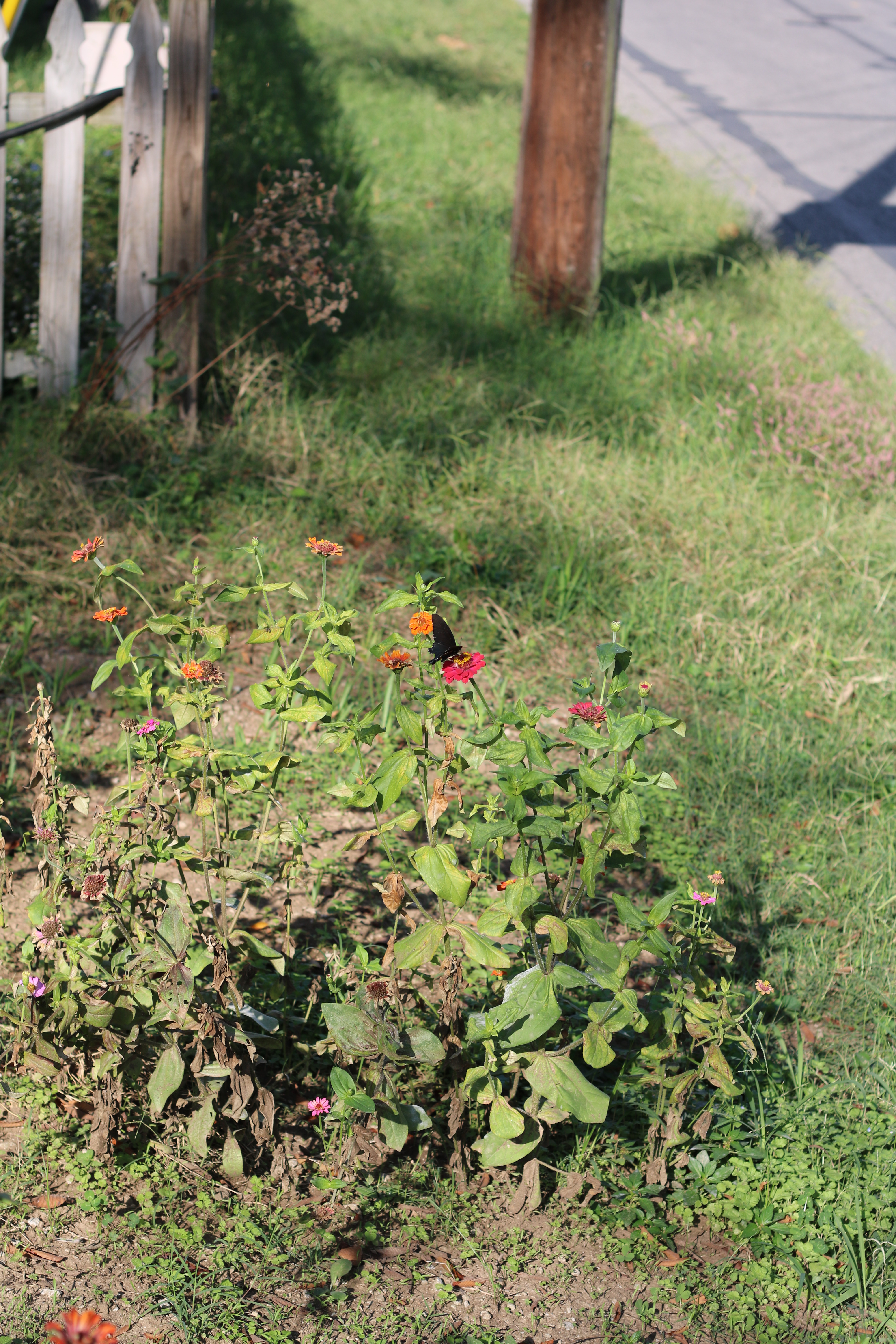
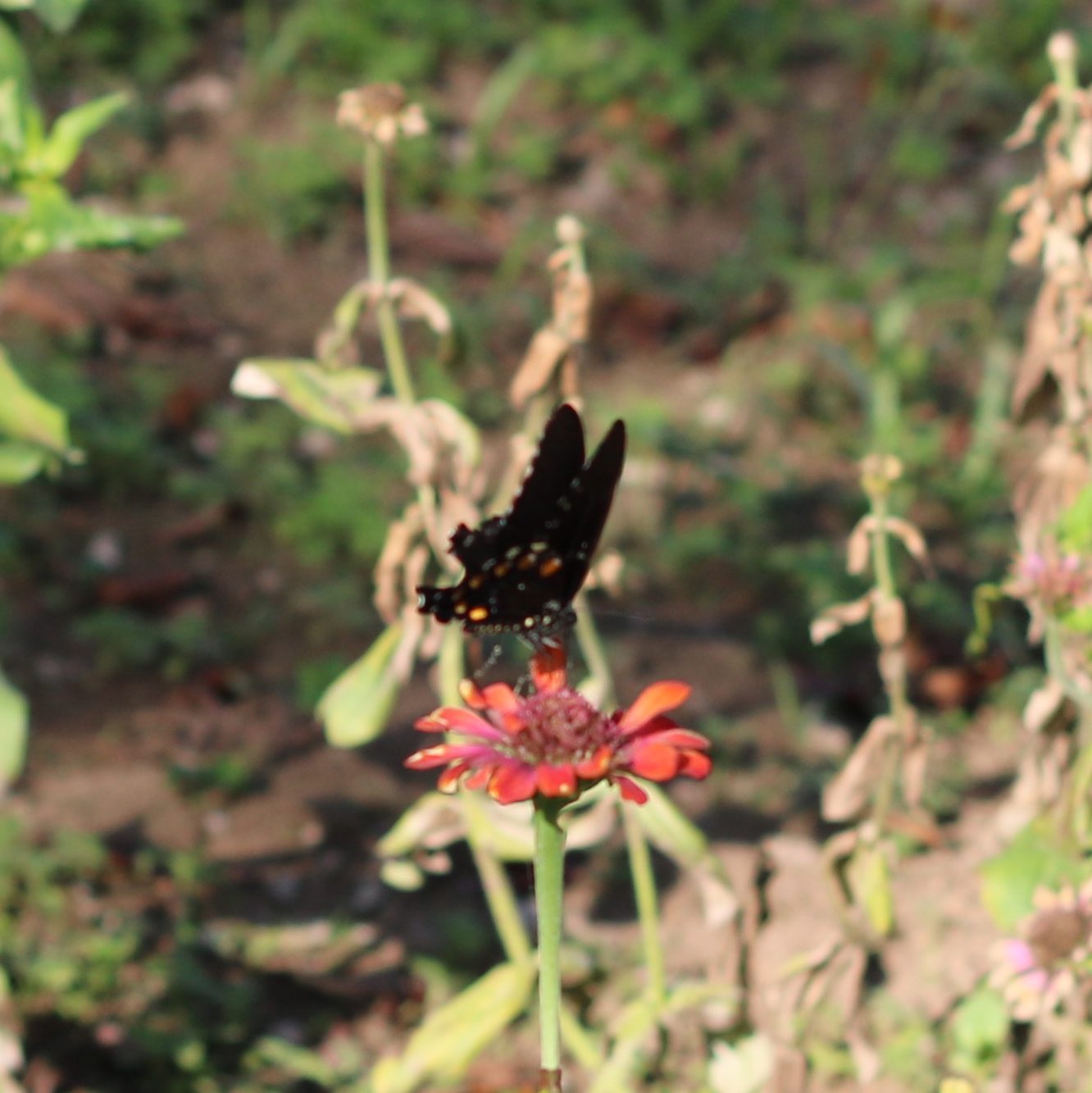
The bees seem to like them more than zinneas. Every time I’ve looked I’ve seen bees at the cosmos. The butterflies like the zinneas but they have a tough time because of the cars. Every time a car drives by the butterflies abandon the flower, and if two or three drive by they seem to give up on the patch altogether. I feel like the flowers are a bit of a trap for them in this way. But if they can get in when there aren’t any cars driving by they can have a nice feast.

Butterfly like zinnea

I saw this butterfly on the zinnea this morning, I see this one often around here. Maybe a Pipevine swallowtail? Looking at the pictures online, looks likely.

Pipevine swallowtail (possibly)
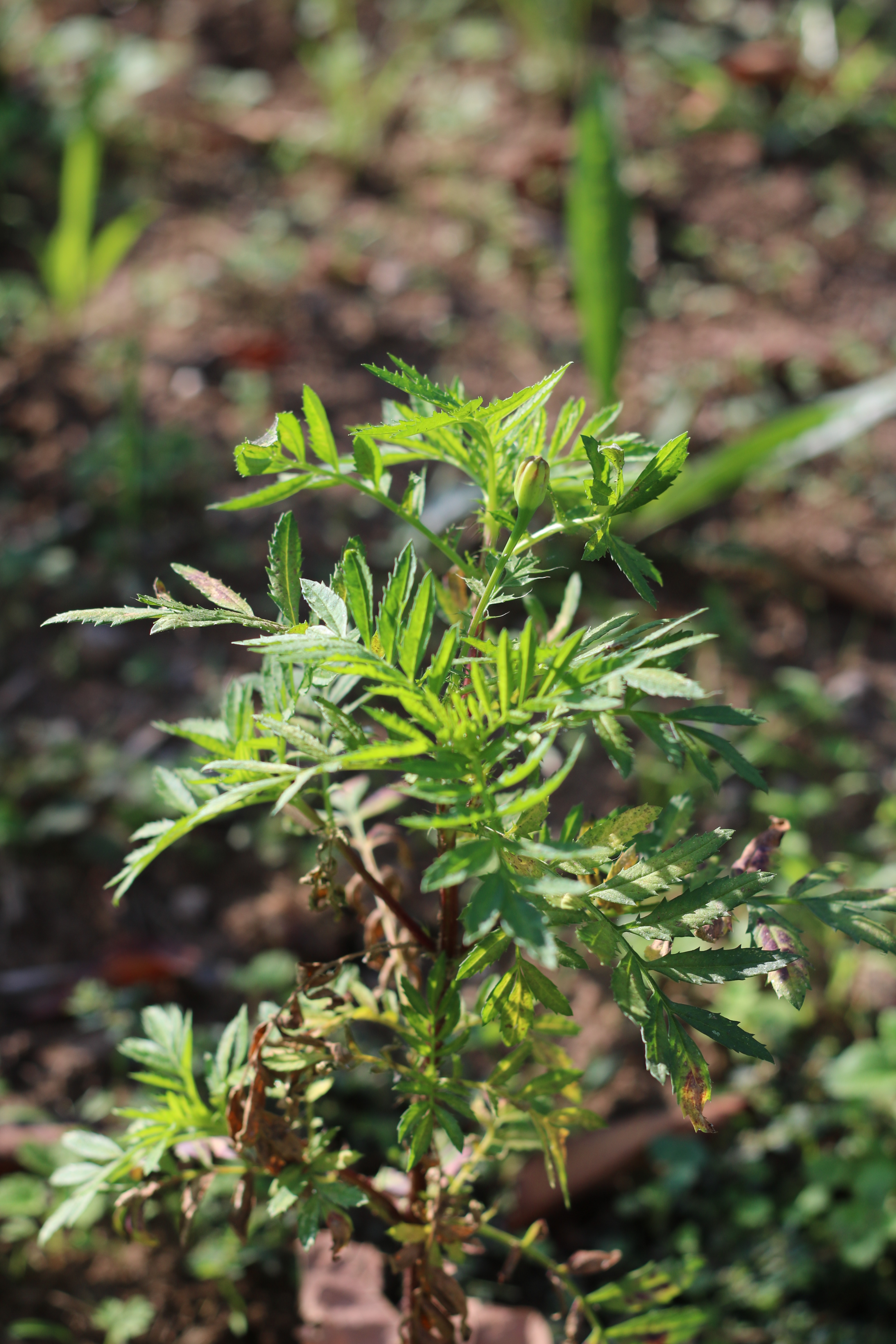
Marigold soon to bloom

The marigold has a bud that has grown massively in the last two days. It will bloom any day now. I’m ready. Come on!!!!

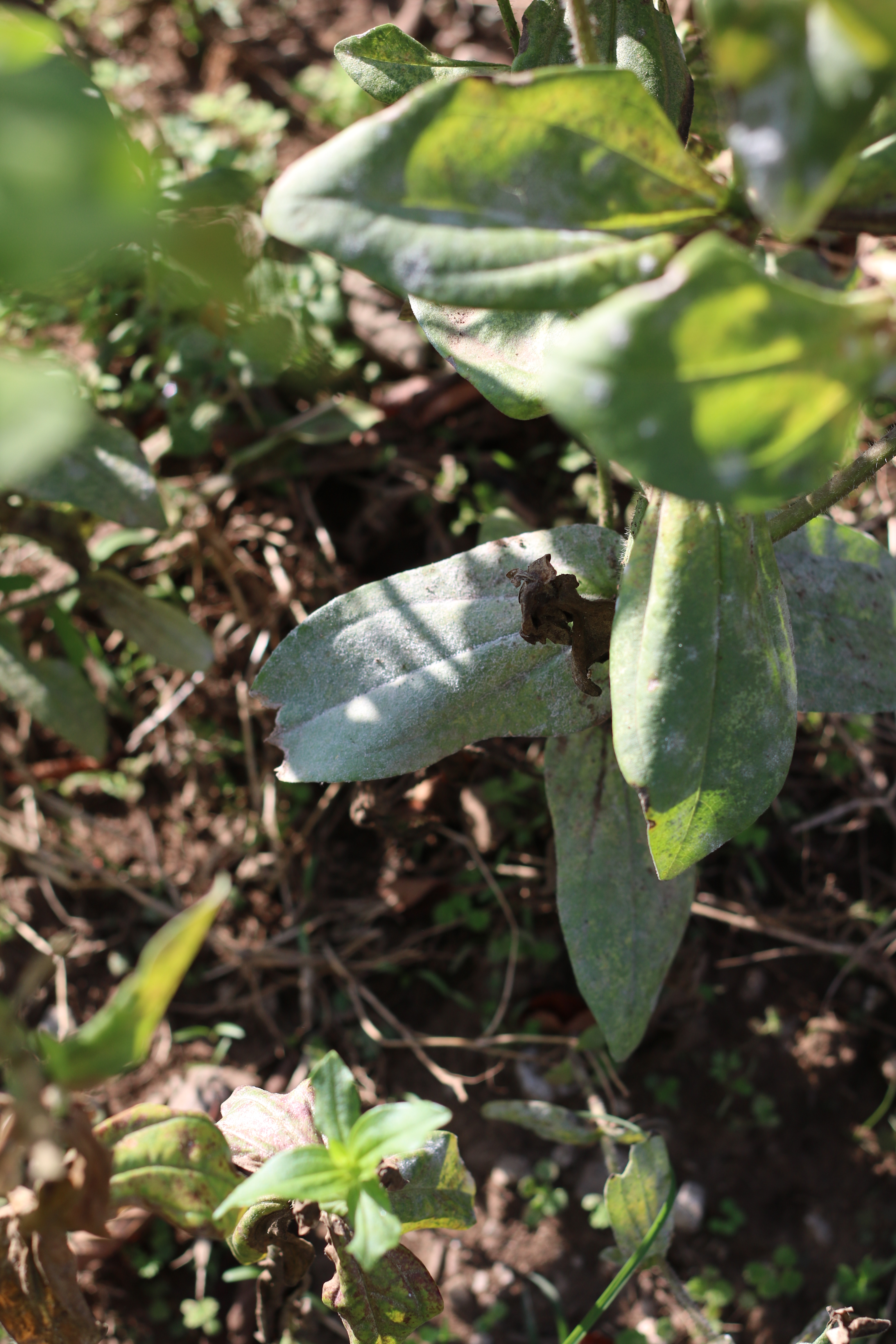
My zinneas now have powdery mildew. They must just get it no matter what, because it hasn’t been humid here at all. Hasn’t been rainy. Been dry as a bone. I don’t know how you’re supposed to keep this from happening.

This second patch isn’t having as much trouble with the alternaria though.

Powdery mildew

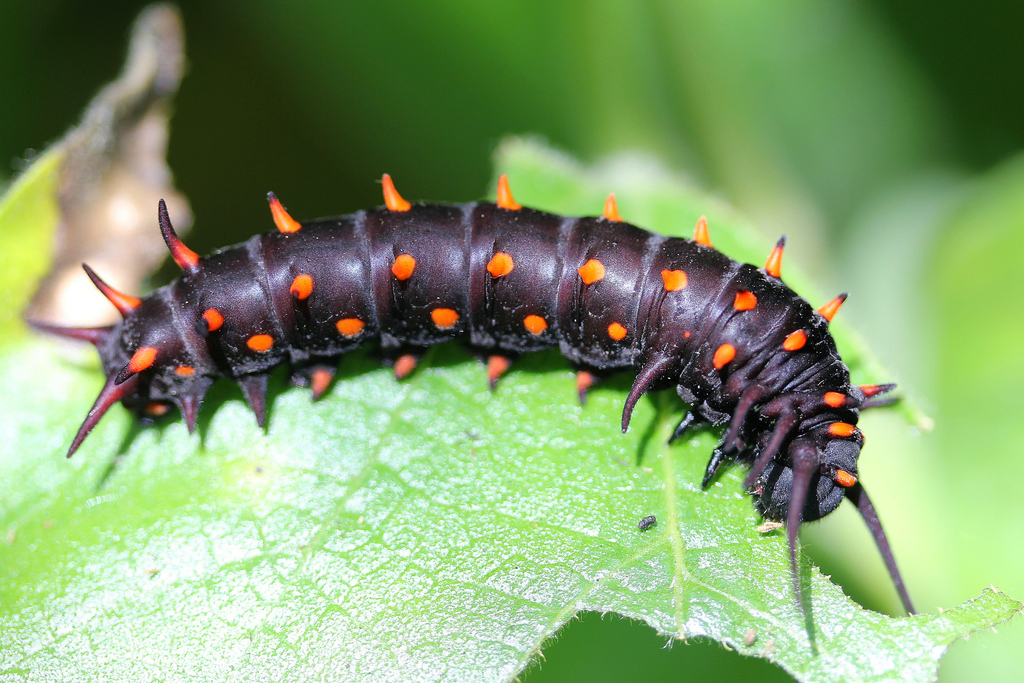
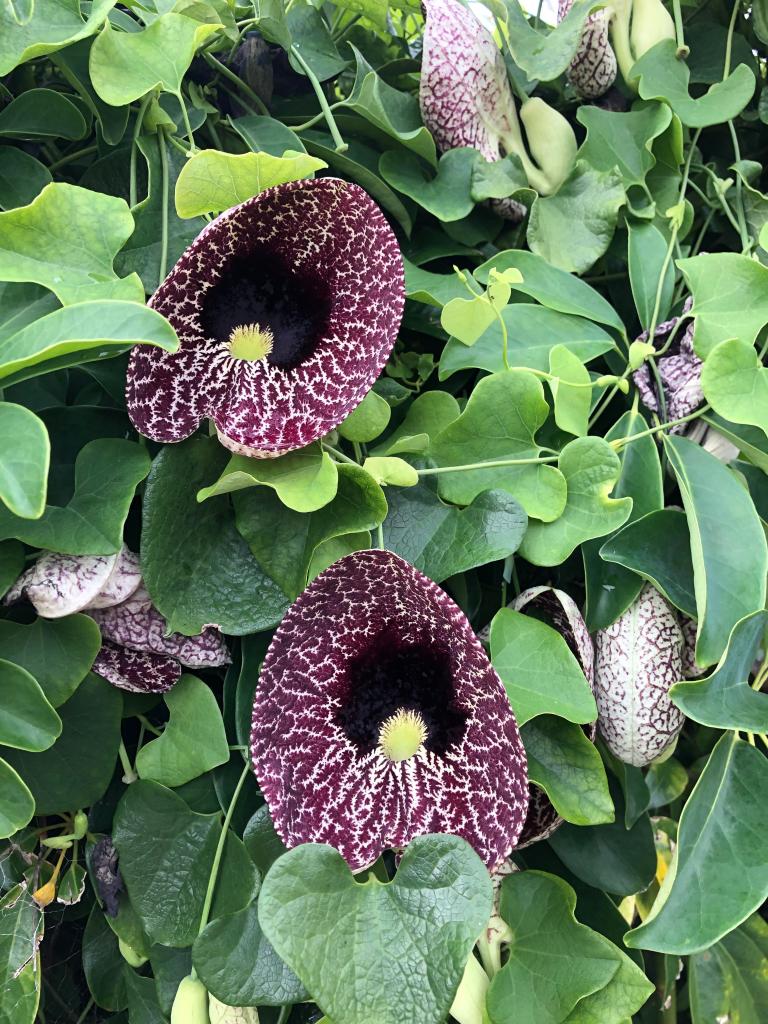
Apparently this is the Pipevine swallowtail caterpillar. Look at this crazy thing! And apparently their host plants are pipevines (makes sense), or the dutchman’s pipe, which are also wild-looking as heck. I ain’t never seen one’a these.

Pipevine swallowtail caterpillar
Dutchman’s pipe

I spent more time yesterday pulling up Japanese honeysuckle. Cannot believe how entrenched it is. I start pulling, and there’s more, more coming up, more coming up. It’s hiding, it’s sneaky, in the grass, in the dirt. There’s so much Japanese honeysuckle in the yard, buried, wrapped around stuff. Feels like I’ve pulled up 50 pounds of it.

That’s what I got for ya today folks!

New Menace In The Yard (Japanese Honeysuckle)

There is nothing for the soul and spirit like manual labor. Benjamin Franklin observed that in his autobiography, when he was overseeing construction of a fort during the French and Indian War. He noted that on the rainy days when the soldiers couldn’t work, they were miserable and depressed. On the sunny days, where they could do the chopping and the building, they were joyful, singing songs and feelin’ good. And here I am, returning from my arduous labor of ripping up entrenched Japanese Honeysuckle vines out of my yard in the full sun, barehanded, until my hands are blistered and I can’t continue, and boy am I feeling great.

Nothing for the soul and spirit like some good manual labor.

I have discovered a new menace in my yard. It’s Japanese honeysuckle. This menace was on my radar, from doing the invasive species removal at Shelby Park, and now I am getting to know it intimately. Japanese honeysuckle, which is a vine, was on our top list of plants to remove at the park, along with Chinese privet and Bush/Amur honeysuckle.

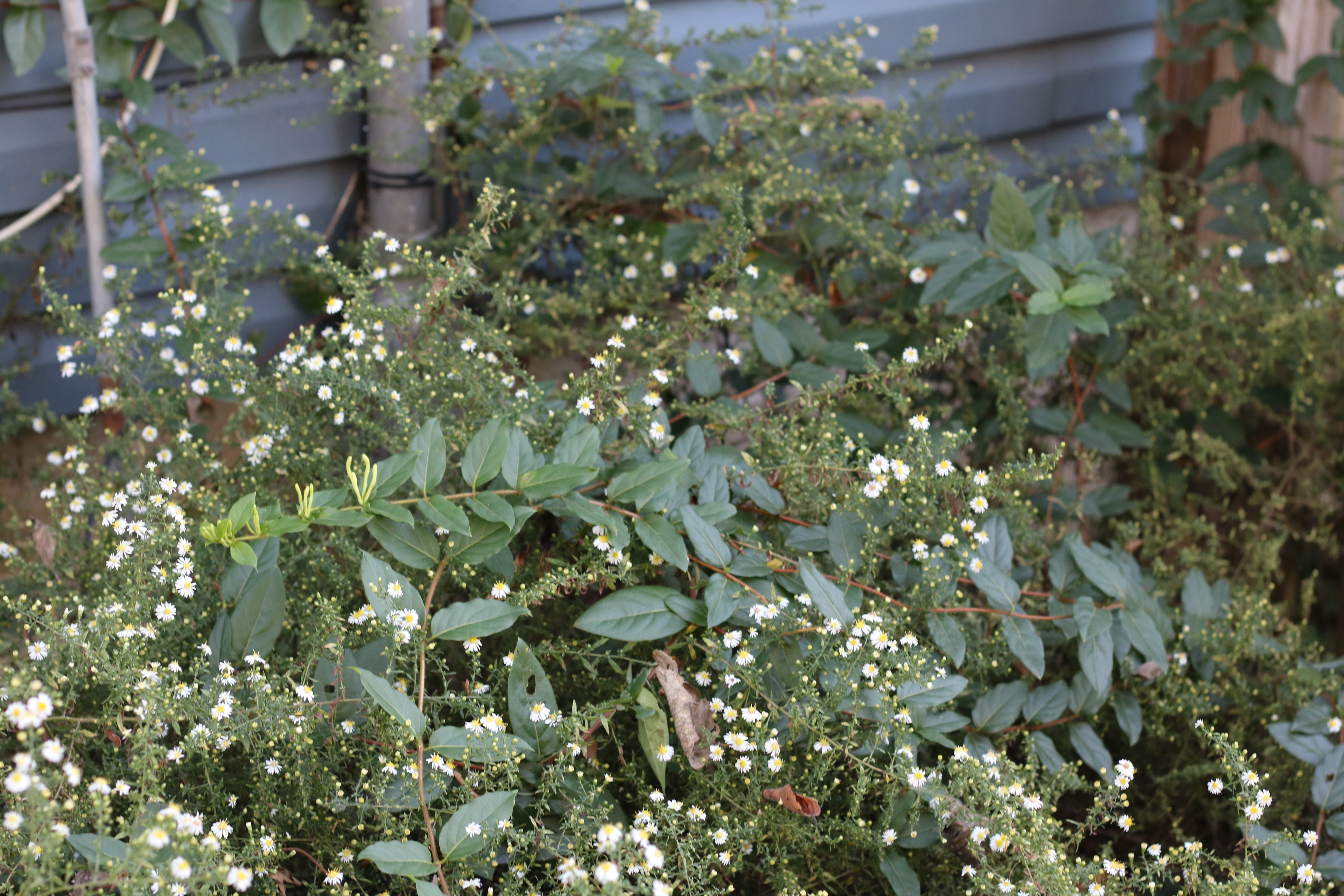
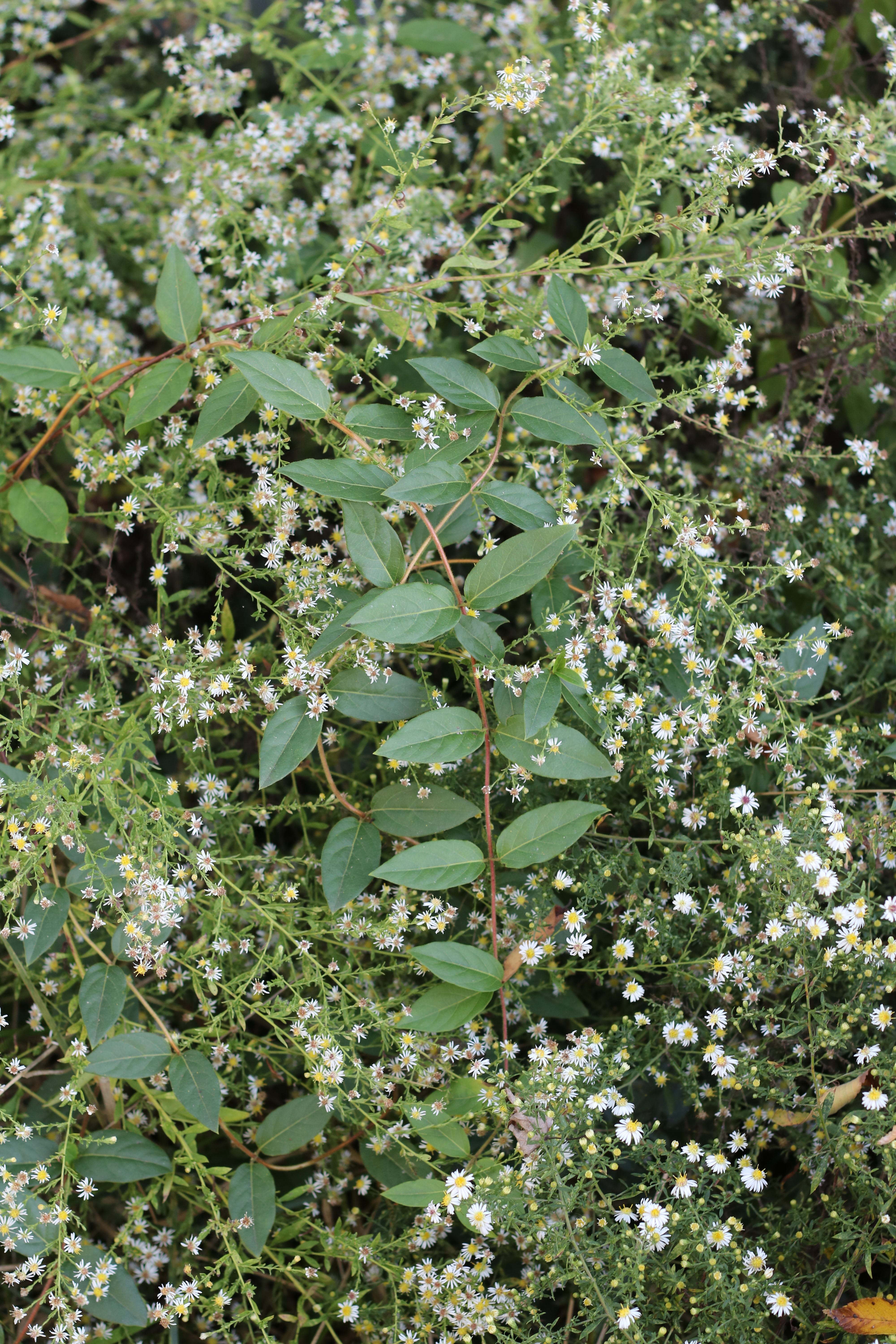
There are hundreds of plants, at least a hundred plants on my (I say my, I’m renting) small property alone, and I just don’t know all of them. I’m learning about them slowly. Well, there was a sprawling vine in the yard that was flying under the radar because there’s nothing special about it. It’s just green and a vine, cool. But I finally wanted to know what it was, because it seems like it’s about to flower, one strand of it, and it’s snaking all around the frost aster. I decided that it was time to ID it, and know the truth. The frost aster is native, and precious. Time to know if this vine was also native and precious, or not.

Lo and behold, Japanese honeysuckle. A notorious and pervasive invasive, here in the good ol’ USA.

I set to work ripping up this foreign invader at once, yesterday going until I had a blister on my right hand and was forced to stop. I was shocked at how much there really was, snaking all over, along the ground, under and behind, and on top of everything. Today I’ve given it another go and I once again ripped and pulled until my hands are blistered and hurting. (I really should have a pair of gloves.)

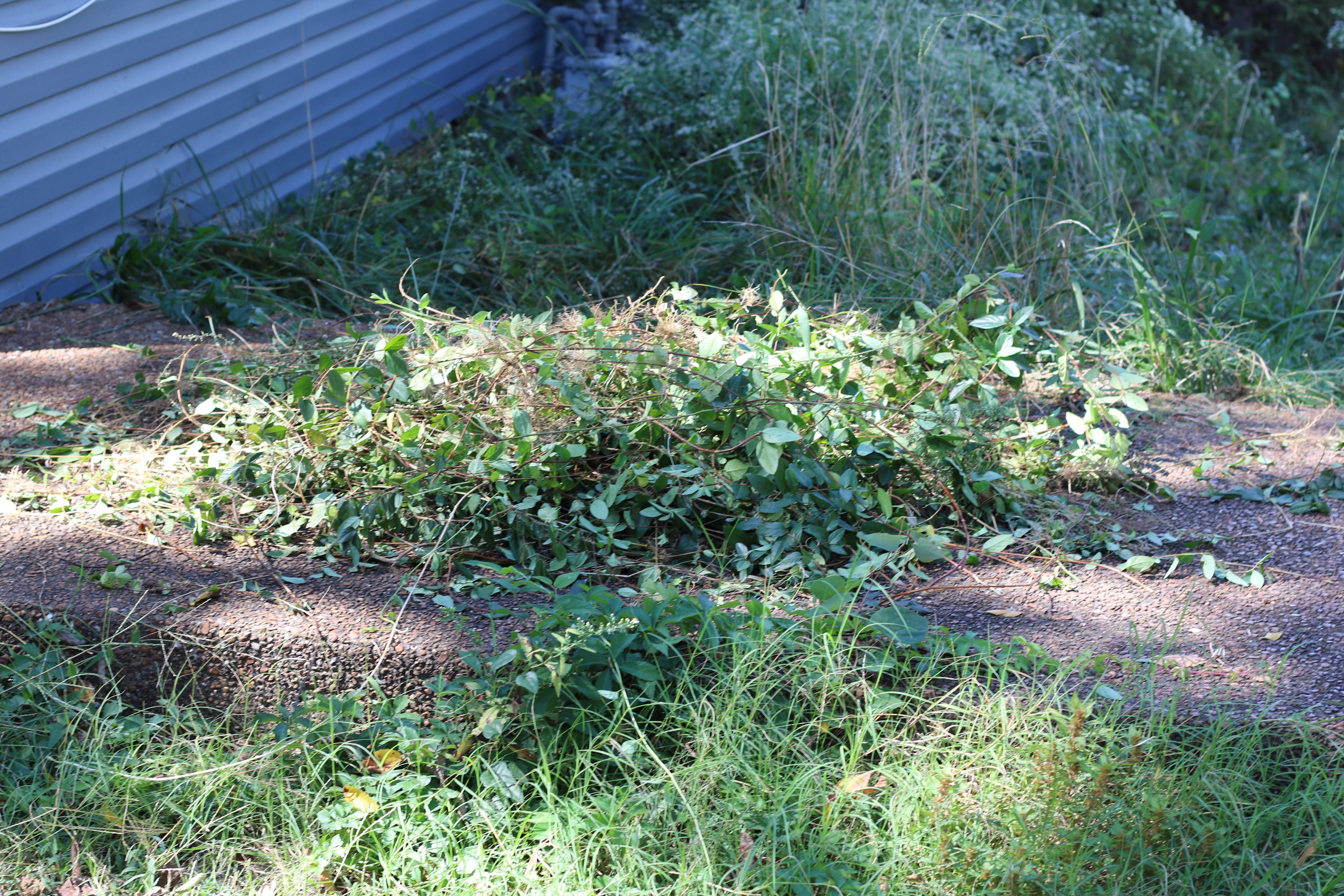
The photo below shows you how much I’ve pulled out so far, of this damned Japanese honeysuckle. I would never have guessed that there was so much lurking in the yard like this.

Pile of Japanese honeysuckle

It’s not just in the frost aster, it’s all over in the grass, winding up stalks of grass, and growing staight out and covering the ground.

J. honeysuckle covering the ground
J. honeysuckle in the frost aster
Get out of my frost aster!!!!!
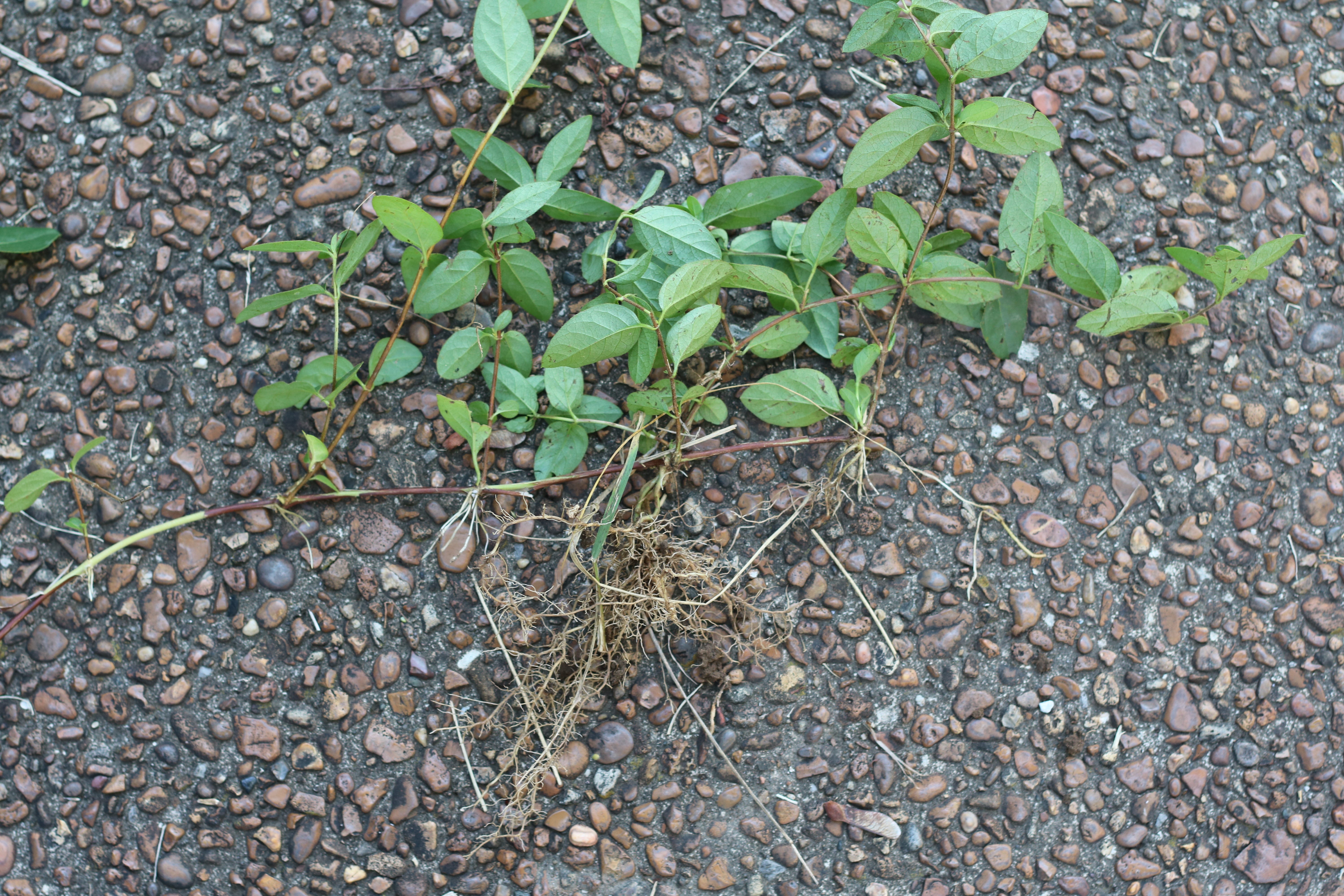
Lots of roots

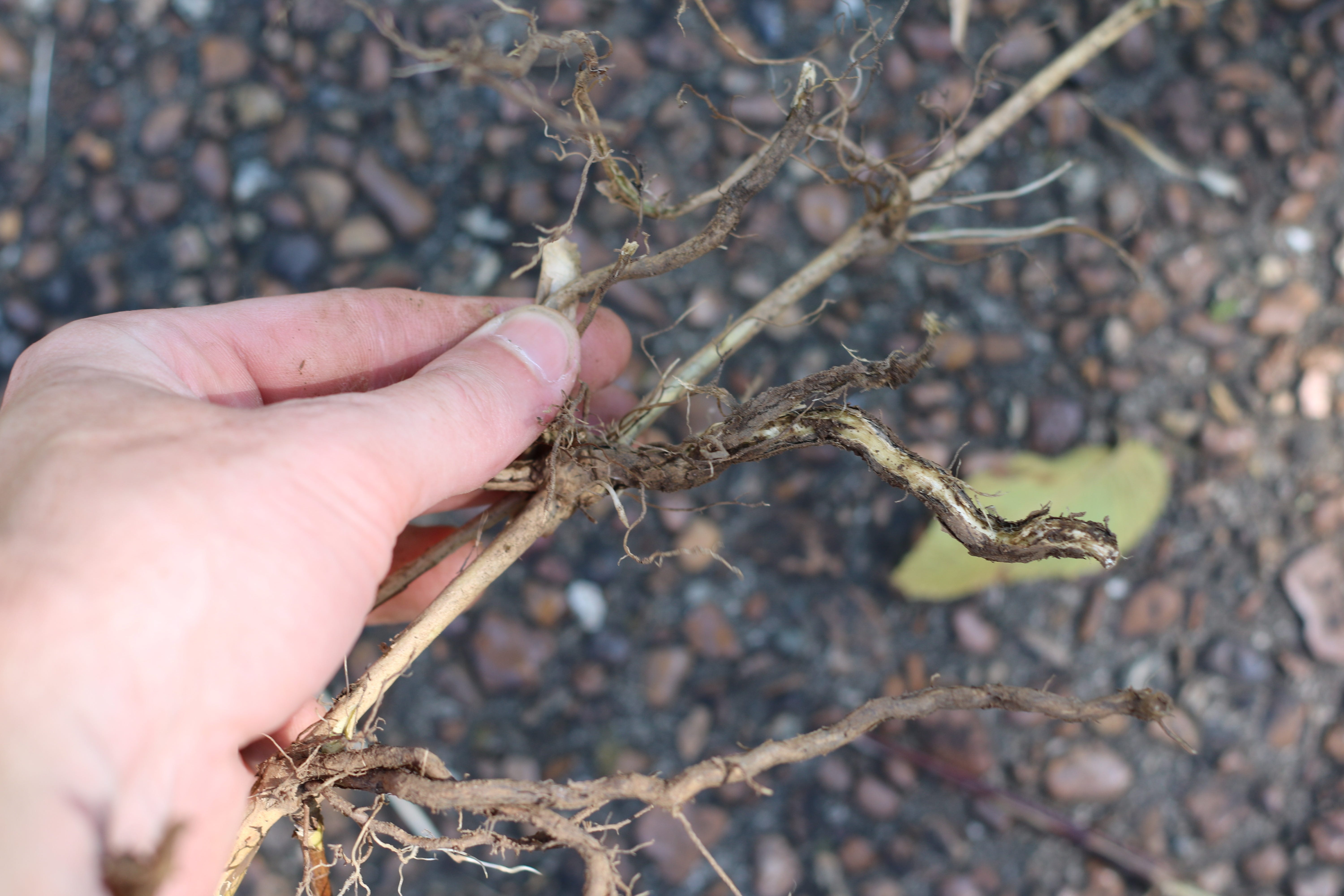
The very first vine, I carefully untwined it from the stalk of grass it had wrapped around, and followed it to the base. I was surprised that it led all the way to a node of roots in the ground, that led to several more strands of honeysuckle. I think this is what they mean by “runners”, which is a term I’ve heard. That vines put out “runners”. This is extremely annoying, and makes tearing up this honeysuckle a pain in the ass. As you can kind of see in the above photo, these vines are often putting down roots into the ground at repeated intervals, and you have to rip it all up. Some of the roots are quite entrenched, and three times they were so entrenched that I had to go get the shovel. Some of these runners were so thick that it felt like I was pulling up eletrical cables. I would rip it up out of the ground and it would be thick, like a rope in my hand, and show me where the rest of the cable was, and I would follow it to one of the root nodes. There was one, it was the mothernode, that was deep in the center of a large bush of frost aster, I parted the frost aster and got down in there and found that mothernode, and I felt like I was discovering the source of the infection or plague in a post-acopolyptic movie. It was like when there’s a fungus or something that makes people become zombies, and I was finding the main spore producer, or the main brain. I found that huge root node with multiple thick honeysuckle cables running off of it, and I went and grabbed the shovel and obliterated it. I felt good for a moment, hands blistered and hurting, and then I saw that there is still so much more to pull.

Thick roots, extremely annoying

Digging up the grass was harder work and was definitely the most annoying work. This is just more than I wanted to do to pull up these vines. It isn’t that bad, but the fact that I have to go and get the shovel is more than I bargained for.

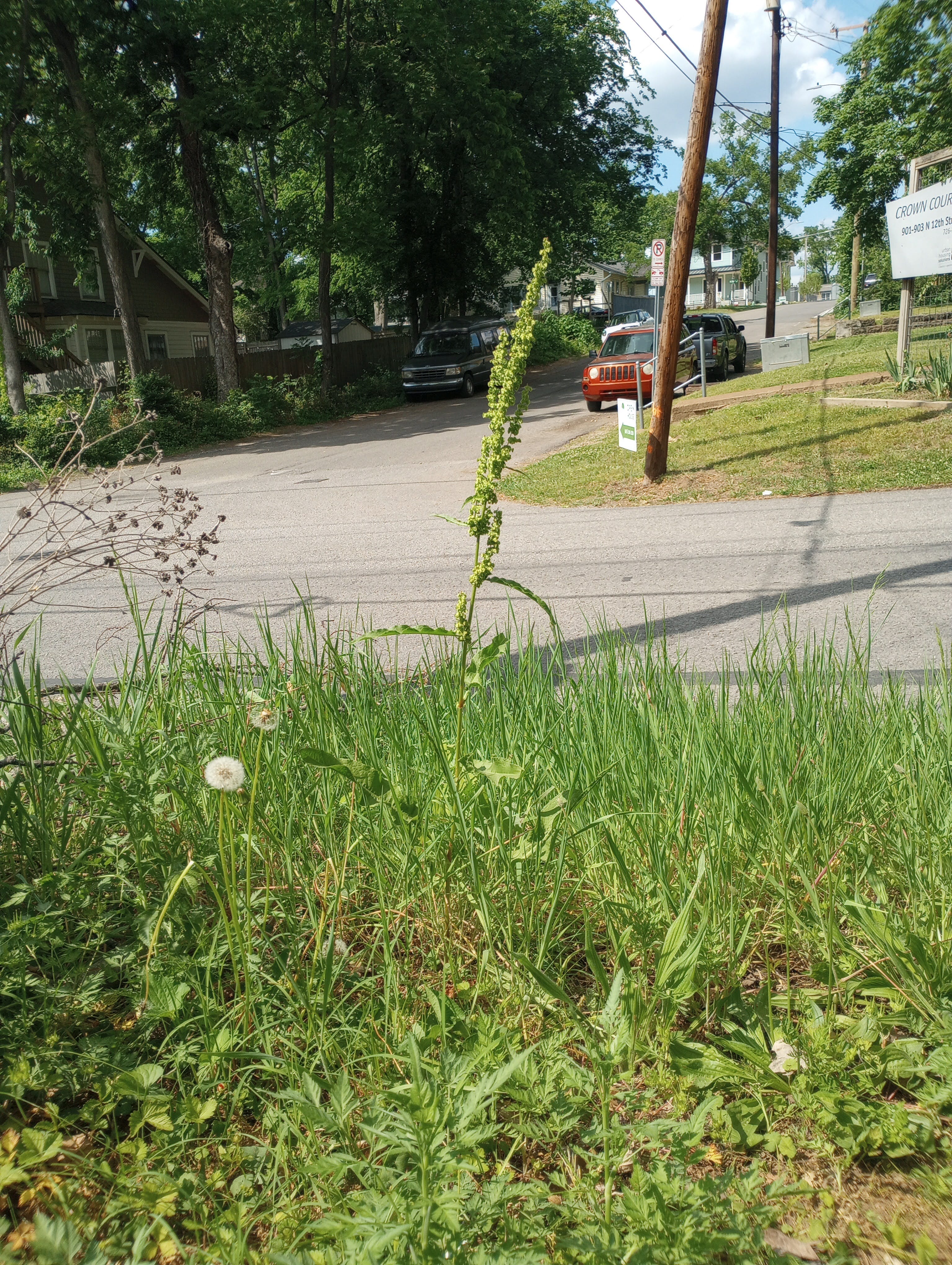
It’s amazing how prevalent these invasive species are. Half of the things in my disturbed roadside habitat yard are infamous invasives. Tree of heaven, common mullein (apparently a truly hated invasive), Chinese privet, Japanese honeysuckle, the oleander aphids… we really are at war.

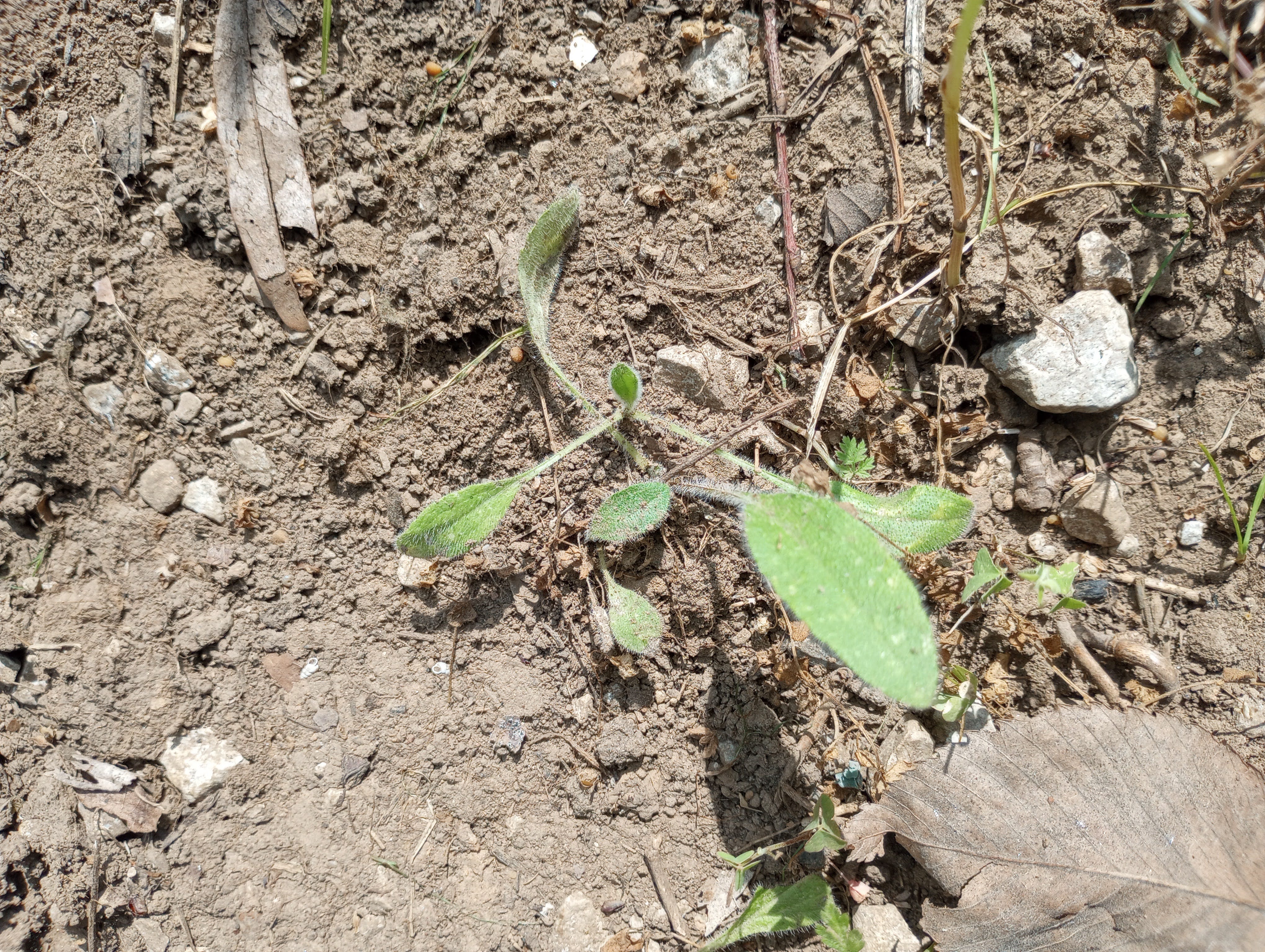
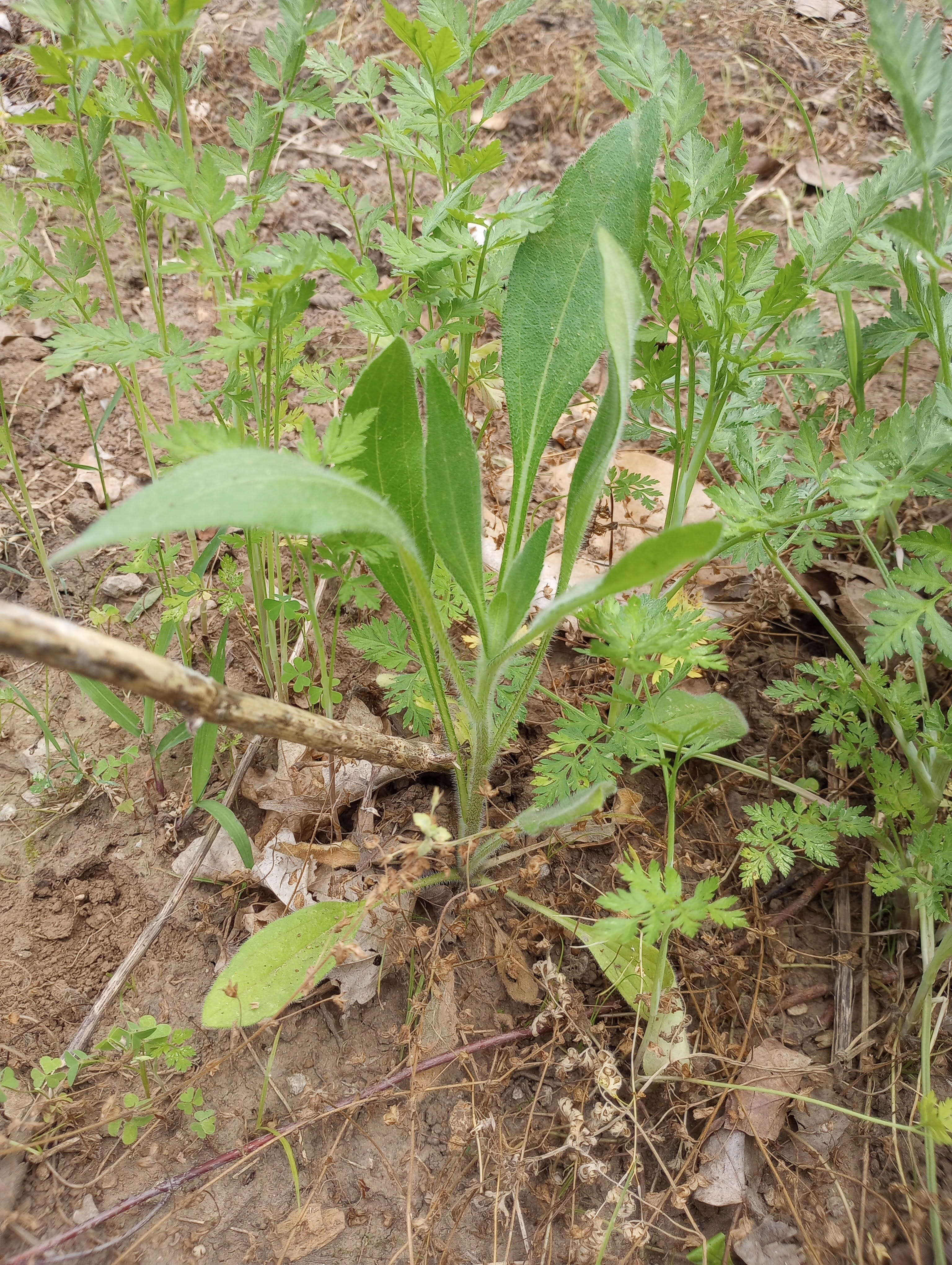
Common mullein

It’s a lot of work, just figuring out what the hell is what in the yard. I’m still amazed at how many things growing freely in the yard are from halfway across the world. Here is this tree, right outside of my window in the great state of Tennessee, thriving and looking healthy and wonderful, and low and behold, it’s from China. Right next to it is another tree that is doing wonderfully, that I also see all over the neighborhood, and wouldn’t you know it? It’s also from China. In my yard, smothering my frost aster and wrapping all over everything, snaking out across the ground, is a wonderful vine from Japan! And half of the sprouts in my new garden are the seedlings of yet another tree from where? Yes, China. Right over in my neighbor’s yard are two uncultivated wonderful flowers from East Asia and Peru, and in the front of my other neighbor’s yard is a lovely Japanese banana tree. On my short walk to the coffee shop through my neighborhood, I can count about fifteen Crape myrtle trees, which are from India. And the little fuzzy plants popping up? Maybe those are young Black-eyed Susan plants?

Nope. Common mullein from Eurasia (introduced in the 18th century, apparently).

A Historic Day (First Ever Cosmos Bloom)

9-29-2025
1st ever cosmos ever
Cosmos sulphureus

Here it is y’all. First ever cosmos bloom by the hands of Gardener Steve.

I woke up this morning and checked the garden as usual, although lately, as there haven’t been many developments, I haven’t been as consistent about looking in the garden. Well, this morning, I was overjoyed and delighted to see a huge, bright, yellow new flower in my garden. That is this cosmos, and this is a particularly exciting bloom because it has told me, finally, what I’ve really wanted to know. What we’ve all been wanting to know. Were these generic green, springy plants common ragweed? (Undesirable, although native.) Or were they cosmos?

Google Lens had consistently ID’ed these as common ragweed. And I couldn’t remember where I had planted cosmos seeds, so I couldn’t even know if I had planted cosmos here, and if they had any hope of being cosmos. But I was holding out hope, and I almost pulled them out of the ground, in my rage, thinking they were just useless ragweeds. I held on, just in case, and look. They really were cosmos. I can’t believe it.

I started to really have hope about a week ago, when I was walking to the record store. We (Parker and I) passed a neighbor’s yard that was loaded with cosmos, and I saw the buds at the end of the stalks, the future flowers, and I thought, those look just like the buds on my potential cosmos. That’s a good sign! They look exactly the same! But I wasn’t going to get my hopes up too much. No, I’ve been burned before….

And then, yesterday, finally a bud opened up, and it looked like it was going to be a flower, but it was restrained and drooping a bit. I think because it was fresh, and the heat was intense. I thought maybe the flower wasn’t in good health, but this morning, I stepped out and saw that flash of yellow, glorious beaming flower, perfectly healthy and radiant. Not ragweed!!!! But, cosmos??

It looks so much like Coreopsis or something around that I thought I actually had something else entirely, neither cosmos or ragweed. But the internet helped me to ID the flower, and it said, cosmos. A cosmos sulphureus, looks like, as I had gotten the seeds from a free pack at the local park and so wasn’t sure what they were exactly.

In my poor clay, sandy dry soil that turns into mud the second water touches it, these cosmos have done very well. And I see on the internet, right now, (https://www.gardenia.net/plant/cosmos-sulphureus-cosmic-yellow) “Tolerates poor soil, heat, and humidity.” Yep, that’s my yard, alright.

The zinneas have done well but needed more water. Some of them are still doing well, or at least they haven’t died, as you might be able to see in the back of the photo. And actually, I just got a new zinnea bloom, and it’s a bright, light pink. A really nice color. So, it’s true that these are beginner friendly plants, because I have no idea what I’m doing, I’ve done no soil prep, I have put down no fertilizer, and no mulch, my watering methods are surely subpar—and on the whole these plants, cosmos and zinnea, they’re doing alright. They’re making it.

I want to plant the natives. The frost aster in the back is great, I feel great about having that in the yard, a real native. I see it blooming all over now, out in the wild, in some people’s yards, and at Shelby. There’s some frost aster in the wild fields at Shelby. I feel like to have such a huge patch of it here in the yard. And there are some little bits of it here and there on the sides of the streets, in the border grass and by fences. It’s an interesting flower, so incredibly small, yet the same shape and look of the larger, popular flowers. The “classic” flower look, yet so tiny and dainty. The natives are important, but because these zinneas and cosmos have been so easy to grow, and look nice, I am definitely tempted to just go all in on them and have the entire yard just be zinnea and cosmos, next year.

I planted some smooth-blue aster and a lot of coneflower, purple coneflower and black-eyed susan, and I haven’t seen any of those sprouts come up. I wonder if they will show next spring, and need to germinate over the winter. We’ll see about that. It’s either that or they haven’t taken well to the soil at all. The marigolds, I put down many marigold seeds, and only got two plants. So they haven’t done too well, and the sunflowers did okay, I had 5 plants for 20 seeds that I planted, not great, but then they were repeatedly attacked by the local squirrel mafia. They were assaulted, and it was sad, which makes me not want to try planting them again. If they’re just going to get so brutalized… but some made it through. Actually, I should just plant a ton, and expect many to not make it. But if some do, good. The sunflowers are iconic, and provide so much for the local wildlife.

I see fritillaries and skippers on the zinneas. Some bees, but not many. But the fritillaries really seem to like the zinneas.

Now, I had written about the asiatic dayflower that popped up in the neighbor’s yard, and I read that it bloomed for only a day. It looks like this bloomed for at least two days, and I need to check on it today and see if it’s gone three days. And next to it, the marvel of Peru is blooming now too.

Asiatic dayflower
Neighbor’s asiatic dayflower
Marvel of Peru (in Nashville)
Marvel of Peru
Mirabilis jalapa

I finally yet one of the neighbors across the street. I was lugging my haul back from Kroger yesterday, and I waved to him, as usual. However this time, he was over near the street, and I could actually talk to him, and so we finally chatted. This neighbor has been friendly and we’ve waved to each other many times, he’s often out with his dog while I’m doing my gardening work, and he recently (several months ago) got a puppy, that was extremely tiny and cute. It’s grown up, and is still extremely tiny. He told me that she’s now full sized, and guess what? Her name is Lucy. I thought that was kind of amazing, seeing as how no one is actually named Lucy except the main character in the story I wrote, Lucy and the Mingmerang, and this little dog was named Lucy, the whole time. Well, maybe the story should be about a dog instead. Dog and alien go on great adventure together. Anyway, the neighbor, Jared, he said that he liked my wildflowers. This is another person of the neighbor who has commented on my garden, and that makes you feel good. Even though it is pretty miserable for a garden, it does at least have flowers.

Jared said, “Do you have a hose, for watering?” And I knew what he was talking about. My neighbor has the hose, we live in a duplex that looks like one house, and the hose is on his side, and I never asked him if I could use it, because I’m lazy, I guess. I should have a long time ago asked him, and he would immediately reply, “Sure, go for it!” Well, I have been making due with broken watering cans and then filling up 5 gallon buckets in the tub, and Jared has seen me doing my labor-intensive watering work, and has probably been wondering for months, “Why doesn’t this guy just use a hose?” I thought that was funny.

We talked about plants, he said that he had to bring some plants in because they’re been being attacked by the squirrel mafia. He said that’s what he calls them, the squirrel vigilante group. That’s a good name for them. They have also attacked my plants, they are rogues, and they are everywhere. It seems like we have thirty squirrels living within like 100m radius of us. We have about five squirrels that live in our small backyard alone. There are a ton of great trees around, in our yards, huge trees with holes and nuts.

I should take a picture of it, but there was something popping up in my garden, that seemed to be a wild lettuce, and was possibly edibile, according to the internet. It was growing rapidly, and I’ve been watching it, and yesterday, when I was investigating the garden, I saw that it had been munched down, clean to the bases of the leaves. The whole thing had been chomped down to the base. Someone had a wonderful salad feast on that thing! Squirrel? I wonder who done it.


Those caterpillars, the common buckeye caterpillars all went away. They must have reached critical mass and have gone off to do their metamorphosing work. It’s funny that they were truly keeping the plantain weed in check, and now that my mowers are gone, the plantain weed is bursting up, out of control. They were really keeping it down. I should look around for the chrysalises, maybe I can find one around. It always made me nervous that they were hanging out in such a high traffic region, both cars and feet around. If they tried to go across the road on their quest for a suitable place to make a chrysalis, they would not have had a good time. I hope they have found good places to go.

Common buckeye chrysalis (photo from internet)