I almost feel like at this point I should have a dedicated blog to gardening. Seeing as half the posts contain at least some garden updates. It makes sense. Will I do it?????
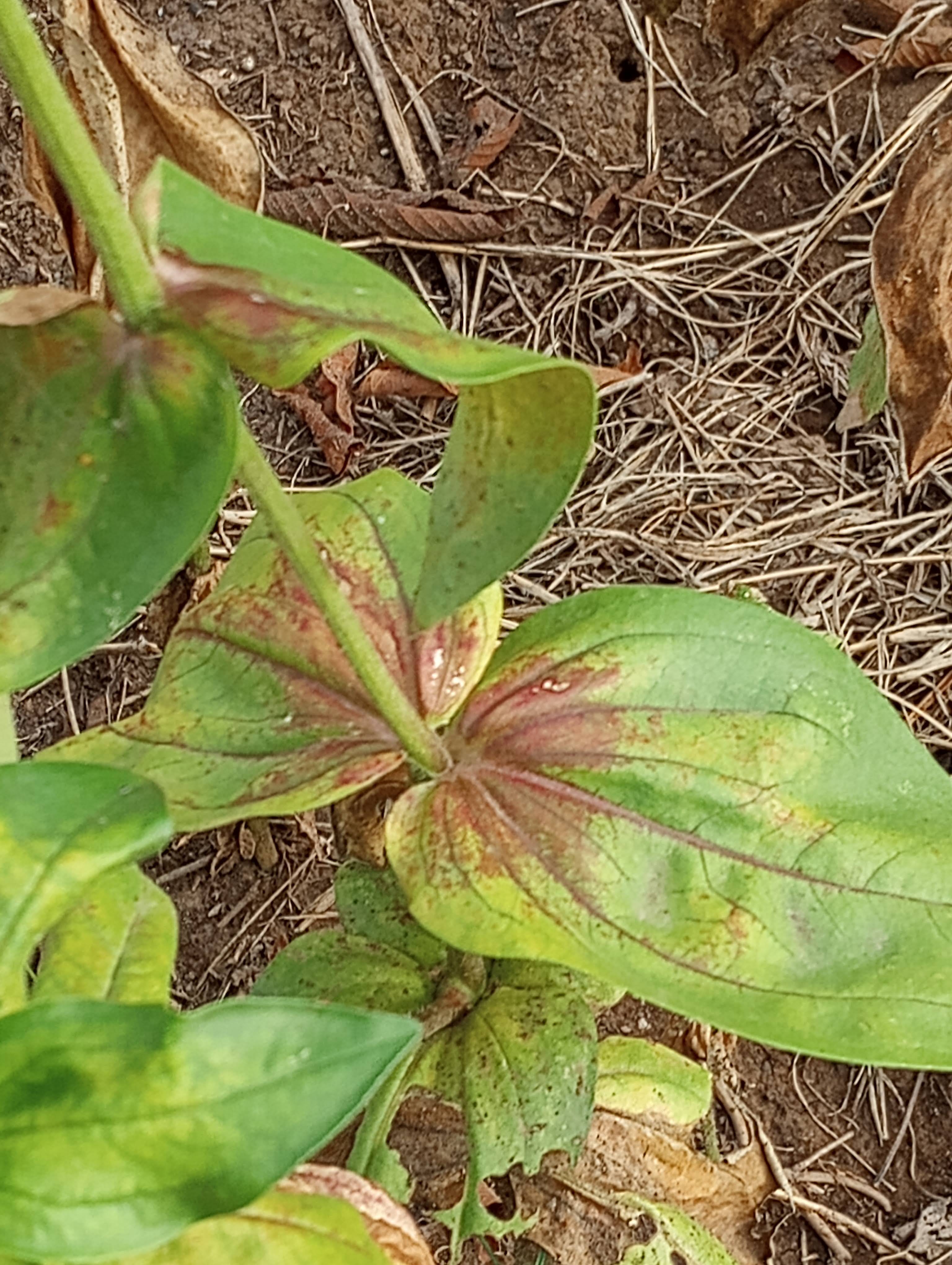
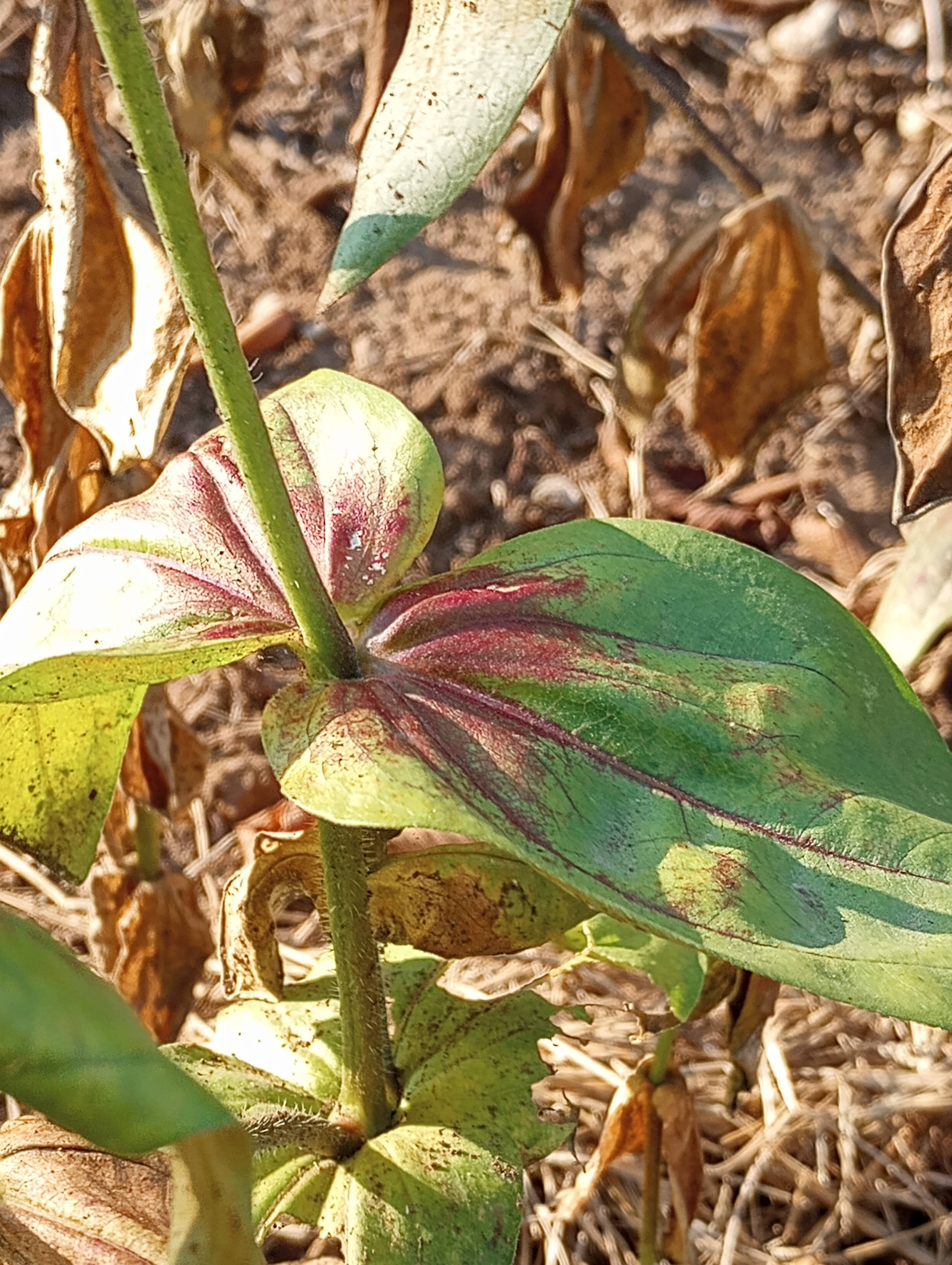
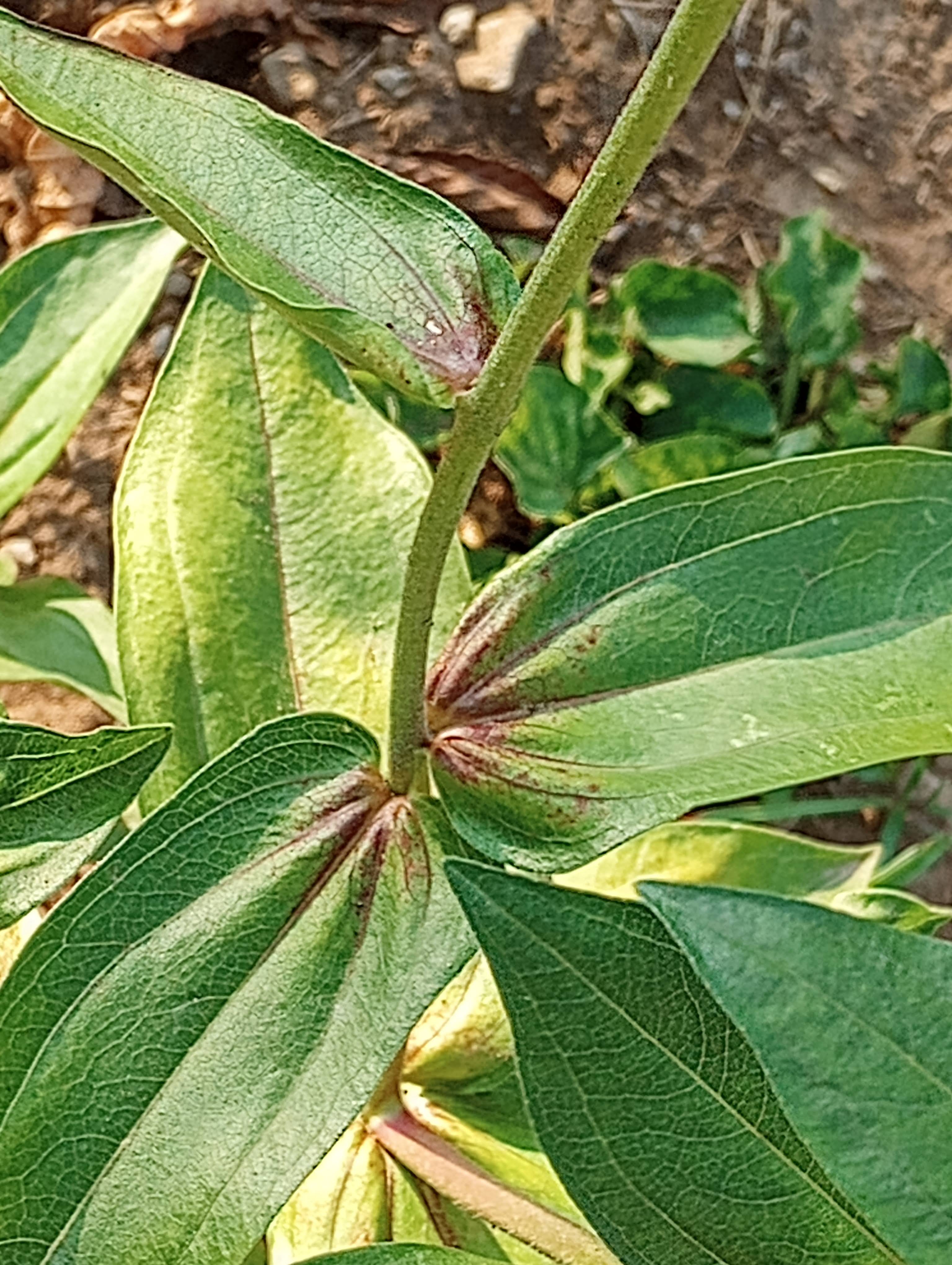
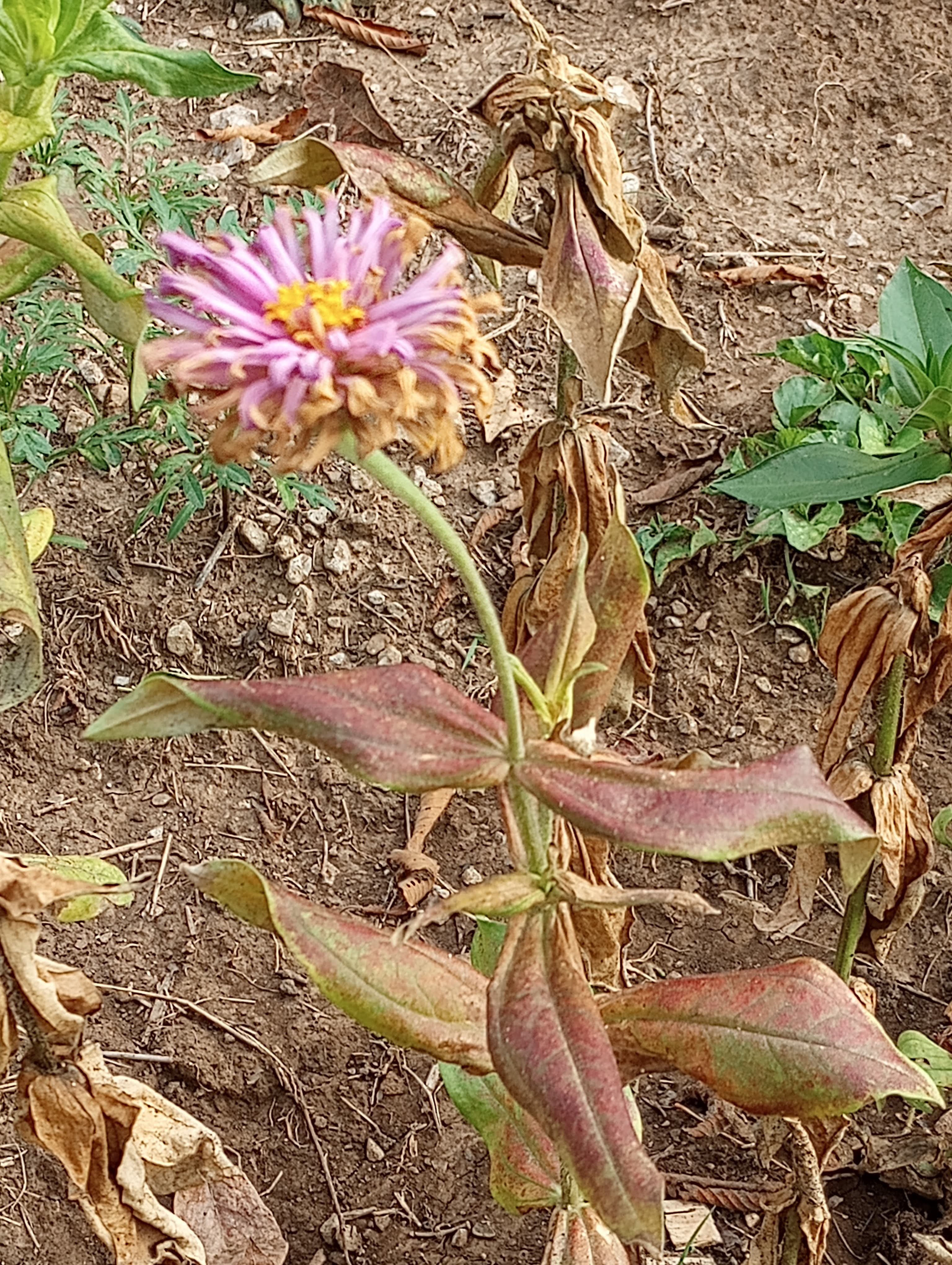
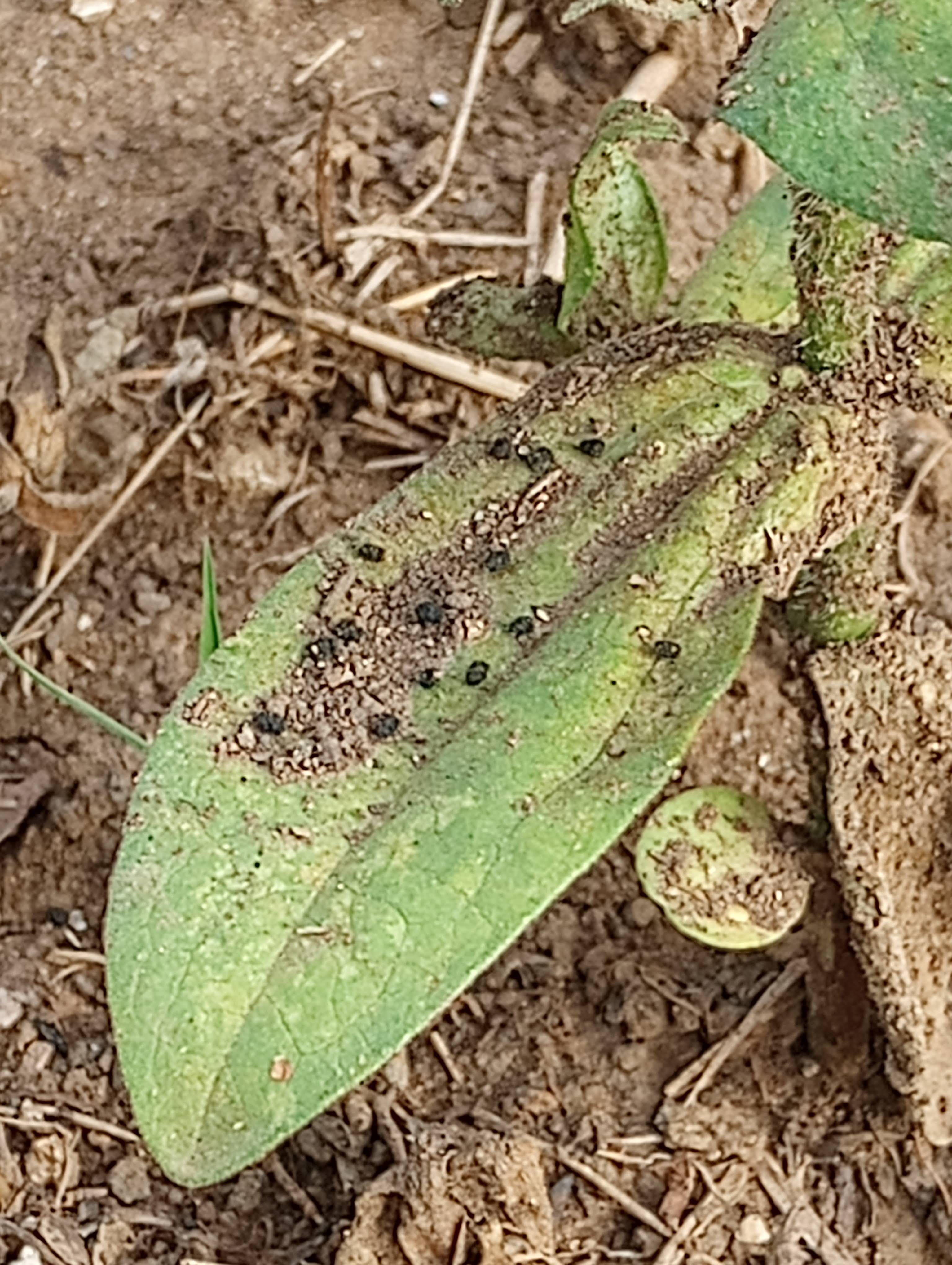
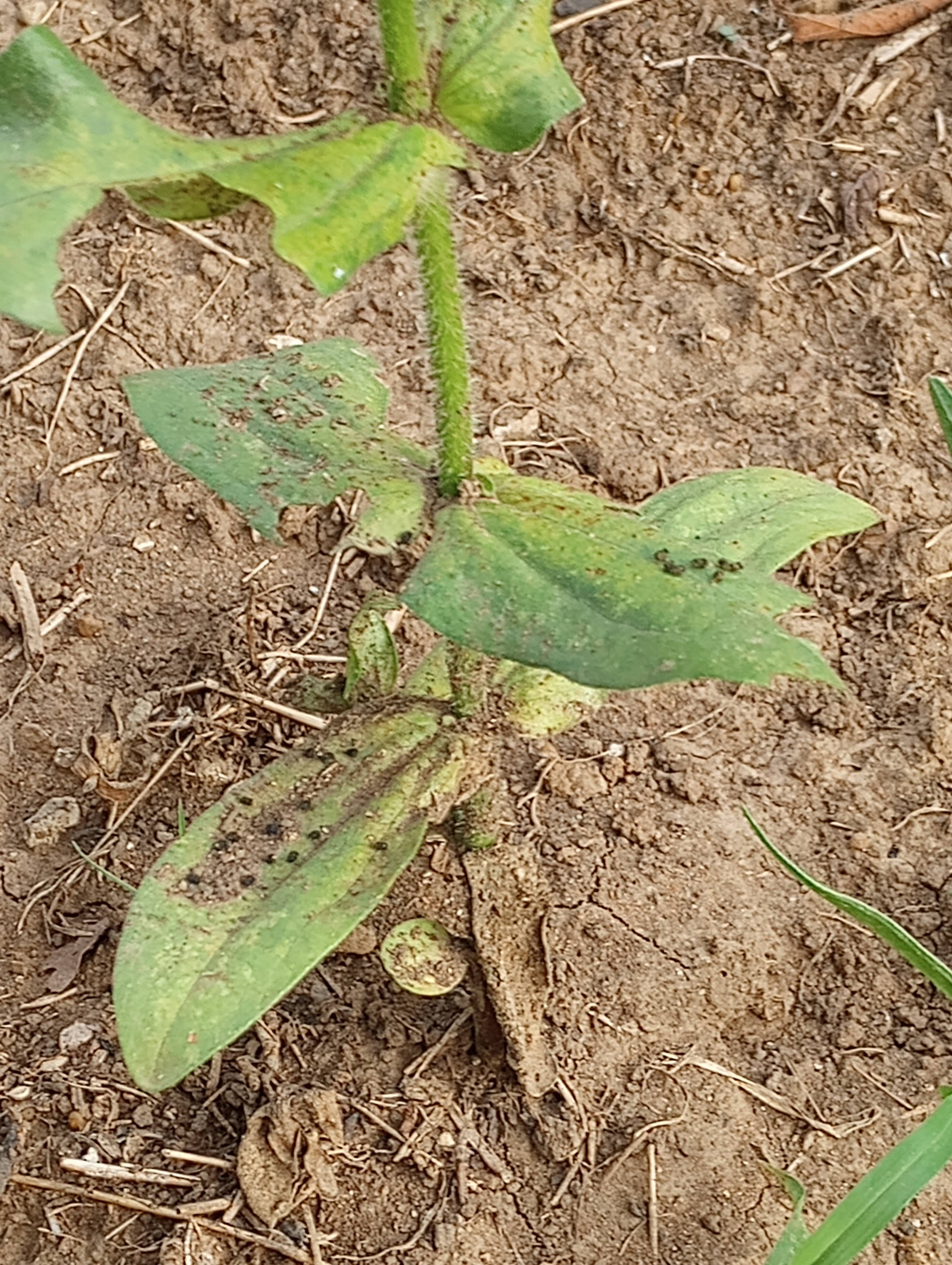
I woke up this morning and performed what has become my morning routine. Checking up on the garden. I was thinking about some things last night — one thing I had noticed was that my zinnia leaves had really started to turn purple. There was something that seemed to be spreading on them. At first I thought it was because of the drought, but then as I noticed it on some of the healthier plants, you start to wonder if it isn’t a disease or perhaps a nutrient deficency. I’ll show you some photos.
Alternaria?
You can see what I’m talking about — this purple, reddish brown that appears at the bases of the leaves. Even some of the healthier zinnias are starting to get it. In the last photo you can see this one is covered with it, and this poor zinnia is going downhill real quick. It has only days left, I’m sure.
Well, what is the cause of this mysterious purple/red coloration? That’s what we want to know.
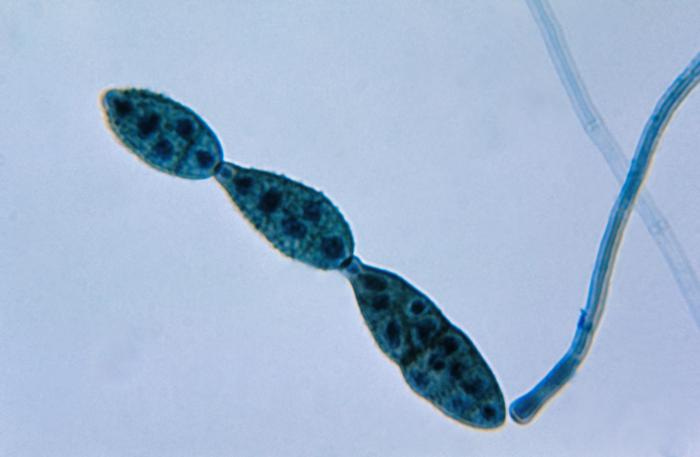
I went on the trusty internet and did some researching, and my guess is that this is caused by a fungus called alternaria.
Wikipedia photo of alternaria fungi
Wikipedia says: “They are ubiquitous in the environment and are a natural part of funga almost everywhere. They are normal agents of decay and decomposition.”
They are a “major plant pathogen.”
Seems about right. People of Facebook were commenting on similar posts that it was alternaria, and the chances seem high. I am probably then supposed to pull the diseased plants, no? To stop the spread? I wonder.
My other patch of zinnias is alright, so far. I don’t want them to become infected. But I wonder if it only happens when the plants are stressed and vulnerable, as they certainly have been. I now say with 100% certainty that my zinnias just needed more water, way more water, and mulch on the soil to help retain the moisture, as my wise mother has suggested several times.
Caterpillar poop
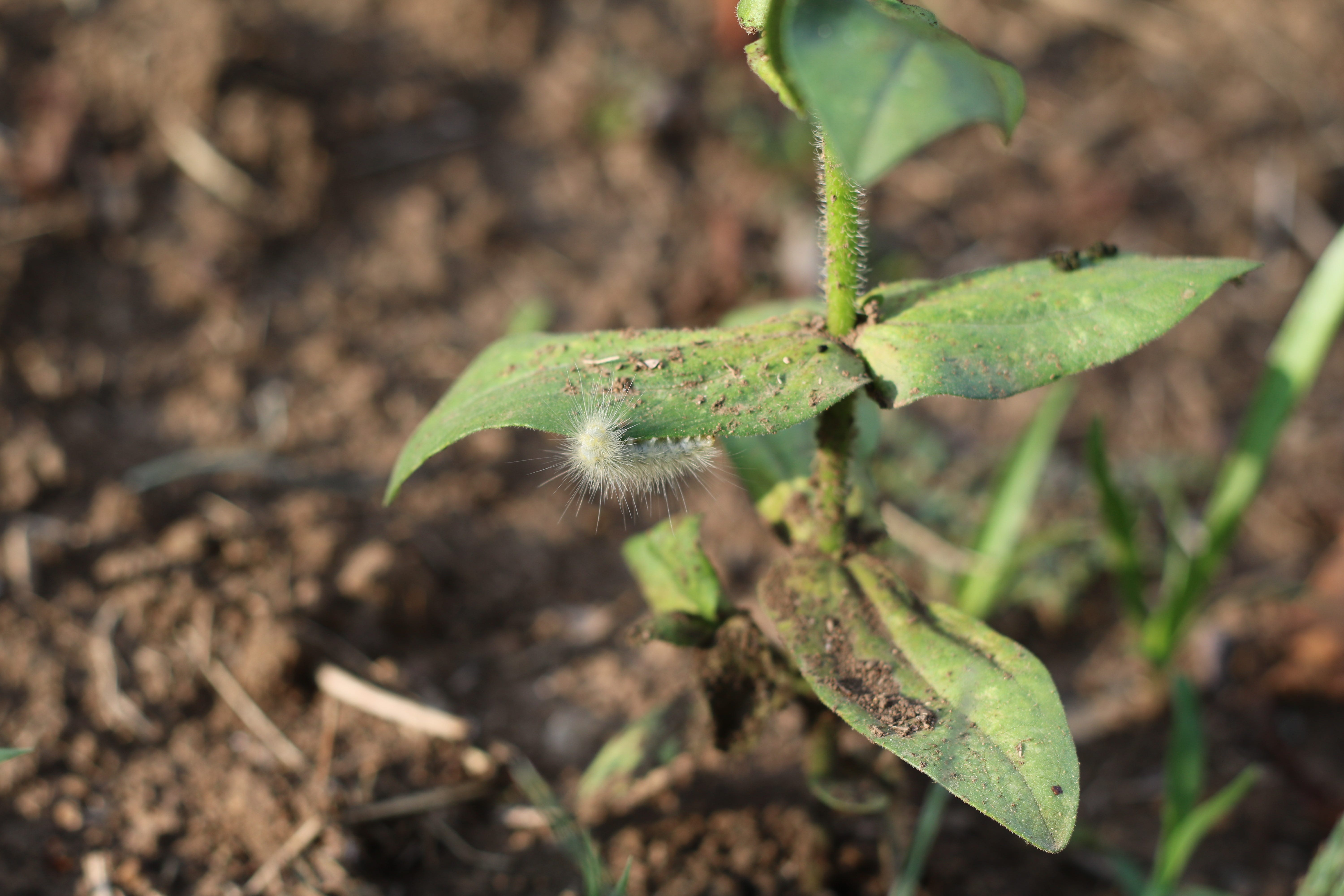
Now, if you ever wanted to see photos of caterpillar poop, viola. Here you are. The wooly bear (fuzzy white caterpillar) that’s been munching on this zinnia is still hanging out here. He has been feasting, and the proof is right here in the poop. I should have snapped a photo of the actual caterpillar. I’m not a great photojournalist. I was so amazed by the poop.
The caterpillar has grown rapidly, as they do. It’s amazing to see it. This morning he (or she) was kind of hanging over, seeming to be asleep. I just want it to stick around so we can see its progress. That other big ‘un, the giant common buckeye caterpillar that was eating the grass in my garden, I don’t know what happened to it. It’s gone. There are three new ones that are here munching away, already they’ve again quadrupled in size. Tomorrow they should be huge.
Some kind of speedwell
This has been popping up all over, and it looks like it’s some kind of speedwell. Google said mine was probably some invasive speedwell from Eurasia. Wonderful. I should probably pull it, then. Does this count as mulch? Can I leave it down just to protect my soil from drying out? Until it gets out of control, I don’t see why not.
More tree of heaven
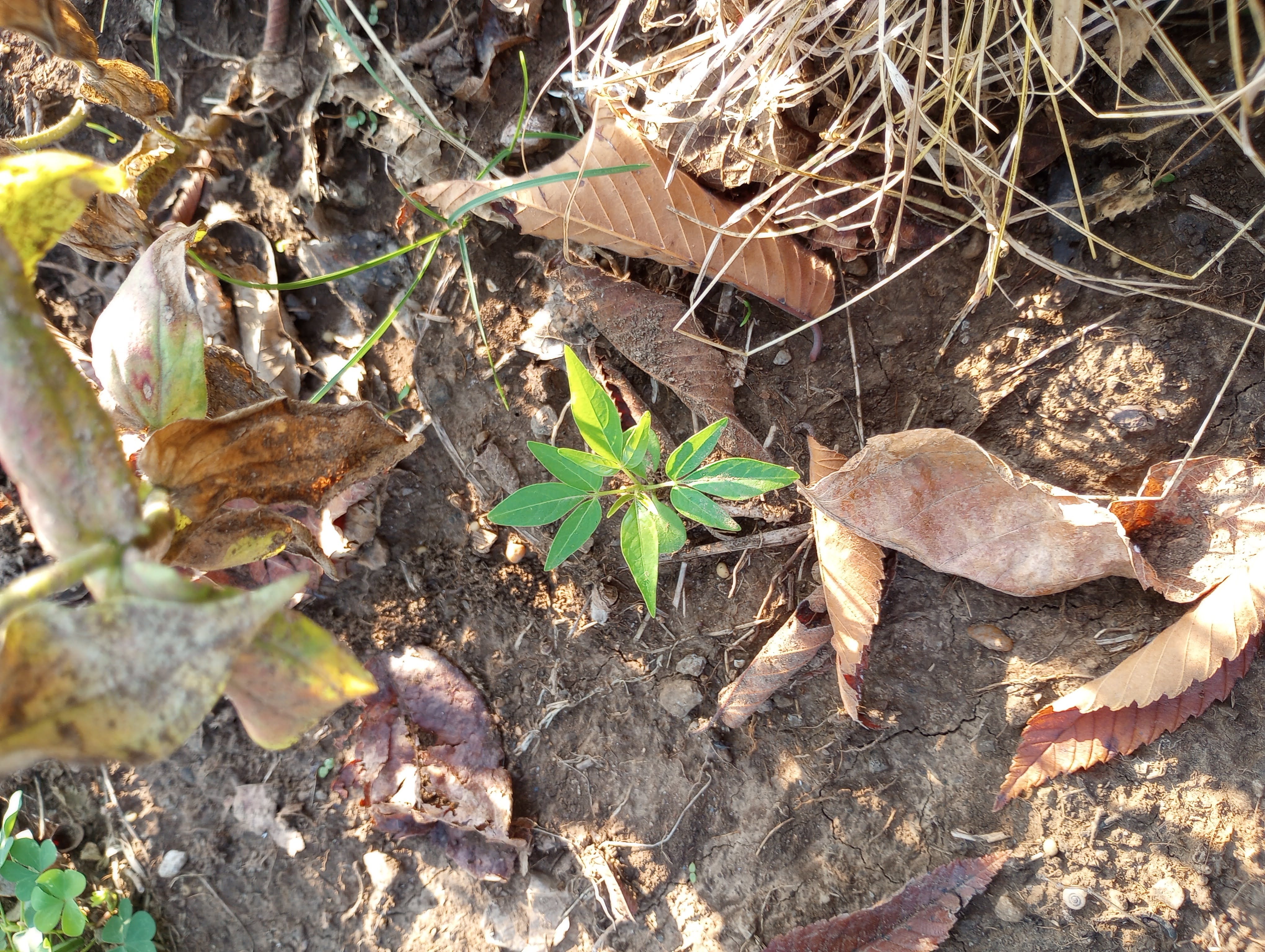
Tree of heaven sprouts are everywhere. Every day they pop up. Here’s a new one. They are thriving in my crappy soil, disturbed roadside habitat. They’re loving it. Too bad they’re UNDESIREABLE.
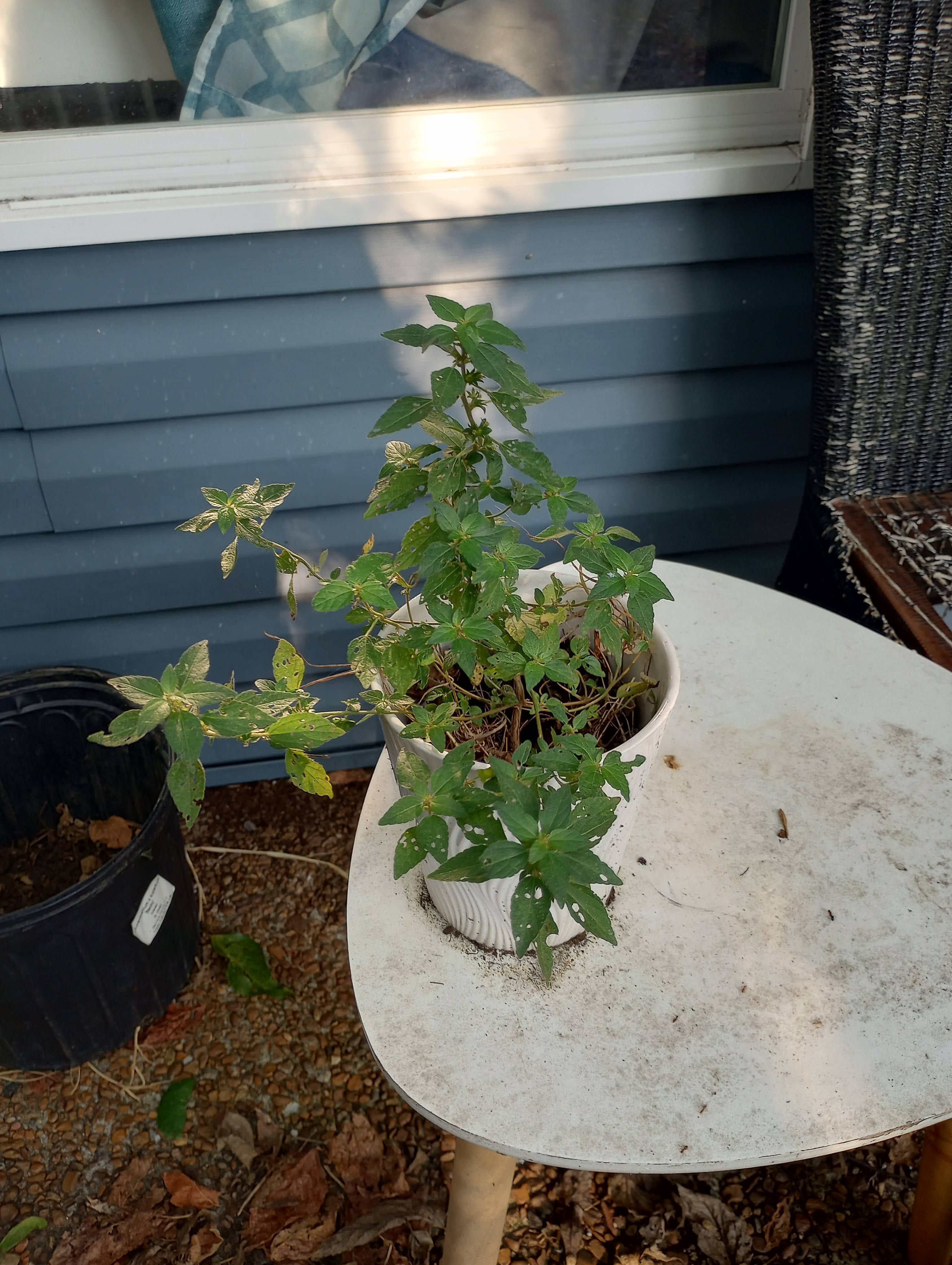
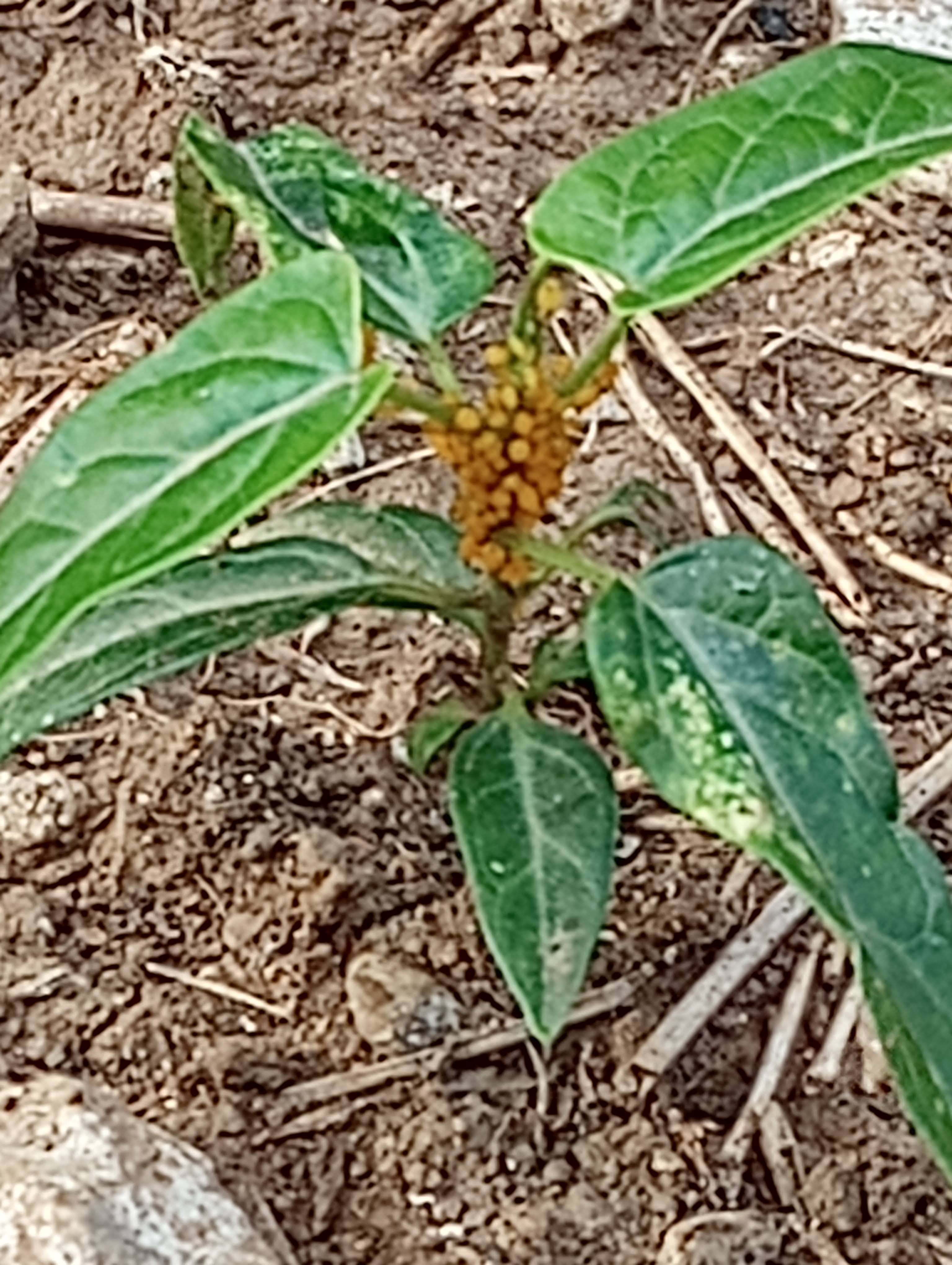
Three-seeded mercury
When I was digging up the lawn, I kept this plant, mostly as an experiment. I had dug up the entire thing and it was kind of smelling nice, and I thought, I’ll just throw it in a pot and see what happens. Why not? So I did, and that was about two weeks ago. As you can see, it’s fine.
This is a three-seeded mercury, I learned this morning. It’s everywhere. Popping up in my garden, and on my walk to the cafe this morning, I saw it all along the roadside, in the grass. It’s a native herb, a spurge. What a great word.
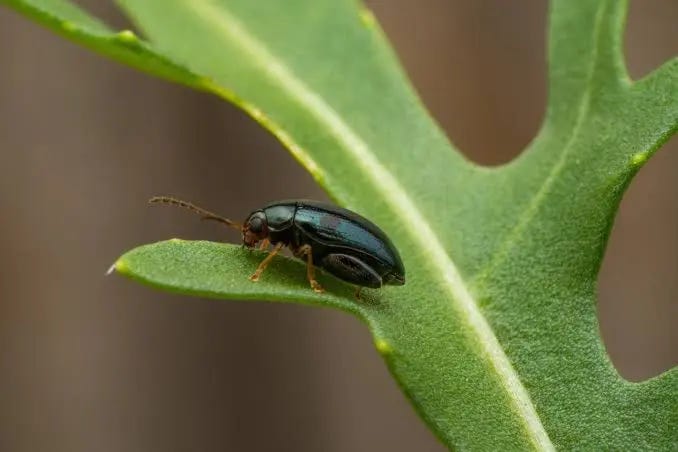
Apparently it is loved by flea beetles, and all three-seeded mercury has tiny holes in it, as mine does, which are caused by the flea beetles.
The title says it all people. There simply must be an emergency update.
I was in my garden just now, weeding, looking over the state of affairs. Every time I do this, if I sit there for long enough, I make a discovery. Often many discoveries. Well, after about fifteen if not twenty minutes of squatting around and noticing things, I was just about to finish, when I spied something incredible.
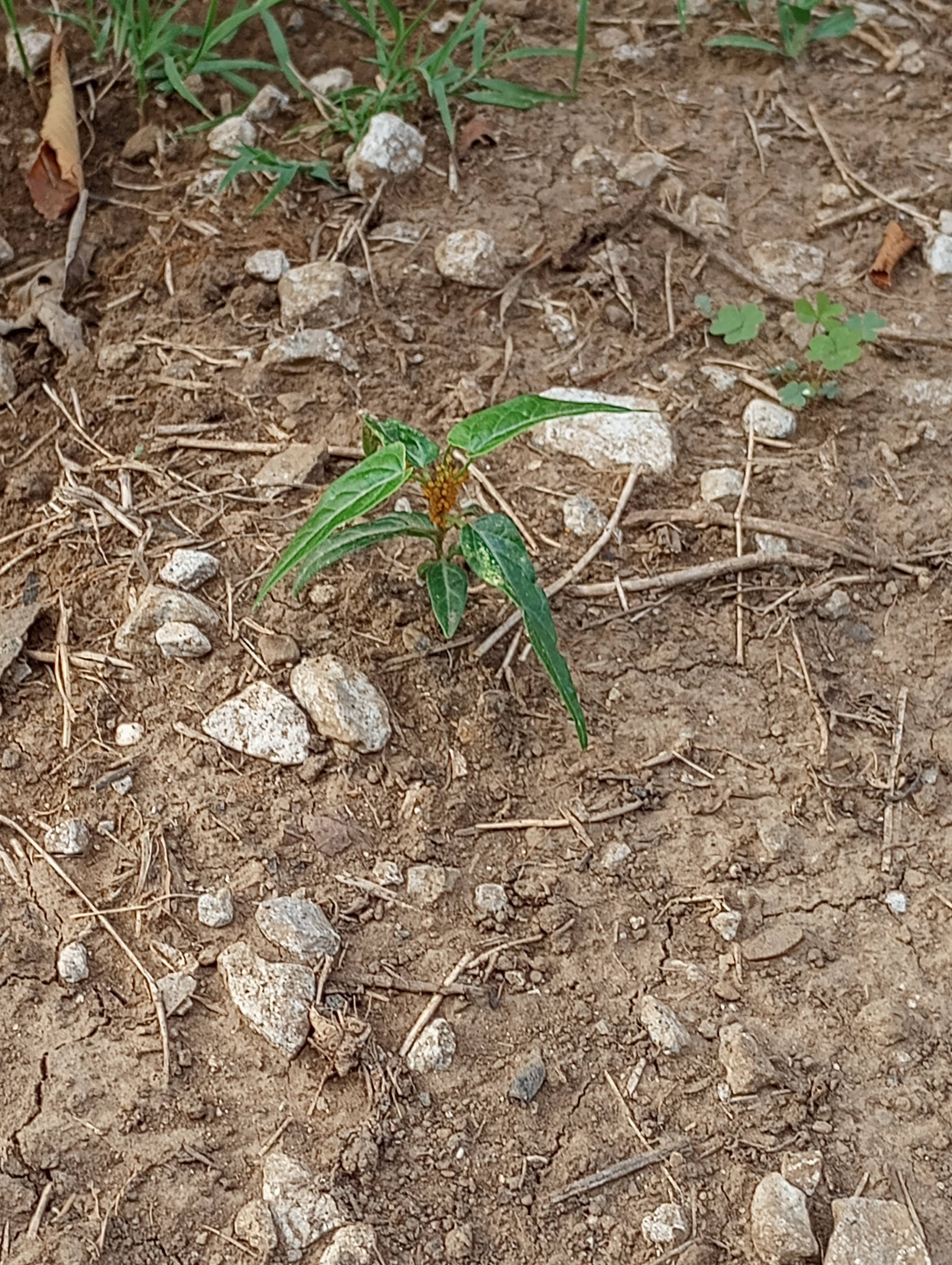
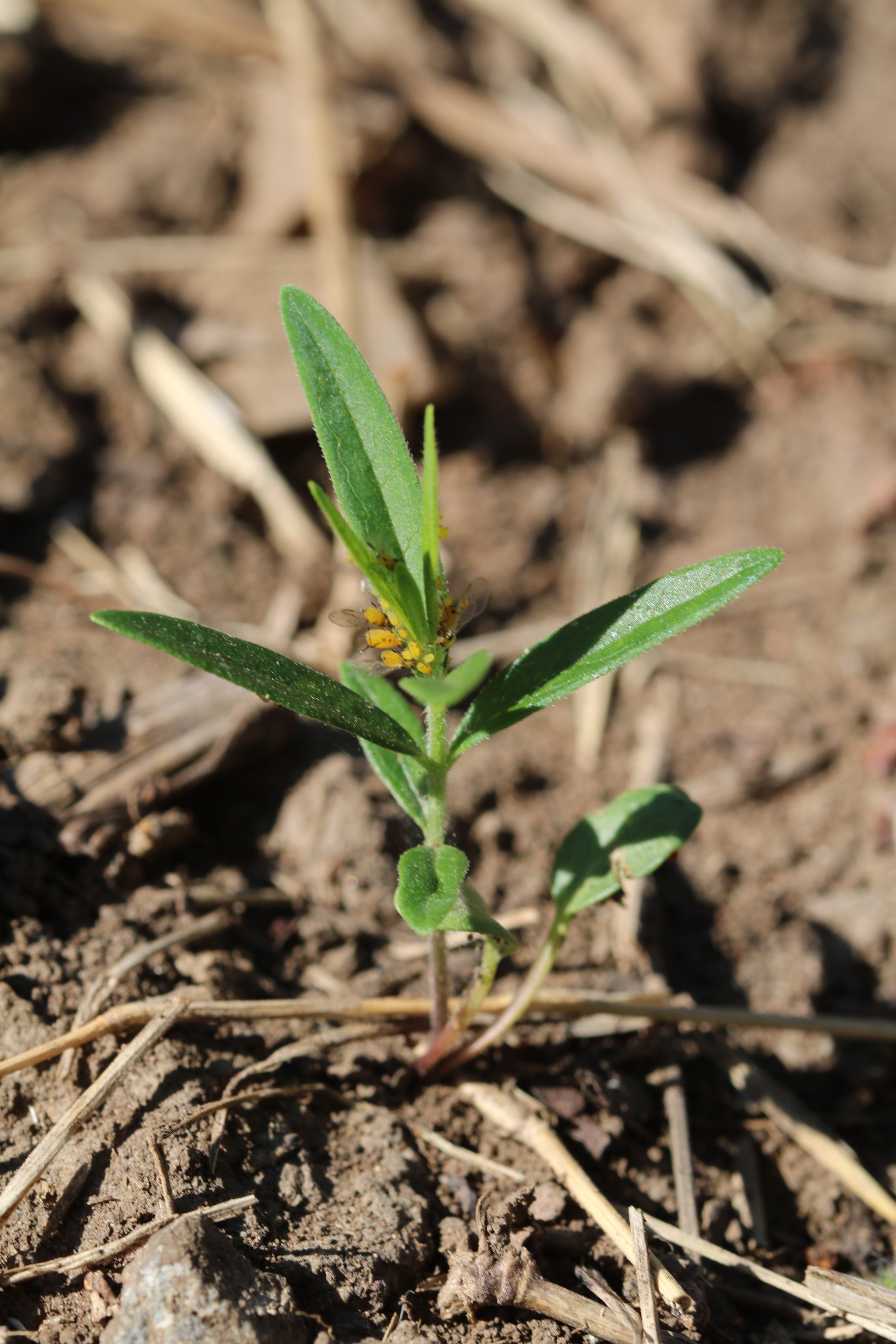
There was a plant, of strange appearance, and it had what appeared to be, those yellow milkweed aphids on it.
Did that mean… It was a milkweed?
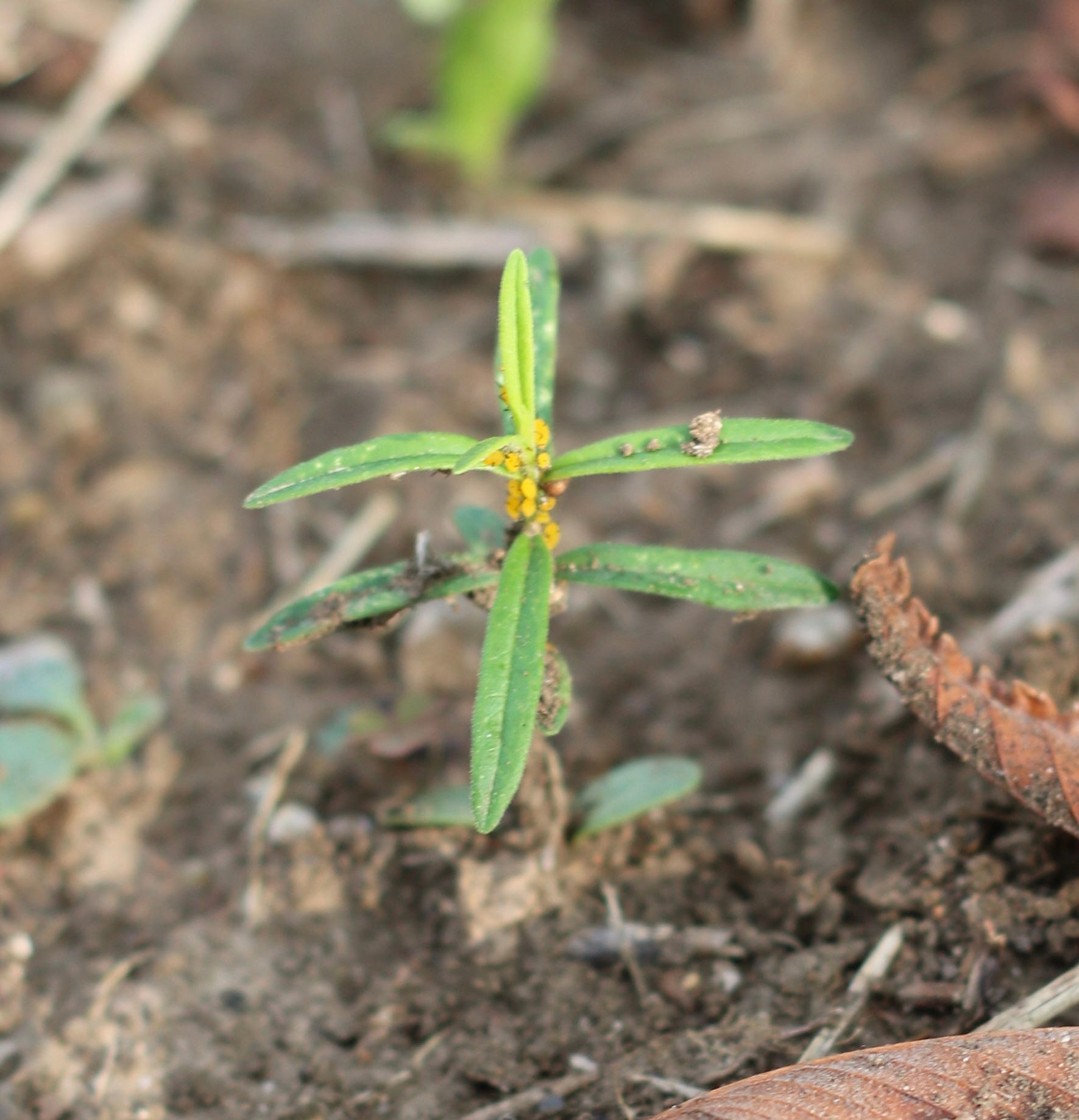
To remind you, here is one of my butterfly milkweed sprouts with the iconic yellow aphids on it. All of my butterfly milkweed sprouts have these vibrant yellow aphids, draining them of their vital life force. I should probably take them off because I think they actually are doing damage now.
Butterfly Milkweed with yellow aphids
These aphids… oh my god!!!! Non-native!!!!!!!
Y’all.
Nature is war.
I just went outside and killed them all.
They’re from the Mediterranean. Oleander aphid (Aphis nerii). I assumed they were from ‘round here because they were also called milkweed aphids. Nope. The omnipotent internet has just revealed to me: a foreign invader.
I did what I had to do. To protect my garden. I’m sorry, aphids. I’m sorry.
It’s for the greater good.
Where are your morals now?
Am I to say who lives and who dies?
Yes. I am. For the monarchs!!!!!!
Honeyvine milkweed covered in Oleander aphids
Oleander aphids on honeyvine milkweed
Here are the photos of the mystery plant, the Honeyvine milkweed. And you can see, totally covered in the aphids.
It seems that removing them is a tricky issue because you don’t want to damage monarch eggs. Internet says you could leave them alone if the plant is able to tolerate it. Best method is to remove them by hand if you can (I could). You know these guys aren’t going anywhere. They must be here in America for good. So, just managing the population and keeping your plant healthy is the main thing, it seems.
I am shocked to have a plant pop up in the garden that is A. native and B. something I actually want to have in the garden. Welcome to the family, small Honeyvine milkweed!!!!!!
I am being pulled by invisible strings. I am a puppet, currently under the control of one who is wise and is guiding me towards success and fulfillment. I am being guided by the perfect being.
My thoughts are my own, but my actions are no longer mine. They are those of a higher intelligence, one who is not ruled by my emotions, my passions, my fear or my imagination. It is one who is outside of myself, and who knows what must be done, and wastes no time in doing so. One who knows what is best for me.
I may not always want to do what I am made to do, but it is not me pulling the strings. It is one who knows better.
This is what I am imagining today.
Japanese Is Fashionable
The tall guy on the Ugly Mugs team was wearing another cool band shirt today, and it had just a little bit of Japanese on the front. The band was called Dayseeker, and it said on the corner of the shirt, in tiny font, 暗い太陽. Dark sun. I asked him about it, and then I read the Japanese off the shirt, and he was impressed. He said, “So, you speak the kanji?” and told me I needed to speak to another guy on the team who was learning Japanese.
I had read Japanese off another Ugly Mugs guy’s shirt too, his Japanese racing shirt. It had katakana that said, ドリフットキング. Drift King. Swag as hell.
Japanese is everywhere. Japanese is fashionable.
Just Get Started
Ihave a reservation to doing my work, sometimes. To doing the thing that I know I should do, that I even want to do. Today, that is write a cover letter and adapt my resume to a job I want to apply for. Well, I’ve already done it. I’m just waiting a bit, to let it settle and then double-check, before I send it off.
A lesson that has been coming up in my life recently, and again this morning, is this:
You just have to get the ball rolling.
This is not any new epiphany, because there already many quotes about this, that say, “Starting is the hardest part” or “the first step is as big as all the rest of the steps combined”. “There are really just two steps, the first step and then all the others.” I know that’s actually a quote somewhere out there.
It’s amazing how much resistance I have to doing things, and 90% of the time, all I have to do is just start, and then I’m having a great time. You’re engrossed in the work, then you finish your task, and feel satisfied and awesome. Conversely, until you do the work that you’ve set out for yourself, you will feel a vague sense of dissatisfaction. You may say, “Why do I feel weird?” But deep down inside, you know why. There’s something you have to do, and you haven’t done it yet.
I have been reminded of this lesson recently with my writing, and this morning with the cover letter/resume writing. Even today, I had resistence. But I knew the thing to do—just go to the cafe, get the coffee, sit down and start.
That’s why starting in the morning is so helpful for me. You have the energy, you have the full day ahead, and you are encouraged to just get right down to business, and get it over with. Then you can have your freedom and fun time.
I’m thinking of the other quote which might be by Mark Twain, possibly Thomas Edison, or who knows, which is the one about eating three frogs in the morning. “I try to eat three frogs every morning.” Something like that. The idea being to “eat a frog” right when you wake up, because it’s going to be the hardest part of your day.
Garden Updates (Sept. 10th)
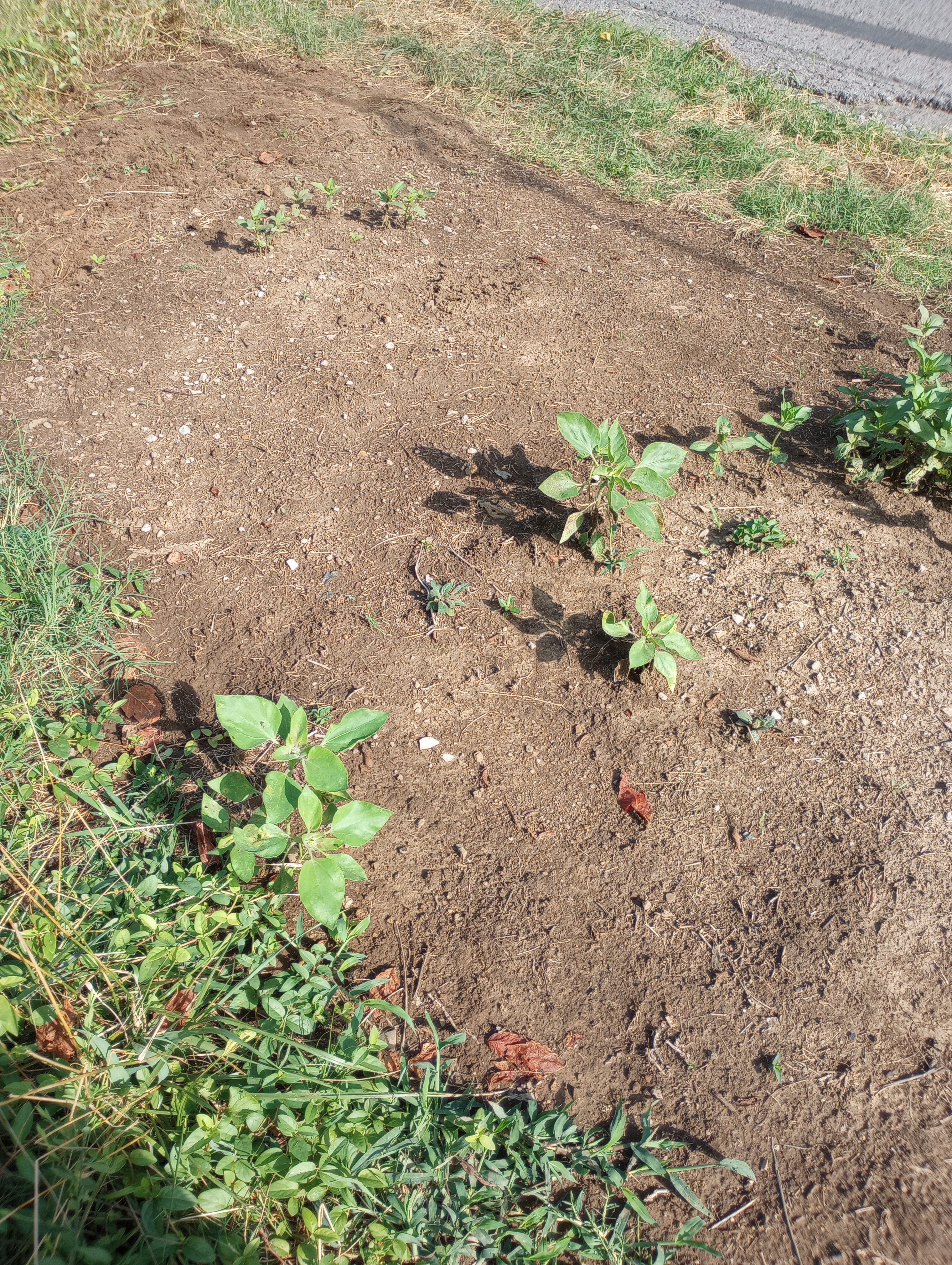
My soil is not great. I have had some things suffer due to drought, and probably some seeds not sprouting because the soil is too hard or not the right quality. Birds and squirrels may have also eaten the seeds, as many of them I just sprinkled on the top of the soil. It’s a tough patch of earth I’m working with, but things are growing.
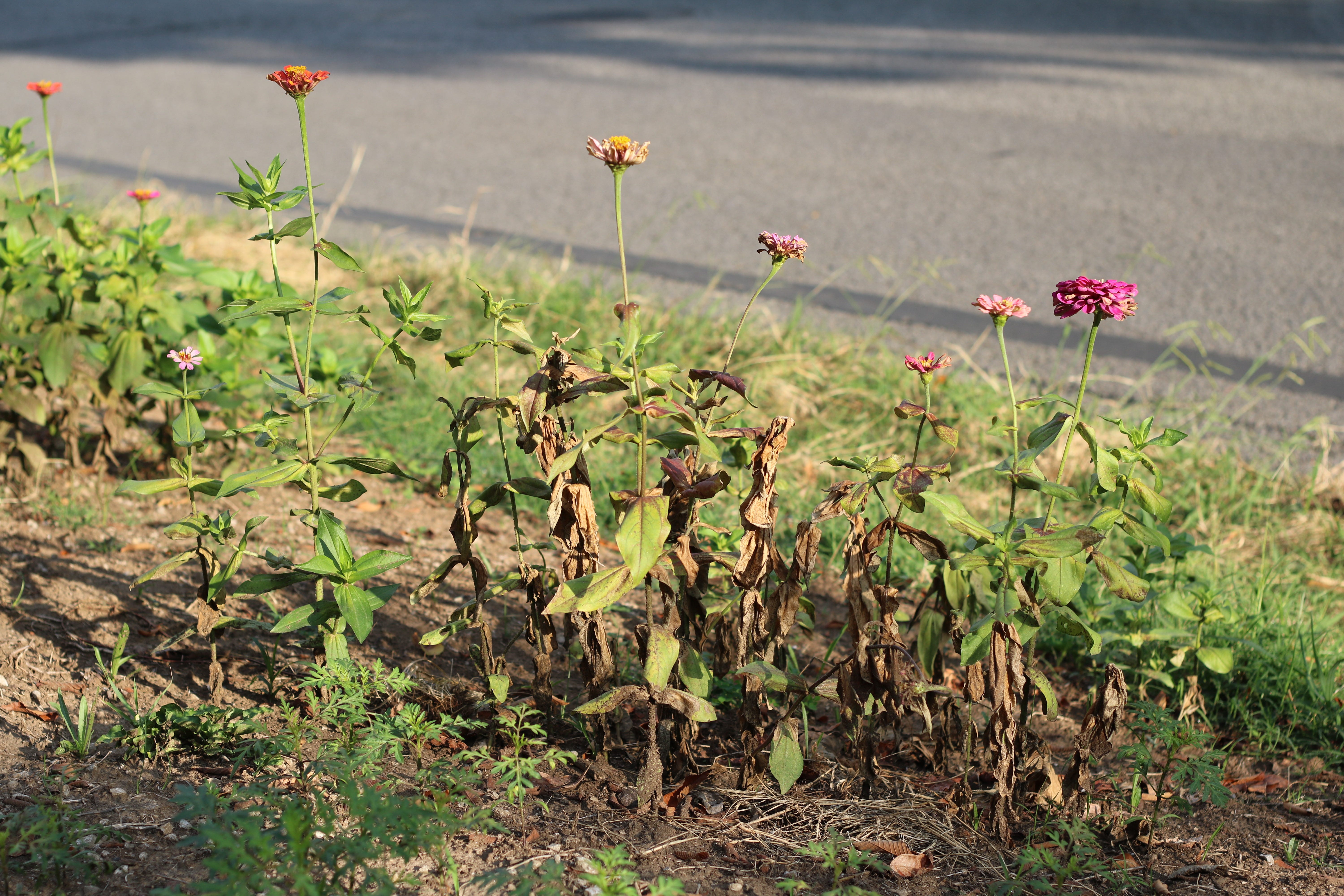
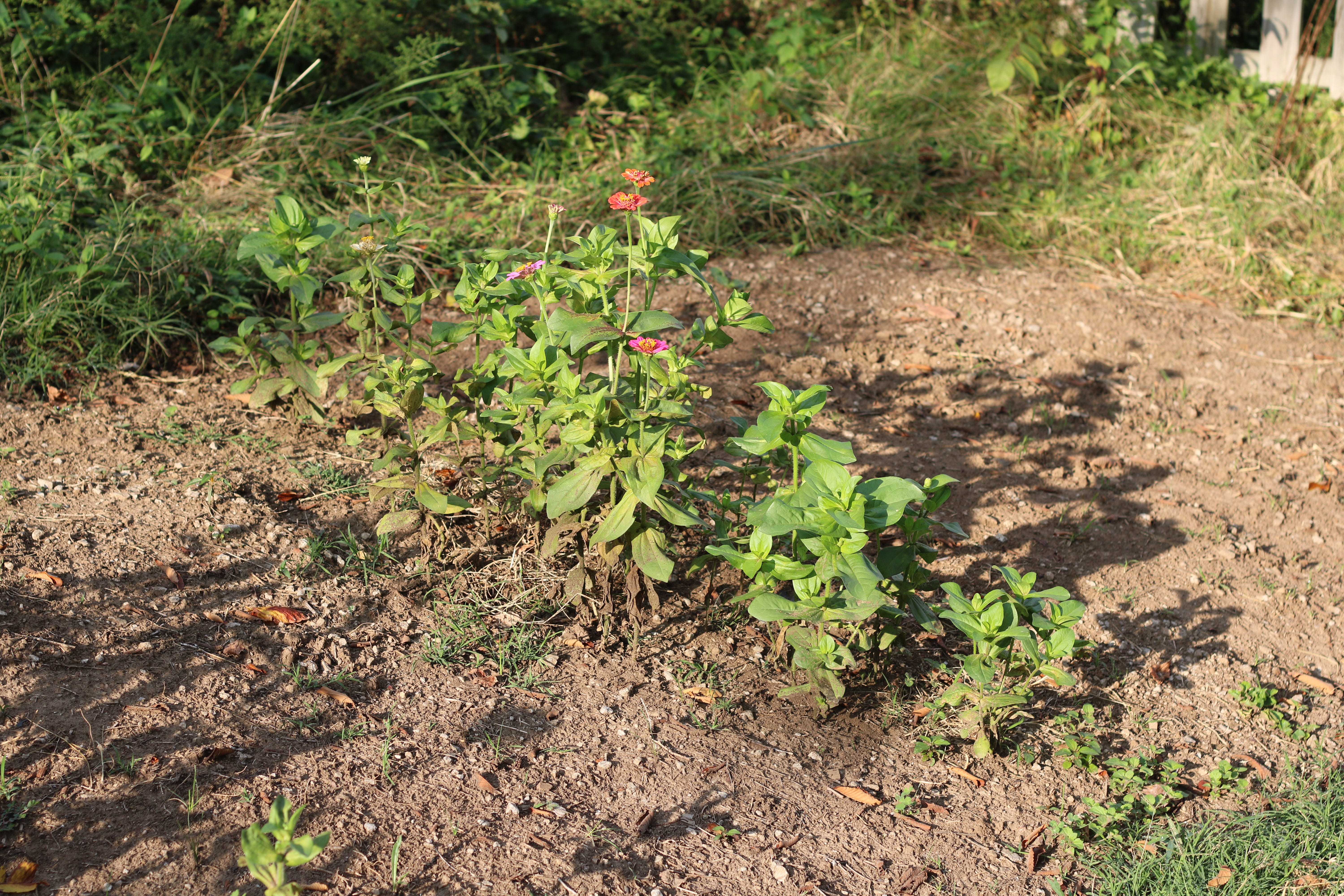
The big mystery I have now is why my second patch of zinnias are doing so much better than the first. The first was planted about two weeks before, maybe only one week before. I should have written this stuff all down. They’ve been alive for one or two more weeks in drought conditions, as August was hot and sunny every single day. It rained twice, and not for much. I don’t really know why my second patch is doing so much better. Maybe it is that they just weren’t exposed to so much sun and drought. Even a few days, an extra week of that could matter a lot. I don’t know.
I tried really hard to save these zinnias as they were going downhill, but I’m still a novice. I didn’t know if they needed more water, less water, or if they just were going to die anyways. Maybe they need fertilizer because of the sandy, clay soil. Who knows, but they were growing well and fine, so I think they probably just got cooked, and probably didn’t get enough water. That’s my guess.
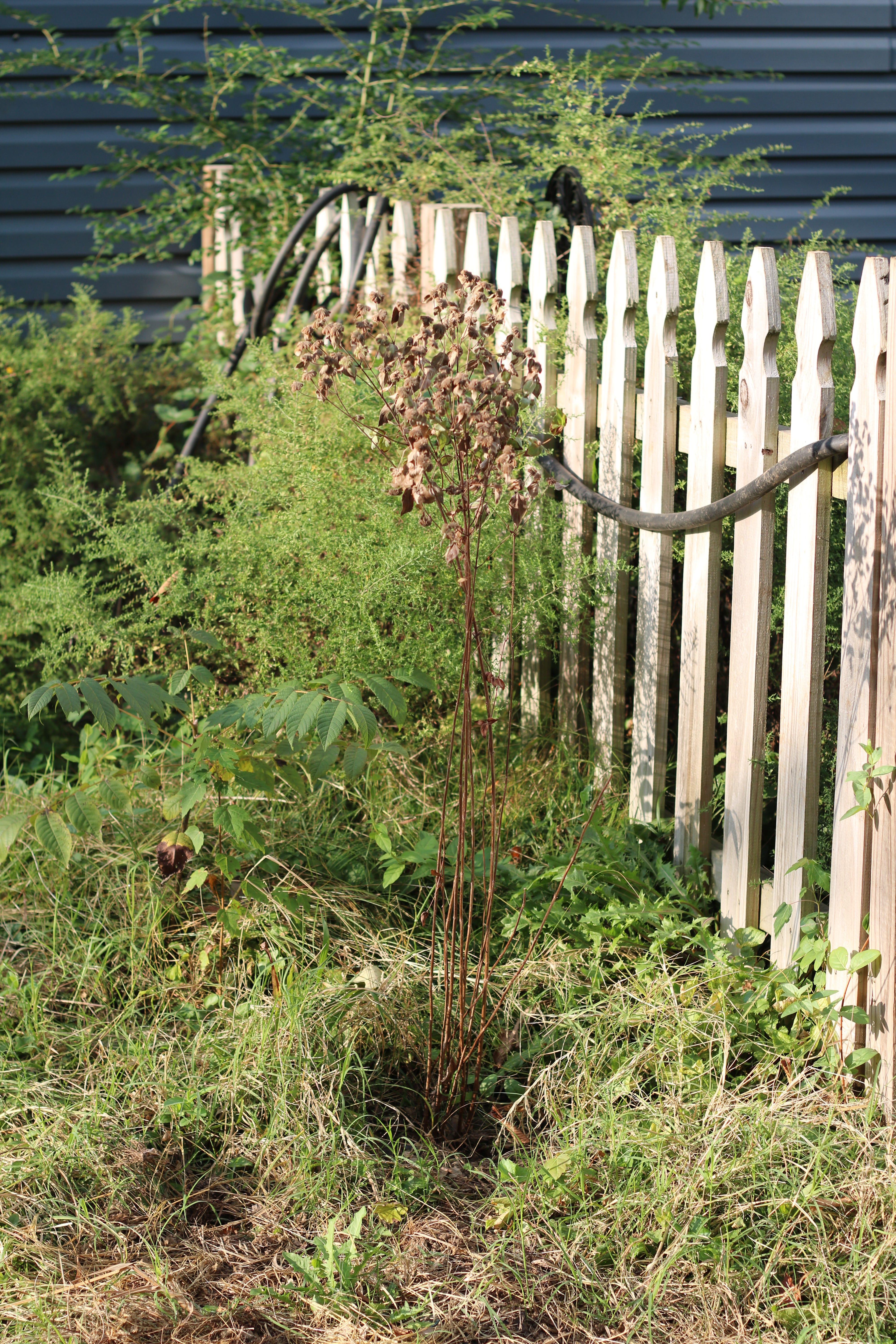
Suffering zinnias
You can see they’re brown and crispy. Many are dying, half already dead.
Unsuffering zinnias
This is the second patch, doing a lot better.
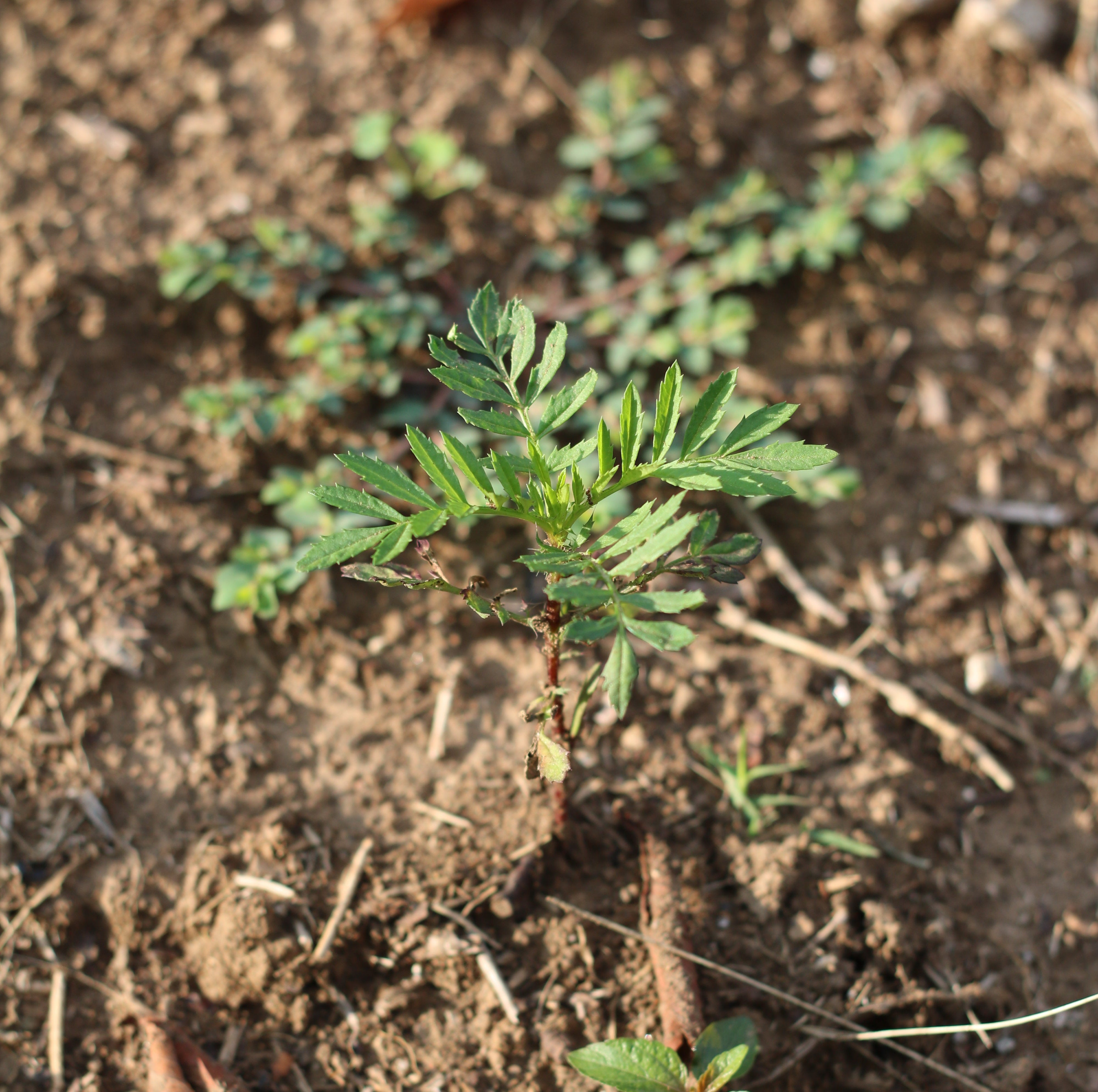
Marigold
Here’s a marigold. I put down a lot of seeds, two have made it. Not great odds, but hey. Two made it. I thought I had more, but as they started to pop up in places were there should have been no marigold seeds, and they were rapidly expanding outwards, instead of up, I had the suspicious feeling that they were not marigolds. Well, they weren’t. They were tree of heaven, thriving in my disturbed, roadside habitat with crappy soil.
Tree of heaven seedling
Butterfly milkweed w/little aphids
Not a great photo but this is one of the butterfly milkweed sprouts I’ve got, with those little yellow milkweed aphids feasting on it. I’m just letting nature take its course, here. So far it seems that the sprouts can handle it.
Here is an undesirable in my garden (actually several). You can see a little tree of heaven sprout to the right of the larger undesirable plant. The grass at the bottom is undesirable. I can’t remember what this green round mass is called but it’s undesirable. I know that.
I used my Moto G smartphone to help me ID these sprouts when trying to use words with Google wasn’t working for me. Sharing the photos with Google and having it ID things is extremely helpful. It told me right away what I was working with, here. And there were many disappointments, because none of it was anything I really wanted.
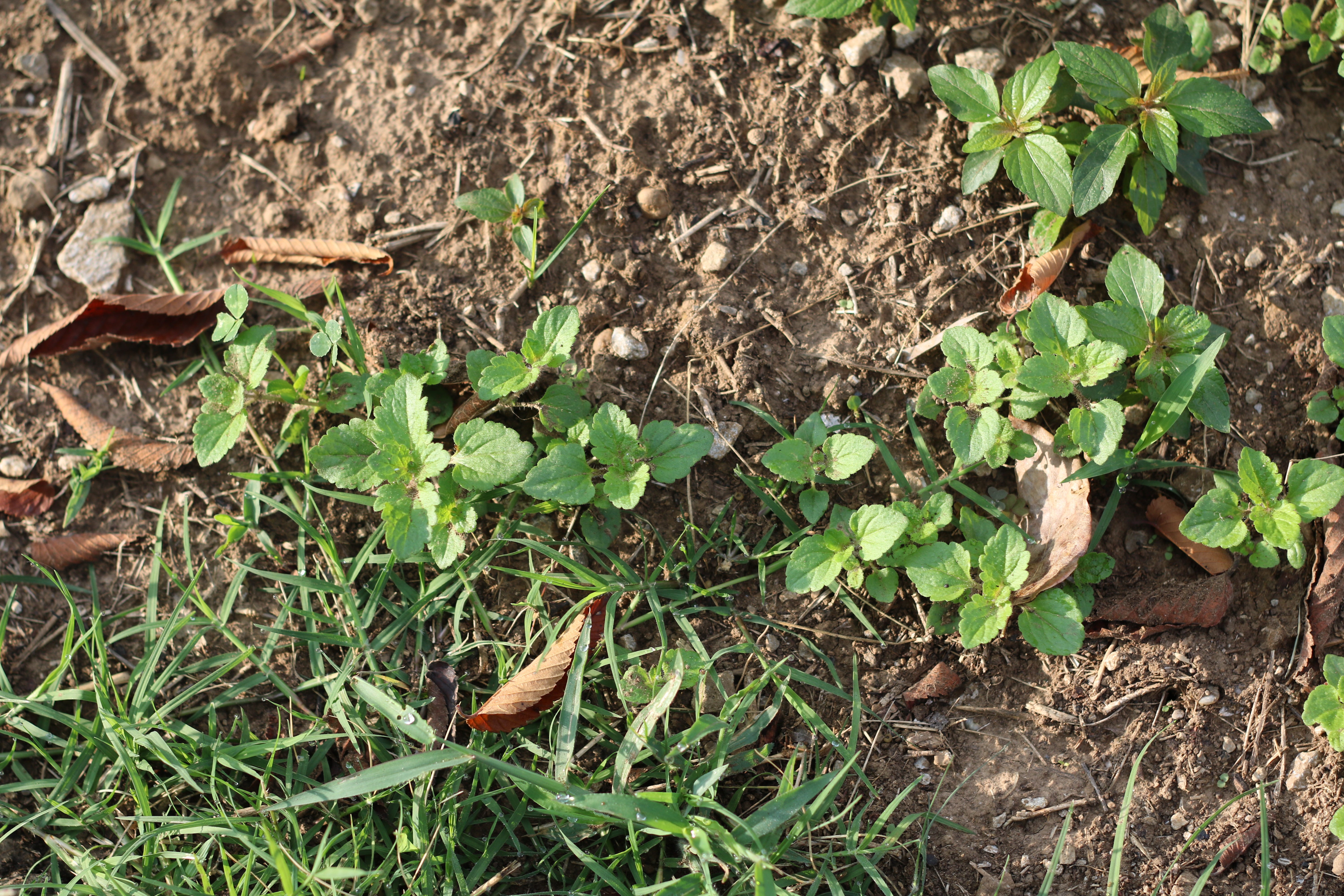
Common ragweed
Here are some undesirables that I thought were cosmos. They look similar, but they kept popping up and I thought, now wait a minute, there’s no way the cosmos are doing this well in my garden. And there’s more seedlings than actual seeds I planted.
Not cosmos. Common ragweed. At least it’s not an invasive. I should pull it up but I guess I want to see what happens. I’m also still holding out on a fantasy that they really might be cosmos, and they will all become beautiful flowers.
It’s inhabiting the carrot patch but I don’t feel like those carrot seeds are sprouting… at all. Not having a lot of faith in the carrots, here.
Mountain Mint
This is mountain mint, I got from Shelby. They dug me up a chunk and let me take it home. It’s not doing too well, I don’t think. The leaves are turning brown, almost all of them have gone brown and seemed to die. There are a few green ones left. I hope it doesn’t actually die because I was really excited about this plant. Maybe it’s just going dormant for the season…? (Hopeful optimism.)
I think right behind it in this photo is an advanced tree of heaven plant, I’m almost positive. In the background, to the left. Do you see that thing? Probably gonna have to pull that.
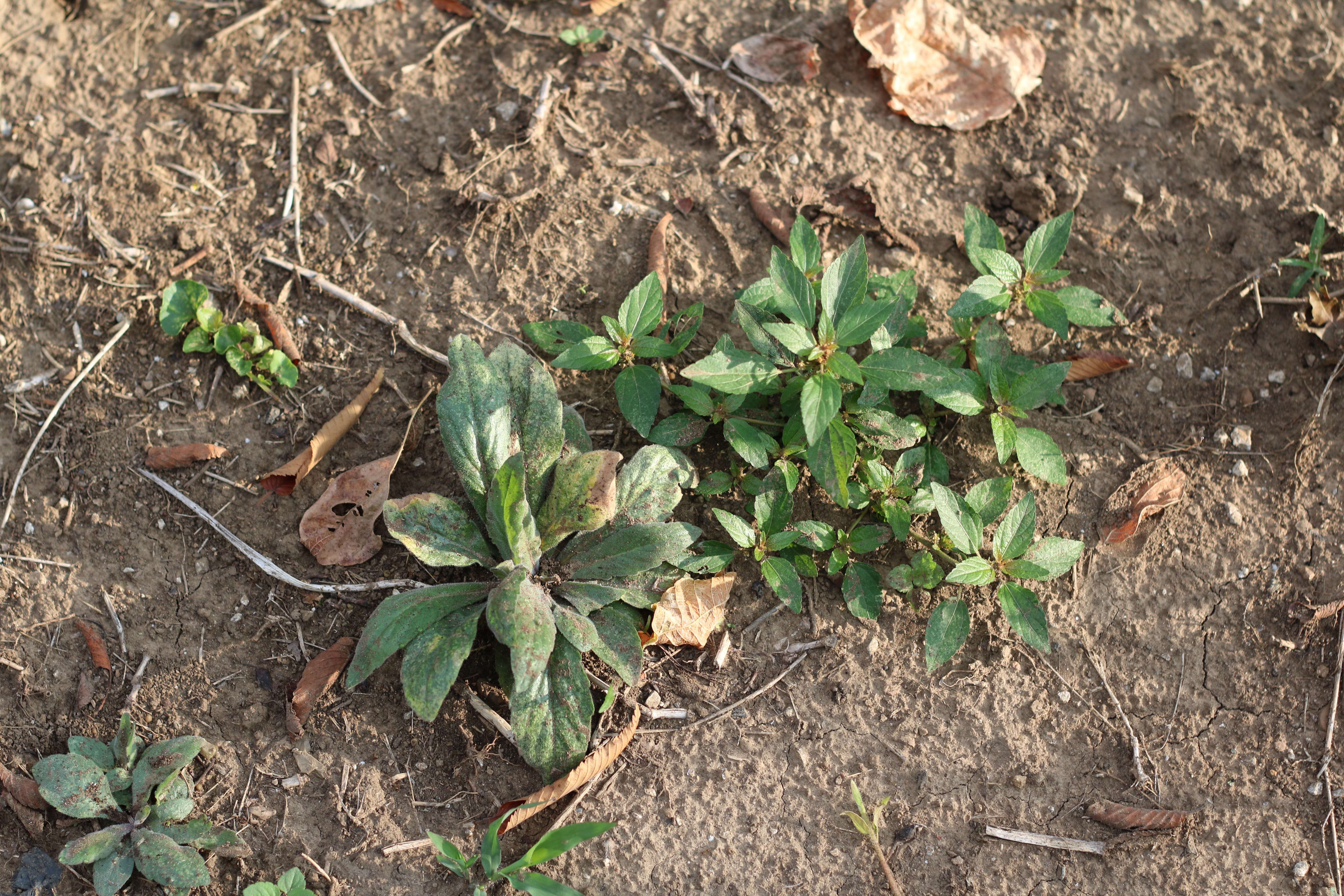
This is something new that’s been popping up that is also an undesirable. There’s a big one that I should have photographed. My smartphone IDed this as “three-seeded mercury” which is an amazing name and hard to remember. Just now I thought it was called “three-headed copper” because I couldn’t remember. Apparently it is a member of the “Spurge” family, which is a pretty incredible word. “Acalypha rhomboidea is a plant in the spurge family…” (Says Wikipedia.)
You know, it looks like the spurge is just in the top right of this photo, actually. I think the rest of this stuff is something else.
Here is the three-seeded mercury, the spurge, to the right. There’s a few of them. And that largest plant on the left is apparently “common mullein”, and is invasive and hated, I have read. From Europe and seems to be a menace. There is another, smaller common mullein in the bottom left corner of this photo.
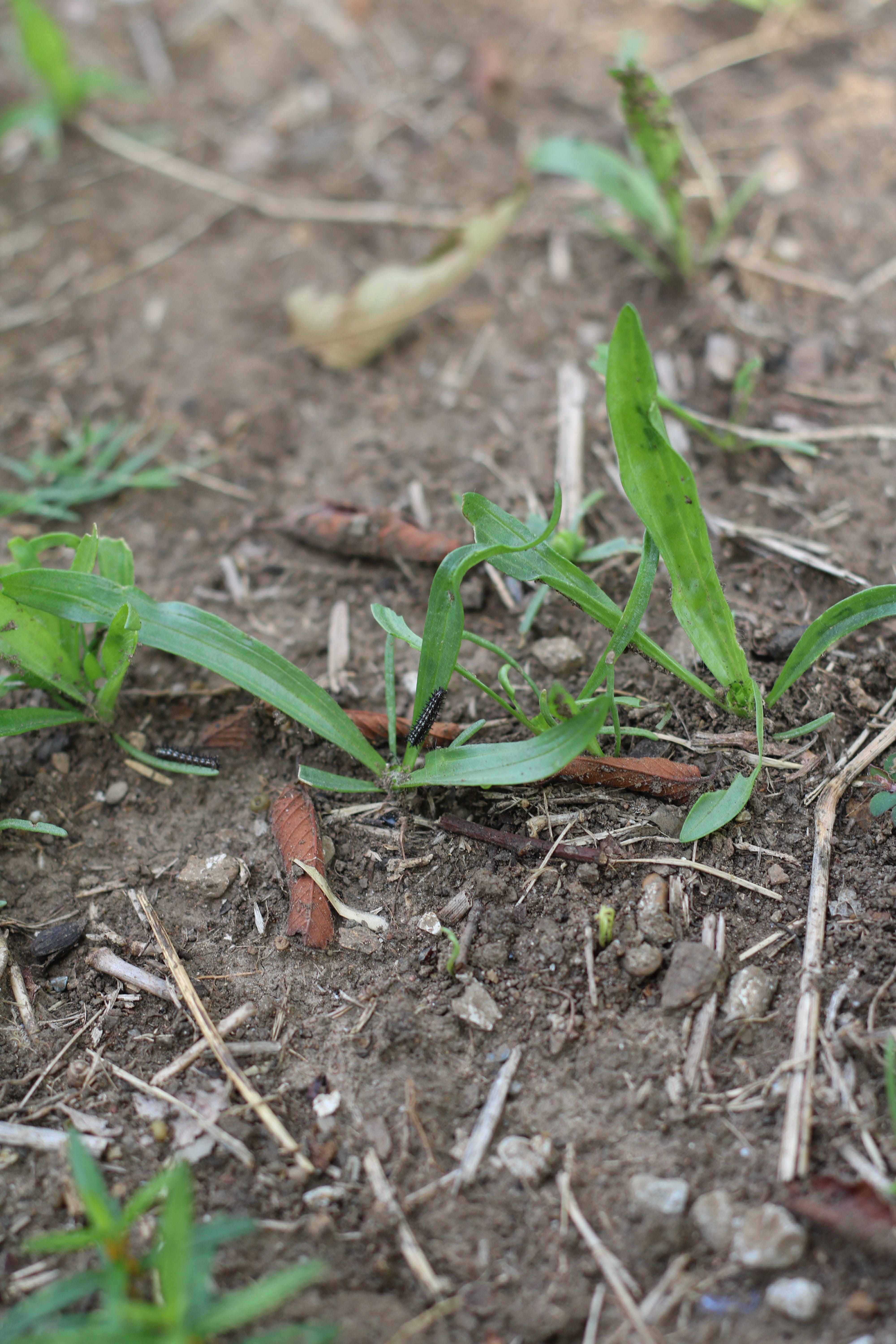
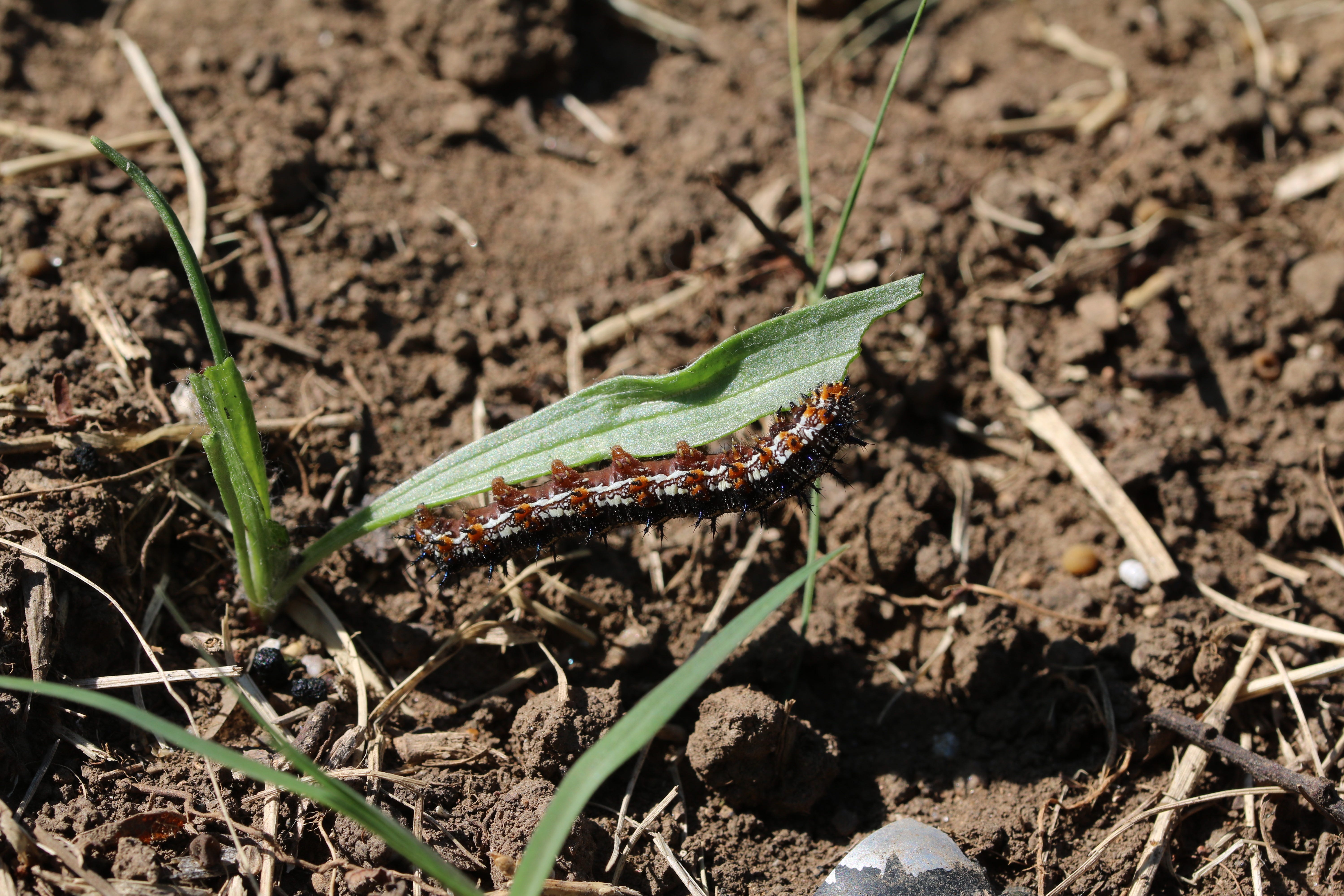
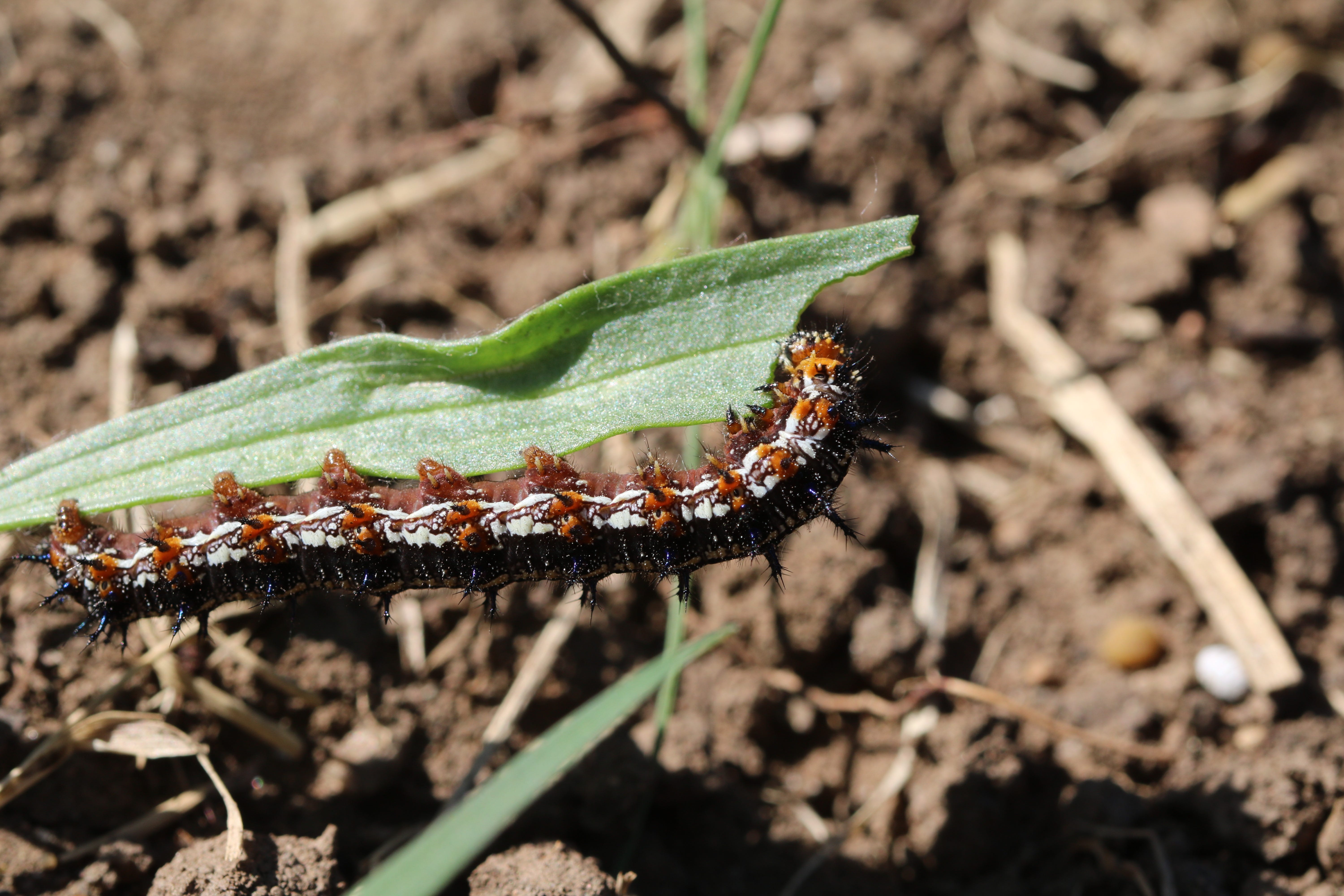
I’ve got this grass popping up all over in a section of the garden, and I don’t know exactly what it is. These caterpillars (maybe common buckeye, Junonia coenia) like it though, as I had photographed the big one the other day (and I don’t know where that one went off to), but yesterday I spotted an extremely tiny one on a blade of this grass, and today there are three, munching away now. They’re like little lawn mowers. I’ll leave the grass for them. They could get real big real fast, here. Hopefully they stick around.
And the last photo and update—I spied this fuzzy caterpillar this morning on one of my zinnias. I haven’t seen any caterpillar on a zinnia before. This is a new one. And it’s actually eating it. Go for it, man. That zinnia is probably gonna die anyway. I want to see you get BIG.
This guy (or gal) has been chompin’ on my grass. I think it’s grass, I really don’t know what it is (if you know please tell me). It seems to be some kind of grass, at the very least it seems to not be the milkweed (see below) which is now covered with yellow aphids. Even though it is not even yet like two inches tall.
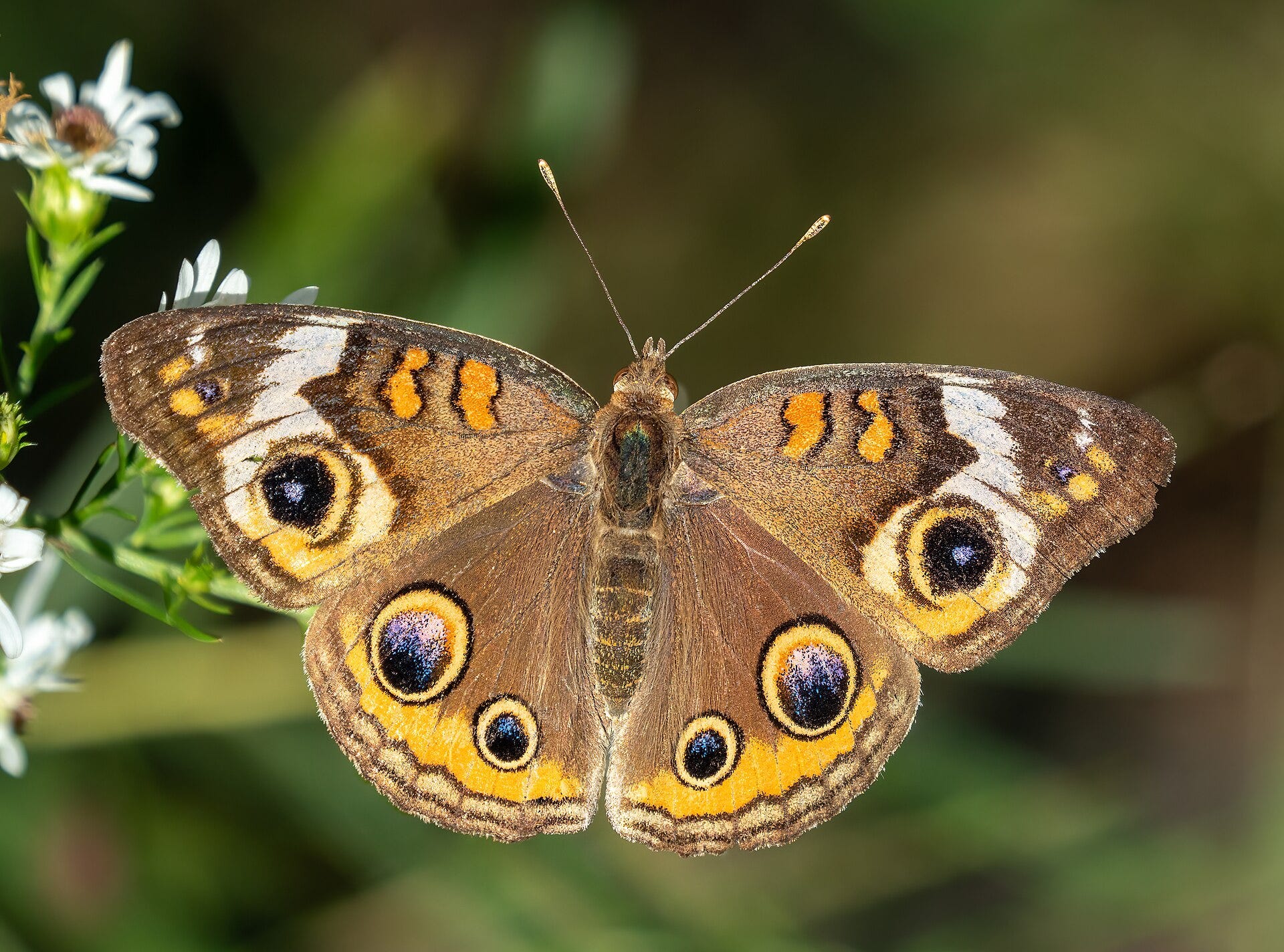
Internet says we have a Common Buckeye caterpillar here. It will become this Pokemon.
Common Buckeye butterfly
There are plants—the bugs will come!
The story with this caterpillar is that, about three days, I was stooped down to look at these sprouts in this area of my garden, trying to figure out what was what. I had planted butterfly milkweed here, which is what those yellow aphids are on.
I happened to spy an extremely tiny caterpillar on the length of a tiny blade of grass. It was certainly the above caterpillar.
Well, yesterday I didn’t see it at all.
But TODAY, as you can see, I saw it, and it was MASSIVE. I also noticed, before seeing this caterpillar, that the grass seemed to have considerably lessened. I said, “Hey, where’d all that grass go?”
This is where the grass is growing. This caterpillar has about hextupled in size since I saw it literally four days ago, a teeny-weeny greenie baby.
Yellow aphids already assaulting my butterfly milkweed sprouts
I also noticed yesterday, one of my three remaining sunflowers that was again horribly decimated by some predator, squirrel, rabbit, who knows… it was sprouting knew leaves and attempting to make a recovery. That was good. Well, last night I was out there, and I saw no more leaves, I looked closely, and what do I see? Little son of a b**** going hammer on the remaining shreds of those fresh leaves, that it’s devoured all of. Rascal!!
However, I am too soft. I did nothing. The poor thing is having a bountiful feast. It is what it is.
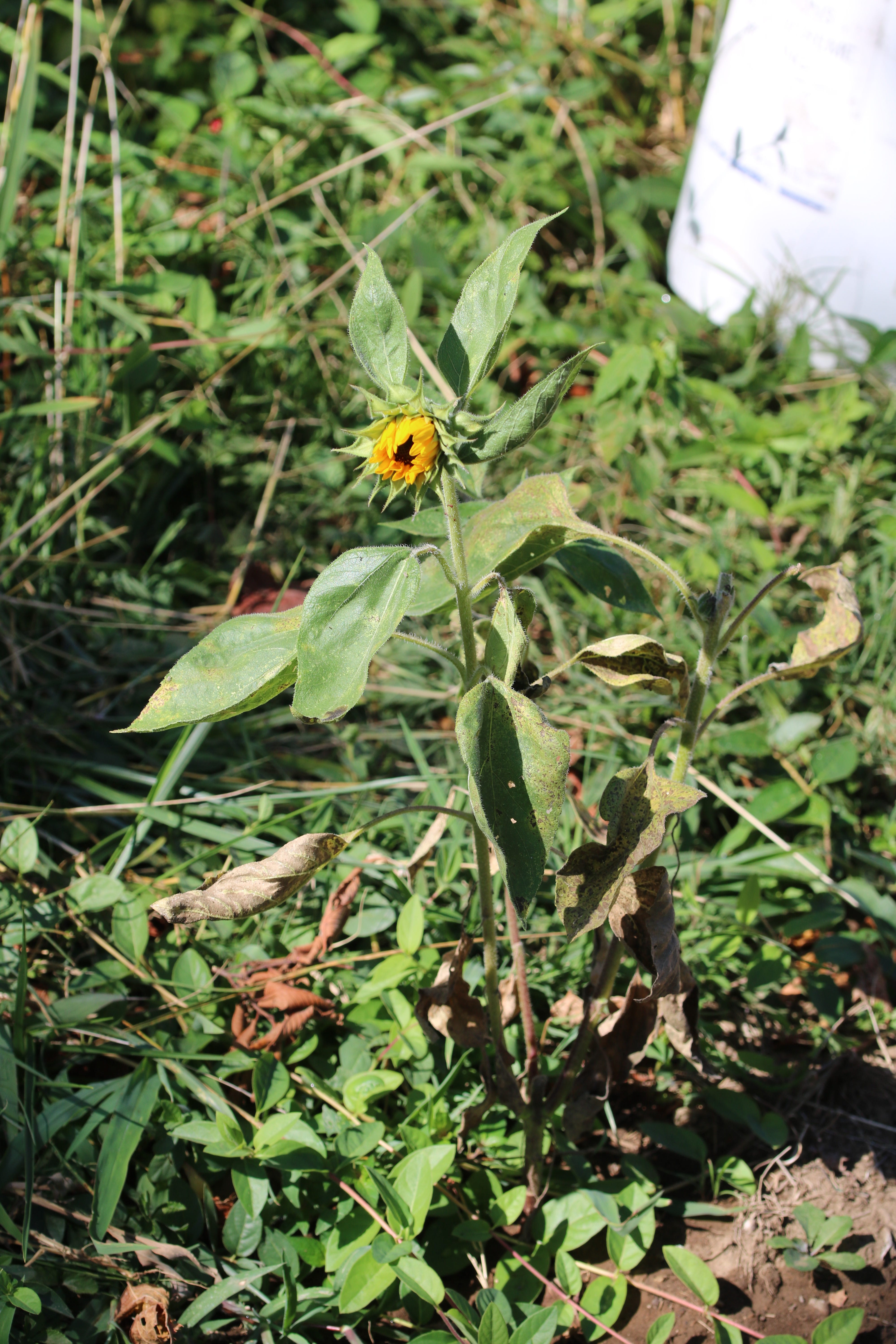
My other sunflower has survived two assaults and massive predation by a variety of insects, and is going to bloom. Look.
Bloom! Bloom!!!!!!
Through drought, chomping, aphids and lace bug… We are getting a flower.
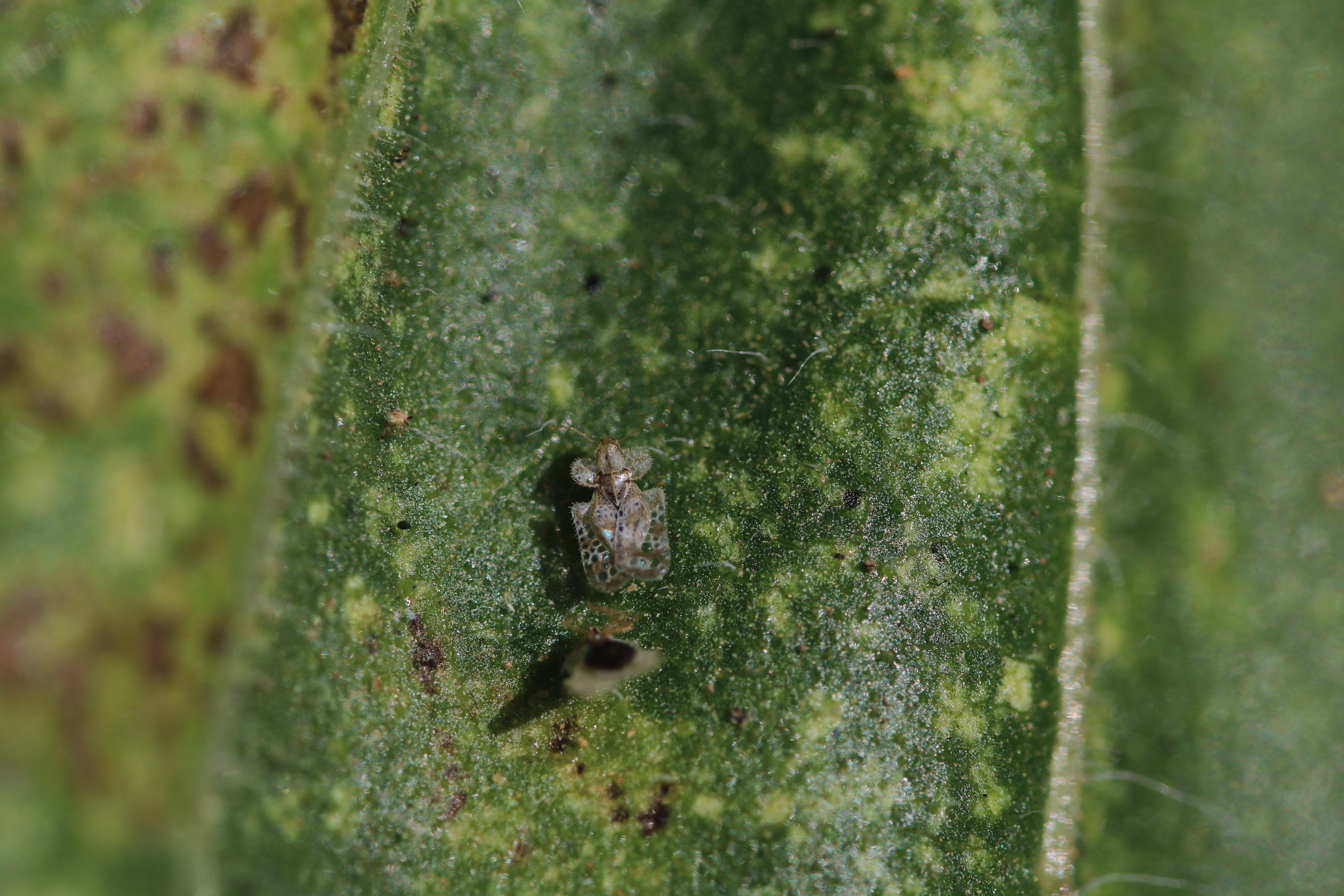
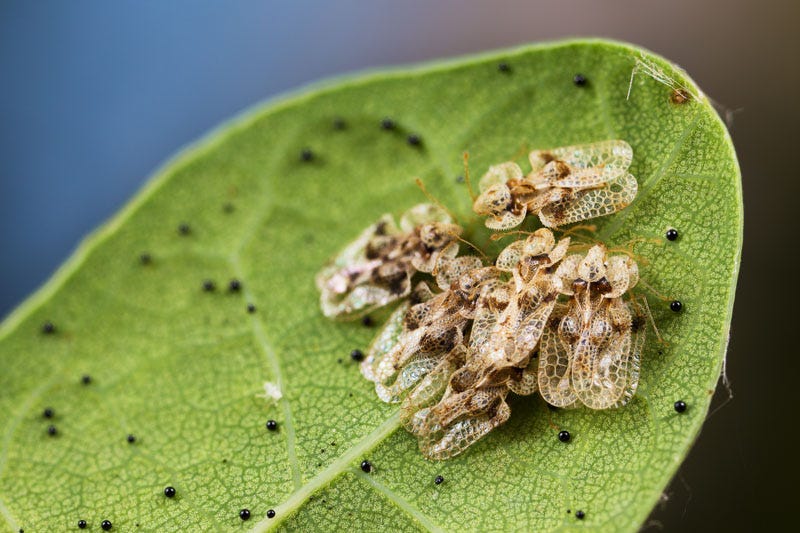
If you have never seen a lace bug (Tingidae), here it is. I remember the first time I saw one of these, extremely tiny and wonderful bugs. It was our very first class walk that we went on in my Entomology class, to go investigate the school garden and find bugs, and we were walking under a tree, and he casually flipped over a leaf and said, “Here, look.” And showed us the lace bugs. They completely blew my mind.
My photo of lace bug on my sunflower
They are extremely small, as you can see. And they are feeding on my sunflowers, and I won’t stop them. The sunflower can handle it. More will probably just come anyway.
Internet photo of a squad of Tingidae
I will say that my sunflowers have had a somewhat terrifying amount of aphids, large aphids on them. I was hoping, praying that a hero would appear. Well, I saw, today…
Ladybug here to save my sunflower from aphids
Is this our hero? Looks like a hero to me. (A ladybug.)
Below is an aphid prowling on my sunflower. Interestingly, a winged aphid. I think that is somewhat unusual, I don’t always see them with wings. Maybe just a full adult?
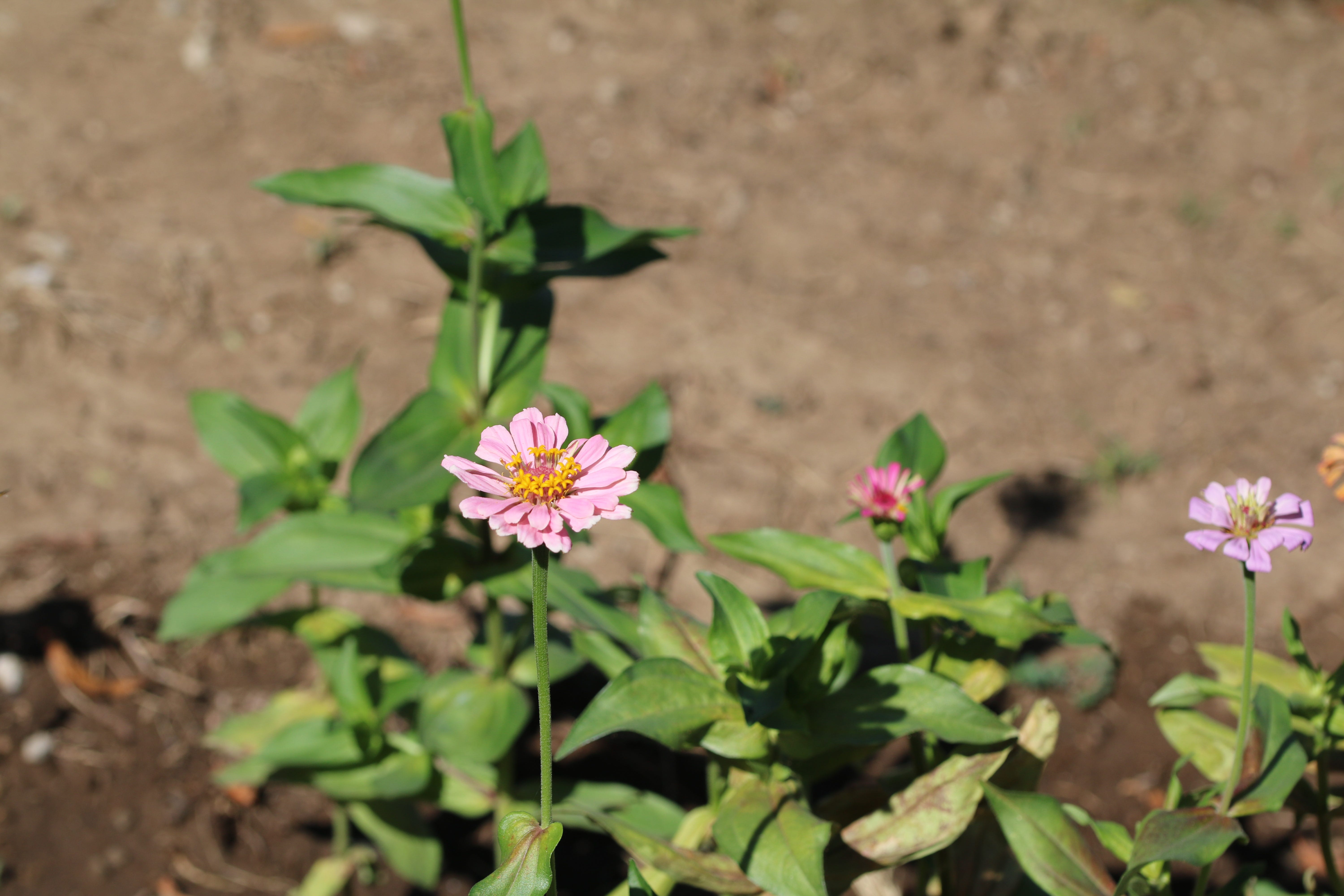
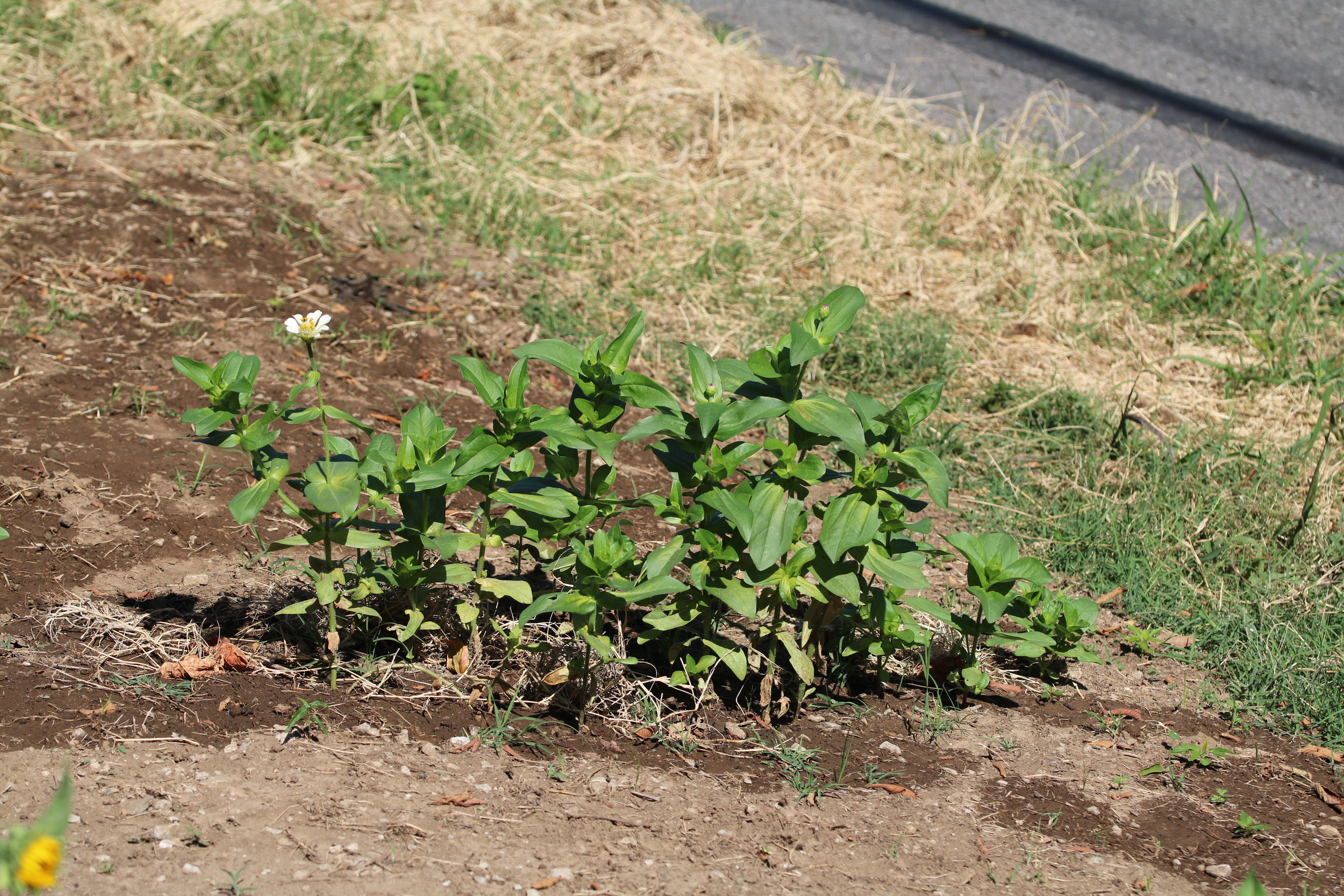
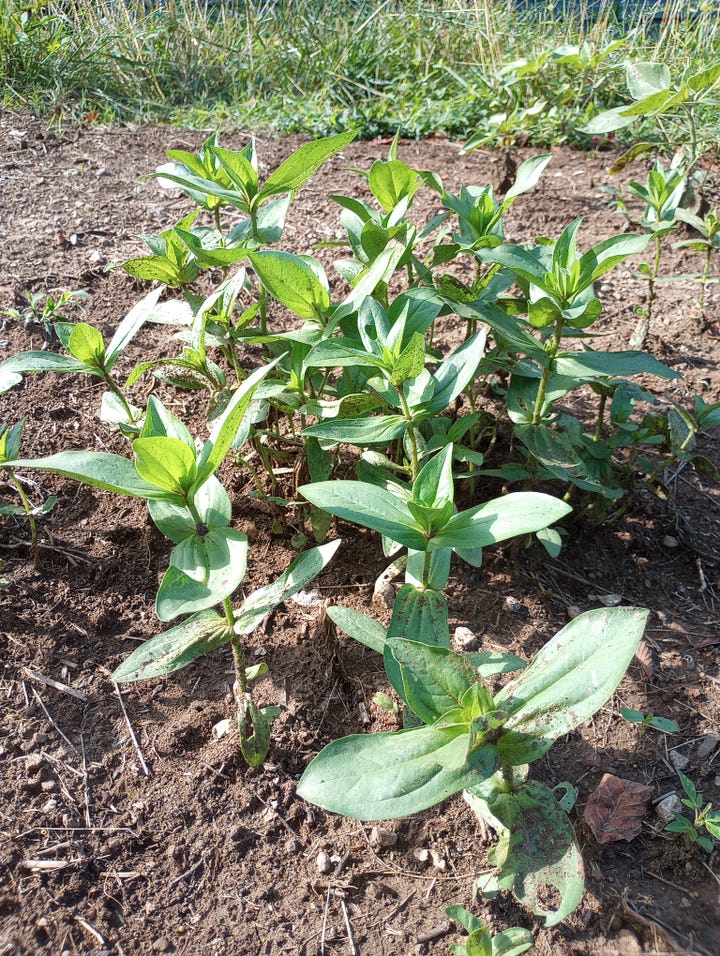
Then, here are my Zinnias. They’ve made it but are suffering from drought conditions, even with my watering. IDK what the deal is really. It’s only rained twice this August and been blue sky and hot every day. They get full sun, and the soil is clay. Probably tough conditions for them, I don’t know if I haven’t watered enough or my methods aren’t good enough or there’s nothing I can really do about it. But some are making it through. The patch with the white Zinnia is looking better. Who knows. A lot of the Zinnias have made it all the way to having a flower that’s about to bloom, and in the last week they’ve just gotten worse and worse and they’re dying right at this point. That’s sad to see. I’ve watered them, but maybe not enough. IDK. Ah well. But I got some blooms, that’s alright. We’re supposed to get some rain in the next few days, I’m praying. 🙏
First of all, before we dive into this, I have to say — I had just written about my Japanese suit, and how proud I was that it was not made with synthetic materials, and oh my god. Are you ready for the great irony? How is life so perfect, like this?
I came home from this lengthy Shelby Park reconaissance, field-reporting photography mission, drenched in sweat. I had worn those wool pants to the part, belt and Dr. Martins. Those nice suit pants, although I wasn’t so stupid or insane to wear the jacket. Yes, in the sweltering, midday heat in the middle of August, I wore my nice suit pants to the park, for a photography mission. The park was as dead as it could ever be. I saw about ten humans in the two hour span that I was there, record lows. Most people were not willing to suffer that heat. Only the die-hards were out.
It was extremely gorgeous–ah, but I have to tell you the great irony. I came home then, eager to strip it all off, and now I felt like I had really earned the right to take off my suit, and I threw the pants down on the bed, when I noticed something. Sticking out of the back pocket was a white piece of paper.
I wondered if I put something that pocket, but it was just the tag of the pants. As I then had it in my hands, I thought I may as well read what was written on it, and see those wonderful words, 日本製, 毛, 100% (100% wool). I saw those words, yes, but then I also spied some words, directly below that. Some horrifying words.
Yes people. I kid you not.
ポリエスタ.
Polyester.
I’m telling you, the irony is unreal.
The 表地 (omoteji) of the pants were 100% wool, yes. But the 裏地 (uraji)? The lining?
100% polyester.
Unbelievable.
And shameful.
I have been going to Shelby Park frequently, as usual. Shelby Park is an incredible, wonderful resource for us East Nashvillians. And I have been studying it, and I have been studying the plants, more and more of late. Especially the wildflowers and the meadow. I have wanted to do some photography of it and write a bit about things for you, and I needed something to do today, and so I decided to just go for it. It turned into something of a tour and study of Shelby Park, a Shelby Park report, along with some new botanical discoveries… I’m just going to write it all up for you. I really enjoyed having the camera again, and doing photography. I realize that I miss that, but it also is a whole ordeal. It’s a serious undertaking, a photography trip. I decided in advance that I was not going to adjust or alter any of the photos at all, and would simply try and get the camera settings as correct as possible, get the framing right, and use whatever was usable. There are still some decently artistic shots in here. That was to save myself time, because the photo editing can take a really long time.
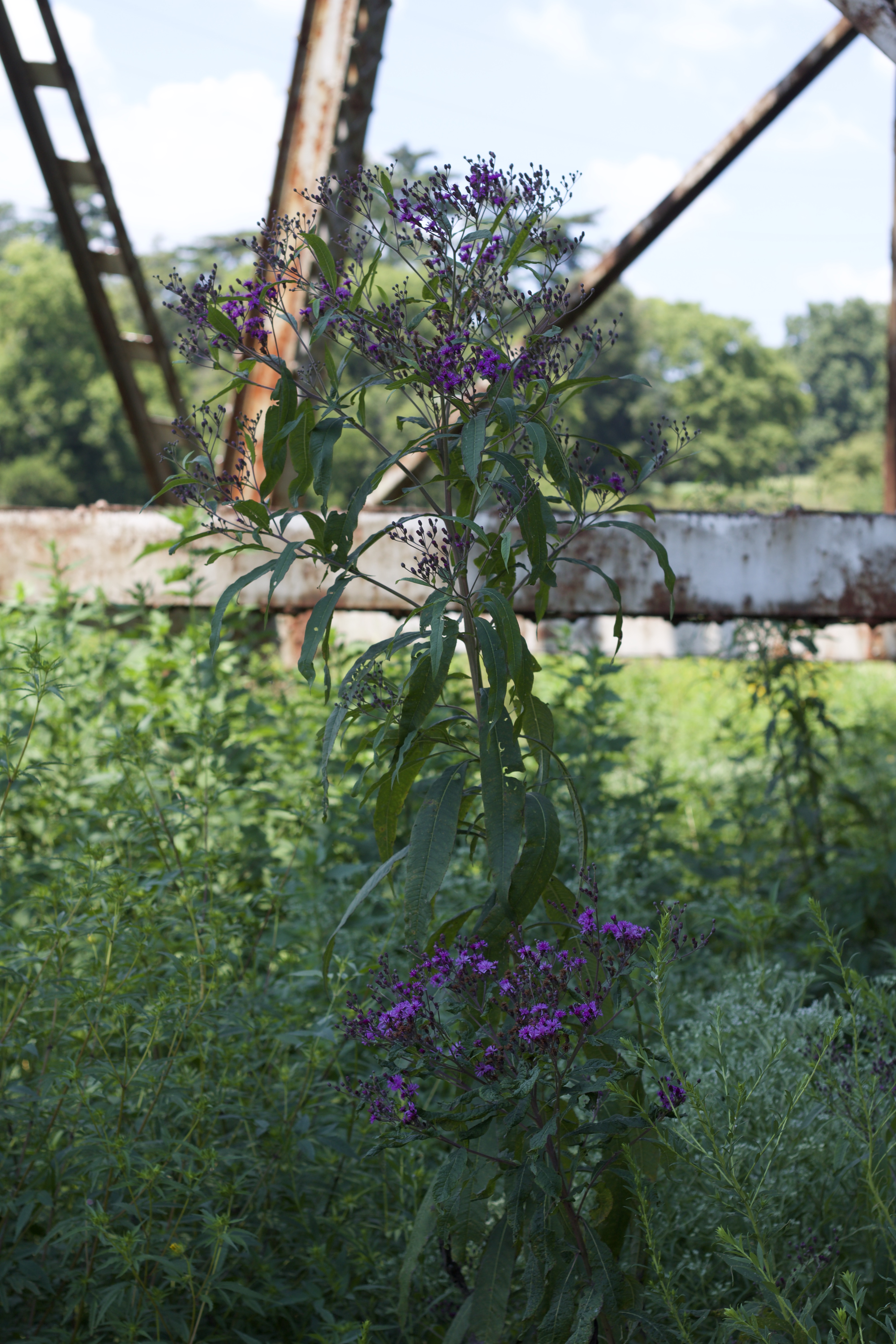
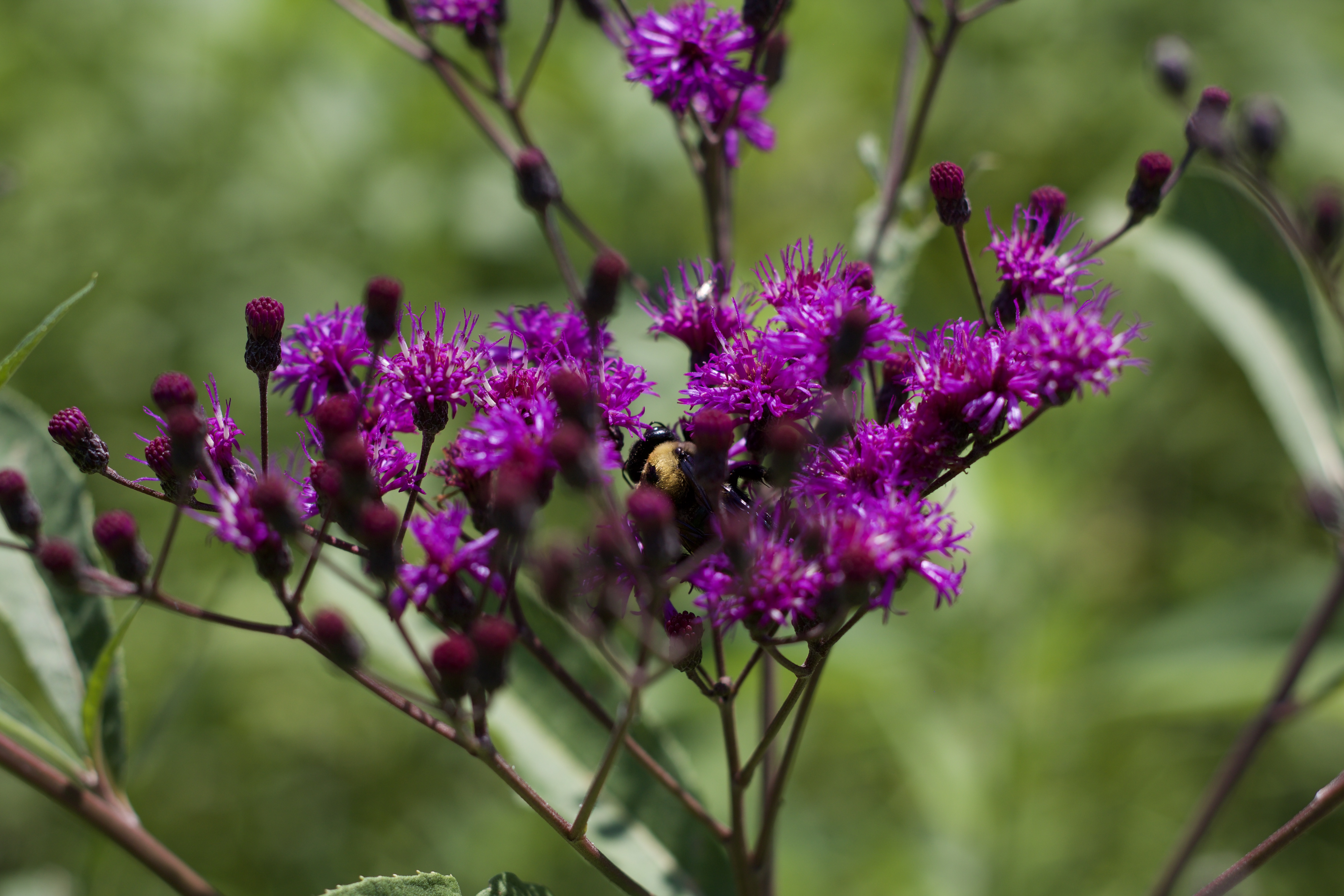
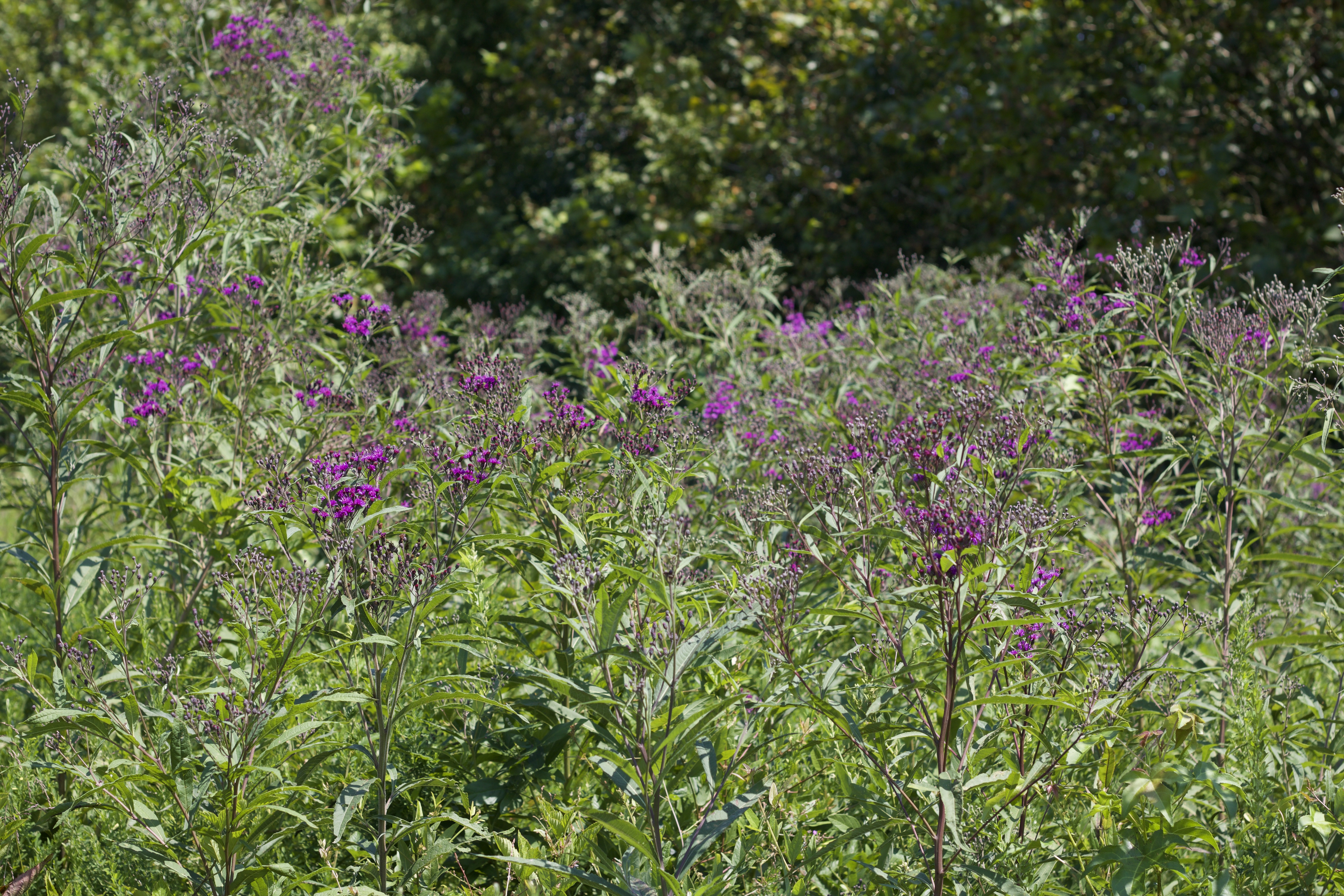
Let’s begin. The very reason I wanted to go to the park was to photograph this plant, which is now the main bloomer in the park. It’s Vernonia fasciculata, called prairie ironweed, a native wildflower. Ironweed has kept growing, and they are the tallest wildflowers at Shelby, and they are everywhere.
The really interesting thing here, and that I’ve learned studying the wildflowers, is that they stagger their blooming periods. The meadow at Shelby Park was completely covered in Common Milkweed’s blooming. They had their heyday, for about a month or two, and it has now totally passed. Not a single Common Milkweed blooms anymore. Now, in the middle of August, it’s the time of ironweed. The ironweed is reigning supreme. It was interesting to see it first popping up, little tufts of dark purple here and there, whereas now it’s literally everywhere. The deep purple is a really enchanting color. I imagine if I was a bee or butterfly I would be like, I need that right now.
Ironweed
Bee enjoying ironweed
Ironweed cluster
Copious amounts of ironweed
Common Milkweed
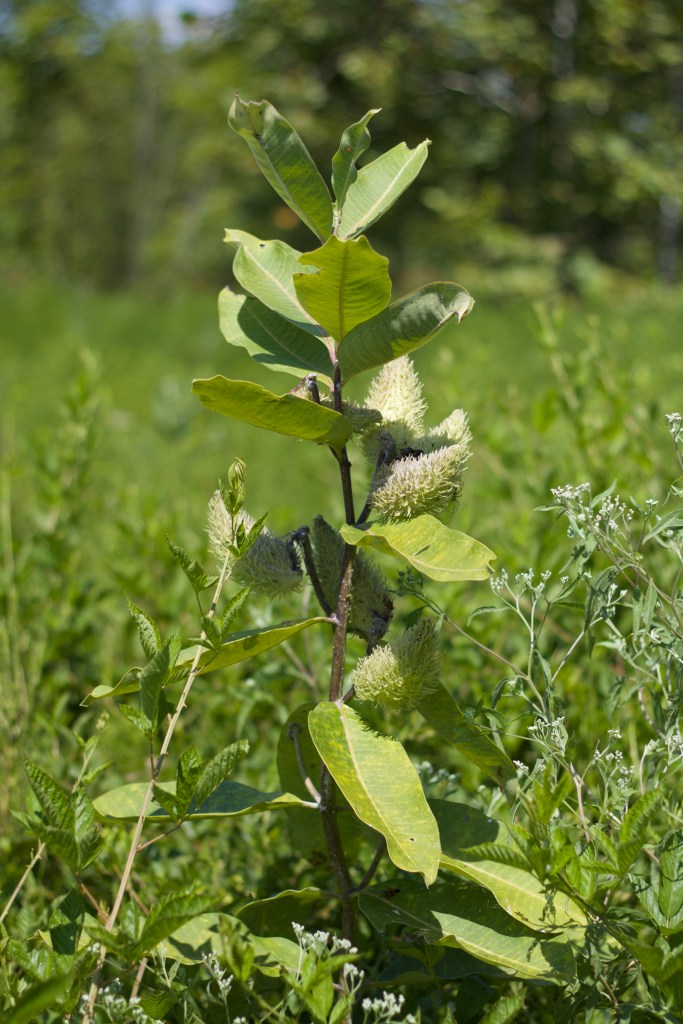
This is what the Common Milkweeds are looking like, now. No more blooms, big seed pods. Pretty awesome seed pods.
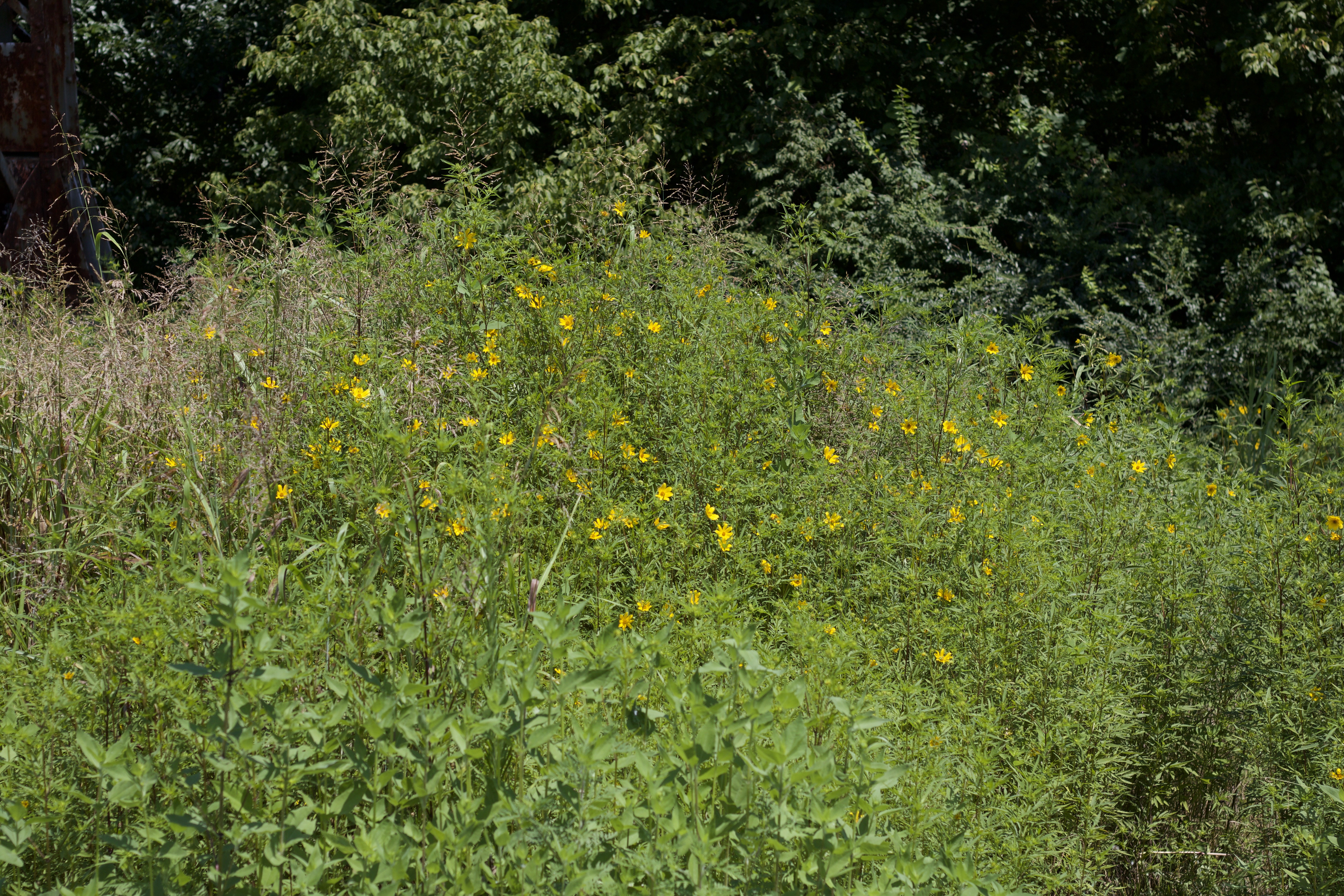
The other flower that’s really booming right now, in full bloom and everywhere, are the Coreopsis, called Tickseed. Apparently the name comes from the fact that the seeds look like ticks. I like that name, Tickseed. Coreopsis is a nice name too. The Coreopsis is booming. It’s a favorite of mine, right now.
Coreopsis
Field of Coreopsis
Pretty joyful flower
Mingled with the Coreopsis was this flower. You didn’t see nearly as much of this one, but it was there. Not sure what it is.
Unknown wildflower
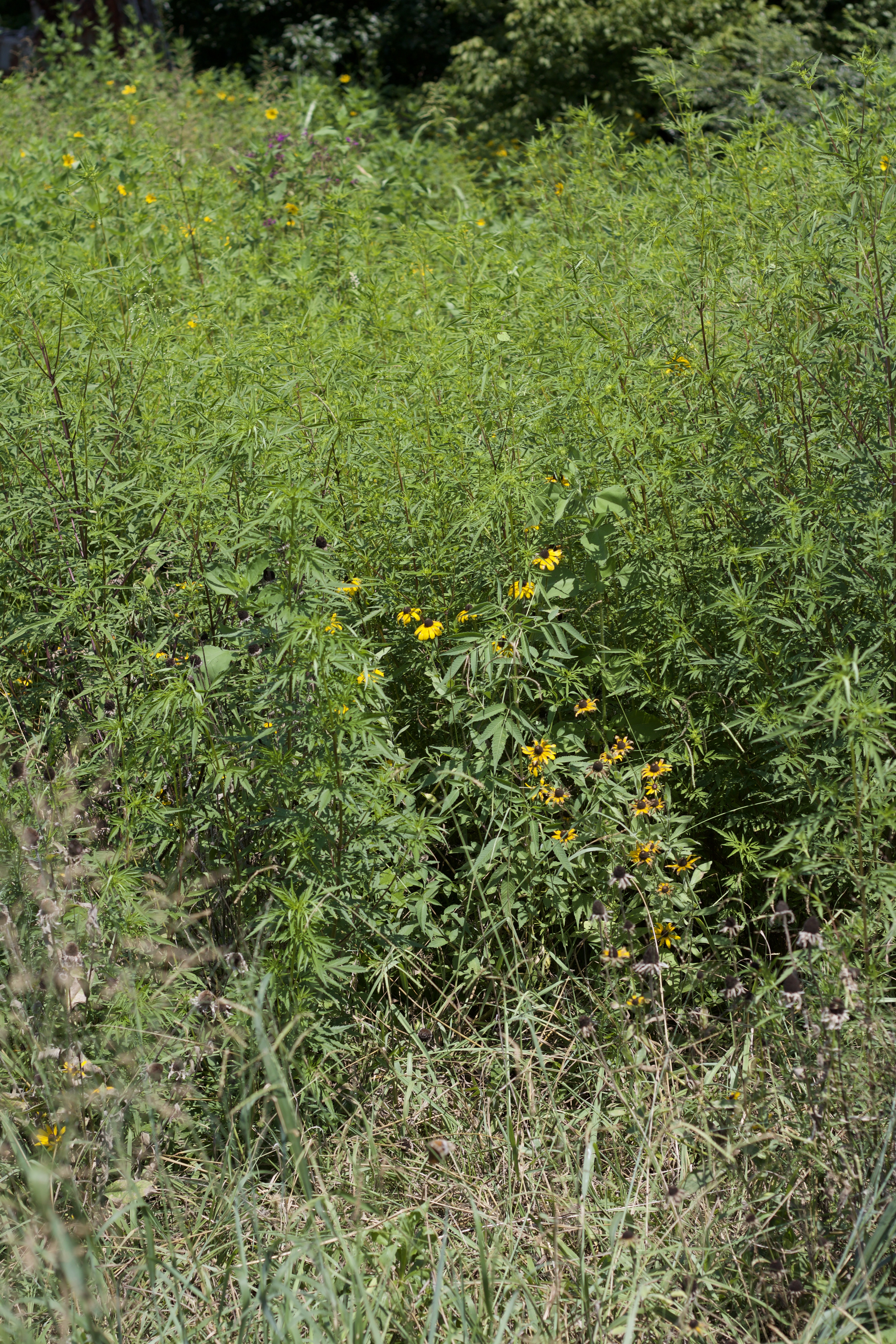
The Coreopsis was really dominating an area on the edge of the park, that seems to be newly converted to wildflower grassland. This was underneath the train tracks. It’s interesting that you did not see as much ironweed over here, and the ironweed seemed to stick more to the edges. The Coreopsis really seems to show up en masse. There was a large patch of Coreopsis in the interior, huge meadow of the park, but otherwise it wasn’t represented so much there.
Past-season coneflower
Amongst the Coreopsis field was this relic. A coneflower, either Black-eyed Susan or Purple Coneflower. After a long run their time seems to have come and gone. My neighbor’s have all about died away now too. They are a perennial though, so I think it’s just this part of the plant that dies. The roots are still alive and this plant will grow back next year.
What’s this?Coreopsis? Coneflower?
This flower right here was looking a little different. And now I’ve done just some investigations, and it seems we have a bit of a problem. Narrow-leaved sunflower (Helianthus angustifolius) and Coreopsis (of which there are many kinds) look a lot alike. And now I wonder which is which, and I realize that I have no idea what I’m talking about. Well, can any plant experts tell us? Do we have both in these photos? Just one or the other?
(Well, a few days later I went to a gardening event at the park, and the gardener and naturalist Hazel told me that most of this stuff is Coreopsis. I was starting to be convinced it was not. Not sure if any of this is the sunflower. They do look a lot alike.)
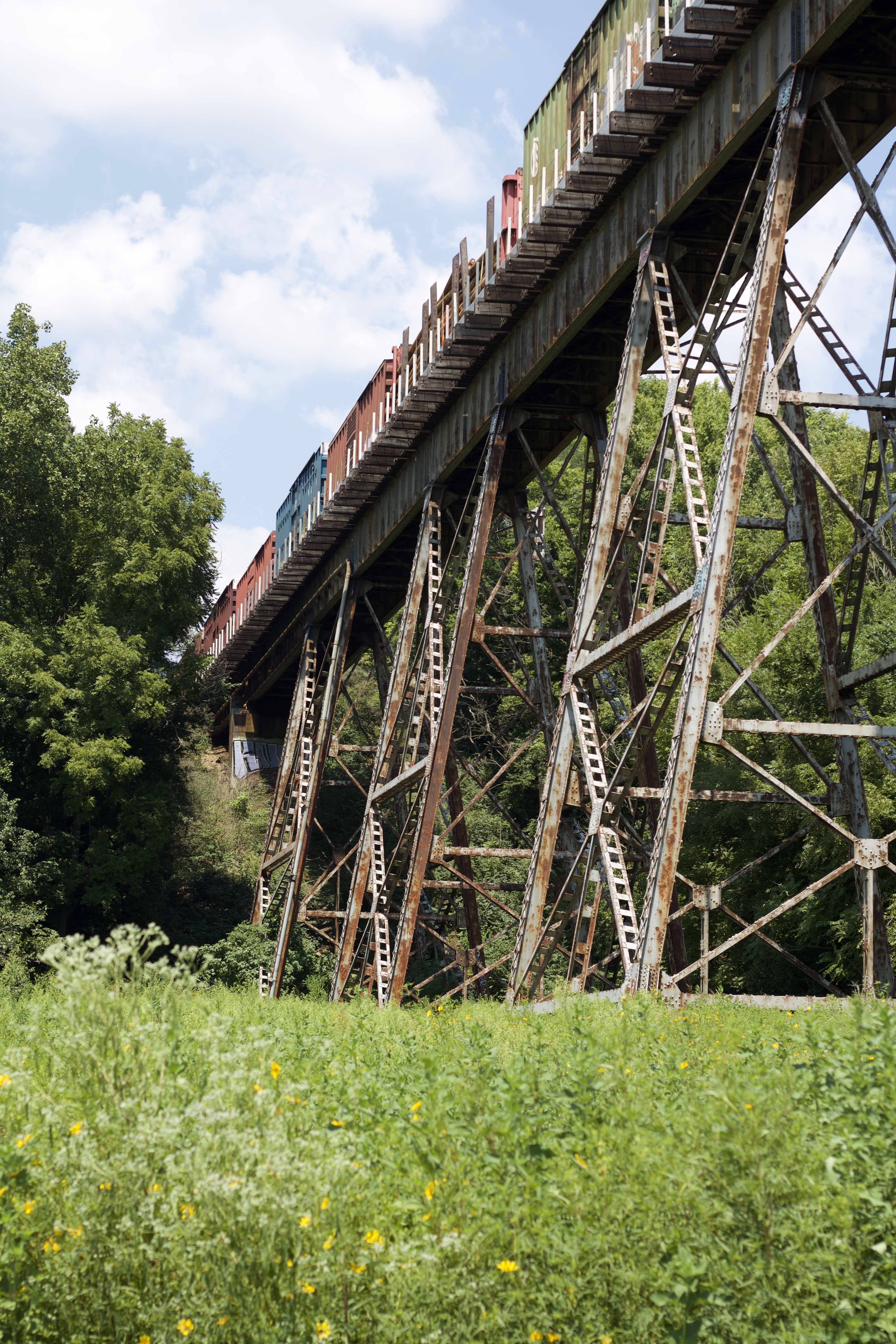
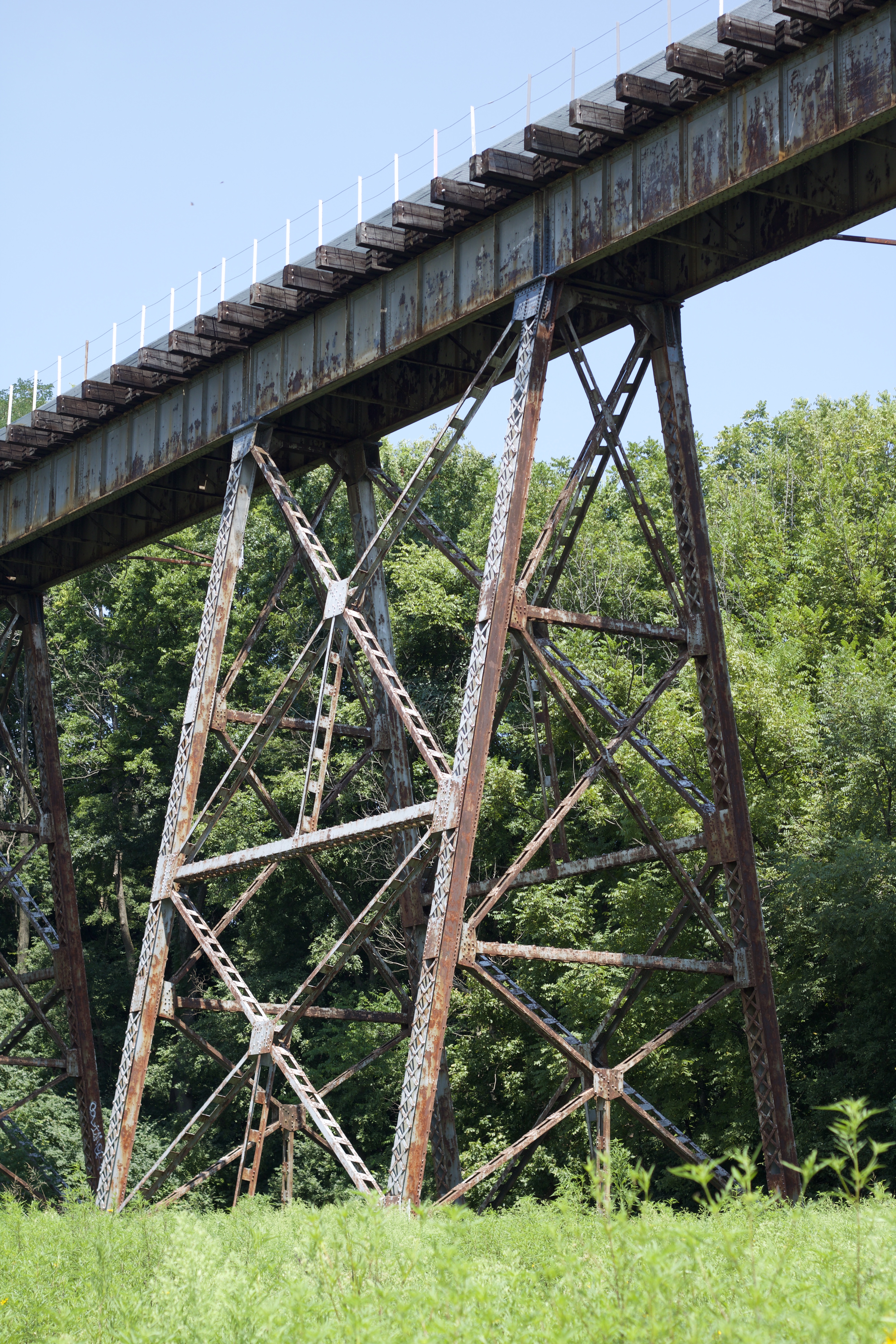
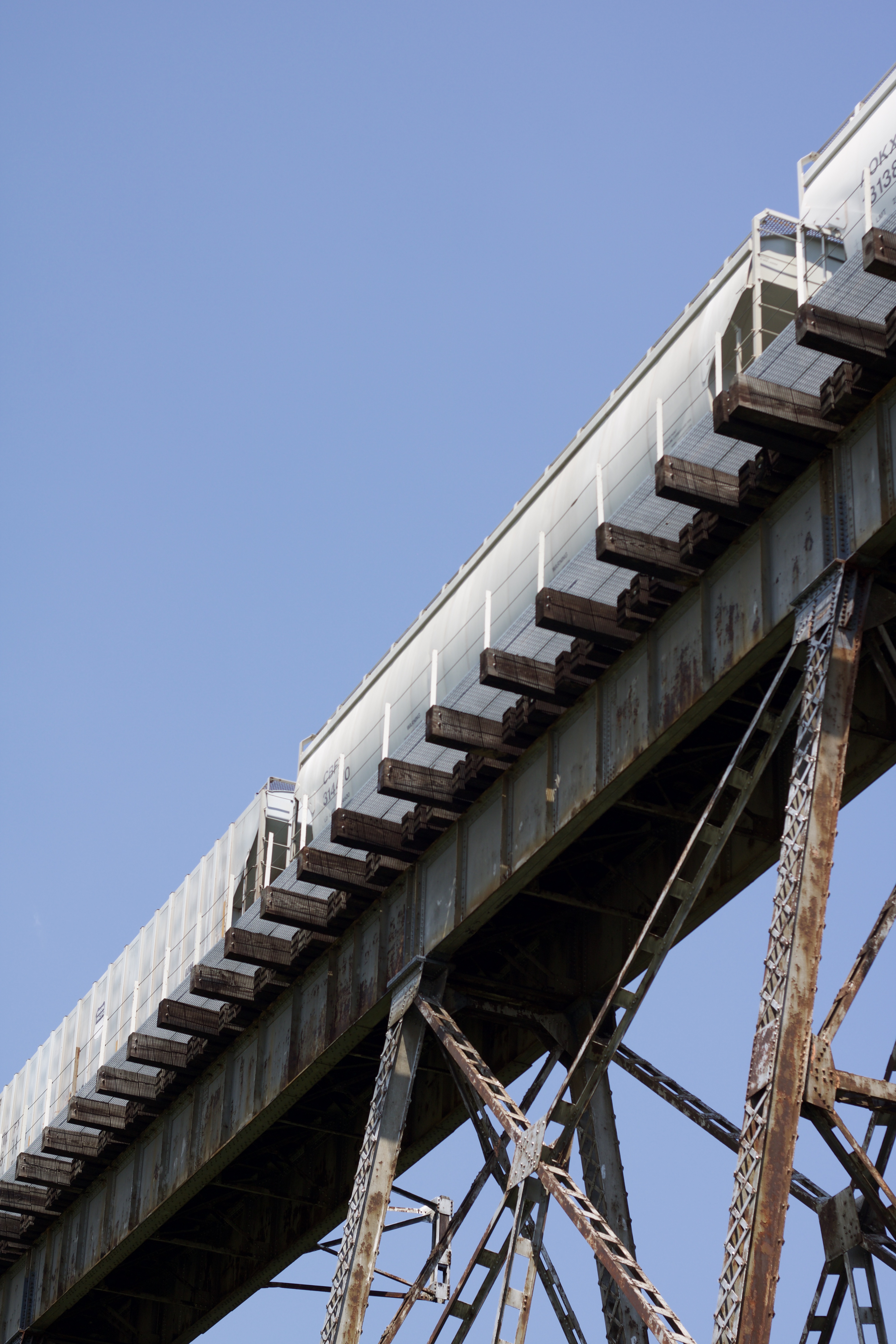
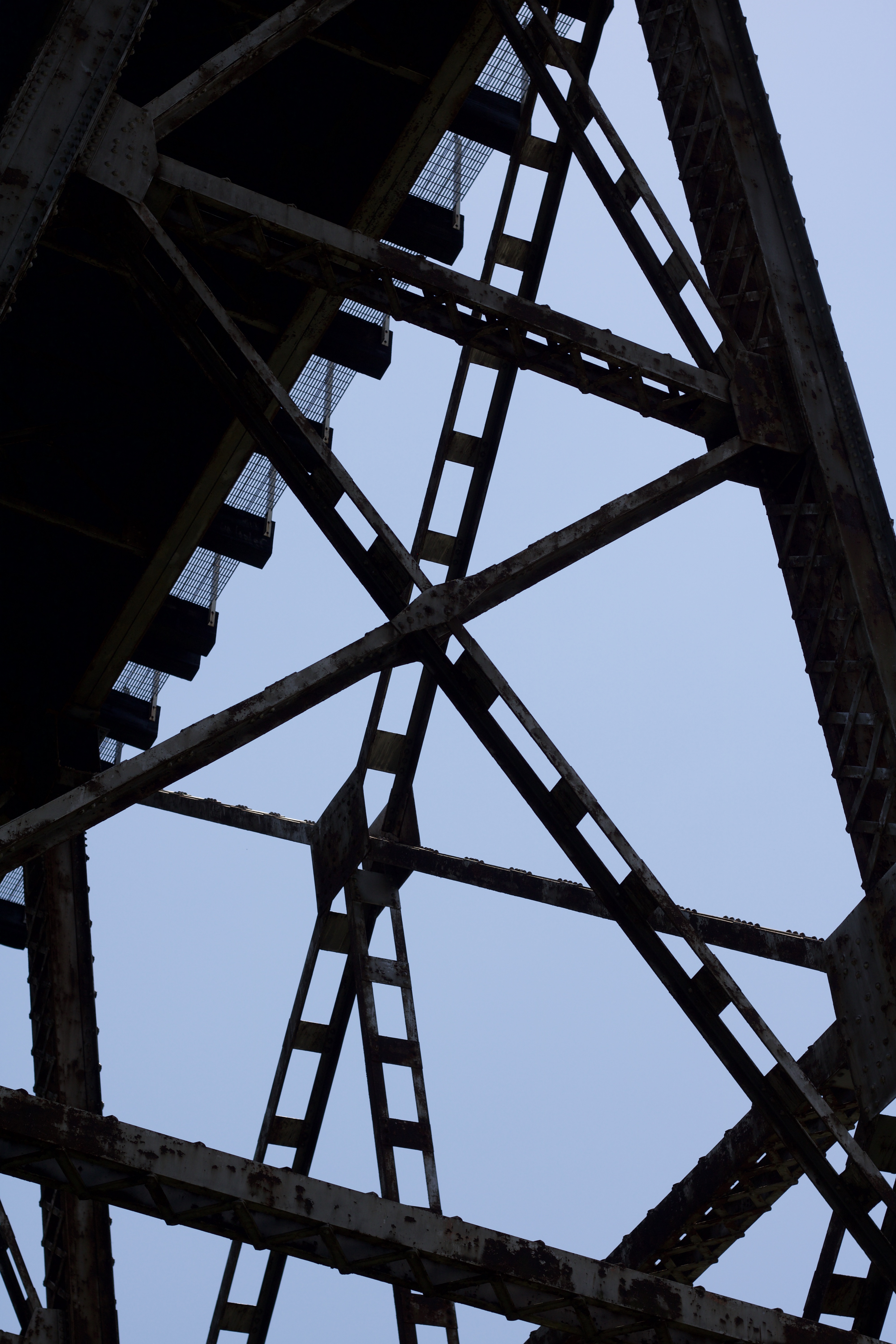
The artsy fartsy shots I took today would have to be these shots of the train tracks and trellises. I was extremely lucky and had a train drive over me during my flower photographing. 2000 tons of steel and iron flying at 50 miles an hour right over my head. How incredible.
I have wanted to photograph these trellises for a long time, now.
This is something I would try making black and white (possibly tinted), IF I were editing (I’m not)
I got so lucky with that train.
Continuing on our tour of the park… These areas of wildflower growth at the borders are here because they aren’t being mowed anymore. I wonder if they have just been allowed to grow freely, or if they were seeded. I feel like they had to have been seeded because otherwise you would get a lot of unwanted things. I don’t think if you just stop mowing your yard it fills with Tennessean native plants. I’ll have to ask about that.
Now I’ll do a few miscellaneous photos here and show you some of the sights.
No-mow zone
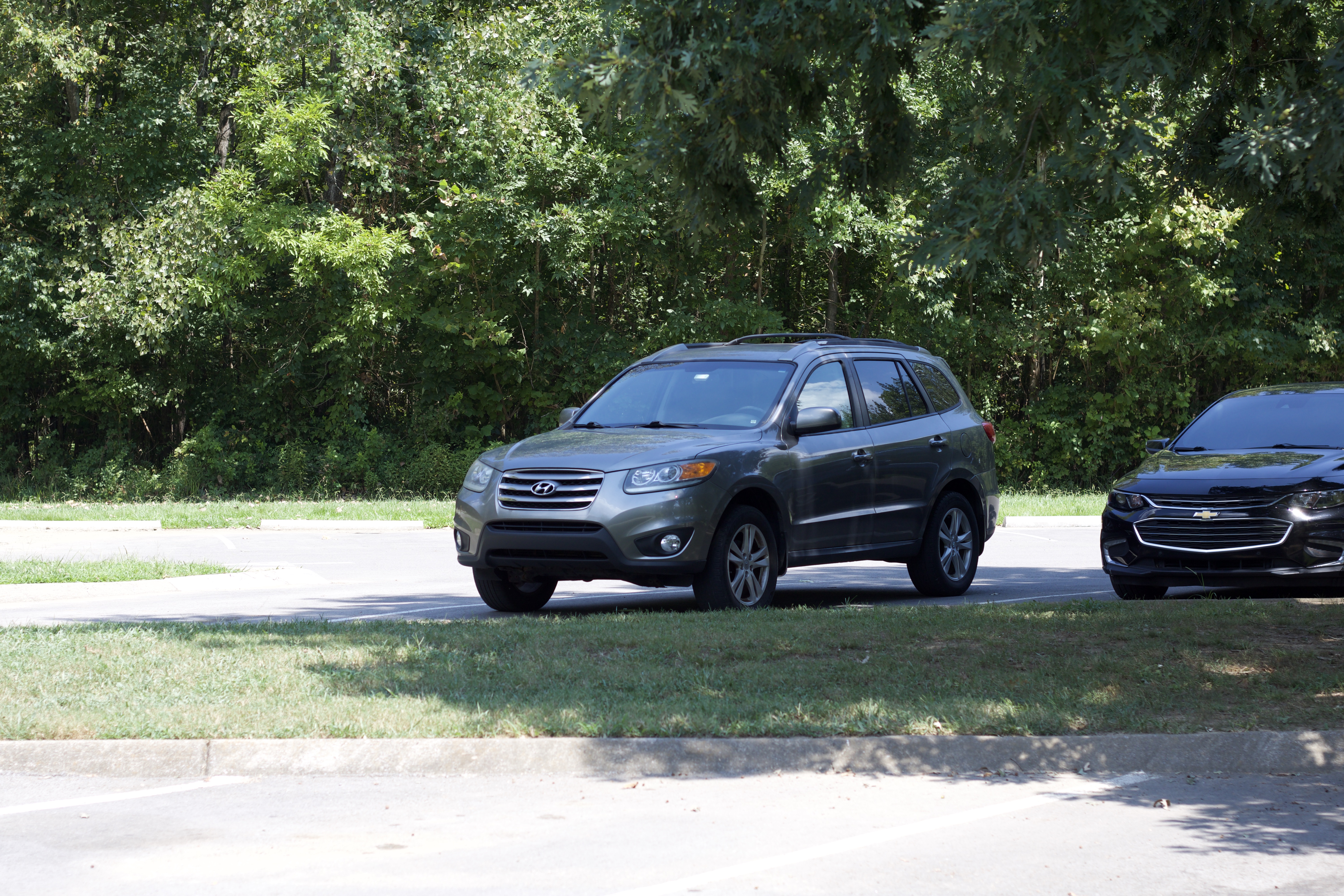
Nice car
Just look at that baby (my car)
Had to take some photos of the cars. Cars are just asking to be photographed. It’s like they’re posing all the time.
Something in the planter here. Cute flowers. What is it?
Some fungus action here
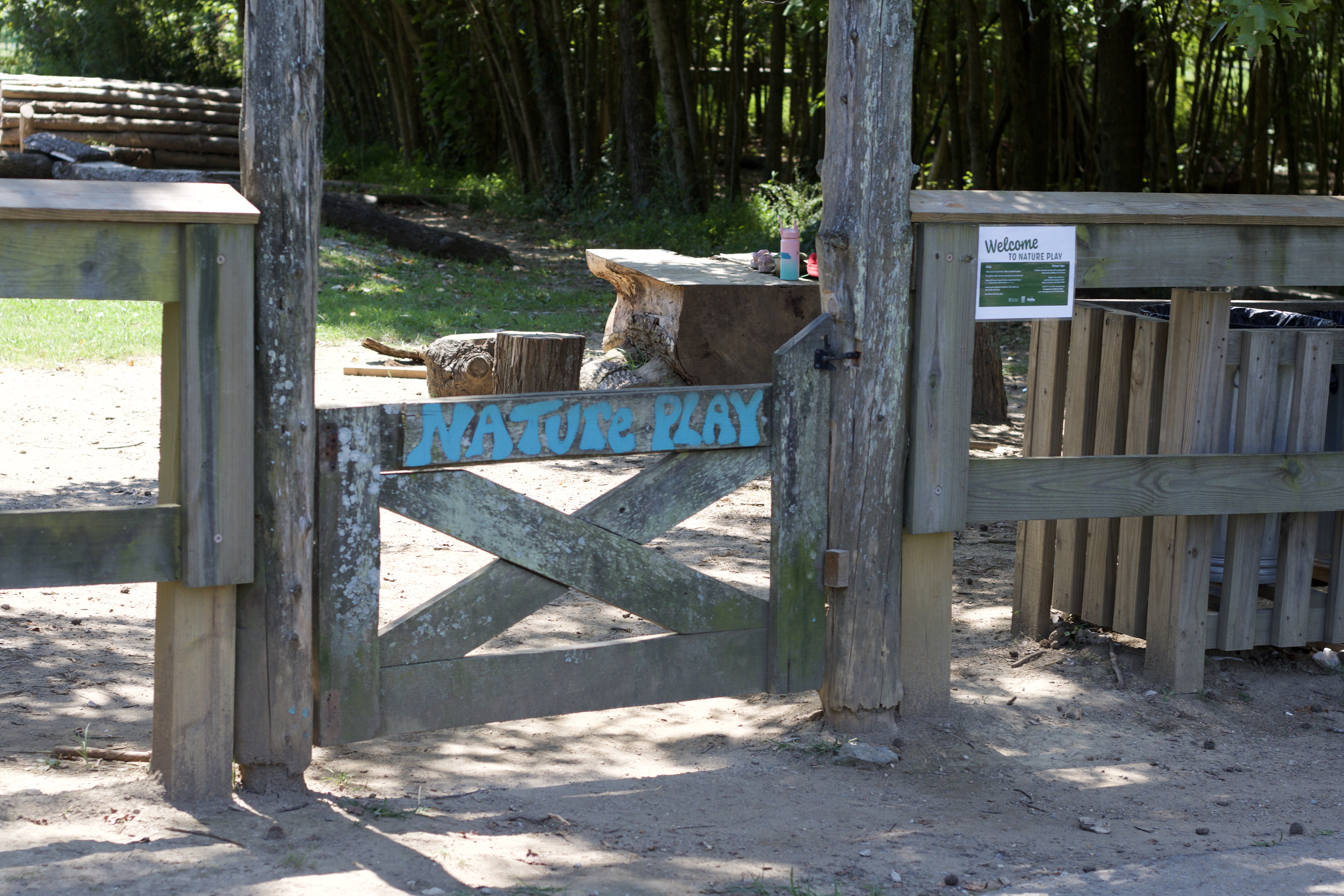
Shelby Park has recently create a Nature Play area. It has been very successful and gets a lot of use. It’s a great idea. There’s a section out in the open, and then there’s a section that’s in the woods, where the kids can walk on logs and go down a slide and be in the trees.
Nature Play
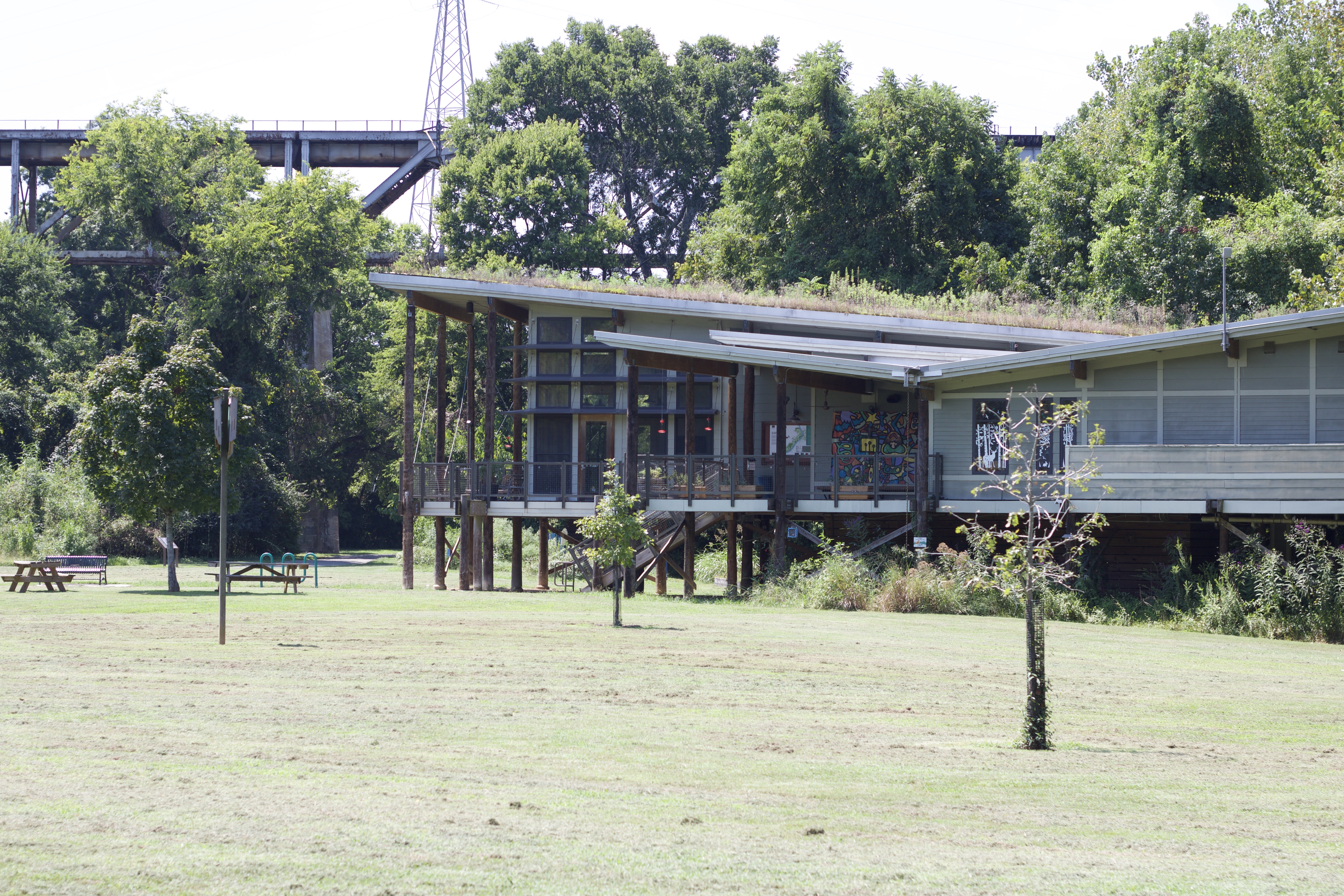
Nature play, Nature Center in the background
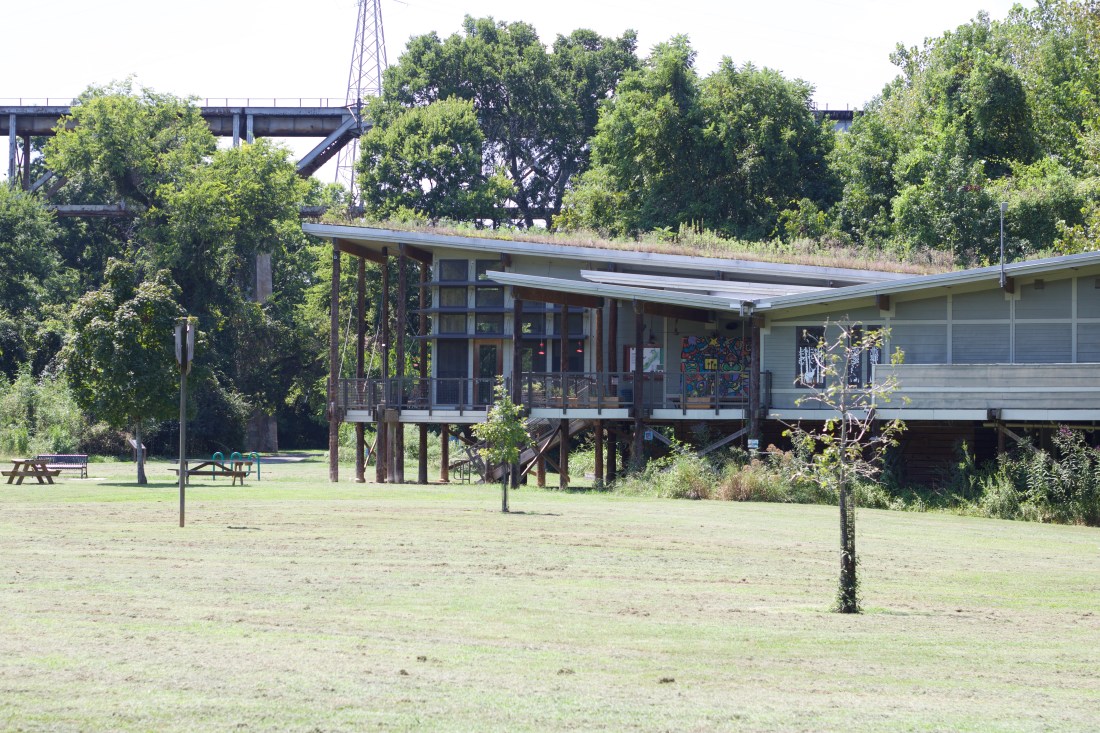
Shelby Park Nature Center
The above photo is the Shelby Park Nature Center building. As you can see, it’s totally awesome. The roof is covered with plants, which helps keep the building cool and also adds some greenery to the world. It’s cool to see that, and I wonder how difficult it is to create and maintain such a roof. I would love to have a roof like this.
The building is on stilts because it’s by the river, and the river floods. There’s a sign that says the highest the water’s ever gotten, at least since that building was up, and it was in 2010 or something. It went all the way up to the top of those posts. I had wondered why this building was on stilts until I saw that sign. Then it made sense.
Now I’m just going to show you a series of botanical photos of interest. There some interesting flowers and grasses, and again I saw the nemesis, Chinese privet.
Gray’s (Morning Star) Sedge — Carex grayii
This is a grass I’ve been seeing. I had it in my yard, when I let the grass grow. Easy to recognize when it has those iconic seed pods. The name is fitting, Morning Star. It is a Tennesee native, which is good to know because it’s cool and awesome.
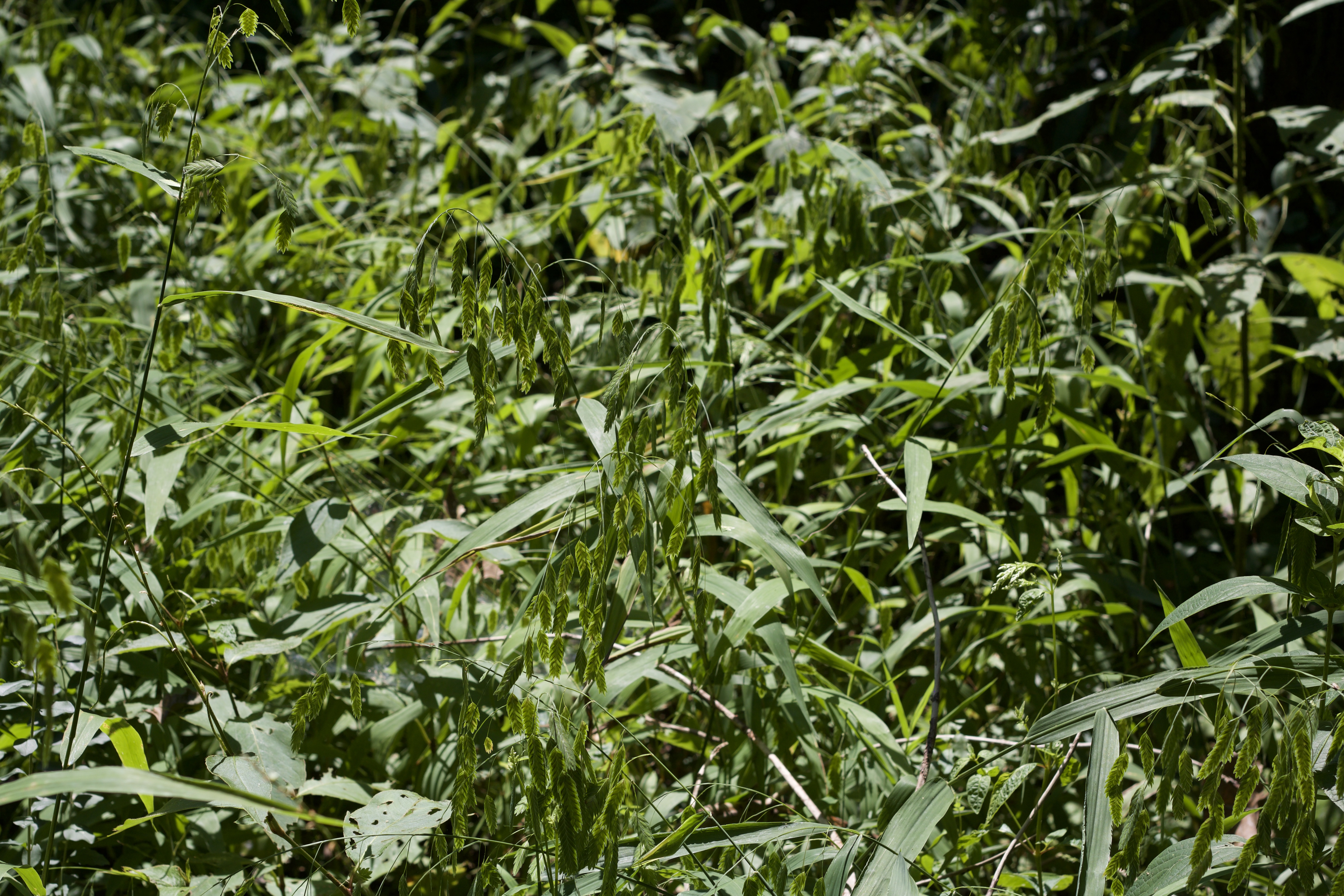
Northern sea oats — Chasmanthium latifolium
Northern sea oats — Chasmanthium latifolium
Lots of latifolium
This grass was also standing out because of the interesting seeds. I literally just Googled “grass with flat seeds” and it was the first thing that came up. Seems to be quite common and easily recognizable. Those seeds are interesting because they are totally flat, like wafers.
Evil Chinese privet
Lots of Chinese privet here
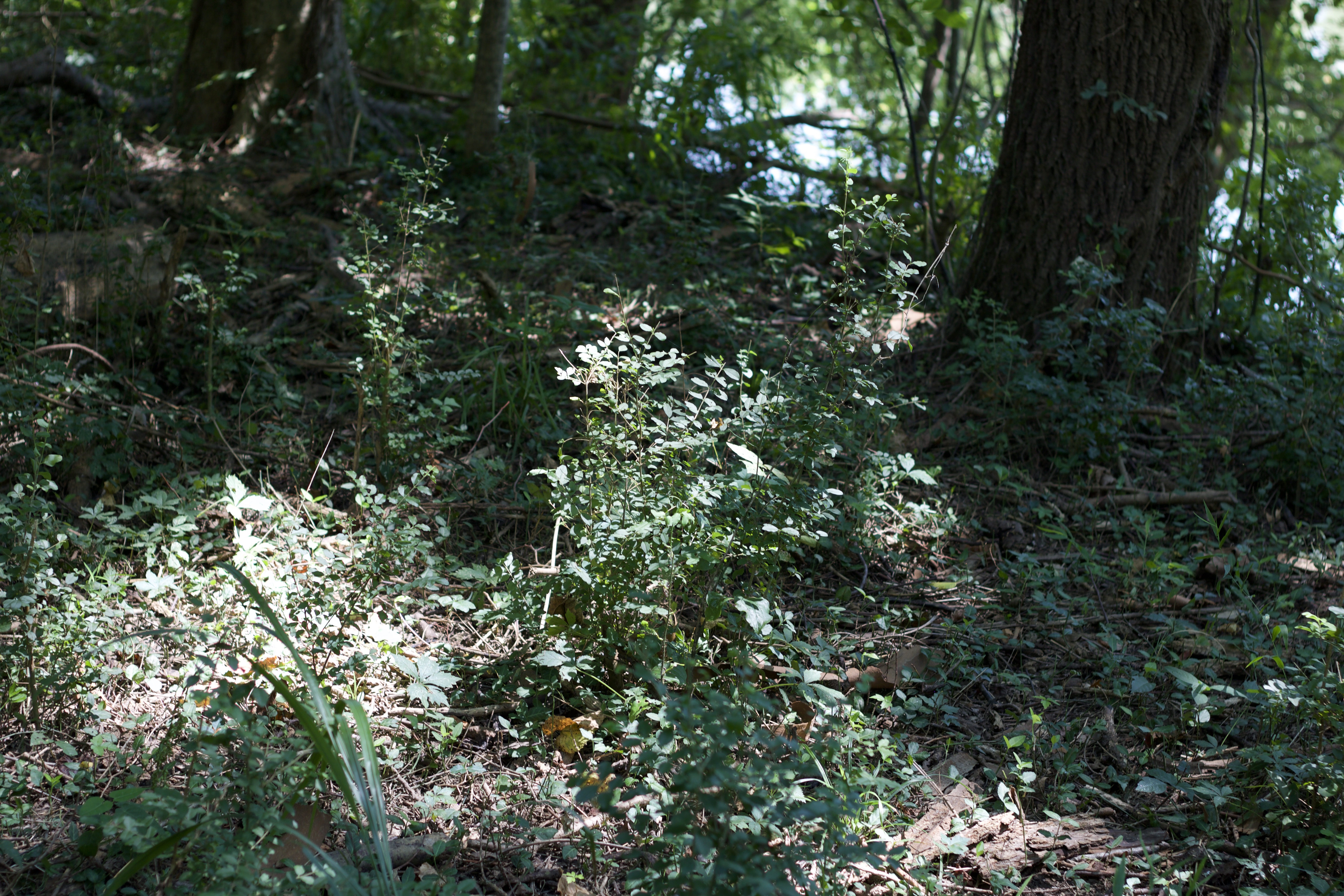
Here’s the privet, it took awhile to find any. We have been doing a good job of removing it, but I knew I was going to see it eventually. It’s easy to spot when you know what to look for, there’s nothing else that really looks like it. It also stays green when everything else has lost its leaves, and then you can see just how much there is of it. Privet grows in Tennessee insanely well, unfortunately. Non-native.
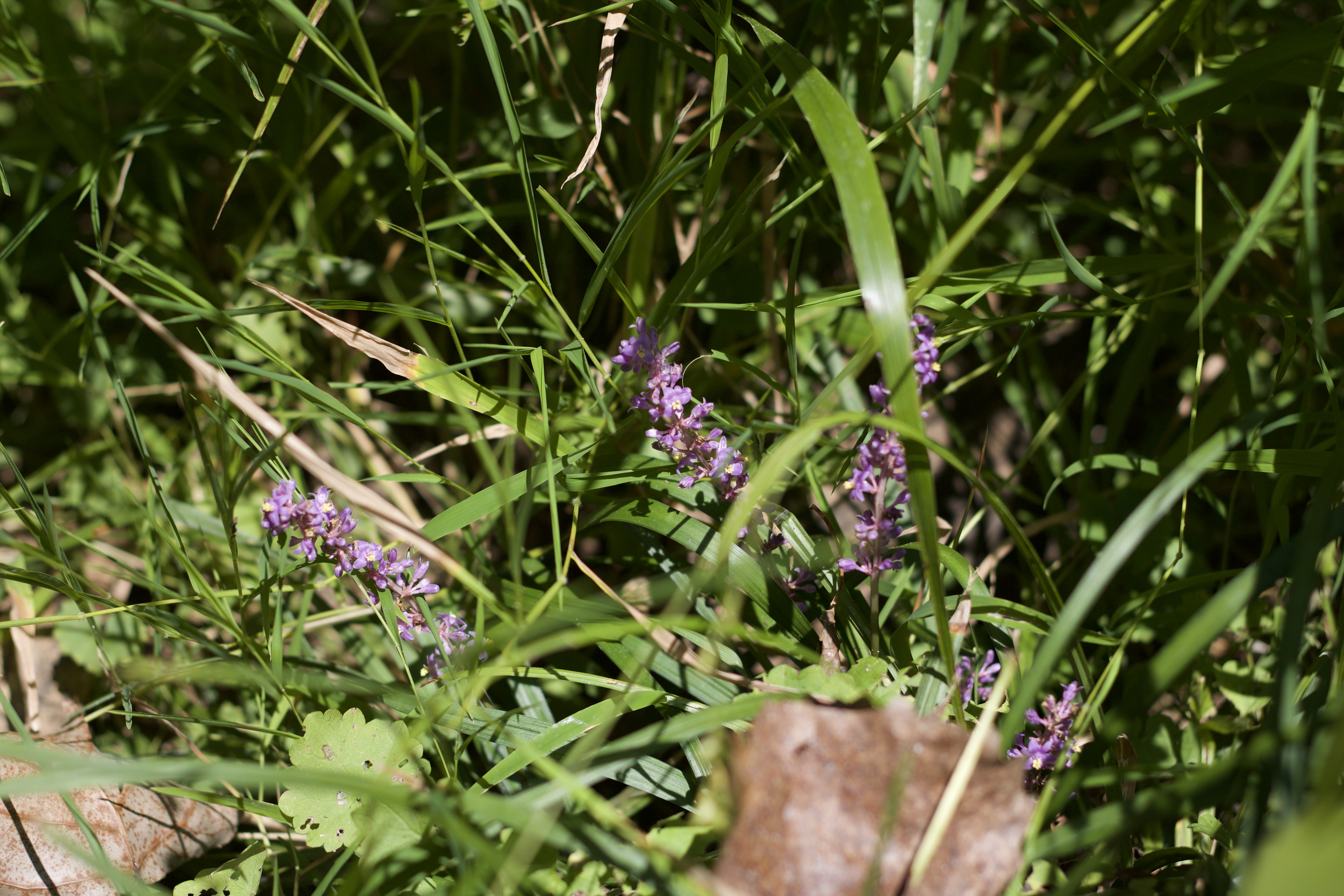
Saw a little bit of this small purple flower. Lavender?
Small and unassuming flowering plant with dainty flowers
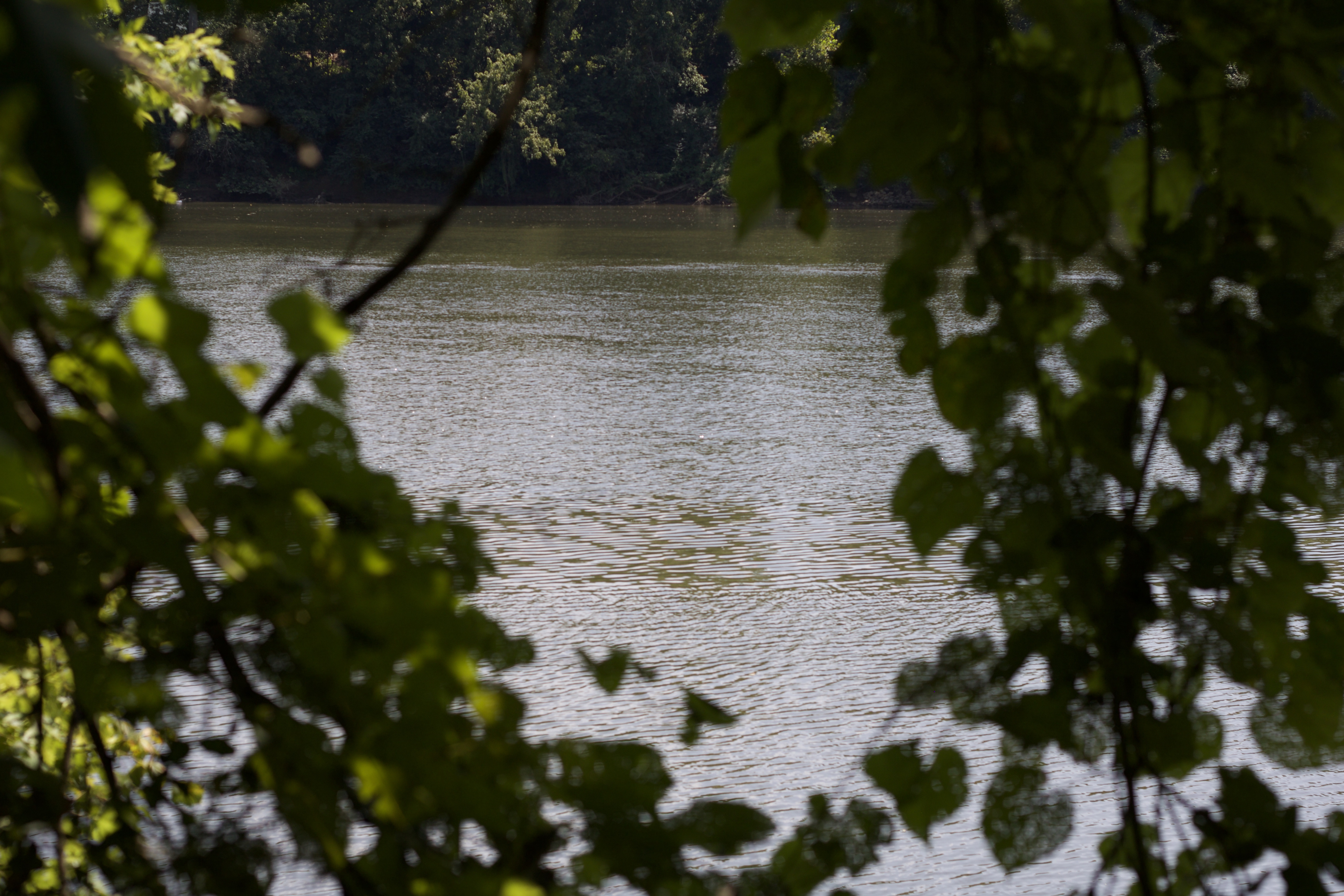
There’s tha riva’.
Trails
Trails
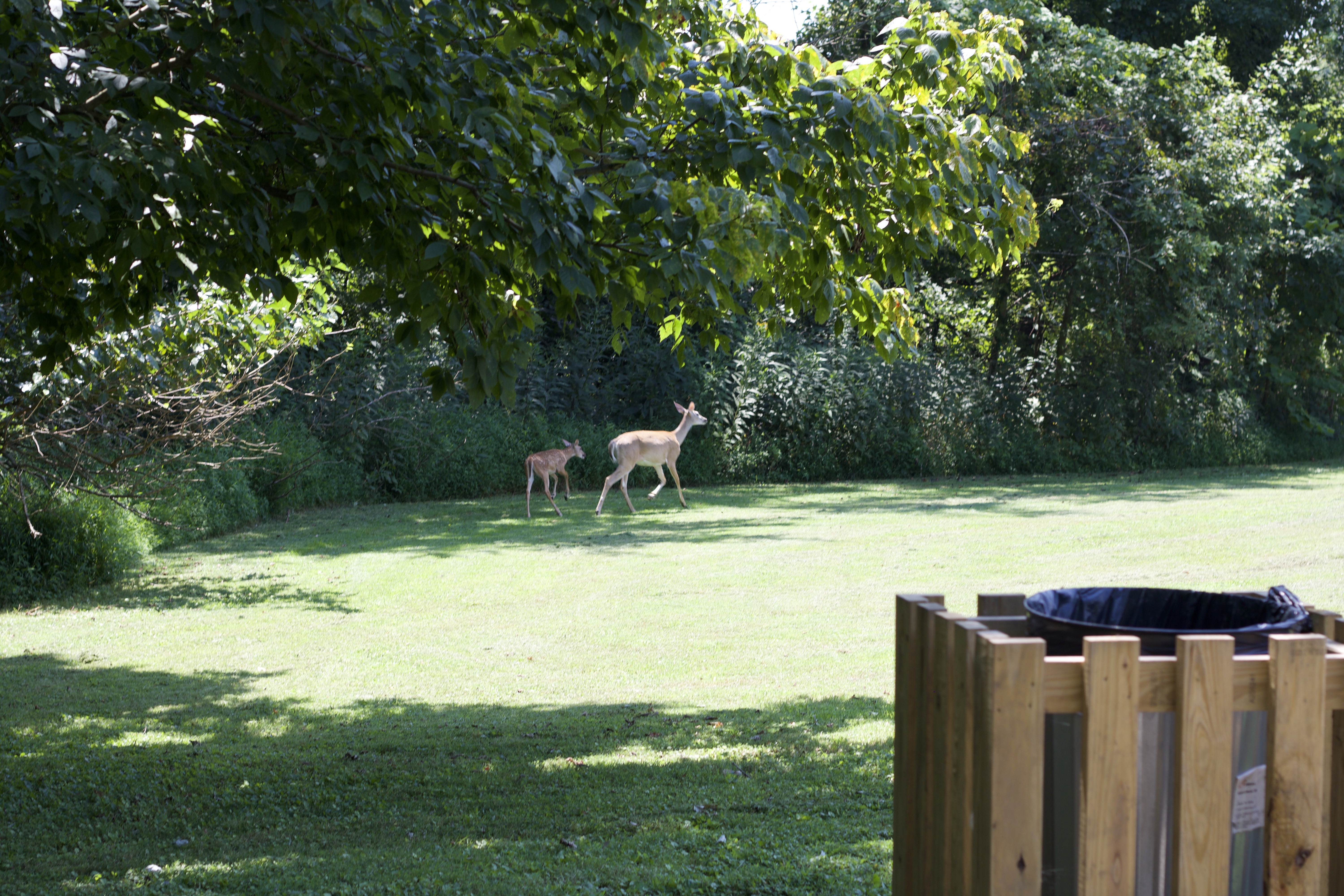
Mom and Doe, a common sight
It’s funny that I am becoming a plant person after a long time of not knowing anything about plants. I think part of the deal with botany is that it’s intimidating. There are just so many plants. So many. And most of the time, they’re all green. What’s this? What’s that? It’s a flower. It’s grass. It’s a tree. But, when you see the same things over and over, you can start to recognize what’s what. Then, things stand out to you, you notice the same flower, and you start to wonder, what is this thing? I see it everywhere.
I think that’s really how it’s happening for me. I walk through this park so many times, I start to wonder what things are. It’s also interesting to see the cycles of growth, the plants that come and go, the flowers that come and go, throughout the year. It’s more obvious to see this when you have a meadow. The native meadow plants provide a lot of action in the summer and fall. We think of spring as being the time where everything blooms, but there are things blooming all year long, some things even blooming in winter. You could actually know what time of the season it was by what was blooming, if you didn’t have a calendar. You also could tell by the weather, I’m sure. And the position of the moon and the night sky, right?
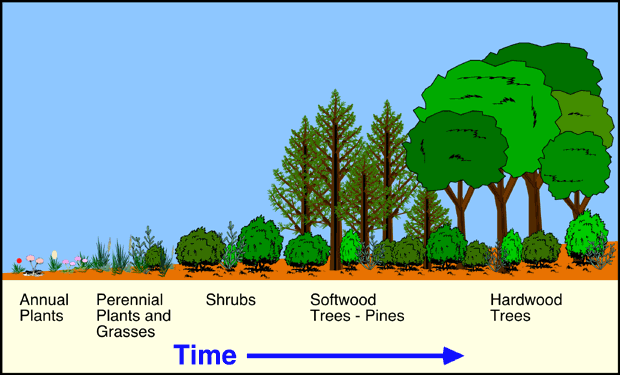
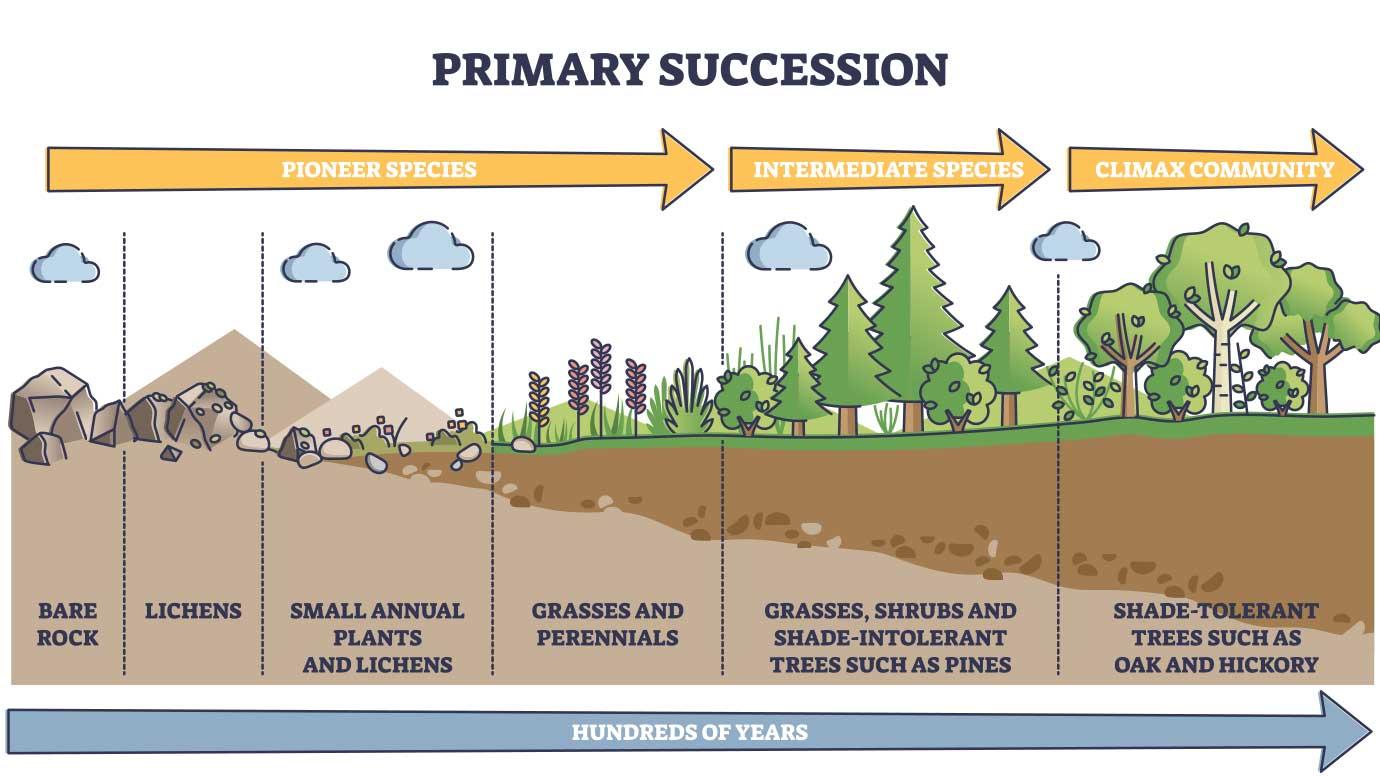
Something I’ve started to notice a lot is the growth of trees in the meadows. Apparently a meadow is the early stage of the development of a forest. First, you have meadow, then you have an interim stage, with small trees, and then eventually you have a full, mature forest. I think this is called succession.
Succession
Succession
It’s interesting that annuals come before perennials. I think perennials take more time to get established, that’s my guess as to why that is. You can see succession happening in real time at Shelby Park. I’ll show you some photos of trees popping up in the meadow, that are leading the charge into the further stages of succession at Shelby.
Succession is why they say you are supposed to mow your meadow, I think, if you want it to stay a meadow. You have to remove the trees, otherwise you will not have a meadow anymore. I wonder what they will do at Shelby, possibly this fall or winter, if they want to keep the meadow a meadow, or if they will just allow it to convert. The reason they might want to do that is because meadows/praries are rarer now, and also they might want to keep it for the variety. (I’m not sure if our field is considered a prarie or a meadow, I just realized. Maybe it’s neither.)
Below are some photos of trees popping up amongst the wildflowers.
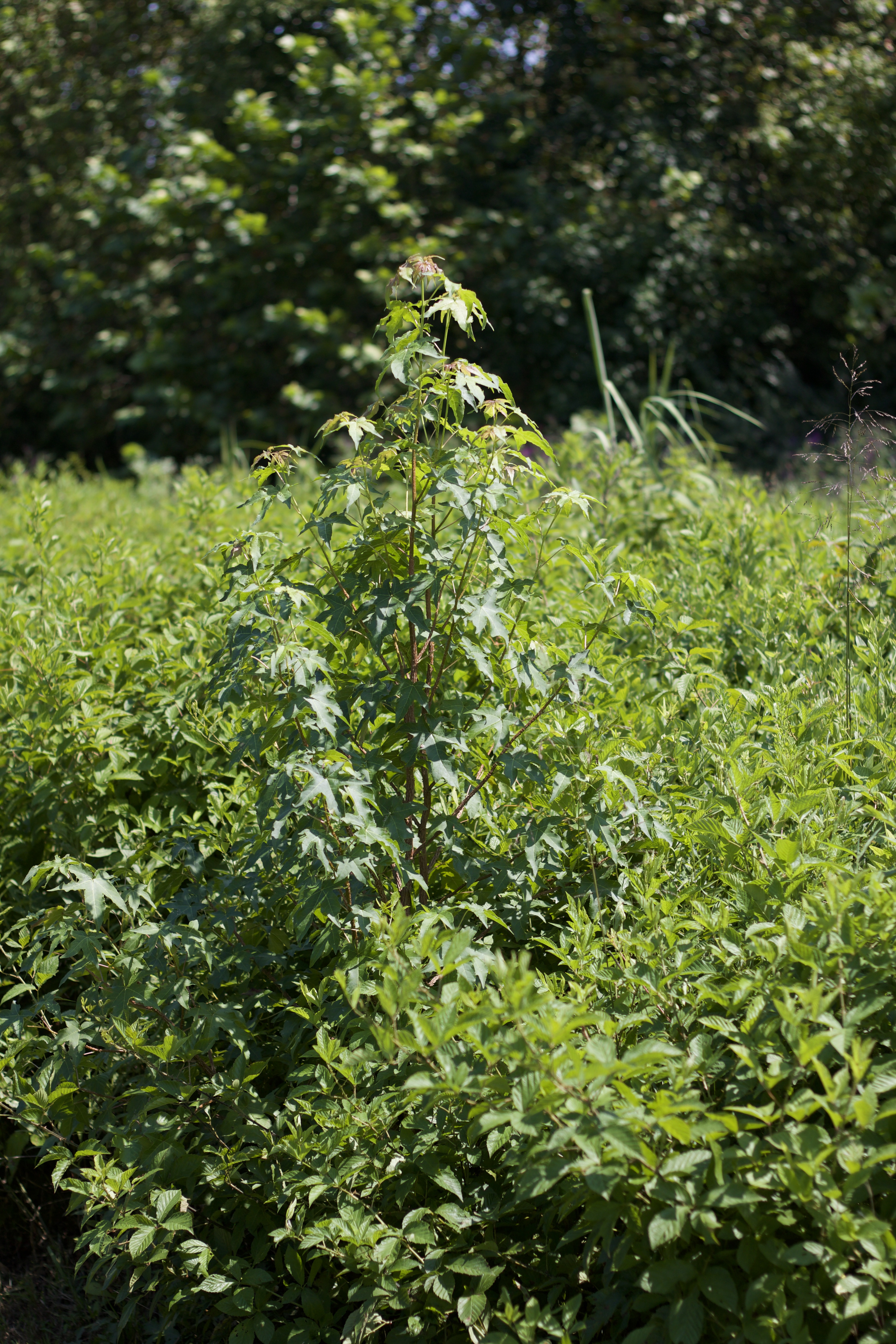
Maples?
Some oaks?
Oak? getting established
This tree is a standalone. I wonder how it got here, if they let this one get established.
A maple? getting established. I wonder how old it is. Just this season?
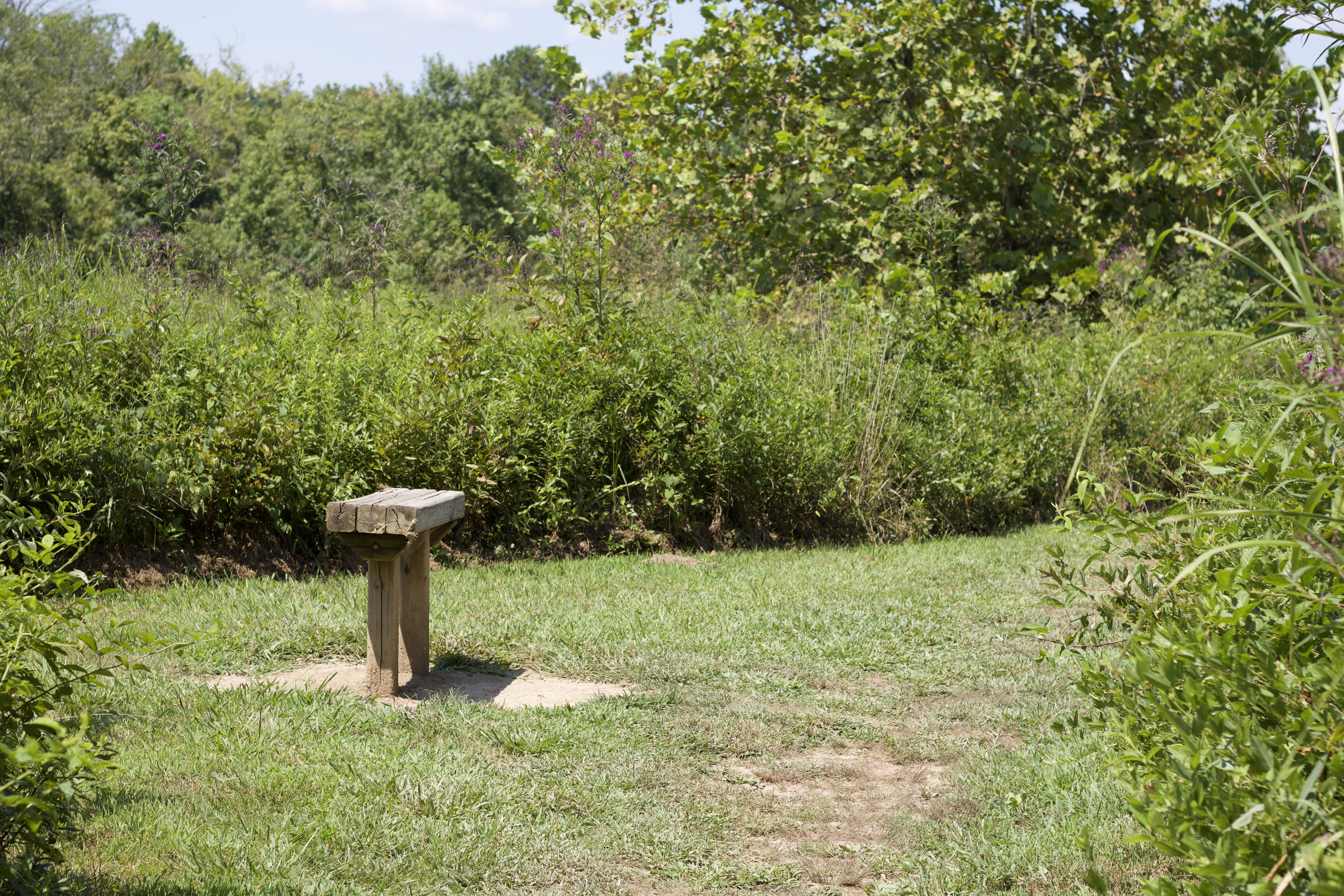
The above photo is a bench in a cleared pathway in the meadow. How pleasant! Probably no on sitting there for most of the day these days, as it is extremely hot. In the background you can see the large oak, standing alone in the meadow.
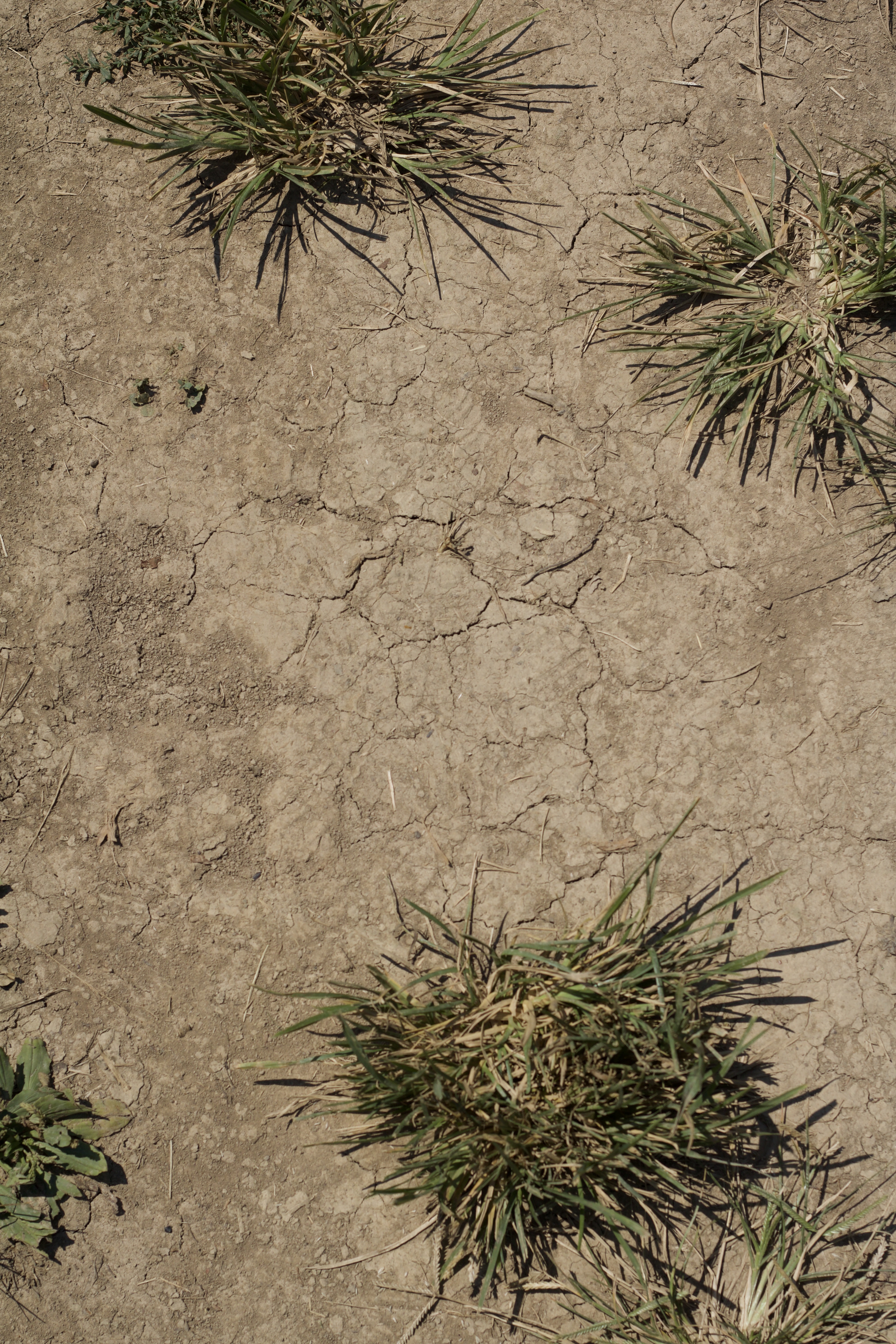
What the ground is looking like these days
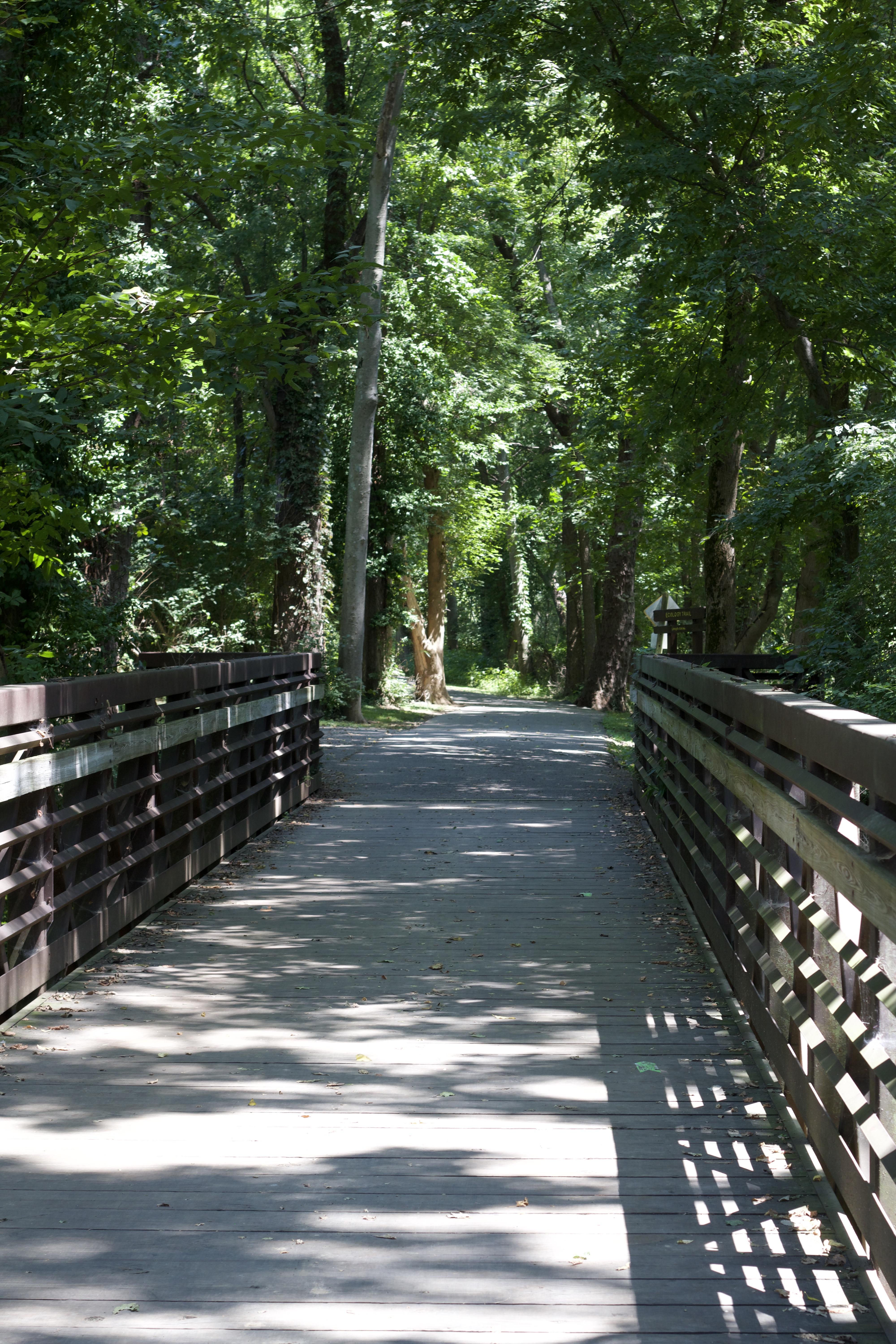
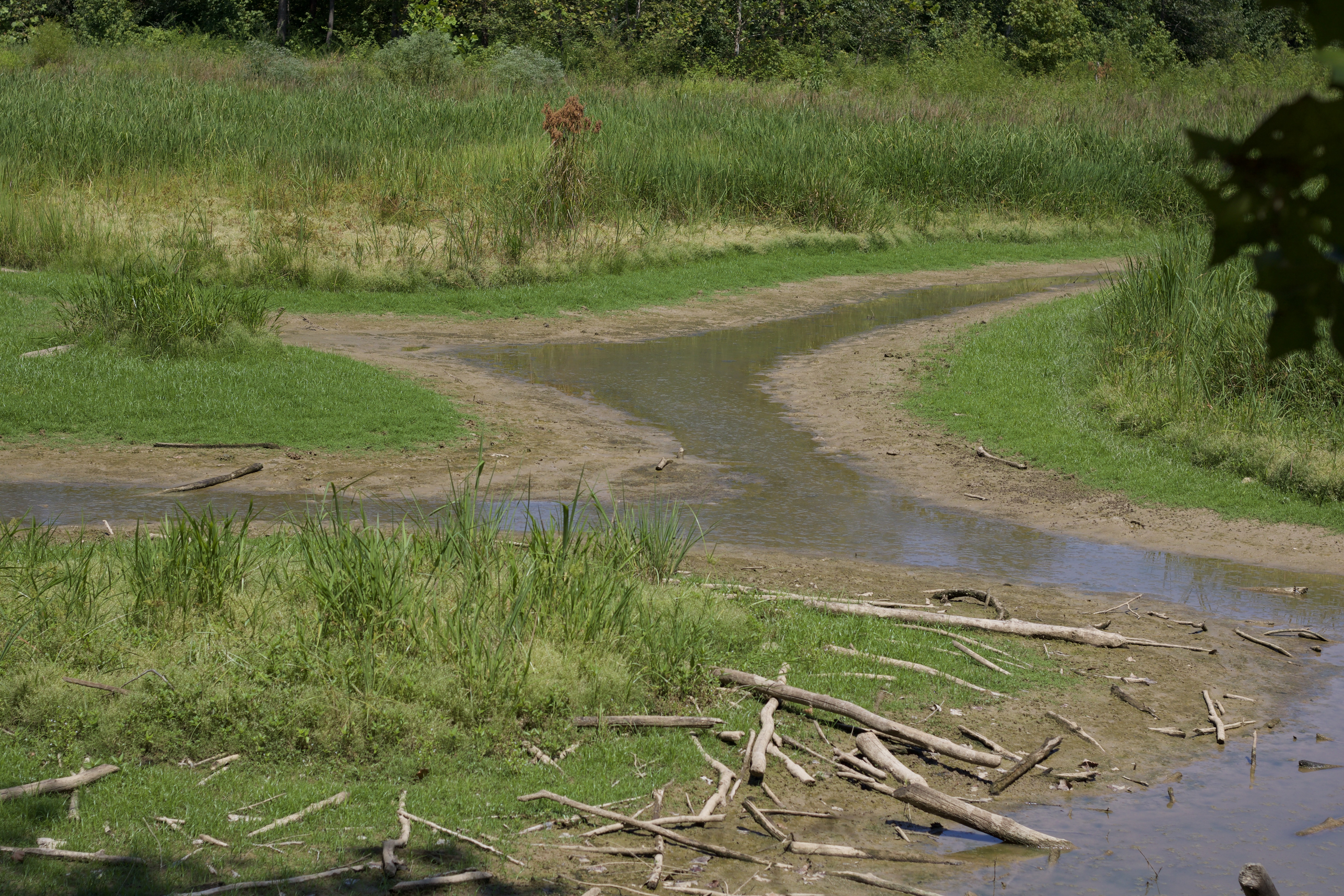
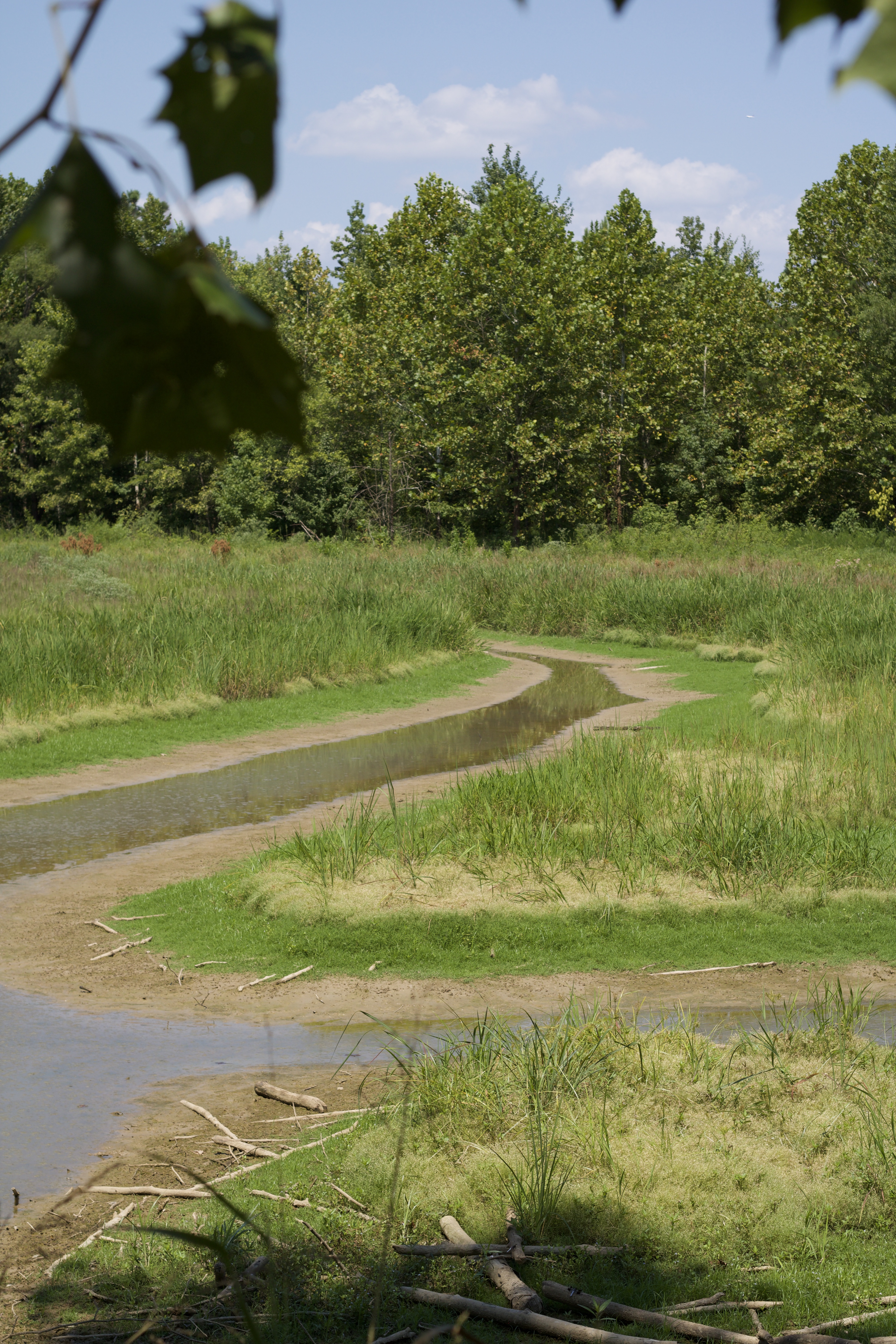
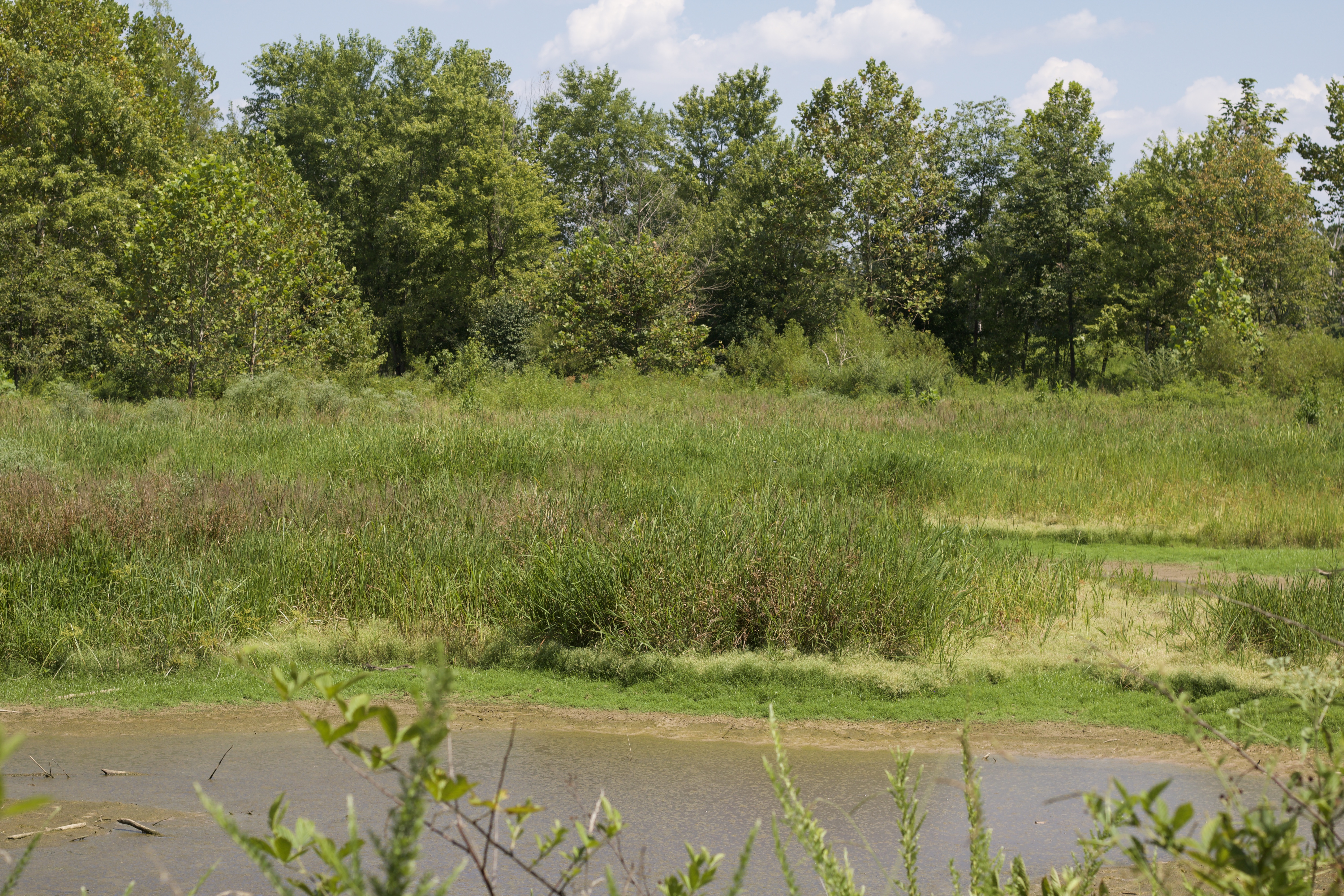
On either side of the meadow there are some marshy, wet areas. They are dry as a bone right now. I wondered if the pond would have been totally dried up yet. Beavers, deer, and herons are usually hanging around here.
Drying up
Wetland area
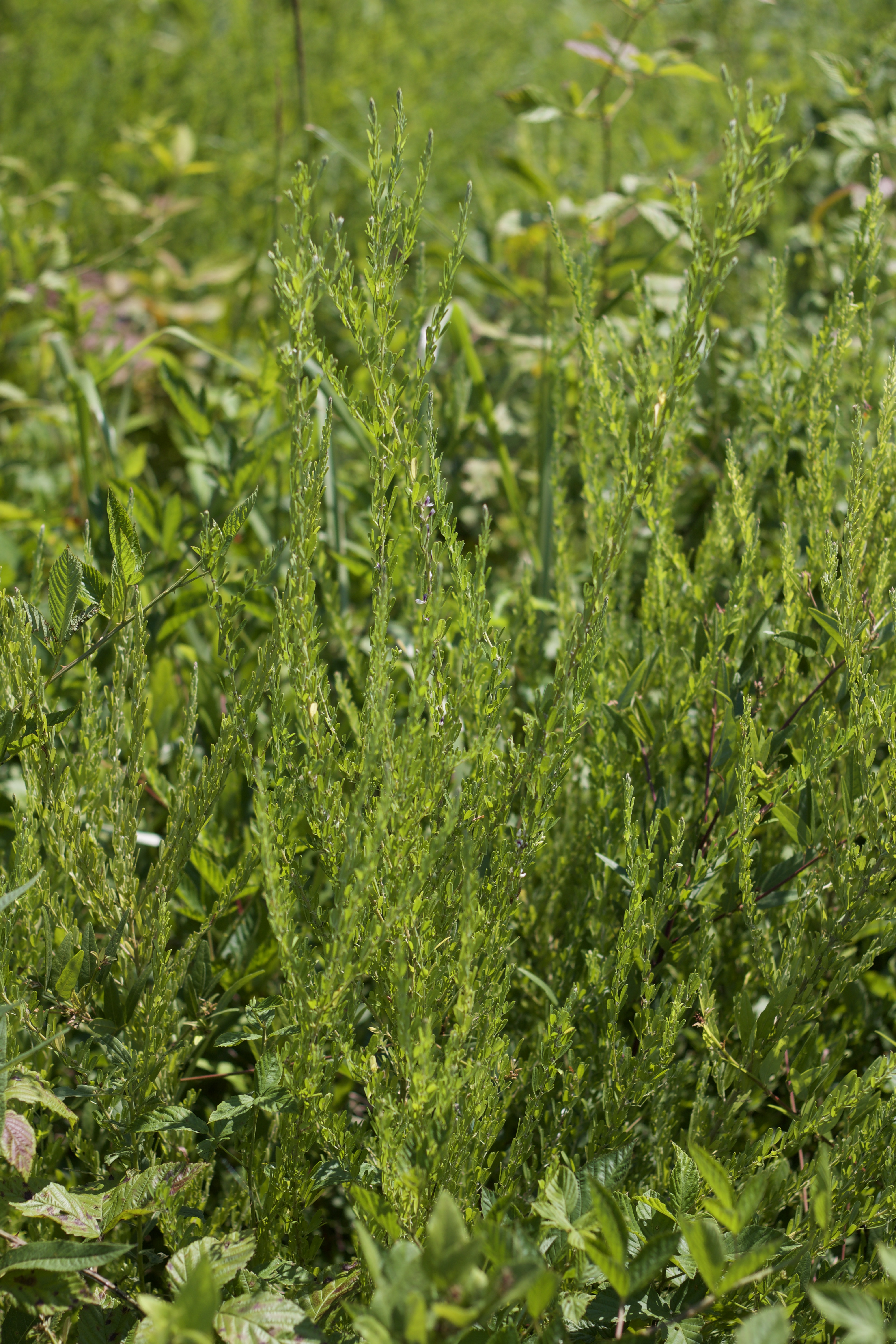
There were some patches of the meadow where I was seeing a ton of this plant. Anybody know what it is? Trees? Shrub or bush? Don’t know, but there was a lot of it, dominating its area.
Mystery plant
Mystery plant in meadow
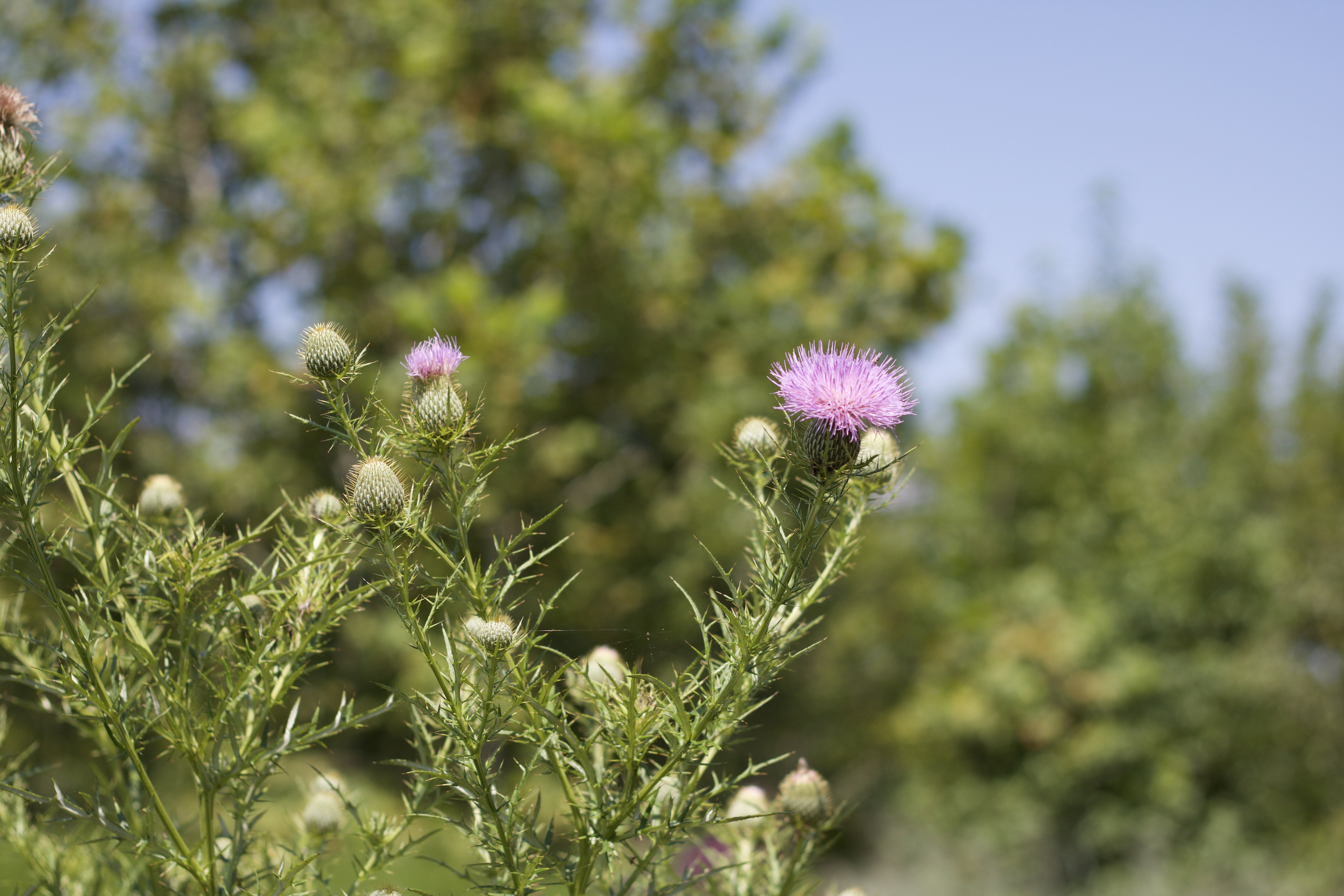
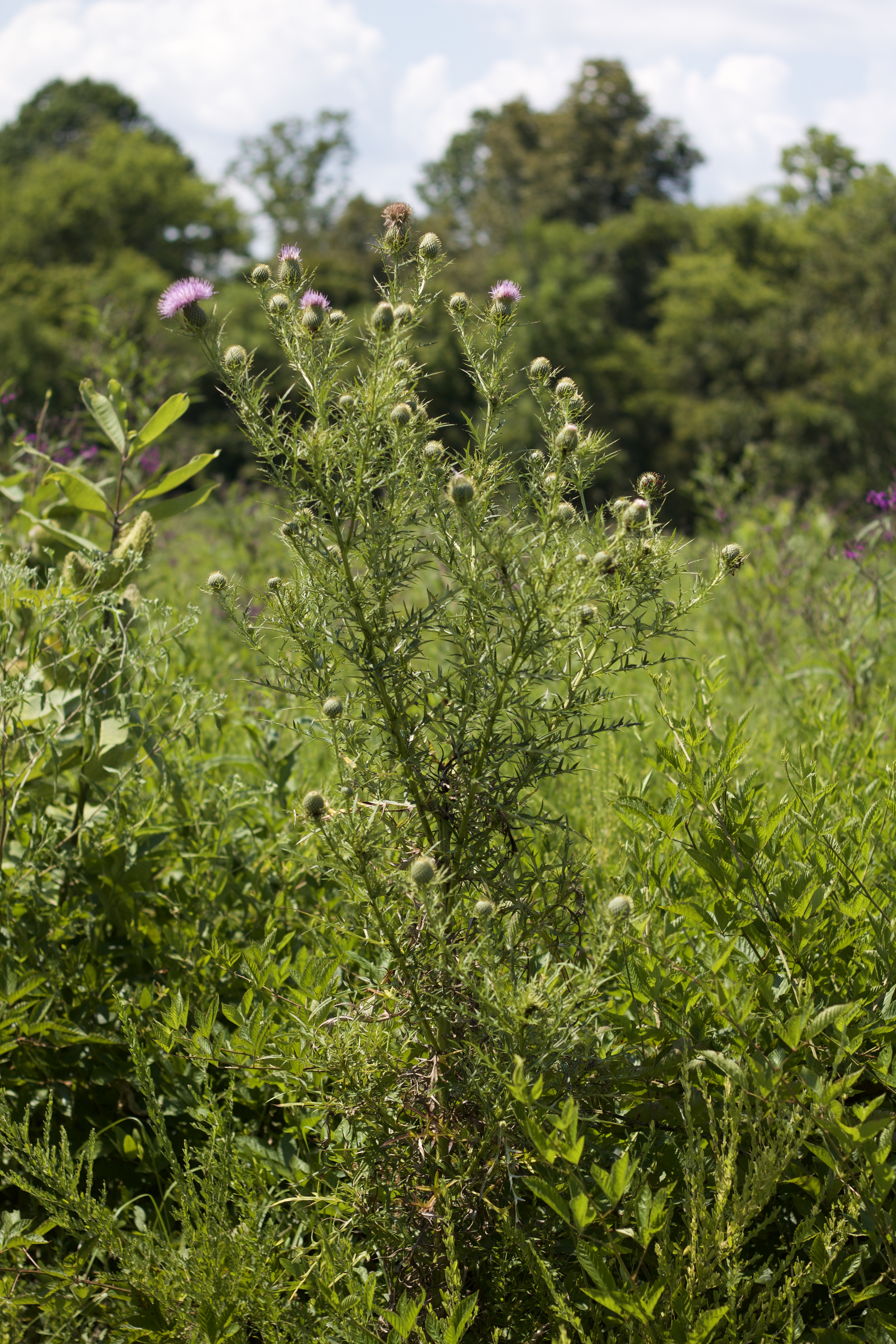
I’ve been spotting the plant below recently as well. It’s just starting to bloom. Very pretty, kind of a standout. My mind is going to “thistle”.
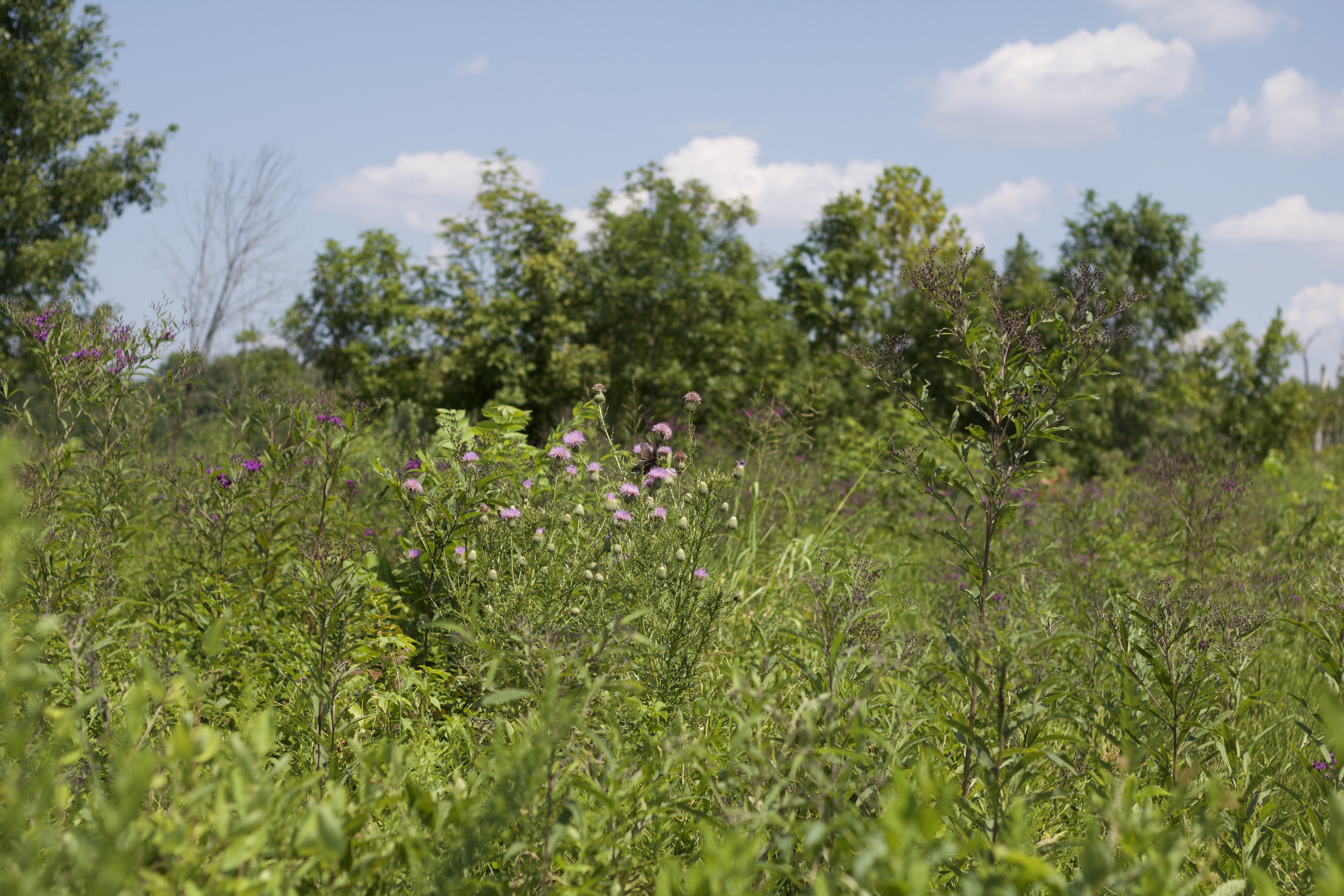
Internet says this is Cirsium altissimum, a Tall Thistle. Native to eastern and central United States. That’s good.
Tall thistle
Cirsium altissimum in the meadow
Butterfly enjoying the giant thistle landing pad
Tall thistle now starting to make a debut
There are many flowers blooming right now, Zinnias, some sunflowers still left, dogwoods (if that’s what they are)… lots of trees are in bloom right now, and the wildflowers. Lots of food for the pollinators. So, we are now seeing butterflies everywhere.
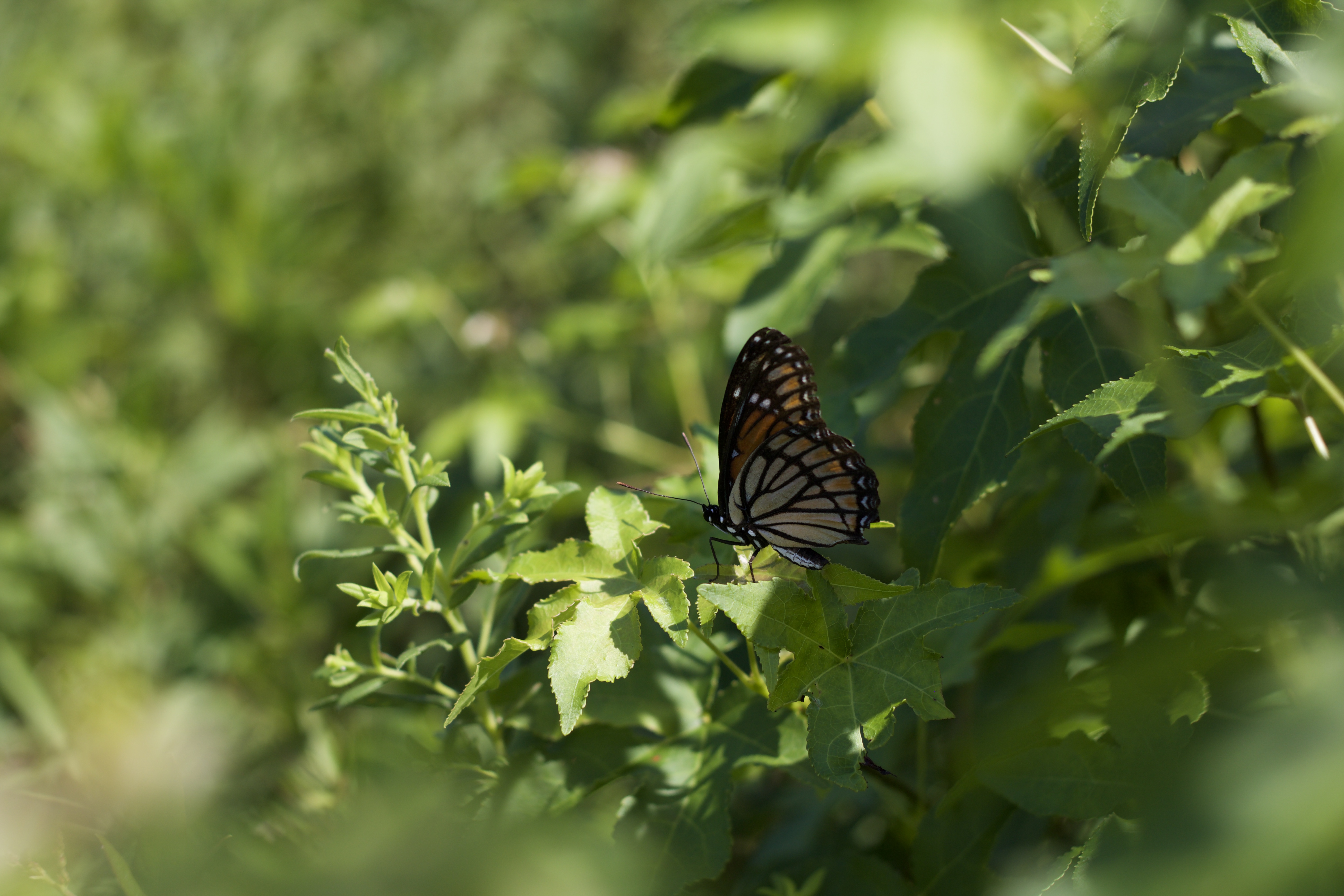
Monarch?
Narrow-waisted wasp on some tiny flowers
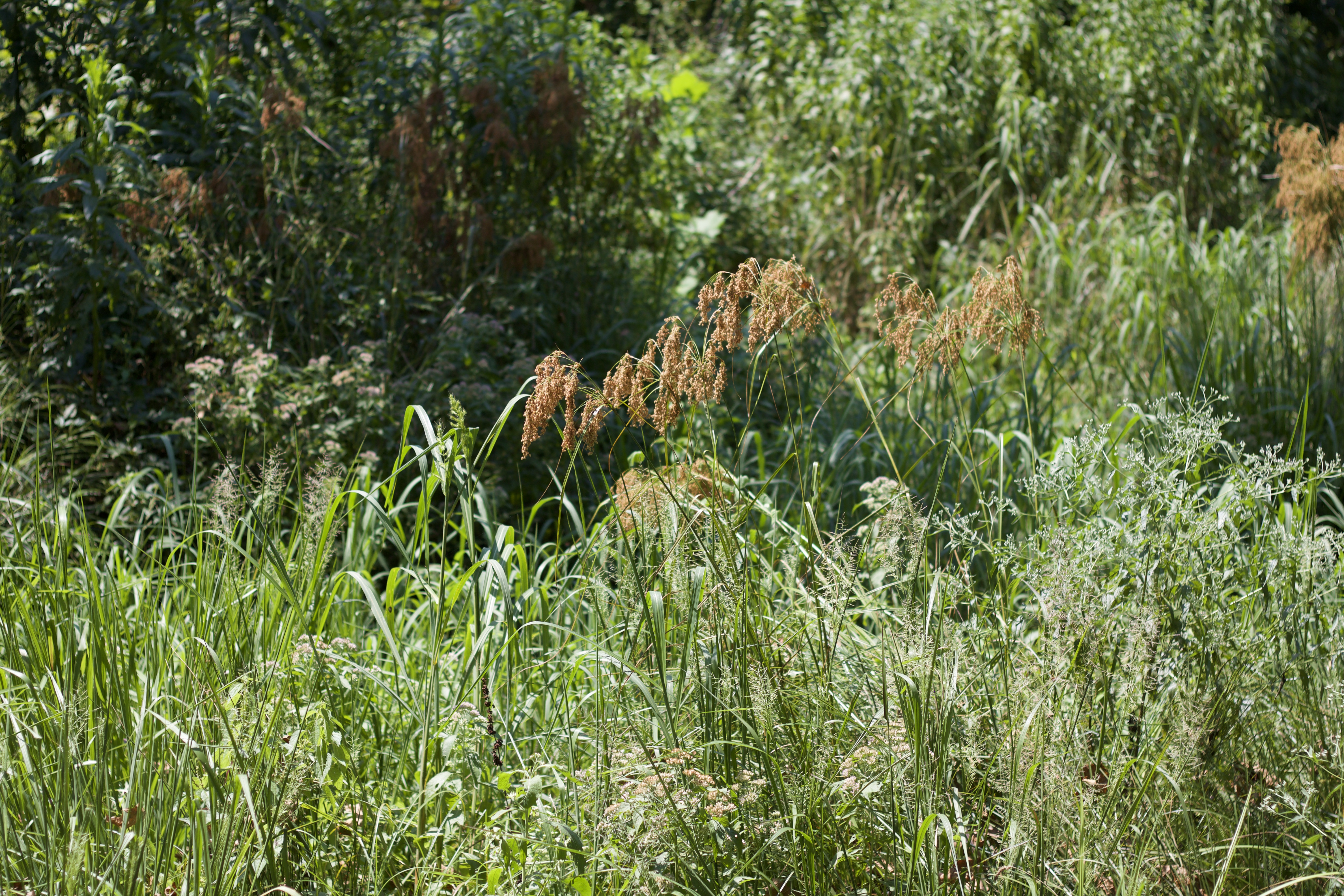
The below photo, the grass, was standing out. I snapped a quick pic. I wish I would have taken some more photos but this was in the meadow, at this point I was really getting cooked, and flowers are still more interesting for me than grasses.
Sorry grasses. I’m sure I will have a grasses era someday.
Standout grass, dried brown seeds
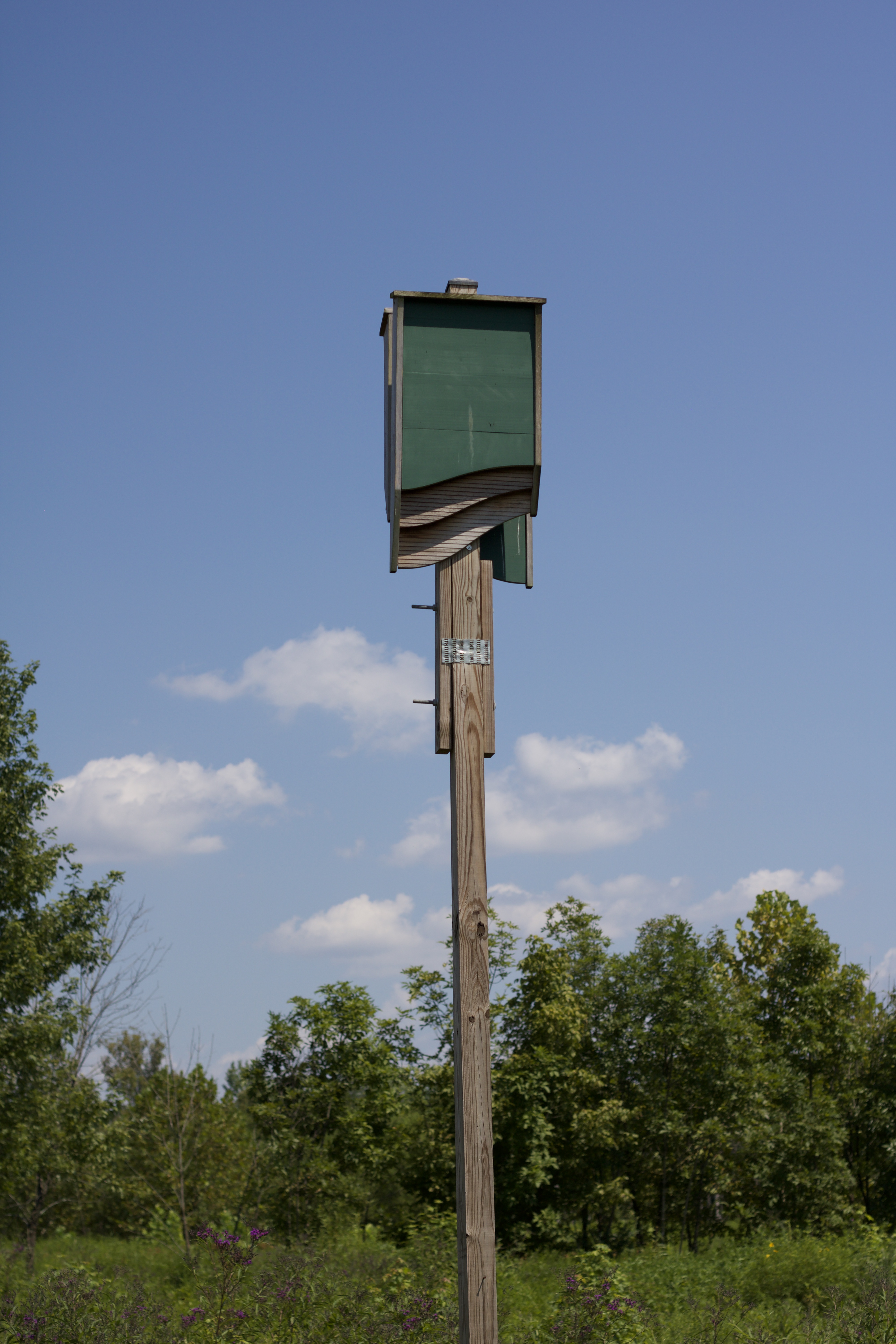
There’s an interesting bat box out in the meadow, only one of them. I assume it is a bat-box.
The bat box
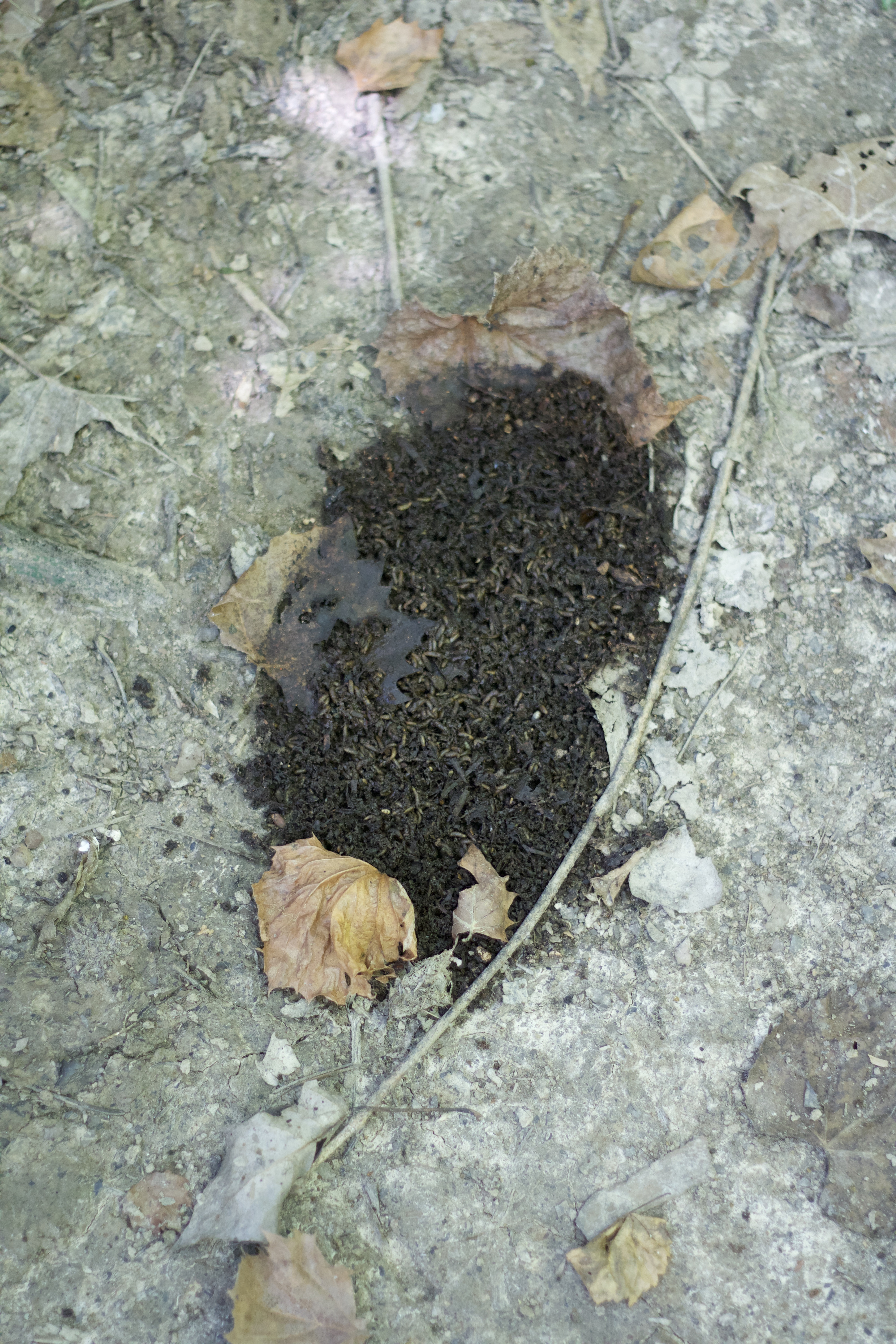
Well folks, this is about everything I’ve got for you here. But there was ONE more thing, and it was actually the most incredible thing I saw on this field trip. It was the only thing I really have no explanation for. As I walked through the shaded, covered tunnel trail on my way to the meadow, I happened across a large, black spot on the path. I looked down, wondering what it was, and saw that it was absolutely teeming with wriggling things. Some of you who are squeamish may not want to look at the following photo. Luckily it is relatively low quality, as my camera was struggling in the dark, and with the difficult subject matter.
Mystery mass — extremely ecologically interesting
This mass is extremely interesting. I squatted down and looked at it, poked at it (with a stick of course) for as long as I could handle, because it made me incredibly sweaty and the mosquitoes were immediately descending on me. I have to tell you that I still have no idea what this really was or is. It looked like dirt, but how did it get there? And if it was poop — what kind of poop is that? How did it get so flattened out? And what about the creatures inside?
I thought they might have been parasites, but looking at them now, and thinking about how they were moving, they seem like they could be black soldier fly larvae. We have those in our compost pile, they look and move similarly. If they are, that means they would have to had hatched in this pile, so it must have been here for awhile… If it is dung… Do the eggs hatch that quickly? And what kind of dung is this? Were the larvae worms keeping it moist?
I’m open to theories. If anybody knows please tell us all. I’m still thinking about it.
So I am fully obsessed with gardening. It’s not really an obsession — it’s a new hobby. But boy is it a strong one.
This morning, I would out doing my daily surveying, pulling the rhizome grass sprouts, examining the new sprouts and the general condition of things, and then watering. I have a bunch of new sprouts, Cosmos sprouts. Those seeds laid dormant for weeks, probably three weeks at least, before suddenly shooting up overnight, as tall as three or four inches tall. They came out of NOWHERE. And now they are booming, going to work. Two days ago they appeared out of nowhere. Now today, they’re already duplicating the leaves, and there are twice as many that have popped up. It’s a totally different method of sprouting than nearly everything else that has popped up in the garden, which come up quite meekly, with just two little baby green leaves, and develop slowly.
The marigold sprouts came up quick, as fast as the Zinneas. Within only three or four days, they were sprouting. They’ve stayed low to the ground, but the seedlings have rapidly developed in complexity. I like looking at them just because they have an interesting shape. They are a little crowded by Zinneas and I hope they don’t get consumed, but they are at least on the edge of the Zinnea patch.
My Butterfly Milkweed might be sprouting, but it would be early for them, according to the internet. I’m getting some sprouts in that patch. It’s probably something else.
I’m on a spree of meeting neighbors. This morning, Jay called over to me from across the street. “What are you raising?” He said. That’s all it took. I walked over to him and we talked gardening. He said he was interested in raising some native wildflowers, that his girlfriend had been growing herbs in pots. He had a little dog named Bill, a cute dog. When we walked over to the patch, so I could point some things out to him, Bill trampled the dirt area with my Butterfly Milkweed. I almost said something as I watched him walk all over the dirt, but I held back. They probably weren’t sprouting anyway.
Jay said he’d been watching my garden and saw that things were starting to pop up now. My gardening is starting to draw some attention, now that things are actually growing. It was pretty ugly when it was just a giant patch of dirt. It still mostly is a giant patch of dirt. We’re playing a long game, here. (Although, not even that long. It’s crazy how quickly some of these things grow, like the Zinneas.) I just wonder if I’m going to get any blooms this Fall, or if the plants will decide that it’s too close to the end of the season and that there aren’t any pollinators left… if there aren’t any left. But we’ll see. Maybe there will be?
The first frost for Nashville is approximately October 15. That will be a big date. What will happen with the first frost? Will things die? Will they die before that? Will I have any flowers? And then, what will happen to the perennials? Will they have grown enough to come back next year?
The Zinneas are annuals, I looked up this morning. That’s not a big deal. If everything died and I had to replant everything next season, it wouldn’t be a big deal. The planting is easy. But, apparently the plants take time to flourish, some of them not blooming until years later. I don’t think any of mine take that long for their first blooms—possibly the Butterfly Milkweed. I guess this is to say that it would be better if I didn’t have to replant the perennials, and the plants survived and kept going next year. I really don’t know what will happen.
It’s all an experiment. A very interesting experiment.
I’ve thought about what can go in the backyard. I’m intimidated by the backyard. It’s mostly shaded, with dappled sunlight. The ground is not moist, at least not right now, but it can be. Clover is growing well back there, the grass is not growing THAT vigorously. The front yard has been completely different, compared to the back.
It seems that the backyard, being mostly fully shaded, mimics a forested, woodland habitat. So whatever grows back there will be whatever does well in a forest, I think. One difference is that I feel like it’s cooler in the woods, and the backyard still gets hot. That probably won’t matter THAT much to these plants. The other thing they talk about is soil acidity, and I have no idea about that. I would like to know.
I want to plant buttonbush, really badly. I have a vision for a buttonbush in a space in the corner. It would be a perfect barrier between yards, and would fit the space perfectly. The thing is that they say buttonbush likes moist, wet conditions. That corner is not dry (except now in a drought), but I don’t know if it would be moist or wet enough. I would have to water it, and even then I wonder how well it would do. That could be another experiment.
I want to cover the fences with vines, like passionflower and coral honeysuckle. I wonder how to get those started. I talked with a lady at the nursery/gardening center. I asked about planting, if there were seeds, she wasn’t sure about the coral honeysuckle. Then I asked about passionflower, and she said, “Hold on a minute.” She went through a secret door in the back, and she came out a minute later holding two large green spheres, like perfectly spherical limes. She said, “”We have a passionflower plant growing wildly just outside. Here.” And she gave me those seed pods.
I felt like I acquired a special and rare item in a video game. Like a bonus quest. Ask the gardener at Bates about growing passionflower and you can score two free seed pods.
After the deer attack, I sometimes have a fear that I’m going to wake up one morning and find my entire garden decimated. It’s vulnerable out there, unfenced, by a busy street. But so far, no tragedies except for the horrendous deer attack. And the sunflower that was chomped by the deer and lived, it is still the most vigorous one I have. It’s doing great. It handled that assault without skipping a beat.
Yesterday I went to an event held at the Looby Public Library, for fall vegetable gardening. Just to see what’s going on. Currently, I’ve only planted flowers, and carrots. That’s it. Veggies is a whole new world for me.
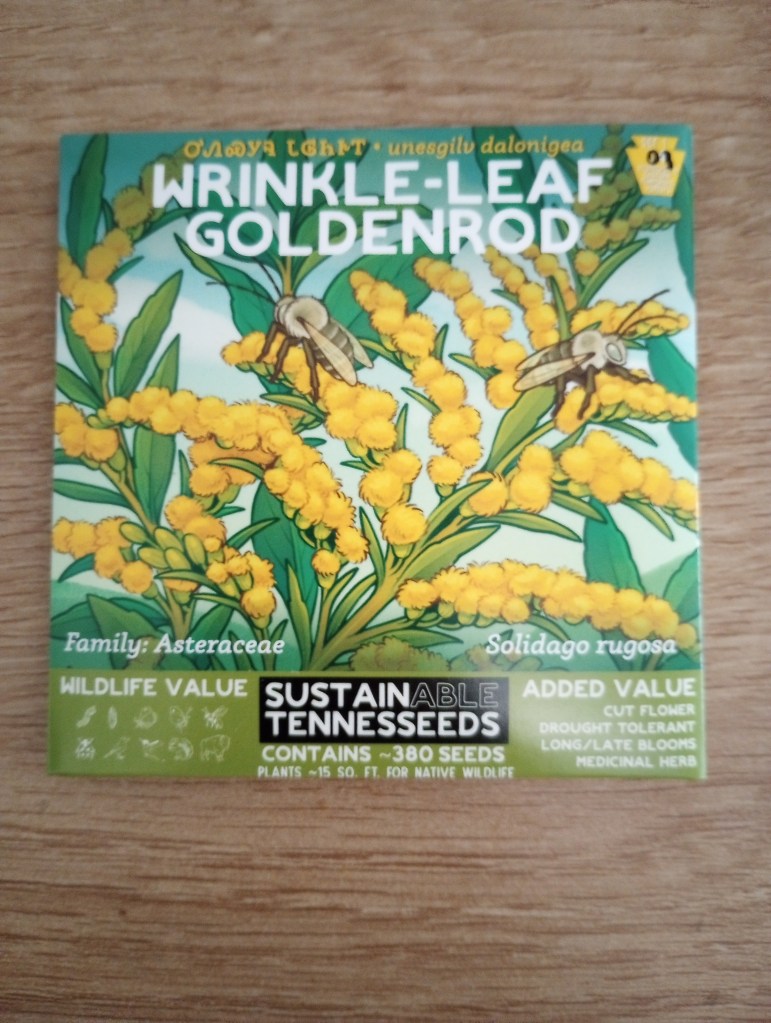
I went out to a local iconic gardening store and bought more seeds. I’ve been going crazy. So far, I’ve now planted Cosmos, Zinneas, Butterfly Milkweed, Jerusalem Gold Sunflowers, Smooth Blue Aster, Purple Coneflower, Shasta Daisies, Marigolds, Black-eyed Susans, and carrots. And I still have some Goldenrod to plant, more Purple Coneflower, Wild Bergamot…
The watering is starting to be a lot of work. It takes 30+ minutes to do all this watering, and it’s still probably not enough. I fill up the watering can by hand, at our sink. The spigot is on our neighbor’s side of the house (we live in a duplex) and I’m too lazy to text him and ask if he minds me using the hose.
The hard part is not the planting, it’s the tearing up the grass. Most of the grass in our front yard is some extremely tenacious, rhizomous beast-grass. The roots are nebulous and deep. The sprouts are constantly still popping up, even when I think I’ve completely, thoroughly dug out all the roots, removed all traces of the grass.
This grass is quite entrenched in the lawn. And digging it up is hard work. I would even call it backbreaking. I can’t even imagine working on a railroad line, doing whatever those guys did all day. If it’s anything on the level of digging up this grass with a shovel, I couldn’t do it. And it’s compounded 10x in the hot sun.
Basically, you can’t do it in the sun. You’ll die. Or, you just suffer immensely. You have to get up early enough to get some digging time in, or late at night. I’ve done some digging at 10, 11pm at night, long after the sun has gone down. It’s blissful. It’s amazing to be able to do that work without the intense blaze of heat.
As I dig up more and more of this yard, I realize—I’ve bit off quite a bit. I don’t even want to dig anymore, really. But I want to have a large flower garden. And I have to get these seeds down, because the clock is ticking, the winter approaches—and I bought them.
Tonight I’ll have to do more digging.
When you’re doing hard work, it’s amazing how it feels like you’ve done so much more than you’ve actually done. It can be the same with writing. When you’re putting so much into every line, when you’re really crafting each line — it feels like you’re doing so much work, and then you come back and review how much you’ve written, and it’s nothing. Three pages. You worked so hard for those three pages.
The digging is the same. Two mornings ago I dug for a solid two hours straight, from 6:30 to 9:00 am. I took a short break. Backbreaking labor, slow and difficult. It felt like I had dug up ten acres of land. And then, when I stepped back to see how much I’d done, and how much farther I had to go, I was shocked. Depressed. Only about 12 square feet of earth had been cleared. Maybe 15.
Yesterday morning I met Melissa and Taz. She was taking her dog for a little stroll around the neighborhood. I know this dog; he’s one of the most familiar sights in the neighborhood. He barks at me almost nonstop whenever I’m out in the yard. Melissa and Taz live in the apartments across the street. Taz is cute—he’s a small dog, a terrier or something. Grey and white, long fur. And he likes to yap. He loves to yap.
To be honest, like most dogs yapping, it’s really annoying. Taz’s yapping. All the dogs in the neighborhood like to bark, and they’re all annoying. Sometimes lately I’ve wished that dogs were just banned in the city. Sometimes, when they’re really barking up a storm, I just wish that there weren’t dogs around anymore. Not in the city. God damn, it’s so annoying.
But… they are cute. And the yapping isn’t that bad. Mostly, I can ignore it, or I can put up with it. If it is that bad, then you have to tell them. Hey, can you please shut your god damn dog up? Thanks.
You never want to have to do that, of course.
I finally met Taz, who I had been thinking, if he just knew me, he would stop barking at me. I don’t think that’s likely to happen, now that we’ve met. He was still barking at me, as I squatted down to let him sniff me. I did not get a pet in. Melissa said it was his way of saying hi. What a pleasant way of saying hi.
She was holding a lit cigarette and drinking coffee out of a styrofoam cup. That’s the way to wake up, right there.
She asked what I was up to with the garden. I gave her the low down. She was interested. She said it was going to look beautiful when it was done.
I’ll tell you that I have a lot of thoughts about convering all of the boring lawns in the neighborhood into gardens. Into flower beds. I think about how the neighbors will enjoy looking at the flowers in my yard. There are a lot of people living in the complex across the street, like Melissa. They will be able to look across the street and see a wonderful array of wild flowers, hopefully. And the street gets a lot of foot traffic. It will be a welcome addition of beauty on our otherwise mundane street.
Patrick, my duplex neighbor, has done a good job with his house. He’s done a lot of work. He put up a fence, that has been run through twice in the five years since he’s lived in that house, and surrounded it with flowers. Mostly black-eyed susans and purple coneflower, but he’s got some other things. And, he’s got sunflowers.
There are some amazing gardens in East Nashville. Some people are doing really great work.
The Master Gardeners were an old black couple, from North Carolina and Alabama. The man was from Alabama, the woman from North Carolina. But they had been in Nashville for a long time. They were amazing people. The woman did most of the talking, and she was sharp. She knew her facts. There was an incredible amount of gardening information in her brain. The man knew just as much, but he had taken a support role, and spent much of the time showing us pictures of things on his phone, like his collection of plants grown in buckets, the way they had harvested their lettuce, putting the bottom leaves but letting the tops grow, and an enormous, 22-pound watermelon.
After the seminar, which was attended by myself, a black woman named Audrey in her 40s or 50s, and a young white couple who had recently moved to Nashville from California, and who had inherited a plot in a community garden, they offered to take us to their nearby community plot. We went out there and they took us around the plots. The woman was especially excited to show us her peanut plant. It was her first time growing one.
I’ll tell you this — vegetables are weird. Fruits, too. Flowers are easy to understand. What happens? They’re just a plant. They grow up, and then they have beautiful flowers, and you’ve succeeded. They all kind of do the same thing, I feel like. But vegetables and fruits… Strange. They come in all manner of shapes and sizes. What are they doing?
For example, the peanut plant. It was not what I ever would have expected a peanut plant to look like. It was low to the ground, dark green, dense. It had some small yellow flowers blooming. If I had walked across that plant in the wild, never would I have thought it was a peanut plant. And then, the watermelon. It was sprawling. It’s basically a ground vine. I think that it would be described as a vine, right? A vine on the ground. Now, I didn’t know about that. And this couple had a vine that was covering like 80 square feet of ground. Was that one vine? It looked like it. How many plants was that?
Then you have the leafy veggies, kale and lettuce. I mean, those are simple, right. They’re still strange though. And beets, carrots, where you eat the buried part. Is that even a root? Is it a fruit? What is that? And what’s going on with corn?
They had tons of beans. Beans are crazy. Pole beans, green beans… I can’t even remember all the kinds of beans I saw. I learned that there are a lot of kinds of beans.
The man was very excited to tell me how many kinds of tomatoes there were. He said, “How many kinds of tomatoes do you think there are?” I said, “Oh man, there must be a lot… hundreds—” he said, “There’s over three-thousand kinds of tomatoes.”
Probably just as many kinds of beans.
Some of these veggies can grow in as little as 20 days. I think the radishes were one of those. You can have radishes in a month. How wild is that? From a seed to an edible radish, that quickly. But I’ve seen how quickly these plants can grow. The Zinneas, the sunflowers. It’s all they do. They’re a-growin’.
I’ve already allocated so much of my full sun terrain for flowers. There isn’t much land left for veggies. But we have an entire concrete runway along the driveway, that we could cover with buckets and pots, and plant in those. That would add a lot of real estate. I can see that becoming a reality.
The man said something that was really appealing to me. I’ll remember this fact. He said that they would go to the store and price the vegetables that they had grown, and that they had in one year saved themselves about $900-1100 dollars on produce. That’s not nothing, folks. $1k worth of veggies? That stuck with me.
Out in the community garden, in every plot there were fruits and vegetables, except one. There was one plot where the gardener was growing flowers, Zinneas and sunflowers. They had an amazing strain of sunflower that grew only a single, massive flower at the top. They had a row of them, all about the same height, and all with an enormous flower at the top. And then, they eight or ten different kinds of Zinneas. They were all Zinneas I think, the Master Gardener woman thought so, but each one was a different kind. White, red, pink, orange, purple… it was a small Zinnea botanical garden. And the best part is, it was absolutely covered with butterflies. Pollinators in general, bees, leaf-footed bugs, huge, shiny beetles that I don’t think I have even seen, were all there, but the butterflies were amazing. It was like being in a butterfly house. Probably 60-80 butterflies were grazing on that flower patch. It was really incredible.
That made me want to grow more flowers. More than a peanut plant or watermelon, I still think I just want to grow flowers. For the insects. But, why not both?
I imagine my garden to be a kind of Tennessee native flower botanical garden. That’s what I want it to be. And people will walk by and think, “Now, what is that? That’s something I’ve never seen.” And I’ll be able to take people through the garden and say, “Yes, these are the Smooth Blue Asters, the Swallowtails love them, yes, that’s right, those are Drop Dead Red sunflowers, surprisingly easy to grow. That? Oh, that’s buttonbush, hard to grow if the soil isn’t wet enough, but I’ve managed it here…”
Not much writing here, I just wanted to share some shots that I thought you guys would enjoy.
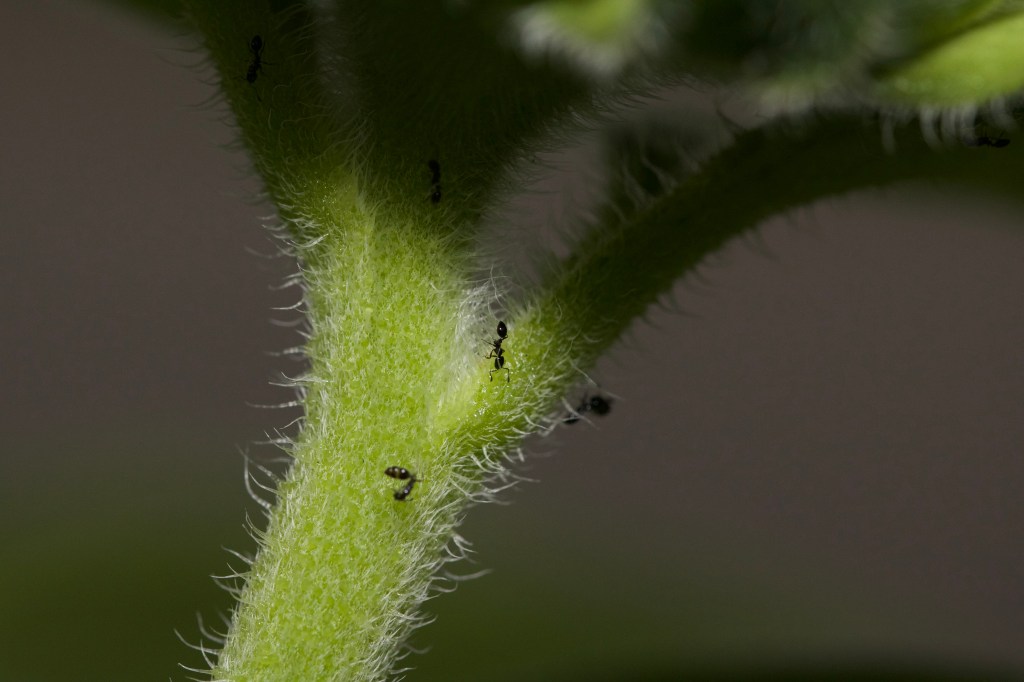
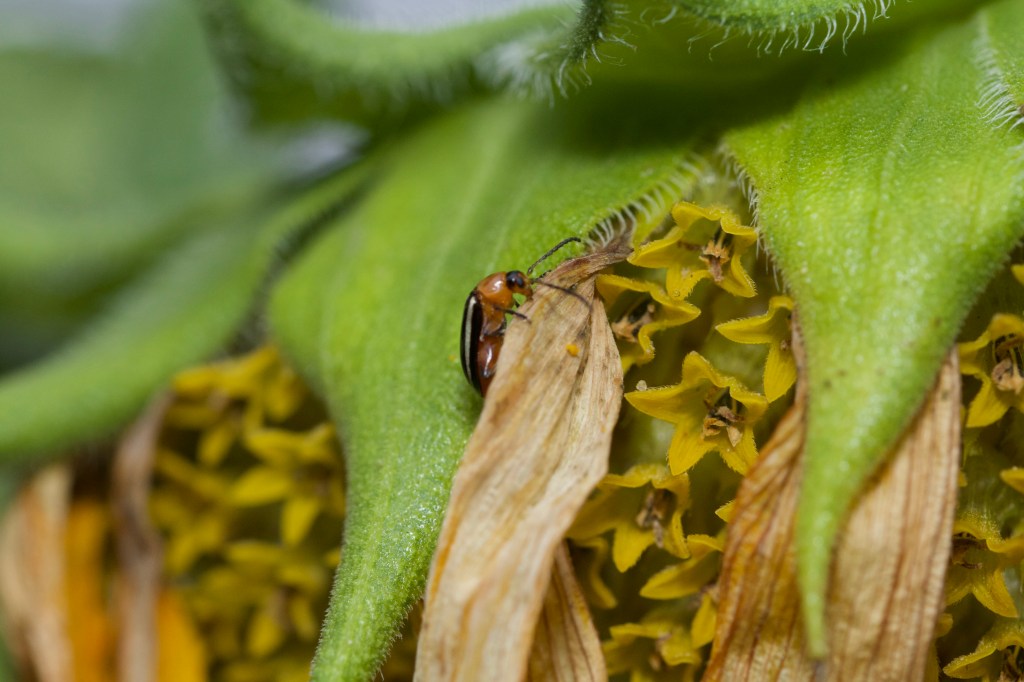
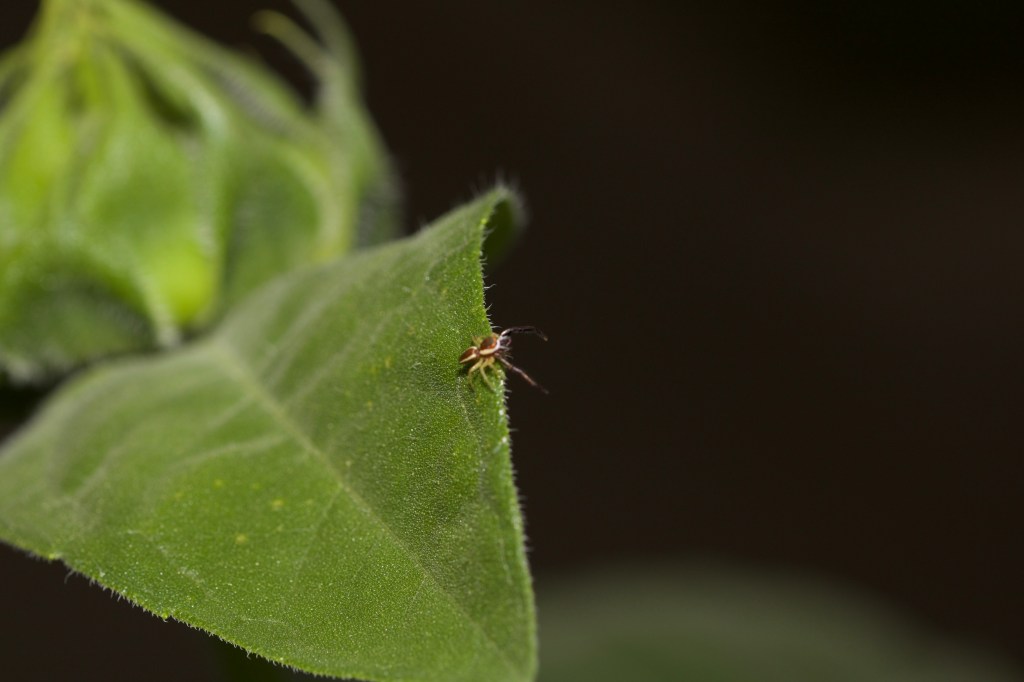
After a very longgggggg time away… I busted out the macro lens.
I was surveying my neighbor’s sunflowers, at about 6:30 pm today, and there was so much action going on, I was really taking a good look and seeing everything. There was so much activity, so many different organisms (nearly all insects) making use of the great gifts of the sunflowers, and I decided, you know what? I’m going to do some macrophotography. The spider was really what made me decide to go grab the camera and the gear, because it was an interesting one, with incredible long front arms. I was excited to take some photos of these creatures, and I tried my best.
I was reminded, and especially after actually pulling up the photos on my screen, just how hard macrophotography is. Especially of moving targets. And not only were the bugs moving, but the sunflowers were often moving around, waving in the wind. You have to do alot of spray and pray, and even when the shot lines up, everything is right, nobody is moving, no wind, the target animal is not moving, still you have your hand movement, and you have to get the focus just right. These things are so small. You cannot capture the entire creature in focus, from too close up, because your focal plane is not big enough. You either have to back up, or choose a focal point, which you would almost always want to be the eyes. You can see that I had this trouble with the leaf-footed bug, because it was large. But the tiny ants, the incredibly tiny ants, the tiny ants in existence, I could get the whole ant in focus, from so close up, because the entire ant fits into the focal plane.
All shots were taken on 1/200 of a second, f5.0, ISO 800, a couple on ISO 200.
The Japanese word for sunflower is himawari (ひまわり). Isn’t that a nice word? Rolls right off the tongue. I think it sounds light and pretty, like the actual flowers.
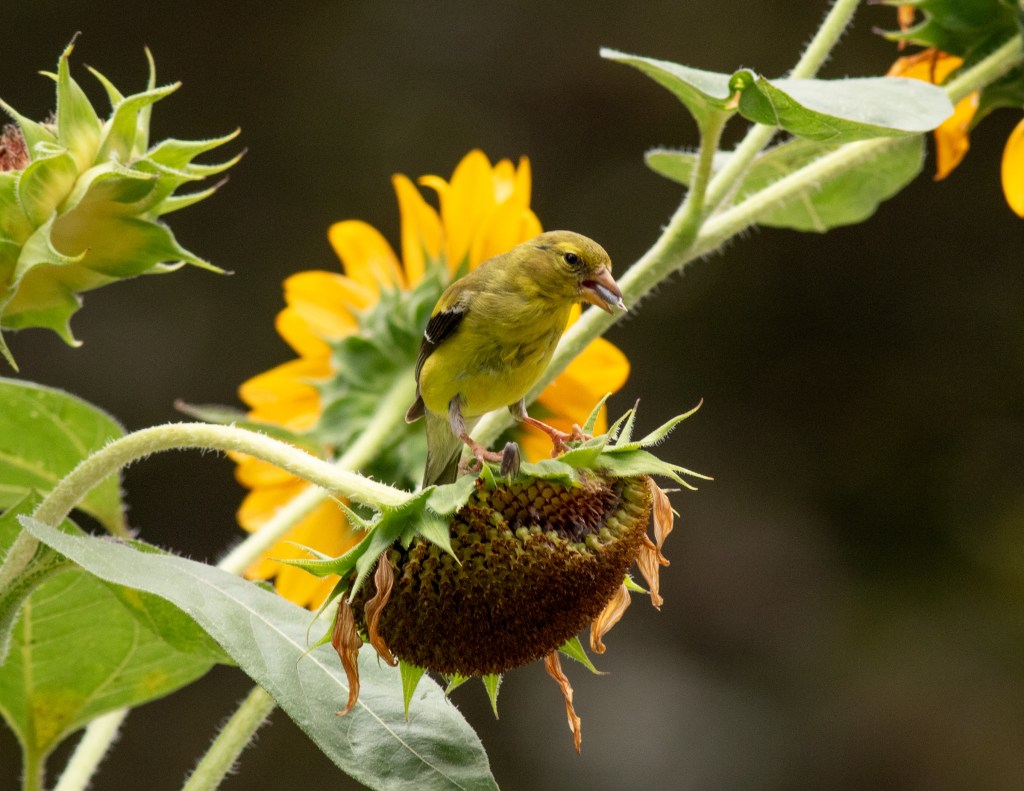
(Below is an American Goldfinch photo I took at the same sunflowers last year, with my 400mm prime lens.)
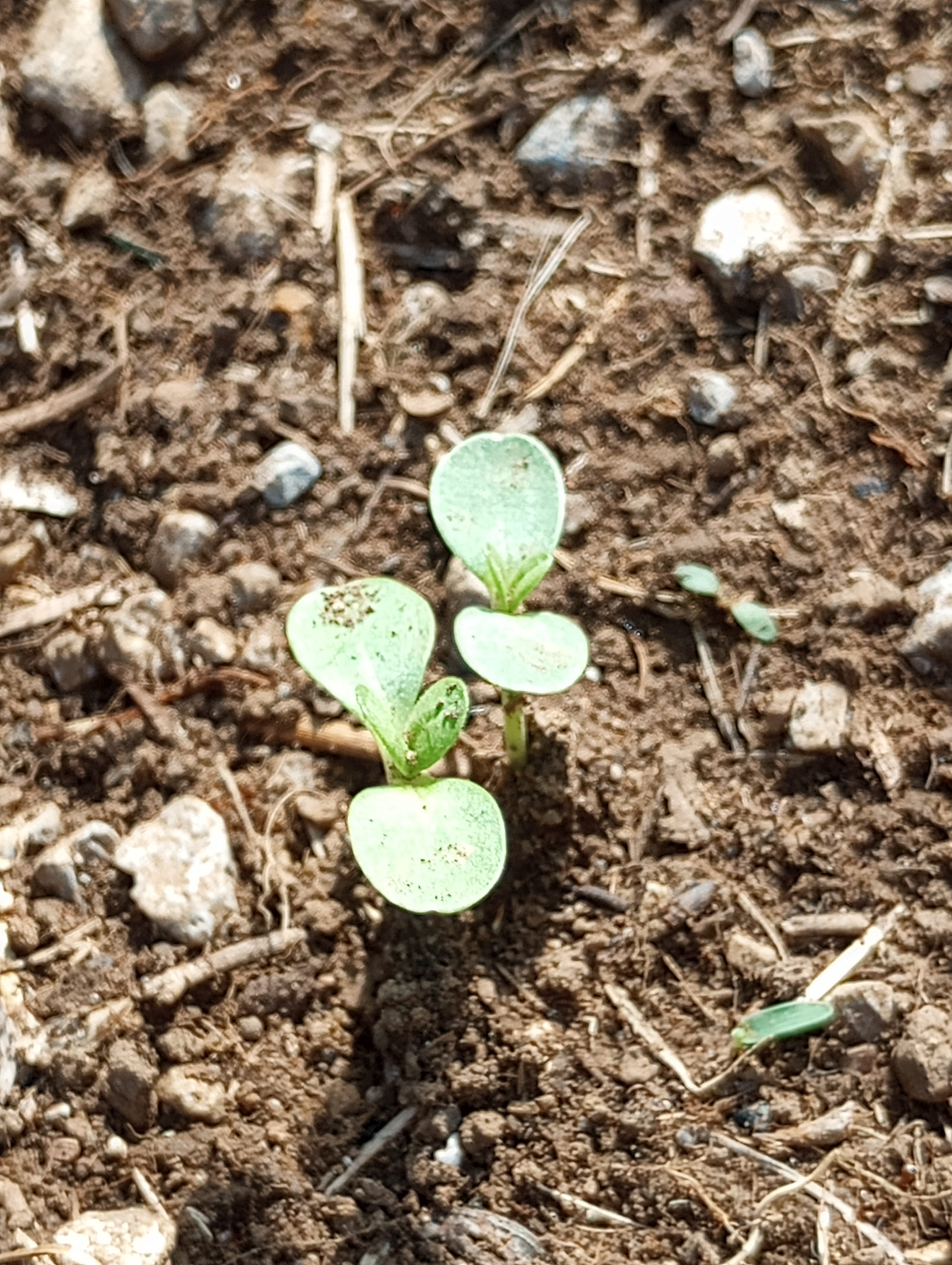
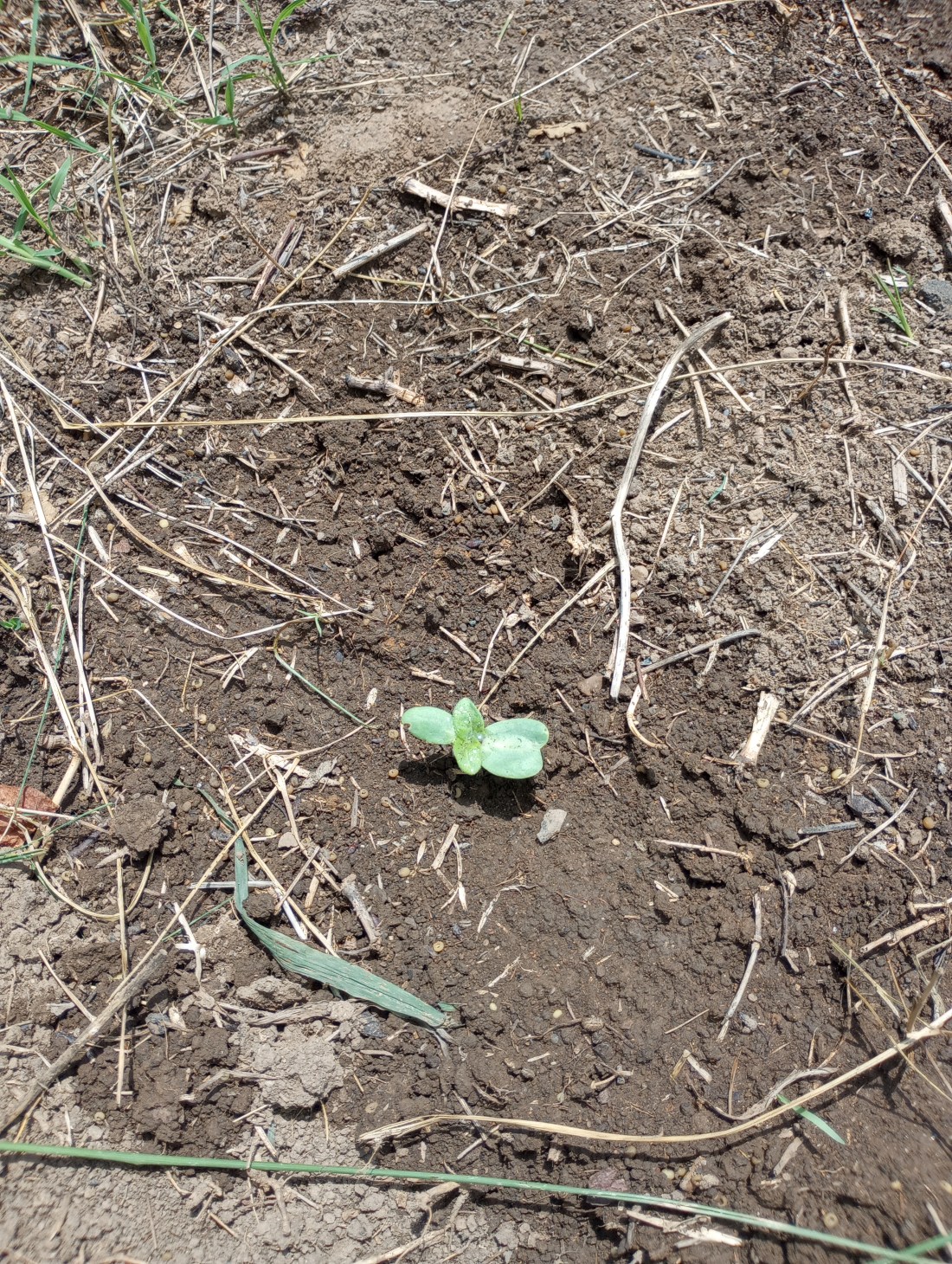
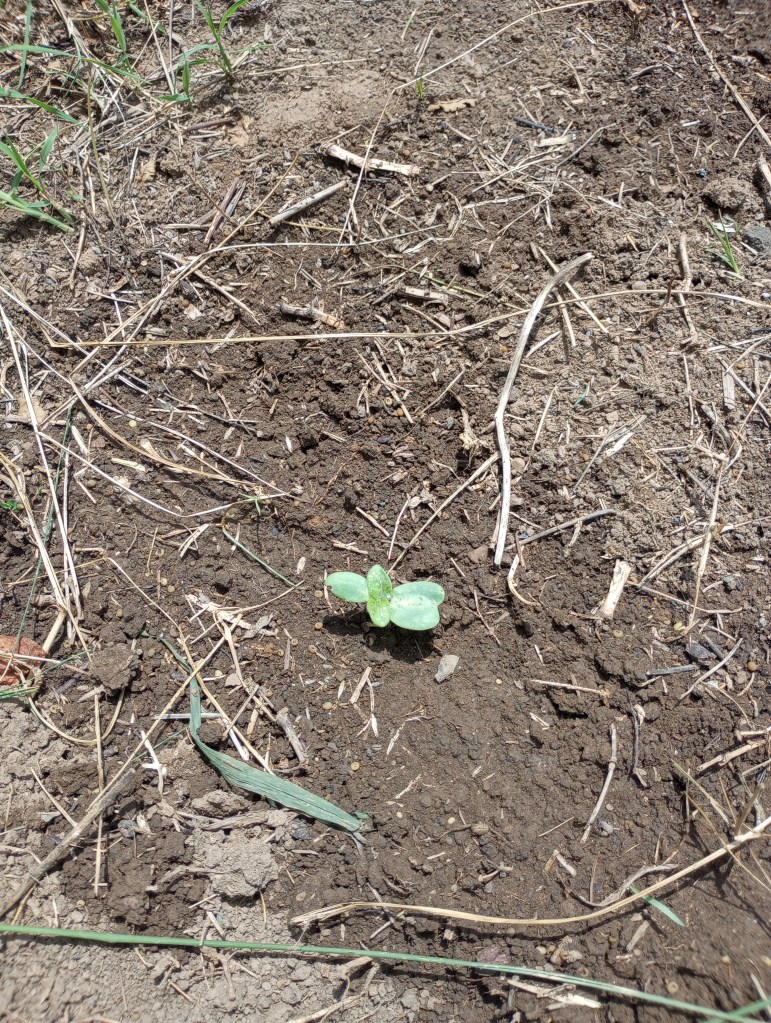
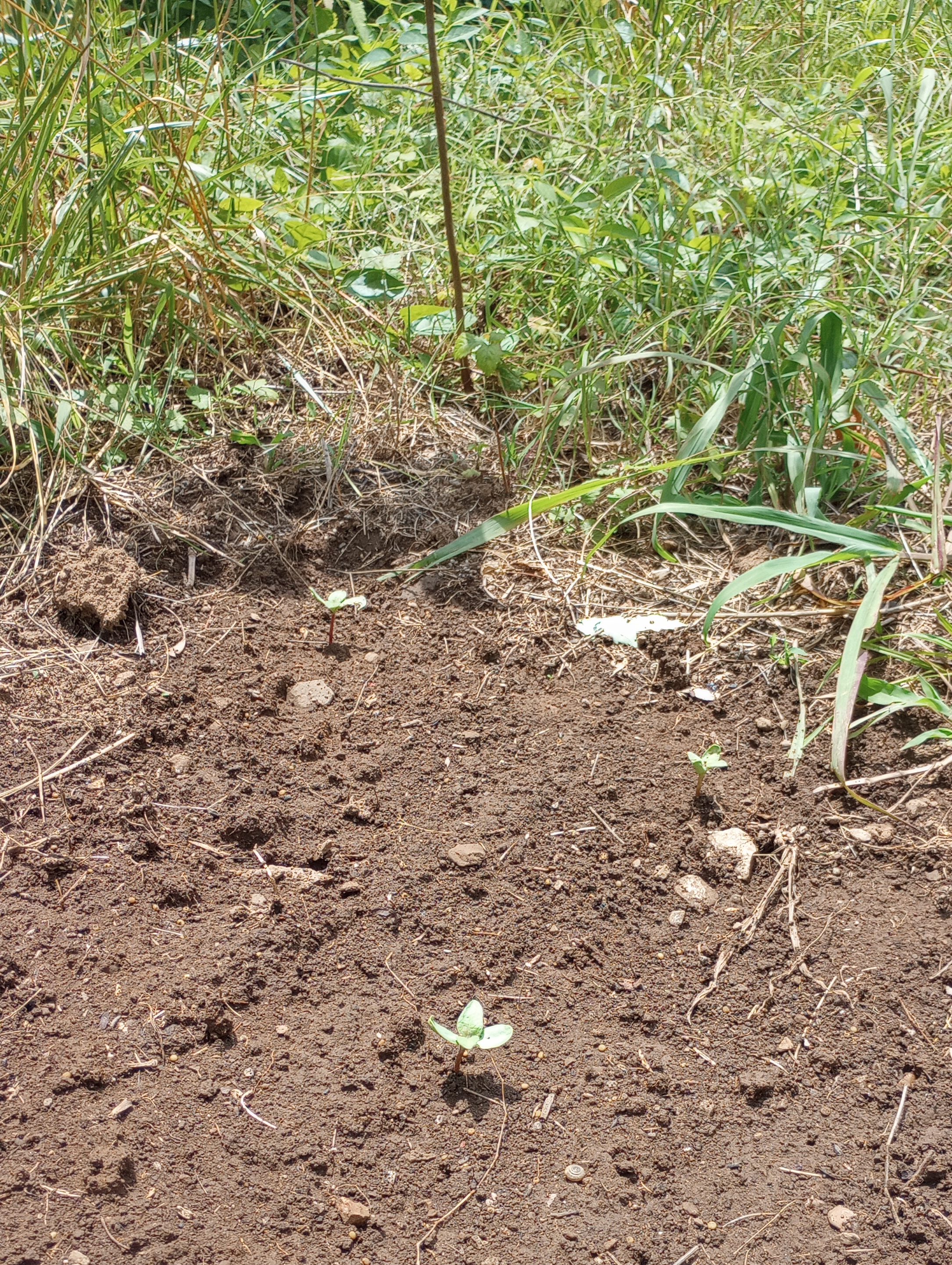
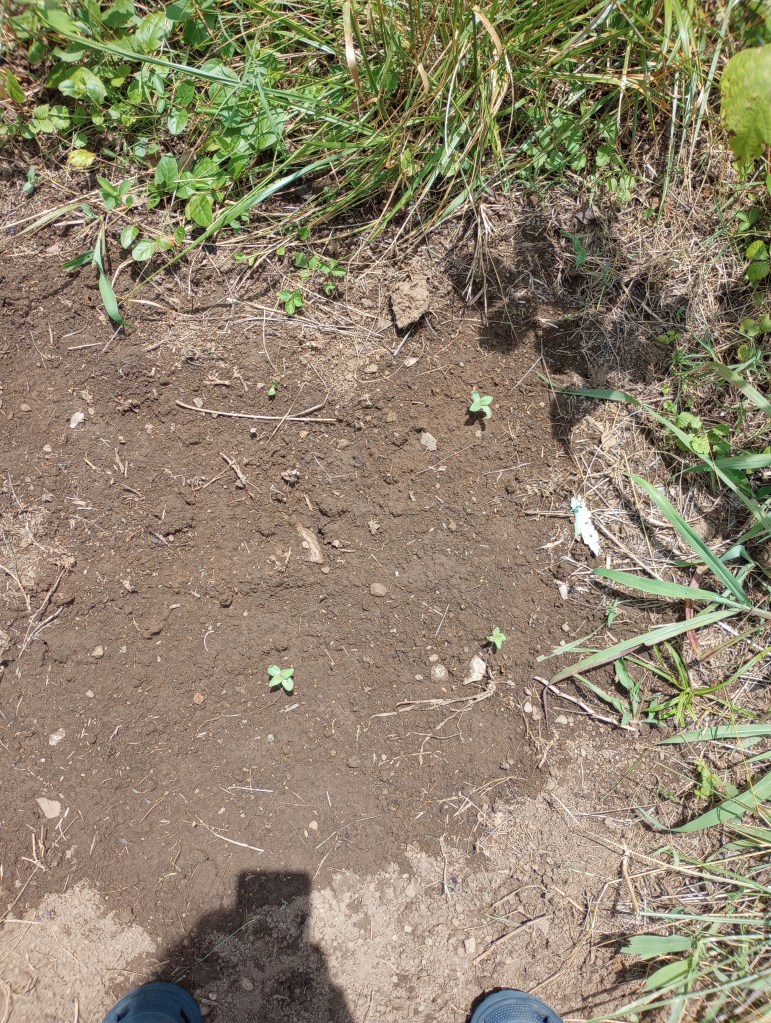
I stepped out to investigate my garden, and found that the sunflower seeds I had planted less than a week ago are already sprouting vigorously. This was an incredible sight.
Kawaii sunflower sproutProof of concept: Seeds = PlantSunflower sprouts
It’s proof of concept. Planting seeds actually works. You can actually get a plant out of a seed.
This was inspiring, and this motivating sight, plus a strong pot of coffee in me, finally inspired me to move, and plant the other ten seeds I had.
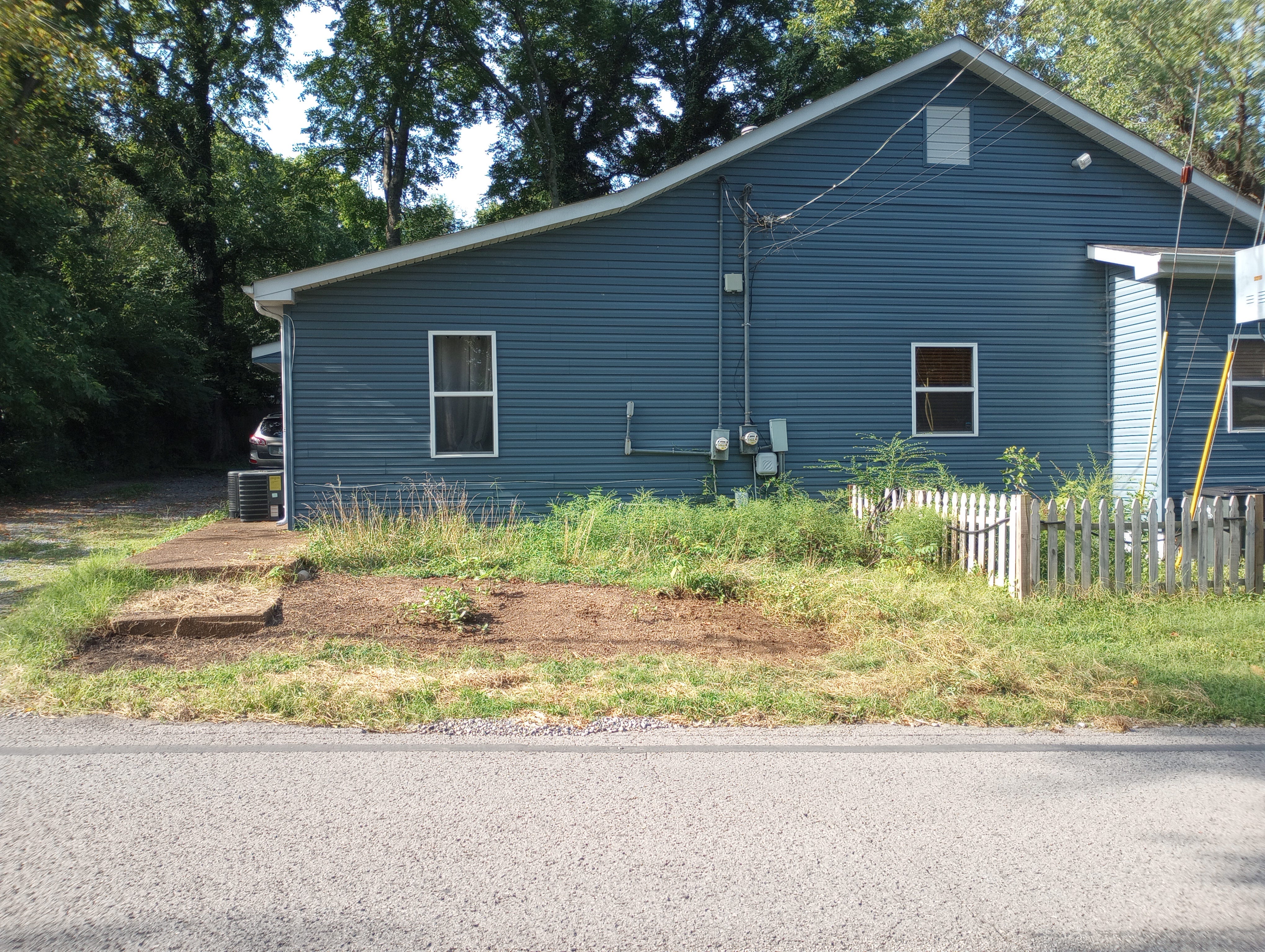
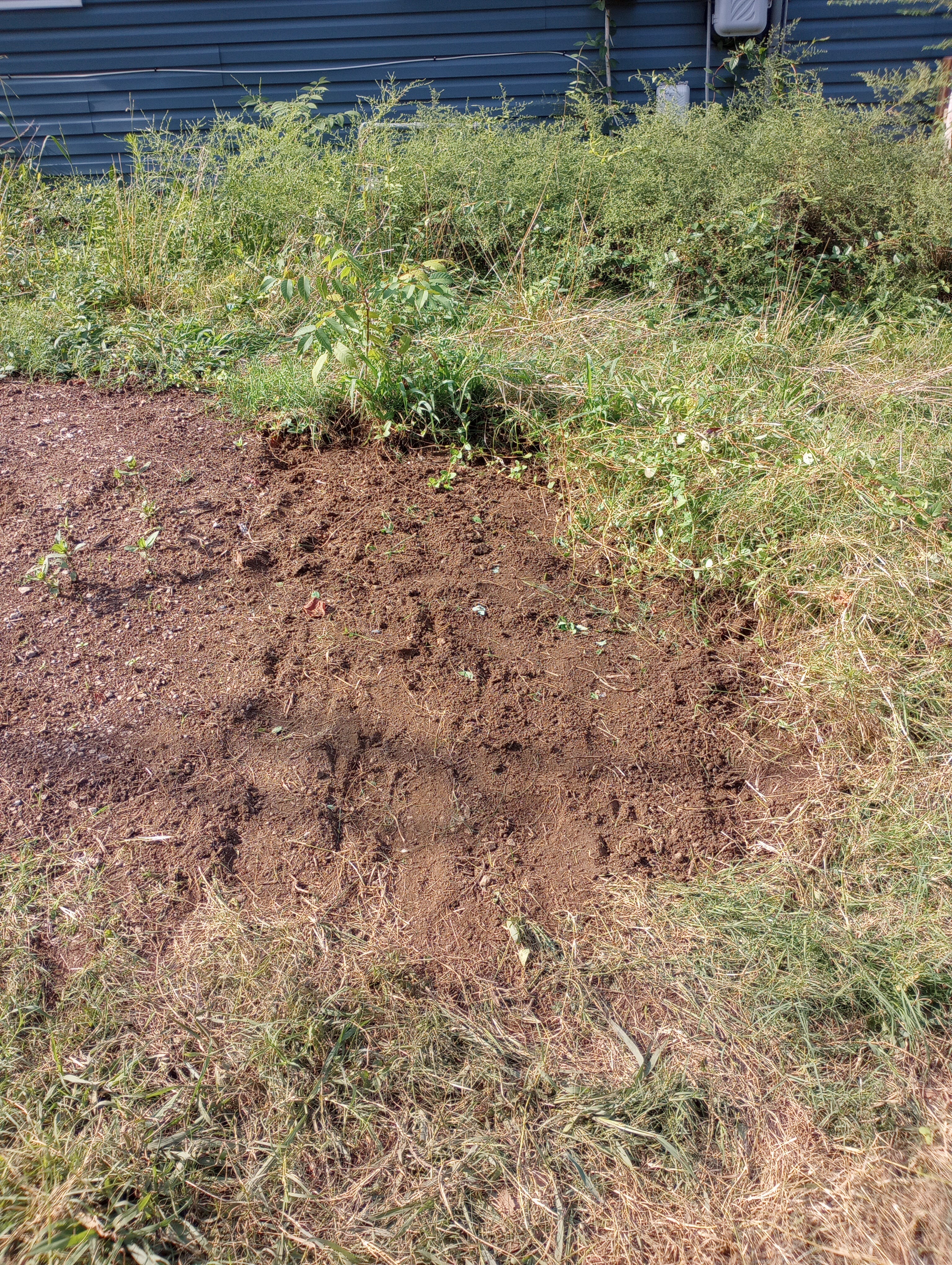
Front lawn cleared of hemlock with small dirt patch for sunflowers
Here is the patch, I doubled it in space. I had taken down all the husks of the.. what was it called… why am I blanking.. POISON HEMLOCK. The poison hemlock turns out to be not only extremely toxic but also covered in literally thousands of burrs, which ended up sticking to everything I was wearing, covering me in hundreds and hundreds of little tenacious burrs. (I pulled some off of my washed underwear this morning, five days past.)
Remains of the dangerous and nefarious poison hemlock
Here are the poison hemlock remnants. I got a nice hornet sting in the process of pulling this all out of the front yard. It’s funny, I was ripping it up, knowing it was a toxic plant, apparently so toxic that it shouldn’t be burned or ingested, but Google says touching it was generally fine, and so there I was, in a no-sleeve shirt and with no gloves, standing deep in poison hemlock and slathering it all over my body for a solid hour, the entire time thinking.. I might really end up regretting this. Knowing that it was dumb. But I had no averse reaction, and the only thing that caused me pain and suffering was a hornet sting.
I haven’t been stung since I was a kid, and if you have forgotten what it’s like, as I had… Yeah. It hurts.
I hadn’t even thought about hornets or bee stings when I was reaching in and grabbing those plants barehanded, like a maniac. Well, I clamped my hand down on a hornet, and it reminded me right away why they are not to be forgotten. I knew instantly that I had just been stung, and I saw the culprit whiz right out of the bush, a large black hornet, and within seconds my palm, as it stung me right in the meaty meat of my palm, had doubled in size, and I was going, “Ahhhhh….. Tssssss.. Ahhhhh…….!” Making those sharp breathing sounds between your teeth.
The stinging animals have an incredible power with their stinging ability. After I got stung, I f***ed right off, and immediately ended my shenanigans for the day.
Anyway, that was about four days ago. Today I finished planting the rest of the sunflowers, during a noon bit of cloud cover, and now this is what I really want to share with you.
I began to pull up the clumps of grass, to clear more dirt patch for my planting. And when I pulled up the first round of thick, tall grass clumps, an amazing and unbelieveable sight met my eyes.
I had just unrooted an incredible, thriving ecosystem. Down in the soil before me, I saw literally thousands of organisms wriggling wildly in the soil.
Most of them were baby roly-polys. I could not believe the number of roly-polys I was seeing. Within a single square foot patch of this earth in front of my yard, there were so many, innumerable tiny beings living, and they were only what I could see with my eyes. I scanned the dirt, taking it all in, and I spied: adult roly-polys, baby roly-polys, earthworms, a large weevil, juvenile shieldbugs (stinkbugs), ants, millipedes (several various kinds, one that was extremely wriggling and lithe, with two long slender antennae, and it reminded me strongly of the worm dragons of Asian mythology), various snails, and wasps.
All of this was in the square 1×1 foot of earth that I had just torn up, ripping up those thick clumps of earth. Every centimeter of the earth contained some small living beings. And they were all scrambling madly, now having their world suddenly turned upside down. It was shocking to see.
I had just blown up their little town, completely ripped up their home, and I felt terrible.
I had not expected this to happen, of course. Not like this. This was a particularly prolific patch that I had torn up. I thought, is it worth for me to tear up all this grass, in the name of cultivating the earth, when clearly there is already a good amount of thriving happening here? Already an entire ecosystem is supported.
I had to step away for a minute and consider that.
Ultimately, I figured that this ecosystem could continue to flourish once some sunflowers and other flowers had been added to the mix, and would be even further improved. Wildflowers and other native plants were going to be better than invasive poison hemlock and whatever grass had been there, in the long run. So I continued with my planting. And anyway, this was an experiment, a small-scale experiment in the front of my little lawn in suburban Nashville, and so the stakes aren’t that high.
Seeing this flood of microorganisms in the soil today was a good reminder, that there are many things happening under the surface, down in the soil, that we are not seeing at all. Just below the grass, down in the blades and the bases, an entire ecosystem exists and is thriving, doing the heavy work of keeping the soil healthy and helping things to grow.
I plan next to plant black-eyed susans, zinneas, and shasta daisies. It’s probably not the best time for planting, in the middle of summer. I kind of have no idea what I’m doing. But I’m having fun and learning some things. I figure that’s the most important thing.
I wanted to share this picture too.
Now all green
This now totally green and flush space had just this spring been a patch of bare earth that I dug up to plant some nasturtiums. That was the first thing I ever planted. Three plants grew out of the nine or ten seeds that I planted, with me doing absolutely zero work of watering or weeding. What’s cool to see now is that within only a few months, this bare space of earth has been entirely populated by a variety of plants, without me having to do anything. That was prime real estate for many local plants, and they’ve scooped it up without hesitation.
I surveyed the plants in this space, and looked at all of the plants in the front yard here, and was wondering just how many species of plants there were in this small space. There is already a wild ecosystem here, even in this humdrum patch of weeds and grass, I’m learning.
Well I really have no idea what that title is all about but I have to keep coming up with these things.
My poetry brain was working overtime last night. I can’t tell you why. All I can tell you is that I settled snugly into bed, after a hard day’s work and a fun day’s enjoyment, tired and ready to get my rest, and then suddenly, relentlessly, I was seized with an attack of unabating poetic inspiration. I wrote a poem, then I wrote another poem, and another, still more, my brain twisting and turning, churning them out like an oven. I don’t know what was happening. After I spent twenty minutes on a monkey poem that I didn’t even want to be working on, I had started to feel possessed and unhealthy, and I had to stop myself, and get in bed and stay there. Something was coming over me last night, it’s clear.
This poem about fleas was inspired by the fact that my legs are covered in what I think are chigger bites, and I was laying there in bed with my incredibly itchy legs, twisting and turning, trying not to scratch.
Fleas
Fleas! Fleas! I’m up to my knees, In 10,000 fleas!
I’m scratching, itching, jumping, Jeez!
Somebody please— Help me get rid of these dastardly, bastardly Good-for-nothing, fleas!
The goose poem ended up being about the classic battle of my father versus the geese that terrorize and poop on his lawn. But it simply started with my brain wanting to rhyme goose with noose.
Goose
Goose, Hey Goose! Tell me when was the last time you felt the noose around your neck— The cold kiss of Death?
And do you want to feel it now? Because I have the power to end all your fun with my plastic air gun.
Stop pooping on my lawn. Go away. Don’t come back!
Or I’ll sic the attack dog on your ass. She’s faster than fast— a great black beast named Daisy.
On geese she feasts. A goose is her treat. She’s a fan of goose meat. And she loves to eat beaks.
So I would advise, You go find another lawn to terrorize with your crap!
The last good poem to pop out of my brain last night was inspired by The Jumblies by Edward Lear, where he writes “lollipop paws”. And I just loved that so much that I guess the word lollipop has been stuck in my brain.
Lollipop
Lollipop Lollipop Call it a Jollypop It makes people happy It’s better than taffy
You lick it and lick it And make it all sticky It can be tricky To figure this one out— How many licks does it take To get to the center Of a Lollipop Jollypop Pollywop
They come in many colors— Pink, brown, and blue— And many flavors: Bubblegum, cinnamon, Raspberry too
If you ever find yourself In need of a treat, Something sweet, Take this:























 HAKUMUSU