
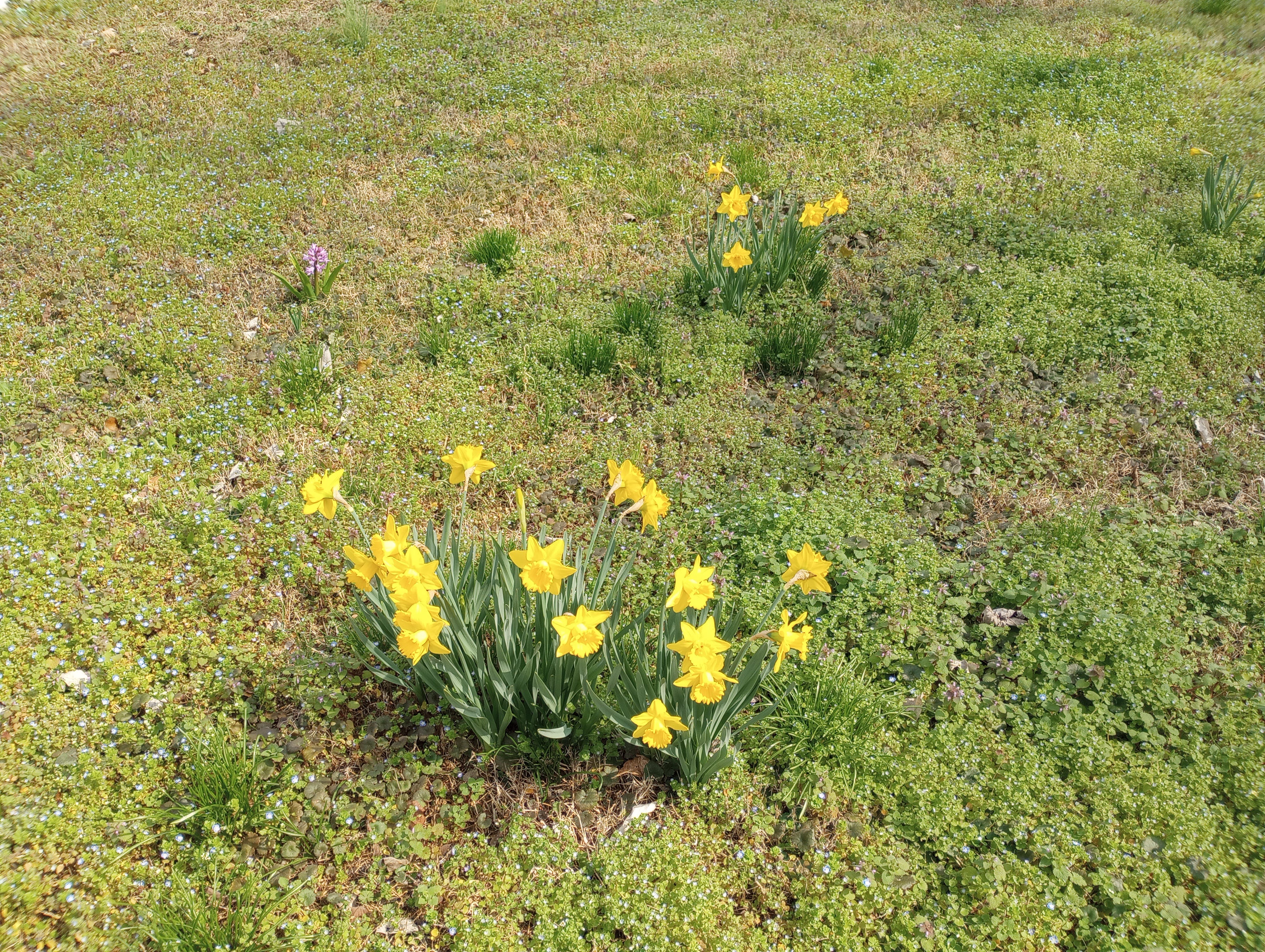
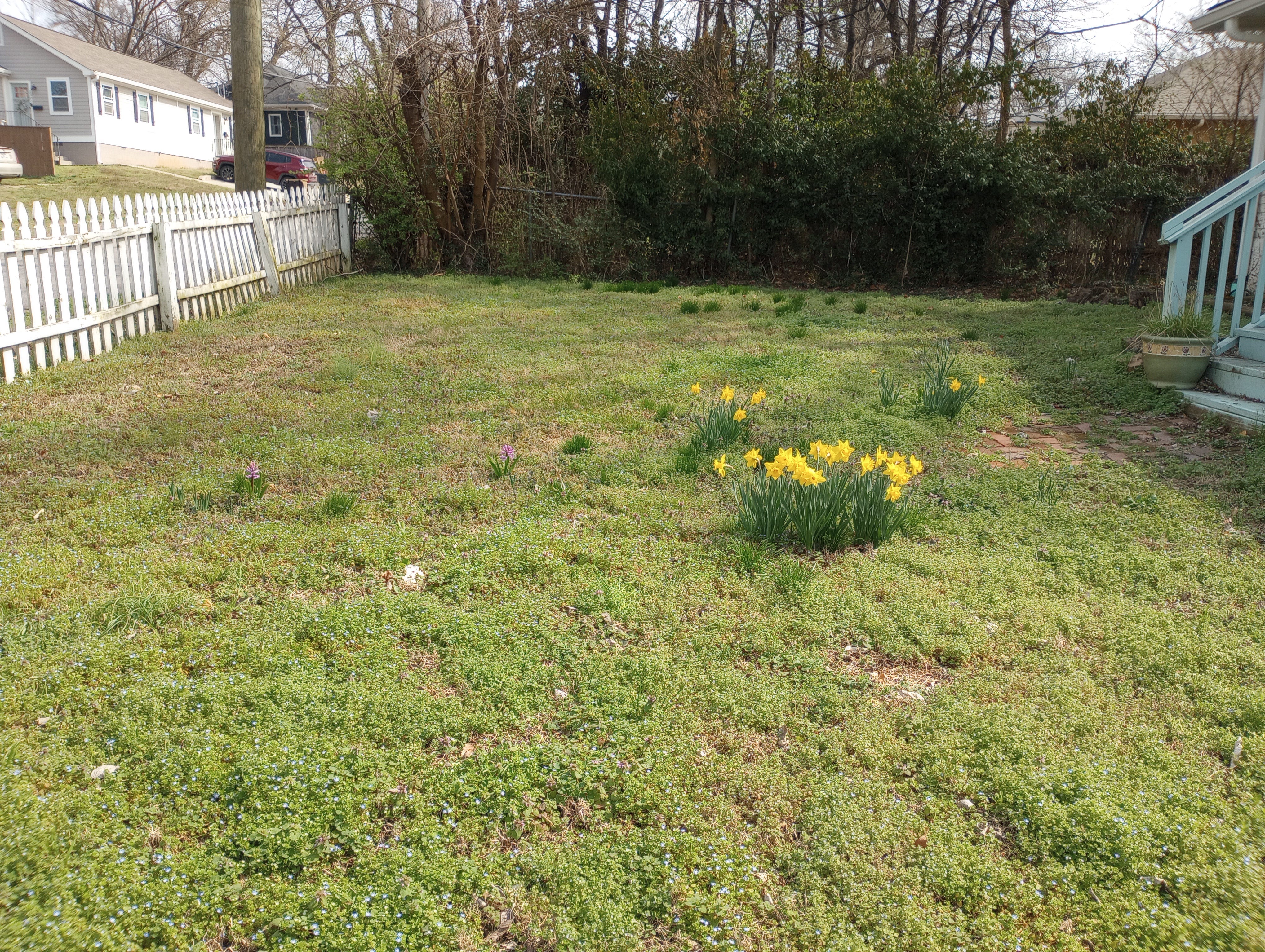
Daffodils all over the neighborhood have popped out. Flowers of all kinds are making their debut, of all shapes and sizes. If I were more knowledgeable about the names of these plants and flowers I would list them all for you… I’m getting there. It’s only March 4th, but spring is happening. The weather is warm, the days are longer, and now the bugs are out.
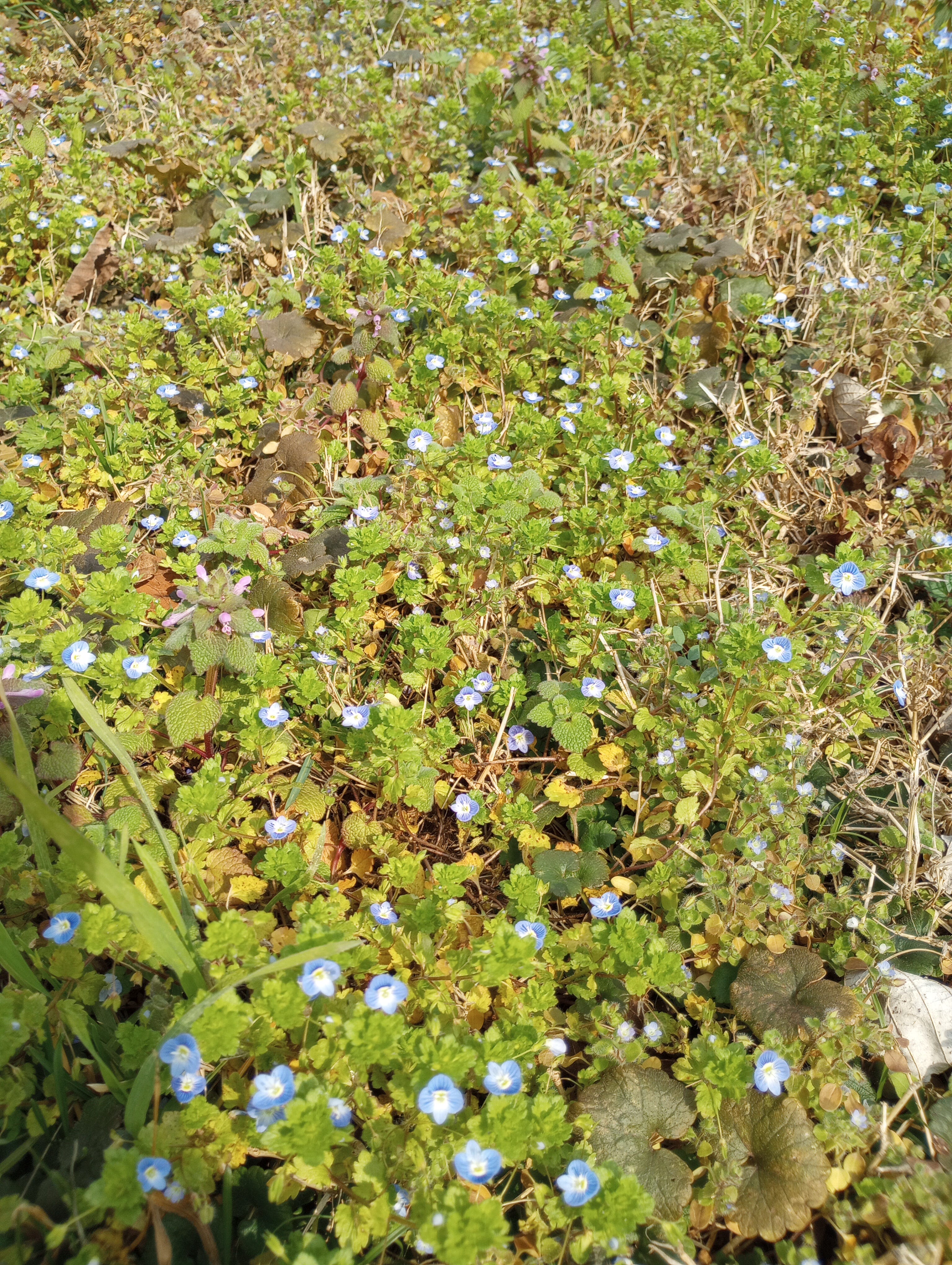
Interesting that some of these plants, they would flower as soon as the weather got warm, even in the middle of February, and then they would just tuck their flowers closed when it got cold again. They can turn them on and off, basically. There is a plant outside of Ugly Mugs right now that does that, with small yellow flowers run all along the stems, and the Persian speedwell does the same thing.
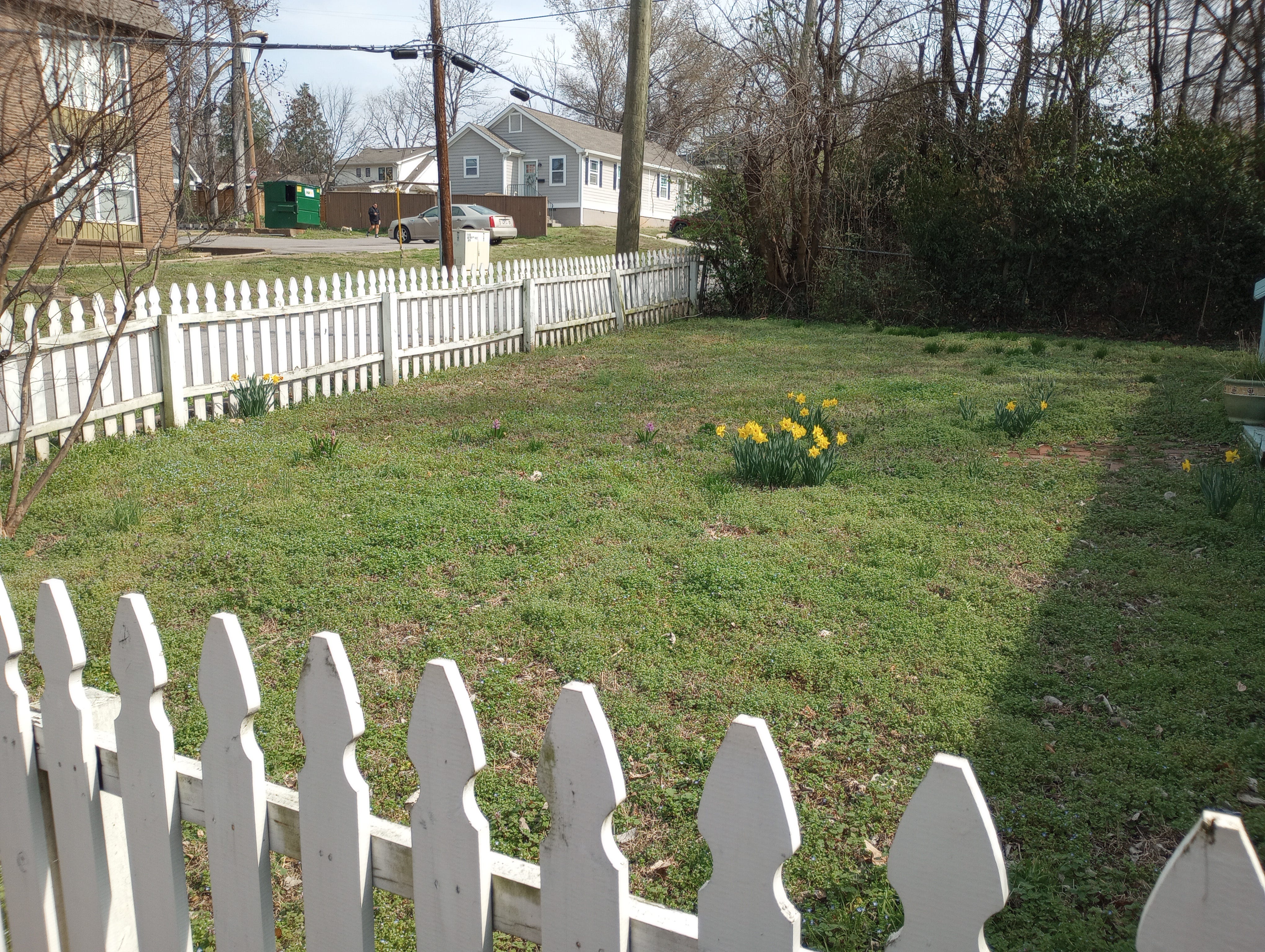
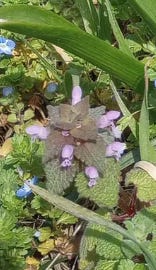
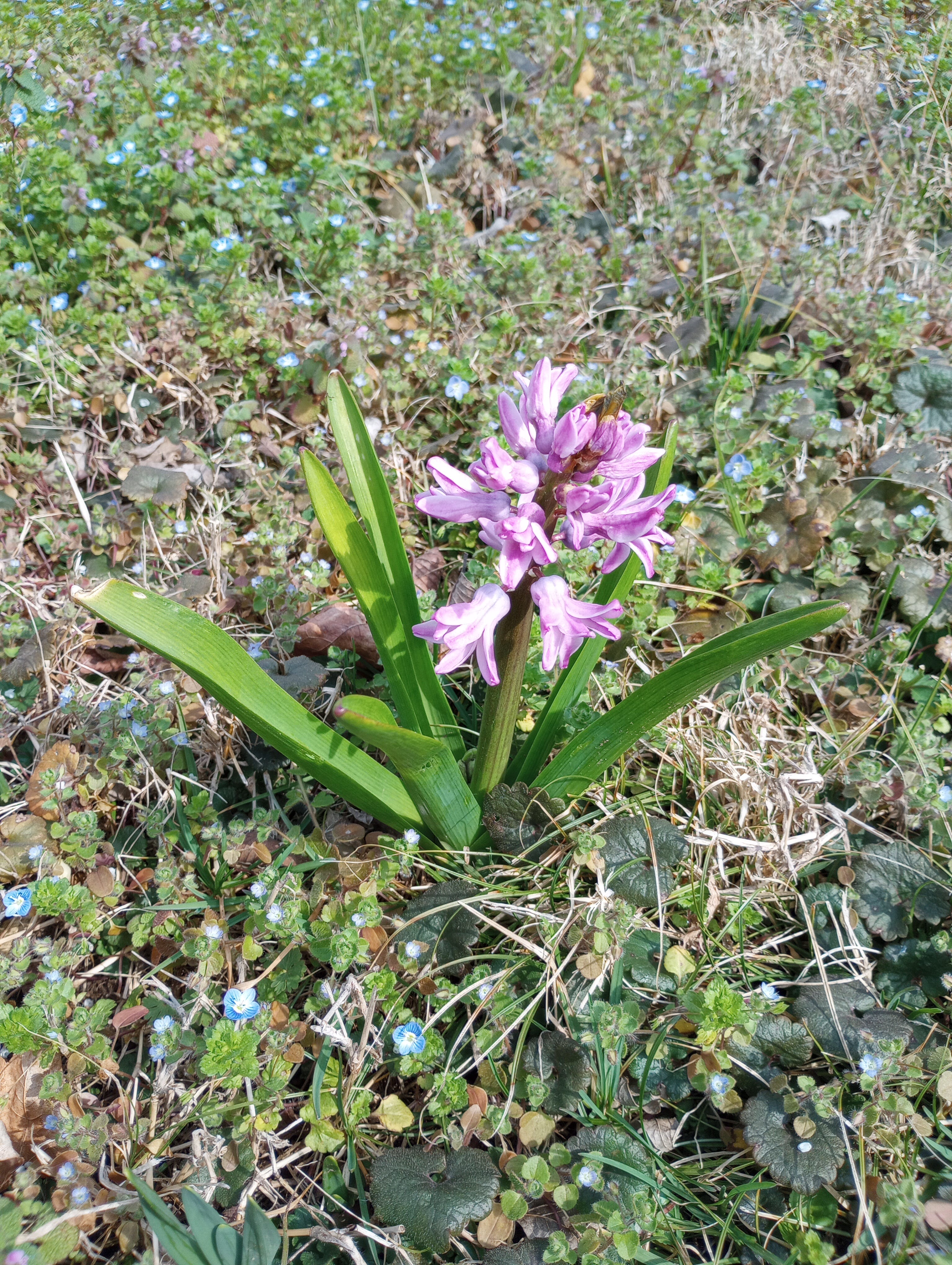
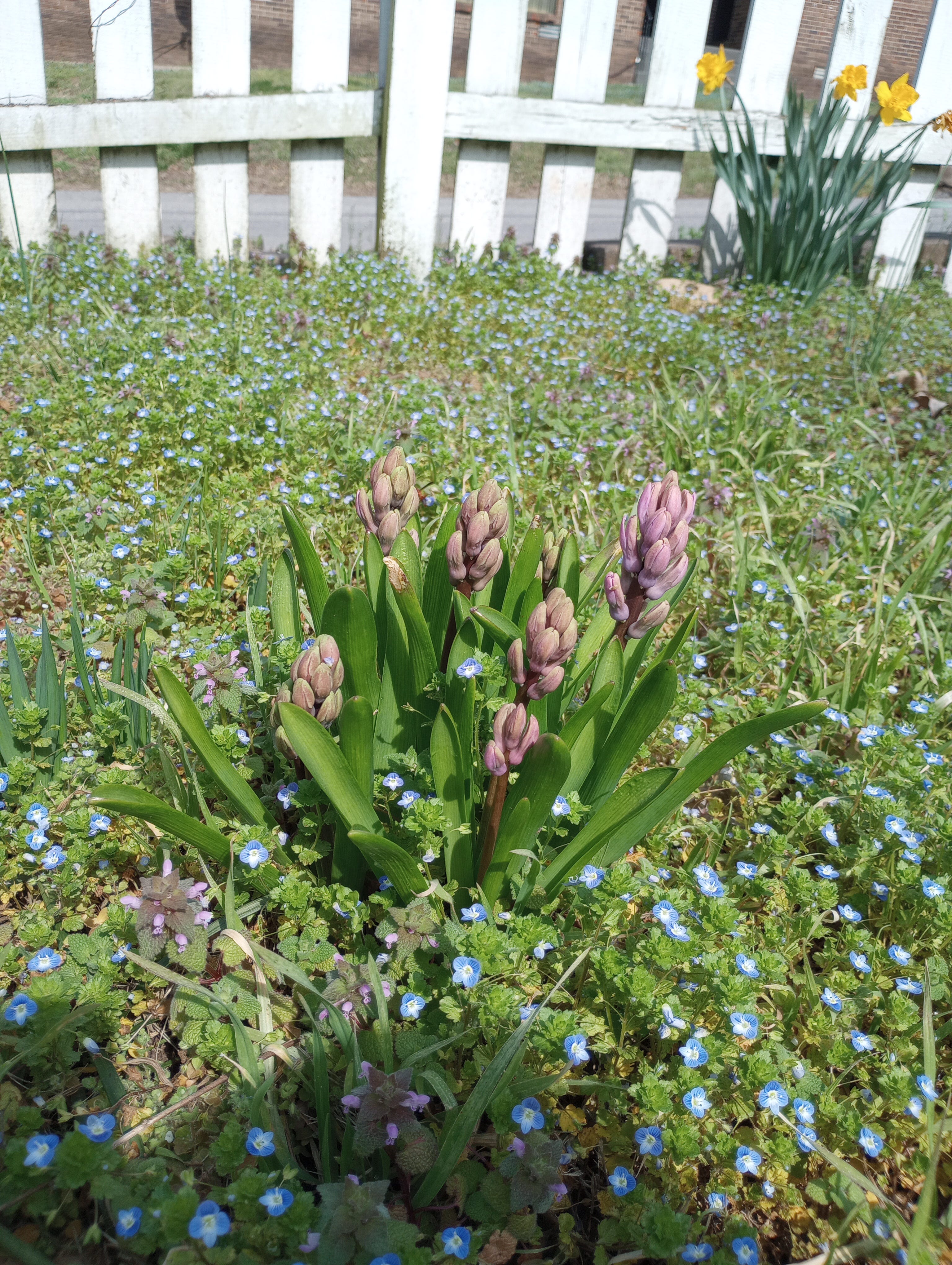
The neighbor’s yard (currently unoccupied as of about a week ago) is absolutely booming. From a distance it may not look like much is happening, but on closer inspection you will see. When I walked over to inspect and take some photos of these daffodils (which are blooming all over town right now), I was surprised to see that the entire yard was in bloom. There are the daffodils, and then there is some of this purple hyacinth (which I just IDed using Google, and I also just learned what all these yellow flowers were – daffodils – yesterday). But the entire ground is covered in a mat of these little blue flowers, which are Persian speedwell plants. There is also a slightly taller, conical plant that has purple flowers, mixed in with the Persian speedwell. This is purple dead-nettle, Lamium purpureum. Both of these plants are native to Europe and Asia, but they are obviously well established here. In this yard, and in mine as well (in the front, which gets full sun) they dominate the ground cover. They may be non-native (invasive? probably so), but surely there is nothing that can be done about them now. Well, to their credit they are at least feeding the pollinators.
With all this blooming, come the bugs. The bugs are here, in full force. And flitting across this veritable meadow (for some reason when thinking about writing this piece, I had a strong urge to use the word veritable, which is strange because I have thought of veritable as cheesy and basically a useless word) were the flies, and the bees, the hornets, and everybody else. For them, this small, unassuming patch of land is a treasure trove and feast.
This is the difference between a turf lawn and a lawn with flowering plants — clover, deadnettle, speedwell. Such as what we have here. This is a great lawn, and it probably wouldn’t need to be mowed, because these plants won’t get that tall. I have a fear that it will be mowed, unfortunately — I have seen this yard mowed before, when it was in a similar state, and they mowed down the flowers, which were at that time the Mirabilis jalapa, the Marvel of Peru. There is some grass mixed in here, but not much, and it will probably just tuft-up.
That’s what happened in the back of our lawn, which handled free growth very well. The front yard got much wilder, and was full of all kinds of invasive plants, and especially a large mass of something invasive popped up in the front (I THINK it was garlic mustard).
The earth is waking up again. (Here in Tennessee.) About a week or two ago (late February) we had a couple of days that were very warm, 60+ degrees, and it brought many of the spring plants into bloom. I thought, if a frost comes, they will be punished – and lo and behold a frost came the very next day. There were two nights of frost immediately after this warm spell, and the plants were punished. I saw all of the flowers, wilted, burned, or, what some of these plants can do, withdrawn. And I felt like they had been tricked, and was sad for them, but guess what? These flowers are hardier than that. Warm weather is here again, and they have rebounded. I wonder how much of an impact that frost did have. They probably wouldn’t tolerate much snow and ice, but if you’re willing to bloom this early in the year, you must have some built-in resistance to the cold. If you don’t, you’d be in trouble.
There is a beautiful tree in bloom right now, possibly a dogwood? that is completely covered in pink/purple blooms, like a Japanese sakura (cherry tree), and swarming with bees. I need to get a picture of that for you.
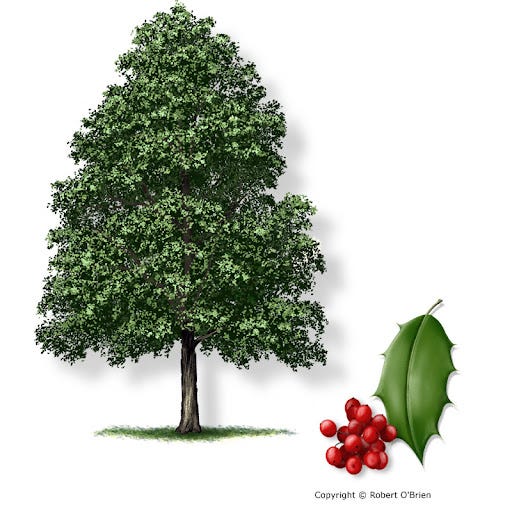
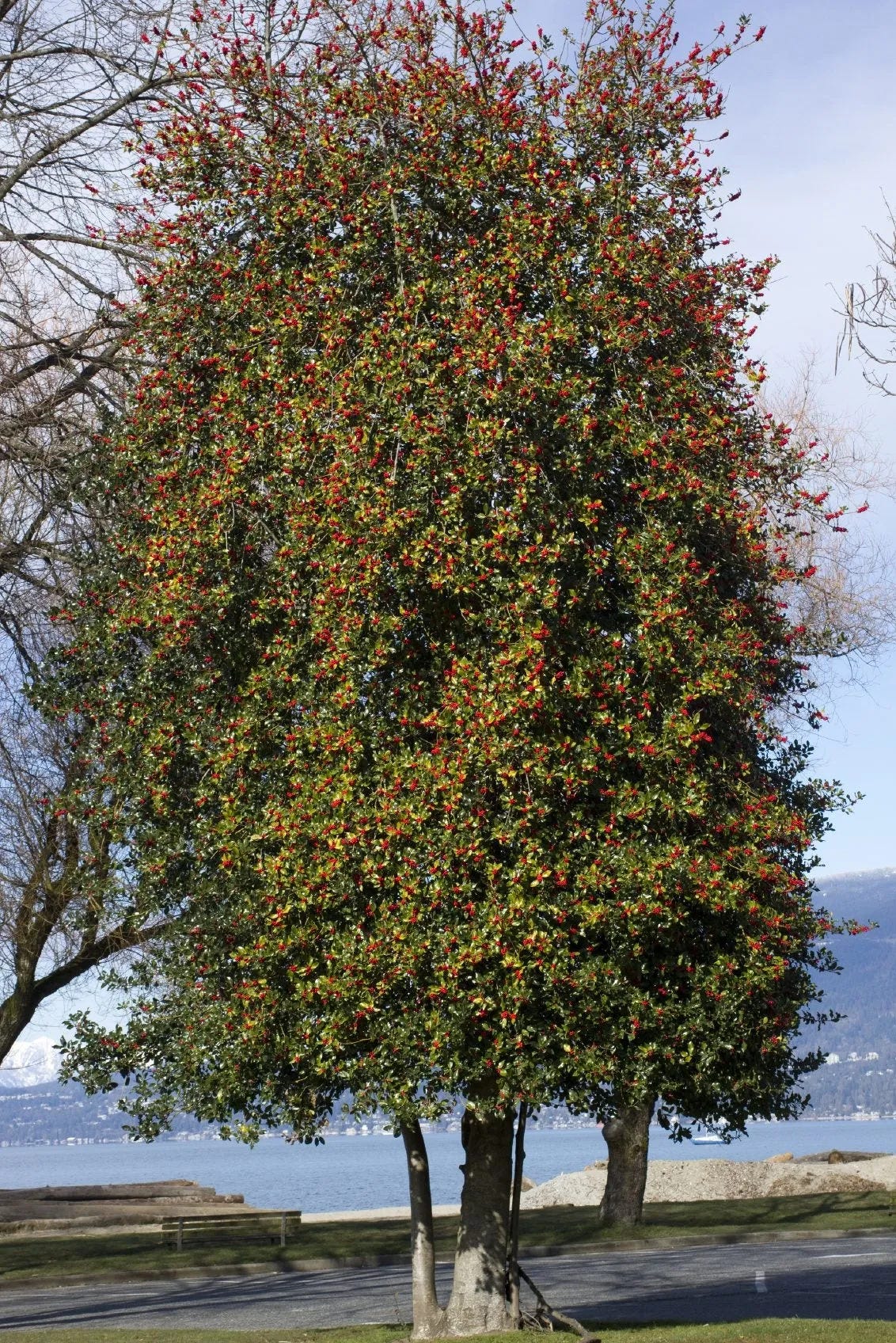
There’s one tree that I’ve been noticing this winter, that’s standing out when everything else has lost the leaves. It’s an evergreen, with spiky leaves, and a cone-shape. It’s a pretty tree, and I’ve been noticing it everywhere now, it’s common in the neighborhood. Once you start to spot something, you see it everywhere. Our duplex neighbor has one in the yard, right in the back (I can see it from my bedroom window) and I finally tried to ID it, and I think I’ve got it. American holly, Ilex opaca. What an awesome tree. It’s unique as an evergreen tree that doesn’t have needles, at least around here.
The bush honeysuckle is the first woody plant to really start its growth. It is ahead of the curve, and has been sending forth fresh green leaves for probably two weeks now, when most other woody plants are still dormant. It’s ahead of the game, ahead of the curve. A terrible, horrible invasive. Along the highway, driving back from my Master Gardener glass, I saw it—just a long stretch, a wall of bush honeysuckle, exclusively, growing, expanding out of the rock. A nightmare sight.
Along the highways, in the neighborhoods, at the park, massive groves, long walls, all bush honeysuckle. And then, it seems that about one in five trees in the neighborhood is infected with either wintercreeper or English ivy. Some of them are smothered with both (like the trees in our yard). These invasive vines really stand out right now because of most things being dormant. The dark green is striking. You can clearly see the extent of their spread.
 HAKUMUSU