
[Note: The photos in the email are compressed and aren’t as sharp. If you want to see the photos in higher quality, read the post on my actual blog site.]
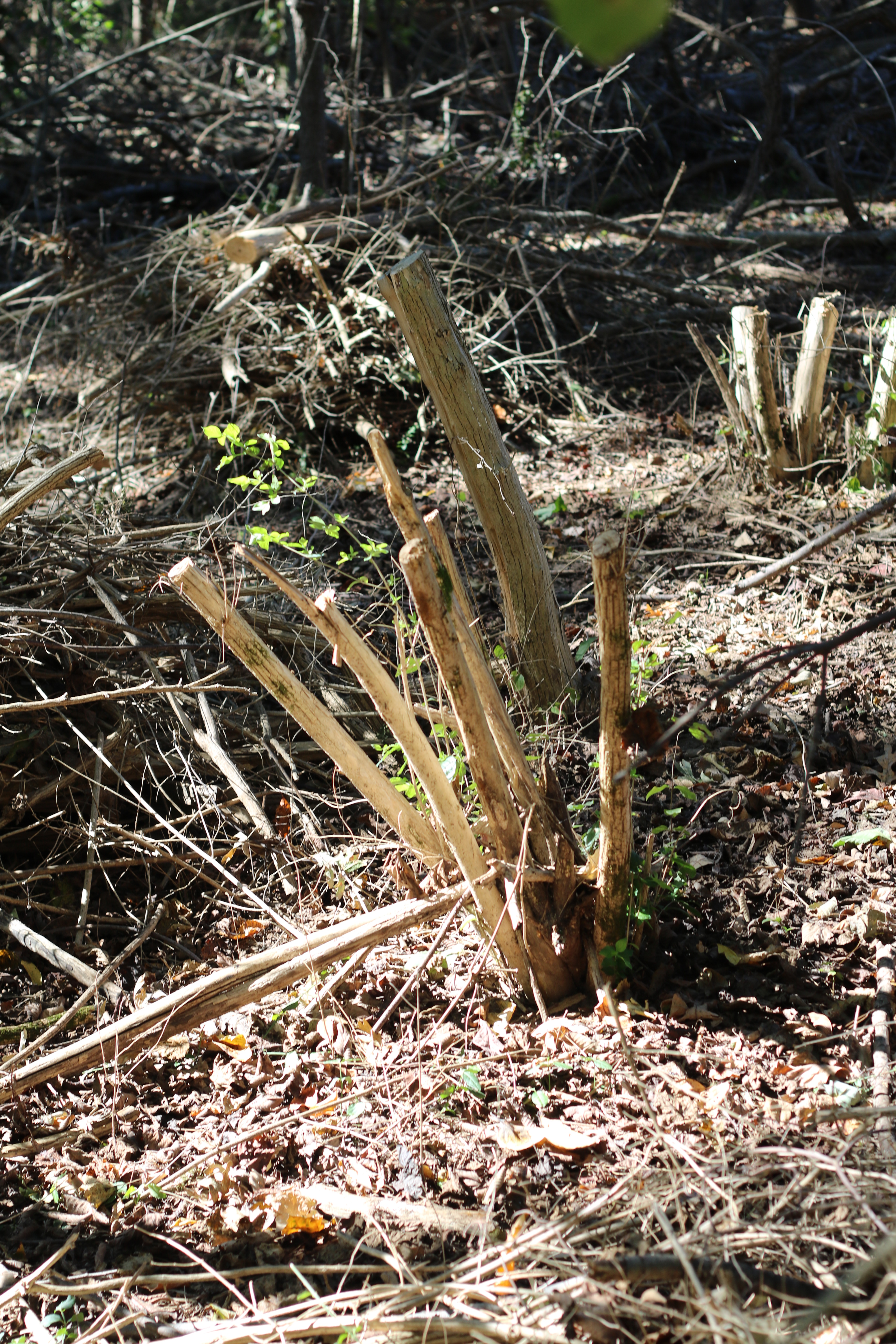
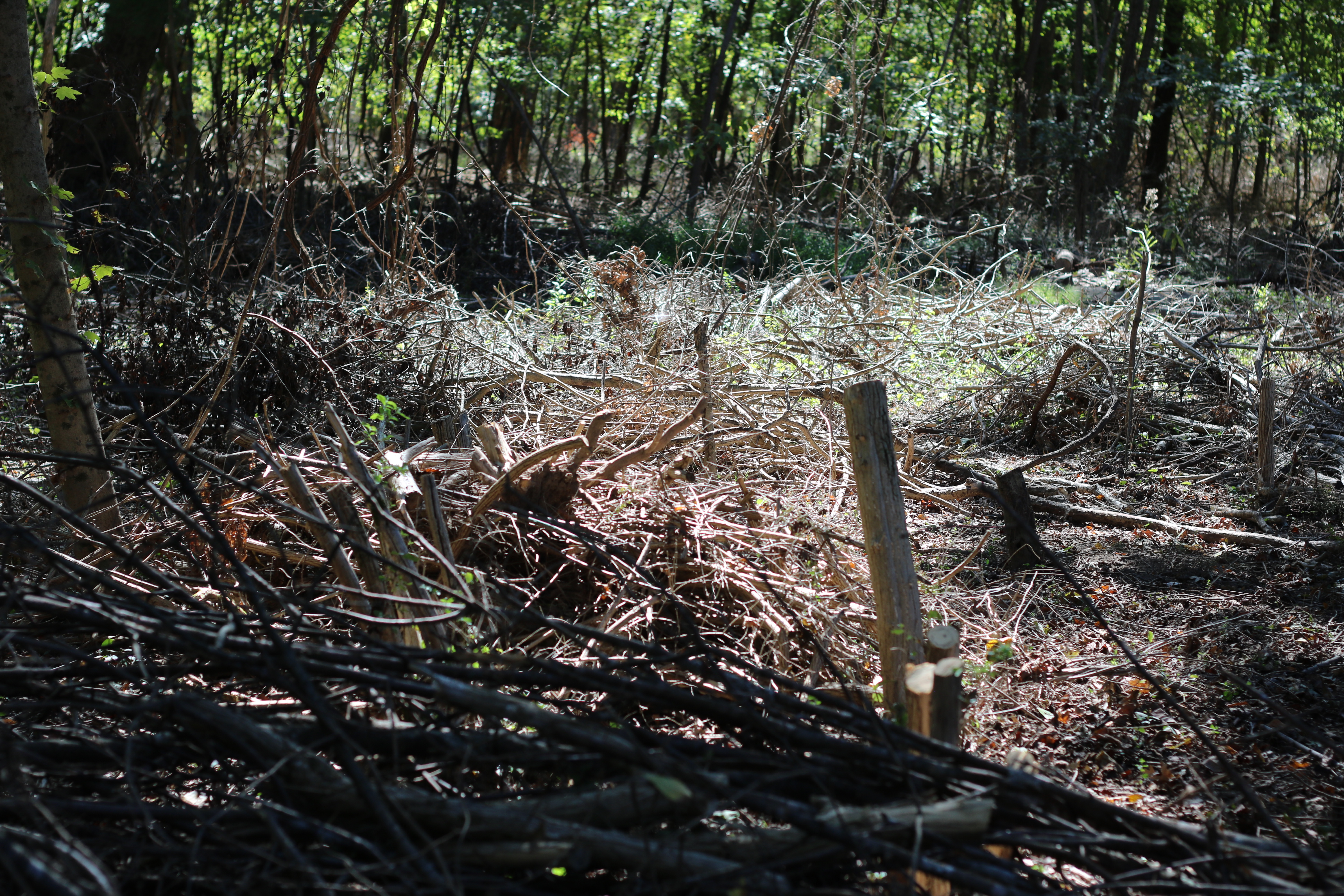
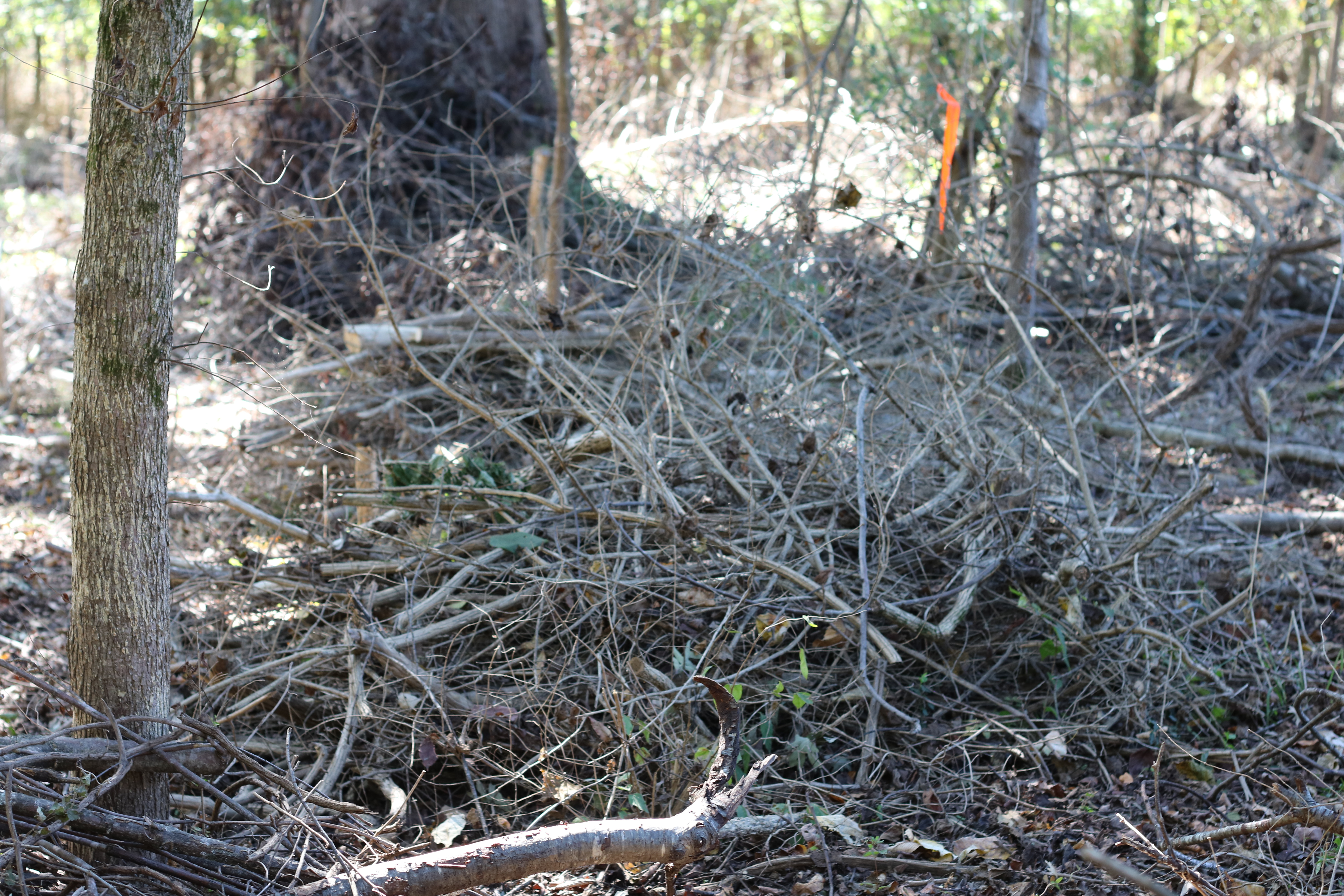
Three days ago now I went to Shelby for my first invasive removal session of the season. We’ve just started up again as the winter approaches. This is prime time for removing these Bush honeysuckles and Chinese privets, as they keep their green leaves and are easy to identify. It’s also not as hot and a lot of growth has died back. I haven’t been in the forest for awhile and with my newfound knowledge, I was able to immediately spy wintercreeper, Japanese honeysuckle, and eventually English ivy on trees and on the ground. Unfortunately, the wintercreeper was everywhere, almost ubiquitously covering the ground, if privet or honeysuckle weren’t taking up the space already. And often, privet and wintercreeper were working together to smother the forest floor.
I used to think, subconsciously really, that there was a clear delineation between “nature” and “human world”. Between nature and civilization, I guess. And that there were places that we would go to, and those were the nature places, and then we would return to the non-nature, the constructed, civilized, human habitat. I think that now I feel much more that we are truly in nature all of the time, whether there is almost no “nature” remaining (in a totally constructed city), or we are in the suburbs, whereever we are. Even in a city, nature is there. Pigeons, insects, plants, growing in cracks and crevices. We are always in nature, whether we really realize it or feel it or not.
I think the flip-side of this is that our “nature” is also not perfectly separate from our civilization, and our activities bleed into these nature spaces as well. The forest at Shelby park once seemed to me to be a bastion of nature haven, a place to get away, unaffected and isolated from the hubbub and artificialness of human society. But, now that I realize it is so covered in plants that we have brought with us, and it is so affected by our behaviors, it is not really a removed place anymore. It is an affected and disturbed habitat.
Our properties are the same. We have a neighborhood, we have our roads, and our downtown, but all of this was built on top of and in an ecosystem, and that ecosystem is still here, albeit heavily affected and disturbed.
I have started foraging. I feel that this is a major evolution, a milestone in my naturalistic journey. The plantain weed is edible, I think I mentioned that, (what the caterpillars were eating), that was sprouting up in my yard and is all over the neighborhood. And not only is it edible, it’s so good for you that it has an article on Healthline (popular internet health site). I was so bored at the climbing gym the other day that I finally picked some and tried it out. There was plenty of plantain weed in the patch of grass outside of the gym, and I plucked it, washed it in the bathroom, and ate it raw. It was pretty good, although some of the leaves were really astringent (bitter and dry). Then, that evening when I got home, I plucked it out of my garden, boiled it up, and ate it that way. It was much better, and almost exactly like eating spinach, with a hint of arugula flavor. Parker had asked if I was going to make a tea, and so that inspired me to also save the water and drink it. That was great too, like a weak green tea.
It was really hitting me then, that I was getting a fresh vegetable, free, harvested myself, and that was growing wildly in my yard. I have a whole patch of it, it all just popped up, and once the caterpillars were done farming it, it’s grown freely and there’s tons of it for me to harvest. For the last four days I’ve gone out there and plucked some, and thrown it in with my pasta. Free veggies, and the only thing I had to do was know that I could eat them. That crucial piece of knowledge.
Walking home yesterday, I noticed some berries on vines hanging over the neighbor’s fence, and they looked like grapes. I went home, searched it up online, and made sure it wasn’t any kind of poisonous lookalike, examined the seeds, and decided that they were grapes, and I ate some. They were sweet and delicious, much like blueberries. Were those wild, or had they planted them? I wonder. They’re just hanging over the fence by the road, intermingled with Chinese privet and other random plants. I wonder what the vine looks like on the other side of the fence. I know we do have wild grapes around here, called Muscadines.
Walnuts and acorns are also falling abundantly right now. On the same walk, I had stopped to pick up some walnuts that were all over the road. There were two older neighbors talking to each other in their driveways across the street, and I heard the one guy say, “Those are walnuts,” to his neighbor (they must have been watching me), and his neighbor said, “Those are walnuts???” Yep, they’re walnuts, and if you know how to prepare them, you can have free local walnuts, to eat and enjoy, bounty of the earth. Walnuts are pricey, too.
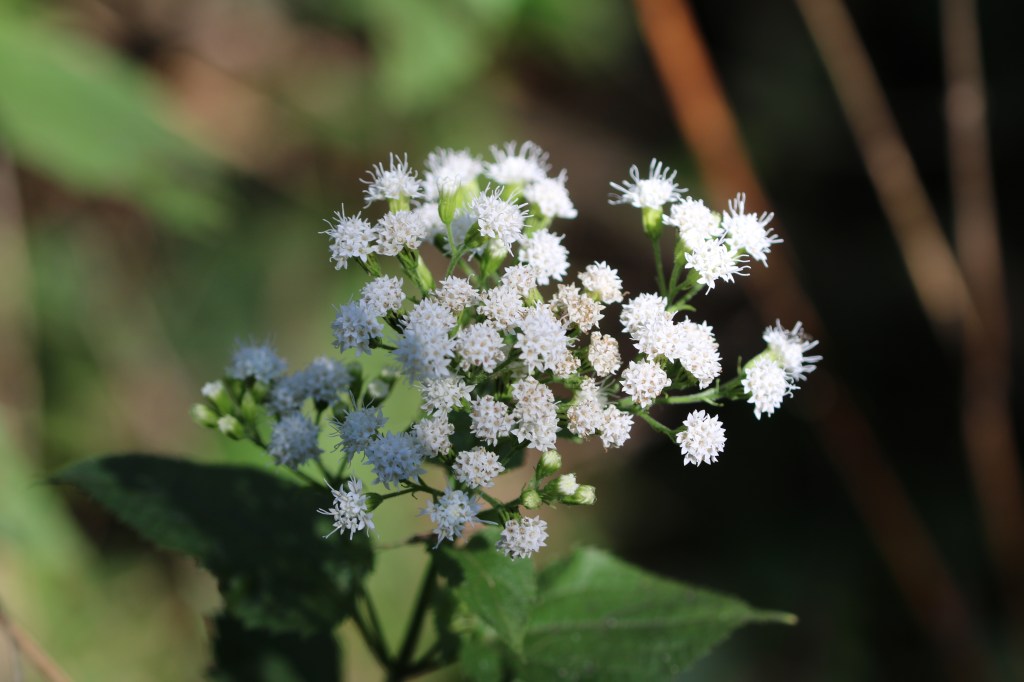
I spied many interesting things during our Shelby park volunteer session, and so yesterday I went back and did some photography. Lots of vines, some local wildflowers, and one interesting plant, the snakeroot (Ageratina sp.). One of the volunteers, Will, he pointed out this large patch of white flowering plant, that had popped in an area of the forest that we had cleared previously. Sunlight could now get through, and this snakeroot had taken hold of the space. Cool plant, and apparently killed thousands of settlers when they were getting started here in America, as nobody knew that it was toxic. It has secondary toxicity, where the toxins of the plant saturate the milk and meat of animals. Wikipedia says that Abraham Lincoln’s mom may have died from snakeroot poisoning. When I was reading that, I thought, “I bet the Native Americans knew”, and then the article said that the person who figured out it was toxic learned it from a Native American. So the story goes.
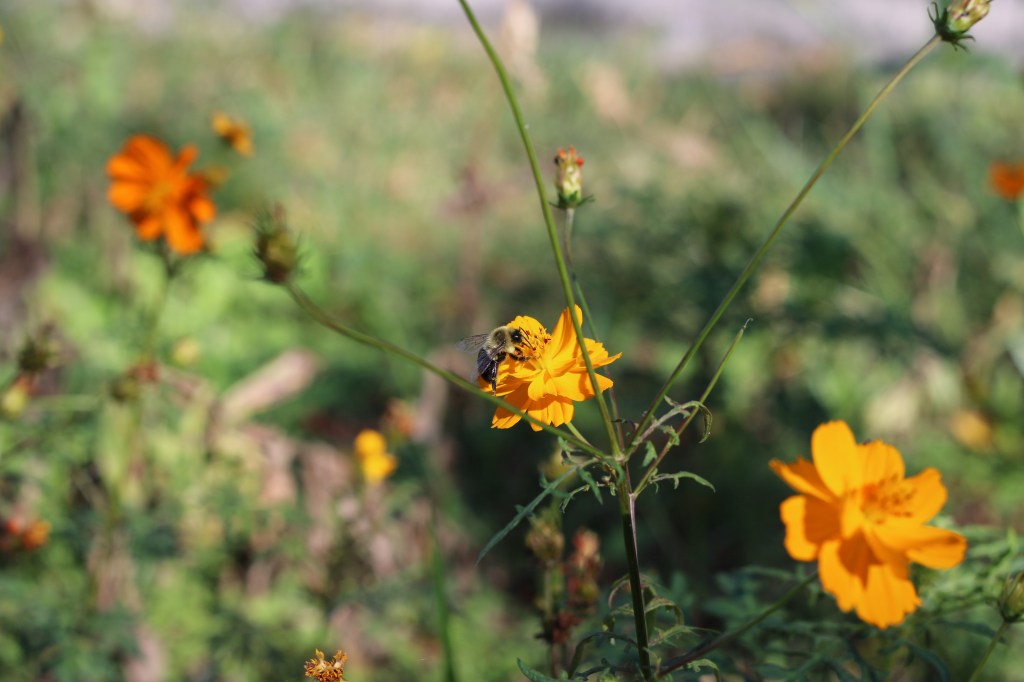
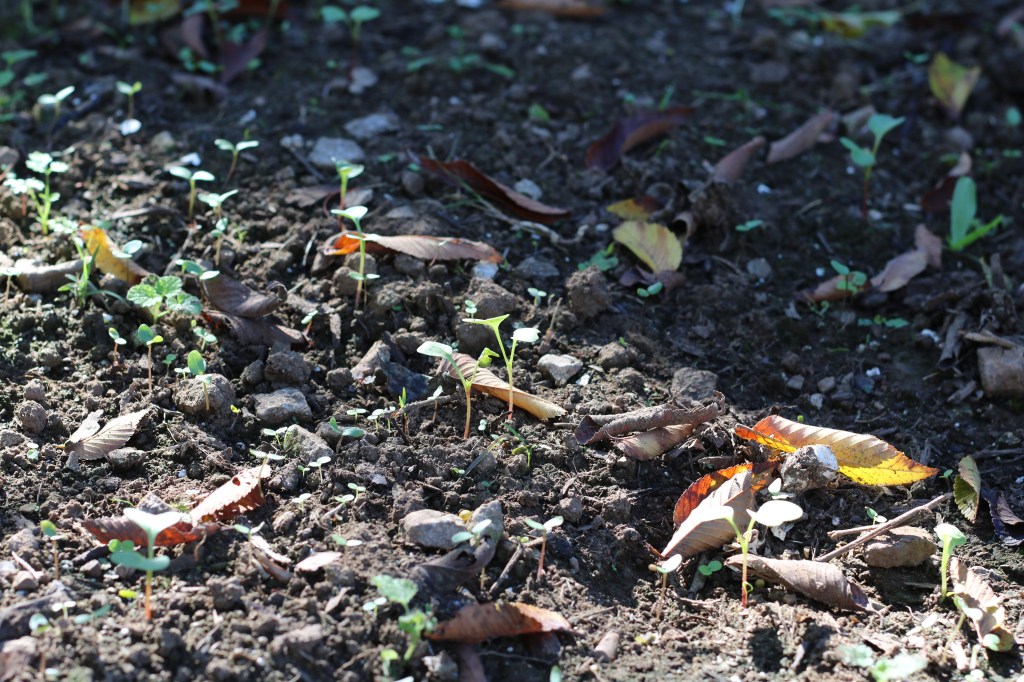
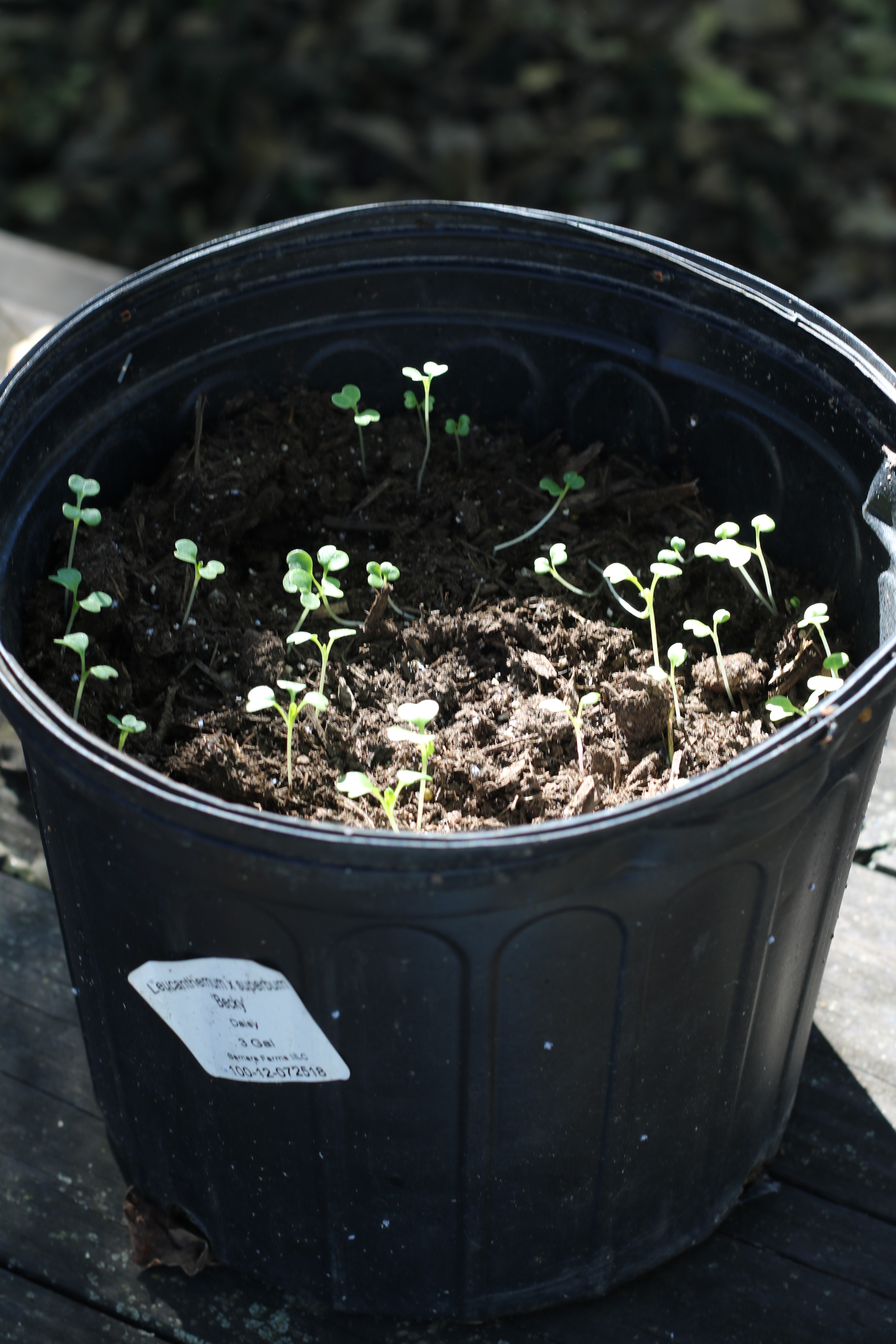
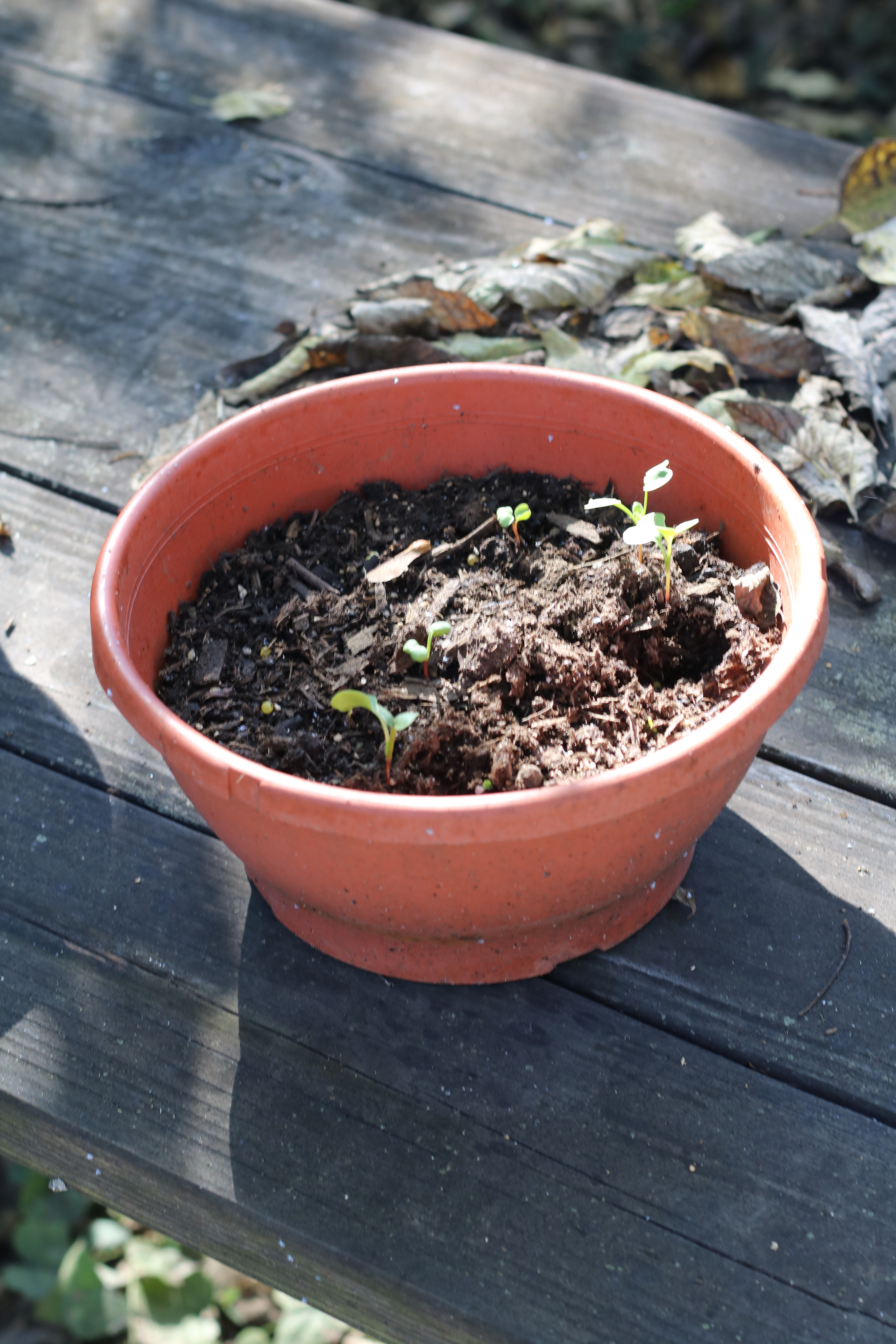
Garden Updates


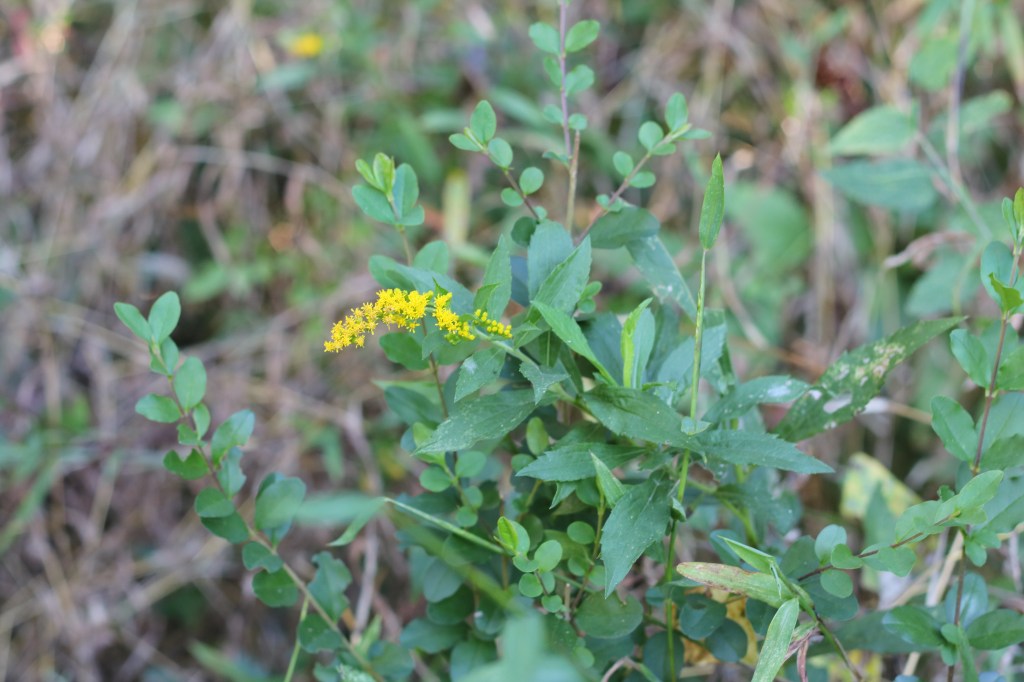
Sightings From Oct. 15 Shelby Trip
Goldenrod (Solidago sp.) [TN native]
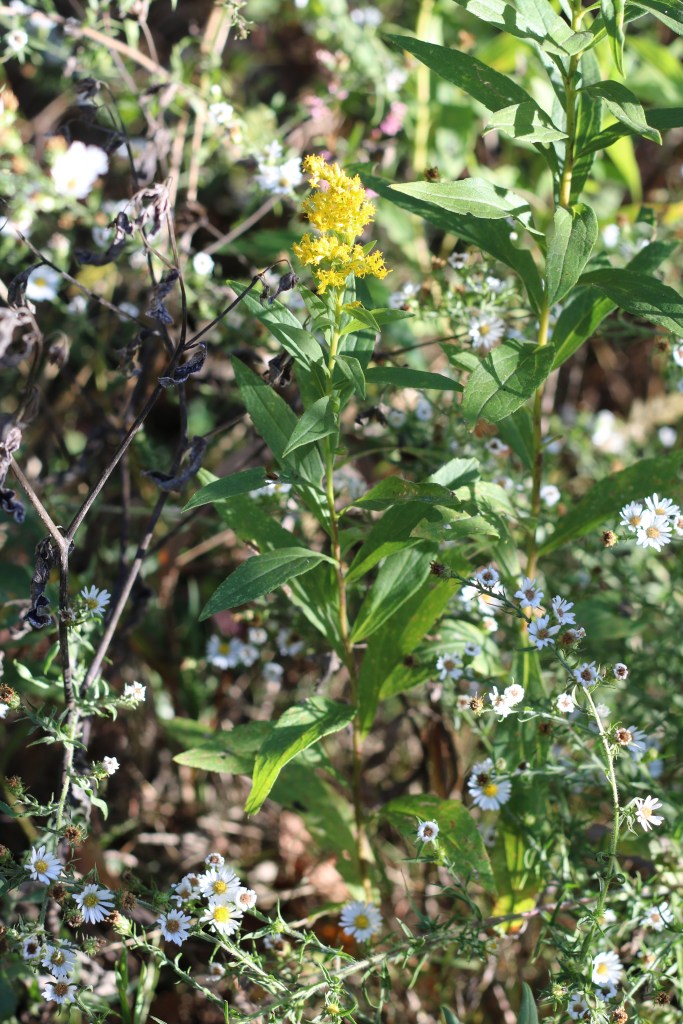
Frost aster/White heath aster (Symphyotrichum pilosum) [TN native]
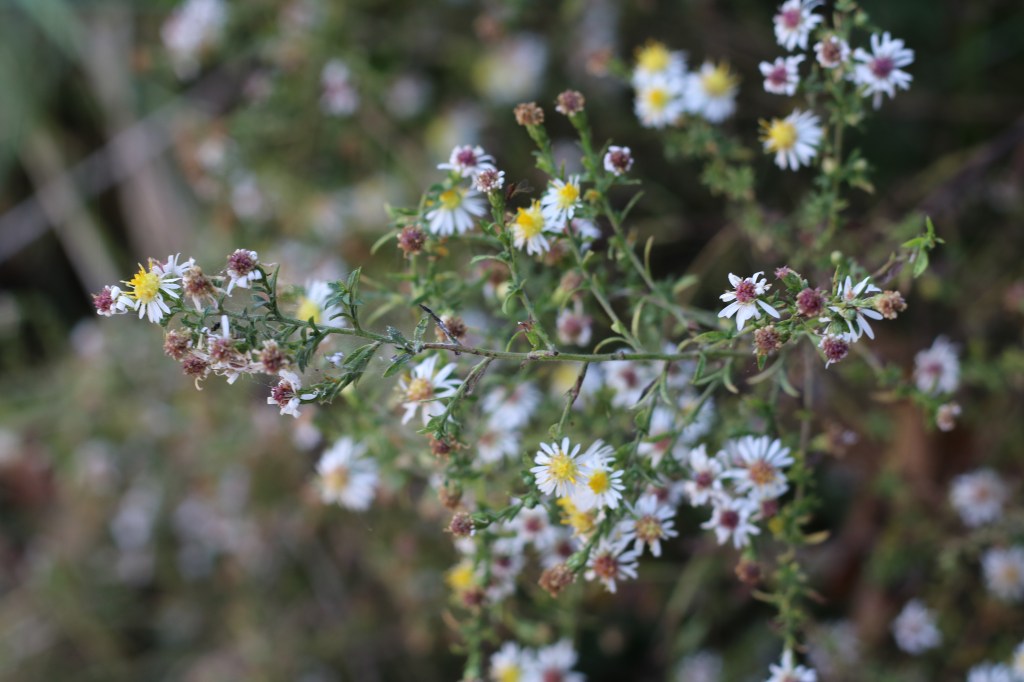
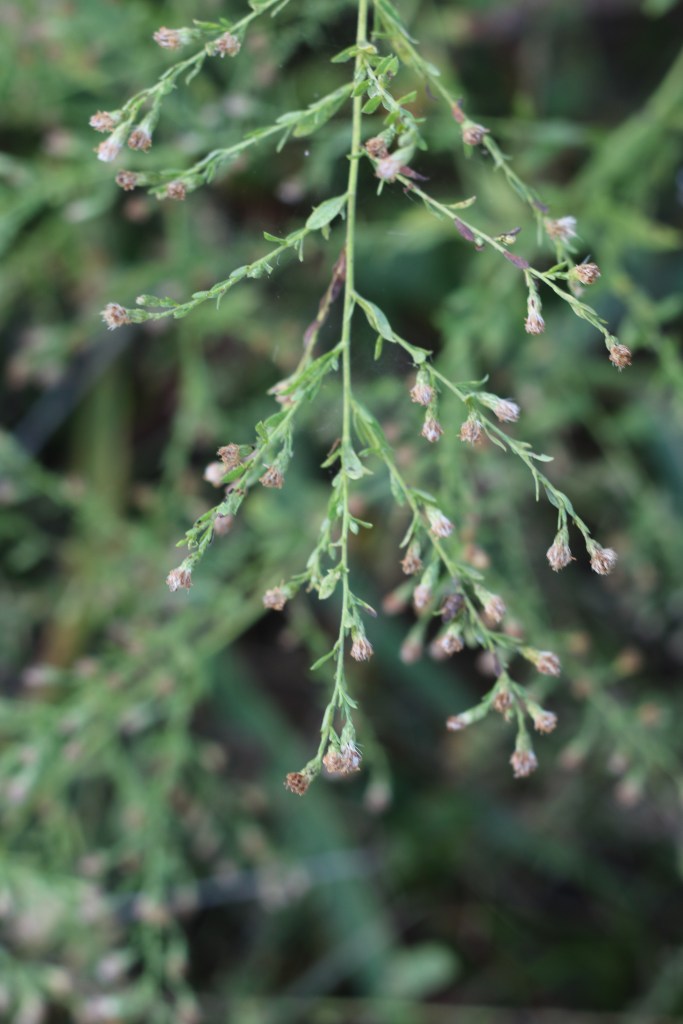

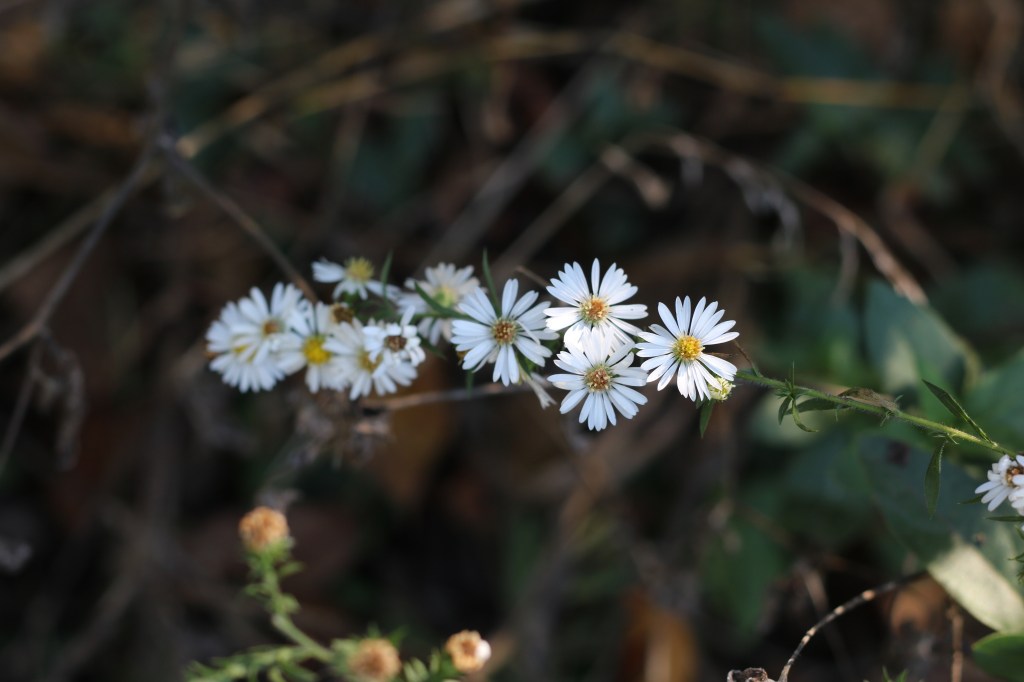
Sumpweed???? (Iva annua) [TN native]
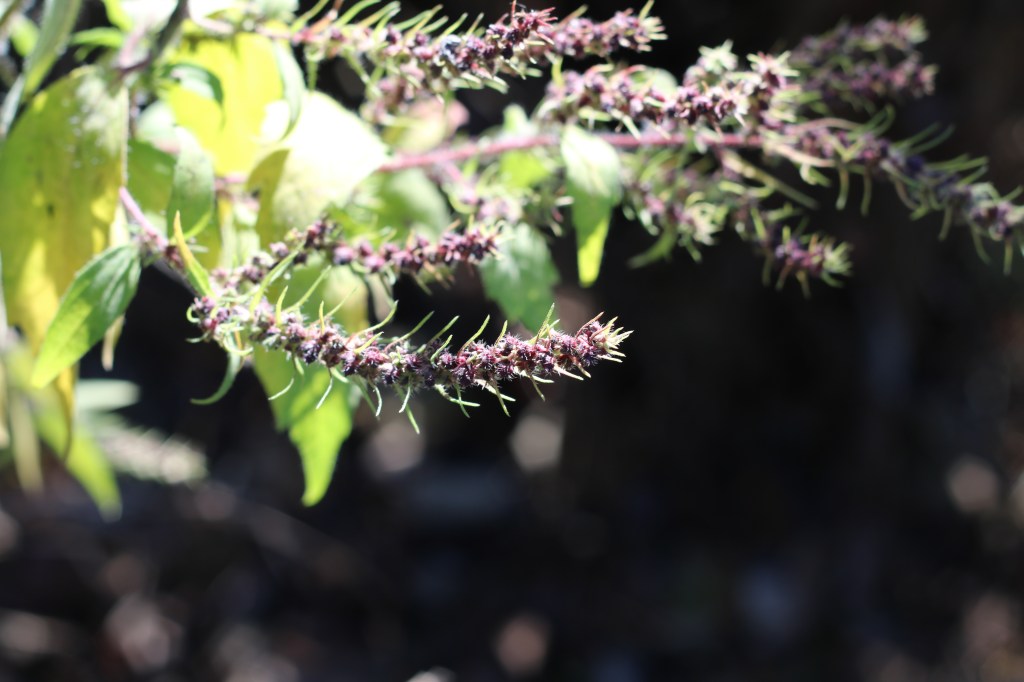
Frostweed (Verbesina virginica) [TN native]


Snakeroot (Ageratina altissima) [TN native]
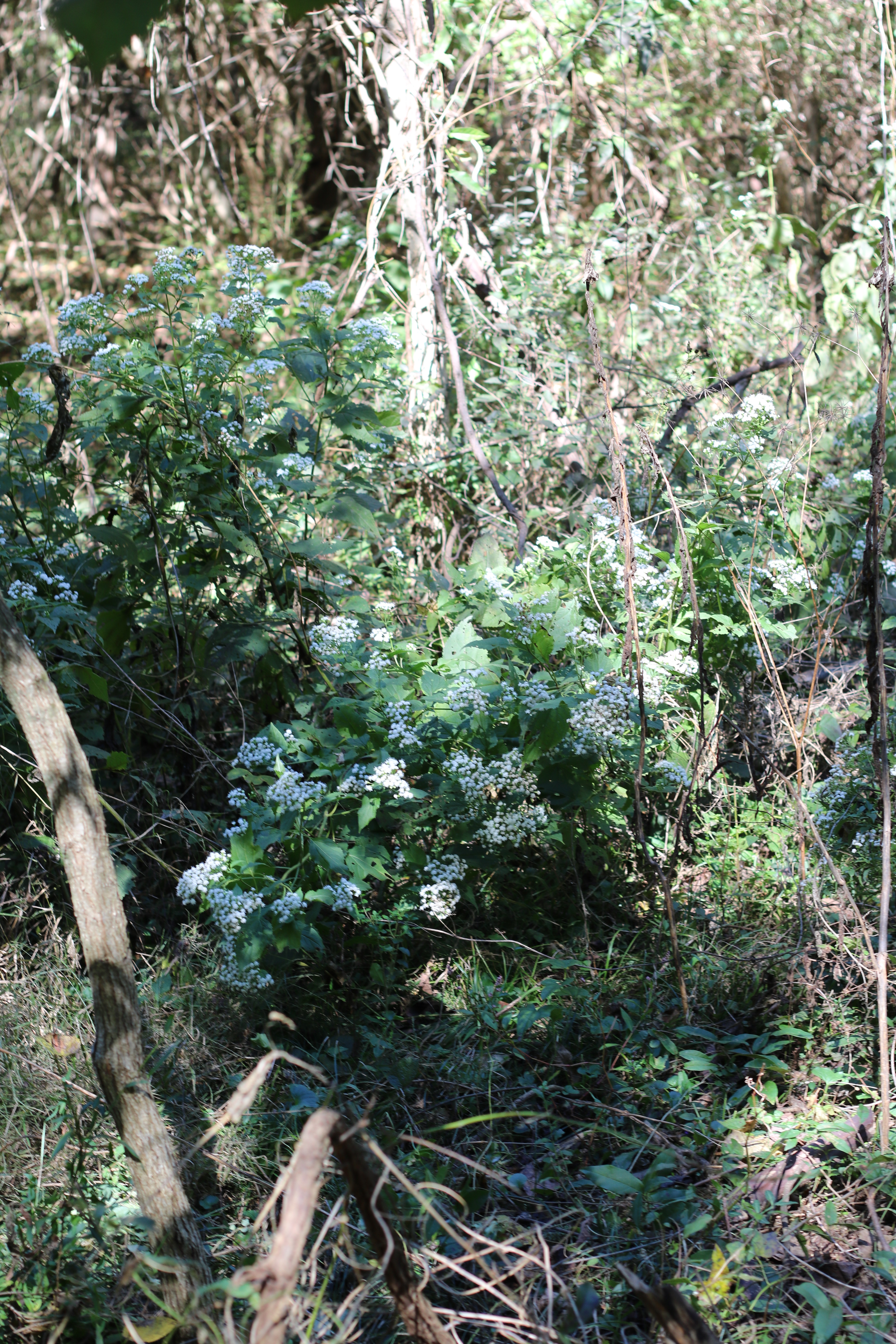


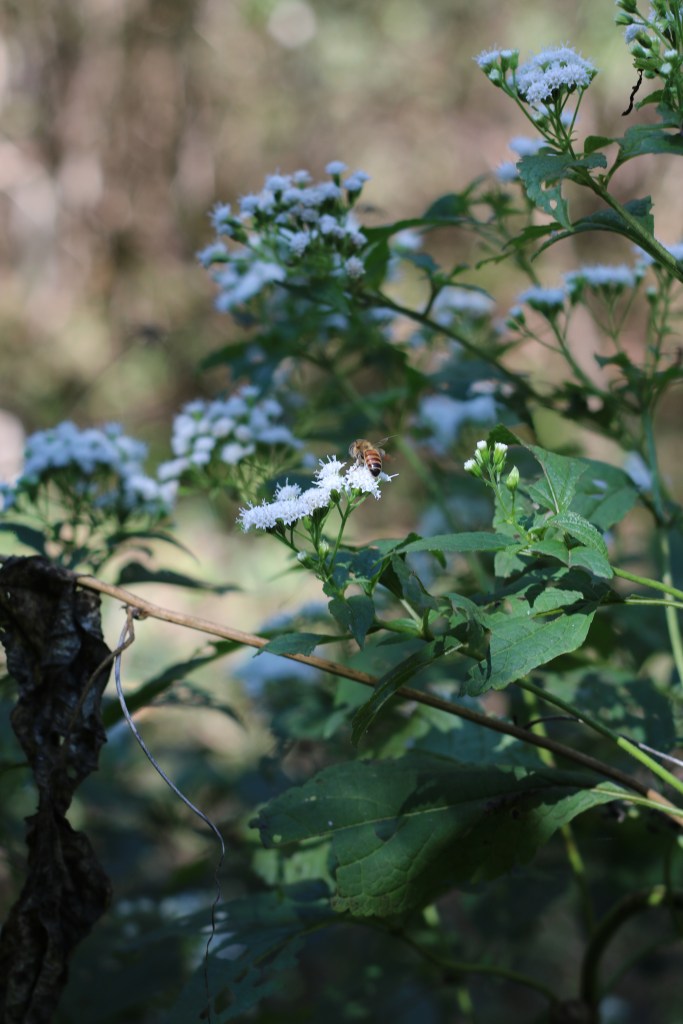

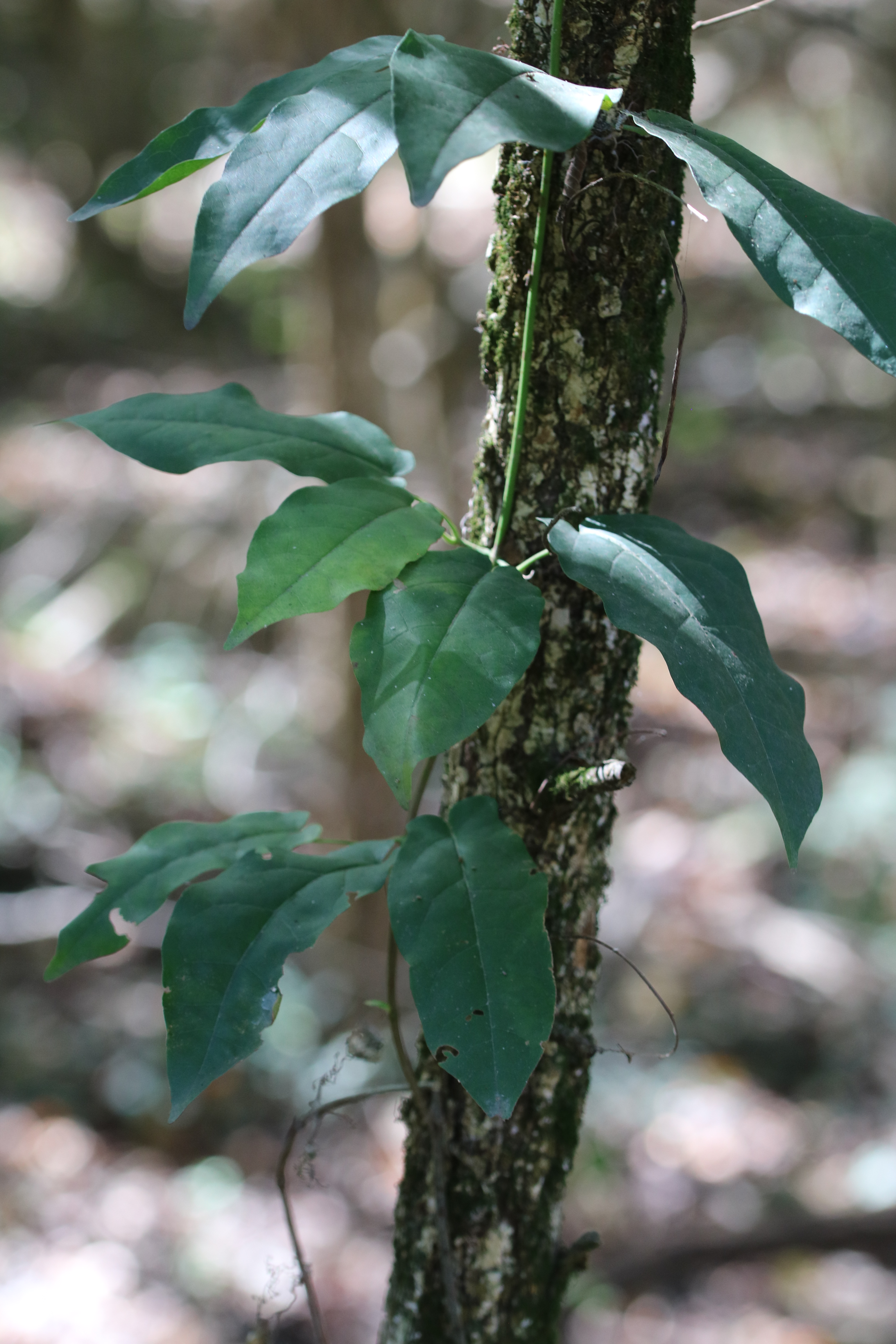
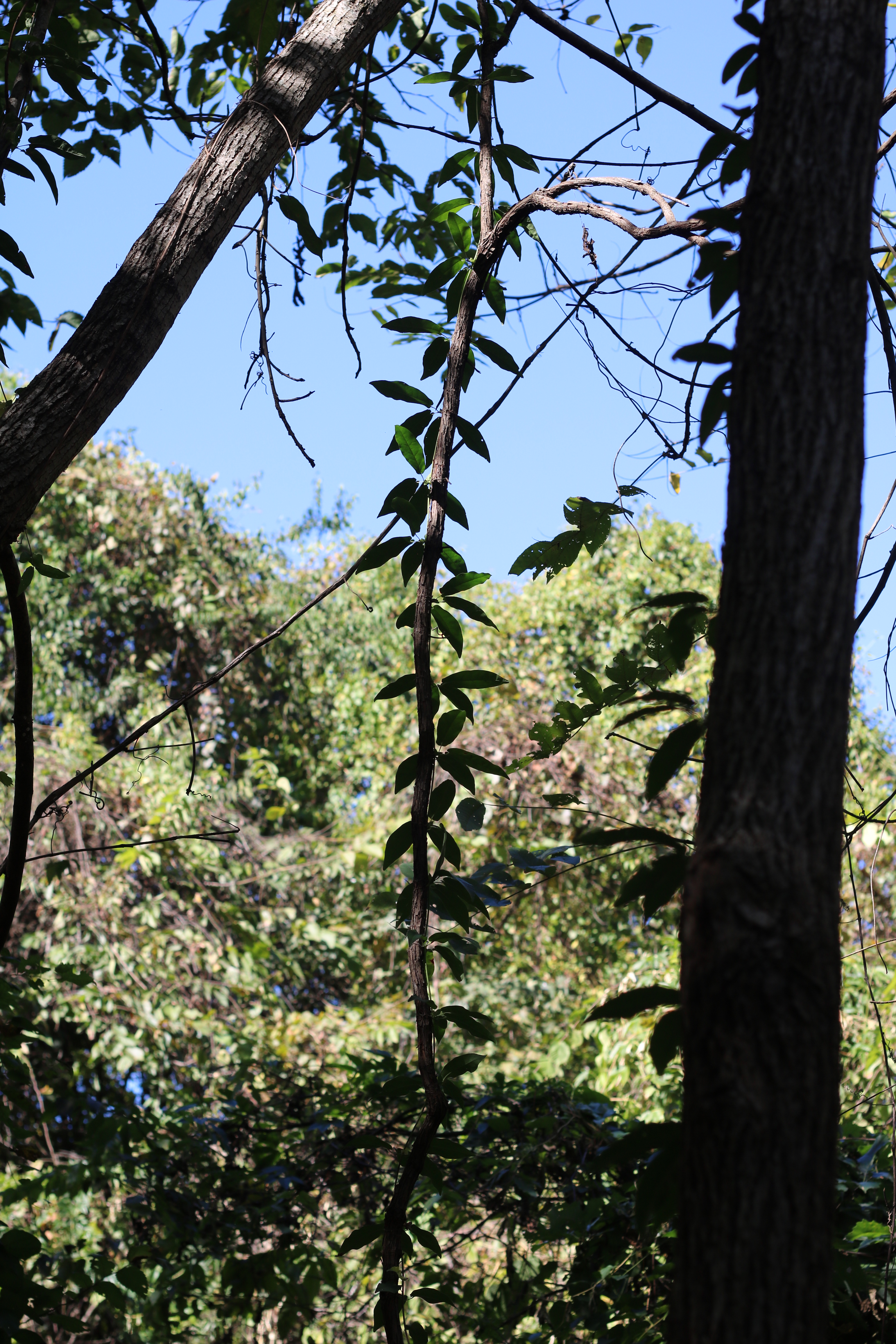
Japanese honeysuckle [TN invasive]

Crossvine (Bigonia capreolata) [TN native]

Question Mark butterfly (Polygonia interrogationis) [TN native]


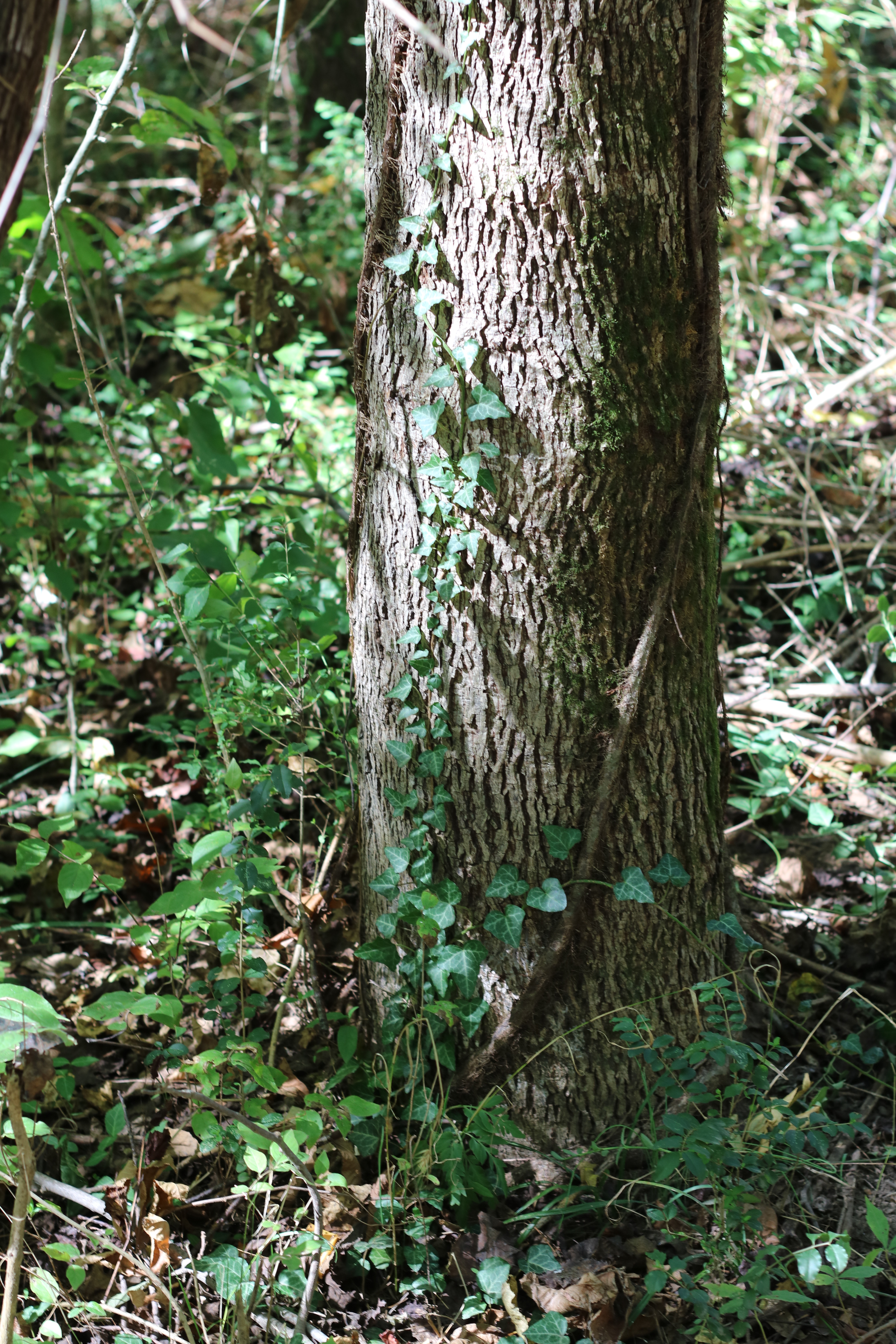
English ivy (Hedera helix) [TN invasive]

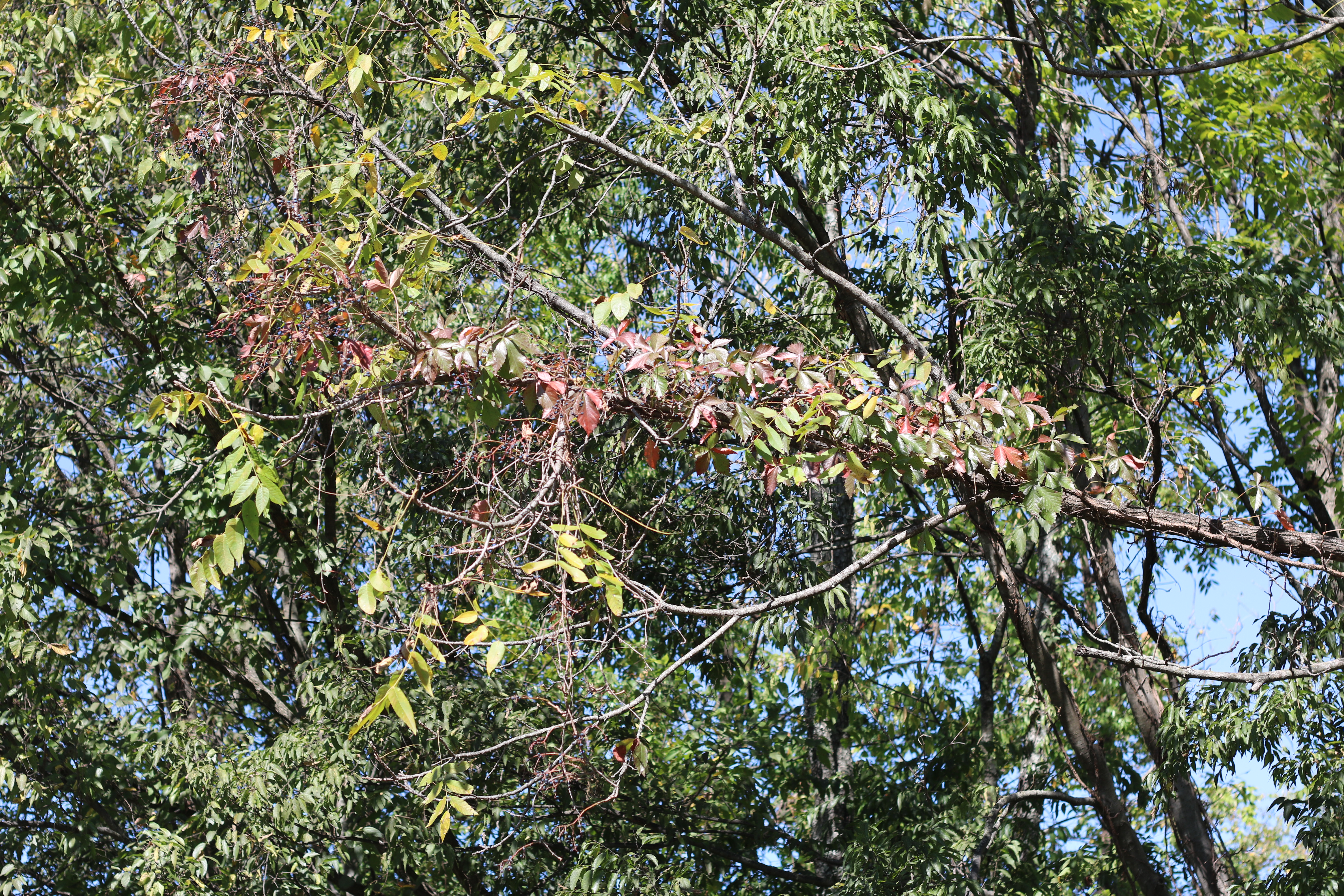
Poison ivy? (Toxicodendron) [native]


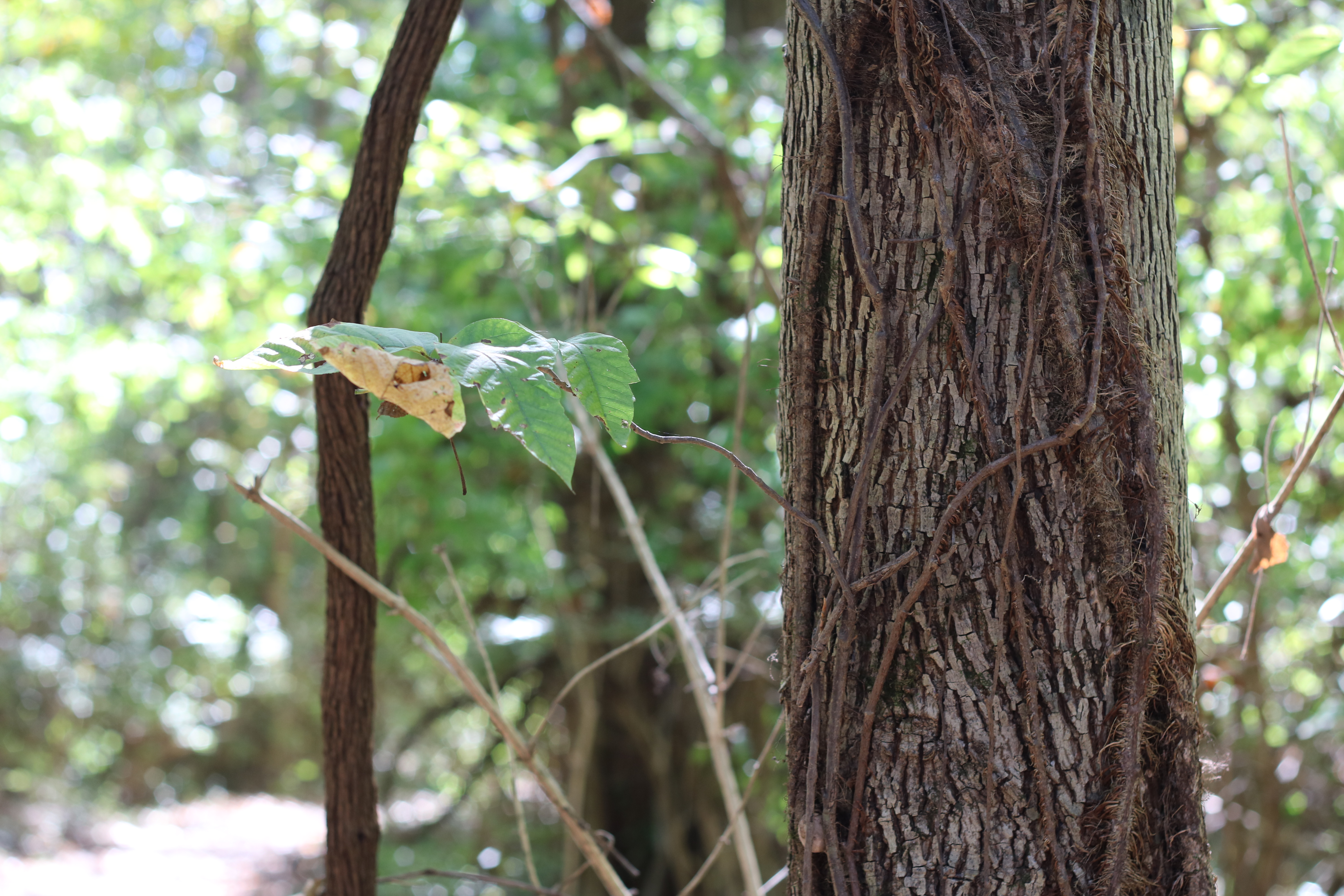
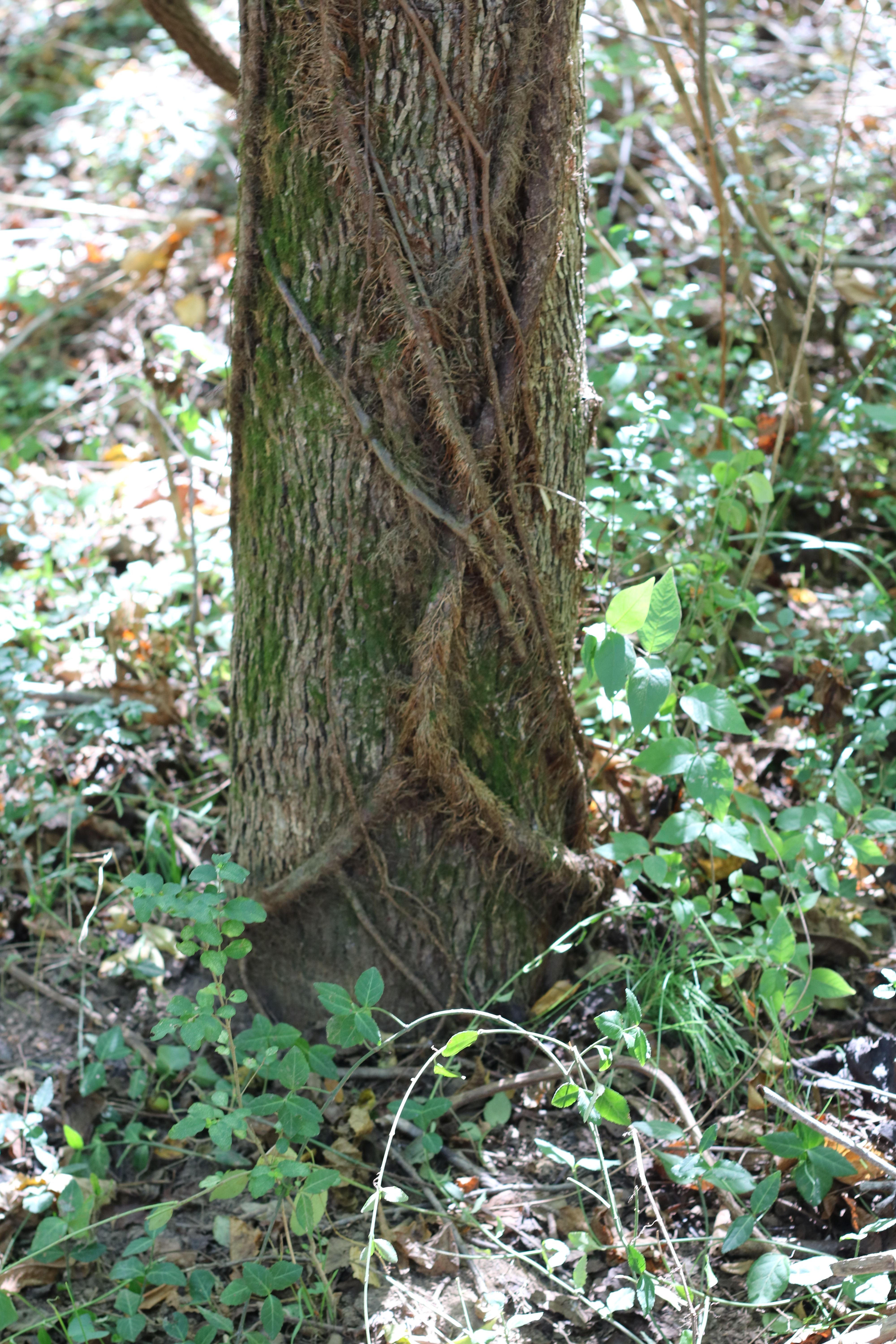
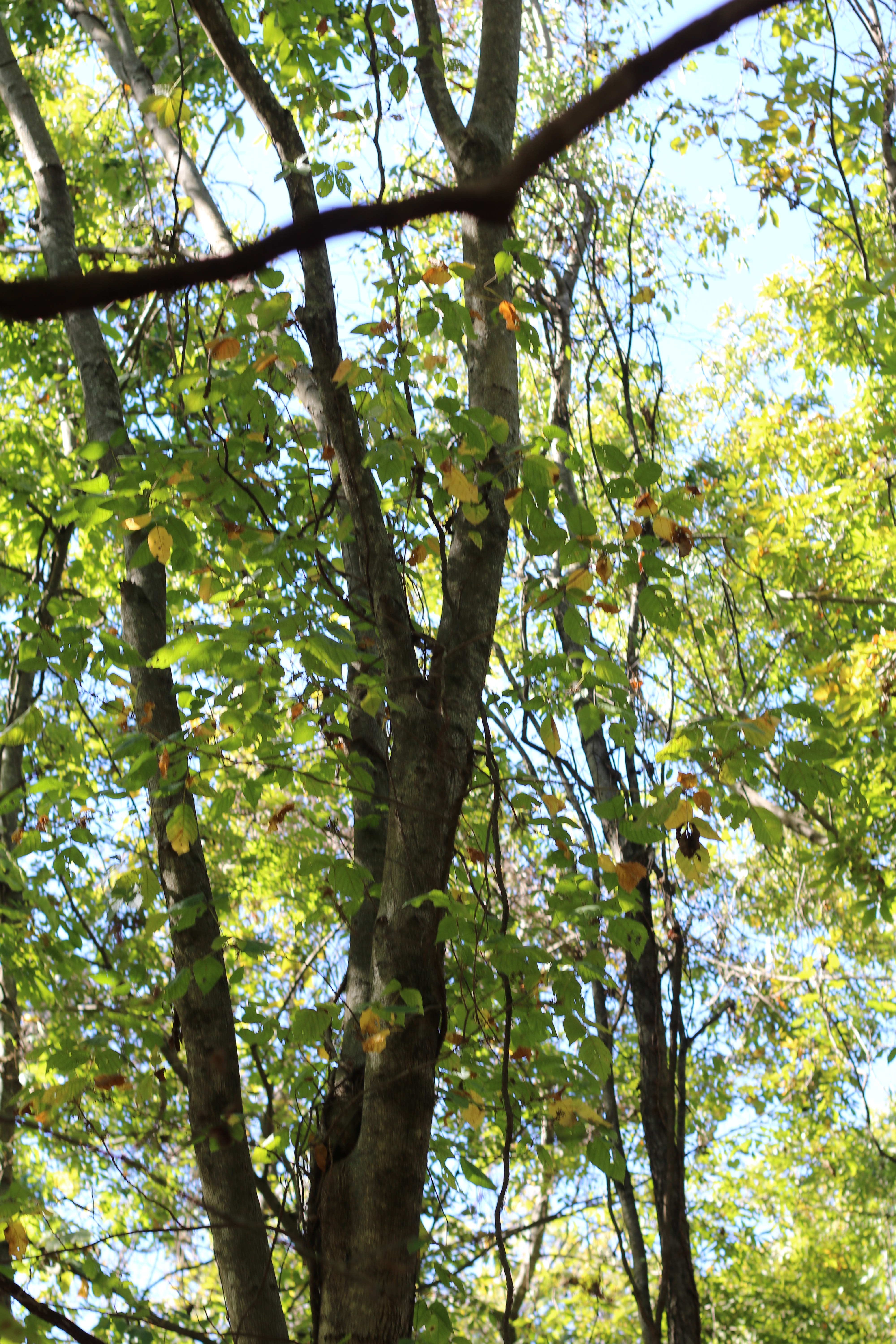
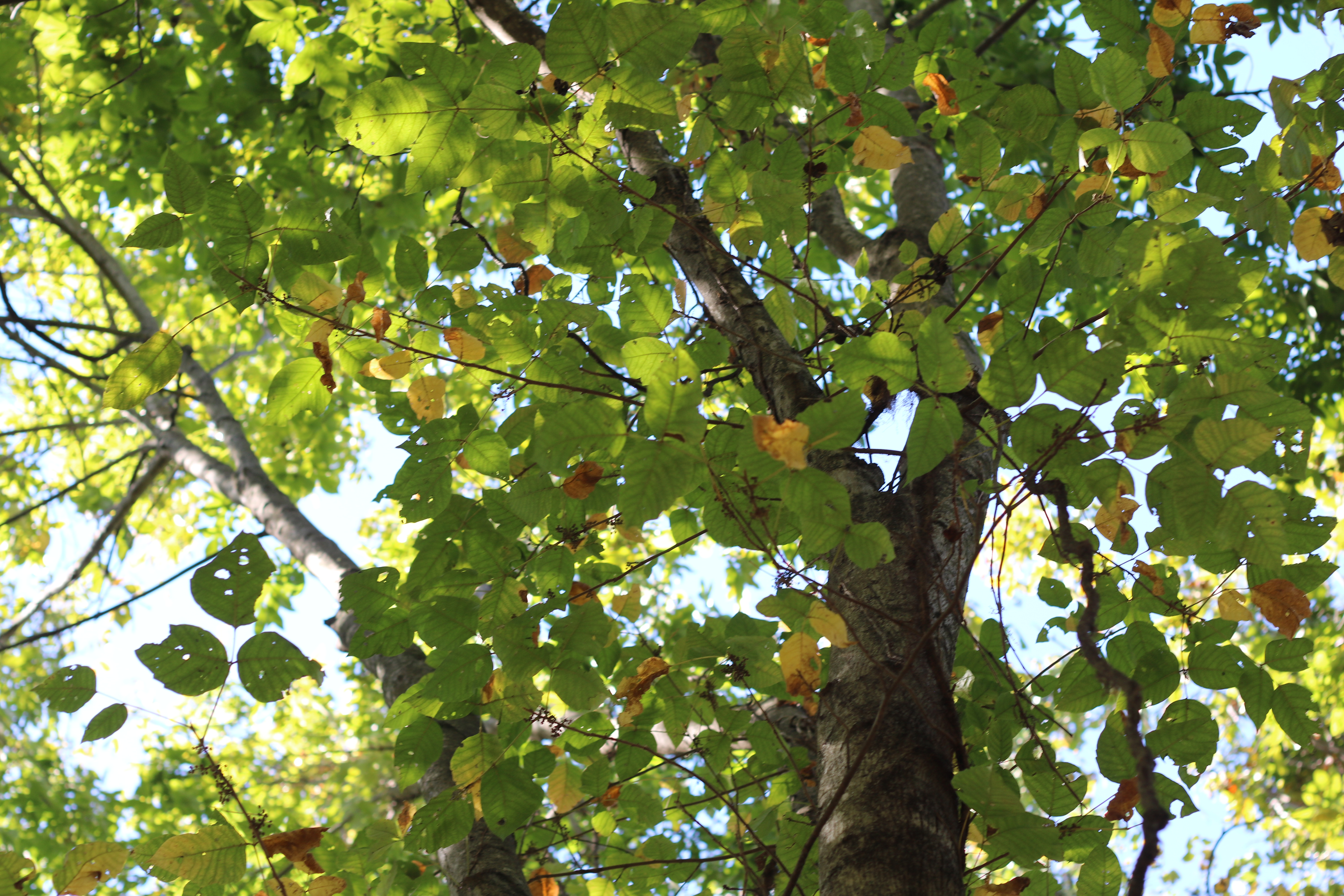
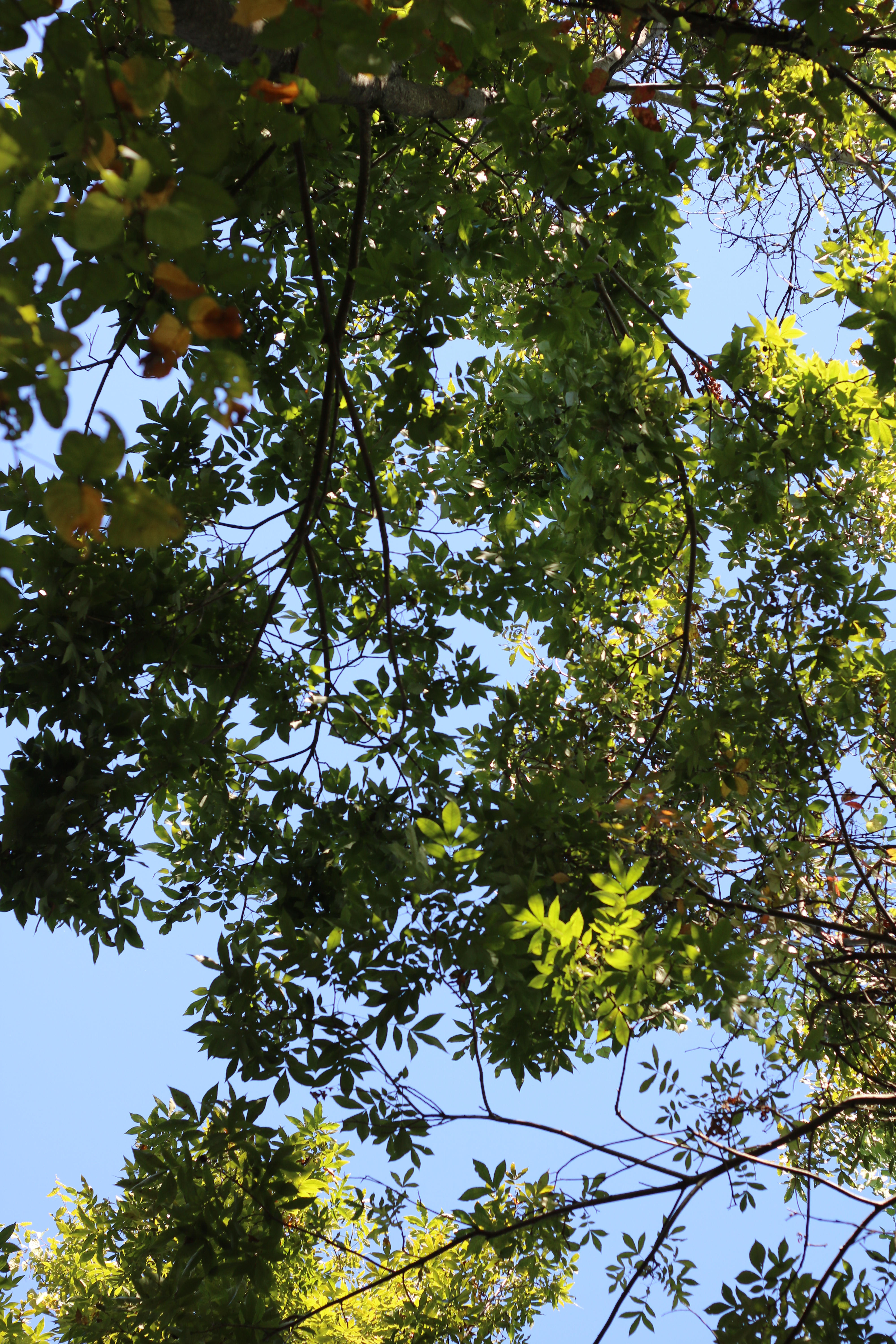
Muscadine (Grape) Vines
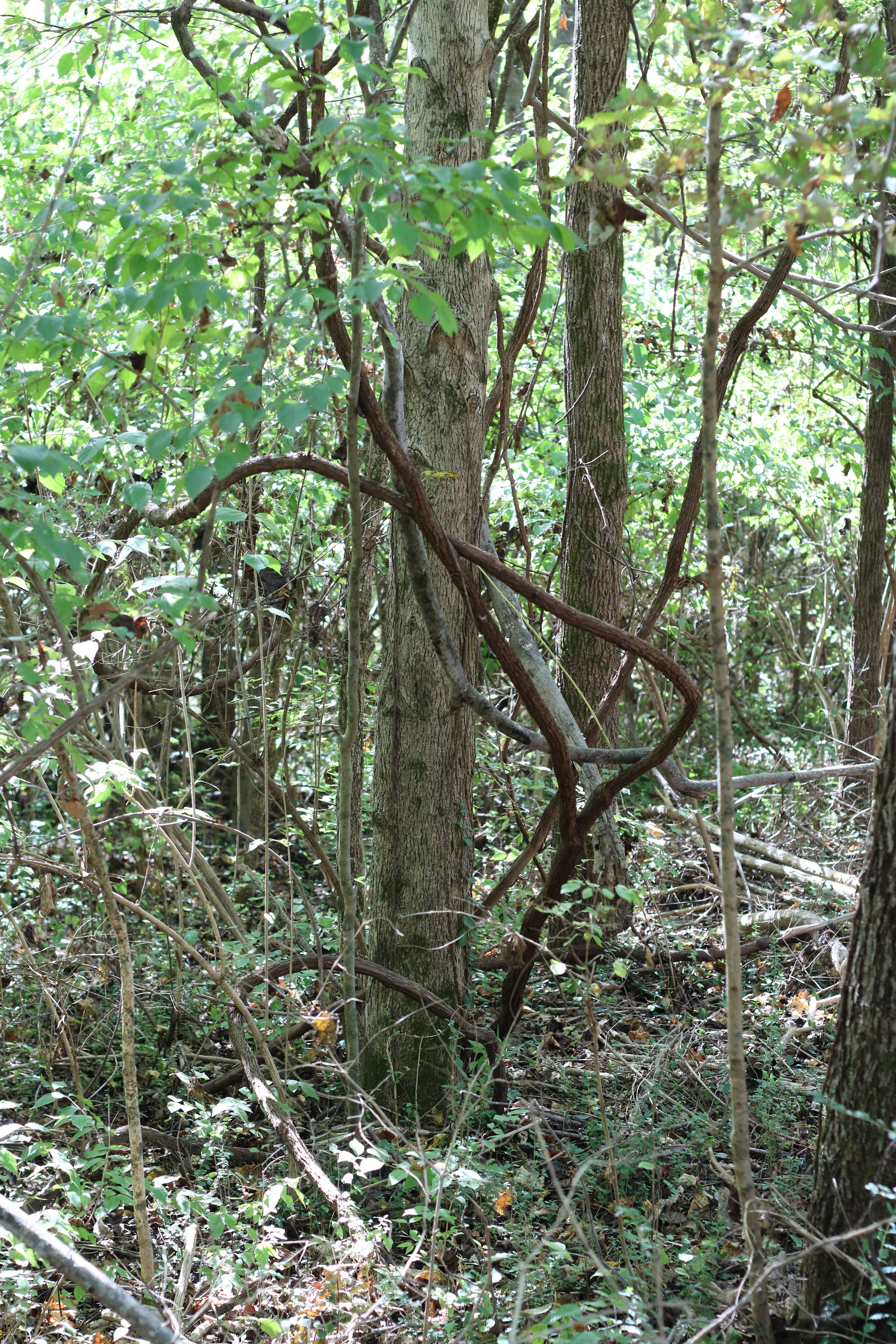
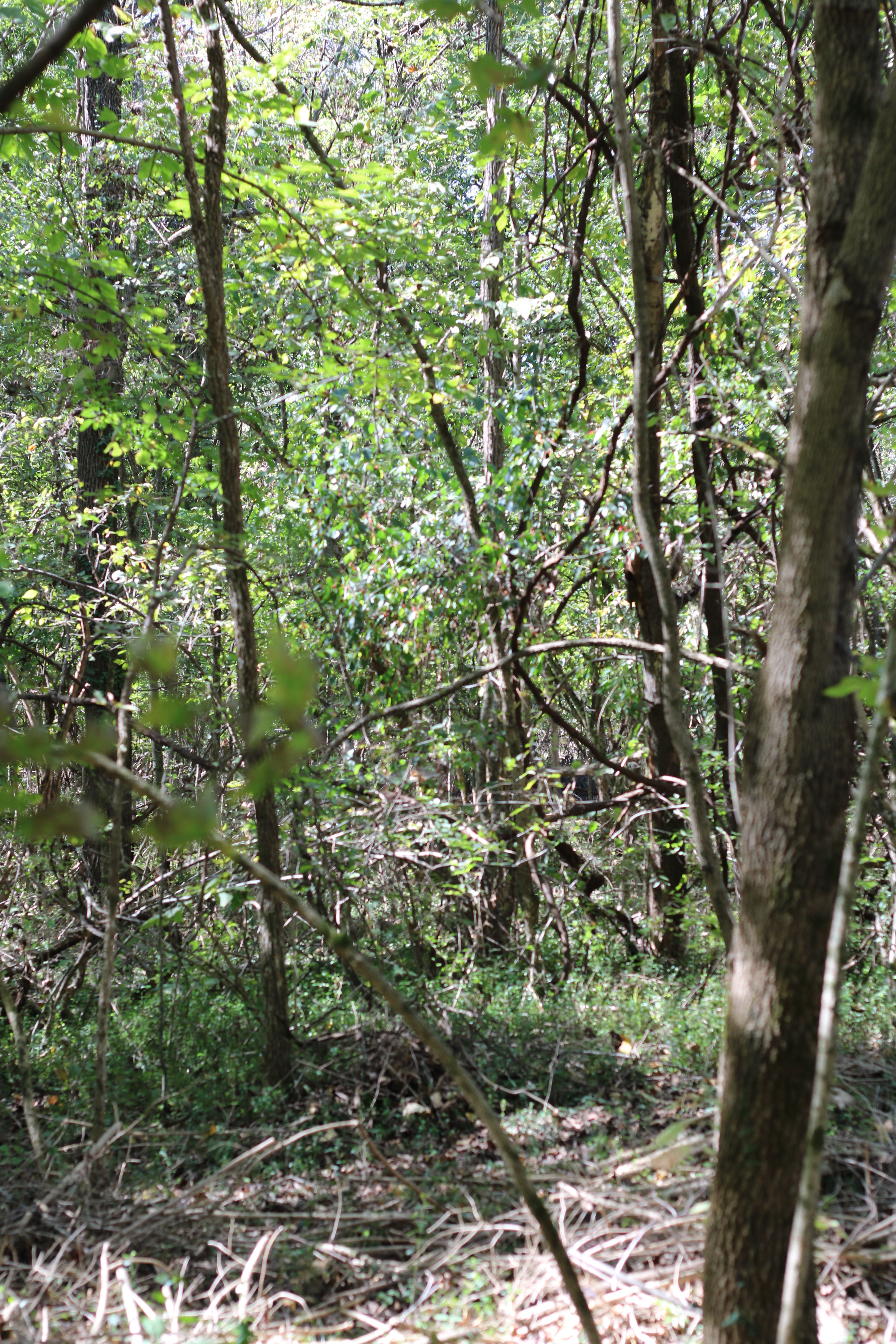
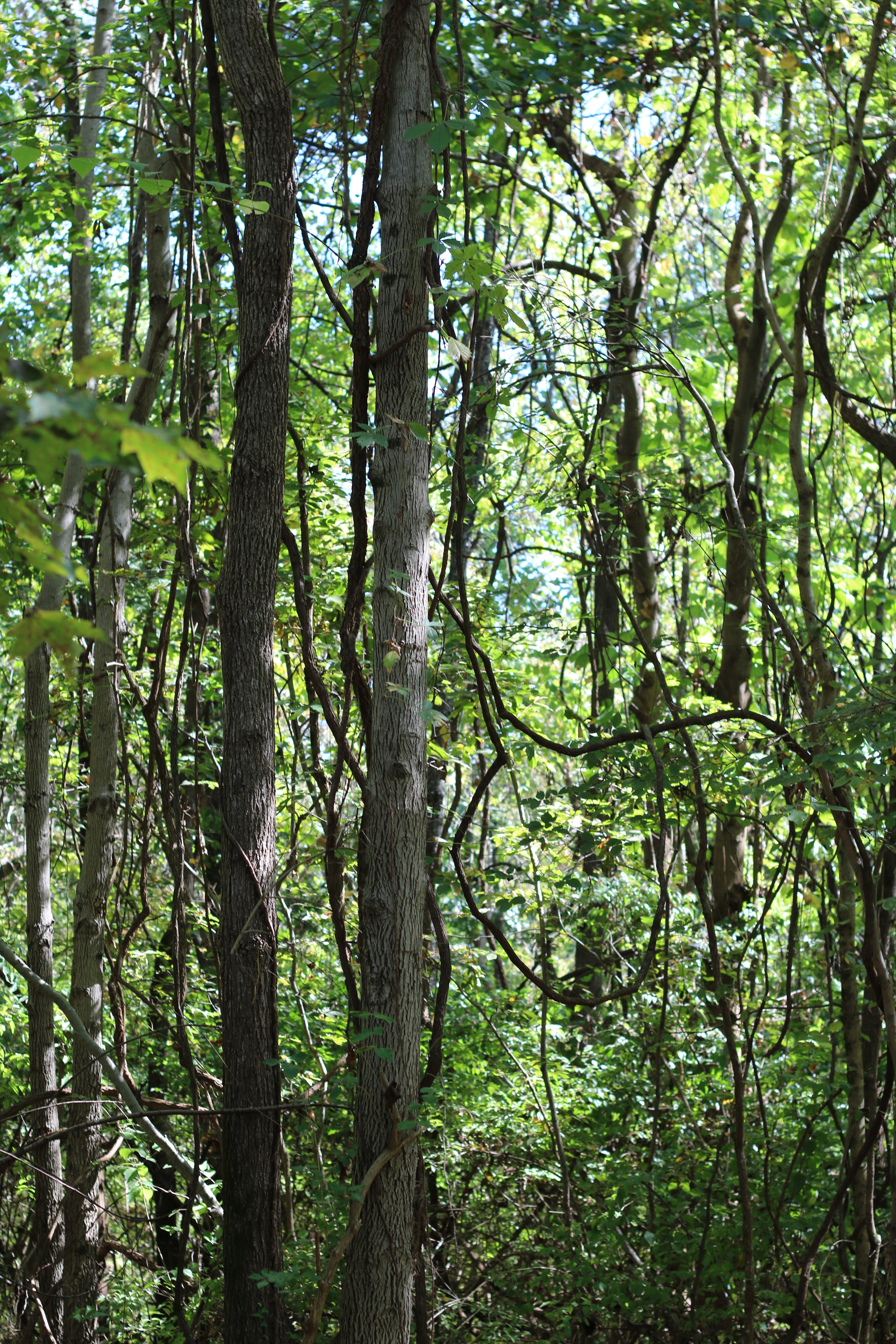
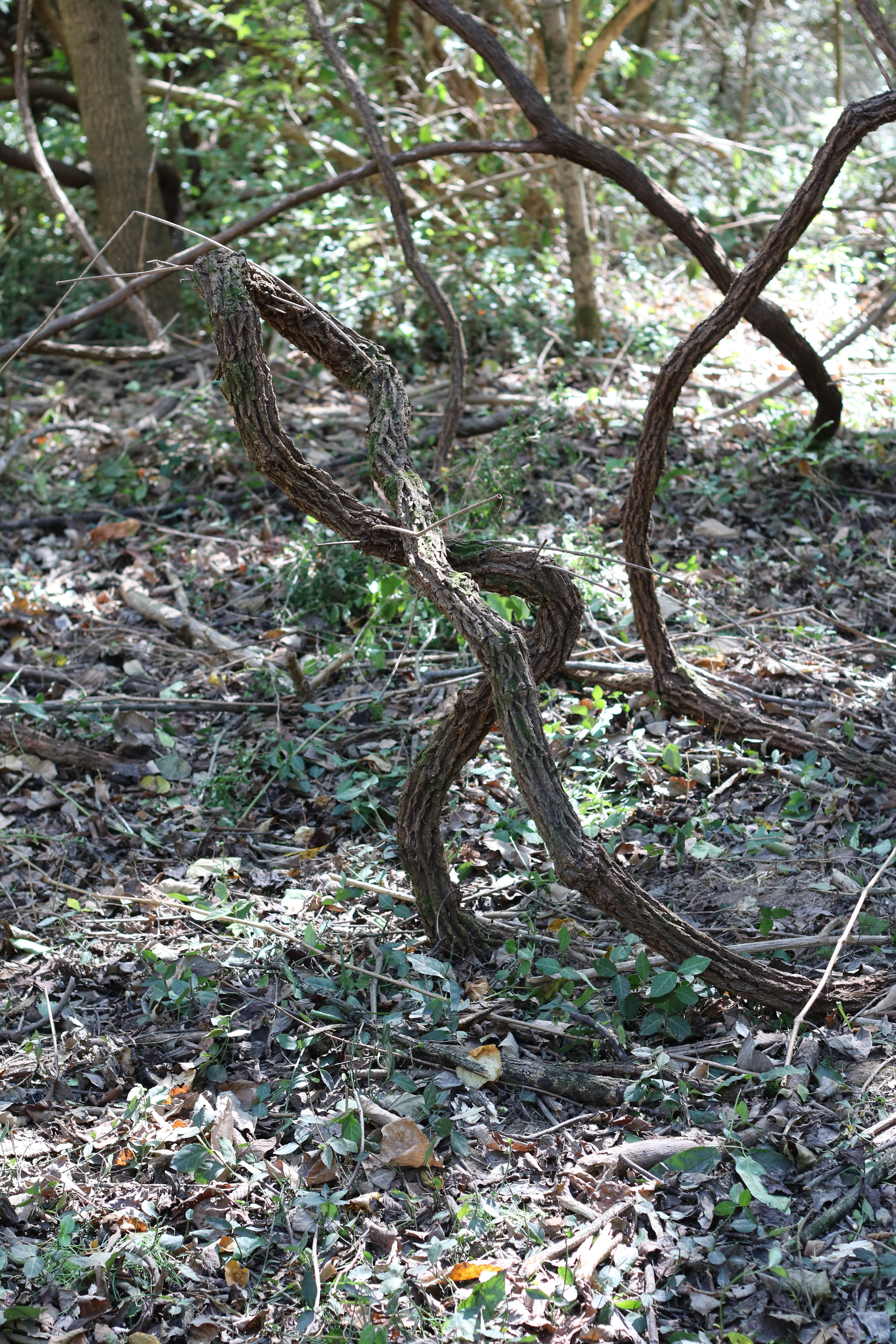

Carolina Snailseed (Cocculus carolinus) [TN native]

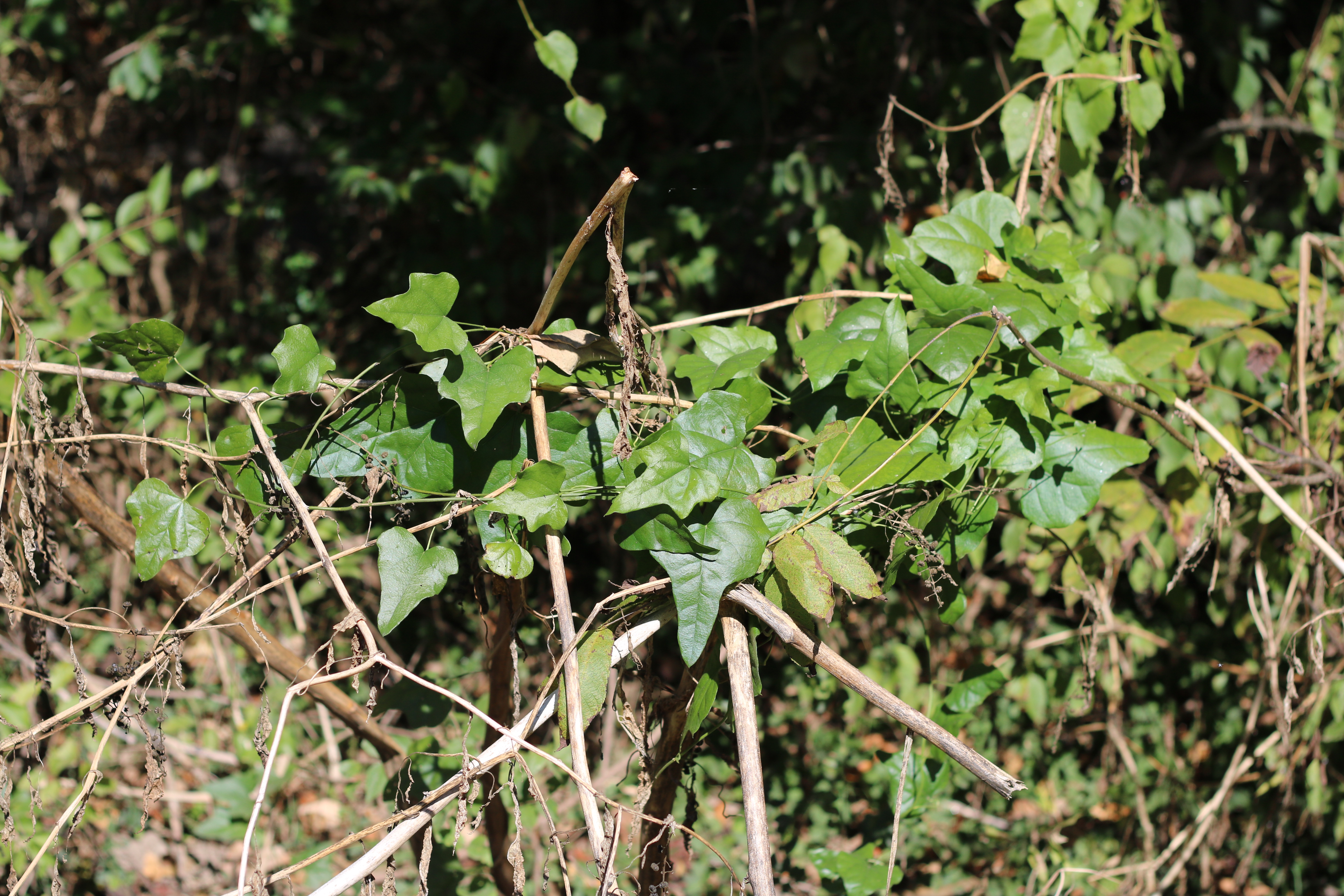
Wintercreeper/Fortune’s spindle (Euonymus fortunei) [TN invasive]

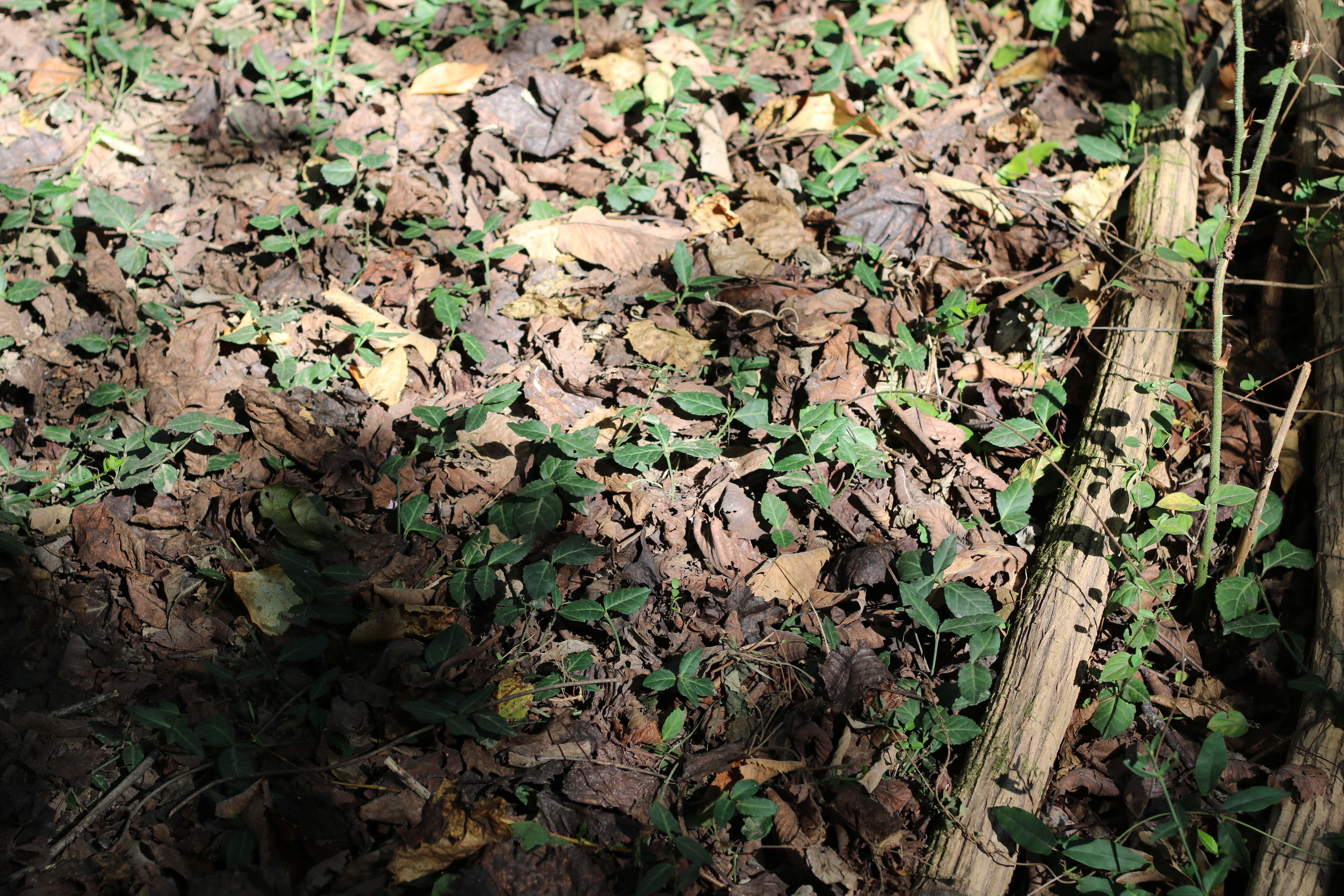

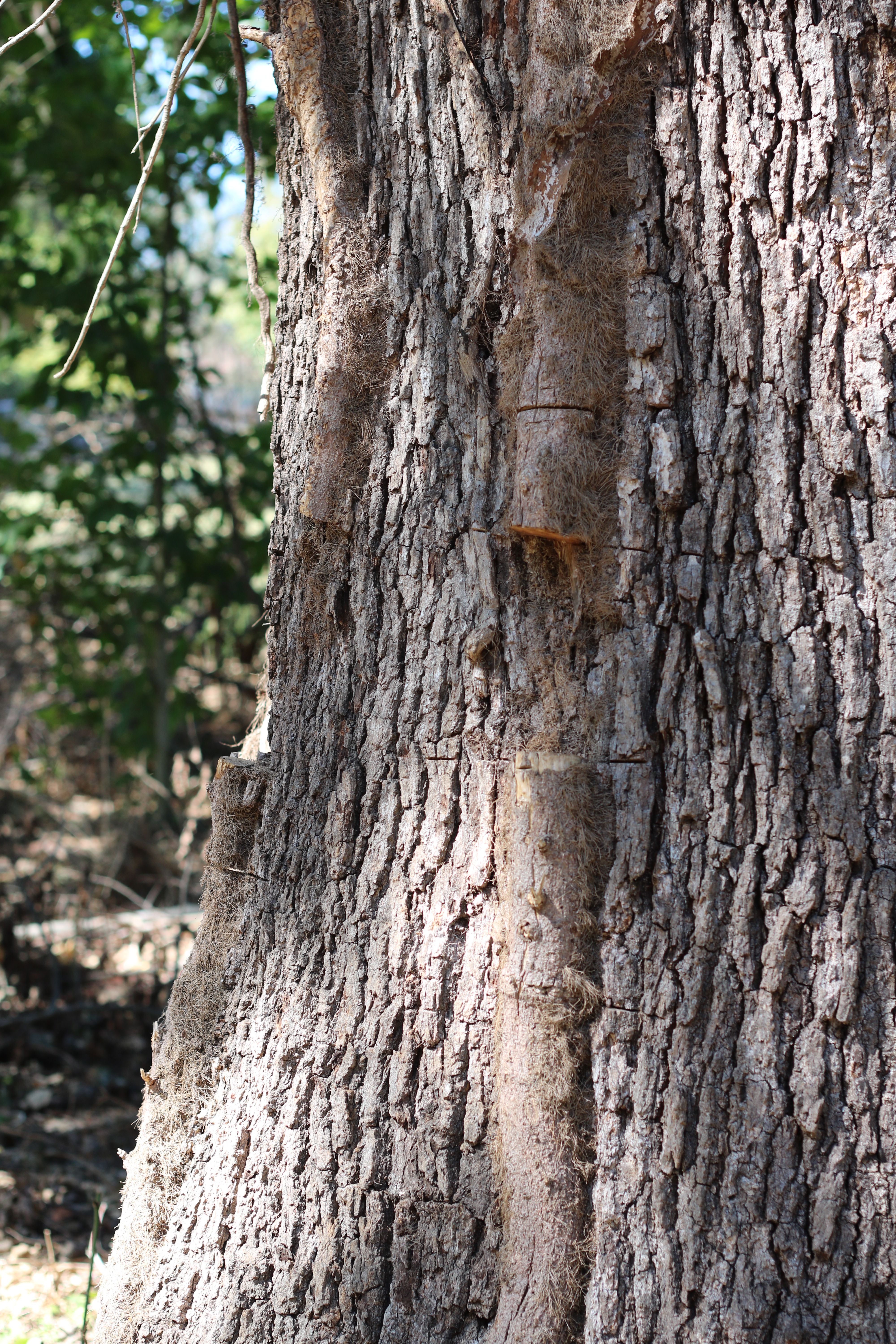
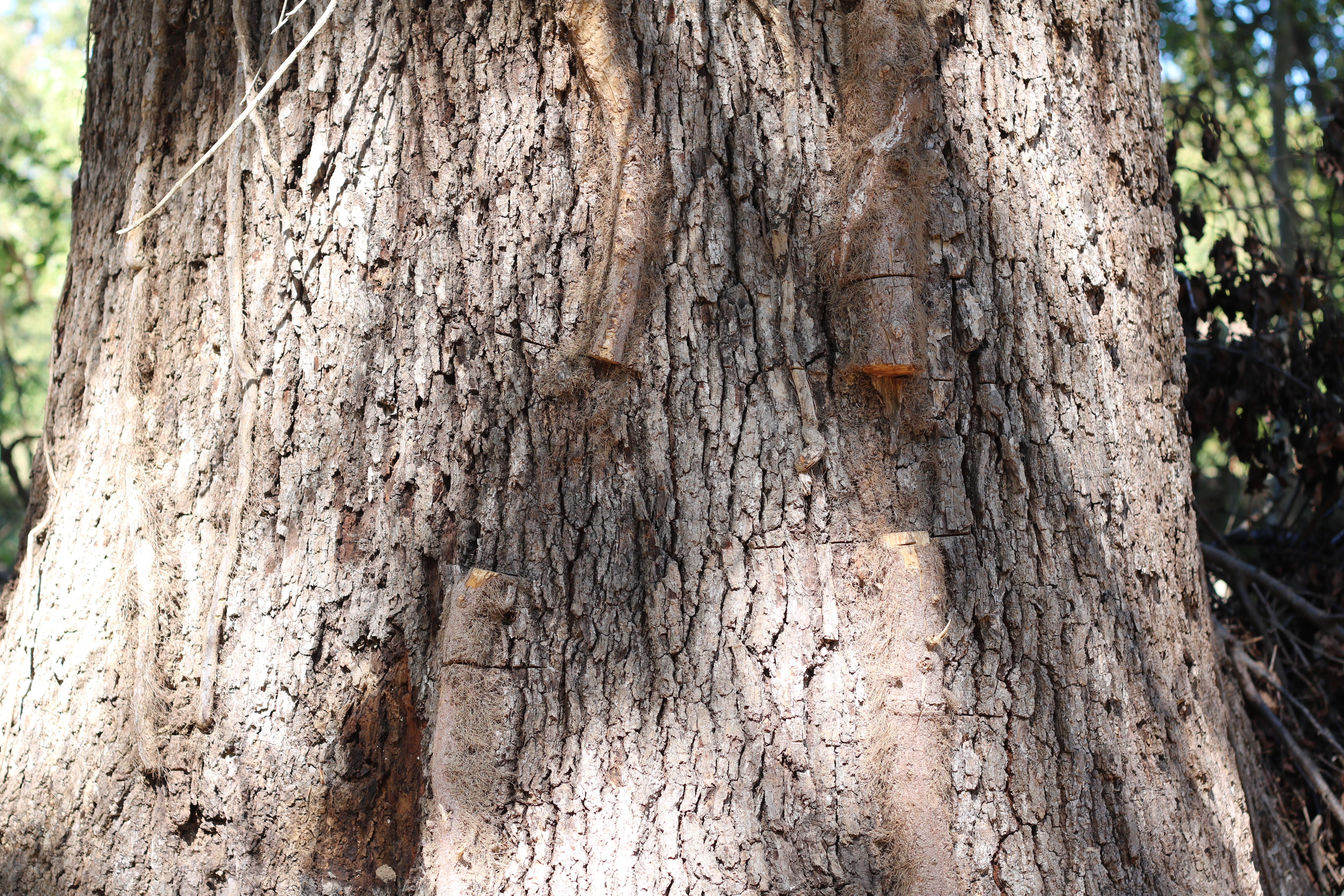

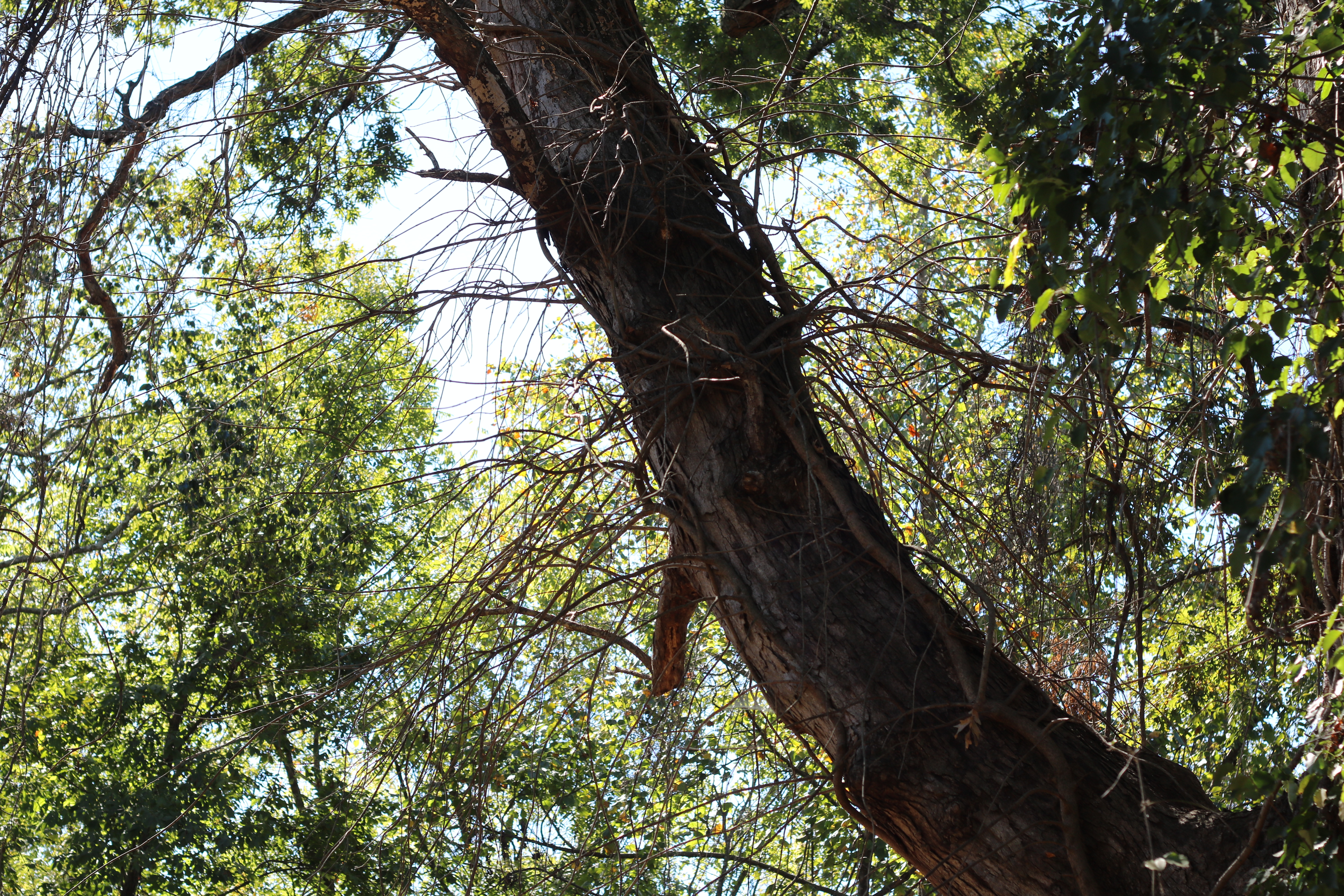
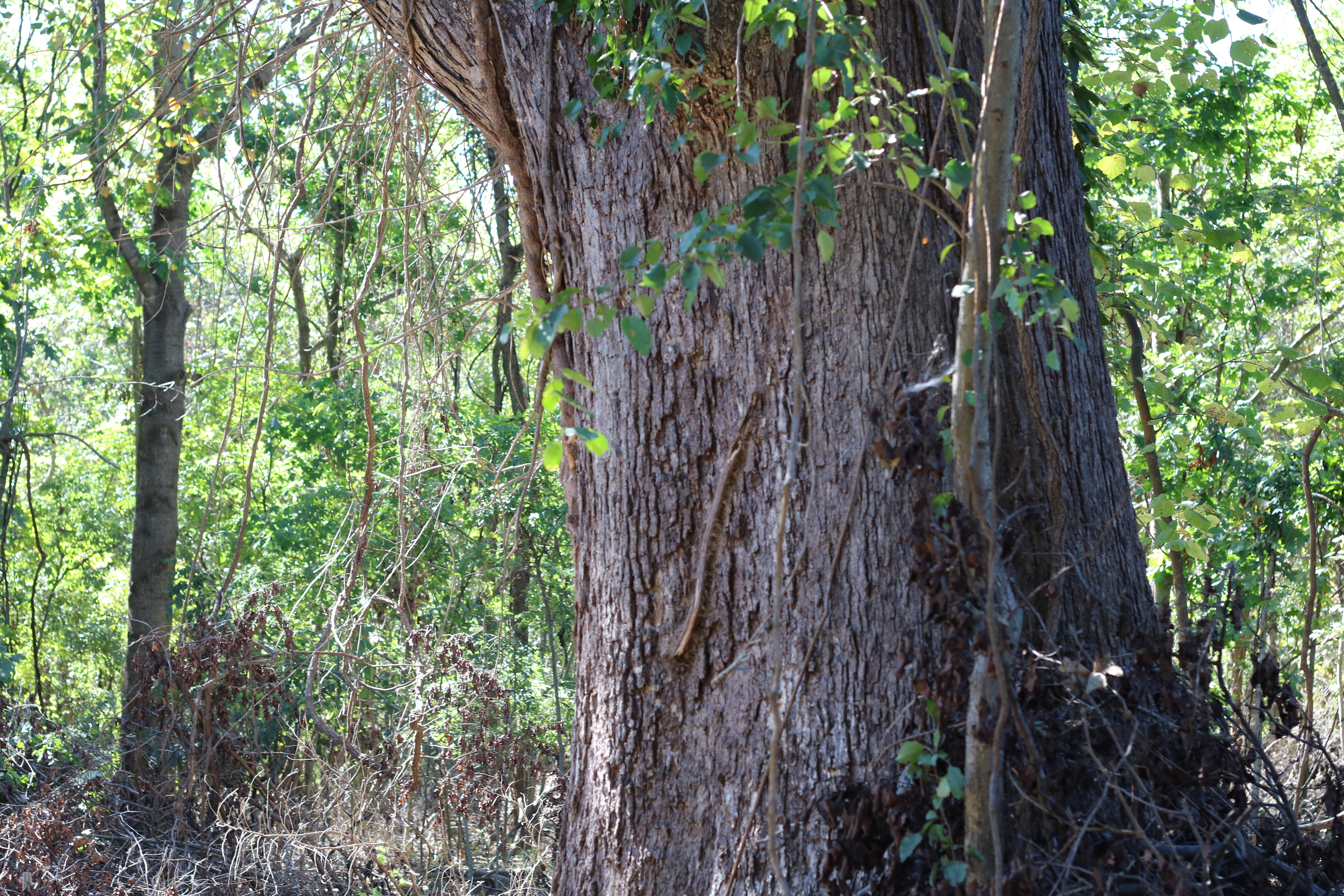
Bush honeysuckle [TN invasive]

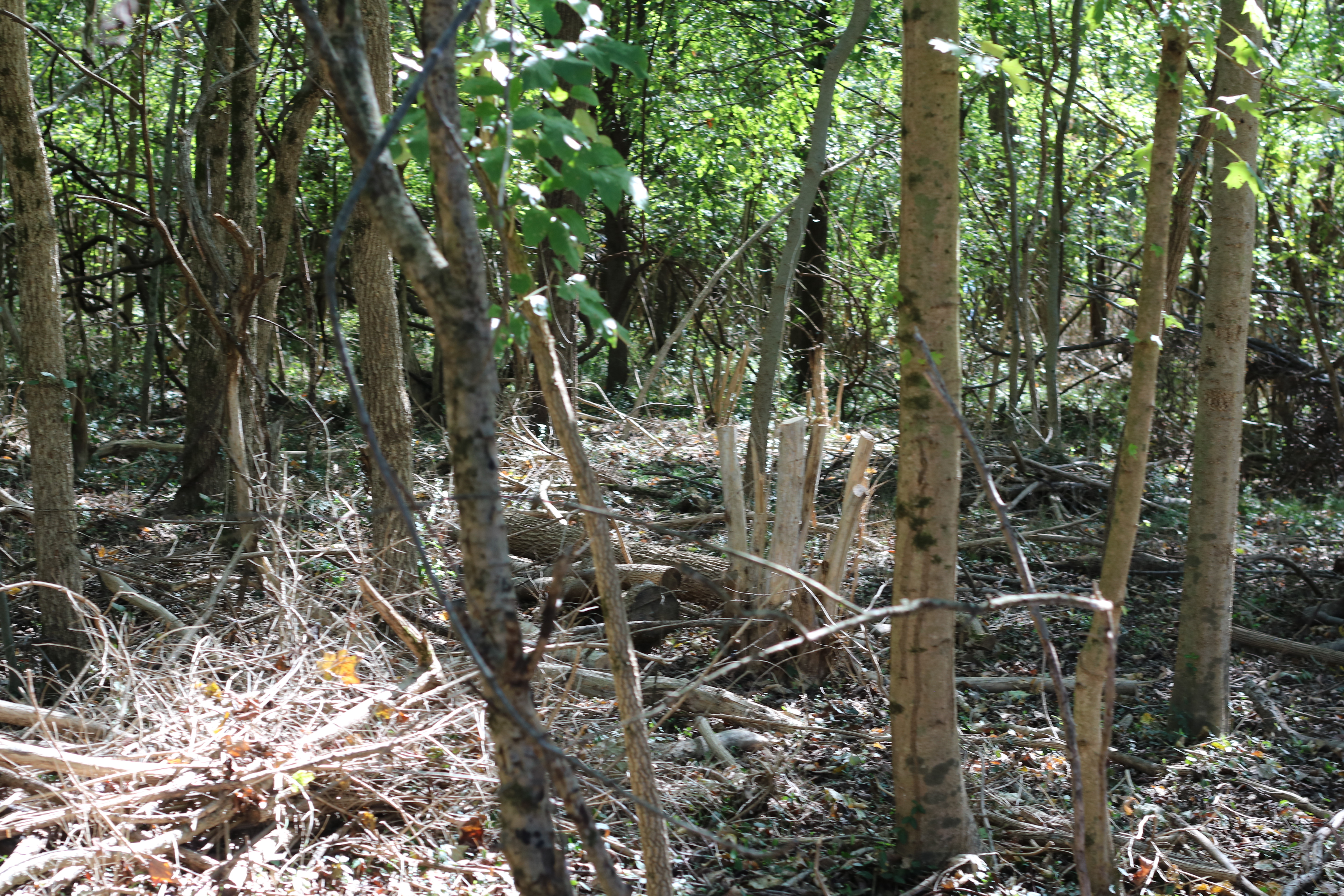

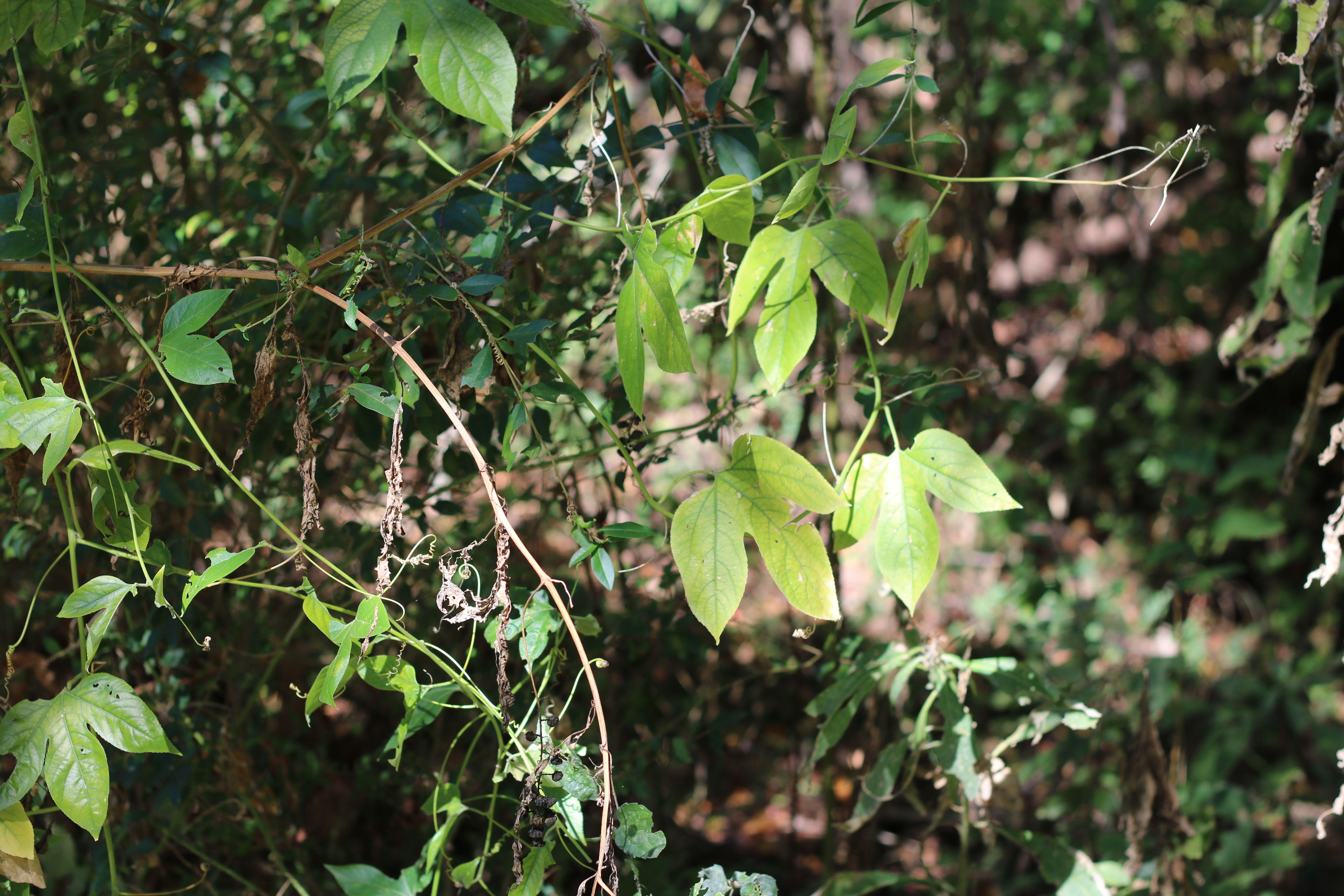
Passionflower (Maypop) [TN native]

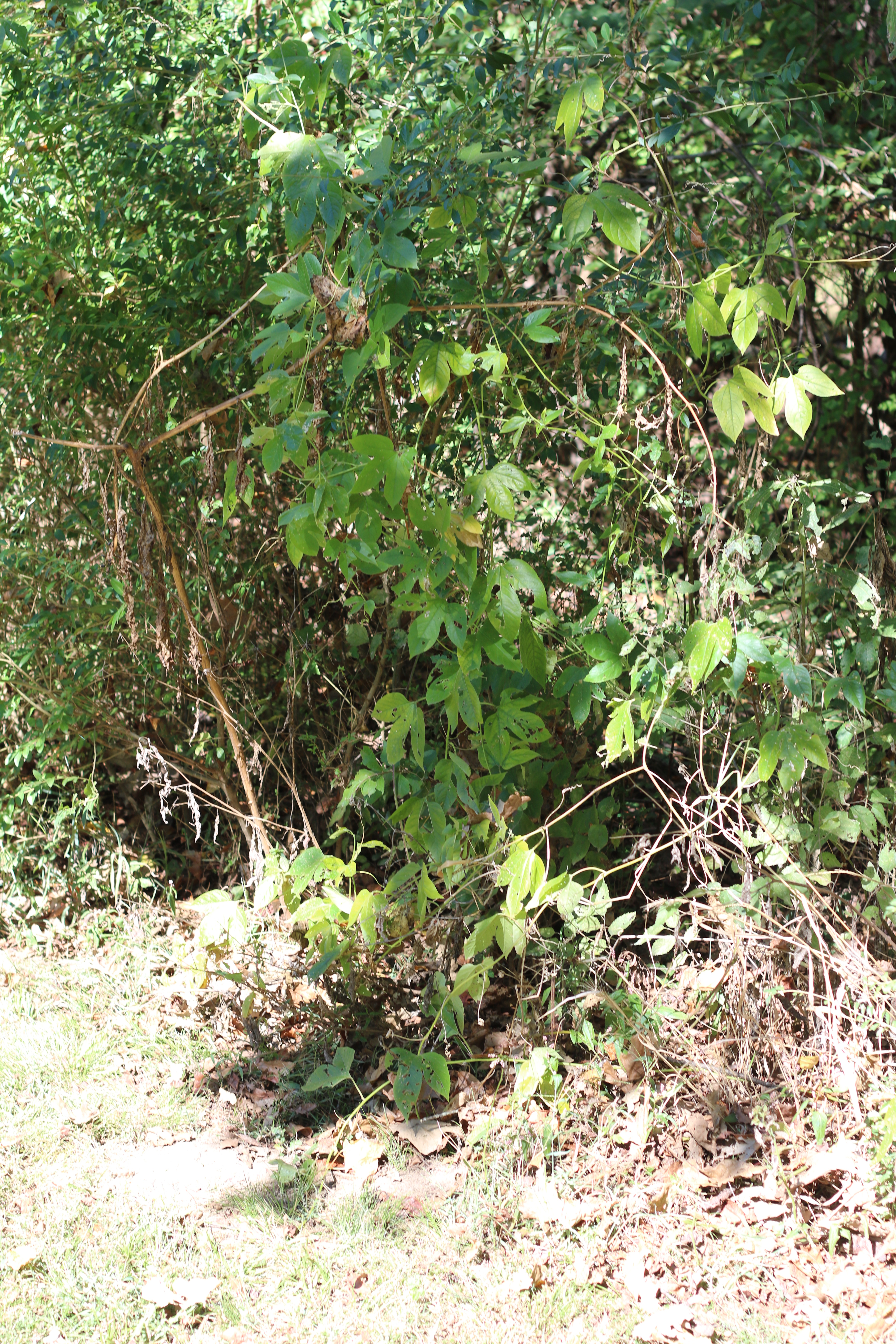
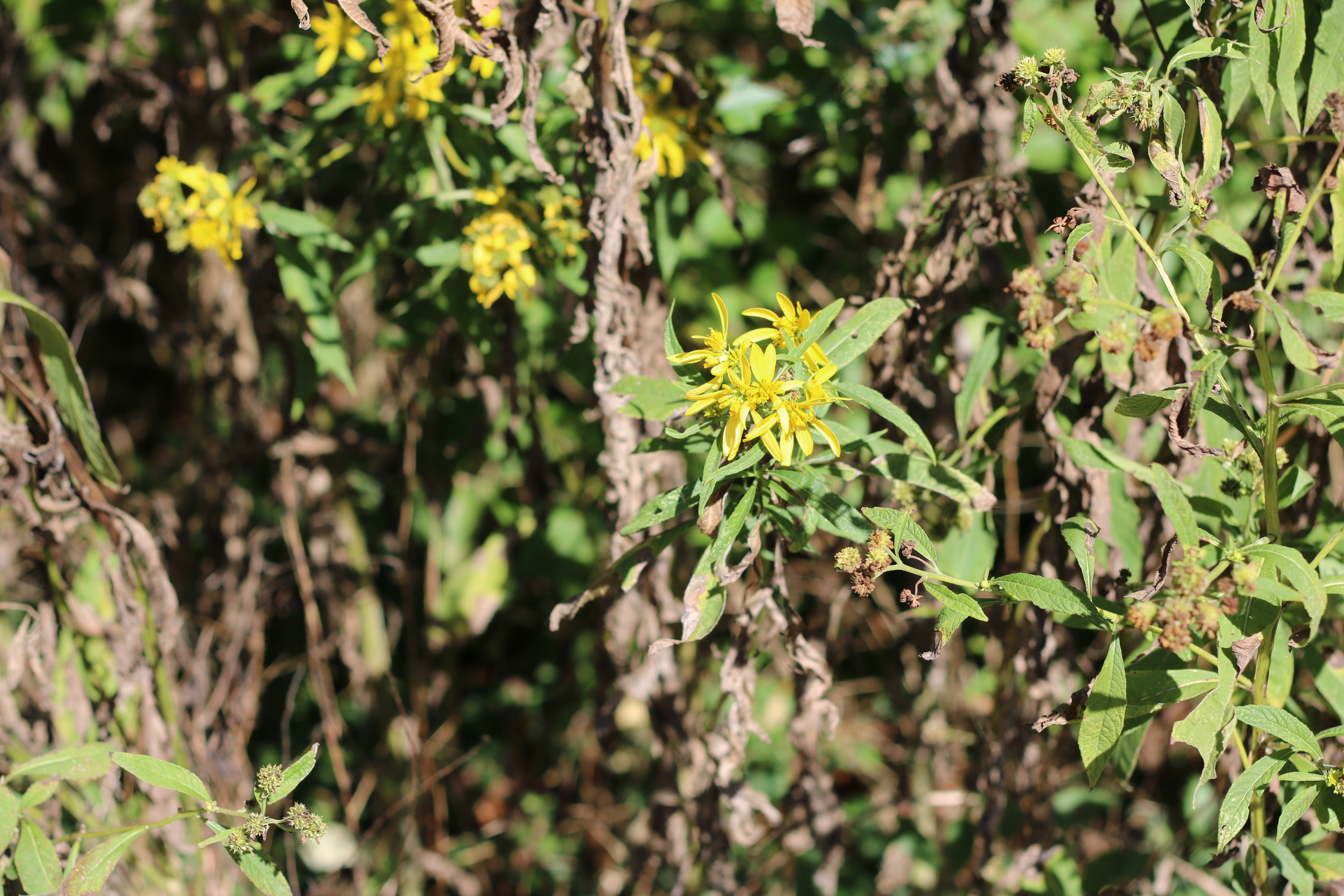
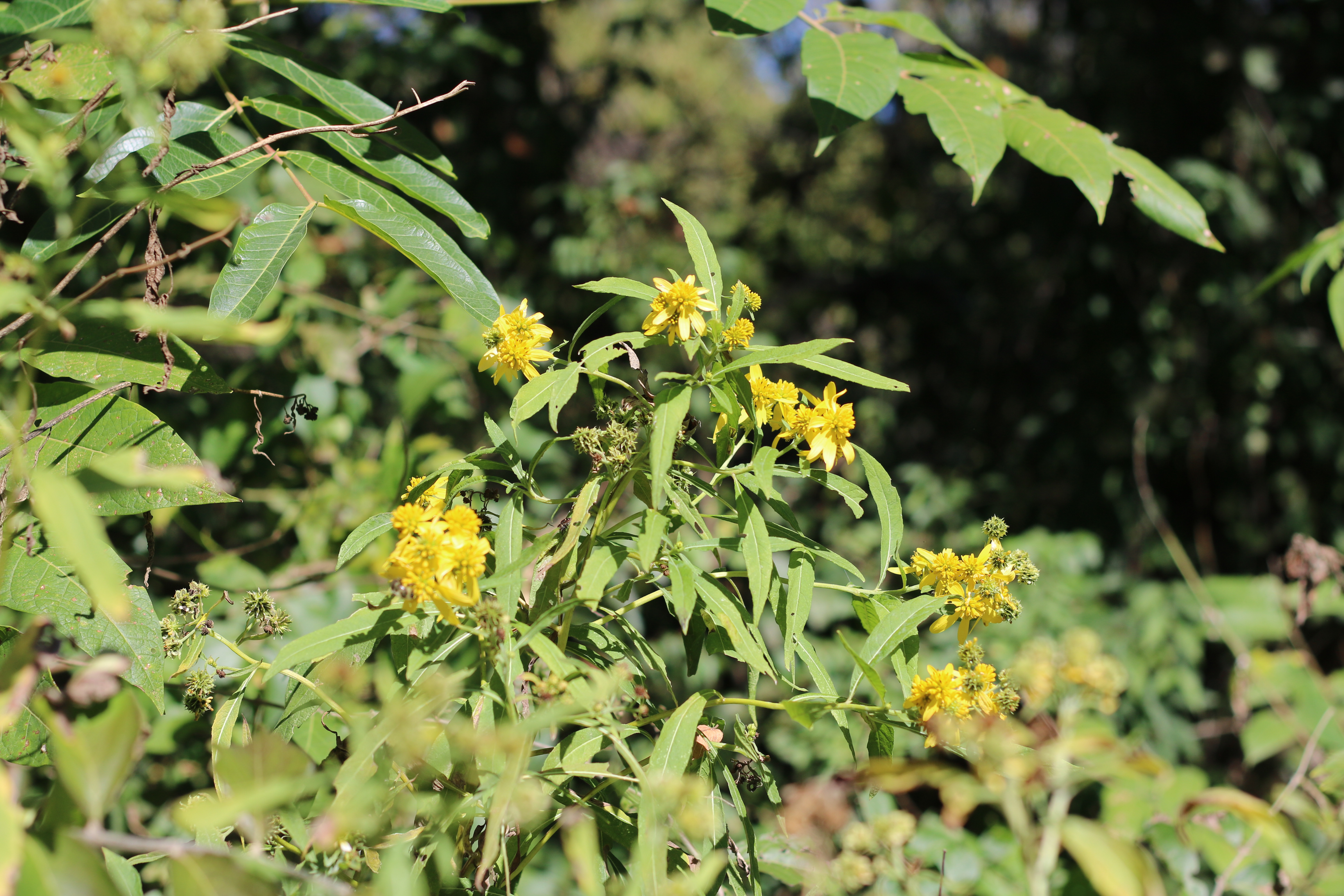
Wingstem/Yellow ironweed (Verbesina alternifolia)
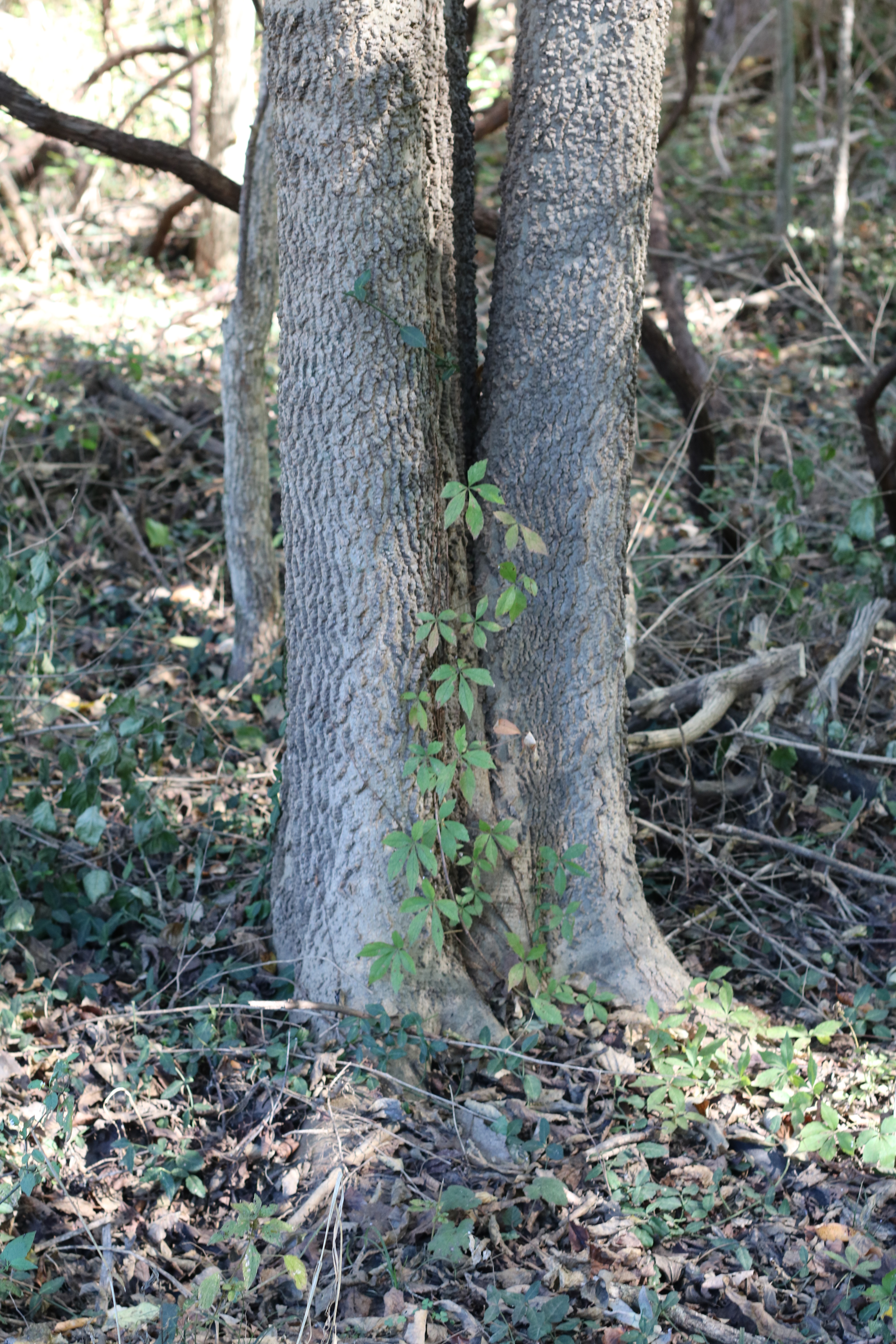
Virginia creeper (Parthenocissus quinquefolia)

 HAKUMUSU
Very interesting to read and see photos about these plants and flowers! Thank you for sharing!
-M
Thank you!!! ❤️