
There is nothing for the soul and spirit like manual labor. Benjamin Franklin observed that in his autobiography, when he was overseeing construction of a fort during the French and Indian War. He noted that on the rainy days when the soldiers couldn’t work, they were miserable and depressed. On the sunny days, where they could do the chopping and the building, they were joyful, singing songs and feelin’ good. And here I am, returning from my arduous labor of ripping up entrenched Japanese Honeysuckle vines out of my yard in the full sun, barehanded, until my hands are blistered and I can’t continue, and boy am I feeling great.
Nothing for the soul and spirit like some good manual labor.
I have discovered a new menace in my yard. It’s Japanese honeysuckle. This menace was on my radar, from doing the invasive species removal at Shelby Park, and now I am getting to know it intimately. Japanese honeysuckle, which is a vine, was on our top list of plants to remove at the park, along with Chinese privet and Bush/Amur honeysuckle.
There are hundreds of plants, at least a hundred plants on my (I say my, I’m renting) small property alone, and I just don’t know all of them. I’m learning about them slowly. Well, there was a sprawling vine in the yard that was flying under the radar because there’s nothing special about it. It’s just green and a vine, cool. But I finally wanted to know what it was, because it seems like it’s about to flower, one strand of it, and it’s snaking all around the frost aster. I decided that it was time to ID it, and know the truth. The frost aster is native, and precious. Time to know if this vine was also native and precious, or not.
Lo and behold, Japanese honeysuckle. A notorious and pervasive invasive, here in the good ol’ USA.
I set to work ripping up this foreign invader at once, yesterday going until I had a blister on my right hand and was forced to stop. I was shocked at how much there really was, snaking all over, along the ground, under and behind, and on top of everything. Today I’ve given it another go and I once again ripped and pulled until my hands are blistered and hurting. (I really should have a pair of gloves.)
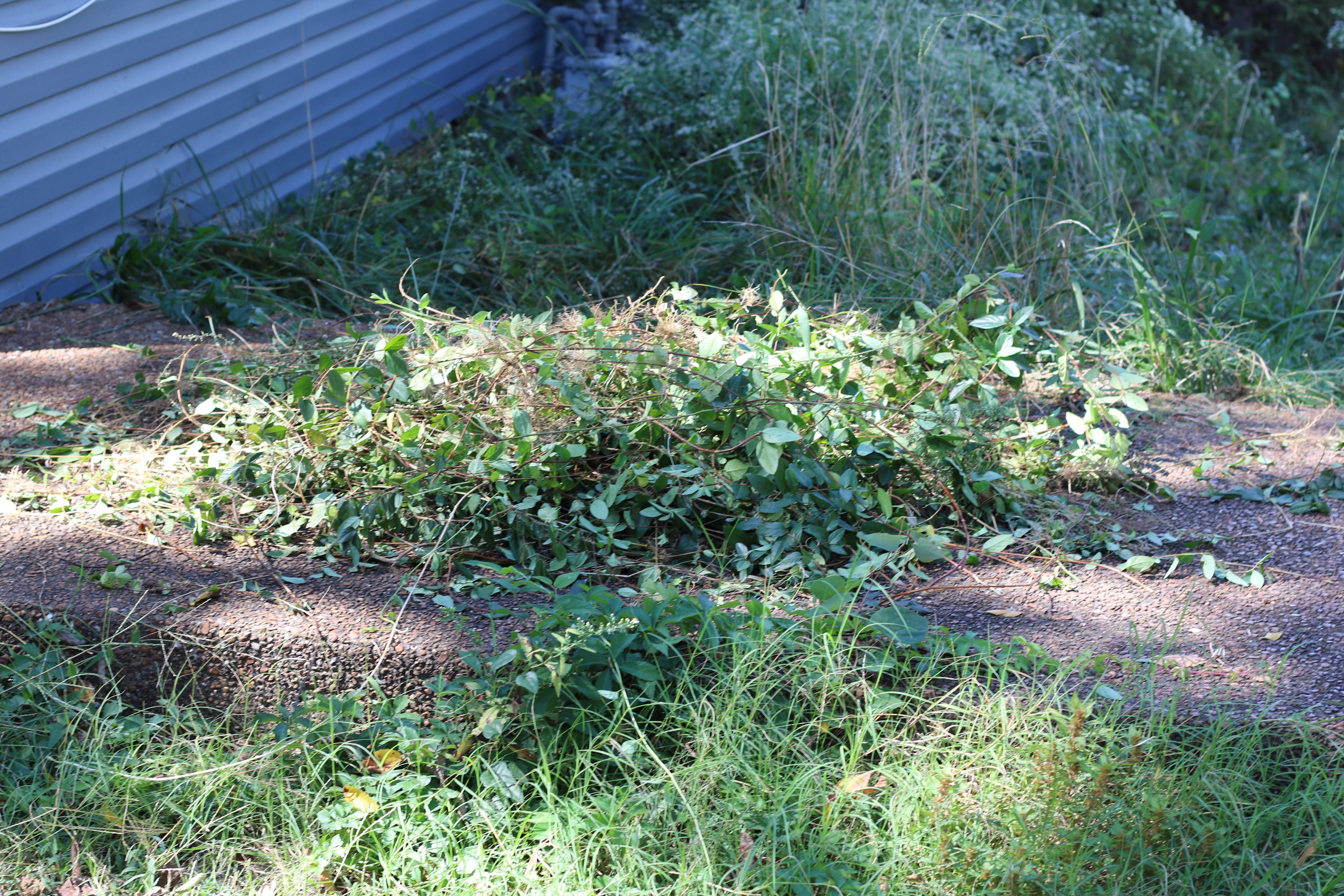
The photo below shows you how much I’ve pulled out so far, of this damned Japanese honeysuckle. I would never have guessed that there was so much lurking in the yard like this.
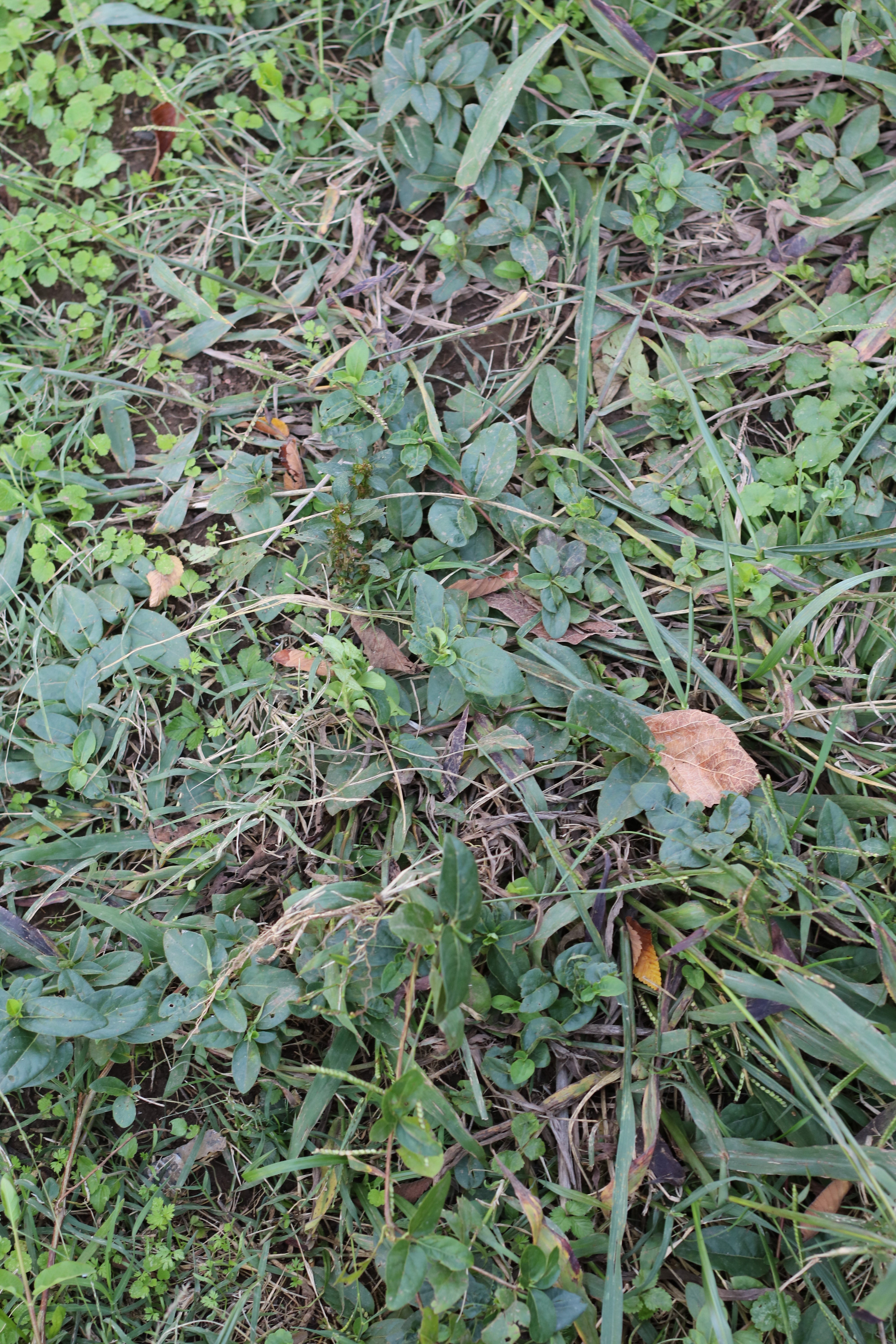
It’s not just in the frost aster, it’s all over in the grass, winding up stalks of grass, and growing staight out and covering the ground.
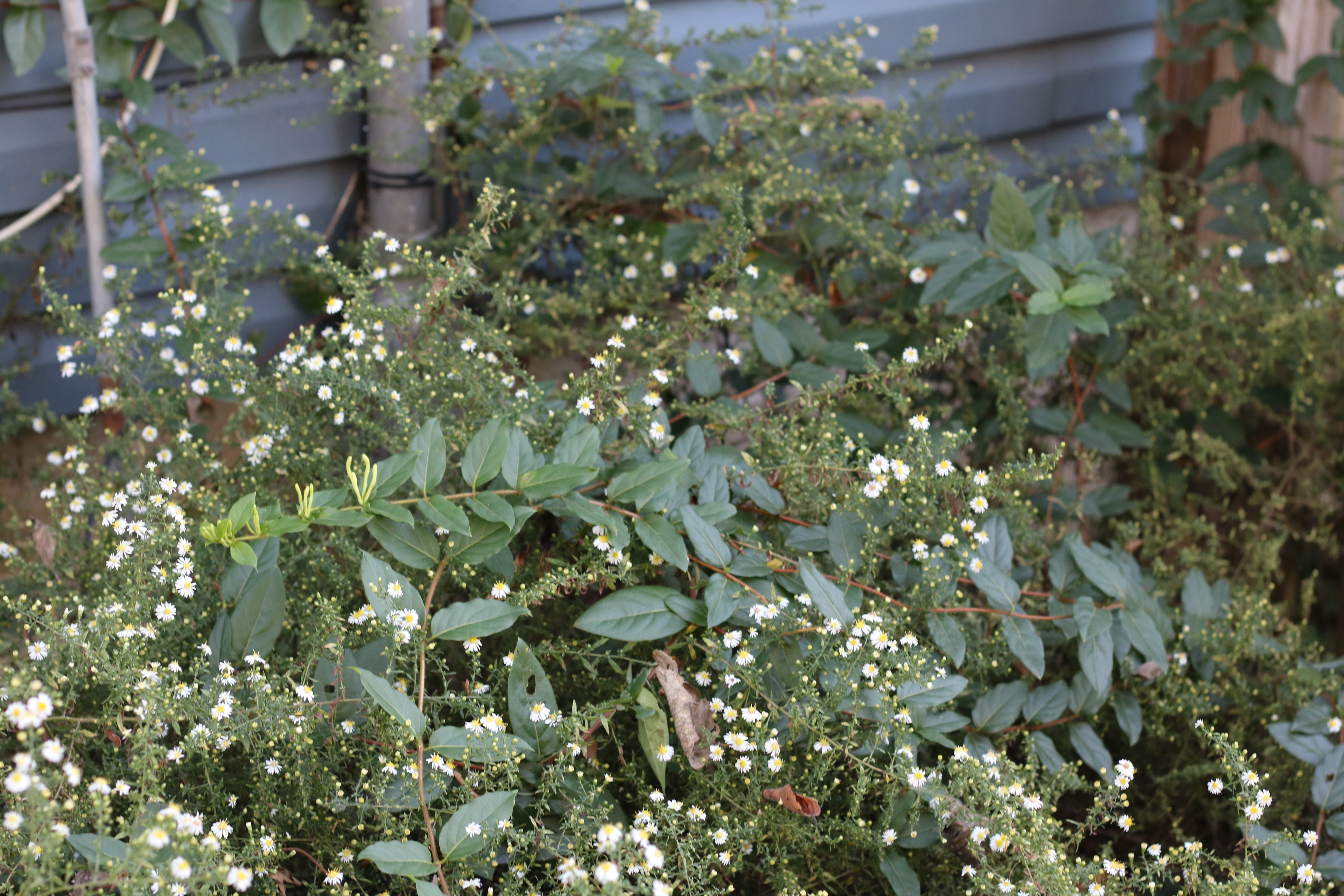
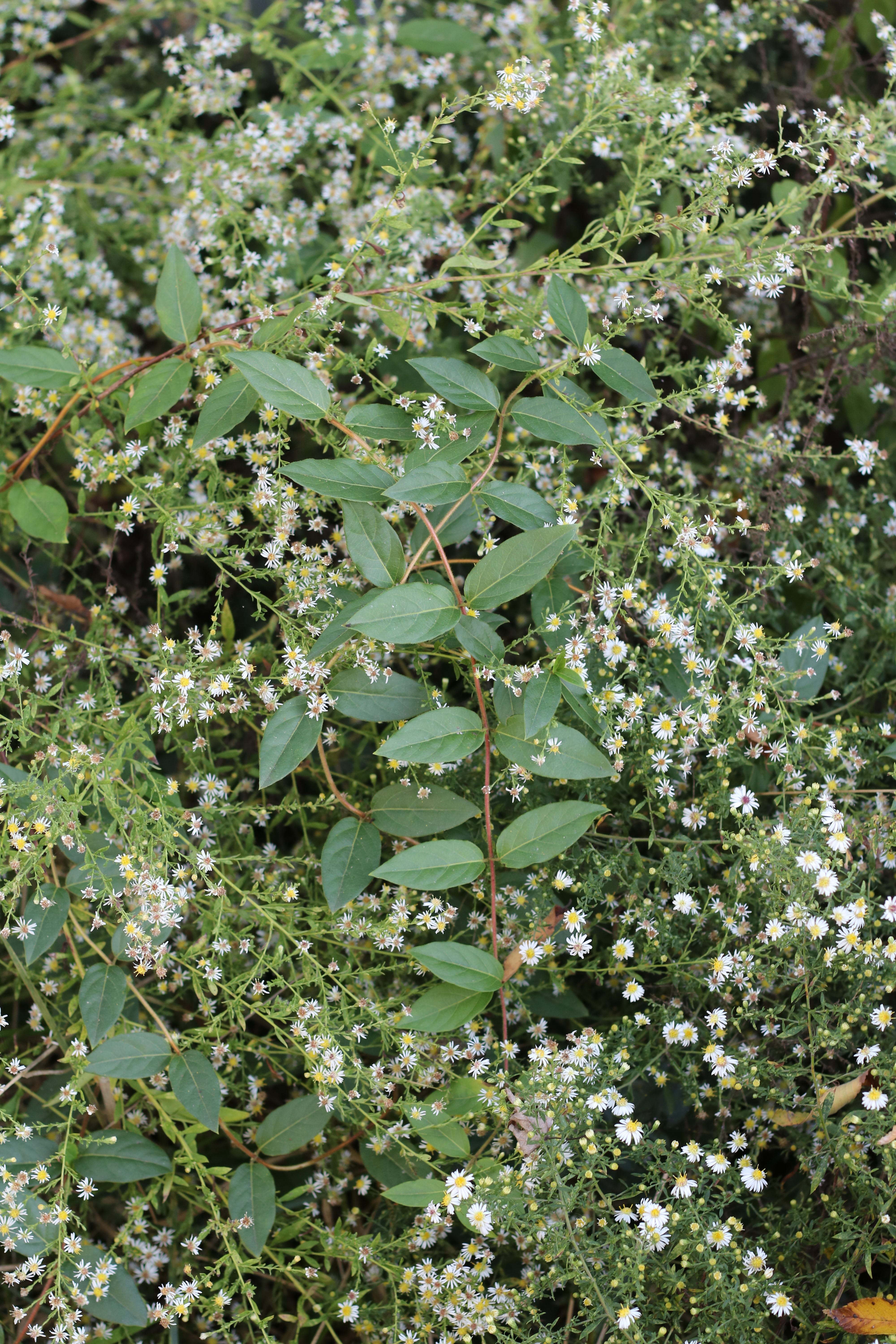
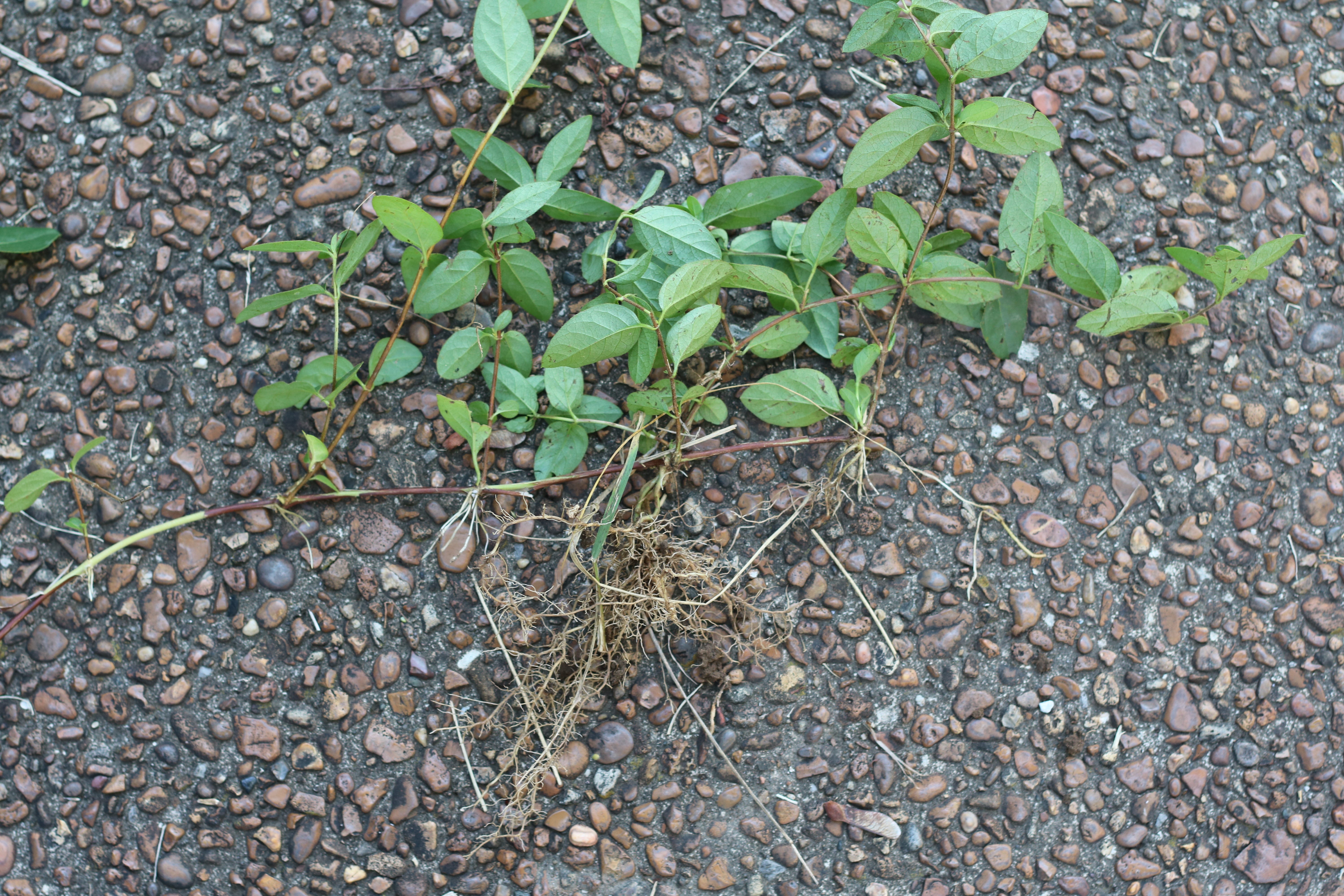
The very first vine, I carefully untwined it from the stalk of grass it had wrapped around, and followed it to the base. I was surprised that it led all the way to a node of roots in the ground, that led to several more strands of honeysuckle. I think this is what they mean by “runners”, which is a term I’ve heard. That vines put out “runners”. This is extremely annoying, and makes tearing up this honeysuckle a pain in the ass. As you can kind of see in the above photo, these vines are often putting down roots into the ground at repeated intervals, and you have to rip it all up. Some of the roots are quite entrenched, and three times they were so entrenched that I had to go get the shovel. Some of these runners were so thick that it felt like I was pulling up eletrical cables. I would rip it up out of the ground and it would be thick, like a rope in my hand, and show me where the rest of the cable was, and I would follow it to one of the root nodes. There was one, it was the mothernode, that was deep in the center of a large bush of frost aster, I parted the frost aster and got down in there and found that mothernode, and I felt like I was discovering the source of the infection or plague in a post-acopolyptic movie. It was like when there’s a fungus or something that makes people become zombies, and I was finding the main spore producer, or the main brain. I found that huge root node with multiple thick honeysuckle cables running off of it, and I went and grabbed the shovel and obliterated it. I felt good for a moment, hands blistered and hurting, and then I saw that there is still so much more to pull.
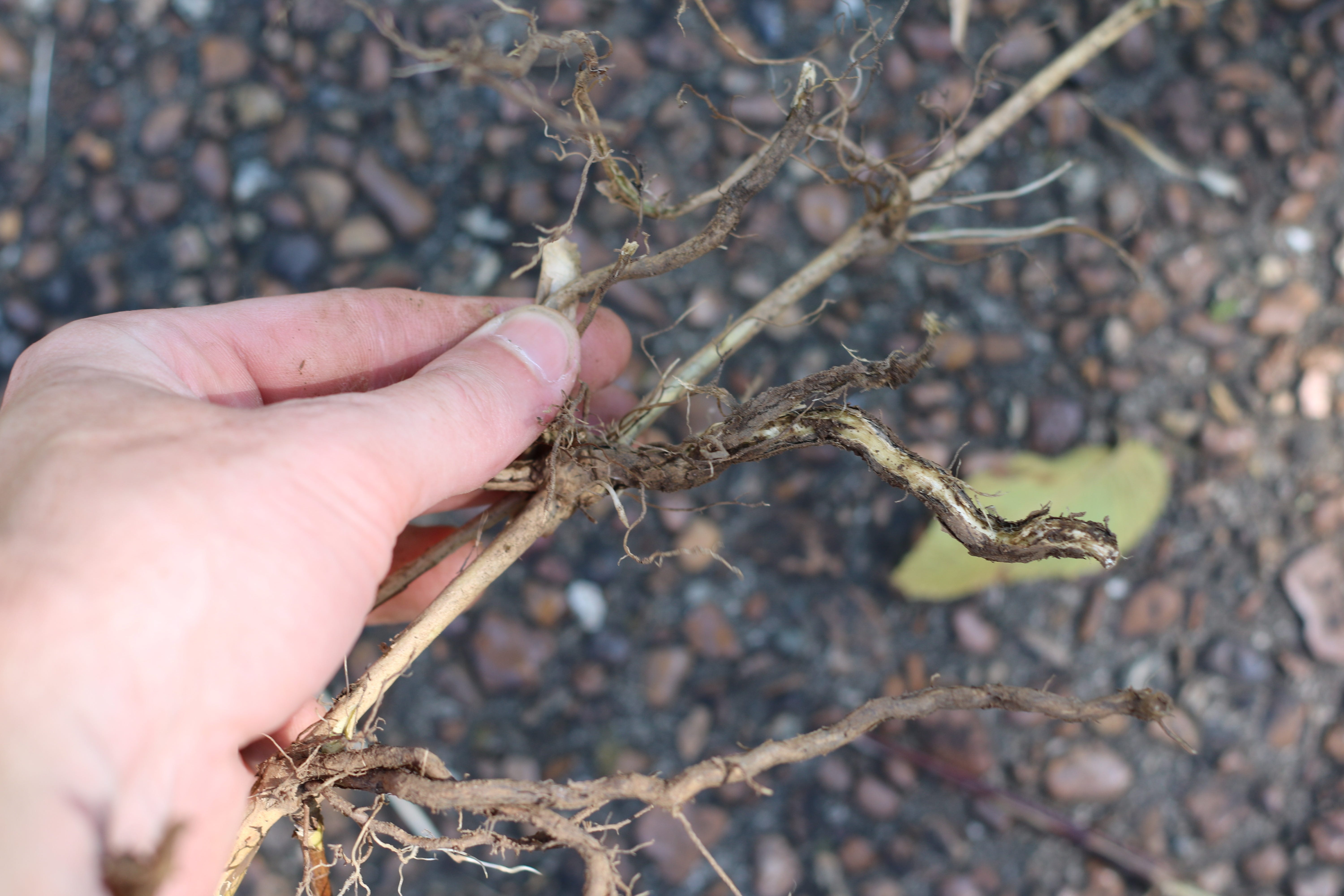
Digging up the grass was harder work and was definitely the most annoying work. This is just more than I wanted to do to pull up these vines. It isn’t that bad, but the fact that I have to go and get the shovel is more than I bargained for.
It’s amazing how prevalent these invasive species are. Half of the things in my disturbed roadside habitat yard are infamous invasives. Tree of heaven, common mullein (apparently a truly hated invasive), Chinese privet, Japanese honeysuckle, the oleander aphids… we really are at war.
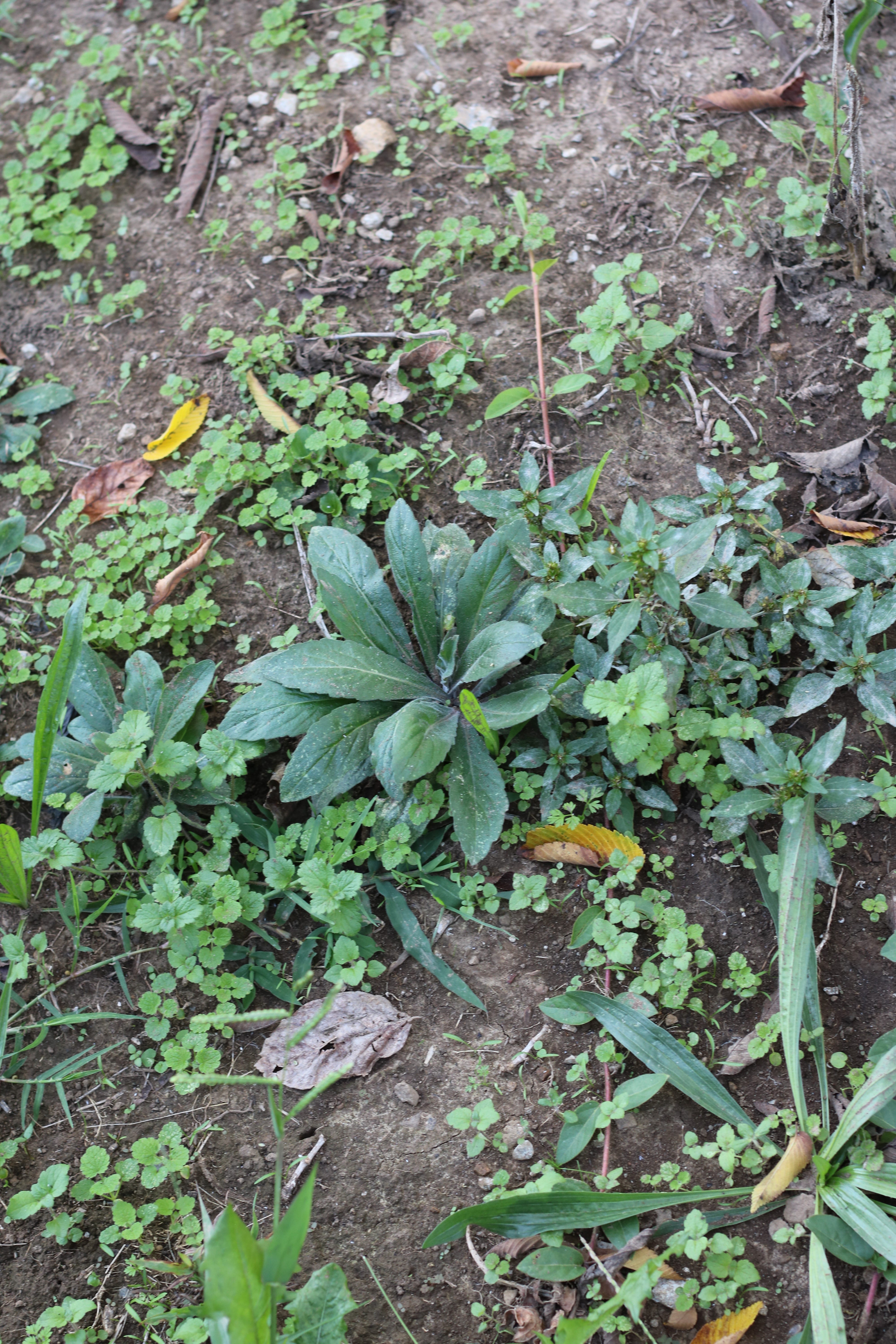
It’s a lot of work, just figuring out what the hell is what in the yard. I’m still amazed at how many things growing freely in the yard are from halfway across the world. Here is this tree, right outside of my window in the great state of Tennessee, thriving and looking healthy and wonderful, and low and behold, it’s from China. Right next to it is another tree that is doing wonderfully, that I also see all over the neighborhood, and wouldn’t you know it? It’s also from China. In my yard, smothering my frost aster and wrapping all over everything, snaking out across the ground, is a wonderful vine from Japan! And half of the sprouts in my new garden are the seedlings of yet another tree from where? Yes, China. Right over in my neighbor’s yard are two uncultivated wonderful flowers from East Asia and Peru, and in the front of my other neighbor’s yard is a lovely Japanese banana tree. On my short walk to the coffee shop through my neighborhood, I can count about fifteen Crape myrtle trees, which are from India. And the little fuzzy plants popping up? Maybe those are young Black-eyed Susan plants?
Nope. Common mullein from Eurasia (introduced in the 18th century, apparently).
 HAKUMUSU