
My eyes are twitching right now, as I begin to type this up, because they’re so tired.
I think they’re irritated from the chalk. Lots of chalk in the air, at a climbing gym. So much chalk, actually, that we have machines called “chalk eaters”, and their entire job is to filter chalk out of the atmosphere. One of our daily tasks being to clean the filters.
I had a short shift today, (4 hours), and the funniest thing that happened today was my coworker educating me on what a GriGri was, a word that I had been hearing often recently at the gym. I thought it sounded like the name of some kind of monkey. I commented on this—initially, no laugh, maybe a small chuckle from Ashley or the big boss—but I couldn’t let it go, because it was such a funny word, captivating me. Ashley showed me the GriGri, which is a tool used in harnessing yourself to the rope in climbing, and I just kept thinking about this amazing word, and said “It’s like LaBuBu”. That was a money line, so juicy that it brought out a loud laugh from the big boss. He said he was going to be thinking about that all night. Labubu. GriGri. I then wrote on a sticky note, “Labubu + GriGri = LaGriGri”, “collab”, and stuck it to the counter, leaving it for the later shifts to think about.
On my previous shift at the gym, my biggest hit idea was the concept of a lazer nail cutting machine. Advantages, 1. Sanitary, therefore does not need to be disinfected (useful for medical purposes and at a place such as a hotel or climbing gym), and 2. perfect precision. Well, and 3. incredibly cool. Because “lasers”. We could have machines at CVS, Walgreens, the grocery store, etc., that would trim your hands, feet too, via the power of lazers, with perfect, machine guided precision and accuracy. I imagined that they could also etch designs into people’s nails, for aesthetic purposes and swag. People could even create and upload their own designs. We could call it, “LazerNails”.
This was million dollar idea. People who wanted a personal unit could shell out some dough and have their own LazerNail machine at home. Nail salons could have them. Possibly. Except does that put the nail salon people out of business? I don’t know what happens at a nail salon, I can’t say.
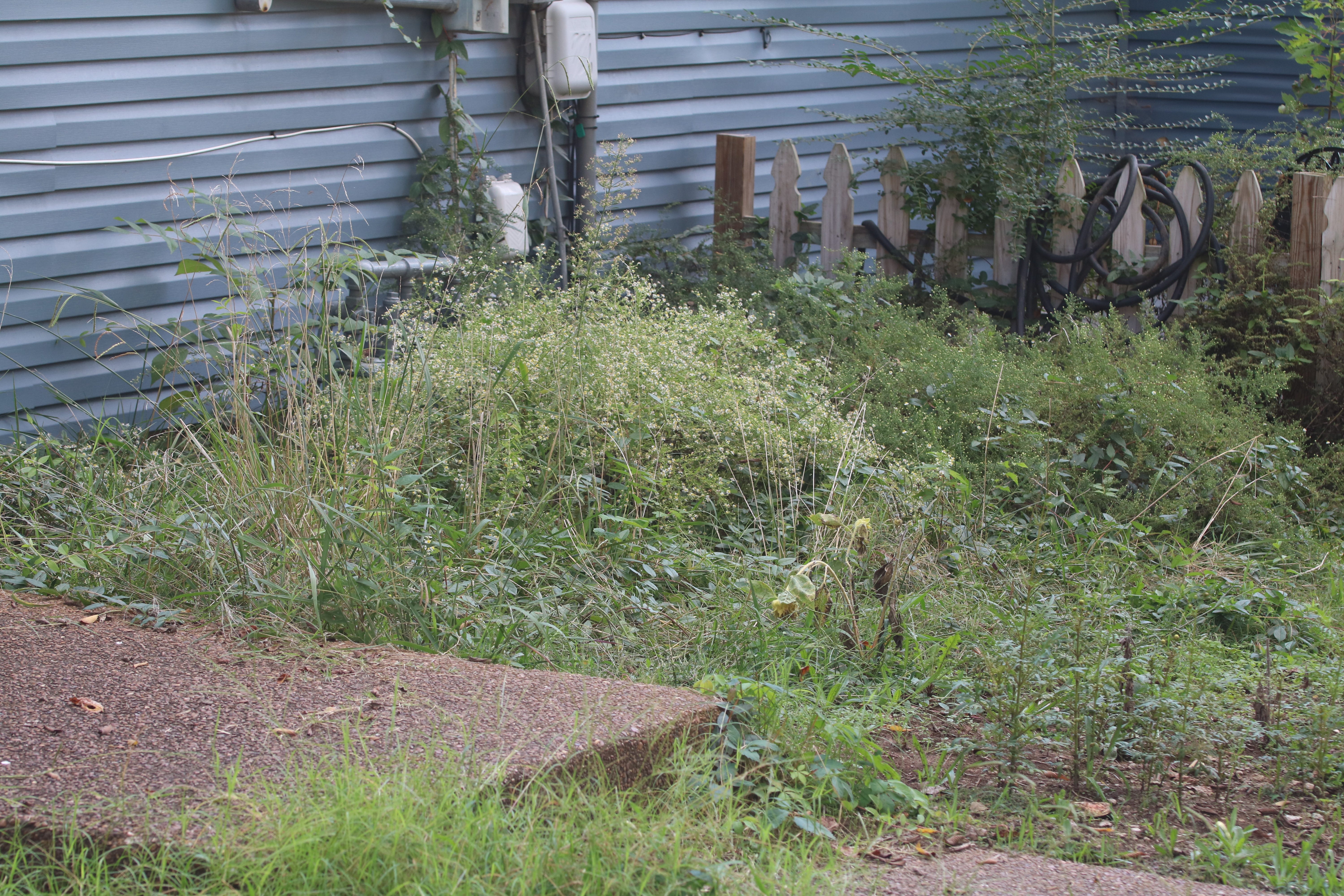
I have just done some photography for you all, and for myself, to document the local wildlife and greenery. There is an awesome plant that is once again blooming in my yard, and I’ve IDed it, and it’s incredible news. A large part of the front yard is covered with a plant that is inconspicuous and green for most of the year, that bides its time, before unleashing an enormous spread of flowers come Autumn. That is, now. And it is doing this again. Last fall I was shocked to see it. I had thought the plant was a useless weed, probably invasive, sprawling and certainly undesirable by any good homeowner’s standards. Boy was I glad to see it pop off. And this year, hungry for ecological knowledge, I actually have figured out what it is, and ladies and gentlemans, it is FROST ASTER.
The best news? NATIVE.
The bees love it. It’s a late bloomer, just starting to come online here at the end of September. And the bees are loving it.
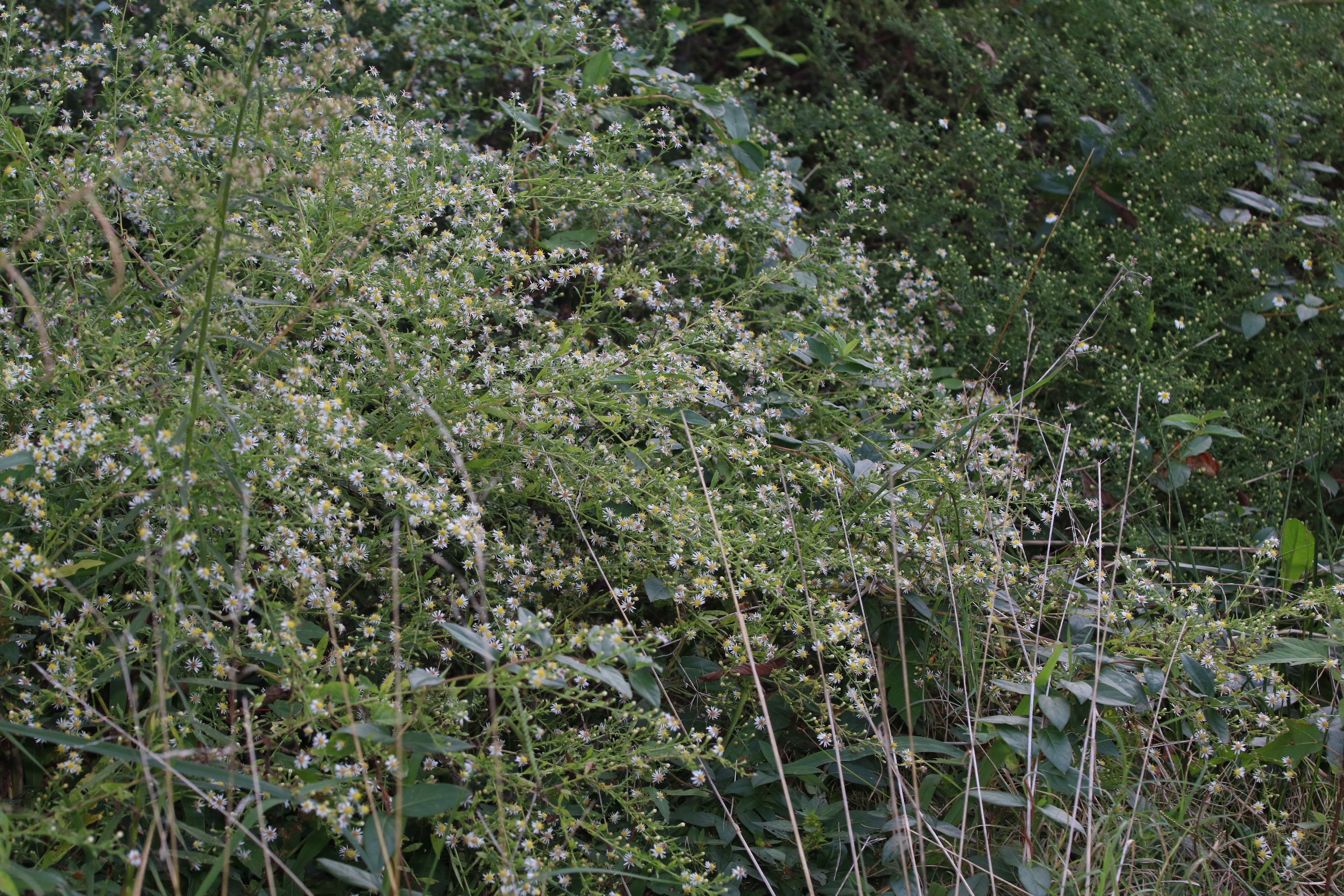
In the back right of this photo is more frost aster that just isn’t blooming yet. It’s interesting that it’s blooming like this, and I think it happens because of sunlight. The back corner of the yard gets less sun, blocked by the house. That’s one hypothesis at least.
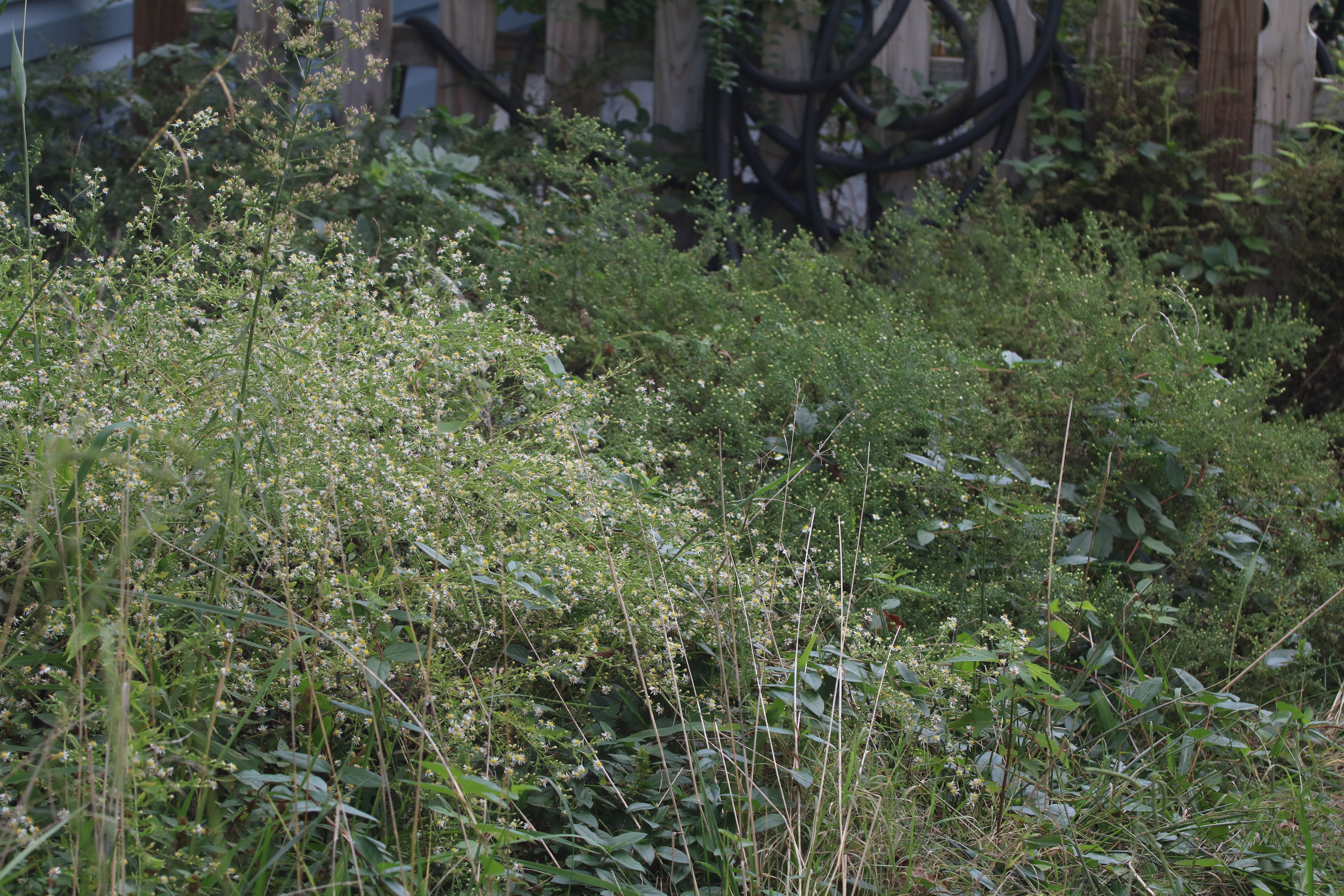

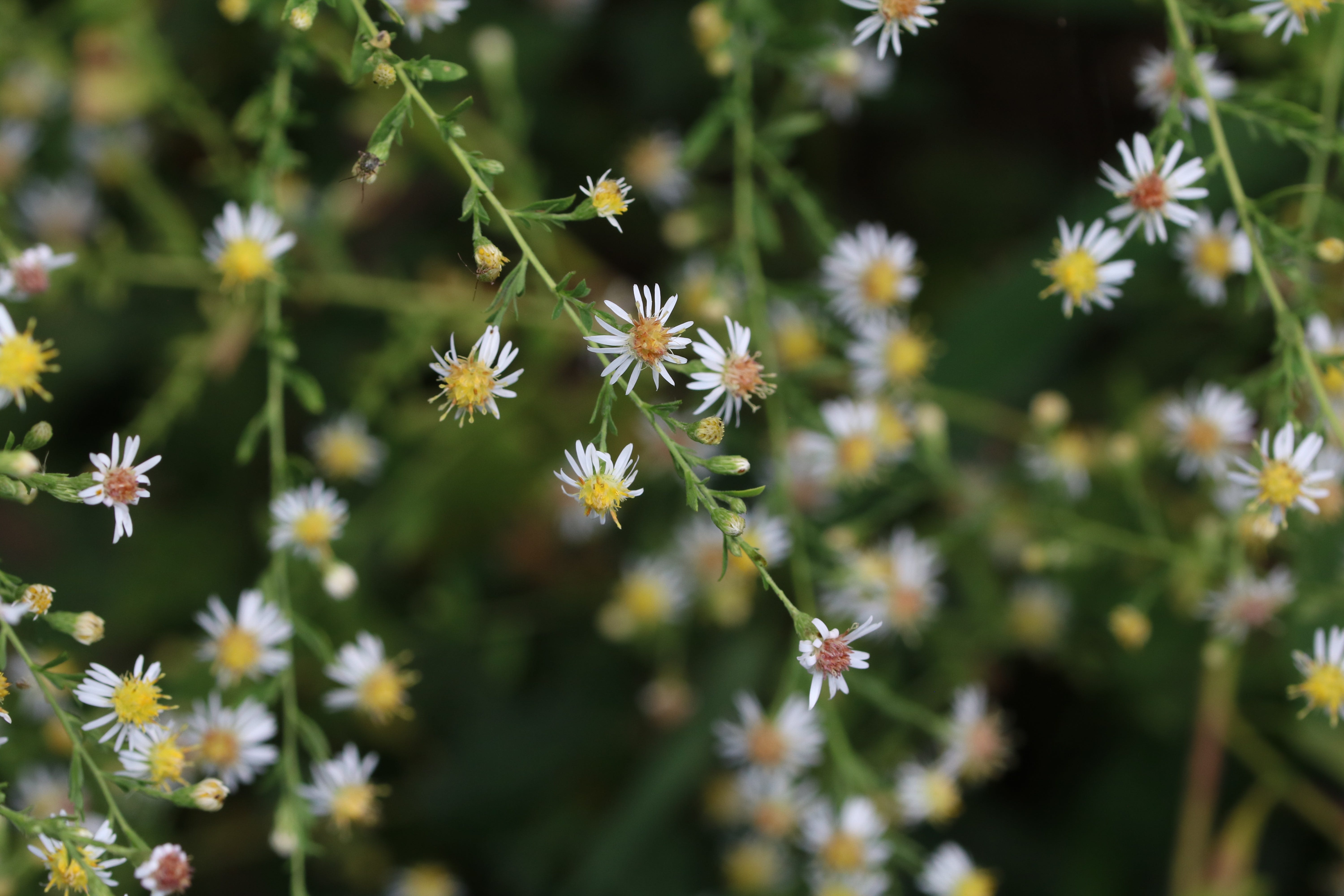
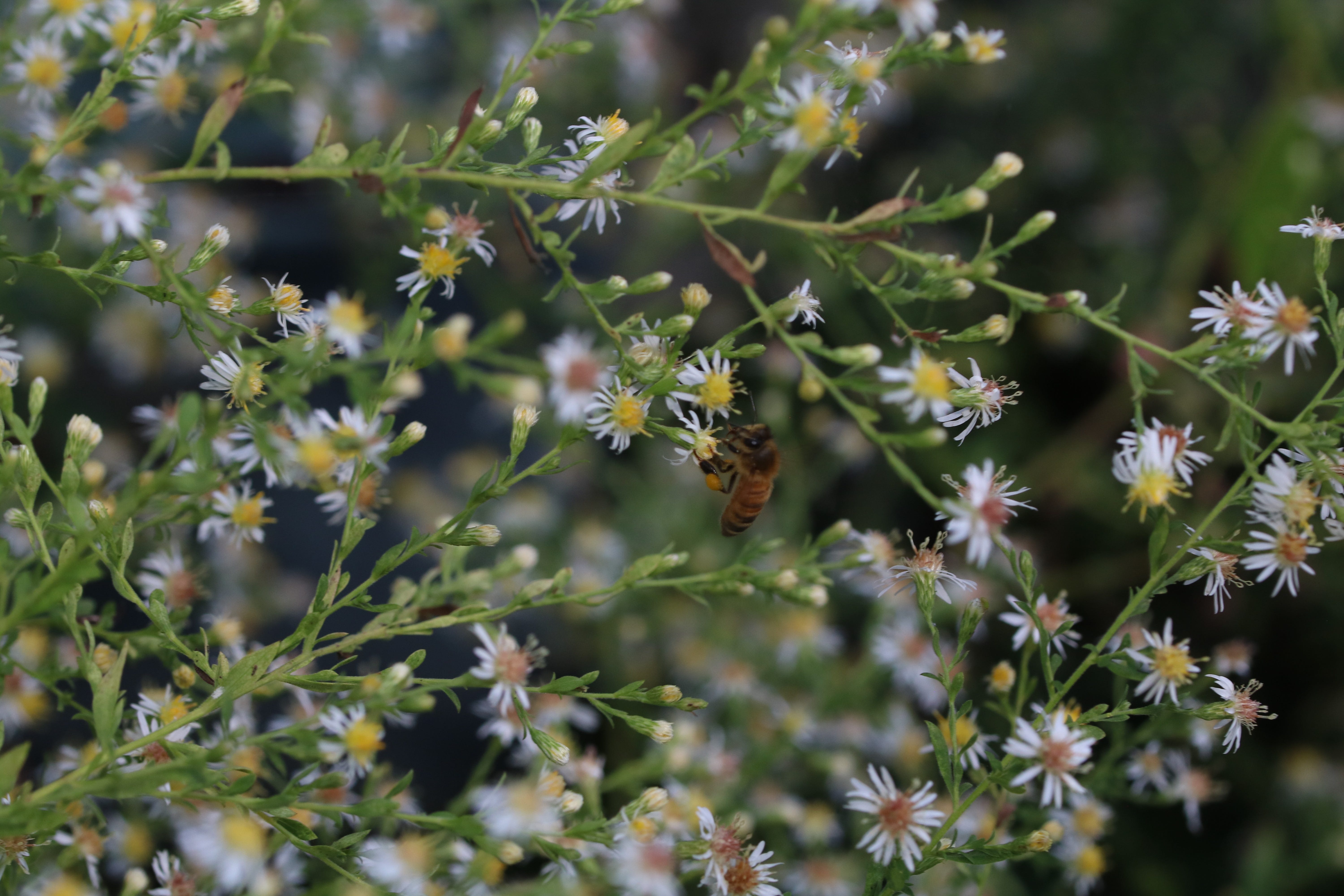


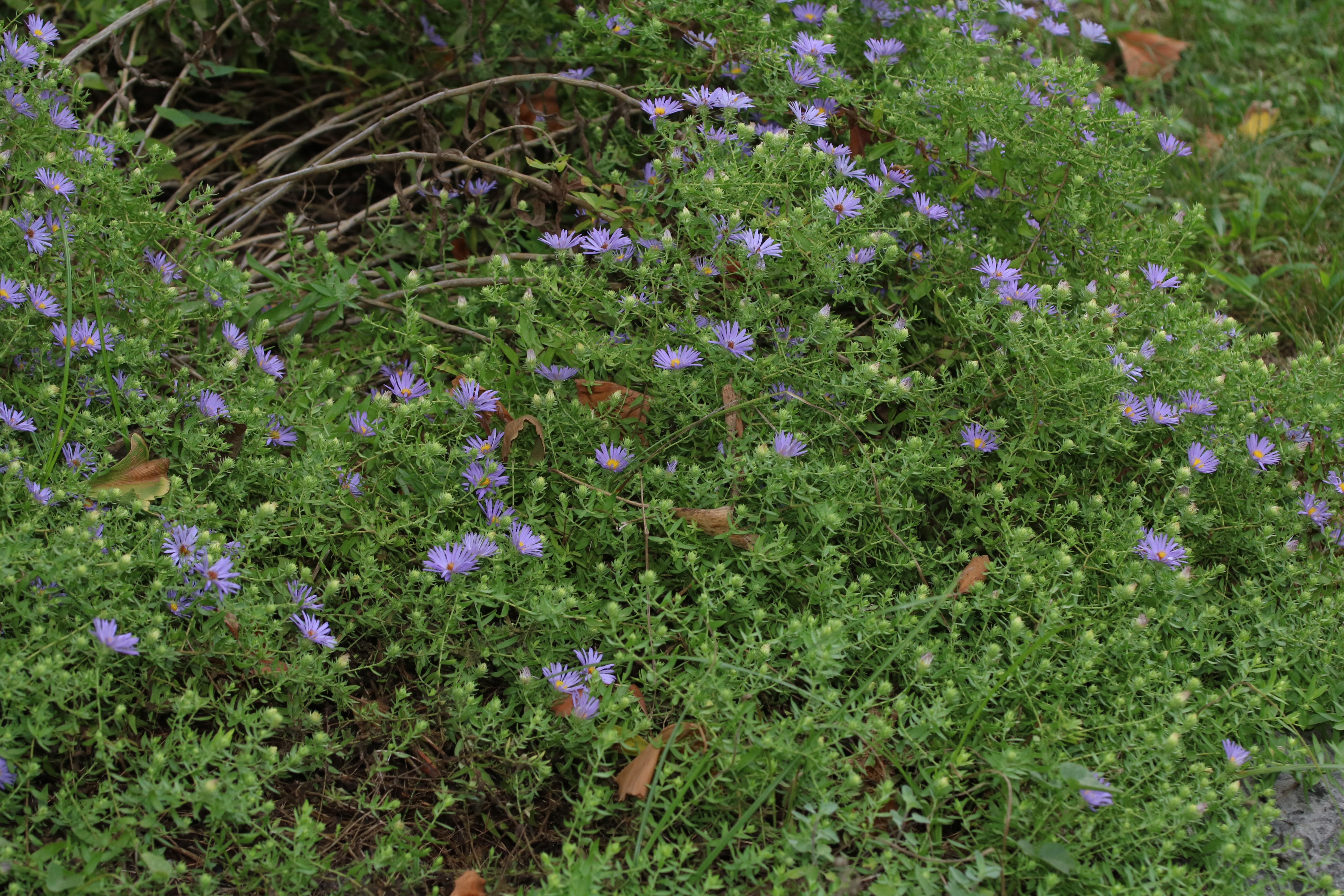
I’m now seeing this frost aster blooming around the neighborhood. It’s not the most common plant but I see it around, in yards. A couple neighbors have some beautiful purple ones. As you can see, there are thousands of flowers on the plant, and they’re very tiny and dainty. Kind of special and unique. Frost aster is a member of the Asteraceae family, which includes daisies and sunflowers.
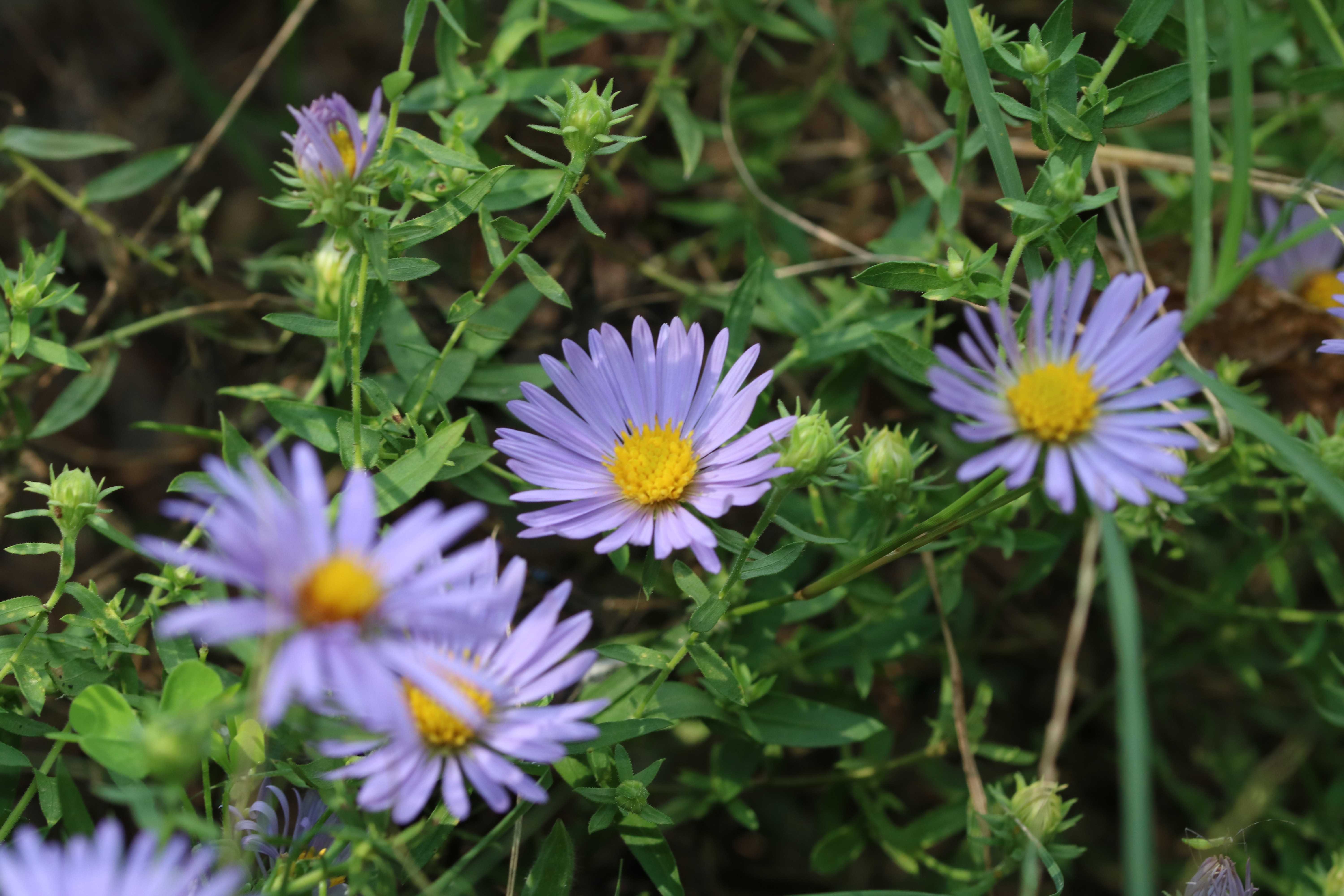
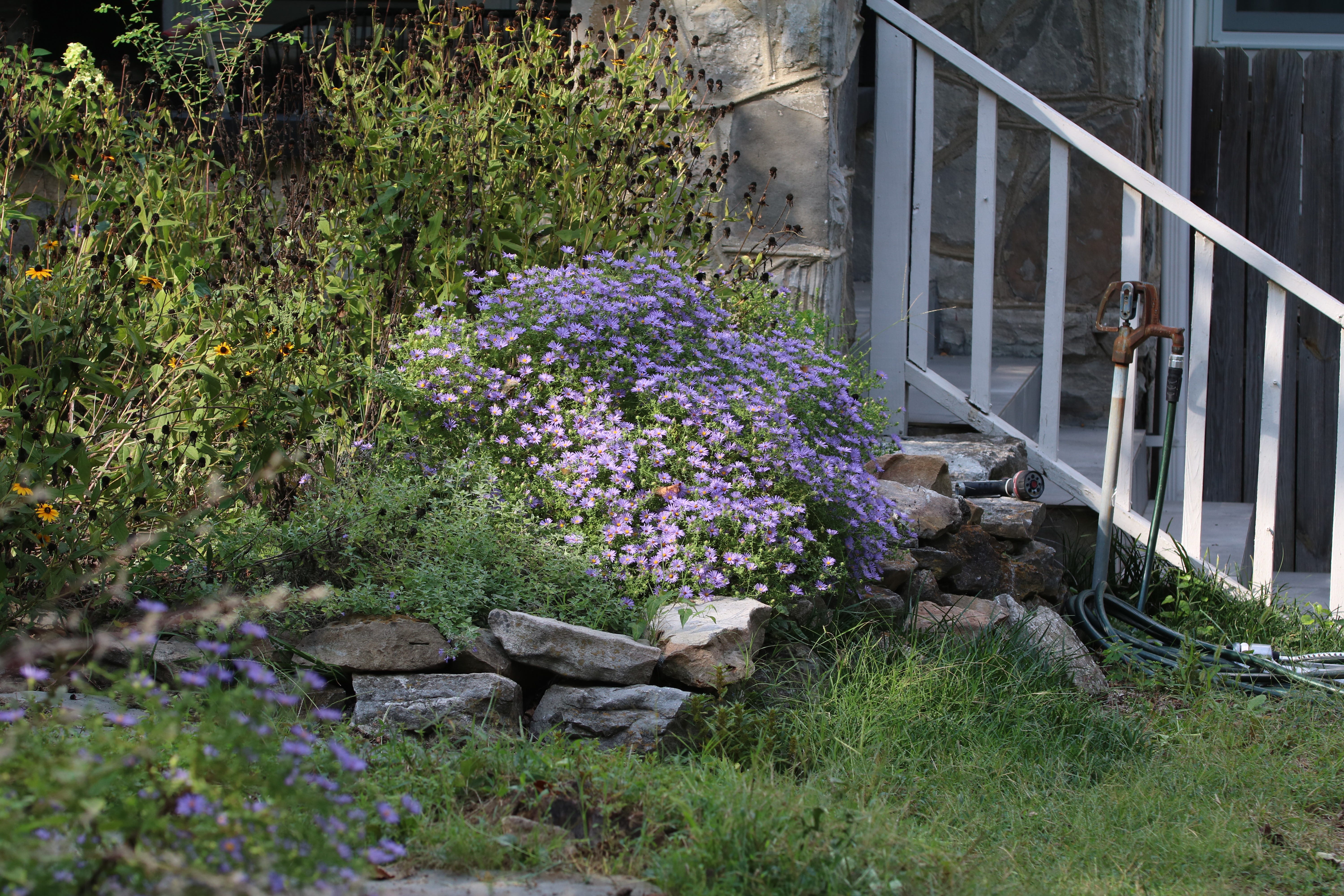
So there you go. New plant knowledge acquired. The internet says they bloom for around six weeks, which is amazing. That’s a long time. I hope it’s true!
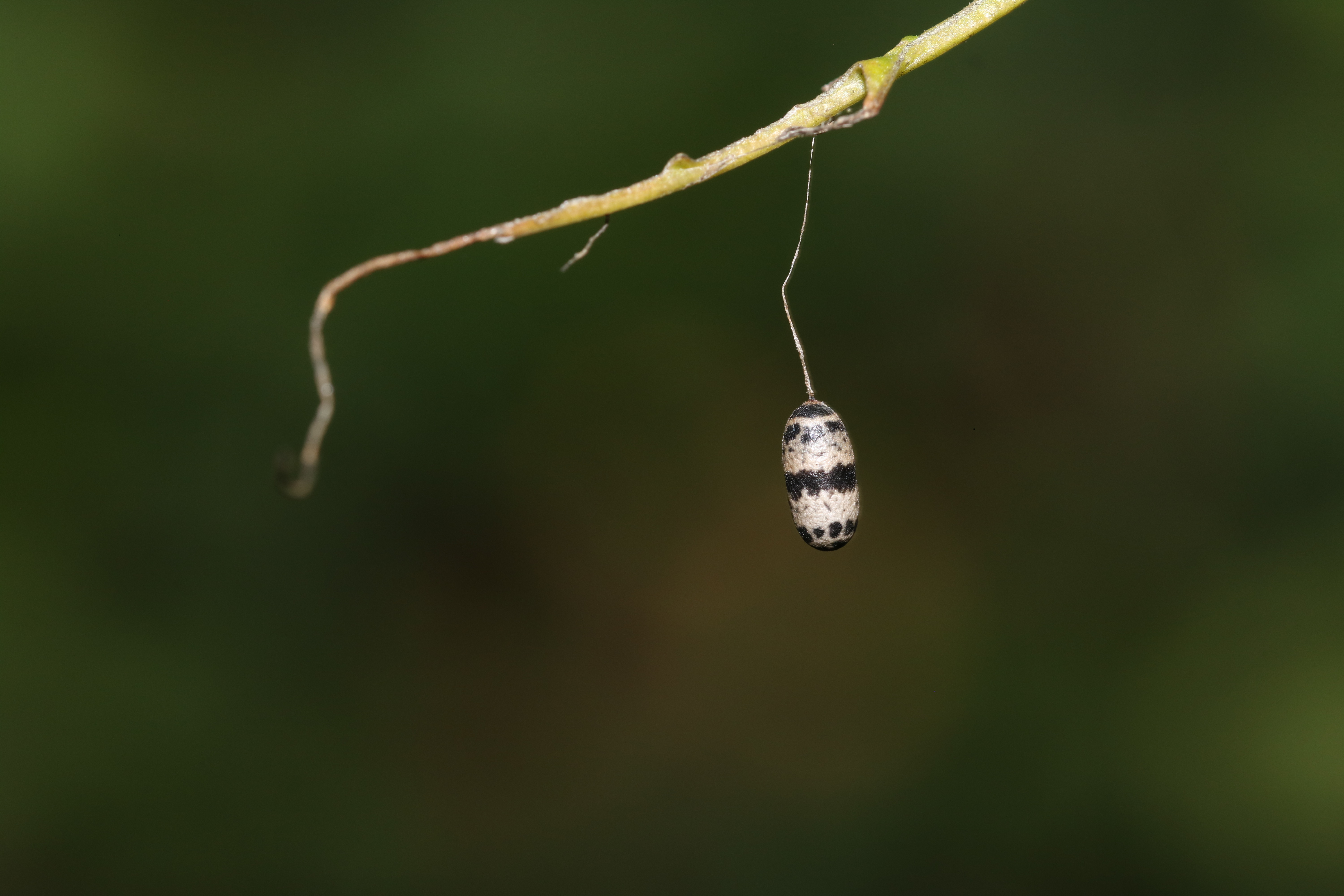
Now, there was also something I spotted in the yard yesterday that I wanted to photograph for you. This is a very interesting sighting. I will show you a picture.
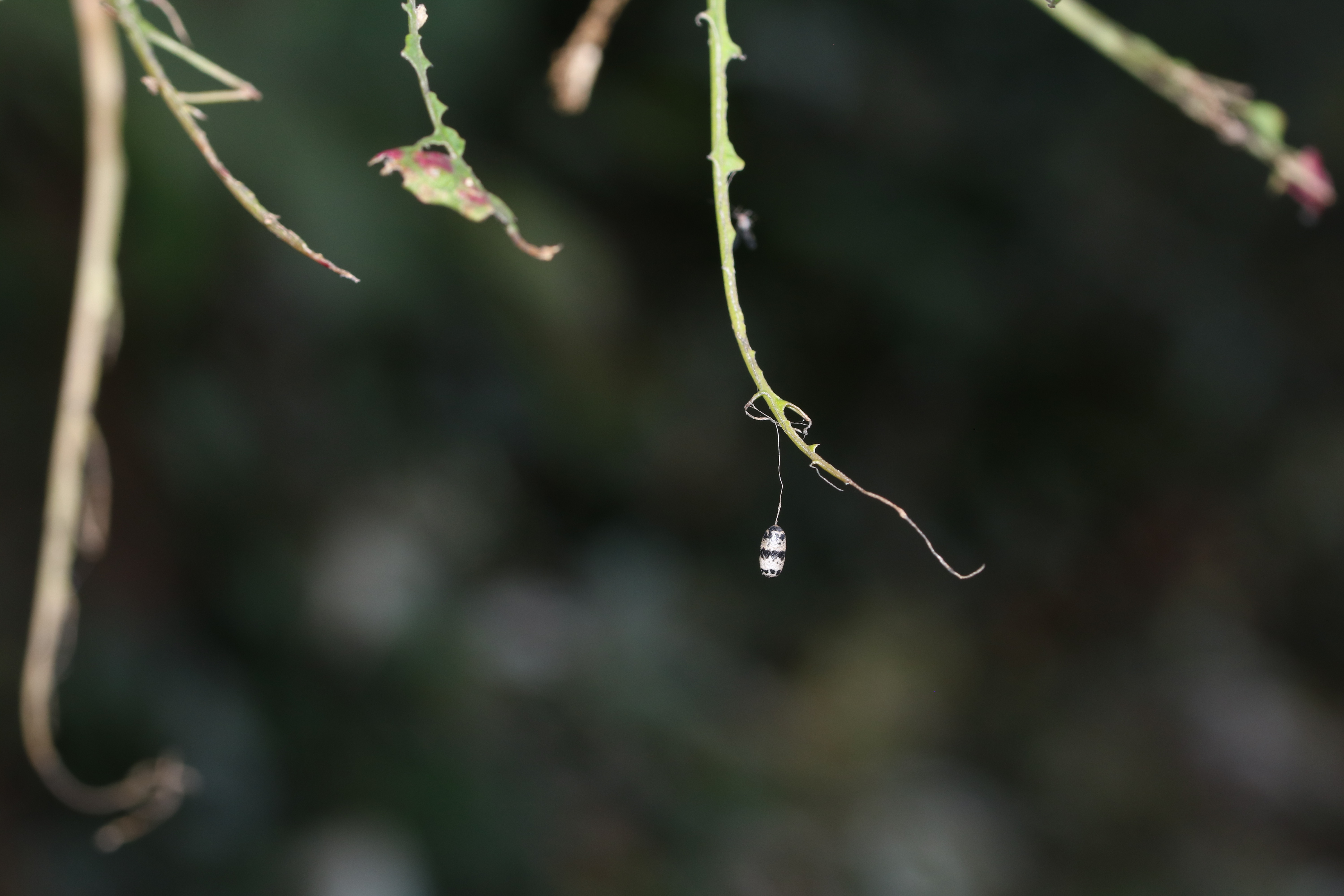
As you can see, this mystery cocoon is very small. Extremely tiny. This is why we need a macro lens, because it would be impossible to photograph clearly without macro capabilities. I thought it was some miniature moth caterpillar cocoon, but no—not true. It’s turns out that this tiny cocoon is the cocoon of a parasitic wasp, a member of the Ichneumonid family (which are a bunch of parasitic wasps). The species is Charops annulipes.
Ichneumonid wasps are some of the smallest bugs out there. There are some (such as this one) that are only a few millimeters long. This Charops annulipes is 4-5 millimeters in length.
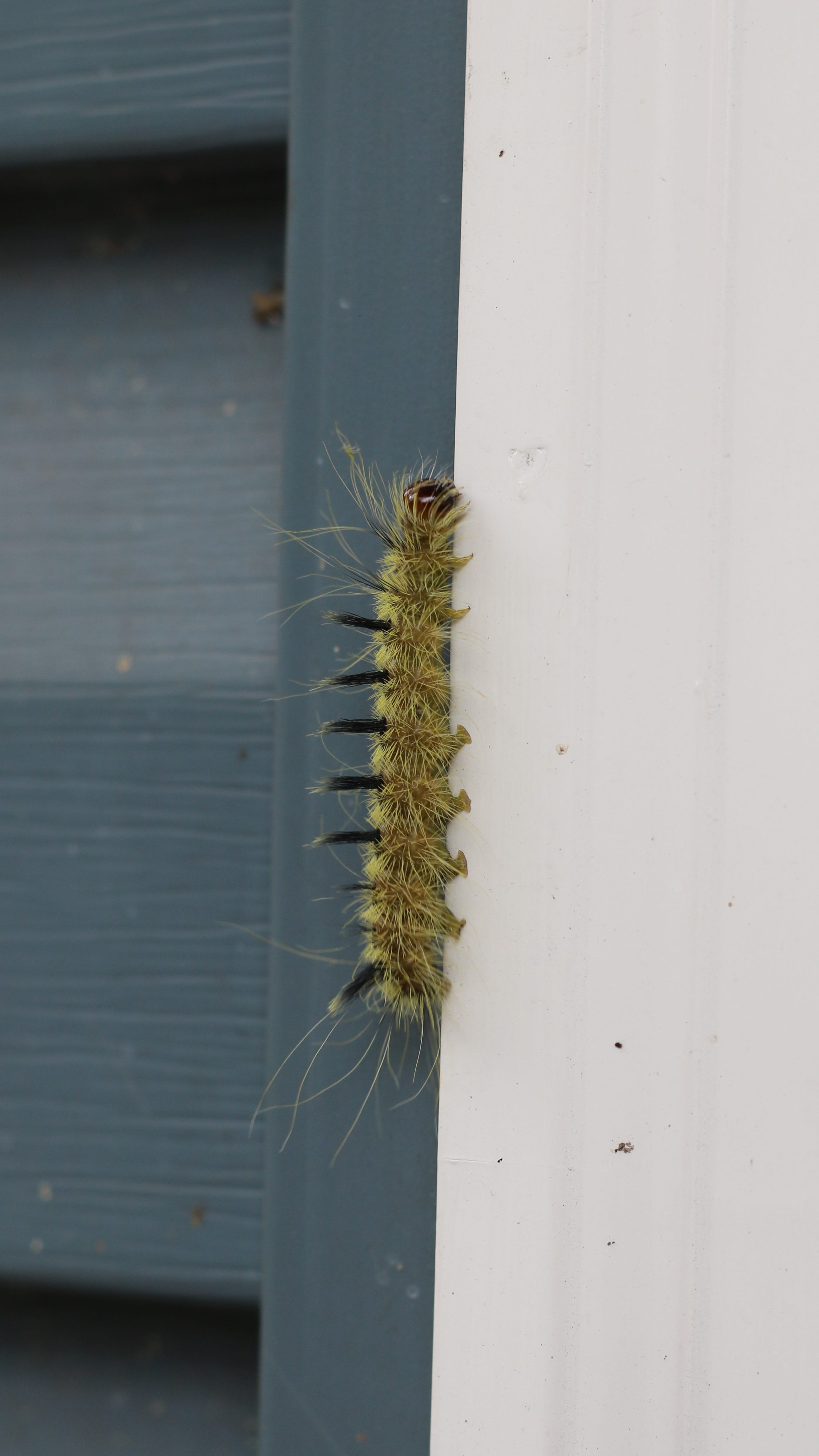
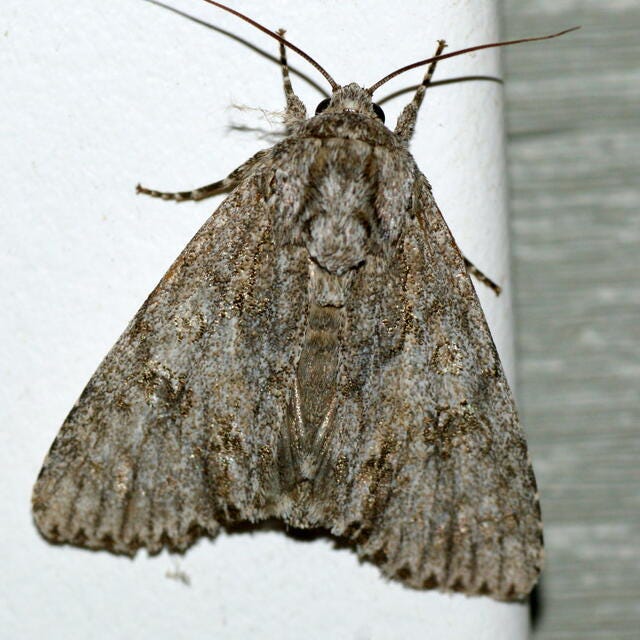
I was also greeted an extraordinary caterpillar when I opened my door yesterday. It was crawling manically up the side of the house, along the doorframe. I’ve never seen such a caterpillar before. It’s a Ruddy Dagger Moth caterpillar, which is an interesting name. How did it get such a name, you wonder? What does that even mean? A ruddy dagger? This guy was pretty huge. Probably 4 or 5 inches long. I was feeling lazy and didn’t get out the macro lens for this one, although I kind of wish I would have, now.
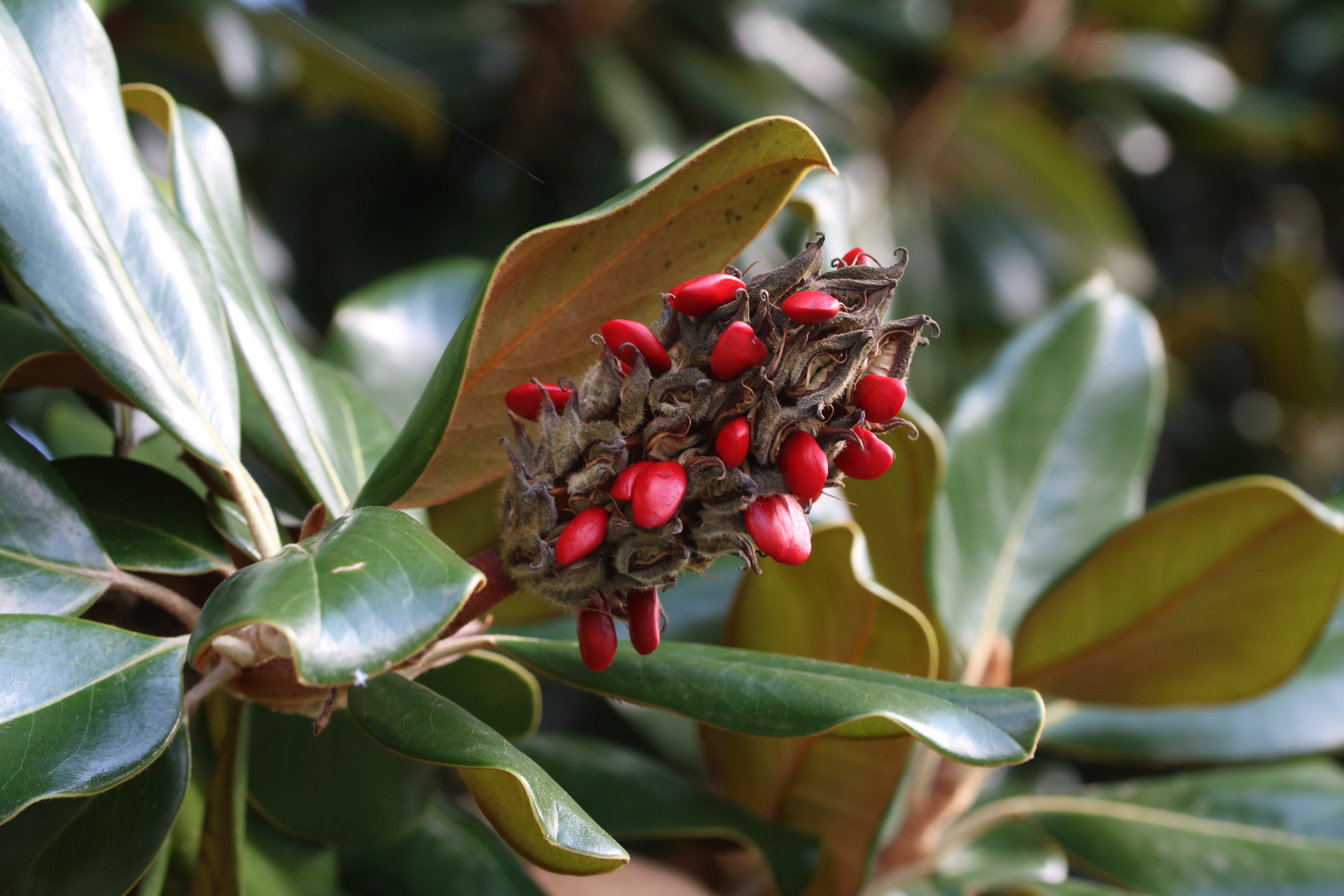
I was walking back from photographing the purple frost asters down the street, and saw a few more interesting plants and flowers.
Here are some seed pods from a Magnolia tree. I had noticed these pods before because they’re so cool, and now they’re making the seeds, and they’re even cooler. They look so alien, to me.

I also saw this interesting plant, a small, non-descript green leafy plant with yellow flowers. It seems to be a Mirabillis jalapa, from Central and South America. It’s a common ornamental plant apparently, and is not considered invasive, although it is non-native to North America.
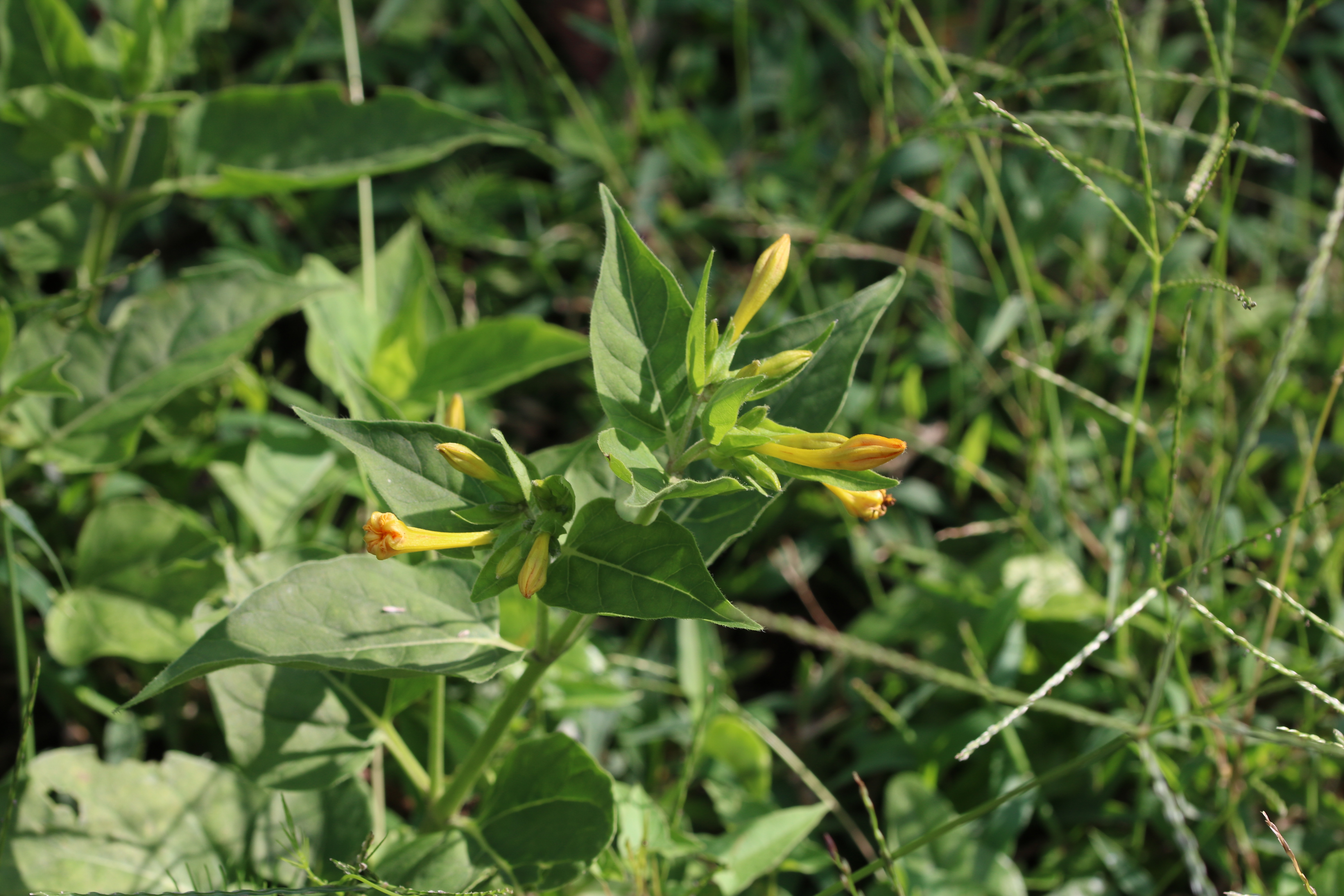
This is something that I’m learning about our little East Nashville neighborhood ecology. There are plants here from every dang corner of the world. You think it would be shocking to find a random plant from Peru growing in the grass in the neighbor’s yard. Once upon a time it might be. But we have plants around here that are from every corner of the globe, and some of them are running wild and free. From what I know, we’ve got plants from Australia, New Zealand, Japan, China, India, South America, Central America, and Europe—western Europe and eastern Europe too. So there you go. That’s almost everywhere. Only Africa is yet to represented among plants I’ve discovered in the neighborhood.
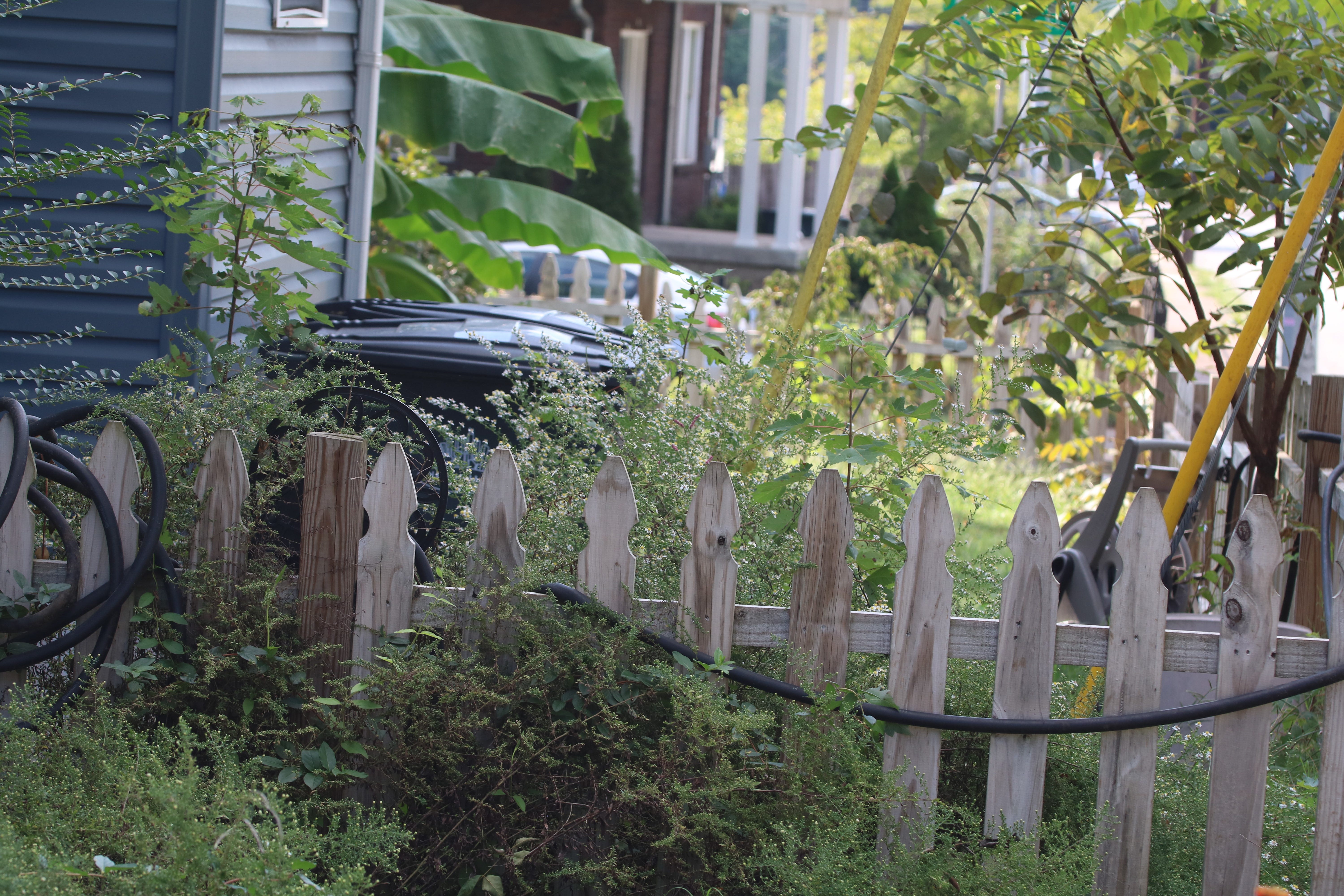
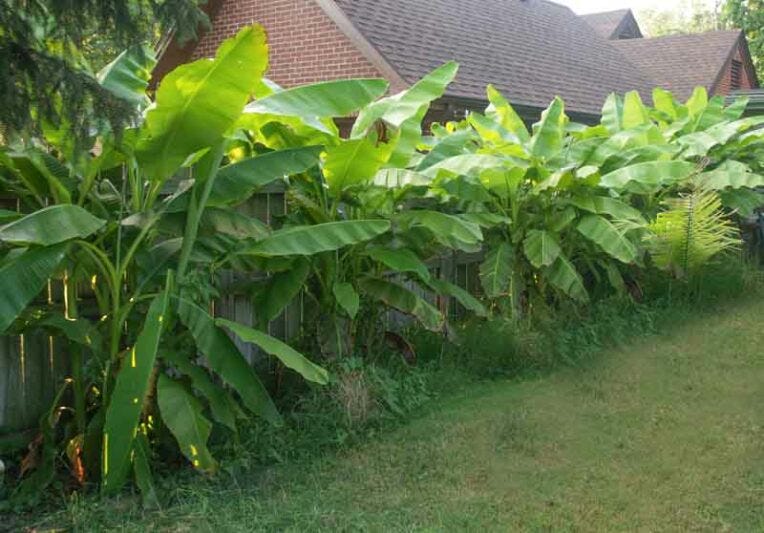
My neighbor has a banana plant, a huge banana plant in his front yard. Another house further in the neighborhood has many of them. They probably planted them, and I bet my neighbor just let one grow in his yard.
You can actually see the banana plant in the background of this photo that I took, focusing on the frost asters. See the enormous green frond leaves sticking out from behind the trash can?
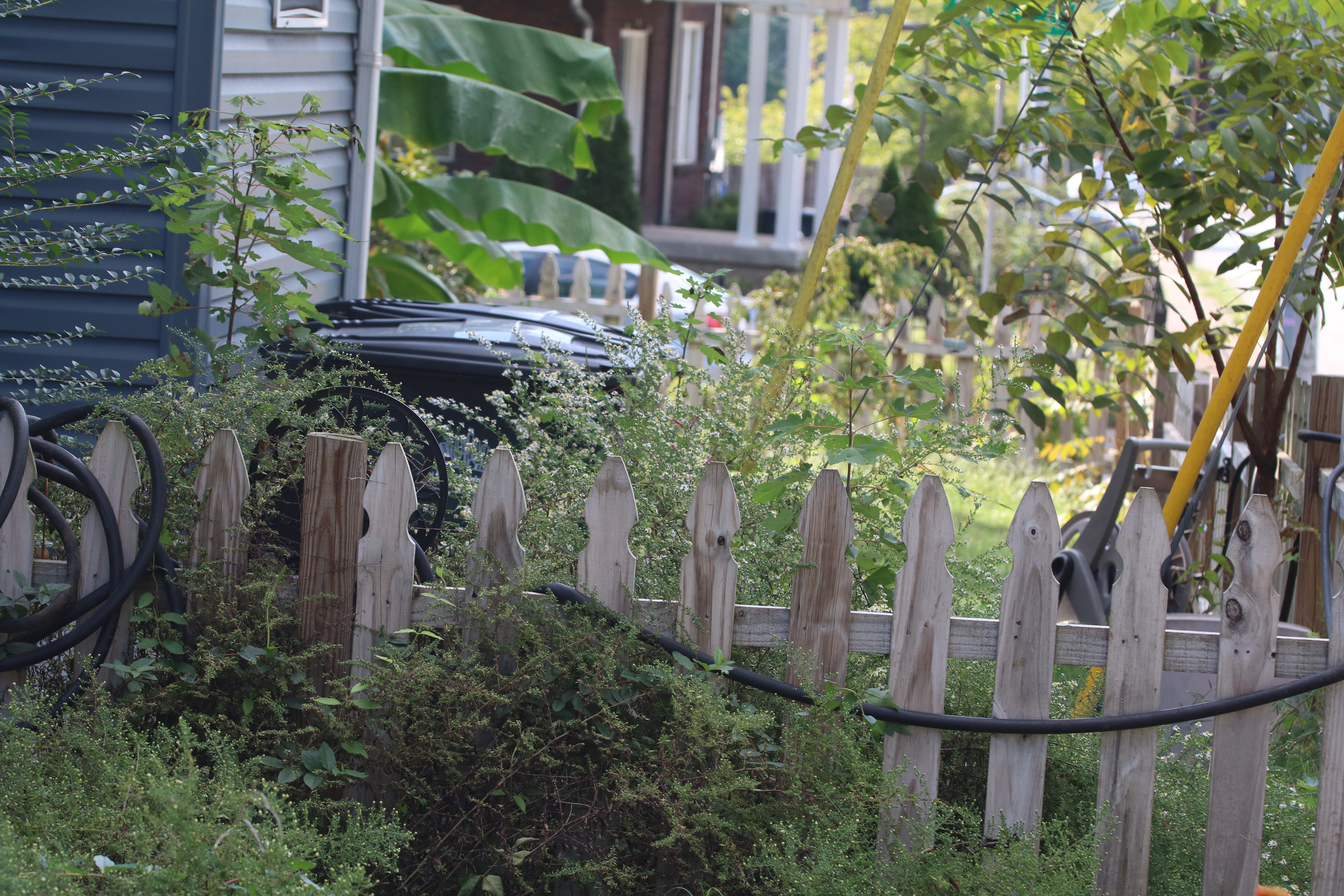
That house that is surrounded by banana plants, it looks like it’s from Central America. It looks like the entire house was airlifted, yard and all, and dropped down in Nashville, TN. That’s what it looks like, because of those huge banana plants. Apparently that plant doesn’t even produce edible banana—it’s called a Musa basjoo. I’ll get some photos and show you guys in a future post. This plant is also called a Japanese banana plant, although it is originally from China, it has long been cultivated in Japan. And it seems to do great here in Nashville.
Right next to the “Marvel of Peru” (in the grass in my neighbor’s yard in Nashville), was the below, small, green, inconspicuous plant, with little blue and white flowers. This is apparently the Asiatic Dayflower, Commelina communis, native to East Asia. So there you go. Central America and East Asia hanging out in a patch of grass together, here in East Nashville. What an incredible thing. The internet says it blooms for only a single day. That’s pretty cool. I’ll keep an eye out for it. Perhaps just tomorrow it will be blooming? Clearly they’re ready, if these didn’t bloom already.


I also spied some goldenrod in an empty, overgrown lot. This is a good native flower right here.

That’s what I got for y’all today, folks. What an incredible treasure trove of natural wonders we have here, in little ol’ East Nashville!
 HAKUMUSU