
Sept. 15, 2025
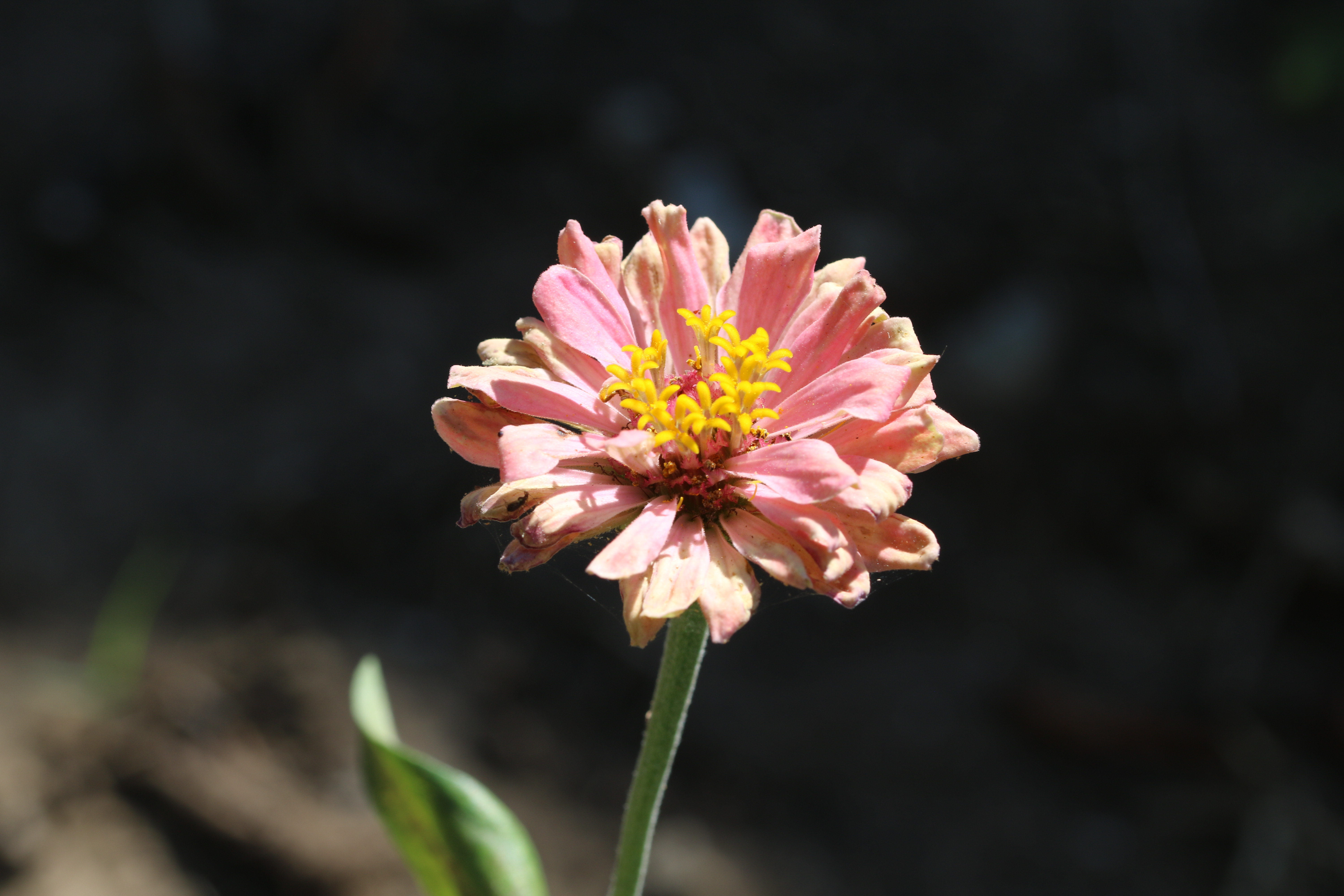
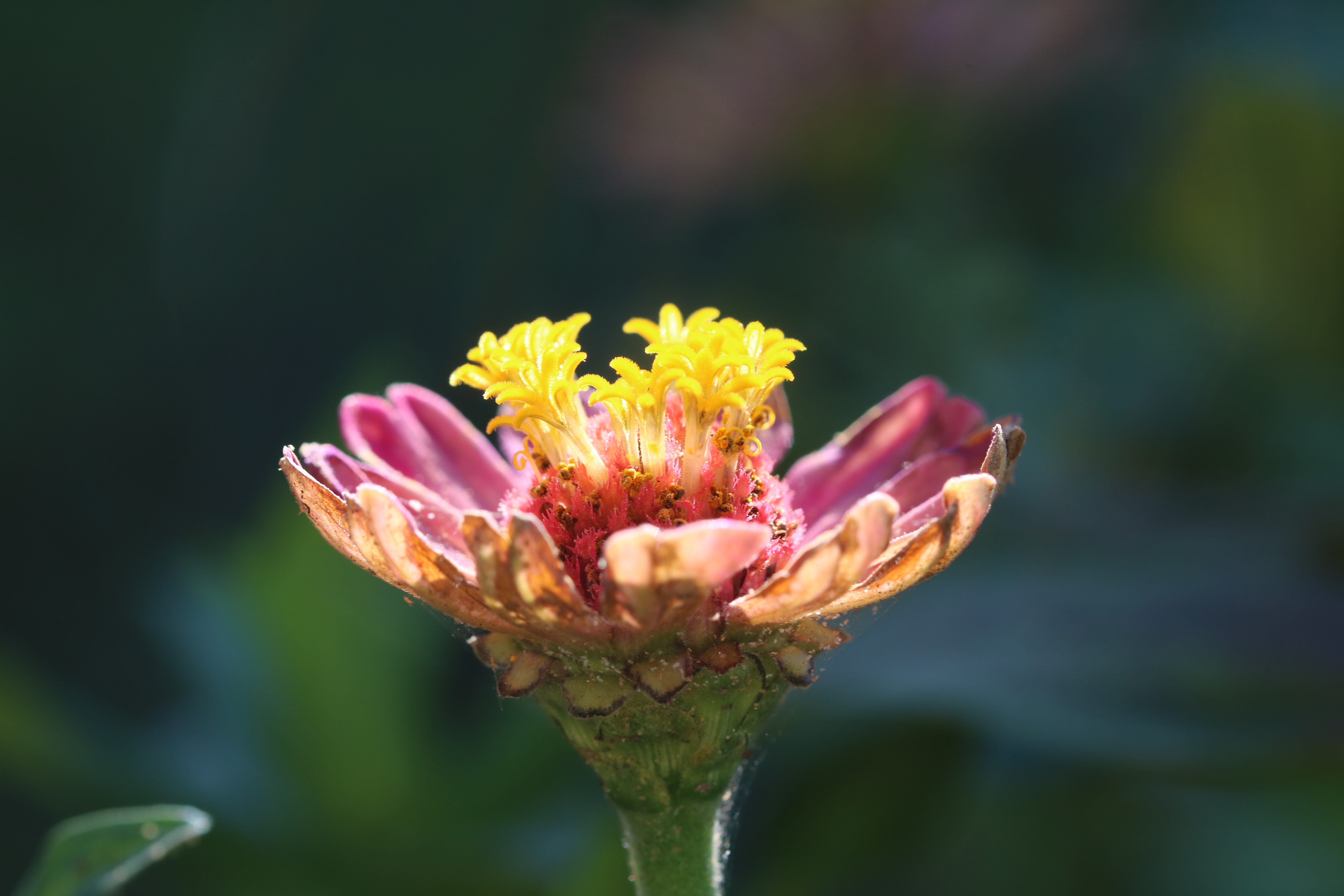


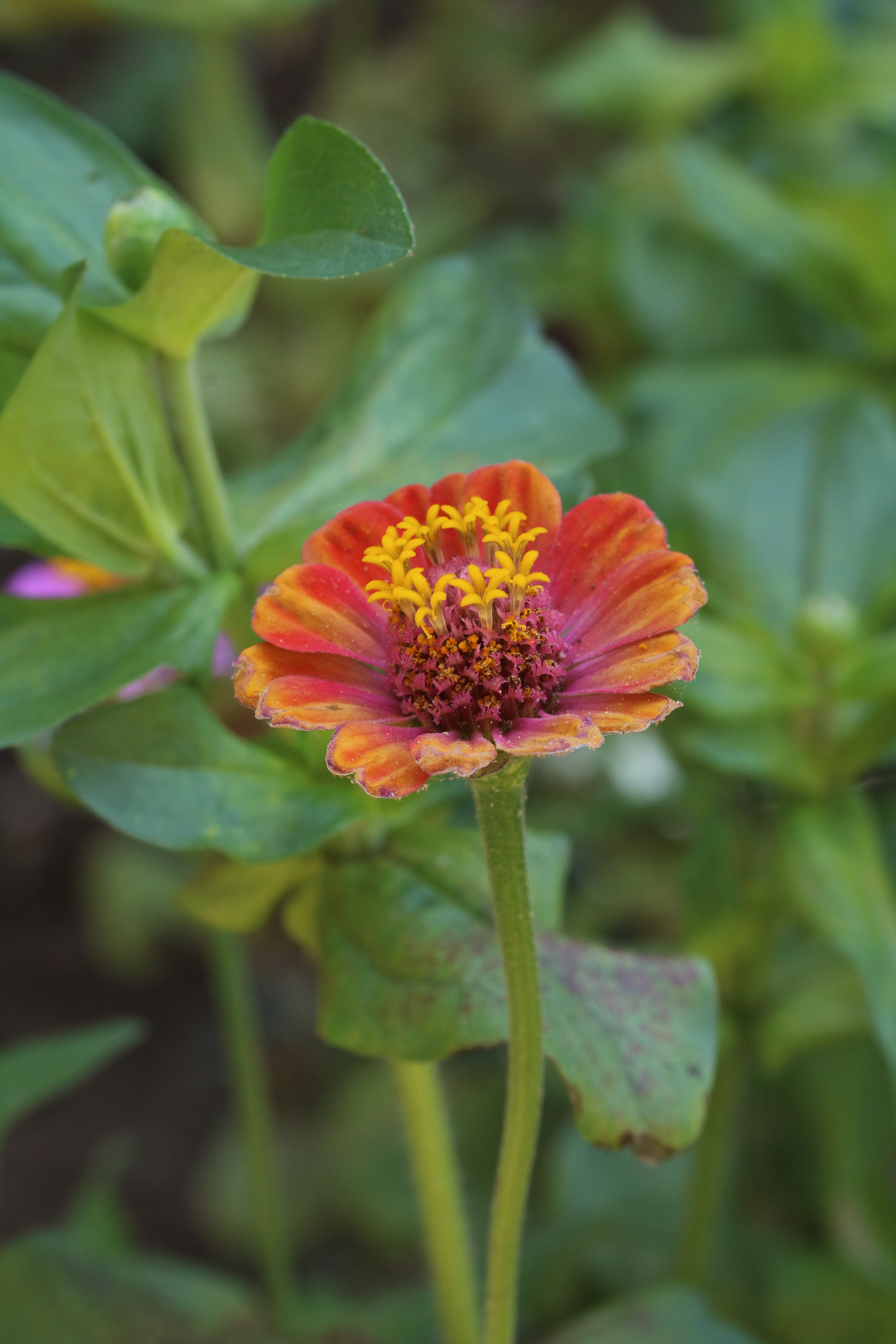
I was happy to see two butterflies this morning on my zinnias. They looked like fritillaries, large and beautiful. And I thought, I made that happen. There is something here now that wasn’t here before, this garden. These flowers.
Now, have I done a net good? Because I did unearth the soil and unhome many thousands of creatures that were living under the grass that I dug up. And I know there were little moths and creatures in there. But, I have done something for the aphids, the lacebugs, and the butterflies, at least. In the end, my flower garden (focusing on natives too, I’ll keep trying) surely will have more of a positive ecological benefit than what was there before.
The zinnias have been easy to grow. A lot of my other seeds are not sprouting at all, and I don’t know if they will. They could be biding their time, they may come up in the spring after overwintering. But the zinnias, they have done well.
I will say that I saw something amazing yesterday. I was walking home from the cafe and I noticed bees, hundreds of bees going crazy over a plant. I’m not sure what it was, it had blue flowers, long stems. I took a photo with my flip phone but that’s not useful for us here. I have to investigate that plant, because that was extremely popular and providing for the bees at an unprecedented level. (Update: it was Russian Sage, Salvia yangii.)
Only the mountain mint has rivaled that level of bee engagement, from what I’ve seen so far. And unfortunately I think my mountain mint is dead. 😢
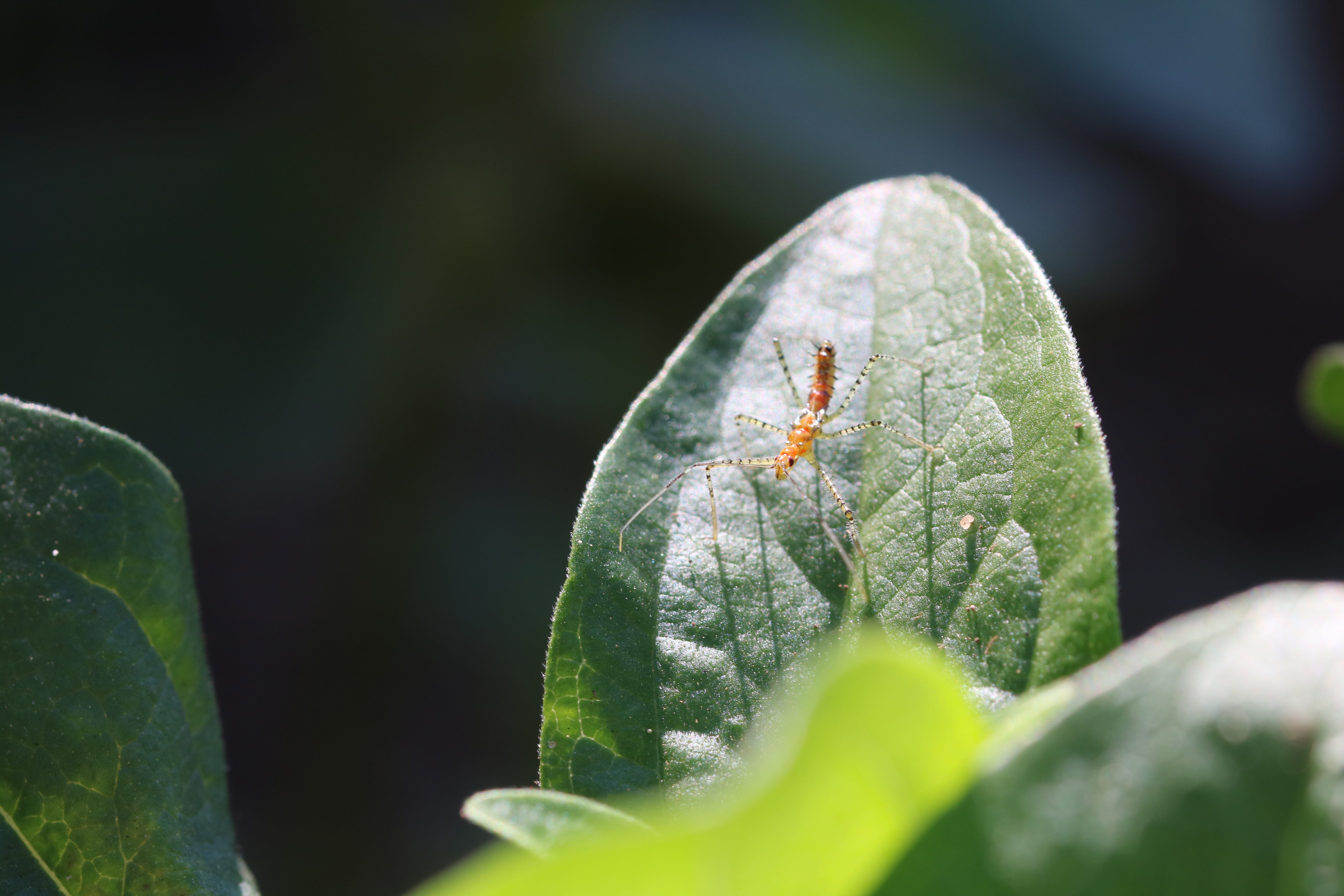
I was hanging out in the garden yesterday and I had been thinking all day that I should do some macrophotography, but it was so hot and I was feeling lazy. Then, I was out there again, checking things out, and I saw that assassin bug nymph (1st photo) on a leaf, and I just had to get the camera out for that. That was a worthy target. I actually thought at first it was a praying mantis nymph, which I would love to photograph. But this nymph was cool too.
From the photos on the internet it looks a lot like a leafhopper assassin bug nymph. I also thought at first it could be a large aphid, but figured it was an assassin bug after looking at the closeup photos. They do look similar. Aphids and assassin bugs are both in the same order, which is Hemiptera. This order is also referred to as the true bugs.
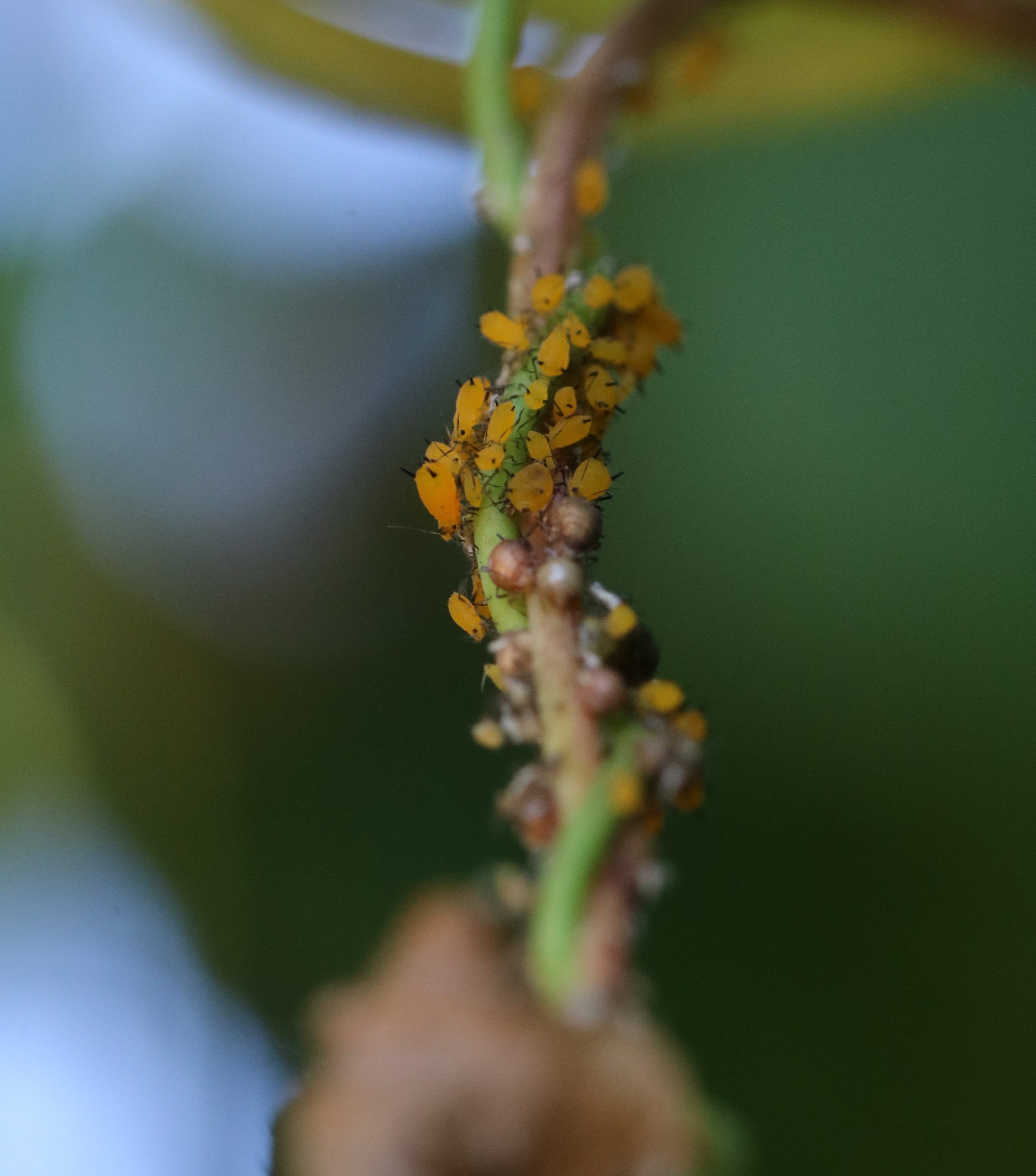
There is one photo here that is not from the garden (below) — that is of the yellow aphids, Oleander aphids. There is a small story here, which is that, if you had read my emergency garden update, you know that I was shocked to see a small milkweed plant pop up in the garden, that I had not planted. That was Honeyvine milkweed, and I thought it was a milkweed because it was covered in these yellow aphids. Well, I was standing out in my driveway talking on the phone, when I noticed a vine across the way on our fence, that looked like Honeyvine milkweed. And this is how these things go. You train your eye, and then you start to see the thing.
Well, I went over to take a look, and I thought, if it was going to be honeyvine milkweed, it should have the yellow aphids on it, right? And low and behold, it did. It was covered in them. Now I wish I would have just taken a photo of the vine as well, for you to get a good look at it, but I am not a good photojournalist. I was simply concerned with the little aphids and not the whole story.
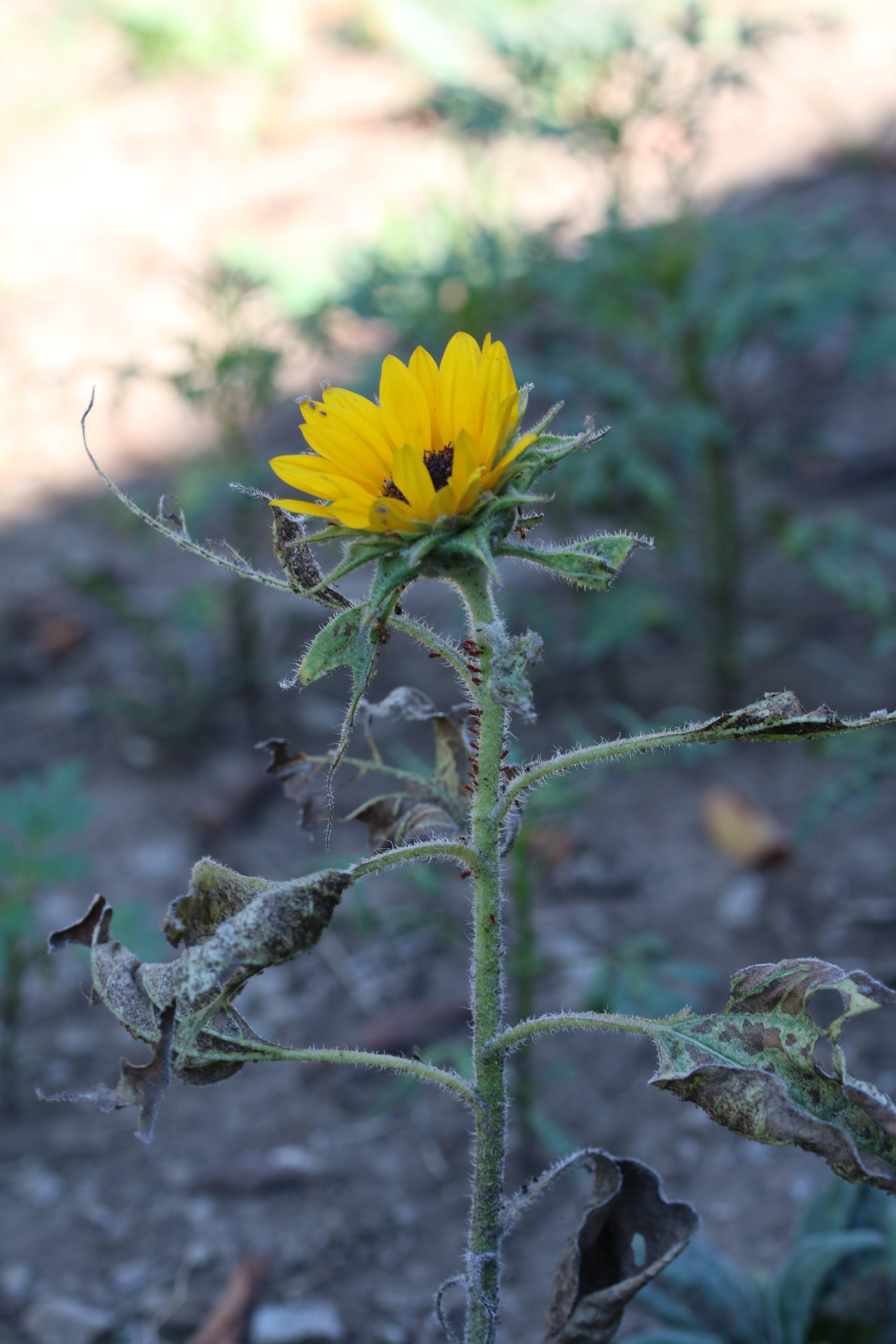
I think that photograph of the sunflower says something about desolation, and finding a way. About survival. That sunflower is clearly not thriving, beaten, bruised, crispy, wilted. It has survived two assaults by something large, having been chomped twice, and it is constantly being drained by aphids and lacewings. It has been thoroughly cooked by the sun for the entirety of its short life, two months. And yet, through all of that, it has been able to flower.
Traumatized, yes, abused, yes, but it flowered. It made it.
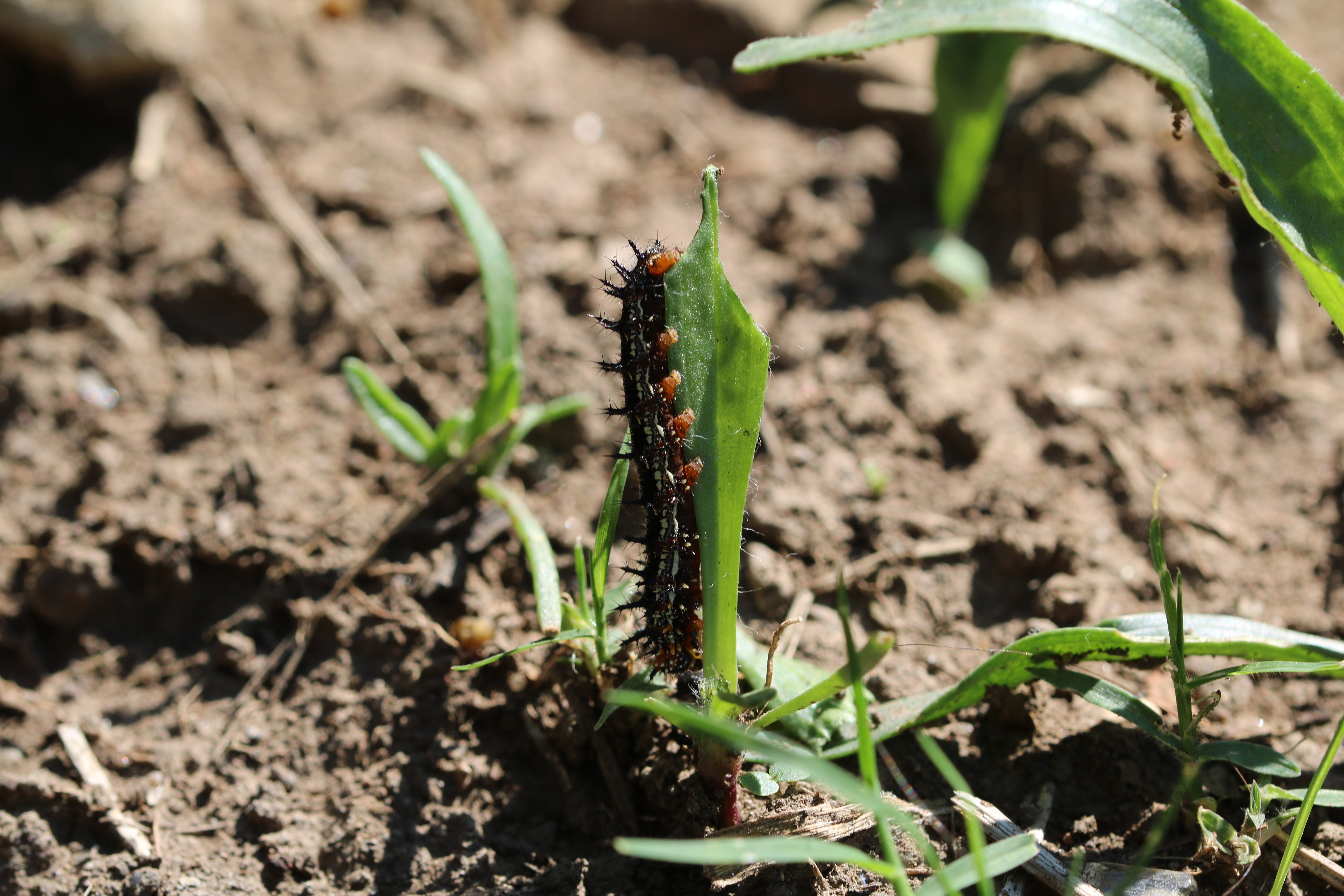
There are now five buckeye caterpillars that are chowing down on a patch of plantain weed in my garden. It’s like I have a caterpillar farm. I was wondering if they would eat the plantain weed faster than it grew, but that has not been the case. There is plenty of plantain weed to go around.
I was wondering what they were munching on, and I thought it could be a grass but it didn’t seem like it. Caterpillars don’t really eat grass, right? I didn’t think so, you don’t see it at least. Well, I looked up what buckeye caterpillars eat, and grass was not listed. So, I did some scouring, and found that these plants were plantain weed, and there are two kinds around here, buckhorn and broadleaf. And now I see them everywhere.
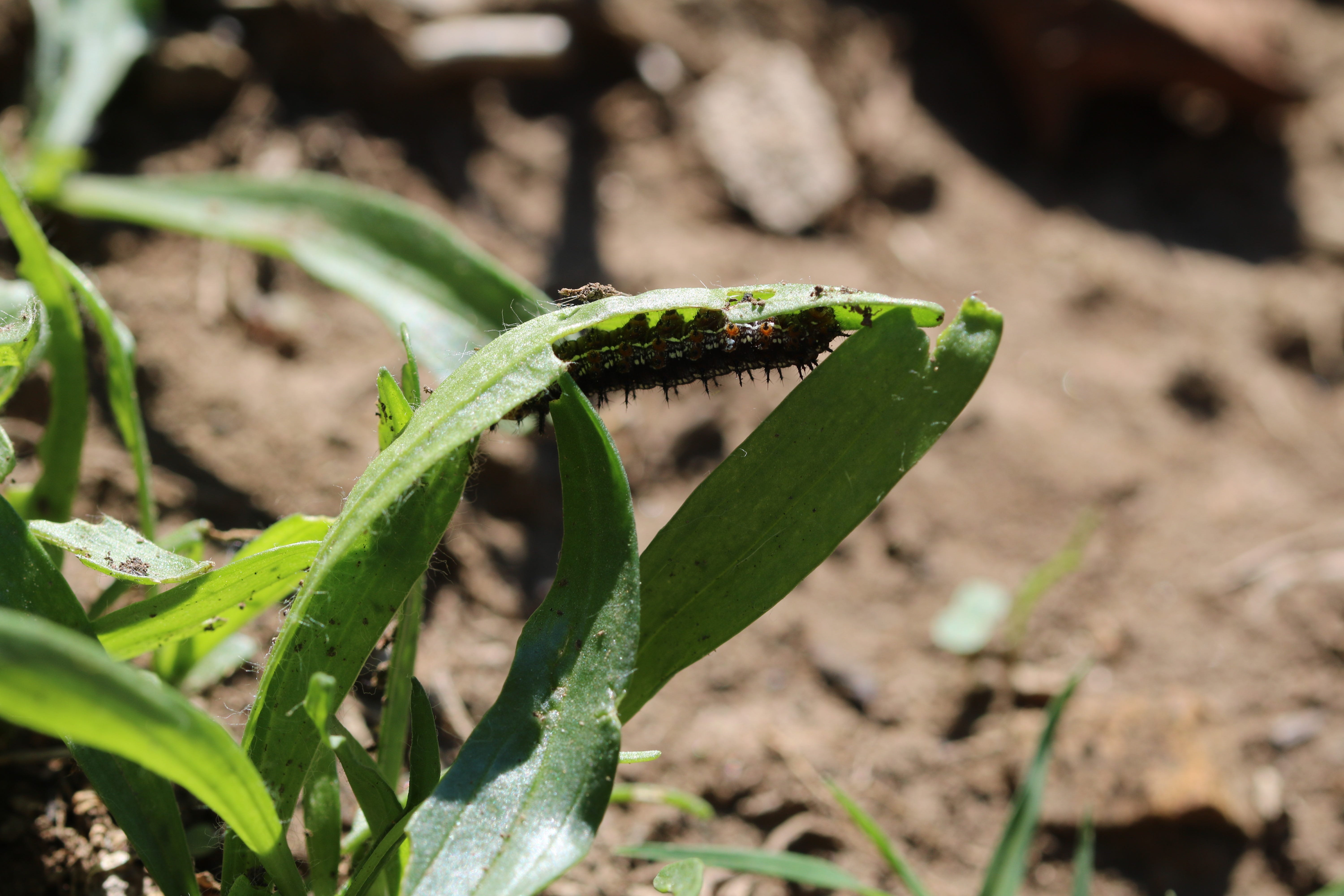
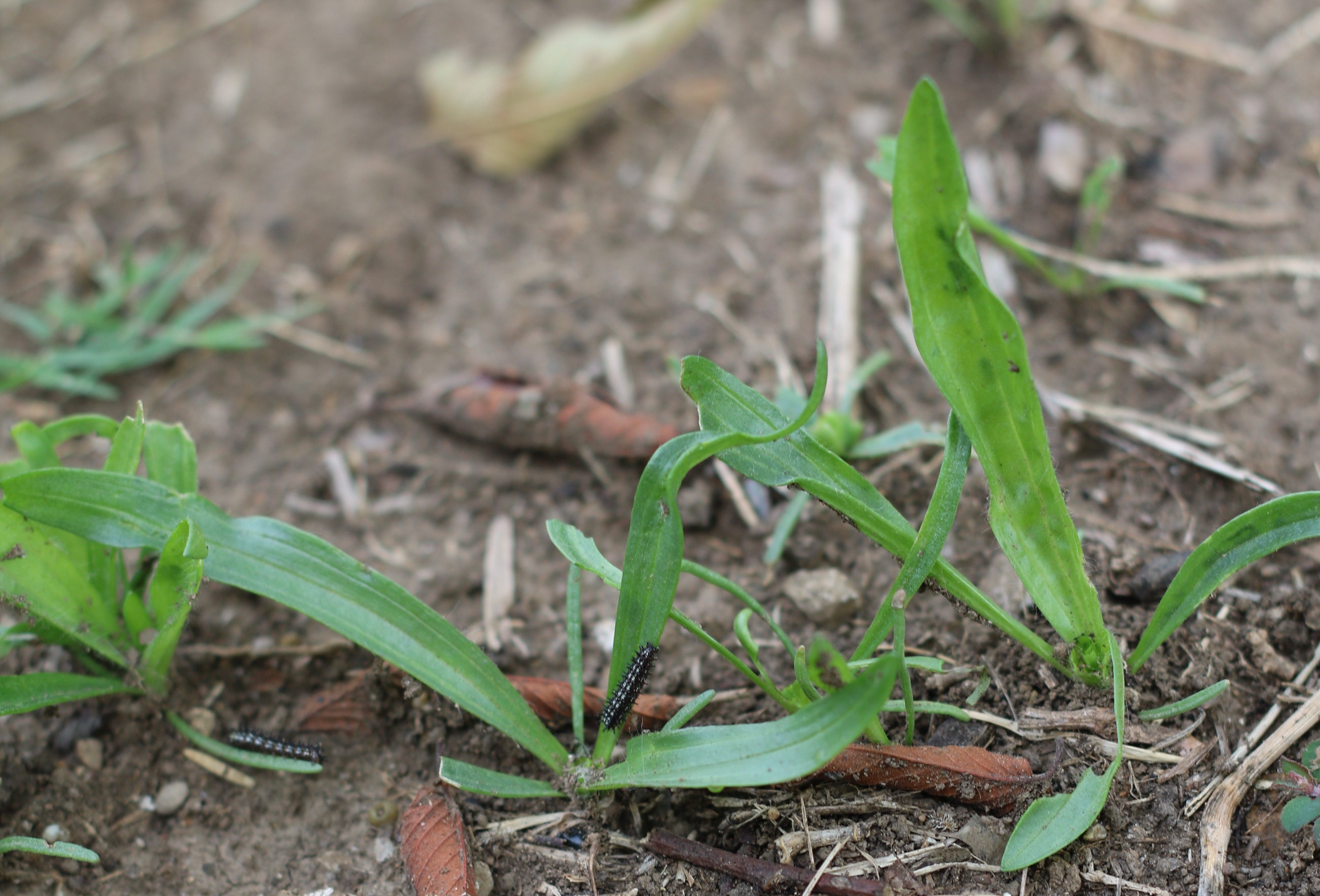
This photo above shows clearly the buckeye caterpillars on their beloved plantain weed. This is how big they were just four days ago. They are now about fifteen times as big. I have watched their entire journey, from little tykes to the big beasties they are now. I wonder how big they will get. They’ve gotten so big that they’re starting to hang out on the ground.
They seem to go through phases of activity. They also have good camoflauge, somehow. It takes me several minutes to find all of them. They like to hide under leaves, or at least they did, as now they’re so big I don’t think they care. It probably protects them from the sun, too.
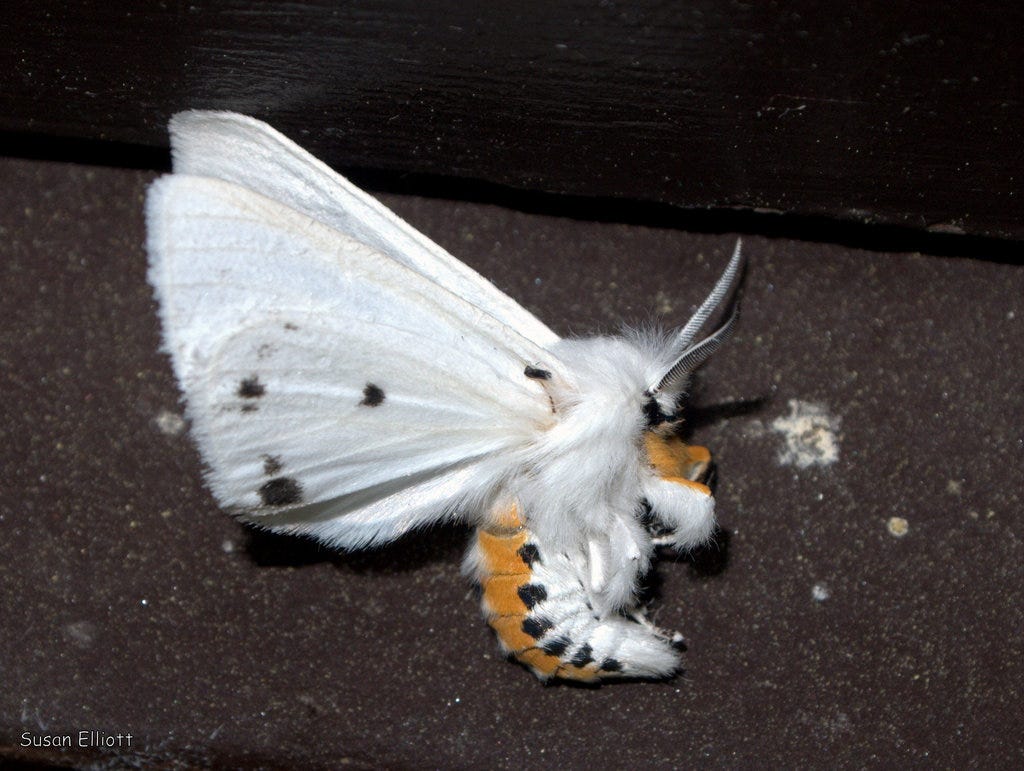
The fuzzy white caterpillar on the zinnea is a wooly bear of some kind. It looks like it is a Virginian Tiger Moth, called spilosoma virginica. It looks similar to what the pictures are on the internet. The below photo is the adult moth form.
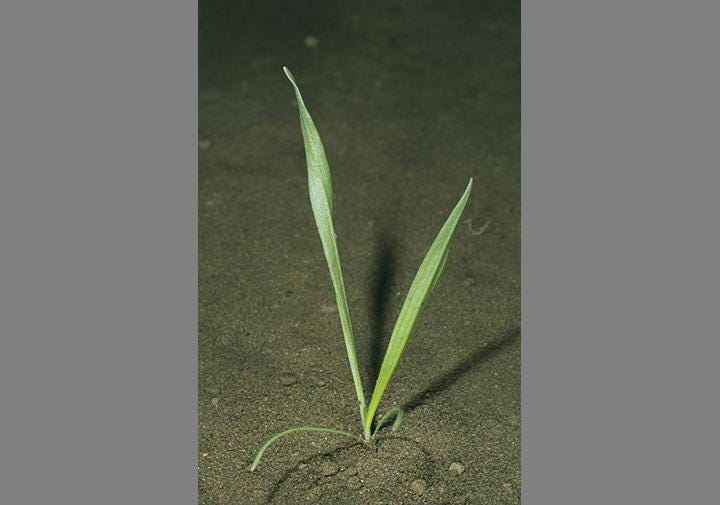
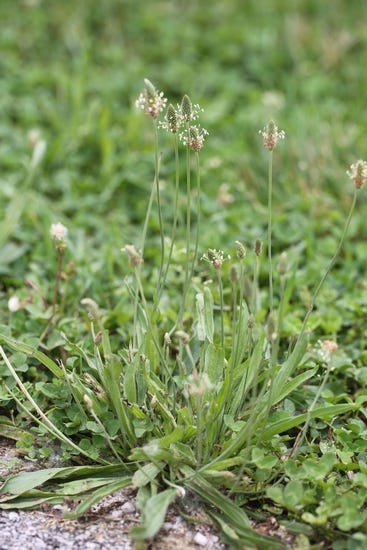
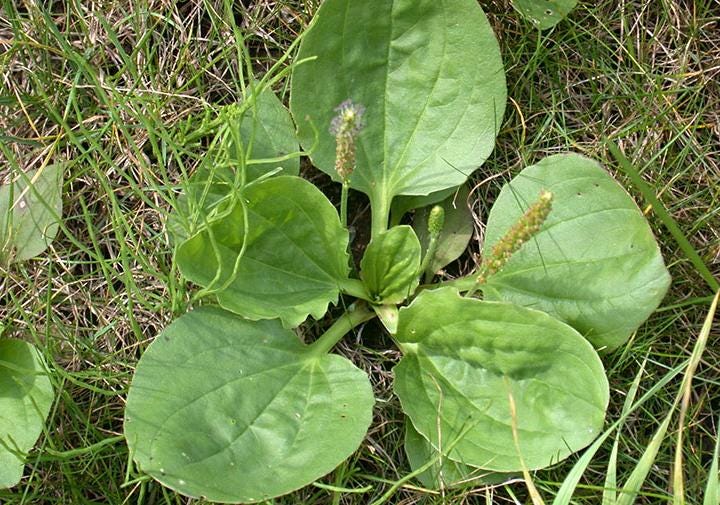
I see these plantains everywhere now, in the grass by Ugly Mugs, on the side of the road. Apparently they are edible and good for medical purposes. I want to try eating one.
 HAKUMUSU