
Alright y’all. You are in for a treat.
I busted out the old cameraroo for this one.
First of all, before we dive into this, I have to say — I had just written about my Japanese suit, and how proud I was that it was not made with synthetic materials, and oh my god. Are you ready for the great irony? How is life so perfect, like this?
I came home from this lengthy Shelby Park reconaissance, field-reporting photography mission, drenched in sweat. I had worn those wool pants to the part, belt and Dr. Martins. Those nice suit pants, although I wasn’t so stupid or insane to wear the jacket. Yes, in the sweltering, midday heat in the middle of August, I wore my nice suit pants to the park, for a photography mission. The park was as dead as it could ever be. I saw about ten humans in the two hour span that I was there, record lows. Most people were not willing to suffer that heat. Only the die-hards were out.
It was extremely gorgeous–ah, but I have to tell you the great irony. I came home then, eager to strip it all off, and now I felt like I had really earned the right to take off my suit, and I threw the pants down on the bed, when I noticed something. Sticking out of the back pocket was a white piece of paper.
I wondered if I put something that pocket, but it was just the tag of the pants. As I then had it in my hands, I thought I may as well read what was written on it, and see those wonderful words, 日本製, 毛, 100% (100% wool). I saw those words, yes, but then I also spied some words, directly below that. Some horrifying words.
Yes people. I kid you not.
ポリエスタ.
Polyester.
I’m telling you, the irony is unreal.
The 表地 (omoteji) of the pants were 100% wool, yes. But the 裏地 (uraji)? The lining?
100% polyester.
Unbelievable.
And shameful.
I have been going to Shelby Park frequently, as usual. Shelby Park is an incredible, wonderful resource for us East Nashvillians. And I have been studying it, and I have been studying the plants, more and more of late. Especially the wildflowers and the meadow. I have wanted to do some photography of it and write a bit about things for you, and I needed something to do today, and so I decided to just go for it. It turned into something of a tour and study of Shelby Park, a Shelby Park report, along with some new botanical discoveries… I’m just going to write it all up for you. I really enjoyed having the camera again, and doing photography. I realize that I miss that, but it also is a whole ordeal. It’s a serious undertaking, a photography trip. I decided in advance that I was not going to adjust or alter any of the photos at all, and would simply try and get the camera settings as correct as possible, get the framing right, and use whatever was usable. There are still some decently artistic shots in here. That was to save myself time, because the photo editing can take a really long time.
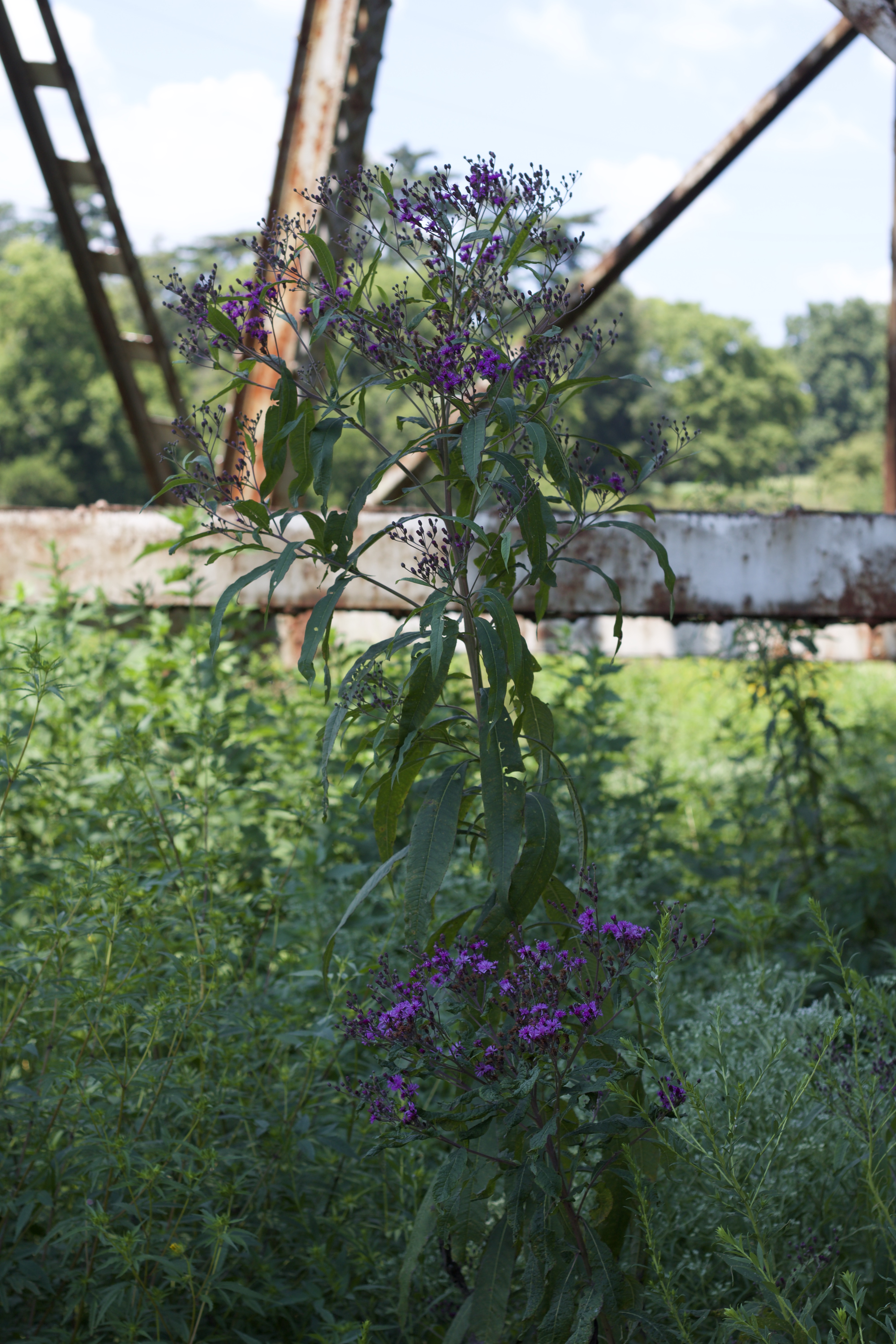
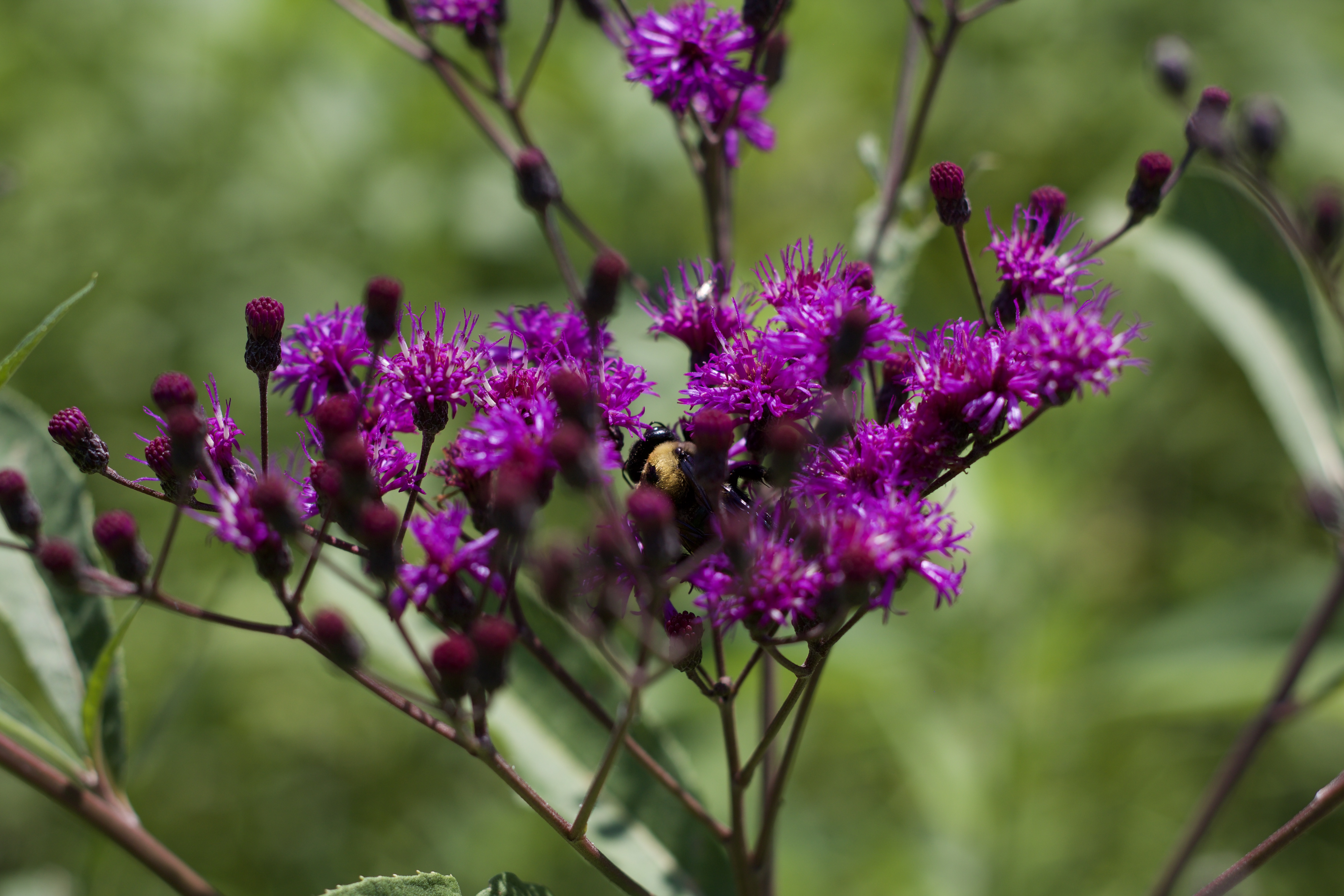
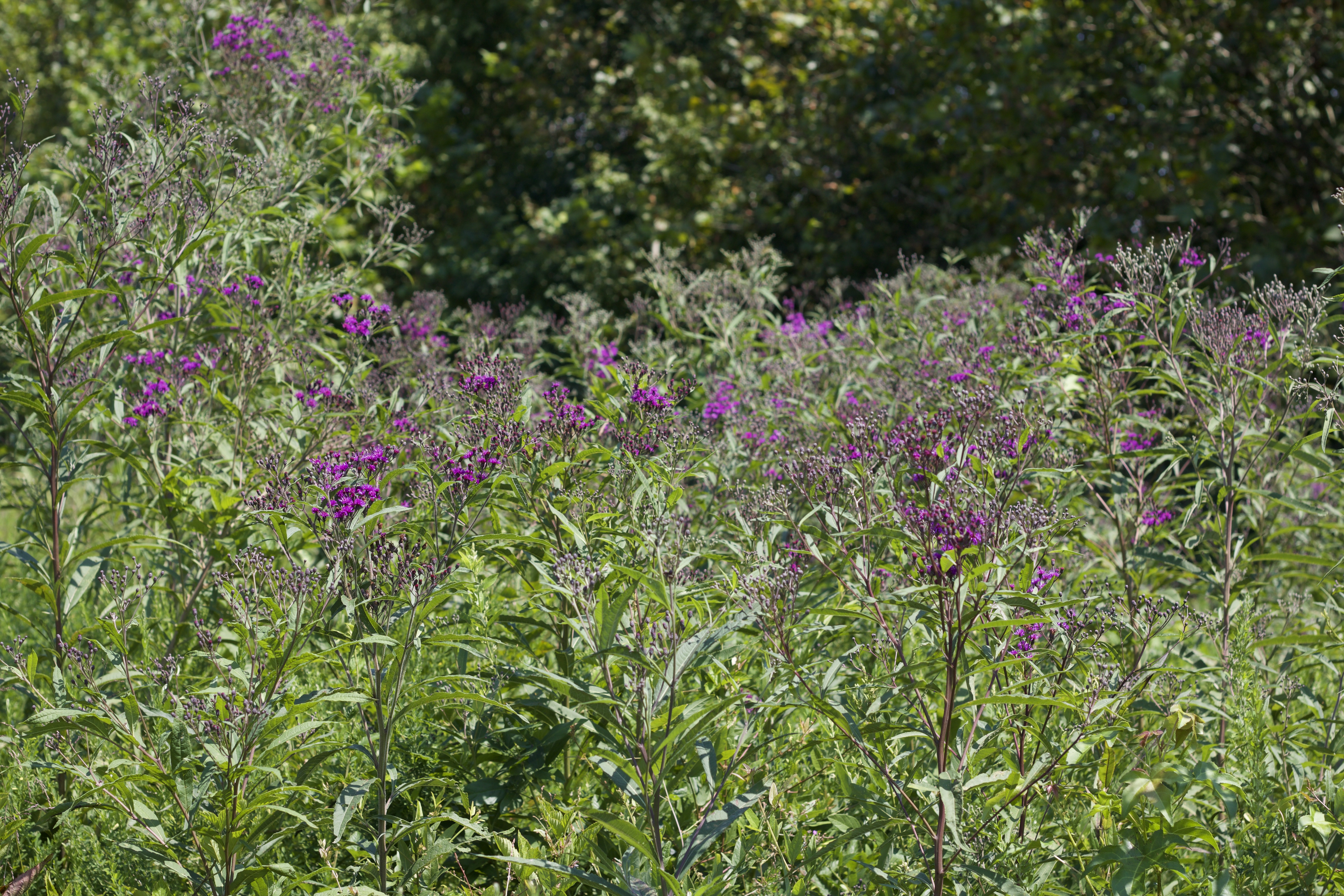
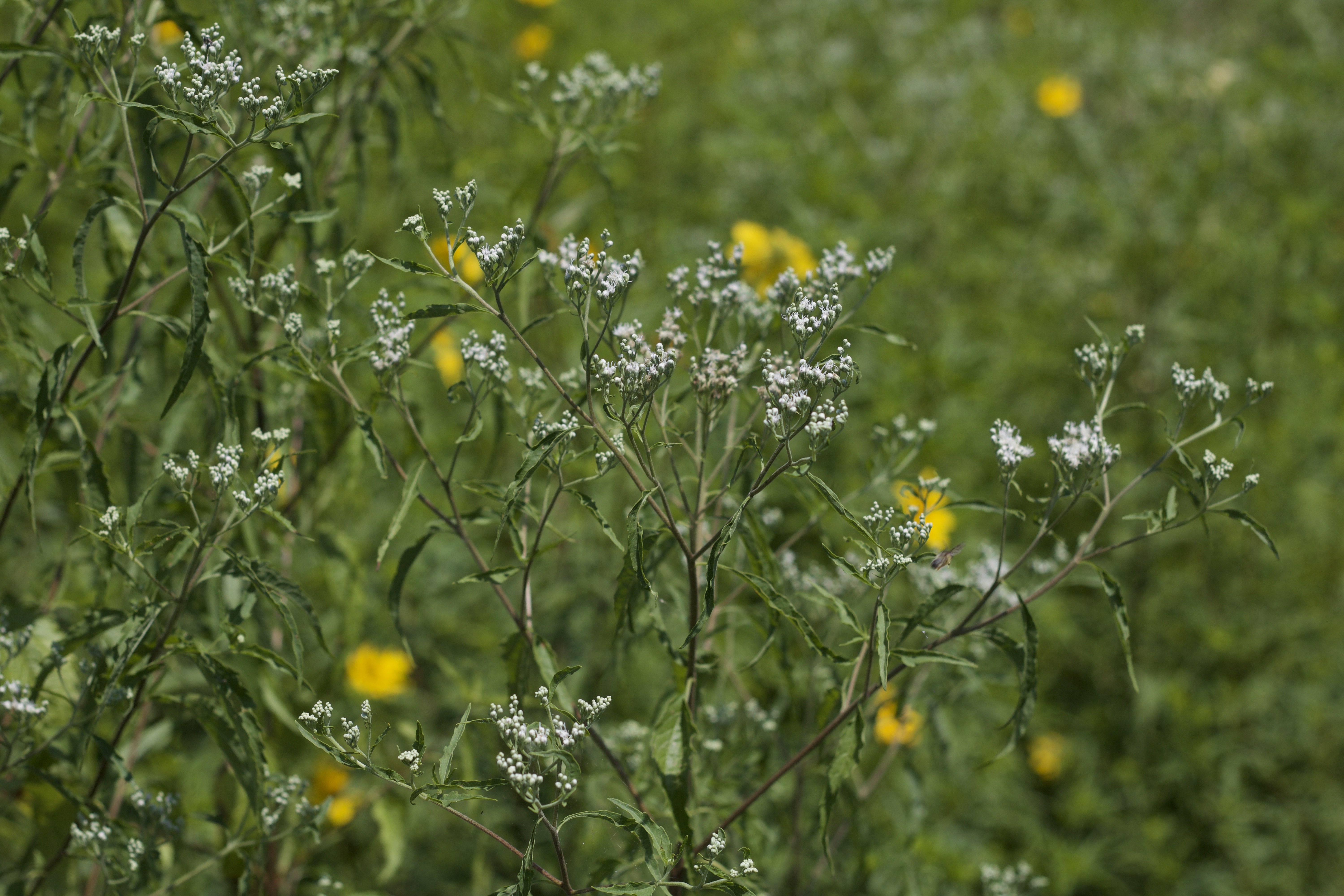
Let’s begin. The very reason I wanted to go to the park was to photograph this plant, which is now the main bloomer in the park. It’s Vernonia fasciculata, called prairie ironweed, a native wildflower. Ironweed has kept growing, and they are the tallest wildflowers at Shelby, and they are everywhere.
The really interesting thing here, and that I’ve learned studying the wildflowers, is that they stagger their blooming periods. The meadow at Shelby Park was completely covered in Common Milkweed’s blooming. They had their heyday, for about a month or two, and it has now totally passed. Not a single Common Milkweed blooms anymore. Now, in the middle of August, it’s the time of ironweed. The ironweed is reigning supreme. It was interesting to see it first popping up, little tufts of dark purple here and there, whereas now it’s literally everywhere. The deep purple is a really enchanting color. I imagine if I was a bee or butterfly I would be like, I need that right now.

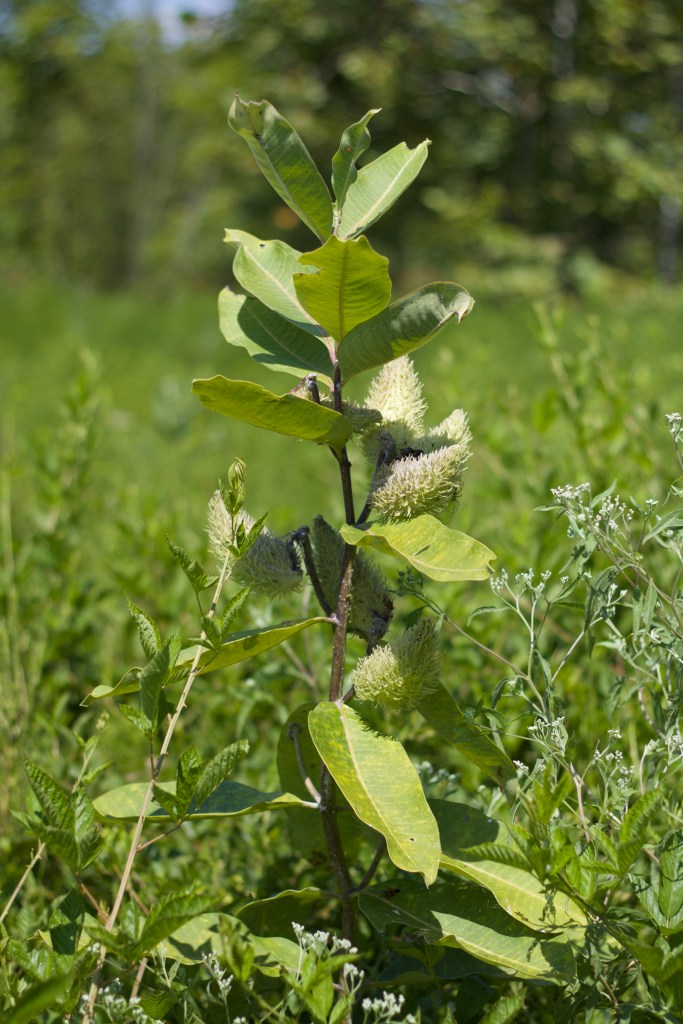
This is what the Common Milkweeds are looking like, now. No more blooms, big seed pods. Pretty awesome seed pods.
The other flower that’s really booming right now, in full bloom and everywhere, are the Coreopsis, called Tickseed. Apparently the name comes from the fact that the seeds look like ticks. I like that name, Tickseed. Coreopsis is a nice name too. The Coreopsis is booming. It’s a favorite of mine, right now.
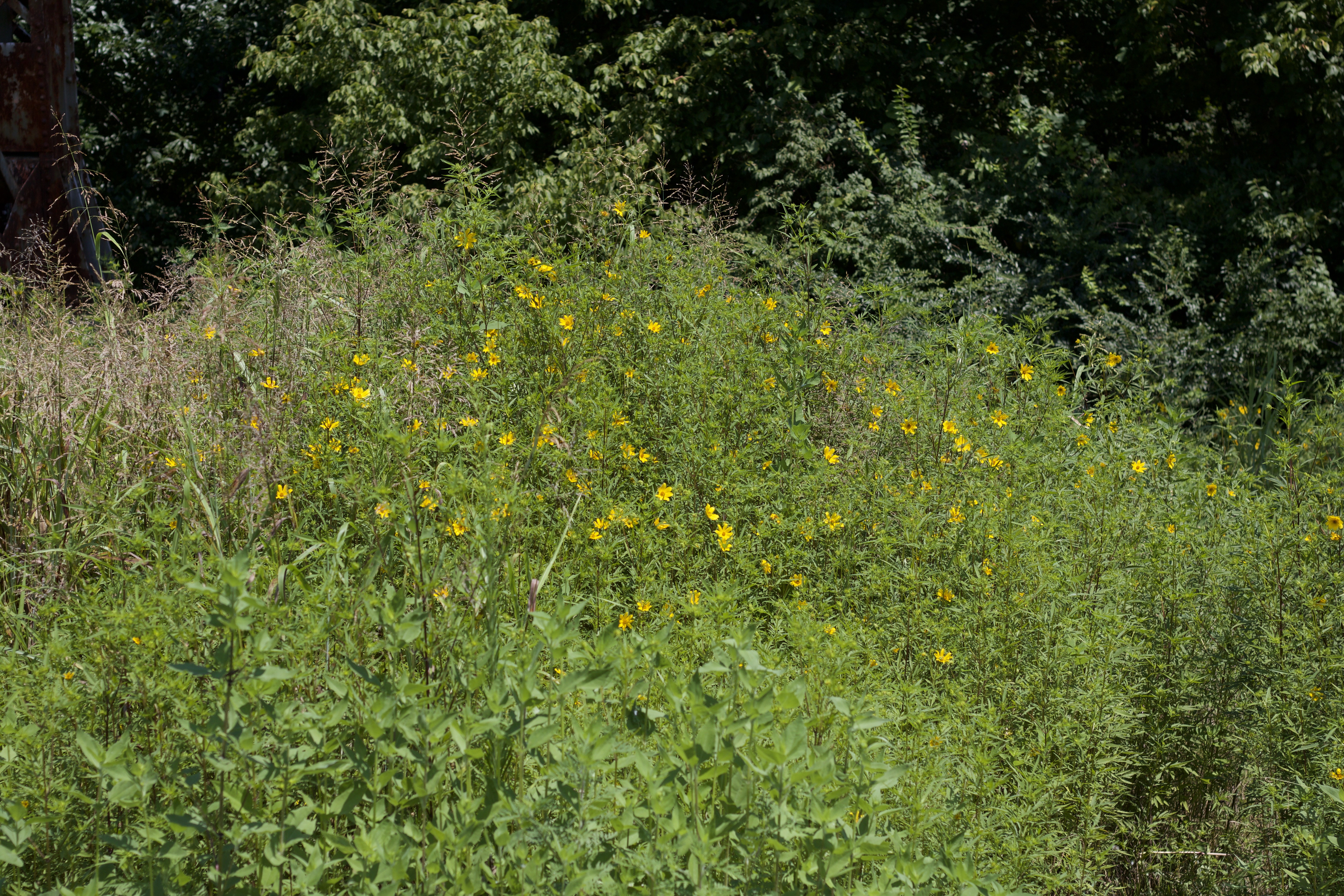
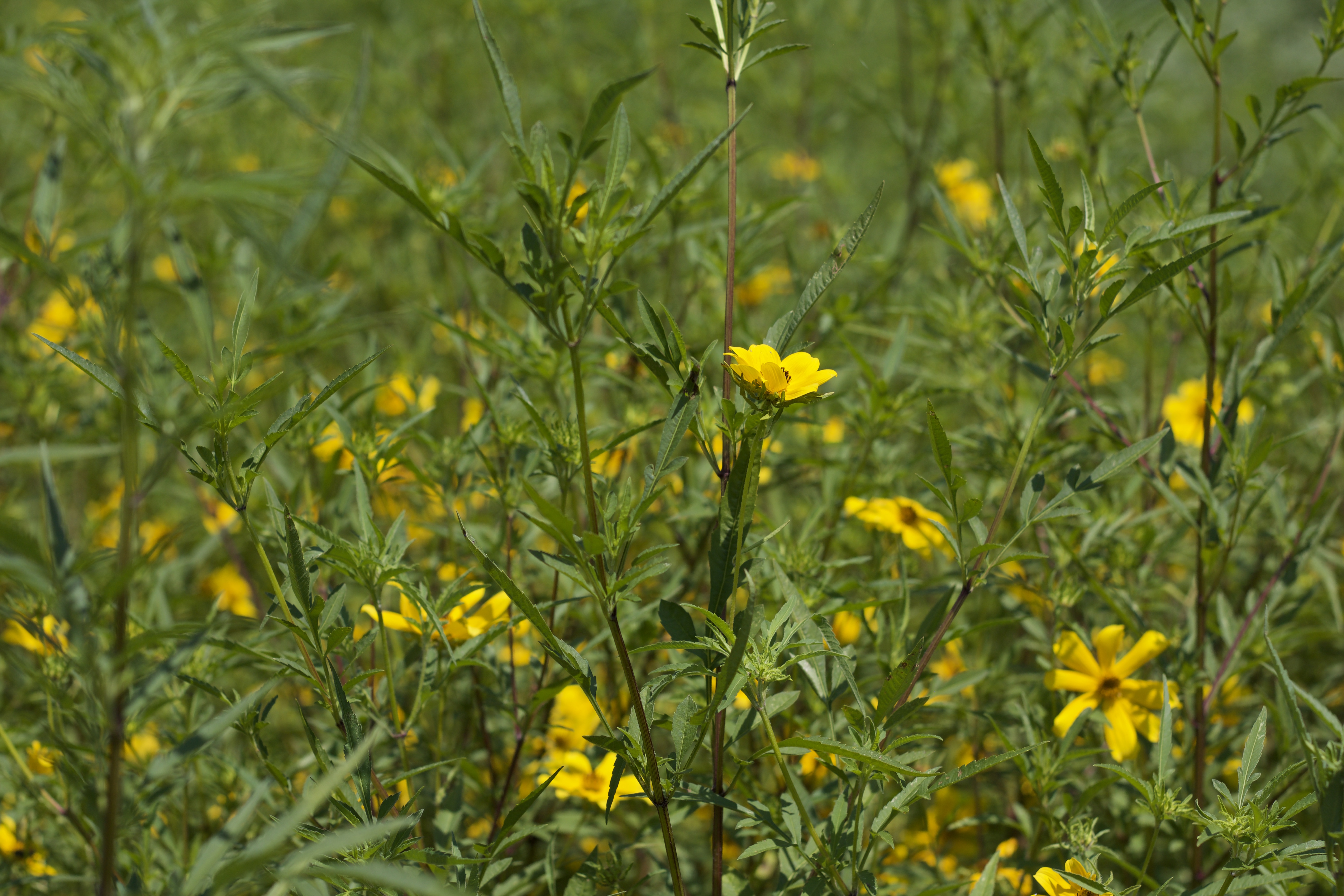
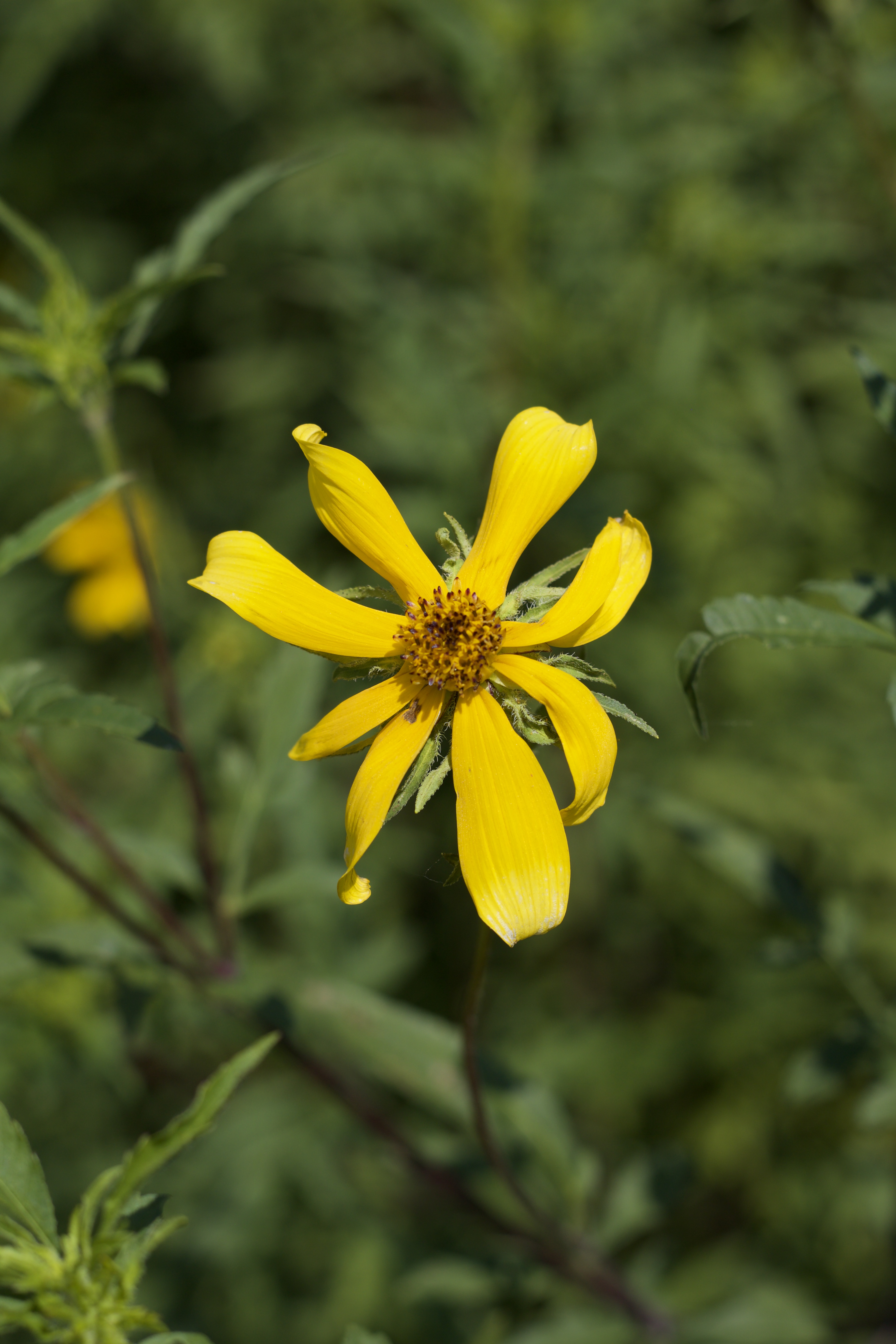
Mingled with the Coreopsis was this flower. You didn’t see nearly as much of this one, but it was there. Not sure what it is.
The Coreopsis was really dominating an area on the edge of the park, that seems to be newly converted to wildflower grassland. This was underneath the train tracks. It’s interesting that you did not see as much ironweed over here, and the ironweed seemed to stick more to the edges. The Coreopsis really seems to show up en masse. There was a large patch of Coreopsis in the interior, huge meadow of the park, but otherwise it wasn’t represented so much there.
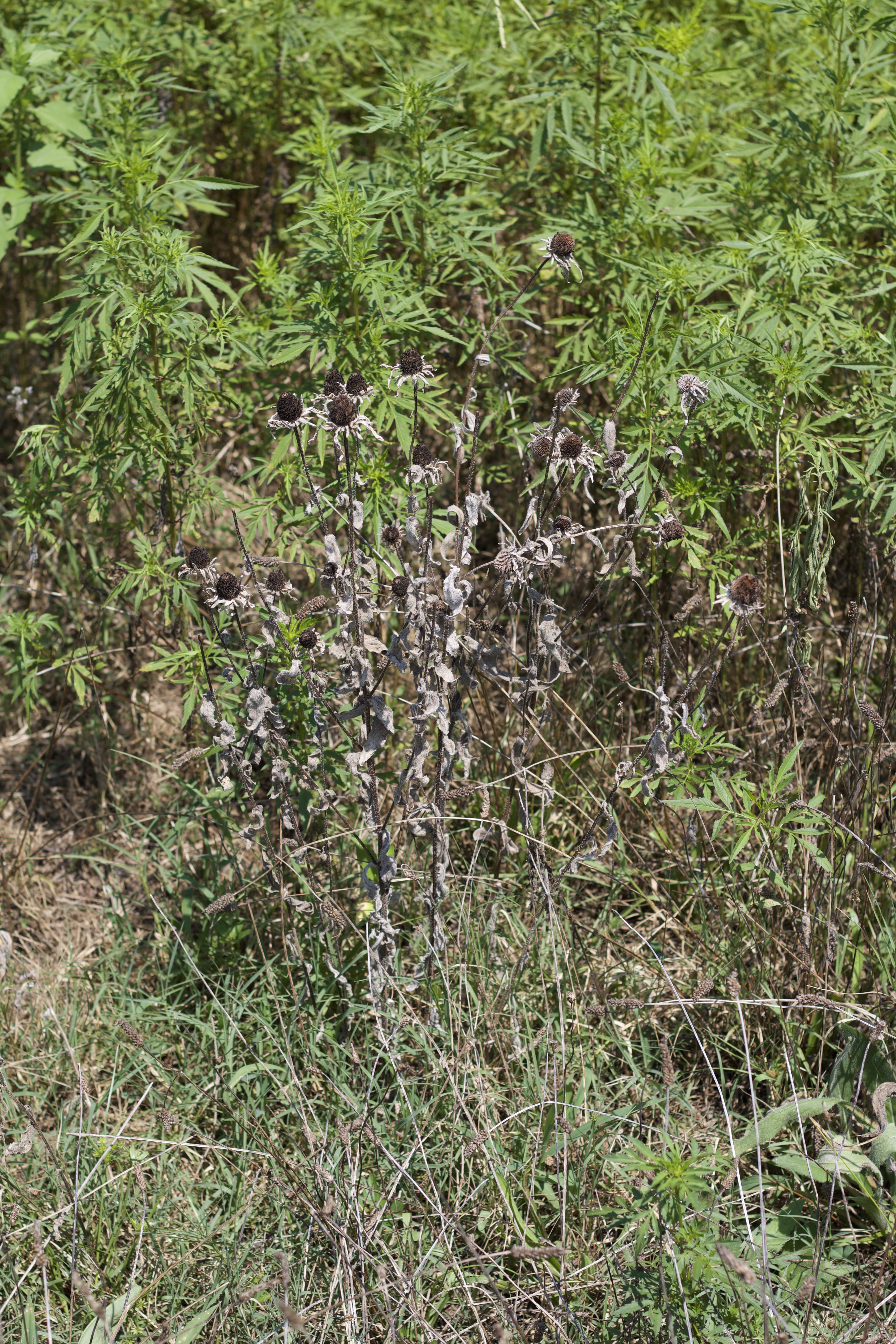
Amongst the Coreopsis field was this relic. A coneflower, either Black-eyed Susan or Purple Coneflower. After a long run their time seems to have come and gone. My neighbor’s have all about died away now too. They are a perennial though, so I think it’s just this part of the plant that dies. The roots are still alive and this plant will grow back next year.
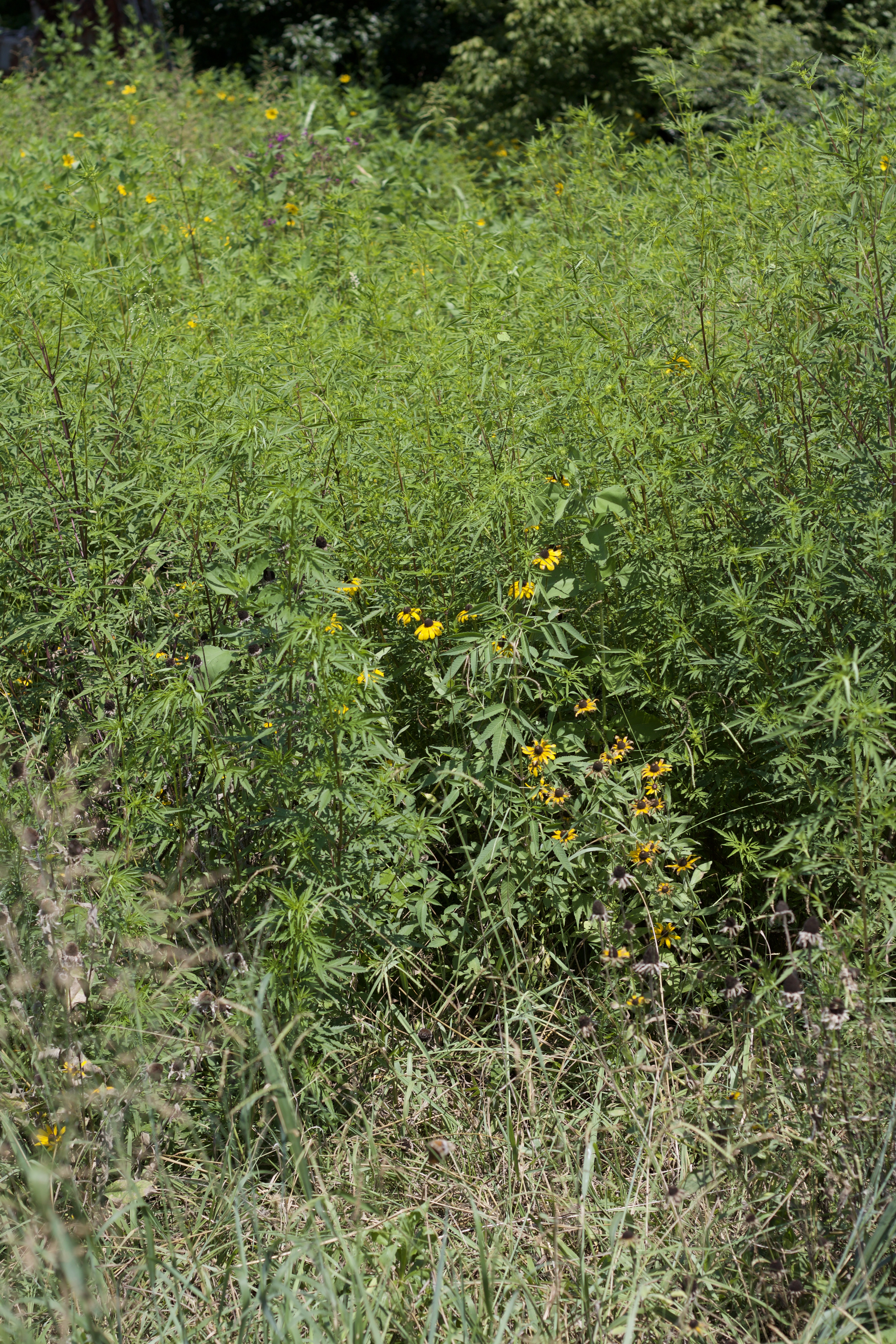
This flower right here was looking a little different. And now I’ve done just some investigations, and it seems we have a bit of a problem. Narrow-leaved sunflower (Helianthus angustifolius) and Coreopsis (of which there are many kinds) look a lot alike. And now I wonder which is which, and I realize that I have no idea what I’m talking about. Well, can any plant experts tell us? Do we have both in these photos? Just one or the other?
(Well, a few days later I went to a gardening event at the park, and the gardener and naturalist Hazel told me that most of this stuff is Coreopsis. I was starting to be convinced it was not. Not sure if any of this is the sunflower. They do look a lot alike.)
The artsy fartsy shots I took today would have to be these shots of the train tracks and trellises. I was extremely lucky and had a train drive over me during my flower photographing. 2000 tons of steel and iron flying at 50 miles an hour right over my head. How incredible.
I have wanted to photograph these trellises for a long time, now.
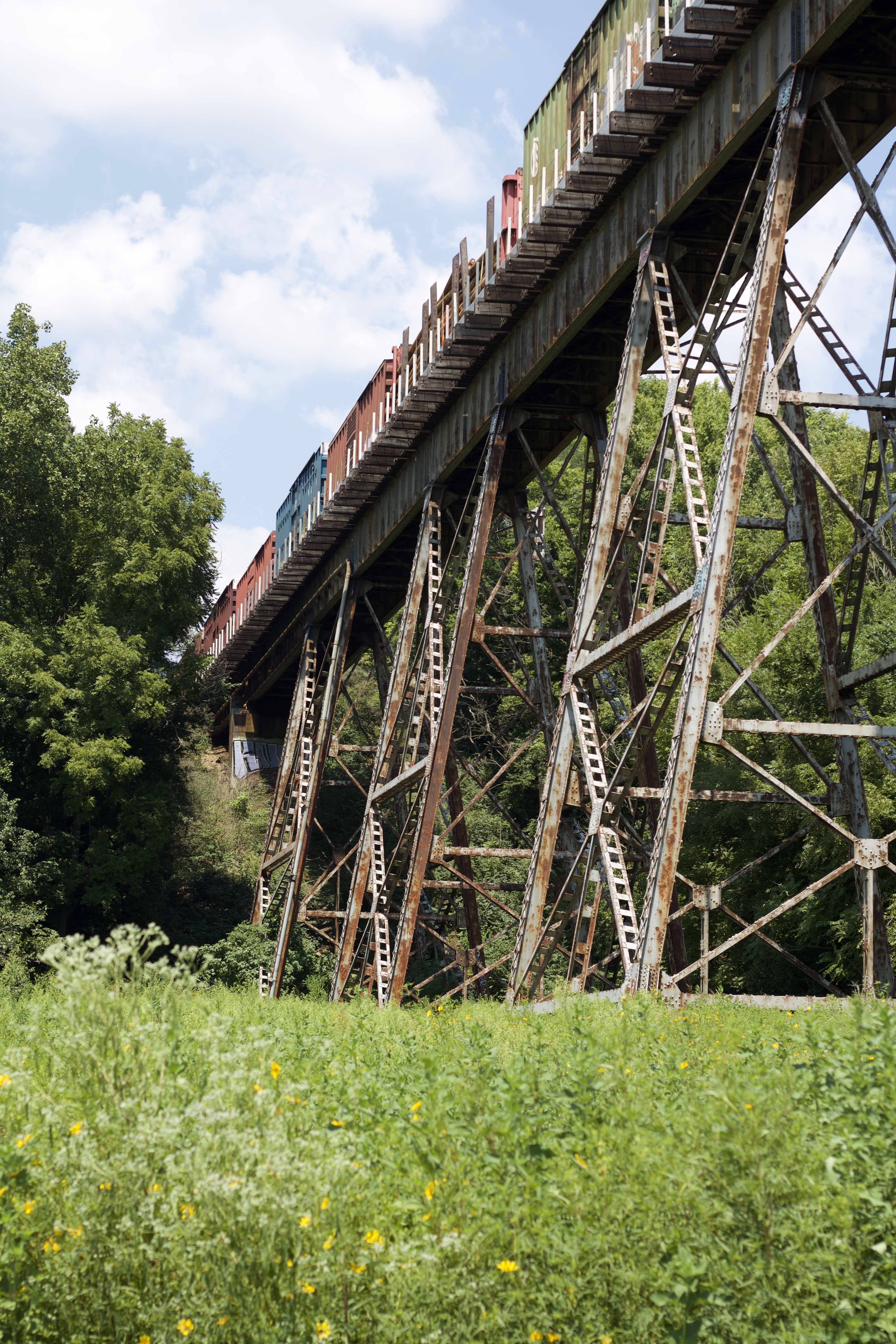
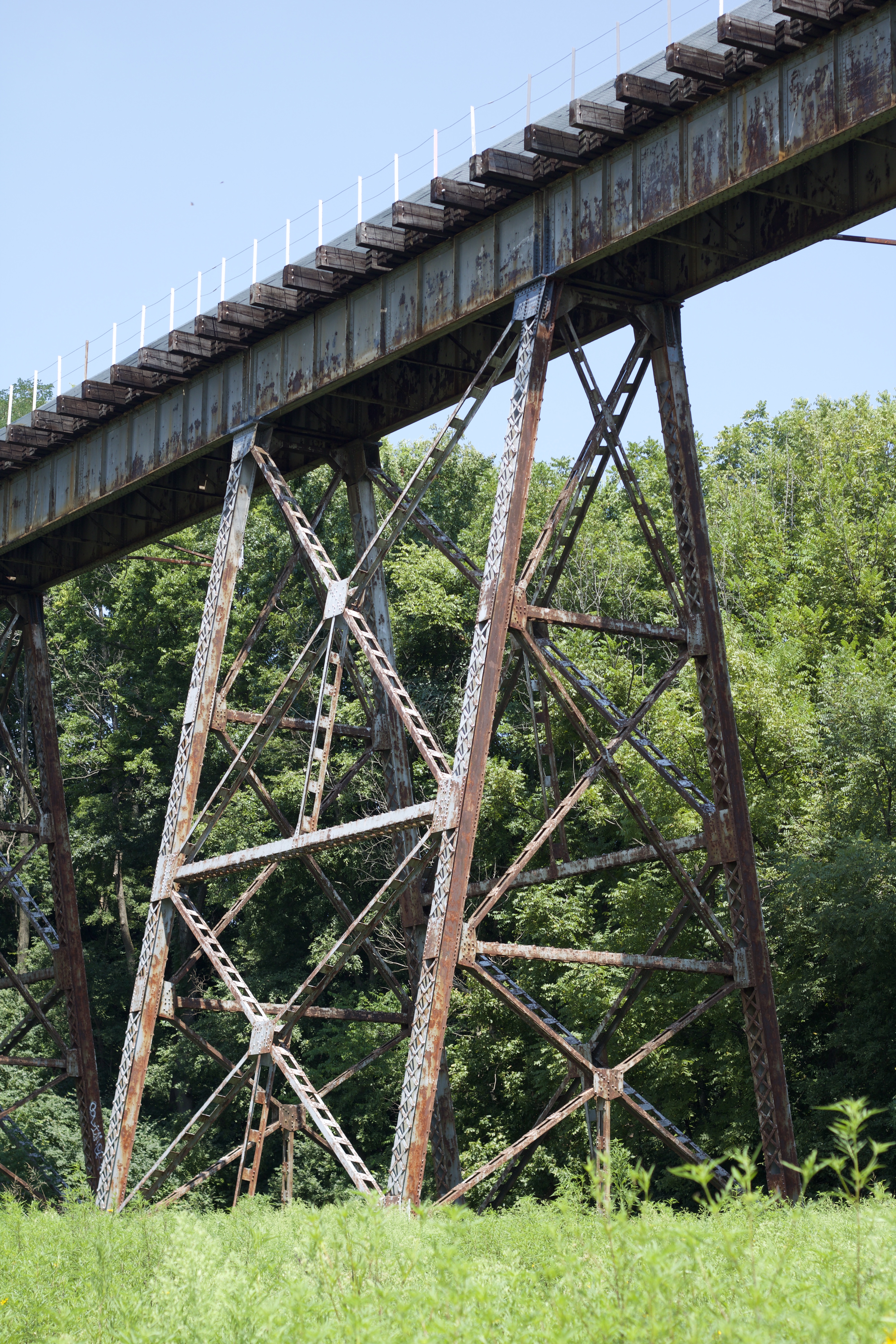


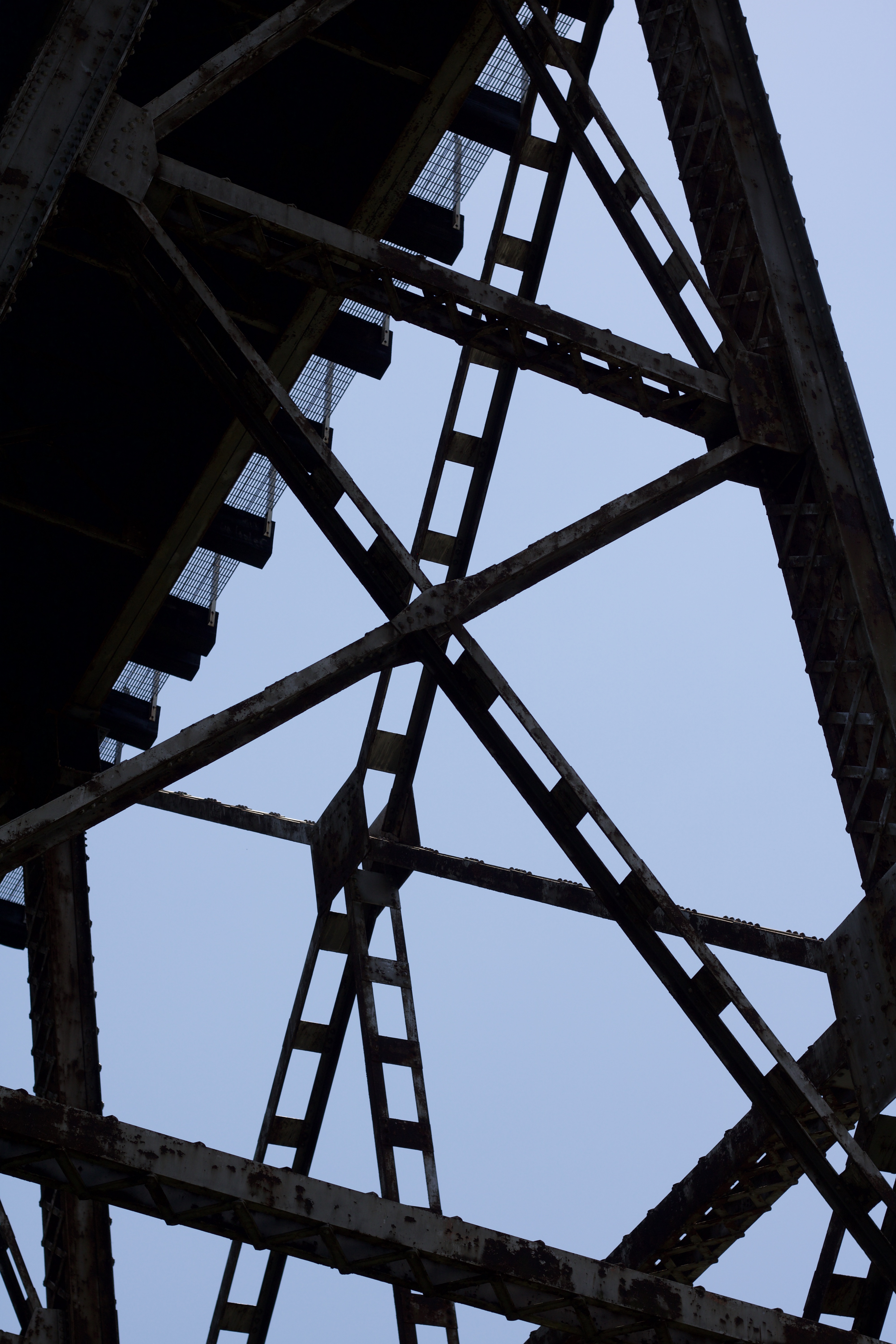
I got so lucky with that train.
Continuing on our tour of the park… These areas of wildflower growth at the borders are here because they aren’t being mowed anymore. I wonder if they have just been allowed to grow freely, or if they were seeded. I feel like they had to have been seeded because otherwise you would get a lot of unwanted things. I don’t think if you just stop mowing your yard it fills with Tennessean native plants. I’ll have to ask about that.
Now I’ll do a few miscellaneous photos here and show you some of the sights.



Had to take some photos of the cars. Cars are just asking to be photographed. It’s like they’re posing all the time.


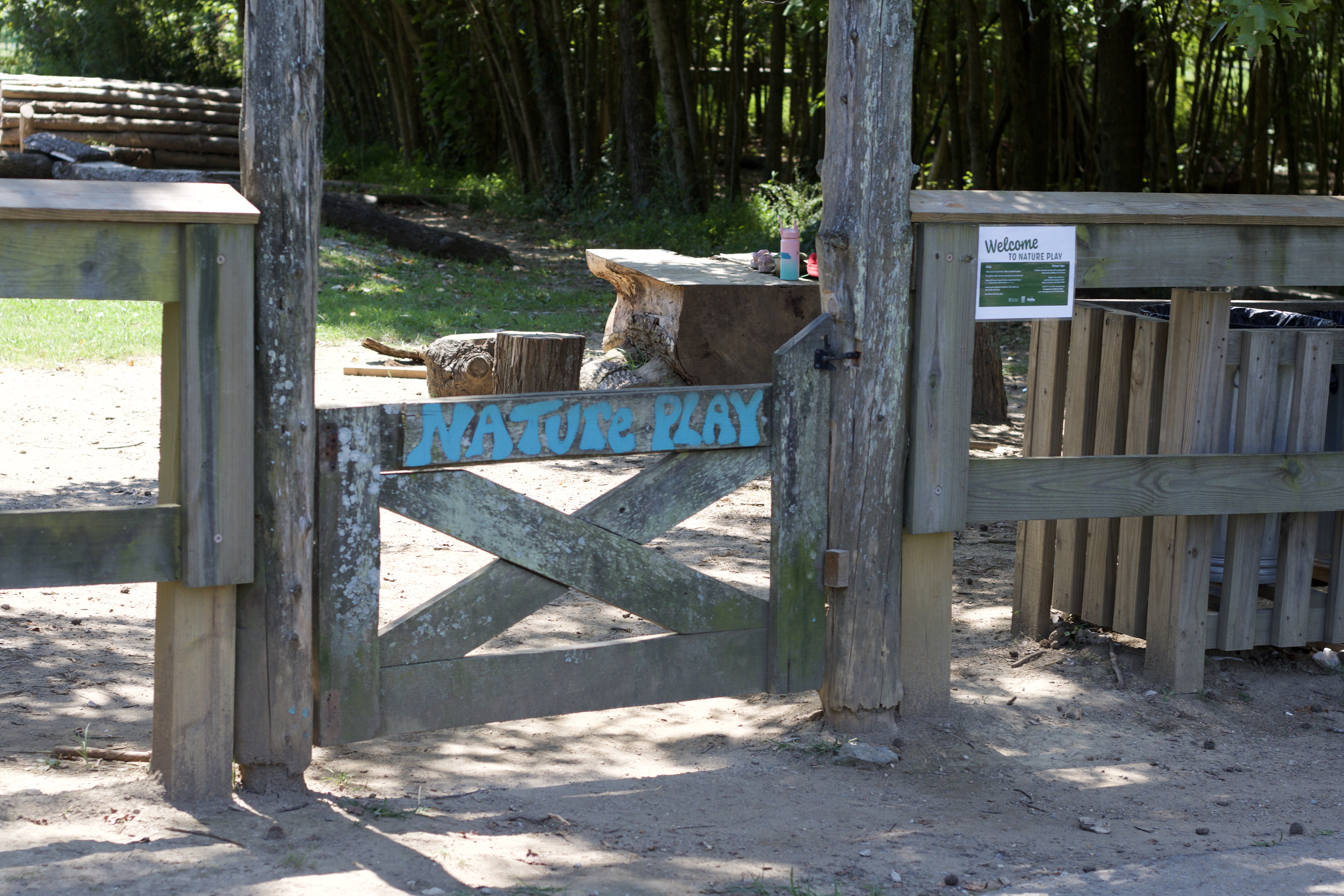
Shelby Park has recently create a Nature Play area. It has been very successful and gets a lot of use. It’s a great idea. There’s a section out in the open, and then there’s a section that’s in the woods, where the kids can walk on logs and go down a slide and be in the trees.


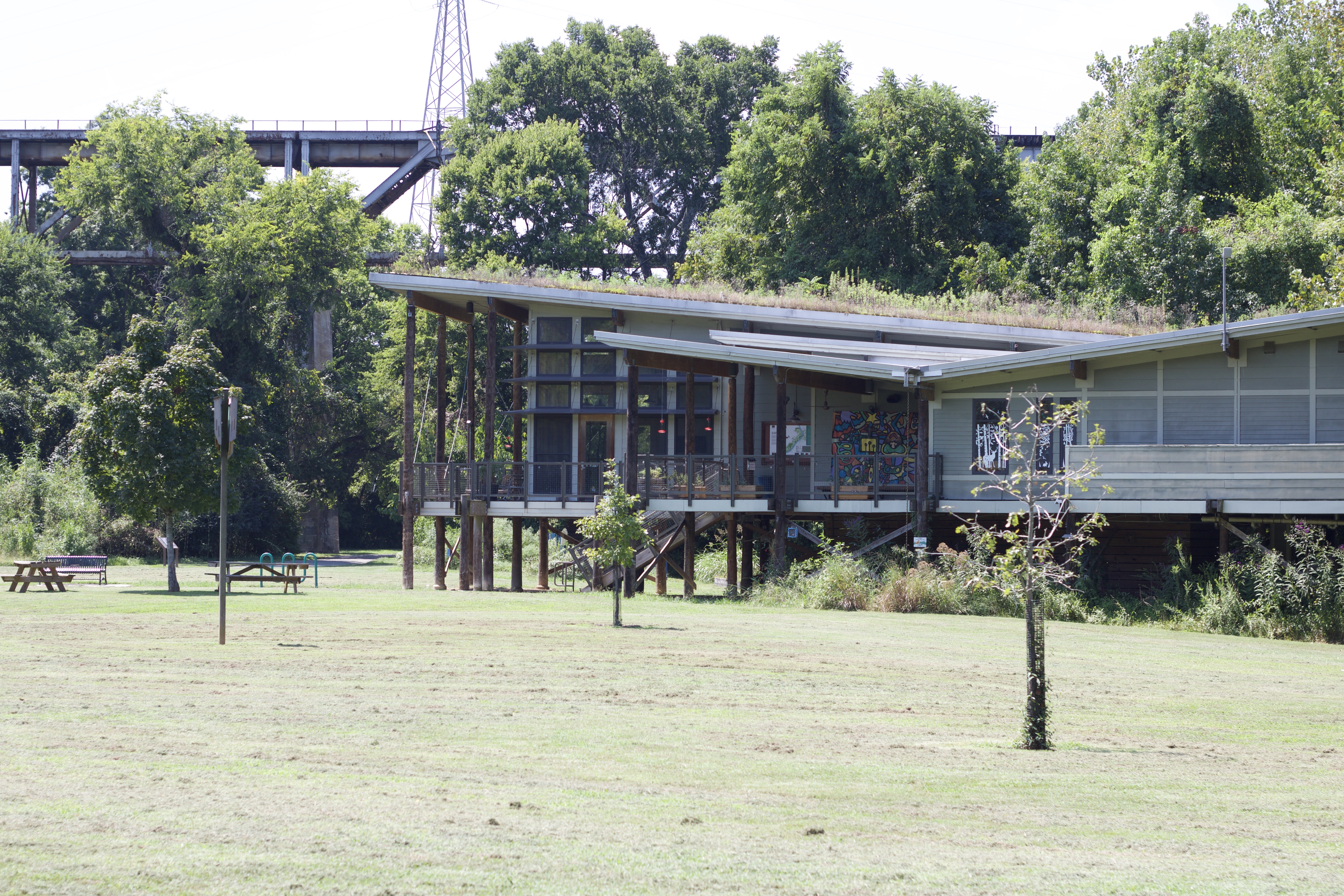
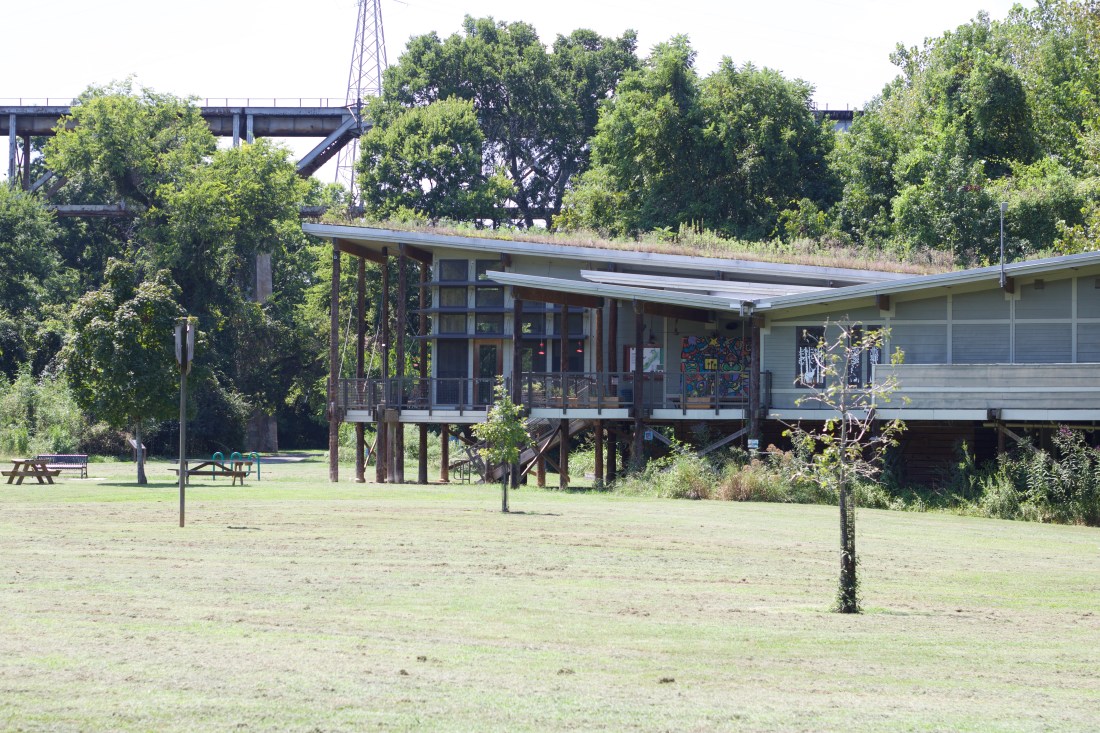
The above photo is the Shelby Park Nature Center building. As you can see, it’s totally awesome. The roof is covered with plants, which helps keep the building cool and also adds some greenery to the world. It’s cool to see that, and I wonder how difficult it is to create and maintain such a roof. I would love to have a roof like this.
The building is on stilts because it’s by the river, and the river floods. There’s a sign that says the highest the water’s ever gotten, at least since that building was up, and it was in 2010 or something. It went all the way up to the top of those posts. I had wondered why this building was on stilts until I saw that sign. Then it made sense.
Now I’m just going to show you a series of botanical photos of interest. There some interesting flowers and grasses, and again I saw the nemesis, Chinese privet.

This is a grass I’ve been seeing. I had it in my yard, when I let the grass grow. Easy to recognize when it has those iconic seed pods. The name is fitting, Morning Star. It is a Tennesee native, which is good to know because it’s cool and awesome.


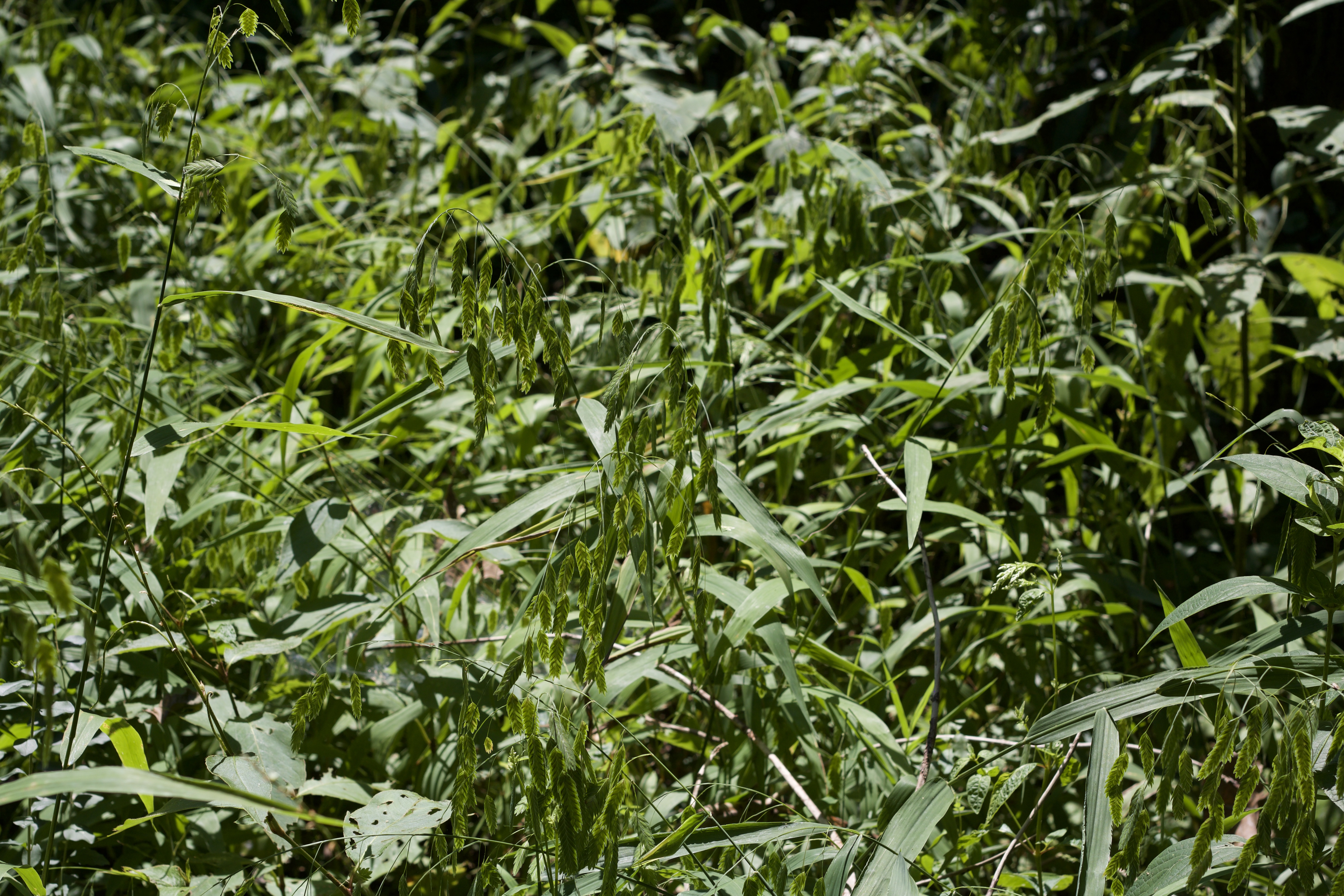
This grass was also standing out because of the interesting seeds. I literally just Googled “grass with flat seeds” and it was the first thing that came up. Seems to be quite common and easily recognizable. Those seeds are interesting because they are totally flat, like wafers.

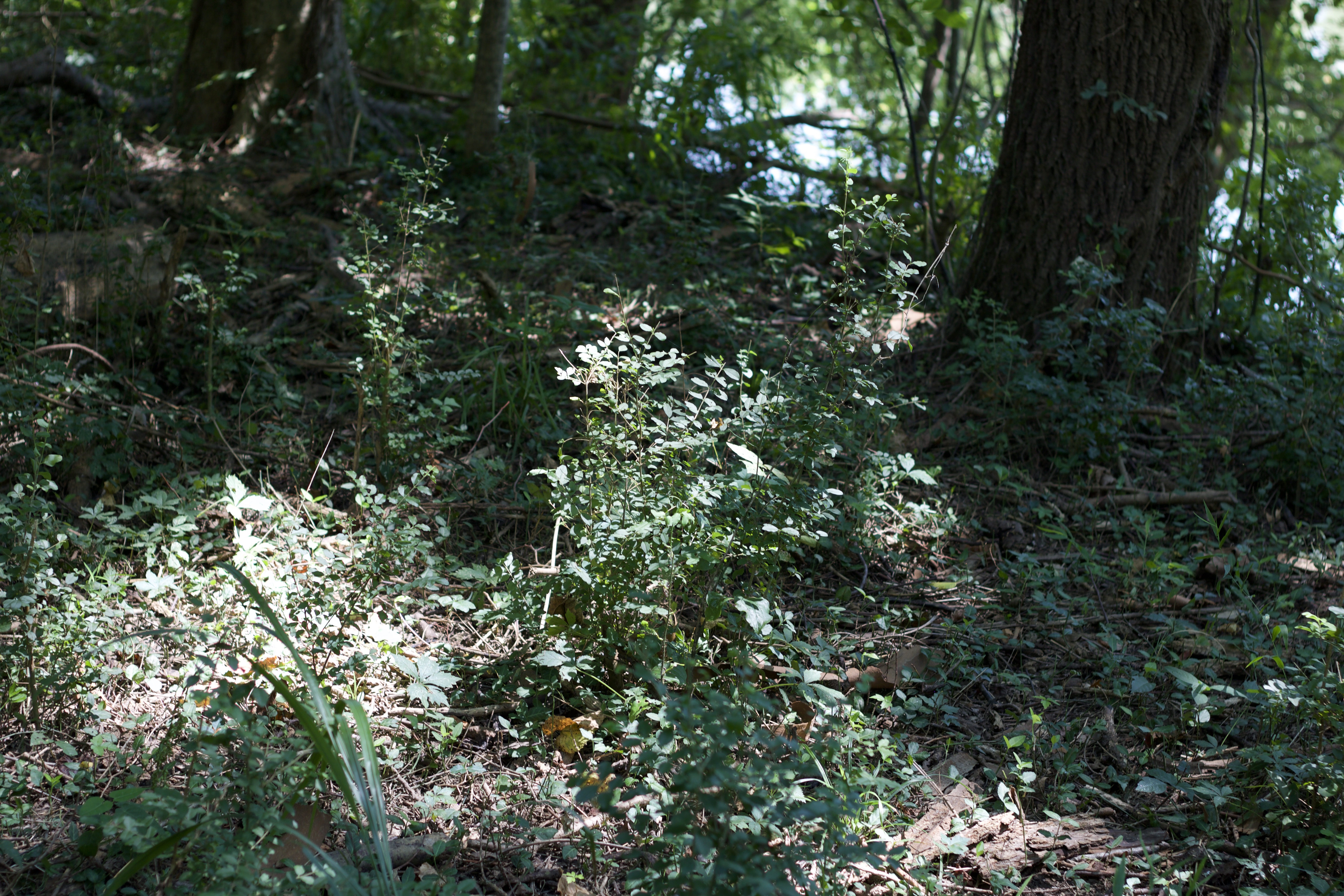
Here’s the privet, it took awhile to find any. We have been doing a good job of removing it, but I knew I was going to see it eventually. It’s easy to spot when you know what to look for, there’s nothing else that really looks like it. It also stays green when everything else has lost its leaves, and then you can see just how much there is of it. Privet grows in Tennessee insanely well, unfortunately. Non-native.
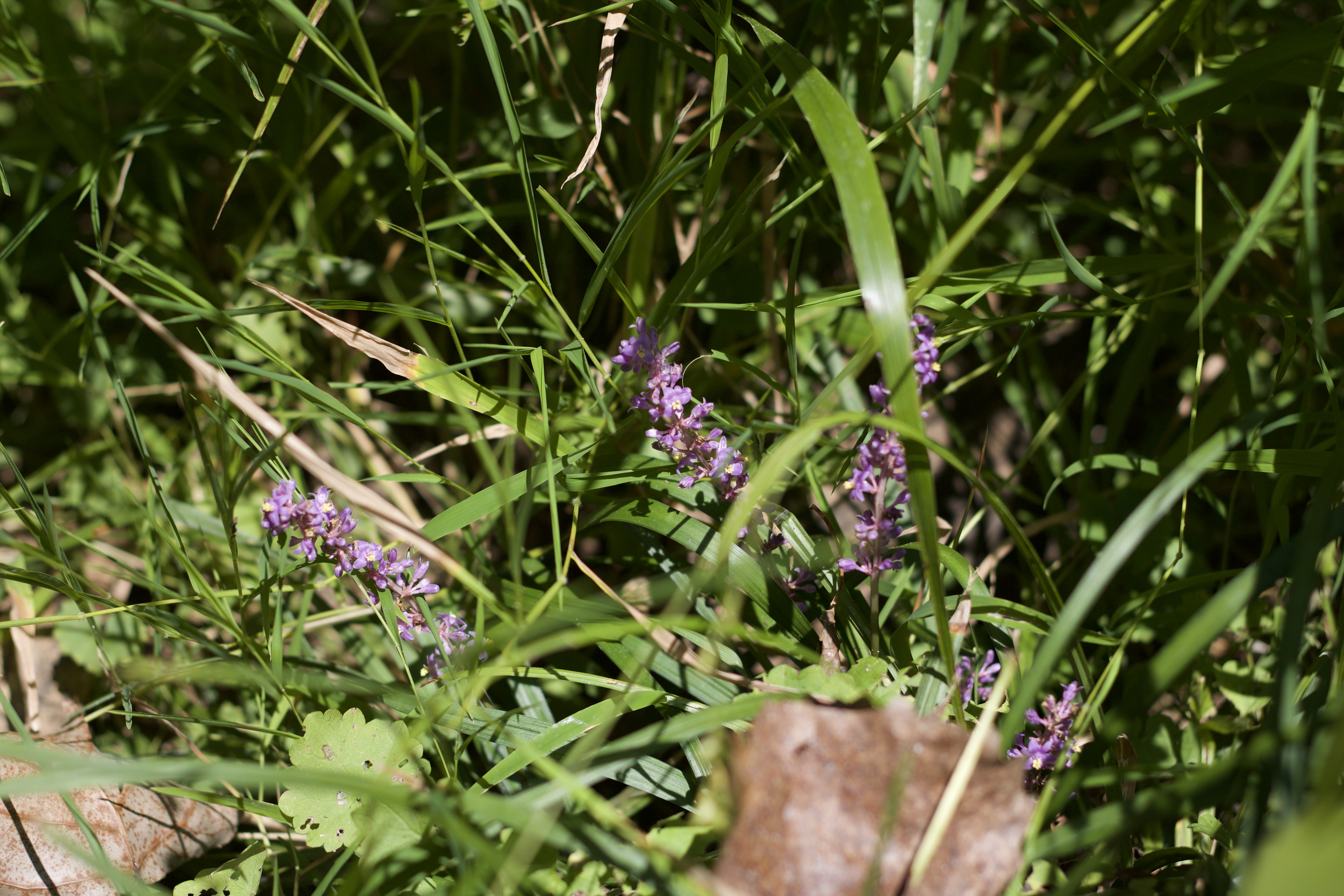


It’s funny that I am becoming a plant person after a long time of not knowing anything about plants. I think part of the deal with botany is that it’s intimidating. There are just so many plants. So many. And most of the time, they’re all green. What’s this? What’s that? It’s a flower. It’s grass. It’s a tree. But, when you see the same things over and over, you can start to recognize what’s what. Then, things stand out to you, you notice the same flower, and you start to wonder, what is this thing? I see it everywhere.
I think that’s really how it’s happening for me. I walk through this park so many times, I start to wonder what things are. It’s also interesting to see the cycles of growth, the plants that come and go, the flowers that come and go, throughout the year. It’s more obvious to see this when you have a meadow. The native meadow plants provide a lot of action in the summer and fall. We think of spring as being the time where everything blooms, but there are things blooming all year long, some things even blooming in winter. You could actually know what time of the season it was by what was blooming, if you didn’t have a calendar. You also could tell by the weather, I’m sure. And the position of the moon and the night sky, right?
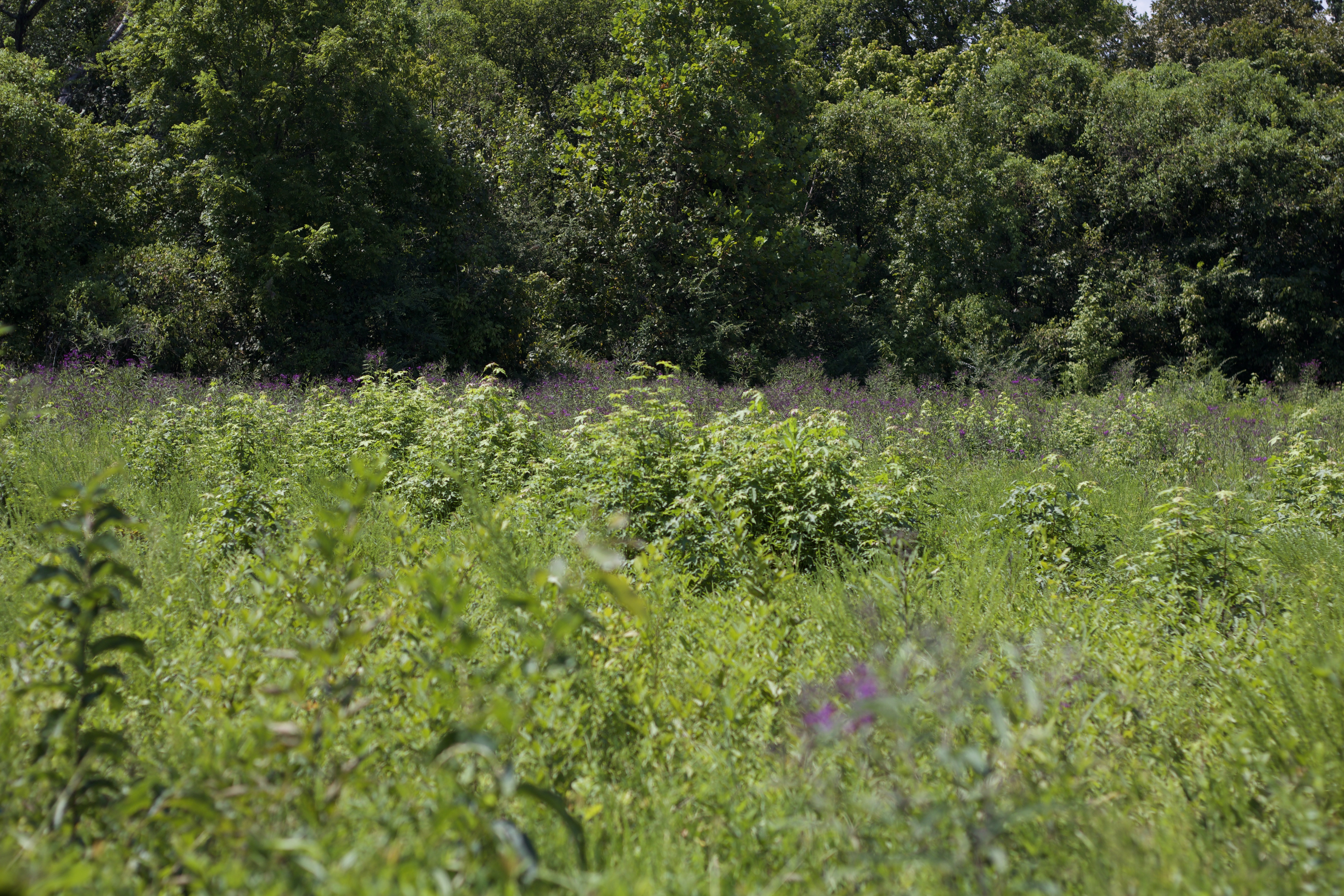
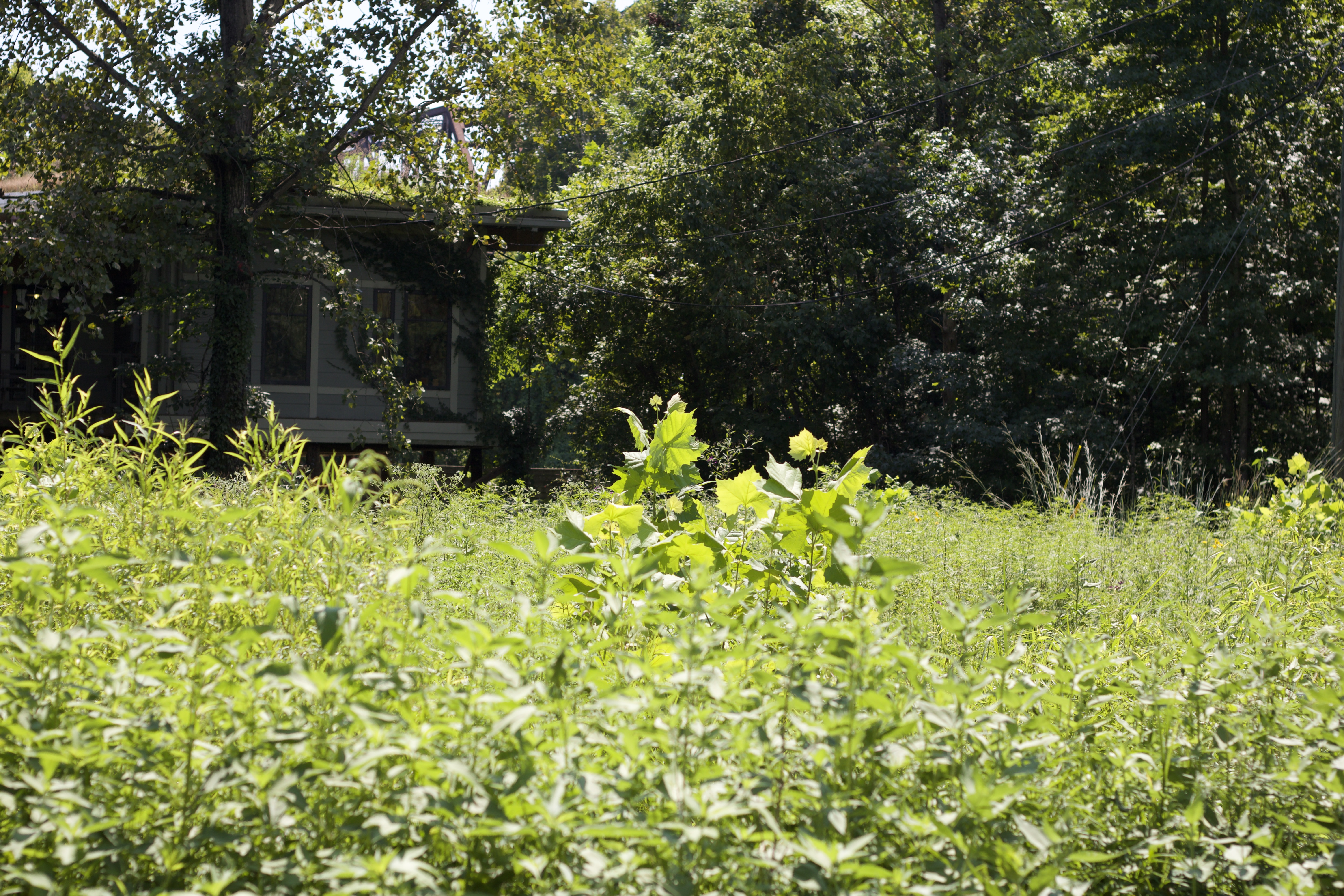
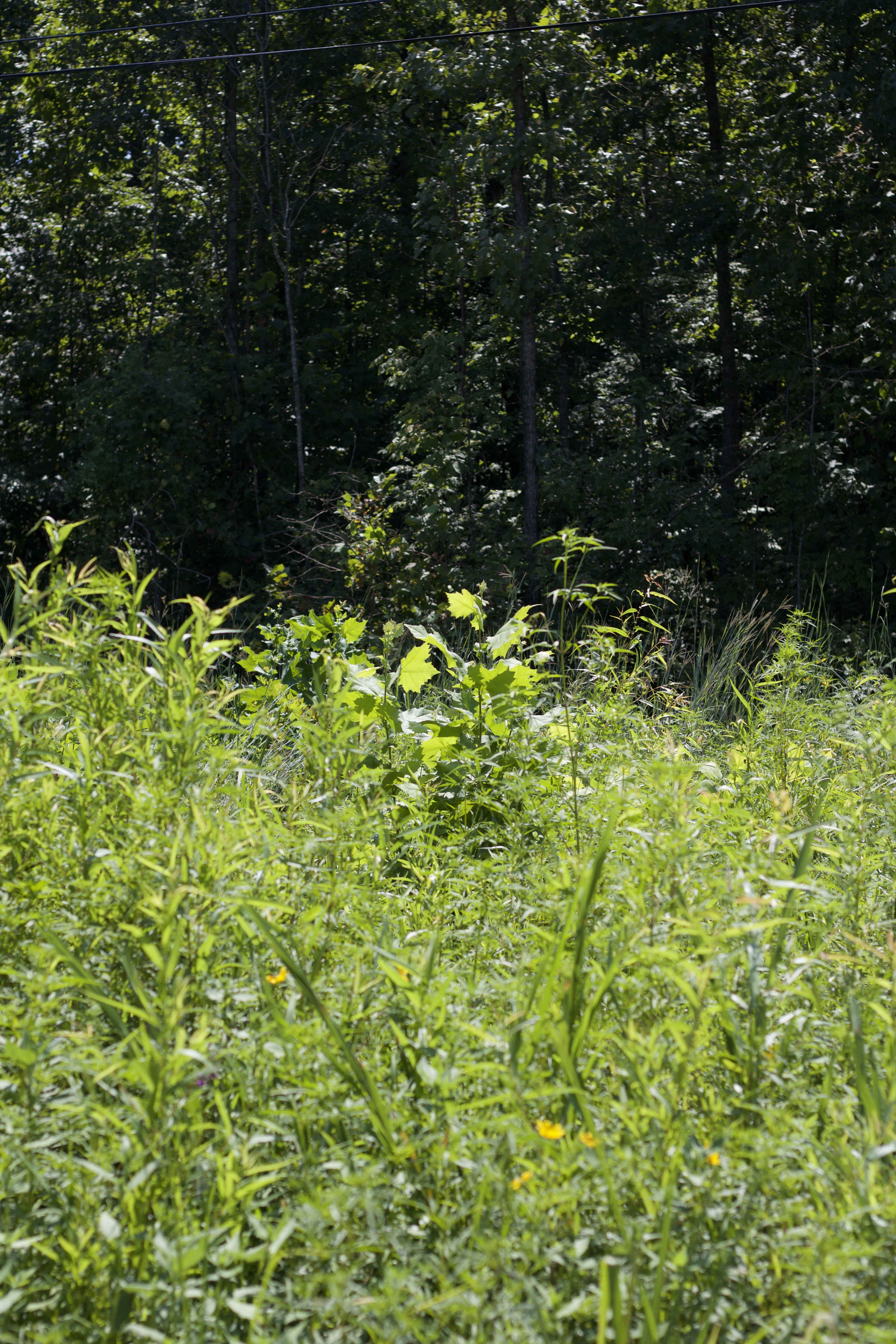
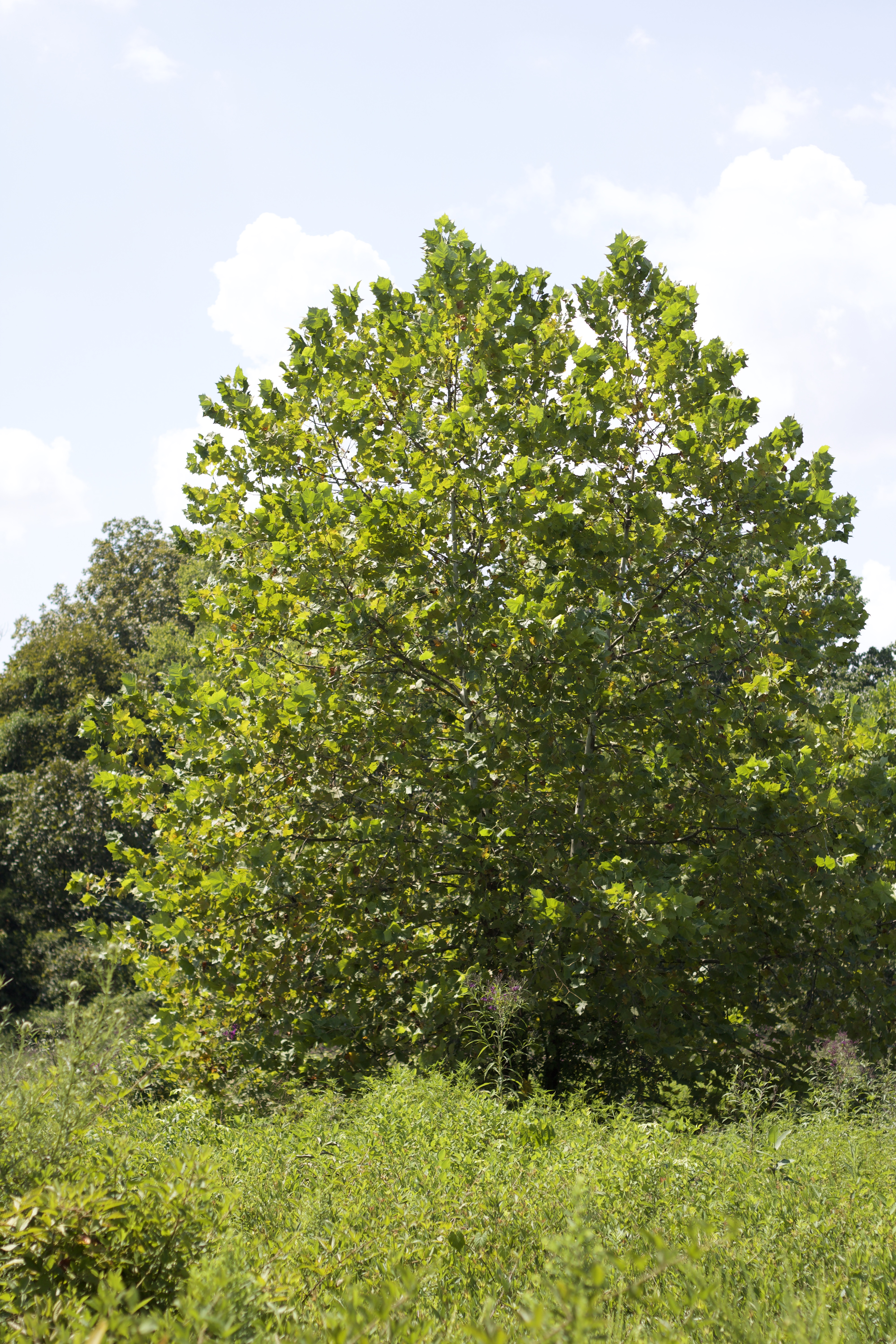
Something I’ve started to notice a lot is the growth of trees in the meadows. Apparently a meadow is the early stage of the development of a forest. First, you have meadow, then you have an interim stage, with small trees, and then eventually you have a full, mature forest. I think this is called succession.
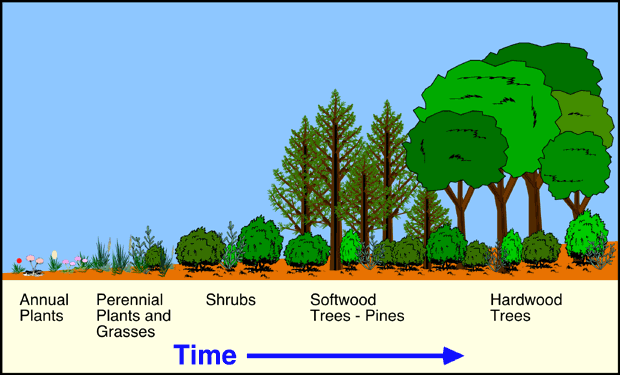
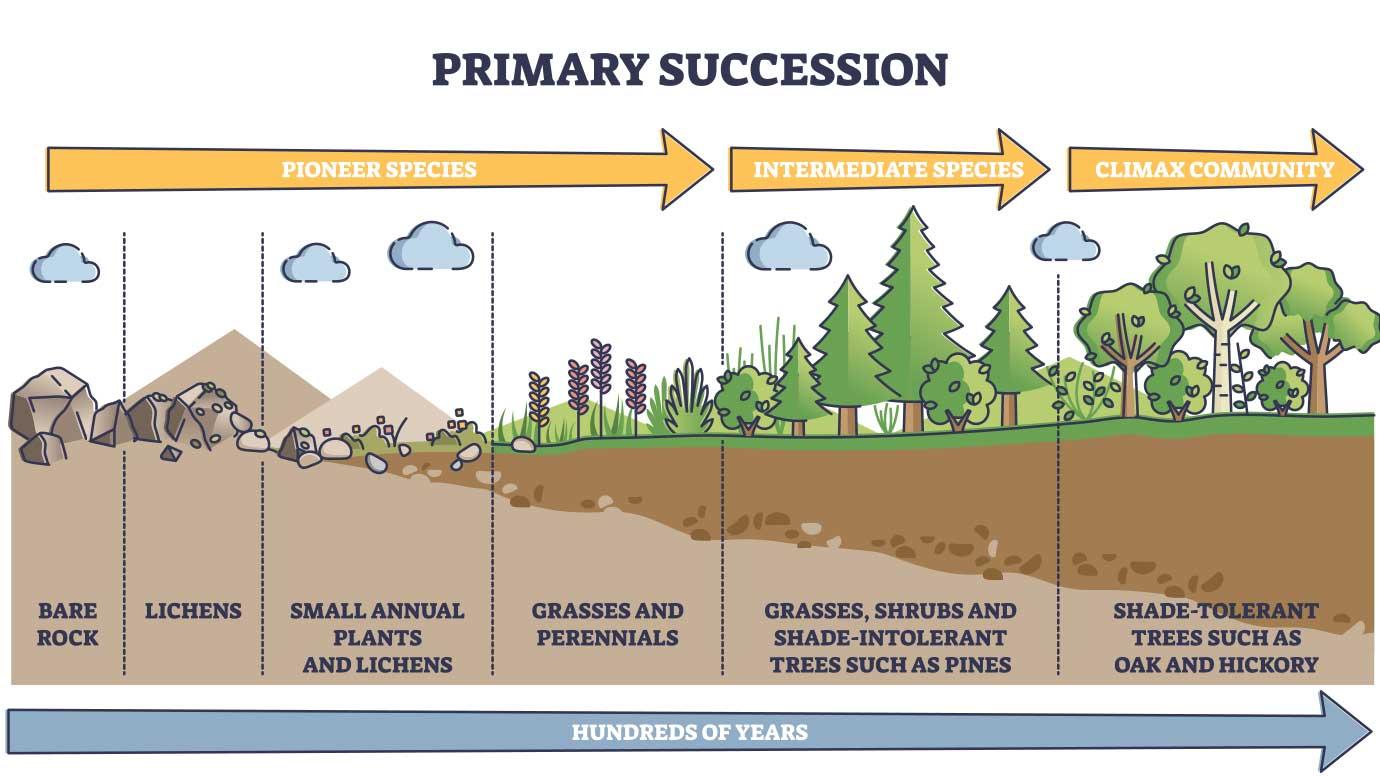
It’s interesting that annuals come before perennials. I think perennials take more time to get established, that’s my guess as to why that is. You can see succession happening in real time at Shelby Park. I’ll show you some photos of trees popping up in the meadow, that are leading the charge into the further stages of succession at Shelby.
Succession is why they say you are supposed to mow your meadow, I think, if you want it to stay a meadow. You have to remove the trees, otherwise you will not have a meadow anymore. I wonder what they will do at Shelby, possibly this fall or winter, if they want to keep the meadow a meadow, or if they will just allow it to convert. The reason they might want to do that is because meadows/praries are rarer now, and also they might want to keep it for the variety. (I’m not sure if our field is considered a prarie or a meadow, I just realized. Maybe it’s neither.)
Below are some photos of trees popping up amongst the wildflowers.

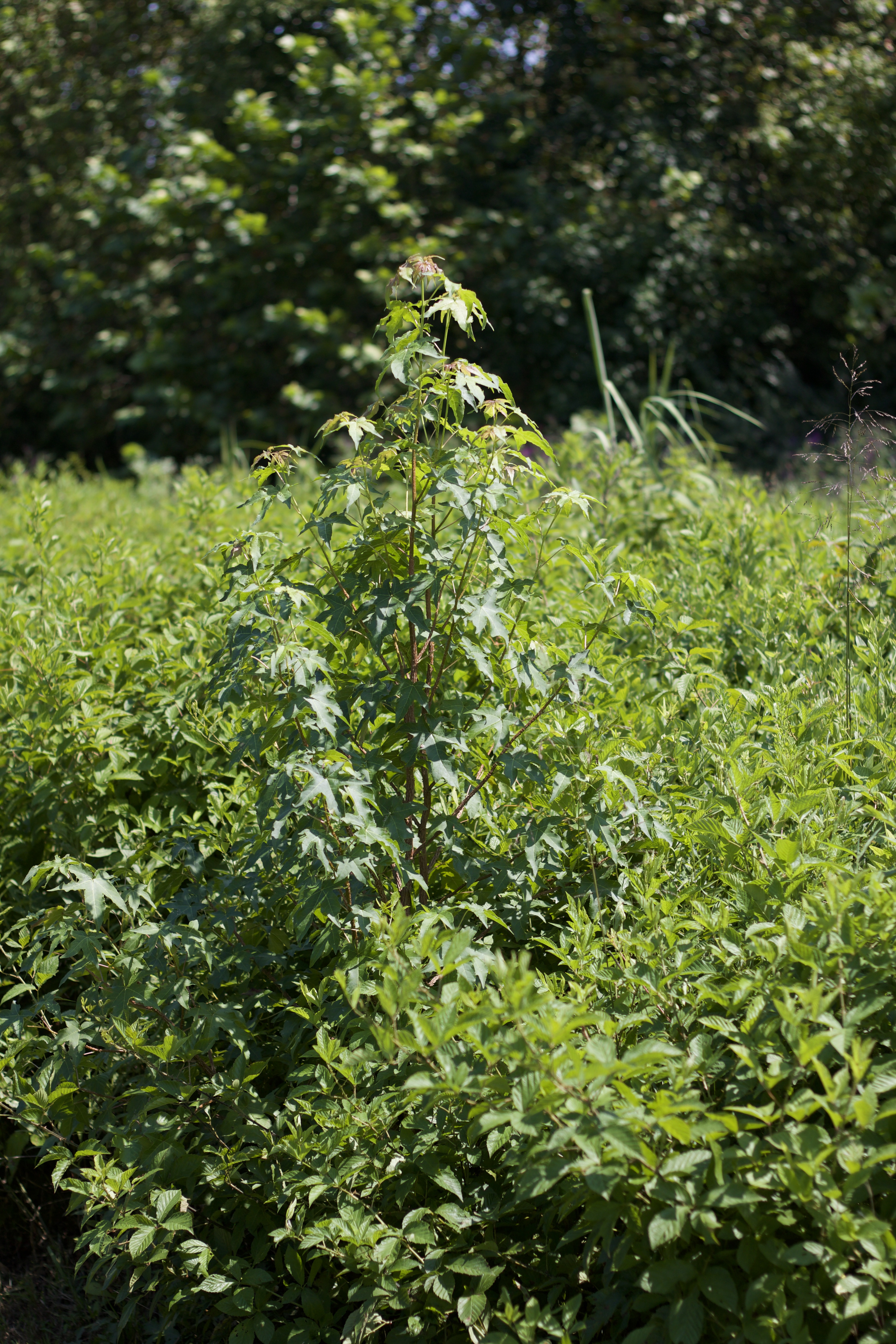
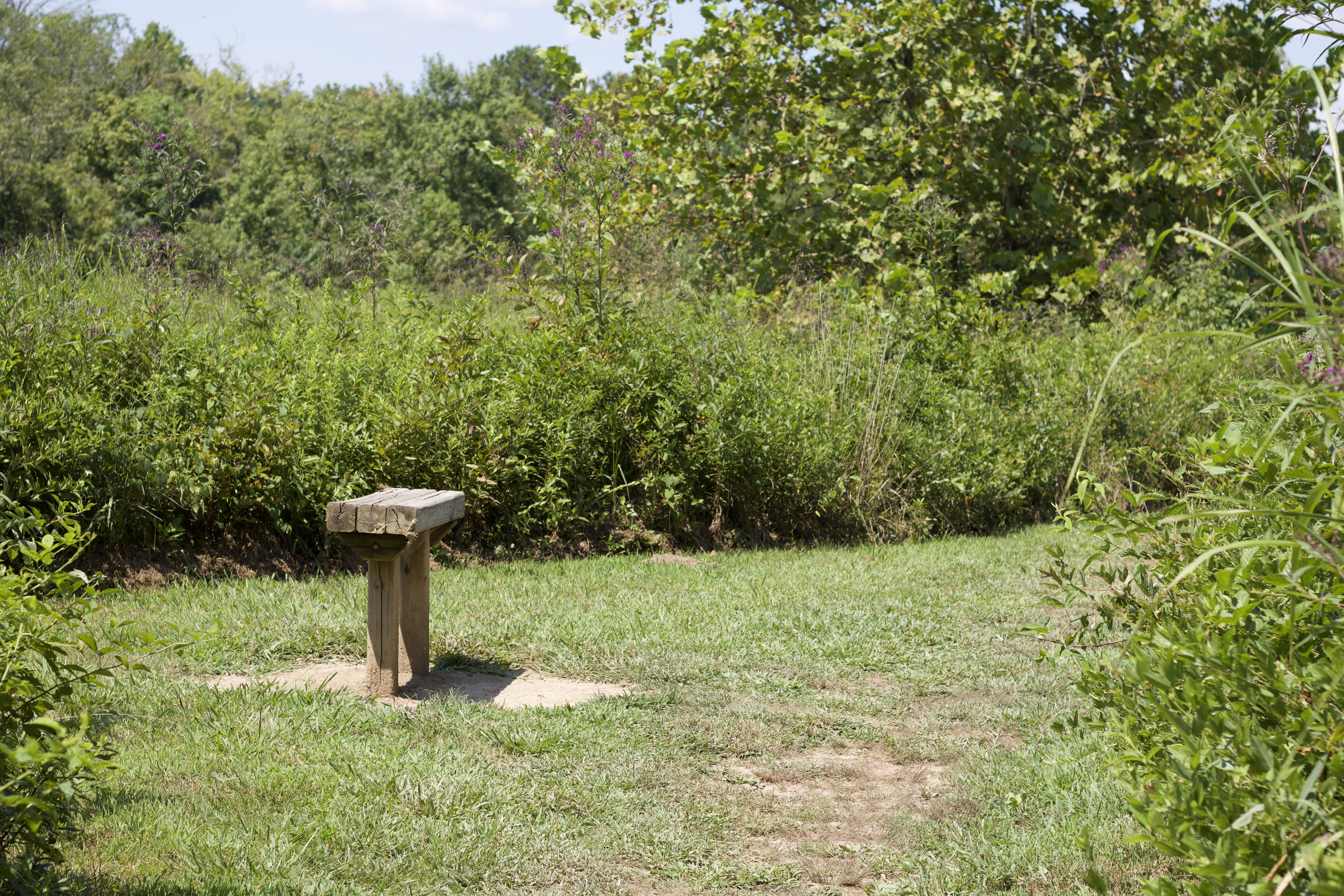
The above photo is a bench in a cleared pathway in the meadow. How pleasant! Probably no on sitting there for most of the day these days, as it is extremely hot. In the background you can see the large oak, standing alone in the meadow.
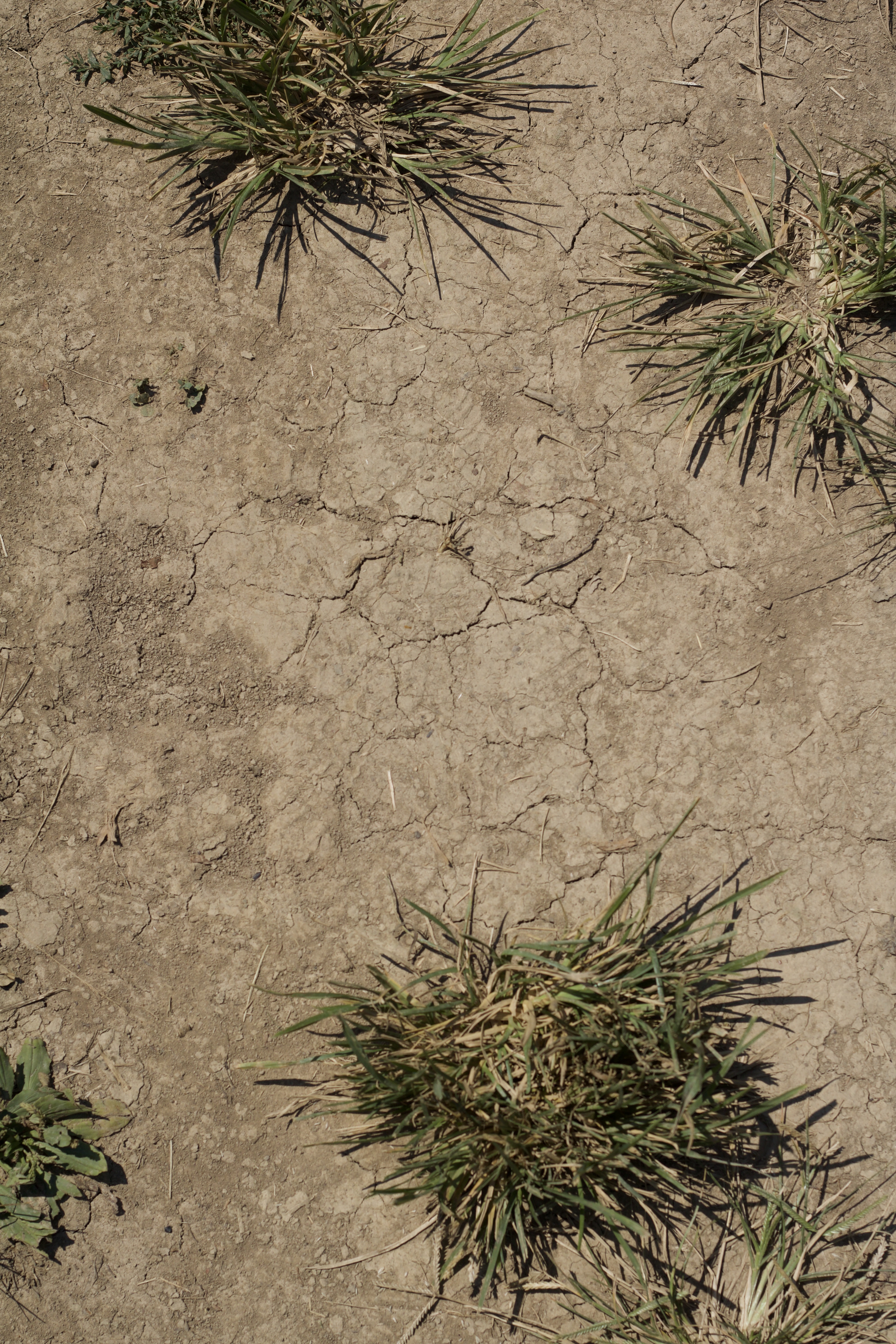
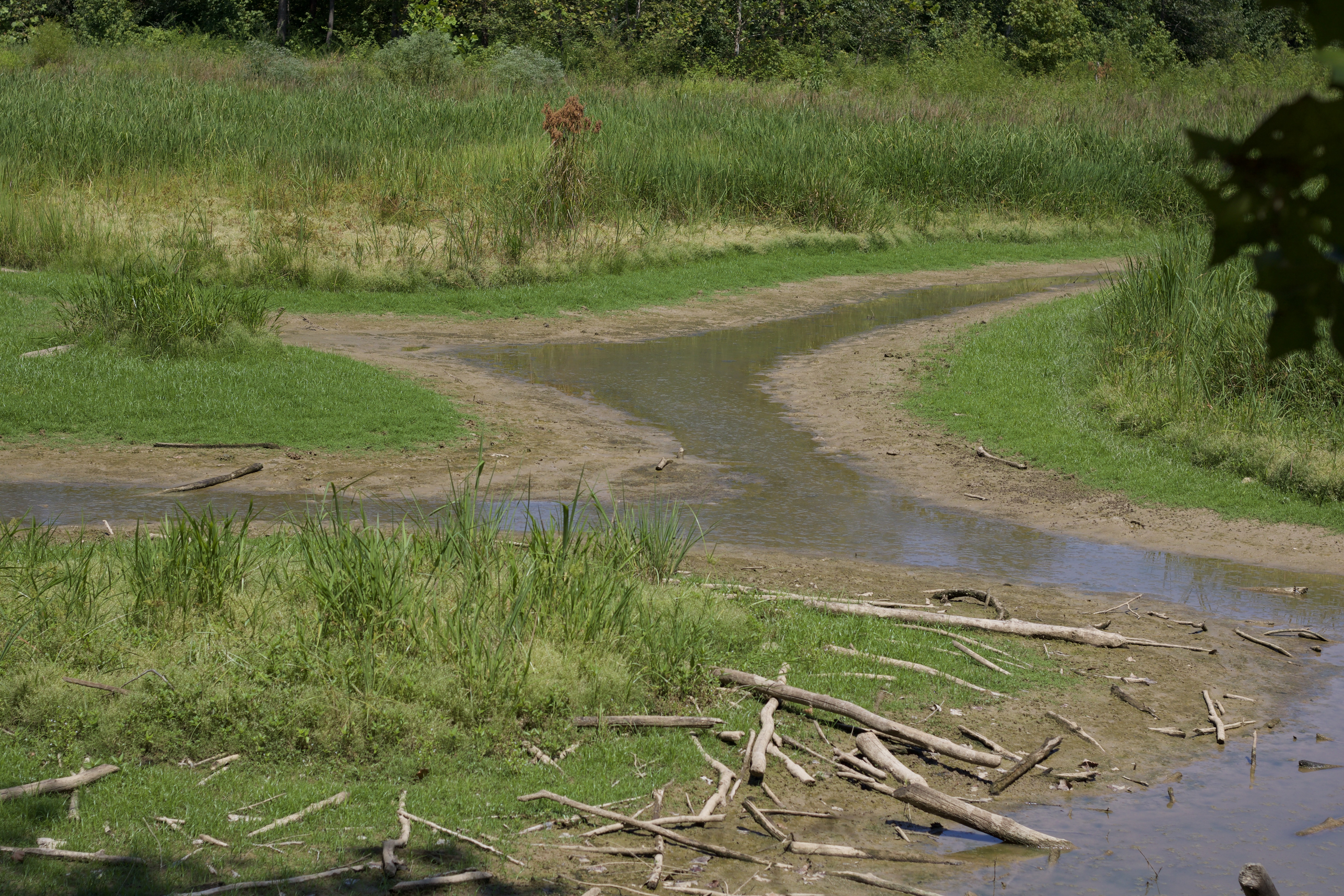
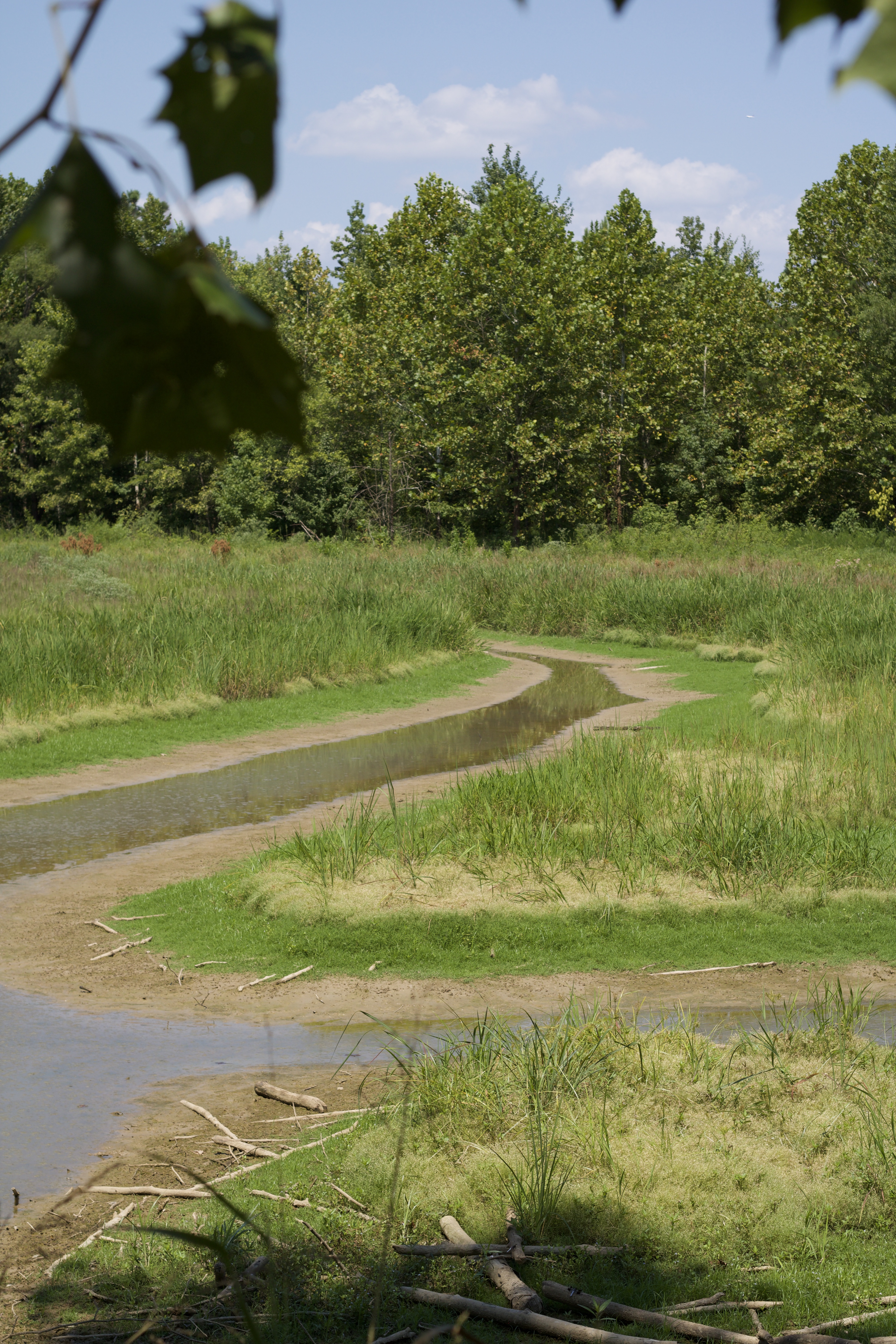
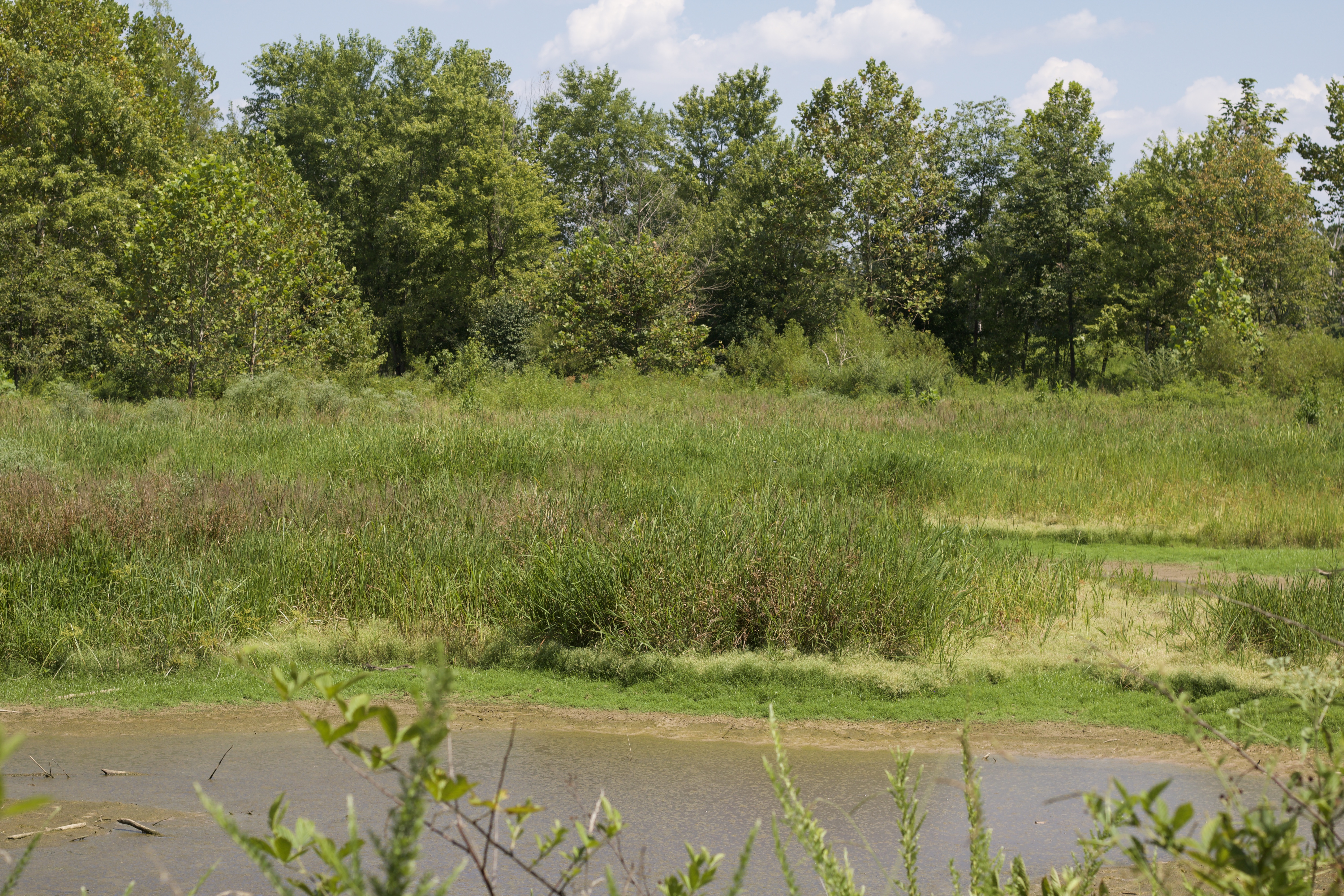
On either side of the meadow there are some marshy, wet areas. They are dry as a bone right now. I wondered if the pond would have been totally dried up yet. Beavers, deer, and herons are usually hanging around here.
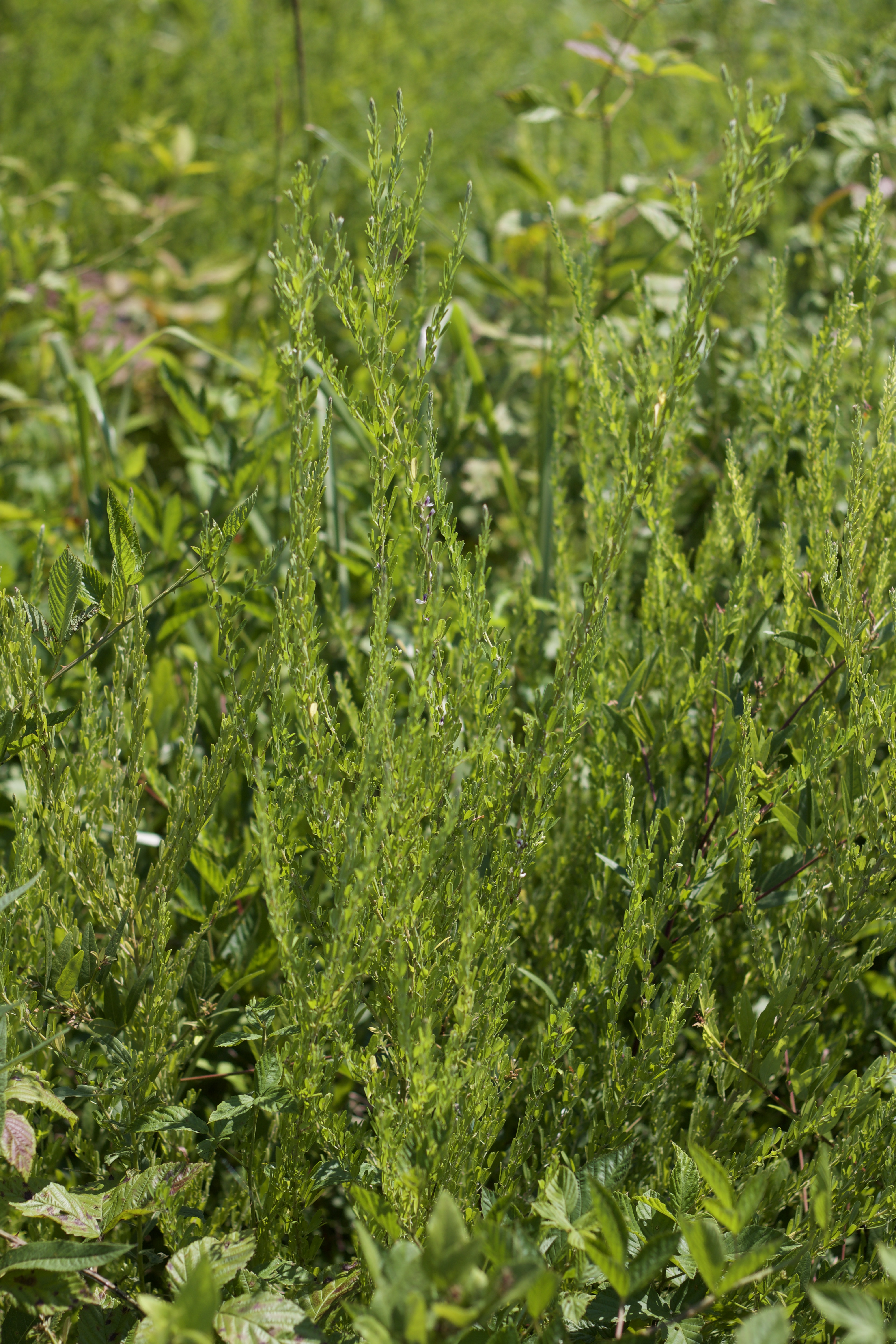
There were some patches of the meadow where I was seeing a ton of this plant. Anybody know what it is? Trees? Shrub or bush? Don’t know, but there was a lot of it, dominating its area.

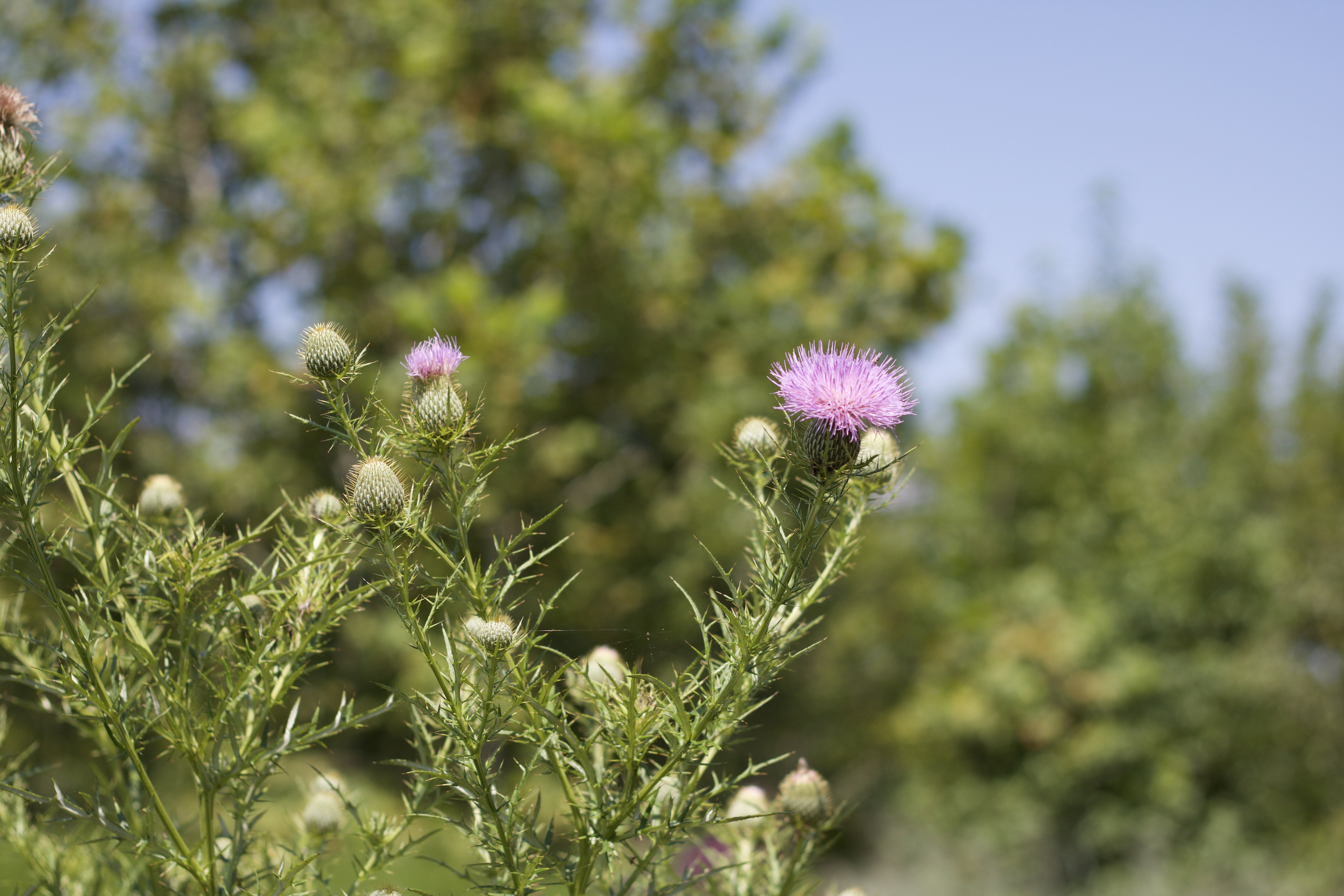
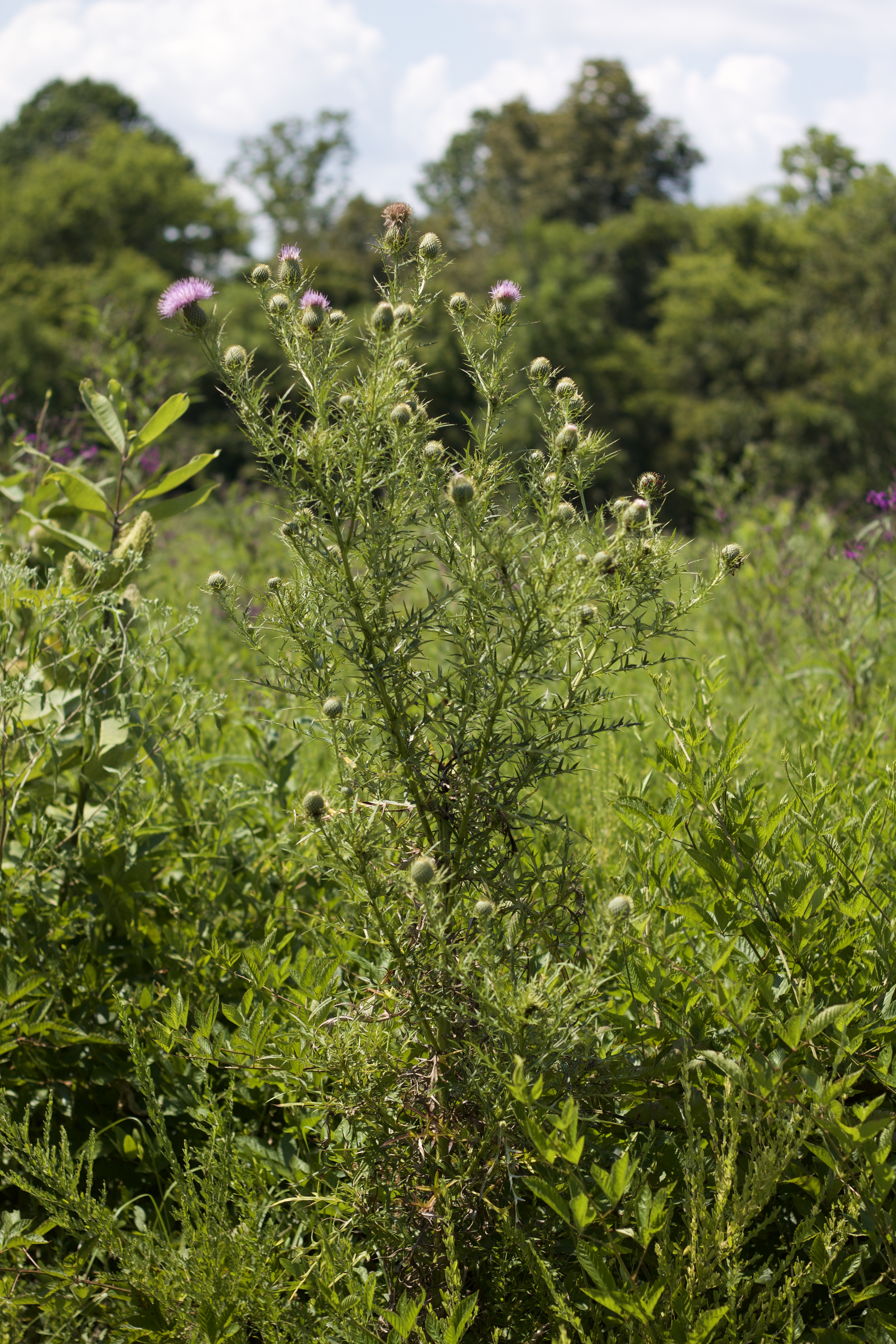
I’ve been spotting the plant below recently as well. It’s just starting to bloom. Very pretty, kind of a standout. My mind is going to “thistle”.
Internet says this is Cirsium altissimum, a Tall Thistle. Native to eastern and central United States. That’s good.

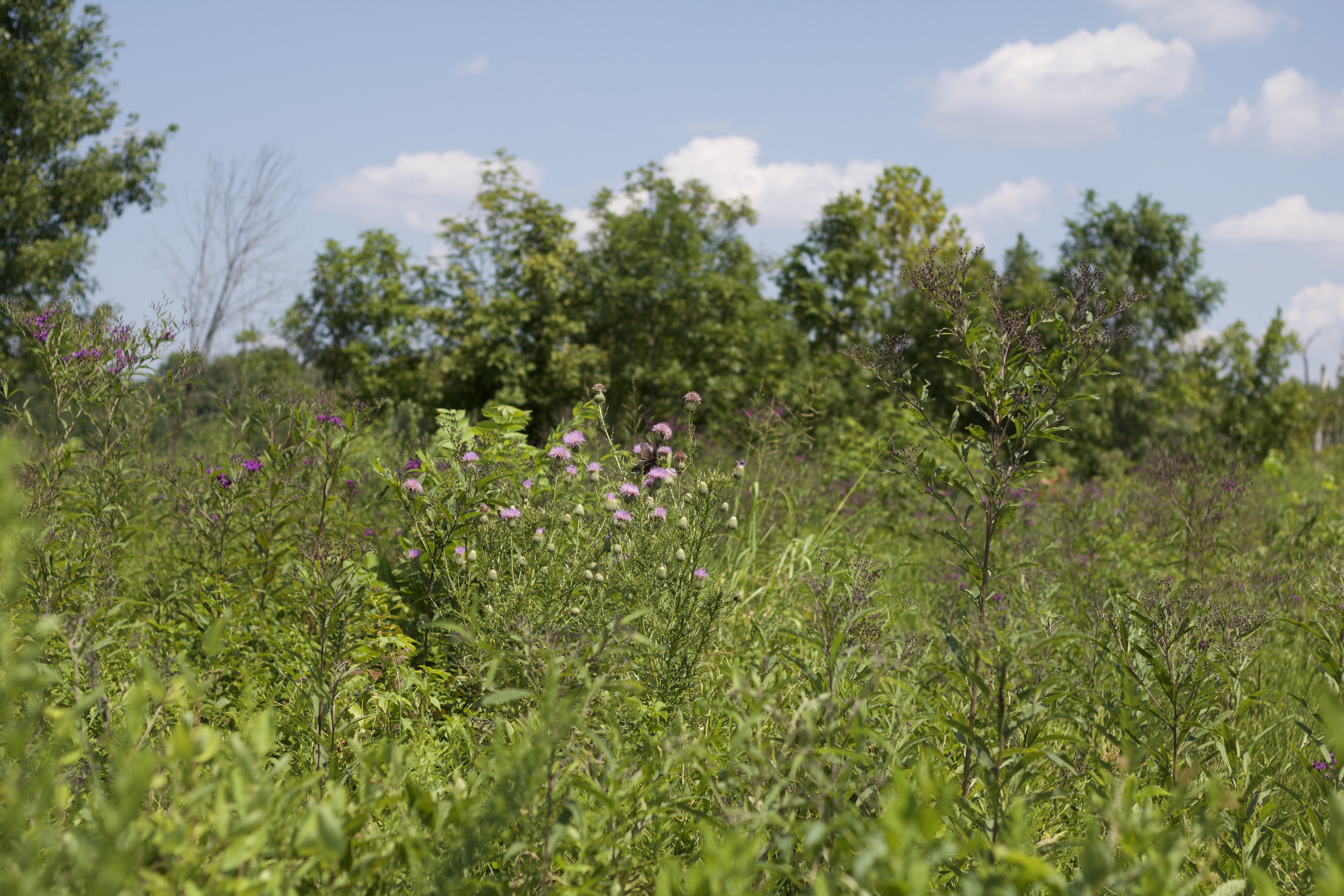
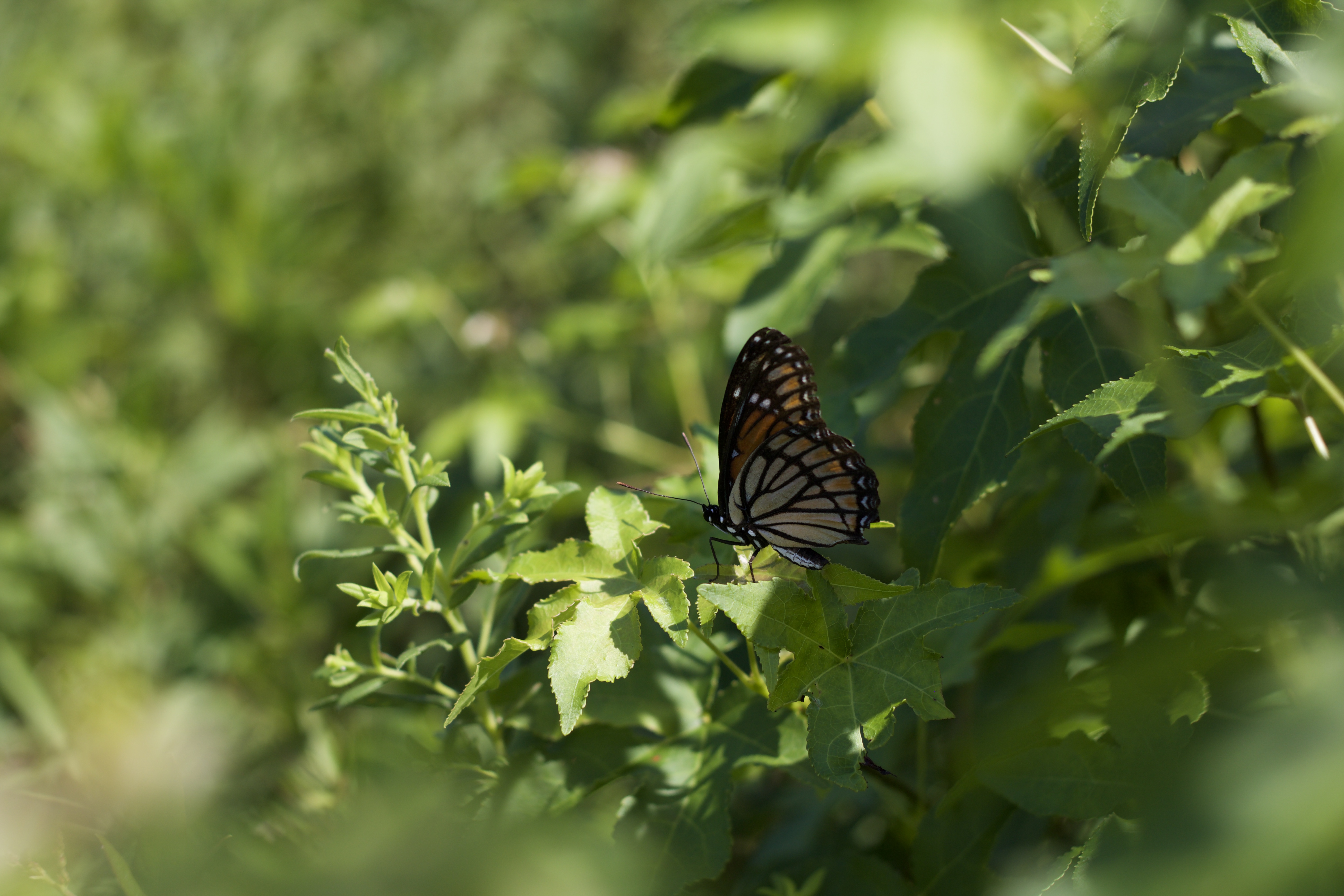
There are many flowers blooming right now, Zinnias, some sunflowers still left, dogwoods (if that’s what they are)… lots of trees are in bloom right now, and the wildflowers. Lots of food for the pollinators. So, we are now seeing butterflies everywhere.

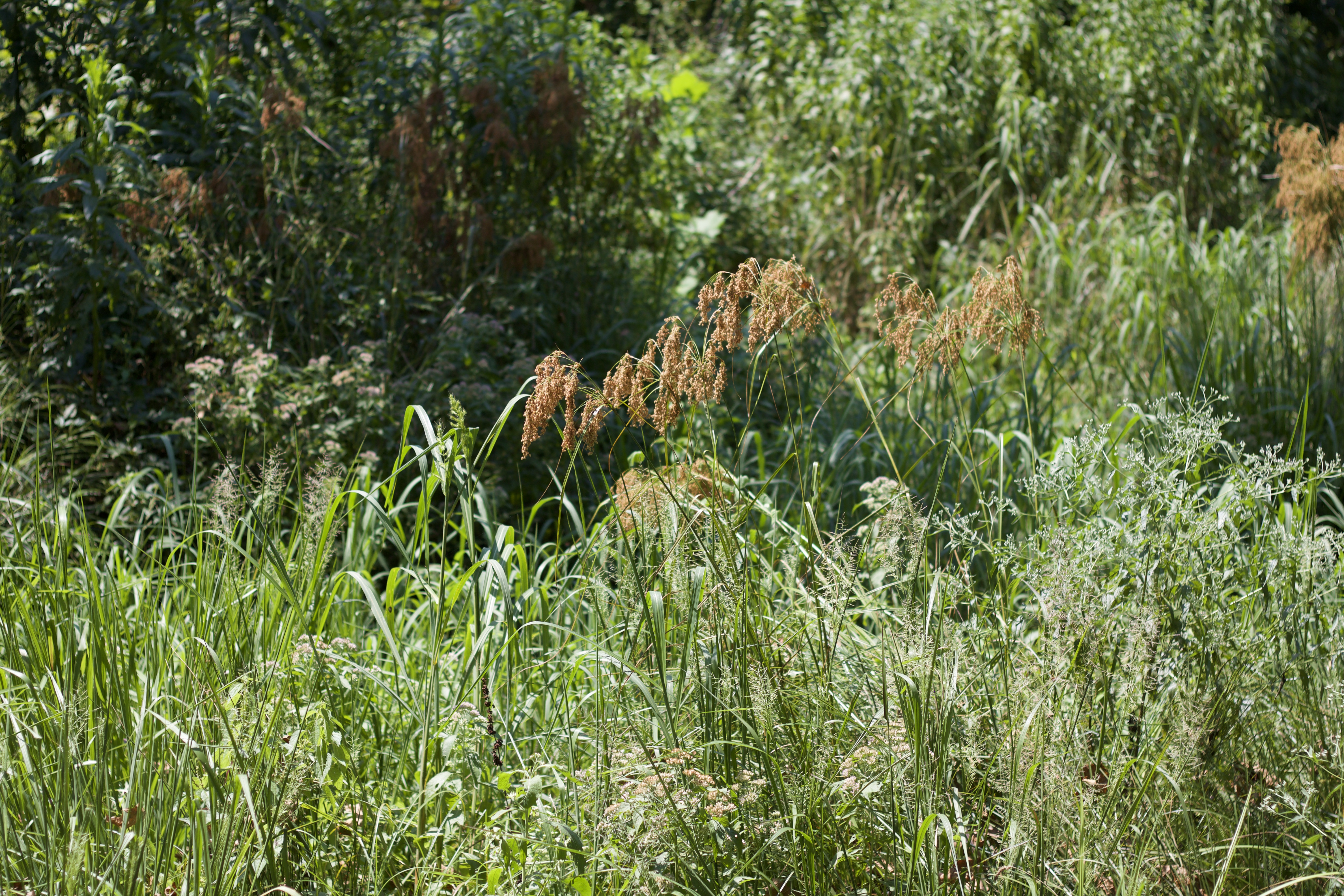
The below photo, the grass, was standing out. I snapped a quick pic. I wish I would have taken some more photos but this was in the meadow, at this point I was really getting cooked, and flowers are still more interesting for me than grasses.
Sorry grasses. I’m sure I will have a grasses era someday.
There’s an interesting bat box out in the meadow, only one of them. I assume it is a bat-box.
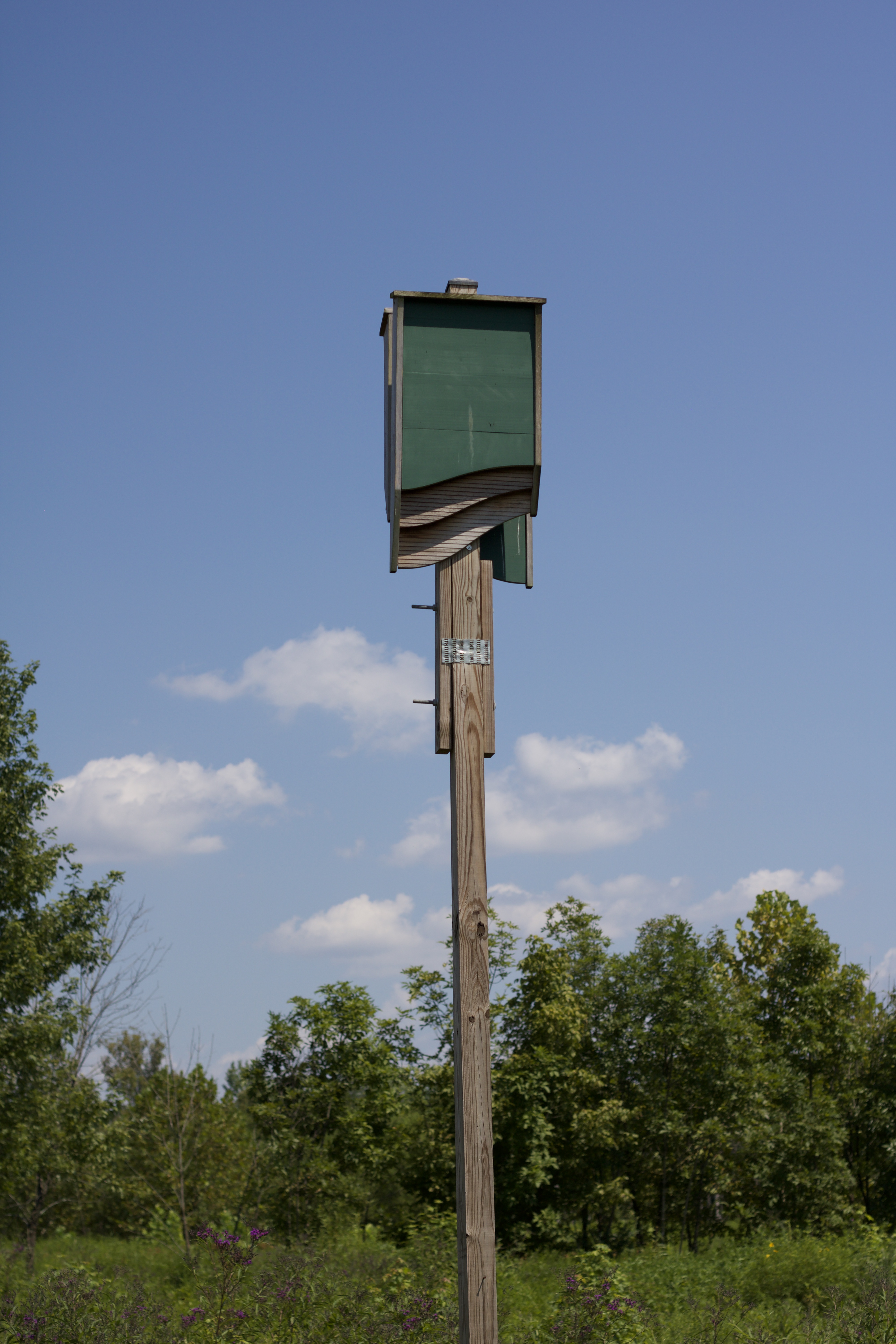
Well folks, this is about everything I’ve got for you here. But there was ONE more thing, and it was actually the most incredible thing I saw on this field trip. It was the only thing I really have no explanation for. As I walked through the shaded, covered tunnel trail on my way to the meadow, I happened across a large, black spot on the path. I looked down, wondering what it was, and saw that it was absolutely teeming with wriggling things. Some of you who are squeamish may not want to look at the following photo. Luckily it is relatively low quality, as my camera was struggling in the dark, and with the difficult subject matter.
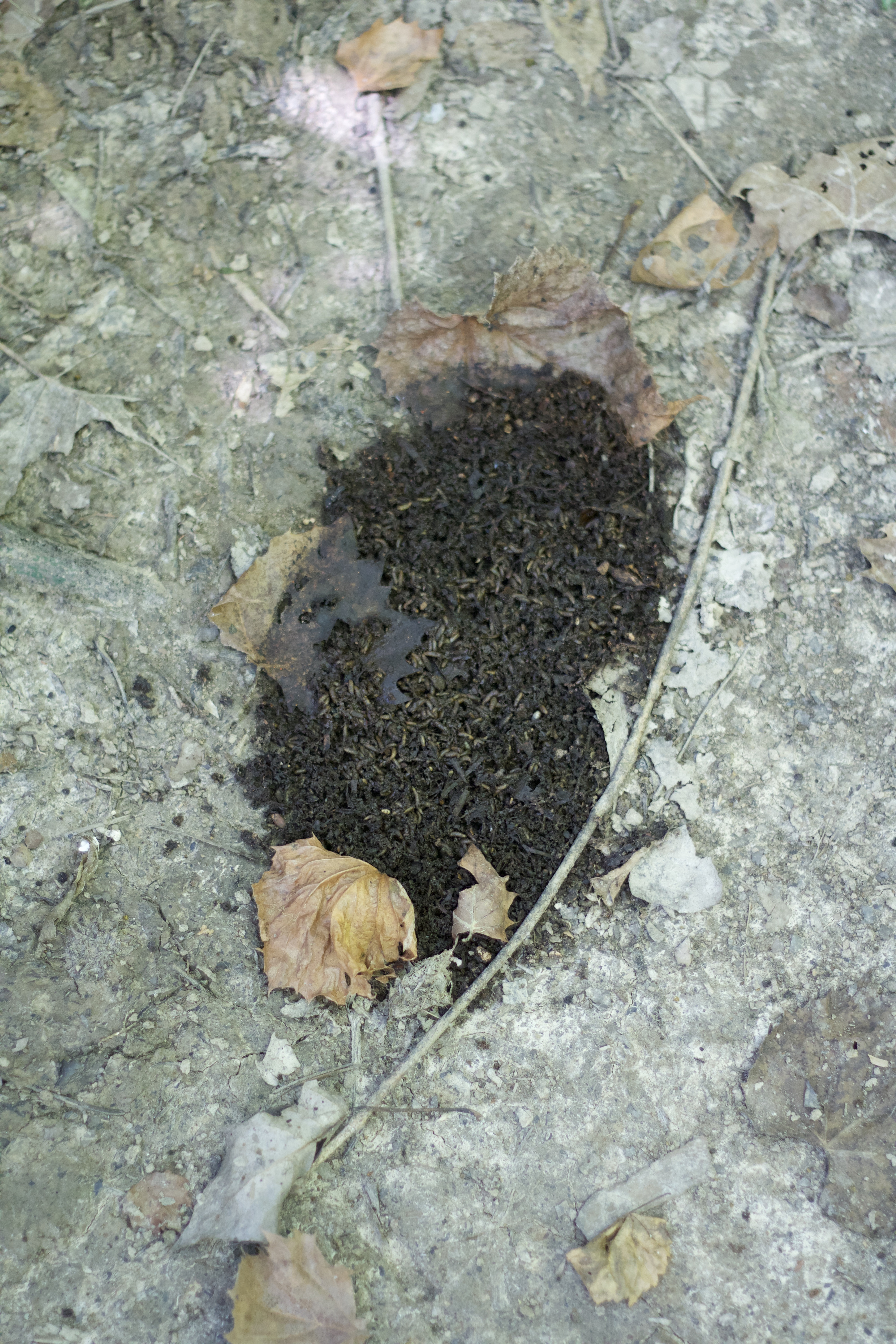
This mass is extremely interesting. I squatted down and looked at it, poked at it (with a stick of course) for as long as I could handle, because it made me incredibly sweaty and the mosquitoes were immediately descending on me. I have to tell you that I still have no idea what this really was or is. It looked like dirt, but how did it get there? And if it was poop — what kind of poop is that? How did it get so flattened out? And what about the creatures inside?
I thought they might have been parasites, but looking at them now, and thinking about how they were moving, they seem like they could be black soldier fly larvae. We have those in our compost pile, they look and move similarly. If they are, that means they would have to had hatched in this pile, so it must have been here for awhile… If it is dung… Do the eggs hatch that quickly? And what kind of dung is this? Were the larvae worms keeping it moist?
I’m open to theories. If anybody knows please tell us all. I’m still thinking about it.
 HAKUMUSU