[Note: The photos in the email are compressed and aren’t as sharp. If you want to see the photos in higher quality, read the post on my actual blog site.]
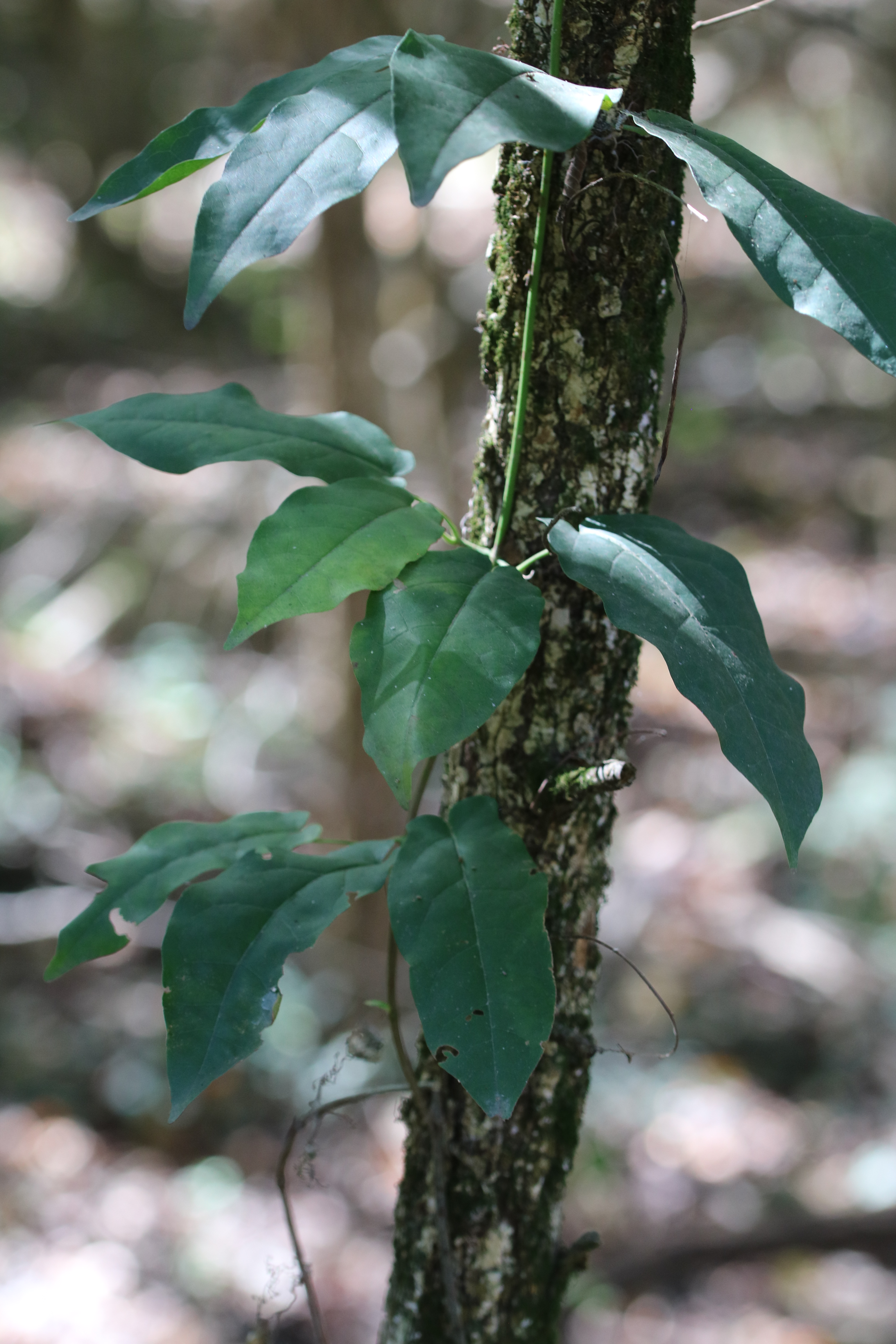
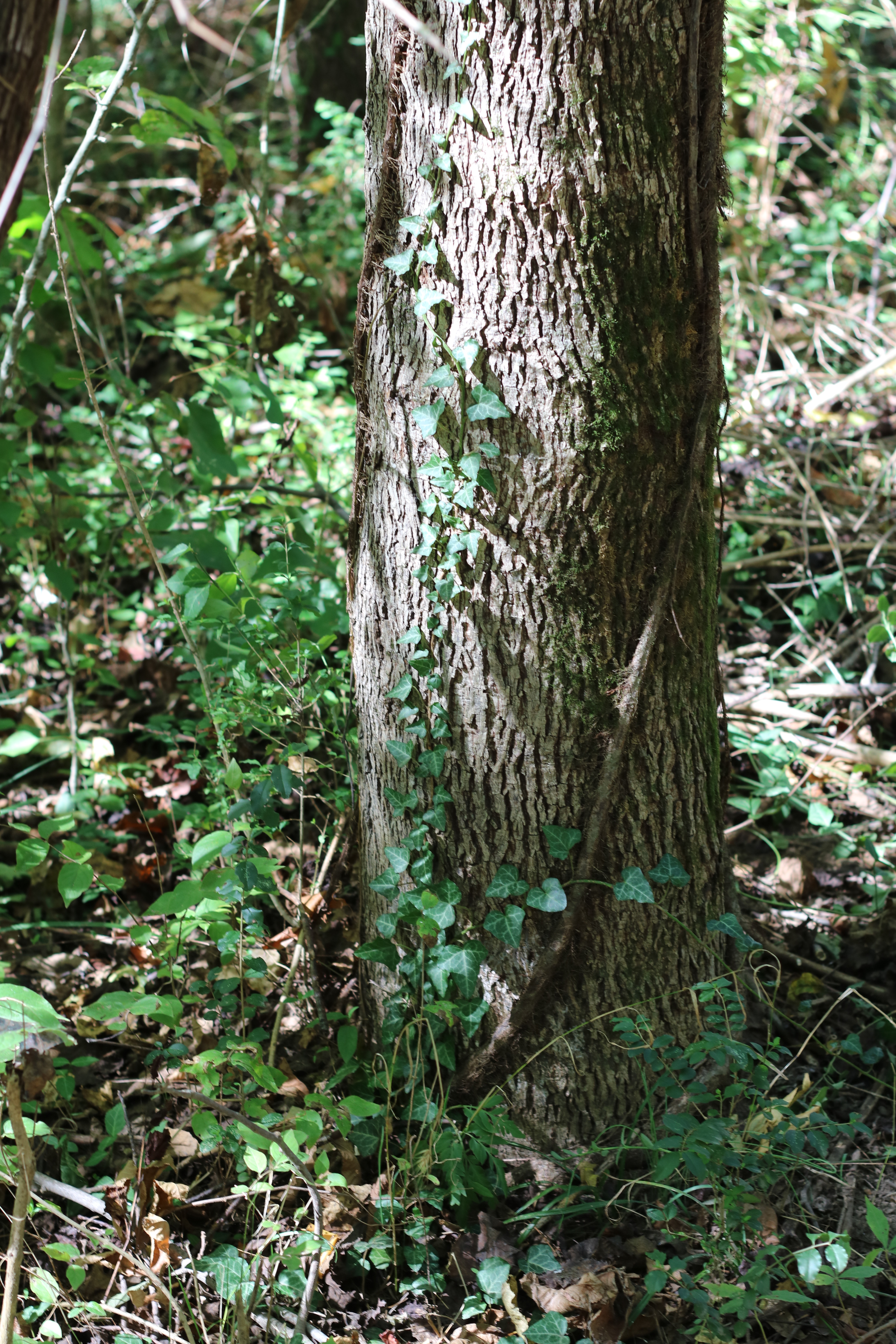
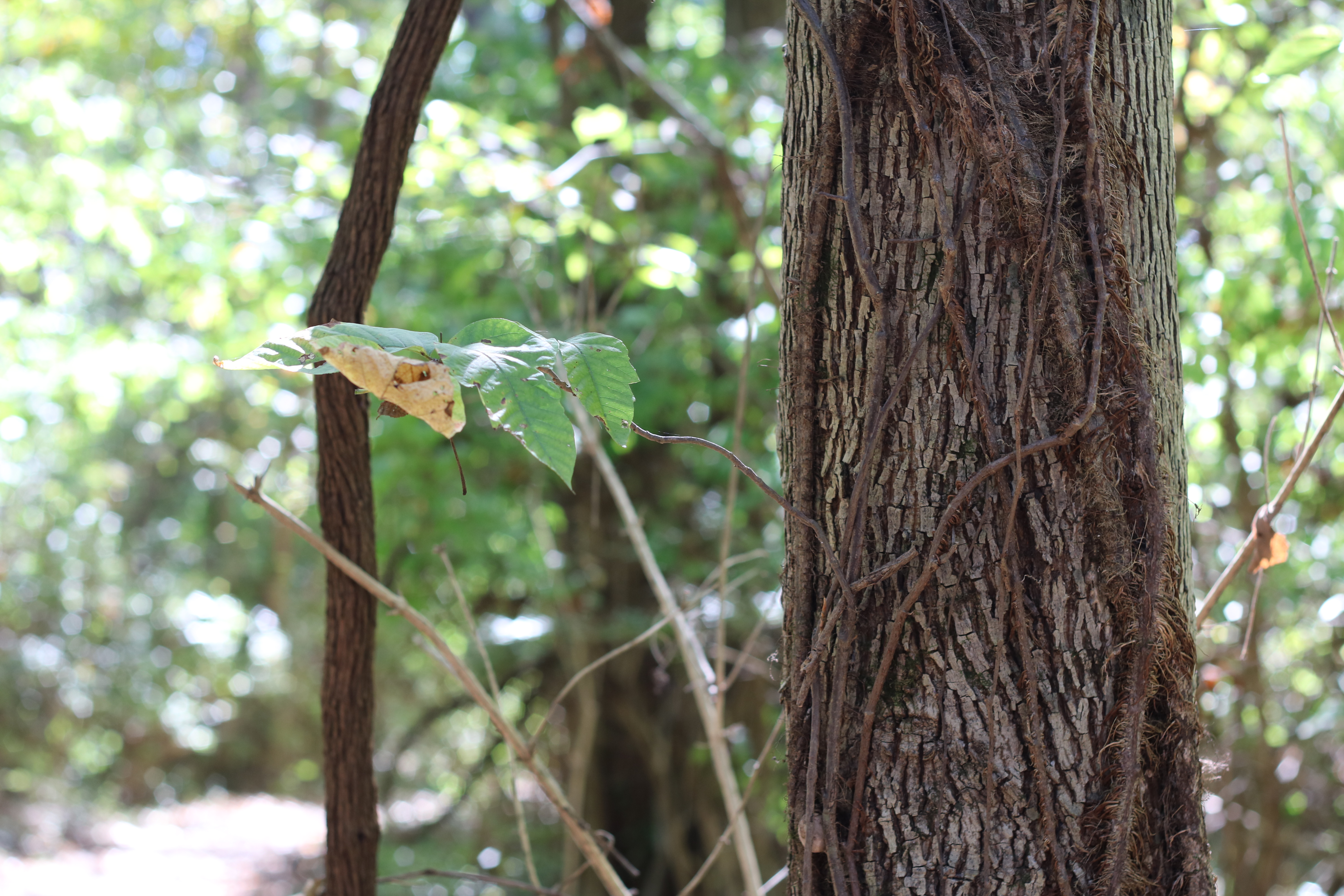
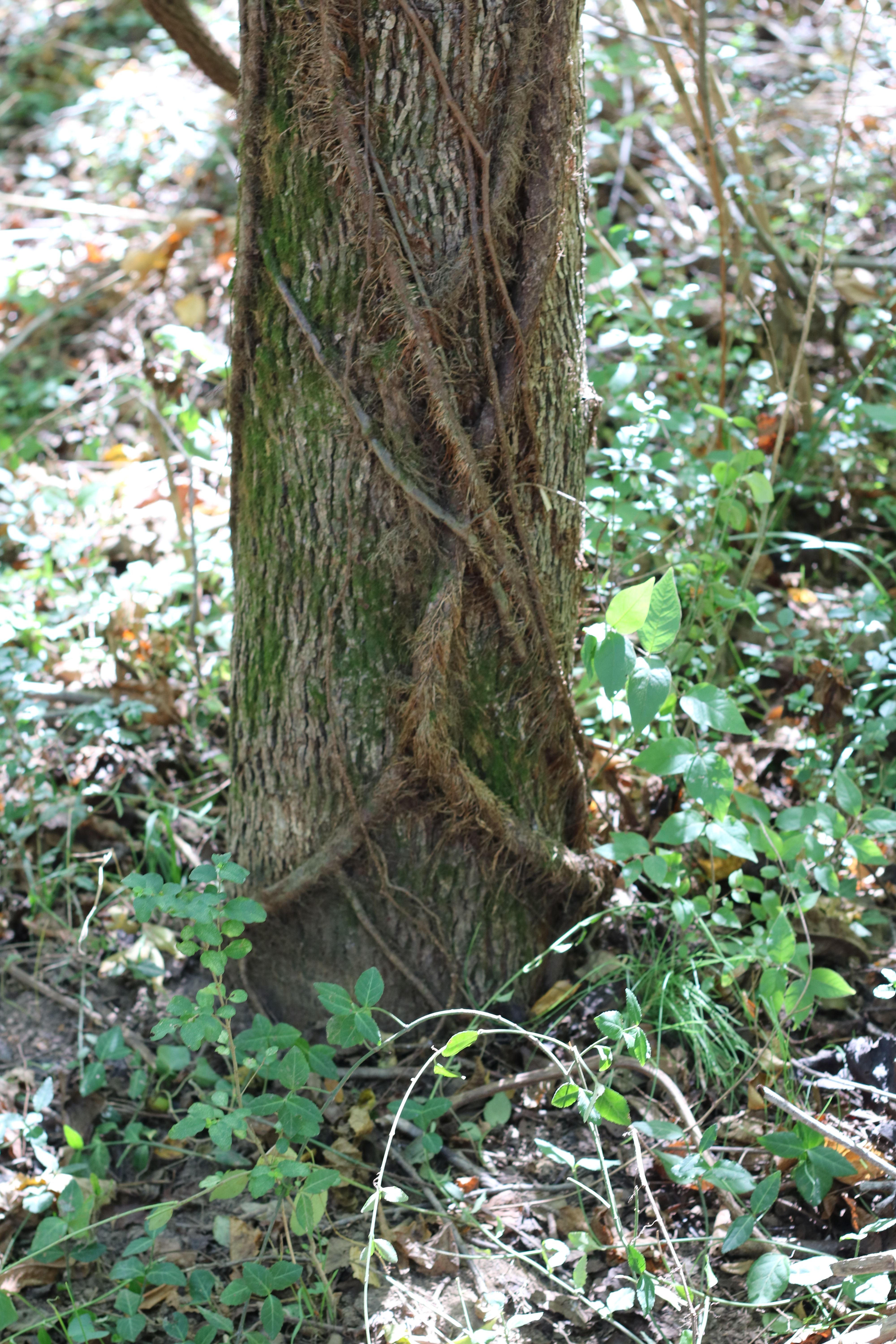
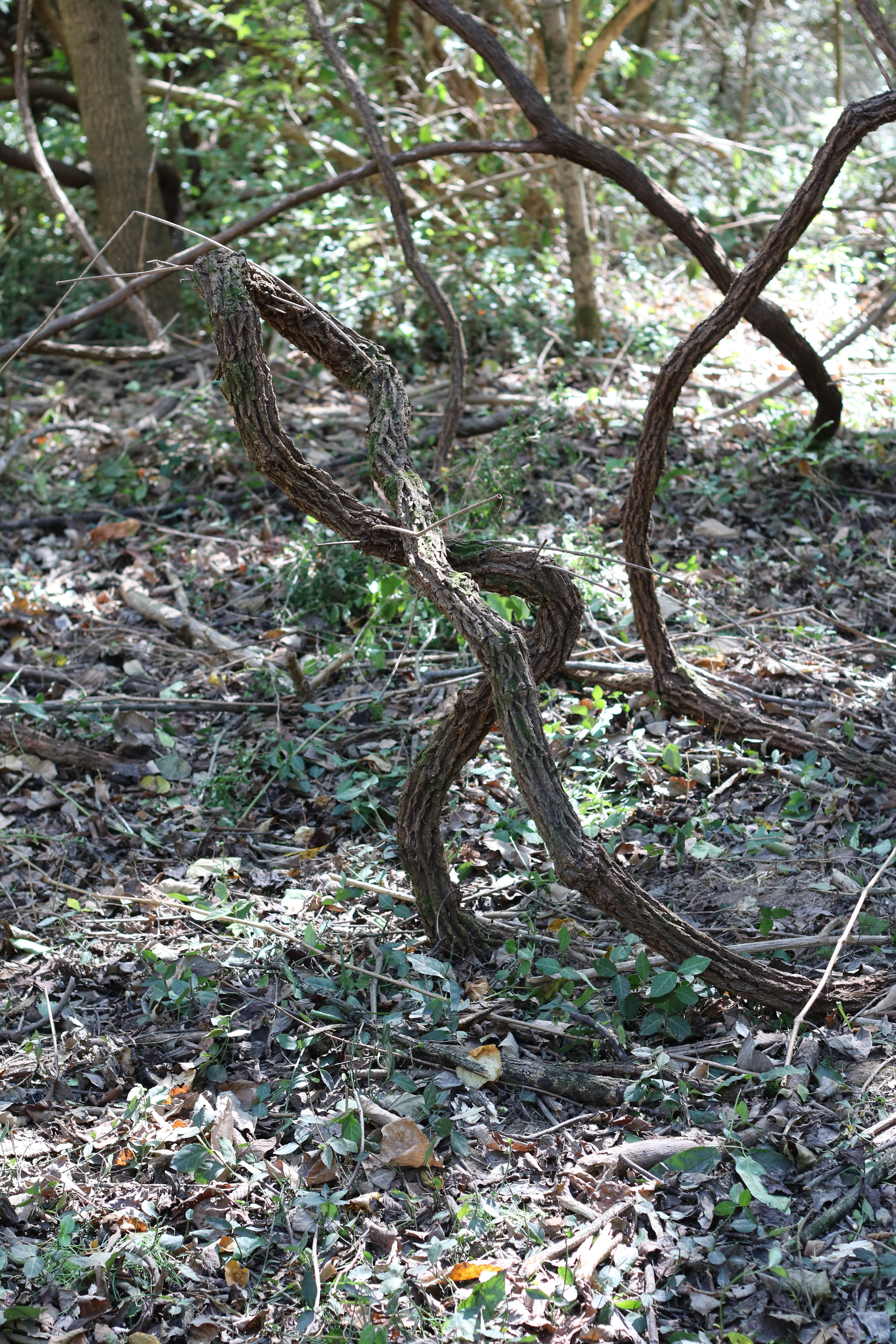
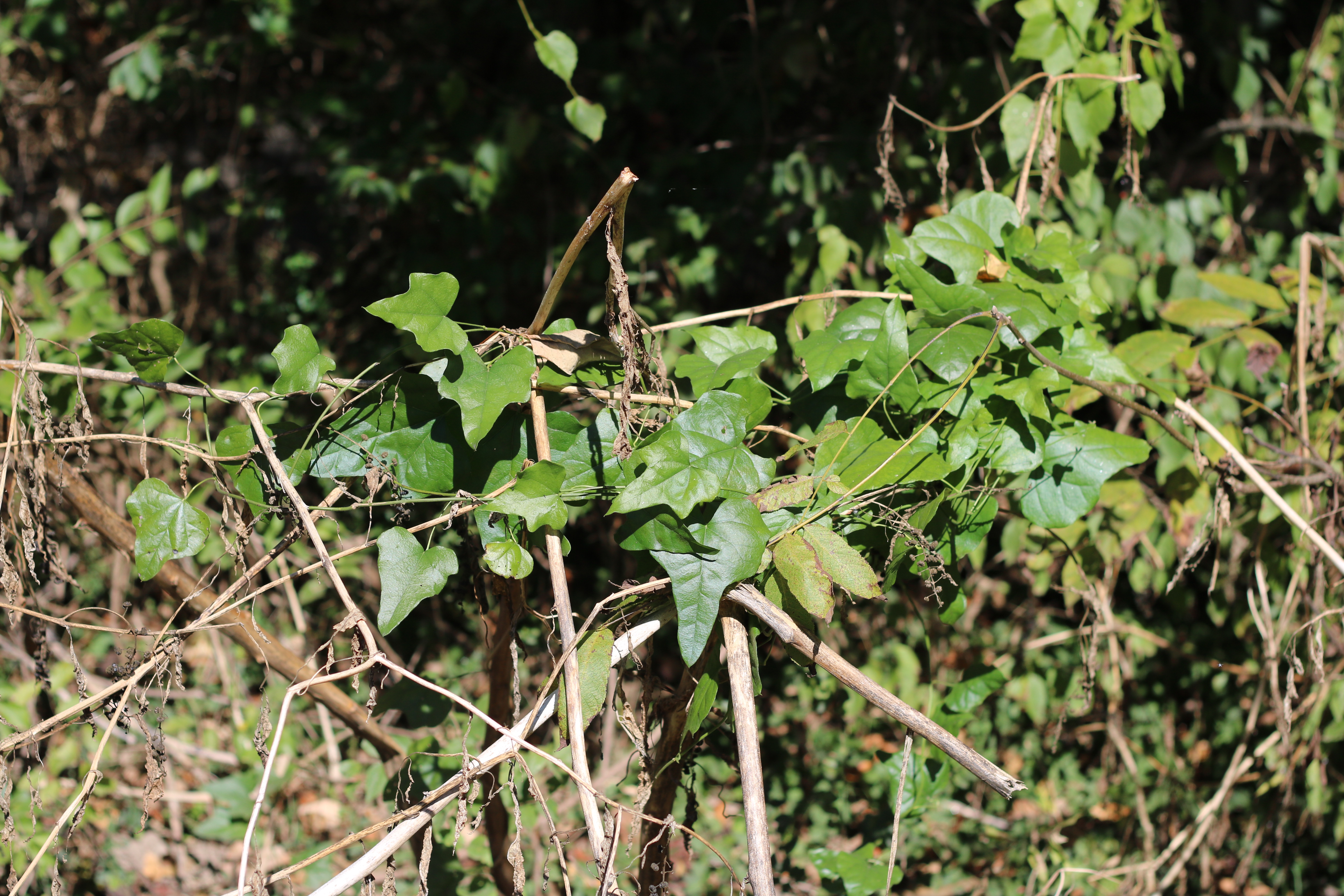
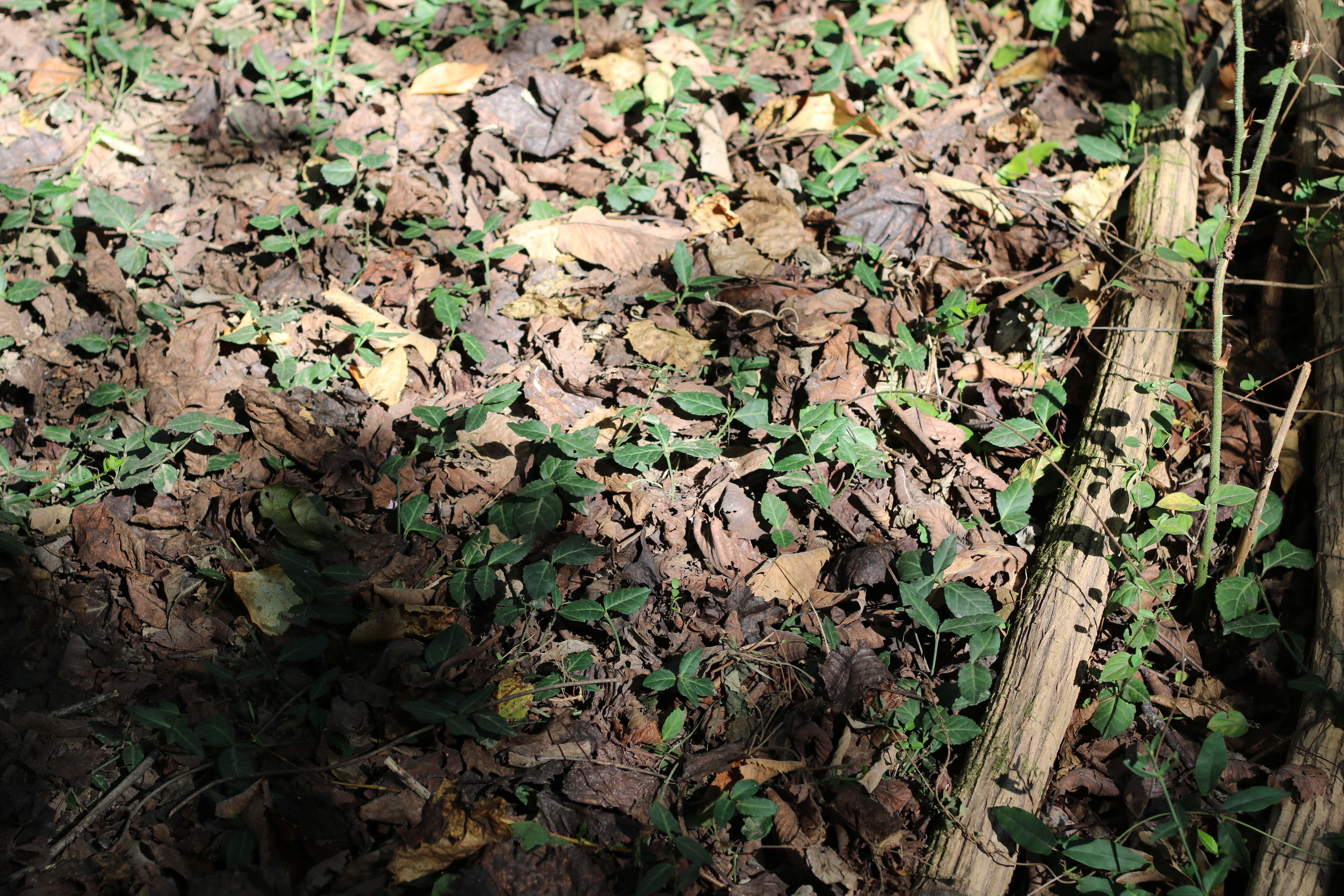
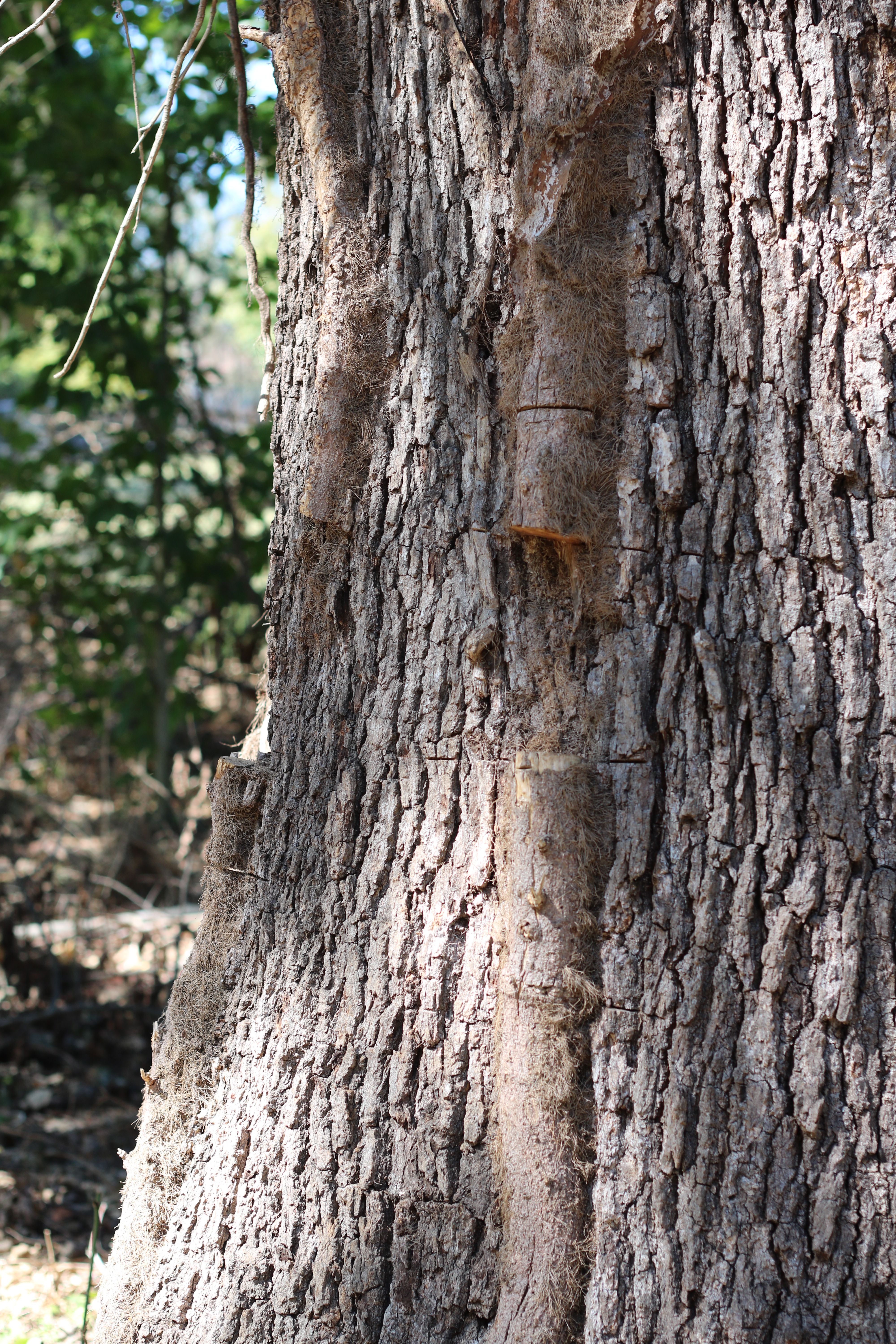
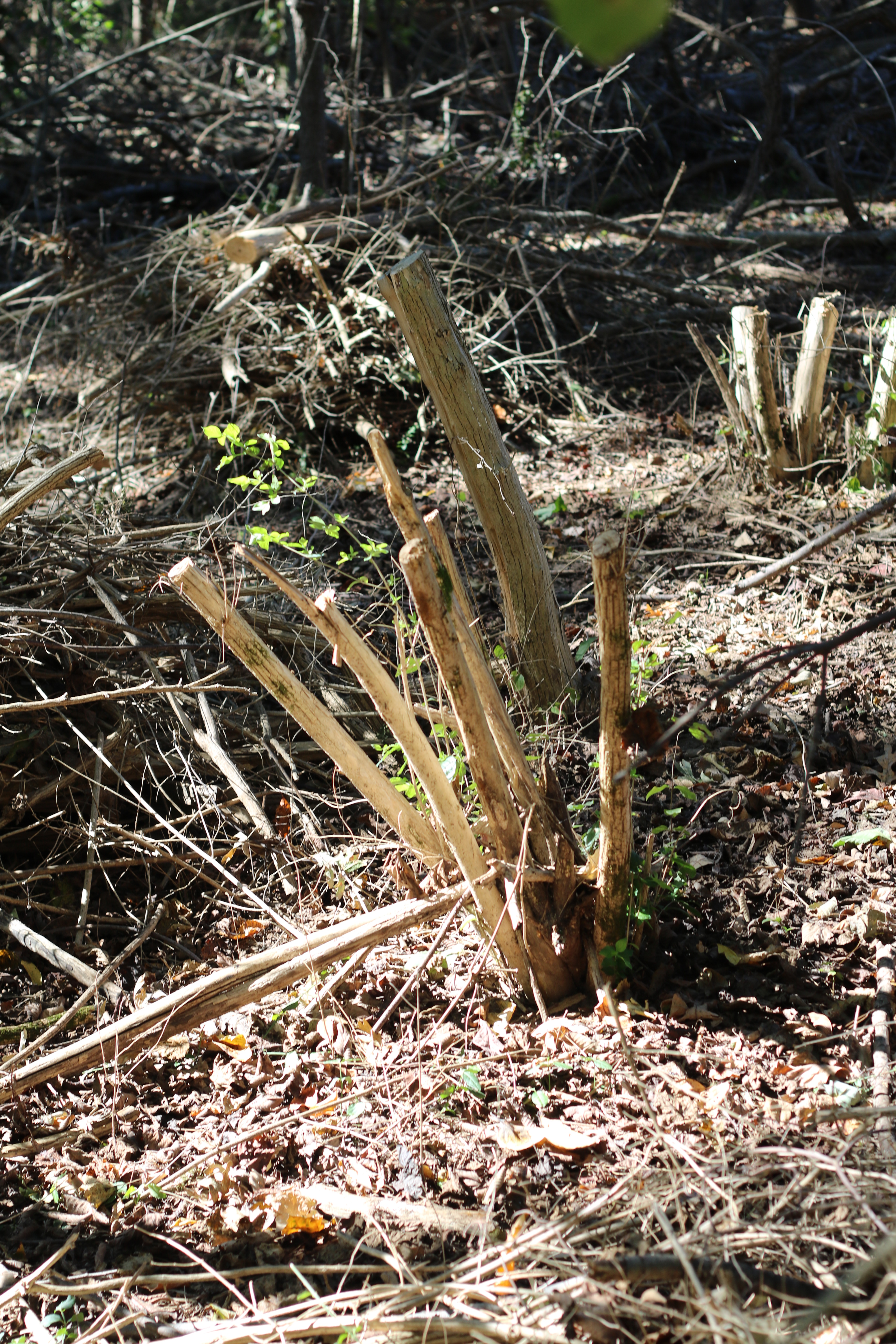
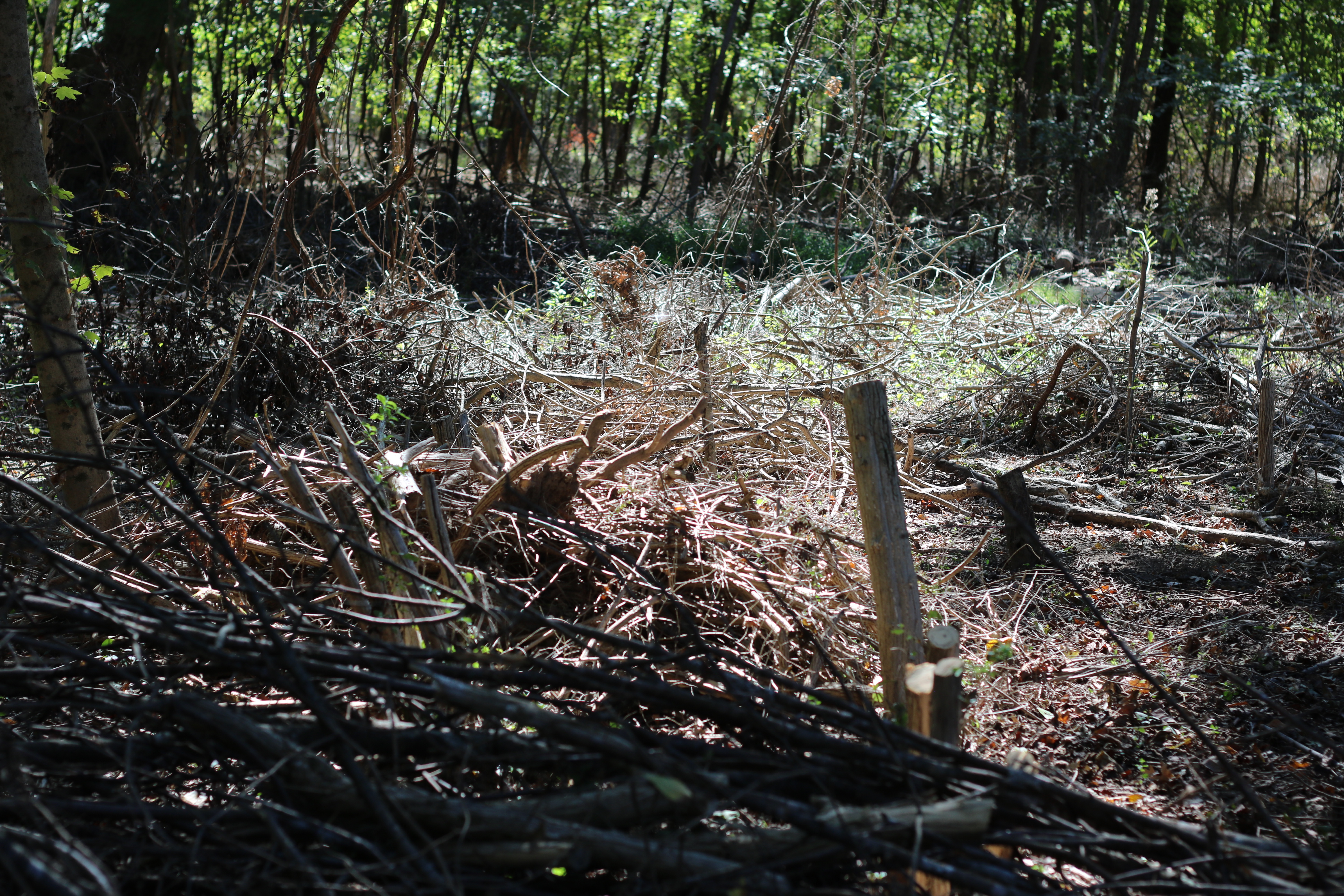
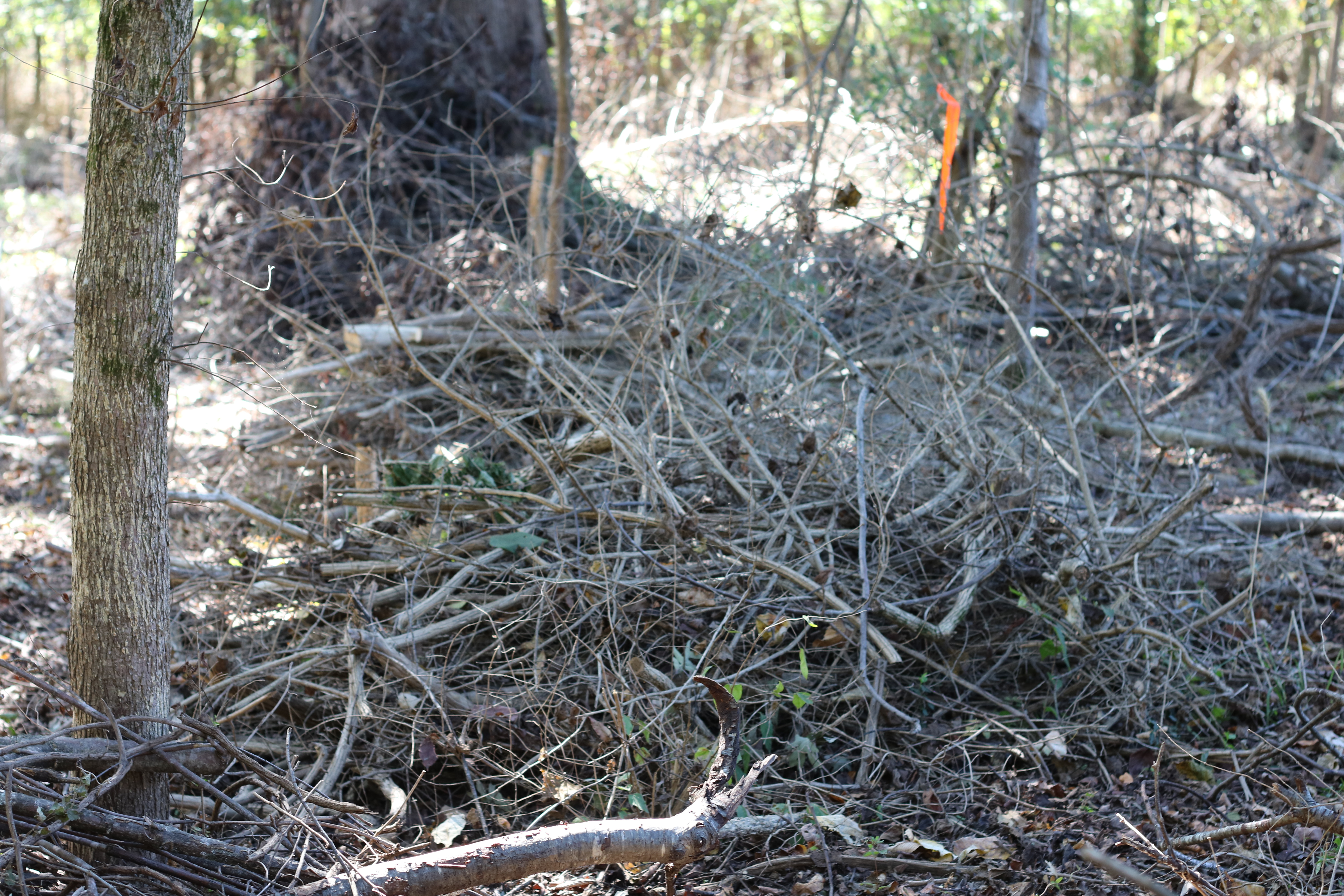
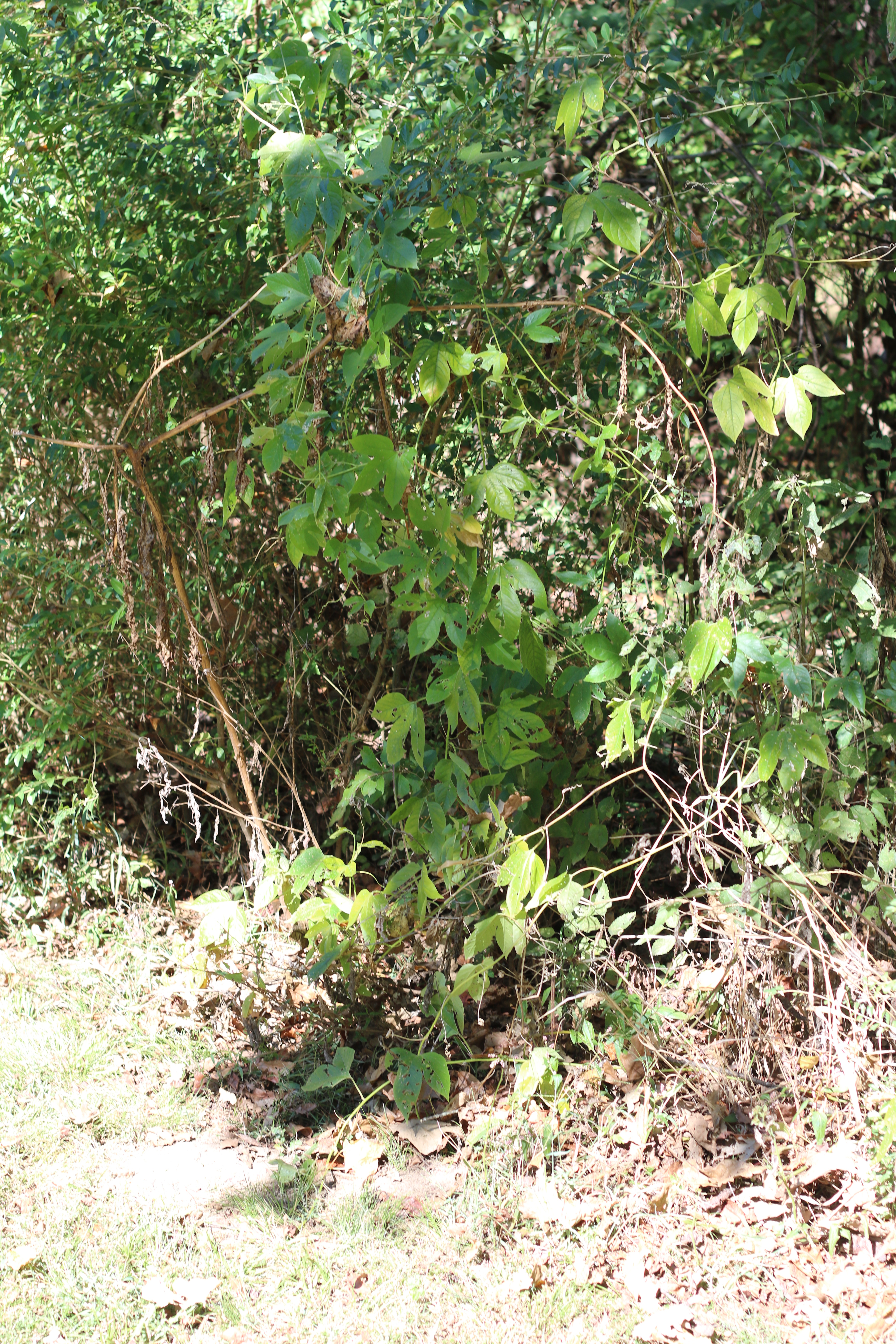
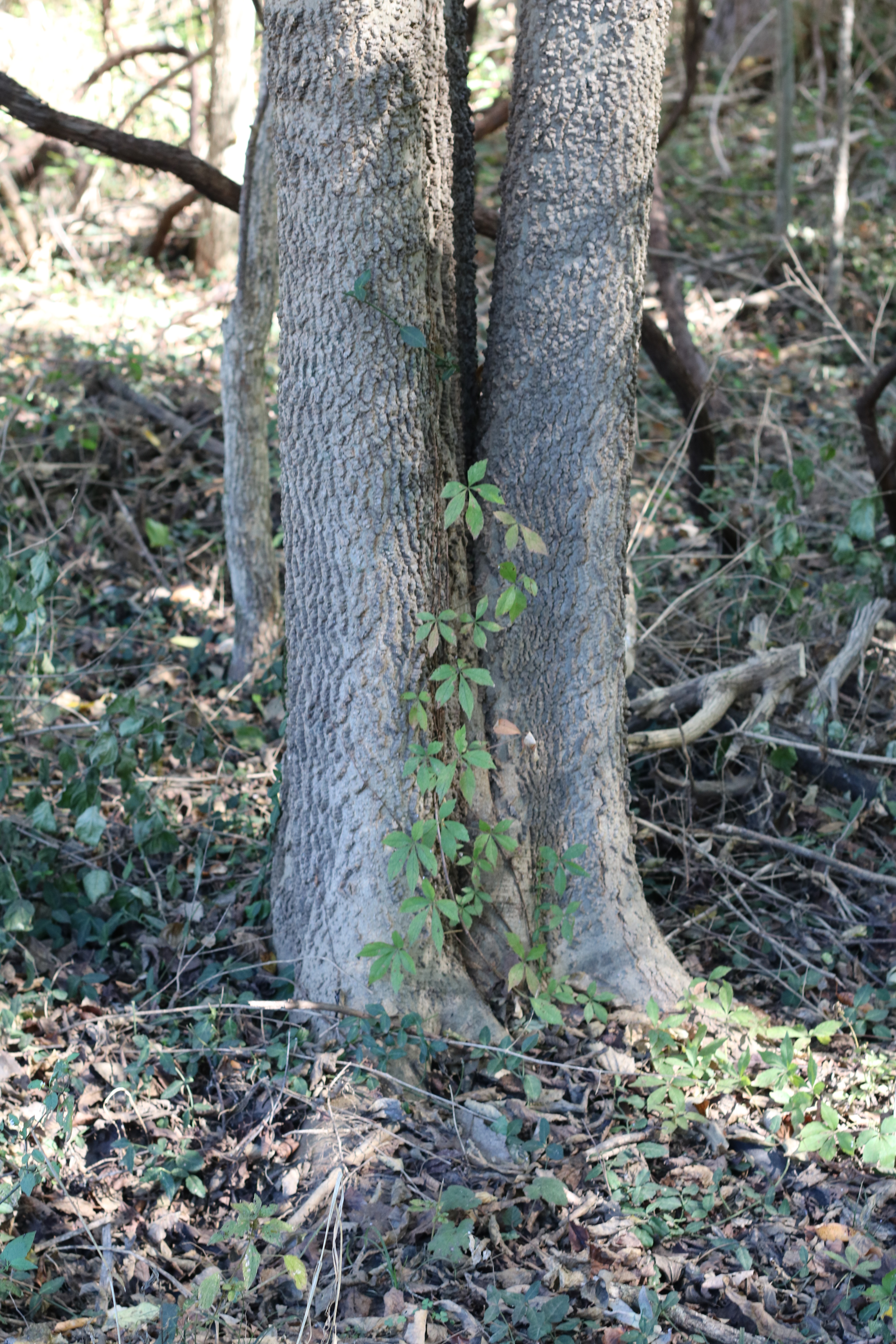
Three days ago now I went to Shelby for my first invasive removal session of the season. We’ve just started up again as the winter approaches. This is prime time for removing these Bush honeysuckles and Chinese privets, as they keep their green leaves and are easy to identify. It’s also not as hot and a lot of growth has died back. I haven’t been in the forest for awhile and with my newfound knowledge, I was able to immediately spy wintercreeper, Japanese honeysuckle, and eventually English ivy on trees and on the ground. Unfortunately, the wintercreeper was everywhere, almost ubiquitously covering the ground, if privet or honeysuckle weren’t taking up the space already. And often, privet and wintercreeper were working together to smother the forest floor.
I used to think, subconsciously really, that there was a clear delineation between “nature” and “human world”. Between nature and civilization, I guess. And that there were places that we would go to, and those were the nature places, and then we would return to the non-nature, the constructed, civilized, human habitat. I think that now I feel much more that we are truly in nature all of the time, whether there is almost no “nature” remaining (in a totally constructed city), or we are in the suburbs, whereever we are. Even in a city, nature is there. Pigeons, insects, plants, growing in cracks and crevices. We are always in nature, whether we really realize it or feel it or not.
I think the flip-side of this is that our “nature” is also not perfectly separate from our civilization, and our activities bleed into these nature spaces as well. The forest at Shelby park once seemed to me to be a bastion of nature haven, a place to get away, unaffected and isolated from the hubbub and artificialness of human society. But, now that I realize it is so covered in plants that we have brought with us, and it is so affected by our behaviors, it is not really a removed place anymore. It is an affected and disturbed habitat.
Our properties are the same. We have a neighborhood, we have our roads, and our downtown, but all of this was built on top of and in an ecosystem, and that ecosystem is still here, albeit heavily affected and disturbed.
I have started foraging. I feel that this is a major evolution, a milestone in my naturalistic journey. The plantain weed is edible, I think I mentioned that, (what the caterpillars were eating), that was sprouting up in my yard and is all over the neighborhood. And not only is it edible, it’s so good for you that it has an article on Healthline (popular internet health site). I was so bored at the climbing gym the other day that I finally picked some and tried it out. There was plenty of plantain weed in the patch of grass outside of the gym, and I plucked it, washed it in the bathroom, and ate it raw. It was pretty good, although some of the leaves were really astringent (bitter and dry). Then, that evening when I got home, I plucked it out of my garden, boiled it up, and ate it that way. It was much better, and almost exactly like eating spinach, with a hint of arugula flavor. Parker had asked if I was going to make a tea, and so that inspired me to also save the water and drink it. That was great too, like a weak green tea.
It was really hitting me then, that I was getting a fresh vegetable, free, harvested myself, and that was growing wildly in my yard. I have a whole patch of it, it all just popped up, and once the caterpillars were done farming it, it’s grown freely and there’s tons of it for me to harvest. For the last four days I’ve gone out there and plucked some, and thrown it in with my pasta. Free veggies, and the only thing I had to do was know that I could eat them. That crucial piece of knowledge.
Walking home yesterday, I noticed some berries on vines hanging over the neighbor’s fence, and they looked like grapes. I went home, searched it up online, and made sure it wasn’t any kind of poisonous lookalike, examined the seeds, and decided that they were grapes, and I ate some. They were sweet and delicious, much like blueberries. Were those wild, or had they planted them? I wonder. They’re just hanging over the fence by the road, intermingled with Chinese privet and other random plants. I wonder what the vine looks like on the other side of the fence. I know we do have wild grapes around here, called Muscadines.
Walnuts and acorns are also falling abundantly right now. On the same walk, I had stopped to pick up some walnuts that were all over the road. There were two older neighbors talking to each other in their driveways across the street, and I heard the one guy say, “Those are walnuts,” to his neighbor (they must have been watching me), and his neighbor said, “Those are walnuts???” Yep, they’re walnuts, and if you know how to prepare them, you can have free local walnuts, to eat and enjoy, bounty of the earth. Walnuts are pricey, too.
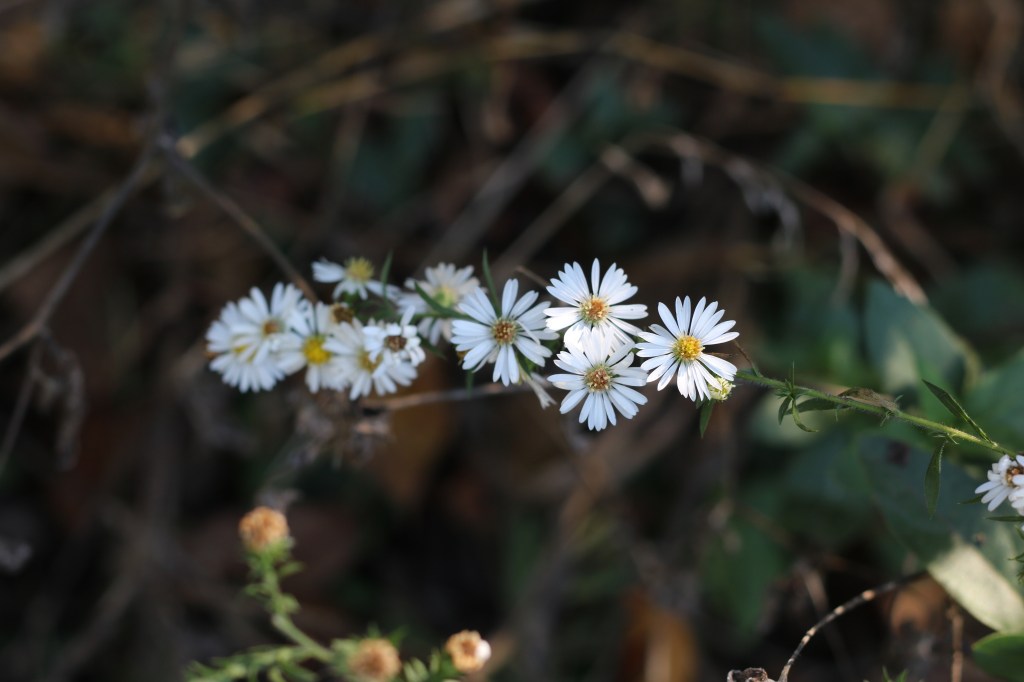
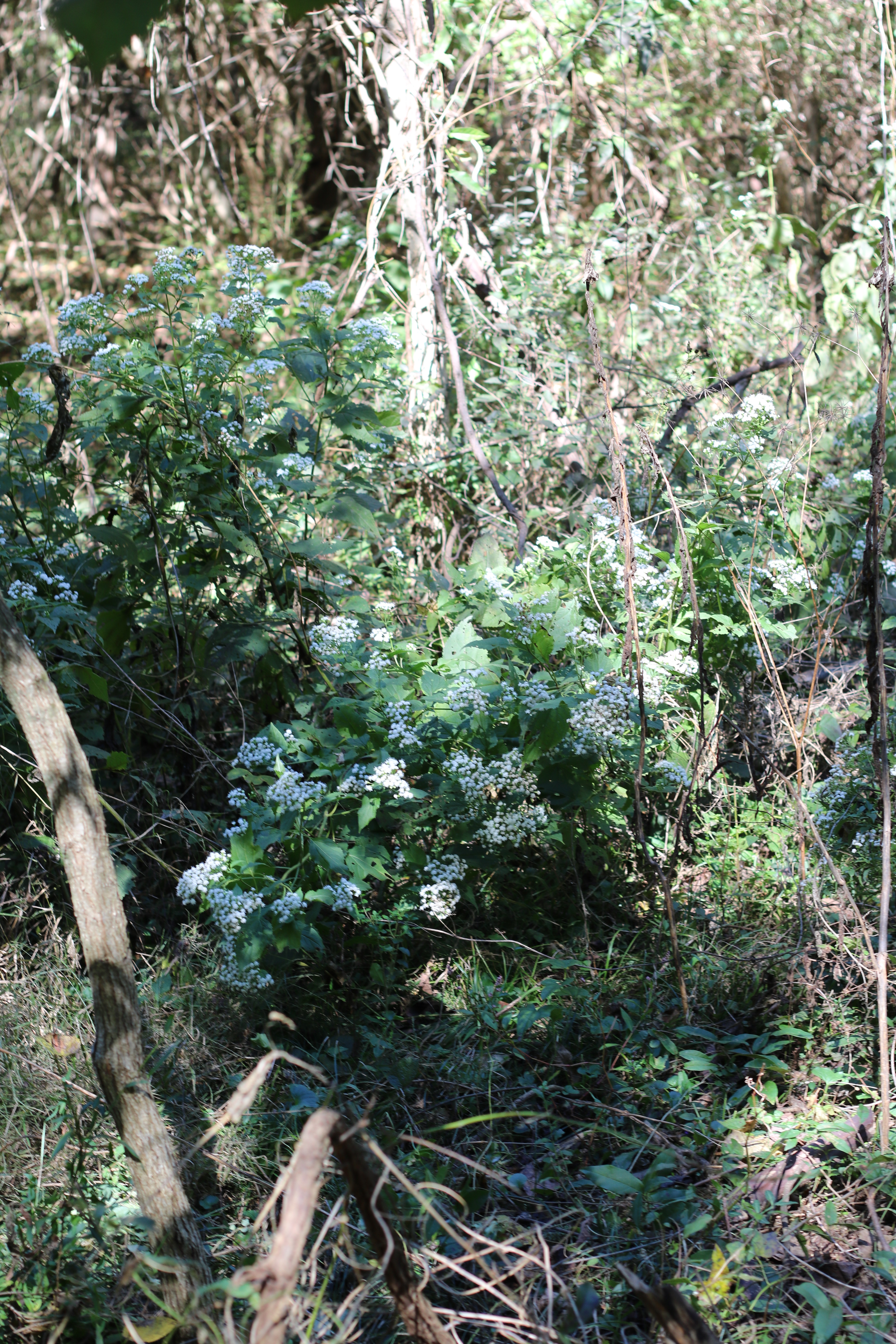
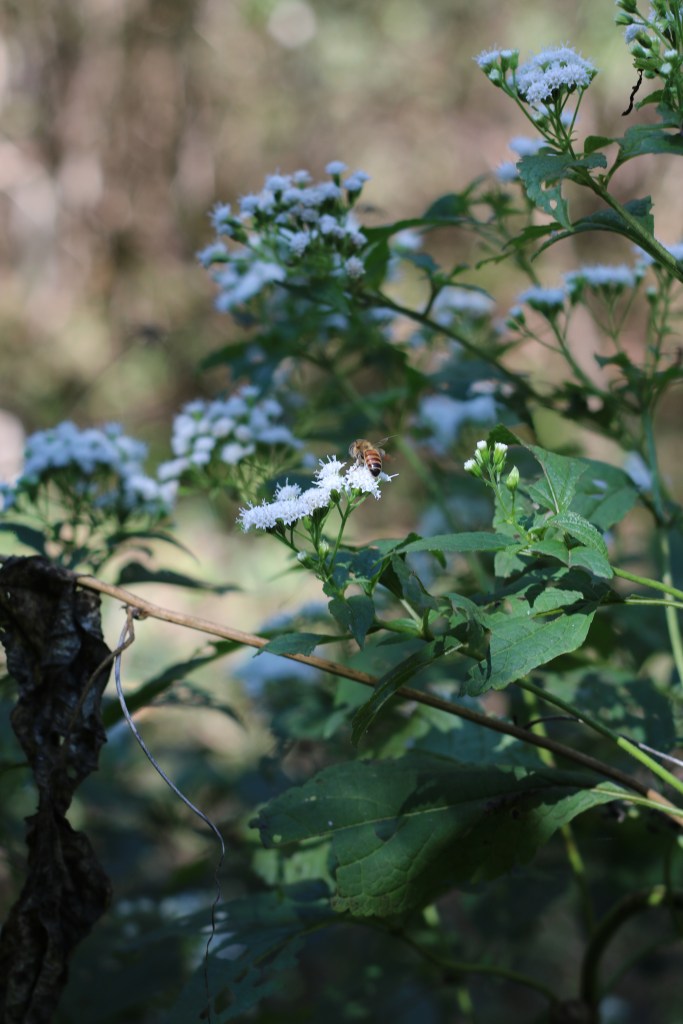
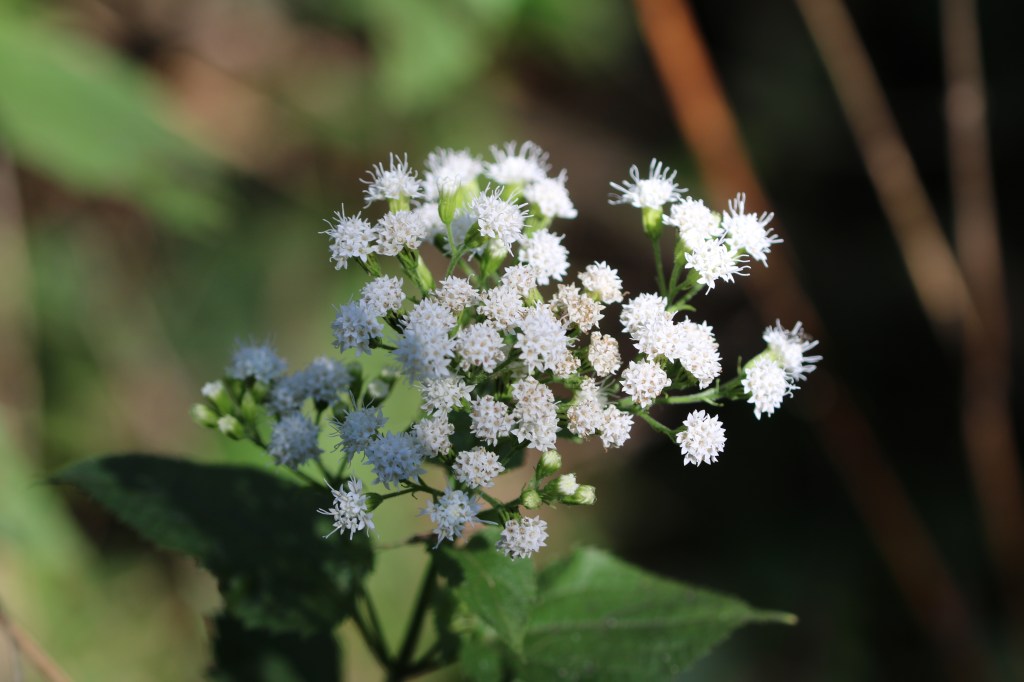
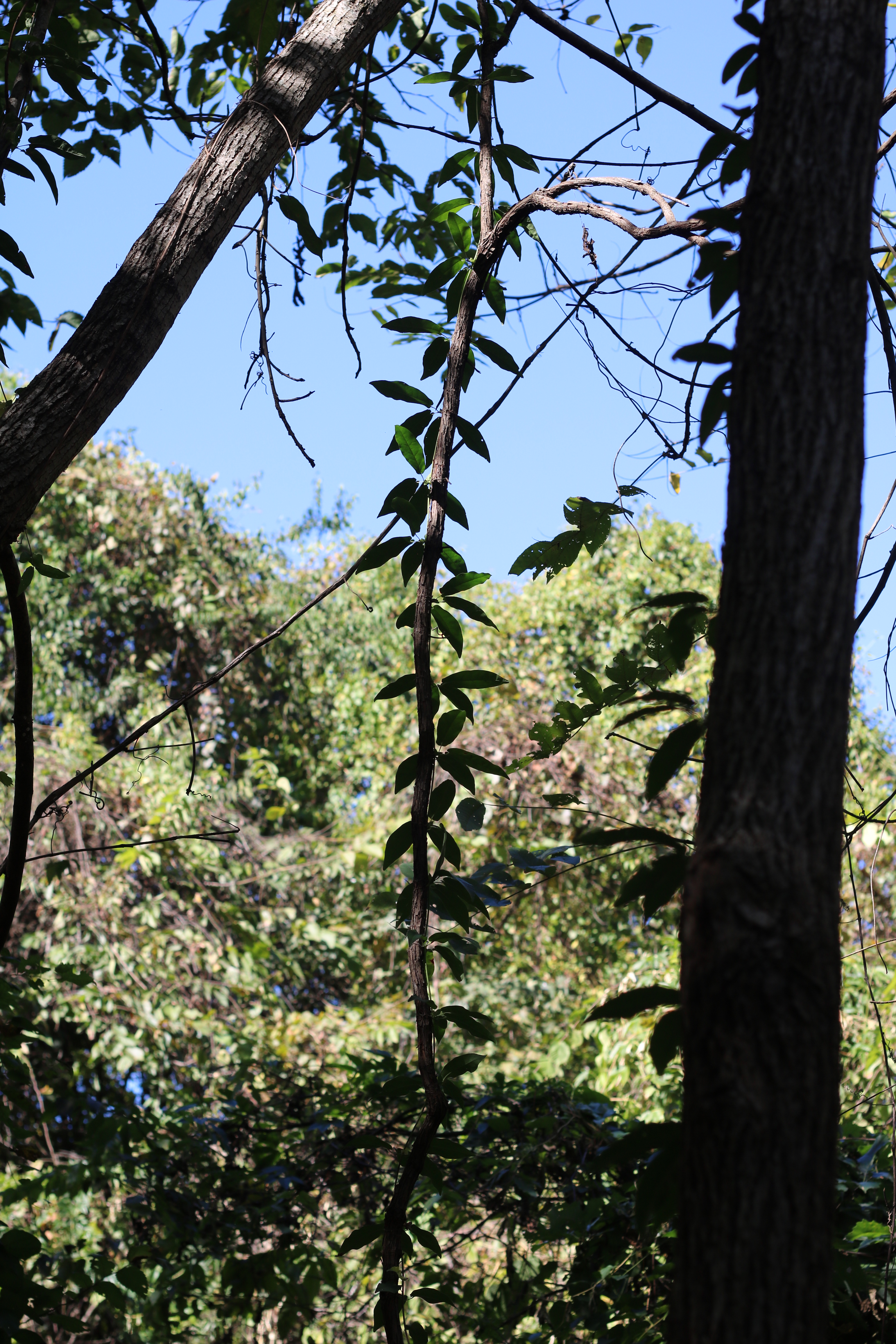
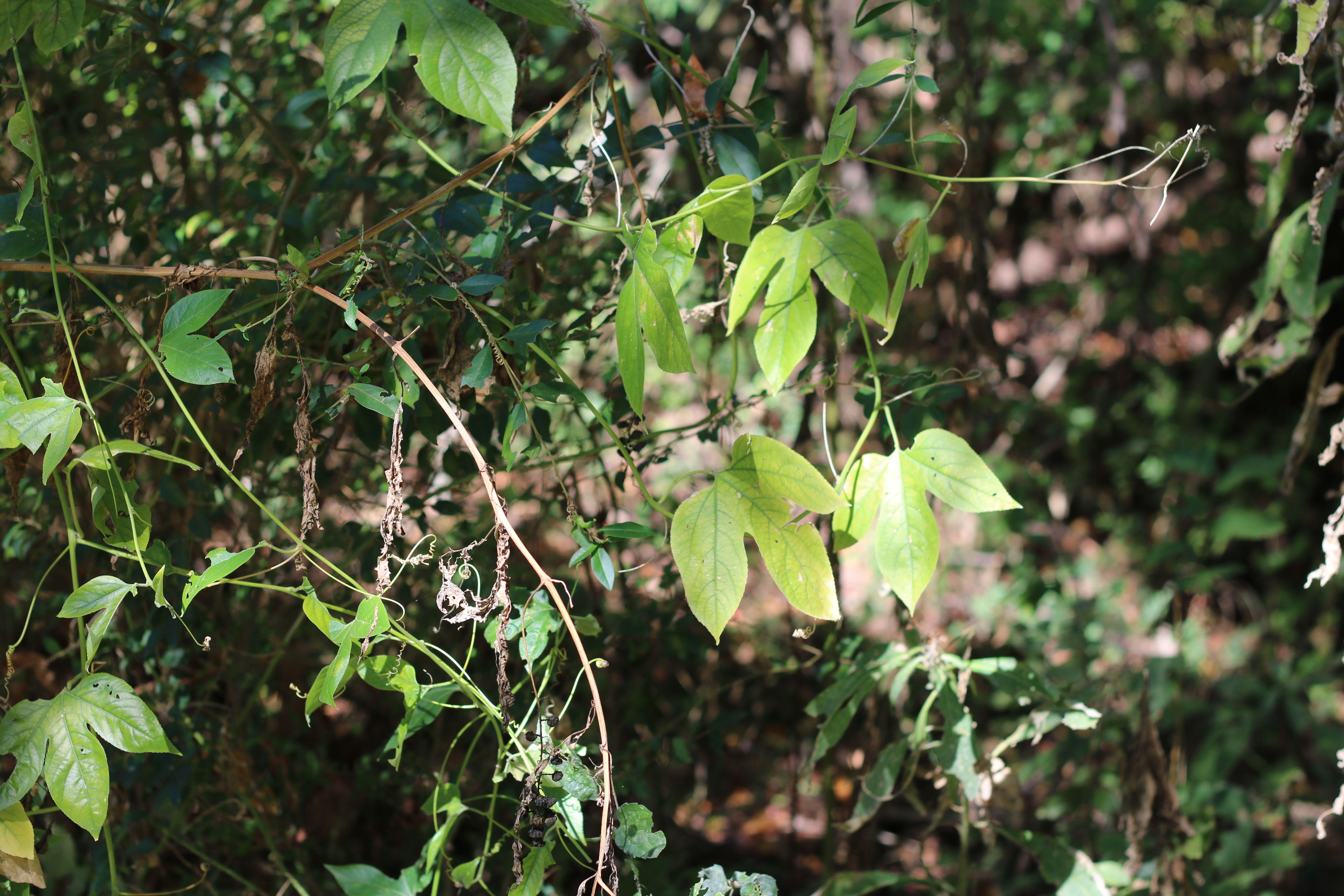
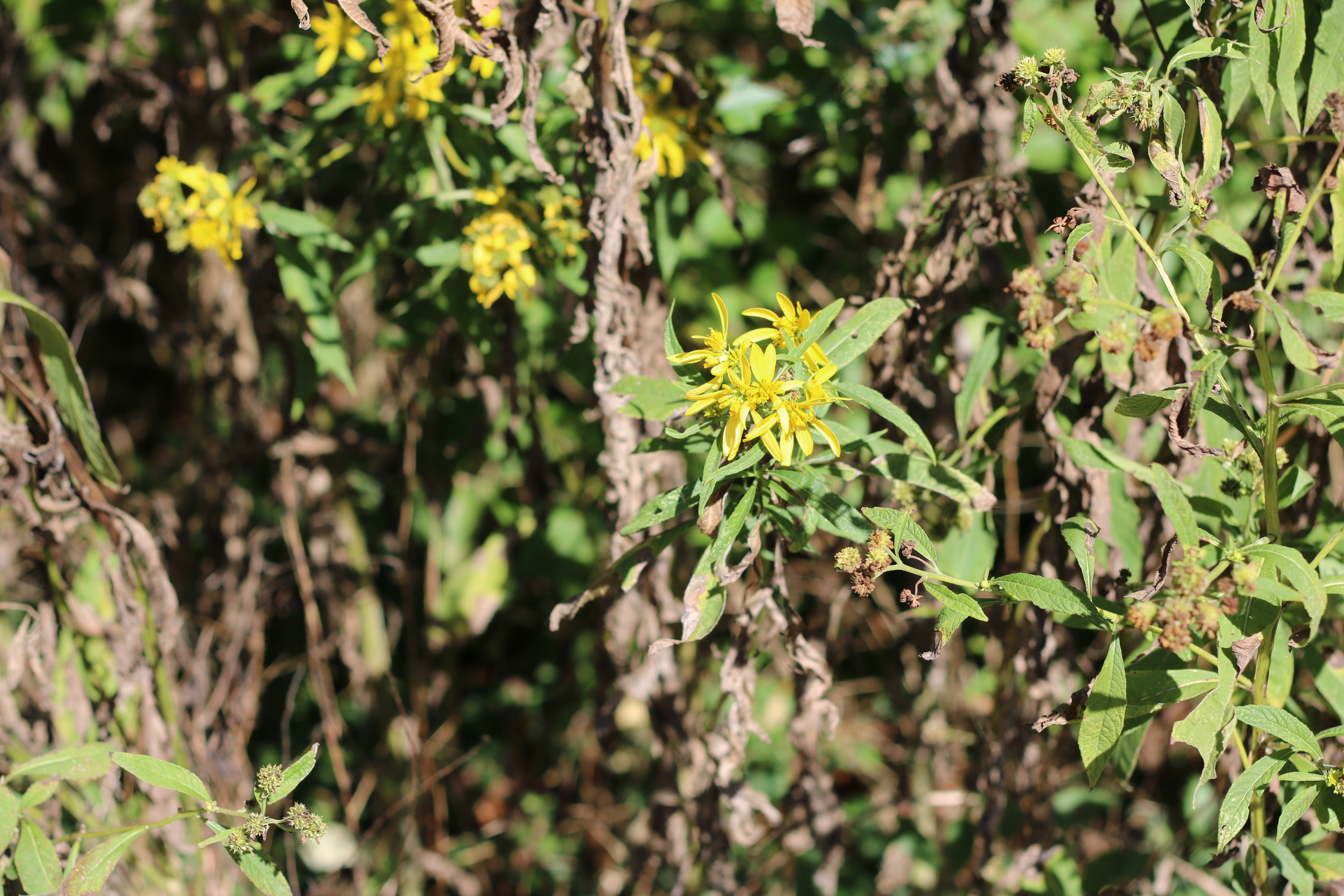
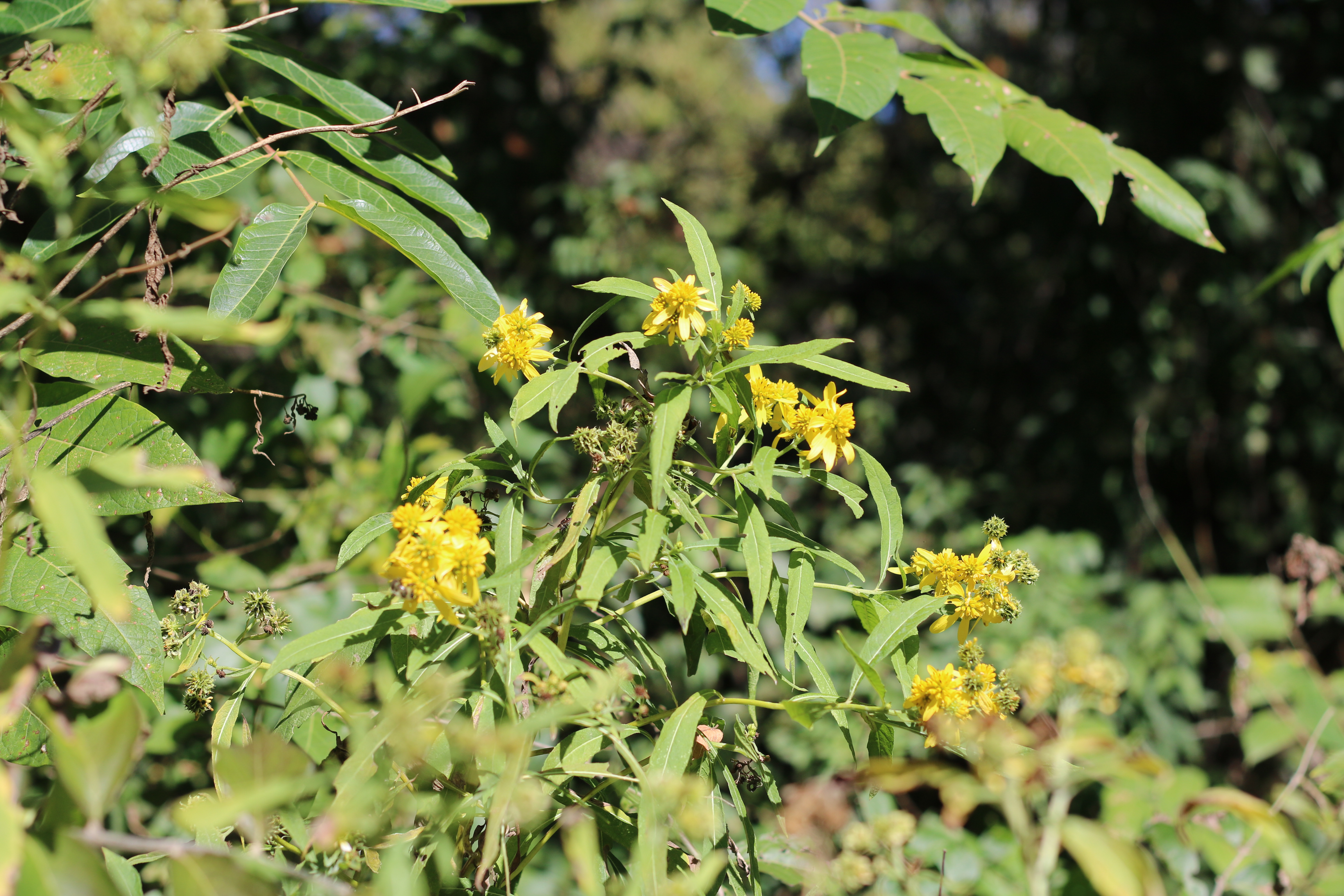
I spied many interesting things during our Shelby park volunteer session, and so yesterday I went back and did some photography. Lots of vines, some local wildflowers, and one interesting plant, the snakeroot (Ageratina sp.). One of the volunteers, Will, he pointed out this large patch of white flowering plant, that had popped in an area of the forest that we had cleared previously. Sunlight could now get through, and this snakeroot had taken hold of the space. Cool plant, and apparently killed thousands of settlers when they were getting started here in America, as nobody knew that it was toxic. It has secondary toxicity, where the toxins of the plant saturate the milk and meat of animals. Wikipedia says that Abraham Lincoln’s mom may have died from snakeroot poisoning. When I was reading that, I thought, “I bet the Native Americans knew”, and then the article said that the person who figured out it was toxic learned it from a Native American. So the story goes.
Garden Updates
Marigold flower
More marigold flowers incoming
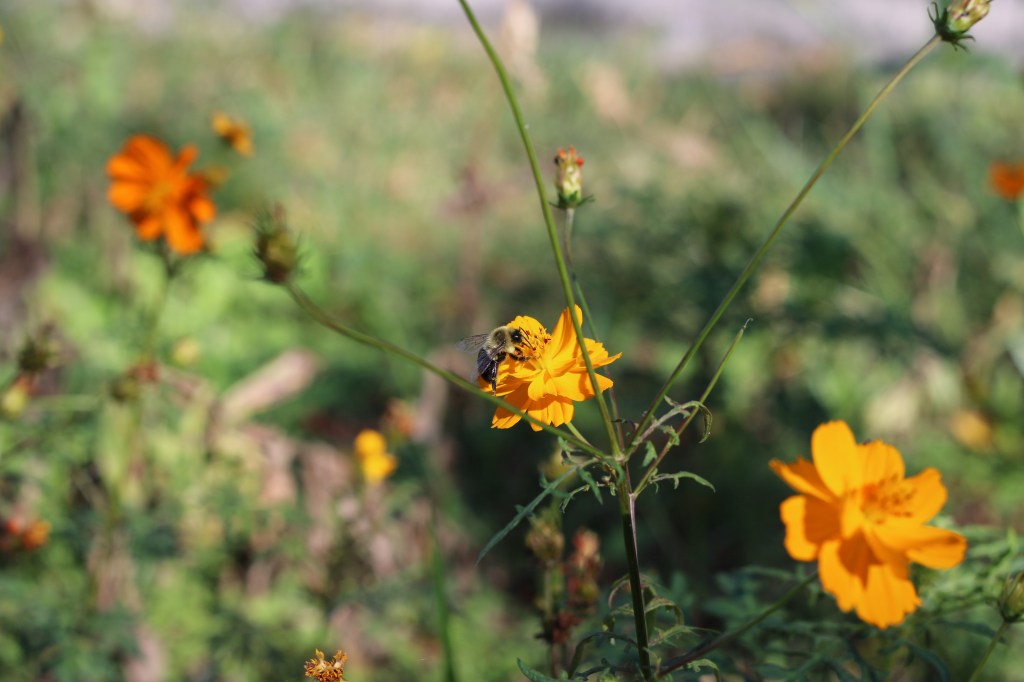
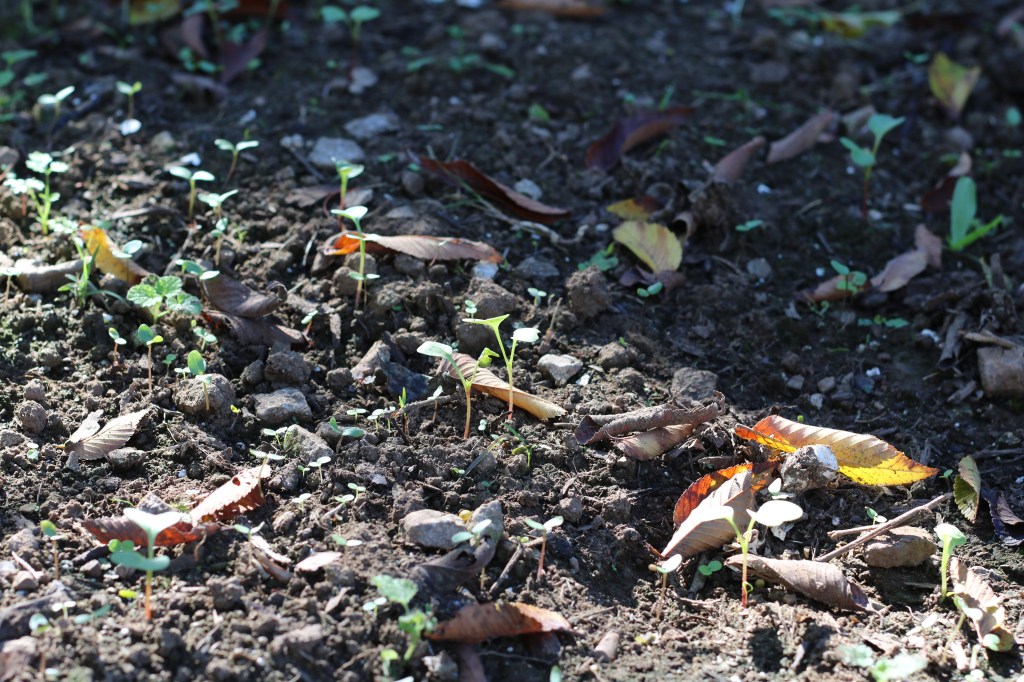
Almost always a bee on the cosmosLarge sprouts in the center are radish sprouts
There is nothing for the soul and spirit like manual labor. Benjamin Franklin observed that in his autobiography, when he was overseeing construction of a fort during the French and Indian War. He noted that on the rainy days when the soldiers couldn’t work, they were miserable and depressed. On the sunny days, where they could do the chopping and the building, they were joyful, singing songs and feelin’ good. And here I am, returning from my arduous labor of ripping up entrenched Japanese Honeysuckle vines out of my yard in the full sun, barehanded, until my hands are blistered and I can’t continue, and boy am I feeling great.
Nothing for the soul and spirit like some good manual labor.
I have discovered a new menace in my yard. It’s Japanese honeysuckle. This menace was on my radar, from doing the invasive species removal at Shelby Park, and now I am getting to know it intimately. Japanese honeysuckle, which is a vine, was on our top list of plants to remove at the park, along with Chinese privet and Bush/Amur honeysuckle.
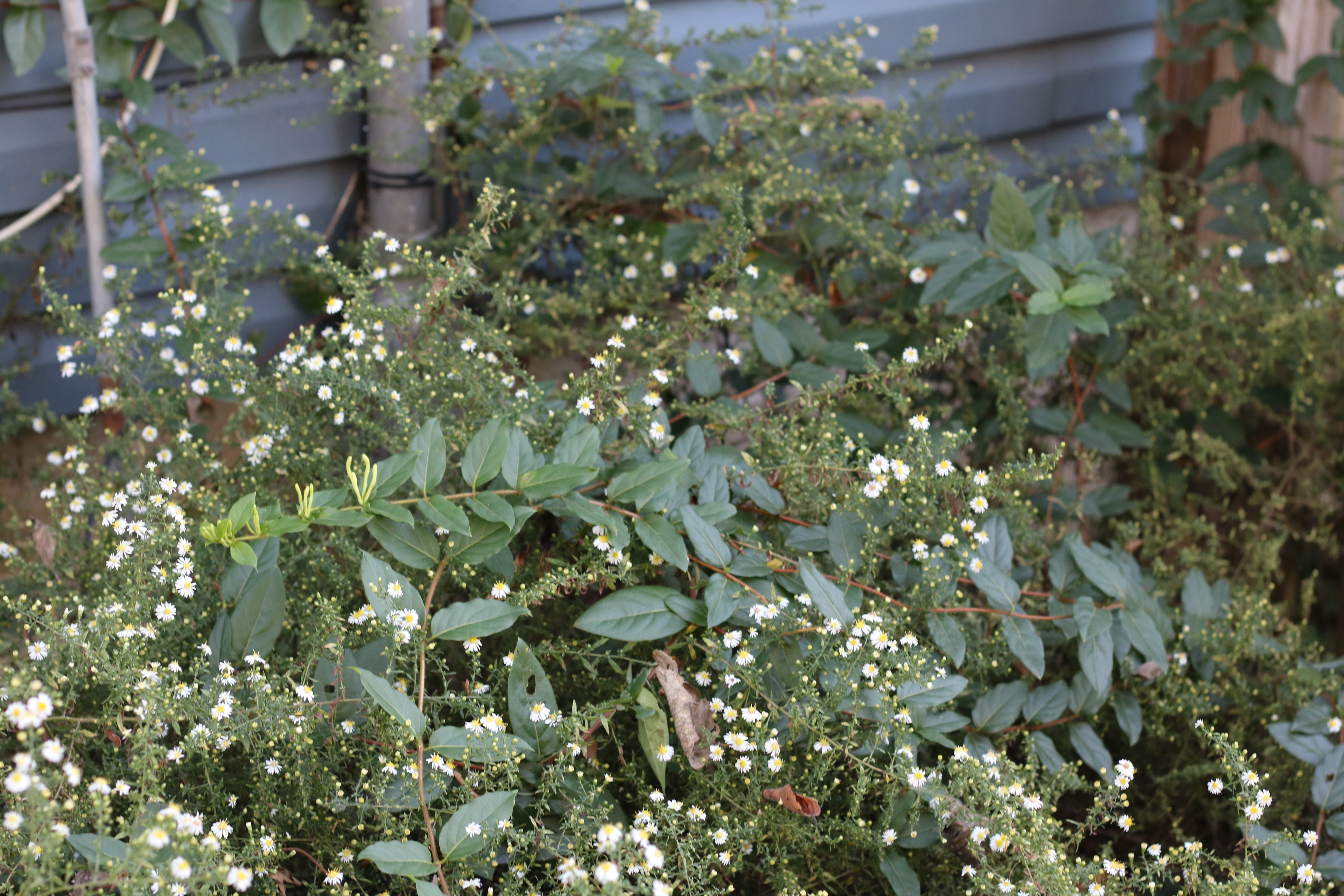
There are hundreds of plants, at least a hundred plants on my (I say my, I’m renting) small property alone, and I just don’t know all of them. I’m learning about them slowly. Well, there was a sprawling vine in the yard that was flying under the radar because there’s nothing special about it. It’s just green and a vine, cool. But I finally wanted to know what it was, because it seems like it’s about to flower, one strand of it, and it’s snaking all around the frost aster. I decided that it was time to ID it, and know the truth. The frost aster is native, and precious. Time to know if this vine was also native and precious, or not.
Lo and behold, Japanese honeysuckle. A notorious and pervasive invasive, here in the good ol’ USA.
I set to work ripping up this foreign invader at once, yesterday going until I had a blister on my right hand and was forced to stop. I was shocked at how much there really was, snaking all over, along the ground, under and behind, and on top of everything. Today I’ve given it another go and I once again ripped and pulled until my hands are blistered and hurting. (I really should have a pair of gloves.)
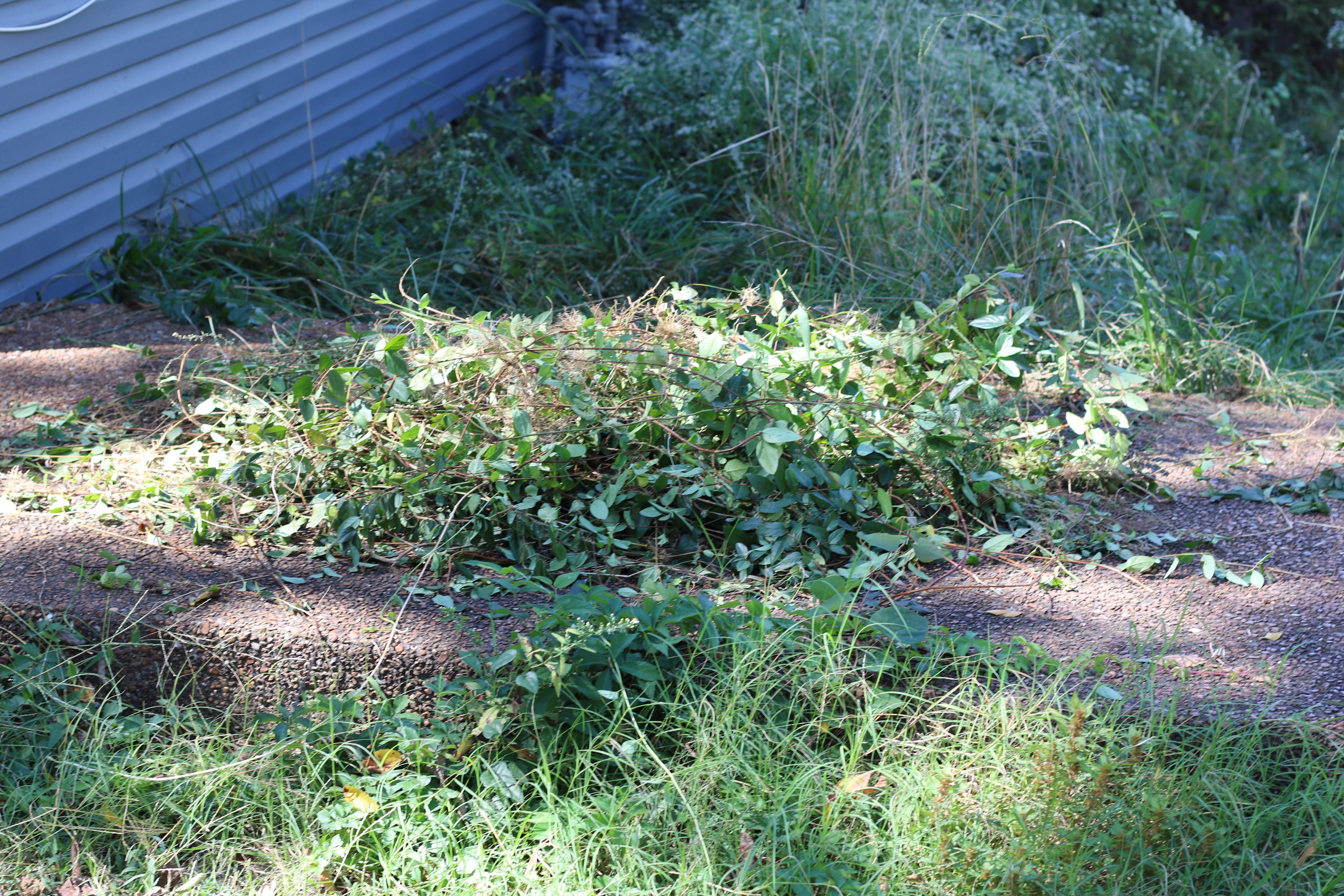
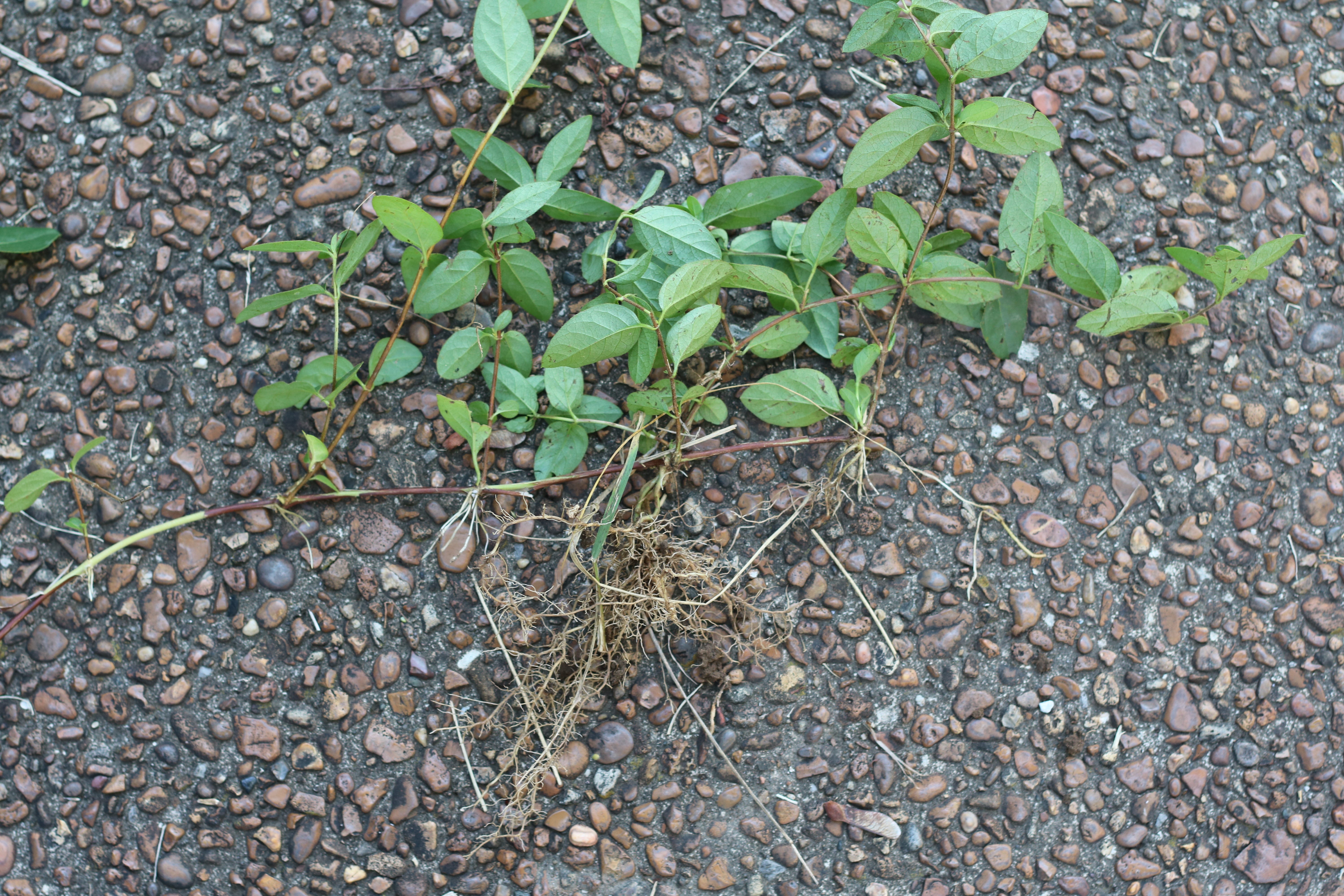
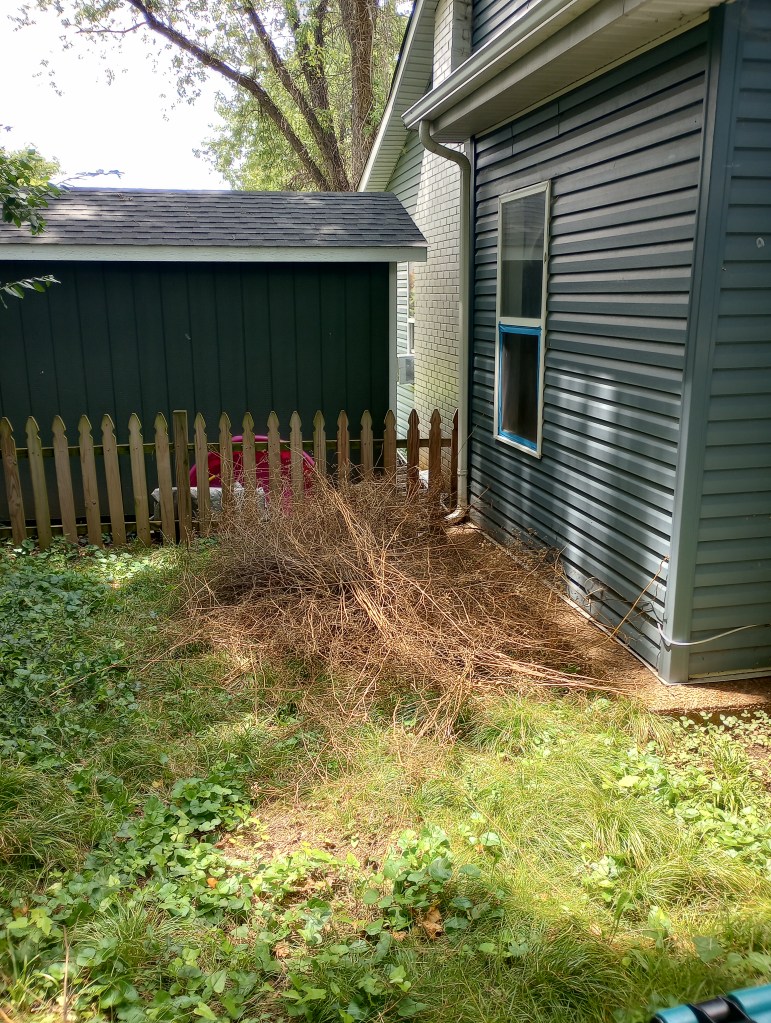
The photo below shows you how much I’ve pulled out so far, of this damned Japanese honeysuckle. I would never have guessed that there was so much lurking in the yard like this.
Pile of Japanese honeysuckle
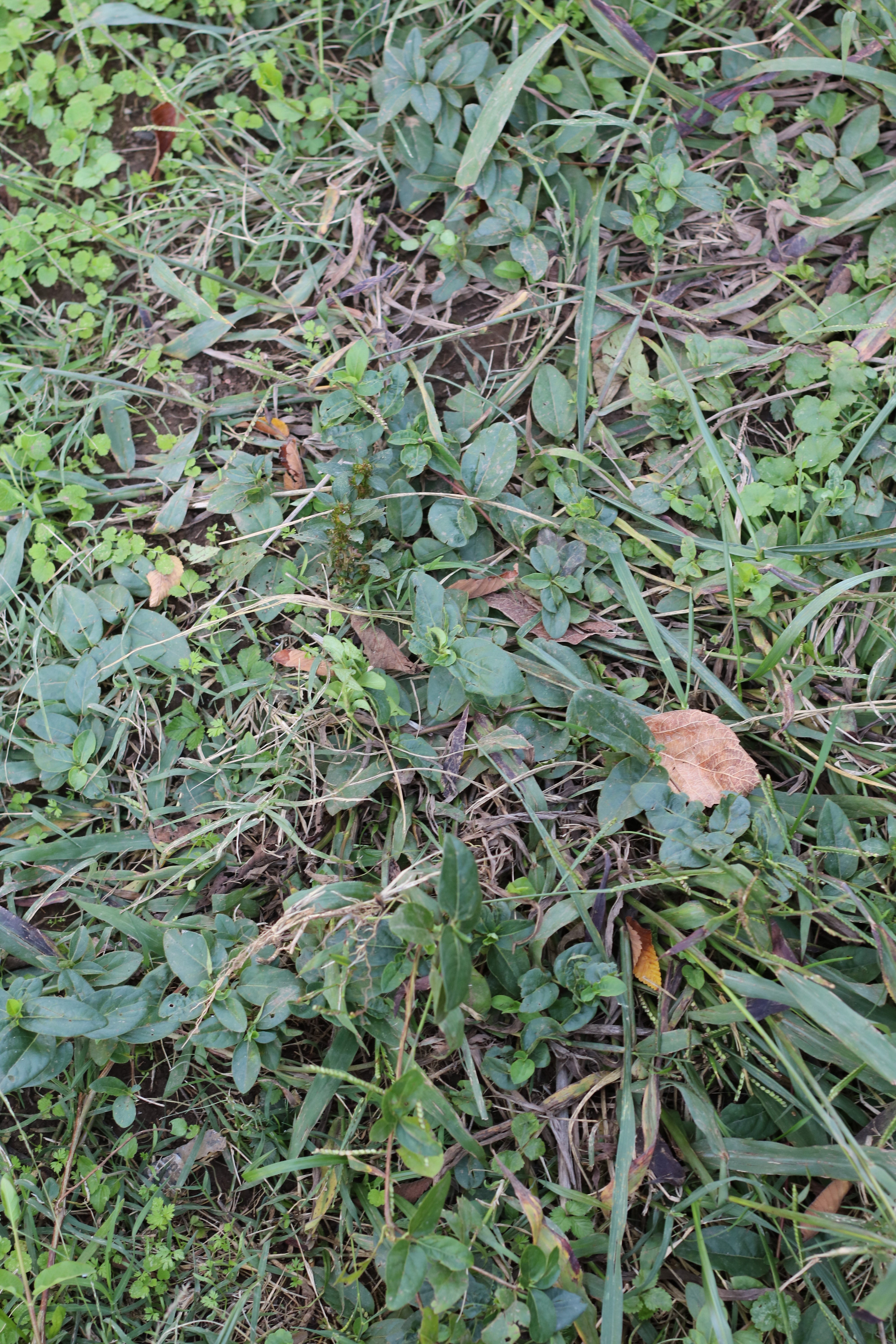
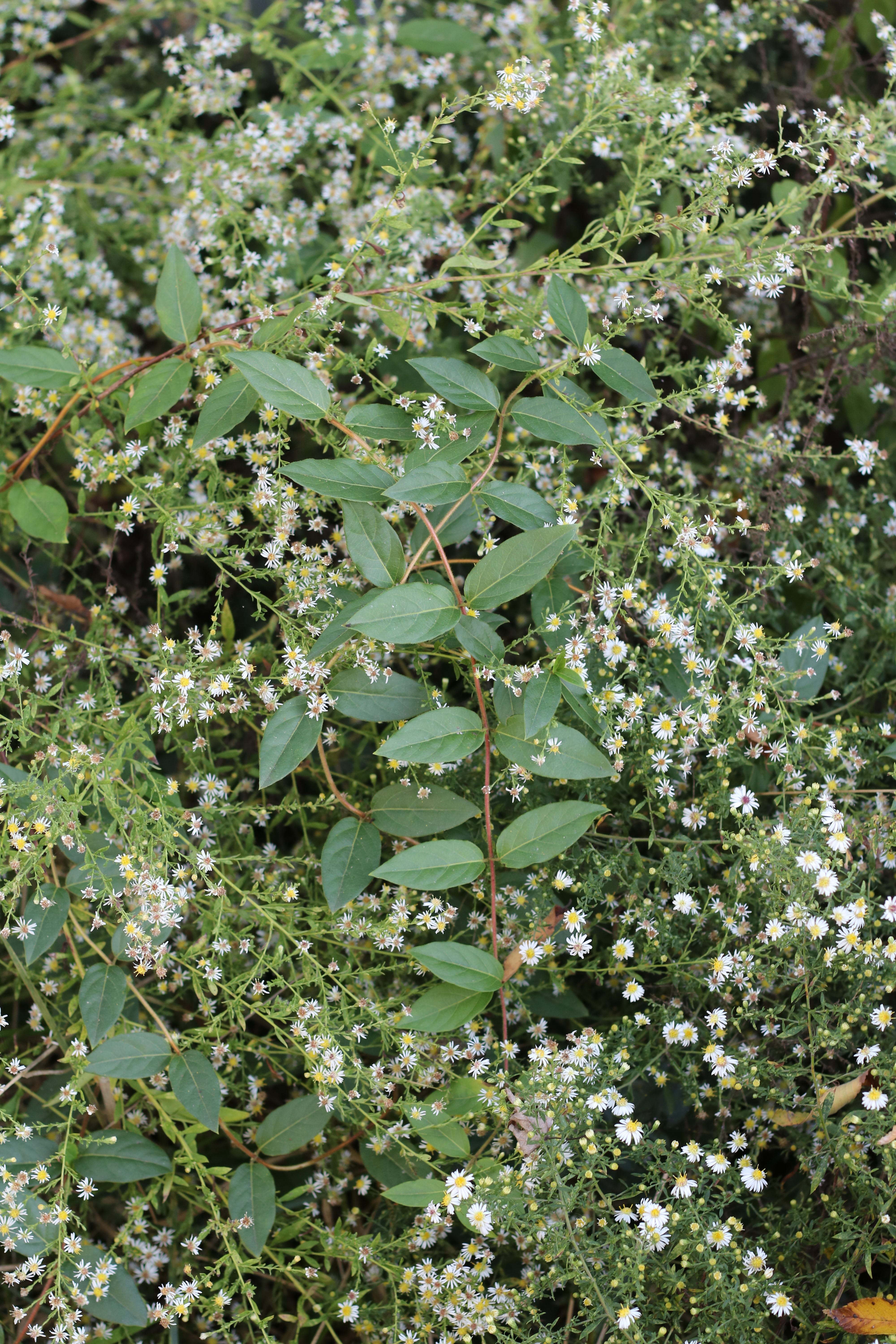
It’s not just in the frost aster, it’s all over in the grass, winding up stalks of grass, and growing staight out and covering the ground.
J. honeysuckle covering the groundJ. honeysuckle in the frost asterGet out of my frost aster!!!!!Lots of roots
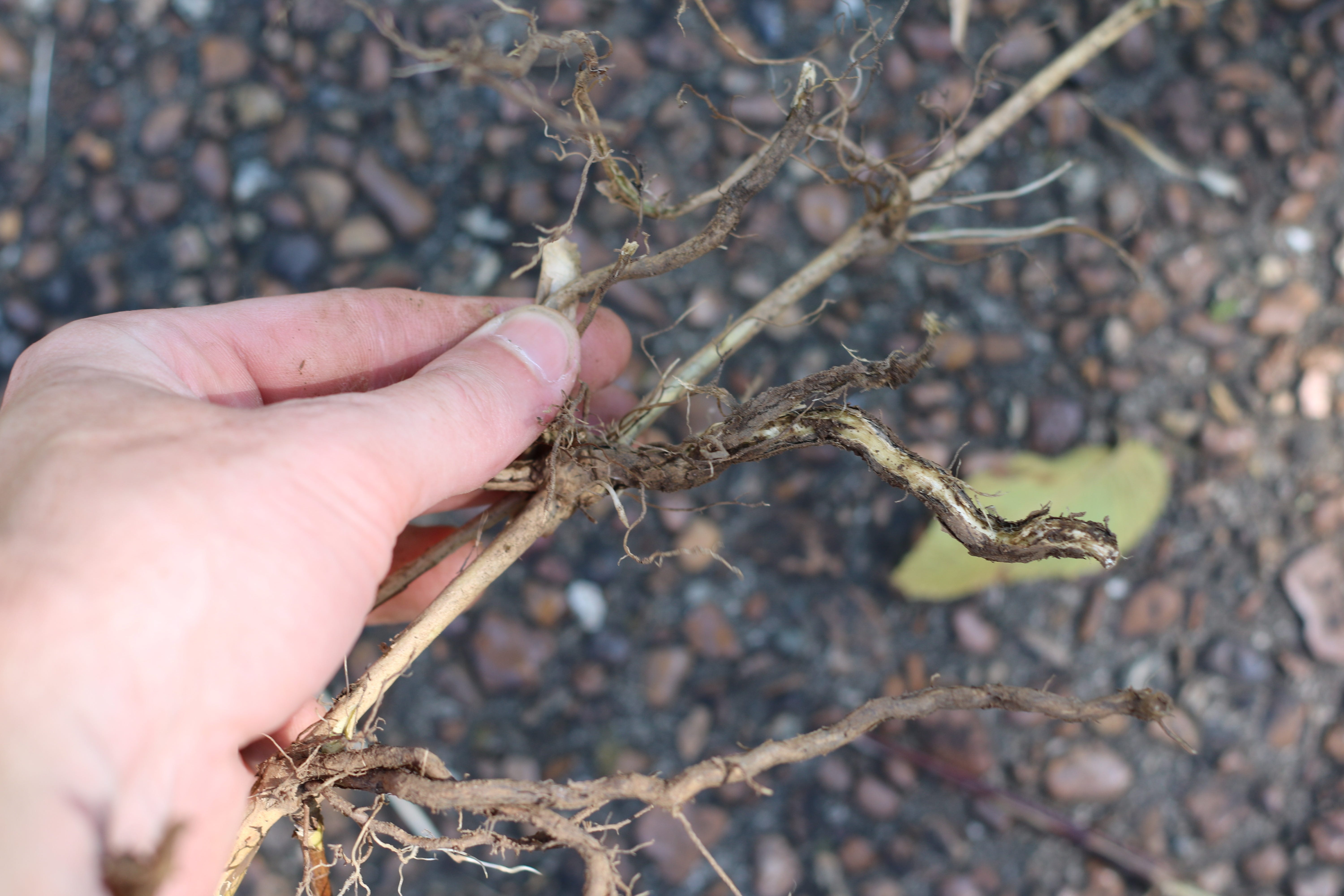
The very first vine, I carefully untwined it from the stalk of grass it had wrapped around, and followed it to the base. I was surprised that it led all the way to a node of roots in the ground, that led to several more strands of honeysuckle. I think this is what they mean by “runners”, which is a term I’ve heard. That vines put out “runners”. This is extremely annoying, and makes tearing up this honeysuckle a pain in the ass. As you can kind of see in the above photo, these vines are often putting down roots into the ground at repeated intervals, and you have to rip it all up. Some of the roots are quite entrenched, and three times they were so entrenched that I had to go get the shovel. Some of these runners were so thick that it felt like I was pulling up eletrical cables. I would rip it up out of the ground and it would be thick, like a rope in my hand, and show me where the rest of the cable was, and I would follow it to one of the root nodes. There was one, it was the mothernode, that was deep in the center of a large bush of frost aster, I parted the frost aster and got down in there and found that mothernode, and I felt like I was discovering the source of the infection or plague in a post-acopolyptic movie. It was like when there’s a fungus or something that makes people become zombies, and I was finding the main spore producer, or the main brain. I found that huge root node with multiple thick honeysuckle cables running off of it, and I went and grabbed the shovel and obliterated it. I felt good for a moment, hands blistered and hurting, and then I saw that there is still so much more to pull.
Thick roots, extremely annoying
Digging up the grass was harder work and was definitely the most annoying work. This is just more than I wanted to do to pull up these vines. It isn’t that bad, but the fact that I have to go and get the shovel is more than I bargained for.
It’s amazing how prevalent these invasive species are. Half of the things in my disturbed roadside habitat yard are infamous invasives. Tree of heaven, common mullein (apparently a truly hated invasive), Chinese privet, Japanese honeysuckle, the oleander aphids… we really are at war.
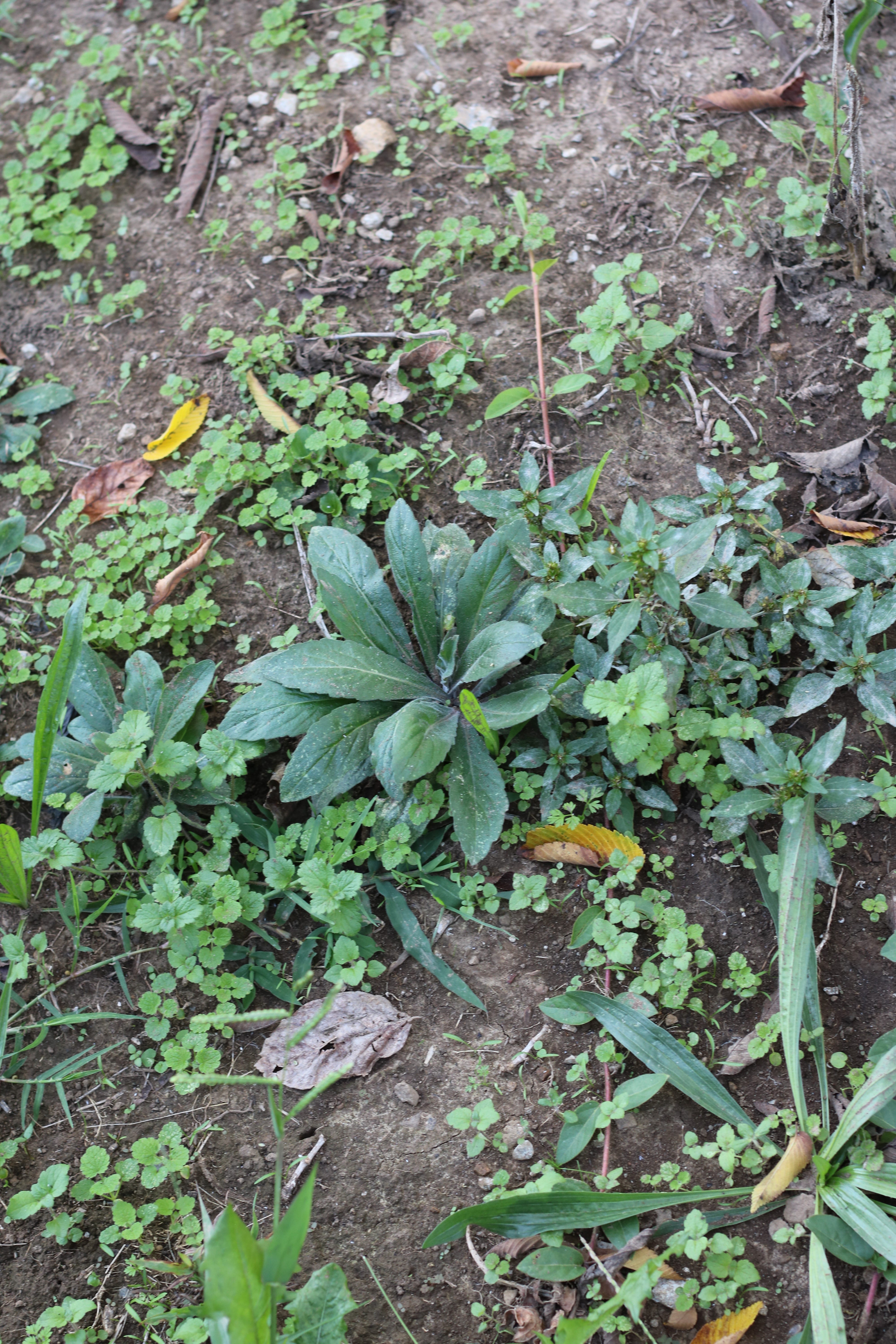
Common mullein
It’s a lot of work, just figuring out what the hell is what in the yard. I’m still amazed at how many things growing freely in the yard are from halfway across the world. Here is this tree, right outside of my window in the great state of Tennessee, thriving and looking healthy and wonderful, and low and behold, it’s from China. Right next to it is another tree that is doing wonderfully, that I also see all over the neighborhood, and wouldn’t you know it? It’s also from China. In my yard, smothering my frost aster and wrapping all over everything, snaking out across the ground, is a wonderful vine from Japan! And half of the sprouts in my new garden are the seedlings of yet another tree from where? Yes, China. Right over in my neighbor’s yard are two uncultivated wonderful flowers from East Asia and Peru, and in the front of my other neighbor’s yard is a lovely Japanese banana tree. On my short walk to the coffee shop through my neighborhood, I can count about fifteen Crape myrtle trees, which are from India. And the little fuzzy plants popping up? Maybe those are young Black-eyed Susan plants?
Nope. Common mullein from Eurasia (introduced in the 18th century, apparently).
I almost feel like at this point I should have a dedicated blog to gardening. Seeing as half the posts contain at least some garden updates. It makes sense. Will I do it?????
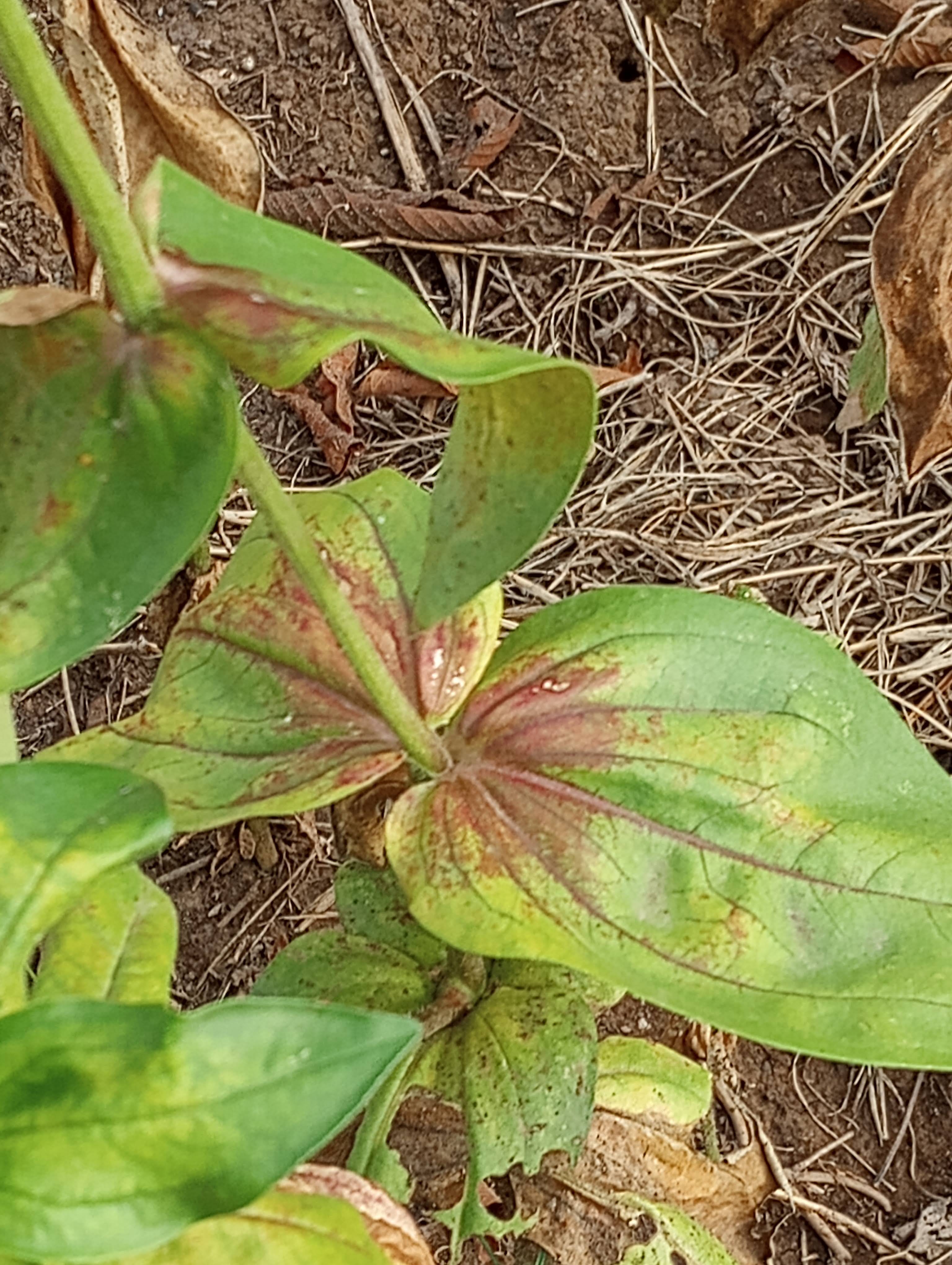
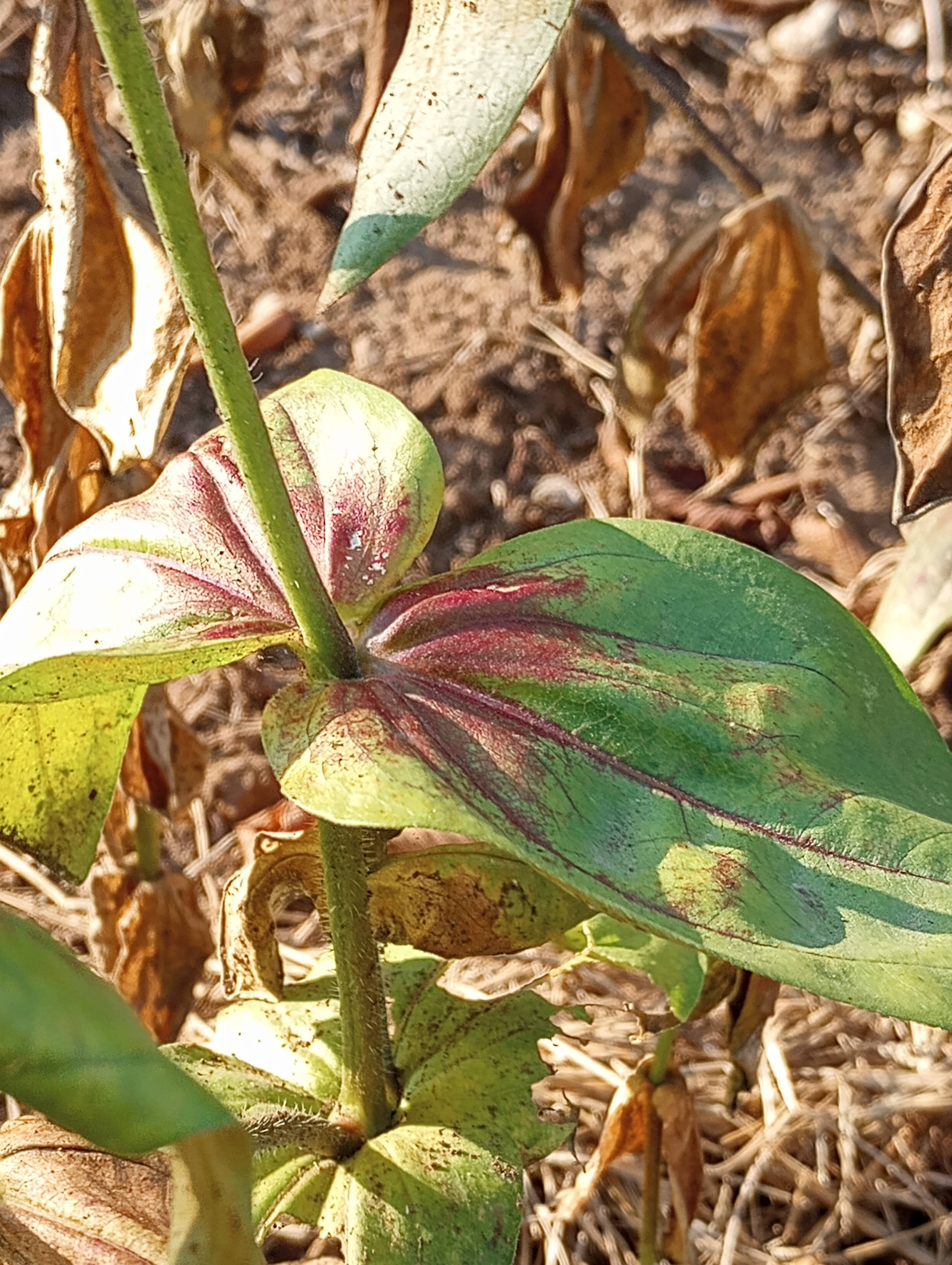
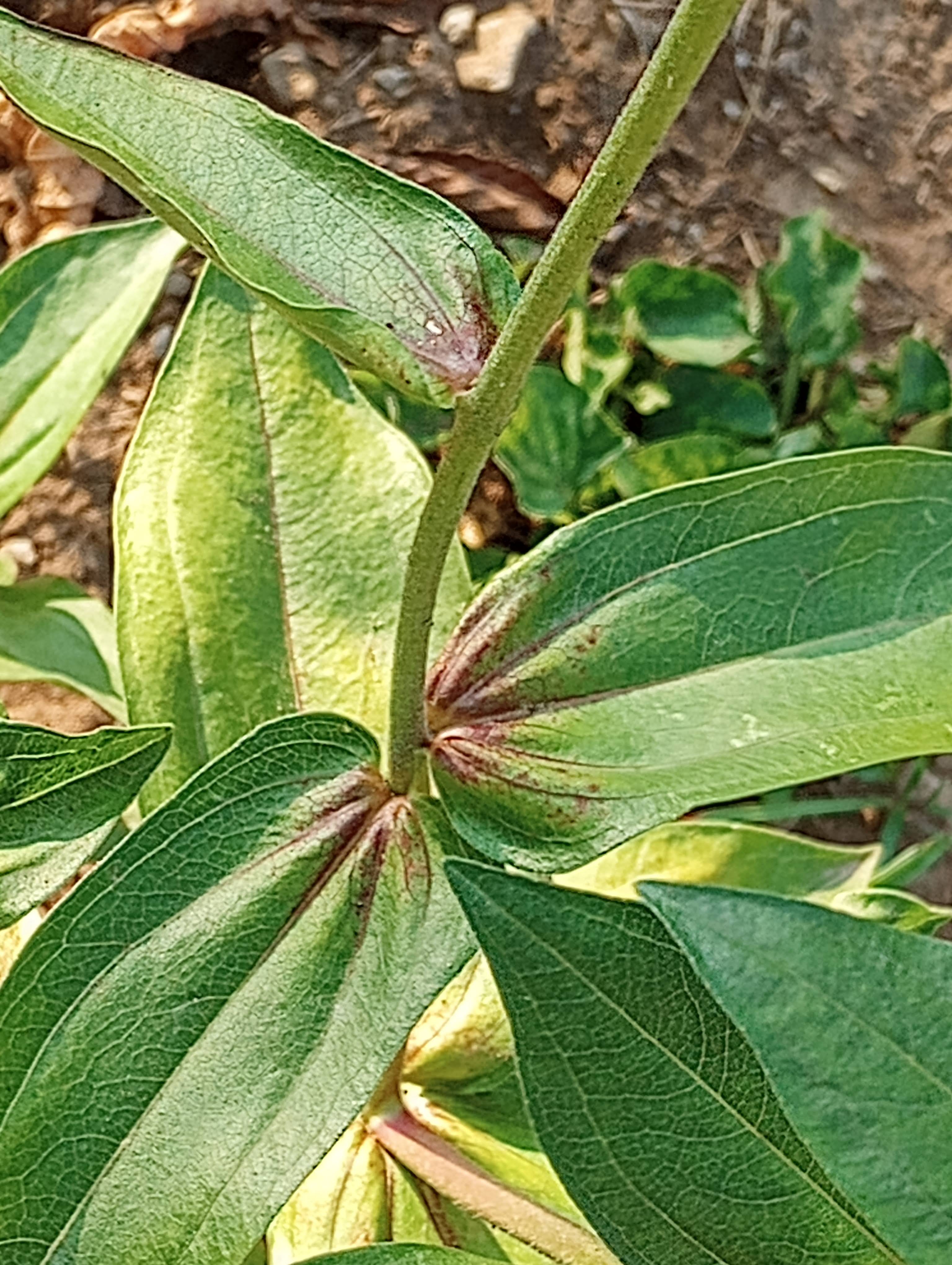
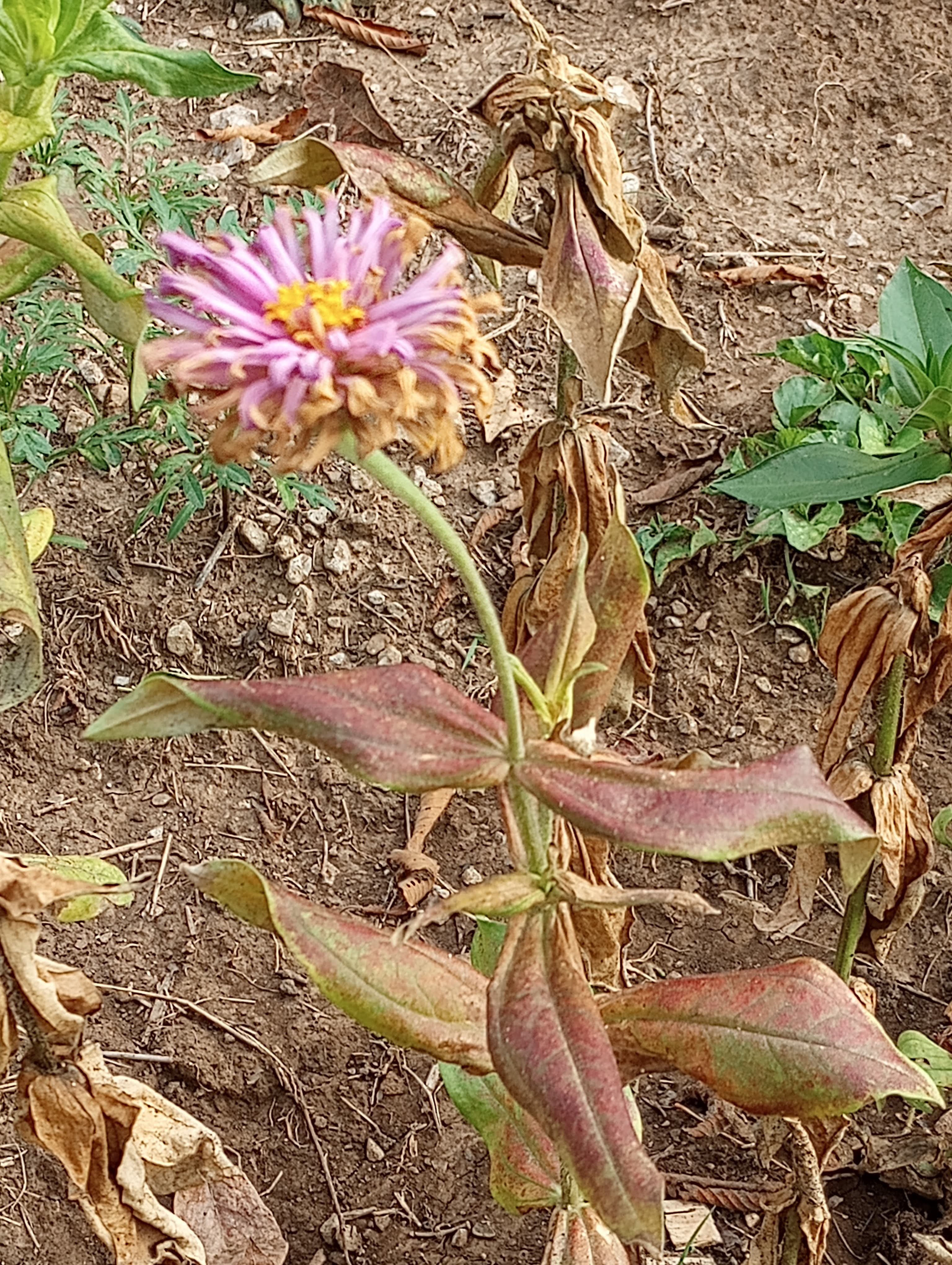
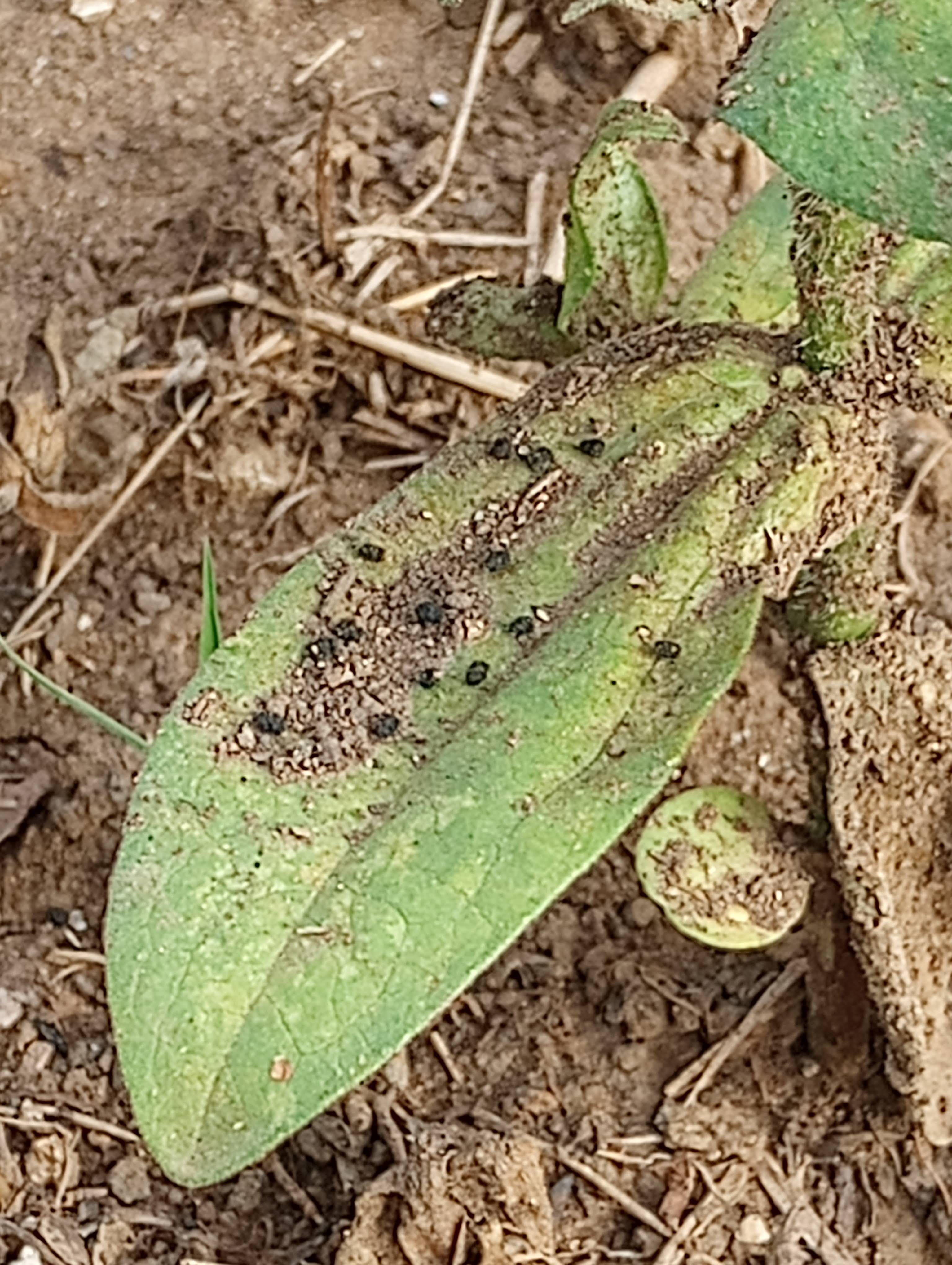
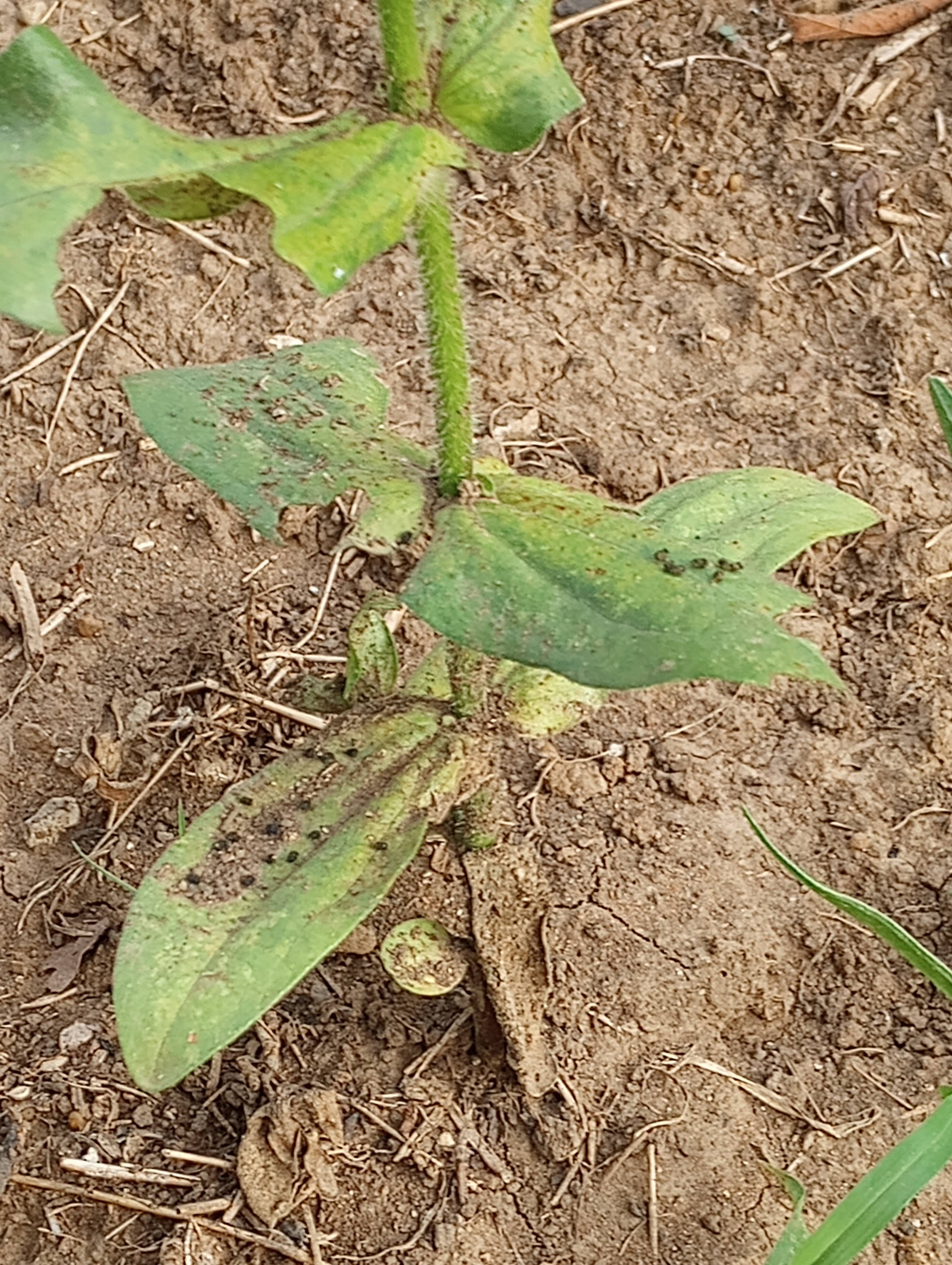
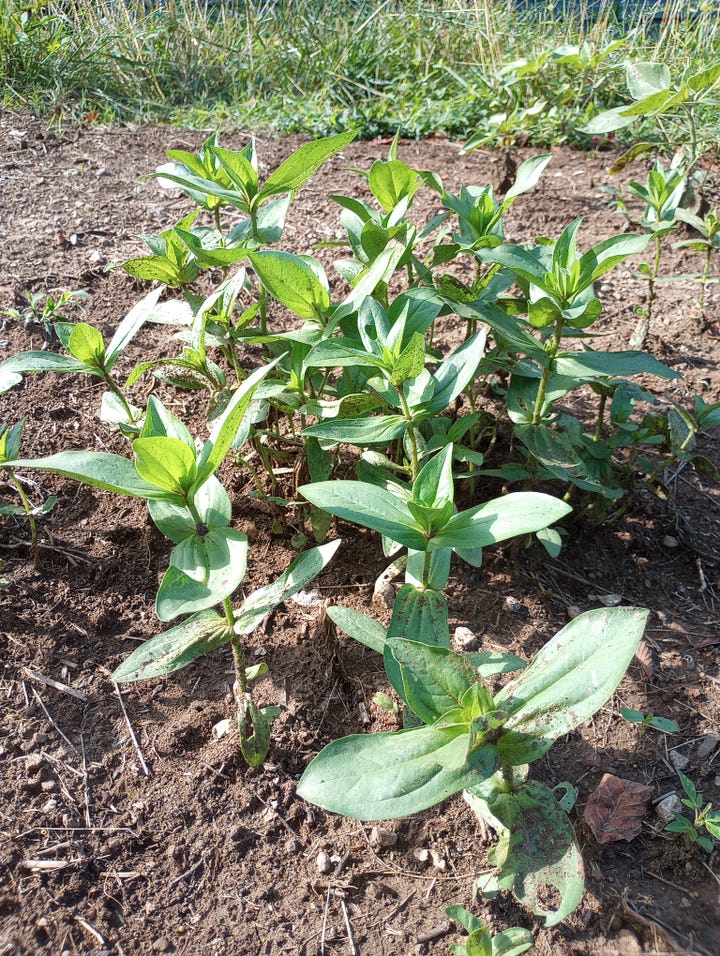
I woke up this morning and performed what has become my morning routine. Checking up on the garden. I was thinking about some things last night — one thing I had noticed was that my zinnia leaves had really started to turn purple. There was something that seemed to be spreading on them. At first I thought it was because of the drought, but then as I noticed it on some of the healthier plants, you start to wonder if it isn’t a disease or perhaps a nutrient deficency. I’ll show you some photos.
Alternaria?
You can see what I’m talking about — this purple, reddish brown that appears at the bases of the leaves. Even some of the healthier zinnias are starting to get it. In the last photo you can see this one is covered with it, and this poor zinnia is going downhill real quick. It has only days left, I’m sure.
Well, what is the cause of this mysterious purple/red coloration? That’s what we want to know.
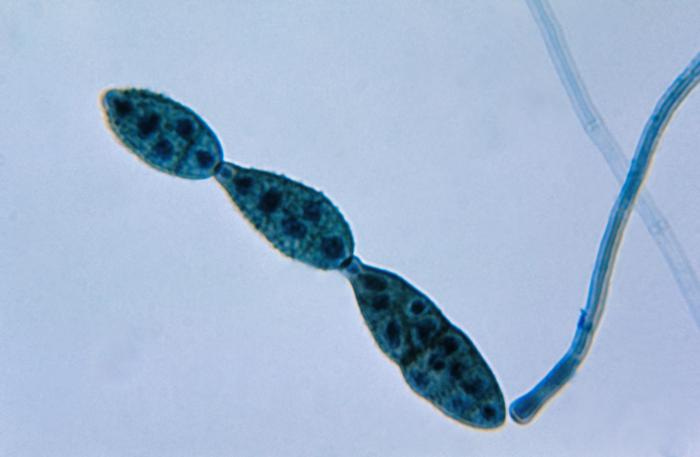
I went on the trusty internet and did some researching, and my guess is that this is caused by a fungus called alternaria.
Wikipedia photo of alternaria fungi
Wikipedia says: “They are ubiquitous in the environment and are a natural part of funga almost everywhere. They are normal agents of decay and decomposition.”
They are a “major plant pathogen.”
Seems about right. People of Facebook were commenting on similar posts that it was alternaria, and the chances seem high. I am probably then supposed to pull the diseased plants, no? To stop the spread? I wonder.
My other patch of zinnias is alright, so far. I don’t want them to become infected. But I wonder if it only happens when the plants are stressed and vulnerable, as they certainly have been. I now say with 100% certainty that my zinnias just needed more water, way more water, and mulch on the soil to help retain the moisture, as my wise mother has suggested several times.
Caterpillar poop
Now, if you ever wanted to see photos of caterpillar poop, viola. Here you are. The wooly bear (fuzzy white caterpillar) that’s been munching on this zinnia is still hanging out here. He has been feasting, and the proof is right here in the poop. I should have snapped a photo of the actual caterpillar. I’m not a great photojournalist. I was so amazed by the poop.
The caterpillar has grown rapidly, as they do. It’s amazing to see it. This morning he (or she) was kind of hanging over, seeming to be asleep. I just want it to stick around so we can see its progress. That other big ‘un, the giant common buckeye caterpillar that was eating the grass in my garden, I don’t know what happened to it. It’s gone. There are three new ones that are here munching away, already they’ve again quadrupled in size. Tomorrow they should be huge.
Some kind of speedwell
This has been popping up all over, and it looks like it’s some kind of speedwell. Google said mine was probably some invasive speedwell from Eurasia. Wonderful. I should probably pull it, then. Does this count as mulch? Can I leave it down just to protect my soil from drying out? Until it gets out of control, I don’t see why not.
More tree of heaven
Tree of heaven sprouts are everywhere. Every day they pop up. Here’s a new one. They are thriving in my crappy soil, disturbed roadside habitat. They’re loving it. Too bad they’re UNDESIREABLE.
Three-seeded mercury
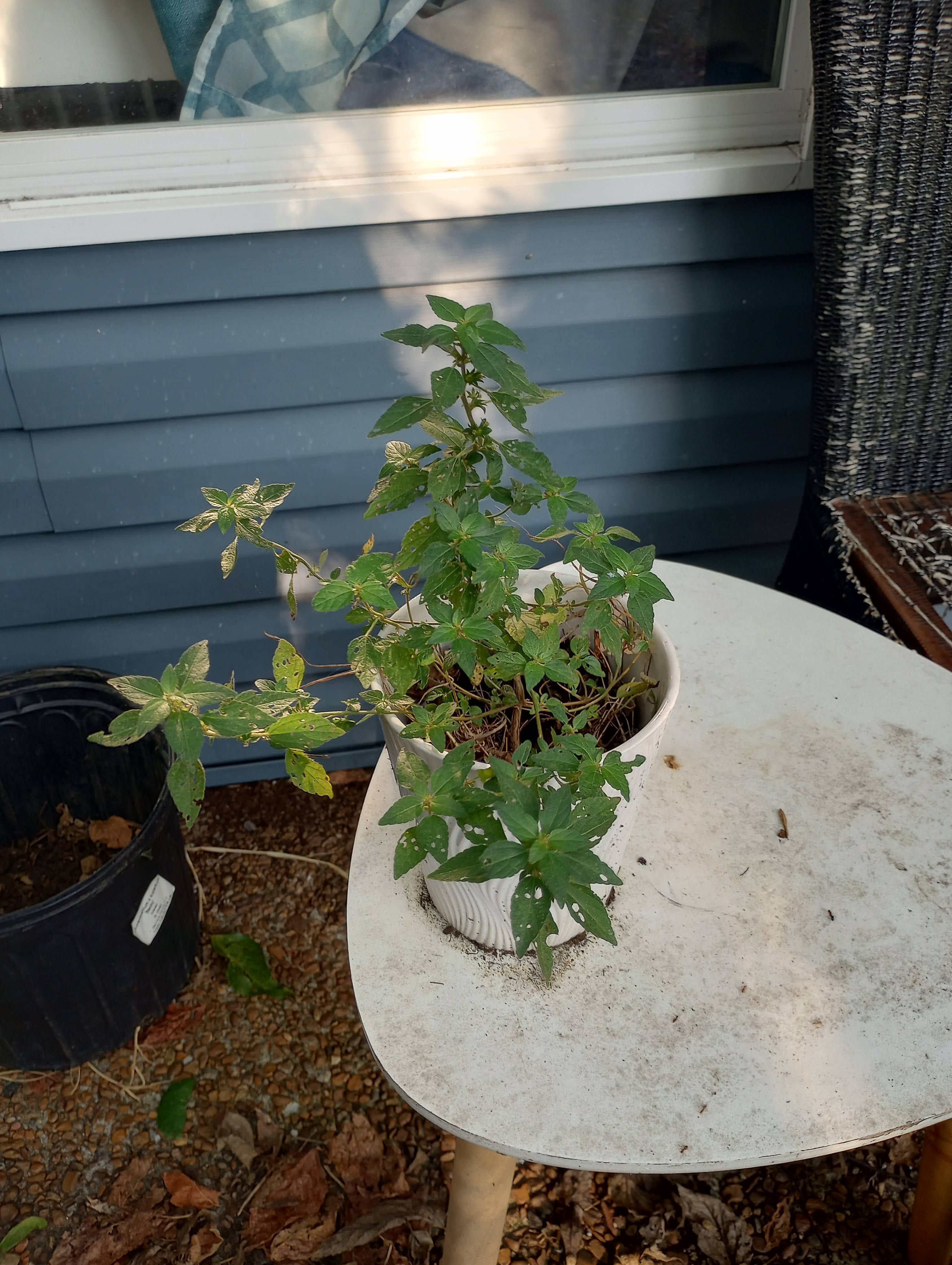
When I was digging up the lawn, I kept this plant, mostly as an experiment. I had dug up the entire thing and it was kind of smelling nice, and I thought, I’ll just throw it in a pot and see what happens. Why not? So I did, and that was about two weeks ago. As you can see, it’s fine.
This is a three-seeded mercury, I learned this morning. It’s everywhere. Popping up in my garden, and on my walk to the cafe this morning, I saw it all along the roadside, in the grass. It’s a native herb, a spurge. What a great word.
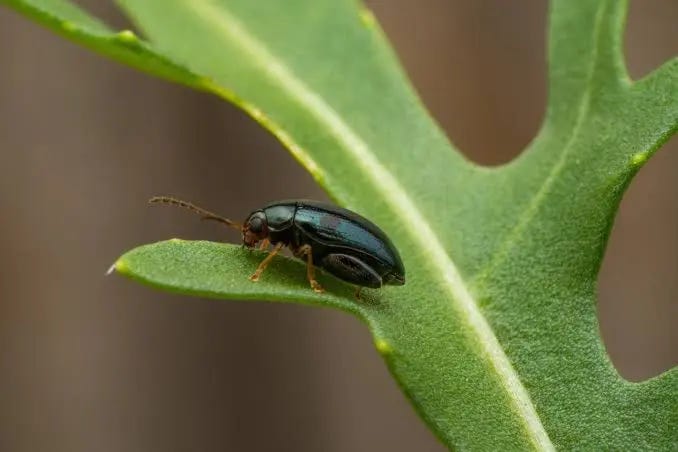
Apparently it is loved by flea beetles, and all three-seeded mercury has tiny holes in it, as mine does, which are caused by the flea beetles.
Yesterday I went to an event held at the Looby Public Library, for fall vegetable gardening. Just to see what’s going on. Currently, I’ve only planted flowers, and carrots. That’s it. Veggies is a whole new world for me.
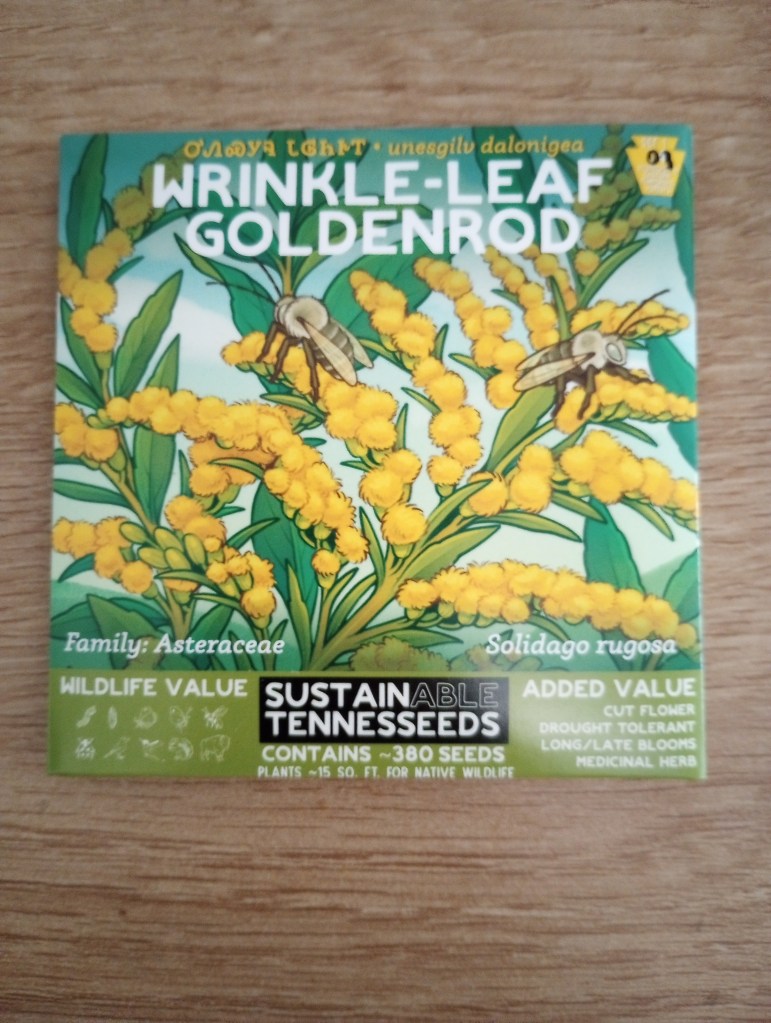
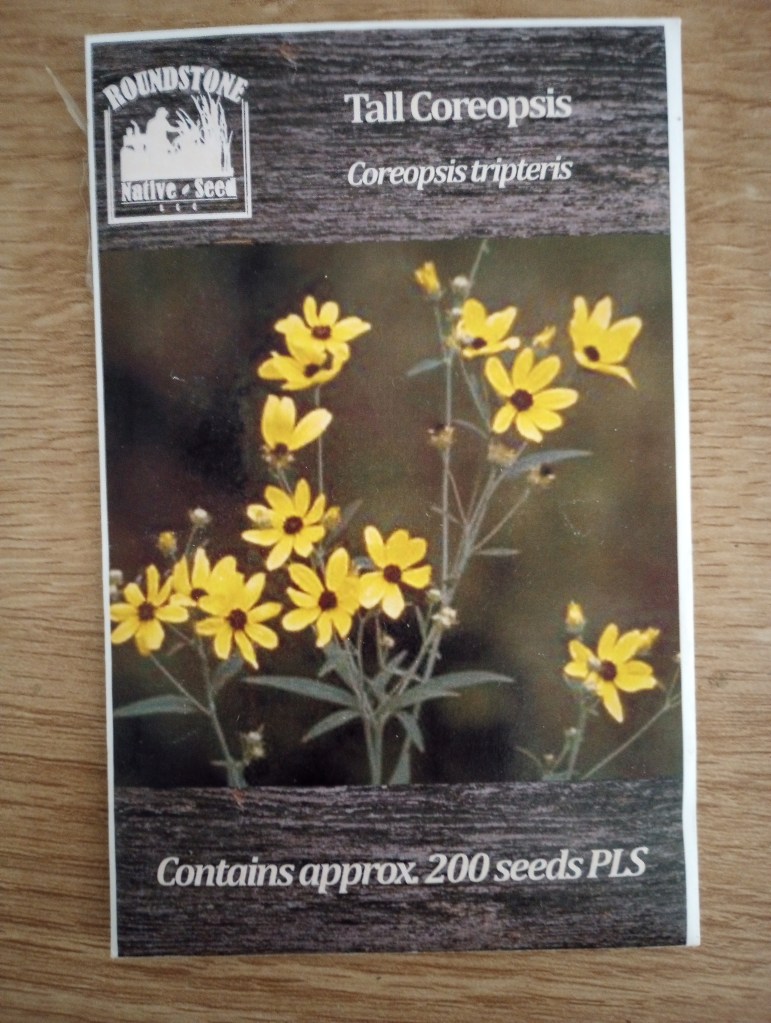
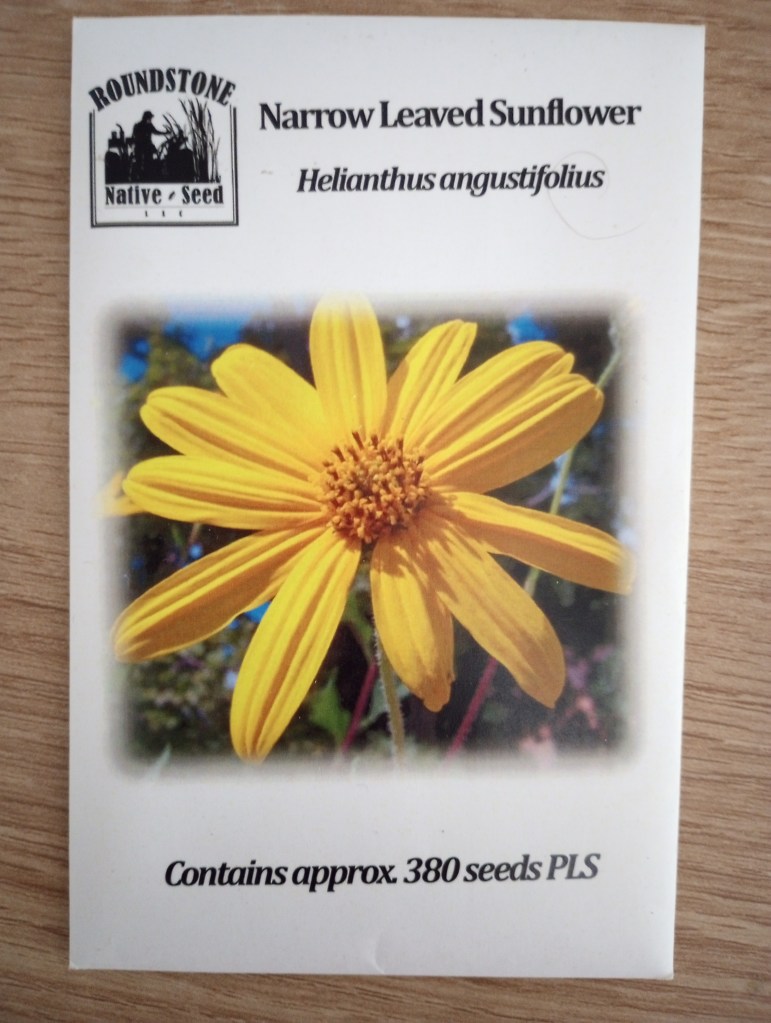
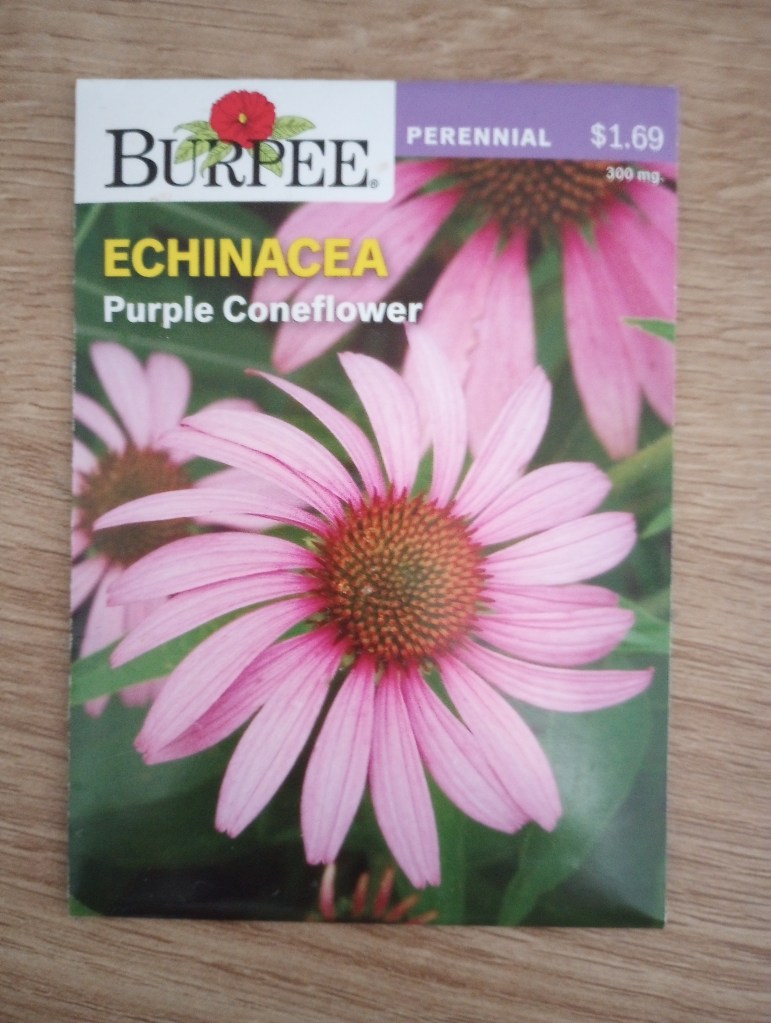
I went out to a local iconic gardening store and bought more seeds. I’ve been going crazy. So far, I’ve now planted Cosmos, Zinneas, Butterfly Milkweed, Jerusalem Gold Sunflowers, Smooth Blue Aster, Purple Coneflower, Shasta Daisies, Marigolds, Black-eyed Susans, and carrots. And I still have some Goldenrod to plant, more Purple Coneflower, Wild Bergamot…
The watering is starting to be a lot of work. It takes 30+ minutes to do all this watering, and it’s still probably not enough. I fill up the watering can by hand, at our sink. The spigot is on our neighbor’s side of the house (we live in a duplex) and I’m too lazy to text him and ask if he minds me using the hose.
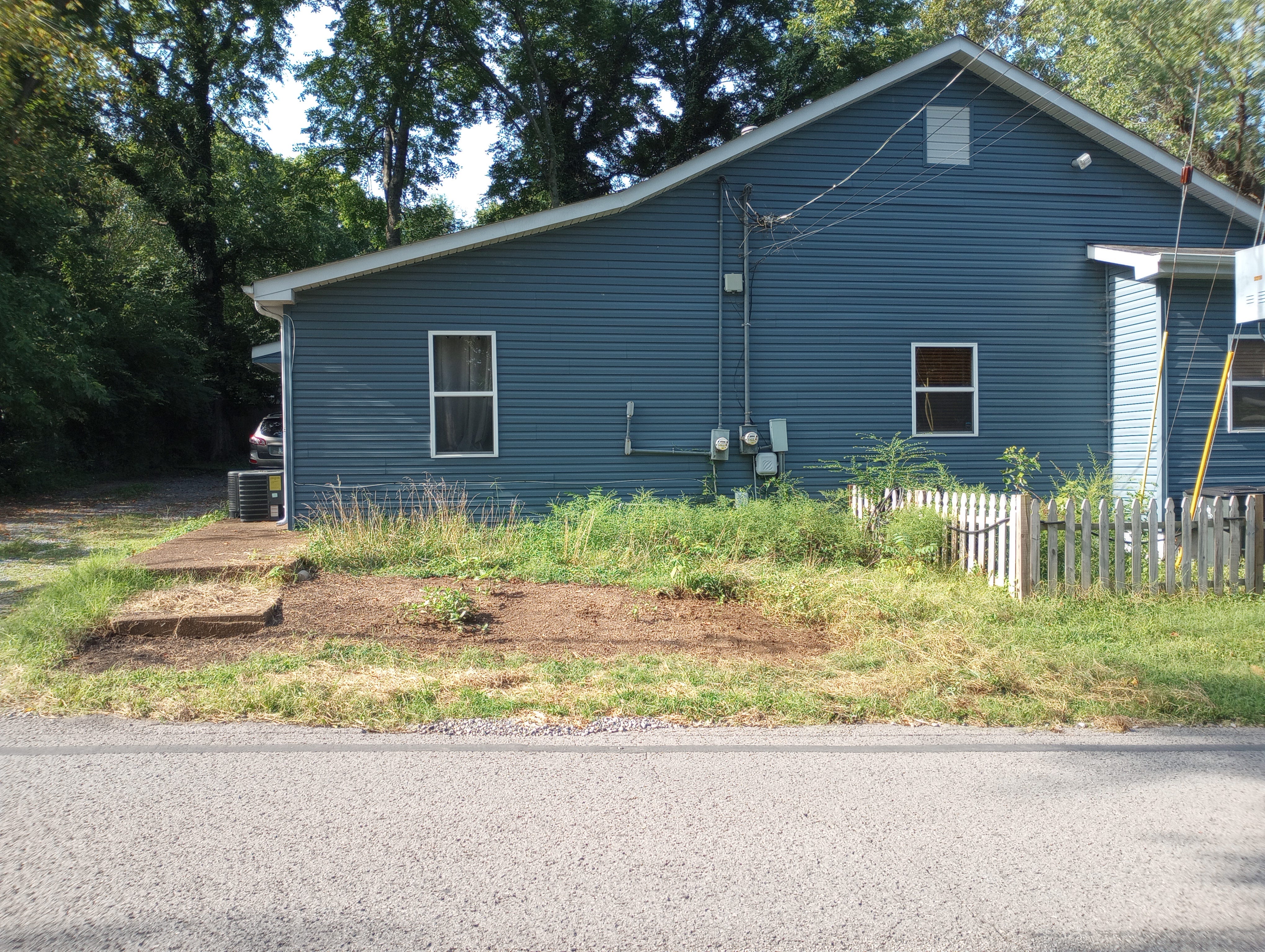
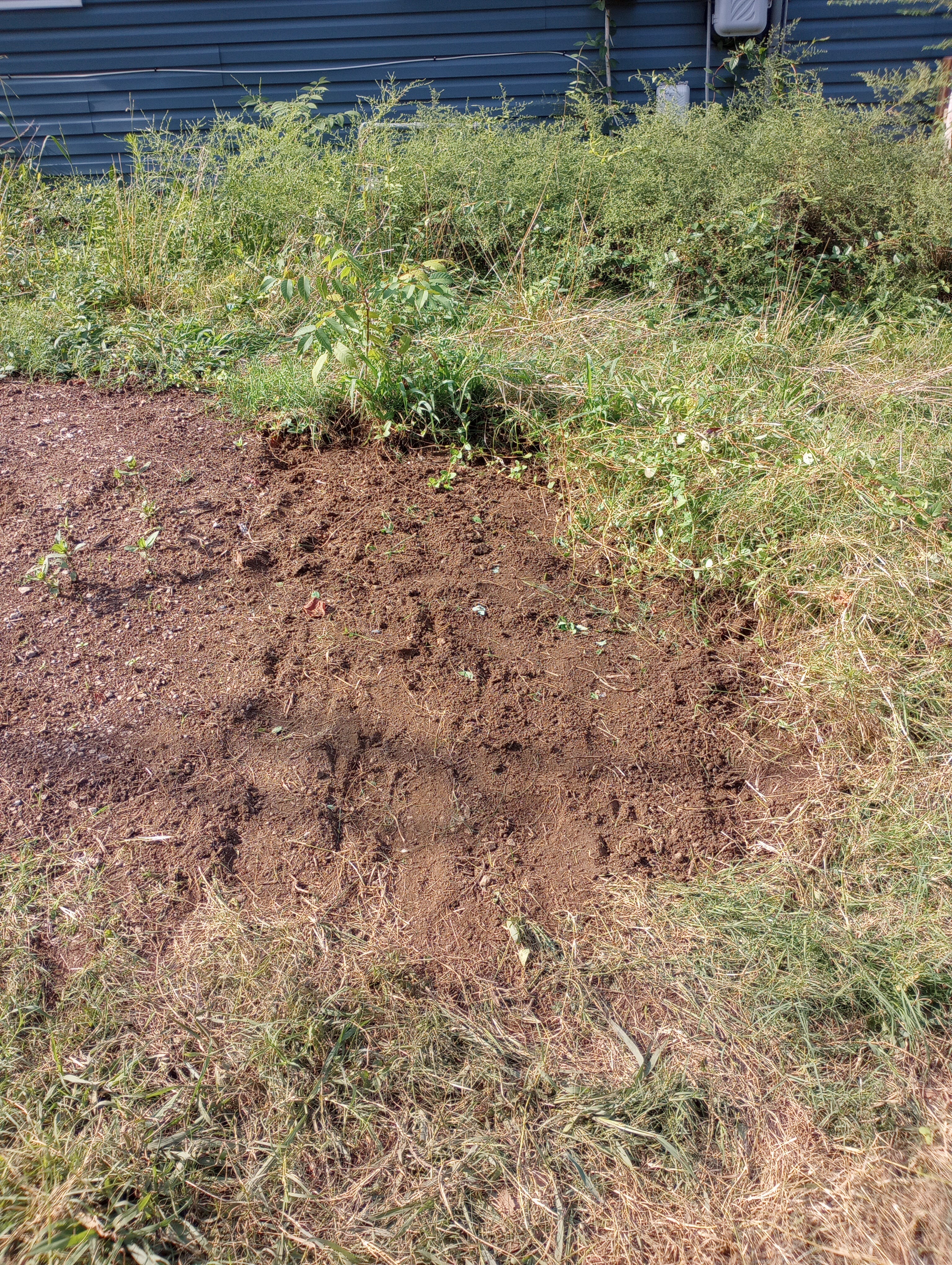
The hard part is not the planting, it’s the tearing up the grass. Most of the grass in our front yard is some extremely tenacious, rhizomous beast-grass. The roots are nebulous and deep. The sprouts are constantly still popping up, even when I think I’ve completely, thoroughly dug out all the roots, removed all traces of the grass.
This grass is quite entrenched in the lawn. And digging it up is hard work. I would even call it backbreaking. I can’t even imagine working on a railroad line, doing whatever those guys did all day. If it’s anything on the level of digging up this grass with a shovel, I couldn’t do it. And it’s compounded 10x in the hot sun.
Basically, you can’t do it in the sun. You’ll die. Or, you just suffer immensely. You have to get up early enough to get some digging time in, or late at night. I’ve done some digging at 10, 11pm at night, long after the sun has gone down. It’s blissful. It’s amazing to be able to do that work without the intense blaze of heat.
As I dig up more and more of this yard, I realize—I’ve bit off quite a bit. I don’t even want to dig anymore, really. But I want to have a large flower garden. And I have to get these seeds down, because the clock is ticking, the winter approaches—and I bought them.
Tonight I’ll have to do more digging.
When you’re doing hard work, it’s amazing how it feels like you’ve done so much more than you’ve actually done. It can be the same with writing. When you’re putting so much into every line, when you’re really crafting each line — it feels like you’re doing so much work, and then you come back and review how much you’ve written, and it’s nothing. Three pages. You worked so hard for those three pages.
The digging is the same. Two mornings ago I dug for a solid two hours straight, from 6:30 to 9:00 am. I took a short break. Backbreaking labor, slow and difficult. It felt like I had dug up ten acres of land. And then, when I stepped back to see how much I’d done, and how much farther I had to go, I was shocked. Depressed. Only about 12 square feet of earth had been cleared. Maybe 15.
Yesterday morning I met Melissa and Taz. She was taking her dog for a little stroll around the neighborhood. I know this dog; he’s one of the most familiar sights in the neighborhood. He barks at me almost nonstop whenever I’m out in the yard. Melissa and Taz live in the apartments across the street. Taz is cute—he’s a small dog, a terrier or something. Grey and white, long fur. And he likes to yap. He loves to yap.
To be honest, like most dogs yapping, it’s really annoying. Taz’s yapping. All the dogs in the neighborhood like to bark, and they’re all annoying. Sometimes lately I’ve wished that dogs were just banned in the city. Sometimes, when they’re really barking up a storm, I just wish that there weren’t dogs around anymore. Not in the city. God damn, it’s so annoying.
But… they are cute. And the yapping isn’t that bad. Mostly, I can ignore it, or I can put up with it. If it is that bad, then you have to tell them. Hey, can you please shut your god damn dog up? Thanks.
You never want to have to do that, of course.
I finally met Taz, who I had been thinking, if he just knew me, he would stop barking at me. I don’t think that’s likely to happen, now that we’ve met. He was still barking at me, as I squatted down to let him sniff me. I did not get a pet in. Melissa said it was his way of saying hi. What a pleasant way of saying hi.
She was holding a lit cigarette and drinking coffee out of a styrofoam cup. That’s the way to wake up, right there.
She asked what I was up to with the garden. I gave her the low down. She was interested. She said it was going to look beautiful when it was done.
I’ll tell you that I have a lot of thoughts about convering all of the boring lawns in the neighborhood into gardens. Into flower beds. I think about how the neighbors will enjoy looking at the flowers in my yard. There are a lot of people living in the complex across the street, like Melissa. They will be able to look across the street and see a wonderful array of wild flowers, hopefully. And the street gets a lot of foot traffic. It will be a welcome addition of beauty on our otherwise mundane street.
Patrick, my duplex neighbor, has done a good job with his house. He’s done a lot of work. He put up a fence, that has been run through twice in the five years since he’s lived in that house, and surrounded it with flowers. Mostly black-eyed susans and purple coneflower, but he’s got some other things. And, he’s got sunflowers.
There are some amazing gardens in East Nashville. Some people are doing really great work.
The Master Gardeners were an old black couple, from North Carolina and Alabama. The man was from Alabama, the woman from North Carolina. But they had been in Nashville for a long time. They were amazing people. The woman did most of the talking, and she was sharp. She knew her facts. There was an incredible amount of gardening information in her brain. The man knew just as much, but he had taken a support role, and spent much of the time showing us pictures of things on his phone, like his collection of plants grown in buckets, the way they had harvested their lettuce, putting the bottom leaves but letting the tops grow, and an enormous, 22-pound watermelon.
After the seminar, which was attended by myself, a black woman named Audrey in her 40s or 50s, and a young white couple who had recently moved to Nashville from California, and who had inherited a plot in a community garden, they offered to take us to their nearby community plot. We went out there and they took us around the plots. The woman was especially excited to show us her peanut plant. It was her first time growing one.
I’ll tell you this — vegetables are weird. Fruits, too. Flowers are easy to understand. What happens? They’re just a plant. They grow up, and then they have beautiful flowers, and you’ve succeeded. They all kind of do the same thing, I feel like. But vegetables and fruits… Strange. They come in all manner of shapes and sizes. What are they doing?
For example, the peanut plant. It was not what I ever would have expected a peanut plant to look like. It was low to the ground, dark green, dense. It had some small yellow flowers blooming. If I had walked across that plant in the wild, never would I have thought it was a peanut plant. And then, the watermelon. It was sprawling. It’s basically a ground vine. I think that it would be described as a vine, right? A vine on the ground. Now, I didn’t know about that. And this couple had a vine that was covering like 80 square feet of ground. Was that one vine? It looked like it. How many plants was that?
Then you have the leafy veggies, kale and lettuce. I mean, those are simple, right. They’re still strange though. And beets, carrots, where you eat the buried part. Is that even a root? Is it a fruit? What is that? And what’s going on with corn?
They had tons of beans. Beans are crazy. Pole beans, green beans… I can’t even remember all the kinds of beans I saw. I learned that there are a lot of kinds of beans.
The man was very excited to tell me how many kinds of tomatoes there were. He said, “How many kinds of tomatoes do you think there are?” I said, “Oh man, there must be a lot… hundreds—” he said, “There’s over three-thousand kinds of tomatoes.”
Probably just as many kinds of beans.
Some of these veggies can grow in as little as 20 days. I think the radishes were one of those. You can have radishes in a month. How wild is that? From a seed to an edible radish, that quickly. But I’ve seen how quickly these plants can grow. The Zinneas, the sunflowers. It’s all they do. They’re a-growin’.
I’ve already allocated so much of my full sun terrain for flowers. There isn’t much land left for veggies. But we have an entire concrete runway along the driveway, that we could cover with buckets and pots, and plant in those. That would add a lot of real estate. I can see that becoming a reality.
The man said something that was really appealing to me. I’ll remember this fact. He said that they would go to the store and price the vegetables that they had grown, and that they had in one year saved themselves about $900-1100 dollars on produce. That’s not nothing, folks. $1k worth of veggies? That stuck with me.
Out in the community garden, in every plot there were fruits and vegetables, except one. There was one plot where the gardener was growing flowers, Zinneas and sunflowers. They had an amazing strain of sunflower that grew only a single, massive flower at the top. They had a row of them, all about the same height, and all with an enormous flower at the top. And then, they eight or ten different kinds of Zinneas. They were all Zinneas I think, the Master Gardener woman thought so, but each one was a different kind. White, red, pink, orange, purple… it was a small Zinnea botanical garden. And the best part is, it was absolutely covered with butterflies. Pollinators in general, bees, leaf-footed bugs, huge, shiny beetles that I don’t think I have even seen, were all there, but the butterflies were amazing. It was like being in a butterfly house. Probably 60-80 butterflies were grazing on that flower patch. It was really incredible.
That made me want to grow more flowers. More than a peanut plant or watermelon, I still think I just want to grow flowers. For the insects. But, why not both?
I imagine my garden to be a kind of Tennessee native flower botanical garden. That’s what I want it to be. And people will walk by and think, “Now, what is that? That’s something I’ve never seen.” And I’ll be able to take people through the garden and say, “Yes, these are the Smooth Blue Asters, the Swallowtails love them, yes, that’s right, those are Drop Dead Red sunflowers, surprisingly easy to grow. That? Oh, that’s buttonbush, hard to grow if the soil isn’t wet enough, but I’ve managed it here…”
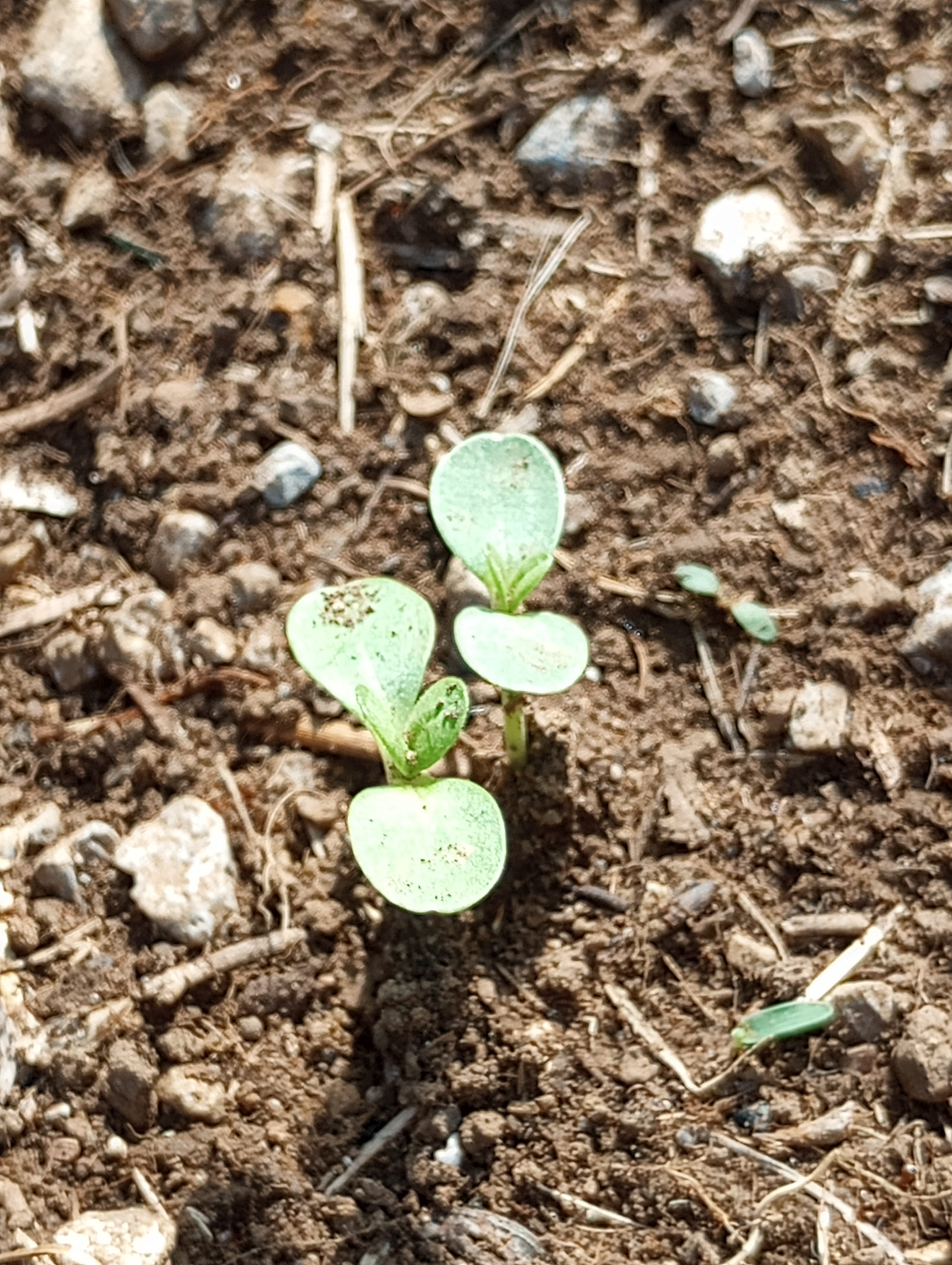
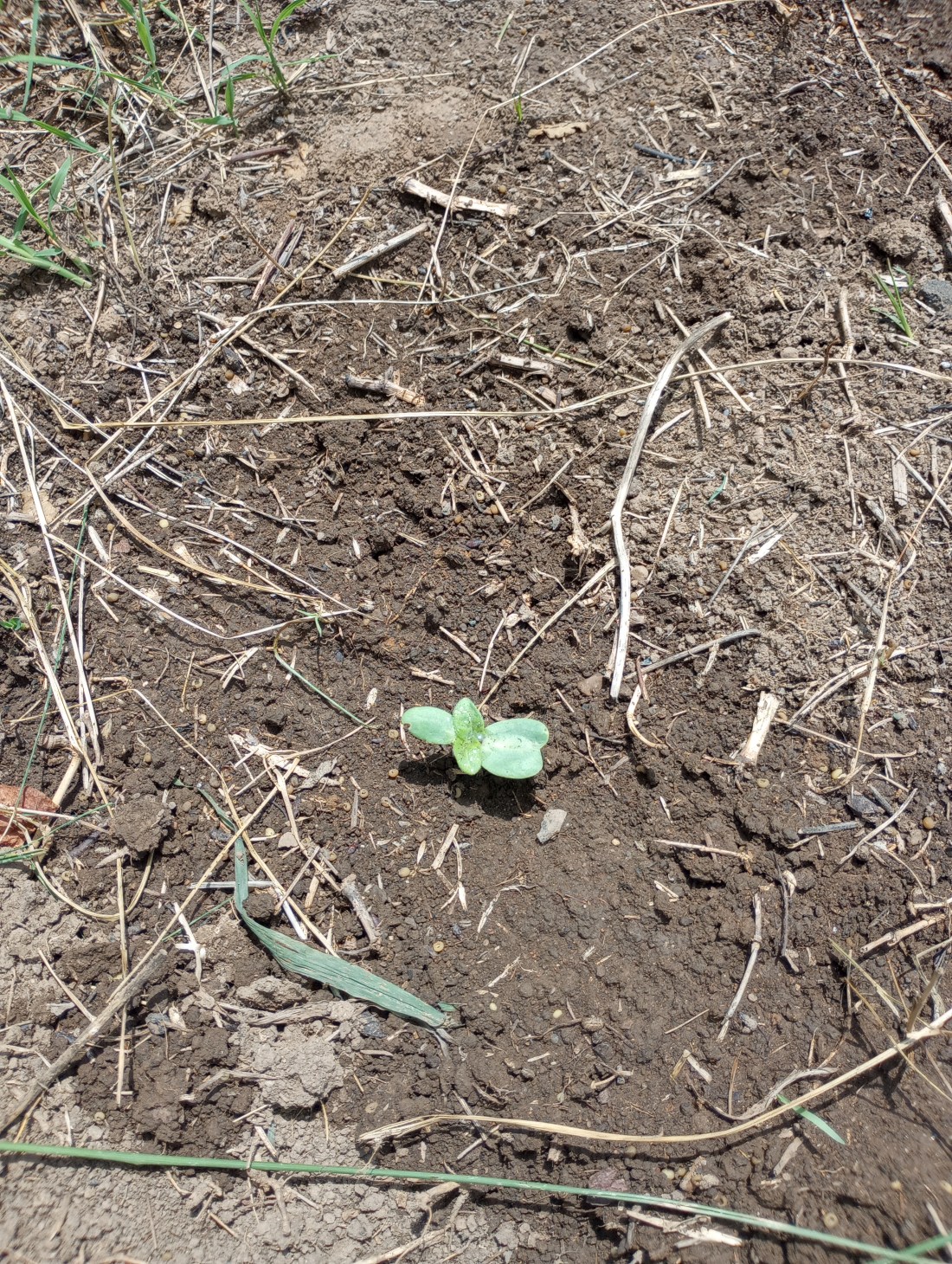
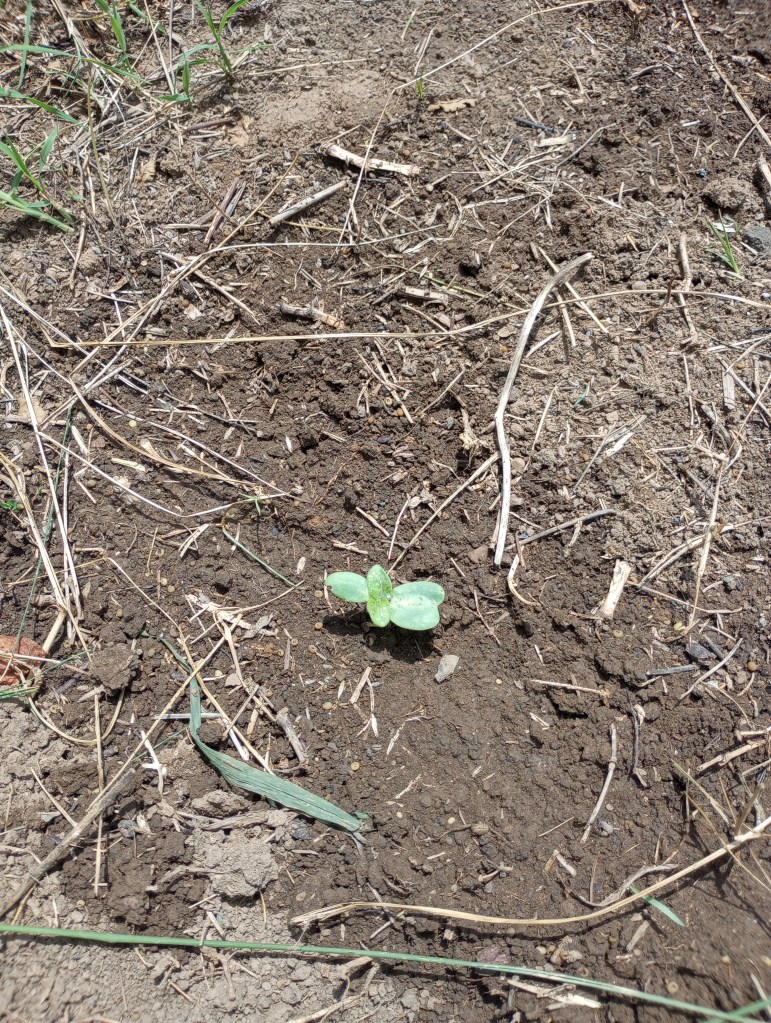
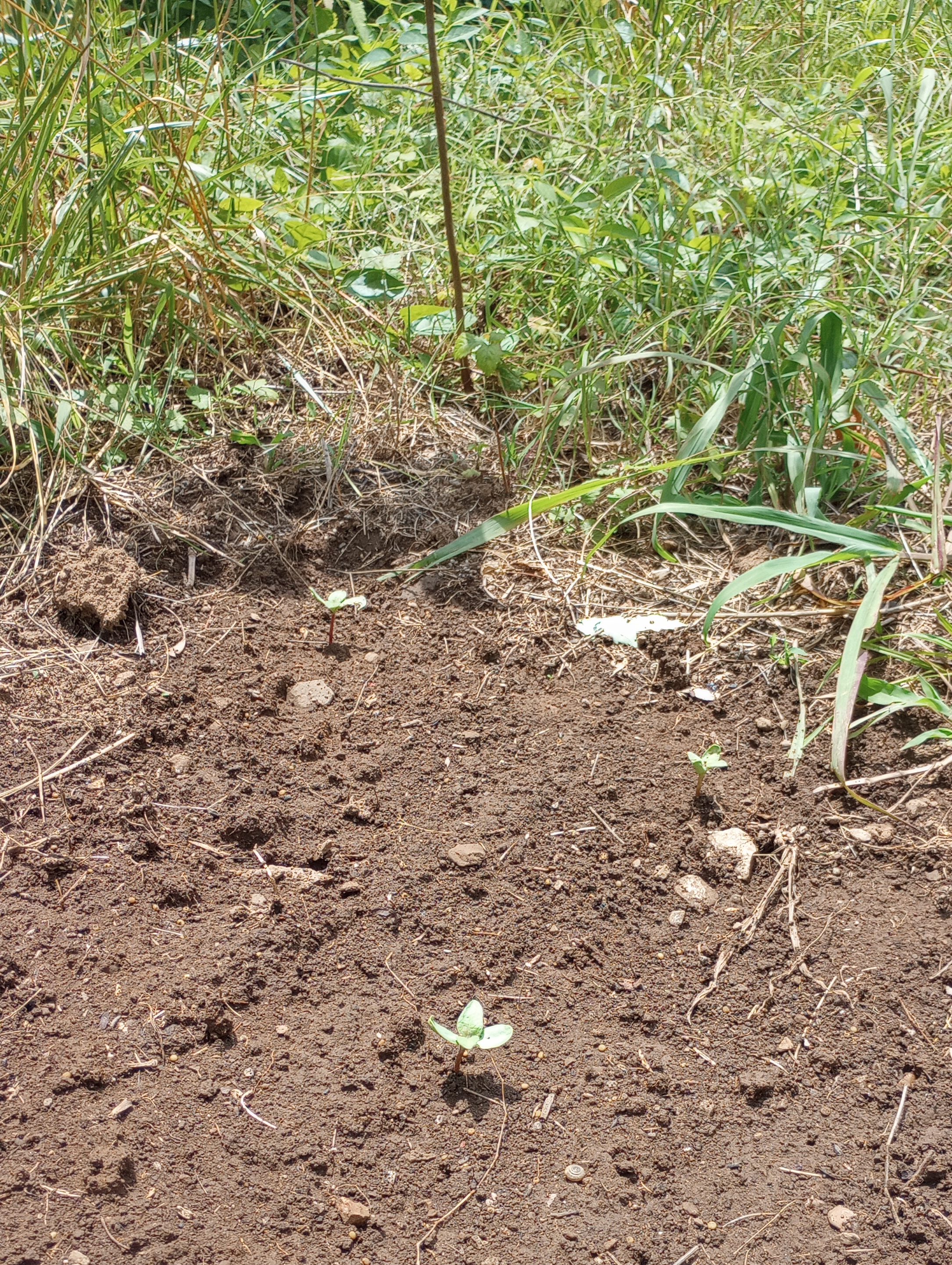
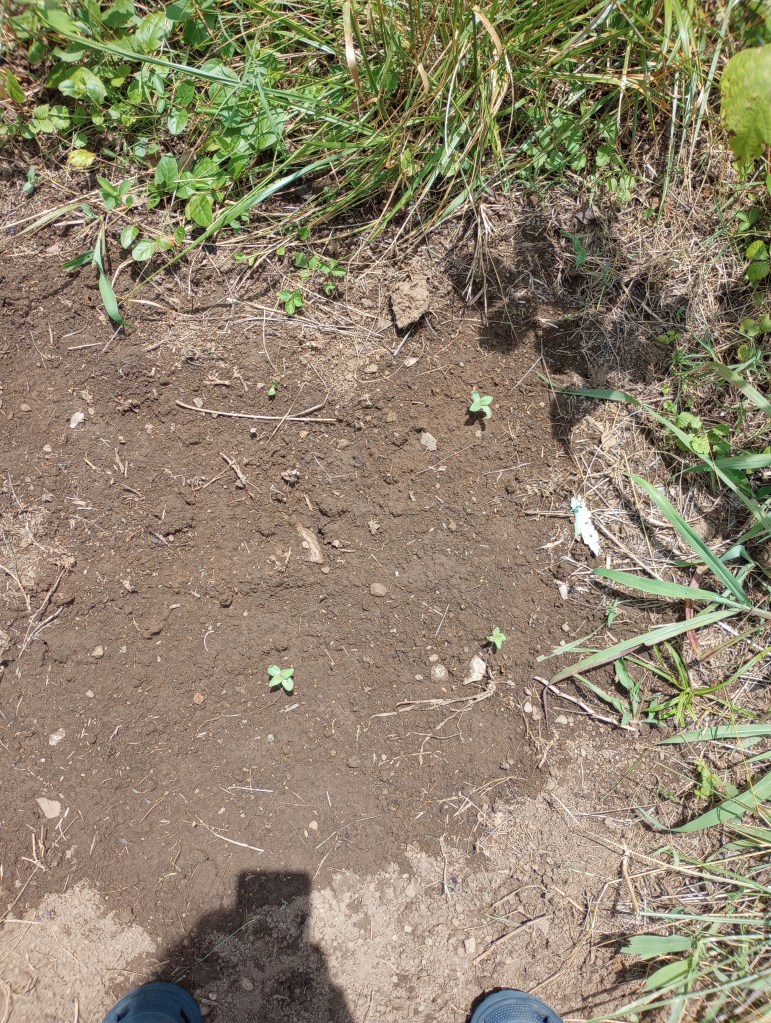
I stepped out to investigate my garden, and found that the sunflower seeds I had planted less than a week ago are already sprouting vigorously. This was an incredible sight.
Kawaii sunflower sproutProof of concept: Seeds = PlantSunflower sprouts
It’s proof of concept. Planting seeds actually works. You can actually get a plant out of a seed.
This was inspiring, and this motivating sight, plus a strong pot of coffee in me, finally inspired me to move, and plant the other ten seeds I had.
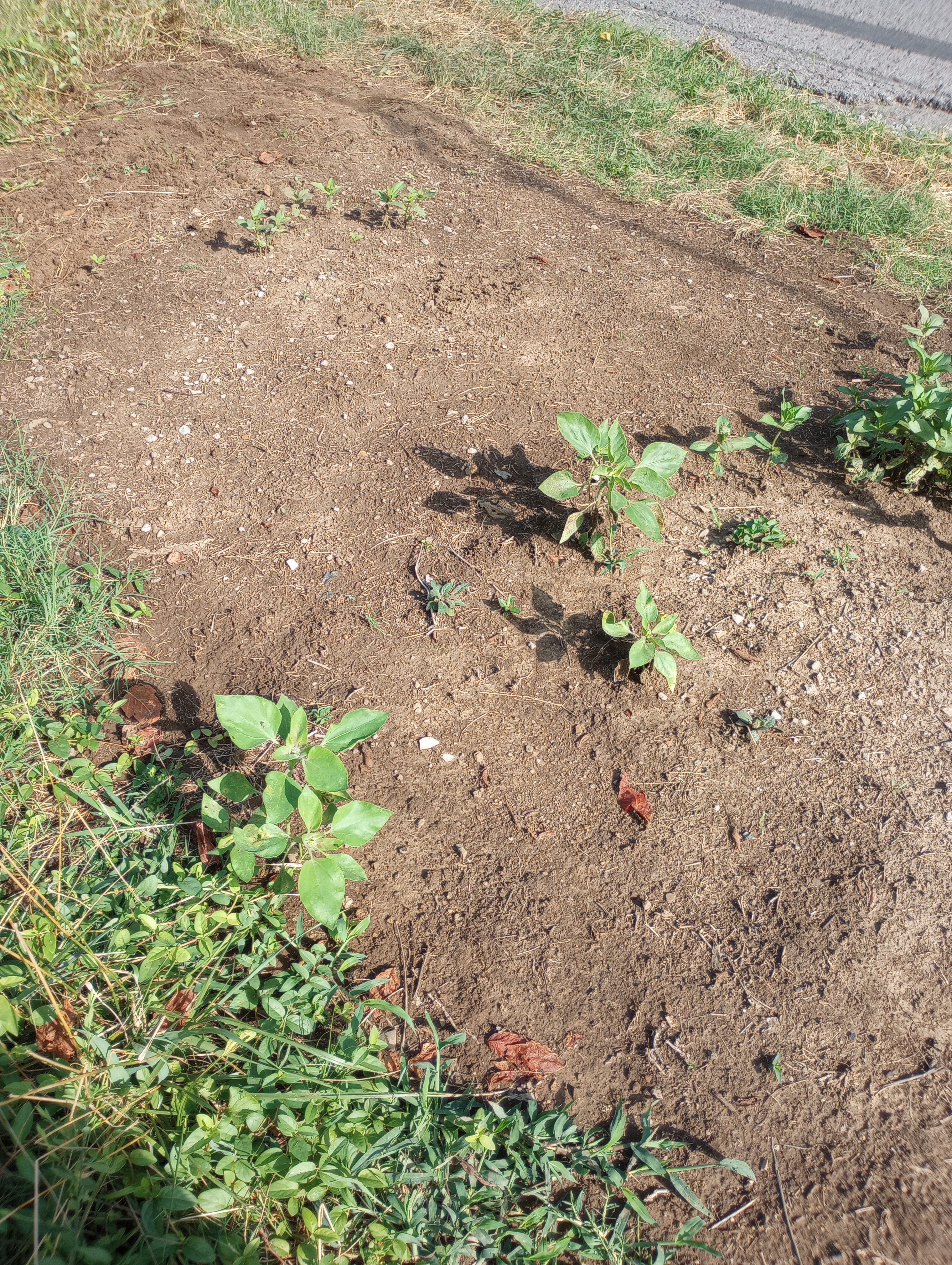
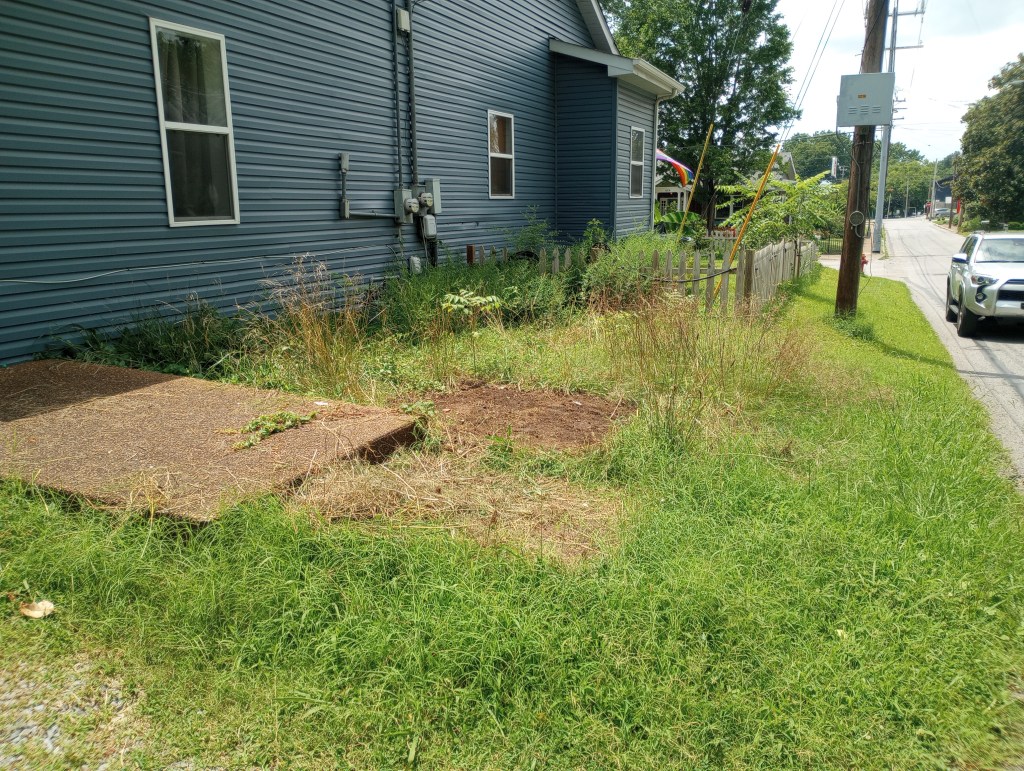
Front lawn cleared of hemlock with small dirt patch for sunflowers
Here is the patch, I doubled it in space. I had taken down all the husks of the.. what was it called… why am I blanking.. POISON HEMLOCK. The poison hemlock turns out to be not only extremely toxic but also covered in literally thousands of burrs, which ended up sticking to everything I was wearing, covering me in hundreds and hundreds of little tenacious burrs. (I pulled some off of my washed underwear this morning, five days past.)
Remains of the dangerous and nefarious poison hemlock
Here are the poison hemlock remnants. I got a nice hornet sting in the process of pulling this all out of the front yard. It’s funny, I was ripping it up, knowing it was a toxic plant, apparently so toxic that it shouldn’t be burned or ingested, but Google says touching it was generally fine, and so there I was, in a no-sleeve shirt and with no gloves, standing deep in poison hemlock and slathering it all over my body for a solid hour, the entire time thinking.. I might really end up regretting this. Knowing that it was dumb. But I had no averse reaction, and the only thing that caused me pain and suffering was a hornet sting.
I haven’t been stung since I was a kid, and if you have forgotten what it’s like, as I had… Yeah. It hurts.
I hadn’t even thought about hornets or bee stings when I was reaching in and grabbing those plants barehanded, like a maniac. Well, I clamped my hand down on a hornet, and it reminded me right away why they are not to be forgotten. I knew instantly that I had just been stung, and I saw the culprit whiz right out of the bush, a large black hornet, and within seconds my palm, as it stung me right in the meaty meat of my palm, had doubled in size, and I was going, “Ahhhhh….. Tssssss.. Ahhhhh…….!” Making those sharp breathing sounds between your teeth.
The stinging animals have an incredible power with their stinging ability. After I got stung, I f***ed right off, and immediately ended my shenanigans for the day.
Anyway, that was about four days ago. Today I finished planting the rest of the sunflowers, during a noon bit of cloud cover, and now this is what I really want to share with you.
I began to pull up the clumps of grass, to clear more dirt patch for my planting. And when I pulled up the first round of thick, tall grass clumps, an amazing and unbelieveable sight met my eyes.
I had just unrooted an incredible, thriving ecosystem. Down in the soil before me, I saw literally thousands of organisms wriggling wildly in the soil.
Most of them were baby roly-polys. I could not believe the number of roly-polys I was seeing. Within a single square foot patch of this earth in front of my yard, there were so many, innumerable tiny beings living, and they were only what I could see with my eyes. I scanned the dirt, taking it all in, and I spied: adult roly-polys, baby roly-polys, earthworms, a large weevil, juvenile shieldbugs (stinkbugs), ants, millipedes (several various kinds, one that was extremely wriggling and lithe, with two long slender antennae, and it reminded me strongly of the worm dragons of Asian mythology), various snails, and wasps.
All of this was in the square 1×1 foot of earth that I had just torn up, ripping up those thick clumps of earth. Every centimeter of the earth contained some small living beings. And they were all scrambling madly, now having their world suddenly turned upside down. It was shocking to see.
I had just blown up their little town, completely ripped up their home, and I felt terrible.
I had not expected this to happen, of course. Not like this. This was a particularly prolific patch that I had torn up. I thought, is it worth for me to tear up all this grass, in the name of cultivating the earth, when clearly there is already a good amount of thriving happening here? Already an entire ecosystem is supported.
I had to step away for a minute and consider that.
Ultimately, I figured that this ecosystem could continue to flourish once some sunflowers and other flowers had been added to the mix, and would be even further improved. Wildflowers and other native plants were going to be better than invasive poison hemlock and whatever grass had been there, in the long run. So I continued with my planting. And anyway, this was an experiment, a small-scale experiment in the front of my little lawn in suburban Nashville, and so the stakes aren’t that high.
Seeing this flood of microorganisms in the soil today was a good reminder, that there are many things happening under the surface, down in the soil, that we are not seeing at all. Just below the grass, down in the blades and the bases, an entire ecosystem exists and is thriving, doing the heavy work of keeping the soil healthy and helping things to grow.
I plan next to plant black-eyed susans, zinneas, and shasta daisies. It’s probably not the best time for planting, in the middle of summer. I kind of have no idea what I’m doing. But I’m having fun and learning some things. I figure that’s the most important thing.
I wanted to share this picture too.
Now all green
This now totally green and flush space had just this spring been a patch of bare earth that I dug up to plant some nasturtiums. That was the first thing I ever planted. Three plants grew out of the nine or ten seeds that I planted, with me doing absolutely zero work of watering or weeding. What’s cool to see now is that within only a few months, this bare space of earth has been entirely populated by a variety of plants, without me having to do anything. That was prime real estate for many local plants, and they’ve scooped it up without hesitation.
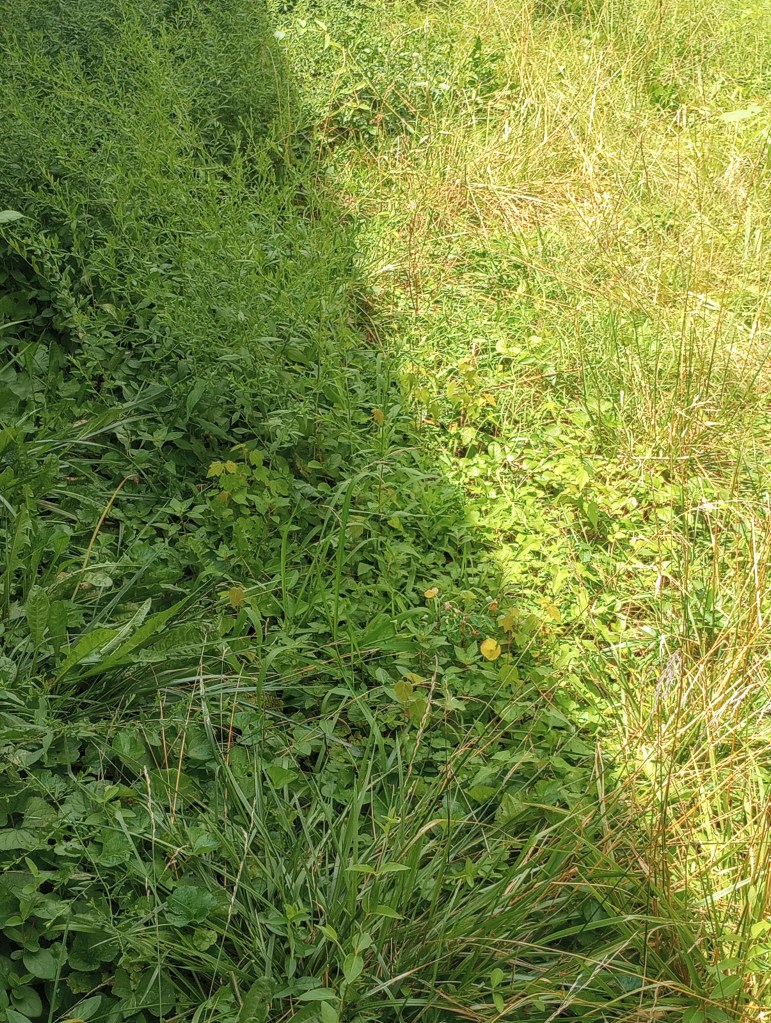
I surveyed the plants in this space, and looked at all of the plants in the front yard here, and was wondering just how many species of plants there were in this small space. There is already a wild ecosystem here, even in this humdrum patch of weeds and grass, I’m learning.
*From 805B N 12th Street, in East Nashville my home base as of February 2024, and where I will most likely be for at least another year, until July 2025.*
I read recently about immortality projects. It was a theory by some guy as to why people try so hard to do things. They work so hard, strive in their fields, crave fame, legacy, having statues built in their honor, having works that live beyond them, as a way to achieve immortality. “Immortality” but dependent upon others to carry it on, in their memory, in their consciousness. In some way we are all immortal whether we live on in human consciousness or not, because our atoms will still exist, although independently. Matter is conserved, no matter is created or destroyed. That’s physics. So all of the little atoms that are part of you now will always be here in the universe, probably. So if you think about it like that, you are immortal, and also, you have been around for a really, really long time. You just exist now in your current form, and if you achieve anything that anyone is going to remember after you die, and leave your current form, they will just be remembering you as you were in your human form.
I guess that’s something like reincarnation, or reappropriation. I find that comforting. And also, isn’t it nice to think that you have already been in this universe for billions of years? That all of the pieces of your puzzle (at the most basic level), all of your fundamental components have been floating around and doing things here in this world for billions of years, and they will continue to do so after you die? I think that’s comforting.
It’s interesting to me that this is what I’m writing about.
I have never really had a fear of death. Maybe just because I’m young, and death still feels far off for me. I don’t spend a lot of time thinking about it. I have known some loved ones to die, my grandma, my great aunt, uncle Bob. I miss them. Pets, the hardest one being Bonnie, our black lab. I was there in her final moments at the vet’s office with my dad, and we cried like babies. It was a terrible thing, for a while, to be in a world without her, to be in a world without these people. But I guess I have always felt like, that’s just the way it goes. So we live, so we die. It’s just the natural thing. And, in a way, Grandma Marge, Kathy, Bonnie, Uncle Bob, none of them are completely dead. They live on at least in my memory. There are still photos of them, stories of them, out there. There are people still who know about them, and think about them, and remember them.
We live for a long time. Relative to other organisms, we live for a long time. So, I guess we have more time to become attached to life, and to be used to living. Many insects live short, very short lives, relative to ours. As short as 24 hours. Imagine if we lived for 24 hours? What that would feel like? We couldn’t really do it. You would have no time to learn anything, no time to recover from anything, no time to process anything, unless you could do it in an incredibly short period of time. If your capabilities were quickened, and every hour was like for us now, a year, then you could benefit from learning things, from living on something other than pure instinct. That’s what I’m getting at. Because in our long lives, we have the ability to learn, to make mistakes, to fall, and to get back up, to process, and evolve, within ourselves. Insects don’t have time for that. They really just have time for living.
The main reason that I’m thinking about insects right now is because, they are dying every day. Insects, and arthropods, the tiny creatures. Almost every day I am aware of, and even I am the perpetrator of, the death of other beings around me. In one night here, in just about 10 minutes, I killed over 20 earwigs. They were assaulting the house, and they had to be defeated. I could have captured them all, it’s true. I could have released them. I capture and release most creatures that find their way in here, but the earwigs, I won’t lie, I kill them. And I always feel bad about it, and I always apologize, and make it swift and as painless as possible. A few days ago I watched a spider that has been occupying a corner of the house for weeks, which I realize has become a kind of pet to me, and I pass by it and say hi every time I walk into my room, I watched this spider finally catch something, a large ant, and roll it up in webbing, and drink its ant juice. In recent weeks I’ve killed tens if not a hundred mosquitoes. I’ve killed a flea too. All meeting the ends of their lives. That’s a lot of death.
There was a baby possum who died in the street in front of the house. It was run over. I had to walk by its little carcass to get to my front door. That was a sad death.
We want to be immortal. We want to be remembered. To have a legacy. It makes sense. This desire pushes us to do things that are beneficial for our tribe. Creating moving works of art, technological feats, scientific breakthroughs, conquests, inspiring a revolution, being remembered as a good brother, mother, father, all of these things are good for your tribe. Maybe not good for all of your tribe, maybe not even good for yourself, in your life, and maybe not good for the other tribes, but some people outside of yourself will benefit from your immortality project, probably, unless you’re Hitler.
If you died and no one knew, and no one remembered you, so you died the ultimate death to humanity, would you care? What do you think about that? Would you be content to go quietly into the night?
Is an immortality project and the desire for human immortality unnatural? Wrong?
Kurt Cobain is dead, but in a way he is quite alive to me. I actually had to remind myself that “this is a dead man that I’m listening to.” This is a dead man who I’m seeing on my screen, this is a dead man whose voice I hear. And the other members of the band are alive, but they’re not in their 20’s, they’re not the same age as when they played these songs as I listen to them. Time has moved on, but in a way, when I listen to the music, Kurt is alive, Chad, Krist, Dave are all young. Now Kurt as a human is dead, although his atoms are still here, still around on Earth, all of the bits and pieces of him haven’t gone anywhere.
I write for immortality. I write for legacy. I never really decided to do this, I just do it. It is a natural desire that I have. I have many journals now, I’ve kept over the years, and I write with other people in mind, my family, my future. I don’t think I do it because I care about being remembered, but actually, maybe that’s so. I thought I always did it because I just thought they would think it was interesting, this guy, their great great grandpa, or great Uncle, some Swanson in the line, some distant member of the bloodline, this is what he was getting into, this is what he was thinking about, this is what he was working on, and these are the events and details of his life, at that time, as he lived it. History. I think that’s interesting stuff, me personally. I write with the thought that someday, somebody could read all of this and know who I was, in a way, and what I thought about, how I lived, what my struggles were, what kinds of adventures I had.
I dismantled a Chinese Privet tree with my bare hands. I can see the headless, torn trunk from the window. That’s why I’m thinking about it. It’s an invasive species here in Tennessee, (I’m finally getting comfortable spelling Tennessee), as I recently learned volunteering at a local park. A really, really successful invasive species. Our fearless leader, Ian, said that I would see it everywhere now, and he was right. What has been seen cannot be unseen. It’s all over the place, including in my small yard, all along the fence of our driveway, between our house and the neighbors. I pulled it all up, tore it, four or five plants, and then there was the big mamba jamba. Chinese Privet can get big, like 8+ feet tall big, although it’s not thick. It’s lithe and springy. It was interesting that there were no birds’ nests in the branches, I don’t know if they could even support them. I think about that because a tree of similar size right next to this one had two birds’ nests in it, but the juniper had none. The thing about at least this invasive in particular is that it is extremely dominant now, but provides very little ecological value (so I’ve read). It doesn’t really do anything for the environment, it doesn’t feed anybody, and it seems like it doesn’t shelter anybody, and it bodies out other native plants that do. So it’s obviously terrifying to see literally thousands and thousands of Chinese Privets thriving all over Shelby Park, all over Nashville. The last one in my yard, it was a big one, about 8 feet tall, and I just left it there after this first day of juniper removal. A few days later though, I was caffeinated, I was inspired, and I was ready to do some damage. So I twisted it all apart. I had no tools, and just had to use my bare hands, but they did the job, although it was hard work. It takes a lot to get a Chinese Privet to snap. It would probably be impossible to take down in a storm, because it has really nebulous, sprawling roots, and is so incredibly flexible. I found that the branches would break when I bent them all the way back 180 degrees, and only then. But they would break, and that was the way to break them. You just had to keep bending, keep bending, keep bending. The actual trunk of the tree, it’s like an inch in diameter, I’m guessing from looking at it from the window, I couldn’t take down because it’s grown into the chain link fence. It’s kind of weaved in there.
There are other invasive plants here, another one is Japanese Honeysuckle, that is really common. I’m not confident in IDing that one, but if it is what I think it has been, it is also completely everywhere, almost as prolific as the Chinese Privet. I think there is actually one right across from me right now, because I just Googled a photo of it, and looked out of my window, and see what appears to be exactly what the Google has just shown me.
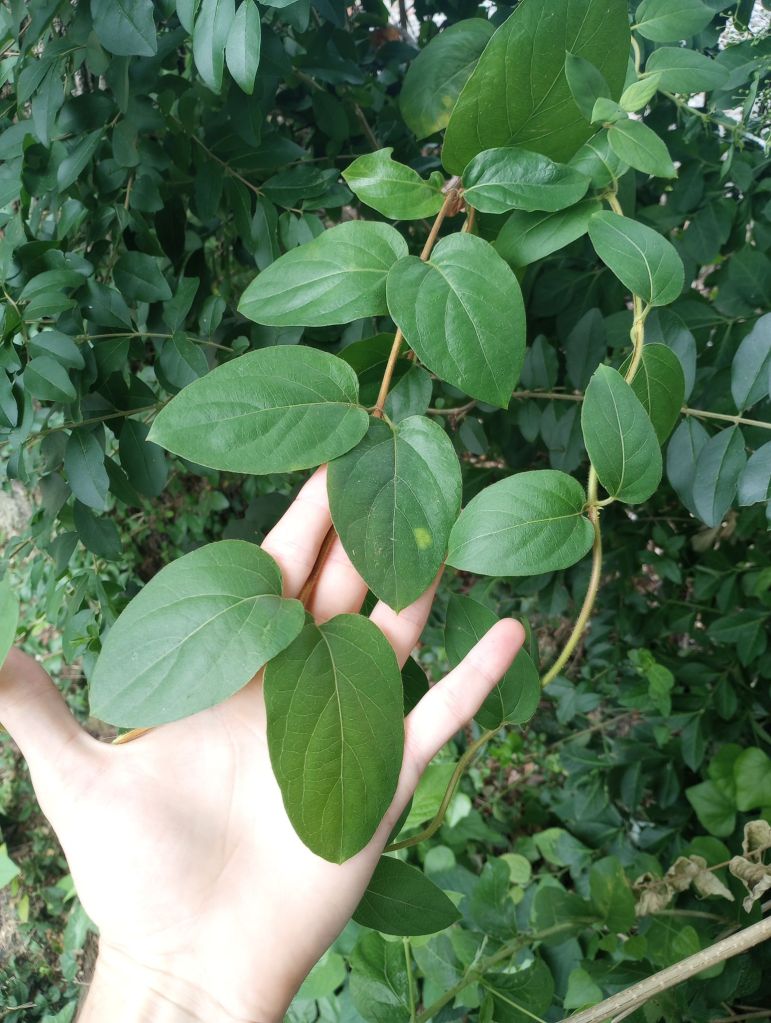
Japanese Honeysuckle?
Aaaaand, I found it. Well, I really think I did. It wasn’t what I was looking at from across the window though, that’s something else. I kept scouring and I found it after much hunting, one large vine. It took me about 30 minutes here to decide if it really was Japanese Honeysuckle. Part of knowing what something is, is knowing what it isn’t. If you know what other plants it could be it makes it a lot easier to identify them. That’s why I don’t feel so confident in identifying plants yet, because I just don’t know many plants. So I don’t really know what else is out there, if there are any lookalikes, any trickery. But it seems that there are two native honeysuckles in Tenneessee and neither of them really look like the Japanese Honeysuckle, and it did seem to match the photos almost perfectly. It’s much easier to ID things when there are berries and flowers. If it was in bloom this would have been a done deal in a minute.
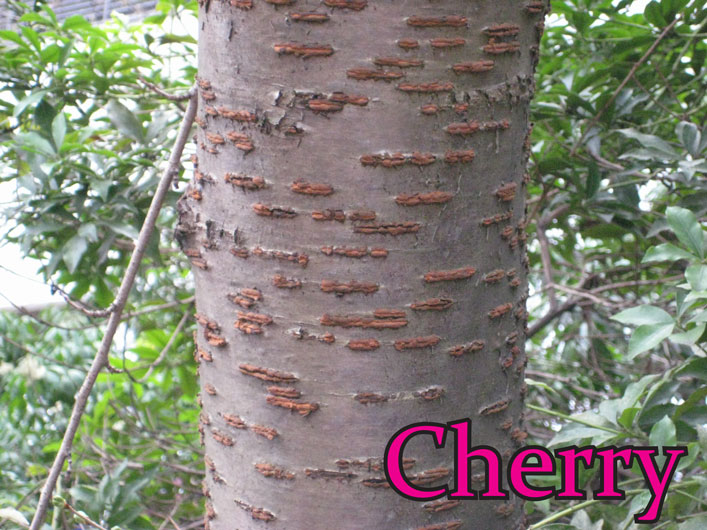
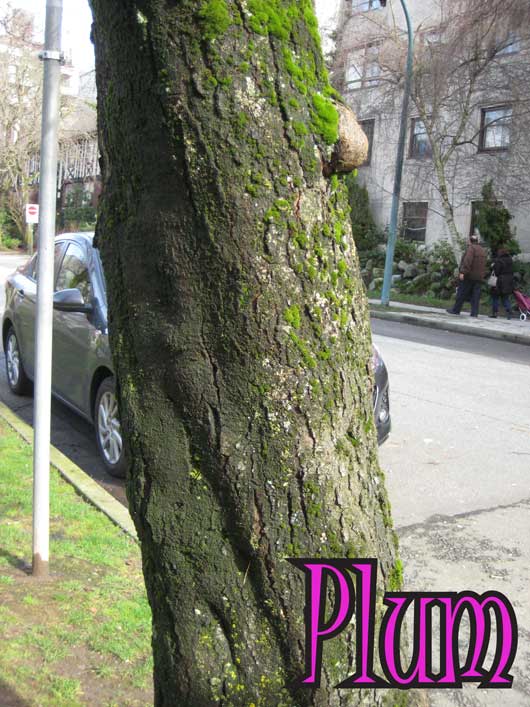
In Japan there is a plum tree that looks a lot like the sakura (cherry) trees. Similar leaves, similar flowers, similar size, and for a long time I thought the tree outside of my apartment complex in Ozu was a sakura tree. It was actually a plum tree. You can be easily duped, but there was a good tell if you knew it, which was that the sakura trees have a distinct horizontal striping pattern on the bark, and the plum trees don’t. There are a few tells, but that was the one I looked for because it’s so obvious.
I’m enjoying writing for you. I’m enjoying writing for me, too. I think that if I enjoy it, you will enjoy it too. I feel that way about art. Generally, if you like it, other people will like it too. Your taste probably determines how many people will like it. If you have a broader taste, or more niche, but at least if you like what you’re making, however broad or niche the appeal could be, somebody else is going to like it too. I write this because I do think, as some other creators probably do, “Will anybody actually like this?” Or, “Will anybody care about this?” And I think, if YOU do, then the answer is yes, there is at least one other person out there who is going to like it as much as you do. And of course, if you don’t like it, your creation, still there can be people who will like it. It could be the greatest work of art they have ever beheld. We probably shouldn’t get too hung up on whether anyone cares, or anyone likes our work or not at all, even though you want to. Just do your best, and be authentic, and let the people decide.
I was talking about the local park with all of the invasive Chinese Privet, where I did the volunteering. That park is called Shelby Park, and it’s a really great park. We are blessed to have it here in East Nashville. It’s huge, many square miles, (don’t ask me how many), many football fields, and has a lake, baseball fields, tennis courts, a dog park, walking trails, and one of my favorite parts, an enormous train bridge in the sky, that carries trains with literally hundreds of massive cars. So above your wonderful park with fields and forests and children playing, there is occassionally hundreds or thousands of tons of iron and steel and coal and things chugging across the sky. There are two benches on a hill that face the lake, and sitting on these benches you can see a large section of one part of the park. You can see out over the lake (maybe I should call it a large pond, it’s not big enough for lake status), and to your right you can see some flat grass areas, trees beyond, people fishing, people walking on the path down in front of you, walking around the large pond, and beyond, you can see baseball fields, cars driving around, and then further, at the edge before trees and the more forested section of park, off in the distance, you have a perfect view of the giant train bridge, above it all, and carrying the heavy, long trains. I like to sit on that bench and survey, and one time I was sitting there, and I watched a train pass, and I just marveled at it for what it was, a product of our human ingenuity, our engineering prowess. I felt like I had taken trains for granted, honestly, because you know, they’re not new technology for me, they were already commonplace and in the world when I showed up here, and I think that for the first time I really appreciated what exactly this train was doing, and after what felt like a long time, that one car after another car was passing by, I started actually counting them, because there were so many, and I counted the rest, which was something like 80, and so that train was probably carrying 200+ cars, of coal, gas, whatever else was in those cars. That one engine, all that material, thousands and thousands of pounds, and across that giant bridge, with all of its tresses and beams and metal, able to support all of those thousands of pounds of train, and that was all done by human hands, all designed and built by human hands, and human minds. Incredible.
I brought us back to Shelby Park because I wanted to tell you about the deer in the fields. There is a wild grassland field at Shelby Park that is probably about two or three football fields big. Tall grass, with wildflowers and things. And there is a pavillion there, a small viewing platform that raises a bit above the field, so you can look out over all of it. I had been to this field when I first moved here in winter, and it wasn’t much back then, kind of like a corn field is in winter, with just some leftover dead stalks of corn, the grass being all dormant, but just recently I had gone back there, and it is now completely stunning. And the best part about it were the deer. There were several deer, out among the grass, mostly hidden, but you could see the tops of their bodies, and their heads when they would raise them up, several deer on their own, out there in the grass and the flowers, munching away, and being deer. I’ve never seen deer in an environment like that, and I was there as the sun started to set, in that warm glow. It was special and beautiful. I felt like I was seeing the Earth before humanity. There was a little cottontail rabbit hanging out in the short, mowed grass around the pavillion, at the edge of the tall grass, along with a big ol’ doe, who kept giving me suspicious looks. She was keeping an eye on me, cautiously, but when people came by with their dogs, she would freeze, and kept her eyes on the dogs until they were out of sight. I’ll have to go back and get some photos of this meadow for the blog.
I’ll also have to photograph the little swamp that borders the forest and the meadow. There is a variety of interesting terrain at Shelby, truly. Between the edge and meadow, and again on the other side, there is some swamp/bog ground, with dead old tree trunks, my guess is dead from the roots drowning, and tufts of bushes and things. There was a family of deer splashing around and grazing in the swamp too.
Actually I’m calling it a swamp but I don’t think it is a swamp. I just did some Googling and now I’m sure it’s not a swamp. But is it a fen, bog, or marsh? That’s the million dollar question.
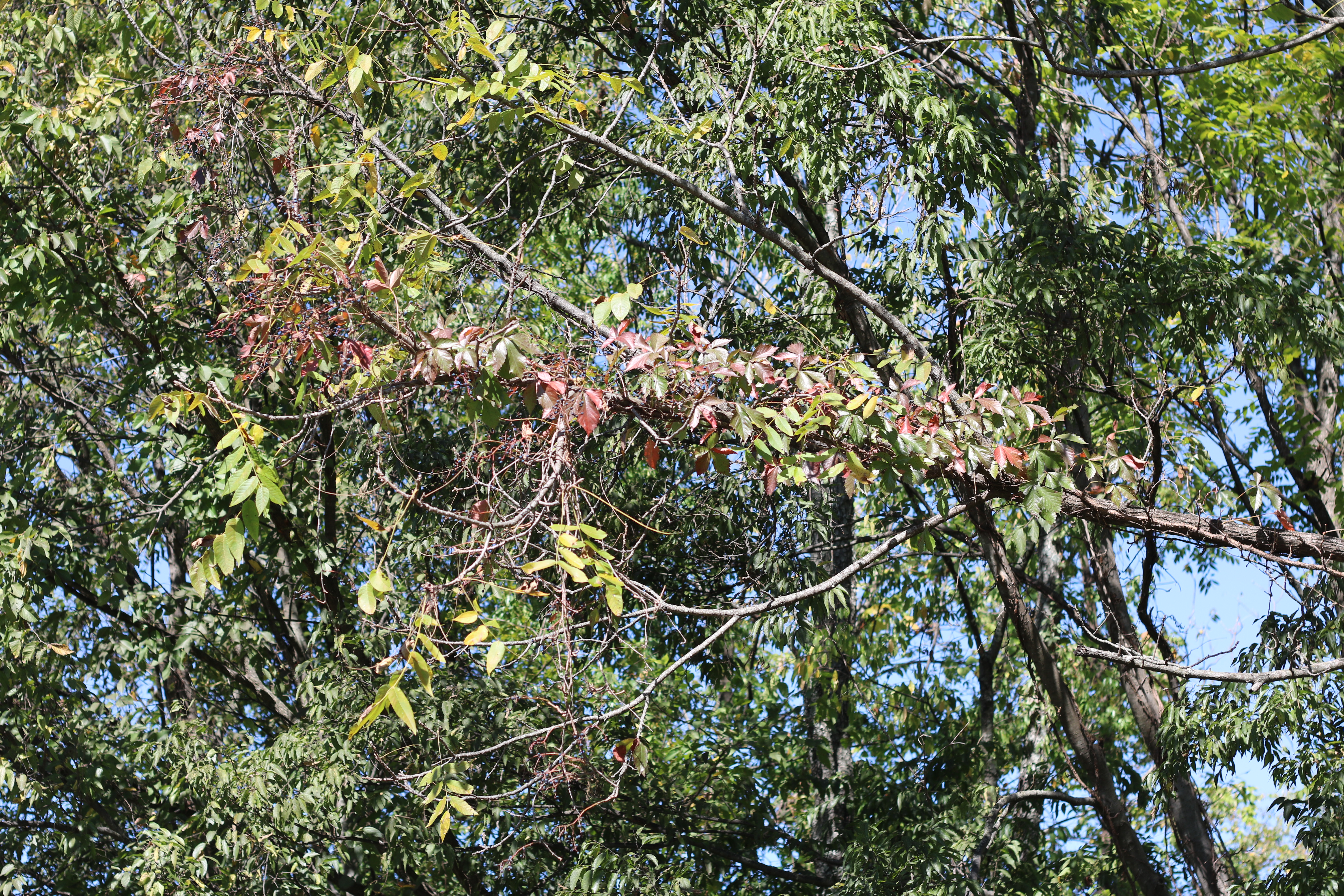
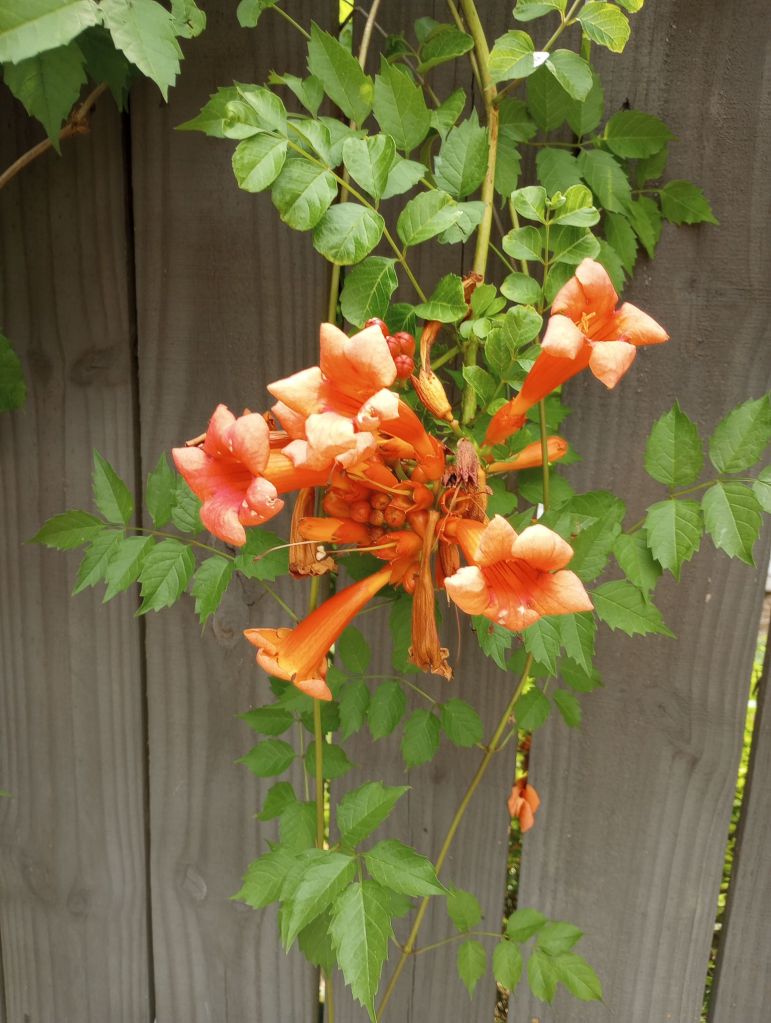
After thinking about honeysuckles I noticed this one on a walk. One of the native honeysuckles, called Coral or Trumpet Honeysuckle (I hope I IDed it right)



























 HAKUMUSU