
First of all, I have to tell you this.
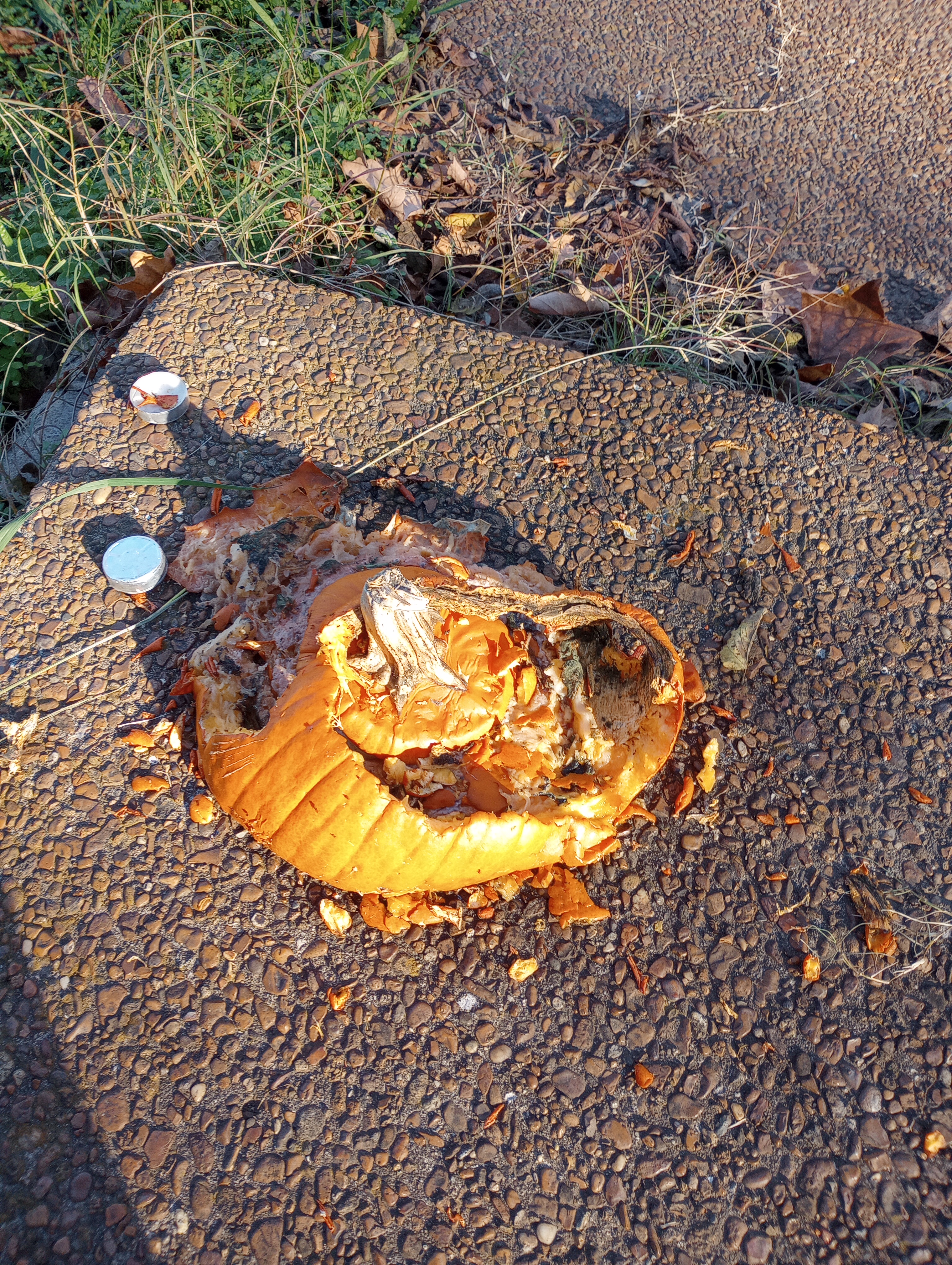
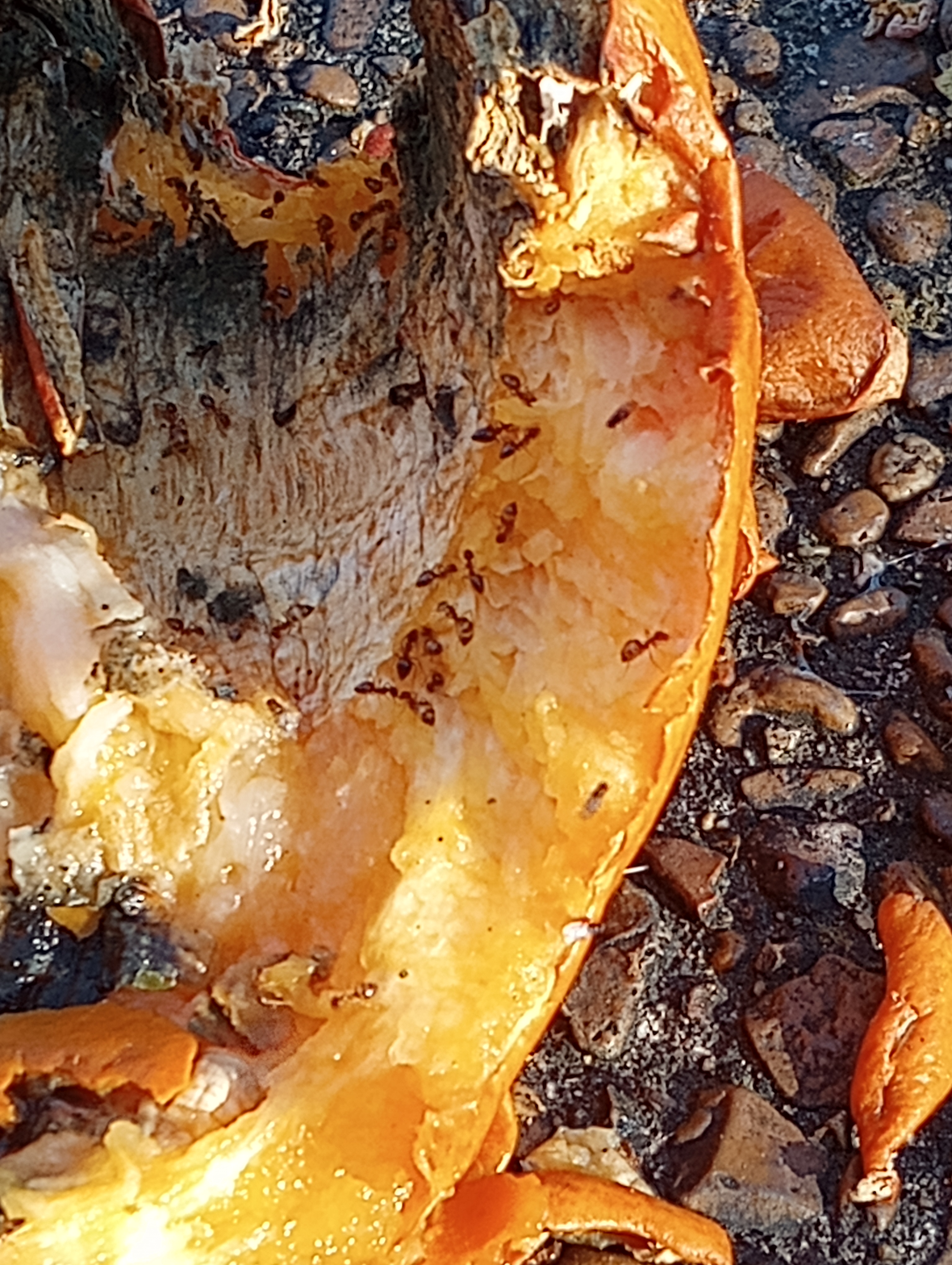
There’s a pumpkin left over from Halloween that has been decomposing on my concrete runaway. It’s amazing to watch the rate of decomposition daily. There are many forces at work, many organisms that are taking advantage of the wonderful bounty of resources that this enormous pumpkin provides. The ants are here in droves, but there are flies, beetles, probably squirrels, who knows what else, working hard to consume this pumpkin.
I was watching the ants feast on it, and the thought struck me that they are inside of the most enormous food house ever. It would be like if my entire house were edible, and I were sitting inside of it and eating it, and hanging out. That’s what they’ve got, with this pumpkin. That’s pretty amazing when you think about it.
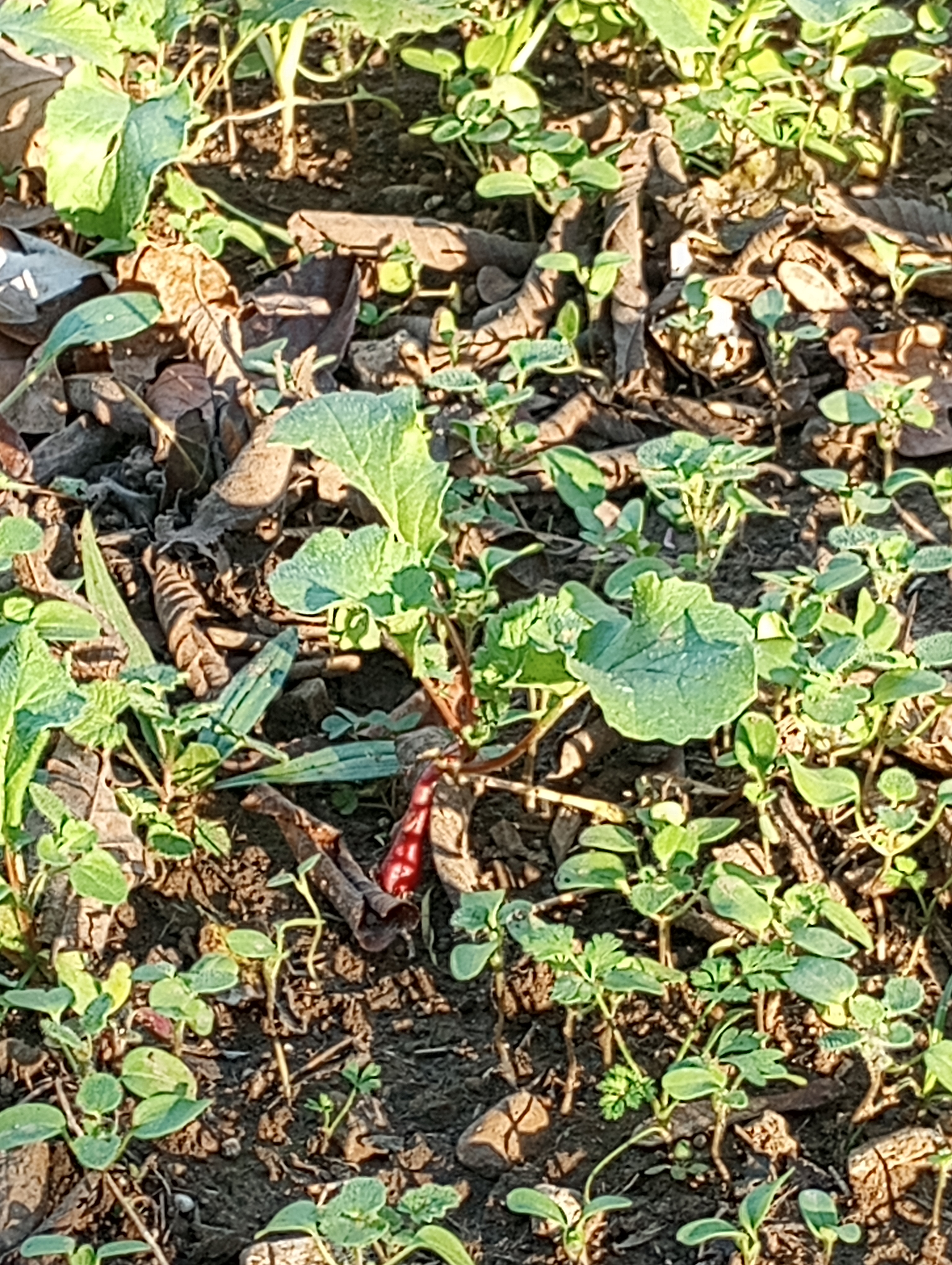
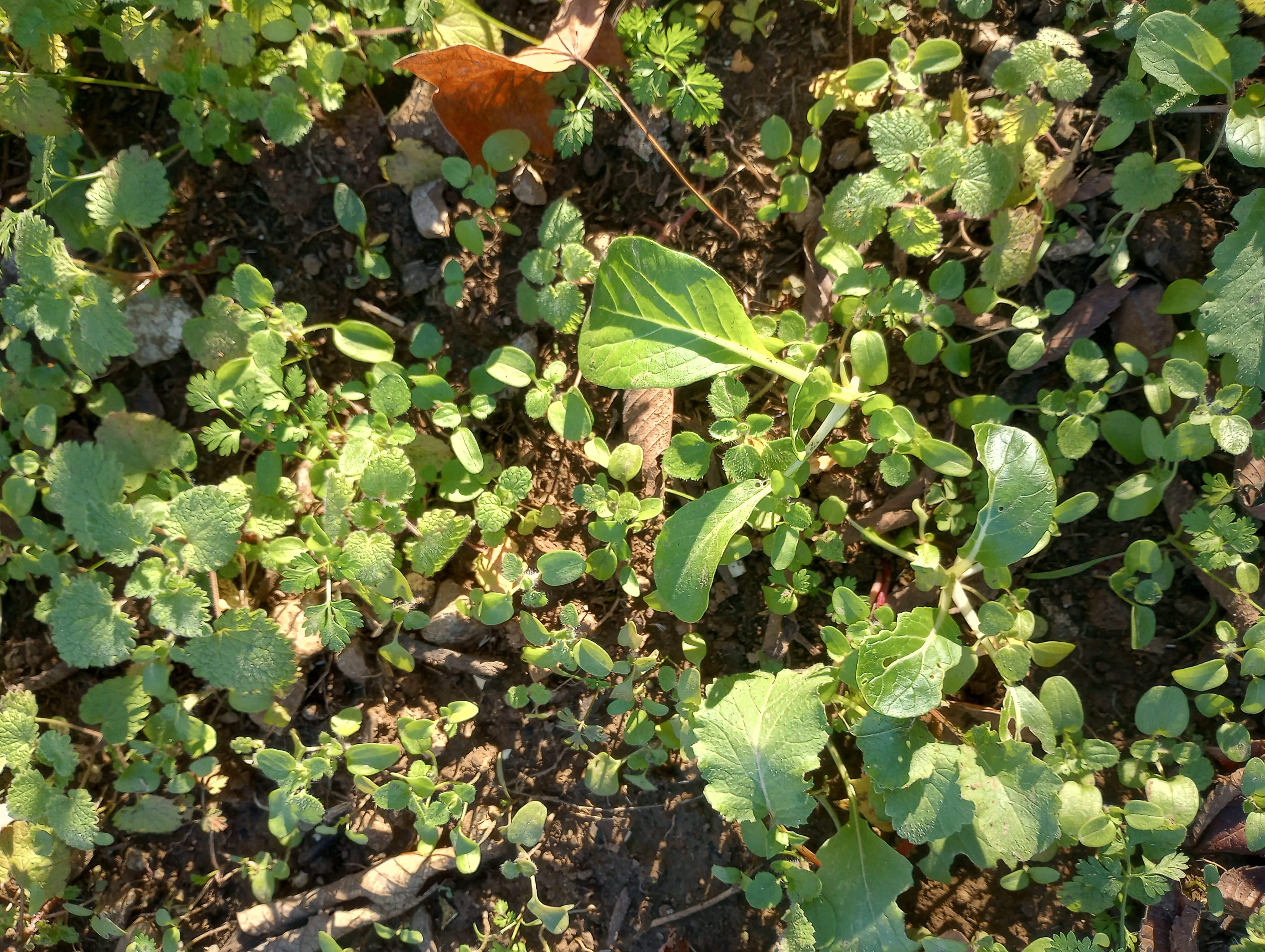
You also need to know that three days ago I ate the first ever vegetable that I have grown myself, which was some of this bok choy. Today I ate the second ever vegetable I grew myself, which was the radish. Neither of these vegetables, none of the bok choy or radish are that impressive. I looked of photos of bok choy plants, and mine look like nothing compared to what I see on the internet. My radishes are not even spherical, they are just semi-thick stems of red. Well, I never watered them, they may not have gotten as much sunlight as they needed, and who knows about the conditions of the soil, but I’ll tell ya what. They sure do taste good.



Wintercreeper

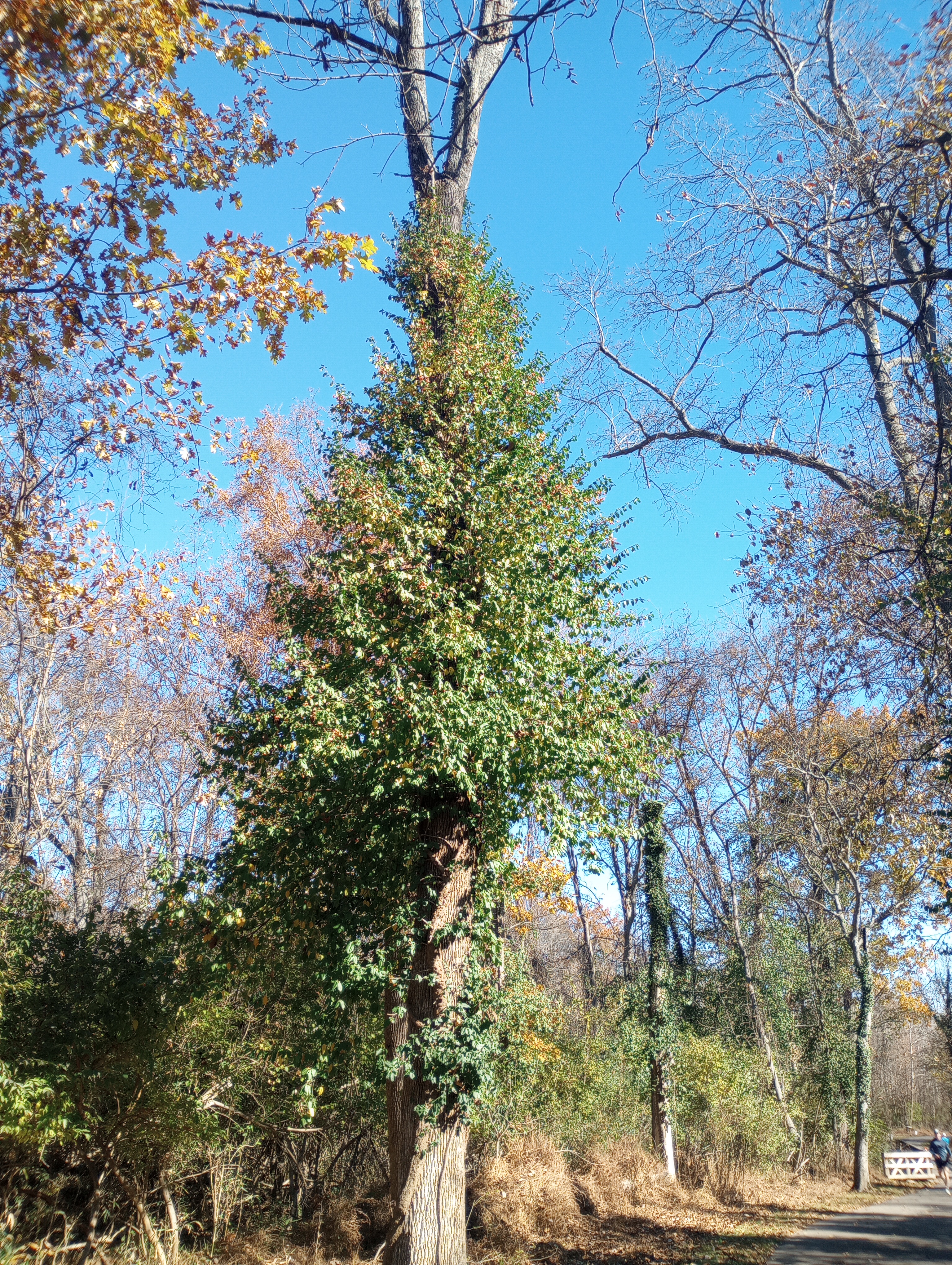
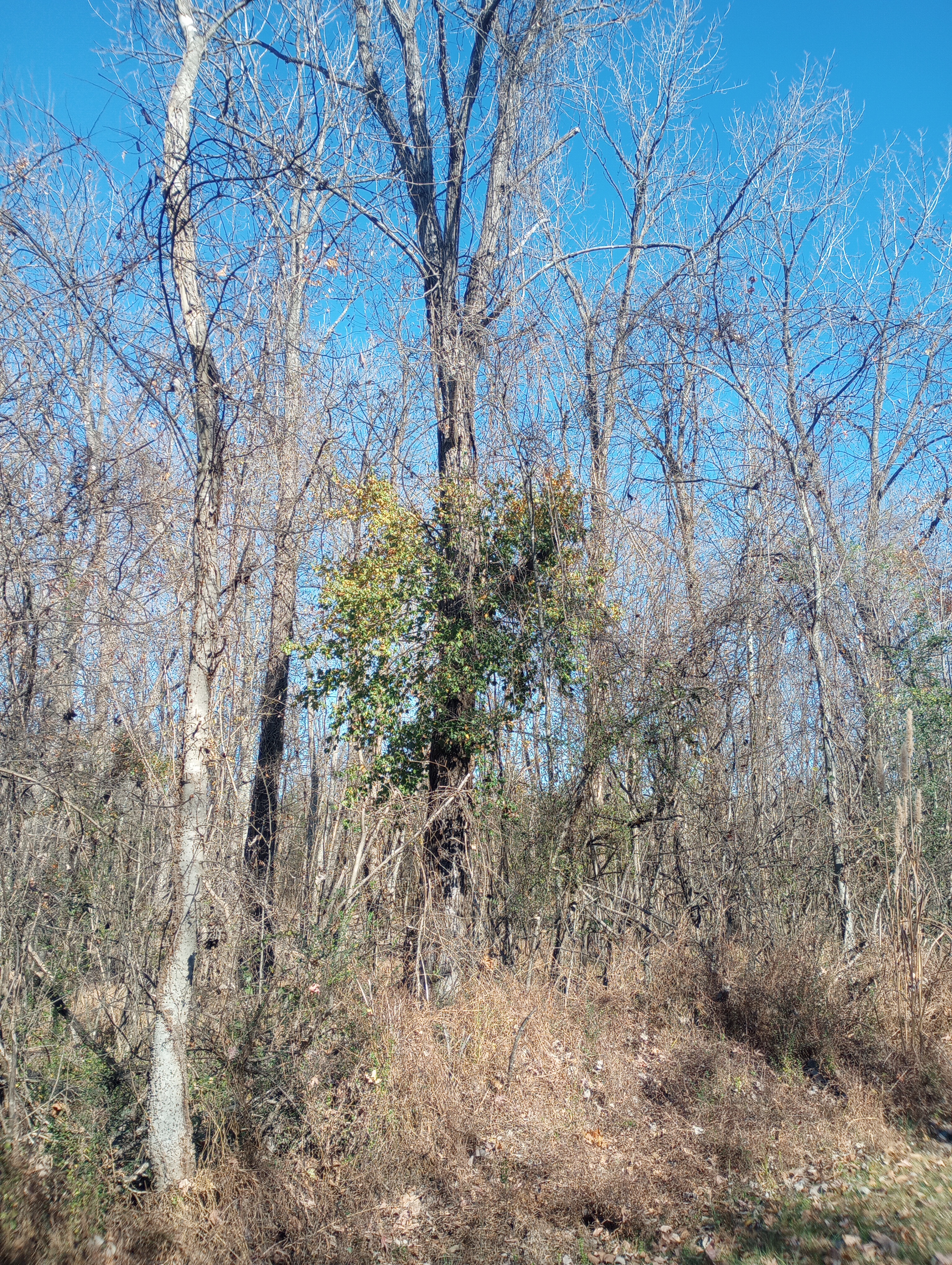
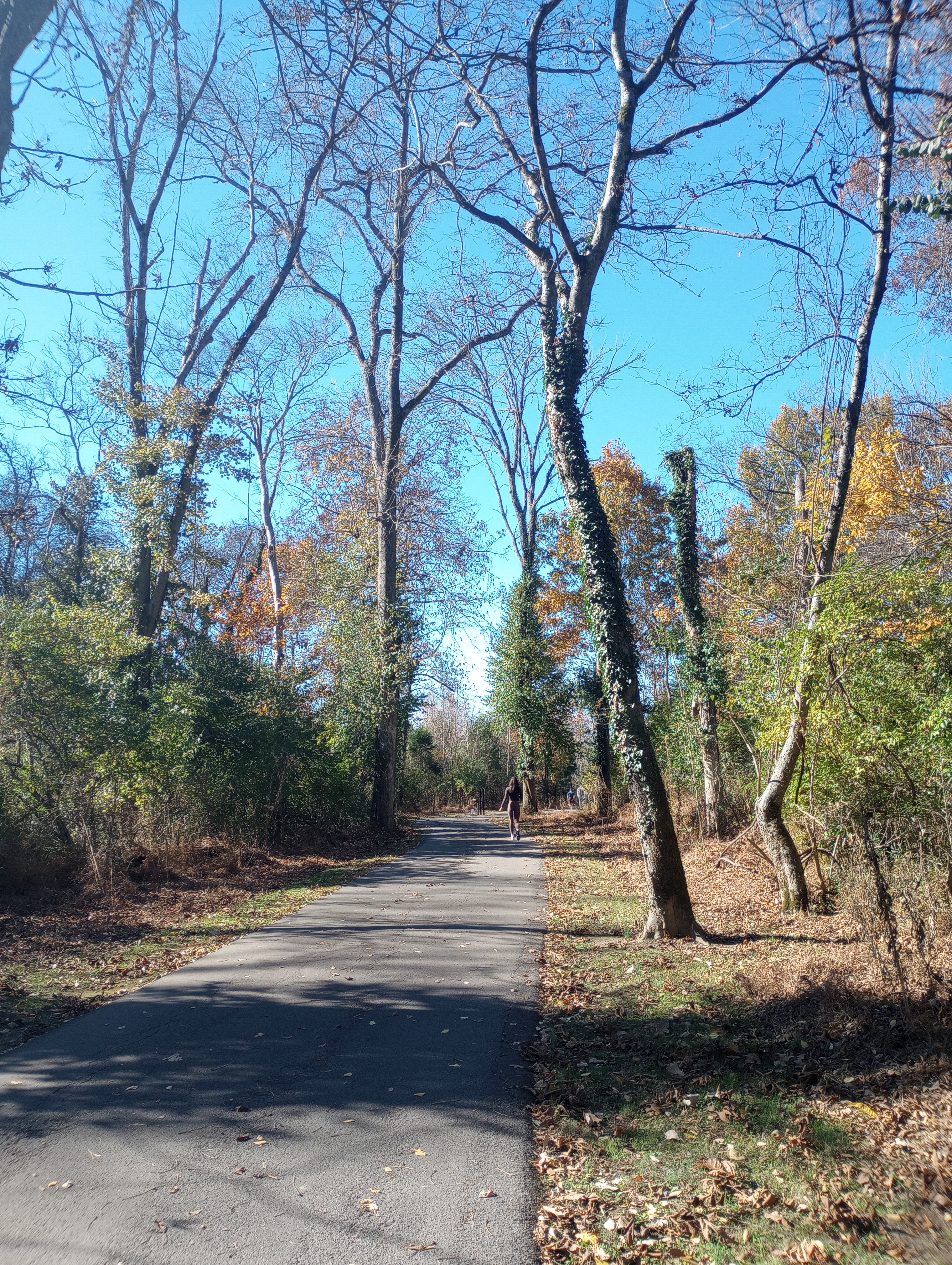
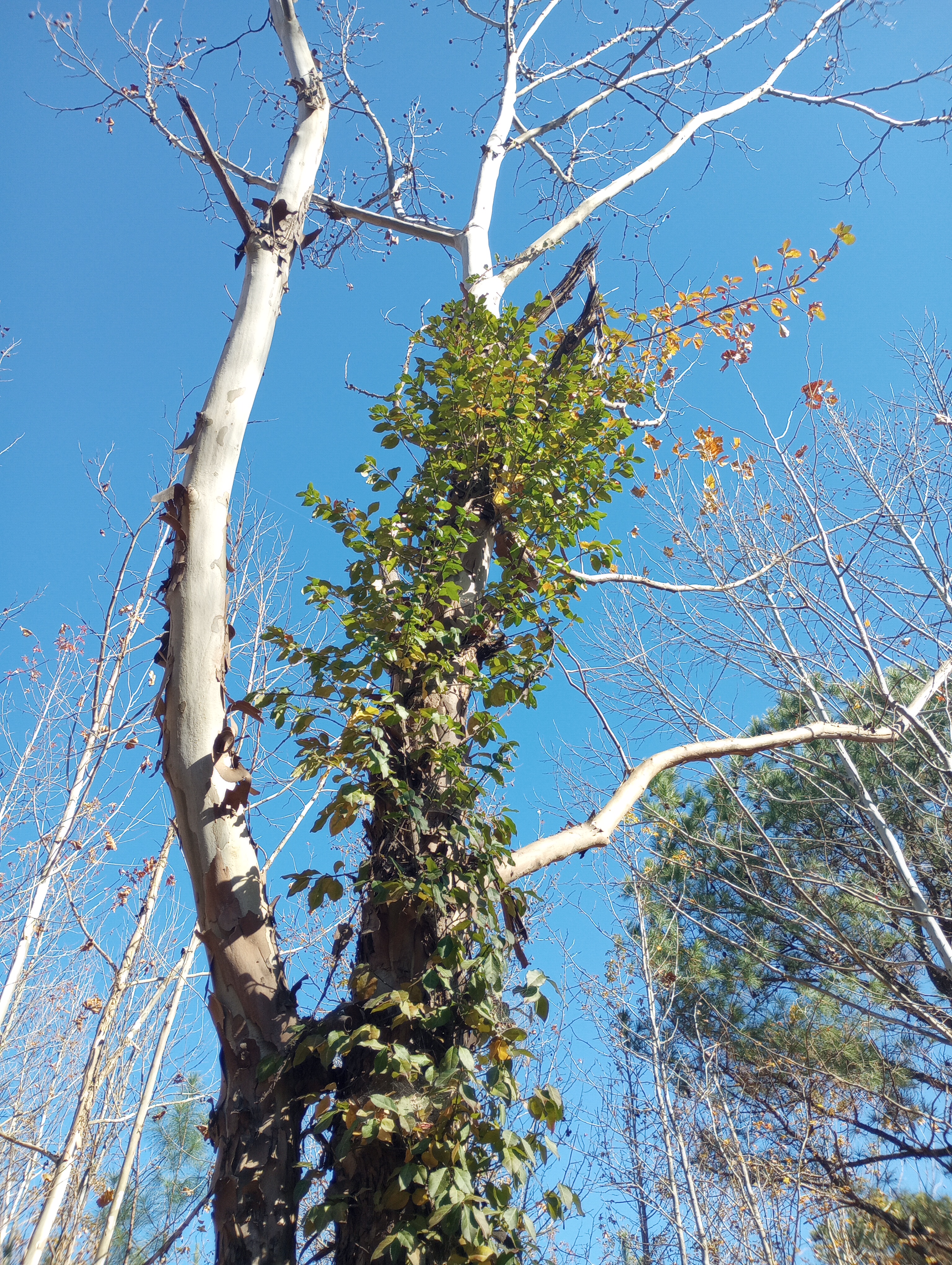
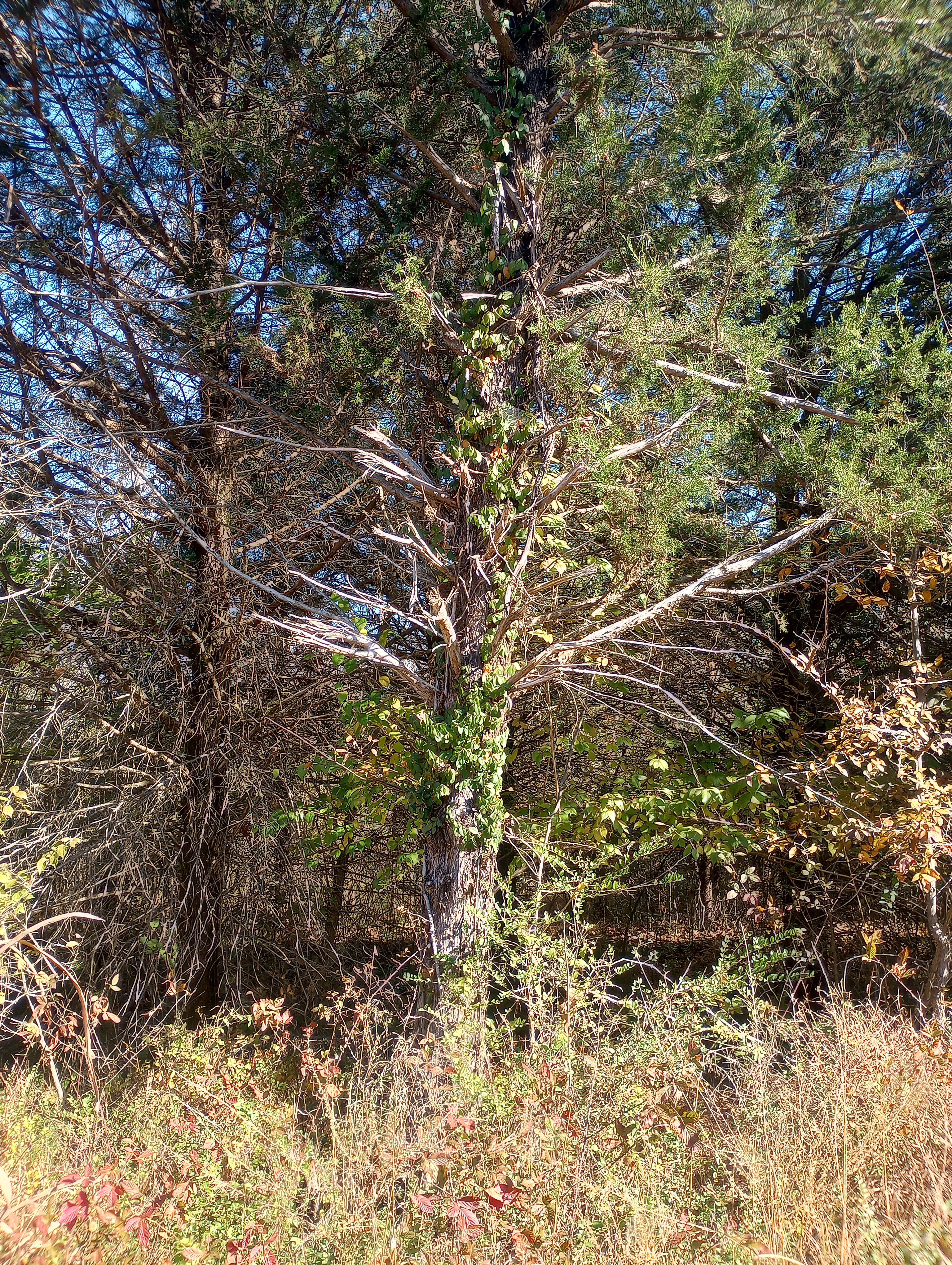
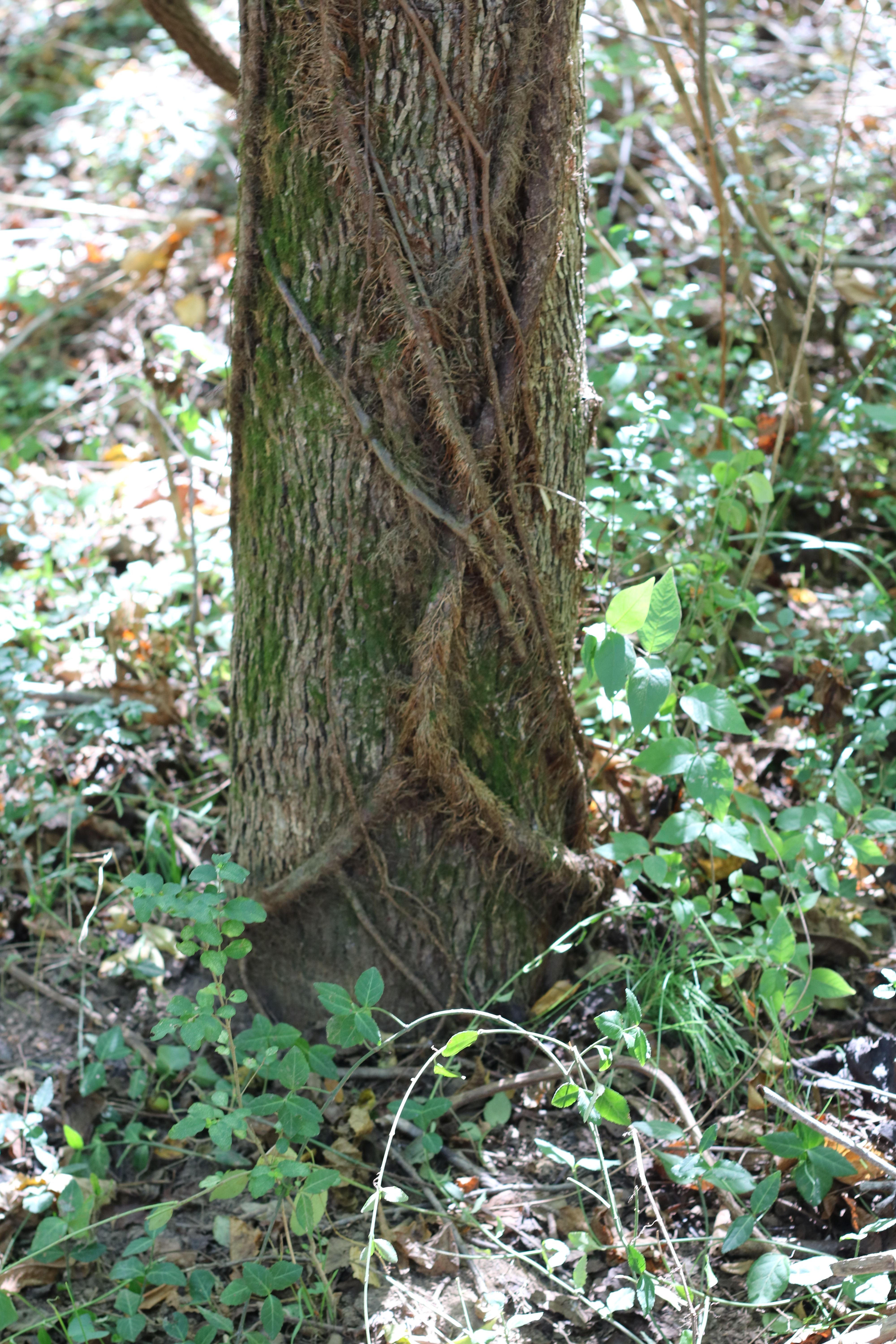
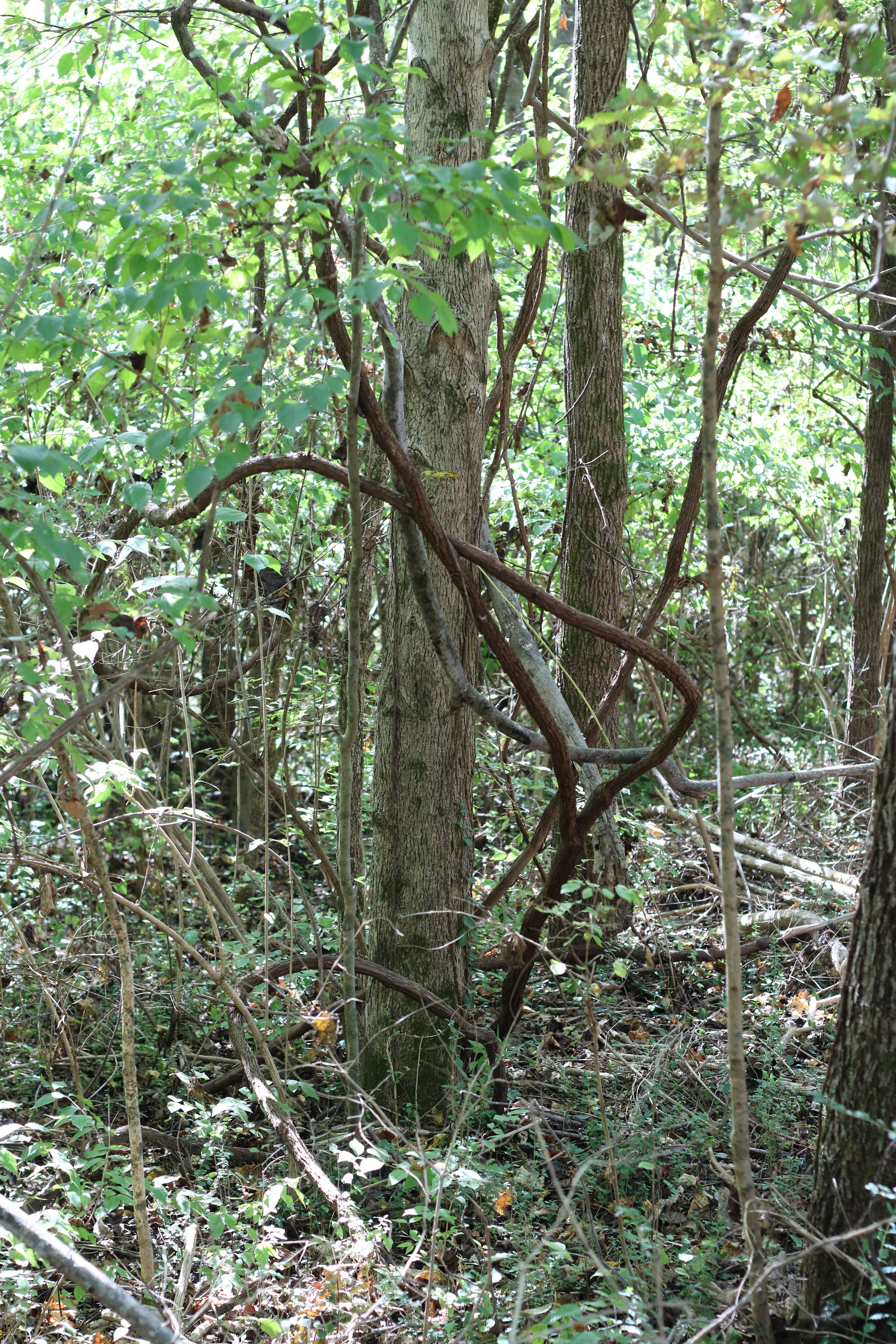
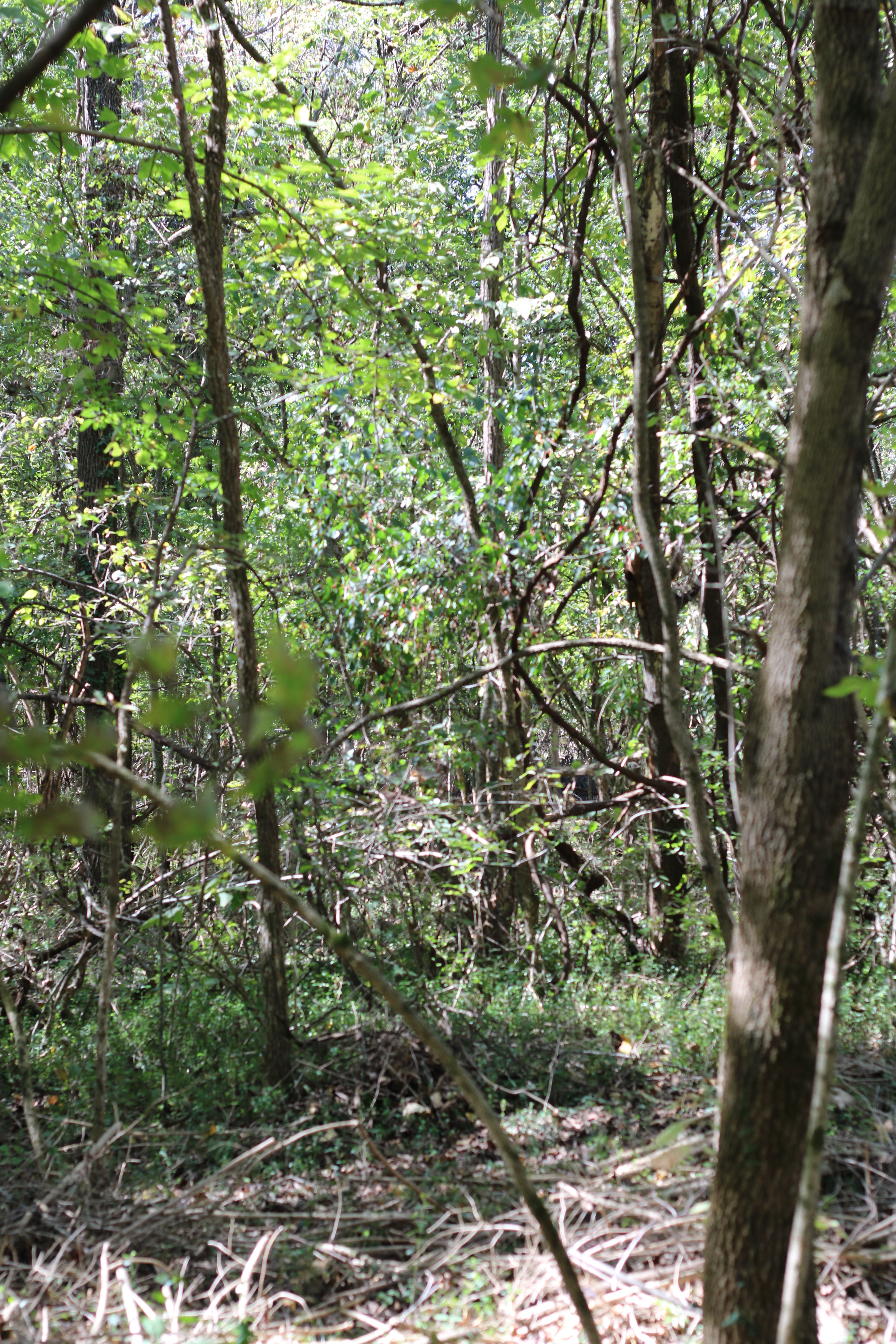
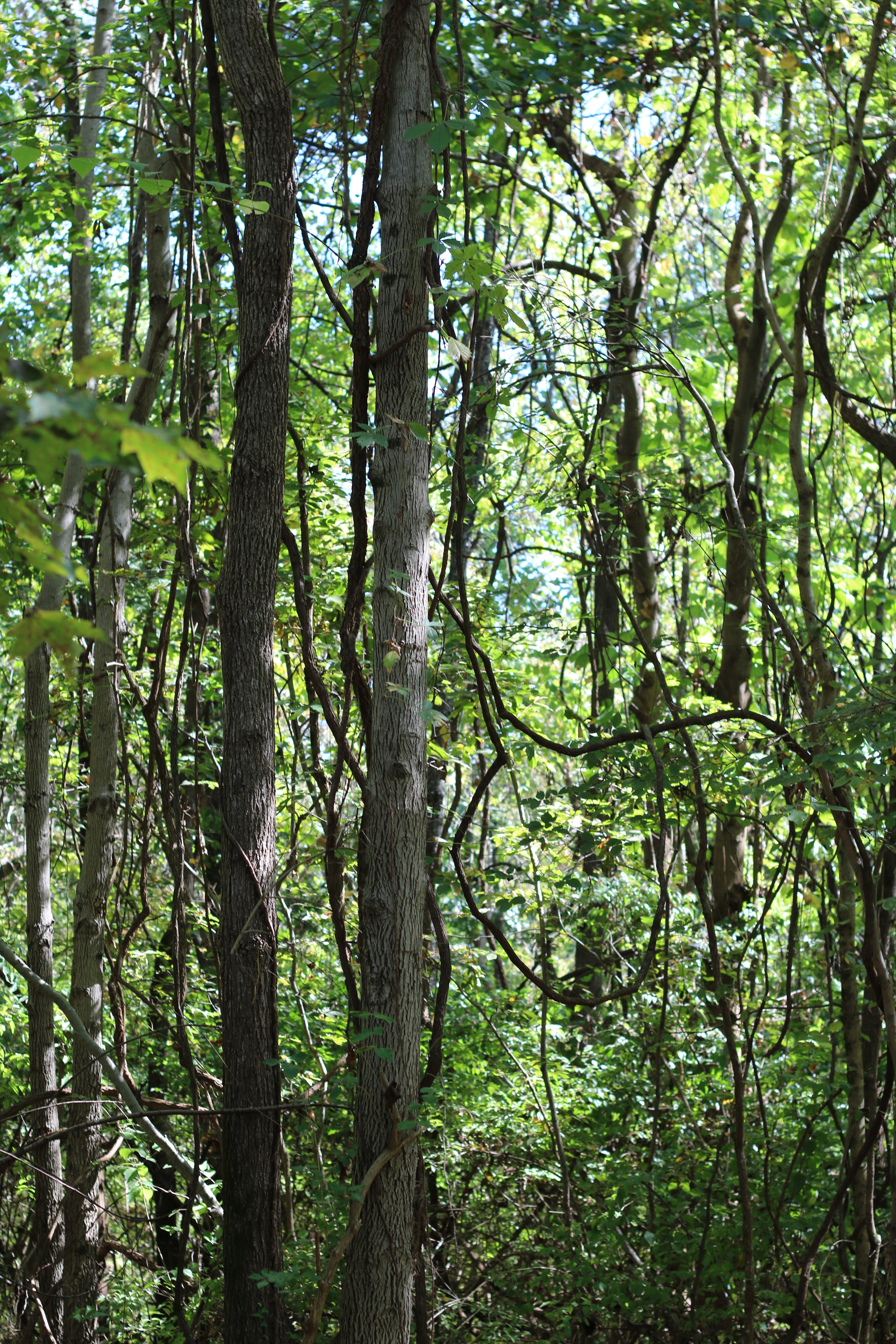
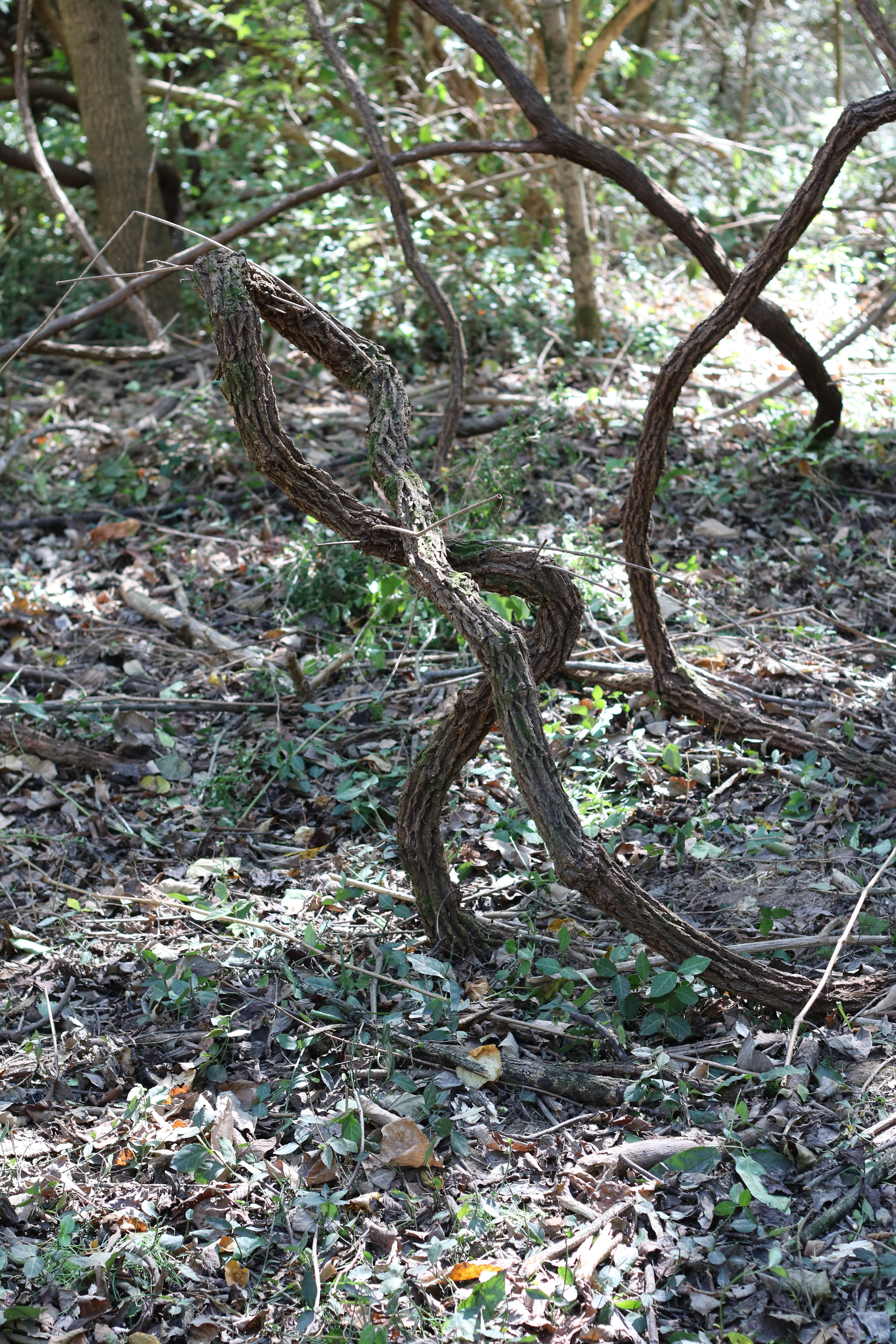
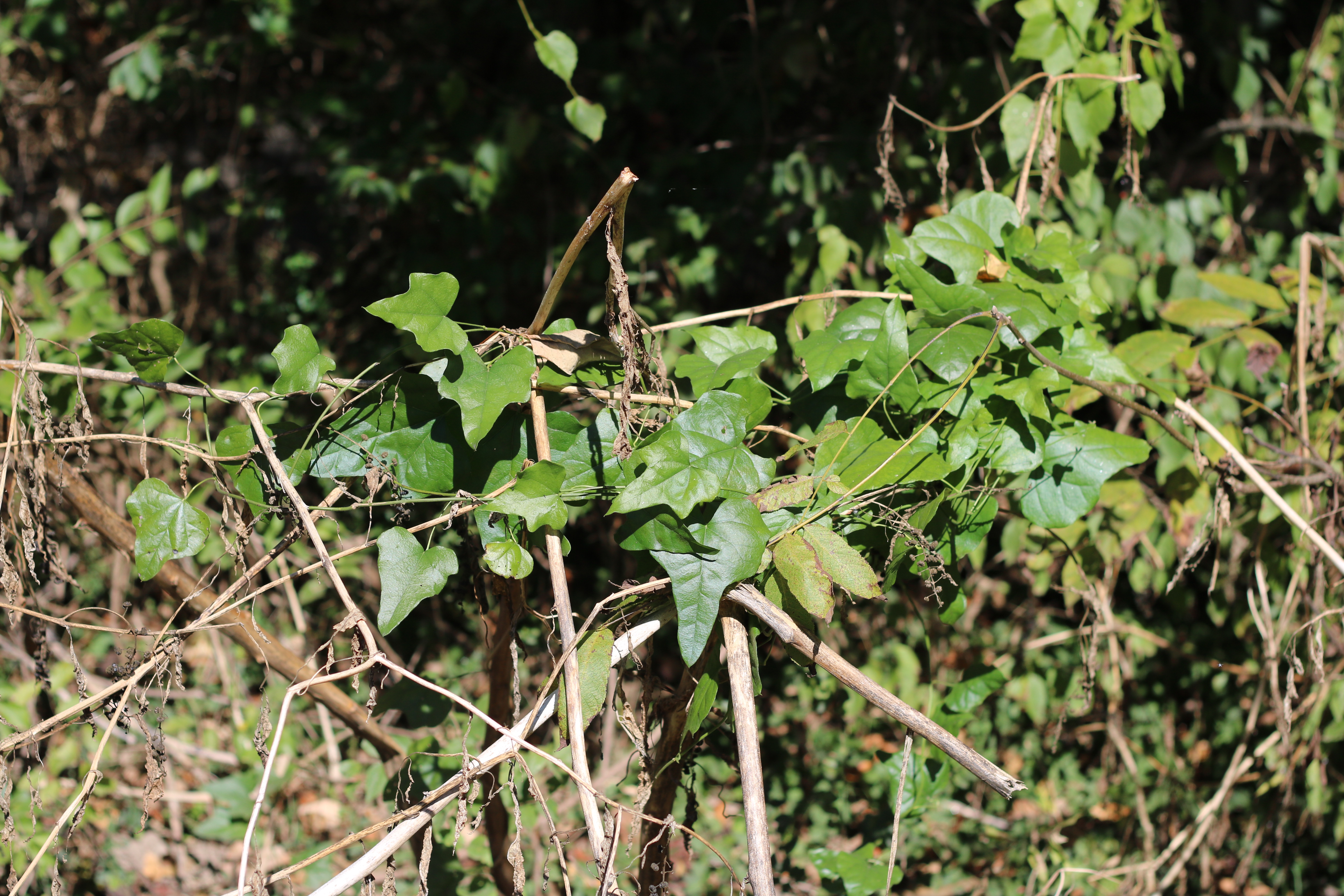
Unfortunately friends, the wintercreeper is everywhere. This is a terrible nightmare. I couldn’t stop myself from photographing so many instances of it. In the gallery below, every photo contains wintercreeper vines. So many trees plagued by these insidious vines. The wintercreeper is out of control, but so are many of the invasives. Bush honeysuckle and privet, you will see. In the below photo, it is so clear what these invasives are doing to the forest. You see that everything else in this photo is brown, has lost its leaves, but not the winter creeper. No, the wintercreeper stays green, as so many of these invasives do, and so right now, they are so obvious. And they really are ruining the nice fall aesthetic that we would otherwise have here.
I took about 20 photos. I could have taken a hundred. These are fine examples. They



English Ivy
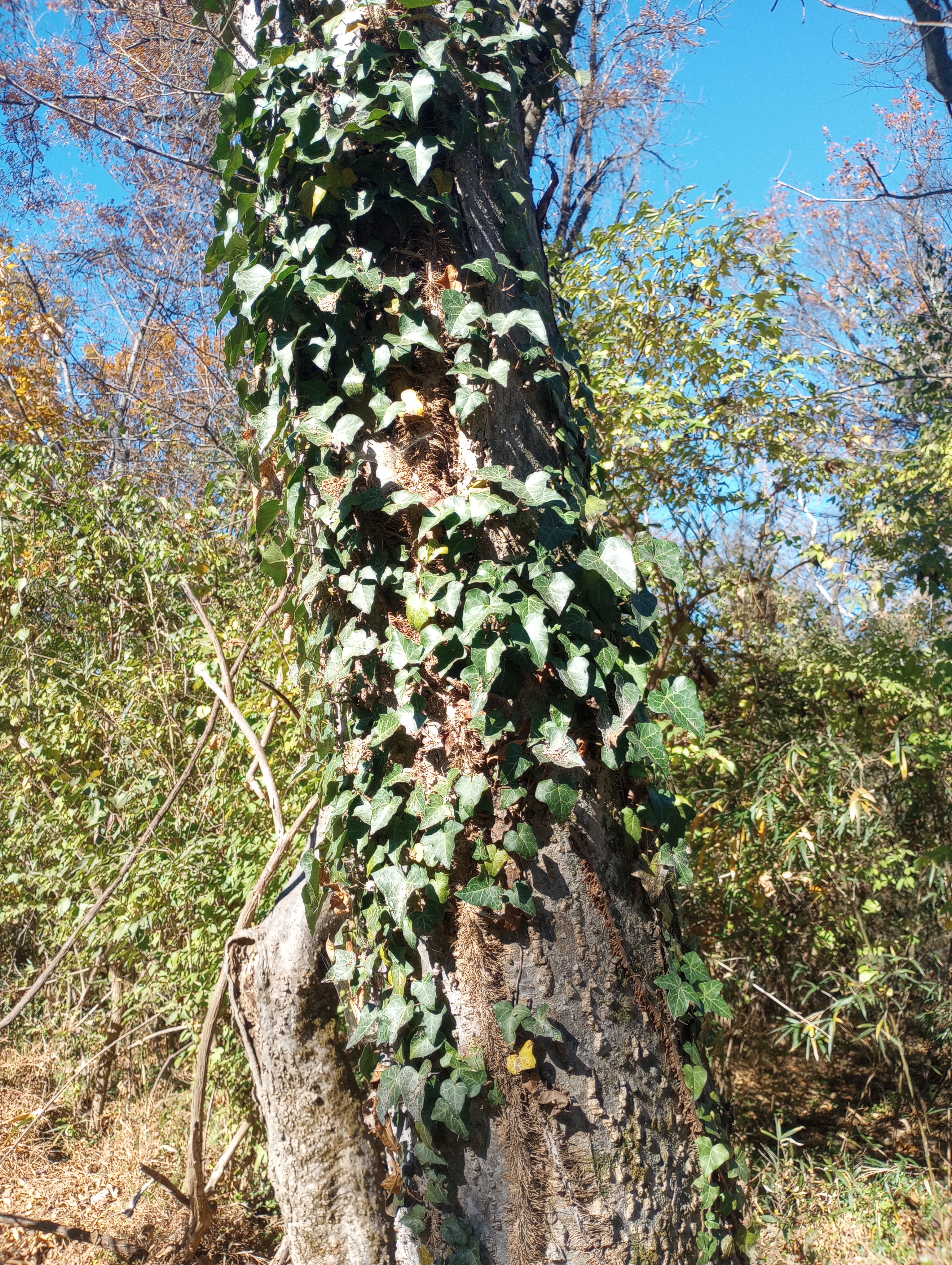
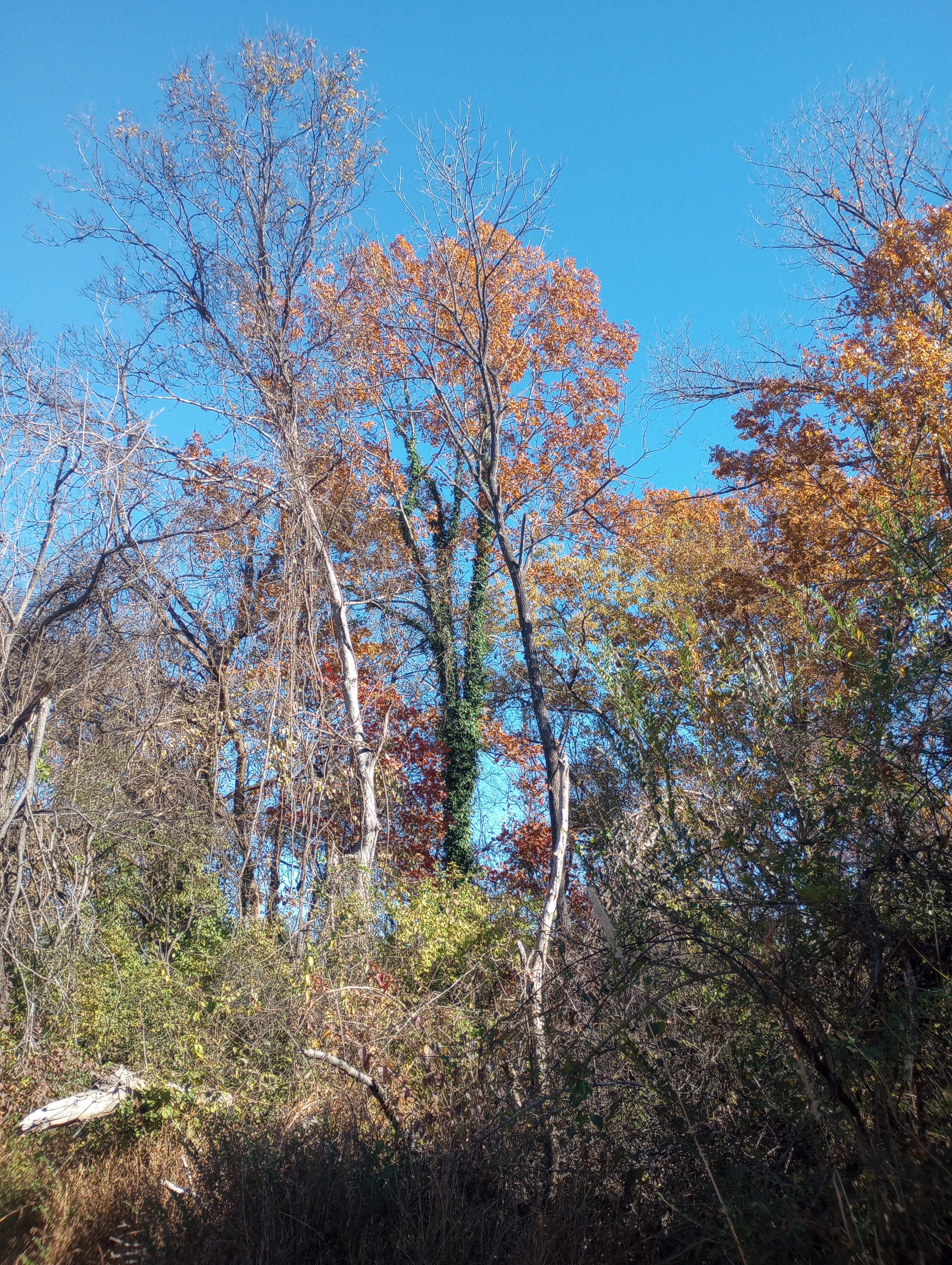
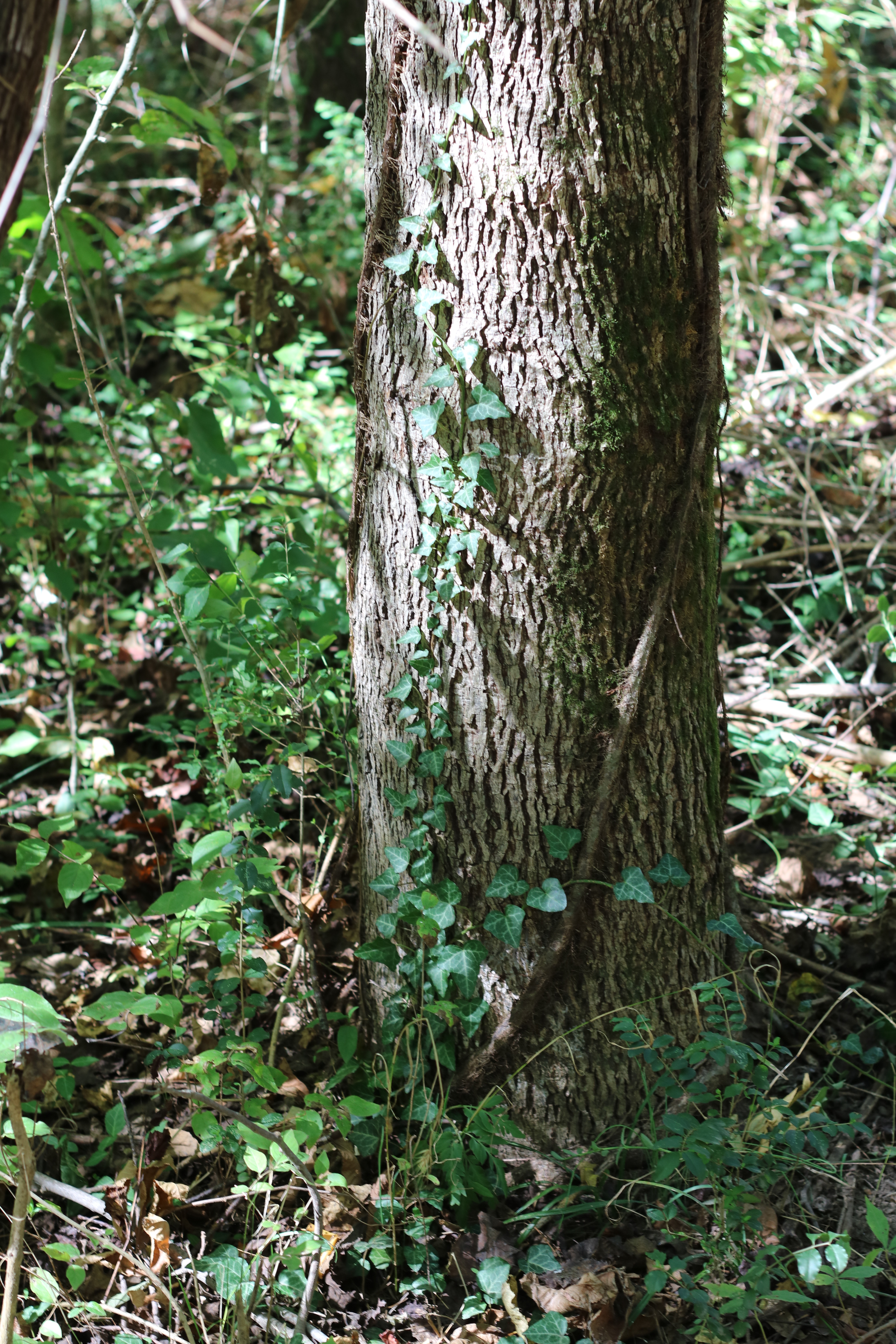
As you may know, Wintercreeper is not the only invasive vine that is causing problems. English ivy is another. Both of these escape cultivation and run loose in the wild, now. I saw plenty of it at Shelby.

Japanese honeysuckle
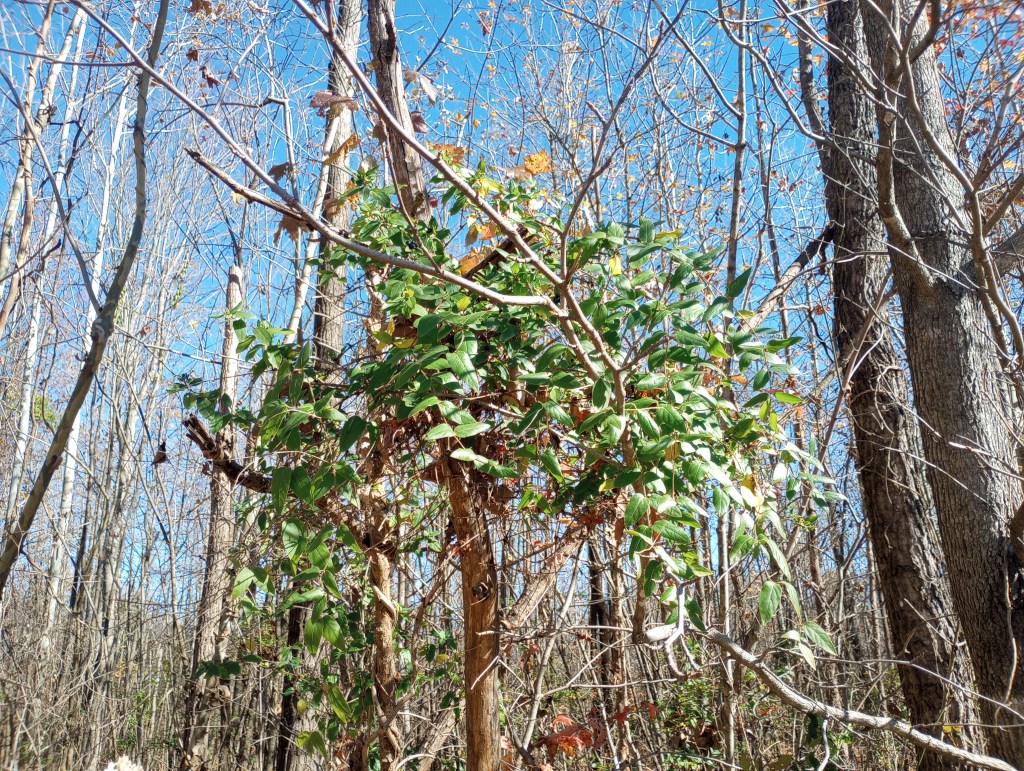
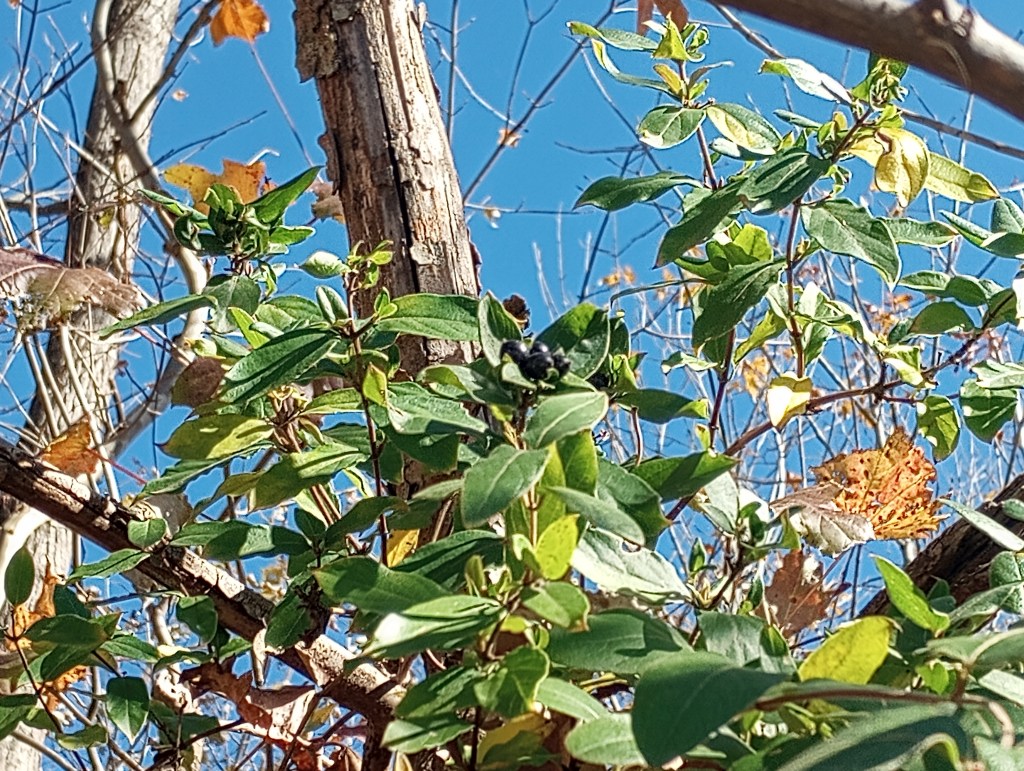
Another invasive vine, Japanese honeysuckle. I saw one that had fruits. I haven’t seen the fruit yet. Note that this is also totally, stark green, when the native plants are pretty much all losing their leaves, turning colors (except the evergreen trees).
A Nightmare Image
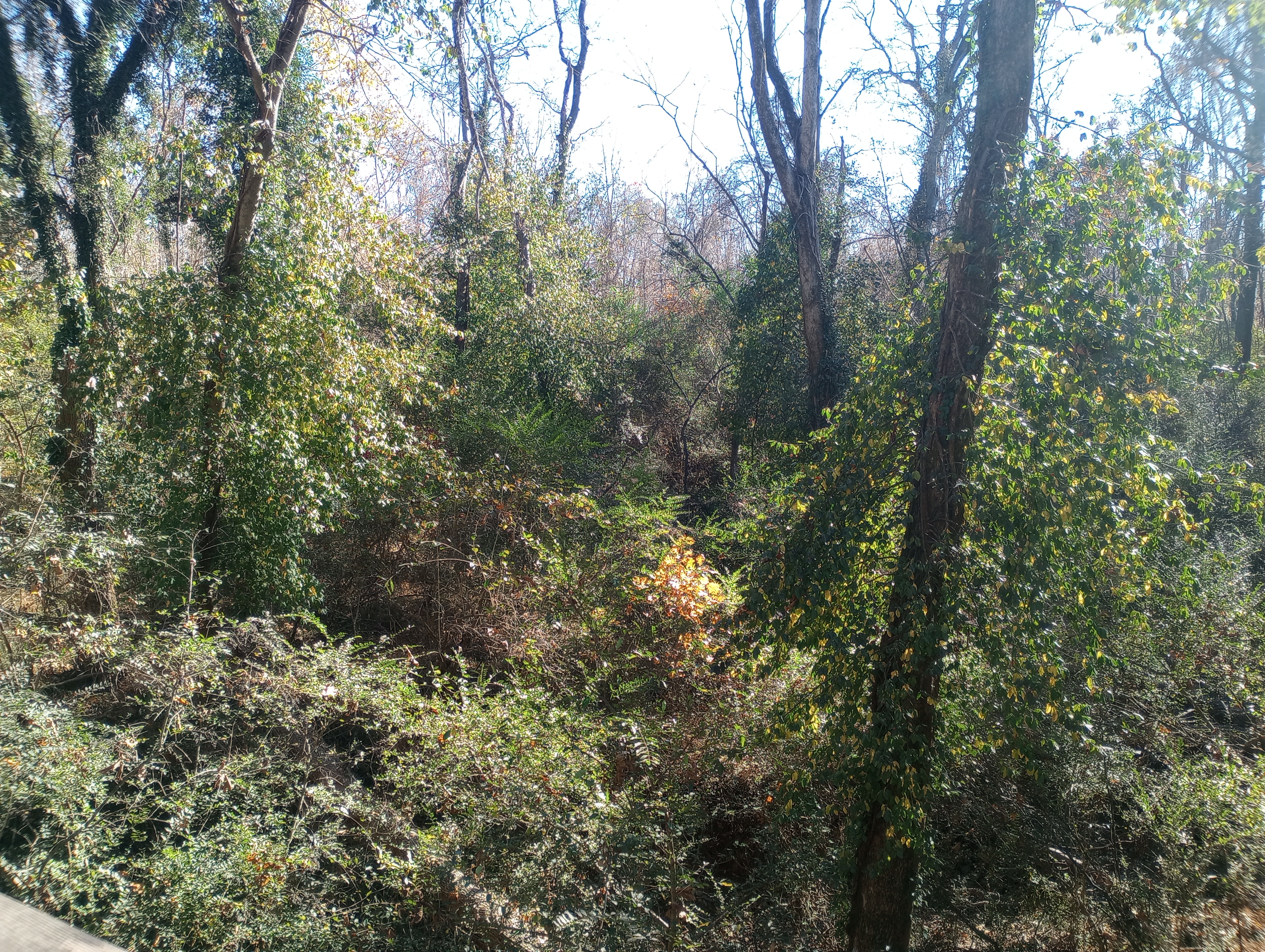
This is a nightmare image, of course. What do we see here? On the 16th of November. A green jungle mess. Why is it green? Why is it choked? Everything in this photo is invasive.
Can you ID the wintercreeper on the trees? On almost every tree trunk there is wintercreeper. On the one all the way to the left, English ivy. Down below, the forest floor is covered, choked with Chinese privet and Bush honeysuckle. And so, in the worst places, in a worst case scenario, this is what the park looks like.
Below is what it’s supposed to look like, right now. (Just pretend the green isn’t there because that’s wintercreeper.) If you see any green, it should be evergreen trees.

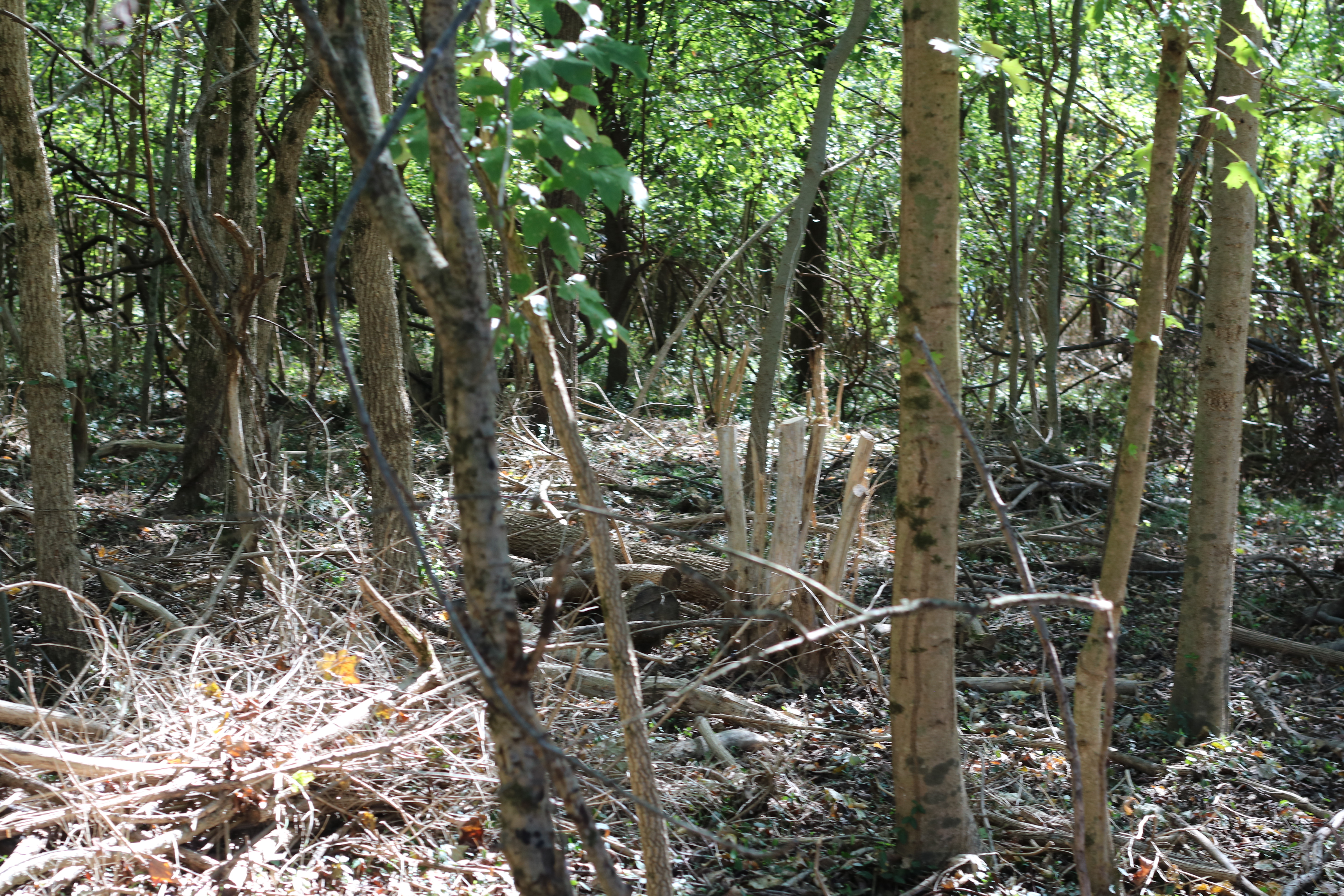
Much of the park is in a bad state, and probably thousands of hours of manpower are needed, to deal with it all. The below photo is showing what is a common sight as you walk the trails, which are these groves of bush honeysuckle. There are simply massive groves of bush honeysuckle, hundreds and hundreds of stems, thousands of pounds of biomass.
Bush Honeysuckle / Chinese Privet
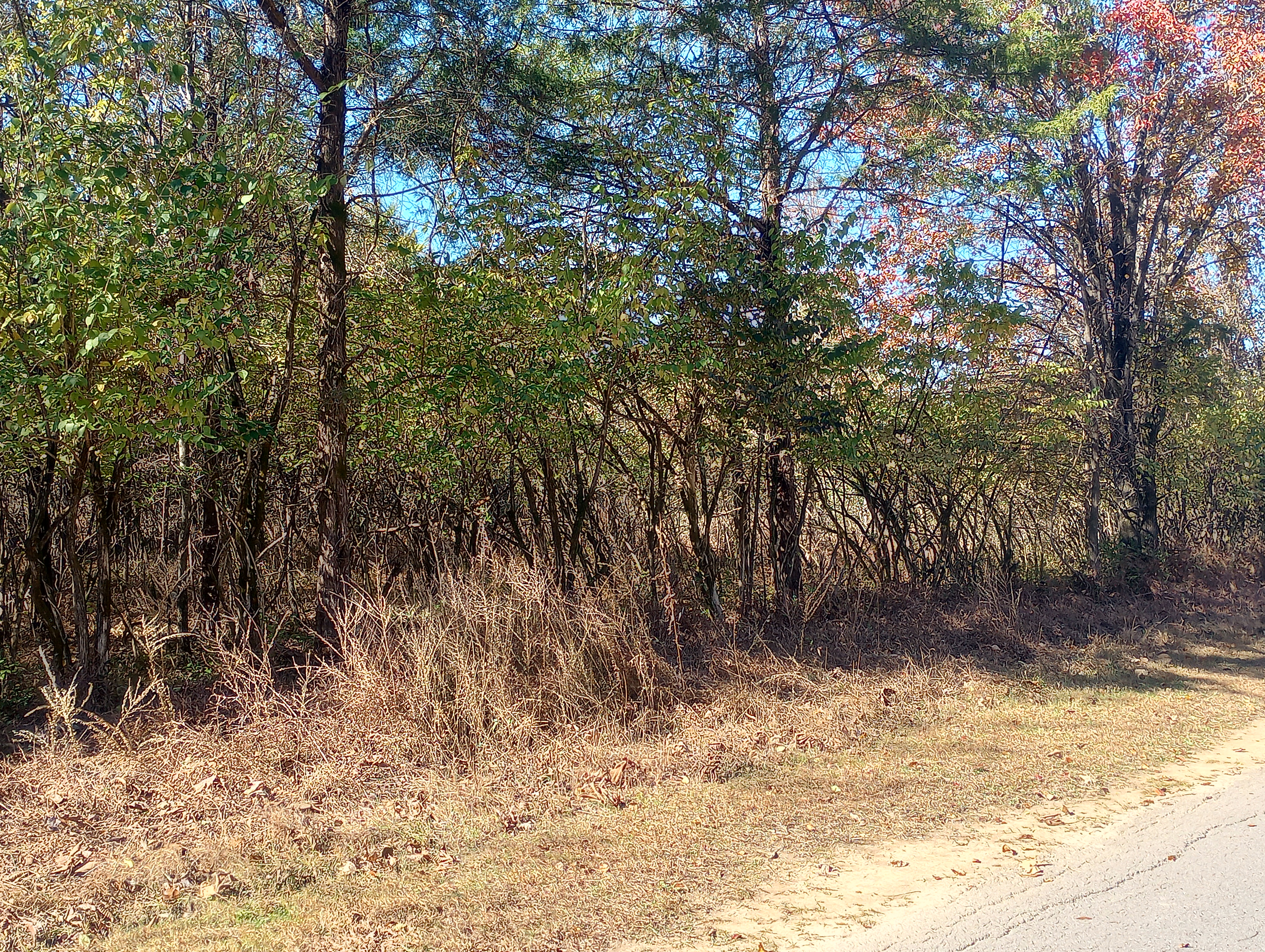
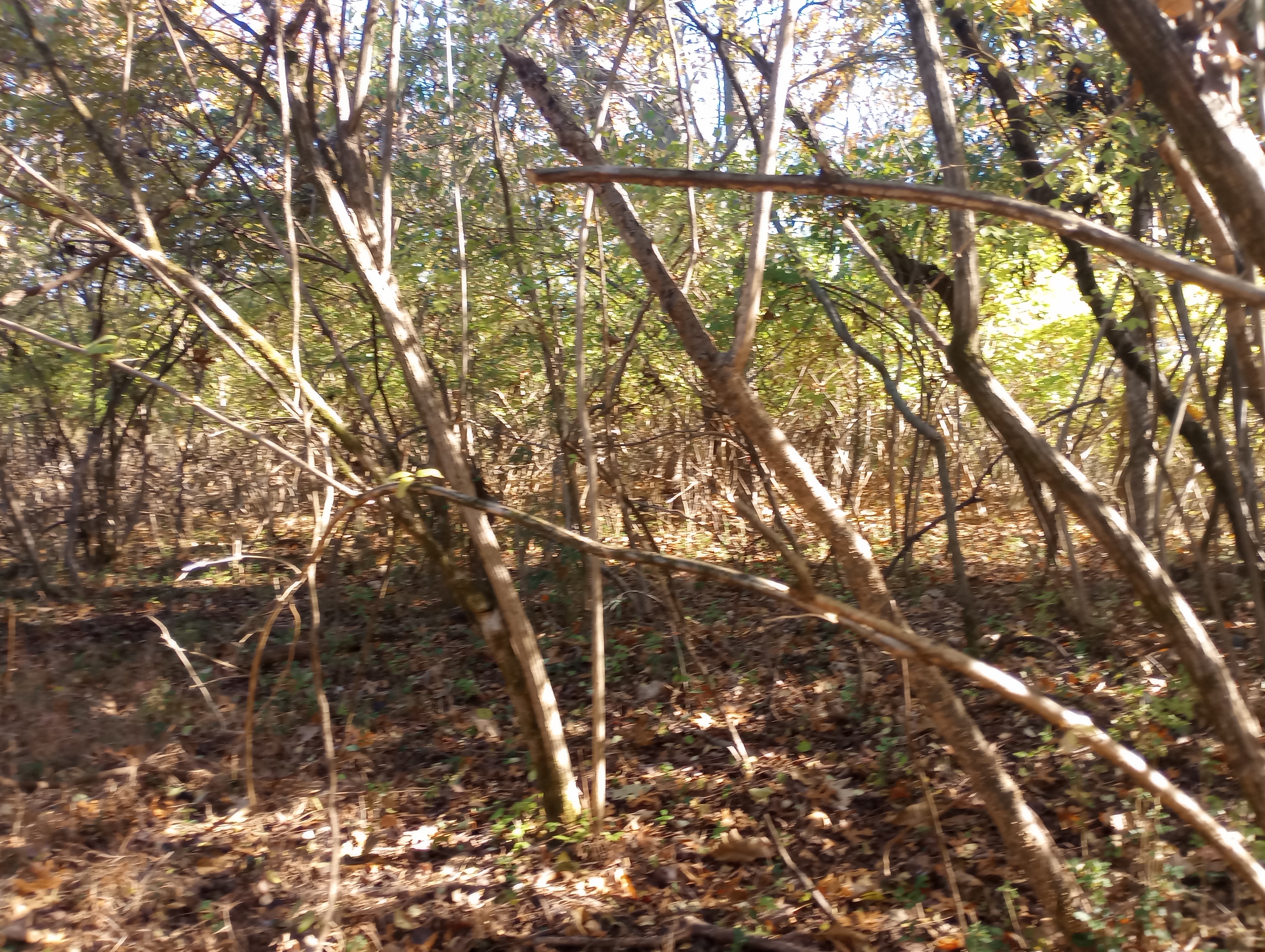

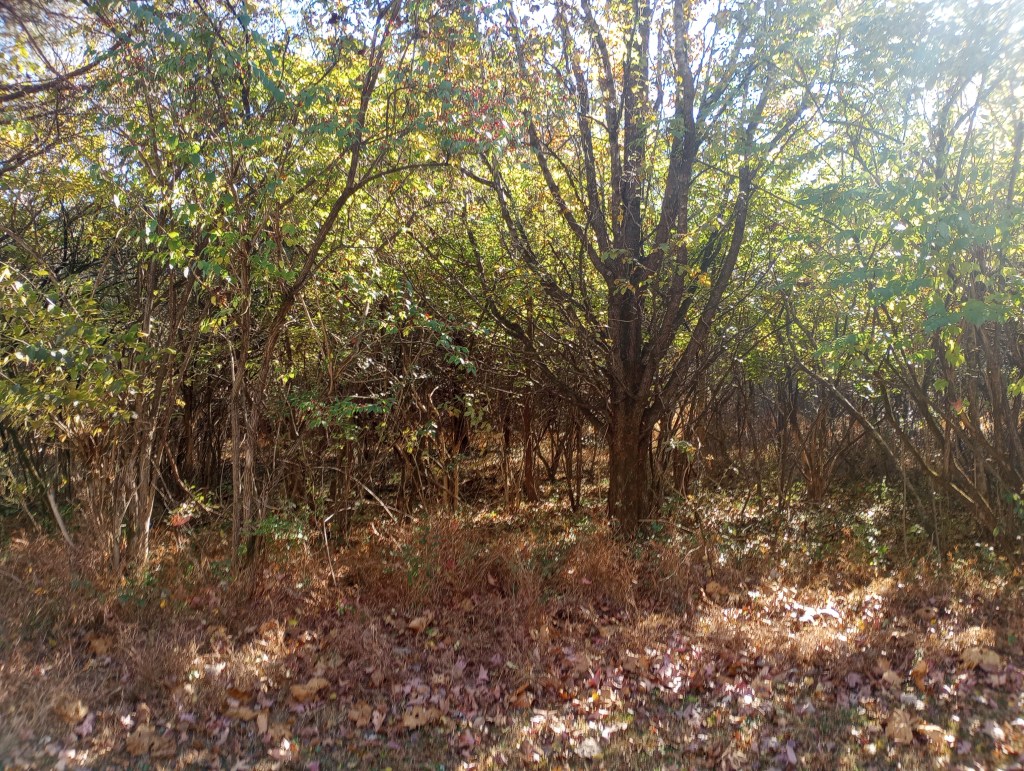
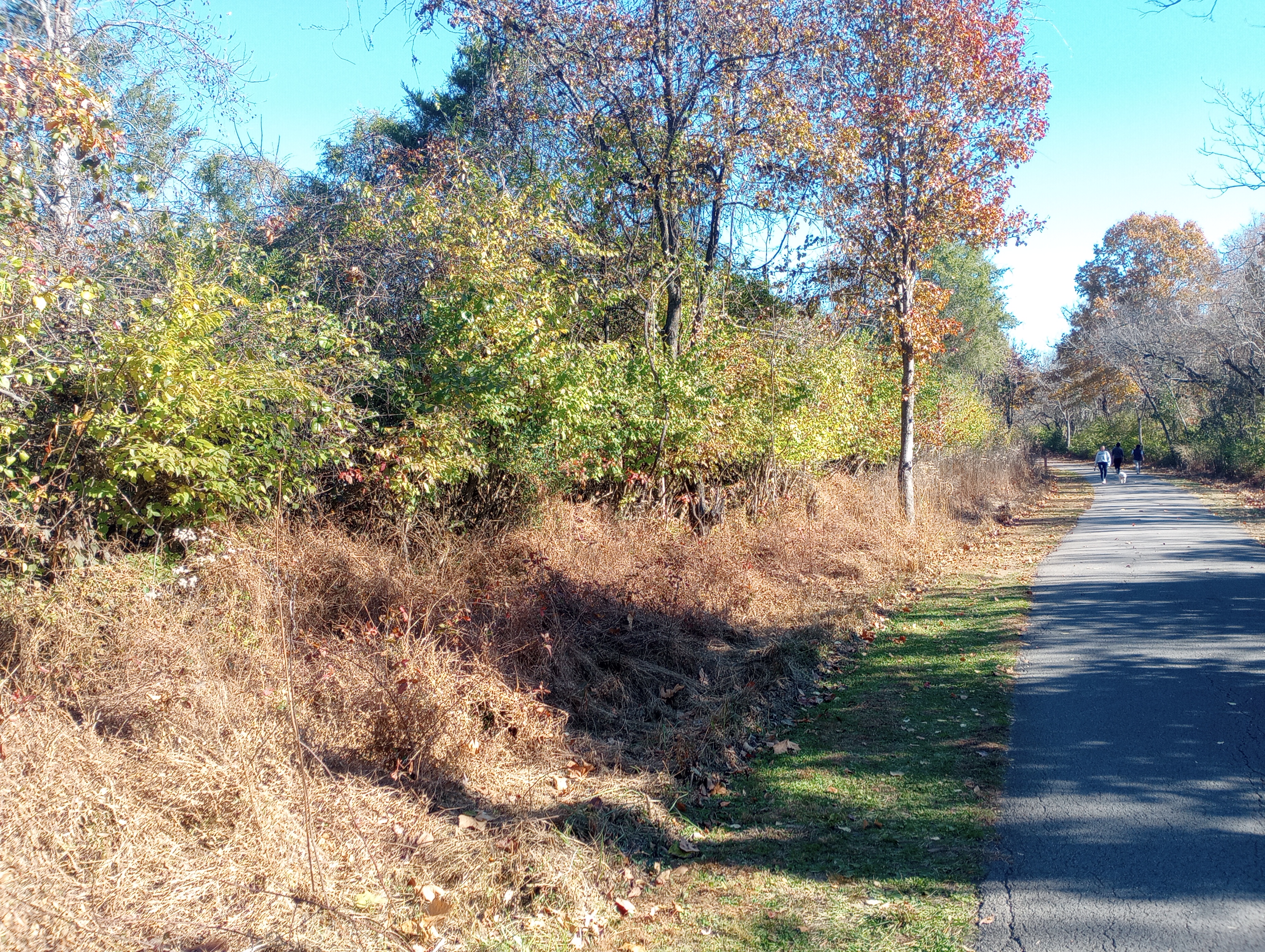
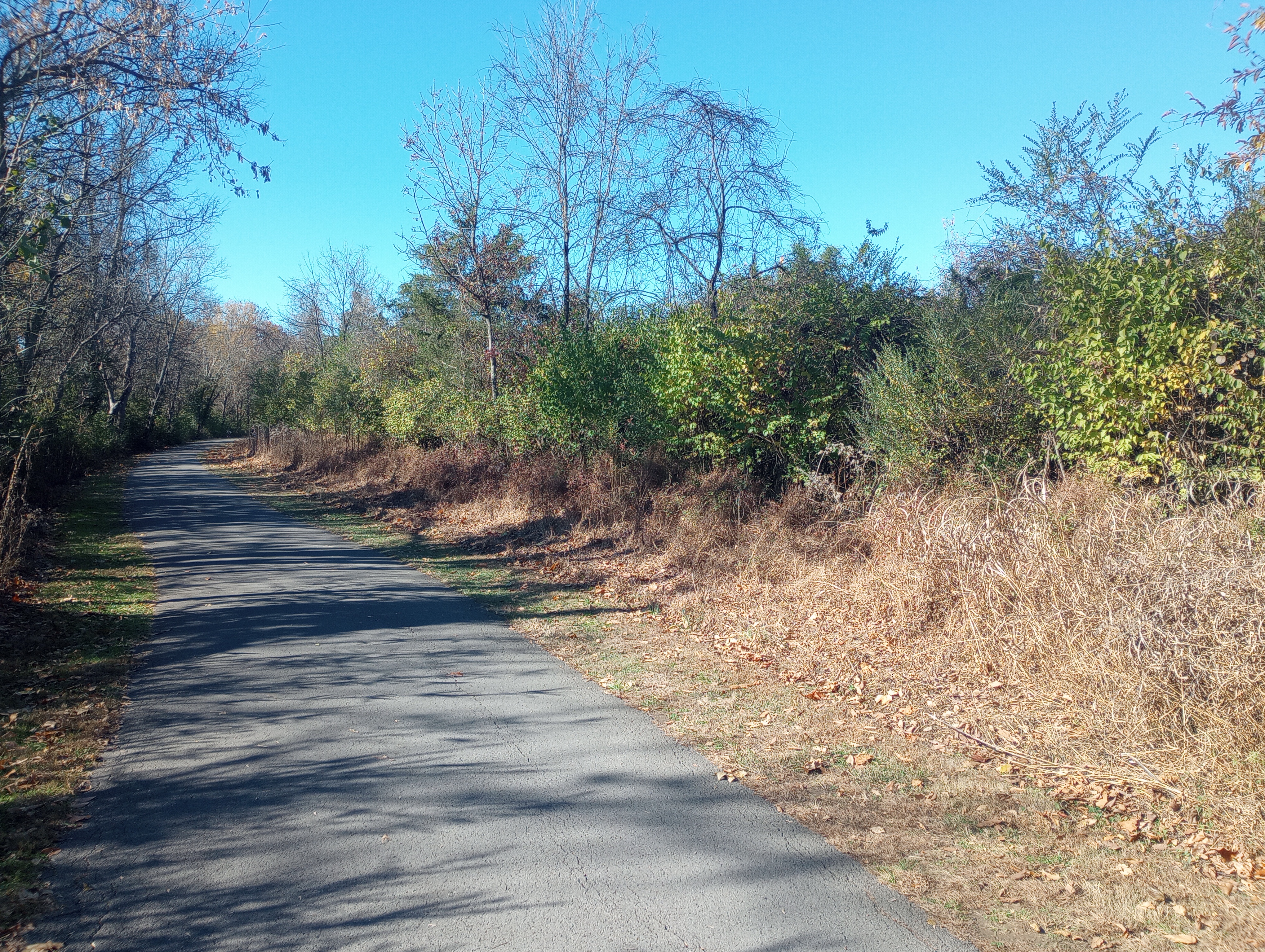
Right now, if you walk along the trail here in the above photo, you should be able to see the river from the trail. You would be able to, but you can only get a glimpse of it here and there, because there is a wall of thick invasive mess blocking your view. The space is filled with honeysuckle, privet, and wintercreeper.

Below is a photo of the largest privet I saw on my walk today. Must be one of the largest in the park. They can become mid-sized trees.

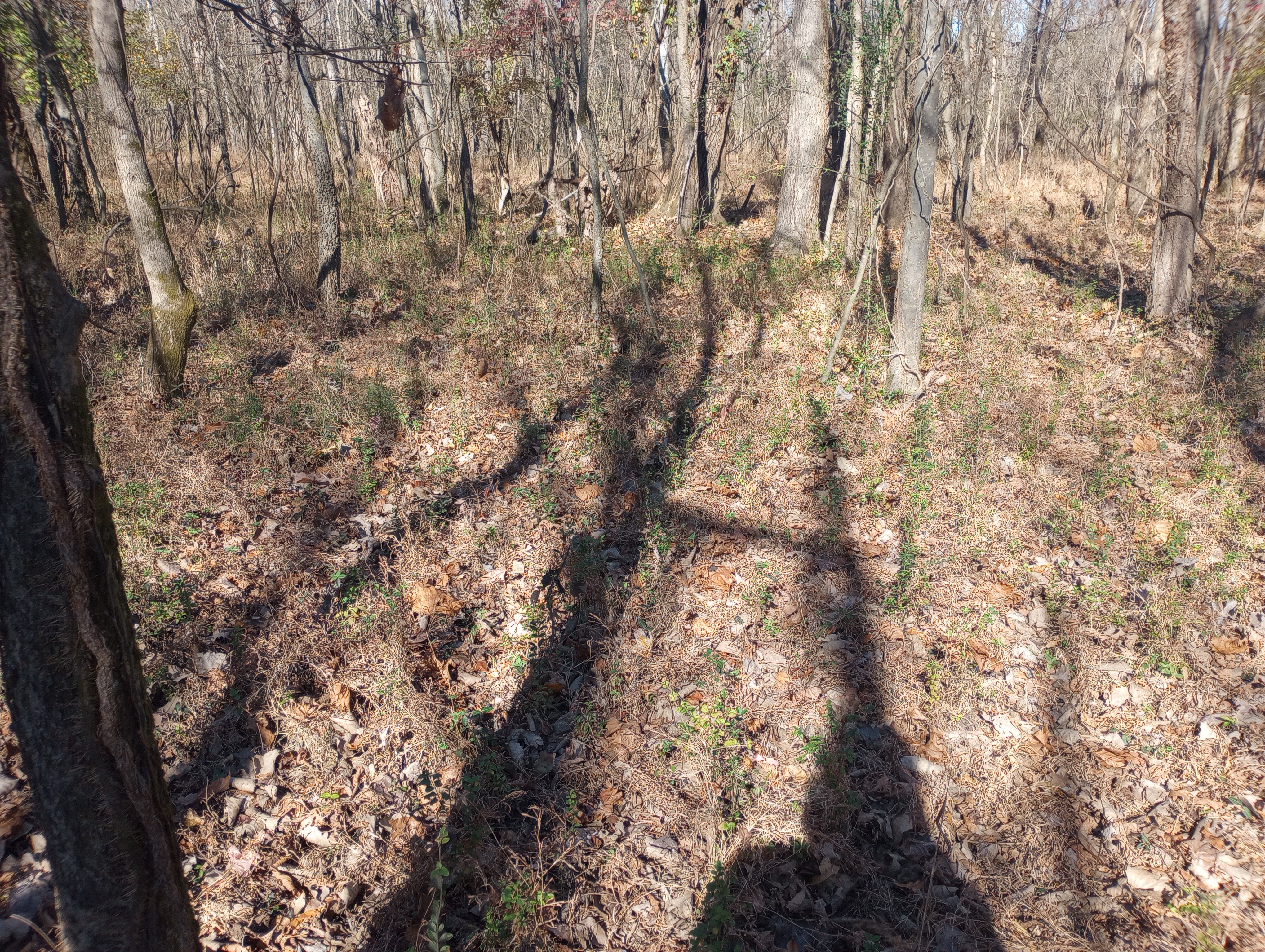
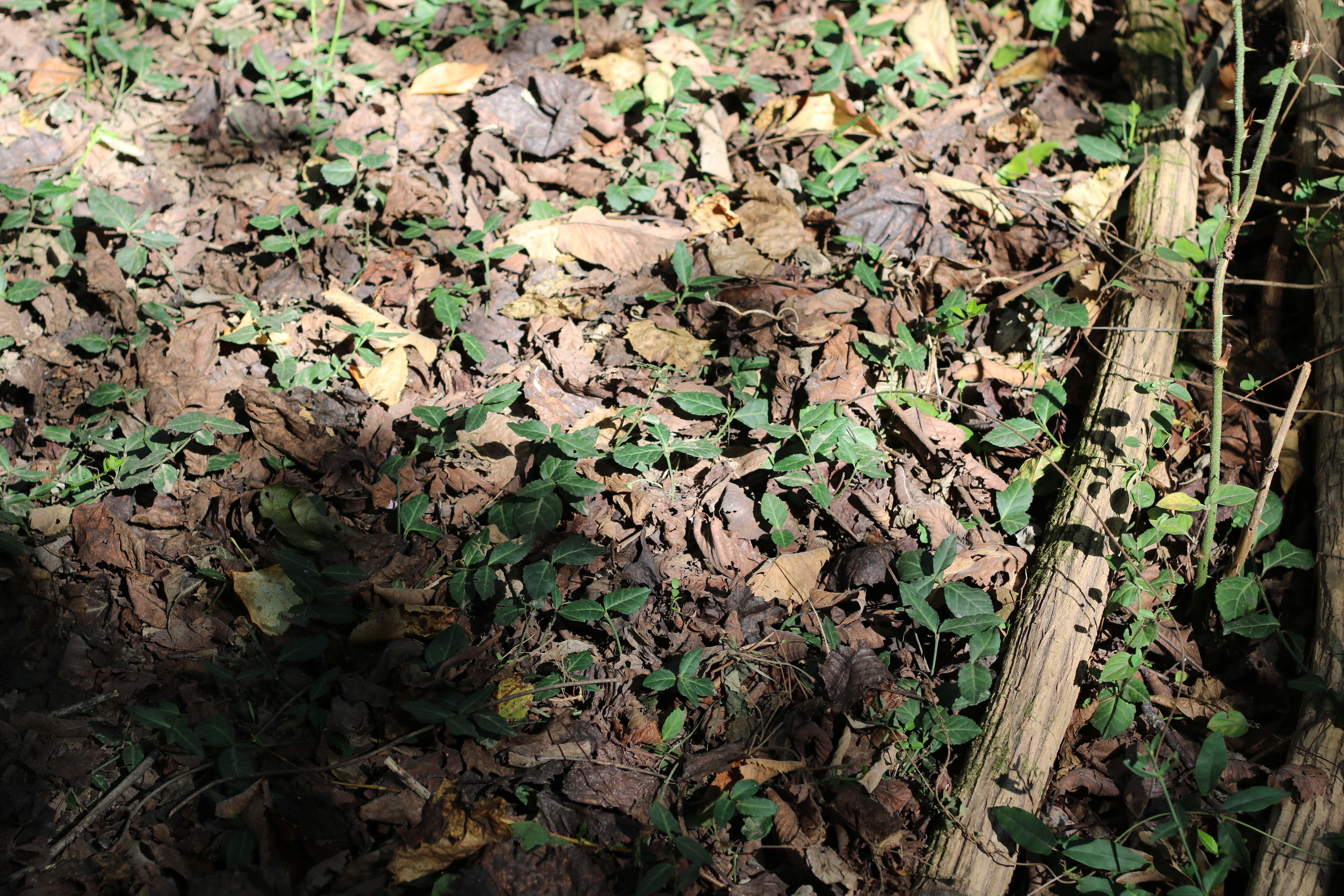
Privet will soon be dominating a new area of the forest. This part is currently clear, but right now the floor is covered with, entirely covered with young Chinese privets. Hundreds of them. In the below photo you can see. Anything green you see on the ground in this photo, all of those hints of green, all of those are young Chinese privets. All of them.
Northern Red Oak
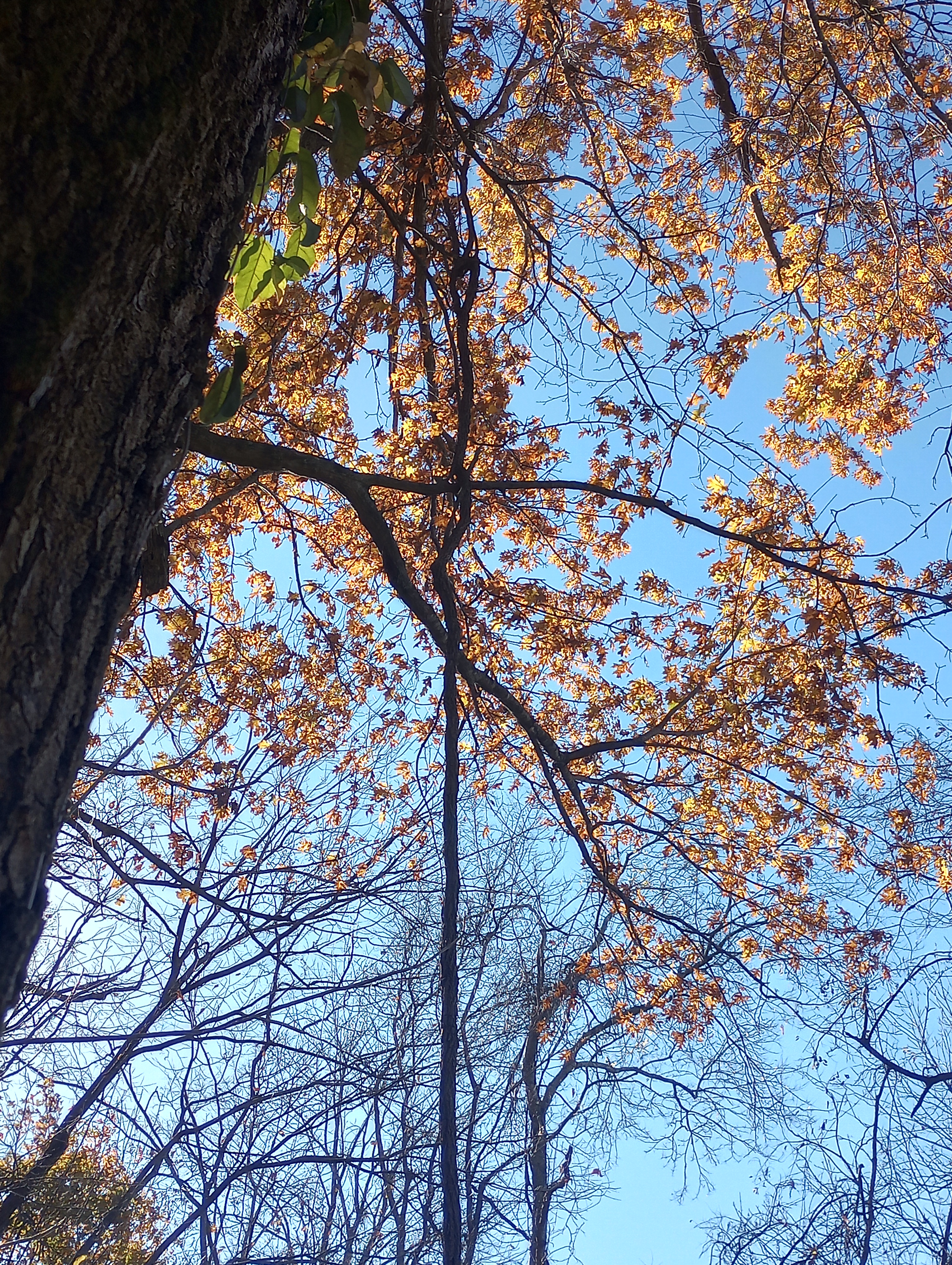
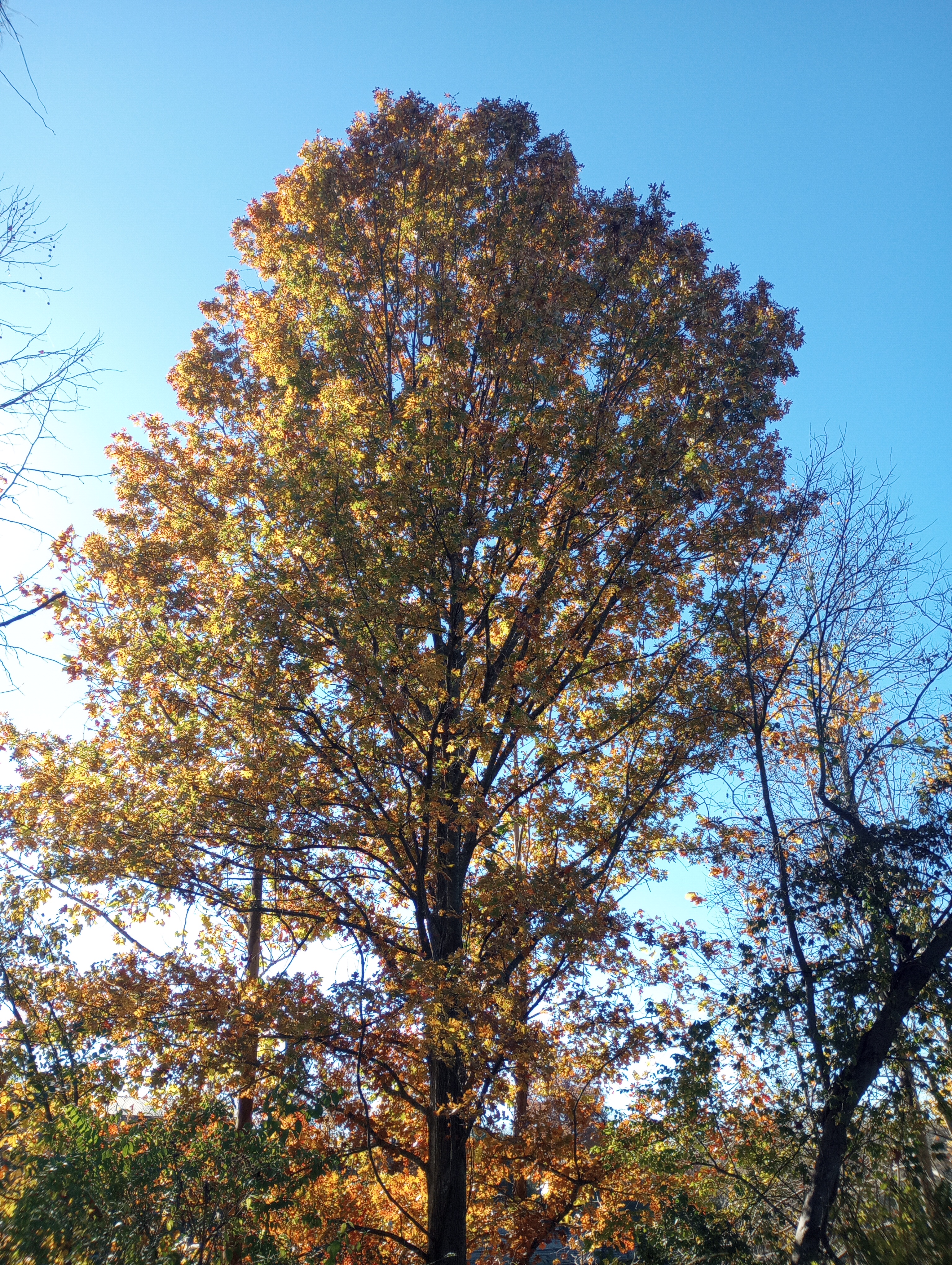
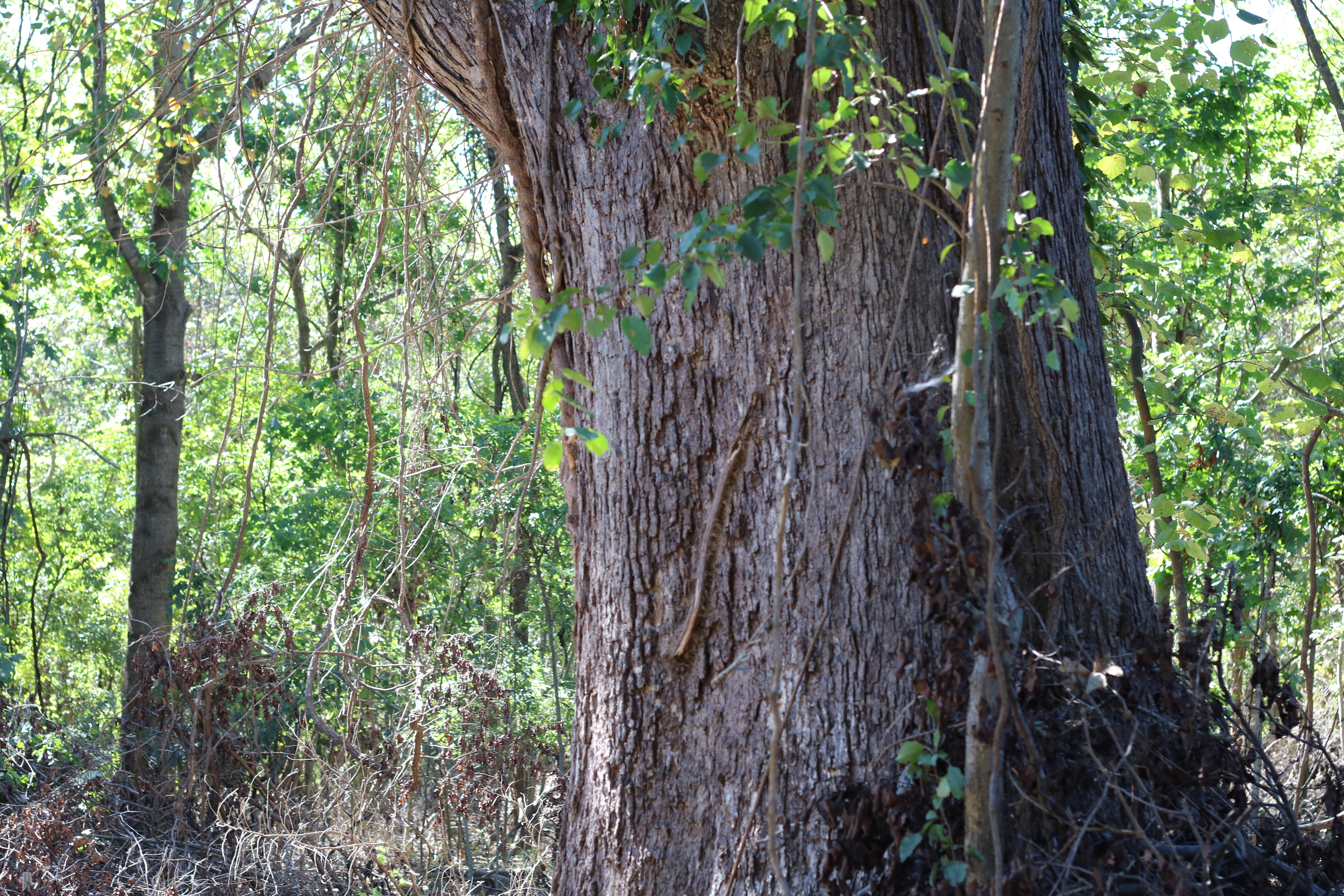
As I walked the trails, I was looking for things that were not invasive too. Especially right now, it’s a good time to appreciate the trees. The last invasive species pull I did with CD Paddock, she gave us a little of some of the largest and oldest trees in the park, and that has inspired me to look for some impressive trees myself, and appreciate the non-invasive plants even more. Especially, our native trees. So, I was walking along the path and I spied off in the distance, one particularly massive orange tree, as you can see in the photo below. I snapped this as soon as I saw it. And I decided to investigate.
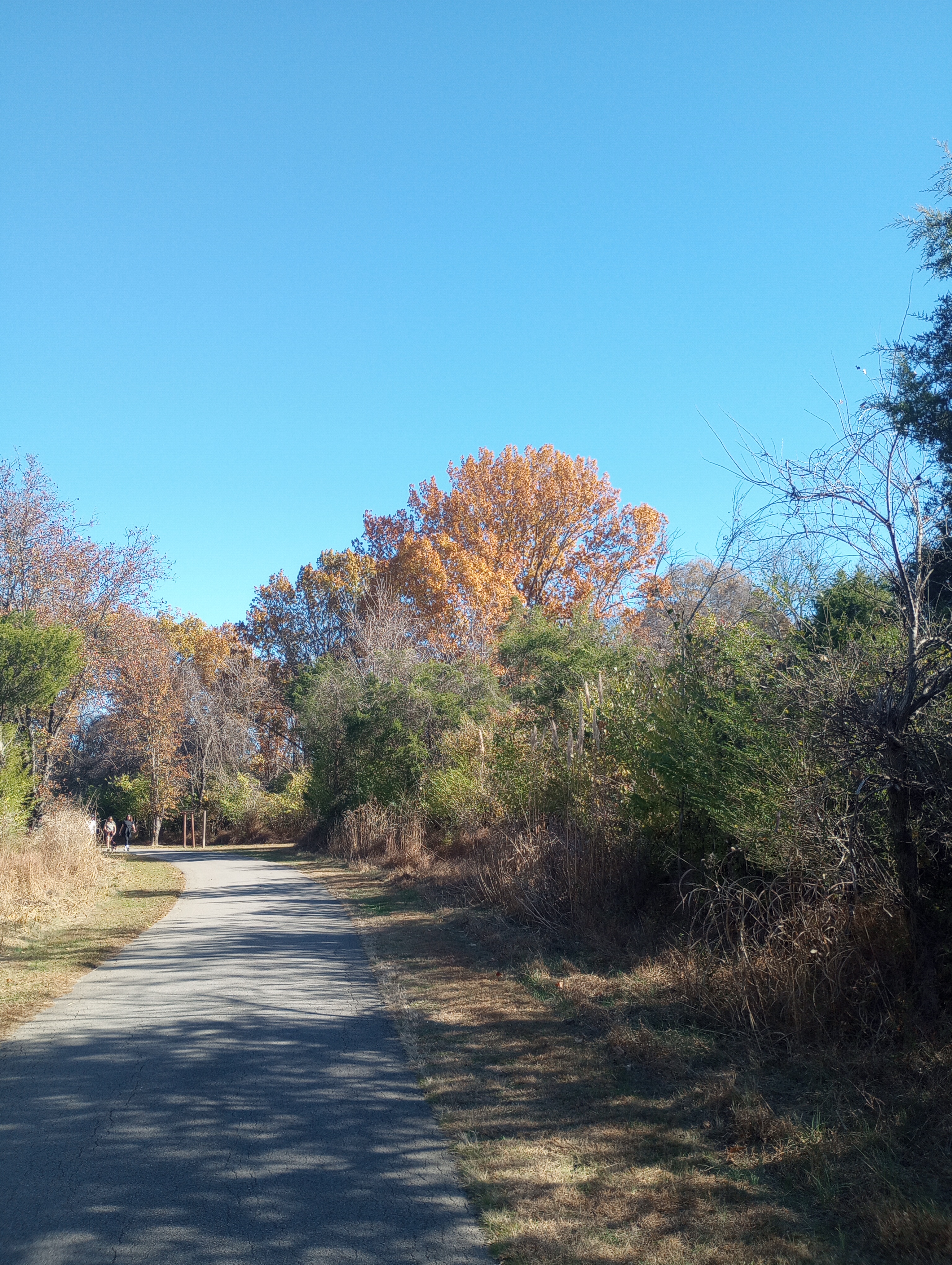
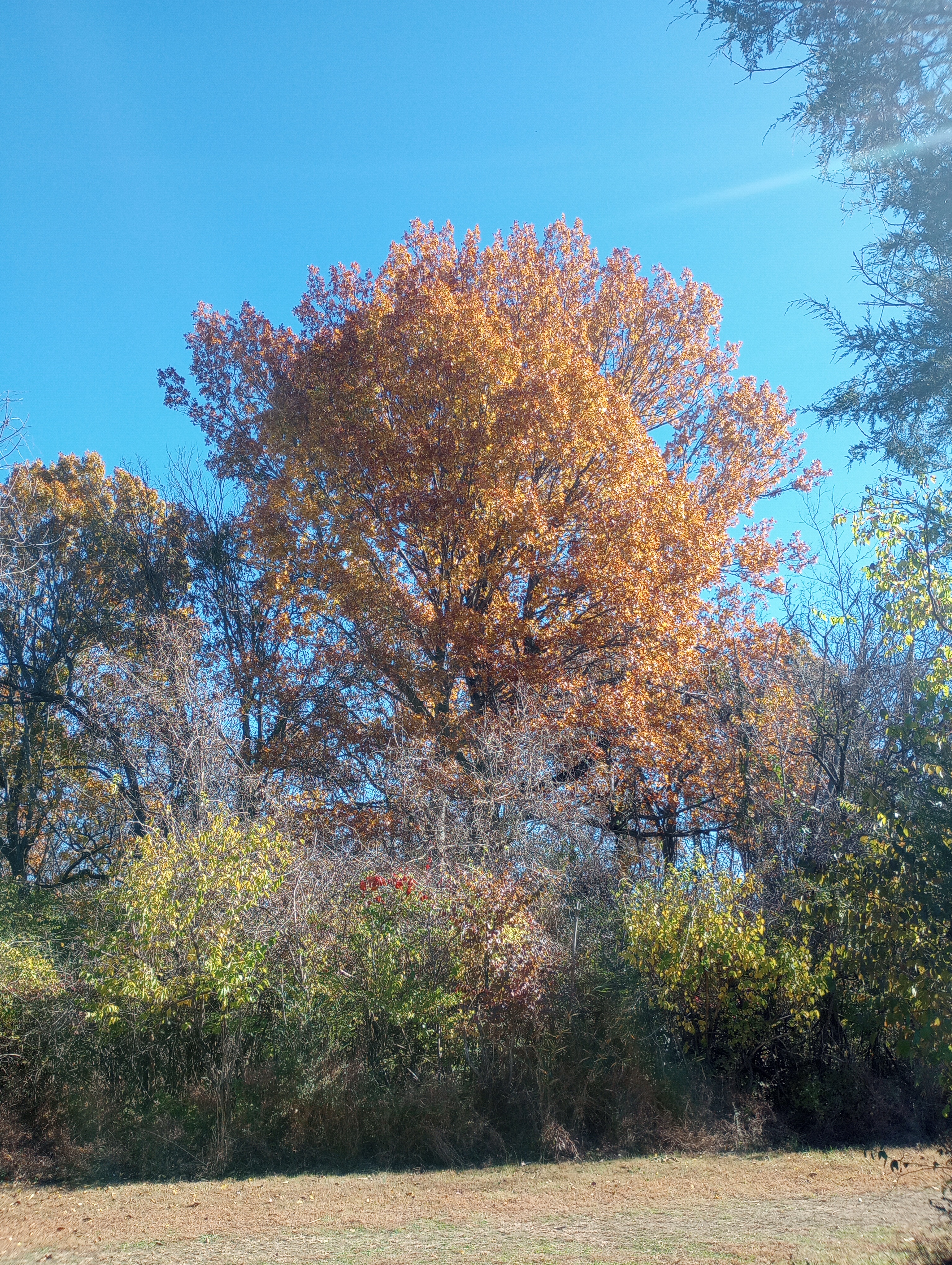
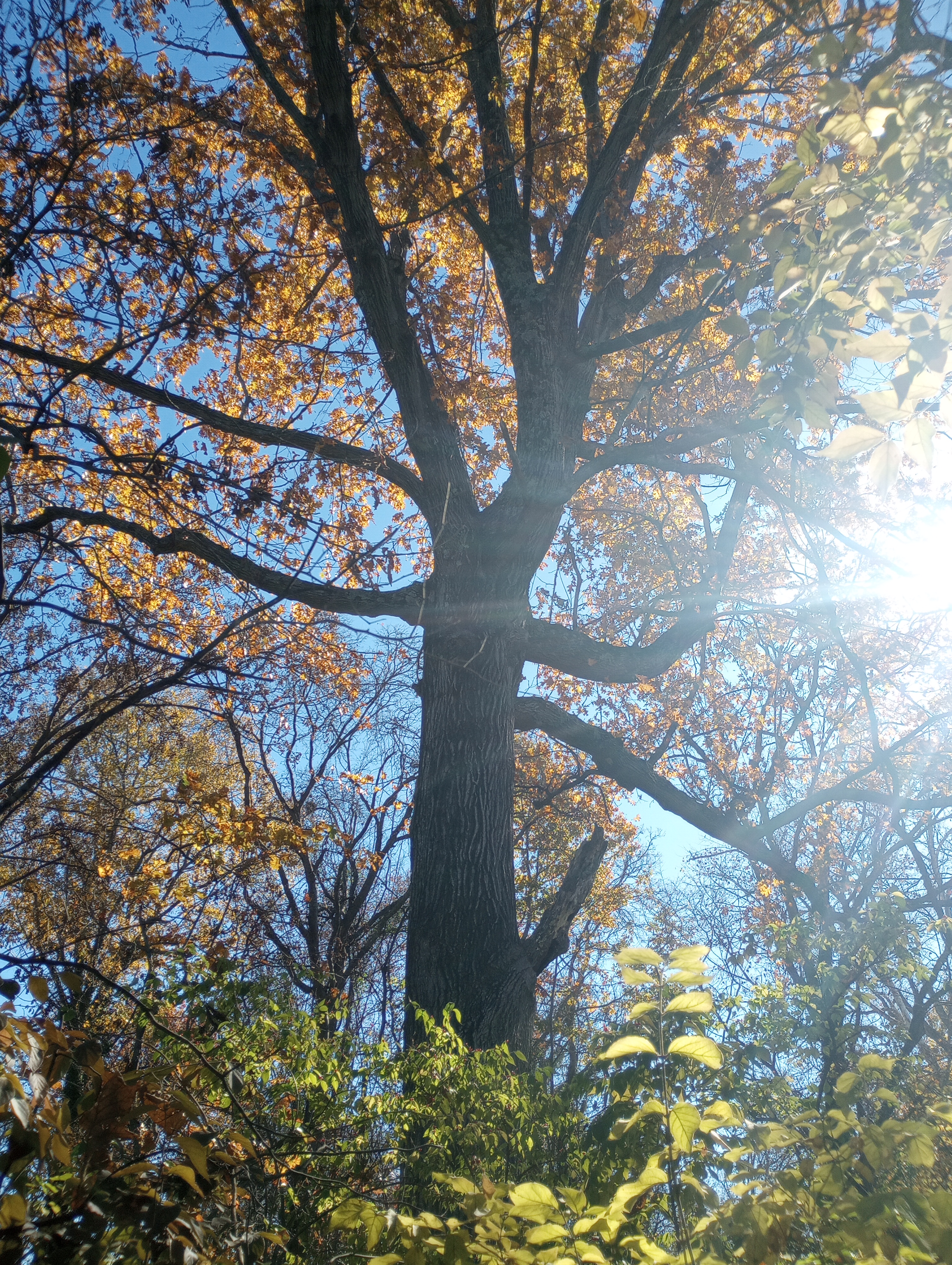
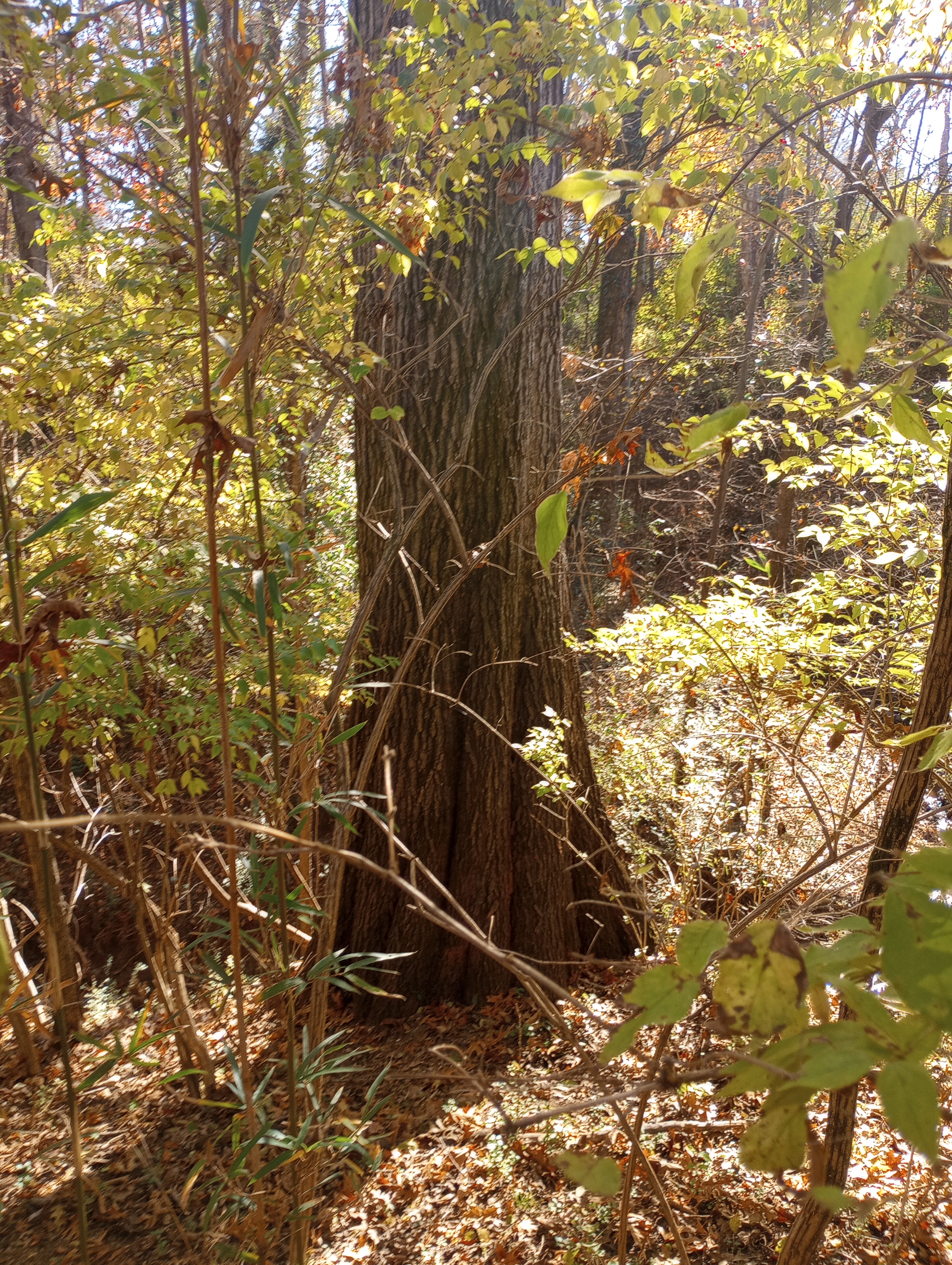

I had to fight my way through a bush honeysuckle grove to get here, but I made it. What a beautiful tree. Internet tells me it is a northern red oak. Amazing tree. Hanging off of it, all the way down to the ground, was one of those huge muscadine vines. Those are so crazy.
Other Trees

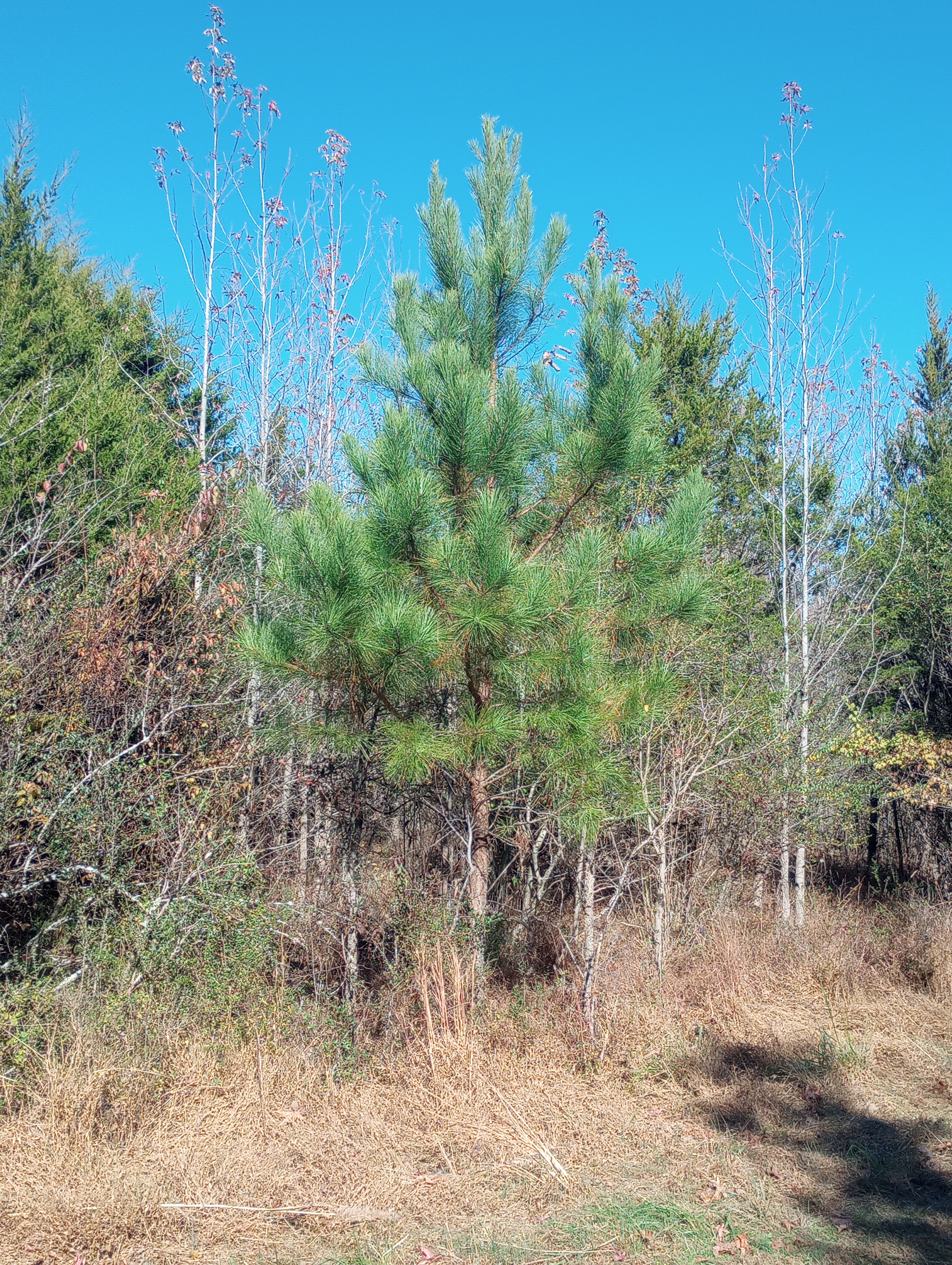
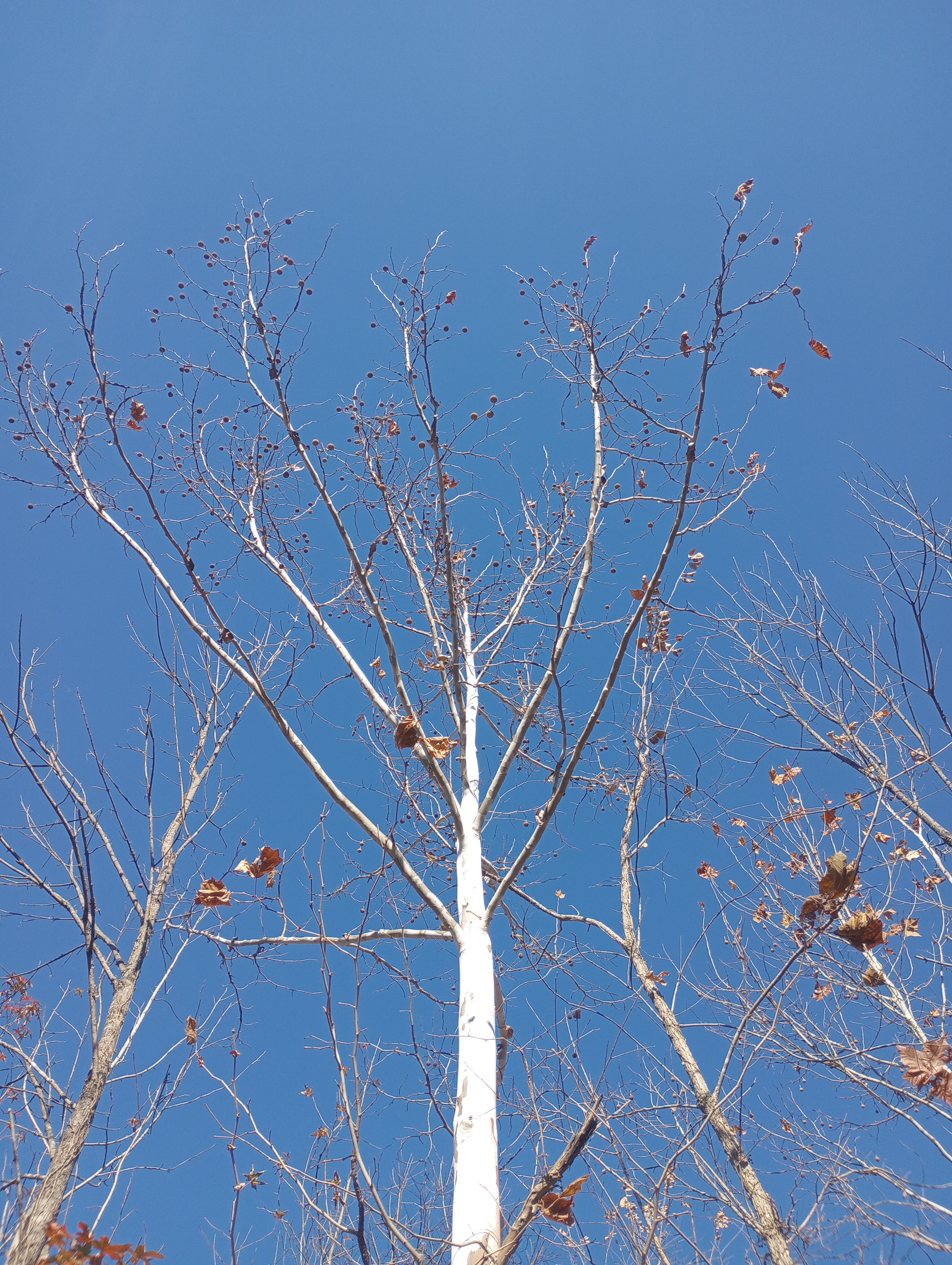

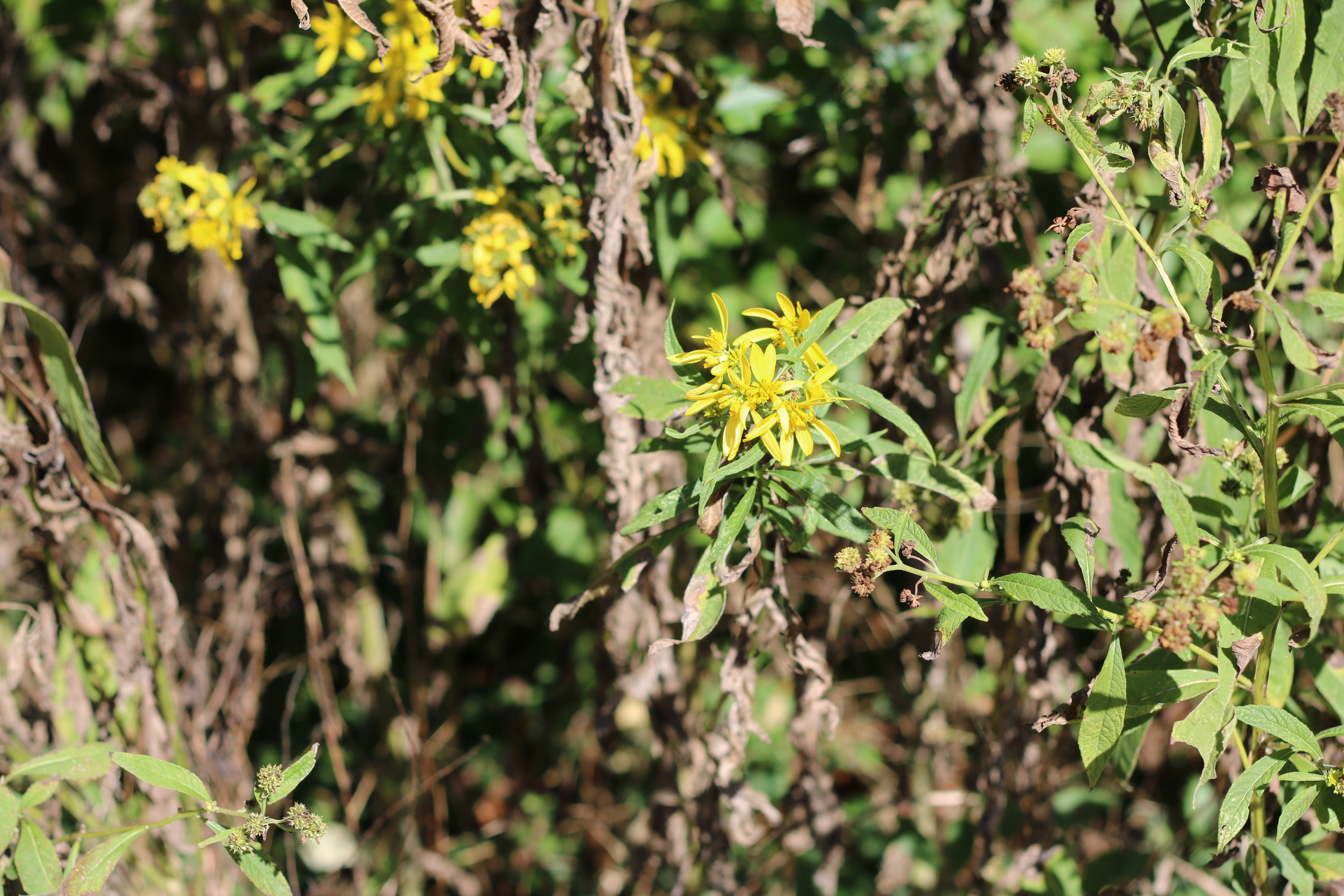
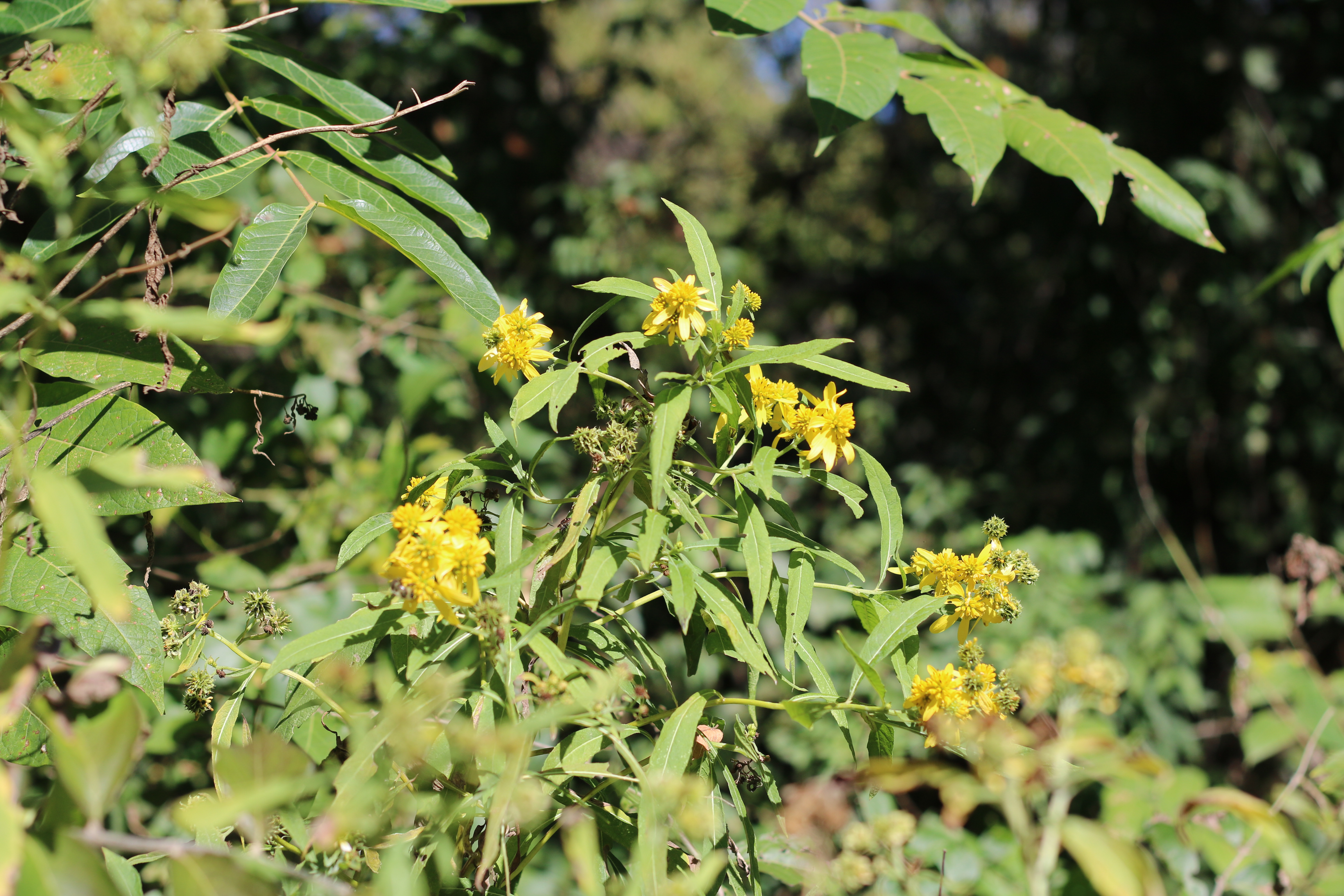
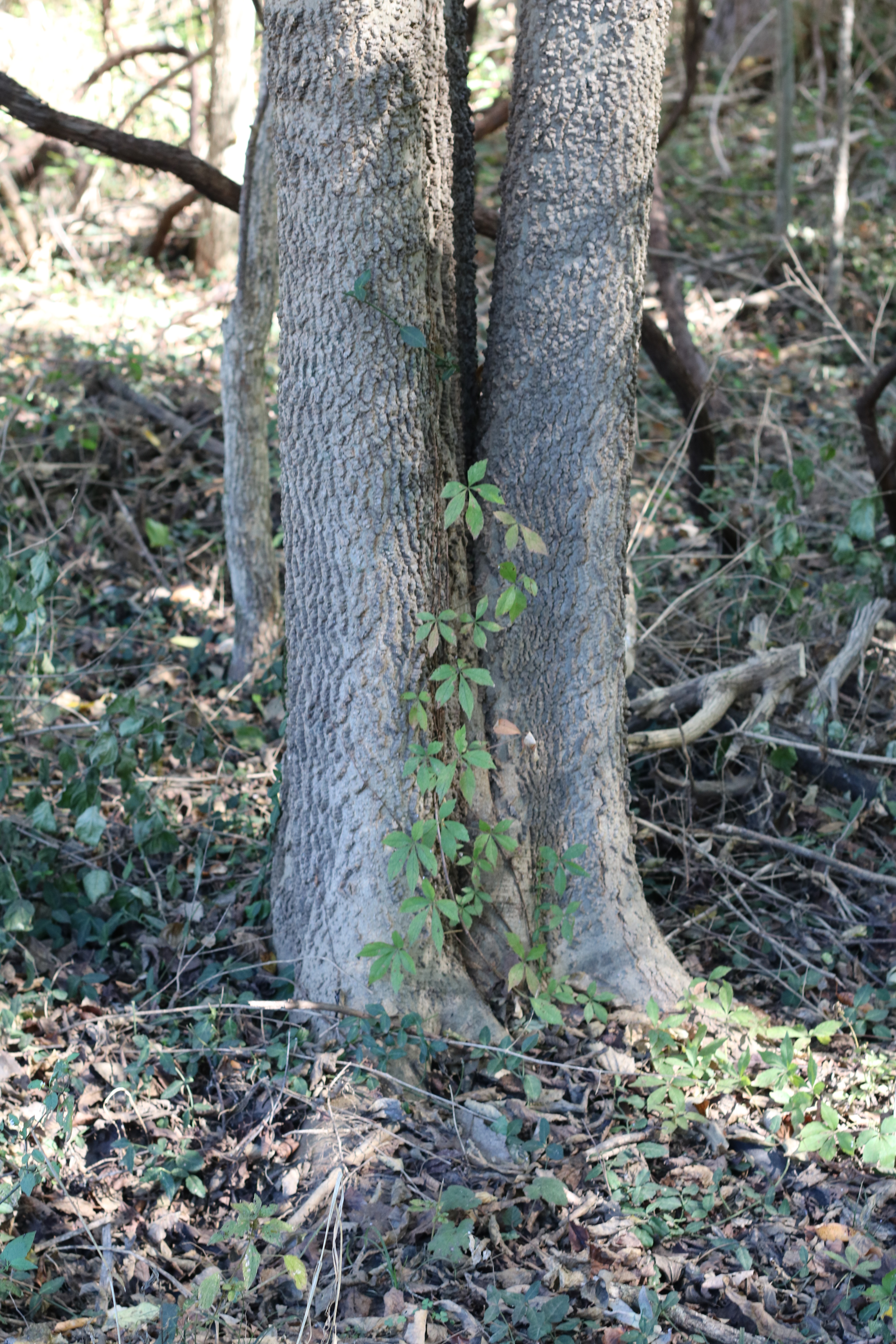
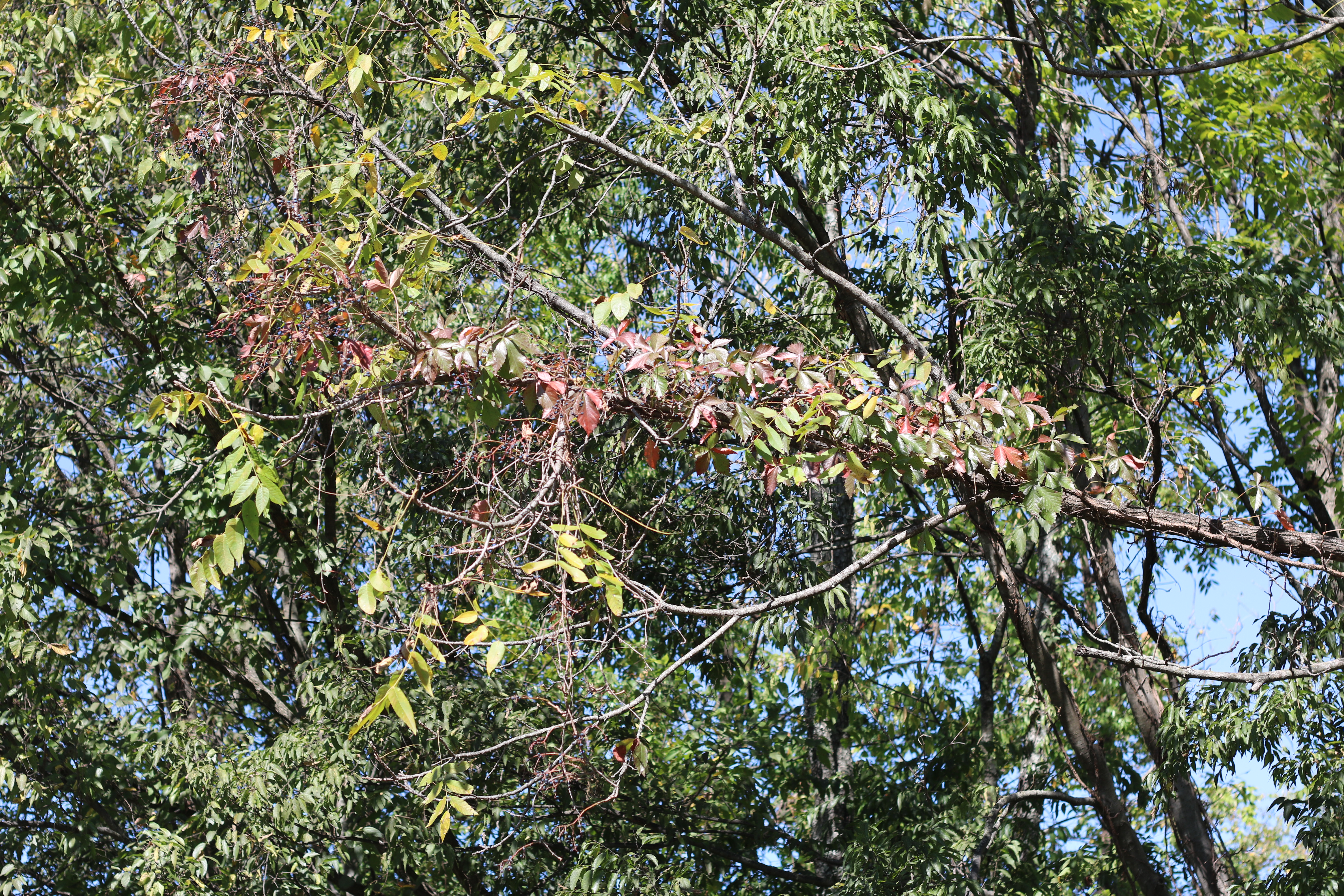
Mystery Tree
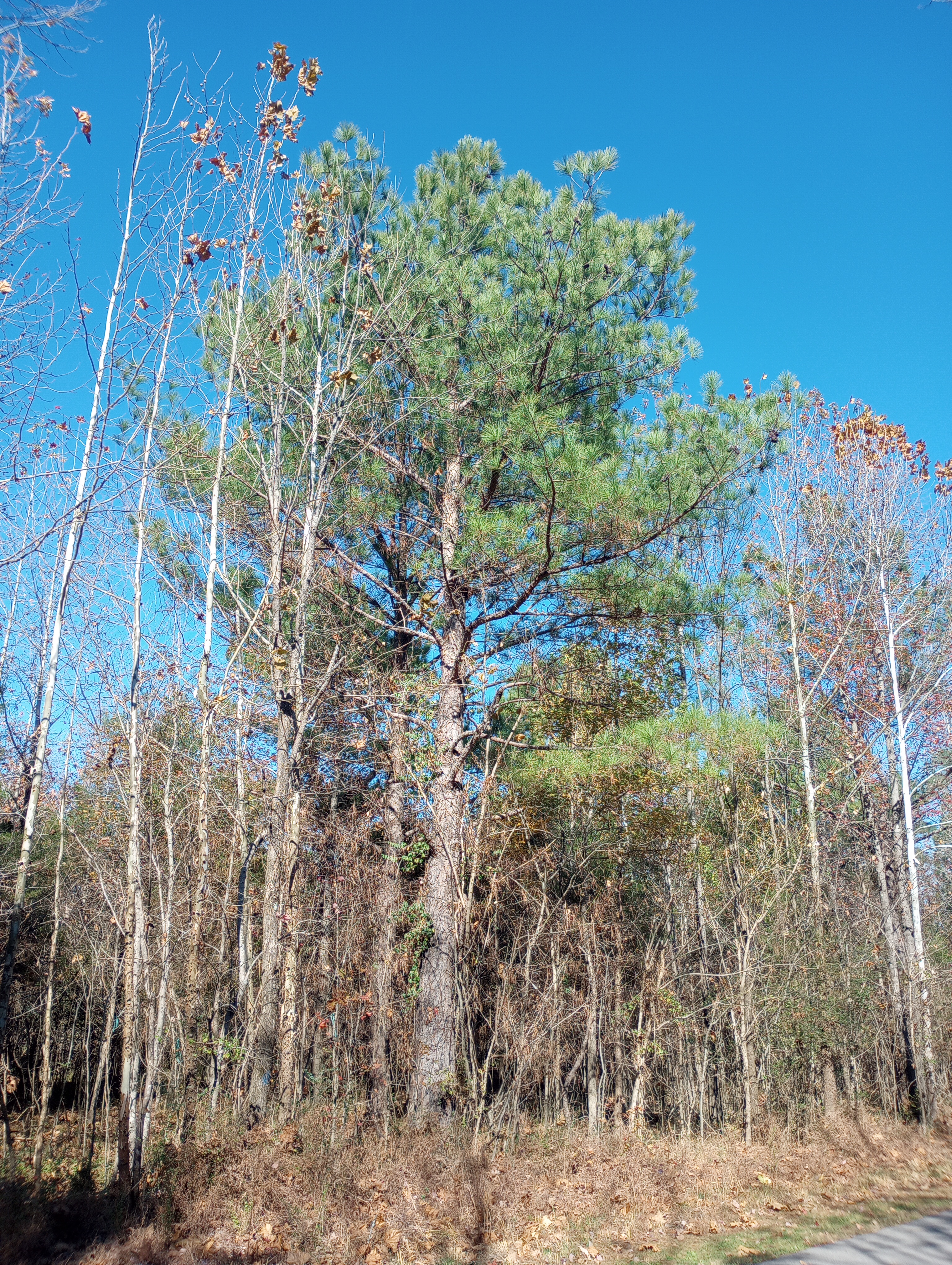
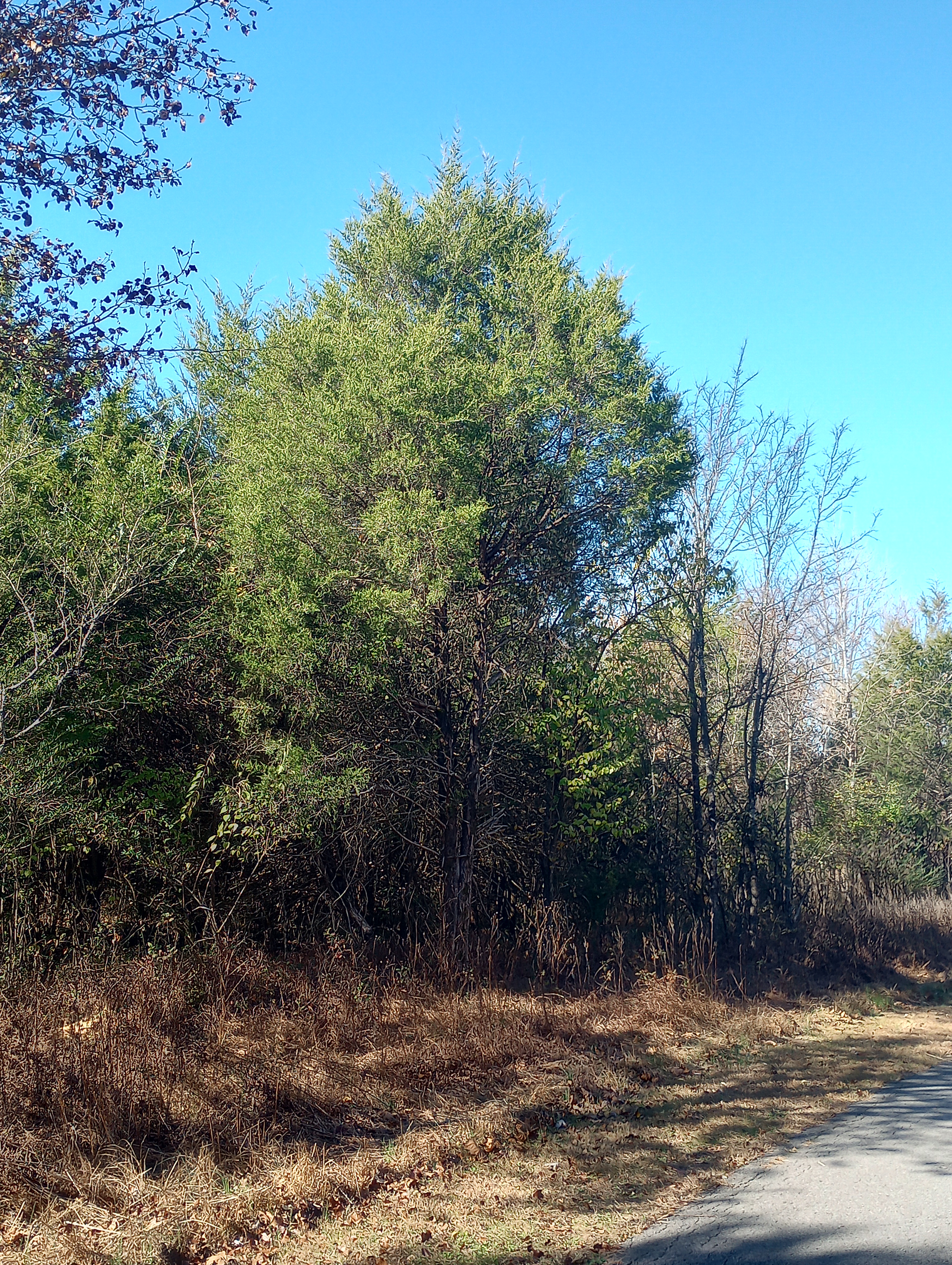
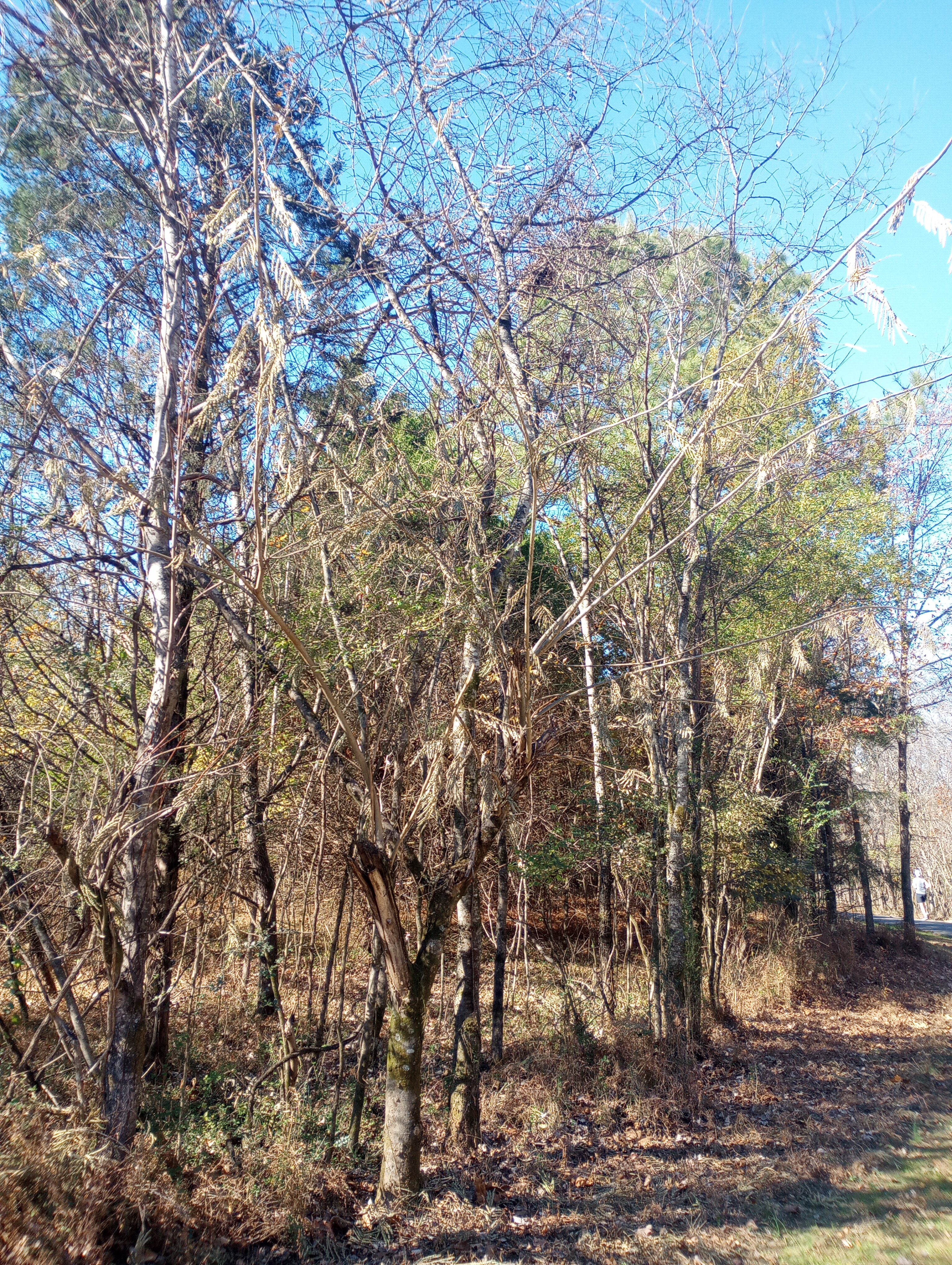
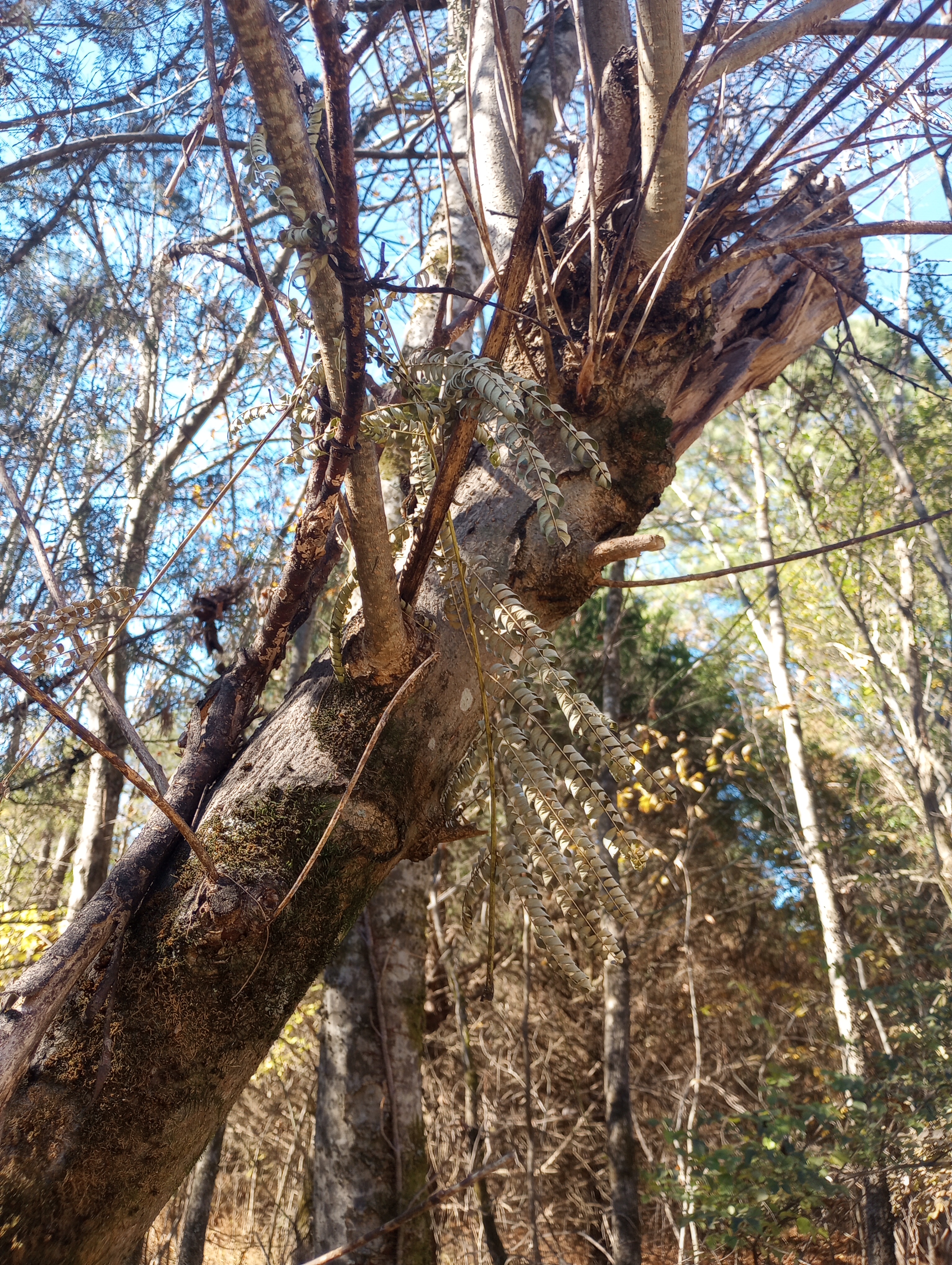
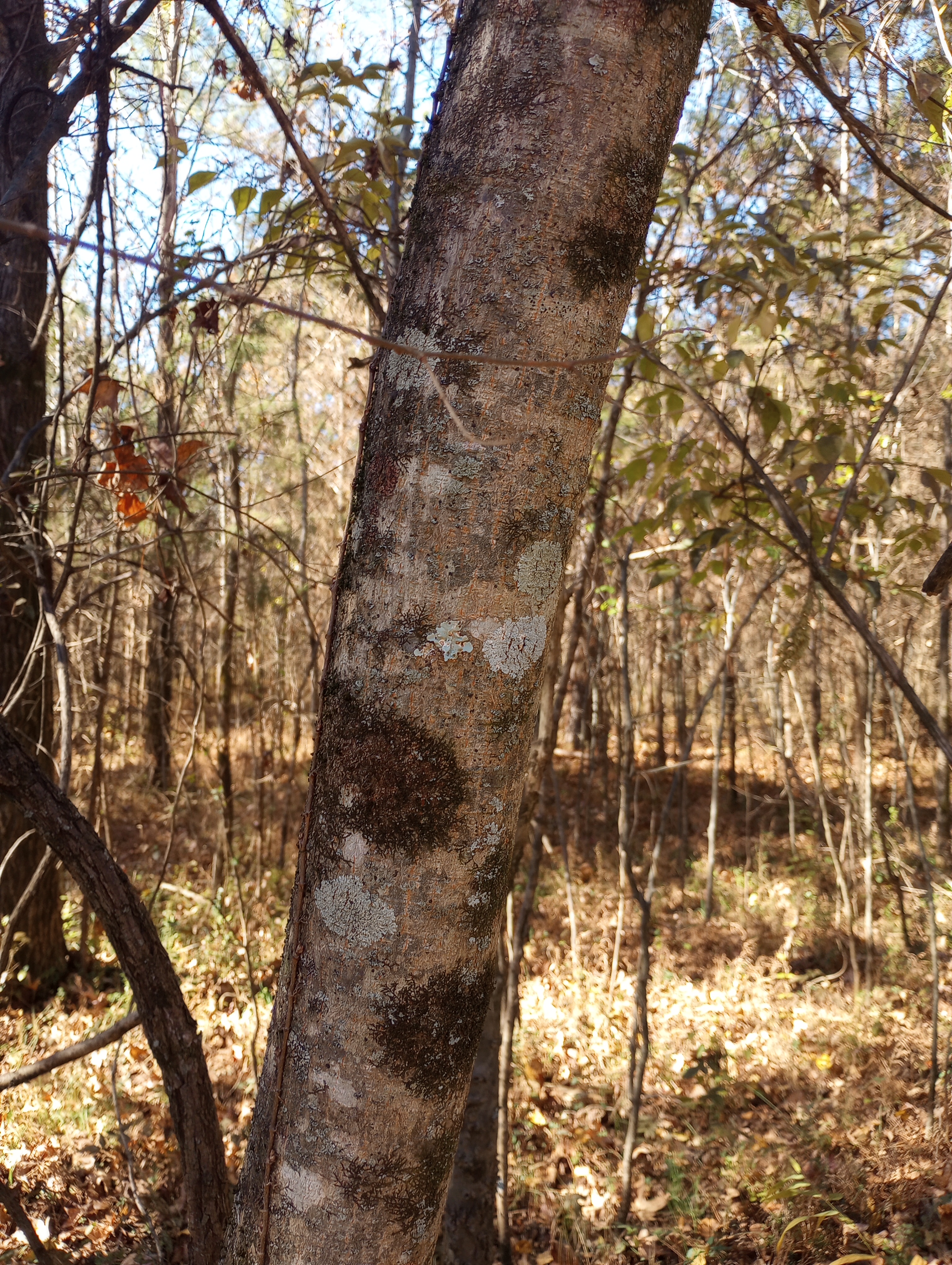
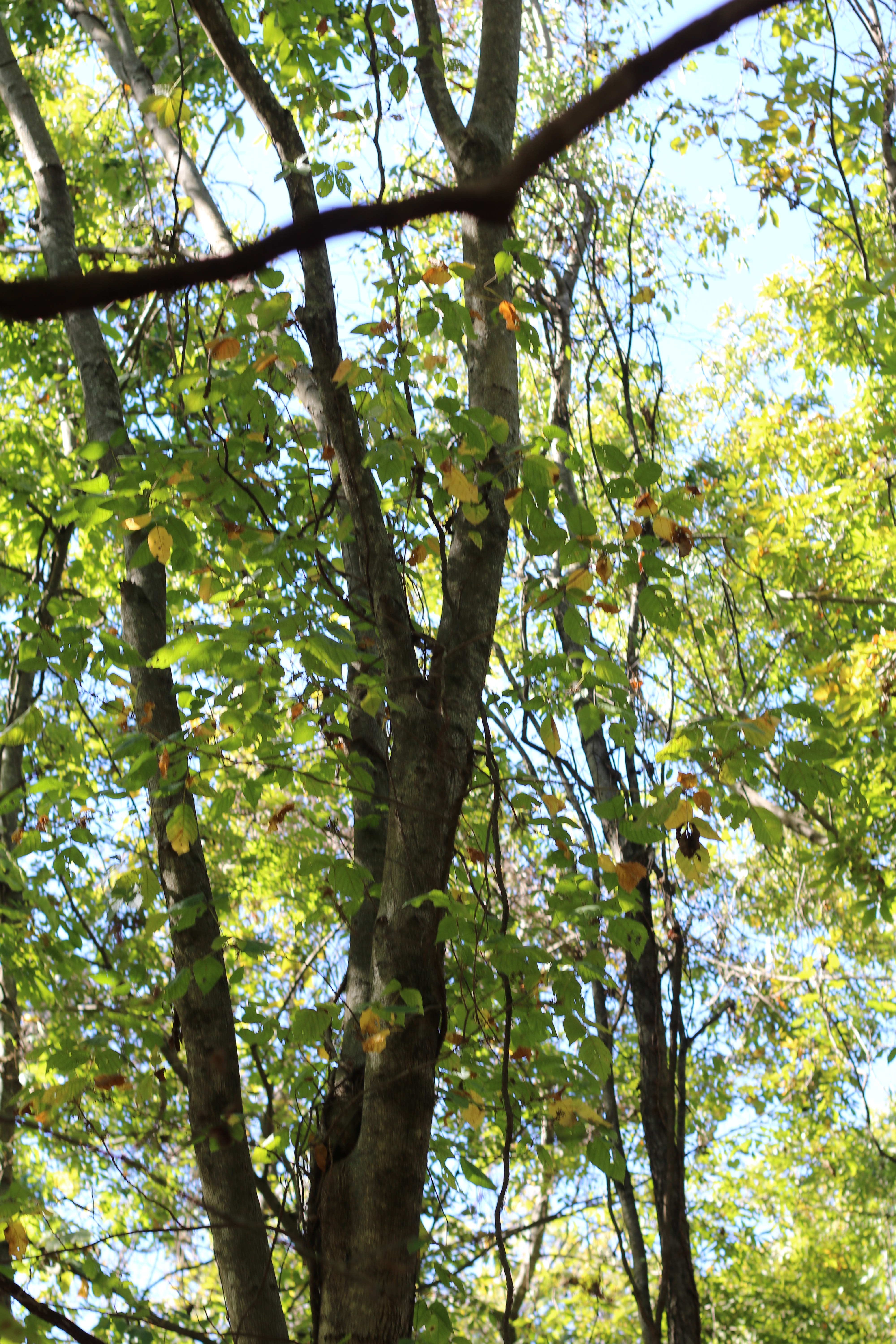
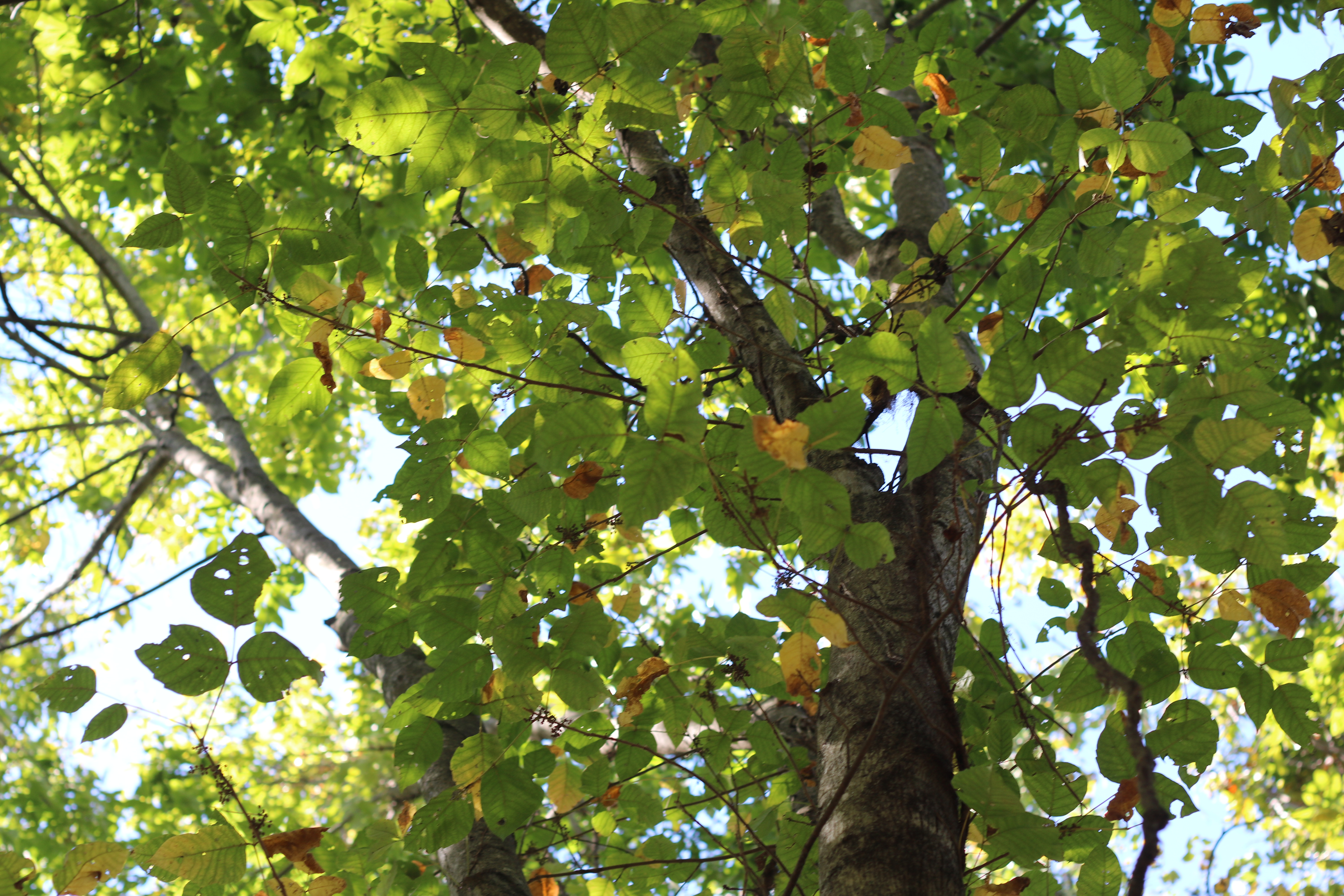
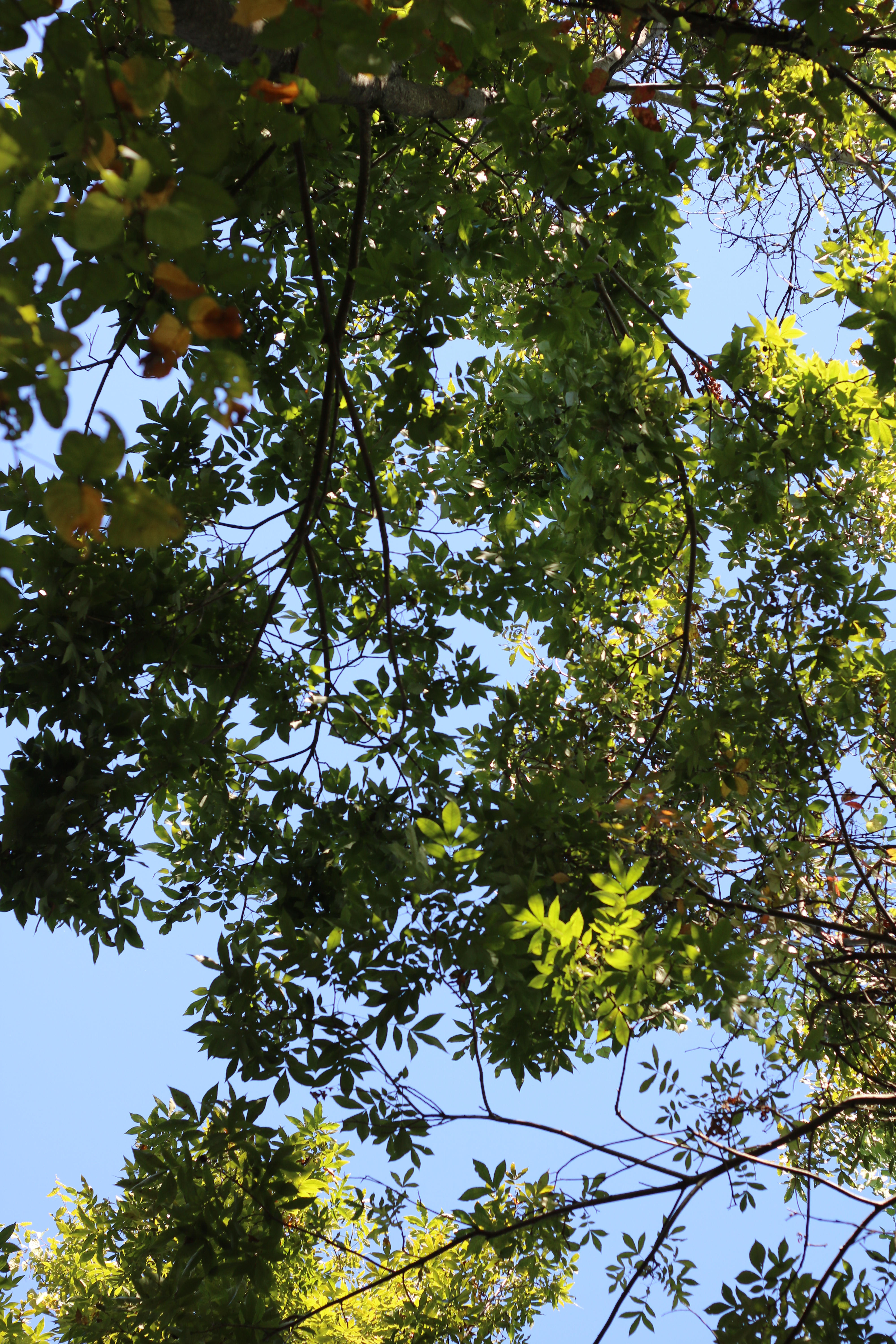
My main purpose for going to the park today, and especially for bringing my camera (all taken with my Moto G phone camera), was actually just to investigate a mystery tree. That’s all I had really intended to do. I had seen it, only one, and it had strange, fern-like leaves. I have been thinking about it, and I want to know what it is. Well, I found the one I had seen before, and then further along my long walk I found ONE more. So they are quite uncommon in the park, but they’re there.
Here is the tree, which is losing its leaves as well. What is this rare mystery tree?

Various Other Scenes
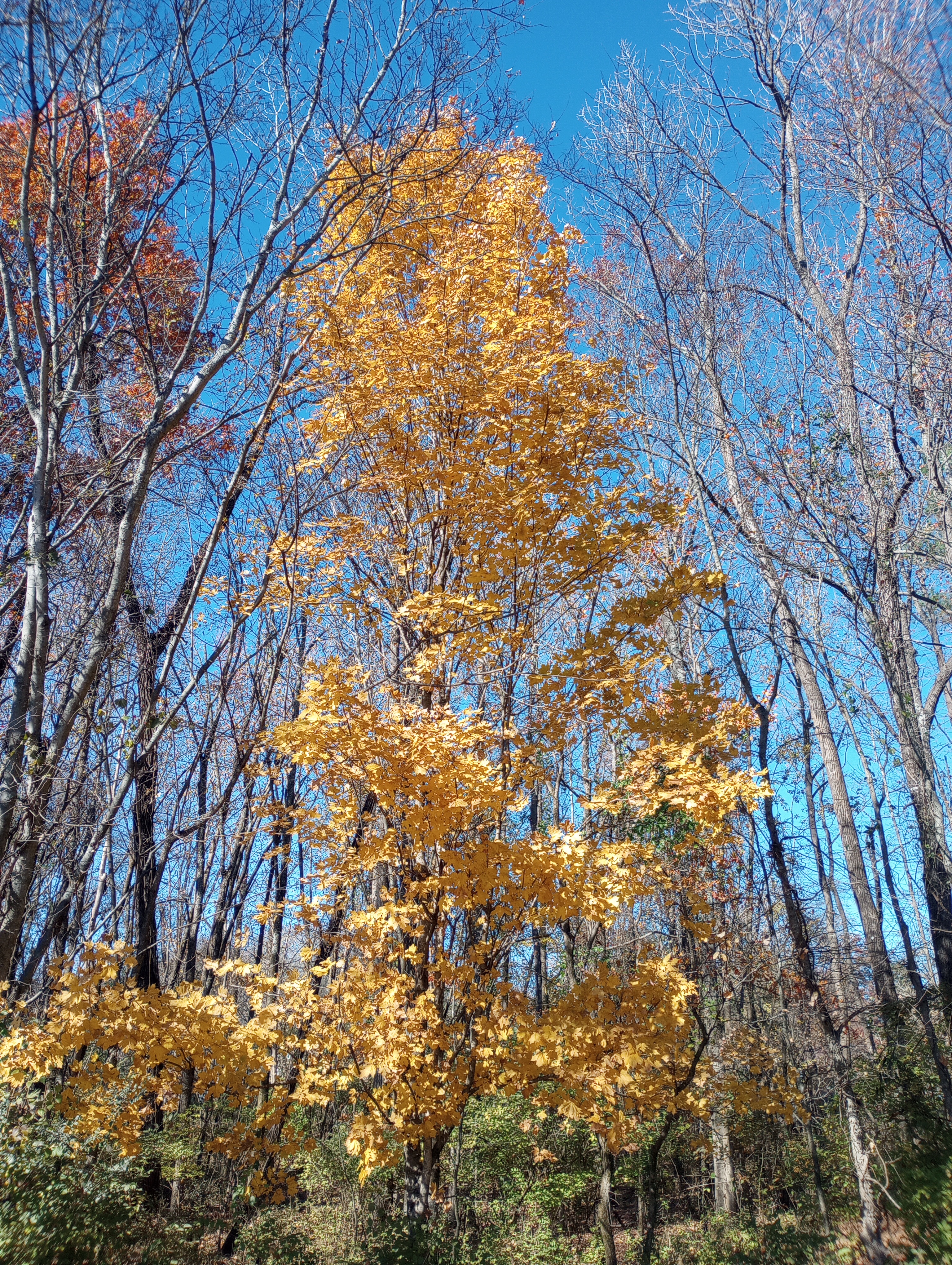
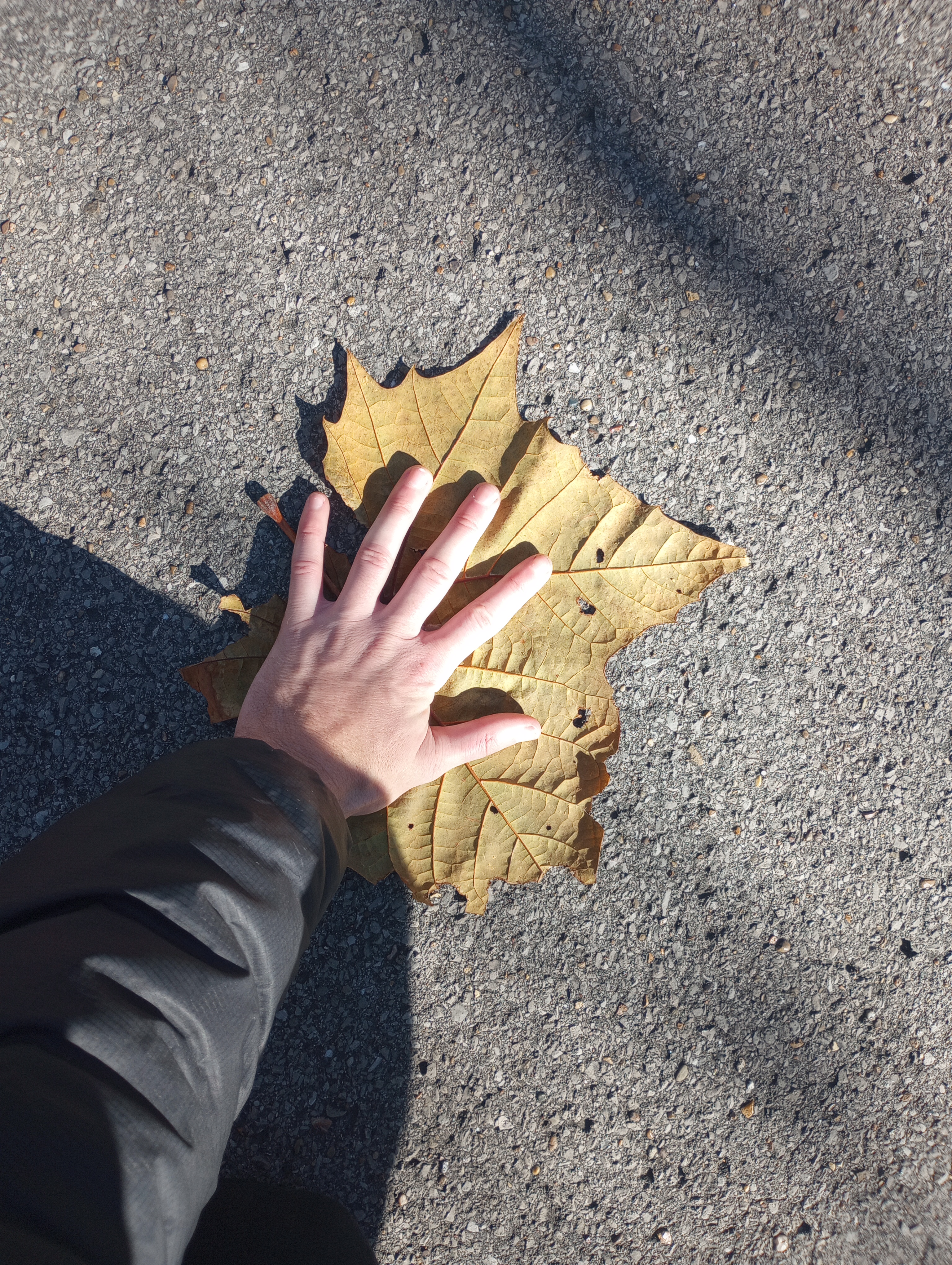
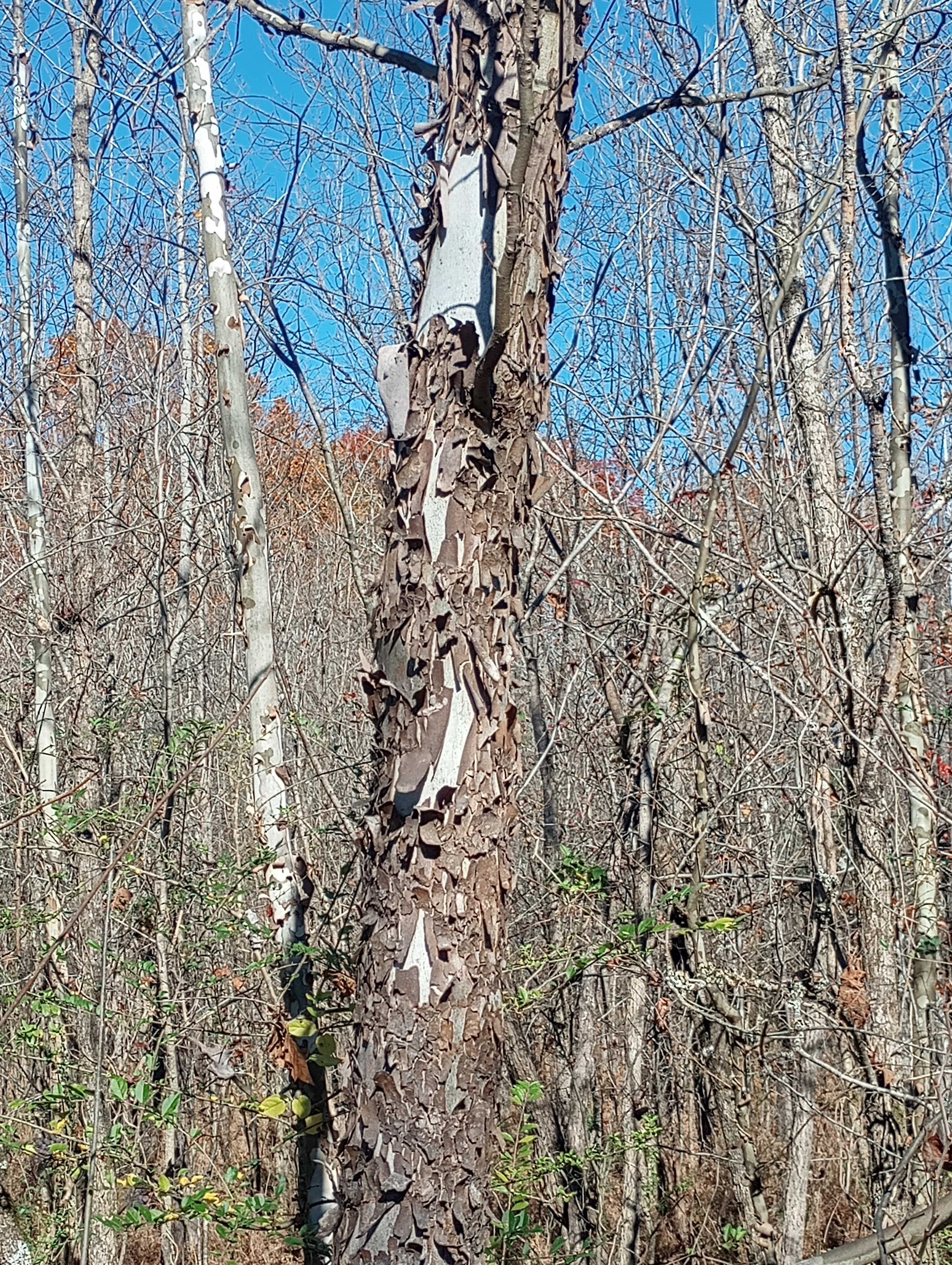
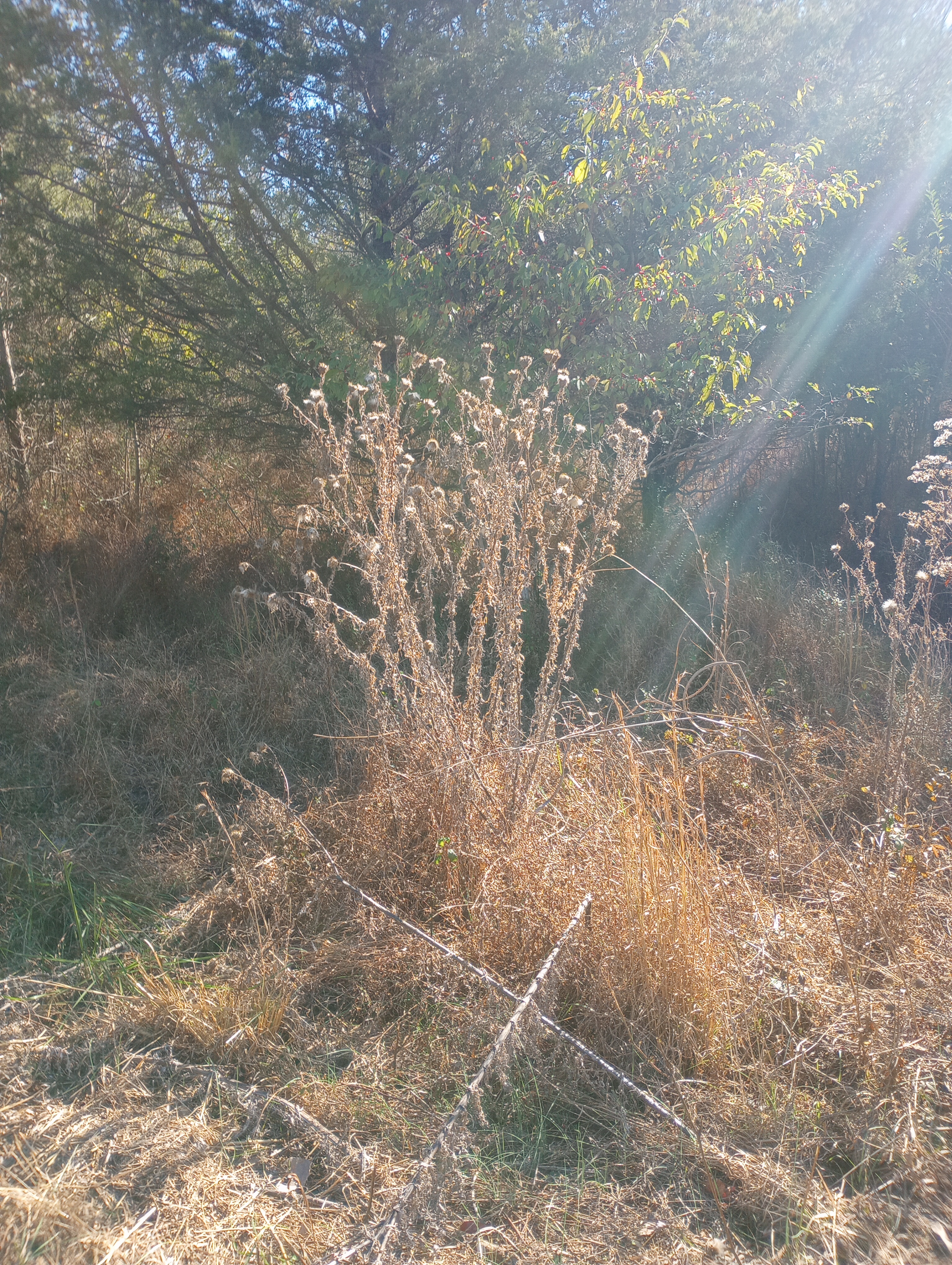
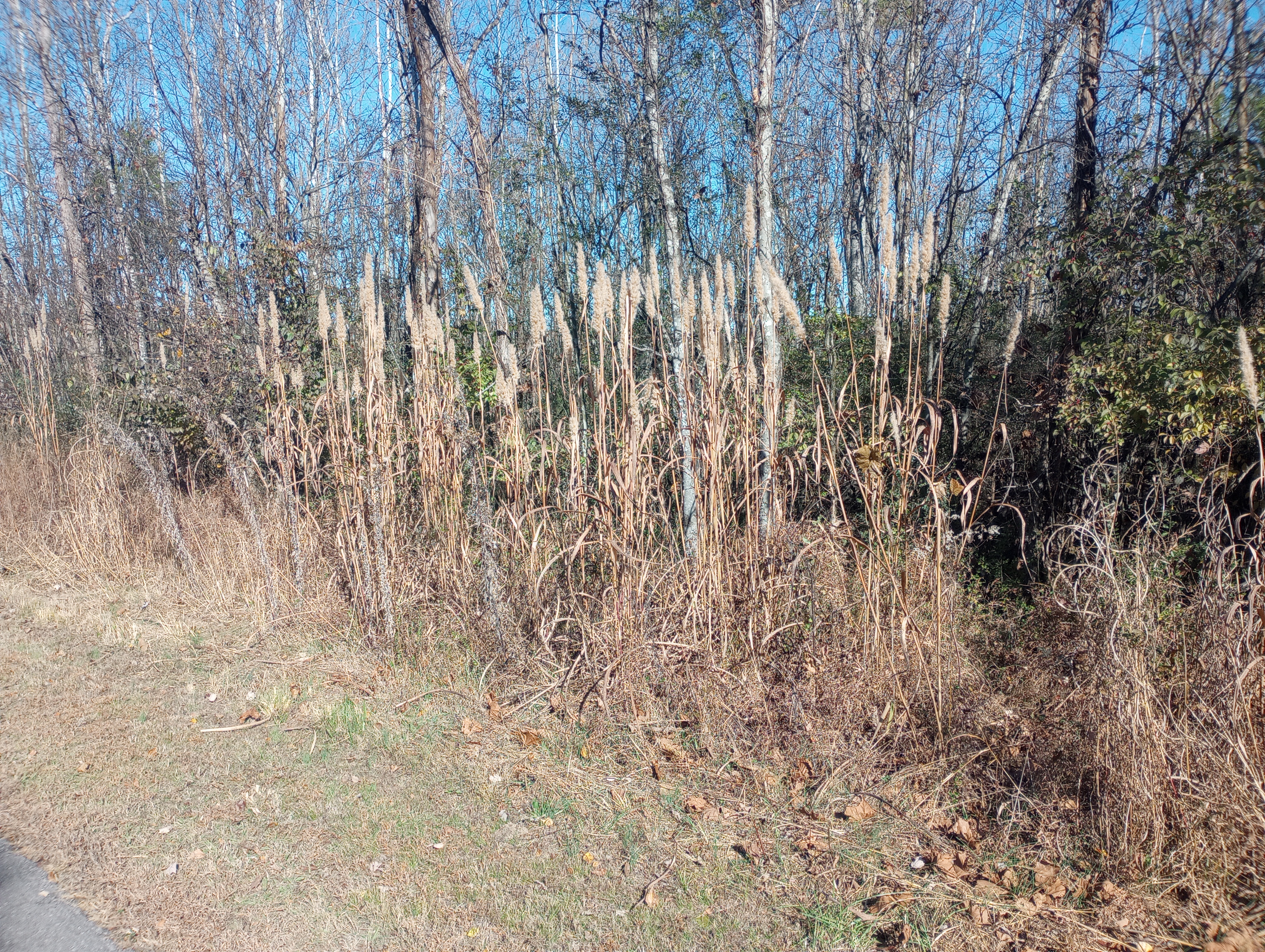
Other sights included massive leaf larger than my hand, the husks and seeds of flowers like tall thistle, coreopsis and whatever else, cattails (I think that’s what they are?), a patch of northern sea oats, and a stag. The stag ran out right in front of me. Not uncommon to see but it was a good looking one, pretty large, and had a solid pair of antlers. That’s the closest I’ve been to one I think. The fen/marsh area is particularly striking right now. Looking very bleak and desolate.
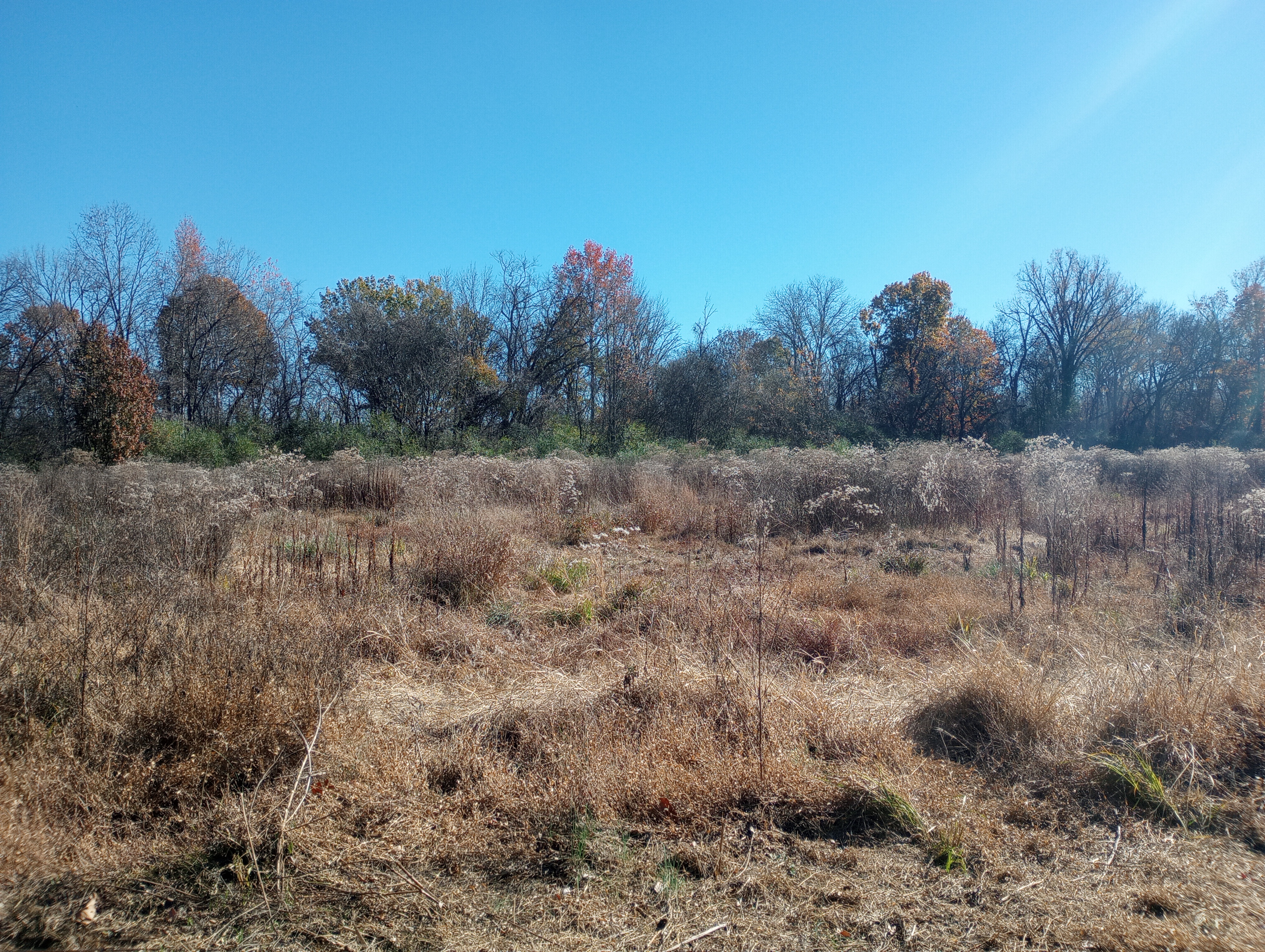
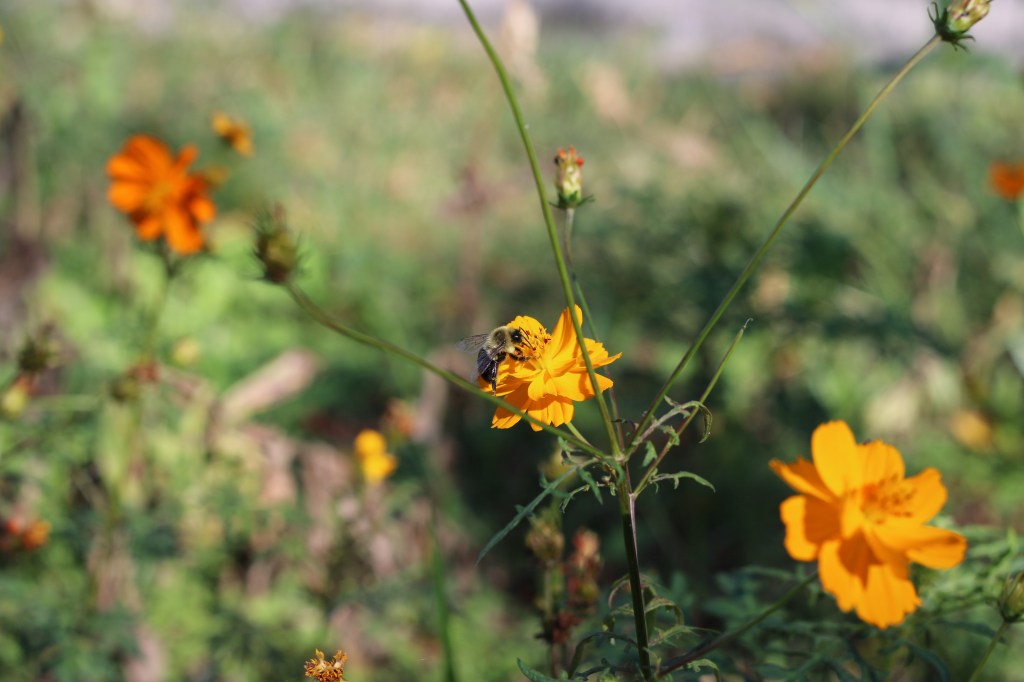
They have cleared the wildflower area. Did they burn it? This must be investigated. It’s completely cleared. They may do that every year, to prevent the trees from taking hold. I would have gone and investigated on this trip but I had done enough. And that can be investigated any time, really. But it’s amazing to see that that field had been so packed and chock full of life, thousands and thousands of coreopsis blooms, birds, bugs, bunnies, and deer, and is now totally leveled, for the season.








































 HAKUMUSU