
I have started the Tennessee Extension Master Gardener program. Somehow, they let me, mainly based off of my pure passion, love and desire. Not via my experience. But I’ll tell you what – my brain wants to know every little bit of this information, and finds it fascinating. I am just eating it all up. Who knew? This obsession continues.
They are wonderful people. I feel like, we all feel like, (37 of us), we are in a room full of people who want to talk exhaustively about the same things that we want to talk about. This is an amazing thing, when someone, rather than hitting a limit, is even one-upping you in what they know and how much they can talk about the thing. The thing being, a white strain of cosmos, using peppers as a natural barrier to keep critters out of the garden, growing a pineapple plant, methods of composting, etc. etc. etc.
Our most recent lesson has been about stewardship, which is a term that is mostly interchangeable with sustainability, and specifically, all about water. I’m just going to share a little bit of what I learned here, because I have thought it was very interesting.
The number one source of pollution in our waterways (in TN, at least), is sediment. It’s just dirt. Isn’t that surprising? It mainly comes from human development that results in bare dirt exposure and erosion. Removing trees, or creating impermeable surfaces that rapidly funnel water into the watersheds (creeks, streams, rivers, lakes). This leads to large amounts of sediment ending up in the water, and this is bad for a number of reasons, such as darkening the water, which can cause issues for the fish and result in higher temperatures in the water, and more heavy metals/chemicals in the water, as these better stick to sediment particles.
The below photo is clearly showing the effects of sediment pollution. (The brown in the water is sediment.) This is happening on a large scale and is the #1 source of watershed pollution.
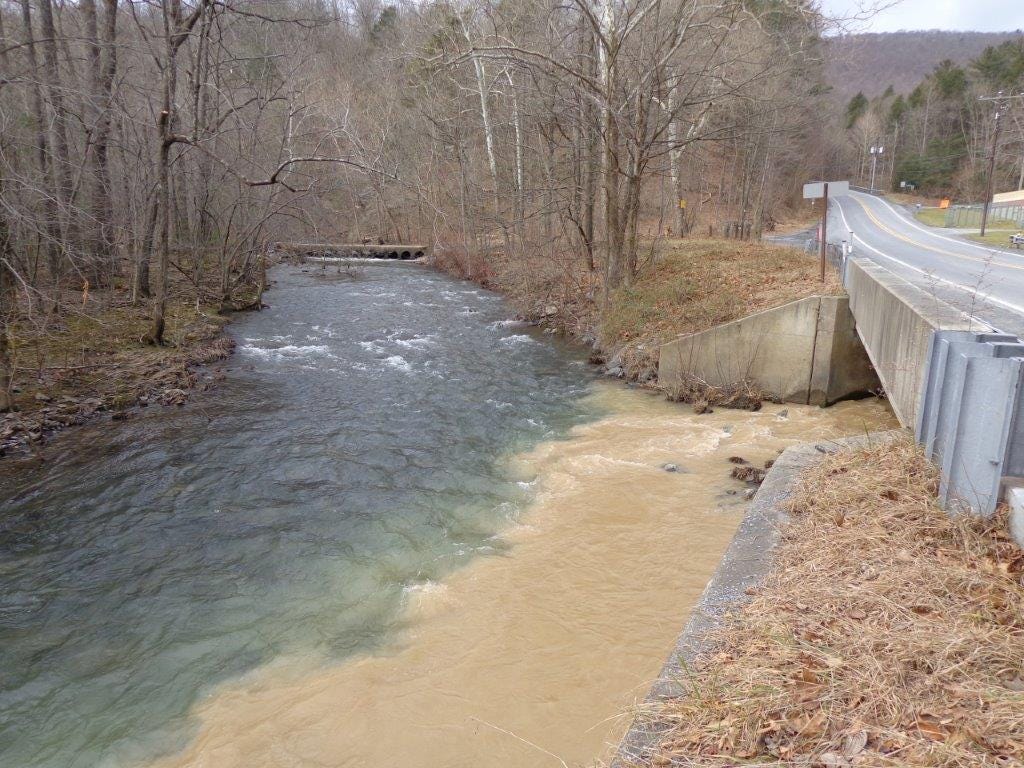
90% of watershed pollution comes from nonpoint sources, meaning, no specific pollution source. Pollution that is accumulated from all over and ends up in the creek or river, as opposed to being directly dumped into the waterway by a specific pipe or factory. Pollution that comes from our yards, from construction sites, from parking lots, would all be pollution from non-point sources.
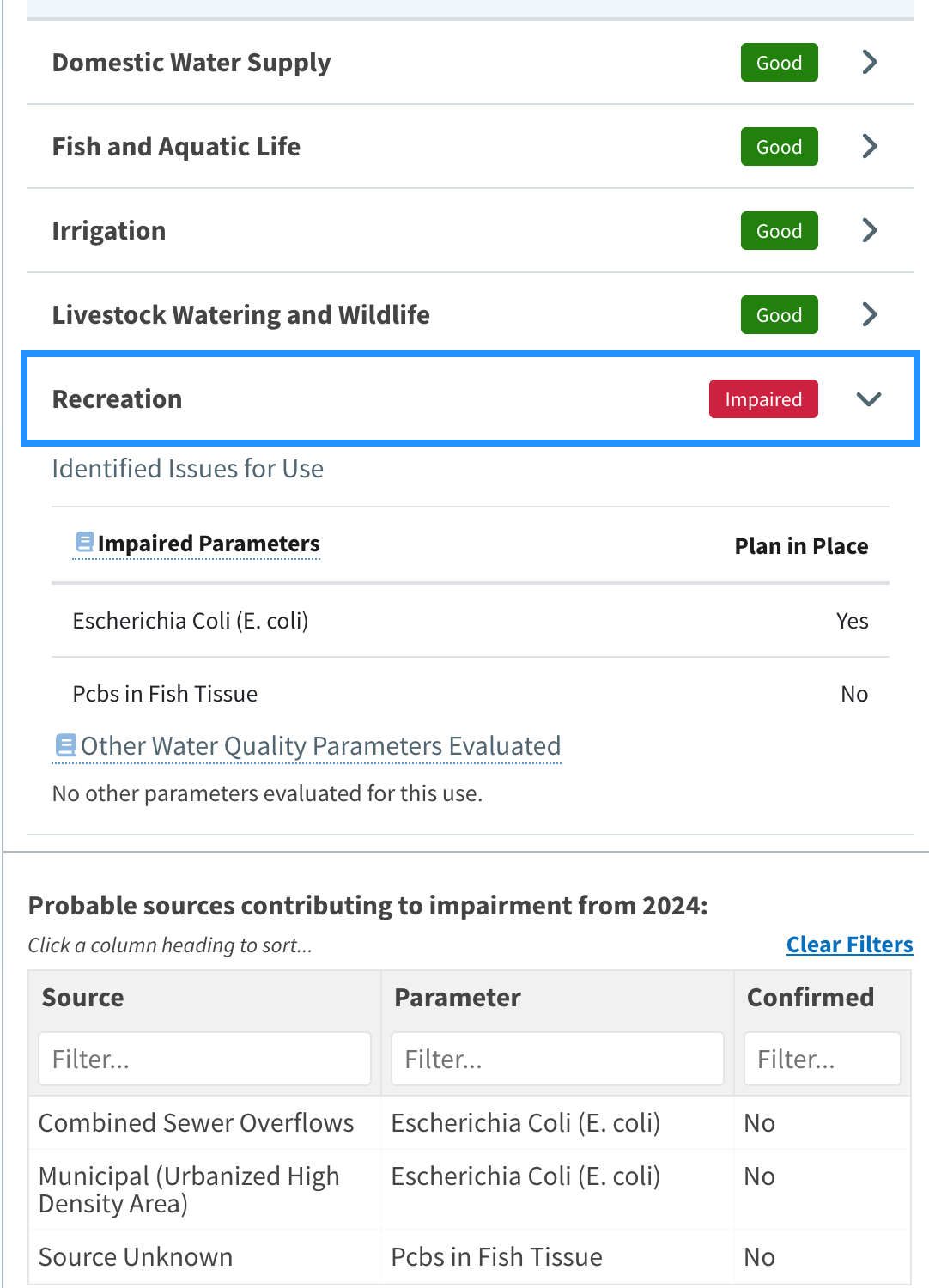
The second largest source of pollution, almost as much as sediment, is pathogens. That is, for example, E. coli. The Lower Cumberland (Cheatham Reservior), that is our largest watershed (the river that runs through Nashville), is considered impaired because the E. coli levels are too high. (It is also considered impaired because of high levels of PCBs, a highly toxic, durable, man-made chemical, accumulated in fish tissues.)
The below image is from an EPA website that tracks the health of watersheds: https://mywaterway.epa.gov/ (You can use this to see what your nearest watersheds are, and what their conditions are.)
An impaired watershed is a body of water that does not meet established state water quality standards and fails to support designated use. And there are about 4,000 miles of impaired streams and rivers in Tennessee.
The Middle Fork of Browns Creek, a large creek that runs off of the Cumberland River, is impaired for a similar reason, having high levels of pathogens, but is also considered impaired because the habitat is too degraded (due to human development activies), and because the levels of nitrogen and/or phosphorus are too high (due to fertilizer runoff).
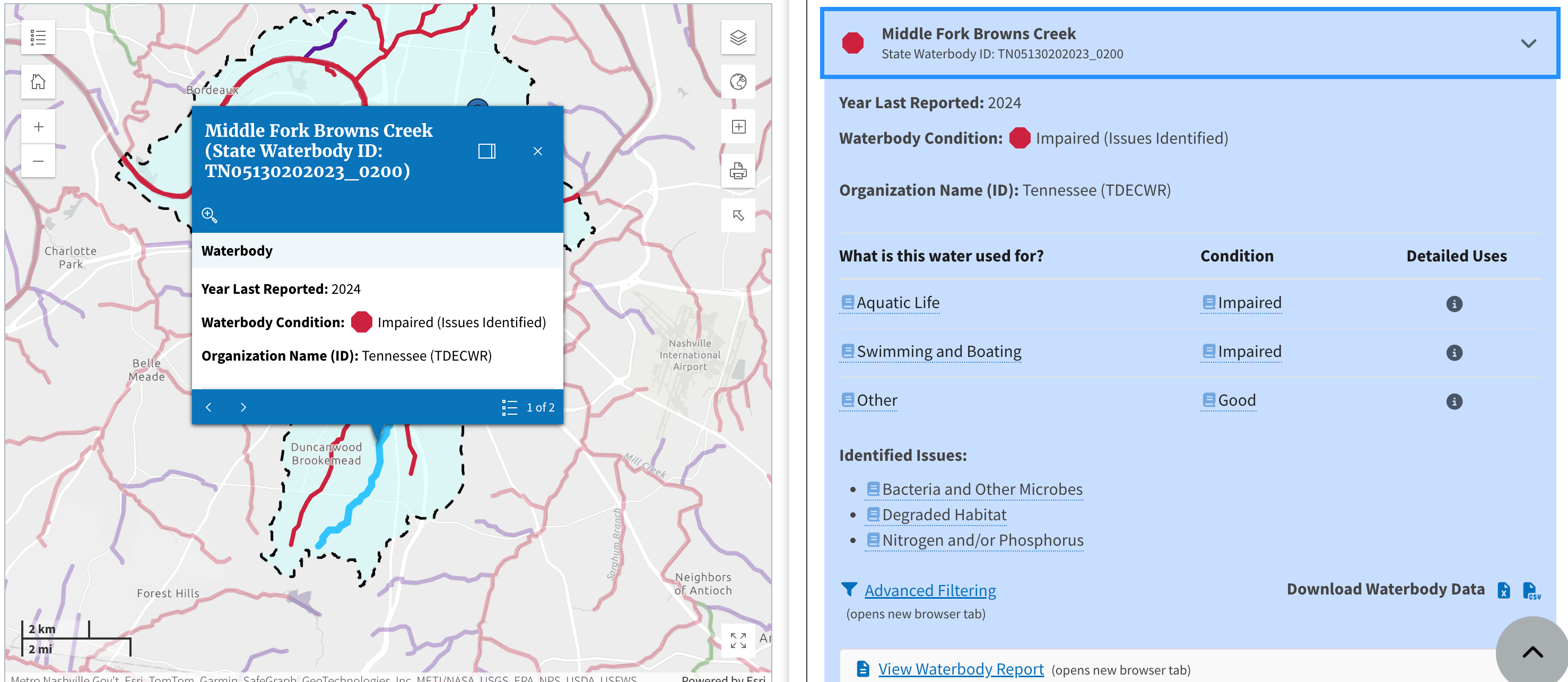
One of the “possible sources” of E. coli pollution for the Cheatham Reservoir is “Combined Sewer Overflows”. That would be from the amount of water flowing through the system overloading the system, and so resulting in overflow. And this is common, and happening because human development is generally not accounting enough for managing and slowing the flow of water to the watersheds. Impermeable surfaces (concrete, asphalt) are major drivers of this, but a house would be contributing as well, by funneling all the water off of the roof and into the stormwater system, as most buildings probably do.
Runoff also carries fertilizers, which are the third largest source of watershed pollution in the state of TN.
So what can we do to protect our waterways? There are many things.
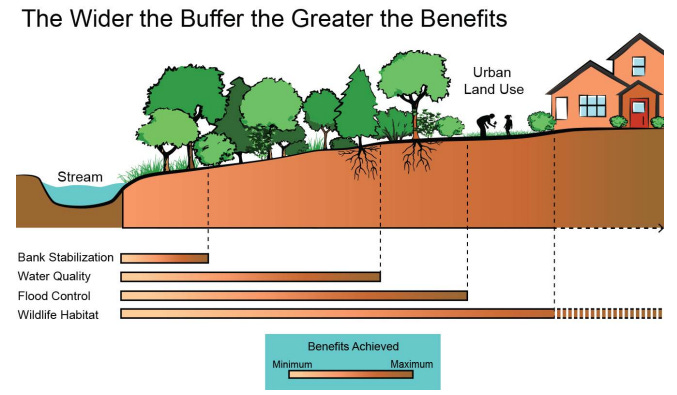
- Plant buffer plants, to protect habitat along the shores of creeks and waterways. They will act as buffers, slowing water that flows into the creek as runoff, and protecting the bank from erosion, which contributes to sediment pollution in the water. (They also provide important habitat for wildlife).
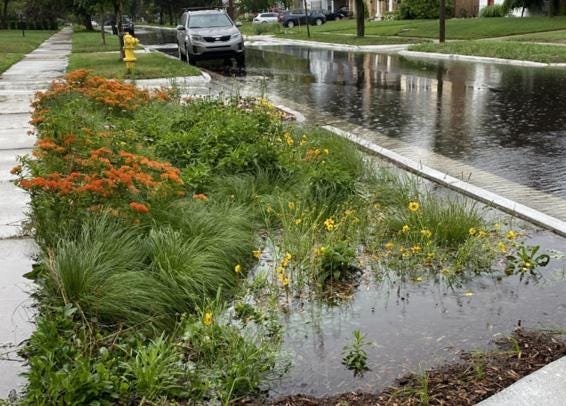
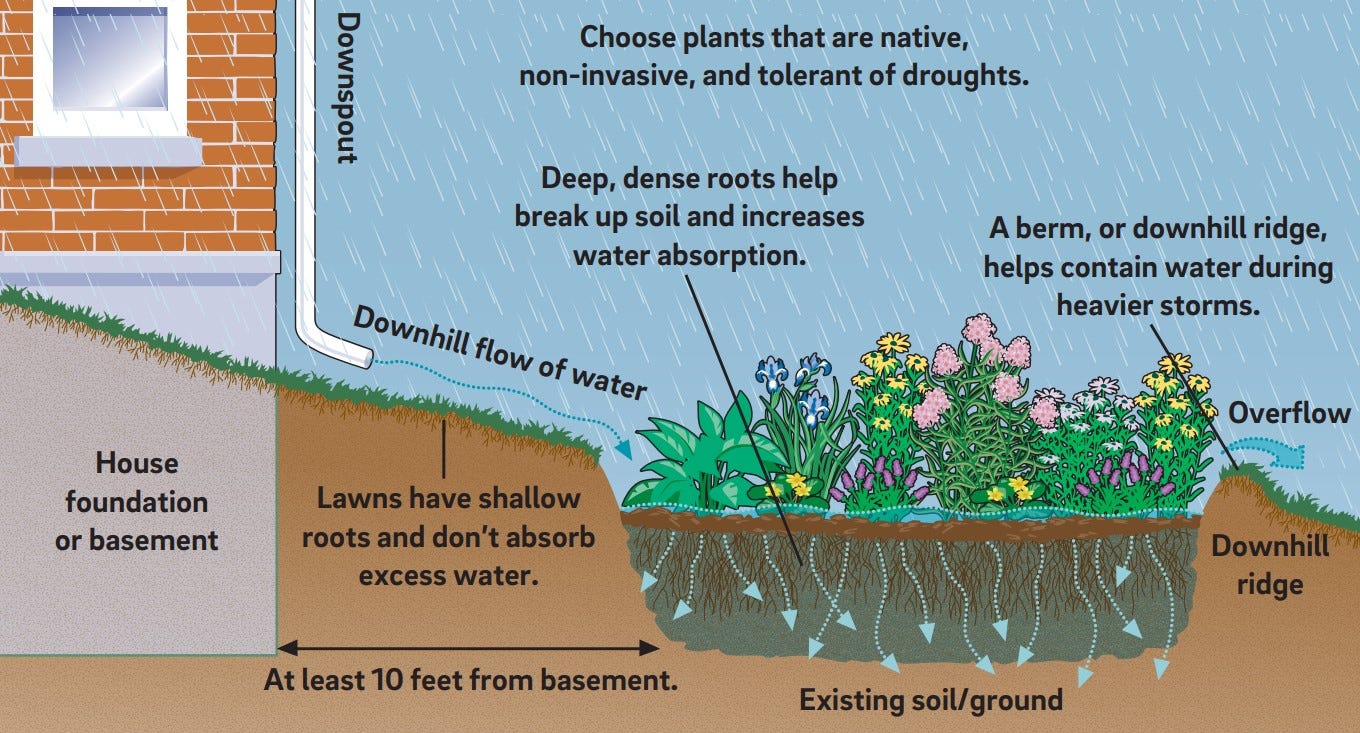
- Have a rain garden. Put plants that tolerate wet conditions in places where water accumulates. Source water (runoff from your roof, water from the downspouts, water running through the street curb) into a dedicated zone full of plants that can make use of that water, absorbing and filtering it.
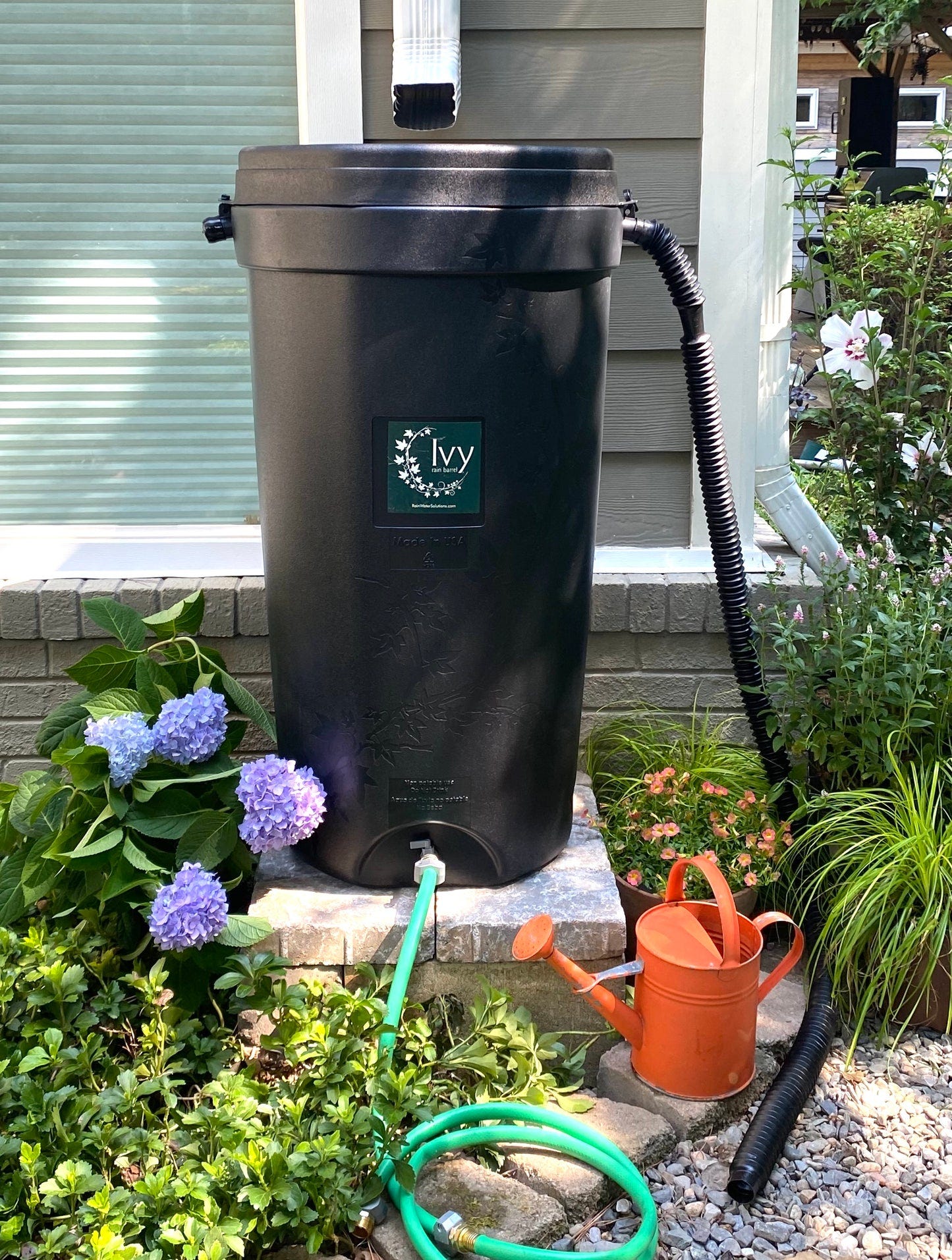
- Rain barrels. Capture rainwater instead of letting it flow as runoff, and then use it as a resource, for watering.
- Permeable surfaces. Gravel instead of concrete, etc.
- Protect bare soil. Bare soil easy washes away in rain and contributes to sediment pollution. Covering the soil with mulch (and/or plants) will increase absorption and greatly decrease sediment runoff.
- Use less fertilizer.
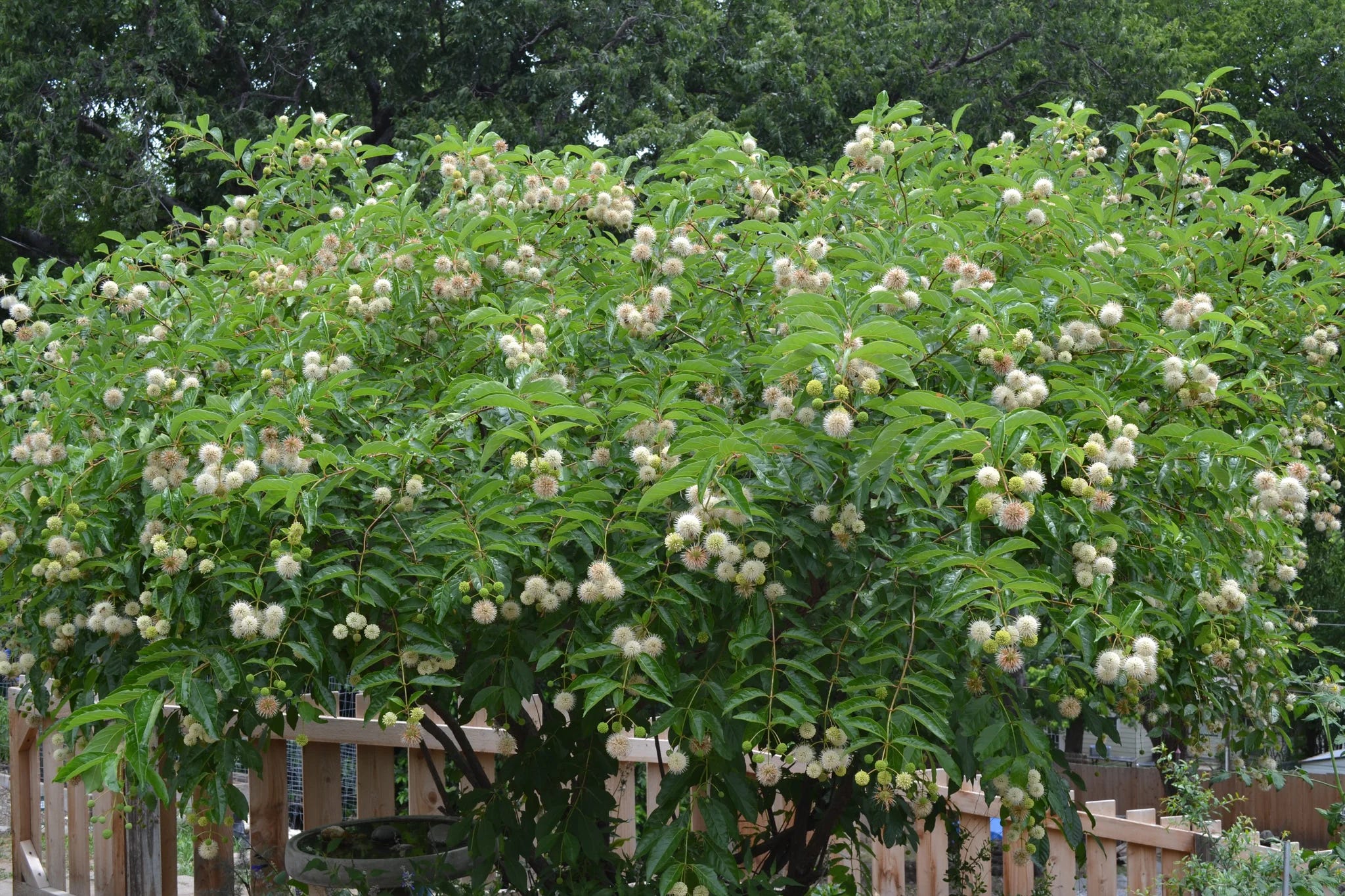
I have really wanted to plant a Buttonbush, and have been enamored with this plant since discovering it at Shelby Bottoms. I thought my yard wouldn’t be able to tolerate one (or at least, it wouldn’t thrive), because we currently don’t have wetland conditions. But it seems that all you need to do to make a rain garden, and create some wet conditions, where the soil stays wetter for longer, is to dig a small depression, and source your runoff into this area (say, from your downspouts). That is your rain garden. And so, by channeling the water into a dedicated place where it can be stored, you can plant plants there that thrive in these conditions. It seems that this is the concept, and I am very interested in trying to create a rain garden, for one, to capture to the stormwater and decrease the load on the water systems, but two, because it will mean I could plant some plants that otherwise I couldn’t have in the yard.
The below image is demonstrating the value of a buffer, between a stream/watershed and urban land use. It will help with erosion control, flood control, improve water quality, and of course, will be good for wildlife. As our expert stormwater management scientist said in the lecture, “any amount of buffer is better than no buffer.”

 HAKUMUSU