Well I really have no idea what that title is all about but I have to keep coming up with these things.
My poetry brain was working overtime last night. I can’t tell you why. All I can tell you is that I settled snugly into bed, after a hard day’s work and a fun day’s enjoyment, tired and ready to get my rest, and then suddenly, relentlessly, I was seized with an attack of unabating poetic inspiration. I wrote a poem, then I wrote another poem, and another, still more, my brain twisting and turning, churning them out like an oven. I don’t know what was happening. After I spent twenty minutes on a monkey poem that I didn’t even want to be working on, I had started to feel possessed and unhealthy, and I had to stop myself, and get in bed and stay there. Something was coming over me last night, it’s clear.
This poem about fleas was inspired by the fact that my legs are covered in what I think are chigger bites, and I was laying there in bed with my incredibly itchy legs, twisting and turning, trying not to scratch.
Fleas
Fleas! Fleas! I’m up to my knees, In 10,000 fleas!
I’m scratching, itching, jumping, Jeez!
Somebody please— Help me get rid of these dastardly, bastardly Good-for-nothing, fleas!
The goose poem ended up being about the classic battle of my father versus the geese that terrorize and poop on his lawn. But it simply started with my brain wanting to rhyme goose with noose.
Goose
Goose, Hey Goose! Tell me when was the last time you felt the noose around your neck— The cold kiss of Death?
And do you want to feel it now? Because I have the power to end all your fun with my plastic air gun.
Stop pooping on my lawn. Go away. Don’t come back!
Or I’ll sic the attack dog on your ass. She’s faster than fast— a great black beast named Daisy.
On geese she feasts. A goose is her treat. She’s a fan of goose meat. And she loves to eat beaks.
So I would advise, You go find another lawn to terrorize with your crap!
The last good poem to pop out of my brain last night was inspired by The Jumblies by Edward Lear, where he writes “lollipop paws”. And I just loved that so much that I guess the word lollipop has been stuck in my brain.
Lollipop
Lollipop Lollipop Call it a Jollypop It makes people happy It’s better than taffy
You lick it and lick it And make it all sticky It can be tricky To figure this one out— How many licks does it take To get to the center Of a Lollipop Jollypop Pollywop
They come in many colors— Pink, brown, and blue— And many flavors: Bubblegum, cinnamon, Raspberry too
If you ever find yourself In need of a treat, Something sweet, Take this:
*From 805B N 12th Street, in East Nashville my home base as of February 2024, and where I will most likely be for at least another year, until July 2025.*
I read recently about immortality projects. It was a theory by some guy as to why people try so hard to do things. They work so hard, strive in their fields, crave fame, legacy, having statues built in their honor, having works that live beyond them, as a way to achieve immortality. “Immortality” but dependent upon others to carry it on, in their memory, in their consciousness. In some way we are all immortal whether we live on in human consciousness or not, because our atoms will still exist, although independently. Matter is conserved, no matter is created or destroyed. That’s physics. So all of the little atoms that are part of you now will always be here in the universe, probably. So if you think about it like that, you are immortal, and also, you have been around for a really, really long time. You just exist now in your current form, and if you achieve anything that anyone is going to remember after you die, and leave your current form, they will just be remembering you as you were in your human form.
I guess that’s something like reincarnation, or reappropriation. I find that comforting. And also, isn’t it nice to think that you have already been in this universe for billions of years? That all of the pieces of your puzzle (at the most basic level), all of your fundamental components have been floating around and doing things here in this world for billions of years, and they will continue to do so after you die? I think that’s comforting.
It’s interesting to me that this is what I’m writing about.
I have never really had a fear of death. Maybe just because I’m young, and death still feels far off for me. I don’t spend a lot of time thinking about it. I have known some loved ones to die, my grandma, my great aunt, uncle Bob. I miss them. Pets, the hardest one being Bonnie, our black lab. I was there in her final moments at the vet’s office with my dad, and we cried like babies. It was a terrible thing, for a while, to be in a world without her, to be in a world without these people. But I guess I have always felt like, that’s just the way it goes. So we live, so we die. It’s just the natural thing. And, in a way, Grandma Marge, Kathy, Bonnie, Uncle Bob, none of them are completely dead. They live on at least in my memory. There are still photos of them, stories of them, out there. There are people still who know about them, and think about them, and remember them.
We live for a long time. Relative to other organisms, we live for a long time. So, I guess we have more time to become attached to life, and to be used to living. Many insects live short, very short lives, relative to ours. As short as 24 hours. Imagine if we lived for 24 hours? What that would feel like? We couldn’t really do it. You would have no time to learn anything, no time to recover from anything, no time to process anything, unless you could do it in an incredibly short period of time. If your capabilities were quickened, and every hour was like for us now, a year, then you could benefit from learning things, from living on something other than pure instinct. That’s what I’m getting at. Because in our long lives, we have the ability to learn, to make mistakes, to fall, and to get back up, to process, and evolve, within ourselves. Insects don’t have time for that. They really just have time for living.
The main reason that I’m thinking about insects right now is because, they are dying every day. Insects, and arthropods, the tiny creatures. Almost every day I am aware of, and even I am the perpetrator of, the death of other beings around me. In one night here, in just about 10 minutes, I killed over 20 earwigs. They were assaulting the house, and they had to be defeated. I could have captured them all, it’s true. I could have released them. I capture and release most creatures that find their way in here, but the earwigs, I won’t lie, I kill them. And I always feel bad about it, and I always apologize, and make it swift and as painless as possible. A few days ago I watched a spider that has been occupying a corner of the house for weeks, which I realize has become a kind of pet to me, and I pass by it and say hi every time I walk into my room, I watched this spider finally catch something, a large ant, and roll it up in webbing, and drink its ant juice. In recent weeks I’ve killed tens if not a hundred mosquitoes. I’ve killed a flea too. All meeting the ends of their lives. That’s a lot of death.
There was a baby possum who died in the street in front of the house. It was run over. I had to walk by its little carcass to get to my front door. That was a sad death.
We want to be immortal. We want to be remembered. To have a legacy. It makes sense. This desire pushes us to do things that are beneficial for our tribe. Creating moving works of art, technological feats, scientific breakthroughs, conquests, inspiring a revolution, being remembered as a good brother, mother, father, all of these things are good for your tribe. Maybe not good for all of your tribe, maybe not even good for yourself, in your life, and maybe not good for the other tribes, but some people outside of yourself will benefit from your immortality project, probably, unless you’re Hitler.
If you died and no one knew, and no one remembered you, so you died the ultimate death to humanity, would you care? What do you think about that? Would you be content to go quietly into the night?
Is an immortality project and the desire for human immortality unnatural? Wrong?
Kurt Cobain is dead, but in a way he is quite alive to me. I actually had to remind myself that “this is a dead man that I’m listening to.” This is a dead man who I’m seeing on my screen, this is a dead man whose voice I hear. And the other members of the band are alive, but they’re not in their 20’s, they’re not the same age as when they played these songs as I listen to them. Time has moved on, but in a way, when I listen to the music, Kurt is alive, Chad, Krist, Dave are all young. Now Kurt as a human is dead, although his atoms are still here, still around on Earth, all of the bits and pieces of him haven’t gone anywhere.
I write for immortality. I write for legacy. I never really decided to do this, I just do it. It is a natural desire that I have. I have many journals now, I’ve kept over the years, and I write with other people in mind, my family, my future. I don’t think I do it because I care about being remembered, but actually, maybe that’s so. I thought I always did it because I just thought they would think it was interesting, this guy, their great great grandpa, or great Uncle, some Swanson in the line, some distant member of the bloodline, this is what he was getting into, this is what he was thinking about, this is what he was working on, and these are the events and details of his life, at that time, as he lived it. History. I think that’s interesting stuff, me personally. I write with the thought that someday, somebody could read all of this and know who I was, in a way, and what I thought about, how I lived, what my struggles were, what kinds of adventures I had.
I dismantled a Chinese Privet tree with my bare hands. I can see the headless, torn trunk from the window. That’s why I’m thinking about it. It’s an invasive species here in Tennessee, (I’m finally getting comfortable spelling Tennessee), as I recently learned volunteering at a local park. A really, really successful invasive species. Our fearless leader, Ian, said that I would see it everywhere now, and he was right. What has been seen cannot be unseen. It’s all over the place, including in my small yard, all along the fence of our driveway, between our house and the neighbors. I pulled it all up, tore it, four or five plants, and then there was the big mamba jamba. Chinese Privet can get big, like 8+ feet tall big, although it’s not thick. It’s lithe and springy. It was interesting that there were no birds’ nests in the branches, I don’t know if they could even support them. I think about that because a tree of similar size right next to this one had two birds’ nests in it, but the juniper had none. The thing about at least this invasive in particular is that it is extremely dominant now, but provides very little ecological value (so I’ve read). It doesn’t really do anything for the environment, it doesn’t feed anybody, and it seems like it doesn’t shelter anybody, and it bodies out other native plants that do. So it’s obviously terrifying to see literally thousands and thousands of Chinese Privets thriving all over Shelby Park, all over Nashville. The last one in my yard, it was a big one, about 8 feet tall, and I just left it there after this first day of juniper removal. A few days later though, I was caffeinated, I was inspired, and I was ready to do some damage. So I twisted it all apart. I had no tools, and just had to use my bare hands, but they did the job, although it was hard work. It takes a lot to get a Chinese Privet to snap. It would probably be impossible to take down in a storm, because it has really nebulous, sprawling roots, and is so incredibly flexible. I found that the branches would break when I bent them all the way back 180 degrees, and only then. But they would break, and that was the way to break them. You just had to keep bending, keep bending, keep bending. The actual trunk of the tree, it’s like an inch in diameter, I’m guessing from looking at it from the window, I couldn’t take down because it’s grown into the chain link fence. It’s kind of weaved in there.
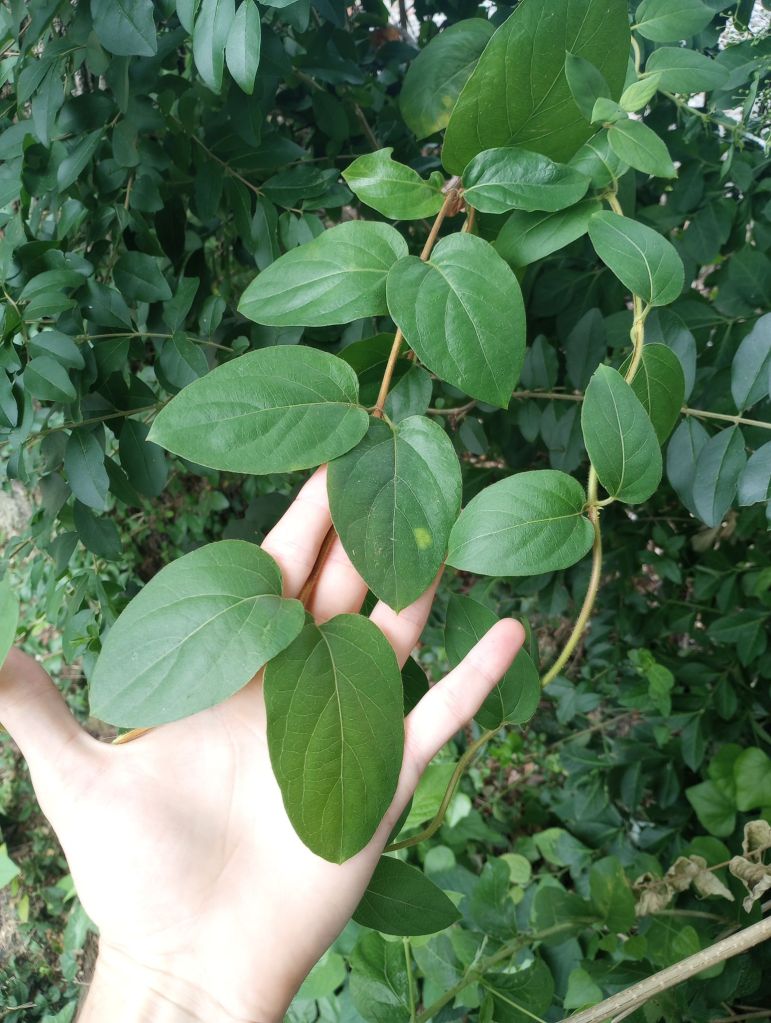
There are other invasive plants here, another one is Japanese Honeysuckle, that is really common. I’m not confident in IDing that one, but if it is what I think it has been, it is also completely everywhere, almost as prolific as the Chinese Privet. I think there is actually one right across from me right now, because I just Googled a photo of it, and looked out of my window, and see what appears to be exactly what the Google has just shown me.
Japanese Honeysuckle?
Aaaaand, I found it. Well, I really think I did. It wasn’t what I was looking at from across the window though, that’s something else. I kept scouring and I found it after much hunting, one large vine. It took me about 30 minutes here to decide if it really was Japanese Honeysuckle. Part of knowing what something is, is knowing what it isn’t. If you know what other plants it could be it makes it a lot easier to identify them. That’s why I don’t feel so confident in identifying plants yet, because I just don’t know many plants. So I don’t really know what else is out there, if there are any lookalikes, any trickery. But it seems that there are two native honeysuckles in Tenneessee and neither of them really look like the Japanese Honeysuckle, and it did seem to match the photos almost perfectly. It’s much easier to ID things when there are berries and flowers. If it was in bloom this would have been a done deal in a minute.
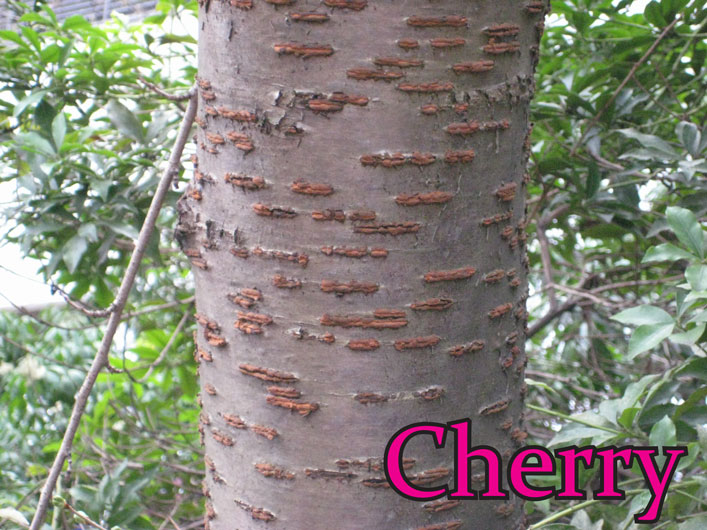
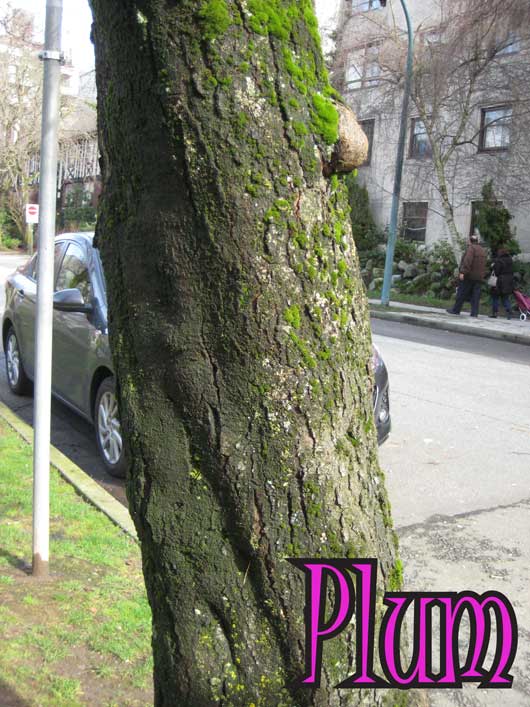
In Japan there is a plum tree that looks a lot like the sakura (cherry) trees. Similar leaves, similar flowers, similar size, and for a long time I thought the tree outside of my apartment complex in Ozu was a sakura tree. It was actually a plum tree. You can be easily duped, but there was a good tell if you knew it, which was that the sakura trees have a distinct horizontal striping pattern on the bark, and the plum trees don’t. There are a few tells, but that was the one I looked for because it’s so obvious.
I’m enjoying writing for you. I’m enjoying writing for me, too. I think that if I enjoy it, you will enjoy it too. I feel that way about art. Generally, if you like it, other people will like it too. Your taste probably determines how many people will like it. If you have a broader taste, or more niche, but at least if you like what you’re making, however broad or niche the appeal could be, somebody else is going to like it too. I write this because I do think, as some other creators probably do, “Will anybody actually like this?” Or, “Will anybody care about this?” And I think, if YOU do, then the answer is yes, there is at least one other person out there who is going to like it as much as you do. And of course, if you don’t like it, your creation, still there can be people who will like it. It could be the greatest work of art they have ever beheld. We probably shouldn’t get too hung up on whether anyone cares, or anyone likes our work or not at all, even though you want to. Just do your best, and be authentic, and let the people decide.
I was talking about the local park with all of the invasive Chinese Privet, where I did the volunteering. That park is called Shelby Park, and it’s a really great park. We are blessed to have it here in East Nashville. It’s huge, many square miles, (don’t ask me how many), many football fields, and has a lake, baseball fields, tennis courts, a dog park, walking trails, and one of my favorite parts, an enormous train bridge in the sky, that carries trains with literally hundreds of massive cars. So above your wonderful park with fields and forests and children playing, there is occassionally hundreds or thousands of tons of iron and steel and coal and things chugging across the sky. There are two benches on a hill that face the lake, and sitting on these benches you can see a large section of one part of the park. You can see out over the lake (maybe I should call it a large pond, it’s not big enough for lake status), and to your right you can see some flat grass areas, trees beyond, people fishing, people walking on the path down in front of you, walking around the large pond, and beyond, you can see baseball fields, cars driving around, and then further, at the edge before trees and the more forested section of park, off in the distance, you have a perfect view of the giant train bridge, above it all, and carrying the heavy, long trains. I like to sit on that bench and survey, and one time I was sitting there, and I watched a train pass, and I just marveled at it for what it was, a product of our human ingenuity, our engineering prowess. I felt like I had taken trains for granted, honestly, because you know, they’re not new technology for me, they were already commonplace and in the world when I showed up here, and I think that for the first time I really appreciated what exactly this train was doing, and after what felt like a long time, that one car after another car was passing by, I started actually counting them, because there were so many, and I counted the rest, which was something like 80, and so that train was probably carrying 200+ cars, of coal, gas, whatever else was in those cars. That one engine, all that material, thousands and thousands of pounds, and across that giant bridge, with all of its tresses and beams and metal, able to support all of those thousands of pounds of train, and that was all done by human hands, all designed and built by human hands, and human minds. Incredible.
I brought us back to Shelby Park because I wanted to tell you about the deer in the fields. There is a wild grassland field at Shelby Park that is probably about two or three football fields big. Tall grass, with wildflowers and things. And there is a pavillion there, a small viewing platform that raises a bit above the field, so you can look out over all of it. I had been to this field when I first moved here in winter, and it wasn’t much back then, kind of like a corn field is in winter, with just some leftover dead stalks of corn, the grass being all dormant, but just recently I had gone back there, and it is now completely stunning. And the best part about it were the deer. There were several deer, out among the grass, mostly hidden, but you could see the tops of their bodies, and their heads when they would raise them up, several deer on their own, out there in the grass and the flowers, munching away, and being deer. I’ve never seen deer in an environment like that, and I was there as the sun started to set, in that warm glow. It was special and beautiful. I felt like I was seeing the Earth before humanity. There was a little cottontail rabbit hanging out in the short, mowed grass around the pavillion, at the edge of the tall grass, along with a big ol’ doe, who kept giving me suspicious looks. She was keeping an eye on me, cautiously, but when people came by with their dogs, she would freeze, and kept her eyes on the dogs until they were out of sight. I’ll have to go back and get some photos of this meadow for the blog.
I’ll also have to photograph the little swamp that borders the forest and the meadow. There is a variety of interesting terrain at Shelby, truly. Between the edge and meadow, and again on the other side, there is some swamp/bog ground, with dead old tree trunks, my guess is dead from the roots drowning, and tufts of bushes and things. There was a family of deer splashing around and grazing in the swamp too.
Actually I’m calling it a swamp but I don’t think it is a swamp. I just did some Googling and now I’m sure it’s not a swamp. But is it a fen, bog, or marsh? That’s the million dollar question.
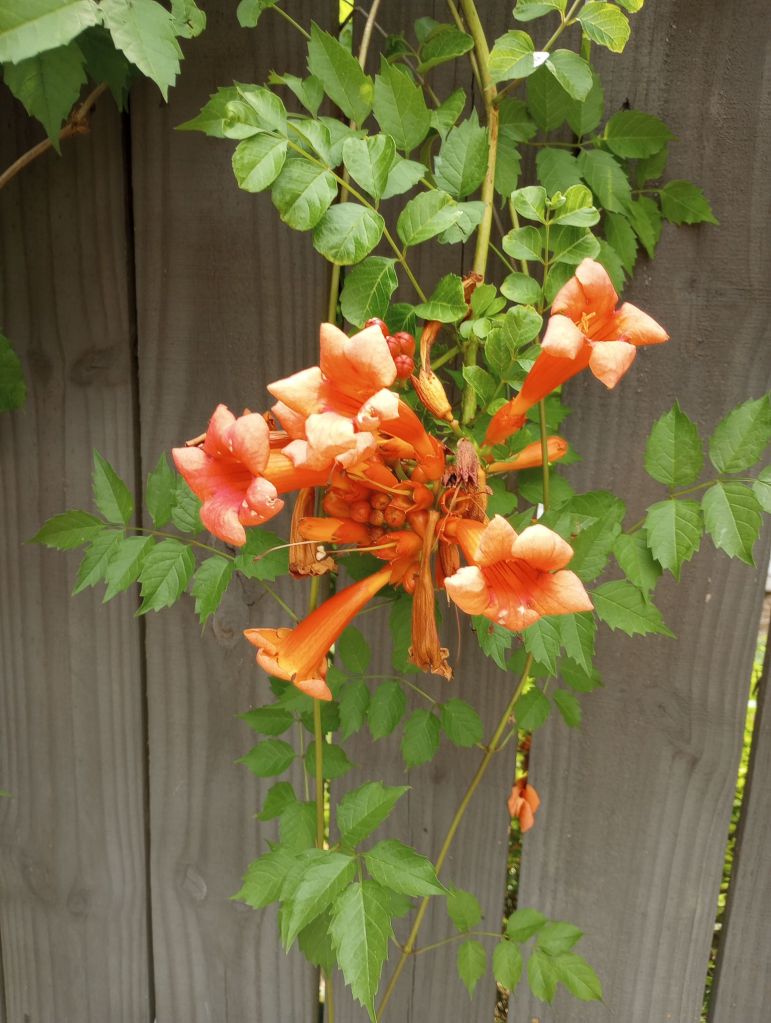
After thinking about honeysuckles I noticed this one on a walk. One of the native honeysuckles, called Coral or Trumpet Honeysuckle (I hope I IDed it right)
As I was typing this sentence (on Sunday), something caught my eye from the window. It was a small rabbit, or should I say large bunny, bounding across the lawn. I’m writing this time from the second floor bedroom, on a desk in front of a long rectangular window that allows me to look out over our humble kingdom. From this perch I can gaze out over the yard and – wow, there goes another bunny! That one was not bounding, that was a hurried scamper. A comical scamper. Boy those things can move quick, can’t they. I don’t think that was the same one, I would have noticed it come back across the yard. Same size though. Could be siblings. Could be twins. I guess they’re all kind of like twins, aren’t they, because they all come out at the same time. Twins, triplets, quadruplets. There’s a word for this – littermates. Yes, littermates.
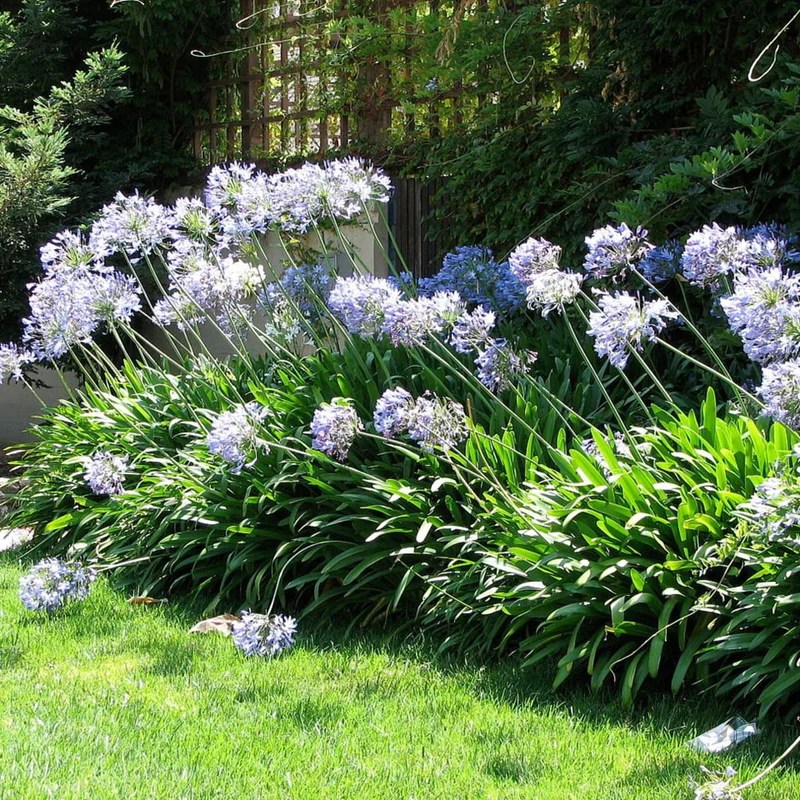
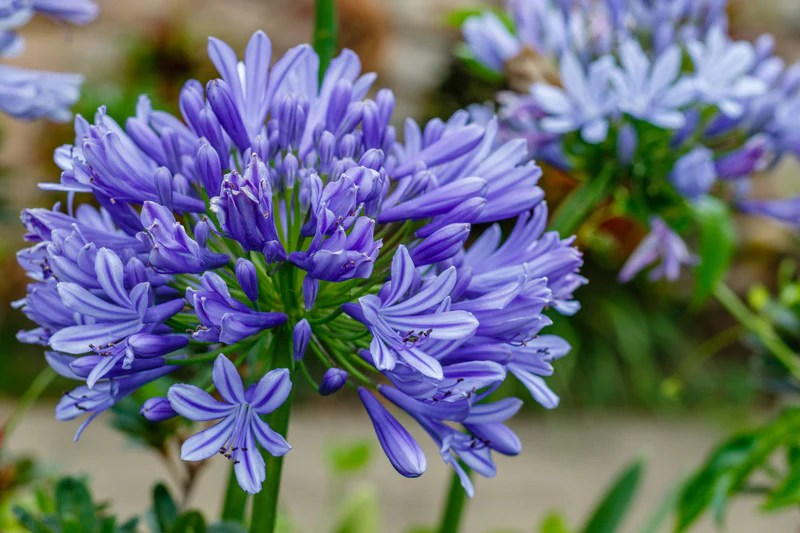
This is extremely stream of consciousness. You’re right along for the ride with me here. I can see all of these things from this window, and more, because I can see the feeder from here. And the lake. I should say, the feeder complex. I have been here for the various stages of this aviation feeding station’s development, and would say that we can now officially call this a complex, the most recent addition being an oval-shaped mulch patch with African Lillies, for the hummingbirds. They like those African Lillies. Here’s a photo, courtesy of the internet, of what they look like.
African Lily – Agapanthus africanus
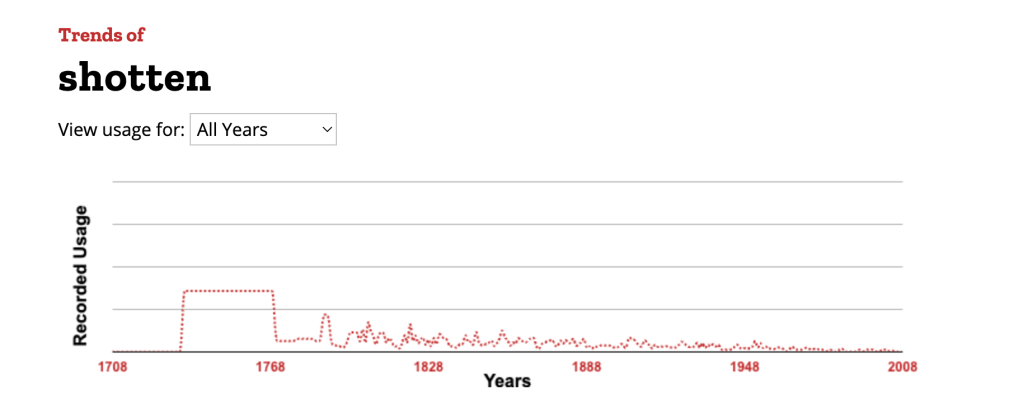
In the last paragraph, I wrote, “oval-shaped”. When I wrote that sentence, I first wrote ovular, you know, like circular, or rectangular, but it immediately struck me as sus, and my intuition was correct. That word is already taken. For things related to ovules, of course. The English language is weird. The other day we were watching soccer and I said something like, “She’d just shotten the ball” and the parents stopped me and said, “Shotten??” Got, gotten, fine. Shot, shotten, no sir. Gotten is still alive in the common vernacular but doesn’t have to be used (I just got home, I’ve just gotten home), but it might go the same way as shotten, and die out someday. Because, I just did some Googling, it’s not that you can’t say shotten. It’s not incorrect, it’s just a dead word, listed by the dictionaries as obsolete. Once upon time it was used, if we can trust this nice graph from Collin’s Dictionary, some time in the 1700s, and who knows how much before then.
Anyways, back to the African Lillies.. Ours are yellow and orange. They’re dainty things. So now we’ve got some of those below our feeders, of which we have four hanging from two metal poles, that are four feet high or so, and one hanging from a cottonwood next to the mulch oval. From one pole, there are three smaller feeders: one with the sugar water for the hummingbirds, with little fake flowers for them to stick their tiny beaks into, a standard one, we’ll just call it that because I can’t really tell what’s going on with it from this angle, but it looks similar to the feeder hanging from the cottonwood, which has a little ledge in front of it that the birds and the undesirables (the squirrels and the chipmunks) perch on and pull seeds out through a slit in the bottom, and then there is a sack of smaller seeds, with a thin sieve-like mesh skin, that is favored more by birds with skinnier breaks. I’m thinking that the nuthatch might go for this one, and speak of the angel, the nuthatch has just landed. The hummingbird has just shown up as well. It’s a whirlwind out here. At this moment, I can see these birds: a female cardinal, four, then six sparrows, a hummingbird, a nuthatch, a few geese, far off, and some other kind of sparrow, or maybe a chickadee. These guys n’ gals are out here partying every day. Attached to the sack is a small bowl with jelly for the orioles. They were around earlier in the summer, with the red-winged blackbirds. They’ve both gone away now. Hanging from the other pole is a massive multi-storied megafeeder. This is monopolized by the sparrows. There is currently a sparrow at every feeding port, and they’re fighting to keep it that way. The nuthatch keeps trying to get in there. He flies back and forth, looking for an angle, a way in. He finds it, or forces it, gets a few seeds, and is chased off. He’s my favorite of these birds, I have to say. Something about the way he hops and skips, the way he swivels his head, and pulls seeds out of the feeder with his long, sharp beak. He trawls the sides of the cottonwoods, poking and prodding, snapping juicy morsels up out of the cracks, and possibly hiding seeds. I read that birds do that, wedge seeds into the cracks of trees. He’s got a very pretty blue, grey, white, black coloration. A lot of personality in that bird. He could be a she, I actually don’t know. Another hummingbird has just shown up as well. It’s now confirmed that there are two hummingbirds around.
A lot of action going on down there, man. You could watch it all day, especially if you were a cat. From here would be great, but from our downstairs window, a large, three-paned window with a fullscreen view of the feeders. That view is every cat’s dream. Cat heaven. And Daisy heaven is looking at fish. It doesn’t take much, with them. I was sitting out on the deck in the rain yesterday, right under the ledge of the house. I was only being sprinkled on. It was a soft rain, the temperature was cool, but a very comfortable, perfect cool, not chilly, and with low wind. It was just quiet, but not unsettlingly quiet, not dead silent, just quiet, with only the gentle white noise pitter-patter of the drops, on wood, water, and leaves. And with the fresh scent in the air, the fresh scent of earth, of wet wood, of rainwater. Daisy was out with me, laying beside me near the steps, staring off into the distance, out between the large trunks of the cottonwoods, at the geese in the yard. I sat there, watching her, watching the ripples of the water on the surface of the lake, watching the sky, watching the geese, and in that moment, so full of calm, my senses so pleasantly stimulated, a little thought popped into my head, that this was heaven. It was a fleeting thought, really. But it was a solid one. I wasn’t out there for too long before I felt restless, and I didn’t stay. For that short time, though, I guess I had a little taste of it. A brush with the divine. And you know, it really doesn’t take much. It doesn’t take much, to be happy. And it doesn’t have to cost a dime.
Now it’s Monday. Enough talk about the birds and the wind and crap like that. Let’s get down to business.
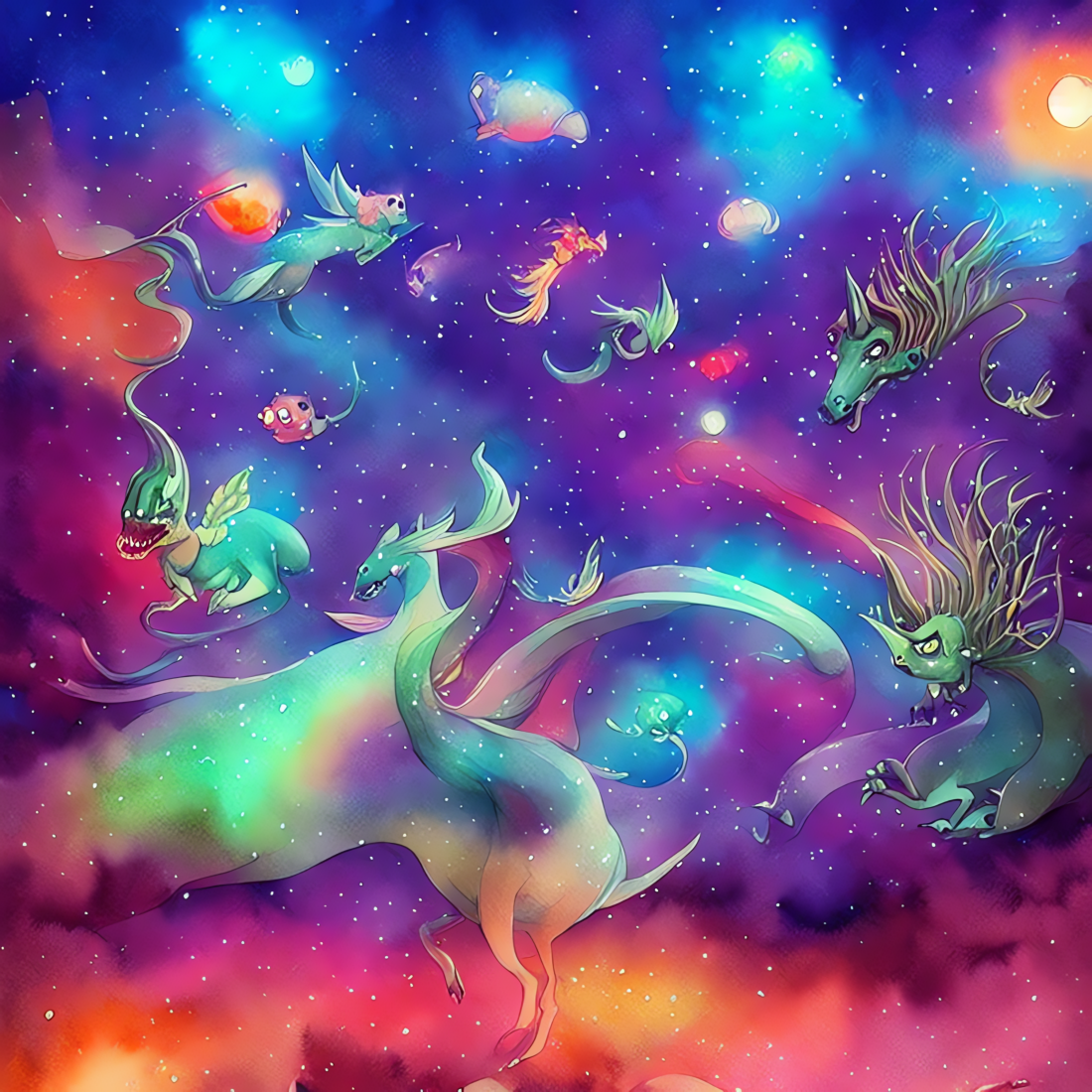
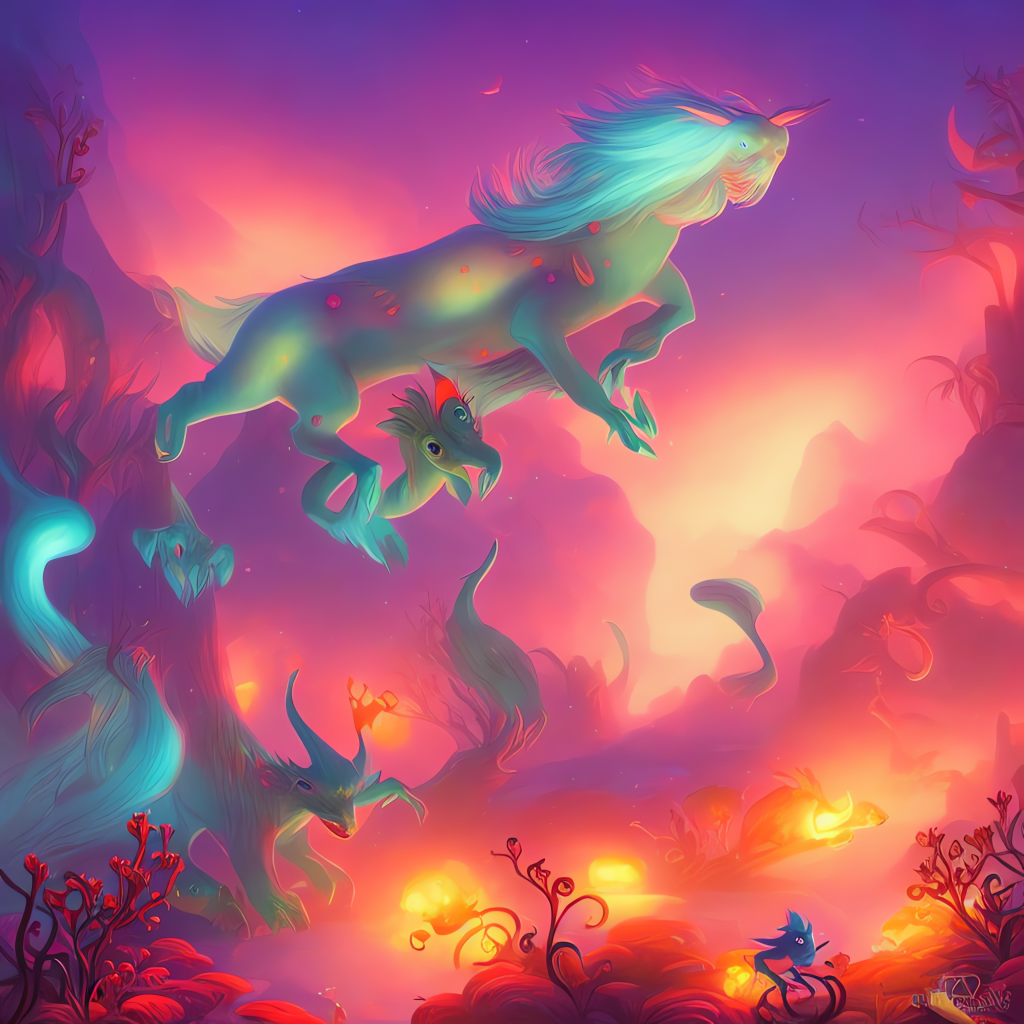
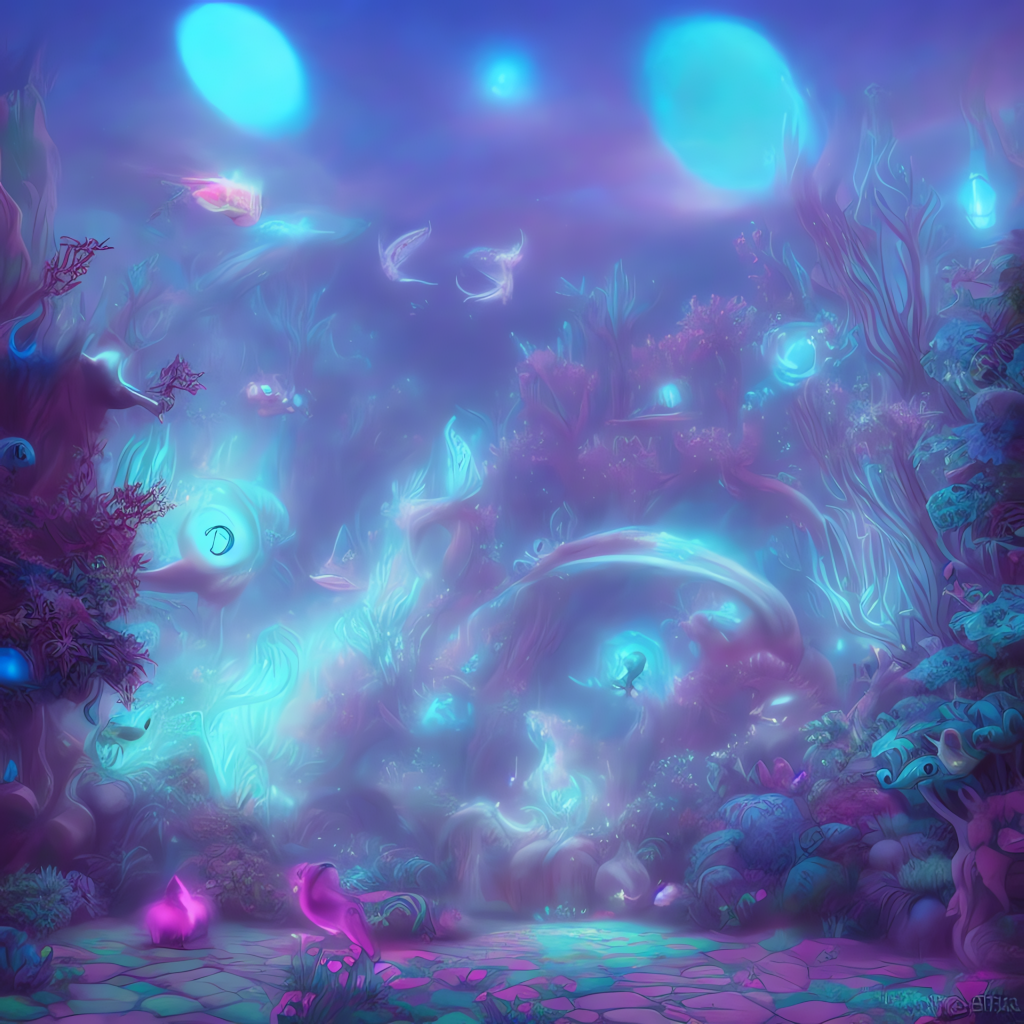
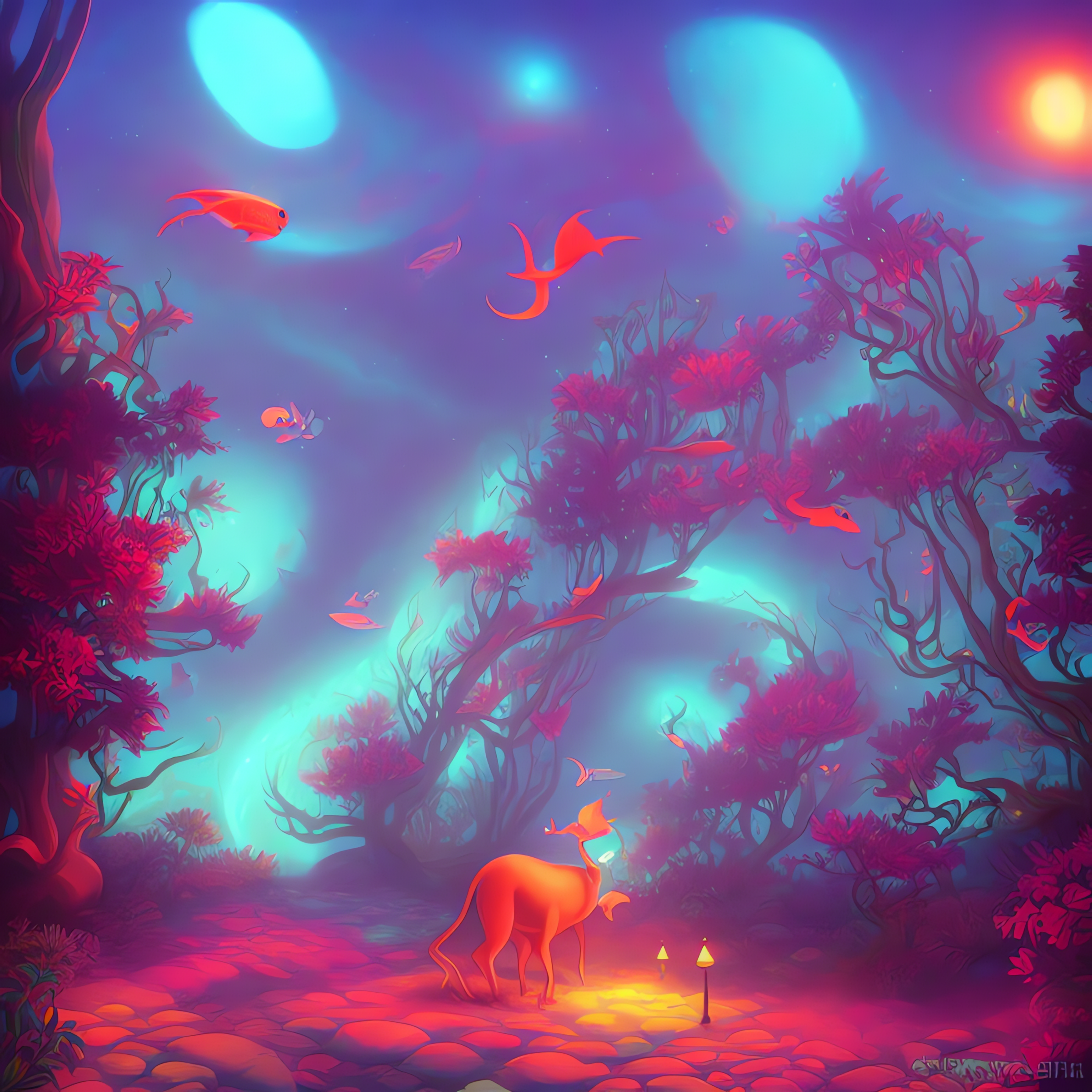
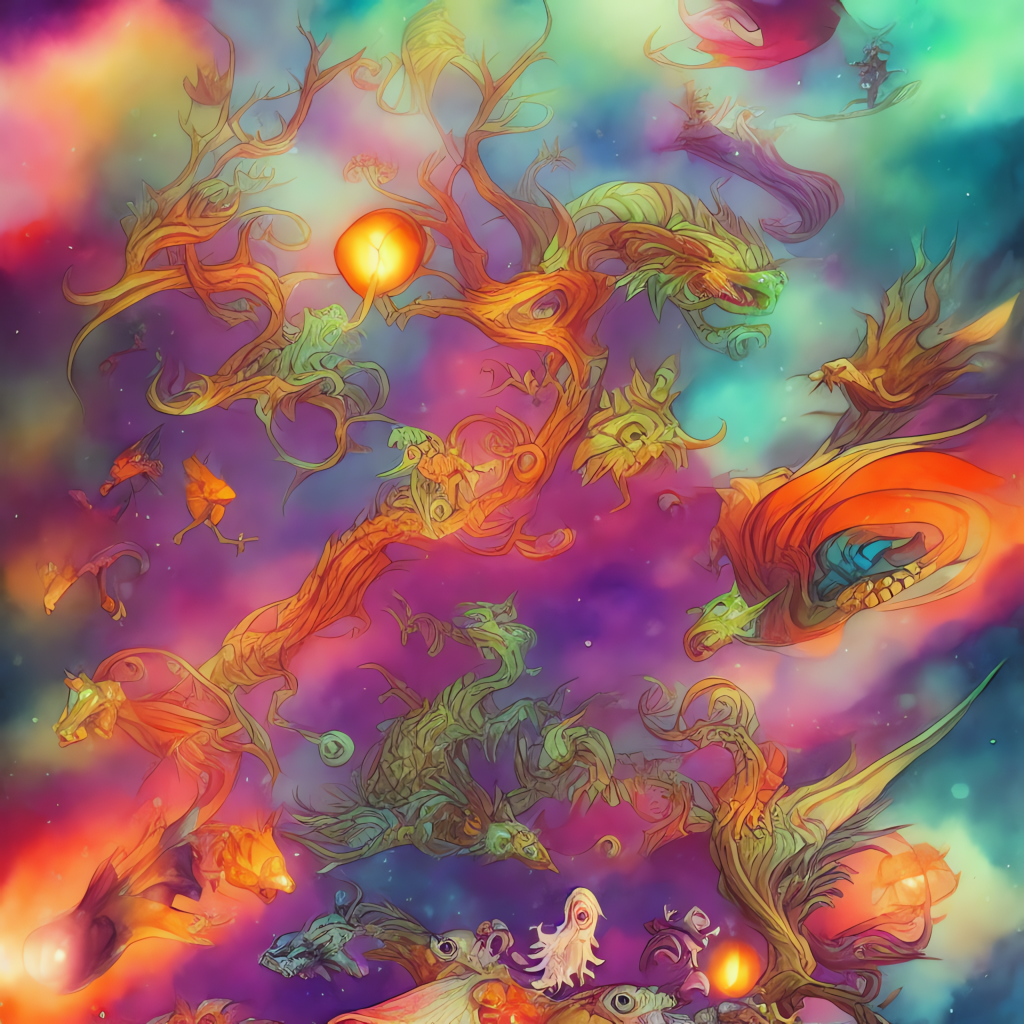
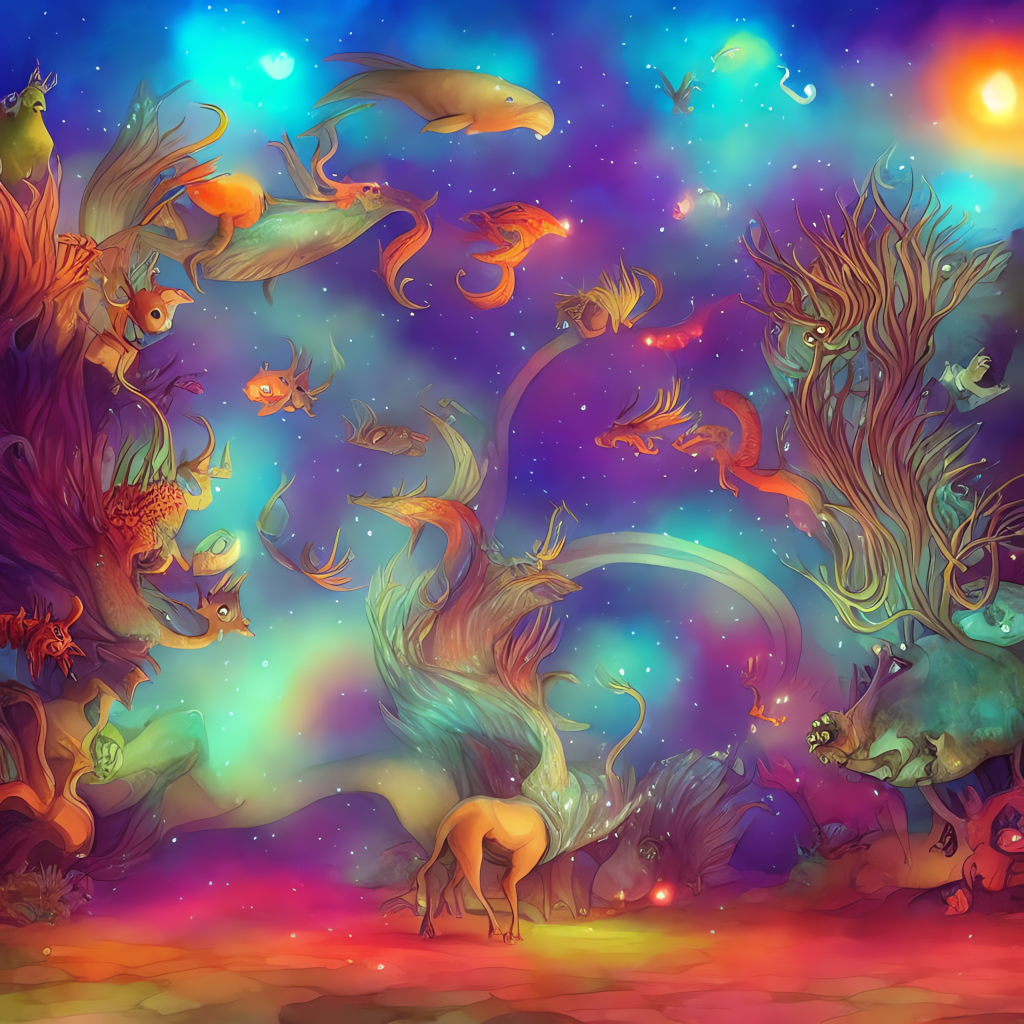
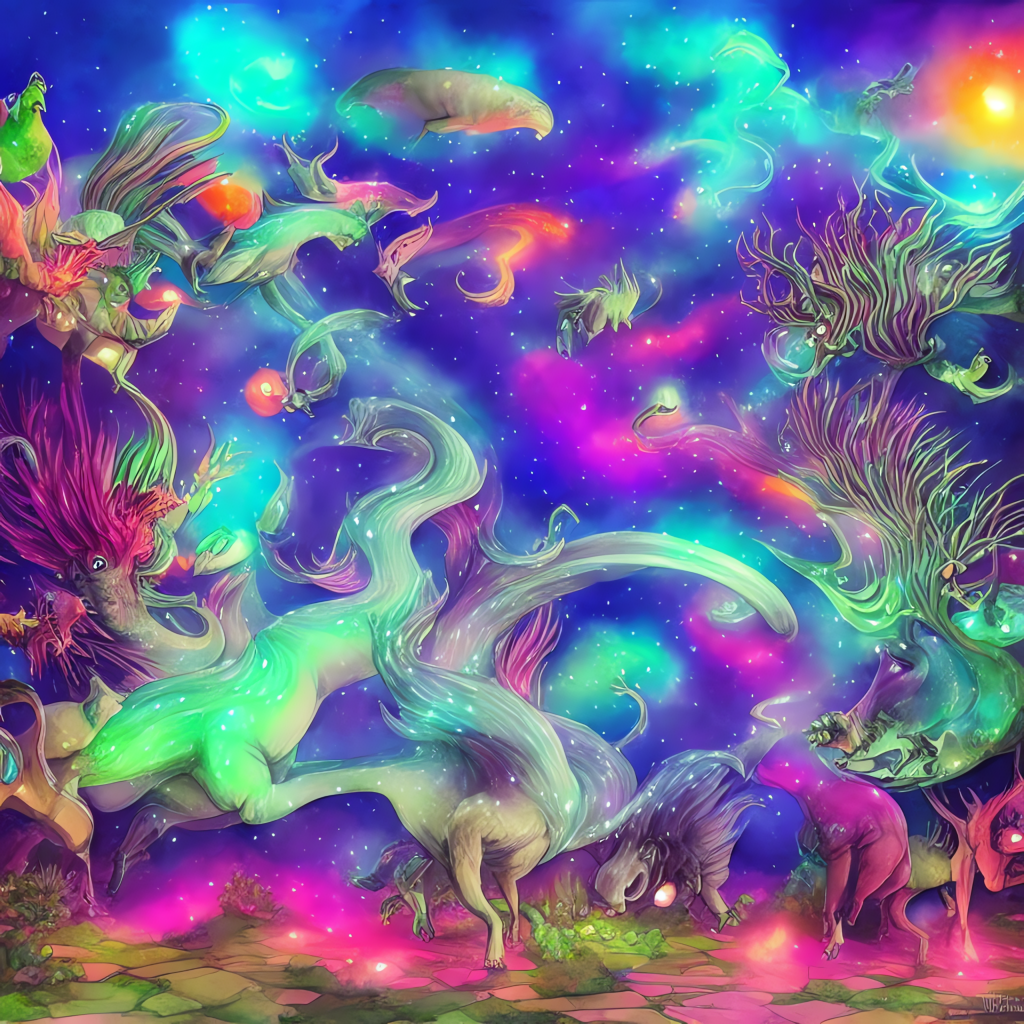
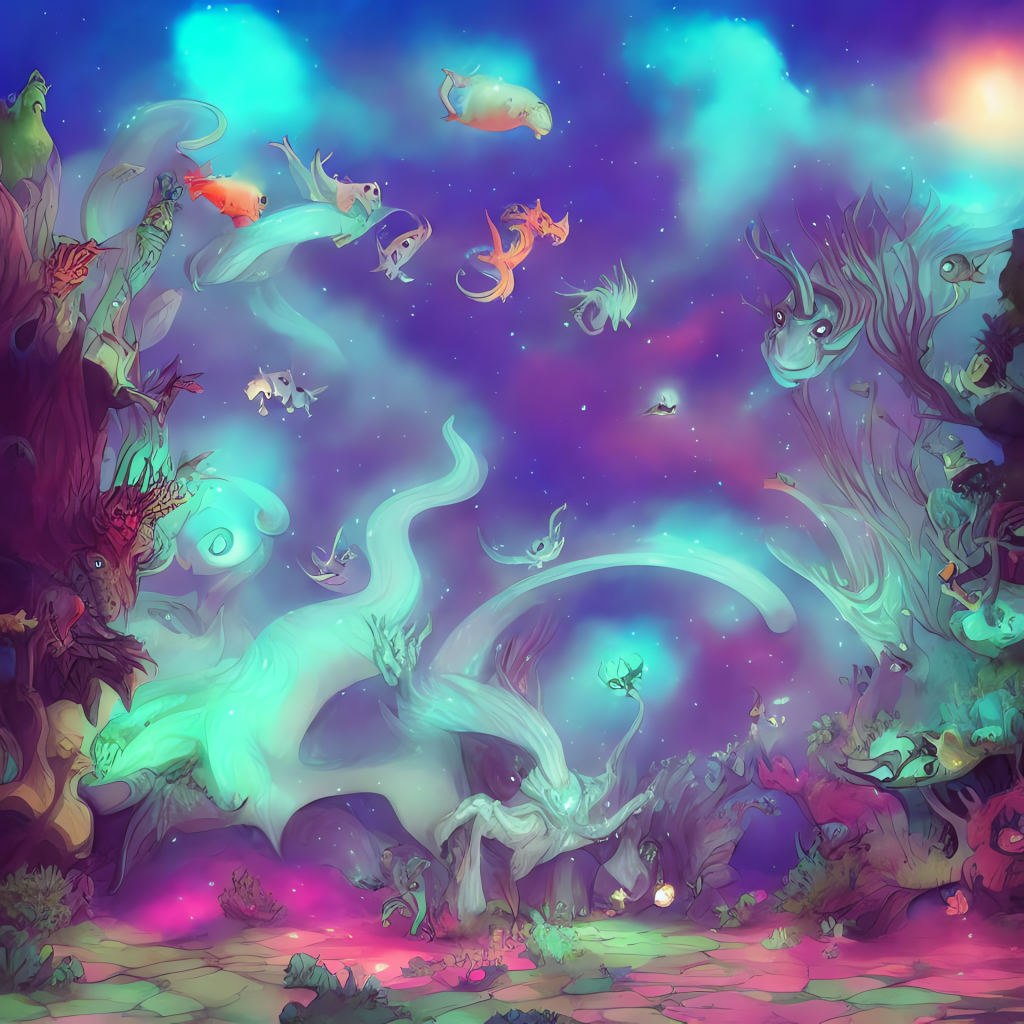
The text prompt for this image was “Creatures from a phantasmagorical universe, Pastel Art, Beautiful Lighting, Warm Color Palette.” And this image was built in 22 steps. Last post looked at the effect of step count on image generation, and now we’ll talk about the effect of prompt text and seed number. First, the seed number. Like an actual plant, the seed is the basis for the image. How exactly it works I don’t know, but I can tell you that if you use the same seed for an image, even if they come out wildly different in the end because of all of the other parameters, they must have started the same way. So, if you generate an image twice, keeping all parameters the same, including with the same seed, you will have nearly the same image in the end. If you keep all parameters the same and change only the seed, you will have an entirely different image in the end. The seed for that first image, our experiment image, was 54445. Below are images generated with seeds 54446 and 54447, and otherwise the exact same parameters.
Seed: 54446 (Coral reef elephant??)Seed: 54447
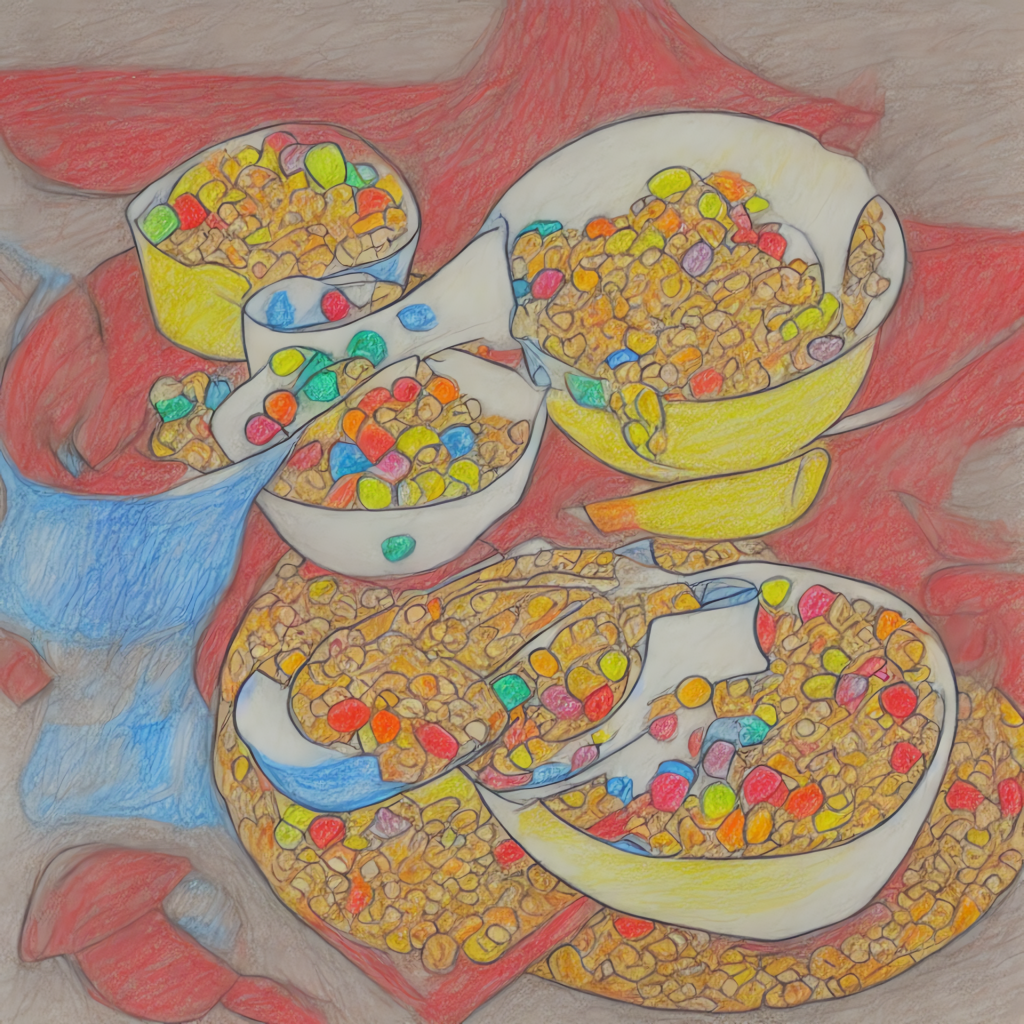
This means that you could download DiffusionBee, set all of the parameters to exactly what I had them as for these images, and you would get nearly the same thing. You don’t get exactly the same thing, because the algorithm that generates these is as they say in the biz, nondeterministic. (Also.. how freakin cool are these pictures. I think I could have a promising career as a Phantasmagorian AI Art Programmer. Wouldn’t that be fun to tell people.) It would be interesting to know what exactly a seed is in the code, how that works. I’m trying to think of what it could be, like a set of numbers or parameters that are related to the growth of the image. I generated three more images with totally different text prompts off of the same seed, to see if that would reveal anything about the seed. 1. “Gorilla in a top hat, by Vincent van Gogh”, 2. “a bowl of cereal, colored pencil, children’s drawing”, and 3. “Barack Obama riding a skateboard, 8-bit”.
Van Gogh GorillasBowls of CerealObamas Riding Skateboards
I can only really see one similarity between them. All of these images have multiples of the subject. I’ve wondered about that, because sometimes there are multiples, and sometimes not, and it doesn’t matter if you specify how many gorillas you want in the prompt text. That may be outside of the prompt’s control, and dependent only on the seed.
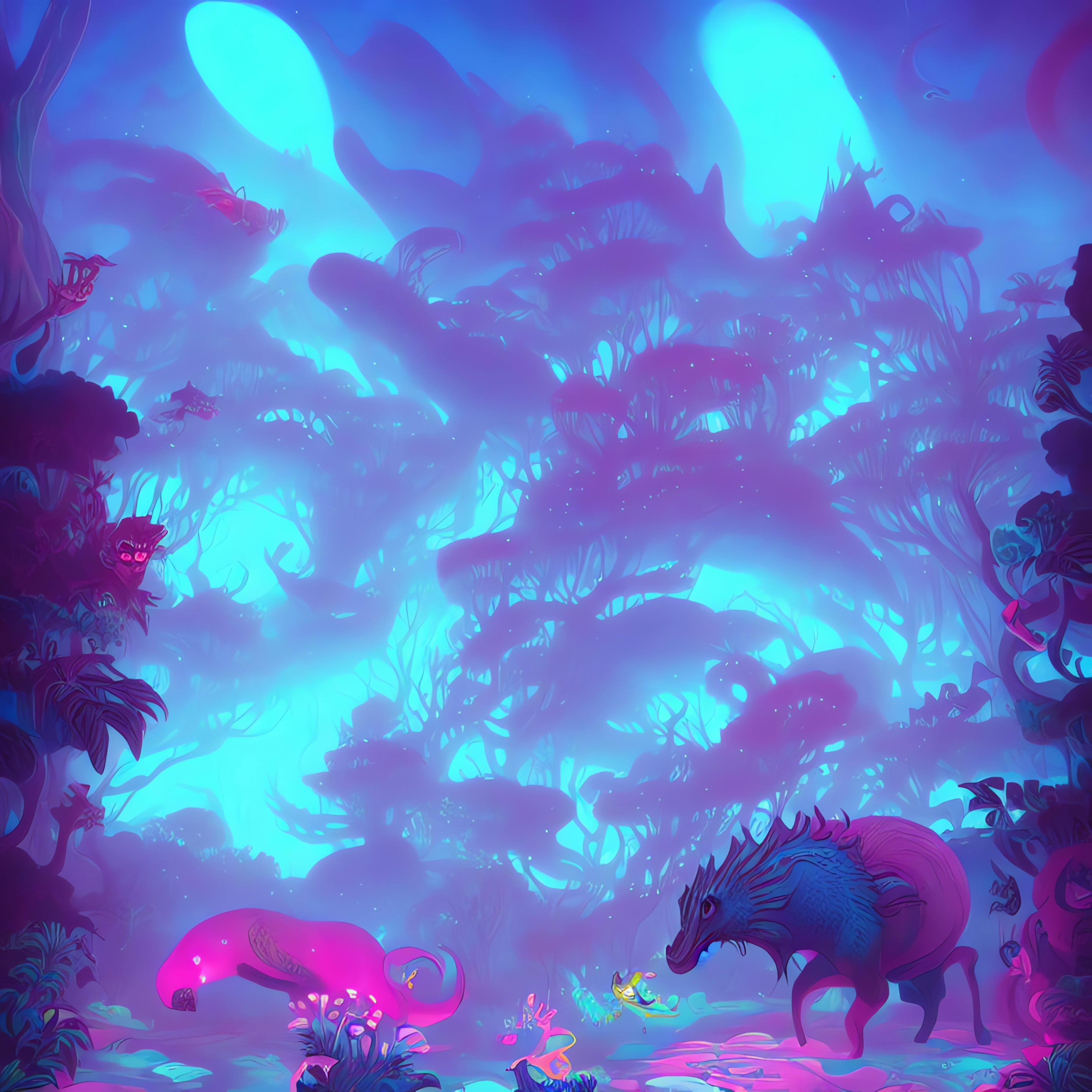
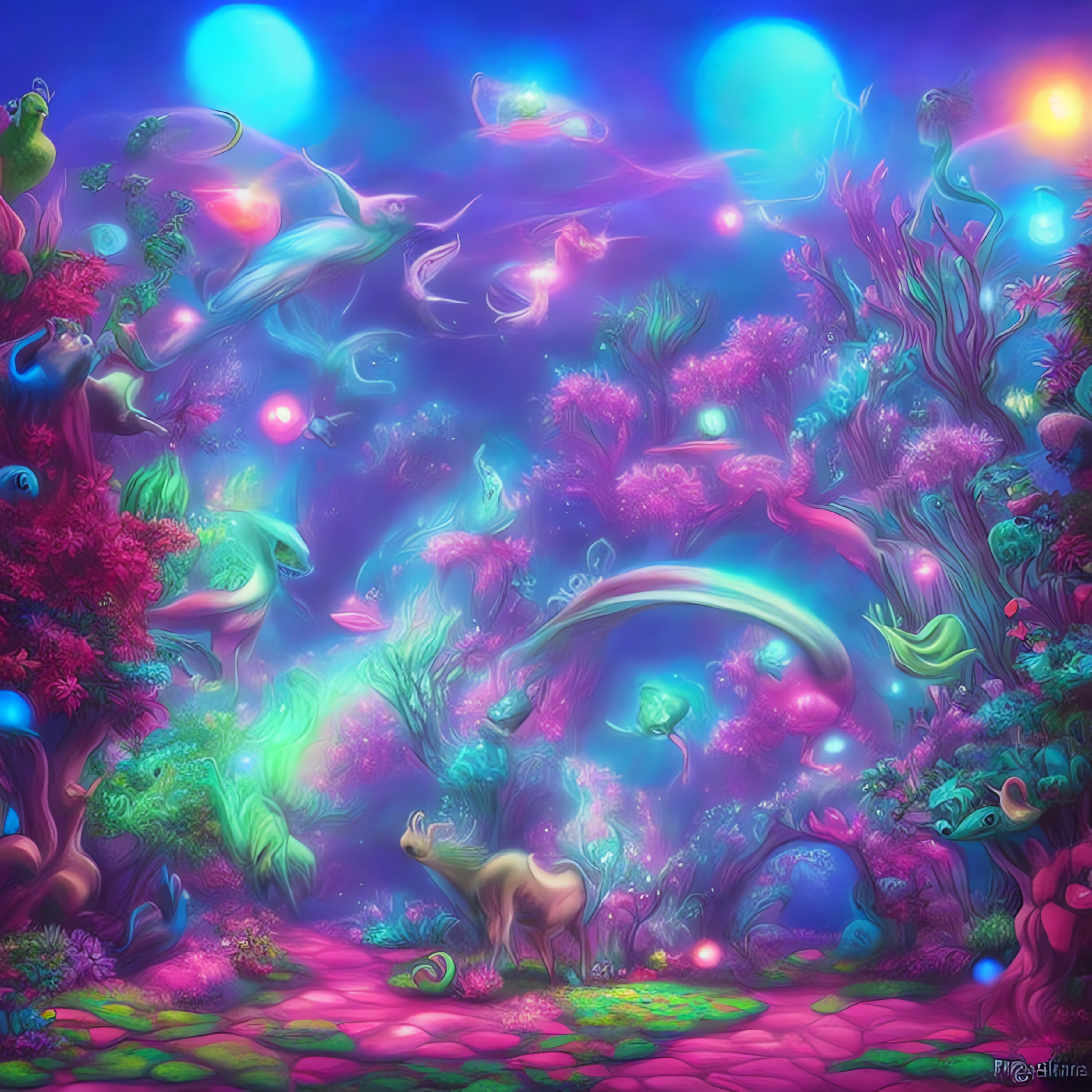
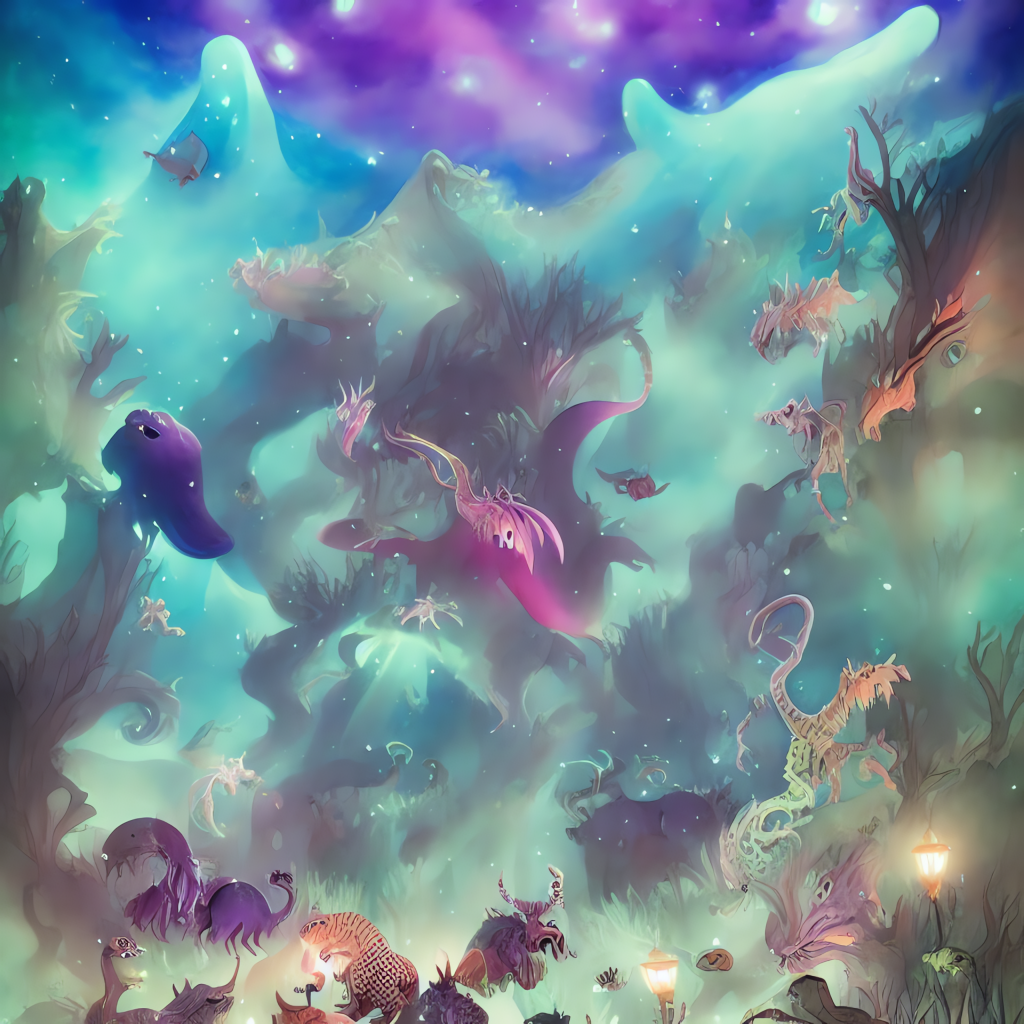
Now looking at the effect of prompt text. In the next image, I changed only one thing. In the prompt text, I changed “warm color palette” to “cool color palette”, and now you have an image that is in one way quite different, and yet similar. Take a gander.
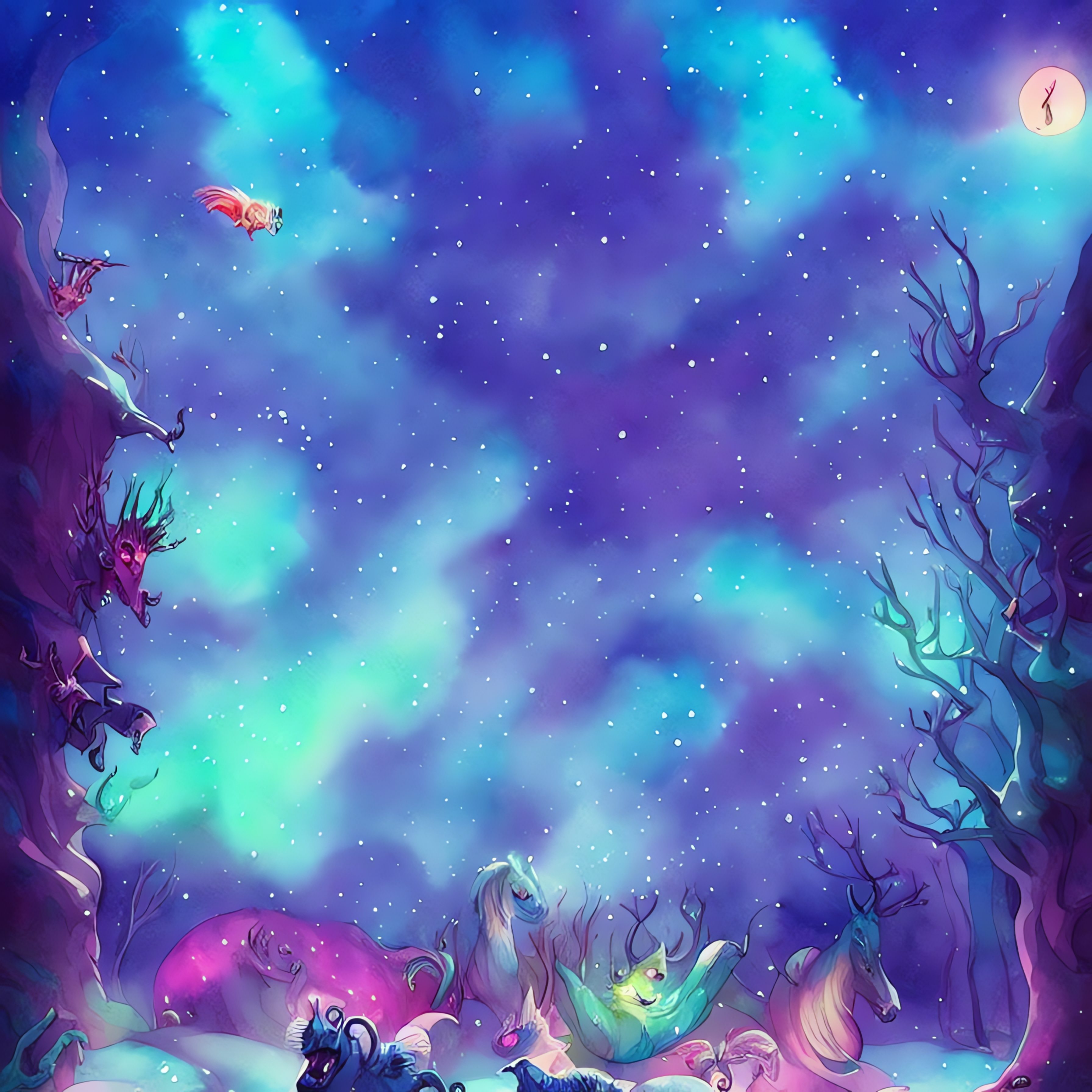
Warm Color Palette vs. Cool Color Palette (slide the bar to compare images)
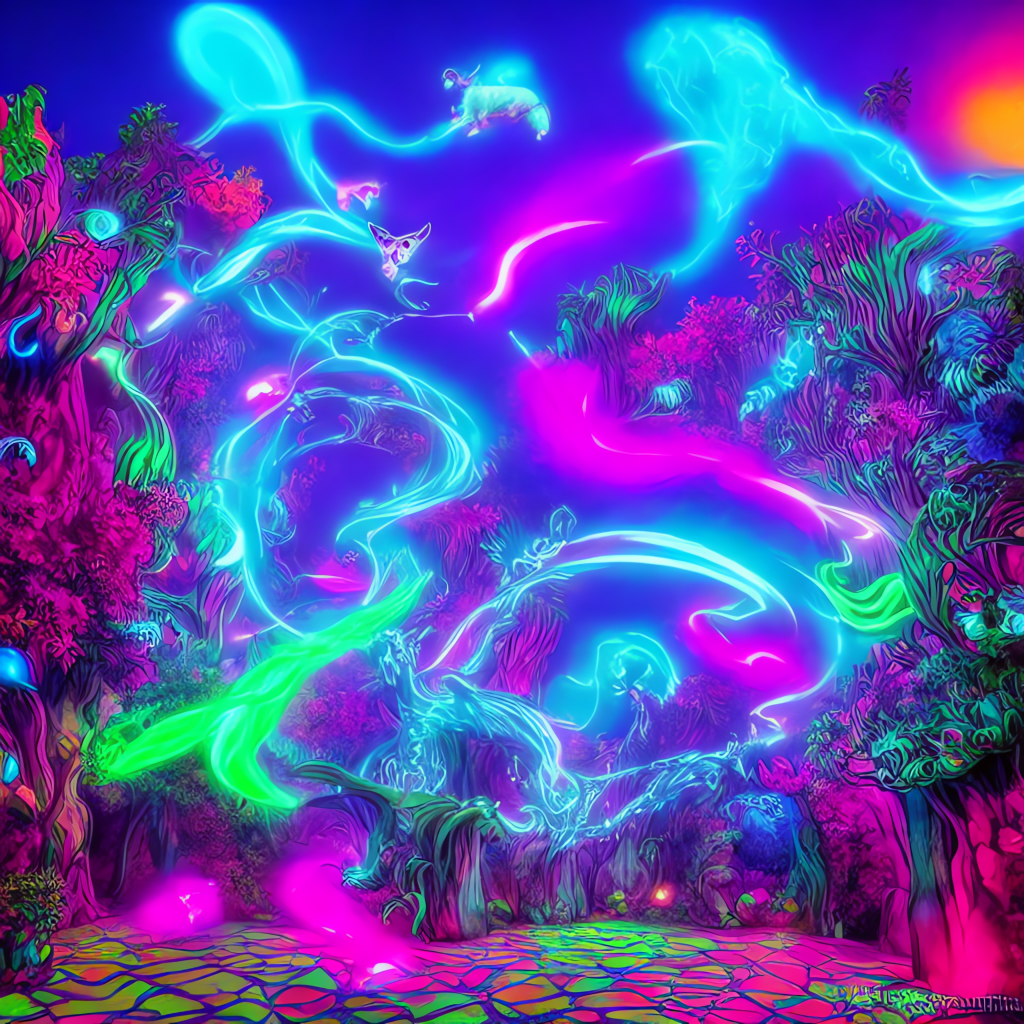
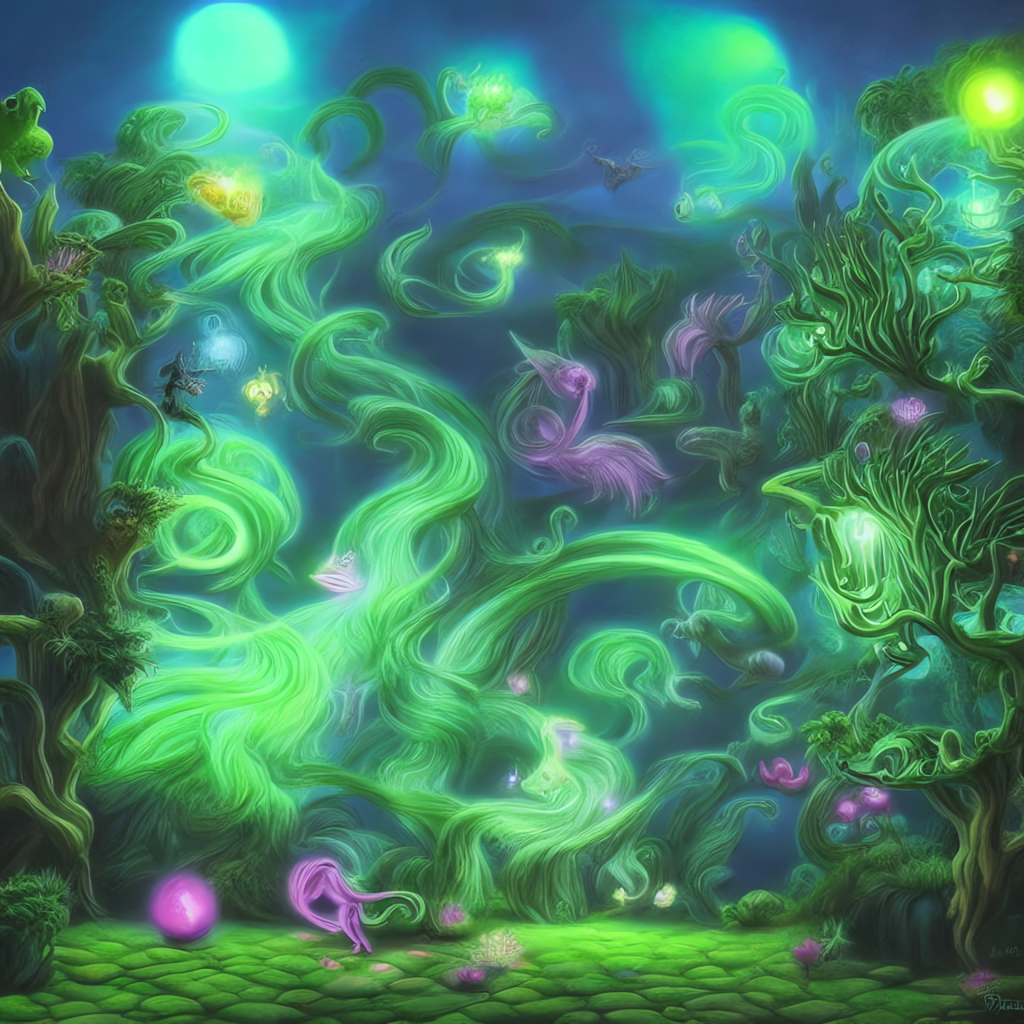
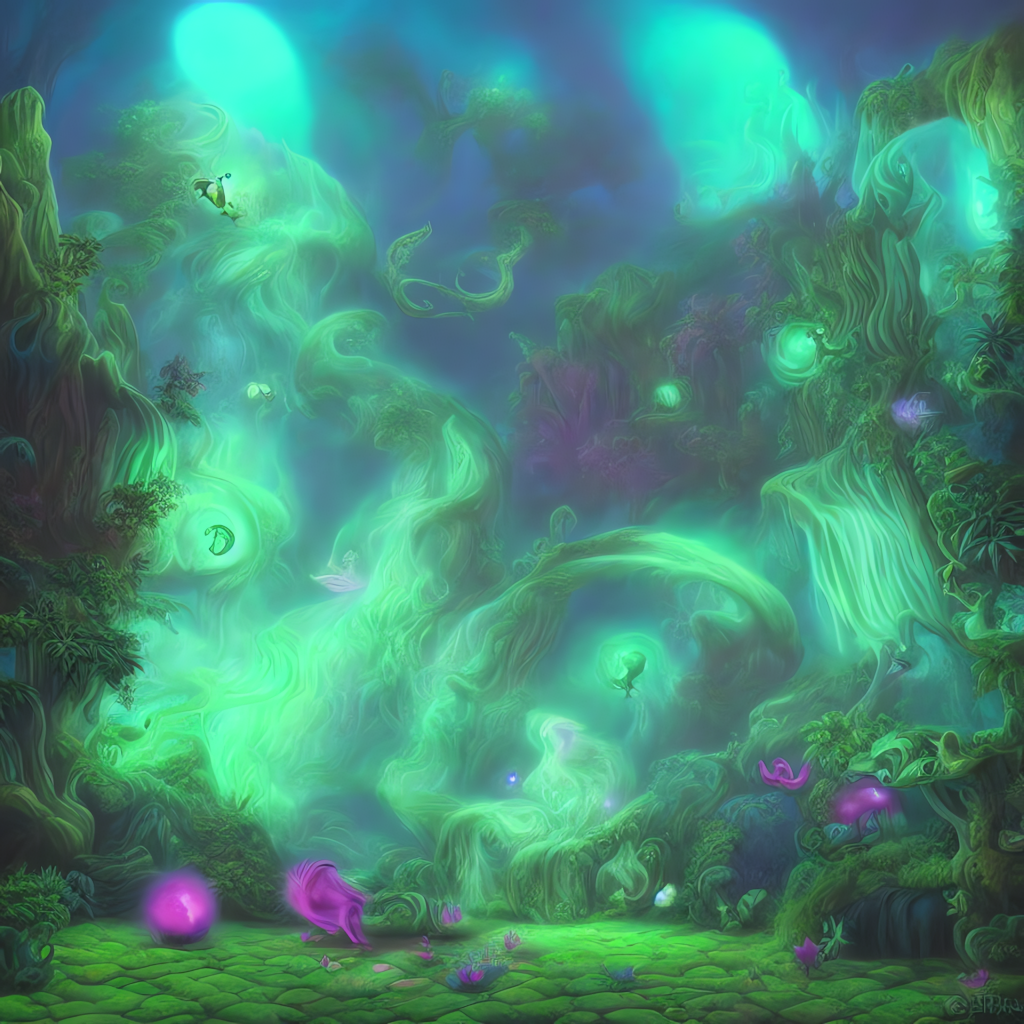
Many differences, and many similarities. You can see that the bones of the image are the same. That’s really where the seed is coming into play. The bones are the same, but the flavor, the details have changed. There is much more of a pronounced glow to the image, which I really love. The whole thing is glowing in mystical blue light. All of the flying fish are gone, and the firecat, the little glowing mushroom lamps, and the red sun in the upper right corner, gone as well. In the cool color palette, you have more detail in the background, less of a foreground (on the sides of the image), and now a really interesting scene at the bottom, with an incredible pink-purple boar creature, and a large, curly, pink monkey. There are new plants, and some yellow thing that my brain is interpreting as a butterfly. Would you expect such a different image just from asking the program to change the color scheme? I didn’t. I thought it would take the same image and just color it differently, but it’s much more than that. I had a lot of fun trying other color schemes and styles and seeing what popped out. Like the chocolates in a box of chocolates, you just don’t know what you’re going to get.
ColorfulCold Color PaletteElectricGreen Color PaletteGreen (without the words “Color Palette”)
They all have the same foundation, but the aesthetic is totally different. So how about changing something else, say, “Watercolor” instead of “Pastel Art”?
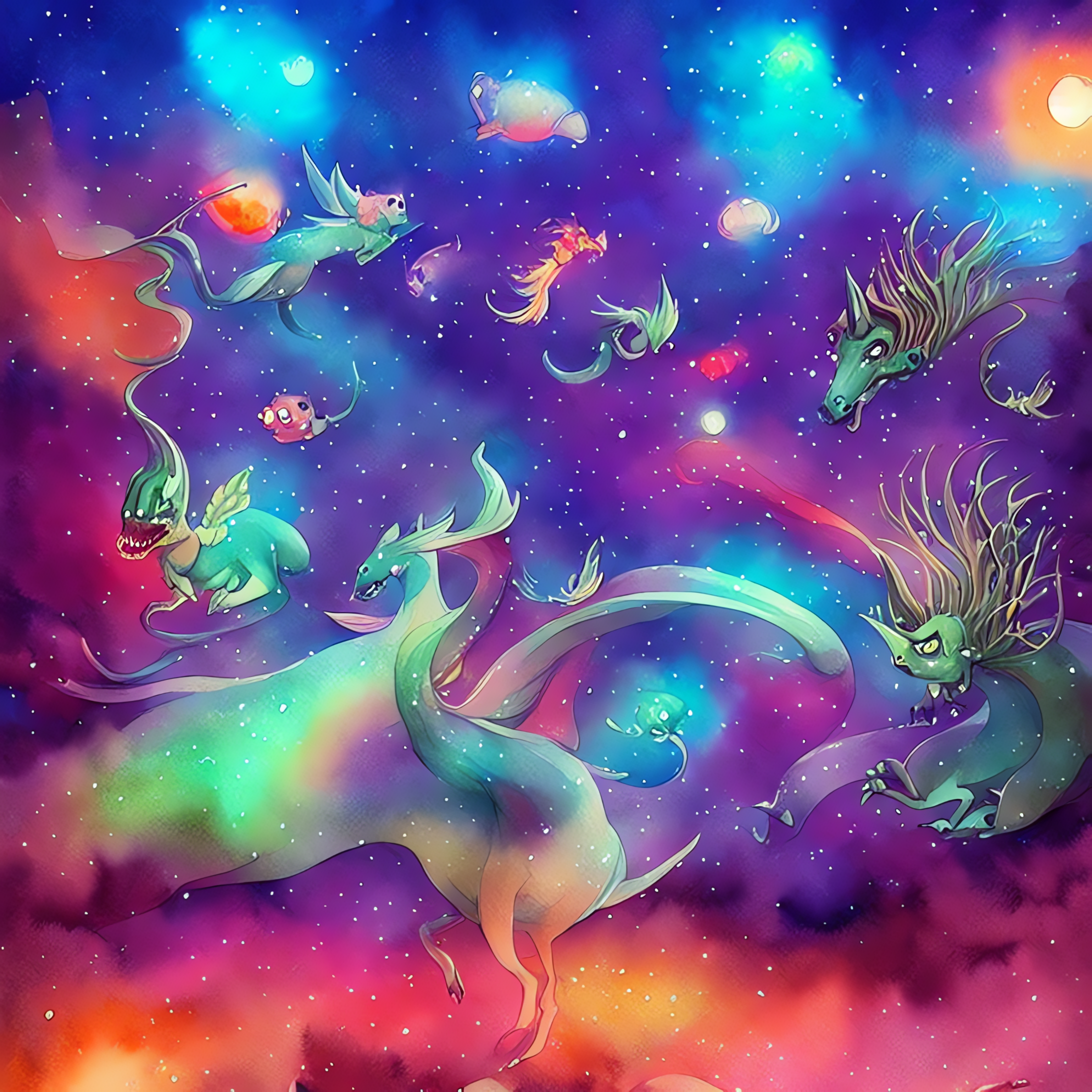
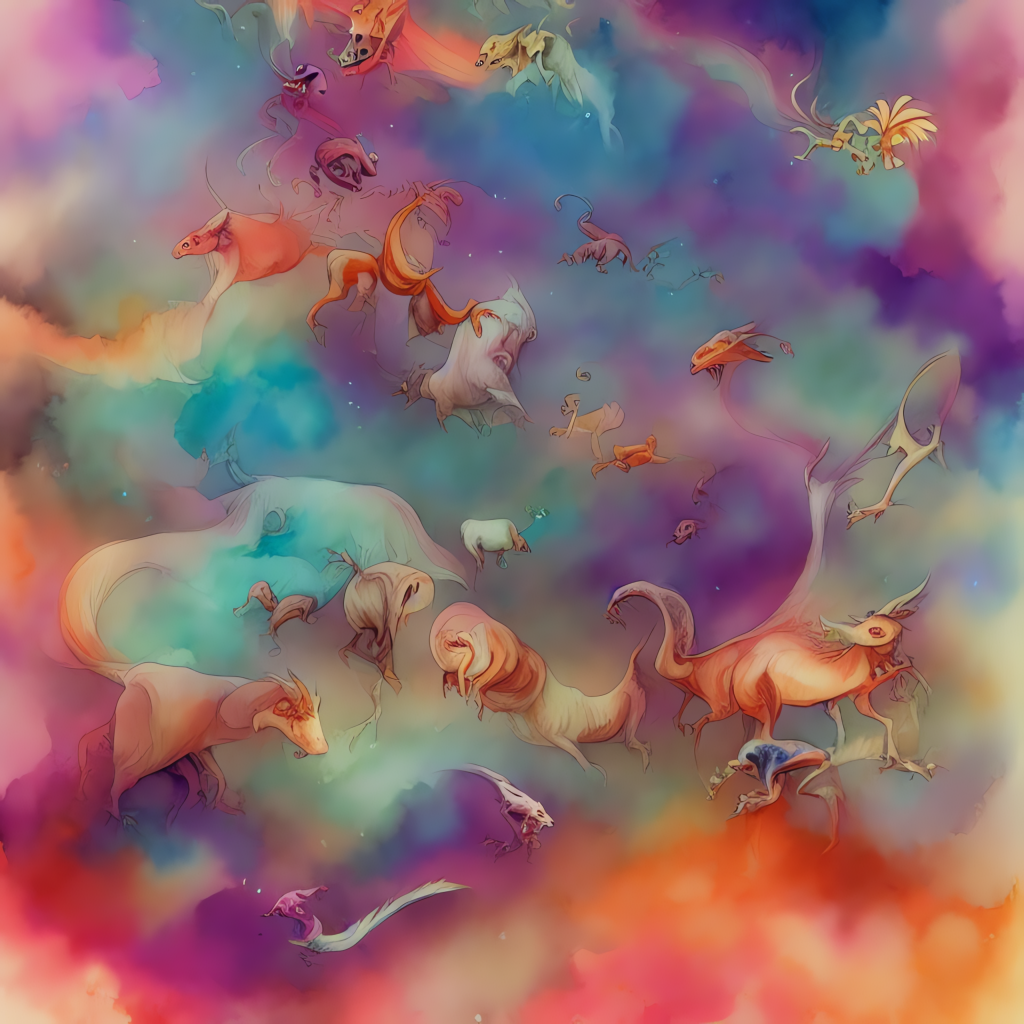
Pastel Art -> Watercolor
Amazing. So amazing. Look how the branches of the tree on the bottom right become the hair of the green rhino pokemon creature. The leg of the firecat becomes the leg of the dragon whatever. (I’m trying my best to describe these phantasm creatures to you. It’s hard, ok. I could make up names for them. The Wakkanok, the Schmerkelvitz.) The background just disappears and becomes stars, and the foreground is made of creatures, and colored gas. Now we really are out in the universe. I love it.
Warm Color Palette vs. Cold Color Palette
This one was “creatures in a phantasmagorian universe, Pastel Art, Cool Color Palette” but without “Beautiful Lighting”. That made a huge difference. I’ll take my beautiful lighting, please.
What if we change “universe” to “desert”?
Incredible.
Some of the best, here. On 10 steps, we could more creatures. I love the blurry, dreaminess of the watercolor.
Very cool. I’m really in love with these. You just never know what you’re going to get. So much to play with here, with DiffusionBee. This is a very simple program, no coding required, no importing models or anything. Also, they have AI video now, I’ve seen it. A full movie trailer, 30 seconds live action, apparently made with AI. Think of the implications. We could, potentially, the average person, easily generate hundreds of videos of penguins riding horses. Into battle, at the Kentucky derby, joyously through a meadow, along the beach. This is coming, this is the future. It’s exciting stuff.









 HAKUMUSU