
My people.
Santa’s got a brand new bag.
I have returned to you after this long and grueling haitus with an expansive new vision for the future of this blog. It’s been half a year or more now, I believe, and I’m sorry to have kept you waiting, but like everybody, I’ve been busy, and (mostly) I have been putting my time to good use, and it is in your interest, because I’ve spent the past few months enjoying my newfound photography life, and thus I’ve had the brilliant idea to merge my photos with my blog, and this means that I’ve had to do some heavy lifting with this blog, much heavier than you would imagine (than I did, at least), for just wanting to combine photos and writing, but heavy lifting it has been.
Let’s take a moment to enjoy some photos.


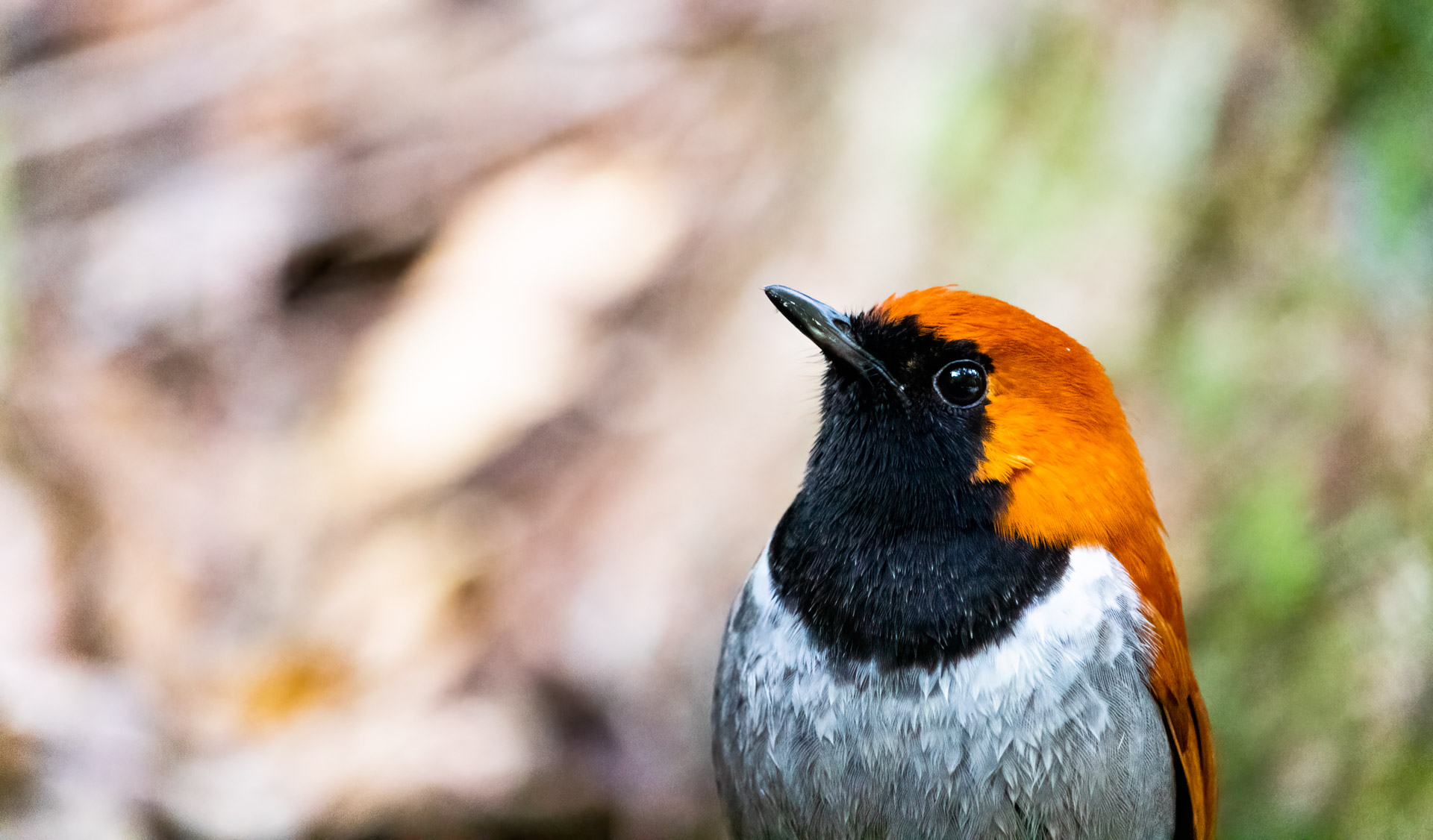
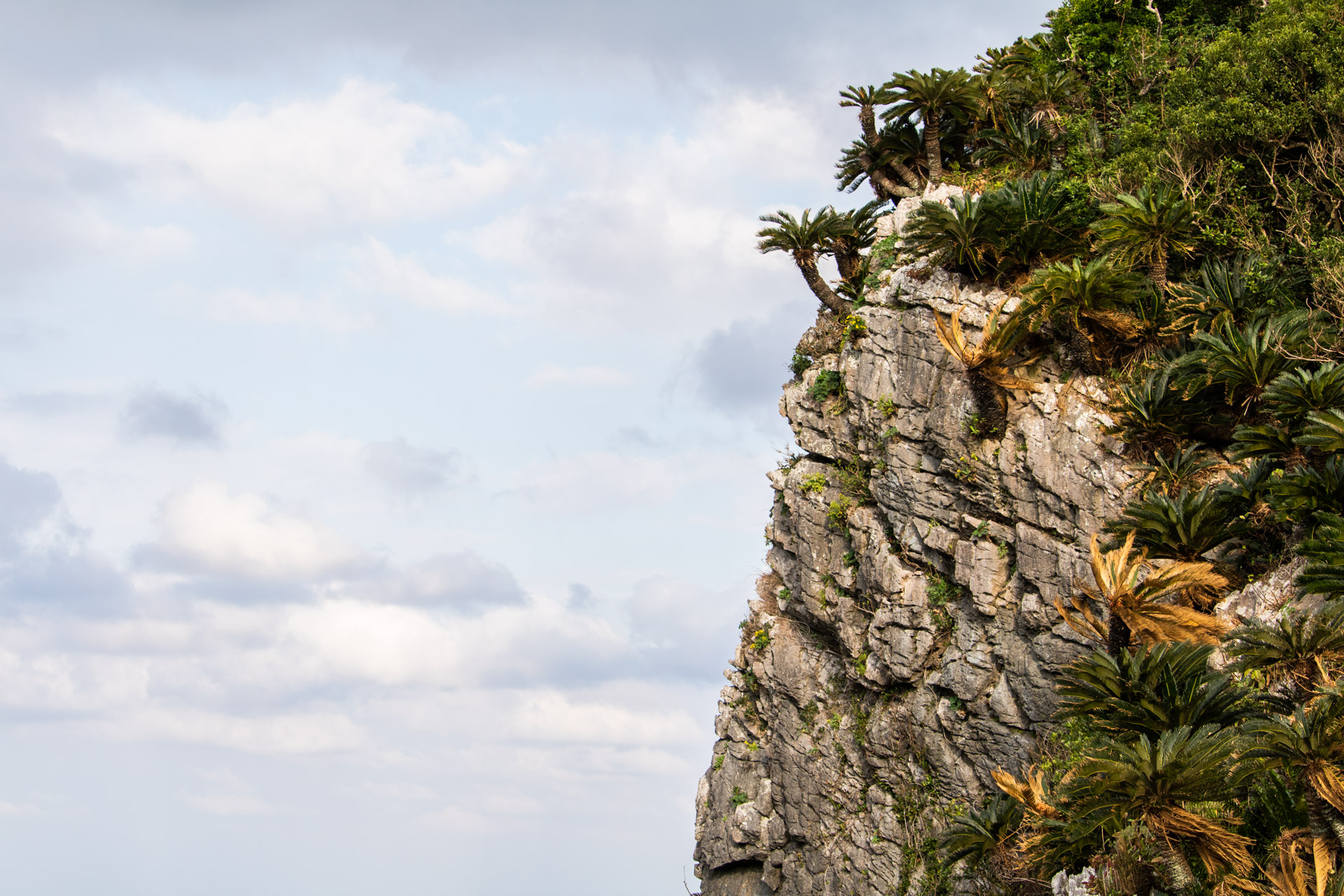
Do you enjoy them? Please tell me you enjoy them.
This post is long. You have been warned. It is so long that a table of contents has been requested. I’ll put that right here.
Contents
日本人の友達へ。このブログで使っている僕の日本語はあまり上手ではないことは分かっています。将来的に、日本語で投稿をできるように頑張ります。僕の投稿で感動や笑いを皆に届けられたらと思います。でもとりあえず、英語で。頑張って!
Skin
I have stuck with this all because I know that in the end it will have all been worth it, for you and for me, who this blog is both for. I don’t know if I can still even really call it a blog, as I feel that we have risen up in the ranks, because I am now armed with the all-powerful WordPress Business account, and that means I am a business man, and can do all the business things, like download plugins that prevent people from right-clicking on my site to download my photos only to install it and see that it doesn’t work, or buy plugins that will give me really great slideshows and find out that the plugin crashes my site, and I can’t see the photos in the slideshow anyway, because something is wrong with my DNS cache, and all of the photos are grey, which I can fix by going into WordPress classic mode, but then I can’t use the new block technology, and also, none of my edits will save unless I smash the save changes button with my forehead while screaming “Save it you bastard!!” Of course that last part is a joke.. but given all that I’ve been through up until this point, I wouldn’t be surprised if they asked me to do that. And by they I mean the WordPress support, who are wonderful people, and are only a chat away, offering 24/7 support, and you can see why that’d be necessary, because without it everyone would cancel their plans and flee the site after the 3rd incomprehensible popup that tells them “Sorry but you can’t do this thing you would like to do!” I think I am just having a particularly tough time because I have literally no idea what I’m doing. And YouTube hero Tyler Moore made it look so easy… I have stuck with it all, and we are finally going to see the vision played out in reality, a vision which is basically just me writing, but then also with photos. I feel that I have spent so much time “working on the site” and so much time thinking about it, and every time I visit it, I think, how, how is it possible that so little has been done? I am getting a rough introduction into the world of website design, and the larger computer world in general, I suppose. I have to say that I don’t really like it at all, and I wonder if that will ever change. I do now have a great appreciation for the engineers of the world, the digital masterminds, because they are doing the work of wizards.
Before we get into the meat of this real meaty post, I would like to share with you a little episode that happened to me a few weeks ago, to give you a familiar jumping off point, and to show you that while my life has changed in many respects, it also is basically the same, here in my little Ozu town.
I was sitting at my desk in the teacher’s room (big room with most of the teachers, open desks), with Kusuyama sensei sitting at her desk next to mine. She turns to me, opening a bag, and says “Miyamoto sensei brought apples. Do you want one?” And I was very surprised and pleased, because I haven’t had an apple in a very long time, I’m sure many months, could have been half a year, perhaps not since I’ve lasted posted. The reason for that being that apples here are, like strawberries, too pricey for my “poor man budget mentality” (budget is the incorrect word here, as apparently I am not poor, bur rather have the mindset of a poor man (i.e., frugal); as a rich man has recently told me) and so I go to the other fruits. In apple season they’re about 100 yen (one US smackeroo) which is reasonable and I will pay that. Off season they’re more. But this apple was a free and delicious-looking apple and I took it gladly. I said, “Thank you to Miyamoto sensei!” who then at that time happened to be walking right up to our desks. Kusuyama sensei says, “She’s right here, you can thank her now!” And she tells Miyamoto sensei that she just gave me one of her apples. And Miyamoto sensei looks at me, and I look at her, and I say, “ありがとうございます!はだを食べます!” (Arigatougozaimasu. Hada wo tabemasu.) I decided to add the hada wo tabemasu as a little bonus at the end, because I thought it would be fun, and she would enjoy it. I made a conscious decision to do this. However, as soon as those words left my mouth, I had a strong feeling that I had made a mistake. Miyamoto sensei’s reaction, of “Oh, that’s nice dear!” that you may give to a child who walks up to you and starts babbling incoherent nonsense, helped me to feel that, and my knowledge of the Japanese language helped as well; but it did not, however, help enough to save me from saying what I said. The moment passed and I immediately turned to Kusuyama sensei to confirm my suspicions. I said to her, pointing at the skin of the apple, “Kusuyama sensei, what do you call this?” She says, “Kawa.” And I said, “If I say, hada wo tabemasu, what do you imagine?” And Kusuyama sensei, laughing, pulled her arm out, and pantomimed biting it. And my suspicion was confirmed, that I had just said to Miyamoto sensei, “Thank you for the apple! I eat human skin!”
My mistake was that there is a specific word for skin, in Japanese, for human skin, and that is hada. What I was trying to say was that I would eat the skin of the apple, as Japanese people often don’t eat the skins of fruits, and I thought it would be fun, to say that. That I will be enjoying the skin of this fruit. I wanted to try and be fun. What happened instead is that Miyamoto sensei returned to her teacher’s room, and says to the other teachers, “Well, our ALT is a skin eater.” And someone probably replied with, “Yappari.” (I knew it.) And this is why I am still so wary of speaking. I just never know what exactly is going to come out of my mouth. But what I thought was quite interesting was that, if I had not realized my mistake myself, I never would have known I said anything wrong. I feel that Kusuyama sensei has some duty to protect me from making such grave mistakes, but she had already turned back to her work, and Miyamoto sensei had already given me a confused smile, and the moment was over. If I hadn’t personally recognized my error, I would have told Miyamoto sensei that day that I was grateful for the apple and I would be eating human skin, and I would have been entirely none the wiser. It just makes me wonder about all of the similarly incorrect things that have come out of my mouth. They must be innumerable. I have been here now for over two and a half years, and my Japanese is only recently not terrible. That is a lot of time to have been telling people I eat human skin.
So there you go. I still can’t speak Japanese (coherently). Now let’s get to the good stuff.
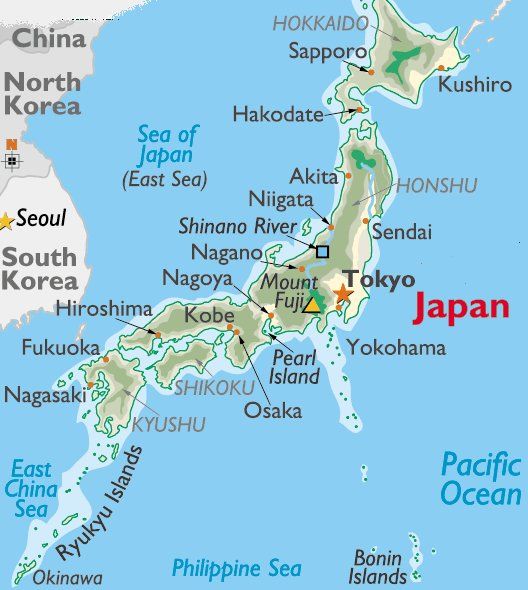
(For some context, these writings and accompanying photos are all in reference to a seven day trip to Okinawa I took with friends Juicy James Cool and Mr. Parker Junior in the first week of January this year.)
Lessons From Okinawa
On the eleventh day after our return, the trip felt to me like a distant dream. I looked at my photos and felt that I could hardly even remember when I took them. It felt like it could have been years ago, and I think I felt that way mainly because I had by that time fully reintegrated into my standard, pre-Okinawa way of living. That way of living has been, since the start of the covid times, relatively formulaic. The people have changed, some of them, and my work has changed, some of it, and my hobbies, and various events have peppered it throughout – but the scenery – where I live, where I work, shop, play – has all been the same. And so, on this now well-trodden landscape, you could pick out the Okinawa trip, and move it around, at any point on this treadmill, and drop it down, and it wouldn’t really matter. It would still only delineate itself by the primary fact that it just wasn’t here, where I’ve been for so long now, here in Ozu machi, Kumamoto.
I absolutely reveled in this freedom, the freedom that comes with travel. Freedom from the ordinary. From the plain dullness of my everyday life.
I’ve thought about this. I still think about it. In the days coming back from Okinawa, I was shocked. Shellshocked, I’ve been saying. The first night back, I drank a liter of wine. Alone, in my apartment. It was a coping mechanism. I was coping with the shock. You see, I had just tasted that freedom. I had just tasted joy, adventure, excitement, thrill, warmth, stimulation.. I had just spent over a week, ten days, free from this ordinary. Ten days in different places, and with people. Sleeping together, laughing together, exploring together, talking, bonding, arguing, eating, drinking. Doing what people do. I got ten days of it, glorious sociality, and upon coming back to my Ozu apartment, finding that I wanted still more, that I was just starting to find its rhythm, this new way of living, and it was gone, as quickly as it came. The social stimulation was one thing, and the joy of travel, and all the excitement.. New places, new culture, new sights, sounds, tastes, all of this, panoply of fresh experience, to be taken in. Okinawa shattered my monotony. And then, I was brought back. I resisted. I held out for as long as I thought sensible, taking another week of vacation. I schemed ways of escape, of protection, of deliverance, taking more time off, taking every single day off, quitting the job entirely, and getting out of dodge – but I deemed it all too drastic, too desperate, and my old life reclaimed itself, dragging me, at first kicking and screaming, then more dejectedly, back into the normal. It hurts, but each day that passes, it hurts less. So quickly I forget, forget the freedom I felt, the creativity and the imagination and enthusiasm, and richness, that had so infused those days.
In those days, after the trip, I really struggled to understand what it meant. What was happening to me. I reached out to friends for insight. On that first night back, the liter of wine night, I wrote to James and Parker, a drunken ramble, but all true, and with surprisingly coherent phrasing and with correct grammar (proud of this), that I found it just so incomprehensibly strange, that we all just, having spent all that time together, having becoming what I felt was an intimate tribe, that we just separated, and went back to our respective boxes, cordoned ourselves off from each other, us, as humans, social creatures, that we did that willingly, and that it’s not considered lunacy, but the exact opposite, in fact; it’s normal. I woke up the next morning with only a single message in response. “Health check?” I ran this all by Ryoka, the shellshocking, and she told me, “That’s called vacation crisis.” And she’s right. I read about it, that many people consider quitting their jobs after getting away on a vacation. I understand what is meant by vacation crisis. I don’t know if I would call it a crisis. I don’t really like how commonly that word is used. It feels flippant to me. But I do think that that this Okinawa trip laid bare that there are some things fundamentally wrong with my current way of living, and that may be what’s at the root of all vacation crisises, that once we are free to step back, get some distance, and with a fresh perspective, we take a good look at the lives we’re living, and find that we don’t really like what we see. Sure a vacation should be fun, but even at the end of the greatest vacation you shouldn’t find yourself recoiling in horror at the thought of returning to your pre-vacation life. If you do, then you must have a problem. For me, I have come to the conclusion that my problems are two, and common ones: lack of purpose, and loneliness. Loneliness is crippling, as they say – it undoubtedly is what has driven me to drink too much on those worst nights, and living in a small town, living alone, already having tenuous ties to the community as a foreigner (although I have always felt very welcomed and integrated here), and during a pandemic, as we enter a new phase of lockdowns, and yet another state of emergency, and it’s winter, and finding myself with an increasing feeling of uselessness at work.. it’s not a real shocker that I do feel isolated. I suppose the real shocker would be if I didn’t. Simply living alone is enough to put you in a high-risk demographic group: People who live alone have an 80% higher risk of depression. Anyways…
So yeah, Okinawa made me happy. Loneliness is my problem. There is great gaping hole in the spot that human connection is supposed to occupy in my life. In the days leading up to and on the Okinawa trip, that hole was filled right up. I spent ten days paired with companions, ten days surrounded by friends. Before leaving for Okinawa, we had a New Year’s party at Parker’s, and although I fell asleep early, and was woken up, harassed, forced to celebrate, shuffled around, finally landing in the middle of the floor, next to Mudra who refused to share the blanket, on a heated carpet that was too hot, listening to Rossi’s Mongolian drum ensembles, that I eventually, late into the night after all others besides myself had managed to fall asleep, had to turn off, then having to smush myself against the wall to let Daniel through to piss, Mudra now snoring, somehow drifting off, waking up to find heated carpet unheated, shivering, and yet upon waking, still feeling perky enough to join in the morning conversation, where I was immediately shouted down, silenced at once, (my voice being too powerful and masculine and loud); still, with all of that, inconvenience and irrationality, still I preferred it to being alone. I thought of families and communities where communal living was or is still practiced, the Iroquois in their longhouses, and the Moravians that all slept together in one big house, and I thought about how completely different that was from my way of living now, and what it would be like to do that every night, day in, day out. I thought it’d be nice, living in a community like that. And whenever I think about this, I think about a study that was done, a study on heart disease. Doctors were curious as to why the rates of cardiovascular disease were so low in a certain community, probing for secrets that they could take to the world, and what they found was that it wasn’t anything in the diet, and it wasn’t anything in the way of exercise – it was simply that they were all living together, with entire extended families parked together under one roof – and this constant belonging, constant social interaction, protected them more from cardiovascular disease than anything else. We know too that social interaction does more to lower rates of morbidity than anything else – exercise, diet, even quitting smoking – more important than anything else, are people. We have the data. We have the anecdotal evidence, I believe, as I’ve just gone through a period of constant sociality, and returning to my private home, depressed, isolated, and miserable. So why do we isolate ourselves? Why do we not view it as insane, as the actual health risk that it is, that we go off and willingly move into empty apartments and homes, alone? I think we should.
Let’s continue.
Shisa
First impressions of Okinawa. At one point, on our first day there, I said to Parker and James, “I had a dream that I was in America, and everyone was Japanese.” That is how I felt on that first day. Not only that I was in some kind of surreal Japanese America, but also that I was in a dream, or some kind of computer generated, synthetic reality. For as we walked, first through the park, seeing homeless people, many of them, mixed with families strolling right on by, with a man crawling out of his wheelchair to relieve himself in the grass, cats everywhere, coming to a beach, with people playing in the sand, a man with a metal detector hunting for treasure, the water just beyond the beach under an overpass, then walking out into a festival, now, surrounded by people, all kinds of people, the people of Okinawa, dressed in all manner of ways, eating cotton candy, and throwing darts, and frying food, with a woman giving strange eyebrows to Parker and James, then coming into another small park..
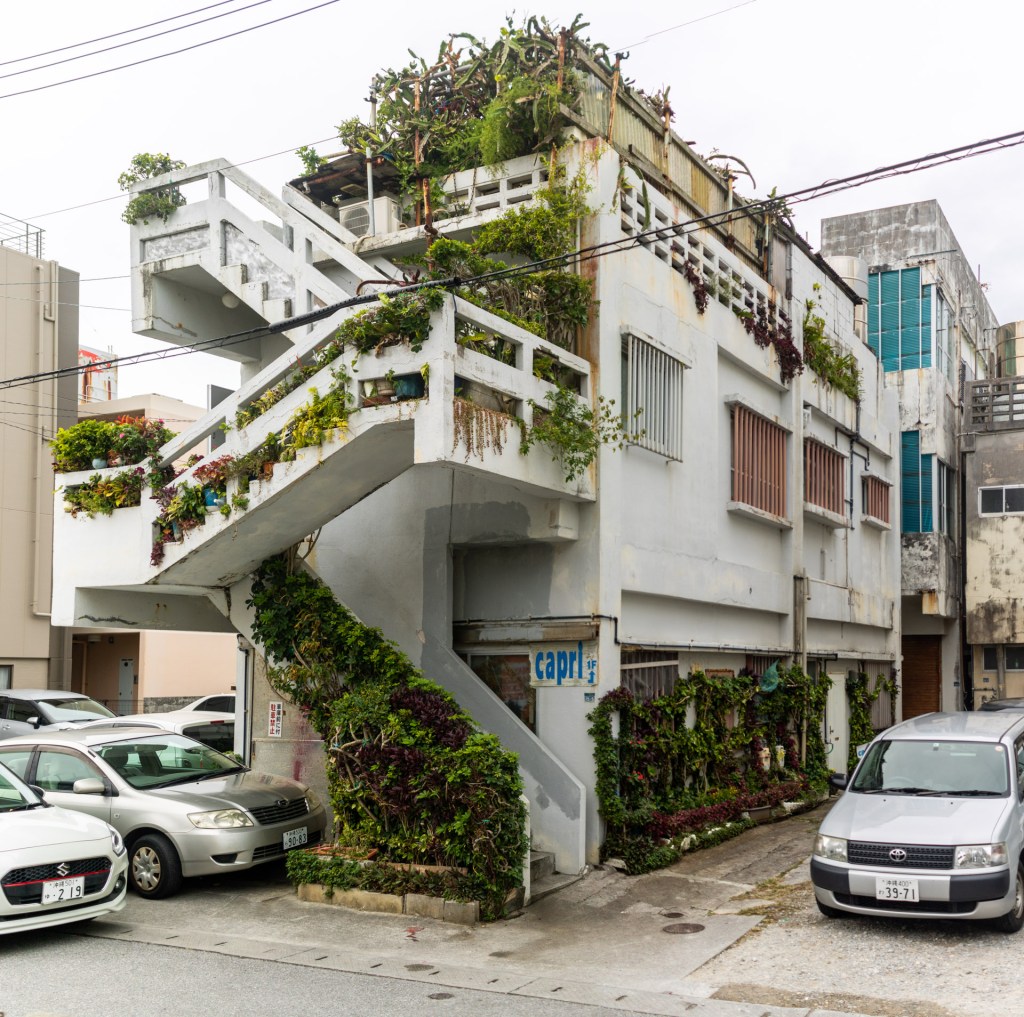
The dream. The first day there was like being in a dream. You know how in a dream, it feels purposeless, often, and you’re just wandering, guided by something, or rather something is guiding you, the dream is just unfolding out before you, with no real plan to its construction, or no indication as to why what’s happening is happening, and you’re just kind of in it, along for the ride, wondering where it will take you, and how it will unfold? I felt that way, all day, that first day. I just couldn’t shake that feeling. The gray, overcast sky did much to help evoke it. The lax, unhurried, meandering movements of all the Okinawans helped as well. The strange dress, the cats, the unfamiliar sights, of the man relieving himself in a bush, of a large woman with a metal detector scouring a small strip of beach, of an overpass placed over the water just in front of said beach, from the festival stalls, selling all kinds of treats, games, snacks, the festival filled with all kinds of people, with one of them making strange faces at James and Parker, guesticulating wildly with her eyebrows, to the large family, boisterously sauntering down the middle of the street, fanned out to span it in its entirety, the cousins, aunts, uncles, children, young couple in matching Fila jackets, carrying on as if they were in their own living room, the abandoned bike on the side of the road, the trash, and more cats, and now a procession of people waiting on a long stone staircase, waiting to pay their respects to the gods, some of them in t-shirts, some of them in parkas, short skirts, and suits. This entire time, taking in all of this atmosphere, taking in one strange sight after the other, bizarre and surprising visuals generated on repeat, one after another, I just couldn’t shake the feeling that this just wasn’t real – it was so familiar, and yet so unfamiliar at the same time. Perhaps, if we had just come from America, it wouldn’t have felt so strange, so off, that air of looseness, where nobody seemed to really care what anyone else was doing, as opposed to mainland Japan, which has a much more controlled, buttoned up, constrictive air about it, everyone so consciously aware of the face they put forward. It’s hard to describe this, as it is so intangible, this atmosphere, and what exactly it’s comprised of. Even the architecture was off – the worn, blocky buildings, the pastel colors, the strange shapes and designs, the plants growing out of the cracks, corners, and verandas, so that half of the houses looked like they themsevles were alive. The American, I saw in the homeless people. The variety of fashion, or lack of it – that was American (at least, Midwestern, suburban American). The relaxed air about the people. The large and loud family, parading down the street. The metal detector, even, was American to me in a way, as I haven’t seen one anywhere else. The Subway – American. But then, Japan was on display as well – in the cats, in the shrines, in (some of) the fashion, the food, the large, blank, yellow stare of the smiley face stuck to the side of the Smile Hotel, gazing out over the city. That was all Japanese. So what of the people? And the people, I didn’t know what to make of. Many, probably most were Japanese by nationality, but in behavior, not like the Japanese in Kyushu, or Tokyo, and in appearance, on a spectrum – for some of them looked like any Japanese you would have plucked right off the mainland, but others, if you saw them anywhere else, you wouldn’t have thought they were Japanese at all. And that’s because, I would learn later, many of them are not descendants of mainland Japanese, or are to varying degrees. Many of them are native islanders, the Ryukyu people. Many of them are of Chinese descent, or Phillipino, or Taiwanese, or another Eastern Pacific country. Some of them are American, and they’re often conspicuous, especially when dressed in military fatigue, and some of them are Canadian, like our friend Dan. And it is this strange hybrid of cultures, primarily the Ryukyu, Chinese, Japanese, and American, that forms the bulk of what is Okinawa today.
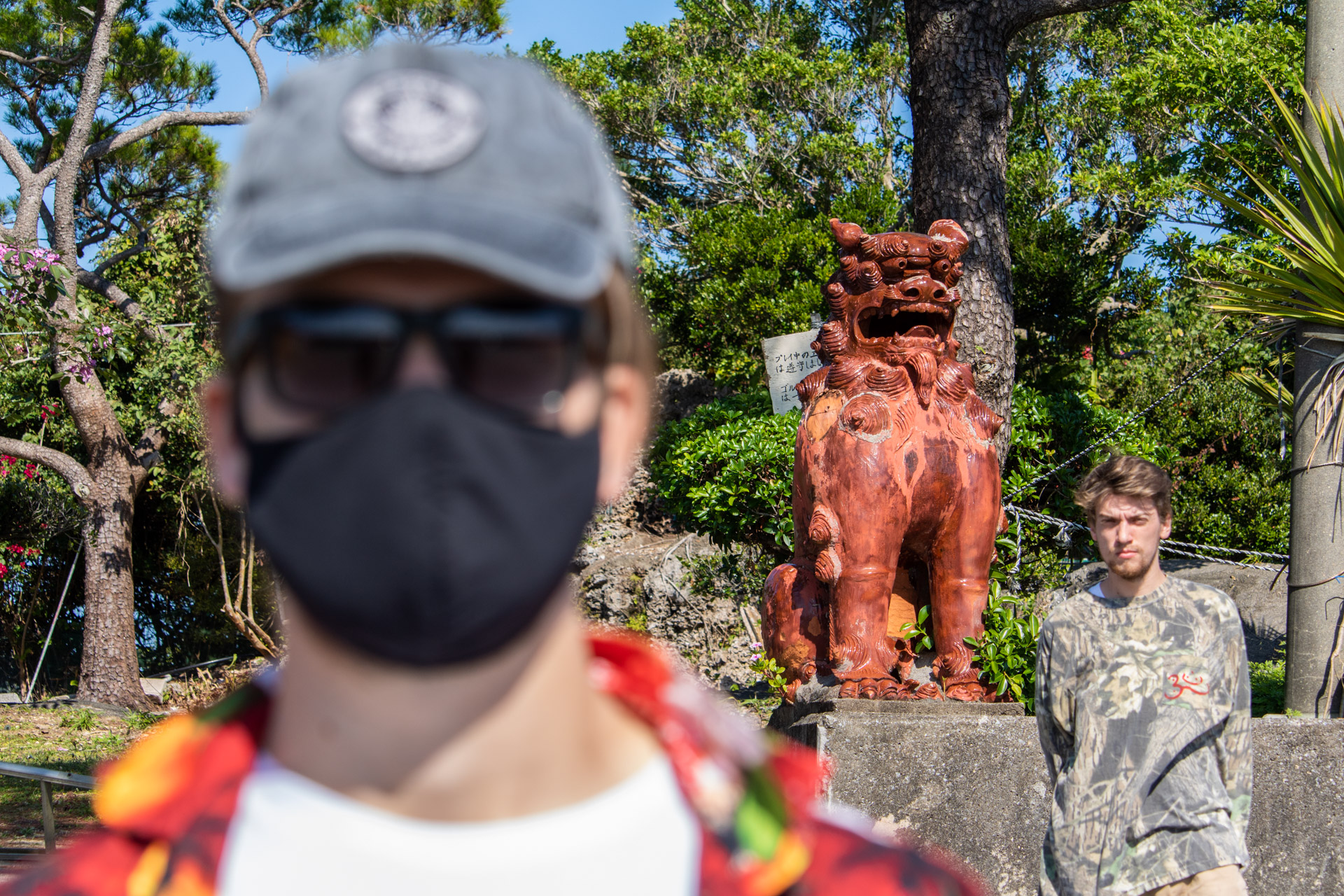
We got to know Okinawan culture more intimately over the course of the trip. We were quite lucky to have been able to see the people out in force, and to get a good look at them, celebrating the New Year. I learned quickly about the Shisa, as well. I had heard of that word Shisa, only a week before embarking, at a mochi making party with the Higashi family in Kikuchi, our first reunion in a long while. The Higashi family had just been in Okinawa, for the two youngest boys’ volleyball tournament, and in talking to English Number One about it, he mentioned the Shisa, and I said, is that an Okinawan greeting, and he said no, but Makisan laughed, and said yes, and then Eichi struck a pose, like a tiger bearing its claws, and said I had to do this when I say it. The conversation was quick, and I didn’t leave it really knowing what a Shisa was, only that it may be some form of Okinawan greeting, and if I say it the Okinawans may laugh at me. Well, it turns out that Shisa is not at all the Okinawan way to say hello – that’s haisai – but rather, the lion guardian spirit of the Ryukyu people. The Shisa, also called Shishi, meaning lion, come in all shapes and sizes (though they’re always.. lion-shaped, although with some of them you couldn’t guess it) and they always come in pairs, one with mouth open, and one with mouth closed. I would learn more about their history and significance only later – at that time, on the island, I only knew that they were special, they were funky, and they were everywhere. Shisa are stuffed into every nook and cranny of Okinawa, and it brought me great joy finding them; a great Okinawa scavenger hunt. You may wonder, really, how many different ways can you portray a lion guardian thing, and thanks to the boundless fountain of creativity that is the human mind, there are many – although there do seem to be some standard, convergent forms. Two types of Shisa, ones that looked like they were just made from fried clay, and another that had been glazed, seemed to be consistently made in the same form.
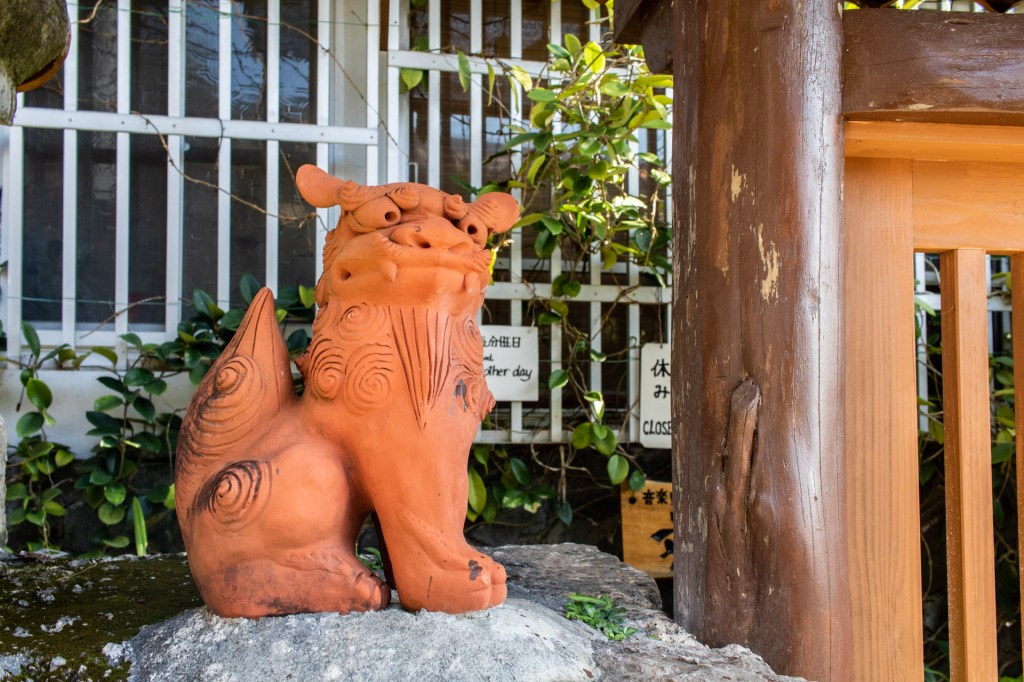
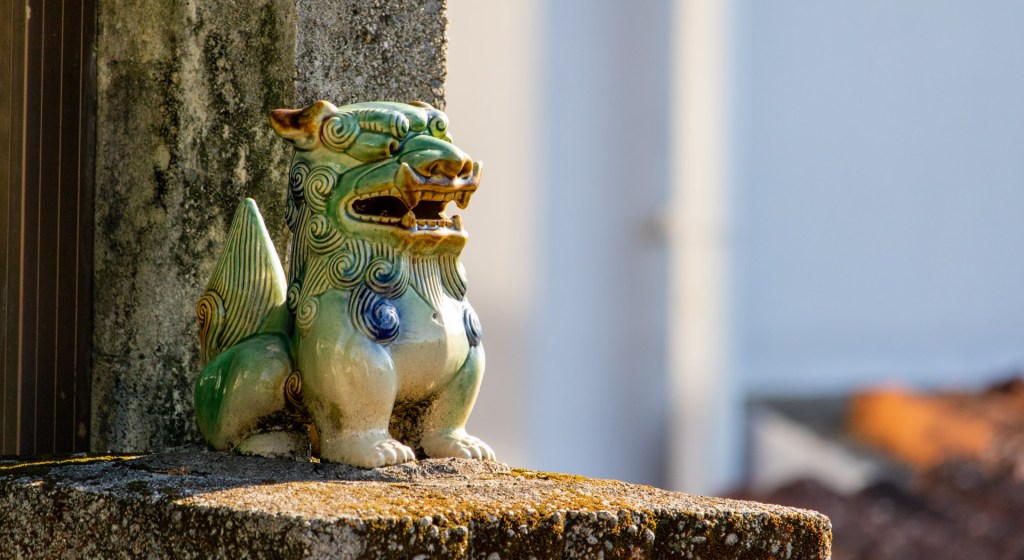
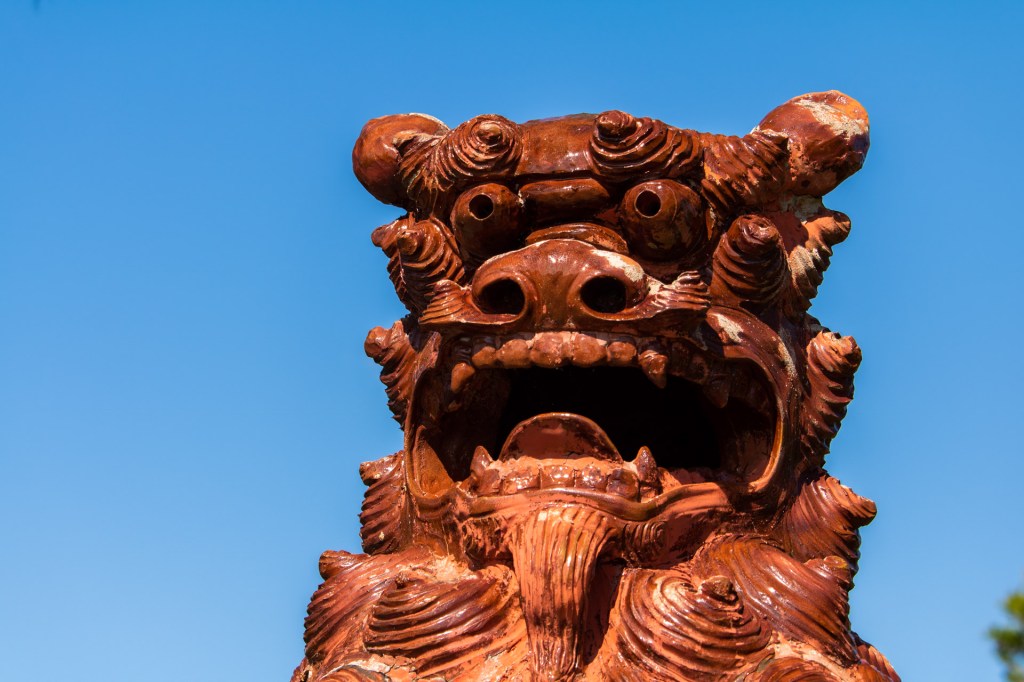


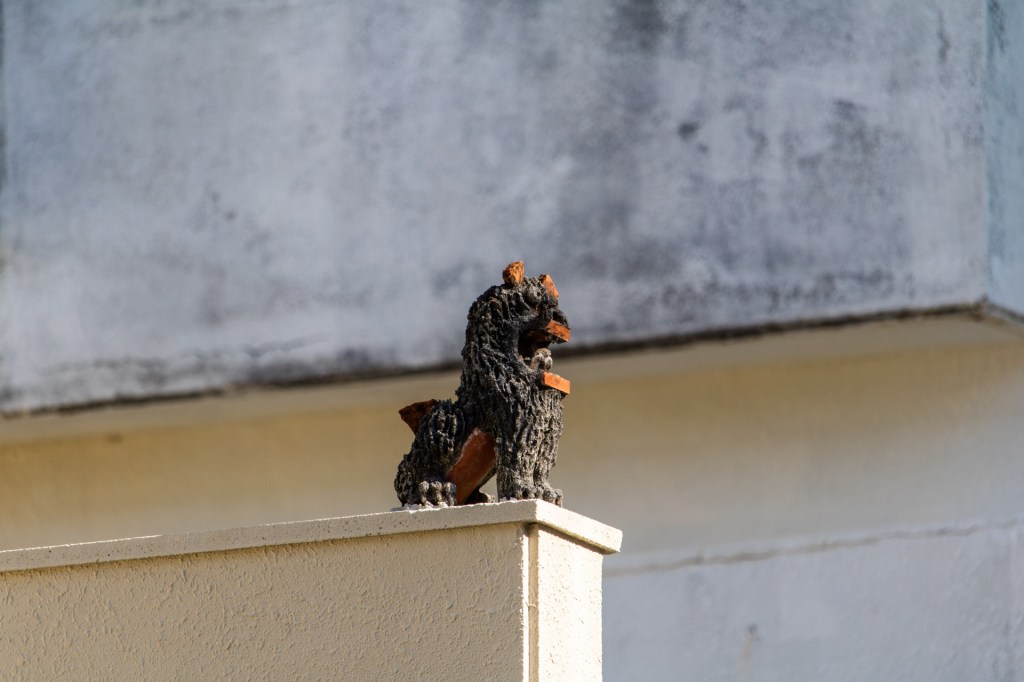
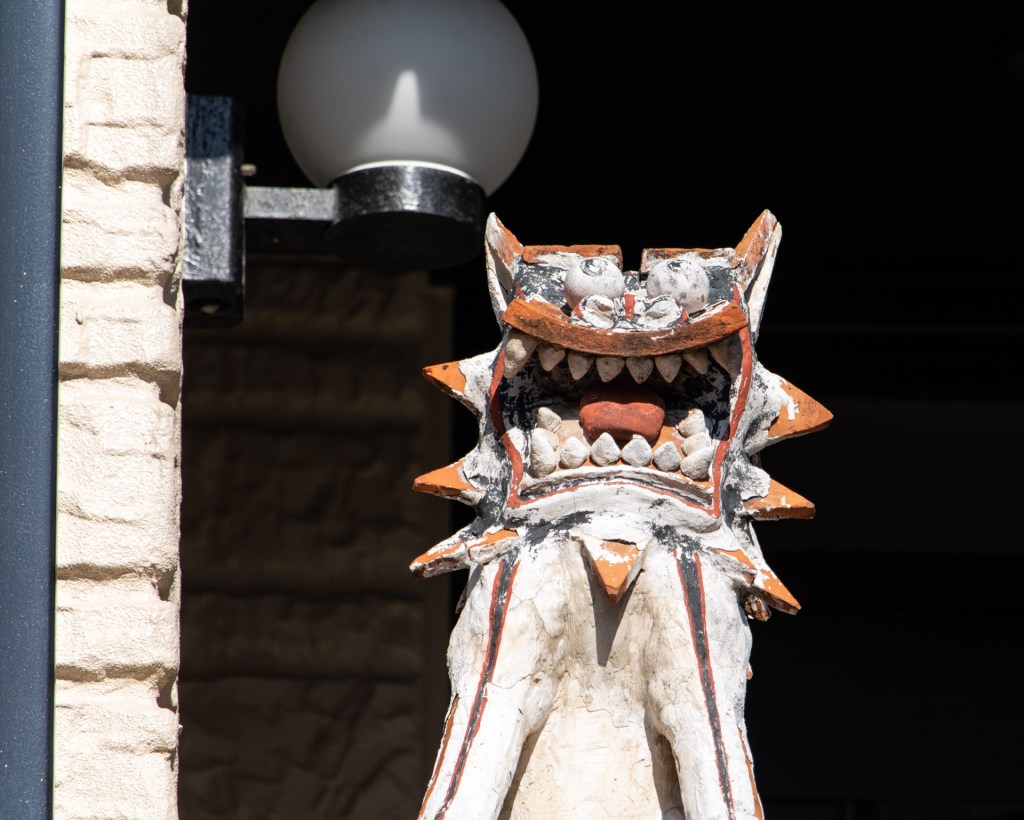
You will also notice this beautiful white and red roof, and this also I’ve only seen in Okinawa. Mainland Japan does not have Shisa, not commonly, but their own version of them, the komainu, which are typically seen guarding the entrance of shrines. They are not lions like the Shisa, but dogs. Both the shisa and komainu have their origins in China. Okinawa, or I should say the Ryukyu kingdom, at that time, ended up with the Shisa, and mainland Japan with the komainu, although mainland Japan does have the shishi in its culture, in the shishimae, the lion dance.
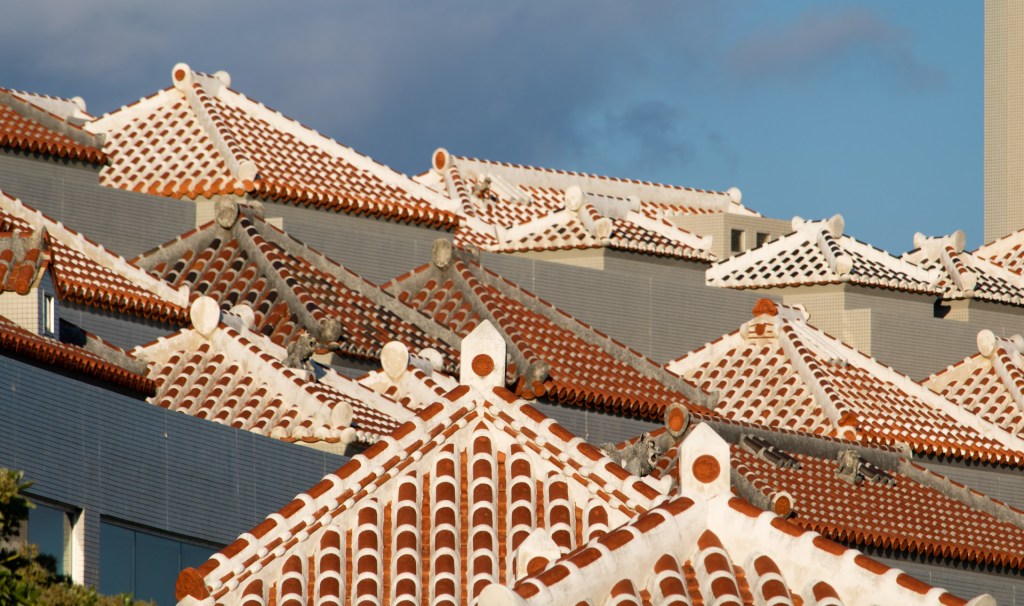
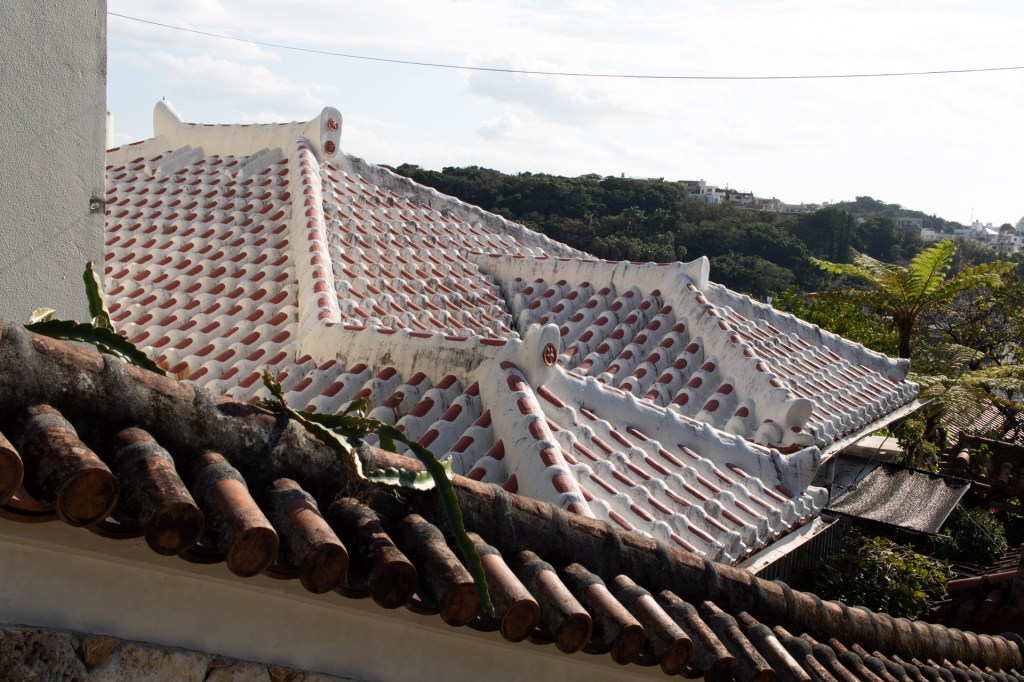
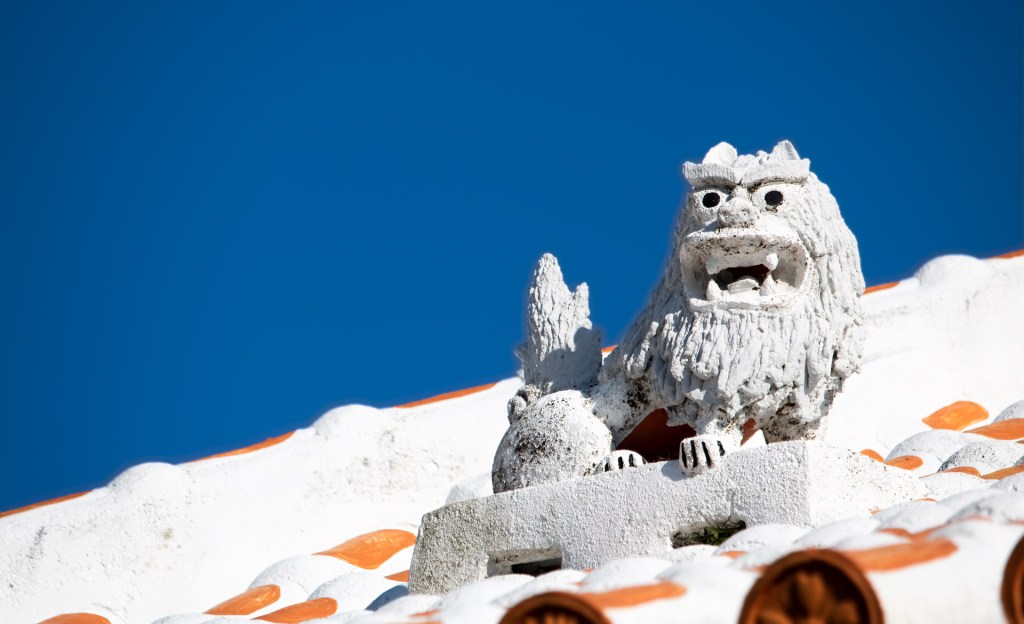
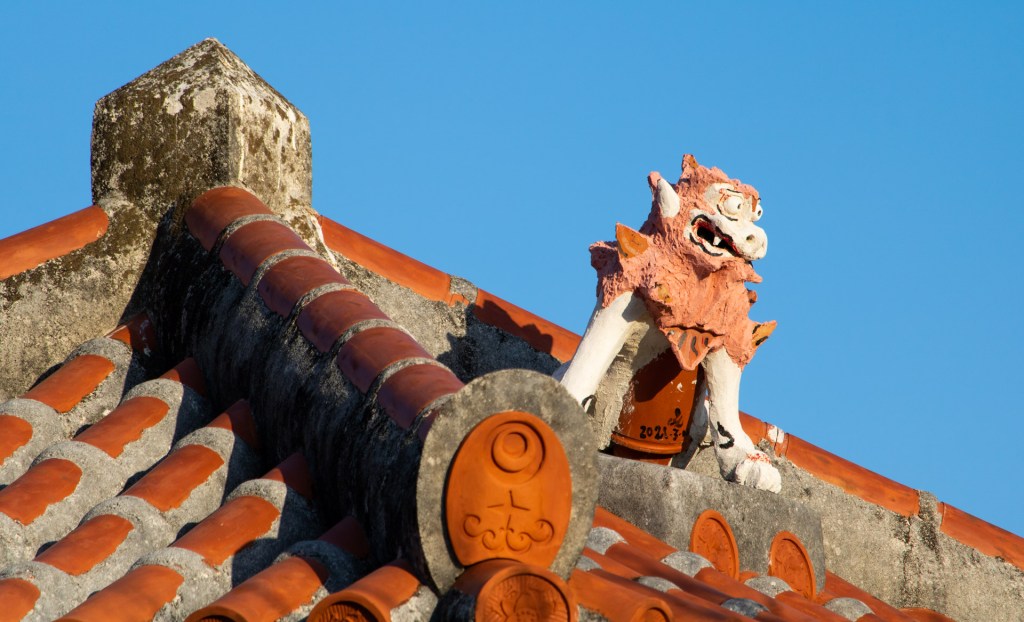
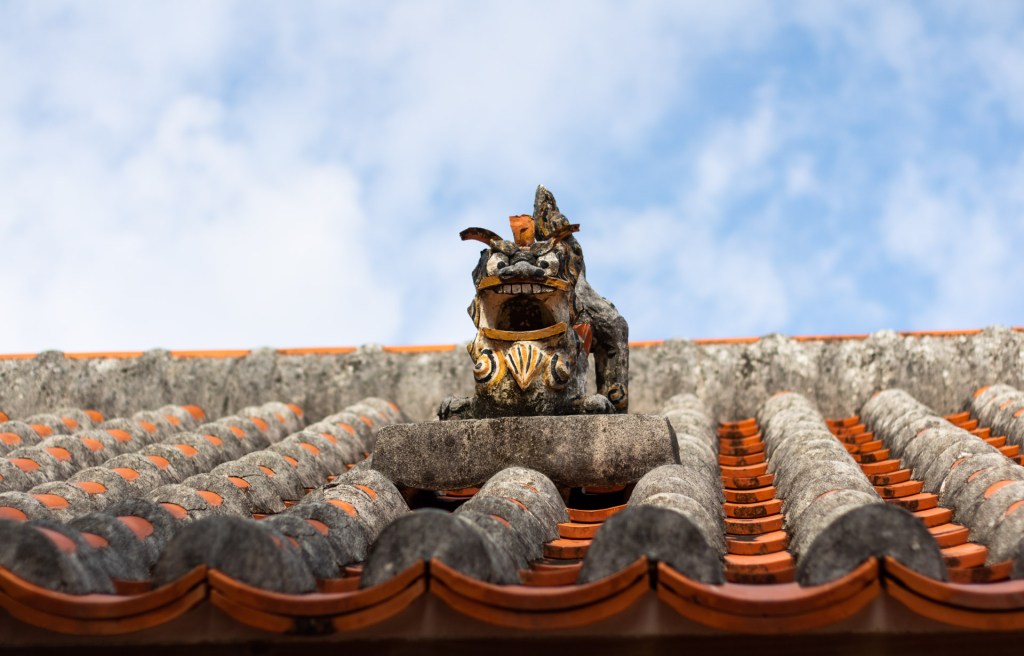

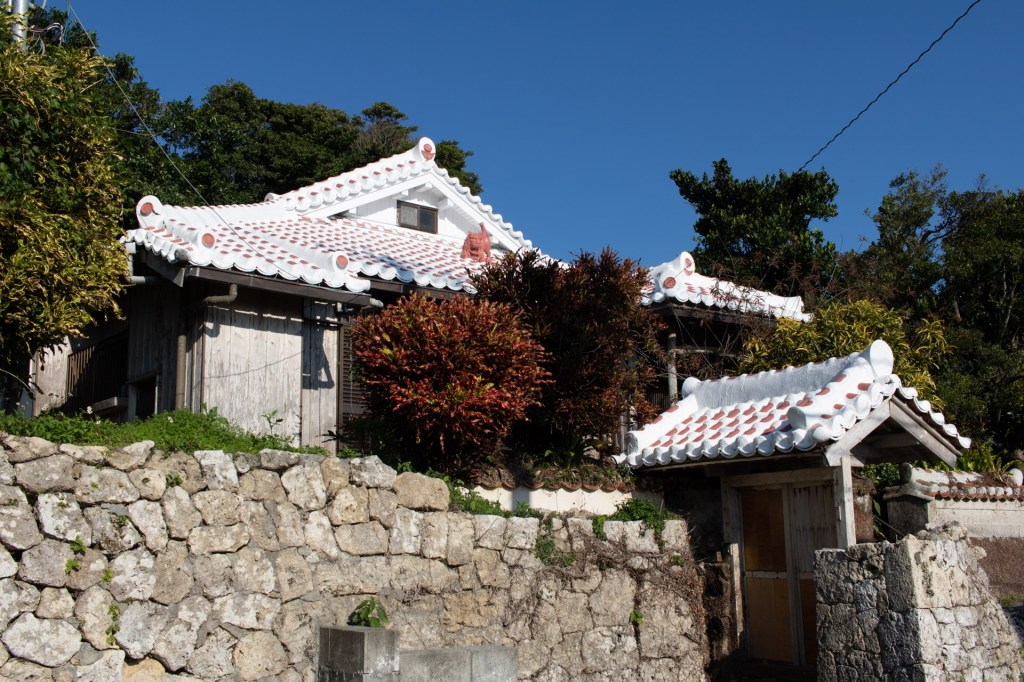
Let’s take a moment to enjoy some more Shisa photos.
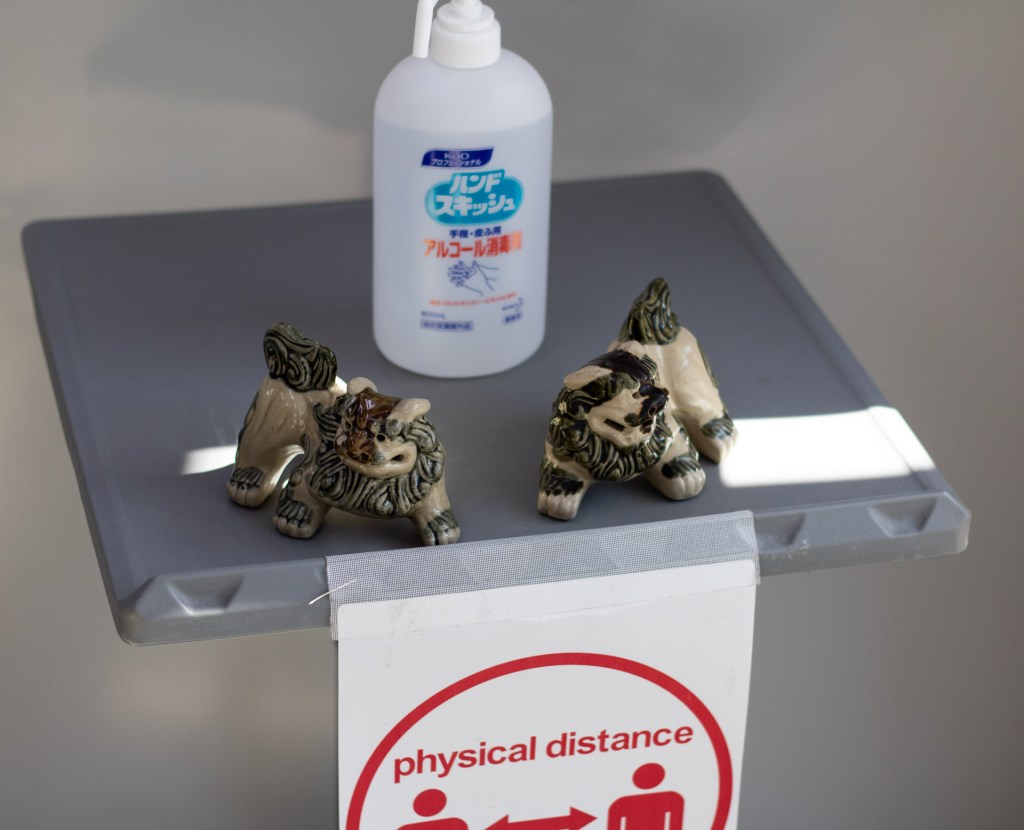
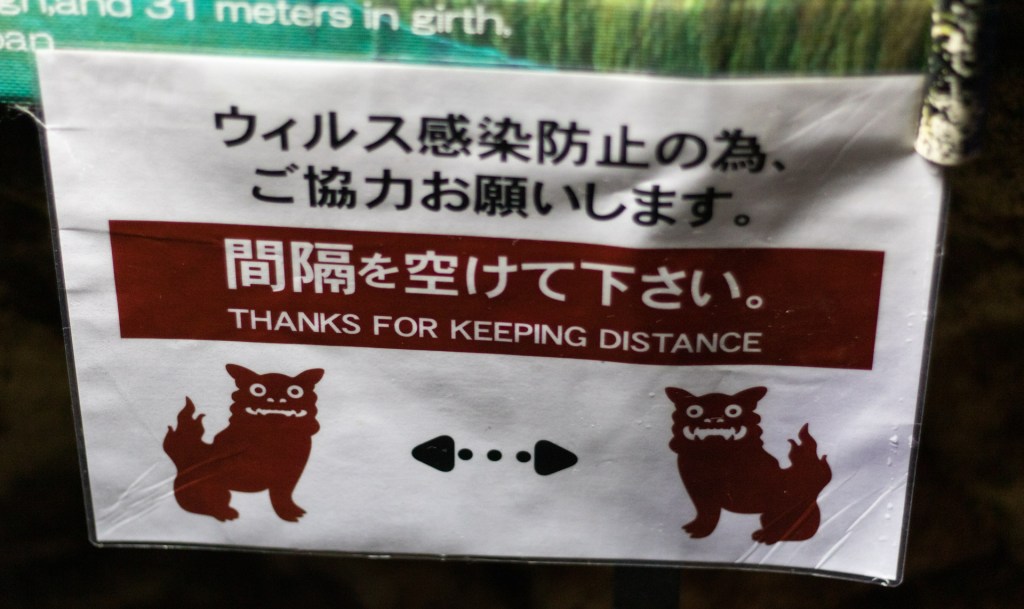
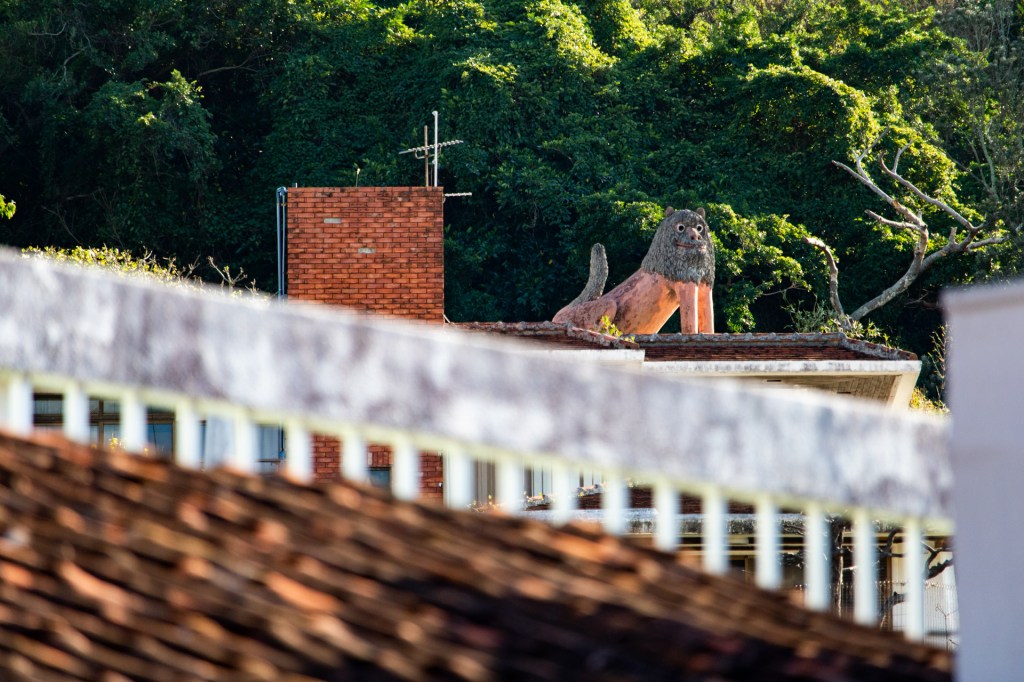

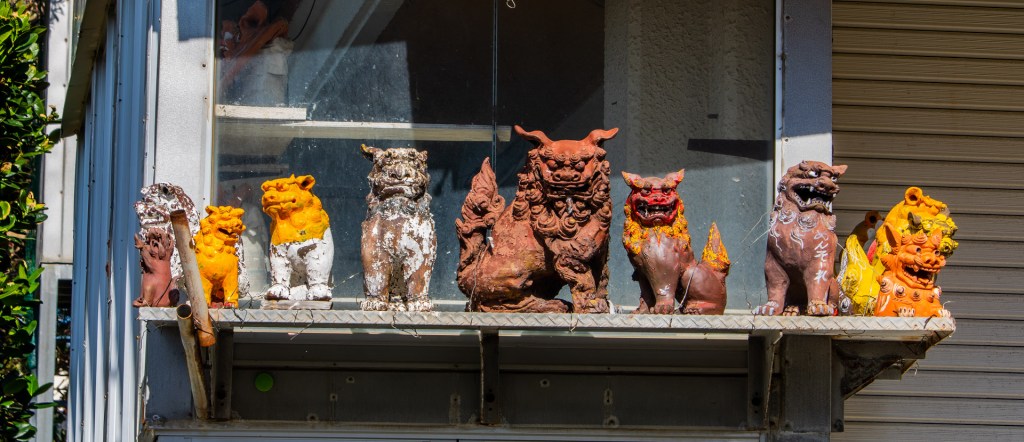


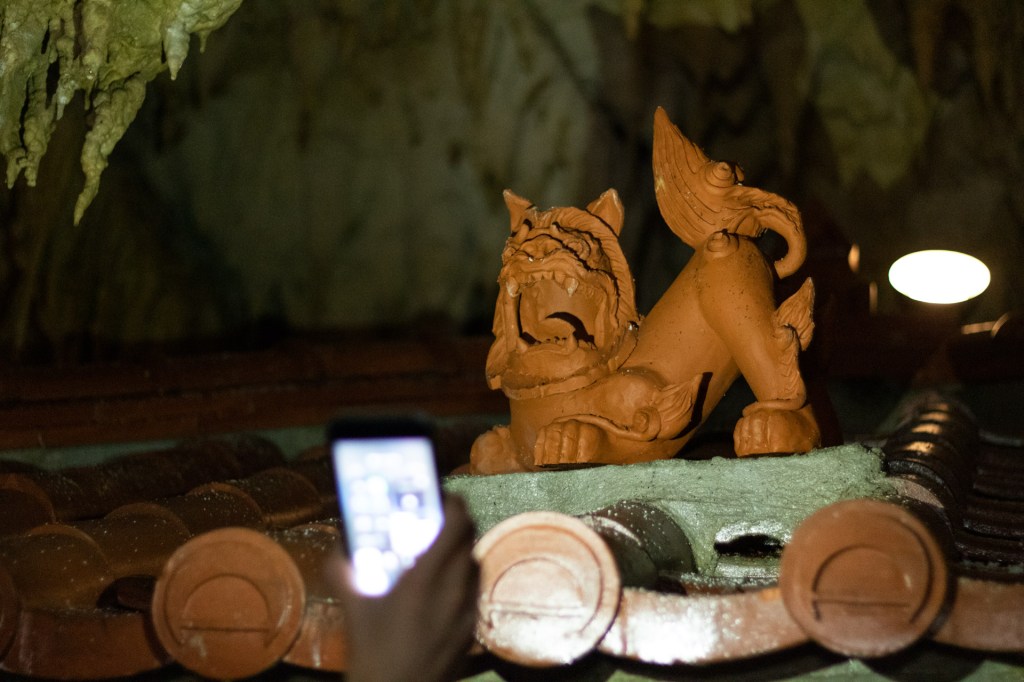
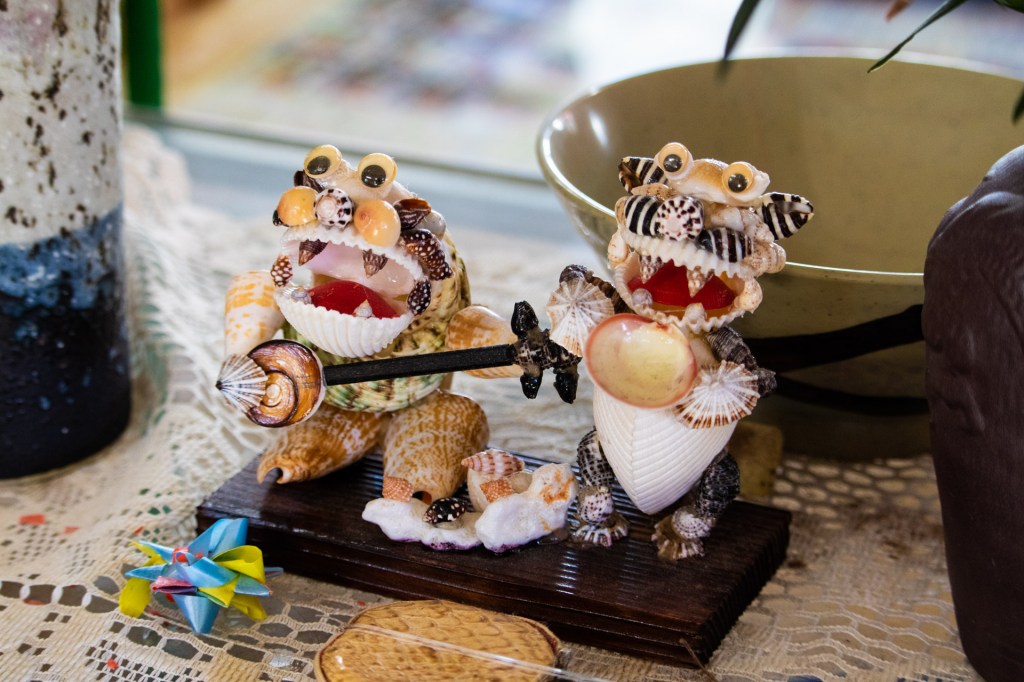
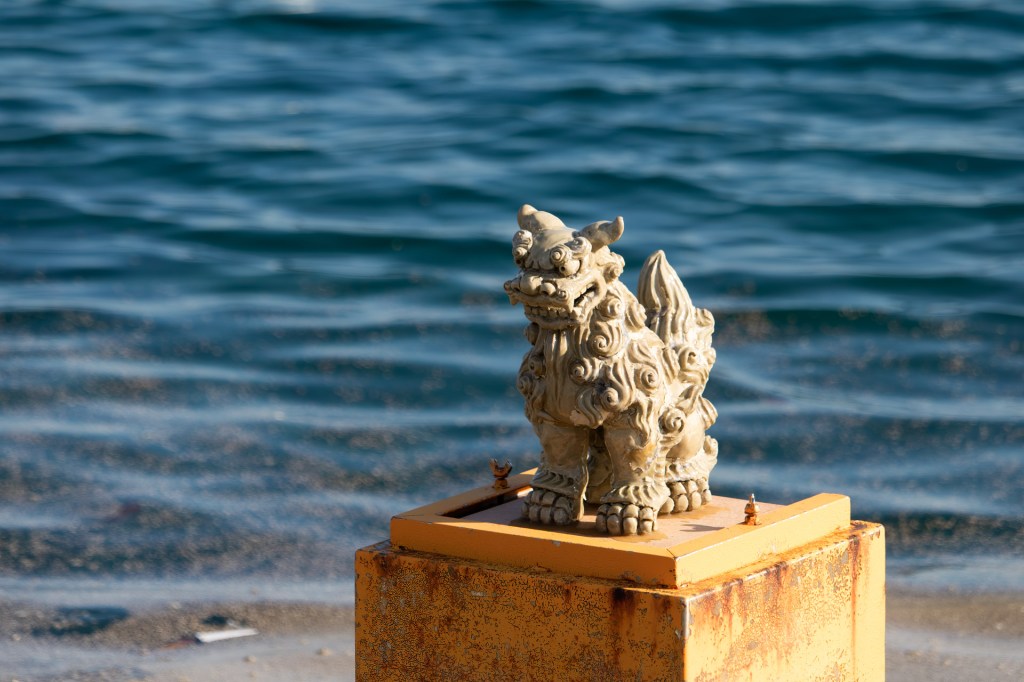
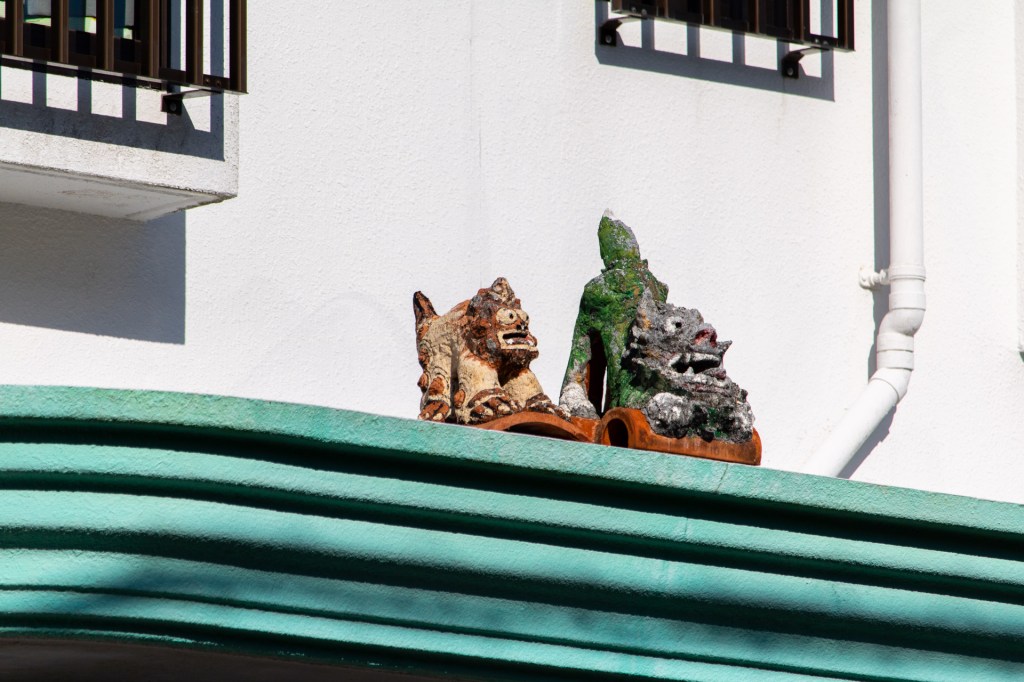
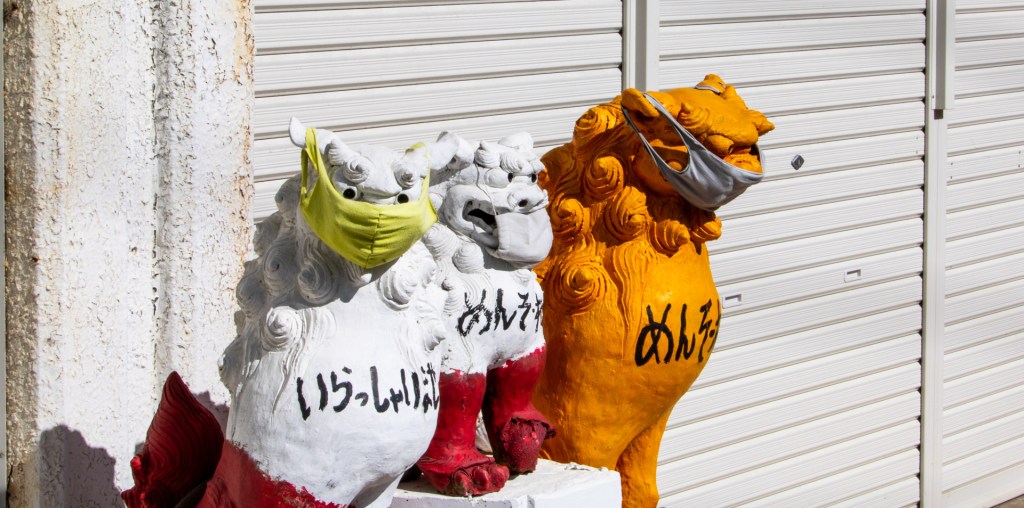

I still felt like I was in a dream when we wandered down to the park under the underpass by the beach. It may not sound like the most likely place to be poppin’, but it was poppin’. Here too I felt strong American vibes. Maybe it was the Blondie blaring from a city PA speaker. Or was it the rollerblades? The b-ballers? It was a hive of activity. Skateboarders, tennis players, slamming the ball against the most indefatigable foe, concrete columns of the underpass. Parker gave a gasp and pointed. “Do you guys see that?” and ran away. We were strolling the beach when he recovenvened with us. “RC cars!”
So yes, those first days were spent in Naha, acclimating ourselves to this strange new place, and its strange new culture.
We got our first real Okinawa schooling from a Canadian. We met Dan as we were checking out of a local supermarket. He started to chat us up, and he asked us where we thought he was from. I made the mistake of saying American. James said I should never call someone an American, (reflecting our standing in the world, at least in the eyes of the Australians), but especially not a Canadian (which Dan was.) In my defense this was early in the conversation, before the “eh”s and the accent started popping out. Dan told us all kinds of things about Okinawa – about where to buy good Shisa souveniers, about why the Okinawans love Spam (they do love Spam, this was a major surprise), about how there is strong anti-American sentiment because of all the crime committed by American soldiers in the 80s and 90s. (I read about this crime, after returning. It seems that not only was there crime, but there was also a lack of justice. Many of the perpatrators were given meager fines, discharge from the army, or got off scot free. Nothing that you could call justice for someone who ran over your four year old. All enforcement and judicial affairs related to American military personnel were and still are carried out by the American military. This has been a great source of tension for the island.) About Okinawa’s economic struggles, being the poorest prefecture in Japan, and being a more popular tourist destination than Hawaii, having some ten million tourists annually, with four million of them being Chinese (Dan’s numbers). As for why Dan was here in Okinawa now: Love, baby. Dan met an Okinawan woman and got married. They spent some time in Canada and then came back to Okinawa. He said he liked talking to foreigners – he struggled to make friends in Okinawa because he doesn’t speak Japanese (which may be surprising to hear, given Okinawa’s diversity, but probably has a large part to do with his age, as in Japan, the higher up you are in age, the less likely you are to speak English).
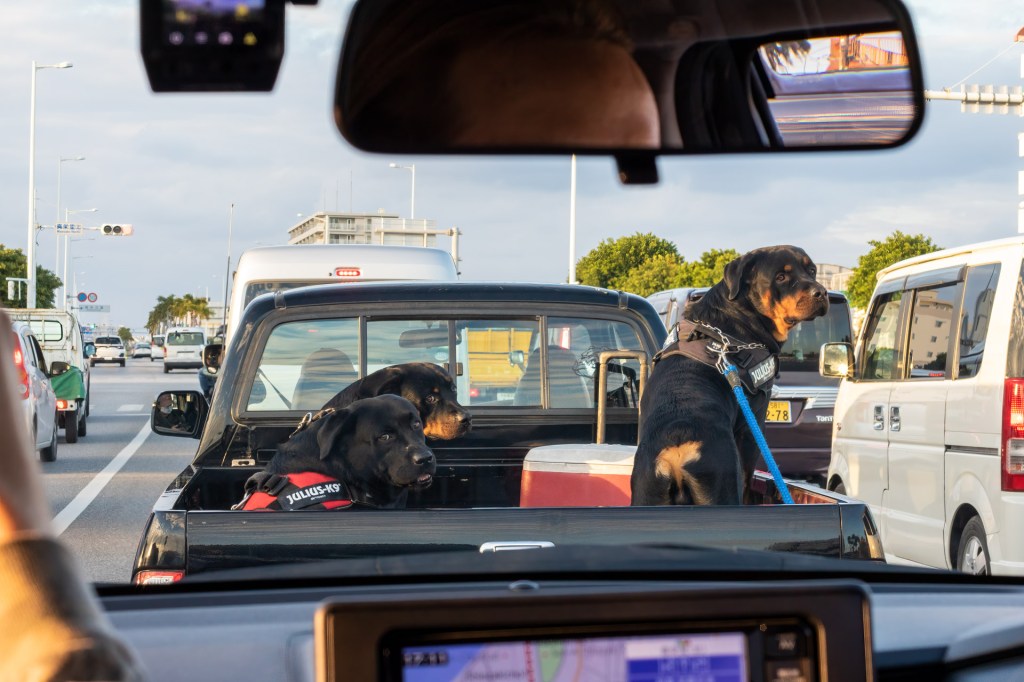

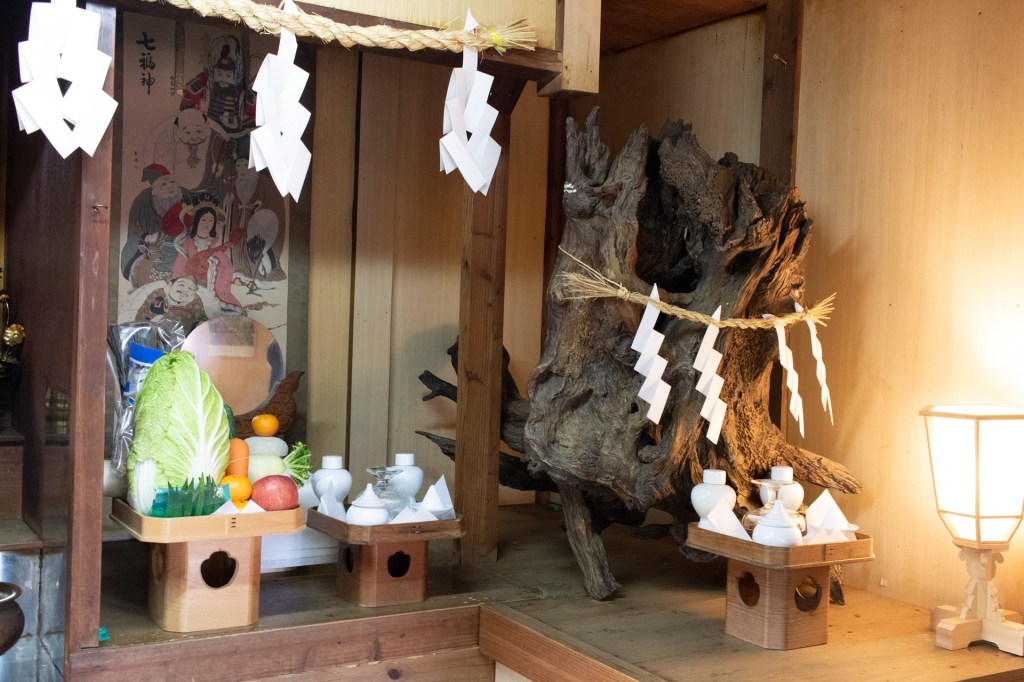
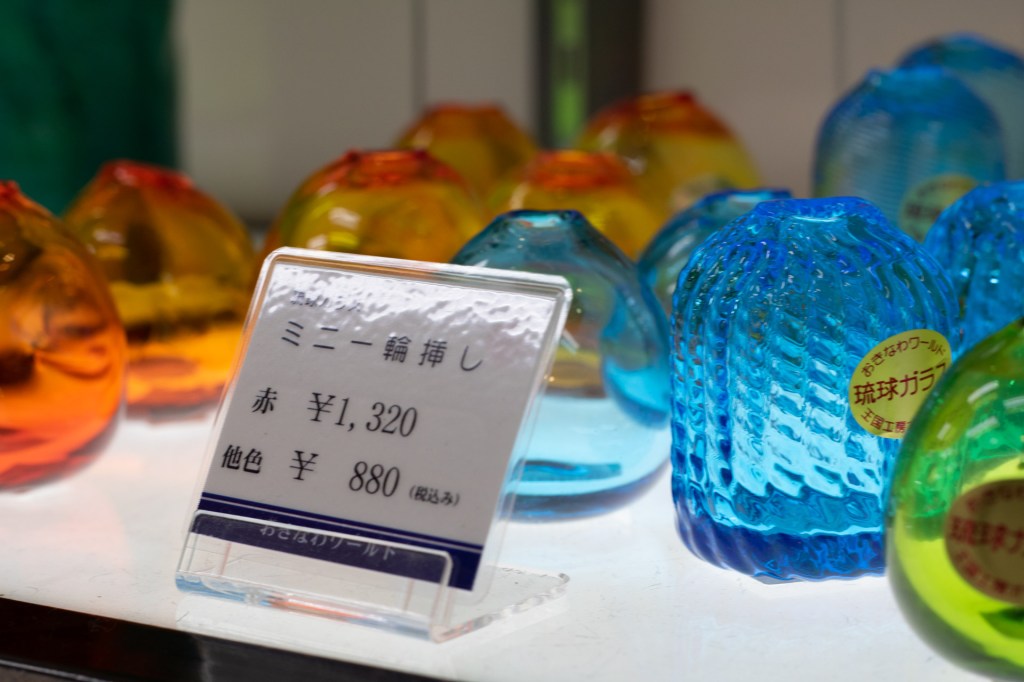

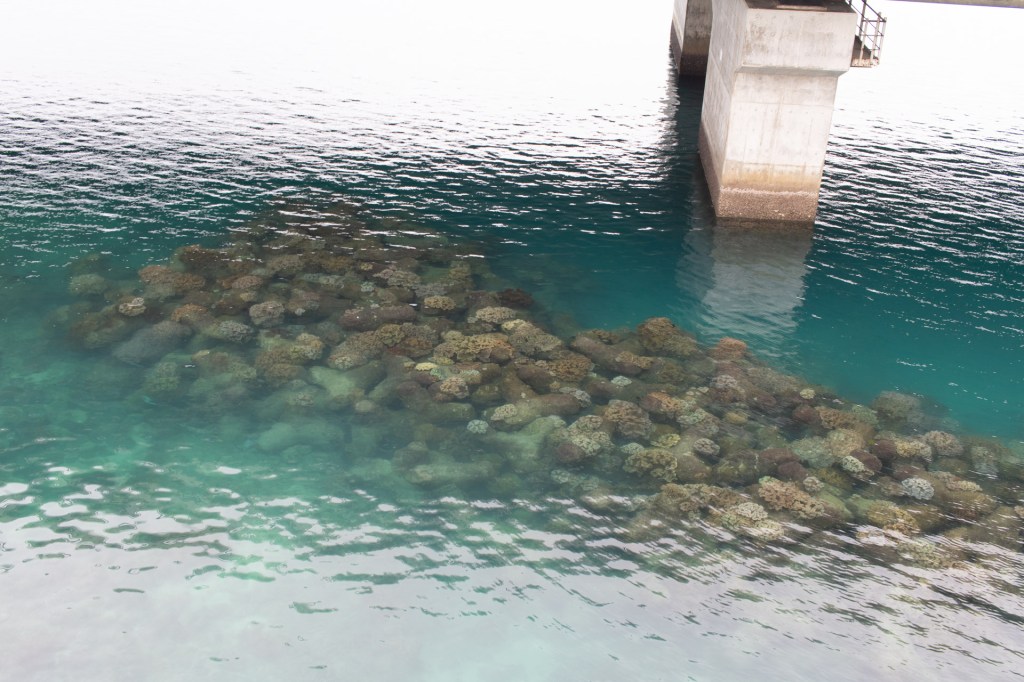
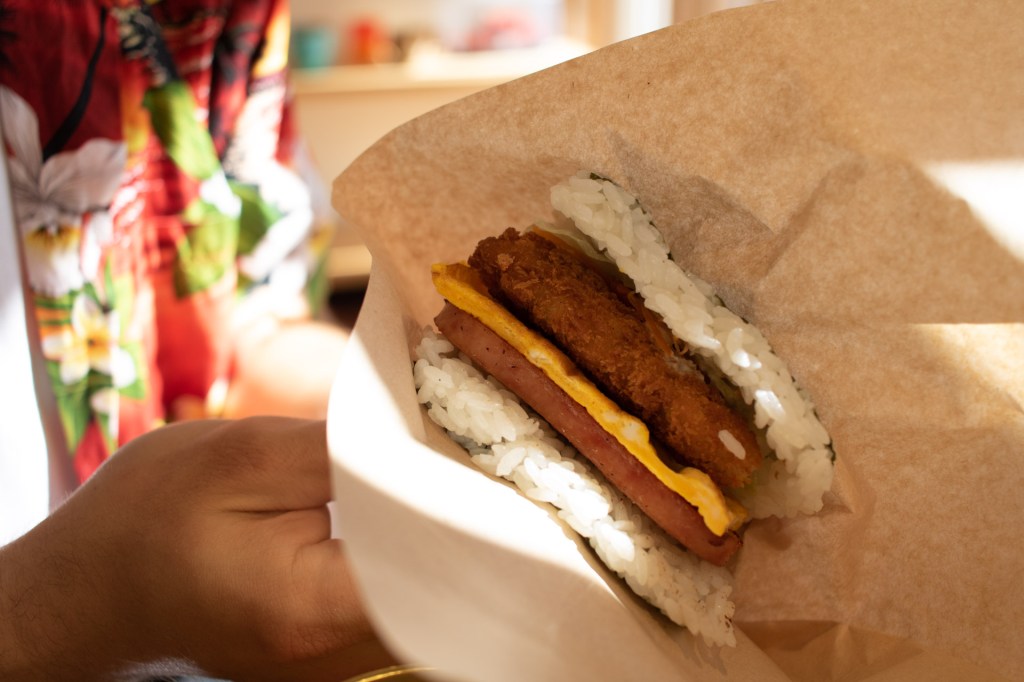
Touching on the history of Spam in Okinawa, will lead us to covering everything I learned about Okinawa’s recent tumultuous history, which was this – the Ryukyu kingdom was subjugated by the Japanese in 1609, and Okinawa prefecture officially founded in 1879. The people of Okinawa were forced to fight along the Japanese in World War 2, to defend the island against the Americans, who were making it the last stop before the mainland, and everybody died tragic, horrific, senseless deaths (at this point in the war it was entirely senseless, for everyone except the emperor and his people, who just wanted to maintain as much control over Japan as they could after the war was over). The Okinawan people were forced to support and fight for Japan, and suffered greatly. I don’t know if I need to recount all of the horrible, gruesome details that I learned from visiting the various war museums, but I did feel that I learned something particularly important, which is that war memorials are necessary, and everyone should go to them. I have thought before, when visiting the Hiroshima and Nagasaki atomic bomb museums, why we need these, why should we keep dwelling on such horror, why keep these gruesome images and facts alive and in our consciousness. And I think I felt the answer this time around, which is that, yes, we know war is horrible, conceptually, many of us – but you need to know, exactly, to see as best as you can, without actually experiencing for yourself, how horrible it really is – the black, charred flesh of crying babies, the journals of the high school girls holding down the arms and legs of soldiers as they’re amputated off, the journals recounting the moment when they were hit by mortar fire, seeing their friends blown to bits, seeing the videos of endless dead bodies and ruined buildings, ruin everywhere, everything black and grey and destroyed, all smoldering wasteland. The photo of the POWs, over a hundred men in a barbed-wire pit of mud, some of them standing, some of them dead, none of them smiling for the camera.
Actual horror. Hell on earth. By the last museum we made a stop at, I didn’t even want to go in. My suffrometer had been maxed out. I couldn’t take anymore.
Why keep the horror alive?
So that we don’t forget.
Because someday, the events of WW2 will no longer remain in any living person’s consciousness. There will be no one left to tell their horror stories. And that is why we need these museums. They’re also necessary, not only so that we remember, but so that we can understand. I think many of us feel intrinsically that war is horrible, and those of us with more active imaginations can perhaps to some degree simulate what it may have been like, or kid ourselves that we can – but I’m sure that it can still never get anywhere near the thing itself. Our imaginations on their own just aren’t powerful enough – but when aided with photos, videos, testimonials, journals.. with some help, we can begin to understand.
What repeatedly struck me was the senselessness of it all. High school girls being blown apart so that the Emperor of Japan can potentially stay in power after the inevitable defeat of his nation. What kind of leader, what kind of ruling party would ever trade power for the lives of their innocents? One who believes they are God, perhaps, and so have a right to decide how lives are lived, and how they are spent. One who is a madman. One who is both.
Yanbaru
Now, let’s take a look at this photo.
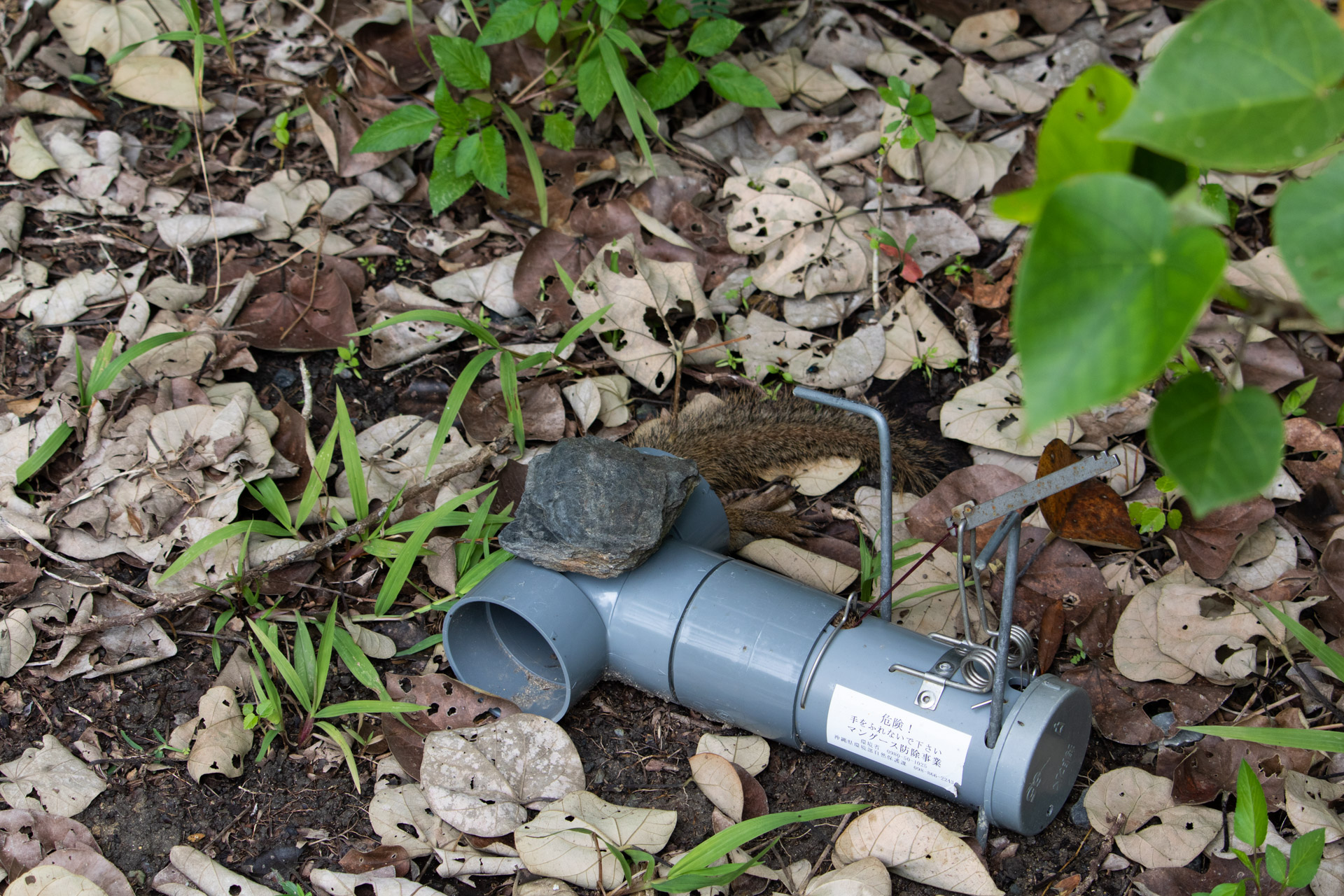
This photo won the mystery award from Ryoka. When I showed this in class, all the students would, in unison, squint and lean forward, intensely focused on the screen. I took the photo already knowing what it was, so of course I know what this is a photo of. But I’ve been surprised that most people who look at it can’t tell. What do you think?
If you can read Japanese, there’s a clue for you down at the bottom right. If you can’t read Japanese, or can’t read this yet.. Stevie’s here for you.
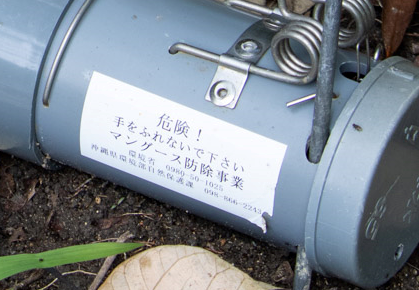
It says, “危険!手をふれないでください。マングース防除事業。”
Danger – don’t touch this – death to mongeese.
It’s a dead mongoose in a mongoose trap.
Now let me tell you a little bit about what was one of the most interesting parts of the trip for me.
The animals of Yanbaru are so threatened with extinction for, I think, two primary reasons: land development, and death by mongoose.
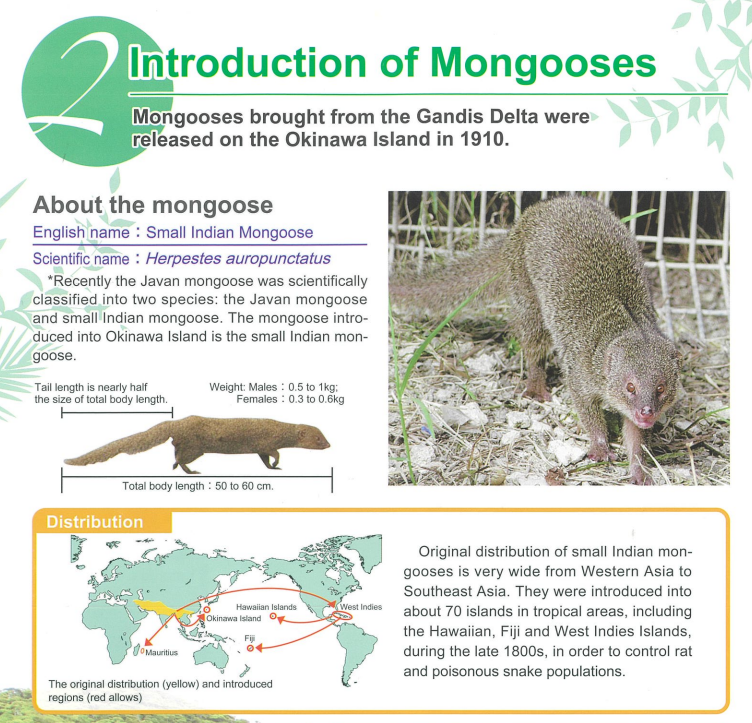
In 1910, 17 mongeese, known to science as the Herpestes auropunctatus, the Small Indian Mongoose, were released in Naha, southern Okinawa, to wage war on the Habu, Protobothrops flavoviridis, (a particularly fun one to say), a venomous Okinawan snake. I regret not taking a picture of any of the numerous warning signs placed in the habu hotspots (or the people hotspots, as they were ideal places to share the good word, that these snakes will mess you up), but I do have pictures of habu sake. The students were very interested in this. According to Wikipedia, the habu are often stuffed into the jar alive, and drown, or are stunned and gutted alive. Gruesome stuff.
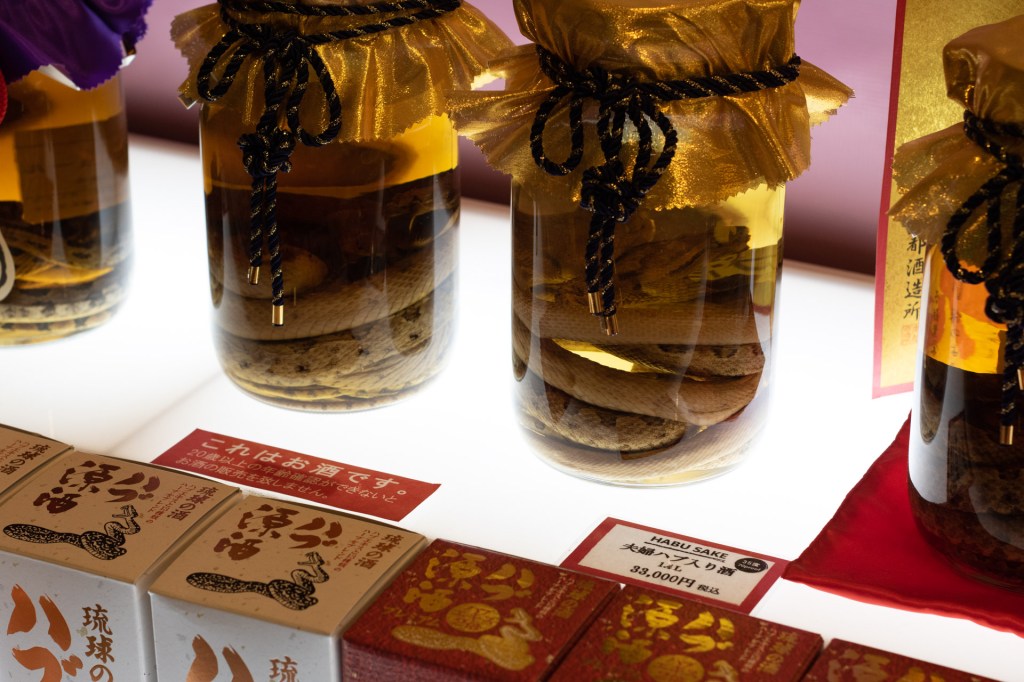
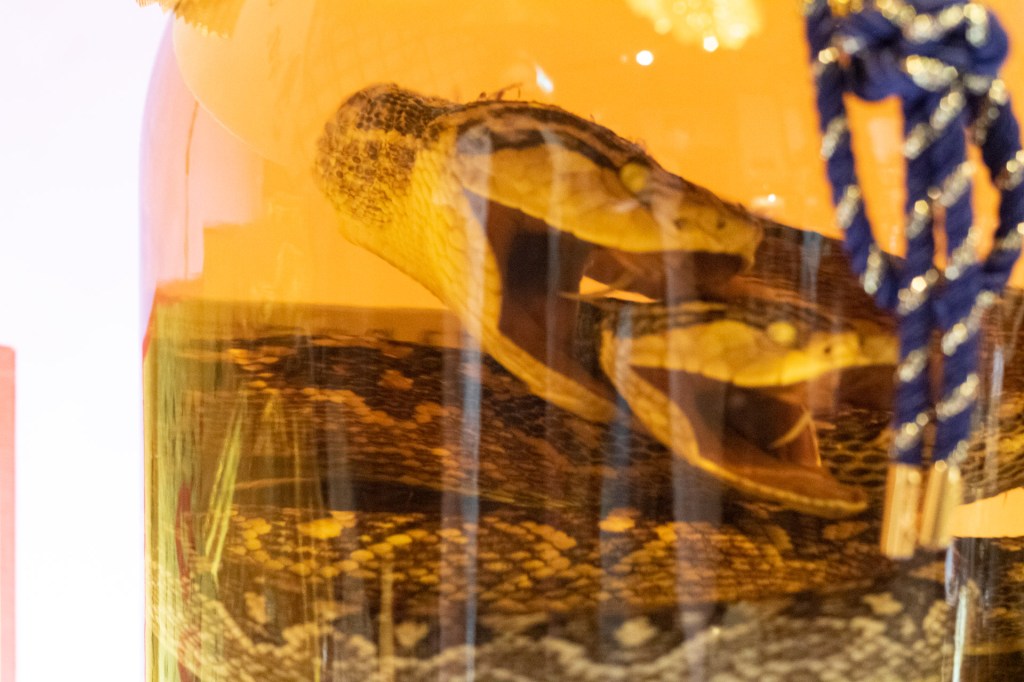

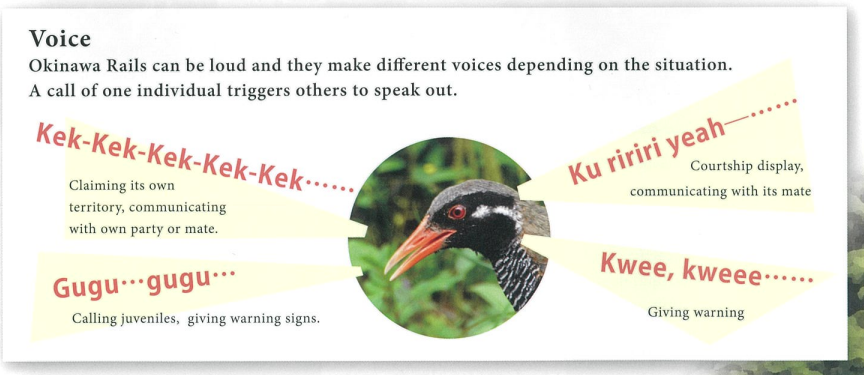
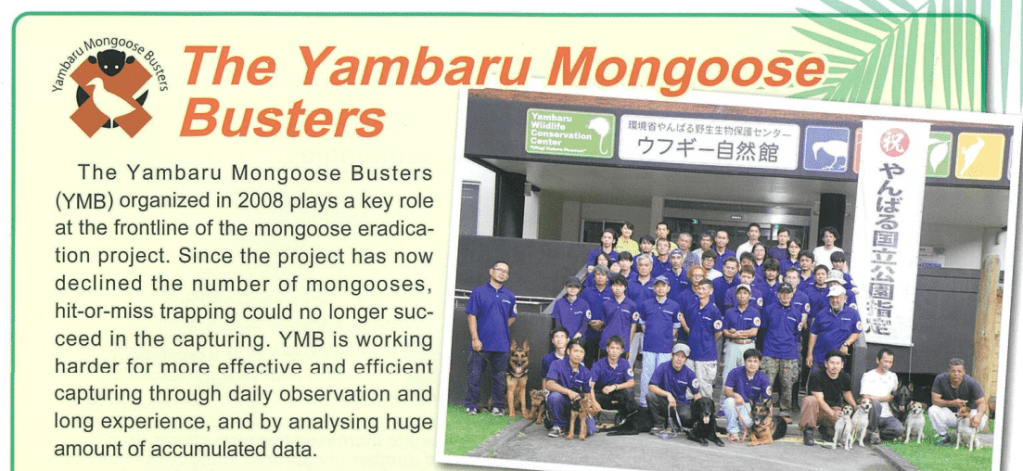
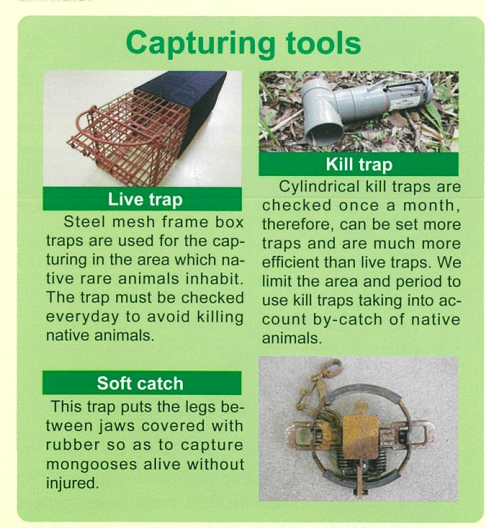
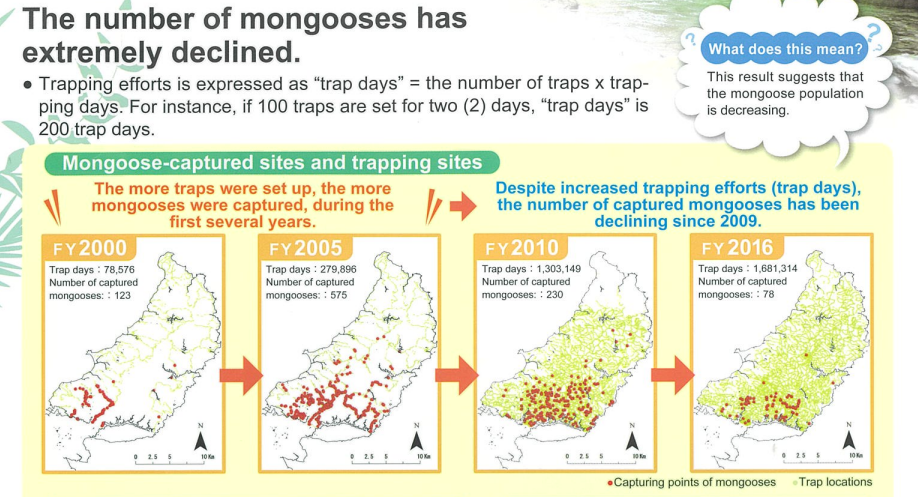
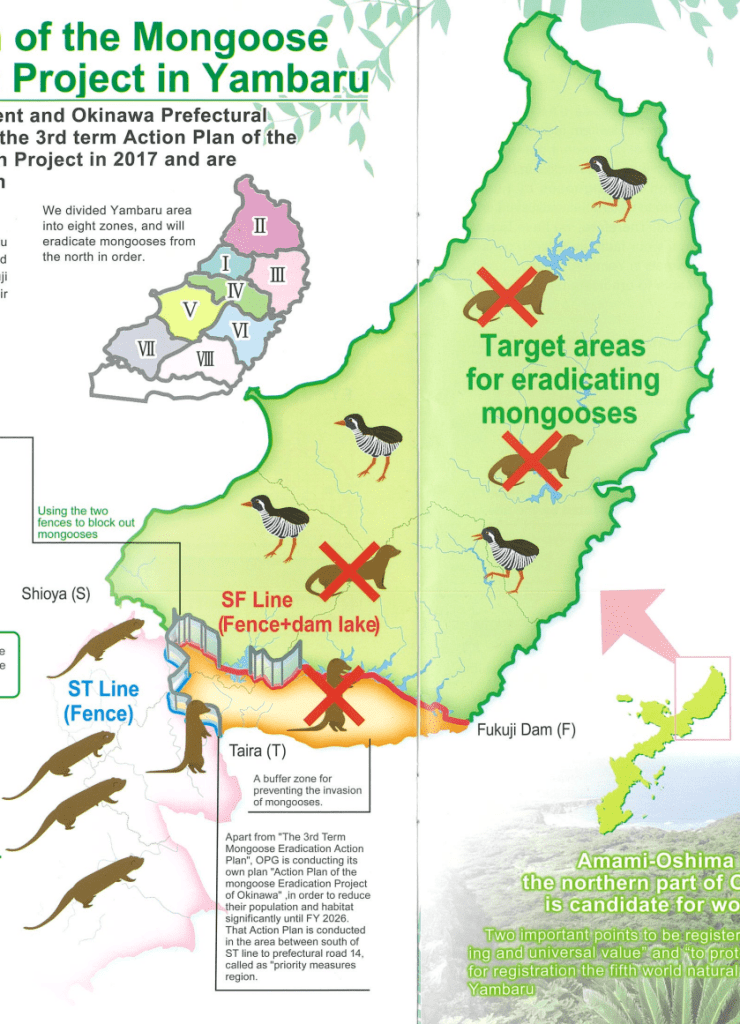
Unfortunately for everyone and everything on the island of Okinawa, the habu are nocturnal, and the mongoose, diurnal, and so the two rarely ever meet, and so the people of Okinawa simply added one more problem animal to their list of problem animals. To me this just shows how little we understood about animal behavior and ecology, just over a hundred years ago. Although there may have been people who knew better and weren’t consulted, or someone just really got the idea into their head, that our snake problem could be easily solved if we just brought a pack of mongeese to the island. I do wonder how this ended up happening, but apparently the idea was a common one, because according to a pamphlet I received from the Kuina Conservation Center (we’ll get to this), the Small Indian Mongoose was “introduced into about 70 islands in tropical areas, including the Hawaiian, Fiji and West Indies Islands, during the late 1800s, in order to control rat and poisonous snake populations.” The rats were also brought by the humans, and were also extremely detrimental to island flora and fauna, like on all other islands they’ve been introduced to. Instead of hunting the habu, like intended, the mongeese hunt everything else, and because the top predator on the island was the habu, and no carnivorous mammal like a mongoose, the animals adapted only to defend themselves against the habu, and perhaps birds of prey, and had and have no adaptations against mongeese, and this is the same sad story on so many islands around the world. Feral cats and dogs are an issue as well, on Okinawa, to a lesser extent, but still enough that the government had to initiate policies limiting the freedom of cats and dogs in the Yanbaru villages, and institute a tracking program, requiring all pets to be chipped. The mongeese have thrived since their introduction, and have steadily pushed northwards, until they made it up into the Yanbaru region, where the rarest and most sensitive of Okinawan species live. It wasn’t until recently that people caught on to what’s been going on, that mongeese are eating all their special animals, and this is now an ongoing struggle, between the people of Okinawa, to save their endemic wild things before it’s too late, and the mongeese. When reading about the Kuina, in the same pamphlet, I’d read that it had first been described in 1981, which I take to mean that it was given its scientific name, as the Gallirallus okinawae, and I couldn’t believe it. I thought that must have been a typo, but no, it’s true. So this animal that is now the flagstone species, the centerpiece in the campaign to protect the wildlife of Okinawa, had not even been officially documented, known to the larger ecological community, until a little over forty years ago, which to me seems like just yesterday, as whenever I read about particularly interesting species like the Kuina, they’ve all been documented much longer ago, in the 1700s, by Carl Linnaeus, or some French guy (my history is weak here), and maybe the 1800s, but not EVER in the late 1900s. But so it is, that the wildlife of Okinawa has flown under the radar for so long, and once it got some attention, it must have been found that these animals are in serious trouble, and would be gone soon, some of them gone already (potentially the Okinawa Spiny Rat), without some intervention. The initiative started only in 2000, after 15 years of basic research, when the prefectural government started capturing mongeese, and they’ve since passed legislation, constructed three fences, many kilometers long, and have even started up a real life Okinawan Avengers, the Mongoose Busters. So what you see in the picture is a mongoose caught in what is listed in the pamphlet as a “kill trap”, deployed by the Okinawan Avengers. We found it down along the mangroves, where there were two traps, the first one being empty. When I spotted the second, I saw flies, then a tail, and knew we’d gotten lucky. (The mongoose, not so much.) We were witnessing history, really, a glimpse into the ongoing war between a slinky, furry destroyer, the repercussions of the misguided intentions of over a hundred years ago, and the people of an island, in a desperate attempt to protect their dorky, charismatic, flightless bird (and everything else threatened by the mongoose, like the Okinawa Spiny Rat, the Ryukyu Long Haired Rat, which is actually more a possum, the Ryukyu Black-breasted Turtle, the geckos, newts, frogs). The misguided acts of the past. Ignorant humans attempting to rectify an order that is beyond their understanding.

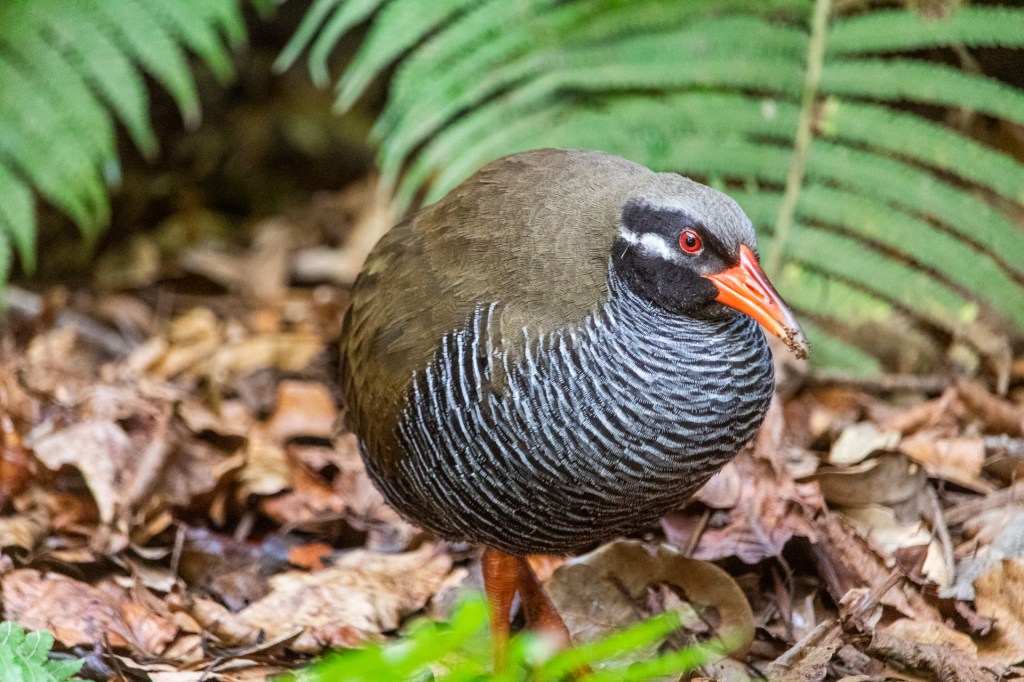

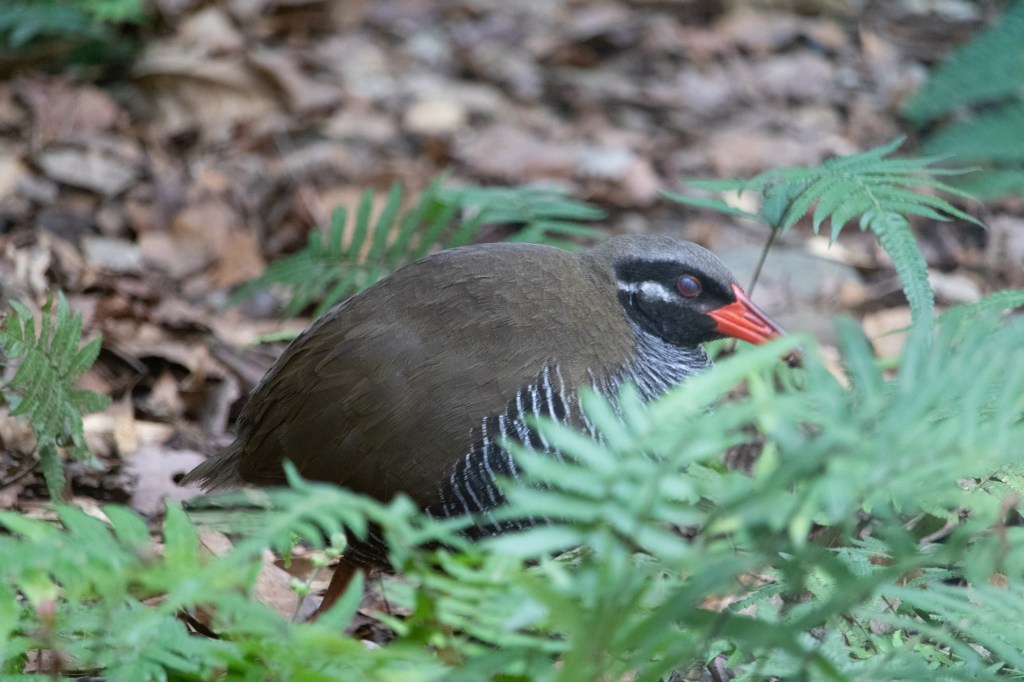
These photos are all from the Kuina Conservation Center. Although I desperately desired it we were not able to see a Kuina in the wild. Thank you to the center for having Kuina on display to satisfy the burning curiosity of animal people such as myself. This bird, I first heard of through the great omnipotent internet. I found, from some very brief perusing of the great omnipotent internet, that there was a forest on the northern end of the Okinawa mainland, and that there were wild things there. On searching Google Maps, I found the Kuina Conservation Center and knew right away that was a place I needed to go. I had to fight for it – after four days of letting James have his fill of parks and museums and McDonalds, when I said that we were going to go see the bird today, his response was, “No we’re not.” His reasoning being that we had already explored Yanbaru yesterday, and I got one day, and one day was enough. I had to put my talons down for this. I said, “James, we are going to go see that bird.” And we did go see that bird, and made friends with a nice man, knowledgable on all things Kuina, and friends with just about everyone in Japan, Kobayashisan, who spoke to us the entire time in good English, answering all of our questions, and educating us on the history of the project, to save the Kuina, and the Kuina behavior, diet, mating, about the Mongoose Busters, and about the lessons he was designing for classrooms around Japan. I felt that the Kuina is in good hands if there are people like him looking after them.


Driving up to the center, we saw many signs that warned of Kuina, and at the center itself, a sign that listed how many Kuina had been hit by cars last year, and this year. That is unfortunately another killer of these birds, as well as construction – death via car, and via falling down into places they can’t get out of, like trenches and ditches.
The Kuina is a dorky bird. Something about a bird without the wings is just funny. It is very much a bouncing, bobbing blob. It’s face is entirely expressionless, a face that has you wondering, just what, if anything, could be going on in that round nub of a head. The secrets of the universe. Certainly something is going on in that little nub noggin.
I guess you know I’m a nature lover when I say that the highlight of my trip was seeing a bird.
Did someone say birds?
Birds And Non-Birds
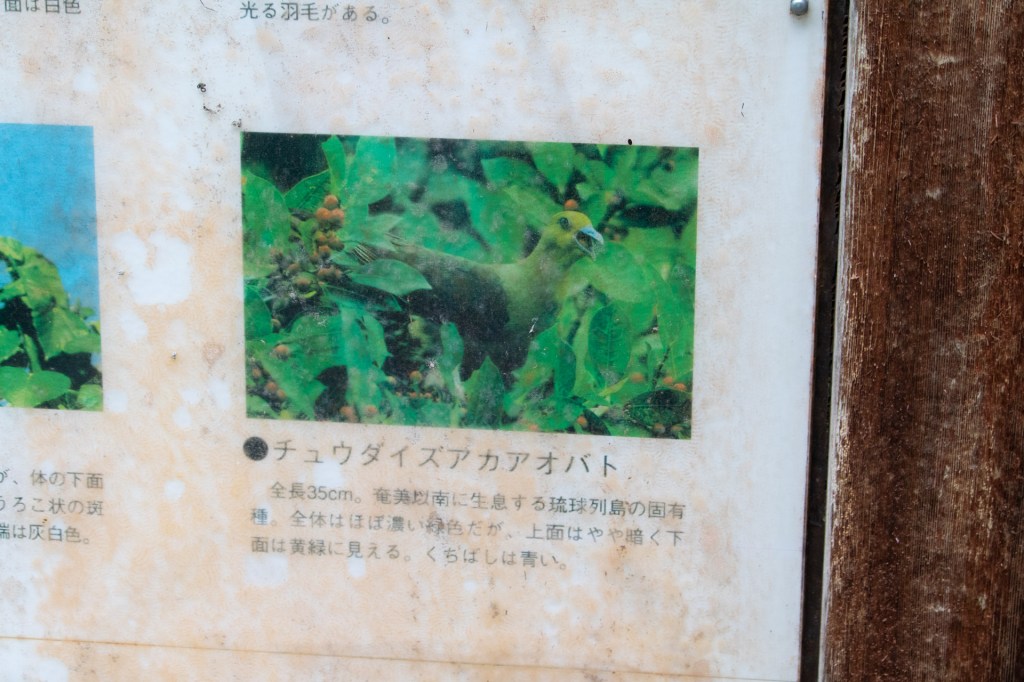
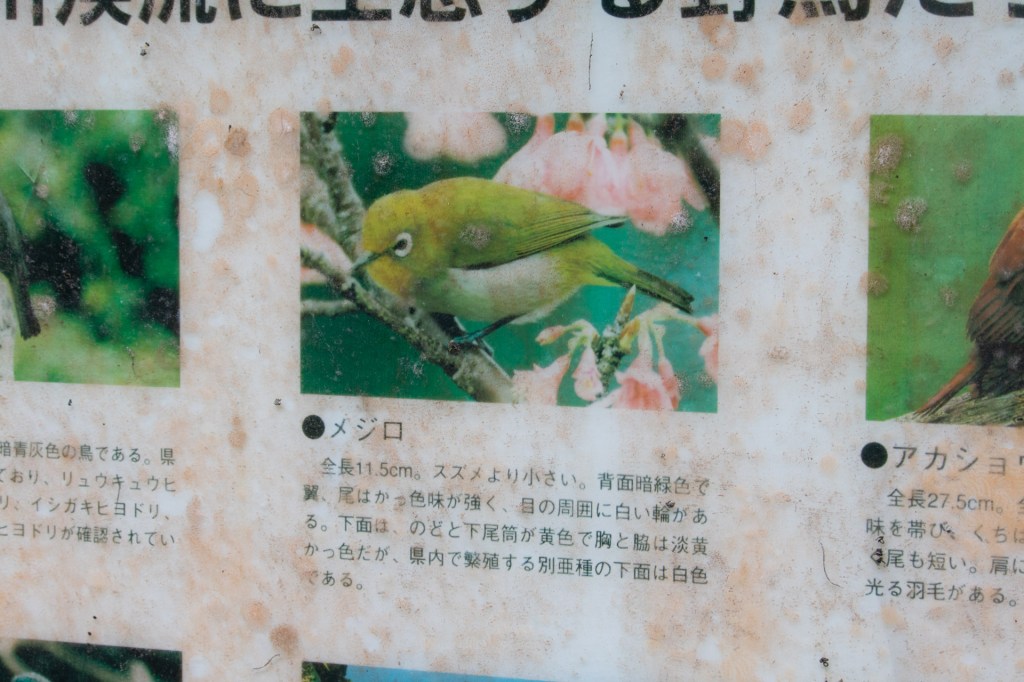
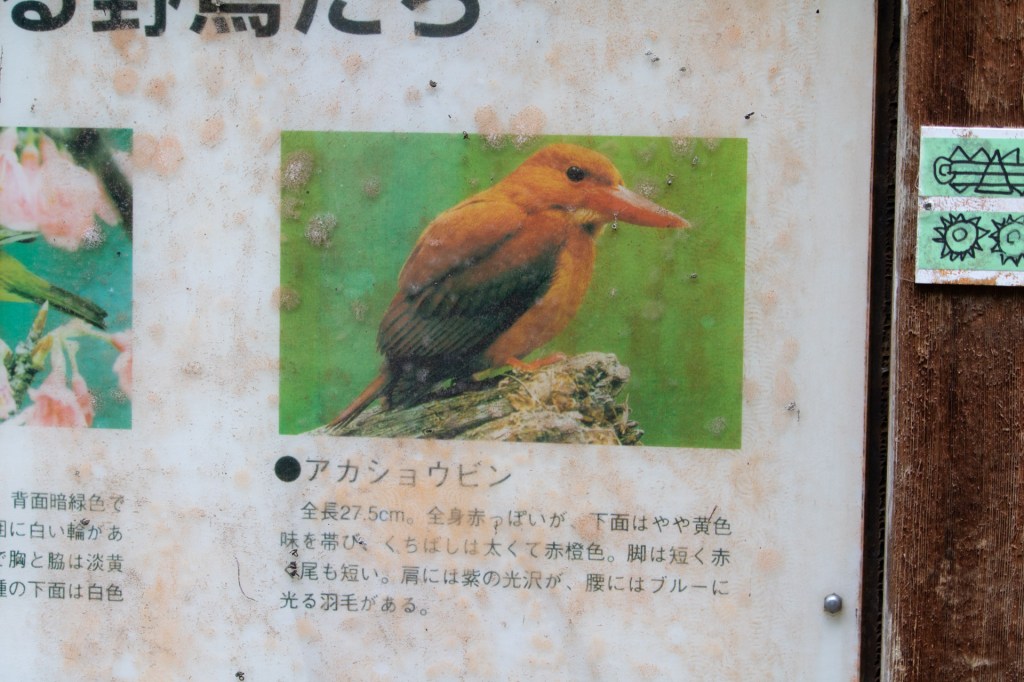
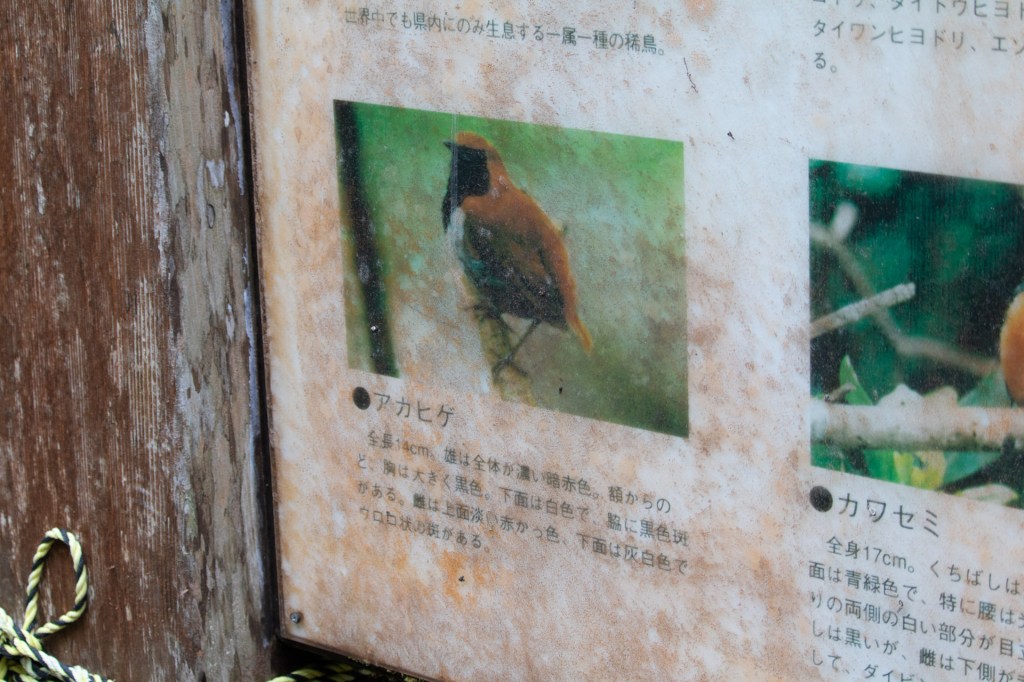
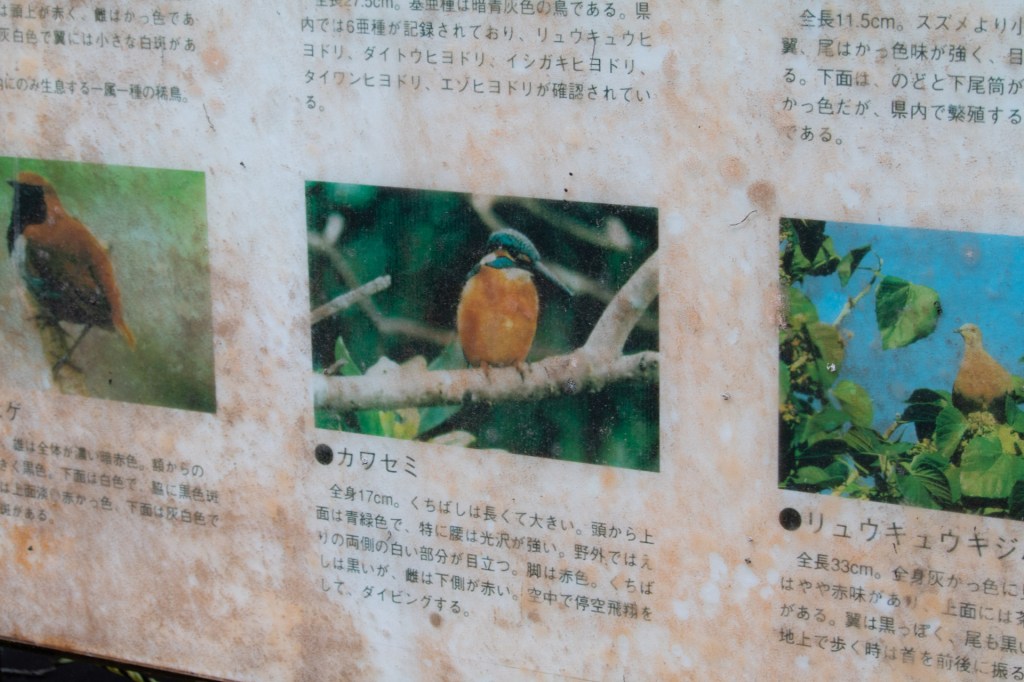
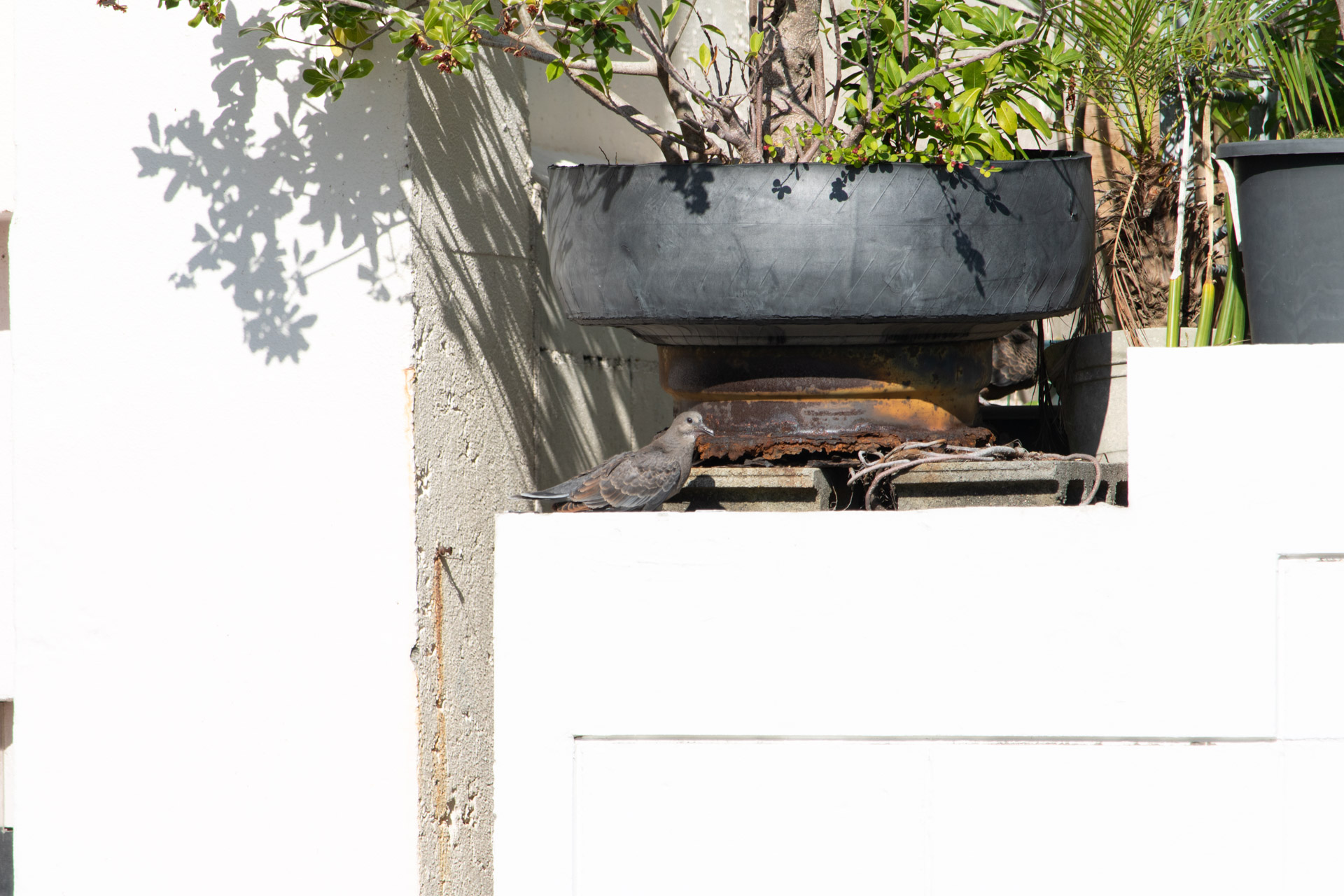
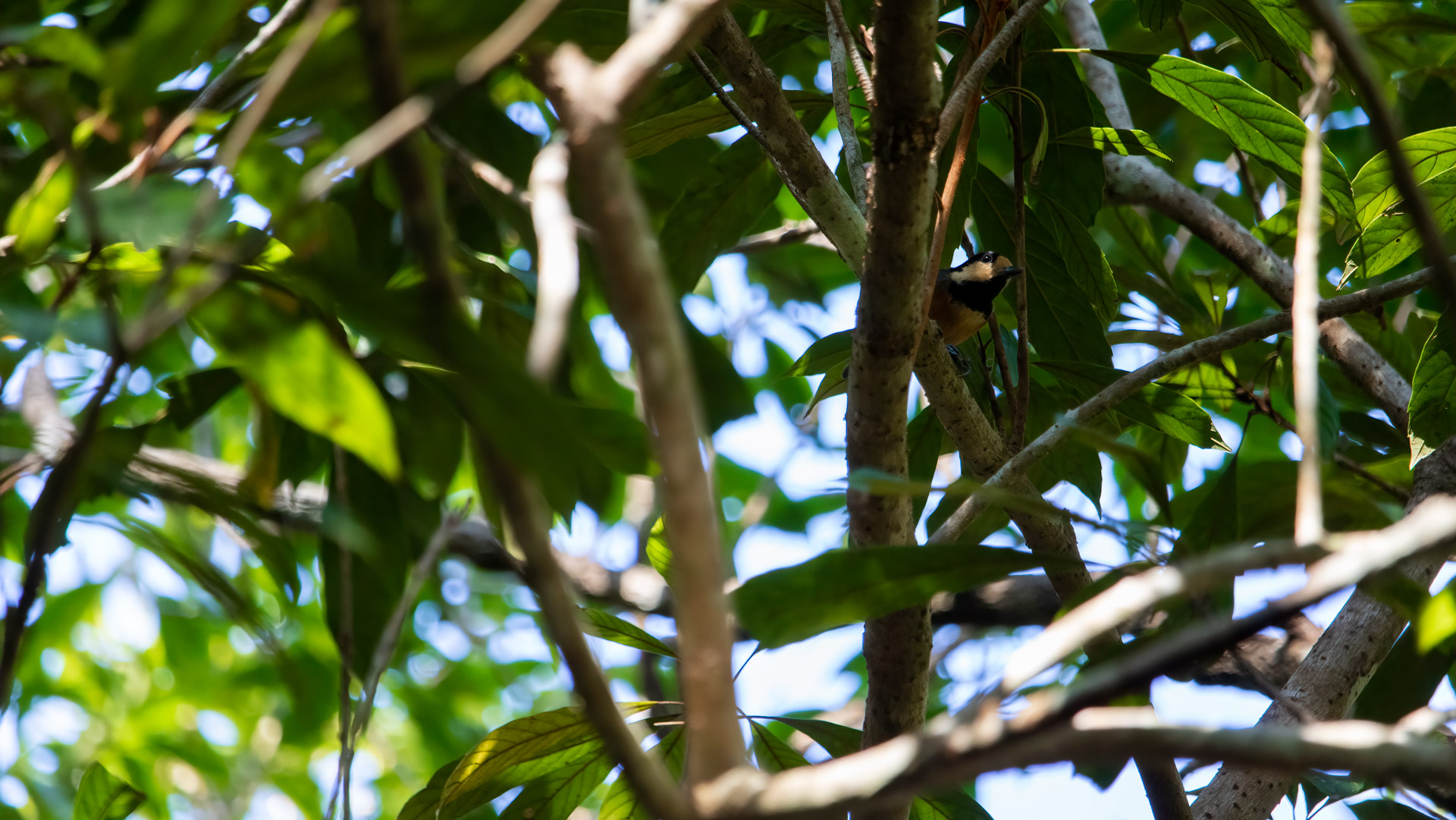
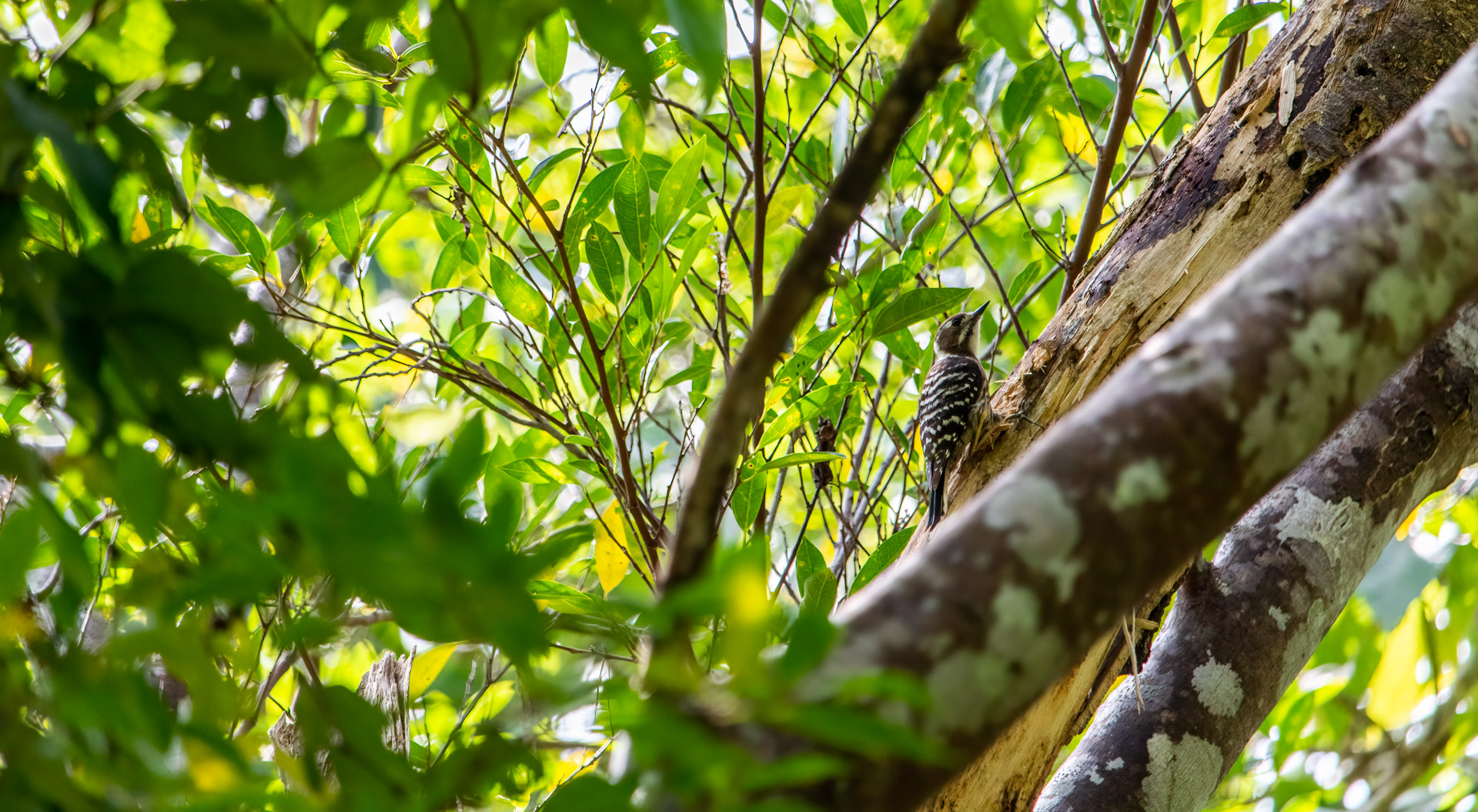

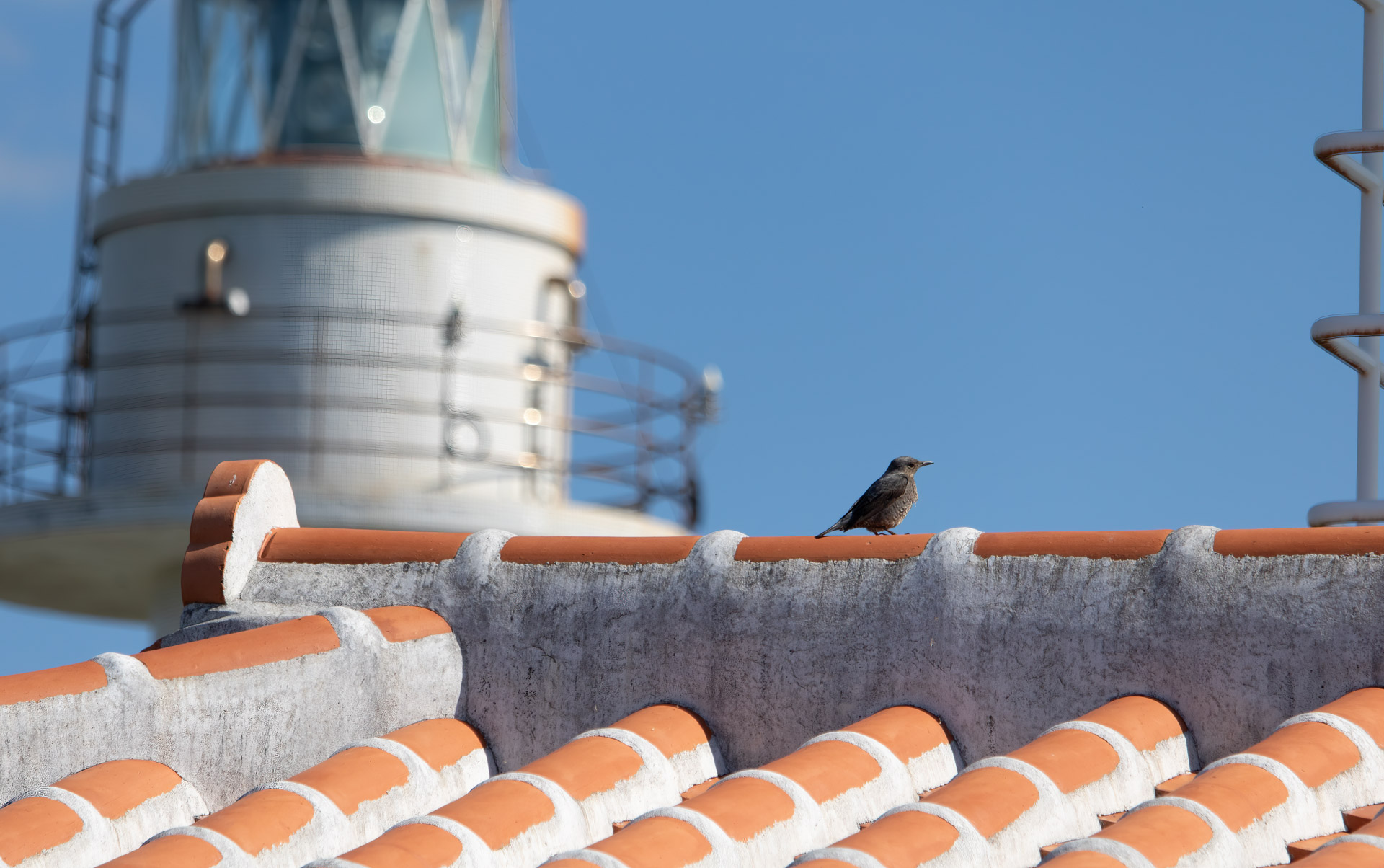

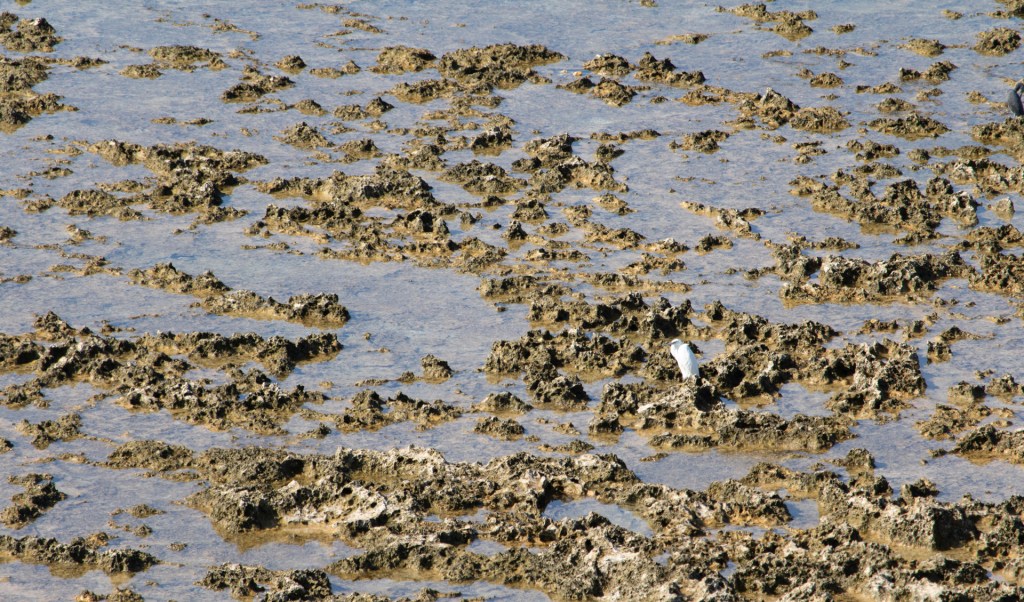

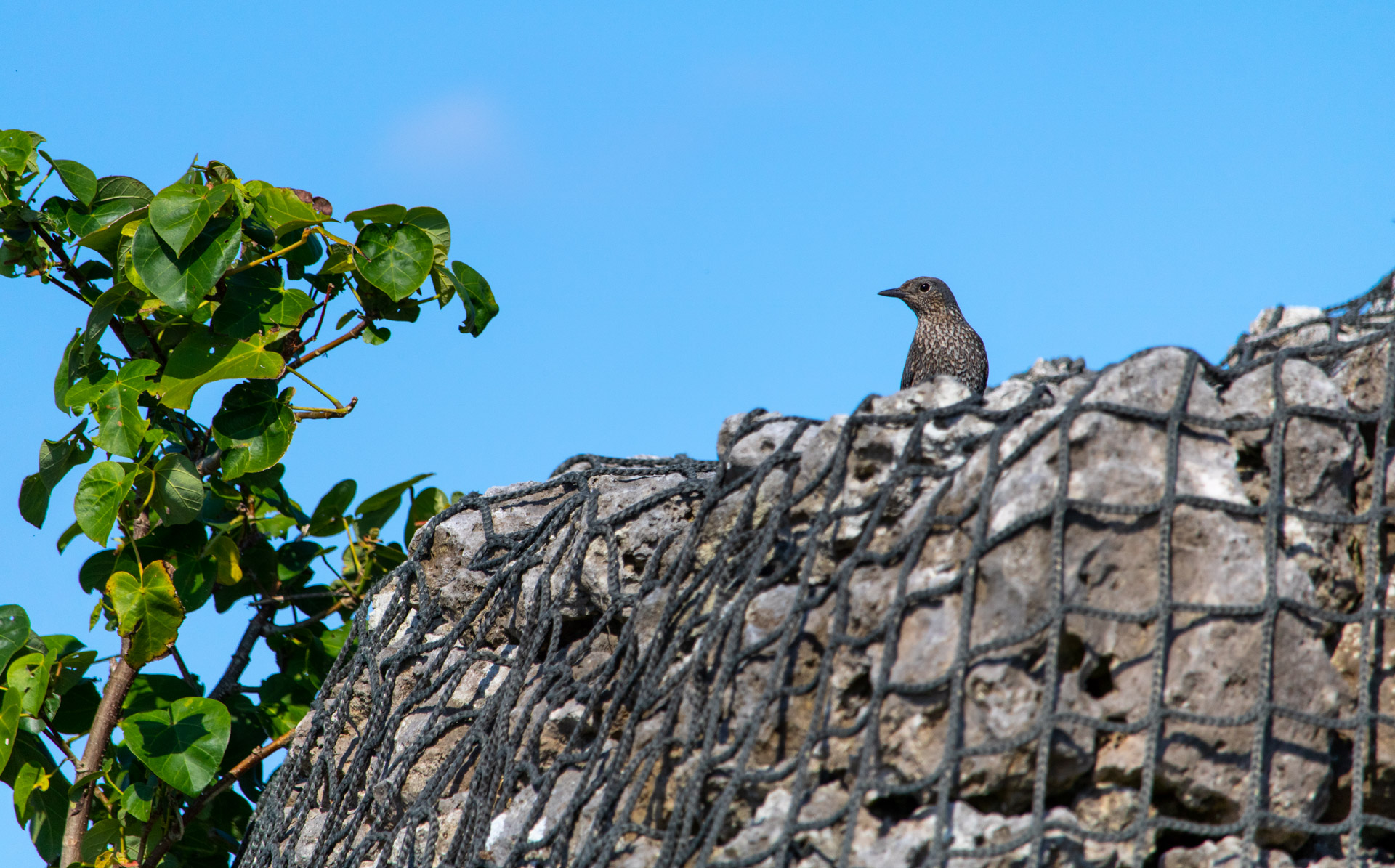
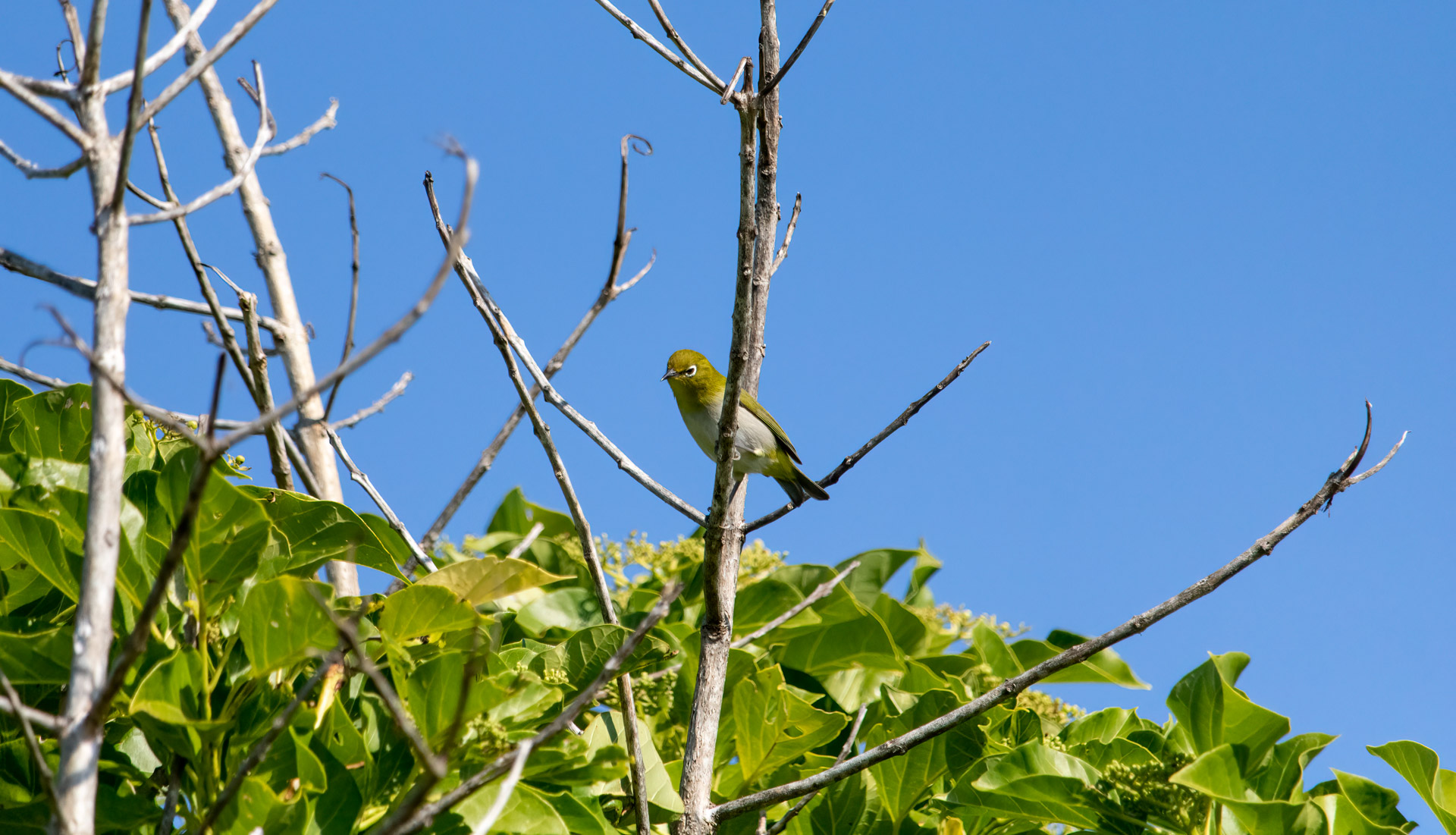
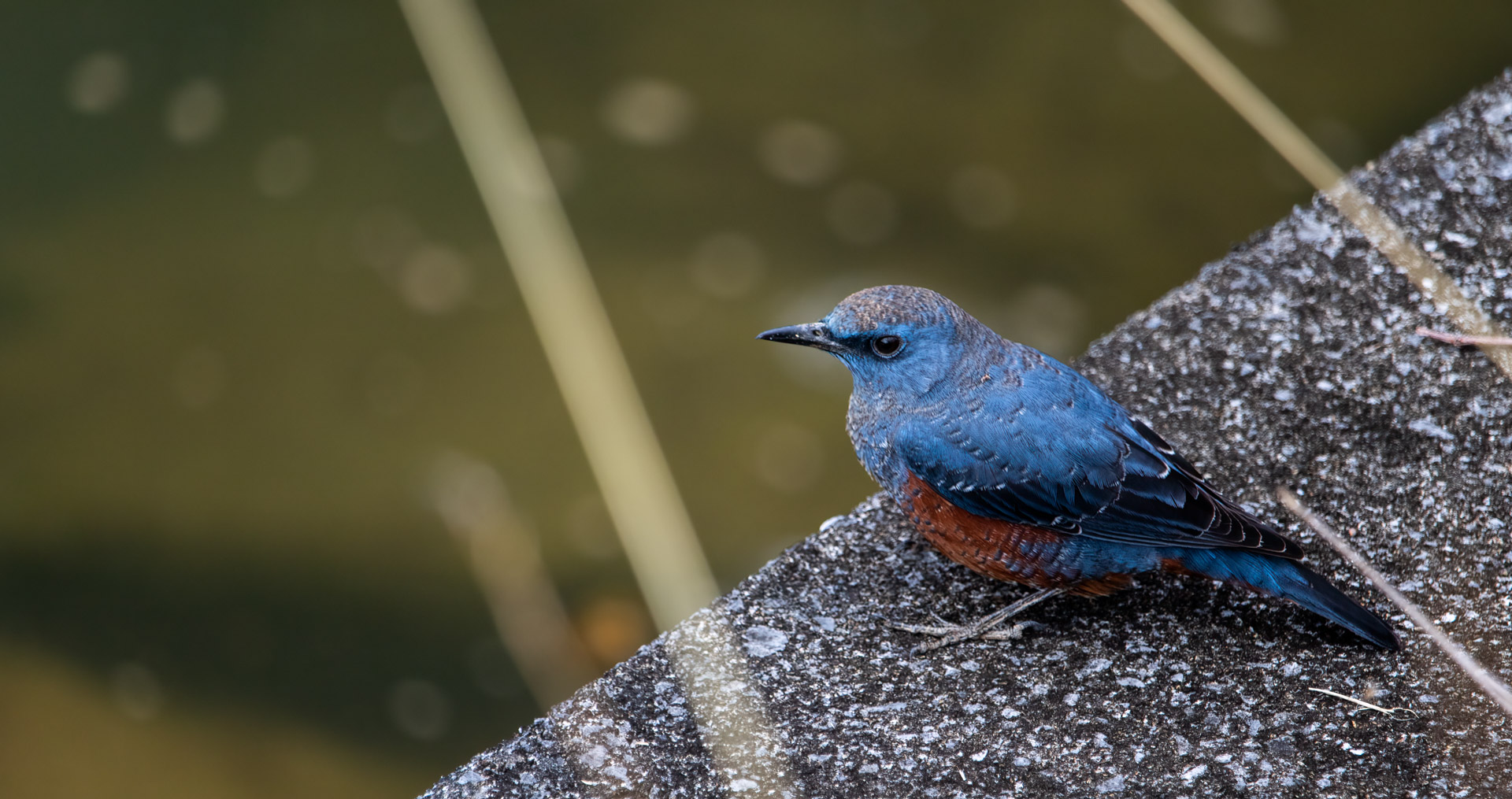
But I have not shown you the best one. And this bird deserves a story unto itself. First I will show you the photo.
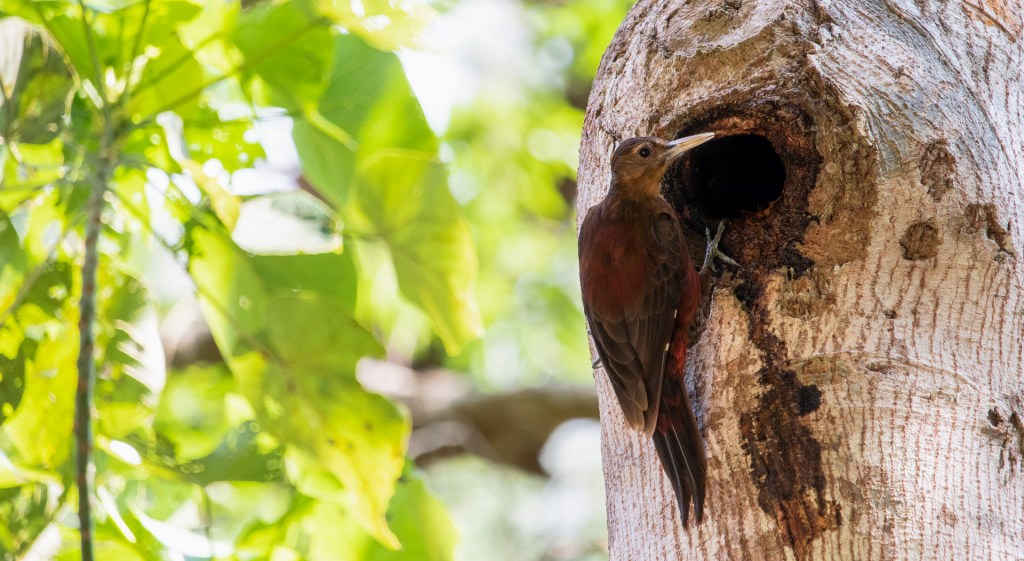
I am sure that almost all of you do not know what you’re looking at. You do not know that this bird is a critically endangered bird and there are most likely less than several hundred left in the wild, perhaps less than a hundred adults. I did not know this, either, when I took the photo of this bird. The story is this (because I have to give you the story) (it’s the whole reason I made this blog): At the end of a three and a half hour hike to a waterfall and back, that could have been done in one, but you know, birds; at the end of this hike there was a trail going off down into a small, clear-watered stream, and we made the call to extend our hike “just a bit longer” (dangerous words) and venture down to it, thinking that we may get very lucky, and find some interesting critters. James had actually already spotted an interesting critter, a large, dinosaur-like newtbeast lumbering across a sandy spit in the stream, from the hiking trail – and that greatly peaked our curiosity. We ventured down to the waters, and immediately started making discoveries, which were, this beautiful butterfly, and these wiggly wet newts. When we had gone down into the streambed, I had noticed a bird fly out from above us, into the woods across the stream. I was hoping to see birds here, (I was hoping to see birds everywhere), particularly a kingfisher, and so was on lookout for them. We had our fun with the newts, a lot of fun with the newts, trying to feed them a sizeable many-legged thing, millipede or centipede, somethingpede, and finding out that it could crawl underwater just as well as it could on land. As we mozied back down the stream, I was constantly scanning the trees, hoping for any sign of birdlife, when I noticed a hole in the tree above where we entered the stream, and I formed a quick theory, that the bird that flew across the stream when we entered lives in this hole, and we probably spooked it off, and it probably wants to come back. And so, I having perhaps the most essential skill necessary for success in wildlife photography, decided to activate that essential skill, by standing still, and waiting. If I am close to getting a photo, or there is an opportunity at hand, I am extremely reluctant to let it go. I will hold out as long as possible. And in this case I had also got into that state. An extreme unwillingness to move. Parker did not last long – within minutes he was heading back to the car. James surprisingly lasted much longer – he is a man of nature but he also has limits on his patience, and when I broke my trance for a second to confirm if it was really alright that we were still standing here for so long, having now been rooted in place for at least fifteen minutes, (that time goes quick), and asked what he was doing, seeing that he was preoccupied with something on his phone, he told me that he was trying to get free Line Points from a bottle he had gotten from a vending machine earlier, and so I knew that we could press forward, both having a mission. Even then, I didn’t want to keep Parker waiting for too long, as I had already made them both wait quite a lot, extending that hike two hours past what would have been the norm if you did not stop to look for birds every ten feet, and so I was feeling so strongly that it was time to move on, but didn’t want to go without the photo, and I was locked in struggle, between acknowledging that I couldn’t stand here forever, and also wanting to stand there forever, and I had just started to move my feet, to leave, when the bird returned. It came right back across from the other side of the stream, and right back to that hole. And I couldn’t believe it, and I’m sure I audibly gasped, and most likely aggresively whispered, “It’s back!!” and whipped up the camera, and started shooting. And I really couldn’t get anything great, nothing pin-sharp, as they say, but it was enough to make out what it was, and that was all I needed, and we left there with a victory. And usually, if you wait long enough, it does seem that you will leave with a victory. I guess that the successful nature photographer really doesn’t leave without one. And so every time you leave, you leave with a victory. I did get lucky then, I felt it, but I didn’t realize how lucky I had been, until several nights after returning, when I started the long, long process of going through the three thousand photos I had taken, and culling them down, to the useable, to the edit-worthy. And that night, I had called it a night, and was sitting on the bed, flipping through some of the pamphlets I had taken from the Yanbaru Conservation Center, looking again at the cast of critters all at risk in the Yanbaru region, and my eyes landed on a bird, the Okinawa Woodpecker, and I thought, “I’ve seen this bird.” I had a strong feeling that I’d seen it. I knew that bird. And I thought, I think that’s the bird we saw at the stream. And I noted a big red CR posted under the picture on the pamphlet, CR meaning critically endangered. So, of course, I thought, well the chances are certainly against me, and I probably did not see that bird. Maybe a close relative. But those eyes looked so familiar. And that night, I went to sleep, wondering if I had really photographed the critically endangered Okinawan Woodpecker or not. Of course I could have confirmed it it right then, but a little anticipation can make things just that much sweeter, and again I thought I was probably wrong. The first thing I did the next morning was pop open the laptop, pull up the photos, and there it was, that I had seen the exact same bird, no question about it. And then I did the research, and learned just how endangered this bird really was, that it is on the fast track to extinction, and is very close to it already, and I had been able to not only see it, but photograph it, and I felt incredibly lucky. According to the IUCN’s Red List site, the number of locations where you can find this woodpecker is 1 (Yanbaru), the number of mature individuals is 50-249, and the continuing population trend is declining. The hole was a telling sign, as to why this bird is going extinct – it is meeting the same demise as so many woodpeckers around the world, that require old growth forests, with the gnarled and holey old trees, to make their nests, and the old growths of Yanbaru have mostly been felled, and so the woodpeckers have nowhere to make their homes. The Okinawans have done the right thing by designating Yanbaru a national park. I hope that they can continue to take the steps necessary to save this bird along with all of their other special critters, because it really is a beautiful bird. My guess is that the one I saw was either a juvenile or a female, as it isn’t as brightly colored as the one shown in the pamphlet photo.

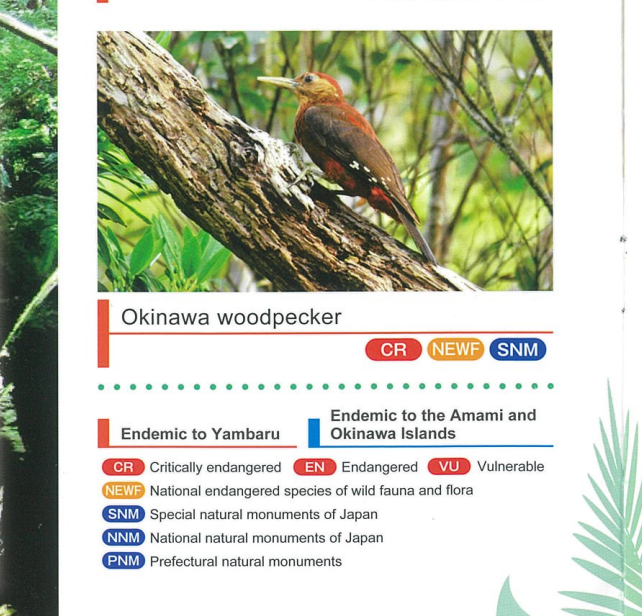
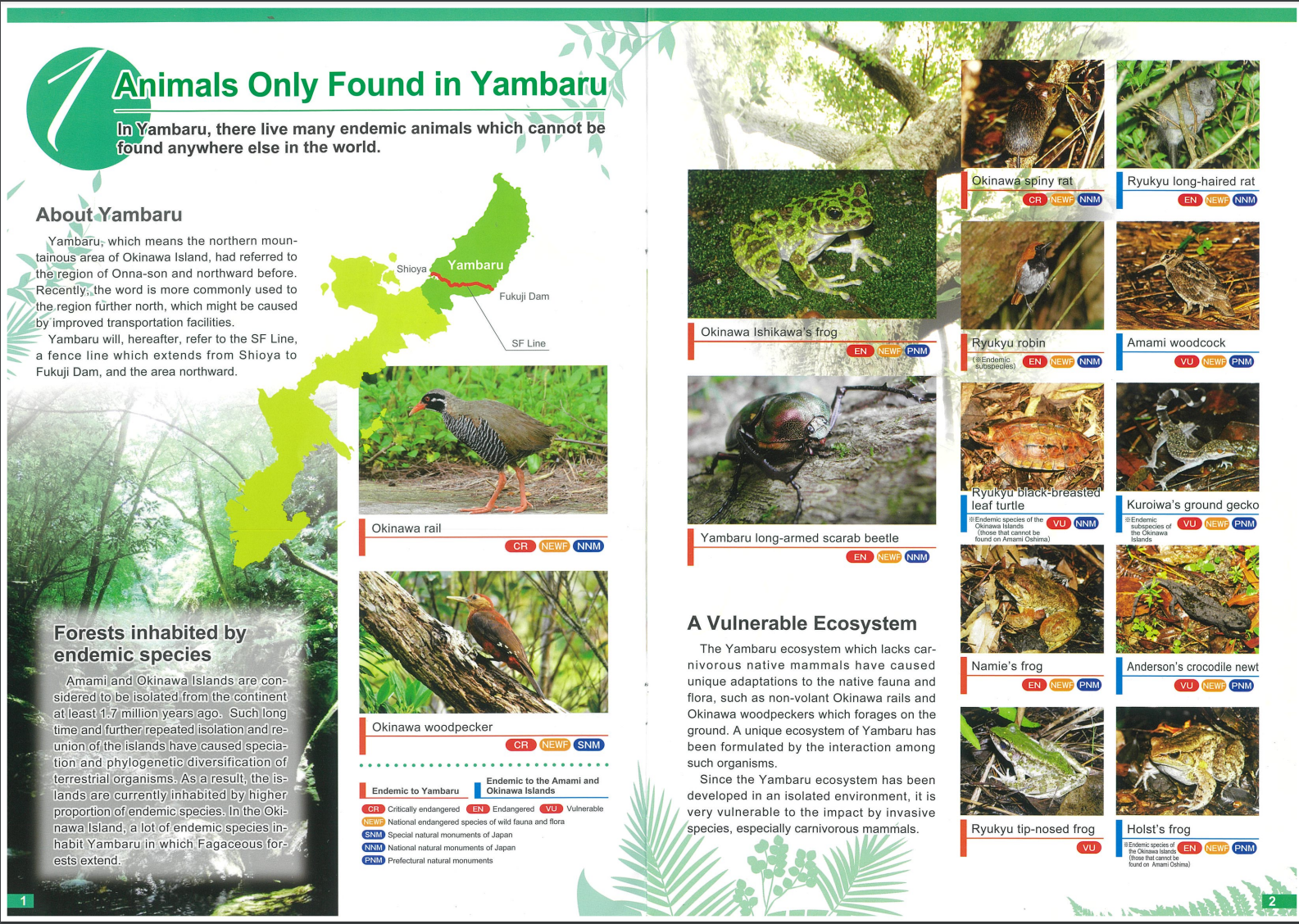
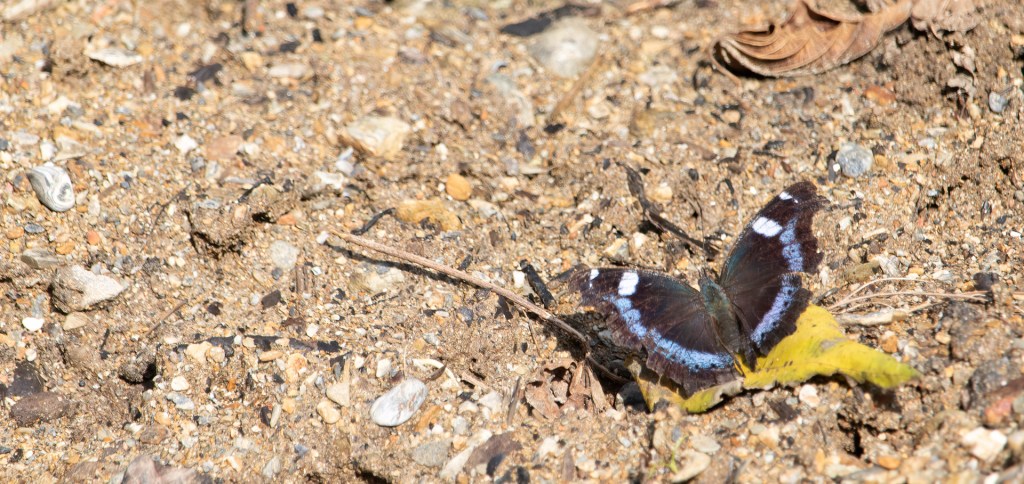
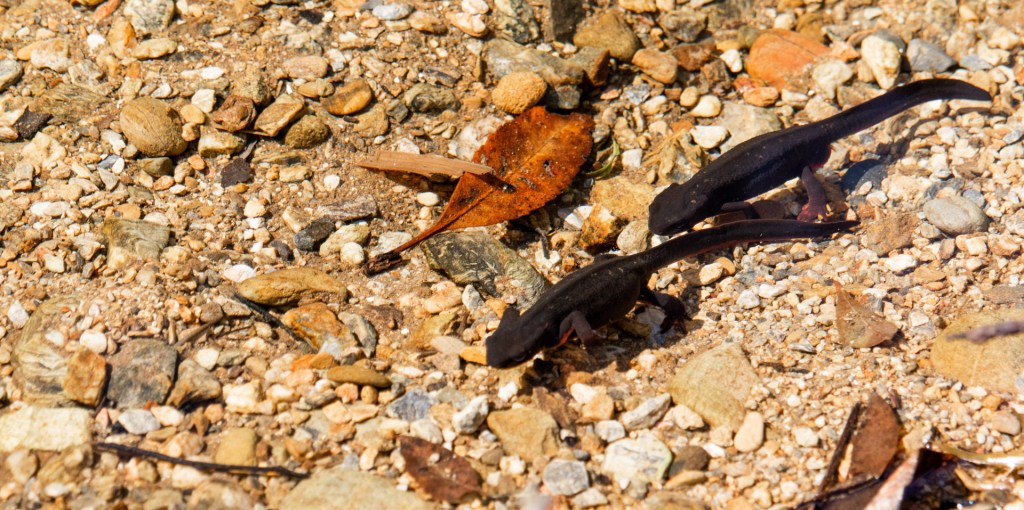
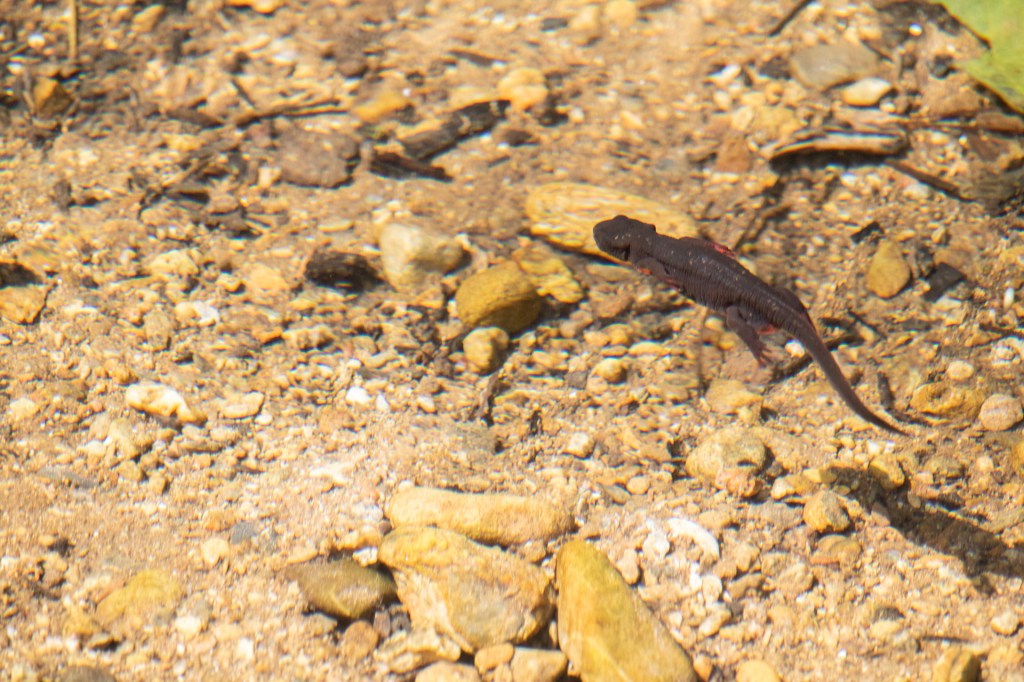
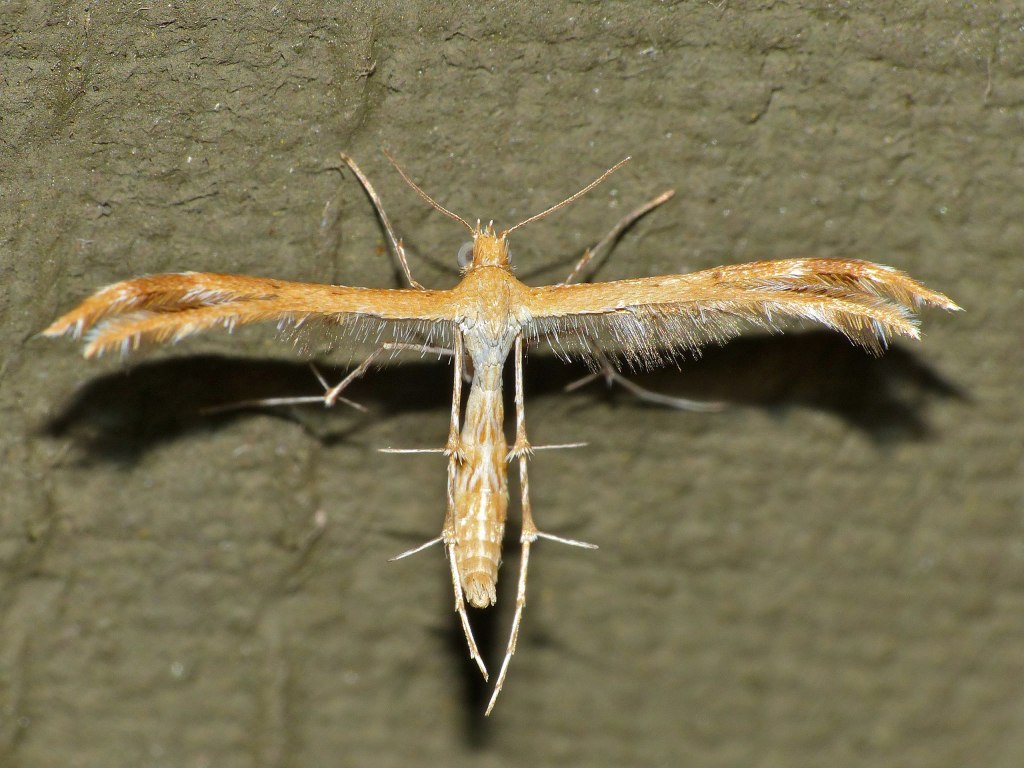
These are the animals of Yanbaru, but there were discoveries all across the island. Particularly, there was one insect that brought me much amazement, and it was this one.
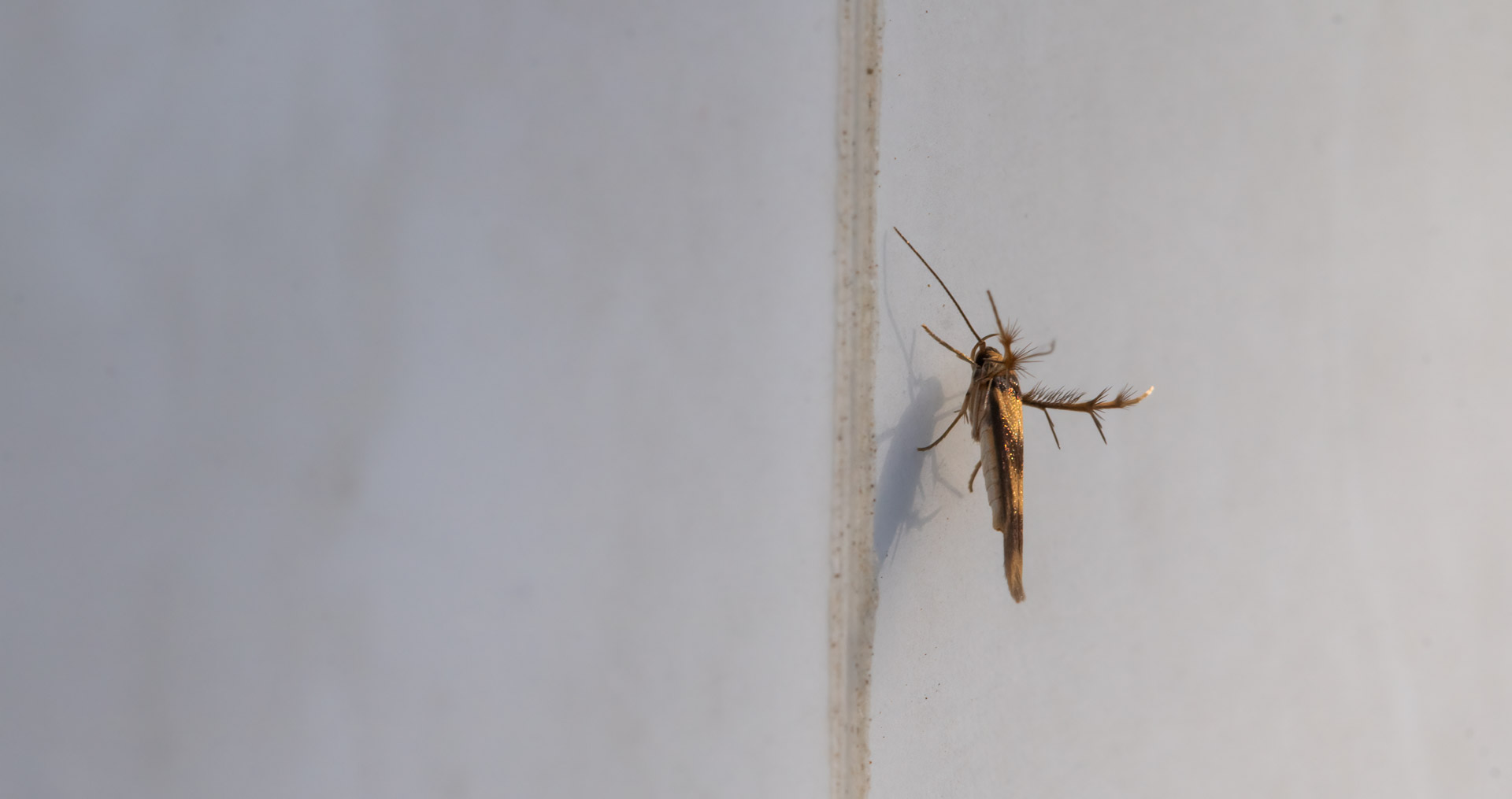
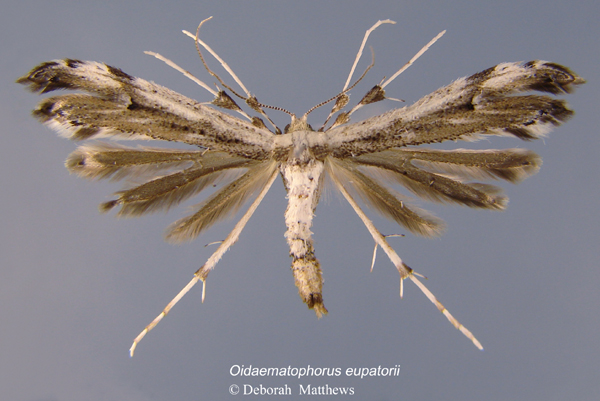
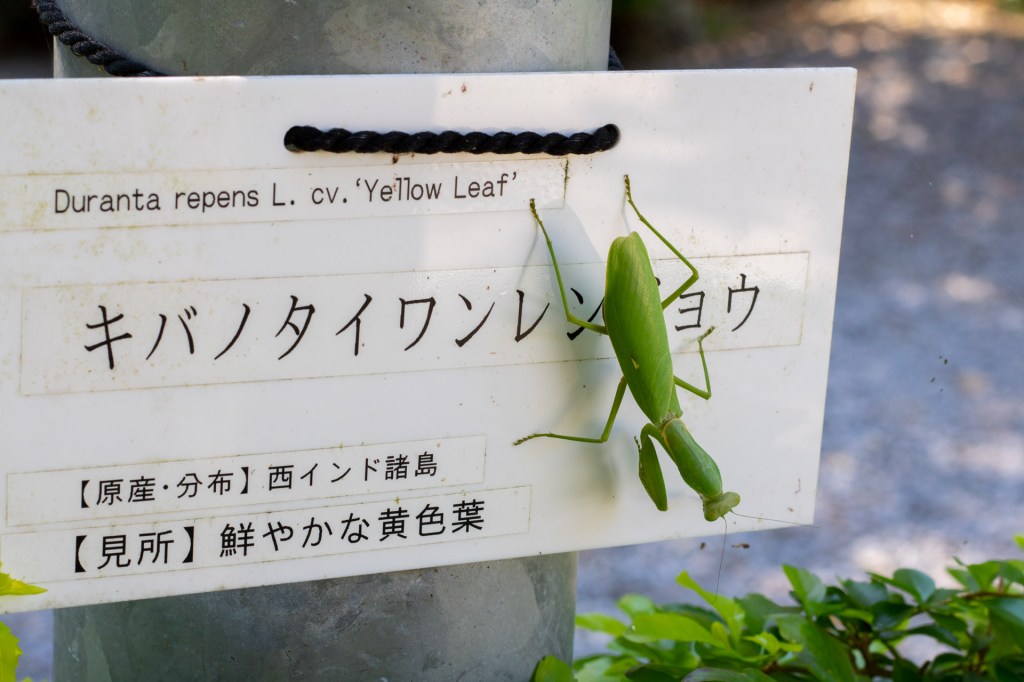
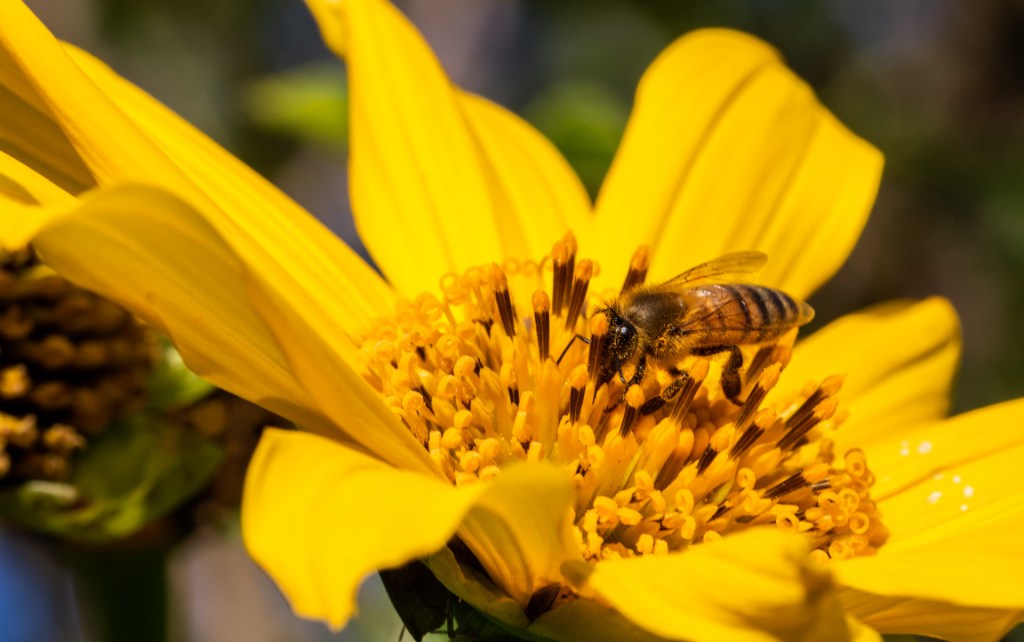
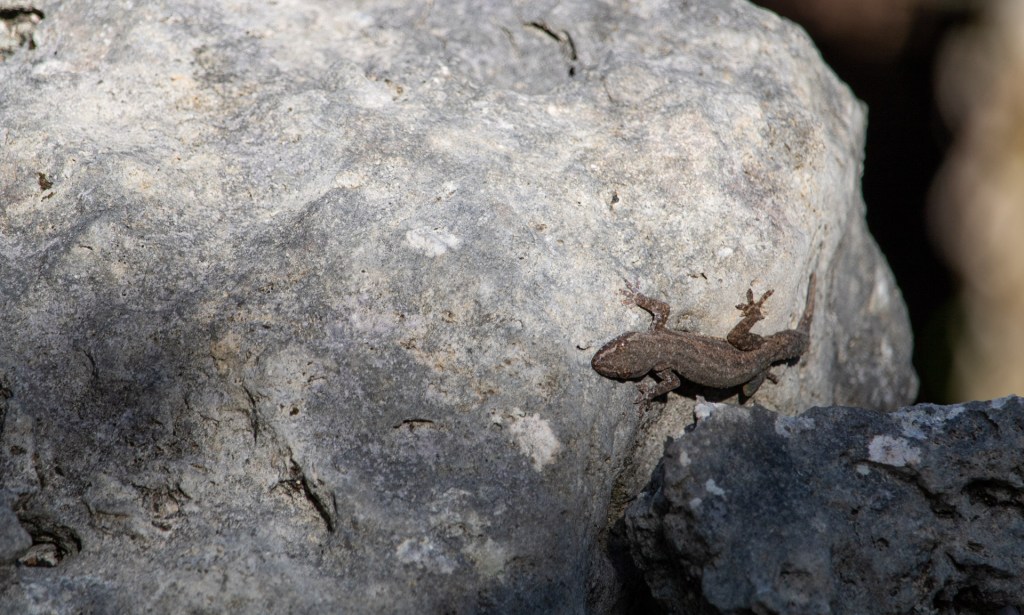
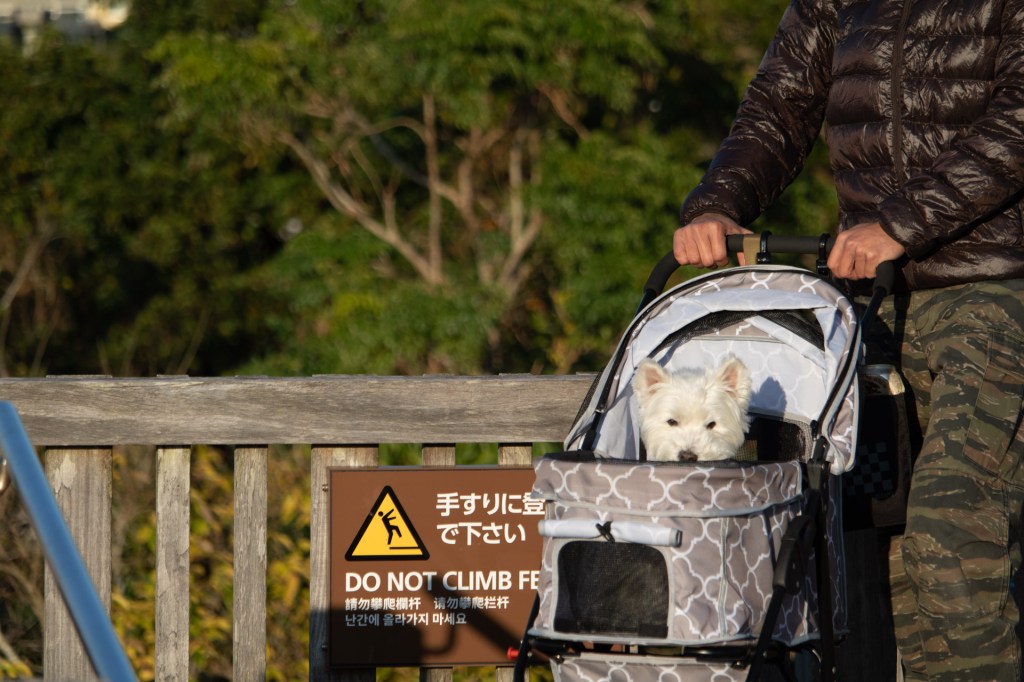
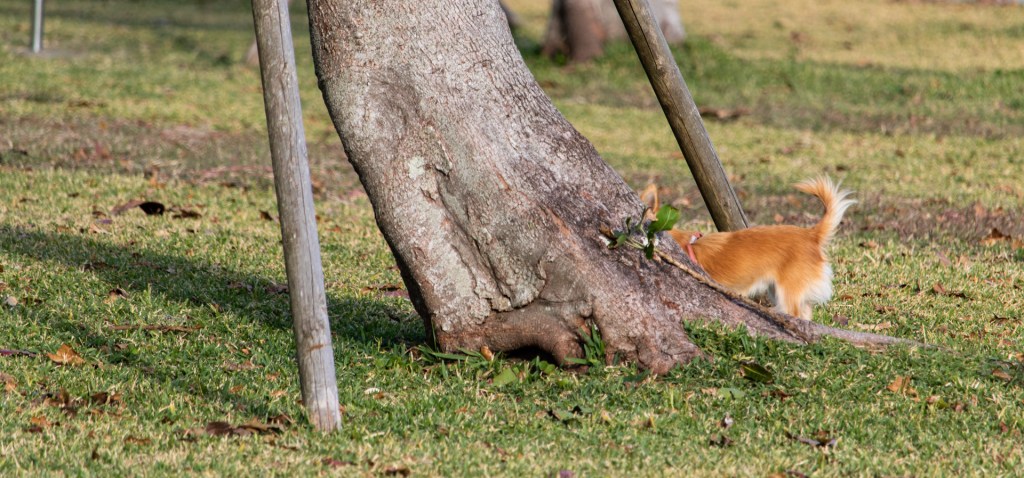
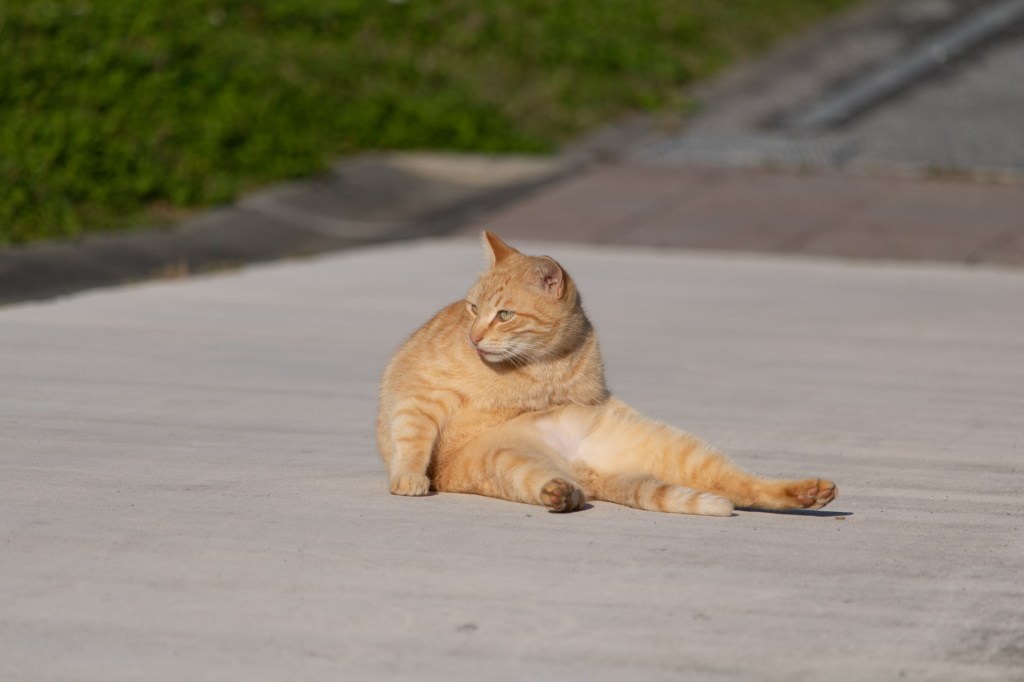
I have never seen a bug like this. I have seen a lot of bugs, but when it comes to bugs, there is always something that has not been seen, even for the bug expert extraordinaires. It is a great beauty of the bug world. This one I found essentially glued to a park sign. I say glued because as I hovered around, breathing all over it, running back to the car, grabbing my expensive and amazing SuperInsectShooter2000 macro lens, then coming back and shoving said lens right up in its face, this bug did not move a tarsus. The appendages, (legs?) that appear to have morphed into horns, were what were really throwing me for a loop. I spent some good time thinking about it. Guesses, anyone?
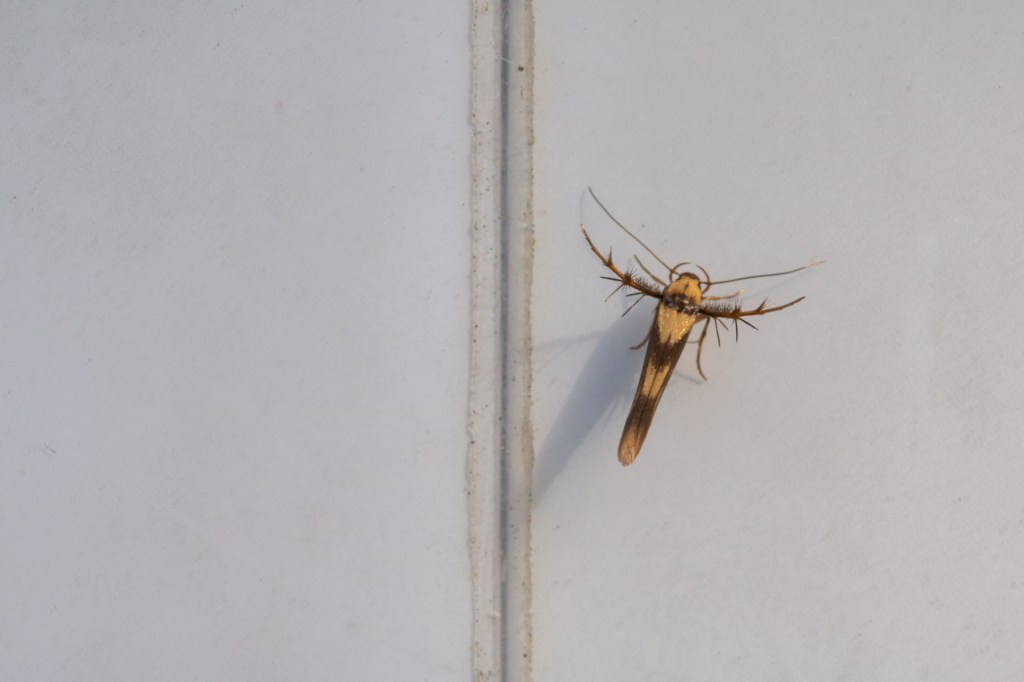
Wow I can’t believe you knew that it was a Pterophoridaen (plume moth)!! Specifically a Stenodacma pyrrhodes!! You’re doing better than me. Actually I was very surprised (well, I was pretty surprised) that it was a moth. A lot of twists in this world of bugs.



Humans
James is a very peculiar person. To give an example: After our first full day of adventure on Okinawa, a beautiful day, a day full of new sights, tastes, culturing, adventures.. at the end of this day, I looked over at James, lying facedown on the hotel bed next to mine, and said, “What did you think was interesting about today?” And I thought this was a good question, as we really had seen so much, and I was curious to know what about it had made the greatest impression on him. And James responds, after taking half a second to think it over, “The weather.” (said as an Australian, so, “Tha’ wetha’.”) I said, “Give me more.” This time, a second passes. “Getting the rental car.” Now, I know that I am just as much a peculiar person – but in his peculiarity, James is certainly very different from me, because if you had asked me that question, the two things I would have absolutely not put on my list of interesting events of the day, would have been the rental car, and the weather. What is even interesting about a sunny day? How can you actually even list that as an interesting thing? You may think that James was being sarcastic. He very often is. And a normal person answering in that way probably would be. But sarcastic he was not. I knew James well enough by then to know that his answer was a completely genuine one, and that after our first action packed day on this exotic new island, the two most interesting things for James that day really were the weather and the rental car. I needed more; I pressed further. “What else?” But that was it. “That’s it.” (His reply). And then, as an afterthought, to himself, as he’s already answered the question, done his duty to the outside world, and is now once again devoting full attention to obliterating his Legends Of Runeterra AI nemesis, he adds, “The stone road was nice.” And that was an acceptable answer. The stone road was nice.
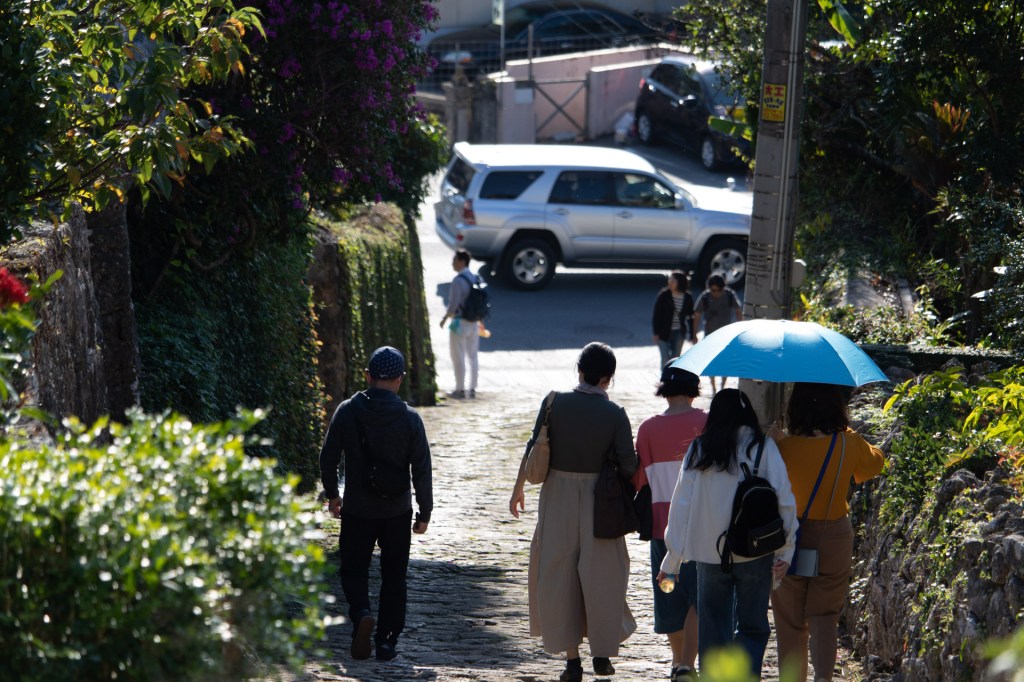
This entire conversation (if you can call it a conversation) was conducted over the sounds, over a cacophony of sword clashings, and spell castings, and customary catch phrases, and other such appropriate fantasy sounds.

This house, placed along the stone road, represented an aesthetic divide between James, and Parker and myself. Parker and I were on team yes, James on team no, and strongly so. What do you think? Attractive? Horrific?
When it comes to friendship, James can be a demanding individual. I was banned from driving the car because I drive too aggressively. I couldn’t play music because my music is displeasing. I couldn’t lay on his bed because I’m filthy. I couldn’t have a Calorie Mate (a quintessential Australian food) (“Want a calorie, mate?” James once said – not to me of course) because he has to order them off Amazon (for the best deal). Parker has a catchphrase, and it’s “Sheboigan” (not sure if correctly spelled). James has a catchphrase, and it’s “No”. I tried to convince James to start saying “Badabing badaboom” (I thought that would be fun for an Australian). He wasn’t into it. A tangent, but Australians really have an infectious way of speaking, perhaps in part because their words are so fun to say. I say their words, but actually the really fun ones, like Billabong, Diggereedoo, and Kookaburra, are all Aboriginal words. I had never thought of Billabong as being a word having origins in Australia, but after spending some time with James, I fancy that I could recognize it now. And fun fact, (I had always just though it was the fun name of a company, nothing more) a billabong is a kind of oasis located in the Australian outback. Words like wallaby and dingo are also Aboriginal. I’ve noticed that people (at least, Americans), are so tickled by the Australian accent, that when they meet a real life Australian they can’t help but to try it out, that most people when meeting James can’t resist unleashing their inner Australian, and James always takes it in stride. I’ve asked him if this ever bothered him, and he says no. I think he knows that it’s not done mockingly; we just can’t resist it. When with James I confess that something takes hold of me too, and am often seized by overwhelming urges to blurt out words and phrases in the Australian tongue, one of my favorites being “A dingo ate my baby”. Sometimes I’m able to surpress these urges, and sometimes I’m not, and whenver I’m not, James is right there with me, joining in to rant about dingos, and throwing in some “Aw yea”s, and “croikeys”, and other quintessential Australianisms. Once when asking James about Aboriginal words, he started listing some off, and on the fourth or fifth word, I was fascinated, and commented, “Wow.. I haven’t even heard some of these!” and he says, “Well, I was just making them up.” They all sounded like perfectly real words to me, I suppose because they all sounded like nonsense, and not being Aboriginal or Australian, I can’t tell the difference.
Another worthy tangent – James doing karaoke sounds like a horribly wounded animal in its death throes. There are times when you may accurately level the charge of hyperbole at me but this is not one of those times. It is something unearthly. Hearing it will touch something deep inside of you. His favorites are “Breaking The Habit” by Linkin Park, and “You Raise Me Up” by Josh Groban. And this is why James is such an enigma. He is a fun guy, while simultaneously being anti-fun. How does it work? He belongs to a very rare class of people who can pull this off. (Luka is another member of this class; but Luka is for another time.) On the drive home from the airport, I was doing some verbal painting for James, laying out for him a fantasy I was having, of me going to see him, in Okinawa, his future home, where he wants to move (for the weather), where he is now a successful Maccas magnate (Maccas, Australian for McDonalds; James sees great opportunity in opening McDonalds in Japan, “printing money”) and in me borrowing a fancy car from his fleet of fancy cars (he likes cars – flicking through Tinder for the first time, he swiped right on two profiles, both including pictures of cars), and I said, looking over at him in the backseat, “Doesn’t that sound like fun?” And he said, with a light touch of agony in his voice, “Not really.”
At another point on the trip, I turned to James and said, “Are you having a good time?” (At this moment, I was having a good time. It was ideal conditions for having a good time.) James was stoic, as usual, and so it was and is very hard to tell, if and when he’s having a good time. His response: “Better than being at home.” And that bar is very low, because James lives in the middle of the woods, surrounded by empty houses and tall trees and the bloodcurdling screams of deer (I’ve heard these), where he is this winter perpetually engaged in the existential struggle of trying to stay out of a hypothermic state at a reasonable price (the electric bill is quite high in his middle of nowhere).
I’m writing a lot about James here. Our relationship has been a great source of amusement to me, and hopefully not too much of exasperation to him. I am only scratching the surface, the surface of a very large and very fantastic iceberg, and however much I would like to, we just don’t have the time or energy for me to expound on every single peculiarity or instance of peculiar behavior on James’s part – but I can give you one more. James and I had a moment of conflict, of true conflict, laid bare, a moment of us forcing our up-to-this-point dysfunctional cogs into some kind of synchronicity, a more working order, and it was tense, Parker wide-eyed and mouth-shut, and after the climax, and tensions had relaxed, and consessions made, James made a comment, a pained one, one that suggested he had been harboring a deep and dreadful grievance for a long, long time; and James’s comment was: “Please no more jazz.”
Music was one of our greatest sources of tension. We had listened to jazz only once on that trip, as I was only in the mood for it once, that warm, relaxed morning, at the start of our drive up to Yanbaru, and because I had then been allowed to drive, as this was before the ban (I was banned for driving “too fast”) (our car liked to scold, and was quite quick to do so, and this was another great source of amusement on the trip, as Parker in particular did not handle the scolding well, and would respond to the car’s gentle robotic suggestions of “Please slow down” and “Stay in the lane” with a rising exasperation, gripping the wheel harder, and shouting various “God dammit!” and “Shut up!”s, which helped to load him with all those neurochemicals necessary for safe and proper driving, like adrenaline and cortisol), and we had a working rule that the driver got to choose the music (although I did have the ban revoked, and was allowed to drive once more, and yet Parker played the music – funny how that works). I had played jazz, stuff from the Vince Guaraldi Trio, only that once – but out of everything I did, out of all the atrocities I had committed, playing jazz in the car was one of the worst.
James is so particular about his CalorieMate that he knew, after a period of several months, spanning the full length of our history, since I had started making trips out to stay with him in his Ubuyama wilderness, during which I would often request to be fed (it feels weird to even write that, requesting to be fed in a friend’s house) and he would occasionally yield, some frozen vegetables, or a pack of instant ramen, and rarer still, a precious CalorieMate. After several months of Ubuyama visits, I had made a comment about my “consuming” (he likes that word; “All you do is consume!”) his CalorieMates, and he surprised me by stating the exact number of CalorieMates that I had swindled from him, and it was five. He had this entire time been keeping track. They’ve recently gone on sale, I noticed at the supermarket, and I have bought him four, one of each of the flavor’s he’s never tried (he only buys chocolate), to attempt to compensate for my wanton consumption. Around this time James messaged me, unprompted, about their going on sale. (I have since eaten one).
James and I had one more source of conflict, and it was McDonalds. It was not about his future ambitions as a Maccas magnate. I fully support those. Rather, it was about me not wanting to eat there, every day, if I could help it, and him wanting to eat there every day, if he could. James is undoubtedly a Maccas man. He usually would limit himself to Maccas once a week, on Sundays after he goes grocery shopping – but this vacation meant freedom, for the both of us, and for James specifically, it meant freedom to eat all Maccas, all the time. This was in direct opposition with what I had desired, which was to try as much of the local food as possible, as well as that McDonalds, even if I did want to go there, did not have anything for me, besides a pitiful ebi fillet. (Shrimp burger). I consider myself to be a compromising individual (James will laugh at this), so I humored them on the drive to the airport (I say them because Parker was always willing to climb aboard the Maccas train). I even humored them again in Okinawa, curious about whether they had any Okinawa specials, and they probably did, and it was probably just a Spamburger. But then, the second time it was proposed in Okinawa, I proclaimed that I would not eat there again, and so we debated, and settled on the plan, that we would first go to Maccas, where James and Parker would get their fix, and then we would go to a local place, where I could get mine (which was champloo). This was not ideal, but we both got what we wanted. It was a compromise of sorts, but James stayed in the car, for my meal, and it took twice as much time for us to eat, and so obviously was not better than us enjoying something we all liked together. The next time we were deciding where to go to eat, and the suggestion of Maccas was once again floated, potentially even by me, in jest (still a mistake), and I said I will absolutely not go to McDonalds, but if you must, we can separate again, to which James replied, “No more split meals. It makes me feel like I’m with my divorced parents.” And that made me think that while James and I have a great friendship, we probably would have a tough marriage, with such fundamental differences in culinary desires, opinions on the interest of rental cars, and loves of jazz music.
Spending time with other people has a usefulness in that it can help you to round out edges of your personality, fill in gaps in your knowledge, or help you to realize some of your personal quirks or habits that are or are not so useful. I say this because I learned a lot from James and Parker during these ten days, and I think (I hope) they learned from me too. At least I know that Parker made two lifestyle changes as a result of this trip. I have thought for awhile, and so has Parker, that he is too easily and too often flustered, and I thought that this was in some part related to his caffeine habit, which can be summed up as, he is a fiend for the feine. Parker’s natural state of existence had been, prior to this trip, a caffinated one. I had been trying to convince him to give up the caffiene, or at least cut it back, for awhile now, and I think he had tried it once or twice, but on this trip, we really went for it, because I was there to help. It’s harder to police yourself than to be policed by others. So we agreed that Parker would have no caffiene on this trip, and then many, many times a day, (basically at every vending machine, which, because we’re in Japan, was anytime we ever stopped or went out for a walk), I would listen to and weigh the strength of Parker’s relentless stream of requests for a caffinated beverage. Parker came up with many various reasonings as to why he should get his caffeine, including, “What am I supposed to drink?” (implying that he had to drink something and if he couldn’t get any other suitable option it would have to be something caffienated, because of course, he had to have something to drink, and of course it couldn’t just be water) (and this is how he became somewhat of a mugicha man, mugicha being wheat/barley tea, which I really love) and “Well if it does have caffiene, it can’t have much.” (this was for the apple tea, which we weren’t sure if had caffiene or not, because it wasn’t written on the bottle – and after a few days of steady drinking, Parker says, “It does.” He looked it up, after the few days of steady drinking) and “It’s for my can collection!” (which was him trying to get me to let him have a Dr. Pepper, which we’ve never seen in Kyushu, and to which I responded, “You have a can collection?” And he does. We settled on him having a few sips (they were gulps) and pouring the rest of the can out.) And during this trip, as we progressed, I swear that Parker had started to noticeably relax, except when he was in the car and being scolded. Parker also asked me, at one point, when I told him he shouldn’t pick his nails, what he was supposed to do when he sat, and had nothing else to do, and I told him, just don’t do anything. Because he had the habit, like so many people, myself included, the long habit of picking or chewing his nails down, and there was nothing left but destroyed stumps, and I told him about how if you just make the conscious effort to stop, that is half the battle, as it’s something that you picked up a long time ago and are most likely only doing it now as an unconscious holdover, an autopilot function, (although for him having a lot of tension it could still have been a response to relieve that tension), and it is a habit you can break, and he has recently sent me pictures of his new nails, and told me that the other day he scratched something with them, which was an experience he hadn’t felt in a very, very long time. I think that’s a good example of why it’s helpful to have other people around, in correcting bad physical and mental habits, because we fall into these patterns, and carry them out without even thinking about them, and because they’re so normal to us, we don’t realize that they’re not normal at all, or we don’t have the ability to pull ourselves out of them by ourselves, but could with a little help from another, who can see it objectively. Having people with different perspectives around you also helps you to cover some of your personal deficiencies. After spending time with James, and another friend of mine, Ikkei, who are both engineers, (machine people), I see that they view things, especially the machines, in a very different light than I do. Physical, mechanical things just come to them in a different way than they do to me. I saw the true similarity in them when, seperately, in their presence I complained about the issues I had been having with my laptop, and without any asking on my part, or even desire to have them fix it, they were both sitting down with it, having a look, and tackling the problem. I actually asked James, and this is a very rare thing for me to say, when he was sitting there deep into my computer’s bios, or whatever he was doing, “Are you having fun?” Because it seemed like he was. And he said yes. He was. And I realized then, that what is agony for me, which is solving computer related problems (I could see it only as a complete waste of time) is for them an enjoyable experience, like solving a puzzle. I think in part because they enjoy the problem solving component, but also because they just get it. They just get mechanics. And being friends with them has clearly shown me that I don’t get mechanics like they do, but I do see why they like it. I say this because on the Okinawa trip, I had made another comment, about how my boots had been giving me blisters, and I wasn’t sure why, whether it was too much walking, or they weren’t made for that much walking, or they just weren’t a comfortable pair of shoes, and James said, “Just wear two pairs of socks.” And since then I’ve only ever worn two pairs of socks with those boots, and have never had a problem since. I think it was very obvious to James, that it’s a friction problem, and there is too much empty space in the shoe, and wearing two pairs of socks will fill up the space, eliminate the friction, and there will be no more blisters, and I understand that too; but it was much clearer for him.
This makes me think of my newest friend, Luka (we’ve got to him), a big burly Croatian-Canadian bundle of joy and love, who also has the engineering mind, and who, on a drive to James’s for a hybrid Christmas/Thanksgiving party, when I asked about crumple zones, as we were talking about cars, and crumple zones, I think specifically because he had made the comment that old cars were much more dangerous because they didn’t have them, who replied to my honest question of whether a car needed crumple zones with, “Of course you need crumple zones, dumbass!” Of course you do! A car without crumple zones! What a joke! James and Ikkei both probably would not have to ask the question of whether you need crumple zones or not. They would immediately see the value. The mechanical mind.
Worms
There is one more story I can leave you with. Okinawa was a gift that just kept on giving. One night, about a month after, Parker gives me a call. I answer the phone, and can tell immediately that he is exasperated, which is common, but I could tell immediately that in this case he was in a state of flustration of the highest order. I said, “Hey buddy,” and Parker says, in between hurried, panicked breaths, “Oh my god Steven. I think I pooped out a worm.” And Parker proceeds to send me a picture of a long, skinny, pink thing in his toilet. It does look like a worm. He then begins to tell me about how he had recently done the deed, gone off to a friend’s house, and had come back to find this worm in his toilet, that it must have been in his poop, and swam back up. He had come up with the working theory, with some help from another friend, Matt, that this worm was an Ascarid, and he may have gotten it in Okinawa, and he was now filled with them. It was alarming stuff, but still, I played the role of the soother, the de-hype man, telling him, ok, just relax, we don’t really know if you are filled with worms yet, and even if you do have worms, people get them all the time (not that I knew anyone who did), and dogs get them all the time, and I’m sure it’s not a big deal, and everything will be fine. He had sent me a link, to what he thought it was, an Ascarid worm, a type of roundworm, and the more I read, the more I was convinced of the probability that this was the correct worm, and that Parker did have worms. They were common in certain areas, specifically tropical and sub-tropical regions, as well as regions where sanitation was low. Okinawa was a tropical/sub-tropical island, and as far as sanitation level, who was I to say it was sanitary? The trash, the feral animals, the urinating homeless man, all flashed through my mind. It was said that one common mode of transmission was through eating unwashed fruits and vegetables. I thought, “But we didn’t eat any of those did w-“. And then I remembered the starfruit. I had wanted to stop at what’s called a michi no eki, which are fantastic places that carry all of the local flavors and trinkets, produce and sweets and mascots, and while there we had found ourselves the saataandagi, the Okinawa doughnuts that I had been hunting for, and after making the purchase, I had continued to meander, all the way around the perimeter of the store, with Parker anxiously hovering over me, concerned about making James wait for too long, but I was enjoying all of the uniqueness of Okinawa on display, when my eyes landed on some peculiar, star-shaped green and yellow fruits, and you know that I am sucker for exotic fruits, and so I went back to the register and bought them. And I was thinking now, how fateful it was, that I had ended up buying those fruits, the vehicle for our first worm infestation, and had taken them back to the car, and had opened up the back, so excited, offering one to James, who says, no kidding, “Are they washed?” His foresight astounding. I said no, but they had probably, maybe washed them before they gave them to us. “Aren’t they supposed to do that?” To myself, I thought, washed? Ha! My body can handle anything that nature provides. I really thought something like that. Seriously, I can handle a little unwashed fruit. But when I thought that, I was not including the malicious eggs of human-targeting parasitic Ascarids into my definition of nature. I was thinking about some dirt and maybe a dead bug. Me, the biologist. It’s pitiful I know. And so Parker and I happily scarfed those crunchy, juicy starfruits down. And now, flash forward a month, and I read, transmitted through unwashed fruits and vegetables, and I thought, my god, the starfruits! It was just like when Bill Murray eats the egg that he took back from the monkey in Osmosis Jones. The moment of compromise. So we had a vehicle. And I thought, alright, but how long does it take for the worms to mature. Does the time frame match? And it did, to the T. I read, what I did not want to read, on several sites, that it took about four weeks for the worms to mature – and it was just about four weeks since. The prognosis was not good, and I said to Parker, “The prognosis is not good.” I advised that he should go to a doctor the next day, tried to tell him again not to worry, that a lot of people do have this, over a billion people in the world have been infected, and that they’re not dangerous, usually, unless there are so many that they literally block your intestinal tract (I decided to leave that out), that everything would be fine, and try not to think about the small slithering creatures that are now sapping your vitality and infesting your bowels. But I too was now shaken, thinking the same thoughts that Parker had been thinking, but with less certainty – were these worms in me too, now? Just a few hours before I had noticed some intestinal discomfort, and boy it felt like it was really ramping up now. Like the worms knew that they’d been found out, and they had limited time to do their worm work. I gave James a call, and said, “Well, Parker’s got worms.” And I asked James if he had had a starfruit at all, and he said, yes, just one, and he washed it first. And I thought then how foolish I had been, how filthy I really was, going to bed filthy, because I prefered to take my showers in the morning, and being infected with worms, because I ate risky fruits, and how exonerated he was now, standing righteous, a night showerer, a fruit-washer. I said he should check his poo just in case, and then went to bed thinking that night about if, and how many, worms were inside my body. As much as I tried to suppress them, my powers of imagination led me to imagine myself, as I lay there in bed, completely bloated with worms, pushing against the confines of my intestines, as I was experiencing now what I believed to be great intestinal discomfort, and upon waking up tomorrow, going to the squatty potty at the school, and unloading them all, the great big mass, into the trench. I’m sorry to spell out such a graphic image for you but this was really what was going through my mind, and I think it’s only fair that I share it with you. My mind also flashed with images from the worst chapter in my entomology textbook – the chapter on parasites. I thought about the screw worms, the botflies, and the Leishmaniasis, and hook worms, the brain infesters, the wigglers, the burrowers, the devourers, and how one of those parasites that I had read about in my textbook was now giving me the honor of a private lesson, carrying out its life cycle in the most unfortunate host. (Me.) My primary consolation was that I imagined Parker going through similar things. We would be together in this unwanted adventure. And I did also think that it gave us a kind of badge of honor, an explorer’s badge, proof that we had been to exotic and foreign lands (I know this is a very romanticized way of looking at it), and I thought about how I could use it when playing Never Have I Ever, except that game is for things you haven’t done, and I have now had worms, and so actually I had just gotten worse at the game. I also thought about how we had taken a small risk in going to Okinawa, because it was during COVID times, and so all traveling is somewhat of a risk, even if case counts are low, but how while we were there, omicron began its rampant rise in Japan and particularly in Okinawa, and how we started to get messages, from loved ones, and coworkers, concerned for our safety, now being in the middle of the hottest place for COVID in Japan, with Okinawa receiving national attention, and everyone thinking, “Oh, my ALT is there!” and that we would now return from COVIDLAND to spread it all throughout our hometowns. And that was bad enough, dealing with the stress (mainly on Parker’s end) of being in a COVID hotspot, and then having to do the testing, upon returning home, and the quarantining, and that alone may have had us questioning whether it was worth the trouble or not, (I think for Parker, it may not have been, as we were reflecting on what we had learned from the trip, on the car ride back from the airport, and Parker says, “I learned a lot too. I learned that I like Taketa.” This had been his first real trip, which I was very surprised to hear, because I imagined that everyone who comes to Japan is hot for travel, but Parker has kept this entire time close to his Japanese home, which is Taketa, and his comment made me feel that the only thing he really learned from his big adventure out into the world, barring that initial move to Japan, was that he shouldn’t leave home at all.) And now, not only did we end our trip with testing, the quarantining, the concern, that we had been hoping to avoid, but now we really had something to cap it off with, the greatest omiyage yet, our very first worm infection. These were the things I thought about that night, as well as, well isn’t life interesting.
Now, the worm experts reading this, must have quickly settled on their own theory. Having read the clues: worm in the toilet, no excrement, long, skinny, pink; they are now proclaiming, “Why, it’s nothing more than a tubifex worm!” And they are entirely right. It was a tubifex worm.
I am embarrassed to say that I made the critical mistake of not ever confirming what an Ascarid worm actually looked like. But we would not have thought for a moment that we had them, had we simply asked the great omnipotent internet to show us what it was. We would have saved ourselves much consternation and exertion of imagination, had we only done this simple step. But I was duped; convinced, simply from reading, that we had found our worm. I blame Parker for this, having not done this step himself, and passing on his fear and his certainty to me, but when panicked, it is much easier to jump to conclusions, to make lapses of judgment. Because, later that same night, Parker went to a party, and told me that, while he had tried his best not to talk about the worm, that he wanted everyone to have a good time, and not dampen the mood with the lively talk of parasites, he was found out, not having a very good poker face, and his worm problem brought to light, to which his story was, he told me, scoffed at. “They scoffed at me.” (The Japanese). And they scoffed because they knew better. They knew better than us, that while Okinawa is exotic, and is sub-tropical, “It’s still Japan”, and so it would be almost impossible for it to have the lack of sanitation procedures necessary to harbor Ascarids, that it was an insult to the country to suggest it, and that Parker’s worm was probably a worm that someone had heard of that was a common worm that traveled through the sewers and occasionally popped up in people’s toilets. And this was the worm. The tubifex worm. Which to me sounded much more sinister, and is why as soon as I heard the good news, I sent James the message, “Don’t worry James. Only a tubifex worm.” Parker’s call prompted me, finally, to actually search images of the worms themselves, on which I found that the tubifex worm was exactly identical to Parker’s toilet worm, and the Ascarid was not in any way, and seeing the images of the Ascarid actually brought me back to the lab component of a zoology course, where we got our hands dirty with various members of the many-branched tree of life, and this worm was one of them, and I remember it so clearly, because my professor had said that when we cut into it, it would pop, as it exerted a strong outward pressure to match the pressure imposed on it when inside of the host’s body; and it did pop. So, like the pressure inside of an Ascarid when cut open by the sharp steel blade of an exactoknife in the hands of a curious young biologist, upon hearing that at the end of our worm story, none of us were bloated with worms, none of us needed to go to the hospital, and none of us needed to wash our fruits in Japan; we were relieved.
In the aftermath of this I thought about two things, which were 1. That my intestinal pain that fateful night may have been entirely fear or anxiety induced, which is interesting to see the effect that your mind can have on the body, as if my fear of having something in me making me feel bad itself actually made me feel bad, a self-fulfilling prophacy (although thankfully I can’t self-fulfill worms into my body), and 2. That we were lucky enough to not have been parasitized, but now had some small idea of what it actually would be like, which is horrible, and yet for many people around the world it really is a reality; it is happening to them right now, many of them children, and the psychological trauma of knowing that you are actively being parasitized aside, there are also obviously significant negative physiological effects. We were lucky enough not to have been infected, and I felt that this would be a good time to pay our luck forward, and give thanks, and help someone else to feel the relief that I felt when finding out that I was worm free. I made a small donation to Parasites Without Borders, although I really wanted to donate to the Schistomiasis Control Initiative, because they are directly supplying infected people with medicine. The Parasites Without Borders seems to be more focused on education. If you find yourself in a generous mood, and did want to donate anything as well, someone out in the world, many someones, do really have these worms, and would appreciate it. If you are just curious about parasites (hey, some people are) both websites have some good information regarding them. Be warned of course, there are graphic and potentially disturbing images (on the PWB site), especially if this would be your first introduction to Leishmaniasis.
https://parasiteswithoutborders.com/
https://schistosomiasiscontrolinitiative.org/
We can finish with some photos I took of skies and sunsets.
Some Photography

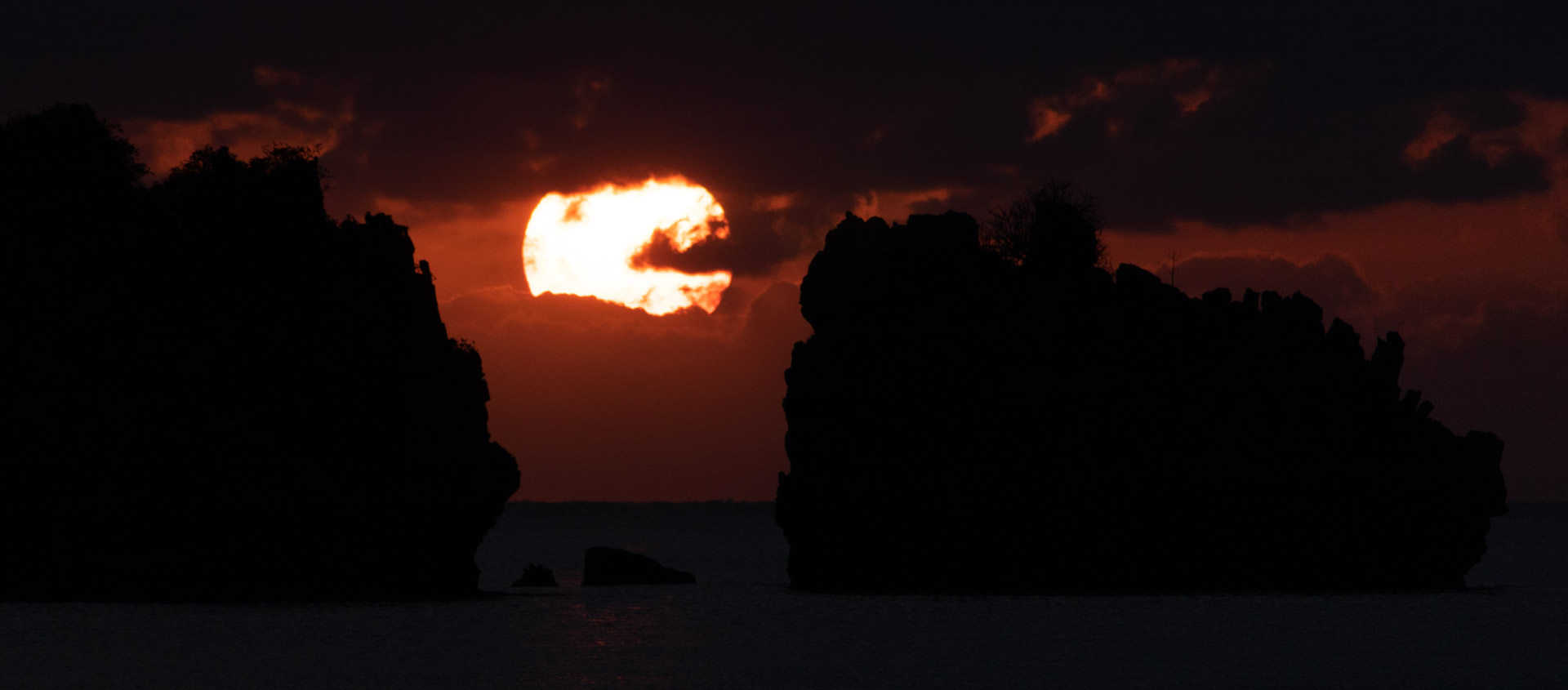
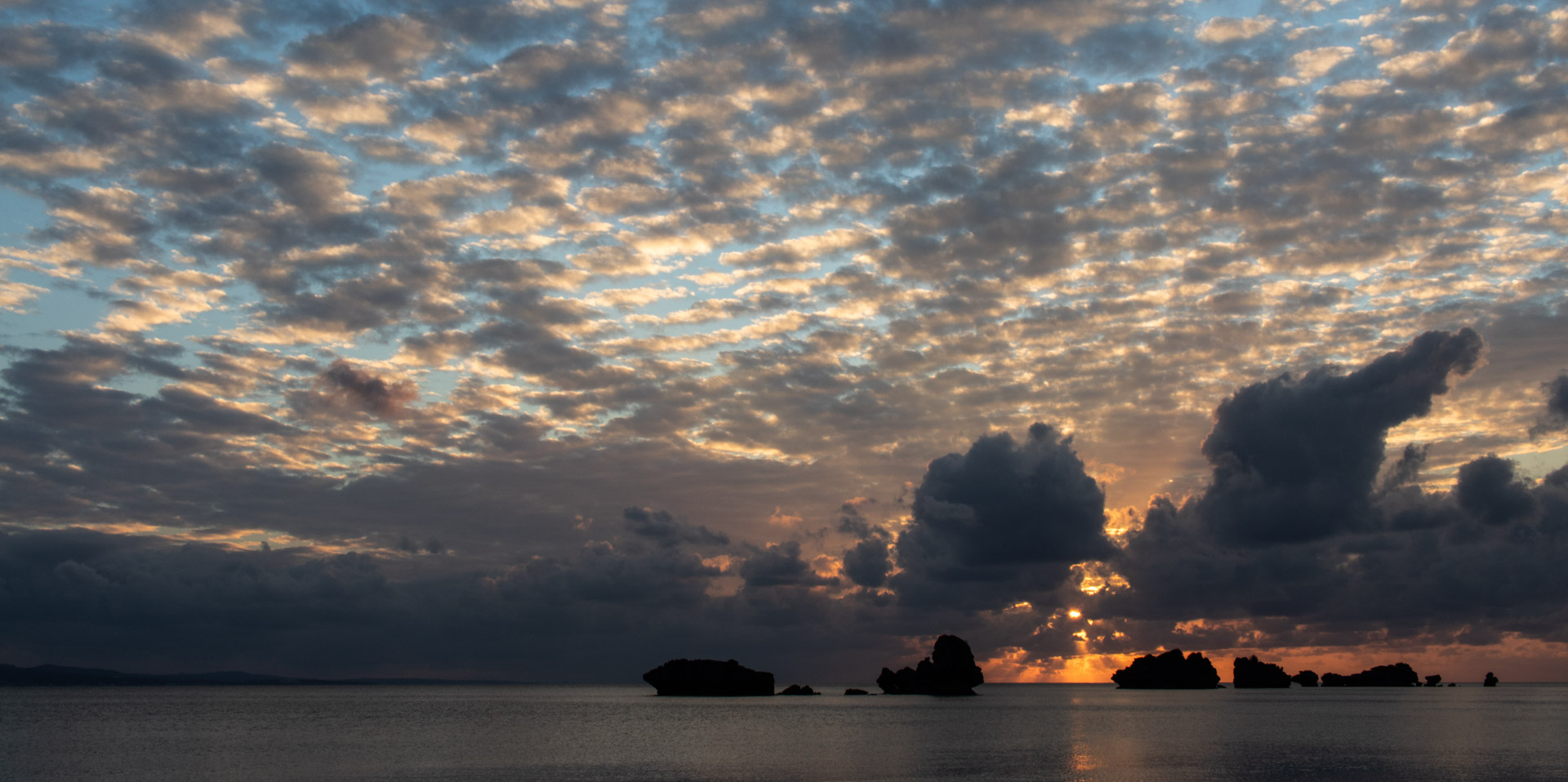
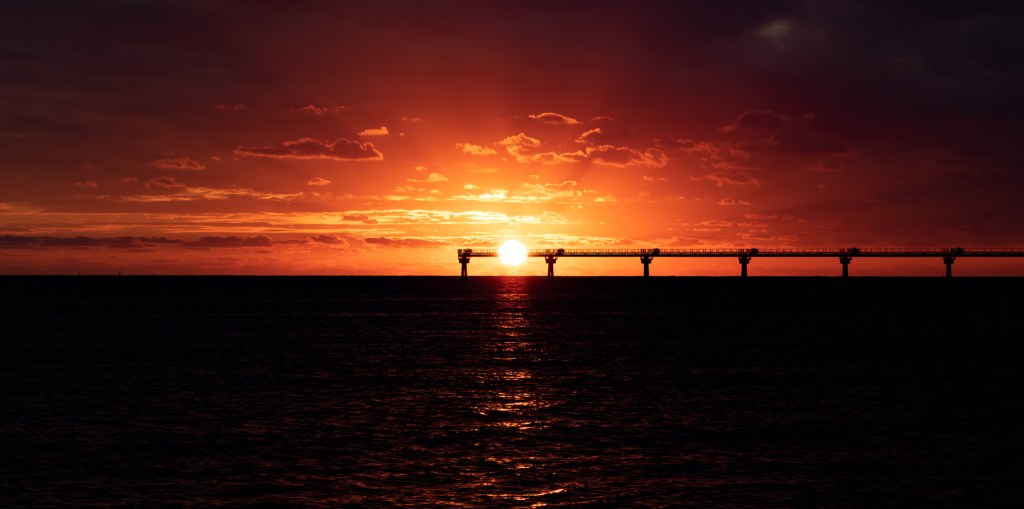
There was also a very interesting building, the big street butthole, that became somewhat of a subject for me. (It was a decorative and magnificent exhaust port for a street running under the channel.)



And I had fun shooting buildings in general.


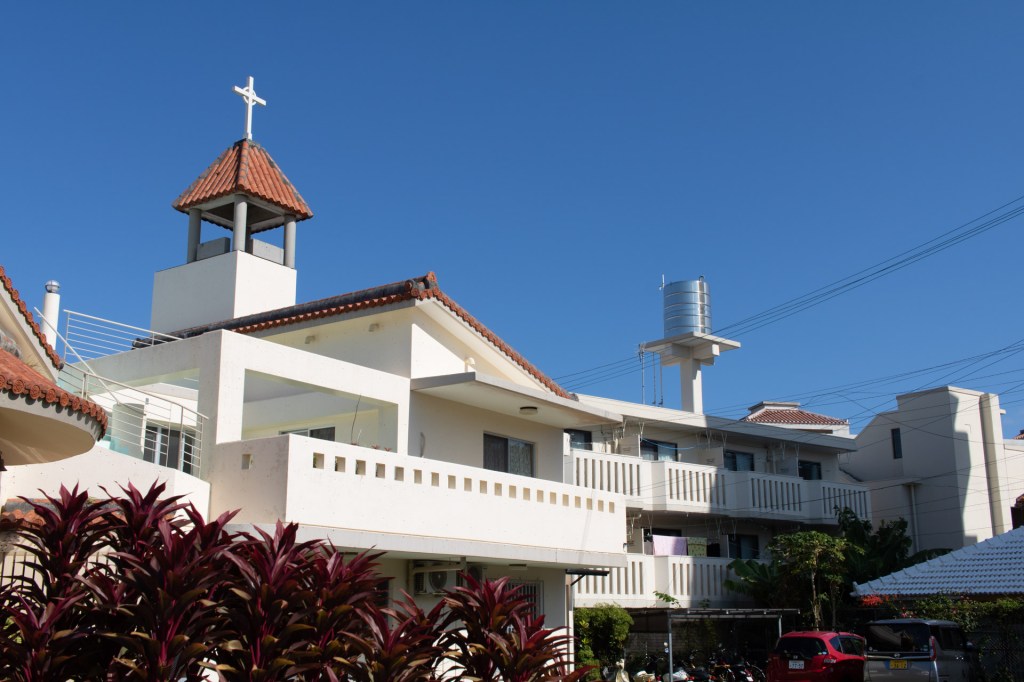
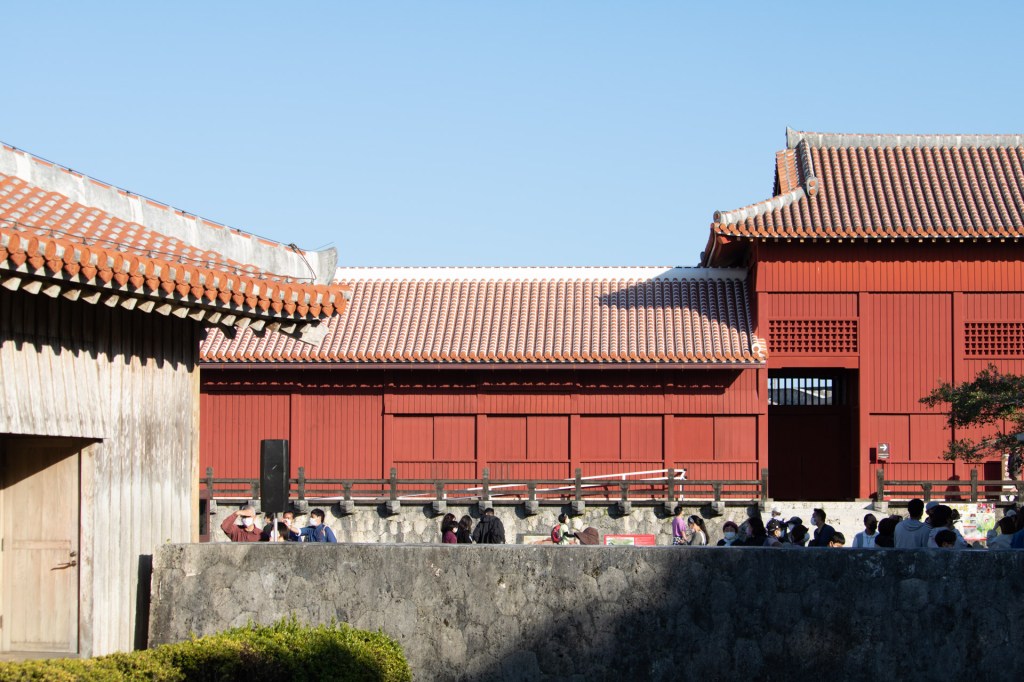

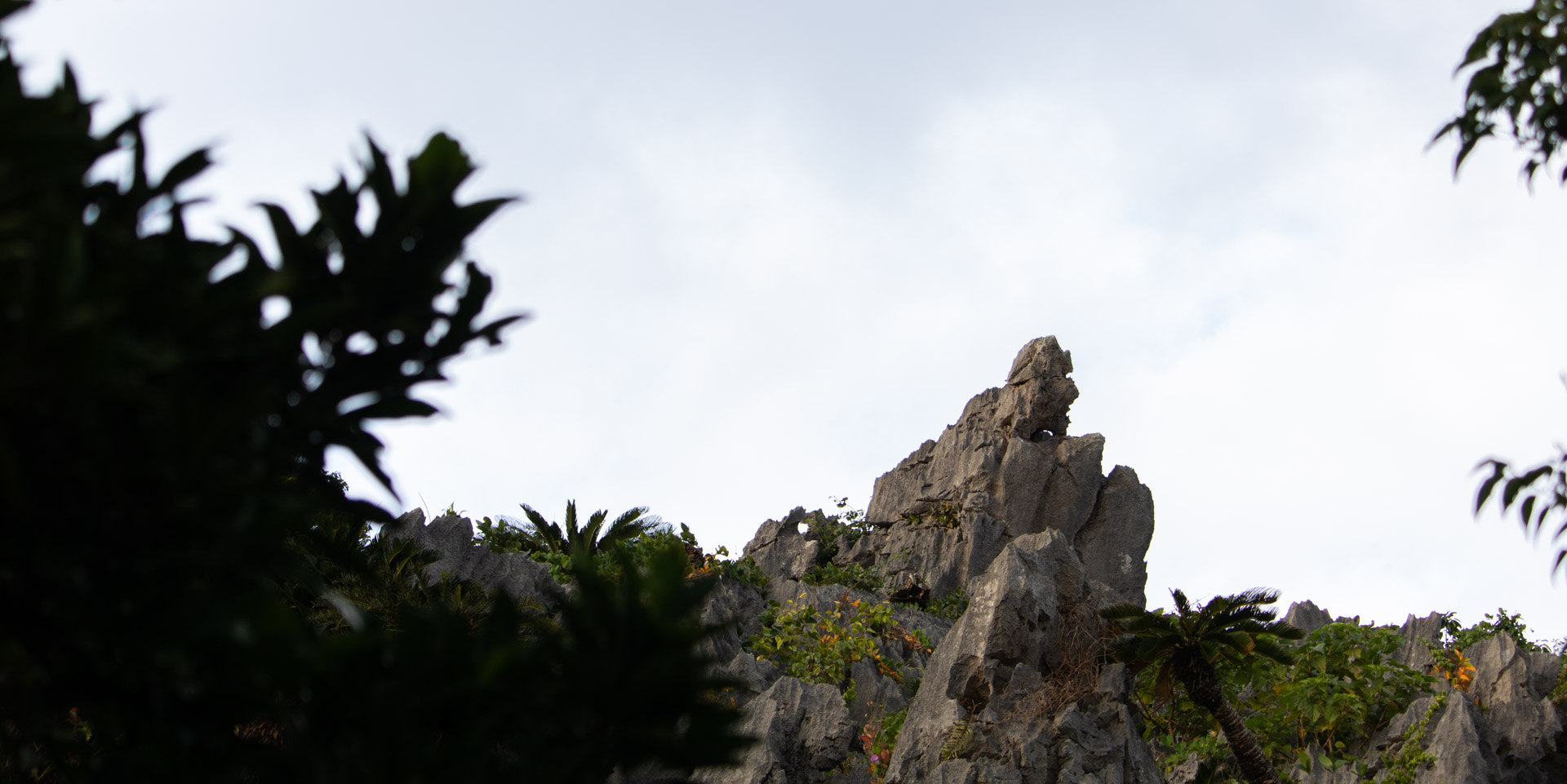
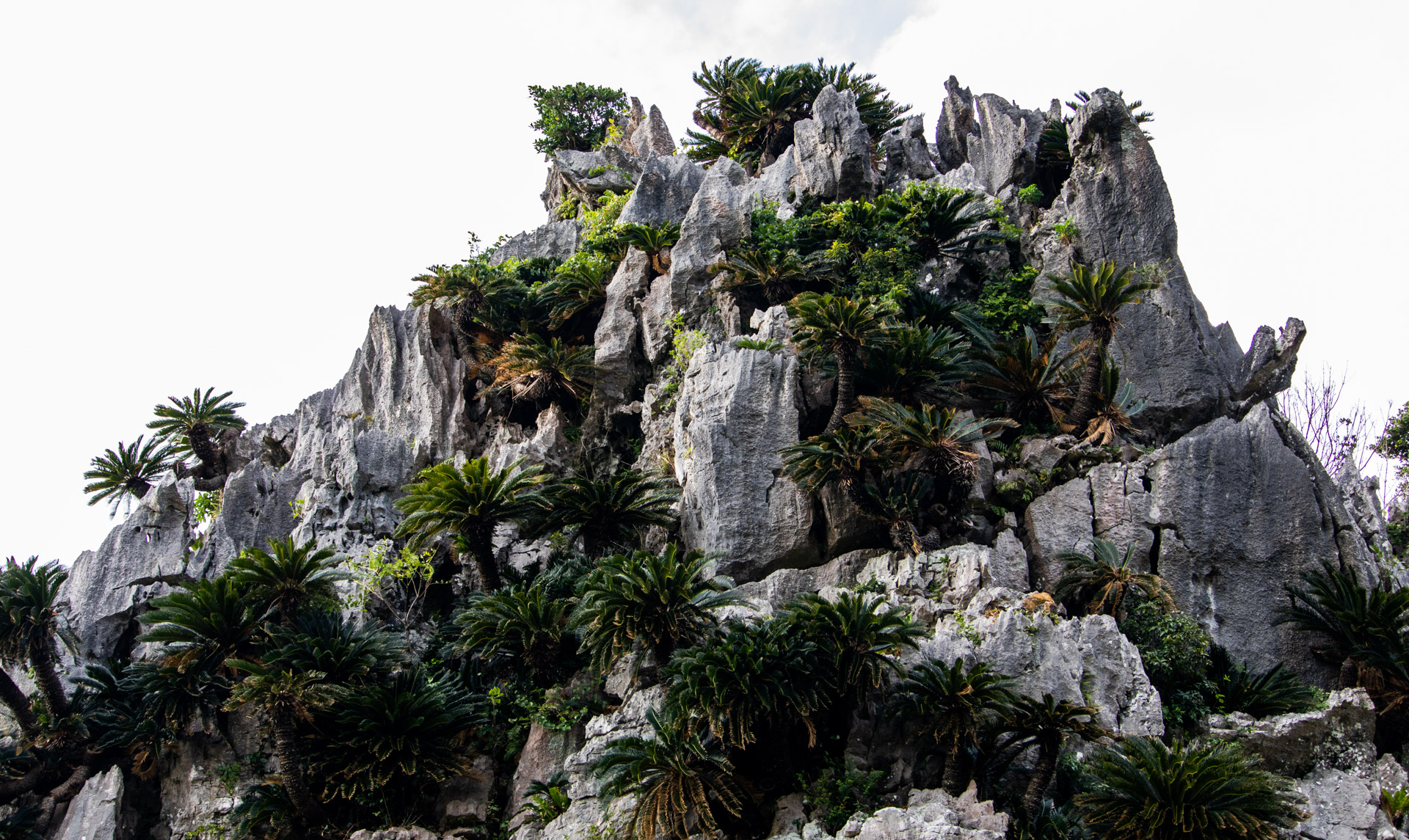
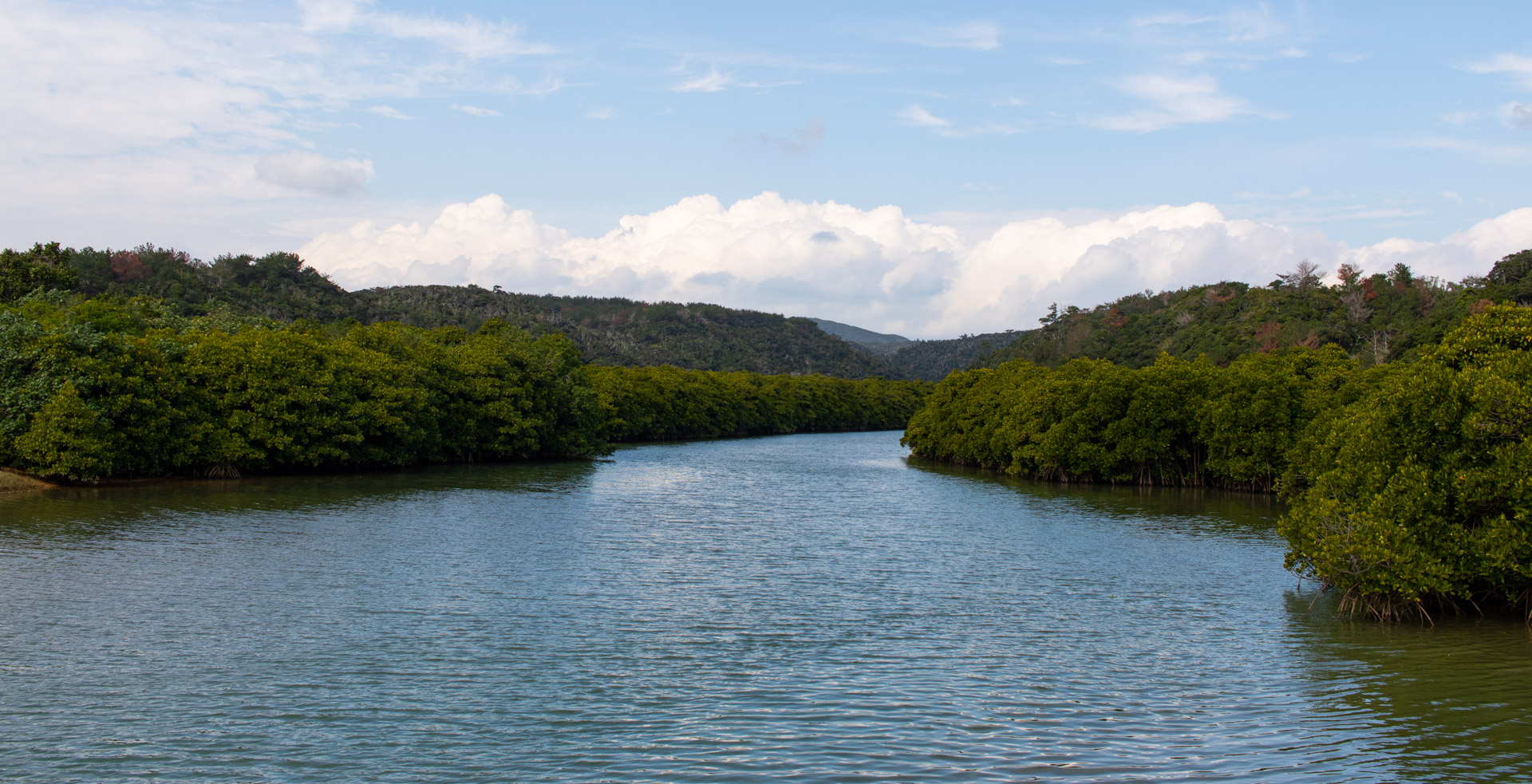
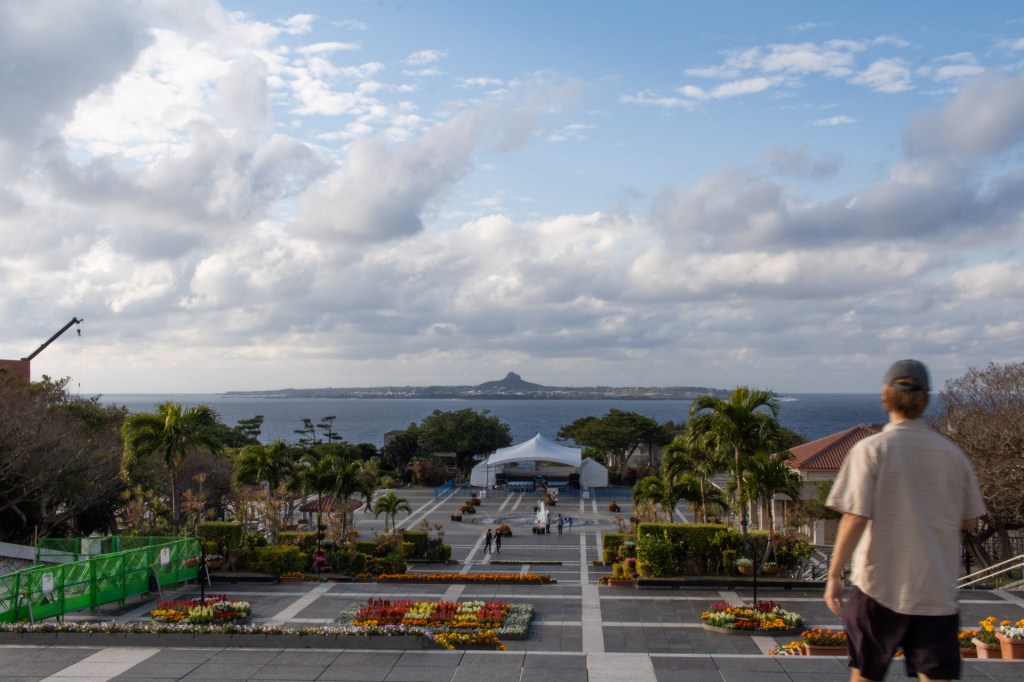
A collection of English sightings.


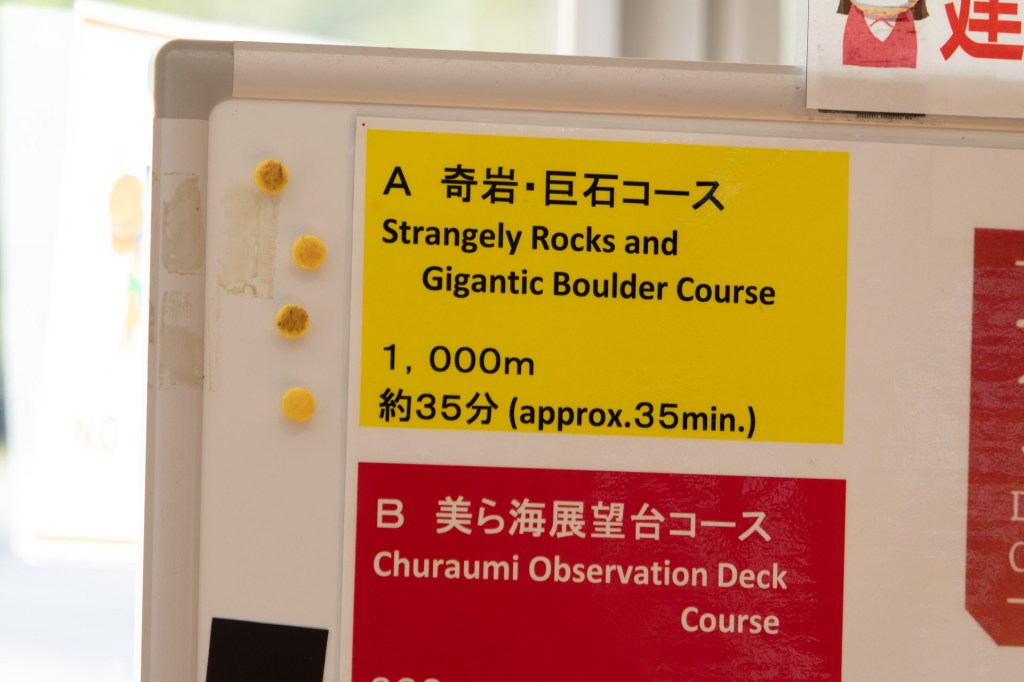
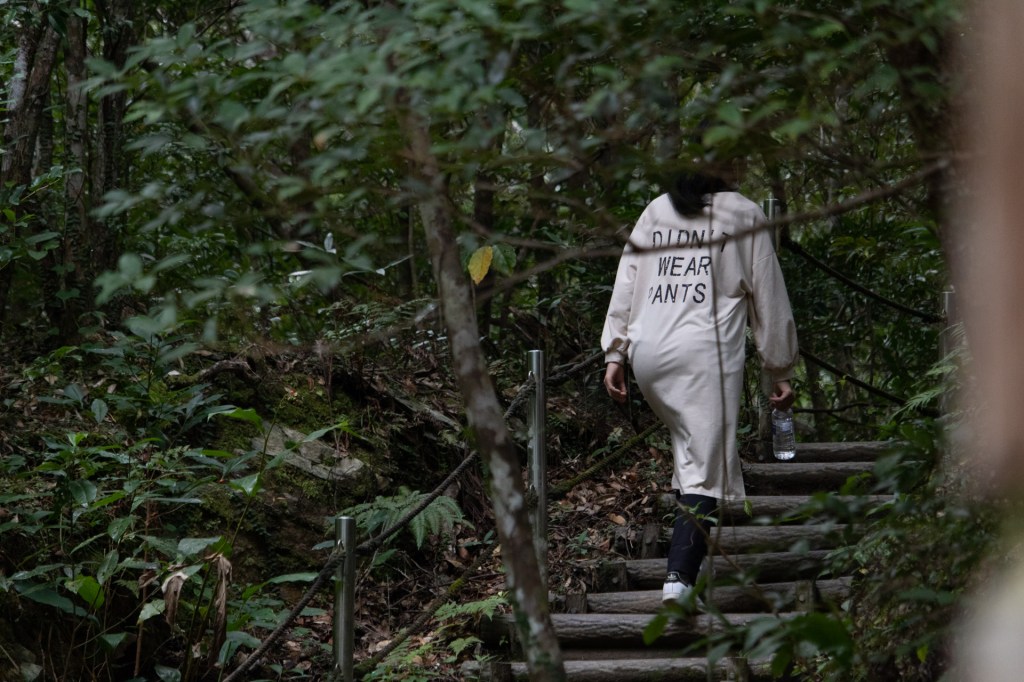
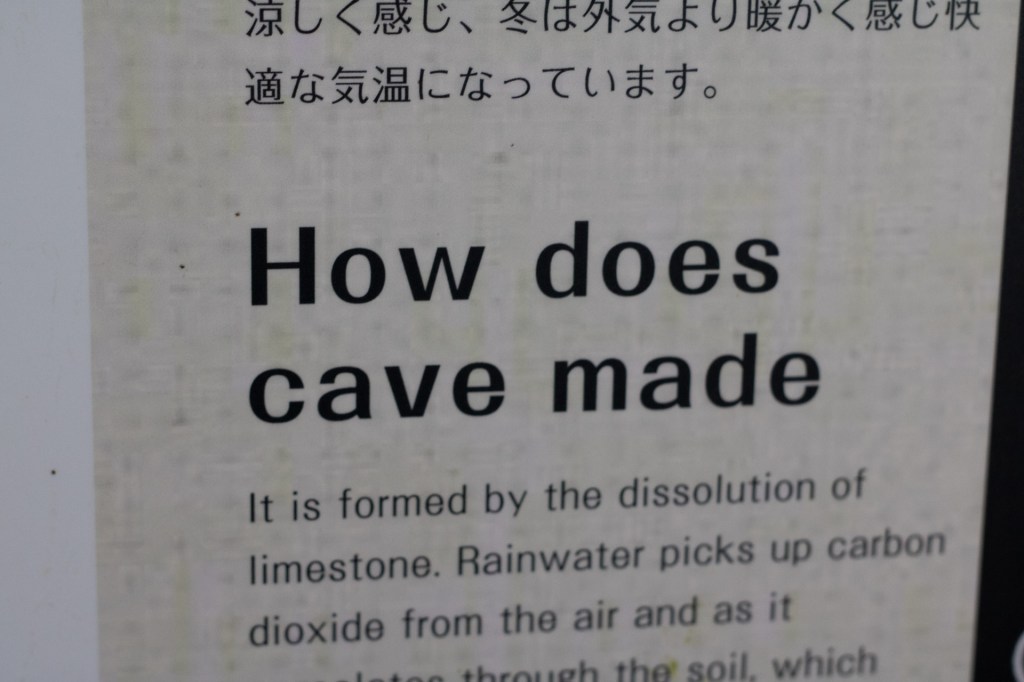
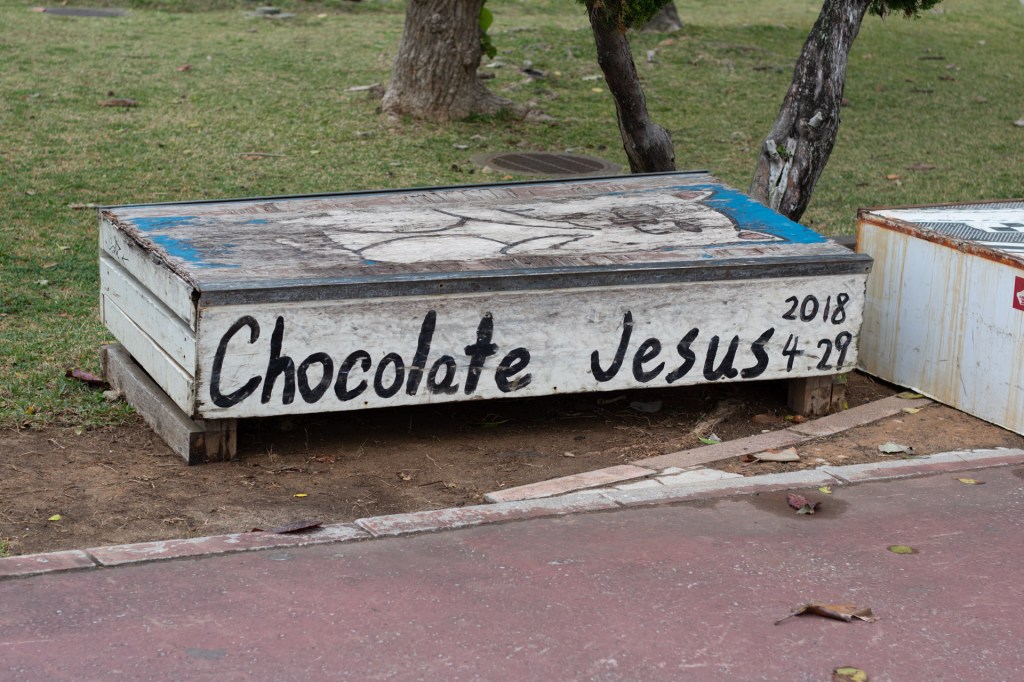
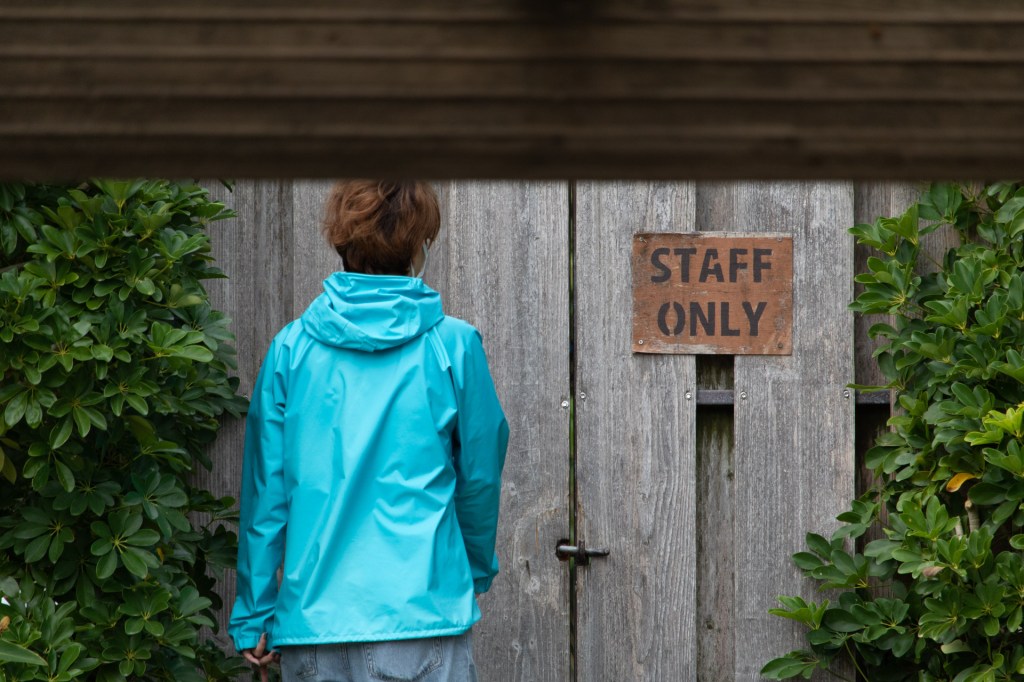
The final photos (I swear).
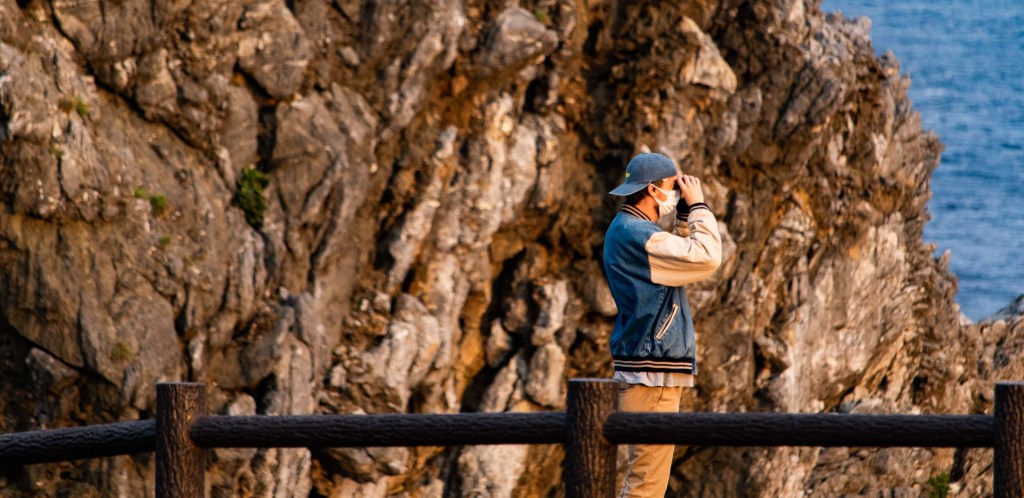

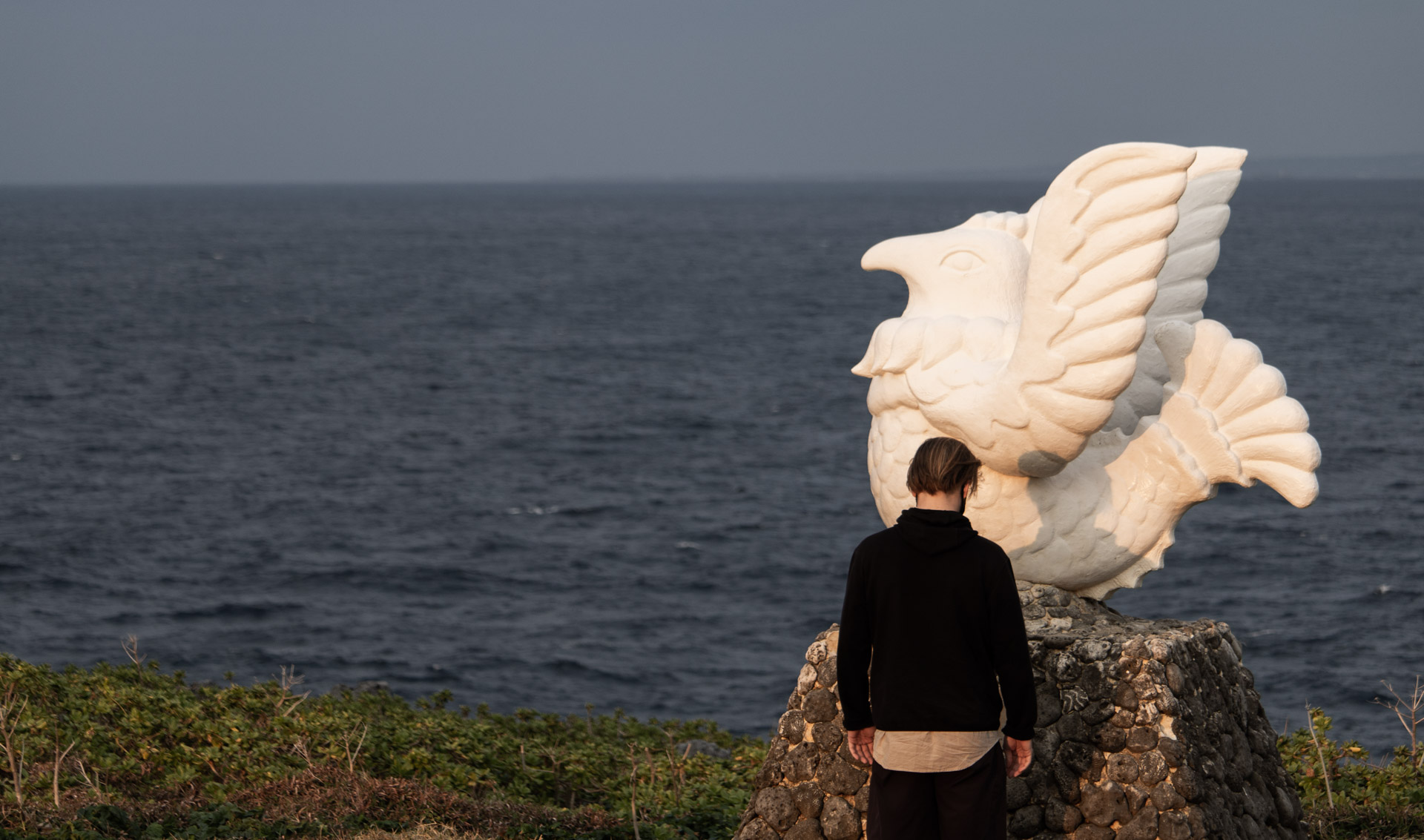

 HAKUMUSU